Antenna PCB: A Comprehensive Guide for RF Engineers

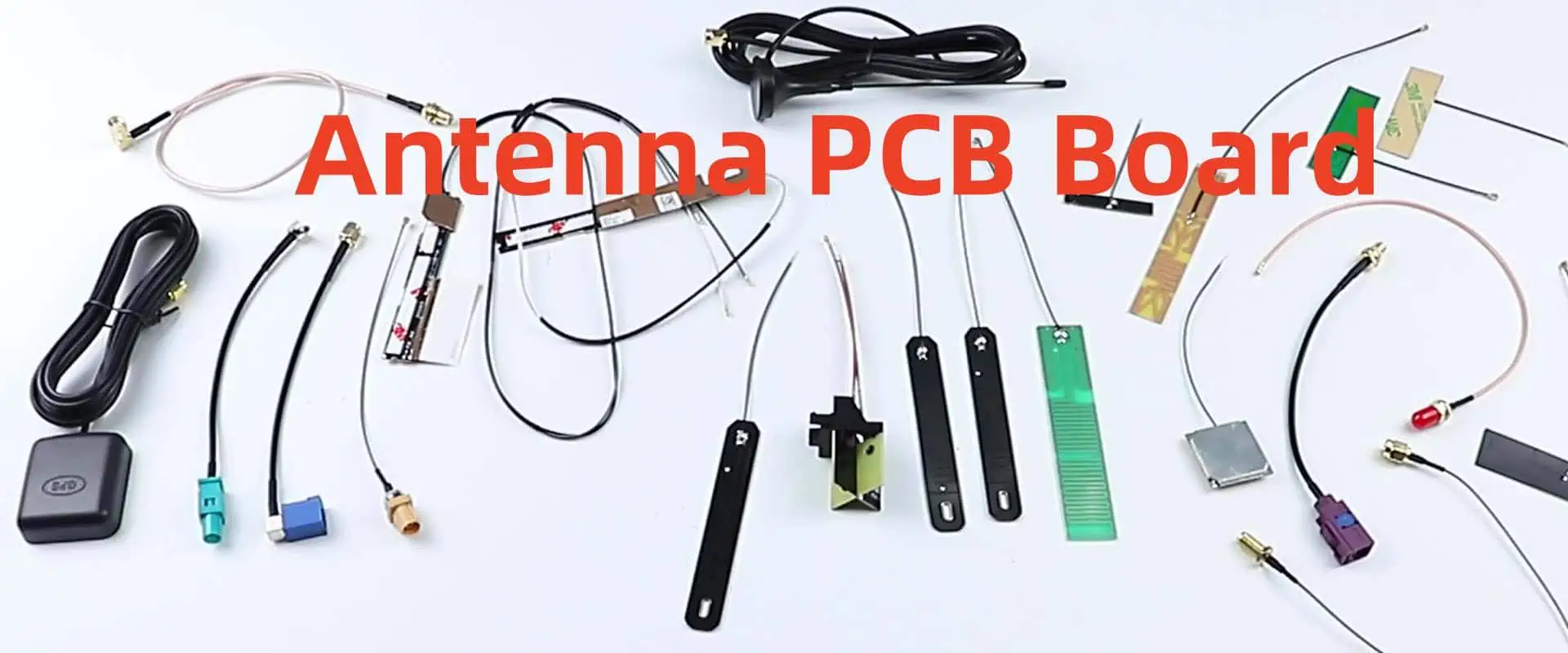
Antenna PCB Board

A wide variety of antennas are available as off-the-shelf components, making them a convenient choice for engineers designing systems that require wireless communication. However, antennas used in PCBs can also be printed directly onto the board, enabling fully customized designs and unique architectures that integrate seamlessly into a single assembly. Additionally, PCB-mounted antennas, such as chip antennas or System-on-Chip (SoC) modules with integrated radios, may require either an antenna module or an off-the-shelf component to function effectively.

Whether the antenna is printed directly onto the PCB or sourced as a pre-made component, it is crucial for PCB designers to have a deep understanding of how antennas operate. Experienced designers will recognize that a PCB itself contains numerous elements that can unintentionally act as efficient antennas. In this article, we will explore some of the fundamental concepts behind antennas, providing engineers with the knowledge needed to design, select, and position antennas effectively in their projects.

What is PCB Antenna?
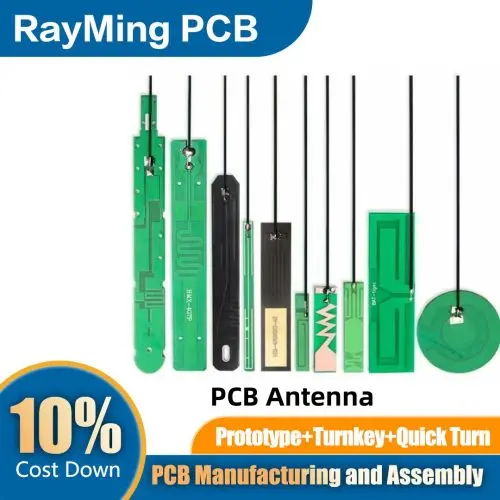
A PCB antenna, short for Printed Circuit Board antenna, is a type of antenna fabricated directly onto a printed circuit board. Unlike traditional antennas that are separate components, PCB antennas are integrated into the circuit board itself, making them an integral part of the device’s overall design.

PCB antennas offer several advantages:

  1. Cost-effective: They eliminate the need for separate antenna components, reducing overall production costs.
  2. Space-saving: PCB antennas are ideal for compact devices where space is at a premium.
  3. Consistency: Being part of the PCB ensures consistent performance across manufactured units.
  4. Durability: Integrated into the board, these antennas are less prone to damage from external factors.
Antenna PCB Calculator
RayPCB Engineering Tools
Rectangular Patch Antenna Calculator
Visual Reference
W ร— L
Patch
W L h
--
Wavelength (ฮปโ‚€)
--
Est. Bandwidth
--
Est. Gain
W = c / (2fโ‚€) ร— โˆš(2/(ฮตr+1)) L = c / (2fโ‚€โˆšฮตeff) - 2ฮ”L ฮ”L = 0.412h ร— (ฮตeff+0.3)(W/h+0.264) / (ฮตeff-0.258)(W/h+0.8)
Design Tip
For optimal bandwidth, substrate height should be 0.003ฮปโ‚€ to 0.05ฮปโ‚€. Thicker substrates increase bandwidth but may excite surface waves. Rogers RO4003C offers excellent performance for most antenna applications with good thermal stability.
Microstrip Line Calculator
Quarter-Wave Transformer
RF/Microwave Substrate Materials Database
Rogers RO4003C
Dielectric (ฮตr) 3.55 ยฑ0.05
Loss Tangent 0.0027
Tg >280ยฐC
Best For General RF
Rogers RO4350B
Dielectric (ฮตr) 3.38 ยฑ0.05
Loss Tangent 0.0037
Tg >280ยฐC
Best For UHF-Microwave
Rogers RT/duroid 5880
Dielectric (ฮตr) 2.2 ยฑ0.02
Loss Tangent 0.0009
Tg N/A (PTFE)
Best For mmWave
Rogers RO3003
Dielectric (ฮตr) 3.0 ยฑ0.04
Loss Tangent 0.0013
Tg N/A
Best For Phased Arrays
FR-4 Standard
Dielectric (ฮตr) 4.2-4.6
Loss Tangent 0.02
Tg 130-140ยฐC
Best For <2 GHz
Rogers RO3006
Dielectric (ฮตr) 6.15 ยฑ0.15
Loss Tangent 0.0025
Tg N/A
Best For Size Reduction
High-Tg FR-4
Dielectric (ฮตr) 4.2 ยฑ0.2
Loss Tangent 0.015
Tg 170ยฐC
Best For Budget RF
Rogers RO3010
Dielectric (ฮตr) 10.2 ยฑ0.3
Loss Tangent 0.0023
Tg N/A
Best For Miniaturization
Material Selection Guide
Choose Rogers RO4003C or RO4350B for general antenna applications up to 10 GHz. For mmWave (>24 GHz), use RT/duroid 5880 or similar PTFE materials. FR-4 is suitable only for sub-2 GHz applications where cost is critical.
Common Antenna Frequency Bands Reference
Band / Standard Frequency Range Wavelength Type Applications
GPS L1 1575.42 MHz 190.3 mm GPS Navigation, Timing
GPS L2 1227.60 MHz 244.3 mm GPS Precision Navigation
GPS L5 1176.45 MHz 254.8 mm GPS Safety-of-Life
WiFi 2.4 GHz 2.400 - 2.4835 GHz 124.9 mm WiFi 802.11b/g/n/ax
WiFi 5 GHz 5.150 - 5.850 GHz 58.3 mm WiFi 802.11a/n/ac/ax
WiFi 6E / 7 5.925 - 7.125 GHz 50.6 mm WiFi 802.11ax/be
Bluetooth 2.402 - 2.480 GHz 124.8 mm IoT BLE, Classic BT
LoRa 868 863 - 870 MHz 347 mm IoT LPWAN Europe
LoRa 915 902 - 928 MHz 328 mm IoT LPWAN Americas
LTE Band 7 2500 - 2690 MHz 120 mm Cellular 4G LTE
5G n78 3.3 - 3.8 GHz 90.9 mm Cellular 5G Sub-6 GHz
5G mmWave n260 37 - 40 GHz 8.1 mm Cellular 5G mmWave
Zigbee 2.400 - 2.4835 GHz 124.9 mm IoT Home Automation
Thread/Matter 2.400 - 2.4835 GHz 124.9 mm IoT Smart Home
UWB 6.0 - 8.5 GHz 50 mm IoT Ranging, Location
NFC 13.56 MHz 22.1 m IoT Contactless
Quick Wavelength Calculator
Wavelength Results
Free Space ฮปโ‚€ 124.91 mm
ฮป/2 (Half-wave) 62.45 mm
ฮป/4 (Quarter-wave) 31.23 mm
Antenna PCB Stackup Designer
Stackup Visualization
Green/Black
~25 ฮผm
L1 - Antenna Layer
Patch Elements, Feed Lines
35 ฮผm
RF Substrate
Rogers RO4003C (ฮตr=3.55)
0.762 mm
L2 - Ground Plane
Solid GND for Antenna
35 ฮผm
Prepreg
FR-4 Bonding Layer
0.2 mm
L3 - Signal Layer
Control Signals, Power
35 ฮผm
Core
FR-4 Core
0.4 mm
L4 - Bottom Layer
Components, GND
35 ฮผm
Solder Mask (Bottom)
Green/Black
~25 ฮผm
~1.7 mm
Total Thickness
4
Copper Layers
Stackup Recommendations
For antenna PCBs, place the antenna on the top layer with an uninterrupted ground plane on L2. Keep digital signals away from RF sections. Use via stitching around antenna edges to suppress surface waves and improve isolation.
Antenna PCB Manufacturing Guidelines
Use controlled impedance fabrication for all RF traces (ยฑ10% tolerance)
Specify ENIG or OSP surface finish for antenna elements (avoid HASL)
Request solder mask opening over antenna patch elements
Minimum 6x substrate height for ground plane extension
Via stitching spacing โ‰ค ฮป/20 around antenna perimeter
Keep digital components minimum ฮป/4 away from antenna
Use coplanar waveguide or microstrip for RF feed lines
Add test points for VNA measurements (50ฮฉ SMA pad)
Surface Finish Comparison
Finish RF Suitability Shelf Life Cost
ENIG Excellent 12+ months $$$
OSP Very Good 6 months $
Immersion Tin Good 6 months $$
HASL Poor 12 months $
Immersion Silver Excellent 6 months $$
Tolerance Specifications
Parameter Standard RF Grade
Trace Width ยฑ20% ยฑ10%
Dielectric Thickness ยฑ10% ยฑ5%
Impedance ยฑ15% ยฑ5%
Registration ยฑ100 ฮผm ยฑ50 ฮผm
Copper Thickness ยฑ20% ยฑ10%
RayPCB Manufacturing Support
RayPCB offers specialized antenna PCB manufacturing with Rogers materials, controlled impedance, and RF testing capabilities. Contact our engineering team for design review and DFM analysis of your antenna designs.

How PCB Antenna Works

PCB antennas function based on the same principles as traditional antennas. They are designed to transmit and receive electromagnetic waves at specific frequencies. The key difference lies in their construction and integration with the circuit board.

Here’s a brief overview of how PCB antennas work:

  1. Signal Generation: The device’s circuitry generates an electrical signal.
  2. Conversion: The antenna converts this electrical signal into electromagnetic waves for transmission.
  3. Radiation: The electromagnetic waves are radiated into the surrounding space.
  4. Reception: For incoming signals, the process is reversed. The antenna captures electromagnetic waves and converts them back into electrical signals.

The specific design of the PCB antenna, including its shape, size, and placement on the board, determines its frequency range, radiation pattern, and overall performance.

Types of PCB Antennas

There are various types of PCB antennas, each with its unique characteristics and applications. Let’s explore some of the most common types:

1. PCB Monopole Antenna

The PCB monopole antenna is one of the simplest and most widely used designs. It consists of a single conductive element, typically a straight trace on the PCB, with a ground plane.

Key features:

  • Simple design
  • Omnidirectional radiation pattern
  • Suitable for a wide range of frequencies
  • Commonly used in mobile devices and IoT applications

2. PCB Dipole Antenna

A PCB dipole antenna consists of two identical conductive elements, often arranged in a straight line. Unlike the monopole, it doesn’t require a ground plane.

Key features:

  • Balanced design
  • Bi-directional radiation pattern
  • Good performance in free space
  • Used in RFID tags and wireless sensors

3. PCB Patch Antenna
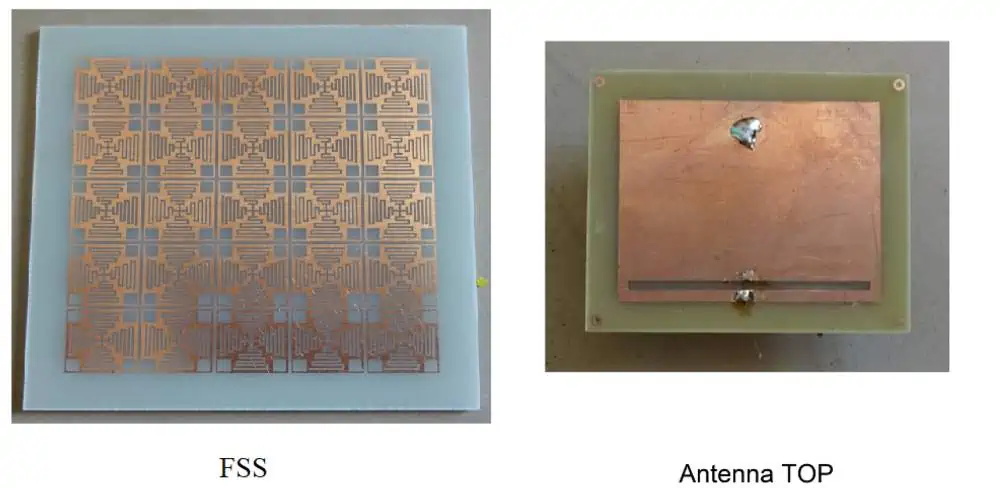
Also known as a microstrip antenna, the PCB patch antenna consists of a flat rectangular sheet or “patch” of metal on top of a larger sheet of metal (ground plane) separated by a dielectric substrate.

Key features:

  • Low profile and lightweight
  • Directional radiation pattern
  • High gain
  • Commonly used in GPS receivers and satellite communications

4. PCB Loop Antenna

PCB Loop Antenna
PCB Loop Antenna

PCB loop antennas are formed by creating a loop of conductive material on the PCB. They can be circular, square, or other shapes.

Key features:

  • Compact size
  • Good performance in near-field applications
  • Often used in NFC and RFID systems
  • Suitable for low-frequency applications

5. PCB Helical Antenna

A PCB helical antenna is created by forming a helical pattern on the PCB. It’s essentially a three-dimensional structure created on a two-dimensional surface.

Key features:

  • Circular polarization
  • High gain
  • Narrow beamwidth
  • Used in satellite communications and GPS applications

6. PCB Slot Antenna

PCB slot antennas are created by cutting a slot in the ground plane of the PCB. The slot acts as the radiating element.

Key features:

  • Low profile
  • Can be integrated into existing ground planes
  • Bidirectional radiation pattern
  • Used in mobile devices and aircraft communications

7. PCB Yagi Antenna
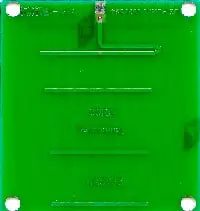
Yagi Antenna PCB
Yagi Antenna PCB

A PCB Yagi antenna, also known as a Yagi-Uda antenna, consists of multiple elements including a driven element, reflector, and one or more directors.

Key features:

  • High directivity
  • High gain
  • Used for point-to-point communications
  • Common in TV antennas and long-range Wi-Fi

8. Planar Inverted F Antenna (PIFA)

The PIFA is a variation of the monopole antenna, with the top section folded down to be parallel with the ground plane.

Key features:

  • Compact size
  • Good performance close to the human body
  • Widely used in mobile phones
  • Can be easily integrated into handheld devices

9. Meander Line Antenna

A meander line antenna is created by forming a meandering pattern on the PCB, effectively increasing the electrical length of the antenna while maintaining a compact physical size.

Key features:

  • Very compact design
  • Suitable for low-frequency applications in small devices
  • Used in wearable technology and IoT devices
  • Can be tuned by adjusting the meander pattern

10. NFC Antenna PCB

NFC (Near Field Communication) antennas are specialized loop antennas designed for short-range communication.

Key features:

  • Very short range (typically a few centimeters)
  • Low power consumption
  • Used in contactless payment systems and access control
  • Often integrated into smartphones and smart cards

11. LoRa Antenna PCB

LoRa (Long Range) antennas are designed for long-range, low-power communication in IoT applications.

Key features:

  • Long-range capability (up to several kilometers)
  • Low power consumption
  • Used in smart city applications, agriculture, and industrial IoT
  • Often implemented as monopole or dipole antennas

12. LTE Antenna PCB

LTE (Long-Term Evolution) antennas are designed for high-speed mobile communication.

Key features:

  • Broadband performance to cover multiple LTE bands
  • Often implemented as MIMO (Multiple-Input Multiple-Output) systems
  • Used in smartphones, tablets, and mobile hotspots
  • May be designed as patch, PIFA, or other antenna types

13. Wi-Fi PCB Antenna

Wi-Fi PCB antennas are designed to operate in the 2.4 GHz and 5 GHz bands used by Wi-Fi networks.

Key features:

  • Dual-band operation (2.4 GHz and 5 GHz)
  • Often implemented as patch or inverted-F antennas
  • Used in routers, laptops, and IoT devices
  • May incorporate MIMO technology for improved performance

14. 2.4 GHz PCB Antenna

2.4 GHz antennas are designed specifically for the popular 2.4 GHz ISM (Industrial, Scientific, and Medical) band.

Key features:

  • Compact size due to high frequency
  • Used in Wi-Fi, Bluetooth, and ZigBee applications
  • Often implemented as monopole or inverted-F antennas
  • Wide variety of designs available due to the popularity of the band

15. PCB Trace Antenna

PCB trace antennas are formed by carefully designed traces on the PCB itself, without additional components.

Key features:

  • Very low cost
  • Integrated directly into the PCB design
  • Can be implemented in various shapes (meandered, spiral, etc.)
  • Used in low-cost devices and RFID tags

What are the Best Materials for Circuits with Antennas?
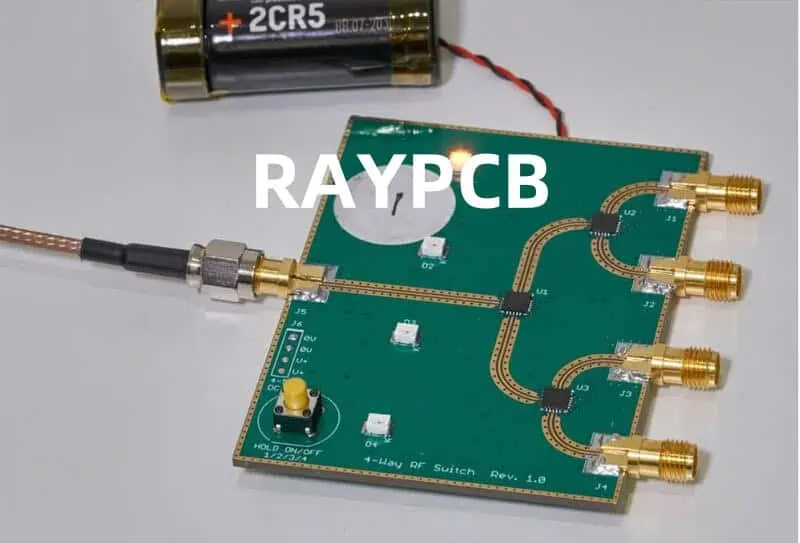
Choosing the right materials for PCB antennas is crucial for optimal performance. The key factors to consider are the dielectric constant (ฮตr) and the loss tangent of the substrate material. Here are some commonly used materials:

  1. FR-4: A popular and cost-effective choice for many applications. It has a dielectric constant of about 4.4 and is suitable for frequencies up to about 1 GHz.

  2. Rogers RO4350B: This material offers lower loss and better performance at high frequencies compared to FR-4. It’s often used for antennas operating above 1 GHz.

  3. Taconic RF-35: Another high-performance material with low loss, suitable for high-frequency applications.

  4. PTFE (Teflon): PTFE-based materials offer very low loss and are excellent for high-frequency and high-performance applications. However, they are more expensive and harder to process.

  5. Ceramic-filled PTFE composites: These materials offer a good balance between performance and processability.

The choice of material depends on the specific requirements of the antenna, including frequency range, performance needs, and cost constraints.

Choosing an Antenna

Selecting the right antenna for your application involves considering several factors:

  1. Frequency Range: The antenna must be designed for the specific frequency or range of frequencies required by your application.

  2. Size Constraints: The available space in your device will influence the type and size of antenna you can use.

  3. Radiation Pattern: Different applications require different radiation patterns. For example, a mobile phone might need an omnidirectional pattern, while a satellite dish needs a highly directional pattern.

  4. Gain and Efficiency: Higher gain antennas can transmit and receive signals over longer distances but may have more directional radiation patterns.

  5. Environmental Factors: Consider the environment in which the antenna will operate, including proximity to other components, potential interference sources, and physical conditions.

  6. Cost: Some antenna designs are more complex and expensive to manufacture than others.

  7. Regulatory Compliance: Ensure that your chosen antenna meets all relevant regulatory requirements for your target markets.

Antenna Design Principles for PCB Designers

Designing effective PCB antennas requires a good understanding of RF principles and careful consideration of various factors. Here are some key principles to keep in mind:

  1. Impedance Matching: The antenna should be matched to the impedance of the feed line (typically 50 ohms) to maximize power transfer and minimize reflections.

  2. Ground Plane Considerations: Many PCB antennas require a ground plane. The size and shape of this ground plane can significantly affect antenna performance.

  3. Trace Width and Spacing: The width of PCB traces and their spacing from other traces and ground planes can affect the antenna’s characteristics.

  4. Antenna Placement: The location of the antenna on the PCB can impact its performance. Keep it away from noise sources and consider the effects of nearby components.

  5. Use of Vias: Vias can be used to create connections between layers and to implement certain antenna designs, but their placement must be carefully considered.

  6. Simulation and Modeling: Use electromagnetic simulation tools to model and optimize your antenna design before fabrication.

  7. Prototyping and Testing: Always prototype and test your antenna designs to verify their performance in real-world conditions.

Performance Testing and Optimization

Once a PCB antenna is designed and fabricated, it’s crucial to test its performance and optimize it if necessary. Here are some key aspects of antenna testing and optimization:

  1. S-Parameter Measurements: Use a vector network analyzer to measure S-parameters, particularly S11 (return loss), which indicates how well the antenna is matched to its feed line.

  2. VSWR Measurement: The Voltage Standing Wave Ratio is another measure of impedance matching.

  3. Radiation Pattern Measurement: This shows how the antenna radiates energy in different directions.

  4. Gain Measurement: Determine the antenna’s gain, which indicates how well it concentrates energy in a particular direction.

  5. Efficiency Measurement: This indicates how much of the input power is actually radiated by the antenna.

  6. Bandwidth Measurement: Verify that the antenna performs well across its intended frequency range.

  7. Near-Field Scanning: This can help identify areas of high field strength on the PCB, which can be useful for EMC considerations.

After testing, optimization might involve:

  • Adjusting the antenna’s dimensions
  • Modifying the matching network
  • Changing the antenna’s position on the board
  • Altering the ground plane design
  • Using different PCB materials

Iterative testing and optimization are often necessary to achieve the best possible performance.

PCB Antenna vs. Chip Antenna

When designing an RF system, engineers often need to choose between PCB antennas and chip antennas. Here’s a comparison of the two:

PCB Antenna

Advantages:

  • Lower cost, especially in high volumes
  • Can be customized for specific applications
  • No additional components required
  • Can achieve better performance in some cases

Disadvantages:

  • Requires more PCB space
  • Performance can be affected by other components and PCB layout
  • May require more design and optimization time

Chip Antenna

Advantages:

  • Very compact size
  • Consistent performance across different devices
  • Easier to implement, especially for inexperienced designers
  • Less affected by nearby components

Disadvantages:

  • Higher component cost
  • Limited customization options
  • May have lower performance compared to well-designed PCB antennas
  • Requires a specific ground plane size for optimal performance

The choice between PCB and chip antennas depends on factors such as available space, design expertise, production volume, and performance requirements. In many cases, PCB antennas offer a good balance of cost, performance, and flexibility, making them a popular choice for many applications.

Conclusion

Antenna PCB technology has revolutionized the world of wireless communication, enabling the creation of compact, efficient, and cost-effective devices. From simple monopole designs to complex MIMO systems, PCB antennas offer a wide range of solutions for various applications.

As an RF engineer, understanding the principles of PCB antenna design, the characteristics of different antenna types, and the factors that influence antenna performance is crucial. By carefully considering these aspects and following best practices in design, testing, and optimization, you can create PCB antennas that meet the demanding requirements of modern wireless systems.

As technology continues to evolve, PCB antennas will undoubtedly play an increasingly important role in shaping the future of wireless communication. Whether you’re working on IoT devices, mobile phones, satellite systems, or any other wireless application, mastering the art and science of PCB antenna design will be a valuable skill in your RF engineering toolkit.
All about TACONICย material RF-35 PCB Manufacturing

taconic laminates

Introduction

Taconic RF-35 is a popular high frequency laminate material designed for performance-driven RF PCB applications. With a dielectric constant of 3.5, low loss, and tight material uniformity, RF-35 enables excellent signal integrity for today’s high speed digital and analog circuits.

This article provides an in-depth look at RF-35 material properties, performance capabilities, design considerations, and applications. We’ll explore everything engineers need to know about specifying and working with this versatile RF material.

RF-35 Overview

Taconic RF-35 is a PTFE composite laminate comprised of:

  • Woven fiberglass reinforcement
  • Ceramic filler particles
  • PTFE (polytetrafluoroethylene) resin system

With a dielectric constant of 3.5, it provides:

  • Excellent high frequency signal performance
  • Very low loss characteristics
  • Tight dielectric constant tolerance

RF-35’s properties make it suitable for a wide range of radio frequency, microwave, millimeter-wave, and multi-gigabit digital applications. It strikes an optimal balance between cost and high frequency signal integrity.

Some key traits of Taconic RF-35 include:

  • Dielectric constant of 3.5 +/- 0.05
  • Low loss with tight uniformity
  • Excellent thermal stability
  • Good CTE for reliability
  • Lead-free compatible
  • US laminator source
  • ITAR free
  • RoHS compliant
  • Cost-effectiveness

For designs from 10+ Gbps digital to Ku band RF, RF-35 delivers proven results across countless commercial and defense programs.

Material Properties

RF-35 is formulated from PTFE reinforced with ceramic particles to achieve:

Dielectric Constant – The k-value determines velocity of signal propagation and affects many circuit parameters. RF-35 provides an Er of 3.5 with very tight +/- 0.05 tolerance for consistent performance. This enables excellent impedance control compared to typical FR-4 (Er=4.5).

Loss Tangent – With a loss tangent of just 0.0019, RF-35 provides very low loss for high frequency energy. This maximizes Q factors in resonant circuits and insertion loss in transmission lines. Wide range of tested Dk from DC to Ku band.

Moisture Absorption – At just 0.02% moisture absorption, RF-35 resists detrimental effects of humidity and water ingress far better than conventional FR-4 material. This enhances long term reliability.

Thermal Performance – With a Z-axis CTE of 82 ppm/C, close PCB/laminate CTE matching reduces stresses under temperature cycling for excellent reliability. Good thermal conductivity (0.71 W/mK) spreads heat.

Lead-Free Assembly – RF-35 achieves high Tg (>280C) allowing compatibility with lead-free solder profiles of up to 260C for modern assembly.

Available Forms

RF-35 laminate allows flexibility through different standard offerings:

Copper Cladding

  • 1โ„2, 1, and 2 oz ED copper foil
  • Standard HTE copper and rolled copper available
  • Double-sided cladding enables signal layers

Core Thicknesses

  • From 0.005 inches to 0.125 inches
  • Typical stackups use multiple 0.005″ cores
  • Thicker cores provide rigidity when needed

Panel Sizes

  • 18โ€ x 24โ€, 18โ€ x 36โ€, and 24โ€ x 36โ€ standard panels
  • Custom panel sizes possible

Prepreg

  • 106 and 1067 styles available
  • Enables bonding multilayer board stackups
  • Matching resin system

Rod and Plate

  • For machined parts, spacers, and non-PCB applications
  • Reduces PIM in RF assemblies
  • Ideal for fixtures and testing

This range covers the needs of most RF-35 PCB implementations from prototyping to production.

PCB Performance Capabilities

Taconic RF-60TC PCB

RF-35 laminate provides excellent RF and high speed digital performance when designed properly:

Frequency Range

  • Usable continuous range from DC to Ku band (18 GHz)
  • Material characterizations up to 40+ GHz
  • Q factors exceeding 300 above 8 GHz

Loss

  • Low loss tangent of 0.0019
  • Insertion loss < 0.016 dB/inch at 20 GHz in 50ฮฉ stripline

VSWR

  • Tight dielectric constant tolerance enables excellent impedance control
  • VSWR < 1.2 up to 15 GHz achievable

Propagation Delay

  • Delay = 1.7 ns/inch typical at 50ฮฉ
  • Enables high data rates and rise time performance

Pulse Response

  • TDR shows minimal discontinuities and reflections
  • Clean time domain performance for ultra high-speed digital

Leveraging these attributes allows RF-35 PCBs to deliver highly repeatable RF and high speed digital operation.

Design Considerations

To obtain maximum benefit from RF-35 laminates, engineers should follow best design practices:

Stackup Planning

  • Use multiple thinner cores instead of one thick core
  • Alternating grain direction improves dimensional stability
  • Model expected performance in solver

Impedance Control

  • Leverage precise Er of 3.5 to maintain target impedance
  • 50ฮฉ striplines for RF and high-speed routing
  • Controlled line width, dielectric height, trace geometry

Skin Effect

  • Consider skin effect depth above ~ 8-10 GHz
  • Utilize surface treatments like micro-etching

Signal Coupling

  • Careful gap/spacing rules between traces
  • Ground plane isolation techniques
  • Avoid 90 ฬŠ bends; use arc/tapered geometries

Thermal Management

  • Ensure sufficient thermal ground plane spreading
  • Efficient component layout to avoid hotspots
  • Consider thermal vias for heat transfer

Paying attention to these guidelines helps achieve first-pass PCB layout success with RF-35.

Recommended Stackups

Typical RF-35 PCB stackups may use configurations like:

Show Image

  • Multiple thin dielectric cores
  • Signal routing on surface layers
  • Dedicated ground planes near signals
  • Buried capacitance within stackup
  • Component cavities in ground planes

The thin cores and smooth copper foils of RF-35 enable tight impedance tolerance and high performance interconnects between ICs, filters, amplifiers, control logic, and other components.

Benefits vs. FR4

Compared to conventional FR-4 laminates, RF-35 provides:

Superior Loss Characteristics

  • Lower loss tangent: 0.0019 vs 0.02 for FR-4
  • Much flatter loss vs. frequency curve
  • Maintains low loss to > 10 GHz

Tighter Dielectric Constant Tolerance

  • Tolerance +/- 0.05 vs +/- 0.25 for FR-4
  • Enables consistent impedance across PCBs

Improved Moisture Resistance

  • 0.02% moisture absorption vs 0.2% for FR-4
  • Far less susceptible to humidity effects

Higher Frequency Support

  • Usable range to Ku band vs drop-off around 5 GHz with FR-4
  • Significantly better Q factors at high microwave bands

For peak signal integrity at microwave and mmWave frequencies, RF-35 is a clear choice over FR-4 material.

Typical RF-35 Applications

The capabilities of RF-35 make it a frequent choice for products including:

  • Satellite communications
  • Radar and remote sensing
  • 5G telecom infrastructure
  • Automotive radar
  • Wireless networking
  • Microwave radio/links
  • Defense electronics
  • Mobile devices
  • High speed digital design
  • Aerospace and avionics

Any application where optimizing signal integrity, reducing loss, and maintaining consistent performance over frequency are critical requirements will benefit from RF-35 PCB material.

Pros and Cons

Like any material, RF-35 has both advantages and disadvantages:

Pros

  • Excellent high frequency signal integrity
  • Low loss PTFE material
  • Tight dielectric constant tolerance
  • Lead-free assembly compatible
  • Good thermal conductivity
  • Reduced moisture absorption

Cons

  • Higher cost than FR-4
  • Lower flexural strength than glass-reinforced laminates
  • Requires advanced fabrication processes
  • Limited global supply chain

Conclusion

With its precise dielectric constant of 3.5 and low loss PTFE composition, Taconic RF-35 delivers proven performance for today’s emerging RF, microwave, and multi-gigabit digital designs. When engineered properly, RF-35 PCBs provide consistent behavior across fabrication lots and excellent high frequency response. For designers pursuing every last dB of loss or GHz of bandwidth, RF-35 remains an enabling material.

Frequently Asked Questions

Q: What are the key differences between RF-35 and common FR-4 laminates?

A: RF-35 provides much lower loss, tighter dielectric tolerance, lower moisture absorption, and extended high frequency range versus economical FR-4.

Q: What are some tips for working with thinner RF-35 cores?

A: Use dedicated layer alignment equipment, employ smaller component sizes, plan sufficient panelization spacing, and minimize handling to avoid cracking thin cores.

Q: Does RF-35 require special PCB fabrication processes?

A: RF-35 benefits from advanced PTFE processes for via formation, hole walls, and drilling. It also requires lamination processes tailored to thinner cores.

Q: What are typical finished RF-35 PCB thicknesses?

A: High frequency designs aim for overall PCB thickness under 0.030 inches. This requires precision lamination of multiple 0.005 inch dielectric cores.

Q: Are there lead-free soldering implications with RF-35 material?

A: RF-35 achieves high Tg (>280C) for compatibility with lead-free profiles up to 260C peak temperatures. Thermal relief in multilayers is recommended.

Do you know RF-35 (TACONIC material)?

RF-35๏ผˆTACONIC material๏ผ‰

Performance:

(1) low cost;

(2) Excellent peel strength;

(3) Extraordinary low loss factor;

(4) low water absorption rate;

(5) Enhanced surface smoothness.

Application:

(1) power amplifier;

(2) filters and connectors;

(3) Passive components.

1)RF-35 is an organic-ceramic laminate material in the ORCER of TACONIC products.

2)It is a reinforced glass material based on woven glass cloth, and a combination of TACONICโ€™s ceramic filling technology and glass fiber coated PTFE technology.

3)RF-35 is the best choice for low cost, high volume commercial microwave and wireless frequency applications.

3)RF-35 of 1/20Z and 10Z copper foil boards, even with standard epoxy materials, have excellent peel strength and provide rework at any time.

4)The glass transition temperature of RF -35 exceeds 315 โ„ƒ.

5)The ultra-low water absorption and low loss factor of RF-35 minimizes phase shift in the frequency range of use.

6)The dimensional stability of RF-35 is due to the use of woven glass cloth in its design development.

7)RF-35 laminate material, generally with single or double-sided 1/20Z, 10Z and 20Z thickness of electrolytic copper foil. Different sizes of sheets can be selected according to requirements.

8)For the RF-35 microwave material, the relationship between the thermal expansion rate in the Z-axis direction and the temperature is shown in the figure below:

RF-35๏ผˆTACONIC brand๏ผ‰

9)RF-35 dielectric constant changes with temperature:

PCB TACONIC brand material

10)RF-35 dielectric loss changes with temperature:

PCB RF-35 material

10)The relationship between the dielectric constant and frequency of RF-35 microwave materials is shown in the figure below:

Special PCB material

11)The relationship between the dielectric loss of RF and the frequency of microwave materials is shown in the figure below:

R35 TACONIC material

What is the difference between FFC connector and FPC connector ?

one layer flex pcb board

What is ffc wiring and what is  fpc wiring ?

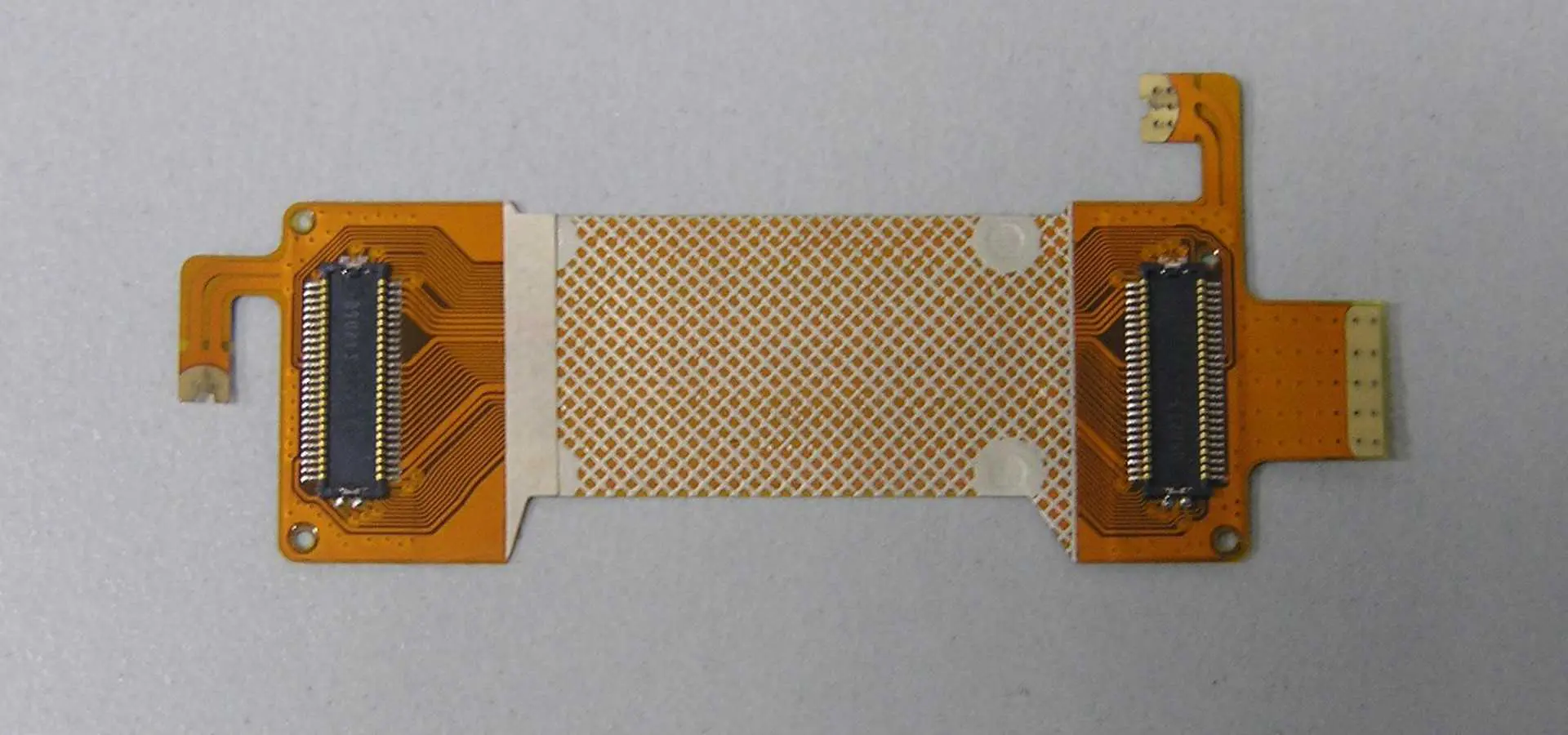
Wiring, also known as flexible circuit board (FPC). It is used for the transmission of data within the active parts and areas, such as the hard disk connected to the mainboard of the computer, the data line of the optical drive, the data line of the mobile phone motherboard connected to the display screen, and so on. There are also connected devices between the data lines are collectively known as wiring. Wire layout is mainly divided into two kinds of round head (R-FFC for direct welding) and flat ends (for short FFC, for socket insertion). Most suitable for data transmission cables between moving parts and motherboards, between board and board, and for miniaturized electrical equipment. Because the price of FFC cable is better than that of FPC (flexible Printing Circuit), its application will become more and more extensive. In most places where FPC is used, you can basically replace it with FFC.

https://www.youtube.com/watch?v=pG2FsS7ZXuo
FPC

Wiring characteristics

  1. The wire layout is small, light weight, the original design of the wiring board is used to replace the larger wire harness wire. Wiring is usually the only solution to miniaturization and mobility on the current cut TIng-edge assembly board. Wire placement (sometimes referred to as flexible printed circuit) is the etching of copper circuit or printed polymer thick film circuit on the polymer substrate. For thin, light, compact and complex devices, the design solutions range from single-sided conductive circuits to complex multi-layer three-dimensional prototype pcb assembly. The total weight and volume of wire arrangement is 70% less than the traditional round wire harness method. Wire placement can also increase strength by using reinforced materials or linings to achieve additional mechanical stability.
  2. Wire placement can be moved, bent, twisted without damaging the wire, and can conform to different shapes and special package sizes. The only limitation is the volume space problem. Because it can withstand millions of times of dynamic bending, wiring can be well applied to continuous or periodic motion of the internal system, as part of the final product function. The solder joints on the rigid PCB are subjected to thermal mechanical stresses that fail after hundreds of cycles. โ€œrequire electrical signals / power to move,โ€ said Jenny, a product manager at EECX. Some products with smaller shape coefficients / package sizes benefit from wire placement.
long FPC board

3, wiring has excellent electrical properties and dielectric properties,โ€ said the CEO of heat-resistant. LT Electronic. โ€œlow dielectric constants allow electrical signals to be transmitted quickly; Good thermal properties make the element easy to cool down; higher glass conversion temperature or melting point make the element work well at higher temperature.

4, wiring has higher assembly reliability and quality. Wiring reduces the hardware required for internal wiring, such as solder joints, trunk wires, backboard lines and cables commonly used in traditional electronic packaging, enabling wiring to provide higher assembly reliability and quality. Ping.Wu, a marketing manager with a higher misalignment rate ofย electronic components, said Ping.Wu, a marketing manager of. EECX Electronic Products Division, a market manager with complex multiple systems, said, โ€œthe stiffness of wiring is low and the size is small,โ€ said Ping.Wu, the market manager of. EECX Electronic Products Division, which is composed of complex multiple systems. It is precisely because of the small size of the wiring board components, so the use of less material. โ€ With the emergence of quality engineering, a thin flexible system is designed to be assembled in only one way, thus eliminating many human errors usually associated with independent wiring engineering.

What is FFC wiring

FFC wiring is also called flexible flat cable, which can choose the number and spacing of wire arbitrarily, make the wire more convenient, greatly reduce the volume of electronic products, reduce production cost, improve production efficiency, and is most suitable for moving parts and motherboards. PCB board is used for data transmission cable between PCB boards and miniaturized electrical equipment. The common specifications are 0.5mm / 0.8mm / 1.0mm / 1.25mm / 1.27mm / 1.5mm / 2.0mm / 2.54mm and so on.

long fpc

Line arrangement difference between FFC and FPC

FPC is the Flexible Printed Circuit flexible printed circuit, and in terms of their manufacturing, they are formed in a different way:

1, FPC is a kind of flexible circuit board with different single and double sides and multilayer pcb structure, which is treated by FCCL (flexible copper foil) by chemical etching.

2, FFC is made of flat copper foil with upper and lower layers of insulating foil film, the finished product is simple and the thickness is thicker.

FPC

Flex PCB Cost Estimator: Key Factors Affecting Flexible Circuit Board Pricing (From Design to Manufacturing)

Flex PCB Cost

Introduction

In the rapidly evolving world of electronics, flexible printed circuit boards (flex PCBs) have gained significant popularity due to their versatility, space-saving capabilities, and ability to conform to complex shapes. As engineers, startups, and manufacturers increasingly turn to flex PCBs for their projects, understanding the costs associated with these innovative components becomes crucial. This comprehensive guide will take you on a journey from initial design considerations to final production pricing, helping you navigate the intricacies of flex PCB costing.

1. What is a Flex PCB?

1.1 Definition and Structure of a Flexible PCB

Flex PCBs are circuit boards that can bend, flex, or conform to a desired shape. Unlike their rigid counterparts, flex PCBs are constructed using flexible base materials, typically polyimide or polyester films. This unique structure allows them to be:

  • Bent or folded to fit into tight spaces
  • Dynamically flexed during operation
  • Shaped to follow contours of product designs

The key differences between flex PCBs and rigid PCBs lie in their materials, manufacturing processes, and applications. While rigid PCBs use stiff substrates like FR-4, flex PCBs employ thin, pliable materials that enable their characteristic flexibility.

1.2 Common Applications of Flex PCBs

Flex PCBs have found their way into numerous industries and applications, including:

  • Wearable technology (smartwatches, fitness trackers)
  • Automotive (dashboard displays, sensor connections)
  • Aerospace (satellite components, aircraft control systems)
  • Medical devices (hearing aids, implantable devices)
  • Consumer electronics (smartphones, cameras)
  • Industrial equipment (robotics, automated systems)

The ability of flex PCBs to save space, reduce weight, and withstand mechanical stress makes them ideal for these applications where traditional rigid PCBs would be impractical or impossible to use.

2. Overview of Flex PCB Costing

2.1 Why Flex PCBs are Generally More Expensive than Rigid PCBs

Flex PCBs typically come with a higher price tag compared to their rigid counterparts. This cost difference stems from several factors:

  1. Specialized materials: Flex PCBs require more expensive base materials like polyimide.
  2. Complex manufacturing processes: Producing flex PCBs involves more intricate steps and specialized equipment.
  3. Stringent quality control: Flex PCBs often need more rigorous testing to ensure reliability under bending and flexing conditions.
  4. Lower production volumes: Flex PCBs are often produced in smaller quantities, leading to higher per-unit costs.

2.2 Flex PCB Cost vs. Rigid PCB Cost: Quick Comparison

To give you a general idea of the cost difference, here’s a quick comparison:

FactorRigid PCBFlex PCB
Base material costLowerHigher
Manufacturing complexityLowerHigher
Tooling costsLowerHigher
Minimum order quantitiesOften lowerOften higher
Per-unit cost (small volumes)LowerSignificantly higher
Per-unit cost (large volumes)LowerModerately higher

The most significant cost differences come from:

  1. Material expenses (flex materials can be 2-3 times more expensive)
  2. Manufacturing process complexity
  3. Specialized handling and quality control requirements

Read more about:

3. Key Factors Affecting Flex PCB Cost

3.1 Design Complexity

The complexity of your flex PCB design plays a crucial role in determining its cost. Key aspects include:

Number of Layers

  • Single-layer flex: Simplest and most cost-effective
  • Double-layer flex: Moderate complexity and cost
  • Multilayer flex: Most complex and expensive

Trace Width and Spacing

Finer traces and tighter spacing require more advanced manufacturing processes, increasing costs.

Via Structures

  • Through-hole vias: Standard and less expensive
  • Microvias: More complex and costly
  • Blind and buried vias: Most expensive due to additional processing steps

Bending Requirements

Designs that require tight bending radii or frequent dynamic flexing may need special materials or manufacturing techniques, increasing costs.

3.2 Material Selection

The choice of materials significantly impacts flex PCB cost:

Base Materials

  • Polyimide: More expensive but offers better performance and temperature resistance
  • Polyester: Less expensive but with limitations in performance and durability

Adhesive Types

  • Adhesive-based: Traditional and less expensive
  • Adhesiveless: More expensive but offers better electrical and thermal performance

Coverlay vs. Solder Mask

  • Coverlay: More expensive but provides better protection and flexibility
  • Solder mask: Less expensive but may crack under extreme bending

Material Grade

  • Standard-grade materials: Suitable for most applications
  • High-temperature materials: More expensive but necessary for certain high-reliability applications

3.3 Size and Shape of the PCB

The physical dimensions and outline of your flex PCB affect its cost:

  • Larger boards require more material and processing time
  • Irregular or complex shapes necessitate advanced cutting techniques and may result in more material waste

3.4 Manufacturing Process Complexity

Additional manufacturing steps can significantly increase costs:

Stiffeners

Adding rigid areas (e.g., FR4 or polyimide stiffeners) for component mounting increases complexity and cost.

Shielding Requirements

Incorporating EMI shielding films or layers adds to material and processing costs.

Surface Finishes

Different finishes impact both cost and performance:

  • ENIG (Electroless Nickel Immersion Gold): More expensive but offers excellent surface protection
  • OSP (Organic Solderability Preservative): Less expensive but with shorter shelf life
  • Immersion Silver: Moderate cost with good solderability

3.5 Quantity and Volume

Order quantity plays a significant role in per-unit costs:

  • Prototyping (1-10 pieces): Highest per-unit cost due to setup fees and minimum order quantities
  • Small production runs (100-1000 pieces): Moderate per-unit cost
  • Mass production (10,000+ pieces): Lowest per-unit cost due to economies of scale

3.6 Testing and Quality Assurance

Rigorous testing requirements add to the overall cost:

  • Electrical testing: Ensures proper connectivity and functionality
  • Dynamic flex testing: Verifies durability under repeated bending
  • Environmental reliability testing: Assesses performance under various conditions (temperature, humidity, etc.)

More stringent QA requirements increase labor and equipment costs, reflecting in the final price.

3.7 Lead Time and Turnaround Speed

Faster production times come at a premium:

  • Standard lead times (2-3 weeks): Most economical option
  • Expedited services (3-5 days): Can increase costs by 50-100%
  • Super rush (24-48 hours): Highest premium, often 2-3 times the standard price

4. Typical Flex PCB Cost Breakdown

Understanding the cost components helps in identifying areas for potential savings:

4.1 Material Costs (30-40% of total cost)

  • Base materials (polyimide, polyester)
  • Copper foils
  • Adhesives or bonding films
  • Coverlay or solder mask materials

4.2 Labor and Processing Costs (25-35%)

  • Machine operation
  • Handling and assembly
  • Engineering and design review

4.3 Tooling and Setup Charges (10-20%)

  • Photomasks
  • Drill files
  • Machine setup and calibration

4.4 Testing and Inspection Fees (10-15%)

  • Electrical testing equipment usage
  • Visual inspection
  • Reliability testing

4.5 Logistics and Shipping Costs (5-10%)

  • Packaging materials
  • Shipping fees
  • Import/export charges for international orders

5. Cost Estimation at Different Project Stages

5.1 Early Design Phase: Ballpark Estimates

At this stage, focus on:

  • Approximate board size
  • Estimated layer count
  • Rough idea of design complexity
  • Projected production volume

Use online calculators or consult with manufacturers for initial estimates, but expect these to be within ยฑ30-50% of the final cost.

5.2 After Finalizing the Stackup and BOM (Bill of Materials)

With detailed specifications, you can get more accurate quotes:

  • Precise dimensions and layer stackup
  • Specific material requirements
  • Detailed via structures and trace/space requirements
  • Finalized component list and placement

Expect these estimates to be within ยฑ10-20% of the final cost.

5.3 Manufacturing Phase: True Final Costs

Final costs are determined after:

  • DFM (Design for Manufacturability) review
  • Any necessary design modifications
  • Confirmation of all manufacturing processes
  • Finalization of testing requirements

At this stage, you should have a precise cost figure, barring any unforeseen issues during production.

6. How to Reduce Your Flex PCB Costs

flexible pcb circuit board

6.1 Simplify the Design Where Possible

  • Minimize the number of layers
  • Use standard trace widths and spacings
  • Avoid unnecessary use of advanced via structures

6.2 Use Standard Materials and Standard Sizes

  • Opt for commonly used polyimide thicknesses
  • Choose standard copper weights
  • Design within standard panel sizes to minimize waste

6.3 Consolidate Orders (Batch Production Strategies)

  • Combine multiple designs into a single order
  • Plan for larger production runs to benefit from economies of scale

6.4 Work with Manufacturers Early During Design (DFM: Design for Manufacturability)

  • Consult with manufacturers about design choices
  • Implement DFM guidelines to avoid costly revisions later

6.5 Choose the Right Manufacturer Specializing in Flex PCBs

  • Look for manufacturers with experience in flex PCB production
  • Consider the balance between cost, quality, and capabilities

7. Flex PCB Cost Estimator Tools and Services

7.1 Online Flex PCB Quote Calculators

Many PCB manufacturers offer online quote calculators, including:

These tools provide instant estimates based on basic design parameters.

7.2 How to Use Instant Pricing Tools Accurately

To get the most accurate quotes:

  1. Input exact specifications (dimensions, layers, materials)
  2. Specify all special requirements (stiffeners, surface finish)
  3. Include quantity and lead time preferences
  4. Check for any design rule violations flagged by the tool

7.3 Factors to Double-Check Before Finalizing an Estimate

Be aware of potential hidden costs:

  • Setup fees or tooling charges
  • Testing and inspection costs
  • Shipping and handling fees
  • Import duties for international orders
  • Taxes (VAT, sales tax)

8. Examples: Flex PCB Cost Scenarios

8.1 Small Batch Prototype (10 pieces, 2-layer flex PCB)

  • Size: 50mm x 100mm
  • Material: Standard polyimide
  • Finish: ENIG
  • Estimated cost range:ย 300โˆ’300โˆ’500 total (30โˆ’30โˆ’50 per piece)

8.2 Mid-Sized Production (500 pieces, multilayer flex PCB with stiffeners)

  • Size: 75mm x 150mm
  • Layers: 4 layers with FR4 stiffeners
  • Material: High-temp polyimide
  • Finish: Immersion gold
  • Estimated cost range:ย 7,500โˆ’7,500โˆ’10,000 total (15โˆ’15โˆ’20 per piece)

8.3 High-Volume Production (10,000+ pieces, single-layer flex)

  • Size: 25mm x 50mm
  • Material: Standard polyimide
  • Finish: OSP
  • Estimated cost range:ย 30,000โˆ’30,000โˆ’40,000 total (3โˆ’3โˆ’4 per piece)

Note: These examples are for illustration purposes only. Actual costs can vary significantly based on specific design details and manufacturer pricing.

Conclusion

Understanding the intricacies of flex PCB costing is crucial for anyone involved in electronic product development. From the initial design phase to final production, numerous factors influence the overall cost of flexible circuit boards. By carefully considering elements such as material selection, design complexity, manufacturing processes, and production volume, you can make informed decisions that balance performance, reliability, and budget.

Remember that while flex PCBs may come with a higher upfront cost compared to rigid PCBs, they often offer significant advantages in terms of space savings, weight reduction, and design flexibility. These benefits can lead to overall cost savings in your final product design and assembly.

As you embark on your flex PCB project, keep these key takeaways in mind:

  1. Start with a clear understanding of your project requirements and constraints.
  2. Engage with manufacturers early in the design process for DFM guidance.
  3. Consider the total cost of ownership, not just the initial PCB price.
  4. Leverage online tools and expert consultations for accurate cost estimates.
  5. Look for opportunities to optimize your design for cost-effectiveness without compromising performance.

By applying the knowledge and strategies outlined in this guide, you’ll be well-equipped to navigate the flex PCB costing landscape, make informed decisions, and achieve the best possible balance between performance and budget for your flexible circuit board projects.

FAQs: Common User Questions about Flexible PCB Pricing

  1. Q: How much more expensive are flex PCBs compared to rigid PCBs? A: Flex PCBs can be 2-5 times more expensive than rigid PCBs, depending on complexity and volume.
  2. Q: What’s the minimum order quantity for flex PCBs? A: This varies by manufacturer, but many offer prototyping services with MOQs as low as 1-5 pieces.
  3. Q: How can I reduce the cost of my flex PCB design? A: Simplify the design, use standard materials, increase order quantity, and work closely with manufacturers for DFM optimization.
  4. Q: Are there any hidden costs I should be aware of when ordering flex PCBs? A: Watch for tooling charges, testing fees, expedited service costs, and shipping/import fees for international orders.
  5. Q: How long does it typically take to manufacture flex PCBs? A: Standard lead times are often 2-3 weeks, but can range from 24 hours (super rush) to 4-6 weeks for complex designs.

What is ENEPIG Plating Finish in PCBs?

ENEPIG pcb

Introduction

Printed circuit boards (PCBs) serve as the core component in virtually every electronic device. They provide the substrate to mount and interconnect electronic components using copper traces. To protect these copper traces from corrosion and ensure reliable solder joints, the copper pads are plated with solderable surface finishes.

ENEPIG (Electroless Nickel Electroless Palladium Immersion Gold) has emerged as an advanced plating finish for PCBs, providing excellent solderability while also resisting corrosion. This article provides a comprehensive understanding of ENEPIG plating technology, its properties, process steps, pros and cons, and applications.

YouTube video

What is ENEPIG Plating?

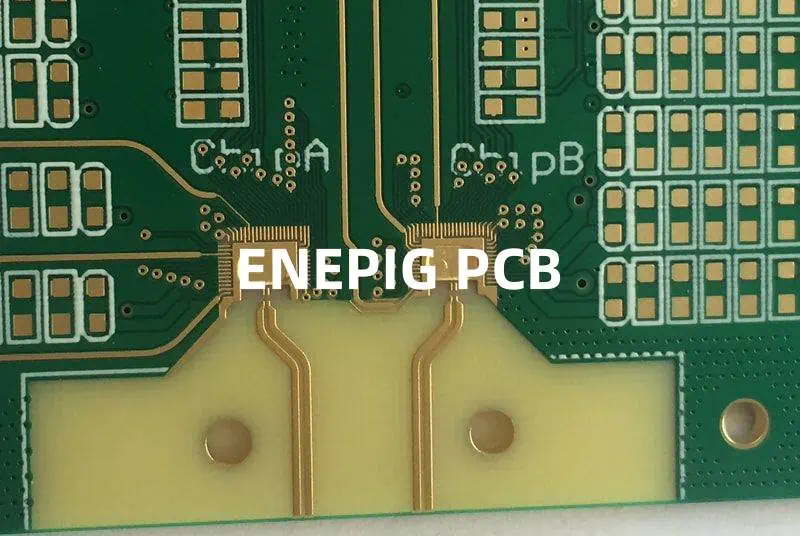
ENEPIG PCB

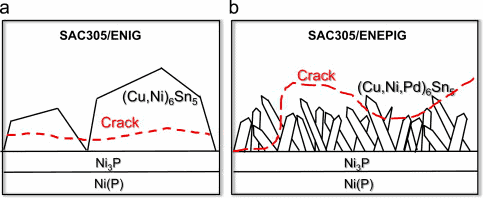
ENEPIG or electroless nickel electroless palladium immersion gold plating is a PCB surface finish comprising of three metal platings deposited sequentially on copper pads – nickel, palladium and gold.

  • Electroless nickel – Corrosion resistant layer
  • Electroless palladium – Barrier layer prevents nickel diffusion
  • Immersion gold – Outermost layer provides solderability

The term โ€˜electrolessโ€™ refers to autocatalytic deposition without using electrical current. The metals deposit through a chemical reduction reaction. โ€˜Immersionโ€™ uses a chemical displacement reaction.

This tri-metal finish provides excellent solderability while also resisting corrosion and oxidation. It is an alternative to conventional finishes like electrolytic nickel/gold, immersion tin and OSP (Organic Solderability Preservatives).

Key Properties

  • Excellent solderability and wettability
  • Low and stable contact resistance
  • Corrosion resistance comparable to gold
  • Good wirebondability
  • Lead-free solder compatibility
  • Halogen-free formulation available

Why Use ENEPIG Plating?

Advantages of ENEPIG

ENEPIG plating offers following benefits over other PCB finishes:

1. Reliable Solderability

  • Gold outer layer provides excellent solderability, similar to immersion gold.
  • The underlying nickel and palladium enhance adhesion of the gold layer.

2. Lead-free Solder Compatibility

  • Gold allows reliable lead-free soldering, unlike tin finishes which are prone to tin whiskers.
  • Palladium barrier layer prevents diffusion of nickel into solder joint.

3. Corrosion Resistance

  • The nickel underlayer provides corrosion resistance comparable to gold.
  • Palladium isolates the nickel from the solder joint.

4. Halogen-free Formulations

  • Electroless nickel and palladium use halogen-free chemistries, avoiding issues with immersion gold.

5. Contact Resistance Stability

  • The nickel and palladium base preserves the low contact resistance of gold finishes.

6. Wire Bond Compatibility

7. Self-Limiting Thickness

  • Immersion plating process provides self-limited uniform thickness.

ENEPIG Plating Process Steps

The Features Between ENIG and ENEPIG

ENEPIG finish deposition involves sequential electroless plating of nickel, palladium and immersion gold:

1. Electroless Nickel Plating

  • PCB undergoes dilute acid cleaning and microetching.
  • Activated in palladium chloride to initiate nickel deposition.
  • Electroless nickel plating solution deposits nickel through an autocatalytic chemical reaction.
  • Thickness of 5 to 8 micro-inches nickel is plated.

2. Electroless Palladium Plating

  • Nickel layer is activated in an acidic solution.
  • Electroless palladium solution deposits a thin layer of palladium, typically 0.2 to 0.5 micro-inches.
  • Palladium prevents diffusion of nickel into solder joint.

3. Immersion Gold Plating

  • PCBs are dipped in immersion gold solution which contains gold salts.
  • The gold displaces palladium through a galvanic exchange reaction.
  • Gold layer of 0.1 to 0.5 micro-inches is plated.
  • Provides solderability and wire bondability.

Comparison of ENEPIG vs Other Finishes

ENEPIG and ENIG
ENEPIG and ENIG
ParametersENEPIGENIGImm. TinOSP
SolderabilityExcellentExcellentGoodFair
Process ControlModerateDifficultEasyEasy
Lead-free solder compatibleYesYesProne to whiskersYes
Corrosion resistanceExcellentModeratePoorFair
Contact resistanceLow and stableUnstableLowModerate
Shelf life12 months6-9 months4-6 months3-6 months
Soldering heat resistanceGoodFairExcellentPoor
Wirebond compatibilityExcellentExcellentFairPoor
CostModerateHighLowVery low

Pros and Cons of ENEPIG Finish

Pros:

  • Excellent solderability and contact reliability
  • Resists corrosion as effectively as gold
  • Compatible with lead-free solders
  • Allows wire bonding
  • Provides stable low contact resistance
  • Halogen-free formulations available
  • Self-limiting and uniform thickness

Cons:

  • More expensive than tin, silver, OSP finishes
  • Requires precise process control
  • Palladium is expensive
  • Multiple plating steps increase cycle time
  • Shelf life shorter than tin finishes

Applications of ENEPIG Plating

The key applications where ENEPIG finish provides benefits are:

1. Lead-free Soldering

Compatible with lead-free solders, unlike tin finishes prone to whiskering.

2. Automotive Electronics

Withstands under-hood temperatures. Halogen-free for reduced outgassing.

3. Avionics and Aerospace

High reliability needed for extreme conditions.

4. Medical Electronics

Biocompatible finish.

5. Wireless and Portable Electronics

Supports lead-free soldering and tin whisker mitigation.

6. High Speed Digital Circuits

Gold provides low contact resistance stability.

7. Wire Bonding

The gold layer enables wire bonding.

ENEPIG Plating on Different PCB Pad Types

ENEPIG can be deposited on various finishes present on PCB pads:

Pad TypeProcess
Bare CopperDirectly applies ENEPIG finish
Immersion TinPre-activates with palladium before ENEPIG
Immersion SilverMasks pad surface before ENEPIG deposition
OSPRemoves OSP completely prior to ENEPIG
Electrolytic Nickel GoldStrips nickel and activates for ENEPIG process
Immersion GoldStrips gold, activates nickel, then follows ENEPIG steps
Solder Mask DefinedSelectively strip solder mask before plating ENEPIG

Key Process Challenges with ENEPIG

Some process challenges associated with ENEPIG plating include:

  • Uniformity: Electroless deposition depends on local chemical conditions. Careful monitoring and tank agitation is required.
  • Palladium Activation: Insufficient activation can cause non-uniform nickel deposition and gold embrittlement.
  • Bath Maintenance: Regular analysis and replenishment of electroless baths is critical.
  • Solder Mask Adhesion: Compatibility between solder mask and ENEPIG chemistry must be ensured.
  • Via Filling: Deposits thin coating only. For thicker coatings, additional electroless copper buildup may be required.

Frequently Asked Questions (FAQs)

Q1. Does ENEPIG finish contain any nickel on the surface?

No. The top surface is pure gold, with palladium and nickel below it. Palladium acts as diffusion barrier to isolate nickel from gold layer.

Q2. Can ENEPIG finish withstand multiple reflow cycles?

Yes, ENEPIG provides excellent soldering heat resistance. The underlying nickel and palladium enhance adhesion of the gold layer through repeated temperature cycling.

Q3. What is the typical thickness of ENEPIG finish?

Thickness values are: Nickel: 5-8 microinches, Palladium: 0.2-0.5 microinches, Gold: 0.1-0.5 microinches. Total thickness is usually under 1 micron.

Q4. Does ENEPIG allow both lead and lead-free soldering?

Yes, the gold outer layer of ENEPIG is highly solderable with both lead-based and lead-free solders. Underlying nickel and palladium enhance intermetallic formation.

Q5. Can ENEPIG finish withstand board assembly in wave soldering?

ENEPIG finish has adequate thermal resistance to withstand wave soldering processes, unlike PCB finishes like OSP which have poor heat resistance.

What is the Stiffener for FPC?

pcb board stiffeners

Introduction

Flexible printed circuits (FPCs) are widely used to interconnect components in products like mobile phones, wearables, displays, medical devices etc. where flexibility is required. FPCs use thin and flexible polymer materials as the base substrate unlike rigid printed circuit boards (PCBs). However, this flexibility also makes FPCs prone to bending and twisting stresses during handling, assembly and use. Stiffeners can be attached to FPCs to provide localized reinforcement and protect certain areas from these stresses.

This article will provide a detailed overview of FPC stiffeners – their role, materials used, design considerations, attachment methods and applications.

What is a FPC Stiffener?

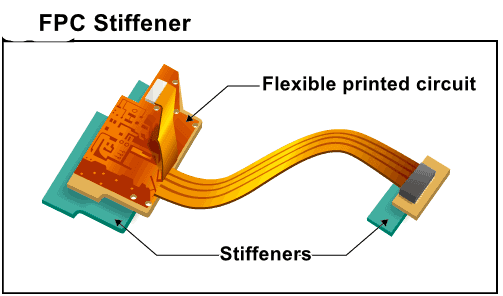
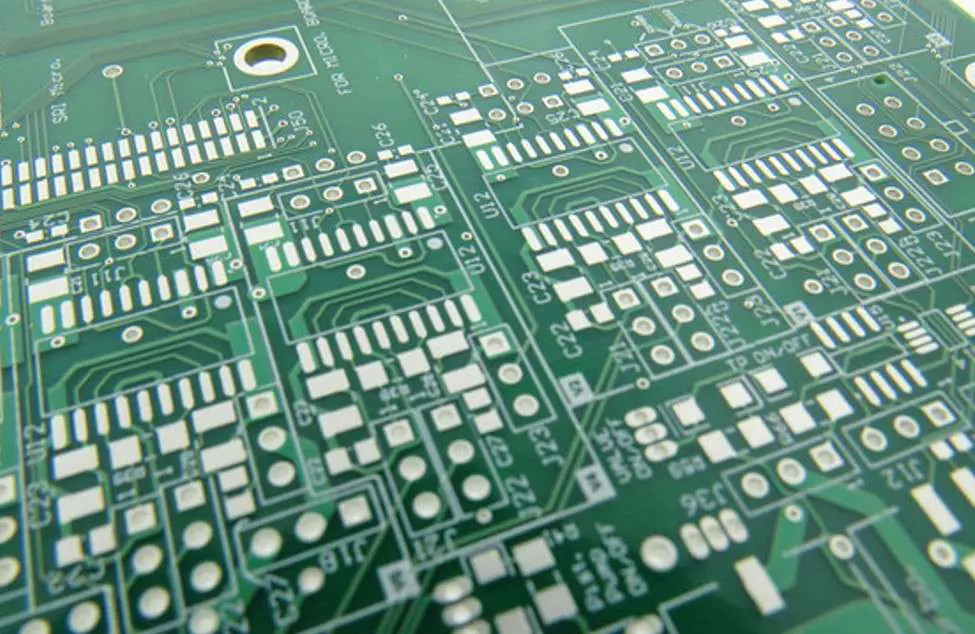
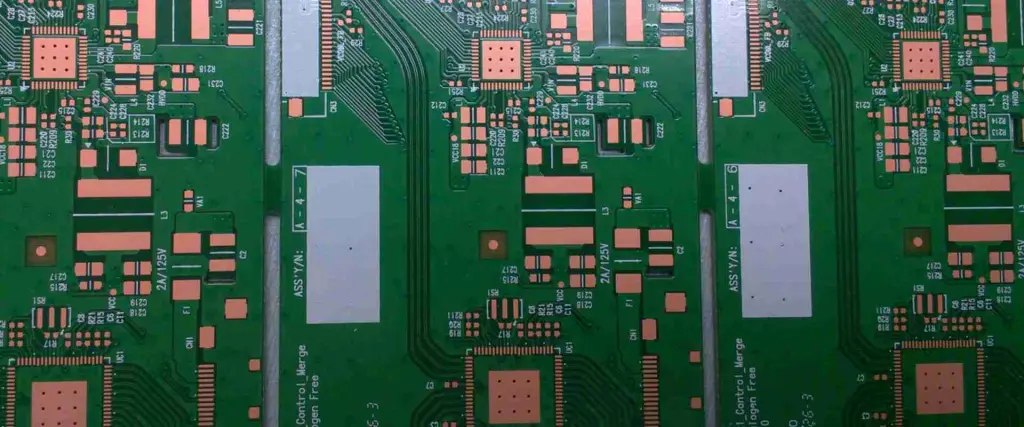
An FPC stiffener is a relatively thick, rigid structure that is fixed to the FPC using adhesives at strategic locations. It helps prevent excessive flexing, twisting or bending of the FPC in those areas during manufacturing, assembly and usage. Stiffeners protect delicate components as well as the FPC substrate itself from damage due to handling and mechanical stresses. They also provide stiffness for connectors and interface points to external devices.

FPC stiffeners are commonly made using materials like stainless steel, FR4, polyimide and acrylics. Adhesives such as epoxies and acrylics are used to bond the stiffener securely to the FPC. The stiffener often includes holes and cutouts to allow mounting of ICs, connectors, buttons and other components.

Need for Stiffeners in FPCs

the flexible board requires a stiffener to obtain external support

While the thin, flexible construction of FPCs is advantageous for many applications, it also creates some unique challenges which FPC stiffeners help overcome:

  • The thin polyimide substrate can get damaged by repeated flexing and twisting stresses during assembly and usage. Stiffeners reinforce areas prone to such stresses.
  • Components on FPCs are also susceptible to failures and cracked joints due to excessive vibration or shock loads without support. Stiffeners protect fragile components.
  • Flexible sections of FPCs by nature are prone to frequent handling and manipulation during fabrication, component placement and testing. Stiffeners prevent damage to copper traces and joints.
  • Display driver ICs are sensitive to bending stresses due to the brittle silicon. Stiffeners support these components on display driver FPCs.
  • Connectors and interface points to other PCBs or cables undergo mechanical stresses which can crack solder joints. Stiffeners prevent flexing damage.
  • Stiffness is required during handling, clamping and assembly of FPCs using automatic equipment. Targeted stiffeners facilitate this.
  • Stiffened areas can be grabbed or held firmly during manual assembly and repair procedures without causing damage due to bending.
  • Components mounted on stiffened islands remain stable for inspection and rework. Flexible FPCs can distort from flatness.
  • Stiffeners allow mounting of components on both sides of FPCs without short circuits due to touch. Open areas can be kept flexible.

FPC Stiffener Materials

Stiffeners designed for FPCs need to meet requirements like dimensional stability, mechanical stiffness, easy machinability or stamping, moisture resistance and adhesion compatibility with the FPC substrate and components. Here are some common materials used:

Plastics

Polyimide sheets offer a balance of stiffness, temperature resistance, dimensional stability and cost-effectiveness. Popular grades include Vespel, Duratron and Kapton. However, polyimide absorbs some moisture which may be unsuitable for high humidity environments. It has limited chemical resistance against solvents.

Acrylics like PMMA provide good moisture and chemical resistance along with stiffness and stability. PMMA stiffeners retain flexibility and do not become brittle over time. They adhere well to FPC substrates using acrylic adhesives. However, acrylics have relatively lower temperature ratings.

Polycarbonate offers high tensile strength for mechanical rigidity combined with temperature resistance exceeding 155ยฐC. It also offers flame retardant properties required in some applications. Polycarbonate is prone to environmental stress cracking however.

LCP (liquid crystal polymer) grades like Zenite offer the best temperature resistance (>240ยฐC) and stiffness among plastic options. LCP has excellent chemical resistance and ultra-low moisture absorption. But it is an expensive material choice.

Metals

Stainless steel offers extremely high stiffness and environmental resistance. It can withstand repeated flexing without cracking. Steel can be easily stamped or machined to desired shapes. It needs nickel/gold plating for soldering compatibility. Stainless steel substantially increases the weight of the FPC assembly.

Aluminum provides good stiffness-to-weight ratio and corrosion resistance while being lighter than steel. It is also low cost and easy to fabricate, but not as rigid as steel for the same thickness. Plating may be needed for soldering.

Copper has excellent thermal conductivity to dissipate heat from components. This lightweight metal stiffener can be readily soldered to the FPC copper traces without plating. But copper is prone to corrosion and needs protective coatings.

Kovar alloy has matching coefficient of thermal expansion (CTE) as silicon chips, minimizing solder joint stresses. However, kovar is not easily soldered and is mainly used as leadframes for ICs rather than stiffeners.

Brass offers good stiffness and manufacturability though not as strong as steel. It is prone to corrosion and needs protective nickel-tin plating typically. Soldering compatibility is also excellent.

Composites

FR-4 combines good stiffness, dimensional stability and cost-effectiveness. It can withstand processing temperatures over 150ยฐC. Being fiberglass reinforced epoxy, it bonds well with the FPC substrate. However, FR-4 absorbs moisture and is not suitable for all environments.

CEM-1 laminates consisting of woven glass fabric in a cyanate ester resin provide the highest thermal capabilities as stiffeners, withstanding over 280oC. They have very low outgassing and moisture absorption. But CEM-1 material cost is also high.

Carbon fiber composites offer extremely high rigidity for their weight, along with corrosion resistance and ambient temperature tolerance exceeding 200ยฐC. The high cost of carbon fiber is the main deterrent.

FPC Stiffener Design Considerations

Some key factors to consider during design of FPC stiffeners are:

Stiffness requirements – The amount of flex that needs to be prevented guides required stiffness. This helps select the material and thickness.

Area coverage – Partial patches or strips may suffice for localized reinforcement versus covering larger areas. Stiffener footprint impacts weight, cost and assembly considerations.

Component space – Cutouts, holes or voids need accommodation in the stiffener for mounting components, connectors, displays etc.

Routing provisions – Stiffener location should avoid blocking interconnection paths between components located on both sides of the FPC.

FPC material and layers – More layers and thicker dielectric require higher rigidity for equivalent stiffening. Stiffener adhesive selections depend on the FPC substrate.

Assembly and inspection – Stiffener should not hamper component placement, clamping, machine handling or manual assembly. Visual inspections and rework access need consideration.

Weight and thickness – Overall thickness after stiffener installation should meet product specifications. Weight limits steer material selection for wearable and portable devices.

Environment – Temperature range, chemical exposure, moisture levels and outgassing drive stiffener material selection.

Thermal dissipationHeat dissipation may require thermally conductive stiffeners under high power components. Electrical and thermal insulation is needed for some applications.

Reworkability – Strippable stiffener adhesives may be preferred to allow rework of underlying components after stiffener attachment.

FPC Stiffener Attachment Methods

The stiffener must be securely fixed to the FPC substrate to prevent separation or movement during use. The common joining methods include:

Adhesive bonding – Acrylic, epoxy or polyimide adhesives are commonly used to bond the stiffener. Adhesive selection depends on materials and environmental needs. Die-cutting can create custom bondline shapes.

Soldering – For metal stiffeners, solder paste can attach and electrically ground it. Reflow attaches stiffener but risks heat damage to FPC substrate. Selective hand soldering is preferred.

Press-in – Interlocking press-fit features on metal stiffeners physically lock into the FPC substrate when compressed together. No adhesives are needed. Allows stiffener removal for repairs.

Clips – Metal spring clips or fasteners screwed into the stiffener mechanically clamp it to the FPC substrate firmly. Allows easy installation and removal.

Screws – Screws passing through clearance holes in the FPC substrate can thread into tapped holes in the stiffener to clamp it together. Supports reworkability.

Riveting – Rivets installed in the stiffener are peened over onto the FPC substrate to capture it. Allows stiffener removal by drilling out rivets.

Typical Applications of FPC Stiffeners

Some common applications where FPC stiffeners provide important benefits include:

Display driver FPCs – Stiffeners reinforce areas under driver ICs and connectors to prevent damage due to handling and vibration in devices like mobile phones, tablets, televisions etc.

Battery FPC interconnects – Mechanical robustness to withstand vibration and shocks over long device lifetimes make stiffeners essential for battery connector FPCs.

Medical products – For patient monitoring patches, implants and wearable devices, stiffeners allow robust interface connectors while keeping sensors flexible.

Automotive FPCs – Stiffeners used in cabling and sensors prevent damage due to continuous vibration and thermal cycles over vehicle lifetime.

Robotics – Frequent robotic arm and gripper movements require local stiffening on flex cables interconnecting movable sections for extended mechanical endurance.

Consumer Electronics – Stiffeners reinforce FPC connections to PCBs in smartphones, laptops and portable electronics that undergo drops and shocks.

Industrial – FPCs used in motion control systems, pneumatic valves, instrumentation etc. use stiffeners to create stable component mounting interfaces and robust cabling.

Benefits of FPC Stiffeners

Some key benefits provided by FPC stiffeners include:

  • Reinforce connector areas for increased mechanical robustness and reliability
  • Support fragile components like driver ICs and prevent failures
  • Allow clamping and assembly handling of FPC without damage
  • Improve stability for component placement, inspection and rework
  • Prevent copper trace damage due to repeated bending stresses
  • Absorb vibration and shock loads instead of transmitting them to FPC
  • Facilitate manual and automated assembly and fabrication processes
  • Allow double-sided component mounting for increased density without shorts
  • Enable reliable performance over expected product lifetime
  • Protect flexible cable segments from complex motion stresses

FAQs

Do FPC stiffeners help in heat dissipation?

Yes, choosing a thermally conductive stiffener under high power components allows heat spreading into the stiffener effectively. This reduces local hot spots.

Can multiple small stiffeners be used instead of one large one?

Yes, multiple discrete stiffener patches can be used for localized reinforcement and component protection instead of a single large stiffener.

Is the stiffener always in direct contact with FPC substrate?

Not always – standoffs can create an airgap between stiffener and FPC to facilitate inspection while still providing mechanical protection.

What tolerance is essential in FPC stiffener fabrication?

As stiffeners align FPC substrates for assembly, typical machining tolerance held is around ยฑ0.10 mm. For placement near connectors or components, ยฑ0.05mm tolerance or better is recommended.

How thick is a typical FPC stiffener?

Stiffener thickness depends on rigidity required but is typically in 0.3mm to 1mm range. Stainless steel can be as thin as 0.1mm but plastics need to be thicker for equivalent strength.

The importance of FPC stiffener

The Flex PCB stiffener refers to a stiffener attached to the back of the FPC when a widget such as a connector is attached to the FPC.

FPC stiffener
fr4 stiffener

From the point of view of reinforcing materials, various materials, including metals and resins, can be provided depending on the application.

pi stiffener material

FPC๏ผˆFlexible Printed Circuit๏ผ‰it is a soft and flexible structure. This is the biggest feature of FPC, but due to its soft structure, when connecting a small part such as a connector to an FPC, it is necessary to place a reinforcing plate on the back side of the electronic component to which the connector is attached.

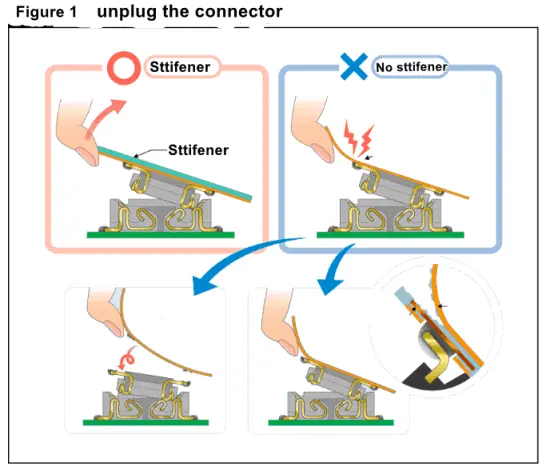
But why do you want to put a stiffener? There are three main reasons for this. 1 solder resist off measure 2 solder pad drop countermeasure As shown in the right side of Figure 1, when the connector mounted on the FPC is inserted and removed, the FPC is soft, so external force is applied to the terminal portions of some connectors. As a result, the welded portion may fall off directly. Similarly, since the copper foil portion (pad) of the FPC may also easily fall off from the underlying structure, the base portion. This is where the mat falls off.

In either case, as shown in the left part of Fig. 1, as long as a sufficiently stiff reinforcing plate is placed on the FPC, it is possible to prevent the force from being concentrated on the terminal portion, and the solder/pad can effectively prevent the falling off.

FLex PCB PI

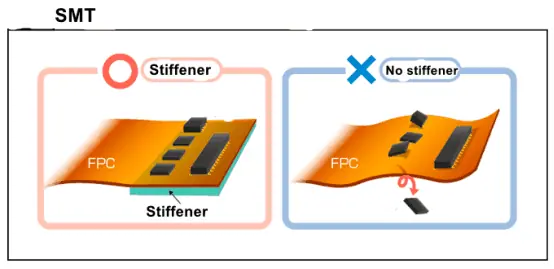
3 Anti-substrate warpage countermeasures during reflow soldering

If the reinforcing plate is not attached during reflow soldering, the FPC will bend and the correct soldering may not be possible.

At the same time, even if it is difficult to weld, the mounting portion sometimes bends, which causes the mounting failure. (parts fall off)

In order to keep the mounting surface flat and securely mounted, the reinforcing plate is essential.

FLEX PCB SMT PI

What are the different surface finishes in PCB?

pcb surface finish

Introduction

Printed circuit boards (PCBs) form the backbone of all electronic devices. They provide the mechanical support structure to mount various electronic components and interconnect them through conductive copper tracks to form functioning circuits. The copper tracks and pads on the PCB that connect the various components need to be protected from oxidation and corrosion to maintain the electrical conductivity and solderability. This is achieved by applying different types of surface finishes over the exposed copper on the PCB.

There are various types of surface finishes available for PCBs, each with their own sets of pros and cons. Selecting the right surface finish for a PCB design requires carefully weighing factors like cost, solderability, oxidation resistance, contact resistance, assembly process compatibility, reworkability and more. The most common finishes used in PCB fabrication today include:

  • Hot Air Solder Leveling (HASL)
  • Immersion Silver (IAg)
  • Immersion Tin (ISn)
  • Electroless Nickel Immersion Gold (ENIG)
  • Organic Solderability Preservatives (OSP)
  • Electroless Nickel Electroless Palladium Immersion Gold (ENEPIG)

This article provides a detailed overview of these popular PCB surface finishes, their characteristics, typical applications and process methods used to apply them.

PCB Surface Finishing Processes

PCB Immersion Gold vs PCB Gold Plating

Surface finishing of PCBs is typically done after the boards have gone through the complete fabrication process of lamination, drilling, metallization and imaging. The exposed copper tracks are coated with the selected surface finish to protect the copper from oxidation and maintain solderability. There are various techniques used for depositing the different finish layers:

Electroplating

This involves submerging the PCB in a electrolytic bath containing the coating metal ions (tin, silver, gold etc.) and applying electric current to facilitate deposition of the metal layer onto the copper through reduction reactions. Electroplating allows deposition of uniform, smooth and shiny metallic coatings.

Electroless Plating

In this process, the PCB is dipped in a aqueous solution containing the plating metal (nickel, gold, palladium etc.) and a reducing agent. The reducing agent reacts with the metal ions leading to autocatalytic deposition of the metal layer onto the copper surface without external current.

Hot Air Solder Leveling

In this technique, the PCB is passed over a molten solder wave. The solder adheres to the copper tracks forming a coating. Hot air knives immediately blow hot air to flatten out the solder layer and give a smooth finish.

Organic Surface Preservatives

The PCB is dipped in an organic solution containing additives like imidazole, benzimidazole etc. which form an invisible thin coating and prevent copper oxidation.

With this background on the commonly used PCB surface finishing processes, let us now look at the popular finishes in more detail.

Hot Air Solder Leveling (HASL)

Hot air solder leveling using tin-lead alloy was the most prevalent PCB finish for many decades due to its low cost, ease of application, repairability and acceptable performance. However, due to the toxicity of lead and subsequent ban on lead usage in electronic assembly, lead-free solders have become standard for HASL finish.

Composition

The HASL finish consists of a thin layer of solder alloy coated over the copper conductors on the PCB. Common solder alloys used are:

  • Sn96.5/Ag3/Cu0.5 (SAC305) – Melting point 217??C
  • Sn95.5/Ag3.8/Cu0.7 (SAC387) – Melting point 219??C
  • Sn99.3/Cu0.7 (SAC0307) – Melting point 227??C

These lead-free solders provide comparable performance to tin-lead solders. The thickness of the finish typically ranges from 1 to 3 mils.

Process

The steps in the HASL process are:

  1. Flux application – The PCB goes through a foam fluxer unit containing flux solution to clean the copper and prepare it for soldering.
  2. Preheating – The board is preheated to about 150??C to evaporate solvents in the flux and activate it.
  3. Solder coating – The hot PCB (typical solder bath temperature 240-260??C) passes over a pumped solder wave which deposits and evenly coats the molten solder over the entire board surface.
  4. Hot air leveling – High pressure hot air knives (245-255??C) immediately blow down on the solder coated board. This flattens out the solder, removing any peaks and valleys, giving an even, smooth finish.
  5. Cooling and cleaning – The board cools down as it exits the HASL system. Residual flux is washed off in a cleaning unit.

Advantages

  • Low cost process due to high throughput.
  • No special PCB fabrication processes required.
  • Provides good solderability. The solder finish itself acts as a permanent coating.
  • Easy rework of components by locally applying solder.
  • Repairable finish unlike ENIG, ISn etc. Damaged boards can be re-finished.

Disadvantages

  • Can cause unevenness on small component leads and test pins.
  • Flux residue entrapment can lead to corrosion and dendrite growth.
  • Thickness control harder versus plating processes.
  • Exposed finish prone to oxidation requiring nitrogen storage.
  • Thermal fatigue issues due to CTE mismatch with copper.
  • Unsuitable for fine pitch components due to bridging risk.
  • Lead contamination risk in solder bath affects long term reliability.

Applications

HASL continues to be used for cost-sensitive applications like:

It is often avoided for high reliability or fine pitch boards. The most common lead-free solder used is SAC305 which provides good solderability.

Immersion Silver (IAg)

immersion-silver-pcb

Immersion silver finish has emerged as a popular and cost-effective replacement to HASL for many applications. It avoids the unevenness and bridging issues faced with HASL for fine pitch ICs and offers better coplanarity. The immersion silver plating process is simple and does not need any special PCB fabrication adjustments.

Composition

The immersion silver deposit consists of pure silver. The plating thickness is typically 2 to 5 micro-inches (0.05 to 0.125 microns).

Process

Immersion silver plating involves the following steps:

  1. Surface preparation – The copper pads and traces are microetched to remove oxides and activate the surface.
  2. Silver deposition – The PCB is immersed in a silver plating solution containing a silver salt (typically silver nitrate) and a reducing agent. The reducing agent facilitates deposition of silver ions onto the copper surfaces.
  3. Rinsing and drying – The plated board is rinsed thoroughly in deionized water to remove any chemicals. It is then hot air dried.

The immersion silver process typically takes just 2-3 minutes and can easily be integrated into standard PCB fabrication lines.

Advantages

  • Provides excellent solderability comparable to HASL.
  • Uniform thickness deposition across pads, leads and test pins.
  • Solves issues of HASL like icicling, flagging and bridging.
  • Lower cost than other common finishes – ENIG, ENEPIG etc.
  • Suitable for fine pitch components.
  • RoHS compliant and halogen free process.

Disadvantages

  • Silver tarnishes and oxidizes over time which can degrade solderability. Shelf life is limited.
  • Not easily repairable unlike HASL. Damaged boards need to be re-plated.
  • Slightly higher cost compared to HASL process.
  • Does not prevent whisker growth like immersion tin.

Applications

The low cost, excellent solderability and fine pitch compatibility of immersion silver has made it the most widely used surface finish today for a range of applications:

  • Cellphones, tablets and portable electronics
  • Computer motherboards and graphic cards
  • Telecommunication hardware
  • Automotive electronics

It provides drop-in replacement capability for HASL. The limited shelf life means Ag plated boards are best assembled within 6-12 months.

Immersion Tin (ISn)

Immersion tin finish provides an economical way to protect copper traces from oxidation while retaining excellent solderability. The matte tin coating prevents whisker growth which has made it popular for high reliability applications.

Composition

The immersion tin deposit on PCBs consists of pure tin. The thickness typically ranges from 1 to 5 micro-inches (0.025 – 0.125 microns).

Process

The immersion tin plating process involves the following steps:

  1. Surface preparation – Microetching cleans the copper surfaces and activates them for plating.
  2. Tin deposition – The PCB is immersed in a heated tin salt solution containing a reducing agent. This causes deposition of Sn ions as a thin uniform metallic tin layer.
  3. Rinsing and drying – the plated board is thoroughly rinsed and then dried using hot air.

The immersion tin plating process adds minimal cost to PCB fabrication.

Advantages

  • Provides excellent solderability. Comparable to HASL for leaded and lead-free solders.
  • Lower cost compared to other platings – ENIG, ENEPIG.
  • Uniform thickness across component leads, test pads etc.
  • Matte grey finish prevents tin whisker growth risks.
  • Suitable even for ultra-fine pitch components.
  • Long shelf life with good oxidation resistance.

Disadvantages

  • Can have adhesion issues during thermal cycling leading to cracking.
  • Not easily repairable compared to HASL process.
  • Higher cost versus HASL process.
  • Dull cosmetic finish.

Applications

The whisker resistance, stable solderability and fine pitch compatibility of immersion tin make it well suited for high reliability applications:

  • Aerospace and defense electronics
  • High-end telecom, 5G and networking gear
  • Automotive electronics
  • Medical equipment
  • Industrial electronics

Its ability to prevent tin whiskering has led to the wide adoption of this finish in these segments.

Electroless Nickel Immersion Gold (ENIG)

The electroless nickel immersion gold (ENIG) finish provides an excellent combination of durability, solderability, bondability, conductivity and corrosion resistance. This had made it the finish of choice for high-reliability and high-performance electronics over the past several decades, despite its higher cost.

Composition

ENIG finish consists of a bottom layer of nickel-phosphorus alloy topped by a thin layer of immersion gold. Typical thickness is:

  • Electroless nickel: 80 to 250 micro-inches (2-6 microns)
  • Immersion gold: 3 to 15 micro-inches (0.08 – 0.4 microns)

Process

The ENIG process involves sequential plating of nickel and gold layers:

  1. Surface preparation – A microetch step removes oxides and activates the copper surface.
  2. Nickel plating – The PCB is immersed in an autocatalytic nickel bath where the exposed copper catalyzes deposition of nickel-phosphorus without any electrical current.
  3. Gold plating – The nickel layer is coated with a thin top layer of immersion gold by dipping in a gold plating bath containing a reducing agent.
  4. Rinsing and drying – Finally, the board is thoroughly rinsed in DI water and hot air dried.

Advantages

  • Provides excellent solderability combined with long shelf life.
  • Gold layer prevents copper/nickel oxidation.
  • Wear and abrasion resistant finish.
  • Uniform thickness deposition across component leads, test pads etc.
  • Good for both leaded & lead-free soldering.
  • Strong wire bondability.
  • Excellent corrosion and tarnish resistance.
  • Good electrical conductivity compared to other finishes.

Disadvantages

  • Relatively higher cost finish.
  • Not easily repairable or reworkable finish.
  • Nickel barrier prone to cracking under thermal fatigue.
  • Black pad risk due to thick nickel layer.

Applications

The superior reliability and performance characteristics have established ENIG as the finish of choice for critical applications:

  • High speed digital electronics – CPUs, GPUs, chipsets, memory
  • Aerospace and defense electronics
  • Telecommunication infrastructure
  • Automotive electronics
  • High-end consumer electronics

ENIG is also used where component wire bonding is needed. The thickness of the nickel layer is adjusted based on required corrosion resistance and current density.

Organic Solderability Preservatives (OSP)

osp pcb

Organic solderability preservatives provide an inexpensive way to protect copper traces from oxidation without the cost of metal plating. The organic coating prevents tarnishing while allowing soldering when needed.

Composition

OSP deposits consist of organic inhibitors like imidazoles, benzimidazoles, benzotriazoles etc. They form monolayers with a thickness of only a few molecules.

Process

The OSP application process is quick and involves:

  1. Surface preparation – The copper is microetched and activated prior to OSP deposition.
  2. OSP treatment – The PCB is immersed in a room temperature OSP solution containing organic inhibitors. These coat the copper surfaces.
  3. Rinsing and drying – Residual treatment solution is rinsed off, followed by drying.

The OSP process adds minimal fabrication cost and can easily be integrated.

Advantages

  • Extremely low cost compared to metal finishing.
  • Simple room temperature process.
  • Minimal effect on production process flow.
  • Provides temporary protection against oxidation.
  • Minimal risk of insertion issues versus thick metal layers.

Disadvantages

  • Shelf life limited to about 6 months.
  • Multiple heat cycles can degrade solderability.
  • Not suitable for high temperature or high reliability applications.
  • Repairing and reworking is difficult.
  • No wire bonding possible. Only for SMT parts.

Applications

The ultra-low cost of OSP makes it attractive for cost sensitive consumer electronic products with limited shelf lives:

  • Mobile phones
  • Tablets and laptops
  • IoT devices
  • Portable electronics
  • LED lighting

For long-life or high temperature products, other finishes like ENIG or Immersion Silver are used.

Electroless Nickel Electroless Palladium Immersion Gold (ENEPIG)

ENEPIG finish provides a cost-effective alternative to ENIG for many applications by replacing the immersion gold layer with electroless palladium + immersion gold. This reduces the overall gold consumption while providing excellent shelf life.

Composition

ENEPIG deposits consist of:

  • Electroless nickel: 2 to 5 microns
  • Electroless palladium: 0.05 – 0.3 microns
  • Immersion gold: 0.025 – 0.05 microns

Process

ENEPIG plating involves the following steps:

  1. Surface preparation using microetching
  2. Electroless nickel plating
  3. Electroless palladium plating
  4. Immersion gold – Double dip process
  5. Rinsing and drying

Advantages

  • Low gold consumption provides cost benefit over ENIG.
  • Shelf life, solderability and conductivity close to that of ENIG finish.
  • Good corrosion and oxidation resistance.
  • Palladium/Gold resists black pad risk.
  • Uniform deposition across component leads and pads.

Disadvantages

  • More expensive than tin, silver or OSP finishes.
  • Slightly lower bondability than with thick immersion gold.
  • Repair and rework is difficult.

Applications

The ENEPIG process allows reducing thickness (and cost) of gold layer without compromising shelf life or solderability. It is commonly used for:

  • High reliability telecommunications hardware
  • Aerospace and defense electronics
  • Automotive electronics
  • Medical electronics equipment
  • High-end industrial electronics

Faster depletion of thinner gold layer limits reworkability.

Summary of Common PCB Finishes

FinishTypical ThicknessProsConsApplications
HASL1-3 milsLow cost, repairable, good solderabilityThermal fatigue issues, uneven deposits, bridging risksCost-sensitive electronics
Immersion Silver0.05-0.125 ??mLow cost, excellent solderability, suitable for fine pitchOxidation and tarnishing issues, short shelf lifeCellphones, computers, telecom hardware
Immersion Tin0.025-0.125 ??mWhisker-free, excellent shelf life and solderabilityDull cos

How to know the surface finish from PCB color?

From the PCB surface, there are three main colors: gold, silver, and light red color. The PCB with gold color is the most expensive, the silver color is cheap, and the light red color is the cheapest.

You could know if the manufacturer have cut corners or not, from the surface color.

Besides, the circuit inside the board is mainly pure copper. The Copper is easily oxidized when exposed to air, so the outer layer must have the above protective cover.

  1. Gold color

Some people say that gold color is copper, that is not right.

Please refer to the picture with gold plating on the board as below:

immersion gold pcb board

The golden circuit board is the most expensive and is the real gold. Although it is thin, it also accounts for nearly 10% of the cost of the board.

There are two advantages for using gold, One is for welding conveniently and the other is for anti-corrosion.

As shown below, this is the golden finger of the memory stick 8 years ago. It is still golden and shining.

plated gold finger pcb

The gold-plated layer is widely used in circuit board component pads, gold fingers, connector shrapnel etc.

If you find that some boards are all silver, it must be cut corners. We call it โ€œcostdown.โ€

Generally speaking, the motherboards of mobile phone are gold-plated boards, but computer motherboards and small digital boards are not gold-plated.

Please refer to the board of iPhone X as below, The exposed parts are all gold plated.

gold plated pcb
  1. Silver color

Gold color is gold, silver color is silver? Of course not, it is tin.

immersion silver pcb board

The silver board is called a HASL board. Spraying tin on the outer layer of the copper, it also could help to welding, but it is not as stable as gold.

There is no effect on already welded components for HASL board. However, if pads are exposed to the air for a long time, such as ground pads and pin sockets etc, It is easy to oxidize and rust, resulting in poor contact.

All the small digital products are HASL boards. There is only one reason: cheap.

HASL PCB Board
  1. Light red color

OSP(Organic Solderability Preservatives), it is organic, not metal, So it is cheaper than the HASL process.

The only function of the organic membrane is to ensure the inner copper foil will not be oxidized before PCB soldering.

This membrane evaporates as soon as it is heated. Then you could solder the copper wire and components together.

But it is easy to be corroded. An OSP board canโ€™t be soldered if it is exposed to the air for more then 10 days.

There are many OSP processes in computer motherboards. Because the board size is too large.

osp pcb board

What Cleaner Can I Use to Clean Circuit Board?

pcb clean

Printed circuit boards (PCB) need routine cleaning during manufacturing, rework and maintenance to remove contaminants like flux residues, dust, grease and other particles. Choosing the right circuit board cleaner is important to effectively remove contamination without damaging the board. This article discusses different types of PCB cleaners, how to select the appropriate one, cleaning methods and best practices.

Need for Cleaning Circuit Boards

the PCB with excess flux

Following are some key reasons for cleaning PCBs:

  • Remove corrosive flux residues after soldering – These can degrade performance over time if not cleaned properly. No-clean flux also leaves minor residues.
  • Eliminate dust, dirt and particulates – These can lead to short circuits or affect heat dissipation.
  • Remove grease, oil and silicones – They can coat test pads or socket contacts hindering detection.
  • Take off adhesive residues – From stickers or labels which may insulate traces.
  • Get rid of oxidized copper and tarnishing – Can negatively impact soldering if not removed.
  • Correct field failures by cleaning – Contamination is a common cause of field failures.
  • Prepare boards for conformal coating – Coating adhesion relies on a pristine PCB surface.
  • Allow inspection of boards – Cleaning facilitates easier visual inspection.

Proper cleaning is thus vital both during assembly and for maintenance of operational PCBs. Using the right cleaner avoids issues like corrosion while removing residues.

Properties of a Good PCB Cleaner

An effective PCB cleaner exhibits following desirable properties:

  • Cleaning ability – Should thoroughly remove fluxes, pastes, greases, particles.
  • Material compatibility – Should not damage board substrate, components, coatings.
  • Residue-free cleaning – Should not leave any cleaner residues after rinsing.
  • Quick drying – Fast evaporation allows quicker processing.
  • Non-flammability – Important for safety given organic solvents.
  • Minimal odor – Reduces environmental impact.
  • Reusability – Allows multiple cleaning cycles improving economy.
  • Accessibility – Easily available from supply sources.
  • Low cost – Important considering regular use during production.

Types of Circuit Board Cleaners

Some common options for PCB cleaners include:

Aqueous Cleaners

  • Water-based cleaners with detergents, pH modifiers.
  • Non-flammable, biodegradable, usable at room temperature.
  • May leave water residues requiring extra drying.
  • Poor at removing some organic residues.

Semi-Aqueous Cleaners

  • Contain mild solvents in water for added cleaning ability.
  • Evaporate faster than aqueous cleaners.
  • Less flammable than solvents. May still require rinsing.

Solvent Cleaners

  • Strong organic solvents like acetone, isopropyl alcohol (IPA), methanol etc.
  • Very effective at removing organic flux, greases, oils.
  • Fast evaporation at room temperature. Highly flammable.
  • Some chlorinated solvents like 1,1,1-Trichloroethane available but being phased out.

Terpene Cleaners

  • Derived from pine, orange oils. Non-hazardous, non-flammable.
  • Biodegradable but slower to evaporate than solvents.
  • Weaker cleaning ability than solvents. Mostly used with frequent cleaning.

Engineered Cleaners

  • Uses surfactants for cleaning combined with corrosion inhibitors.
  • Provides both cleaning and temporary corrosion protection.
  • Used as benchtop spray or inline cleaners.

Selecting the Right Circuit Board Cleaner

Selection criteria for PCB cleaners depends on application:

During Manufacturing

  • Strongest cleaning ability preferred to remove all residues and maximize first-pass yield.
  • Quick evaporation allows faster processing. Flammability addressed by safe storage.
  • Low cost important as used routinely in every batch.
  • Residue testing essential to avoid any cleaner vestiges.

Field Maintenance/Rework

  • Strong cleaners used but with emphasis on safety. Accessibility in aerosol cans useful.
  • Non-flammable, non-hazardous cleaners may be mandated.
  • Cleaners with corrosion inhibitors help protect cleaned boards.
  • Evaporation time and residues lesser concerns with one-off usage.

Cleaning Methods for Circuit Boards

Some ways PCB cleaners are applied:

Manual Cleaning

  • Cleaner applied manually using brushes, swabs, wipes.
  • Used for prototype, on-demand cleaning.
  • Labor intensive but good for limited, selective cleaning.

Ultrasonic Bath

  • PCBs immersed in cleaning solution tank which is ultrasonically agitated.
  • Provides consistent, thorough cleaning. Particularly good for odd board shapes.
  • Allows high volume batch cleaning.

Spray In Air

  • Cleaner sprayed using nozzles onto PCB held in a fixture.
  • Automated using a conveyorised system with multiple spray/rinse stations.
  • Facilitates selective cleaning of areas. Fast.

Vapour Phase Cleaning

  • PCB exposed to cleaning solvent vapours which condense selectively on cooler residues dissolving them.
  • Very effective at removing even microscopic surface contaminants.
  • No residues left from drying. Expensive equipment.

Dishwasher type Batch Cleaners

  • PCBs loaded in a cabinet with spray nozzles.
  • Automated cleaning cycles with various solutions and rinses.
  • Moderate throughput suitable for small batches.

Water-based vs Solvent Circuit Board Cleaners

PCB Cleaning
PCB Cleaning

Water-based cleaners are safer and non-flammable but slower at removing organics while solvents evaporate faster but are hazardous. Hybrid semi-aqueous offer a compromise. Typical comparison:

ParameterWater-basedSemi-aqueousSolvent-based
Cleaning AbilityMediumMedium-HighVery High
Drying TimeHighMediumVery Low
FlammabilityNoneLowHigh
Performance on OrganicsMediumMedium-HighExcellent
Performance on IonicsExcellentMediumLow
Environmental ImpactNon-hazardousMarginally hazardousHazardous
Health/SafetySafeUse with cautionRisk of burns, inhalation
Residues after CleaningHigh chance of water residuesLow chanceNone usually
Typical UsageLight cleaningGeneral purposeStrong contamination

Key Considerations for Choosing Circuit Board Cleaner

  • Type and extent of contamination to be removed
  • Allowable flammability based on usage environment
  • Evaporation rate and potential for residue formation
  • Effect on board materials like plastics, coatings
  • Whether ulrasonic cleaning is to be used
  • Environmental regulations for effluents and disposal
  • Health hazards to operators during use
  • Cost, availability, reusability factors

Careful selection of the right cleaner and cleaning process ensures thorough contaminant removal without any detrimental effects on the boards or personnel.

Best Practices for Cleaning Circuit Boards

Some good practices when cleaning PCB assemblies:

  • Test cleaner compatibility on a non-critical area first.
  • Follow manufacturer recommended dilutions and usage guidelines.
  • Apply cleaner using brushes, swabs for selective cleaning.
  • Use higher temperatures to improve cleaner action but within limits.
  • Rinse boards thoroughly with clean water or solvent post-cleaning.
  • Dry boards immediately after rinsing using compressed air flow.
  • Allow sufficient cleaning time for immersed or sprayed boards.
  • Use cleaning fixtures to access difficult areas like connectors.
  • Wear nitrile gloves to prevent skin contact and contamination.
  • Ensure the cleaner is not expired and container is sealed properly after use.

Properly implementing the material and equipment manufacturers’ instructions helps maximize cleaning efficacy while minimizing any detrimental effects.

Troubleshooting Cleaning Issues

Some common PCB cleaning problems and remedies:

IssuePossible CausesCorrective Actions
Incomplete cleaningToo dilute cleaner concentrationIncrease cleaner strength
Insufficient cleaning timeUse longer immersion time
Low cleaning temperatureIncrease solution temperature
Excessive contaminationDo multiple-stage cleaning
Cleaner leaving residuesLow rinsingRinse more thoroughly with water/solvent
Cleaner has surfactantsSelect cleaner without surfactants
Evaporation issuesBlow dry boards instead of air drying
Corrosion observed after cleaningNo corrosion inhibitors in cleanerUse cleaners containing inhibitors
Water residues left after rinsingDry immediately after rinsing
Discoloration of boardsChemical attack by cleanerReduce concentration and exposure time
Overexposure to cleanerOptimize cleaner application parameters

Careful inspection of the cleaned boards reveals most cleaning issues for troubleshooting based on board appearance and testing.

Conclusion

PCB cleaning is a critical process needing careful selection of the right chemistry and method. Aqueous, semi-aqueous and solvent-based cleaners each have specific strengths and weaknesses. Usage environment, board materials, residue tolerance, cost and environmental factors guide the cleaner choice. Following manufacturer recommendations and industry best practices for parameters like concentration, temperature and rinsing while testing on non-critical boards ensures effective contaminant removal without board or personnel hazards. Cleaning validation using ionic residue testing confirms the cleaning process is working adequately. With the growing complexity of boards requiring high first-pass yields, proper cleaning is becoming even more indispensable for quality and reliability.

FAQs

Q1. Can isopropyl alcohol (IPA) be used to clean circuit boards?

Yes, isopropyl alcohol is an excellent general purpose cleaner for PCBs due to its strong solvency power, rapid evaporation and low cost. Care must be taken regarding its flammability.

Q2. What is the ideal PCB cleaning temperature?

For water-based cleaners, 45-55ยฐC is typically used. Some engineered cleaners work well at room temperature. Solvent cleaners are also usually used cold.

Q3. When should ultrasonic cleaning be used for PCBs?

Ultrasonic cleaning effectively removes particulate contamination and cleans blind vias and odd-shaped boards. It should be used as needed based on inspection.

Q4. What is a quick test to verify post-cleaning board cleanliness?

Using reverse osmosis/deionized water and measuring resistivity provides a good quick cleanliness verification method. High resistivity indicates the board is clean.

Q5. How can one improve the drying rate after aqueous cleaning?

Use of higher water temperatures, spray/air impingement rinses and immediate forced hot air drying after rinsing improves drying rate and prevents water residues.

Whatโ€™s the Difference Between PCB Immersion Gold and Gold Plating PCB ?

PCB Immersion Gold vs PCB Gold Plating

Printed circuit boards (PCB) need protective coatings on the copper traces to prevent oxidation and improve solderability. Gold is commonly used as PCB surface finish due to its high conductivity, corrosion resistance and ability to form reliable solder joints. The two main gold finishing processes used are immersion gold and electroplated gold.

This article explains immersion gold and gold plating for PCBs, compares their properties, process differences, reliability and costs to help understand their pros and cons. It also provides guidance on selecting the right gold finish for a PCB application based on considerations like cost, durability, complexity etc.

YouTube video

Introduction to PCB Gold Finishing

PCBs have exposed copper pads and traces that are prone to oxidation and corrosion when left unprotected. This negatively affects soldering performance. Gold finishing deposits a thin layer of gold on the copper conductors which provides excellent protection.

Gold is used due to its unique properties:

  • Highly conductive
  • Does not oxidize or corrode
  • Bio-compatible and lead-free
  • Good solderability and wire bondability
  • Surface hardness

Gold finishing is typically applied over nickel underplating on PCBs. The nickel layer protects copper from leaching into the solder during high temperature soldering processes.

Read More about PCB surface finished:

What is PCB Immersion Gold?

enig-finish-PCB

Immersion gold or electroless gold involves depositing a layer of gold on the PCB conductors by immersing the boards in an aqueous gold solution containing ions of a reducing agent like sodium borohydride.

The electrons from the reducing agent provide energy to reduce gold ions in the solution to metallic gold which deposits on the PCB surface.

The thickness of the gold layer can be controlled by immersion time, solution parameters and temperature typically ranging from 3 to 8 micro-inches. The deposition occurs uniformly on the entire PCB surface.

What is Gold Plating on PCBs?

Gold plating refers to the electrolytic deposition of gold on PCBs using electrical current. The PCB acts as the cathode and gold ions in solution deposit on the PCB surface in the presence of an electrical potential.

Thickness can be precisely controlled ranging from 10 to 100 micro-inches. Only selected areas like fingers, pads, traces that are connected to the current get plated.

Comparing Immersion Gold vs Gold Plating

Process Differences

Immersion GoldGold Plating
Auto-catalytic chemical process. No external electrons supplied.Electrolytic process requires external DC current to drive deposition.
Uniform deposition on all surfaces.Selective deposition only on surfaces connected to current.
Lower process control and thickness uniformity.More process control and thickness uniformity.
Suitable for simple board geometries.Suitable for complex board geometries.
No power supplies or process control needed.Power supplies and process control instrumentation required.

Performance Comparison

ParameterImmersion GoldGold Plating
Corrosion ResistanceGoodExcellent
HardnessLower (~100 Knoop)Higher (130-160 Knoop)
AdhesionModerateVery good
SolderabilityGoodExcellent
Wire BondabilityModerateExcellent
Wear ResistanceLowerHigher
PurityModerate (~98%)High (~99.9%)
DurabilityModerate (~1-2 years)Very high (5-10 years)

Cost Comparison

Immersion GoldGold Plating
Lower equipment costs.Higher equipment costs.
Lower process control costs.Additional process control instrumentation needed.
Higher solution costs due to lack of solution recovery.Lower solution costs due to >99% solution recovery.
Overall lower cost process.Overall higher cost process.

PCB Applications of Immersion Gold vs Gold Plating

Immersion Gold is Typically Used for:

Gold Plating is Ideal for:

  • High reliability electronics – aerospace, medical, automotive
  • Mission critical electronics like servers
  • High current power electronics
  • Low voltage digital logic boards
  • Complex and dense board geometries
  • Long field life products

Pros and Cons of Immersion Gold vs Gold Plating

Advantages of Immersion Gold

  • Simple process with no electrical instrumentation
  • Lower equipment and processing costs
  • Uniform coverage on all surfaces
  • Faster processing time
  • Suitable for fine features and PCBs with dense spacing

Disadvantages of Immersion Gold

  • Lesser control on thickness uniformity and reproducibility
  • No possibility of selective plating
  • Lower purity, hardness and bondability
  • Less wear resistance and durability

Advantages of Gold Plating

  • Excellent thickness process control and uniformity
  • High purity, bondability, hardness and wear resistance
  • Selective plating ability
  • Superior solderability and corrosion resistance
  • High durability with thickness up to 100 micro-inches

Disadvantages of Gold Plating

  • Requires current supply and monitoring instrumentation
  • Slower than immersion with higher cost
  • Complex for boards with dense, small features
  • Higher initial capital investment

Choosing Between Immersion Gold vs Gold Plating

Immersion Gold PCB

Factors Favoring Immersion Gold

  • Cost sensitive products
  • Consumer electronics with shorter life cycles
  • Very fine feature PCBs below 100 microns
  • Quick turnaround boards
  • Simpler board geometries

Factors Favoring Gold Plating

  • High reliability products like medical, defense, aerospace
  • Mission critical enterprise server boards
  • Complex, dense board geometries with various feature sizes
  • Very flat gold finish needed for wire bonding
  • Long field operational life expectancy

Conclusion

In summary, immersion gold provides a faster and cheaper process while electrolytic gold plating offers superior durability, solderability and selective plating capability. For low cost consumer PCBs with fine features, immersion gold usually suffices. But for complex, high performance boards with long service lives, gold plating may be the optimal choice.

The PCB application, cost targets, reliability needs and product life cycle should be evaluated to decide between immersion gold vs gold plating finish. With new technological advances, hybrid techniques can also potentially combine the advantages of both processes.

FAQs

Q1. Is it possible to first use immersion gold and then gold plate?

Yes, it is possible to deposit initial immersion gold layer followed by gold plating to thicken critical areas needing more gold like contact fingers while minimizing costs.

Q2. Does solder mask affect choice of gold finishing process?

Yes, solder mask clearance constraints like 75-100 microns favor using immersion gold which can coat beneath tight spaces. Gold plating requires more spacing.

Q3. Which gold finishing is suitable for ENEPIG surface finish?

ENEPIG refers to electroless Ni, electroless Pd and immersion Au finish. It already uses immersion gold and provides excellent solderability. Gold plating over ENEPIG is generally not required.

Q4. Can immersion gold withstand multiple reflow cycles?

Immersion gold can withstand around 1-3 reflow cycles as compared to 4-6 for hard gold. Recommended thickness is 50-100 microinches for multiple reflow capability.

Q5. Does porosity of copper affect gold finishing?

Yes, highly porous copper can trap process chemicals causing issues. A nickel barrier underlayer helps mitigate porosity issues for both immersion gold and gold plating processes.

CCTV Camera Rigid Flex PCB circuit board Design

rigid-flex pcb fabrication
Camera Rigid Flex PCB Cost

Name : Camera Rigid Flex PCB Cost

Layer count : 6 Layer PCB

Board thickness : 0.9 mm

Copper thickness :1 oz

Fr4 Material: IT180A + AK

Application: Vehicular HD camera

Feature: Rigid-flexible

Rayming provide rigid flex pcb assembly service too, send your files to get quote now.

Introduction

Closed-circuit television (CCTV) cameras used for video surveillance rely on small, lightweight printed circuit boards (PCBs) to host the image sensor, processor, and interconnect components. Rigid-flex PCB technology is well-suited for integrating the high density functions within the tight space constraints of camera modules.

This article provides an overview of key design considerations for rigid-flex PCBs used in CCTV cameras. We will focus on the layout, materials selection, stackup, and fabrication factors required to ensure reliable performance under mechanical and electrical stresses.

CCTV Camera System Overview

CCTV cameras capture video using a lens that transmits images onto a photosensitive image sensor. Key components include:

  • Image Sensor – CMOS or CCD sensor that converts light into electrical signals
  • Lens – Focuses scene onto image sensor; types include fixed, vari-focal, P-iris
  • Image Processor – Chip processes sensor data into video output format
  • Flexible PCB – Interconnects sensor to processor board
  • Memory – Buffers video data before transmission
  • Power Supply – Provides regulated voltages to components

These subsystems are packaged into compact camera modules rugged enough for harsh environments.

Benefits of Rigid-Flex PCBs for CCTV Cameras

Rigid-flex PCBs provide several benefits for CCTV camera applications:

  • Compact integration – Interconnect various rigid PCB assemblies flexibly
  • Layer flexibility – Optimize trace routing using multiple rigid/flex layers
  • 3D configuration – Route traces on multiple axes efficiently
  • Reliability – Withstand vibration/shock without solder cracks
  • Serviceability – Allow disassembly to service/replace modules
  • Signal integrity – Carefully match impedances for video signals
  • High speed support – Facilitate fast data interfaces like MIPI
  • Thermal dissipation – Sink heat using thermally conductive rigid sections

Rigid-flex integration enables packaging innovations not possible with rigid PCBs alone.

CCTV Camera Rigid-Flex PCB Design Considerations

Here are some of the major design aspects and challenges for rigid-flex PCBs used in CCTV cameras:

Electrical Interface Planning

  • Sensor selection influences resolution, pixel formats, and data rates
  • Processor determines video compression methods used
  • Memory capacities depend on video buffering needs
  • High speed serial interfaces like MIPI CSI-2 require impedance control

Routing Complexity

  • Route sensor inputs to processor via flexible layers
  • Fan-out GPU outputs to numerous memory ICs
  • Creative use of rigid-flex layers avoids congestion

Layer Stackup

  • Optimize stackup for routing needs balancing rigidity, flexibility
  • Ensure stackup can support high speed signals without reflections
  • Embed ground planes between critical high speed traces

Component Layout

  • Layout sensor and processor ICs for shortest interconnect
  • Group decoupling capacitors adjacent to ICs
  • Ensure clearance for connectors and components on both sides

Thermal Management

  • Sensor and GPUs generate significant heat needing conduction
  • Incorporate thermally conductive rigid sections to spread heat
  • Allow for thermal expansion and contraction effects

Environmental resilience

  • Withstand humidity, contaminants, shock and vibration
  • Avoid brittle materials prone to cracking

Careful electrical and mechanical design is key to withstand electrical and environmental stresses.

CCTV Camera Rigid-Flex PCB Material Selection

Material selection for the rigid and flexible portions of the PCB stackup requires balancing electrical, mechanical, thermal, and cost considerations:

Rigid Substrate

  • Thermally stable, stronger materials handle stresses
  • FR-4 glass reinforced epoxy is commonly used
  • Low CTE polymers manage expansion effects

Flexible Dielectric

  • Thin polyimide films enable dynamic flexing
  • Adhesive “bondply” layers integrate rigid and flex
  • Modified acrylic and polyimide adhesives are options

Copper Foil

  • 1โ„2 to 2 oz. foil is typical for signal traces
  • Selectively thicken power traces for current flow

Soldermask

  • Liquid photoimageable (LPI) preferred for finer features
  • Cured epoxy coating protects circuitry

Coverlay

  • Polyimide films with acrylic adhesive
  • Protects delicate flex circuit traces from damage

Material selection balances cost, manufacturability, and performance.

Stackup Configuration Guidelines

Here are some stackup configuration guidelines for CCTV camera rigid-flex PCB layout:

  • Signal reference planes – Embed ground layers adjacent to critical high speed interfaces for controlled impedance
  • Balance layer counts – Maintain symmetry of dielectric layers through cross-section to minimize warpage
  • Interface isolation – Assign separate ground returns for isolated digital and analog domains
  • Controlled impedances – Match trace widths and spacings to dielectric materials to achieve 50/100 Ohm differential impedances
  • Power integrity – Incorporate power and ground planes to supply clean, regulated voltages with decoupling capacitors
  • Reduce crosstalk – Provide ground/power isolation between noisy circuits and sensitive analog traces
  • Bend radius – Ensure minimum flexible circuit bend radius โ‰ฅ 10X material thickness
  • Reliability – Model stresses and validate design margins through simulation

Careful stackup design ensures signal and power integrity while withstanding stresses.

Fabrication Process Considerations

Fabricating reliable rigid flex PCBs for CCTV cameras involves precision in key process steps:

Lamination

  • Eliminate voids between rigid and flex layers
  • Apply uniform pressure and temperature to bond layers
  • Address resin starvation issues around thick copper shapes

Drilling

  • Tight depth control for holes spanning multiple sections
  • Excellent hit-to-hole registration on dense designs
  • Avoid smear generation compromising hole walls

Routing

  • Precise depth control maintaining target stackup
  • Minimize undercuts violating trace spacing rules
  • Smooth copper foil surfaces; no folds or wrinkles

Plating

  • Uniform copper plating distribution inside holes
  • Good throwing power on high aspect ratio micro-vias
  • Validate hole wall plating integrity through cross-sectioning

Etching

  • Tight process control for 5 mil line widths
  • Eliminate opens or shorts violating tolerances
  • Anisotropic etching on flexible circuits

Soldermask

  • LPI photosensitive coatings for fine features
  • Eliminate voids, gaps or alignment issues
  • Proper curing to avoid outgassing or delamination

A rigorous fabrication process focus enables building high reliability rigid flex boards.

PCB Design Guidelines

Here are some key PCB design guidelines to ensure CCTV camera rigid flex manufacturability and reliability:

  • Maintain minimum bend radius โ‰ฅ 10X flex material thickness
  • Eliminate acute angles; use teardrops when unavoidable
  • Allow tolerances for hole positions spanning rigid-flex areas
  • Check impact of hole densities on alignment accuracy
  • Ensure stackup construction is within lamination capabilities
  • Watch for trapped resin around thick copper shapes
  • Model thermal expansion mismatch stresses using FEA
  • Verify electrical performance under dynamic flexing

Reviews with the manufacturer during design validation phases prevents issues afterwards.

Testing and Inspection

Testing rigid flex PCBs for CCTV cameras involves:

Pre-Treatment Testing

  • Microsection internal layers to validate fabrication quality
  • C-SAM inspection for delamination or interface gaps
  • Cross-section plated holes to check hole wall plating

Post-Etch Testing

  • Verify electrical connectivity between layers catches any shorts
  • Impedance testing of controlled impedance interfaces
  • Check hole registration accuracy using flying probe testing

Post Soldermask Testing

  • AOI scan checks soldermask and legend quality
  • Detect spacing violations or misregistrations

Post-Assembly Testing

  • Validate video signal integrity and bit error rates pre and post flexing
  • Environmental stress testing of populated assembly
  • Life cycle flexure testing for robustness

Rigorous testing at multiple stages ensures quality and reliability.

Conclusion

Rigid flex PCBs provide an enabling packaging solution for integrating the image sensor, processor, memory and interconnects within the tight confines of CCTV camera modules. The combination of rigid sections and dynamic flex layers facilitates routing complexity and 3D configurations not possible with rigid technology alone.

Careful design practices including matching controlled impedances, managing signal isolation, allowance for mechanical stresses, and design-for-manufacturing verification with fabrication partners are vital to ensure reliable performance in demanding conditions. With reliable PCBs, CCTV cameras can capture high quality video securely.

Frequently Asked Questions

Q: What are the main benefits of using rigid-flex PCBs in CCTV cameras?

Rigid-flex PCBs enable creative packaging integration and interconnect within tight spaces while resisting dynamic bending stresses better than rigid PCBs.

Q: What are some key electrical interfaces used in CCTV cameras?

High speed serial interfaces like MIPI CSI-2 are used between image sensors and processors. DDR3/4 memory interfaces support video buffering. HDMI, SDI outputs connect to displays.

Q: What are important design factors from a signal integrity standpoint?

Matching trace geometries to achieve 50 Ohm controlled impedances, isolating analog/digital signals, and minimizing discontinuities is vital for signal integrity.

Q: What fabrication processes need specific attention?

Steps like lamination, drilling, plating, etching and soldermask application require precision when working with thin materials spanning rigid-flex PCBs.

Q: What testing validates the quality and reliability of finished boards?

Pre-treatment inspections, post-etch electrical testing, AOI checks, and post-assembly validation testing provides full quality assurance.