
Inspection engineering · RAYPCB
First-piece inspection for a controlled PCBA build
Use the first assembly to check the released configuration, setup and evidence before continuing the build. Record open questions and the authorized release decision.
Share the product revision, required checks and expected records. Early questions are welcome.
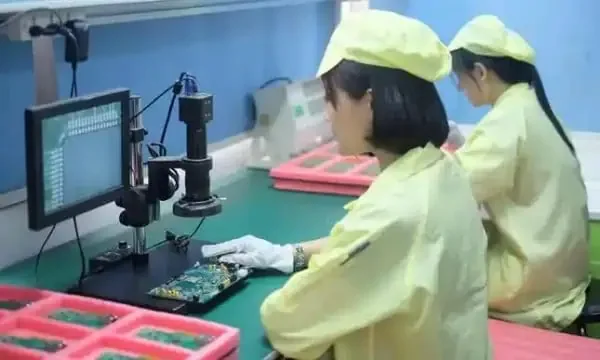
When should first-piece review be repeated?
Define triggers in the control plan: a relevant design or variant change, setup change, program change, material substitution or restart can require renewed checks. The exact scope follows the impact of the change, not a fixed universal checklist.
What is first-piece inspection in PCB assembly?
First-piece inspection is a documented review of an initial manufactured item against the released product and process requirements. In PCBA work, it is a practical opportunity to confirm that the intended variant, BOM, component placement, process setup and required checks are aligned before the build continues. The exact point in the route depends on what the review must establish.
An early setup check can confirm feeders and placement intent before soldering. A completed first assembly can support review of soldered workmanship, programmed identity and specified test results. These are complementary gates, not interchangeable meanings of “first piece.” Define which one your purchase order or build instruction requires.
The review creates evidence and a decision. A checklist with every box ticked is not sufficient if the observations are missing or the person signing lacks release authority. Each open issue needs a disposition, an owner and a clear effect on the work that is waiting. A good first-piece process prevents uncertain decisions from becoming undocumented assumptions in the rest of the lot.
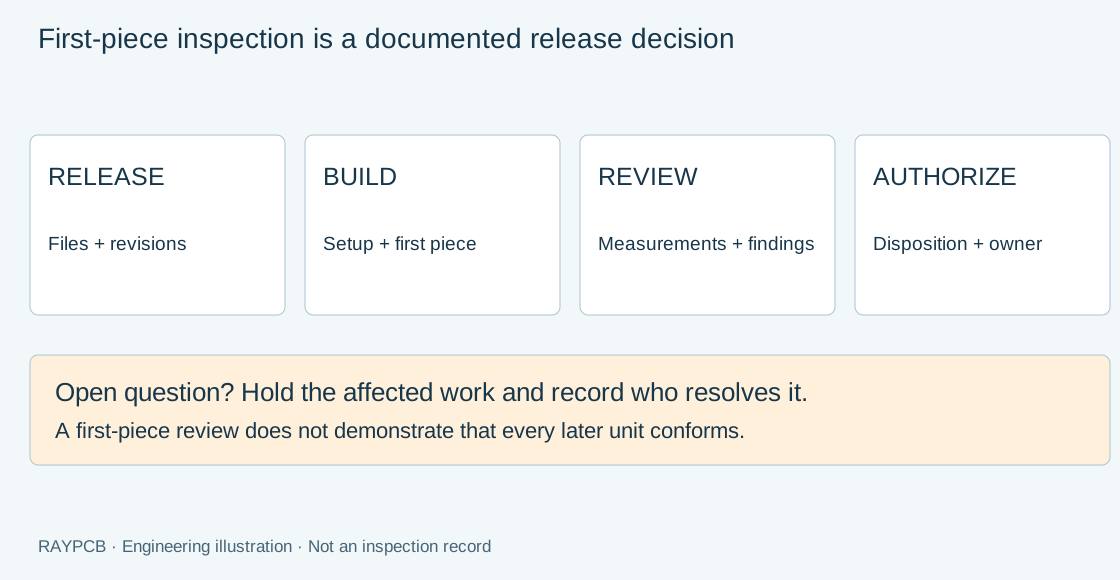
First piece, first article, pilot build and PPAP
| Term | Typical purpose | Boundary to preserve |
|---|---|---|
| First-piece inspection | Confirm an initial item or setup at a defined manufacturing gate | Not evidence that all subsequent units conform |
| First article inspection | Demonstrate a product against defined design requirements with documented results | Scope and documentation depend on the contract and industry |
| Pilot or NPI build | Evaluate the manufacturing route, test readiness and product release before repeat production | May include multiple units, learning actions and design changes |
| PPAP | Provide customer-required production approval evidence in applicable supply chains | Not replaced by a basic first-piece checklist |
| AS9102 FAI | Aerospace first-article documentation under applicable contractual requirements | Not automatically required for all PCB assemblies |
The SAE/IAQG first-article FAQ places 9102 in an aerospace documentation context. If your contract requires AS9102, use the specified revision, forms, characteristic accountability and customer instructions. The checklist on this page is a PCBA planning aid and is not a completed AS9102 report.
When should the first-piece gate be repeated?
Plan the triggers in the process instructions. A new design, changed assembly revision, new variant or significant manufacturing-route change can require another review. Changes to a footprint, component package, stencil, placement program, fixture or test program can affect different parts of the evidence. The decision should consider what changed and which risks need to be re-established.
A restart after an interruption or setup change may also require checks under the approved production procedure. Do not assume that every reel replacement requires a full product FAI, or that no review is needed because the PCB revision is unchanged. The controlled process should distinguish a setup verification, a partial recheck and a new first-article requirement.
Keep the change reason with the review record. If a replacement component has the same electrical role but a different body or marking, it can affect placement, optical inspection and rework assumptions. If only firmware changes, physical assembly may remain the same while the functional test and identity records need revision. Trace the affected evidence rather than restarting every check without a reason.
A practical first-piece inspection procedure
- Freeze the intended build. Identify the PCB, assembly, BOM, firmware and process revisions, quantity and variant.
- Verify readiness. Confirm approved materials, assembly files, setup instructions, tooling and test availability.
- Make the defined first item. Identify the item or panel and preserve the relevant setup and process records.
- Compare requirements with evidence. Review population, orientation, workmanship, measurements and required test results.
- Resolve discrepancies. Record the finding, containment, authorized action and the evidence required after correction.
- Authorize the next step. Record the responsible decision-maker, disposition and any restrictions on subsequent work.
The first item should be traceable to the same controlled setup intended for the continuing build. An engineering sample assembled under special undocumented conditions cannot silently stand in for a production process review. If the sample differs, state the differences and the additional evidence needed.

What to check on the first PCBA
| Area | Review question | Useful evidence |
|---|---|---|
| Identity | Is this the correct product, revision and variant? | Board ID, assembly drawing, BOM and program versions |
| Population | Are fitted and DNP positions interpreted correctly? | BOM-to-placement reconciliation and visual review |
| Materials | Are critical components and alternatives approved? | MPN, lot and approved substitution record |
| Workmanship | Do visible and hidden features meet the agreed inspection scope? | AOI review, visual records and X-ray where specified |
| Operation | Are the required test cases and firmware state correct? | Traceable measured results, limits and test-program revision |
| Disposition | Who resolved each discrepancy and authorized continuation? | Issue log, recheck evidence and named approval |
Use PCB design-for-assembly review to resolve physical access and file-consistency concerns before the first build. The BOM preparation guide helps make fitted variants and substitutions explicit. First-piece inspection is more effective when it confirms a controlled release instead of discovering that the release never existed.
Prepare a first-piece readiness and disposition brief
The tool below organizes eight review areas. For each one, choose evidence recorded, open question, hold or not applicable. Add a short evidence reference or the unresolved question. A “not applicable” entry still needs a rationale; otherwise the brief identifies a documentation gap.
RAYPCB ENGINEERING
Inspection EngineeringFirst-Piece Readiness Brief
Loading First-Piece Readiness Brief…
The output separates declared holds, open questions and missing evidence references. It deliberately does not turn the answers into a quality score or an automatic release. Even when no gap is listed, the responsible team must verify the actual records and sign the production decision under the agreed procedure.
The illustrative example demonstrates a pending functional-test requirement. It is not a report for a RAYPCB customer. Start a new project to clear the example before entering your own requirements. The brief remains in the browser until you deliberately download it or open an email draft; no upload is performed by this tool.
Use IPC for the relevant product and process requirements
For assembled-board workmanship, specify the applicable IPC-A-610 and J-STD-001 requirements, editions, class and addenda with the customer. For the bare board, use the applicable fabrication and acceptance specifications. These documents support specific acceptance questions; they do not turn a generic first-piece form into a universal IPC certification.
The official IPC document directory is a starting point for confirming titles and revision status. Use authorized copies of the specified documents and any customer drawing requirements when making the actual acceptance decision. If a drawing and a referenced requirement appear inconsistent, resolve the governing requirement before continuing affected work.
Sample quantity, retention, customer approval and whether production must wait should be agreed before the first build. A photograph approval, dimensional report and powered functional result are different deliverables. Ask for the evidence needed for your product rather than assuming the phrase “sample confirmed” includes all of them.
Carry the first-piece decision into repeat production
Preserve the approved revisions, issue dispositions and any restricted scope with the work instructions. When a correction changes the product or test program, re-export and recheck the affected files so the next unit follows the corrected release. A handwritten workaround should not become a hidden alternative manufacturing route.
Record what the first-piece review did not establish. For example, a visual setup review does not demonstrate all product functions, and a completed functional test does not reveal every hidden solder defect. Connect AOI review, X-ray inspection and functional-test evidence to the specific risks they address.
For a new design, prototype PCB assembly is the natural commercial next step. For repeat manufacturing, use PCB Assembly with the accepted release and the remaining questions. The quality-assurance page supports the wider supplier discussion about traceability, records and acceptance responsibility.
A first-piece record that supports an actual release decision
Use these fields to scope the report with your quotation. The table is a planning example, not a RAYPCB test result or a promise that every record is included by default.
| Record item | Information to include | Why it matters |
|---|---|---|
| Trigger and identity | Reason for review, part/variant and released file revisions | Identify the build the approval will cover. |
| Check and evidence | Required characteristic, method, result and record reference | A tick without evidence cannot explain an engineering decision. |
| Open items | Hold, unresolved requirement or justified not-applicable item | An unanswered field must not silently become a pass. |
| Authority | Reviewer, decision, date and conditions for continuation | Only the responsible authorized role releases the build. |
Walk through an engineering example
Illustrative review: a component substitution is approved, but the marking and package orientation differ from the original part. Recheck polarity interpretation, placement and the affected inspection recipe before continuing. Keep the substitution approval linked to the first-piece record rather than relying on a verbal instruction.
Continue to carry the first-build findings into the ongoing control plan.
The email link opens a draft for you to complete. Contact is a separate form; these pages do not send messages automatically.
Questions engineers and buyers ask
Does approving a first piece approve the entire lot?
No. It authorizes a defined next step under an agreed procedure. Continuing process controls, inspection and test requirements still apply to subsequent units.
Is first-piece inspection the same as AS9102?
No. AS9102 is an aerospace first-article framework when contractually applicable. A generic PCBA first-piece check does not satisfy all of its requirements.
Can production continue while a sample is being reviewed?
That depends on the agreed hold and release rules. Define who can authorize continuation and what work is contained while questions remain open.
What files should I provide?
Send the assembly revision, BOM and variant rules, placement data, drawings, required standards, firmware/test requirements and any customer approval or report instructions.
Turn the inspection question into an agreed scope
Send the current files, product revision, quantity and the requirements that matter to your application. Identify any unfinished criteria so the engineering review can address them explicitly.
Request the method, coverage, acceptance basis and report format with your quotation. Tool briefs can support the discussion; the Contact form does not automatically receive this page’s entered data.
Engineering references reviewed September 2026. Illustrations explain methods; equipment photographs do not establish product-specific coverage, inspection results or certification.