
RAYMING delivers expert low volume PCB assembly services with fast turnaround, competitive pricing, and proven manufacturing capabilities from prototype to small-batch production needs.
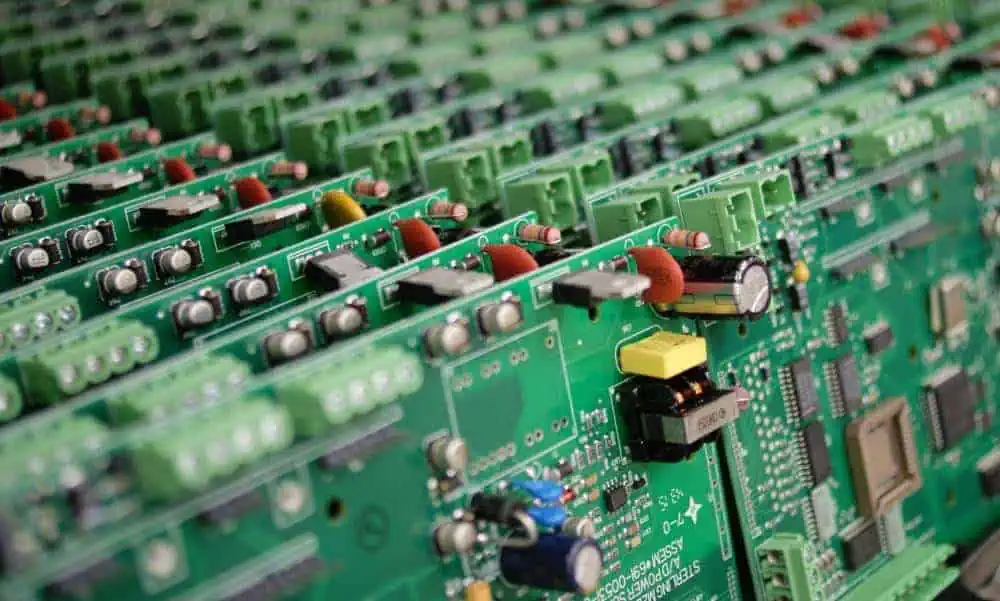
Low volume PCB assembly refers to the production of printed circuit boards in small quantities, typically ranging from a handful to a few hundred units. This specialized manufacturing approach addresses the unique needs of startups, established companies developing new products, and organizations requiring specialized electronics without the commitment and costs associated with large-scale production.
Low volume PCB assembly, also known as small batch PCB assembly, refers to printed circuit board assembly in small quantities but equal to or more than 25 pieces with Design for Manufacturability (DFM) checking and Design for Testability (DFT) checking. However, different manufacturers define low volume differently, with some considering anything from 5 to 5,000 units as low volume production.
Unlike high-volume production, which focuses on maximizing efficiency through automation and economies of scale, low volume PCB assembly prioritizes flexibility, quick turnaround times, and attention to detail. This approach serves as an essential stepping stone for businesses transitioning from prototypes to full-scale manufacturing.
Low volume PCB assembly distinguishes itself through several key characteristics:
Flexibility in Design: The customized touch in low volume PCB assembly translates to greater collaboration with engineers needing to frequently modify PCB specs early in product cycles. This adaptability allows for design iterations without the constraints of mass production tooling.
Quick Turnaround Times: Standard lead times for low volume PCB assembly typically range from 2-4 days, although this depends on the complexity of the printed circuit board project. Some manufacturers even offer 24-hour turnaround options for urgent requirements.
Quality Focus: Each PCB batch undergoes rigorous testing and quality checks. With fewer units, more resources can be devoted to ensuring each piece meets high standards, enhancing overall reliability.


Producing large quantities of untested designs can lead to bugs and negative market feedback, resulting in costly recalls. Low volume assembly enables companies to validate their designs thoroughly before committing to larger production runs.
Early Problem Detection: The earlier flaws can be detected, the easier it is to remedy those flaws. When flaws are not discovered until later in a large production run, it can create a long and expensive remediation process.
Reduced Financial Risk: Ordering in lean, tailored batches reduces working capital strains and the financial risks associated with holding buffer stock seen in mass manufacturing models geared for economies of scale.
With shorter production runs and quicker turnaround times, low volume PCB assembly accelerates the product development cycle. This speed advantage is particularly crucial in competitive markets where being first can determine success.
Rapid Prototyping: Low-volume PCB assembly is common among many startups and product development teams. It is especially helpful during their prototyping and small-scale production phases.
Market Testing: Before fully launching a product, businesses can use low volume PCB assembly to gauge market interest. By producing limited quantities of a new device, companies can collect real-world feedback and make necessary adjustments before committing to larger production runs.
The manageable costs of low volume production allow for easy modifications in design and specifications. You can conduct multiple iterations of prototypes, enhancing the final product’s performance without incurring excessive costs.
Customization Capabilities: Unlike high-volume manufacturing assembly centered on minimizing changeovers through highly standardized components for increased consistency, low volume assembly accommodates far more customer-dictated modifications suited to R&D testing or unique applications.

Low volume PCBs, prototypes, and assemblies have been used in the most crucial sectors such as defense, aerospace, medical, heavy engineering, automotive, electronics, and so on. In the medical field, low volume assembly is particularly valuable for:
Low volume PCB assembly serves prototype automotive electronics, small-batch production for luxury or specialty vehicles, and custom aftermarket electronic systems. Applications include:
Prototype avionics systems and small-batch production of specialized equipment are common applications in this sector. The aerospace industry particularly benefits from low volume assembly due to:
Low volume assembly supports prototype control systems, small runs of specialized sensors and actuators, and custom IoT devices for industrial applications. This includes:
The cost of low volume PCB assembly is determined by various factors, including where the manufacturer is located, PCB size, types of PCB, testing, complexity, and electronic components. Key cost drivers include:
Setup Costs: Setup charges range from $50 to $200, covering machine programming and calibration. These fixed costs have a higher per-unit impact on smaller batches.
Component Costs: Specialty components like RF chips, FPGAs, etc. are more expensive and impact BOM cost significantly. Lower volumes often mean higher component costs due to reduced purchasing power.
Labor Costs: Manual assembly costs can reach up to $0.05 per joint, while automated assembly lines cost around $0.01 per joint. However, automation setup costs may not be justified for very small volumes.
Location is a major cost factor. In the U.S. and Europe, where suppliers provide quality PCB and assembly, the price is very high, and the turnaround is also much longer. China offers good quality PCB at a low price. However, considerations include:
Design for Manufacturing (DFM): We conduct a detailed review for checking whether there are any possible engineering concerns in your documents, including Gerber files, BOM, diagrams, and assembly drawings. Proper DFM can significantly reduce assembly costs.
Panelization: Efficiently arranging multiple PCB designs on a single panel can save up to 20% on assembly costs.
Component Selection: Choosing standard components over specialized ones can reduce both cost and lead time.
Low volume PCB assembly employs various technologies depending on the specific requirements:
Surface Mount Technology (SMT): SMT is a fast, precise PCB assembly method for compact, high-performance designs. It’s ideal for miniaturized electronics and high-density layouts.
Through-Hole Technology (THT): While THT assembly may be more labor-intensive and suitable for lower production volumes compared to SMT, it remains an essential process for certain applications, particularly those requiring high-power or mechanically robust component connections.
Mixed Technology: Our capabilities extend to the use of both SMT and through-hole techniques simultaneously when required. This hybrid approach optimizes design flexibility and functionality.
Testing techniques include automated optical inspection (AOI), microscopic inspection, x-ray inspection, flying probe test (FPT), and visual inspection. Low volume assembly often enables more thorough testing due to the manageable batch sizes.
Design for Testing (DFT): DFT facilitates enhanced functional testing of the boards, complying with the standards. It uses test points which helps with functional tests during and after board manufacturing.
First Article Inspection: Many manufacturers offer a unique first article program where they will send a small number of assembled PCBs for inspection ahead of the main production run.
Higher Per-Unit Costs: Low volume PCB assembly comes with higher per-unit costs compared to high-volume production. This is primarily due to setup costs being spread across fewer units.
Component Sourcing: The smaller numbers can drive only limited bargaining power during component procurement. Small quantities may not qualify for volume discounts from suppliers.
Manual Assembly Requirements: Manual assembly together with hand soldering commonly occurs in the prototyping and pre-production phases because production quantities remain limited. This can lead to consistency challenges.
Skilled Workforce: For manual assembly and hand soldering, preferably ensure the assembly team has considerable expertise to maintain quality. Choose personnel with adequate skill in handling small-scale, high-precision soldering.
Automation Where Feasible: Automated soldering systems such as selective soldering machines together with reflow soldering systems significantly reduce low-volume soldering problems.
Strategic Partnerships: Working with manufacturers who specialize in low volume assembly can provide access to better component pricing and expertise.
Technical Capabilities: Review supported assembly technologies, component types, board substrates, etc. Ensure the provider can assemble the planned design.
Quality Processes: Ask about process controls, inspection procedures, quality certifications, repair policies, etc. This impacts output consistency.
Scalability: Look for ability to seamlessly scale up production volumes over time once testing is complete.
Communication: Interaction will be important during low volume builds, so evaluate ease of communication with sales and engineering reps.
Turnkey Solutions: When you have a small order, there are chances that you want to handle it by a single point of contact. Therefore, you can rely on turnkey PCB assembly services.
Component Sourcing: Many low volume specialists offer component procurement services, leveraging their supplier relationships to obtain better pricing.
Engineering Support: The professionals take two-shift work for expedited small-batch PCB assembly and offer one-on-one engineering support throughout the project.
Lorem ipsum dolor sit amet, consectetur adipiscing el
Miniaturization and HDI: High-Density Interconnect (HDI) technology excels in spaces requiring robust and small PCBs. HDI lets electronic gadgets be more powerful despite their compact stature. This trend is driving demand for more sophisticated low volume assembly capabilities.
Flexible and Rigid-Flex PCBs: The growing market for wearable tech and flexible electronics is pushing PCB manufacturers toward flexible and rigid-flex PCBs. These advanced designs require specialized assembly expertise.
IoT Integration: With billions of IoT devices expected by 2025, PCBs must support low-power consumption, wireless communication, and high-speed data transfer. Low volume assembly serves as the testing ground for these innovations.
As industries shift toward greener practices, sustainability is a critical factor in the future of circuit board assembly. The push for lead-free solder, recyclable PCB materials, and energy-efficient production processes is stronger than ever.
Green Manufacturing: Companies are increasingly adopting environmentally friendly materials and processes, even in low volume production.
Lifecycle Considerations: Recent efforts highlight initiatives like the development of recyclable PCB substrates.
AI systems can be trained to detect defects and anomalies in PCBs during the manufacturing process. Machine learning algorithms can analyze images or sensor data to identify issues such as soldering defects, misalignments, or other manufacturing discrepancies.
Smart Manufacturing: Smart factories employ IoT connectivity to streamline operations, collect performance data, and enable predictive maintenance. This automation is making low volume assembly more efficient and cost-effective.
it. Ut elit tellus, luctus nec ullamcorper mattis, pulvinar dapibus leo.
Early DFM Considerations: Engage with your assembly partner early in the design phase to identify potential manufacturing challenges and optimize for cost and reliability.
Component Standardization: Where possible, use standard components to reduce costs and improve availability.
Test Point Planning: Considering testability throughout the PCB design involves outlining the creation process to understand test point requirements and isolate faults quickly.
Clear Communication: Establish clear communication channels and expectations with your assembly partner from the outset.
Documentation: Provide comprehensive documentation including BOM, assembly drawings, and test procedures.
Iterative Approach: Prototyping or a small run will almost always result in an improved final product, because the flaws will have been both assessed and addressed.
First Article Approval: Always request and thoroughly review first article samples before proceeding with full production.
Regular Communication: Maintain regular contact throughout the assembly process to address any issues promptly.
Testing Strategy: Develop comprehensive testing procedures appropriate for your application’s requirements.
Low volume PCB assembly is an invaluable strategy for companies looking to innovate and adapt in a rapidly changing electronics landscape. With benefits like faster time to market, cost-effectiveness for prototyping, and flexibility in design changes, it allows businesses to navigate the challenges of product development more efficiently.
The key to success lies in understanding that low volume assembly is not simply scaled-down mass production—it’s a specialized approach that requires different strategies, partnerships, and expectations. No matter how big the run, the focus should always be on improving your PCB design for optimal quality. By beginning with a prototype or low volume run, any potential issues can be worked out in a low risk, low cost way that ensures a successful final product.
As we look toward 2025 and beyond, several factors will continue to drive the importance of low volume PCB assembly:
For businesses considering low volume PCB assembly, the investment in finding the right manufacturing partner and optimizing design and processes will pay dividends in product quality, time-to-market, and ultimately, commercial success. Whether you’re a startup developing your first product, an established company exploring new markets, or an engineer working on specialized applications, low volume PCB assembly provides the bridge between innovative ideas and market-ready products.
The future belongs to organizations that can efficiently navigate the transition from concept to scale, and low volume PCB assembly remains an essential tool in that journey. By leveraging the strategies, technologies, and best practices outlined in this guide, you can maximize the value of your low volume assembly projects and position your products for success in an increasingly competitive marketplace.


