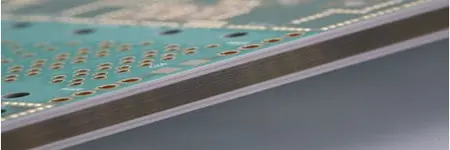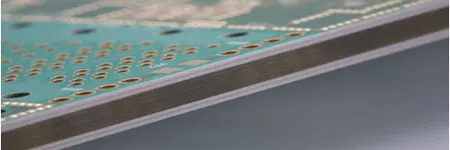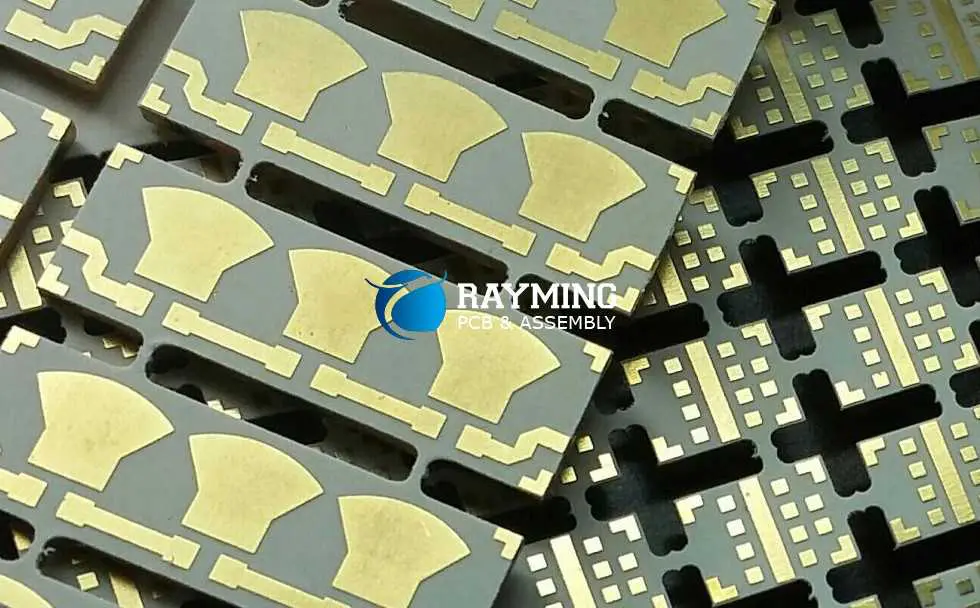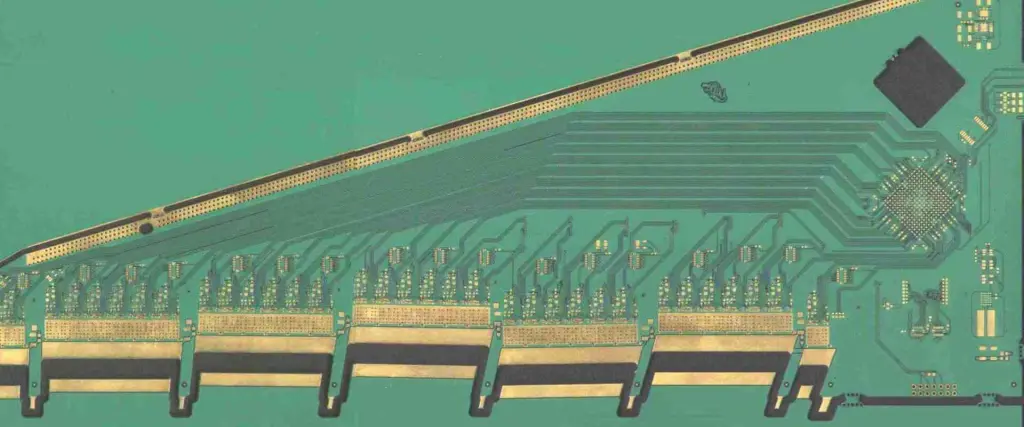
Unique features of the Rogers TMM 10i Laminate

Rogers TMM 10i Laminate

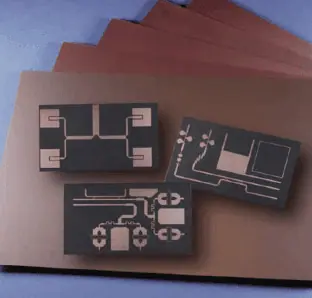
If you are looking for a Laminate with the following characteristics, you have come to the right place. The Rogers TMM 10i laminate is available with the following specifications: Dk = 10, Dissipation Factor = 0.002, Thermal coefficient of resistance (Td) = 425 degC, and thickness in inches. This laminate is also resistant to creep flow, low-cost, and high-performance.

Low dissipation factor

The Dissipation Factor (Dk) of Rogers TMM 10i Laminate is 0.002, and its thermal conductivity is more than double that of traditional PTFE laminates. This material comprises a layer of TMM bonded to brass or aluminum and covered with electrodeposited copper foil. It is available in three standard thicknesses – TMM 3, TMM 4, and TMM 10i.

The high dielectric constants of Rogers TMM laminates provide excellent mechanical and electrical performance. Rogers DiClad laminates are also available with low dielectric constants but don’t incorporate cross-plied constructions. These laminates also offer low dissipation and are often used in high-frequency applications and radomes.

A low dissipation factor of Rogers TMM 10i laminates is essential for microwave circuits. It prevents heat buildup and helps maintain good wire bonding. In addition, this material is highly resistant to high temperature and high humidity, and resistant to creep flow. These properties make it an excellent choice for many RF and microwave applications. In addition, they offer Rayming PCB & Assembly the electrical and mechanical properties to design their devices.

Unfortunately, some PCB designs don’t factor in production costs. This can significantly increase the cost of Rogers PCB substrates. For example, they are switching from a double-layer design to a four-layer one, which doubles the cost of Rogers TMM 10i laminate.

Another essential characteristic of Rogers TMM 10i laminate is its high Dk value. It can handle the highest frequencies and is best suited for high-frequency applications. Compared to FR-4, it has a wide range of Dk values. The Rogers material is also temperature stable. It also offers the lowest loss in high-frequency applications. Aside from a low Dk value, it is an excellent option for high-frequency circuits.

Isotropic dielectric constant

The isotropic dielectric constant of Roger TMM 10i laminate is low, allowing for high thermal conductivity. This material is bonded to brass or aluminum plates and covered with an electrodeposited copper foil. It is available in TMM 3, TMM 4 and TMM 10i laminates. Among its properties, this laminate has a low thermal coefficient of expansion. Its low thermal expansion coefficient and low etching shrinkage make it a good choice for microwave applications.

The Isotropic dielectric constant (Dk) of Rogers TMM 10i laminate is 10. It has a high Dissipation Factor of 0.002 and a thermal coefficient of 19. This means that it supports plated through holes. These dielectric properties are ideal for a variety of electronic applications. However, it is essential to note that the Dk value may vary slightly from one product to another.

Rogers TMM thermoset microwave laminate is a versatile material with a low thermal change rate. It is an excellent choice for high-reliability microstrip and stripline applications. It has many advantages over alumina filler materials in terms of processing, such as accommodating larger copper clad specifications and maintaining tight tolerances. These properties make it an excellent choice for microstrip, stripline, and chip tester applications.

A new generation of microwave circuits is made possible with TMM10, a composite of ceramic and PTFE materials. Its dielectric constant is low – typically 30 ppm/degC – which closely matches copper’s thermal expansion. It also has low etch shrinkage values, making it ideal for applications requiring high reliability. The TMM10i laminate is also twice as thermally efficient as traditional PTFE/ceramic laminates.

Resistant to creep flow

A typical PCB substrate is composed of an FR-4 material, a glass fiber/epoxy composite with copper foil laminated on one side. The FR-4 material offers a good balance between cost and manufacturability and good electrical and thermal properties. Rogers also offers cores and laminates with better high-frequency properties, which are more expensive than fiberglass. However, these laminates offer a lower thermal coefficient.

TMM thermosetting microwave laminates offer the advantages of ceramics and PTFE with a low thermal change rate. They are excellent for high-power applications and have low thermal expansion coefficients. Their low etch shrinkage values and high dielectric constants make them excellent choices for power amplifiers, filters, and couplers. They are also suitable for high-reliability microstrip and stripline applications.

Cost

Among the benefits of Rogers PCB laminates is their superiority over standard FR-4 material. However, if you consider purchasing Rogers laminates for your printed circuit boards, you should ensure that you are working with a top-notch manufacturer. RayMing PCB and Assembly Company can provide excellent printed circuit board assembly and manufacturing services. These experts will assist you throughout the design and fabrication process.

The process of putting copper layers on the Rogers TMM 10i laminate involves the application of a pattern plating. Then, a circuit pattern is electroplated. This process requires less copper for the anode bank and reduces the amount of copper removed during the etching process. This helps reduce the overall cost of the substrate. To make the most out of Rogers TMM 10i laminate, you need to understand the difference between a single-axis edge-plated and a multiple-axis margin plated.

While both materials have similar characteristics, the differences between the two materials are apparent in their Dk values. The TMM 10i laminate is more conductive than the TMM 10, with a Dk of -0.01 on the z-axis at 10 GHz. It also has an extremely low thermal coefficient of 19.0 ppm/degC. As a result, it costs less than Rogers TMM 10i laminate.

Another factor affecting the cost of Rogers TMM 10i laminate is the number of layers in the multilayer design. Moving from four layers to six layers would cost fifty percent more. Switching from two to four layers would be equivalent to a hundred percent increase. The surface finish also plays a role in determining the overall cost of Rogers TMM 10i laminate. Specific surface finishes have higher grades, while others provide a long shelf-life but increase the cost of the Rogers laminate in general.

Conclusion

Rogers TMM 10i laminate’s special formula includes several synthetic materials and the common PTFE. Its high dielectric constant provides electromagnetic interference (EMI) reflection suppression, while its low thermal change rate makes it a good choice for high-reliability applications. It offers many advantages compared to alumina filler materials in processing and can accommodate larger copper-clad specifications and maintain tight tolerances. In addition, they come with low thermal coefficients, which provide high reliability in HV transmission. As a result, the TMM 10i laminate is an excellent choice for microstrip, stripline, and chip tester applications.

The cost of Rogers TMM 10i laminate depends on the frequency it is being used at. A high-frequency PCB needs a laminate with a high CTE, and a higher Dk will produce smaller printed circuit boards. In addition, High-frequency PCBs usually require the use of FR-4 material. Rogers TMM 10i laminate is best for such high-frequency applications. If you are considering a Rogers TMM 10i laminate, you may want to consider the advantages it can provide you.
Why choose the Rogers RO4360G2 for you PCB

Rogers RO4360G2 pcb

RO4360G2 laminates are the first high dielectric constant (Dk) thermoset laminate that we can process like FR-4. It is a high-strength, lightweight composite made of polyphenylene sulfide (PPS) for advanced performance at a low cost. It has an extension co-efficient of -0.112%/C, with a heat deflection temperature below 260ยฐC and good adhesion to metal and other base materials.

This product offers many benefits like:

Outstanding strength at high temperatures ranges from -40ยฐC to +200ยฐC.

Low Cost $4.98/sq.ft (in 2010)

Able to be machined and drilled using ordinary metalworking tools.

This article will discuss the processing of this material about the benefits and provide electrical performance data for this material over various temperatures, humidity levels, and frequencies. In addition, a discussion of the properties, cost, and durability of RO4360G2 will also take place in this paper.

Composition and properties

Rogers RO4360G2 is a composite of crystalline PPS as its matrix and colloidal silica powder as its reinforcing phase. The crystals are rod-like particles approximately 7 nm in diameter. Silica has a melting point of 478ยฐC, making it brittle and not easily machined. As with most semiconductors, the PPS matrix is an insulating material. However, the large density of minuscule crystal particles gives the material a high dielectric constant.

Wet density Dry density Tensile strength (psi) Tensile strength (MPa) Expanded thickness (in.) at 100% elongation temperature (ยฐC) Density @ operating temperature% Hysteresis loss (%) Dielectric constant for P-N junction % Dielectric constant at rated frequency (GHz) Dielectric loss factor @ rated frequency Thermal conductivity k< 0.3ยฐC/cm k > 0.3ยฐC/cm at ambient ยฐC

The dielectric constant of this material is very high at 7.5, which can lead to problems in the design of electrical components using this material. However, all plastics have very low dielectric constants, ranging from 5 for polyethylene (PE) to 11 for polystyrene (PS). The high dielectric constant of this material comes from the crystalline nature of PPS. We enhance it by the silica addition contained in it.

The thermal conductivity of this material is non-linear and ranges between 0.3 and 1.1 k/cm at ambient temperatures. Therefore, the dielectric loss for this material is moderate at about 12%, with a frequency of 100 MHz. The dielectric loss factor at high frequencies is a problem associated with any dielectric material and gets more severe as the temperature increases. However, the thermal conductivity values are excellent and stay relatively constant from 0ยฐC to 100ยฐC. This increase in thermal conductivity at higher temperatures compensates for the loss factor values and helps keep this material from overheating.

Dielectric loss vs. frequency

This material can be machined, drilled, and soldered using ordinary metalworking tools. It is not advisable to use acids, solvents, or other chemicals. This material should work in conjunction with a PEMF device to aid in the healing of cuts and abrasions and improve its durability.

This material’s cost per square foot was $4.98 in 2010 and has been very stable in price over the past few years, despite rampant price increases in other polyphenylene sulfides (PPS).

Durability

This material has excellent durability when used with PEMF as part of a treatment program. As a result, we can use it as a platform for implanted electronic components fabricating electronic packaging, antennas, and RF shielding enclosures. In addition, several pieces of this material have been exposed to air at 90% relative humidity (RH) over one year with no effect on its electrical or physical properties.

The material is essential in various applications, including electrical connectors, wiring harnesses, RF applications, heat sinks, and electronic packaging.

Environmental protection

This material does not have to be heat treated because it has a very high thermal stability of about 90ยฐC/hr. It can also withstand high radiation levels and impact through its excellent insulation properties.

The strength and durability of this material are excellent in the range of -40 to +200ยฐC. The dielectric property of this material also makes it a good choice for applications requiring its dielectric properties at temperatures over 100ยฐC. However, it is not as good as high-temperature thermoplastic polymers (TPUs) for these applications. Nevertheless, we can use it in low-temperature applications to +60ยฐC.

The electrical properties of this material are quite stable, with temperatures over the range of -40ยฐC to +70ยฐC, which makes it an ideal material for use in any connector or switch. In addition, its high dielectric constant leads to better electrical properties at higher temperatures and frequencies. The cost of this material is moderate but still below $7/sq.Ft currently, compared to prices ranging from $15-30+ for other materials.

Plated through-hole reliability

This material is essential in a variety of applications for through-hole soldering. We can use it in most solder processes and provides good adhesion. It has a wide temperature range and can withstand temperatures up to 180ยฐC, making it useful for any fillet or spring soldering process. We can also use it for through-hole lamination.

It could be helpful as a low-cost substrate for high-temperature/high-frequency surface mount devices. We can use it to make electrical components and wire harnesses currently underused. Its wide temperature range and strength make it useful for many applications in corrosive environments where its physical properties are needed more than its dielectric properties. Its strength and dielectric properties allow it to help as a sacrificial laminate in tough environments.

The durability of this material has a rate of 150ยฐC/hr, which is typical for a PPS. It is also resistant to oxidation and requires no special treatment or coating. In the last five years, there have been no major changes to the cost of this material, with prices staying between $6-7/sq.ft, which makes it very economical compared to other materials in its class.

Efficient supply chain

This material is a product of St. Gobain. It has approximately 60% of the world market share for PPS and controls over 80% of the PEMF market. Having a single dominant supplier has allowed certain economies of scale to be taken advantage of over the years, which has kept pricing on this material constant while other materials have had huge price increases during that time.

Rayming PCB & Assembly also controls the market for polycarbonate, one of its main competitors in the PPS market. Polycarbonates require four times as much energy to produce per unit mass as PPS, and they are significantly more expensive. Polycarbonates are also highly susceptible to environmental influences, leading to a loss in strength over time and requiring special treatment to maintain their integrity. This can result in increased costs and added time for processing applications.

Automated assembly compatible

This material has good mechanical properties, which allows for automated assembly processing and pick and place operations.

This material produces electrical connectors, wire harnesses, PCBs, and switch components. It is also an excellent platform for electronic components such as sensors, transistors, and other electronic assemblies.

We can plate it using solder paste or selective soldering (explosive or thermal) processes and easily soldered using conventional surface mount equipment. It is also helpful in several other applications, such as RF shielding enclosures, heat sinks, and electronic packaging.

This material has good mechanical properties and processed using a variety of processes. They include hot-melt extrusion, spraying, cutting, and embossing. It can also be injection molded.

It has a very high dielectric constant, holding its dielectric properties over a wide temperature range.

Conclusion

Rogers RO4360G2 is ideal if you want an inexpensive functional, and durable material to use in your next product. Rogers RO4360G2 is a very popular material for making medical devices, Aircraft Electronic Fixtures, and many other applications. It is available in an open-cell material with a U-type cross-section. Its dielectric constant of 60 indicates that it has excellent electrical properties. In addition, its high tensile strength and excellent oxidation resistance make it suitable for many types of electronic assemblies.

What is Rogers RT/Duroid 5880LZ Material?

Rogers RT Duroid 5880LZ

Introduction to RT/Duroid 5880LZ

RT/Duroid 5880LZ is a ceramic-filled, PTFE composite material manufactured by Rogers Corporation for use in high frequency circuit boards and microwave components.

Some key facts about RT/Duroid 5880LZ:

  • Belongs to the RT/duroid 6000 series of high frequency laminates
  • Features a dielectric constant of 1.96 at 10 GHz
  • Enables performance up to mmWave frequencies
  • Low loss material suitable for exacting circuit applications
  • Uses a filler system to achieve properties and performance
  • Utilized in designs from HF to Ku band and above

With its optimal electrical and mechanical properties, RT/duroid 5880LZ allows circuits to achieve excellent gain and low insertion loss even at millimeter-wave frequencies. In this article, we examine RT/Duroid 5880LZ in more detail including its properties, applications, key benefits, and usage guidelines.

Dielectric Composition

rt duroid 5880
rt duroid 5880

Rogers RT/duroid 5880LZ is a filled, ceramic-PTFE composite dielectric material, consisting of:

  • PTFE (Polytetrafluoroethylene): This provides the basic matrix and gives the material is low dielectric constant. PTFE offers high strength and flexibility along with heat and chemical resistance.
  • Ceramic filler: This is a proprietary formulation of ceramic particulate blended with the PTFE. The filler system enables the dielectric properties while also enhancing thermal and mechanical performance.
  • Glass reinforcement: Glass microfibers are added for improved dimensional stability and temperature coefficient of expansion (CTE).

The composition results in a flexible circuit material that is lightweight and easily fabricates while delivering electrical performance beyond conventional PTFE. The material offerings include prepreg, laminates, bondply, and cable dielectrics.

Dielectric Properties

The dielectric properties of Rogers RT/Duroid 5880LZ that make it suitable for high frequency applications include:

  • Dielectric constant (Dk): 1.96 ยฑ 0.02 @ 10 GHz
  • Dissipation factor (Df): 0.0019 @ 10 GHz
  • Dielectric strength: > 1.6 kV/mil (> 63 kV/mm)

The low and stable dielectric constant over frequency allows for tighter circuit layouts and high frequency operation. The low loss tangent means more of the transmitted signal is retained as it passes through transmission lines, striplines, and other circuit elements. High dielectric strength enables thinner laminates and improved power handling.

Key Material Benefits

Rogers RT/Duroid 5880LZ offers several benefits that make it advantageous for engineers to design high frequency PCBs and components:

  • Extremely low loss for optimal circuit efficiency up to mmWave bands
  • Lightweight with outstanding dimensional stability
  • Allows miniaturization of circuits with thin laminates
  • Good thermal conductivity for power handling
  • Low moisture absorption for reliable electrical performance
  • Excellent CTE match to common metal platings
  • Simple machining and fabrication
  • RoHS compliant and lead-free
  • Enables circuits to achieve wider bandwidths

Typical Applications

RT/Duroid 5880LZ is well suited for the following typical applications:

  • Wireless infrastructure antennas and filters
  • Military phased array radar and communications
  • Satellite communications and telemetry
  • Automotive radar transceivers
  • Point-to-point backhaul radios
  • Test and measurement equipment
  • 5G equipment and mmWave antennas

The low loss, dimensional stability, and fabricability make it an optimal choice where every dB of loss matters. circuits operating from L through Ku band and beyond benefit the most from 5880LZ’s properties.

Available Product Forms

Rogers-RO3203-pcb

Rogers offers RT/Duroid 5880LZ in the following product formats:

Prepreg

  • 5880LZ reinforced prepreg
  • Available on various glass styles
  • Multiple resin content options
  • Rolls or panel forms

Laminates

  • Double-sided clad sheets
  • Thicknesses from 0.005″ to 0.125″
  • Rolls or panel sizes
  • One ounce ED copper standard

Bondply

  • Adhesive bonded multilayer material
  • Alternating dielectric and double-sided copper layers
  • Eliminates press cycles for multilayer boards

Wire and Cable

  • Coaxial and multi-conductor cables
  • Semirigid and flexible constructions
  • Custom cable solutions

Key Properties Data

Below table summarizes the key properties of RT/Duroid 5880LZ laminates:

PropertyValueTest Method
Dielectric Constant (Dk)1.96 ยฑ 0.02IPC-TM-650 2.5.5.5 Clamped Stripline
Dissipation Factor (Df)0.0019IPC-TM-650 2.5.5.5
Dielectric Strength1.6 kV/mil minIPC-TM-650 2.5.6.2
Volume Resistivity1 x 10^15 Ohm-cmIPC-TM-650 2.5.17
Surface Resistivity5 x 10^15 Ohm-cm minIPC-TM-650 2.5.17
Coefficient of Thermal Expansion (CTE)13IPC-TM-650 2.4.24
Thermal Conductivity0.69 W/mKASTM C518
Moisture Absorption<0.02%IPC-TM-650 2.6.2.1
Density2.2 g/cm3ASTM D792
Hardness50 (Shore D)ASTM D2240
Flexural Strength27.6 ksiIPC-TM-650 2.4.4
Tensile Modulus540 ksiASTM D638
Compressive Modulus12.7 ksiASTM D695
Peel Strength6.5 pliIPC-TM-650 2.4.8
Shear Strength750 psiIPC-TM-650 2.4.8
Glass Transition Temperature (Tg)280ยฐCIPC-TM-650 2.4.24

Design and Layout Guidelines

duroid-5870

To achieve optimal circuit performance on RT/Duroid 5880LZ, designers should follow these PCB layout recommendations:

  • Maintain line width/spacing ratio of โ‰ฅ 0.5
  • Use smaller traces and spacing at higher frequencies
  • Include a continuous ground plane whenever possible
  • Minimize number of laminate cuts and material discontinuities
  • Watch for resonance points and avoid narrowband designs
  • Use impedance matching, coupling andtransitions as needed
  • Add more power supply filter โ€“ing as frequency increases
  • Allow sufficient distance between circuits and board edges
  • Carefully model losses as frequency increases

Fabrication and Assembly

RT/Duroid 5880LZ laminates can be easily fabricated using conventional PCB processing techniques:

  • Imaging: Photolithography, laser direct imaging
  • Etching: Ammoniacal or cupric chloride etchants
  • Plating: Electrolytic and electroless copper plating
  • Solder mask: Liquid photoimageable or dry film
  • Silkscreen: Epoxy and UV ink compatible
  • Automated routing, milling, drilling processes
  • V-scoring for snap separation of circuits

For best results, refer to the IPC specifications together with the RT/duroid fabrication guidelines published by Rogers Corporation.

Solder assembly can be done using standard surface mount and through-hole component attachment processes. Rogers recommends 250ยฐC as the maximum soldering temperature for most applications.

Availability and Costs

RT/Duroid 5880LZ material is available directly from Rogers Corporation or through their global network of distributors. It is offered in panel sizes up to 18 x 24 inches and 24 inch wide master rolls.

Being a premium microwave material, RT/Duroid 5880LZ costs more than standard FR-4 laminates. However, it enables far superior performance for demanding high frequency applications. Volume discounts may be available for qualified customers.

Comparing to Other Microwave Materials

There are several other PTFE-based microwave laminate options for high frequency designs besides RT/Duroid 5880LZ:

RT/Duroid 5870

  • Similar ceramic-filled PTFE material
  • Slightly higher dielectric constant of 2.33
  • Better for broader bandwidths

RT/Duroid 6002

  • Pure PTFE with Dk of 2.94
  • Excellent dimensional stability
  • Lower cost alternative

Rogers RO3000 Series

  • Woven glass reinforced ceramic/PTFE
  • Dk options from 3.0 to 10.2
  • Provides good balance of cost and performance

Rogers RO4000 Series

  • Filled hydrocarbon ceramic laminates
  • Dk of 3.38 to 3.55 for optimal high frequency use
  • Low cost, high yield

Each material has different trade-offs between frequency coverage, loss, cost, and fabricability. 5880LZ provides the best overall combination at mmWave bands.

Rogers Corporation Company Profile

Rogers Corporation (NYSE: ROG) is a global leader in engineered materials solutions. Founded in 1832 and headquartered in Chandler, Arizona, Rogers develops advanced materials for mission-critical applications in electrification, 5G infrastructure, connected mobility, clean energy and more.

Rogers invented the first circuit materials that enabled the growth of modern electronics. RT/duroidยฎ materials launched in 1958 were the worldโ€™s first ceramic-filled thermoset fluoropolymer circuit materials. Today, Rogersโ€™ advanced circuit materials enable the performance, reliability and density demands of evolviny technologies.

Some key facts about Rogers Corporation:

  • 2021 sales of $974 million with 49% in Advanced Connectivity Solutions
  • Over 200 patents on advanced materials technologies
  • Operations in Asia, Europe and the Americas
  • Major R&D centers in the USA, Belgium, China and Germany
  • Employs over 3,500 people worldwide

In addition to circuit materials, Rogers offers specialized components for EVs/HEVs, wireless infrastructure, rail and clean energy applications through its EMS division. The company also produces engineered foams and composites for automotive and industrial markets.

Conclusion

Rogers RT/Duroid 5880LZ gives engineers a high performance microwave dielectric to achieve low loss circuits through mmWave frequencies. The ceramic-filled PTFE composite enables stable dielectric properties, tight dimensional control, excellent circuit fabrication, and rugged reliability.

With its precisely engineered filler system, 5880LZ achieves the optimal balance of electrical performance and mechanical stability needed for today’s cutting-edge wireless, radar and satellite communication systems. It allows maximum utilization of available bandwidth while overcoming losses that limit conventional materials.

As high frequency circuits push to 40 GHz and above, RT/Duroid 5880LZ will continue enabling next-generation microwave PCB innovations well into the future through its industry-leading low loss, consistency and fabrication strengths.

Frequently Asked Questions

Here are some common questions about RT/Duroid 5880LZ answered:

Q: What is the dielectric constant of RT/Duroid 5880LZ?

A: RT/Duroid 5880LZ has a dielectric constant of 1.96 ยฑ 0.02 at 10 GHz. This low, stable dielectric constant enables excellent performance up to mmWave frequencies.

Q: What are some typical applications for 5880LZ material?

A: Typical applications include wireless infrastructure, radar and satellite communications, automotive radar, test equipment, and 5G mmWave. Its low loss and stability suits it for applications where circuit efficiency is critical.

Q: Does Rogers 5880LZ require special fabrication processes?

A: No, standard PCB manufacturing processes like imaging, etching, drilling/routing can be used. Rogers provides guidelines for optimal results based on IPC standards.

Q: What copper foil types are used with 5880LZ laminates?

A: One ounce electrodeposited or rolled copper foil is typically used. Other foil weights up to 4 oz. copper are optionally available.

Q: What is the difference between RT/duroid 5880 and 5870 materials?

A: RT/duroid 5880LZ has a lower Dk of 1.96 while 5870 has a Dk of 2.33. 5880LZ achieves lower loss for mmWave, while 5870 offers wider bandwidths.

What is Rogers Ro4003c Material?

Rogers RO4003C

Rogers 4003C is a popular radio frequency (RF) circuit board laminate material designed for high frequency applications up to gigahertz frequencies. This article provides an in-depth look at 4003C material properties, key electrical and physical characteristics, design considerations, and datasheet parameters that engineers need to know when using this versatile microwave substrate.

Overview of Rogers 4003 Material

The Rogers Corporation 4003C laminate is a ceramic-filled thermoset PTFE composite reinforced with microfiber glass fabric. It was engineered to meet the demands of high frequency analog and digital circuits operating up to frequencies as high as 3GHz.

Some key properties that make 4003C suitable for microwave PCBs include:

  • Stable dielectric constant of 3.55 +/- 0.05
  • Low dissipation factor of 0.0027
  • Tight dielectric tolerance for impedance control
  • High thermal conductivity of 0.71 W/m/K
  • Low z-axis coefficient of thermal expansion (CTE)
  • Lead-free assembly compatibility
  • UL 94 V-0 flammability rating
  • Excellent dimensional stability
  • High strength and moisture resistance
  • RoHS compliant materials

Ro4003c achieves an optimal balance of electrical performance, mechanical integrity, and ease of fabrication for RF applications. Next weโ€™ll look at the 4003C datasheet specs in more detail.

Rogers 4003C Datasheet Parameters

Rogers RO4533

Here are some of the key parameters and characteristics provided on the Rogers 4003C datasheet for PCB design and fabrication:

ParameterValue
Dielectric Constant (ฮตr)3.55 +/- 0.05
Dissipation Factor0.0027
Volume Resistivity>1×10^14 ohm-cm
Surface Resistivity>5×10^13 ohms
Dielectric Strength>1.5 kV/mil
Loss Tangent0.0009 (2.5GHz)
Z-Axis CTE60 ppm/ยฐC
XY CTE17 ppm/ยฐC
Tg280ยฐC
Td340ยฐC
Thermal Conductivity0.71 W/m/K
Moisture Absorption<0.2%
Copper Peel Strength1 lb/in
Lead-Free Process260ยฐC

These properties make 4003C suitable for controlled impedance RF circuits through microwave frequencies. Weโ€™ll look at some of the key parameters in more detail.

Rogers RO4003C Calculator – RayPCB Engineering Tools

Rogers RO4003C Calculator

RayPCB Engineering Tools

Rogers RO4003C

Dk
3.38
Df @10GHz
0.0027
Tg
>280ยฐC
Thermal K
0.71 W/mยทK
โšก Impedance Calculator
๐Ÿ“Š Material Data
๐Ÿ“ Stack-up Builder
๐Ÿ“ก RF Analysis
๐Ÿ”ฌ Material Compare
Transmission Line Calculator
โ•โ•โ•
Microstrip
โ‰กโ‰กโ‰ก
Stripline
โ•”โ•โ•—
GCPWG
Calculated Impedance
50.00ฮฉ
Effective Dk: 2.800
Cross Section View
โšก Electrical Properties
Dielectric Constant (Dk)3.38 ยฑ0.05@10GHz, 23ยฐC
Dissipation Factor (Df)0.0027@10GHz, 23ยฐC
Volume Resistivity1.7ร—10ยนโฐ MฮฉยทcmC-96/35/90
Surface Resistivity5.7ร—10โน MฮฉC-96/35/90
Electrical Strength31 kV/mmIPC-TM-650
๐ŸŒก๏ธ Thermal Properties
Thermal Conductivity0.71 W/mยทK
CTE (X-axis)11 ppm/ยฐC-55 to 288ยฐC
CTE (Y-axis)14 ppm/ยฐC-55 to 288ยฐC
CTE (Z-axis)46 ppm/ยฐC-55 to 288ยฐC
Glass Transition (Tg)>280ยฐCTMA
Decomposition (Td)425ยฐCTGA
๐Ÿ”ง Mechanical Properties
Peel Strength (1 oz Cu)6.0 lb/inAfter solder float
Flexural Strength200 MPaLengthwise
Density1.79 g/cmยณ
Moisture Absorption0.06%48hr immersion
FlammabilityUL 94 V-0
๐Ÿ“ Standard Core Thicknesses
0.203 mm (8 mil)
0.305 mm (12 mil)
0.406 mm (16 mil)
0.508 mm (20 mil)
0.813 mm (32 mil)
1.524 mm (60 mil)
Copper Foil Options
0.5 oz (17.5 ฮผm)
1 oz (35 ฮผm)
2 oz (70 ฮผm)
๐Ÿ“ Stack-up Builder
Total Stack-up Thickness: 0.578 mm (22.8 mil)
Visual Stack-up

Stack-up Summary

Copper Layers
2
Dielectric Layers
1
๐Ÿ“ก Frequency Analysis
10.0 GHz
Wavelength (ฮป)
17.932 mm
ฮป/4 = 4.483 mm
Skin Depth (ฮด)
0.661 ฮผm
In copper
Effective Dk
2.800
For microstrip
๐ŸŽฏ Application Frequency Bands
GPS L1/L2
1.2-1.6 GHz
WiFi 2.4G
2.4-2.5 GHz
WiFi 5G
5.1-5.8 GHz
X-Band
8-12 GHz
Ku-Band
12-18 GHz
K-Band
18-27 GHz
Ka-Band
26-40 GHz

RO4003C Frequency Performance

  • Ultra-low loss (Df=0.0027) for superior signal integrity
  • Stable Dk (ยฑ0.05) across frequency range up to 40 GHz
  • Excellent phase stability for antenna designs
  • Consistent performance across temperature range
๐Ÿ”ฌ Material Comparison
Property RO4003C โ˜… FR-4 RO4350B RT/duroid 5880
Dk @10GHz 3.38 4.2-4.5 3.48 2.20
Df @10GHz 0.0027 0.02 0.0037 0.0009
Tg (ยฐC) >280 130-140 280 >500
CTE Z (ppm/ยฐC) 46 60-70 32 237
Thermal K (W/mยทK) 0.71 0.25 0.69 0.20
Cost Index $$ $ $$ $$$$
Lead-Free Compatible โœ“ โœ“ โœ“ โœ—
Max Frequency 40 GHz ~3 GHz 77 GHz 110 GHz

Why Choose RO4003C?

  • Lowest loss in the RO4000 series (Df=0.0027)
  • Excellent for high-frequency applications up to 40 GHz
  • Compatible with standard FR-4 fabrication processes
  • Lead-free assembly compatible
  • Ideal for LNAs, filters, and antenna feed networks
  • Cost-effective alternative to PTFE materials
Get RO4003C PCB Quote from RayPCB
RayMing 4 Layer 1.6mm Rogers 4003 Circuit Board

RayMing 4 Layer 1.6mm Rogers 4003 Circuit Board

Original price was: $760.00.Current price is: $720.00.

Rogers 4003 is a ceramic-filled, woven glass reinforced hydrocarbon/ceramic laminate material specifically engineered for high-frequency and high-speed digital applications

Dielectric Constant and Loss Tangent

The dielectric constant of 4003C is 3.55 with tight tolerances of +/- 0.05. This allows circuit designers to engineer precise, consistent impedances across fabricated boards.

The low loss tangent of 0.0027 (at 10GHz) ensures signals propagate through 4003C PCBs with minimal attenuation. Loss increases gradually with frequency but remains below 0.005 up to 3GHz.

Thermal Performance

Rogers ro4003c provides excellent thermal conductivity at 0.71 W/m/K in the z-axis. This allows heat to dissipate in the dielectric layer which helps maintain signal integrity and component life at high power levels.

The moderate z-axis coefficient of thermal expansion (CTE) of 60 ppm/ยฐC provides good reliability under temperature cycling to reduce risks of trace fractures.

Lead-Free Assembly Compatibility

4003C laminates withstand the 260ยฐC soldering temperatures required for lead-free electronics assembly. The material remains stable through multiple reflow cycles without electrical or mechanical degradation.

Microwave/RF Design Capability

With its stable electrical properties and tight tolerances, 4003C enables fabrication of controlled impedance transmission lines and passive networks that function consistently through microwave frequencies up to several GHz.

The low loss tangent allows complex RF circuits with many lamination layers to avoid excessive signal loss.

4003C Material Grades

Rogers offers several variants of 4003C tailored for different applications:

  • 4003C for general RF/microwave use up to 3GHz
  • 4003C-AP for automotive applications
  • 4003C-2 (double clad) for stripline impedance layers
  • High frequency laminates above Rogers ro4003c for mmWave

Consult Rogers for guidance selecting the optimal 4003C grade for your particular cost, performance and reliability requirements.

Design Considerations Using Rogers 4003C

Here are some key design practices engineers should follow when working with Rogers 4003C material:

  • Use impedance calculators like Saturn PCB Toolkit to determine stripline dimensions
  • Select laminate thickness to achieve target impedance
  • Model discontinuities like stubs, vias, bends in traces
  • Include power and ground plane effects in impedance models
  • Account for frequency-dependent Dk variations
  • Limit glass weave skew to under 5 degrees
  • Watch for resin starvation, voids and thickness variations
  • Allow for Dk tolerance when budgeting impedances

Paying attention to these factors is necessary to achieve repeatable RF performance that matches simulations.

Typical Applications of Rogers 4003C

Rogers RO4500 PCB

Some examples of products using Rogers 4003C laminates include:

  • RADAR systems
  • Radio transceivers
  • Wireless infrastructure
  • High speed data links
  • Test and measurement equipment
  • Broadband amplifiers
  • Medical imaging equipment
  • Automotive sensors
  • Aerospace avionics

4003C is commonly used in wireless and industrial electronics operating up to several GHz where low cost, high performance circuit materials are needed.

Comparison to Other Popular RF Laminates

Parameter4003CRO4350BRO3003Taconic RF-35
Dielectric Constant3.553.483.03.5
Loss Tangent0.00270.00370.00130.0019
Dk Toleranceยฑ0.05ยฑ0.05ยฑ0.04ยฑ0.05
Lead-Free Process260ยฐC280ยฐC288ยฐC260ยฐC
Thermal Conductivity0.71 W/m/K0.69 W/m/K0.69 W/m/K0.35 W/m/K
CostMediumMediumLowLow

Ro4003c provides a good balance of cost and high frequency performance.

Availability of Rogers 4003C Material

As one of Rogersโ€™ most popular laminates, 4003C is well-stocked by authorized distributors worldwide. Common inventory includes:

  • 0.005โ€ to 0.125โ€ dielectric thicknesses
  • Reinforced and non-reinforced cores
  • Isola 370HR resin system
  • 1โ„2, 1, and 2 oz. electrodeposited copper foils
  • Glass fabric styles 1035, 2113, 3313
  • Sheets and panel sizes up to 18โ€ x 24โ€

Work closely with your PCB supplier to ensure adequate material availability and lead times for your prototype through production needs.

FQA about Rogers 4003C Laminates

Rogers RT duroid 6006 PCB

What is the dielectric constant of Rogers 4003C?

Ro4003c has a stable dielectric constant of 3.55 +/- 0.05 tolerance across a wide frequency range up to gigahertz frequencies.

Can Rogers 4003C withstand lead-free soldering temps?

Yes, Ro4003c remains stable through lead-free assembly reflow profiles up to 260ยฐC and multiple soldering cycles.

What are some typical applications for Rogers 4003?

4003C is commonly used for RF circuits in wireless communications, RADAR, medical and test equipment and other applications up to 3GHz.

Does Rogers 4003C laminate meet UL flammability ratings?

Rogers 4003C achieves a UL 94 V-0 rating for flame resistance to meet safety requirements.

What is the loss tangent of Rogers 4003C at 5GHz?

The loss tangent of 4003C at 5GHz frequencies is approximately 0.0035 which provides good low loss microwave performance.

Conclusion

With its controlled dielectric constant, low loss, thermal performance, and stability, Rogers 4003C laminate has become a popular PCB substrate for high frequency RF and microwave circuits through multi-GHz frequencies. Careful modeling of transmission lines, discontinuities, and plane effects is necessary to achieve impedances and performance that match simulations. When designed properly, Rogers 4003C enables consistent, repeatable RF PCB performance across prototyping through volume production for wireless, aerospace, defense and industrial electronics applications.

How to Find Rogers RO4533 PCB Manufacturer

Rogers RO4533

Rogers RO4533 is a ceramic-filled laminate strengthened with glass hydrocarbon-based materials. This laminate offers good mechanical and electrical properties that make them ideal for antenna designs. Rogers RO4533 laminates belong to the 4500 series. This circuit material offers a lot of advantages which makes it well suited for use over a wide range of frequencies.

Rogers RO4533 is specifically designed for high-speed and high-performance applications. These laminates meet the requirements of antenna designers. The low dielectric characteristics and thickness tolerance are some of its great benefits.

Due to the low loss performance and the controlled dielectric constant of these laminates, they are well suited for microstrip antenna applications. These laminates also offer passive intermodulation response, a great feature that meets the requirements of the antenna industries. RO4533 laminates are compatible with lead-free solder processing.

Properties of Rogers RO4533

RO4533 laminates feature great mechanical, thermal, and electrical qualities that make them useful in several applications. Some of these properties will be discussed below;

Low dielectric constant: The dielectric constant measures the capacity of a material to store energy in an electric field. Rogers RO4533 has a dielectric constant of 3.3 at 10GHz /23ยฐC. A low dielectric constant material is desirable in the antenna market. Materials with low dielectric constant donโ€™t break down easily when exposed to intense electric fields.

Excellent Coefficient of thermal expansion: The coefficient of thermal expansion of this material is measured at 13 and 11 ppm/ยฐC in the X and Y-axis respectively. The CTE of a PCB material describes how it expands in response to a change in temperature. Rogers RO4533 has a low CTE, which implies that this material can be used in any type of temperature.

High thermal conductivity: Thermal conductivity measures the capacity of a printed-circuit-board material to transfer heat. The thermal conductivity of Rogers RO4533 is measured at 0.6 W/m/K. This thermal property meets the requirement for antenna-grade laminates.

Low moisture absorption: The rate at which Rogers RO4533 laminates absorb moisture is very low. Its moisture absorption is measured at 0.02%. These laminates can withstand a humid environment. Typically, PCB materialsโ€™ rates of moisture absorption are lower than 0.2%.

Dissipation factor: The dissipation factor of Rogers 4533 is 0.0025 at 10GHz/23ยฐC. This measure shows the loss rate of energy due to the inherent properties of a material. These laminates have an efficient insulator system since their dissipation factor is low.

Exceptional dimensional stability:ย The dimensional stability of Rogers Ro4533 is less than 0.2mm/m. This shows that the size of this material remains the same even when it is exposed to high temperatures.

Benefits of Rogers 4533

Rogers RO4533 PCB

Rogers RO4533 laminates provide the electrical and thermo-mechanical qualities required by antenna designers. These laminates offer a lot of benefits to users.

Cost-effective option: Rogers RO4533 is a cost-effective option for antenna designers. It is a better alternative to PTFE antenna technologies which enables designers to optimize the performance of their antennas.

RoHS compliant: PCBs that are RoHS-compliant are the ideal option for antenna designers. Rogers RO4533 is RoHS compliant, which means that this material complies with the standard provided by RoHS.

Environmentally-friendly: This laminate is lead-free process compatible and halogen-free. It is also flame-retardant making it safe for the environment.  

Thermoset resin system: The resin system of Rogers Ro4533 laminates are fabricated to offer the properties suitable for ideal antenna performance.

Other benefits include:

  • More yields on bigger panel sizes
  • Improved handling and long life span when used with thin materials
  • Low PIM performance
  • Offers excellent PTH reliability
  • Exceptional passive intermodulation response for antenna applications

Rogers RO4533 Applications

Rogers RO4533 laminates offer stable and reliable electrical and mechanical properties ideal for use in applications such as;

  • WiMAX antenna networks
  • Cellular infrastructure base station antennas

Processing and Fabrication Guidelines for RO4533

Rogers RO4533 circuit materials come with a reverse treat copper foil. This construction helps to minimize conductor loss and boost PIM performance while using the thermo-mechanical and electrical dielectric characteristics of the resin system. RO4533 laminates are not designed for multilayer use.

Surface pre-clean: To avoid surface oxidation, the panels should undergo a micro-etch before processing.

Entry/exit material: To reduce copper burns, entry and exit materials should be rigid and flat. Aluminum and composite boards are good entry materials.

Maximum stack height: The materialโ€™s thickness drilled shouldnโ€™t exceed 70% of the flute length.

Deburring: Nylon brush scrubbers can be used to deburr RO4533 circuit material

What to Consider when Choosing Rogers RO4533

When choosing Rogers RO4533, certain factors should be considered. These factors are discussed below;

Application requirements: Different applications require different properties. You should consider if Rogers RO4533 properties are compatible with the application you want to use it for. This is a very important factor you should consider first.

 Material thickness: The dielectric thickness of your material is very important since this material features great thickness tolerance.

Availability: Ensure Rogers RO4533 is available in large supply. You can confirm from your product supplier.

Type of copper clad: This laminate comes in different copper foil options. Although most applications use the standard EDC foil, the LoPro reverse-treat copper can also be an option

Installation space size:ย You should be aware of the size of the space you intend to install your Rogers RO4533. This will help you choose the ideal size for your application.

Frequently Asked Questions

What determines the price of Rogers RO4533?

Different factors like thickness and size, cost of freight, electrical and mechanical properties, copper thickness, type of cladding material, and special requirements determine the price of Rogers RO4533

How can RO4533 be stored?

The storage conditions of RO4533 will determine the storage period. This material can be stored in ambient conditions for an indefinite period. However, it is important you avoid conditions that may result in mechanical damages. Note that storing these materials under corrosive environments will reduce their lifespan.

Conclusion

Rogers RO4533 materials are high-performance laminates designed by Rogers Corporation. These materials are fabricated to meet the demands of the antenna industries. Rogers RO4533 laminates are compatible with FR-4 and lead-free solder processing. The mechanical and electrical properties of these laminates are exceptional.

Isola PCB Materials: Complete Guide to Laminates, Selection & Applications [2026]

Isola PCB

If you’ve been designing PCBs for any length of time, you’ve likely encountered Isola materials on specification sheets, fab house material lists, or stackup recommendations from signal integrity engineers. But choosing the right Isola PCB laminate isn’t just about picking a name from a dropdown menuโ€”it requires understanding what makes each material tick and how it matches your design requirements.

I’ve spent years working with various Isola PCB materials across everything from consumer electronics to aerospace applications. This guide distills that experience into practical advice you can actually use when selecting materials for your next project.

What is Isola PCB?

An Isola PCB refers to any printed circuit board fabricated using laminate and prepreg materials manufactured by Isola Group. Founded over 100 years ago, Isola has become one of the most trusted names in high-performance PCB substrates, with manufacturing facilities across North America, Europe, and Asia.

What sets Isola PCB materials apart from generic FR-4 is their consistency and engineered performance characteristics. While standard FR-4 might give you a dielectric constant somewhere between 4.2 and 4.8 depending on who manufactured it, Isola materials come with tightly controlled specifications that signal integrity engineers actually trust.

Isola specializes in copper-clad laminates (CCL) and prepreg materialsโ€”the fundamental building blocks of multilayer PCBs. These aren’t just generic glass-reinforced epoxy; they’re formulated with proprietary resin systems designed for specific performance requirements like low loss, high thermal reliability, or lead-free assembly compatibility.

Isola PCB Design Calculator
RayPCB Engineering Tools
Select Isola Material
Dielectric Constant (Dk)
3.70
Loss Tangent (Df)
0.0120
Glass Transition (Tg)
180ยฐC
Decomposition (Td)
340ยฐC
CTE Z-axis
3.0%
T260/T288
>60/>30 min
FR408 is Isola's high-performance FR-4 material designed for multilayer PWB applications. It offers excellent thermal reliability, low CTE, and is ideal for high layer count designs requiring lead-free assembly compatibility.
Material Comparison Chart
Material Dk Df Tg (ยฐC) Application
FR408 3.70 0.0120 180 High Reliability
IS410 4.00 0.0180 170 Multilayer
Astra MT77 3.00 0.0017 200 RF/Microwave
I-Tera MT40 3.45 0.0031 200 High Speed
I-Speed 3.63 0.0085 185 Low Loss
ยฉ 2024 RayPCB Engineering Tools | www.raypcb.com

Understanding Isola PCB Building Blocks

Before diving into specific materials, let’s establish what we’re actually working with when we specify Isola PCB substrates.

Copper-Clad Laminates (CCL)

Copper-clad laminate is the foundation of any PCB. It consists of a cured prepreg core sandwiched between thin copper foil layers on each side. The lamination process involves compressing copper and prepreg plies together under precisely controlled heat, pressure, and vacuum conditions.

The quality of this lamination directly affects your PCB’s electrical performance, dimensional stability, and long-term reliability. Isola’s CCL products undergo rigorous quality testing that goes beyond standard IPC requirements.

Prepreg Materials

Prepregโ€”short for “pre-impregnated”โ€”is the fiberglass fabric infused with partially cured resin that bonds laminate layers together during PCB fabrication. The resin system is what gives each Isola material its unique thermal, electrical, and mechanical properties.

Common Isola prepreg styles include 1080 (0.08mm thickness, ~64.5% resin content), 2116 (0.12mm, ~54% resin content), and 7628 (0.2mm, ~47% resin content). These different glass weaves and resin percentages allow fabricators to hit specific stackup thicknesses and impedance targets.

Isola PCB Material Categories

Isola organizes their laminate portfolio into categories based on primary application. Understanding these categories helps narrow down your material search before getting into specific products.

Standard FR-4 Laminates

These materials provide reliable performance for general-purpose applications where extreme speed or thermal demands don’t exist. They offer excellent processability with standard PCB fabrication equipment.

High-Speed Digital Laminates

Designed for multi-gigabit data transmission, these materials feature low dielectric loss and stable electrical properties across frequency. Products like I-Speed, I-Tera MT40, and Tachyon 100G fall into this category.

RF/Microwave Laminates

For applications above 3 GHz, these ultra-low-loss materials provide the controlled dielectric constant and minimal signal degradation that RF designs demand. Astra MT77, IS680, and IS680 AG serve this market.

Thermally Robust Laminates

When lead-free assembly, multiple reflow cycles, or high ambient temperatures are concerns, these high-Tg materials maintain their integrity under thermal stress. The 370HR and FR408HR are workhorses in this category.

Popular Isola PCB Materials: Detailed Specifications

Here’s where we get into the specifics that actually matter for your design decisions. The table below summarizes key properties, followed by deeper dives into each material.

Material Dk @ 10GHz Df @ 10GHz Tg (ยฐC) Td (ยฐC) Best Application
370HR 4.04 0.021 180 340 High-reliability, lead-free
FR408HR 3.68 0.0092 190 360 Mid-loss, thermal performance
I-Speed 3.63 0.006 185 340 10-25 Gbps digital
I-Tera MT40 3.45 0.0031 200 360 High-speed, multiple Dk options
Tachyon 100G 3.02 0.0021 215 360 100 Gbps+ data center
Astra MT77 3.00 0.0017 200 360 RF/mmWave, automotive radar
IS680 3.00 0.0028 200 360 General RF/microwave
TerraGreen 3.45 0.0031 200 360 Halogen-free, low-loss

Isola 370HR: The Industry Standard

If there’s one Isola PCB material that deserves the title of “industry workhorse,” it’s 370HR. This high-performance FR-4 has been deployed in thousands of designs across virtually every market segment.

What makes 370HR special is its combination of thermal reliability, CAF (Conductive Anodic Filament) resistance, and ease of processing. With a Tg of 180ยฐC and Td of 340ยฐC, it handles lead-free assembly without issues. The low Z-axis CTE (coefficient of thermal expansion) means your plated through-holes stay intact through multiple thermal cycles.

The 370HR uses spread weave glass in both directions, which helps reduce fiber weave effects in high-speed designsโ€”though for truly critical signal integrity applications, you’ll want to look at the lower-loss options below.

Best for: General high-reliability applications, automotive body electronics, industrial controls, military systems requiring proven reliability.

Isola FR408HR: The Mid-Loss Performer

FR408HR occupies the sweet spot between standard FR-4 and premium low-loss materials. With Dk of 3.68 and Df of 0.0092 at 10 GHz, it offers meaningfully better electrical performance than 370HR while remaining compatible with standard FR-4 processing.

The 190ยฐC Tg and 360ยฐC Td make it extremely robust for lead-free assembly. It’s rated for 6x 260ยฐC reflow cycles, which gives you plenty of margin for rework scenarios.

I’ve used FR408HR extensively for designs running 5-10 Gbps where 370HR’s higher loss would start causing eye diagram concerns, but where specifying Tachyon or I-Tera would be overkill for the application.

Best for: Telecom equipment, datacom switches up to 25 Gbps, designs where you need better signal integrity than FR-4 without premium material costs.

Isola I-Speed: Bridging Standard and Premium

I-Speed is Isola’s entry point into genuine low-loss territory. The Df of 0.006 at 10 GHz represents a significant improvement over FR408HR while maintaining FR-4 process compatibility.

This material works well for designs in the 10-25 Gbps range where you’re starting to see loss budgets get tight. It’s also popular for backplanes and high-layer-count boards where cumulative losses through longer trace lengths become significant.

Best for: Networking equipment, server backplanes, storage systems running NVMe or SAS interfaces.

Isola I-Tera MT40: Flexible Performance

I-Tera MT40 is unique in offering multiple Dk optionsโ€”3.38, 3.45, 3.60, and 3.75โ€”all measured at 10 GHz through the z-axis. This flexibility is incredibly useful when you’re trying to match impedances in hybrid designs or optimize trace widths for specific layer constraints.

The Df of 0.0031 at 10 GHz puts it firmly in low-loss territory. Combined with a 200ยฐC Tg and excellent thermal compatibility with materials like Astra MT77 and Tachyon 100G, I-Tera MT40 is often the material of choice for complex hybrid builds.

Best for: Hybrid RF/digital designs, applications requiring impedance matching flexibility, 5G infrastructure, high-speed networking.

Isola Tachyon 100G: Ultra-High-Speed Champion

When your signals are running at 100 Gbps and beyond, Tachyon 100G delivers the performance you need. With Dk of 3.02 and Df of 0.0021 at 10 GHz, this material enables longer channel reaches and cleaner eye diagrams than anything else in the standard FR-4 processing family.

The 215ยฐC Tg is the highest among Isola’s high-speed digital materials, providing exceptional thermal margin. Its CTE characteristics closely match Astra MT77, making hybrid constructions straightforward.

Data center operators and hyperscalers have driven significant adoption of Tachyon 100G for 400G Ethernet switches and next-generation AI/ML accelerator boards.

Best for: Data center switches, 100G/400G Ethernet, AI accelerators, high-performance computing, anywhere loss budgets are extremely tight.

Isola Astra MT77: RF and Millimeter-Wave Excellence

Astra MT77 represents Isola’s answer to traditional ceramic-filled PTFE materialsโ€”but with FR-4 process compatibility. The ultra-low Df of 0.0017 at 10 GHz, combined with Dk stability from -40ยฐC to +140ยฐC through W-band frequencies (75-110 GHz), makes it ideal for the most demanding RF applications.

What really sets Astra MT77 apart is its dimensional stability and consistent electrical performance across temperature extremes. Automotive radar systems operating at 77 GHz rely heavily on this material, as do 5G mmWave base stations and phased array antennas.

The FR-4 process compatibility means you avoid the handling headaches and cost premiums associated with PTFE materials while getting comparable electrical performance.

Best for: Automotive radar (77 GHz), 5G mmWave, aerospace communications, satellite systems, any application above 10 GHz requiring excellent Dk stability.

Isola IS680 and IS680 AG: General RF Solutions

IS680 provides reliable RF performance for applications that don’t require the extreme specifications of Astra MT77. With Dk of 3.0 and Df of 0.0028, it’s suitable for most RF designs below 20 GHz.

The IS680 AG variant adds enhanced characteristics for antenna applications, offering Dk of 2.80 and Df of 0.0013โ€”making it an excellent choice for RF front-end modules and antenna arrays.

Best for: General RF/microwave circuits, wireless infrastructure, antenna feed networks.

Isola TerraGreen: Halogen-Free Performance

Environmental regulations increasingly require halogen-free materials in consumer electronics. TerraGreen provides low-loss performance (Dk 3.45, Df 0.0031 at 10 GHz) while meeting halogen-free requirements.

The TerraGreen 400G variant pushes performance even further, with Dk of 3.05 and Df of 0.0018 at 10 GHzโ€”suitable for ultra-high-speed digital circuits requiring halogen-free compliance.

Best for: Consumer electronics requiring environmental compliance, European markets with halogen restrictions, designs requiring both performance and environmental certification.

How to Select the Right Isola PCB Material

Material selection shouldn’t start with picking a product name. It should start with understanding your design requirements, then matching those requirements to material properties.

Signal Speed and Loss Budget

The most common selection driver is signal speed. Here’s a practical guideline:

Data Rate Recommended Materials
Under 5 Gbps 370HR, FR408HR
5-10 Gbps FR408HR, I-Speed
10-25 Gbps I-Speed, I-Tera MT40
25-56 Gbps I-Tera MT40, Tachyon 100G
100 Gbps+ Tachyon 100G
RF under 10 GHz IS680, I-Tera MT40
RF 10-40 GHz Astra MT77, IS680 AG
RF 40-110 GHz Astra MT77

Run your signal integrity simulations with actual trace lengths and determine what loss level you can tolerate. Over-specifying material drives up costs without adding value.

Thermal Requirements

Consider your assembly process and operating environment:

  • Standard lead-free assembly: 370HR, FR408HR, or any material with Tg > 170ยฐC and Td > 300ยฐC
  • Multiple reflow cycles or rework: FR408HR (rated 6x 260ยฐC reflow)
  • High ambient temperature operation: Materials with Tg well above your maximum operating temperature
  • Extreme thermal cycling: IS550H for automotive power electronics, polyimide (P95/P96) for extreme temperature ranges

HDI and High-Layer-Count Considerations

For HDI (High Density Interconnect) boards and designs with many layers, you need materials with excellent CAF resistance, low Z-axis CTE, and good lamination characteristics. The 370HR and FR408HR have extensive track records in sequential lamination designs.

High-speed HDI applications often benefit from I-Tera MT40’s multiple Dk options, which help achieve target impedances with constrained trace geometries.

Hybrid Material Builds

Modern high-performance designs often combine different materials within the same stackupโ€”for example, using Astra MT77 for RF layers and Tachyon 100G for high-speed digital layers.

Isola specifically designs materials like Tachyon 100G and Astra MT77 to be thermally compatible for hybrid builds. Their similar CTE characteristics prevent warpage and delamination issues that plague mismatched material combinations.

Isola PCB Design Best Practices

Beyond material selection, here are engineering practices that get the most out of Isola PCB materials.

Use Actual Dk/Df Values for Simulations

Datasheet values are typical, not guaranteed. For accurate signal integrity analysis, use the Dk/Df tables specific to your construction rather than marketing datasheet values. Isola provides detailed Dk/Df tables for each material showing values at multiple frequencies and for various constructions (core and prepreg combinations).

Build margin into your design for Dk variations (ยฑ5-10% is common), thickness tolerances, and etch factors.

Account for Glass Weave Effects

In high-speed designs, the glass weave pattern can cause impedance variations and timing skew. Isola’s 370HR uses spread weave glass to minimize these effects, but for critical applications, consider rotating traces 5-10ยฐ relative to the glass weave or using materials specifically designed to mitigate fiber weave effects.

Follow Isola Fabrication Guidelines

Each Isola PCB material has specific processing parameters for optimal results. Ensure your fabricator follows Isola’s recommendations for lamination profiles, drilling parameters, and plating processes. This is especially important for the higher-performance materials like Tachyon 100G and Astra MT77.

Use IsoStack for Stackup Design

Isola provides the IsoStack tool for designing and validating PCB stackups. It helps visualize how different material combinations affect overall board thickness, impedance, and manufacturability. Using this tool early in your design process prevents surprises during fabrication.

Isola PCB Applications by Industry

Different industries have different priorities when selecting Isola PCB materials. Here’s what typically works in each sector.

Telecommunications and 5G

5G infrastructure demands both high-speed digital performance for baseband processing and excellent RF characteristics for radio units. Hybrid builds using I-Tera MT40 or Tachyon 100G for digital sections and Astra MT77 for RF sections are common.

Automotive Electronics

Automotive spans a wide range from infotainment (370HR provides proven reliability) to ADAS radar at 77 GHz (Astra MT77 is purpose-built for this) to EV power electronics facing extreme thermal cycling (IS550H handles continuous temperatures up to 175ยฐC).

Aerospace and Defense

Mission-critical applications demand proven reliability and often require extended temperature ranges. The 370HR and FR408HR have extensive qualification histories. For extreme temperatures, polyimide materials like P95/P96 may be necessary. RF radar systems benefit from Astra MT77’s stability through millimeter-wave frequencies.

Data Centers and High-Performance Computing

The push to 400G Ethernet and beyond drives adoption of Tachyon 100G. AI/ML accelerator boards with multiple high-speed interfaces also benefit from this ultra-low-loss material.

Medical and Industrial Equipment

These sectors typically prioritize reliability and longevity over cutting-edge speed. The 370HR offers the proven reliability these applications require at reasonable cost. For applications requiring very long service life, IS550H provides enhanced thermal endurance.

Quality Certifications for Isola PCB Materials

When specifying Isola PCB materials, verify the quality certifications relevant to your application:

Certification Description Typical Applications
ISO 9001 Quality management system All applications
IATF 16949 Automotive quality standard Automotive electronics
AS9100 Aerospace quality standard Aerospace, defense
UL Recognition Safety certification All commercial applications
IPC-4101 Laminate qualification PCB fabrication validation
RoHS/REACH Environmental compliance European markets, consumer products

Isola materials generally exceed industry qualification requirements through their own rigorous internal testing before product release.

Isola PCB vs. Competitor Materials

Engineers often ask how Isola PCB materials compare to alternatives from Rogers, Panasonic Megtron, or Nelco. Here’s my practical take based on real-world project experience.

Isola vs. Rogers

Rogers dominates the traditional PTFE-based RF market with materials like RO4003C and RT/Duroid. However, PTFE materials require specialized processingโ€”different drill bits, lower processing temperatures, and careful handling to prevent delamination.

For applications above 40 GHz or requiring Dk below 2.5, Rogers PTFE materials remain the gold standard. But for automotive radar at 77 GHz, 5G mmWave, and most RF applications up to W-band, Astra MT77 delivers comparable electrical performance with FR-4 processing compatibility. This translates to shorter lead times, more fabricator options, and typically 20-40% lower costs.

Isola vs. Panasonic Megtron

Panasonic’s Megtron series (particularly Megtron 6 and Megtron 7) competes directly with Isola’s high-speed digital materials. Both product lines offer excellent electrical performance for multi-gigabit applications.

From a practical standpoint, Megtron materials tend to have better availability in Asian supply chains, while Isola materials are often more readily available from North American and European fabricators. Performance-wise, they’re quite comparableโ€”material selection often comes down to your fabricator’s experience and material stocking.

Isola vs. Nelco

Nelco materials, now part of Park Aerospace, offer similar high-performance options to Isola. In my experience, Nelco materials have slightly better thermal and mechanical performance in some cases, particularly for demanding aerospace applications.

However, Isola’s broader product portfolio and global manufacturing footprint often provide better availability and more competitive pricing. For most commercial applications, both vendors deliver comparable results.

Cost Considerations for Isola PCB Materials

Material cost matters, but it’s rarely the deciding factor for performance-critical designs. Here’s how material costs typically stack up:

Material Category Relative Cost When to Accept Higher Cost
Standard FR-4 1x (baseline) Basic applications only
370HR 1.2-1.5x When reliability matters
FR408HR 1.5-2x 5-10 Gbps, thermal concerns
I-Speed 2-2.5x 10-25 Gbps applications
I-Tera MT40 2.5-3x High-speed, hybrid builds
Tachyon 100G 3-4x 100 Gbps+, data centers
Astra MT77 3-5x RF above 10 GHz

Remember that material cost is typically 15-30% of total PCB cost. Saving 20% on material might only reduce your total cost by 3-6%โ€”not worth compromising signal integrity or reliability for most applications.

The real cost savings come from selecting the right material the first time. A board spin caused by inadequate material performance costs far more than the premium for better material.

Understanding Isola PCB Material Properties

To make informed material decisions, you need to understand what the key specifications actually mean for your design.

Dielectric Constant (Dk)

The dielectric constant determines trace impedance for a given geometry. Lower Dk means wider traces for the same impedance, which can ease routing in dense designs. Higher Dk enables narrower traces and smaller structures, useful for miniaturization.

Isola materials typically range from Dk 3.0 (Astra MT77) to Dk 4.4 (IS410). For most high-speed digital designs, a Dk around 3.0-3.7 provides good balance between trace width and loss performance.

Equally important is Dk stability across temperature and frequency. Materials like Astra MT77 maintain consistent Dk from -40ยฐC to +140ยฐC through W-band frequenciesโ€”critical for RF designs where impedance drift causes performance degradation.

Dissipation Factor (Df)

The dissipation factor directly relates to signal loss in your traces. Lower Df means less energy lost as heat, enabling longer traces and better signal integrity. This is the primary differentiator between standard and premium materials.

As a rule of thumb, Df below 0.01 is considered low-loss for most high-speed digital applications. Ultra-low-loss materials like Tachyon 100G (Df 0.0021) and Astra MT77 (Df 0.0017) become necessary when loss budgets are extremely tightโ€”such as 100 Gbps channels or mmWave RF designs.

Glass Transition Temperature (Tg)

Tg is the temperature at which the laminate transitions from rigid to rubbery. Above Tg, the material’s CTE increases dramatically, and mechanical properties degrade. For lead-free assembly with peak reflow temperatures around 260ยฐC, you need Tg well above your maximum process temperature.

Most Isola PCB materials offer Tg from 180ยฐC to 215ยฐC, providing adequate margin for lead-free assembly. The higher Tg materials like Tachyon 100G (215ยฐC) are especially valuable when multiple reflow cycles or rework is anticipated.

Decomposition Temperature (Td)

Td indicates when the material begins to chemically break down. This is your absolute upper limitโ€”exceed it and the laminate will degrade permanently. Isola materials typically range from 340ยฐC to 360ยฐC Td, well above normal processing temperatures.

Coefficient of Thermal Expansion (CTE)

CTE, particularly in the Z-axis, affects via reliability. Higher Z-axis CTE puts more stress on plated through-holes during thermal cycling. Materials like 370HR feature low Z-axis CTE (around 45 ppm/ยฐC), contributing to excellent via reliability through thousands of thermal cycles.

Useful Resources for Isola PCB Design

Here are resources I regularly reference when working with Isola materials:

Official Isola Resources:

Technical Papers:

  • Isola’s technical papers on CAF resistance, high-speed material selection, and laminate manufacturing provide deeper insight into material behavior

IPC Standards:

  • IPC-4101: Base Materials for Rigid and Multilayer Printed Boards
  • IPC-TM-650: Test Methods Manual

Frequently Asked Questions About Isola PCB

What is the difference between Isola 370HR and FR408HR?

The primary difference is electrical performance. FR408HR offers lower dielectric loss (Df 0.0092 vs 0.021 at 10 GHz) and lower Dk (3.68 vs 4.04), making it better for high-speed digital applications. FR408HR also has higher Tg (190ยฐC vs 180ยฐC) and Td (360ยฐC vs 340ยฐC), providing superior thermal performance. Choose 370HR for general high-reliability applications where electrical performance isn’t critical; choose FR408HR when you need better signal integrity or more thermal margin.

Can I use Isola materials in hybrid stackups with different materials?

Yes, and Isola designs many products specifically for hybrid compatibility. Materials like Tachyon 100G and Astra MT77 share similar CTE characteristics, making them excellent partners for builds requiring both high-speed digital and RF performance. Always verify thermal compatibility with your fabricator and use IsoStack to model the stackup before committing to production.

How do I choose between I-Speed, I-Tera MT40, and Tachyon 100G?

It comes down to data rate and loss budget. I-Speed (Df 0.006) works well up to about 25 Gbps. I-Tera MT40 (Df 0.0031) handles higher speeds and offers multiple Dk options for impedance flexibility. Tachyon 100G (Df 0.0021) is optimized for 100 Gbps and beyond. Run your signal integrity simulations with actual trace lengths to determine what loss level you can tolerate for acceptable eye diagrams.

Is Astra MT77 a replacement for PTFE materials?

For many applications, yes. With Dk of 3.0 and Df of 0.0017 at 10 GHzโ€”stable through W-band frequenciesโ€”Astra MT77 rivals ceramic-filled PTFE materials while processing like FR-4. This eliminates the handling difficulties, longer lead times, and higher costs associated with PTFE. However, for applications requiring Dk below 2.5 or very specific dielectric properties not available in Astra MT77, PTFE may still be necessary.

What should I consider when designing for lead-free assembly with Isola materials?

Ensure your selected material has sufficient thermal margin. Look for Tg above 170ยฐC and Td above 300ยฐC at minimum. Materials like 370HR (Tg 180ยฐC), FR408HR (Tg 190ยฐC), and the low-loss materials (Tg 185-215ยฐC) all support lead-free assembly. FR408HR is specifically rated for 6x 260ยฐC reflow cycles, making it suitable for designs that may require rework. Also consider Z-axis CTEโ€”lower values reduce stress on plated through-holes during thermal cycling.

Conclusion

Selecting the right Isola PCB material isn’t complicated once you understand your requirements and how each material addresses them. Start with your signal speed and thermal requirements, match those to material categories, then fine-tune based on specific design constraints and budget.

For most applications, 370HR or FR408HR will serve you well. When signal speeds push above 10 Gbps, move to I-Speed or I-Tera MT40. For 100 Gbps applications, Tachyon 100G is the go-to choice. RF designs above 10 GHz benefit from Astra MT77’s exceptional stability.

The key is matching material to applicationโ€”not over-specifying because a better material exists, and not under-specifying because you’re trying to save a few dollars on a high-performance design that needs proper materials to work reliably.

Whatever Isola PCB material you choose, work closely with your fabricator to ensure proper processing. The best material in the world won’t perform if it’s not fabricated correctly.

Arlon PCB: Material Selection Guide for High-Frequency & High-Temperature Designs

Arlon PCB

If you’ve ever had a circuit fail during thermal cycling or watched signal integrity fall apart above 10 GHz, you know that material selection isn’t just a checkbox on your BOM โ€” it’s the foundation of your entire design. After working with RF and high-temperature PCB designs for years, I’ve learned that when standard FR-4 can’t cut it anymore, Arlon PCB materials consistently deliver where it matters most.

This guide walks you through everything you need to know about selecting the right Arlon material for your project. Whether you’re designing phased array antennas, automotive radar modules, or aerospace control systems, you’ll find practical insights here that go beyond basic datasheets.

What is Arlon PCB Material?

Arlon PCB refers to circuit boards manufactured using high-performance laminates and prepregs from Arlon Electronic Materials Division (EMD). Founded in 1969 as a veteran-owned business, Arlon has built over 50 years of expertise in PTFE-based microwave laminates and more than 30 years in polyimide systems.

What sets Arlon apart from standard FR-4? The key difference lies in the resin systems. While FR-4 uses a basic epoxy-glass construction, Arlon materials incorporate advanced thermoset technologies including:

  • Polyimide resins with glass transition temperatures exceeding 250ยฐC
  • PTFE (Teflon) composites for ultra-low dielectric loss
  • Ceramic-filled systems for enhanced thermal conductivity
  • High-Tg multifunctional epoxies for lead-free assembly compatibility

These specialized formulations deliver electrical, thermal, and mechanical performance that standard materials simply cannot match. When your design demands stable dielectric properties at 40 GHz, reliable operation at 200ยฐC, or plated through-hole integrity through 500+ thermal cycles, Arlon materials become essential rather than optional.

Arlon PCB Calculator

RayPCB Engineering Tools

Arlon Material Selection Guide

AD Series (AD255C, AD260A, AD300A, AD350A)RF/Microwave

Woven fiberglass reinforced PTFE composites. Ideal for high-frequency applications requiring excellent electrical properties and dimensional stability.

Dk: 2.55 - 3.50 Df: 0.0018 - 0.0035 Freq: Up to 40 GHz Tg: 280ยฐC+

CLTE Series (CLTE-XT, CLTE-AT)Thermal Management

Controlled Low Thermal Expansion materials with ceramic-filled PTFE. Excellent for applications requiring matched CTE with components.

Dk: 2.94 - 3.00 Df: 0.0012 - 0.0013 CTE: 8-12 ppm/ยฐC Tg: 288ยฐC

DiClad Series (DiClad 527, DiClad 880)Cost-Effective RF

Non-woven PTFE/fiberglass composites offering excellent price-performance ratio for moderate frequency applications.

Dk: 2.50 - 2.55 Df: 0.0018 - 0.0022 Freq: Up to 20 GHz Cost: Medium

CuClad Series (CuClad 217, CuClad 250GT)High-Speed Digital

PTFE/woven glass laminates with excellent signal integrity for high-speed digital and mixed-signal applications.

Dk: 2.17 - 2.50 Df: 0.0009 - 0.0018 Z-axis CTE: 24 ppm/ยฐC Peel Strength: 8-12 lb/in

TC Series (TC350, TC600)High Thermal Conductivity

Ceramic-filled PTFE with enhanced thermal conductivity for power amplifiers and LED applications.

Dk: 3.50 - 6.15 Thermal K: 0.72 - 1.1 W/mK Df: 0.002 - 0.0025 App: Power/LED
Note: Material selection depends on frequency, thermal requirements, and cost constraints. Contact RayPCB for detailed material datasheets and recommendations.

Microstrip Impedance Calculator

PCB Stack-up Designer

0.5 mil
1.4 mil
L1 - Signal (Top)
10 mil
Core - AD255C
1.4 mil
L2 - GND
6 mil
Prepreg - FR4
1.4 mil
L3 - Power
10 mil
Core - AD255C
1.4 mil
L4 - Signal (Bottom)
0.5 mil
Solder Mask

Stack-up Summary

Total Thickness

32.6 mils

Arlon Core Layers

2

Prepreg Layers

1

Manufacturing Cost Estimator

ร—
Disclaimer: This is an estimate only. Actual costs may vary based on specifications, tolerances, and current material availability. Contact RayPCB for an accurate quote.

Arlon PCB Design Best Practices

๐Ÿ“ Material Selection for Frequency

For applications below 6 GHz, DiClad series offers excellent cost-performance. For 6-20 GHz, use AD series. Above 20 GHz, consider CLTE or CuClad series for lowest loss. Always verify Dk tolerance with manufacturer specs.

๐Ÿ”ฅ Thermal Management Considerations

PTFE materials have lower thermal conductivity than FR4. Use thermal vias (0.3mm diameter, 1mm pitch) under power components. TC series materials provide 3-5x better thermal conductivity for high-power applications.

โšก Impedance Control Guidelines

Arlon materials have tighter Dk tolerance (ยฑ0.04) vs FR4 (ยฑ0.2). Design for nominal Dk value. Request impedance testing on production lots. Allow ยฑ5% impedance tolerance in your design margins.

๐Ÿ”ง Drilling & Via Recommendations

PTFE materials require specialized drill bits with lower feed rates. Minimum via diameter: 8 mils. Maintain aspect ratio below 8:1. Plasma desmear is recommended over chemical processes for PTFE.

๐Ÿ“ Trace Width Compensation

PTFE has higher CTE than copper. Add +0.5 mil to trace width specifications to compensate for etching variations. Use trapezoidal trace models for accurate impedance calculations above 10 GHz.

๐Ÿ”— Hybrid Stack-up Design

Combine Arlon RF cores with FR4 prepreg for cost optimization. Place high-frequency signals on Arlon layers. Use FR4 bonding films compatible with PTFE (e.g., FEP or low-flow prepreg).

โœจ Surface Finish Selection

ENIG provides best solderability for fine-pitch components on PTFE. For RF applications, immersion silver or OSP minimize conductor loss. Avoid HASL on thin PTFE cores (<10 mil).

๐Ÿ“ฆ Storage & Handling

Store Arlon laminates at <30ยฐC and <50% RH. PTFE materials absorb minimal moisture but cleanliness is critical. Handle with gloves to prevent contamination affecting solder mask adhesion.

Arlon Material Comparison Chart

Material Dk @ 10GHz Df @ 10GHz Tg (ยฐC) CTE Z-axis Best For
AD255C 2.55 ยฑ 0.04 0.0018 >280 280 ppm/ยฐC General RF
AD260A 2.60 ยฑ 0.04 0.0017 >280 265 ppm/ยฐC Antennas
AD300A 3.00 ยฑ 0.04 0.0020 >280 250 ppm/ยฐC Size reduction
AD350A 3.50 ยฑ 0.05 0.0035 >280 230 ppm/ยฐC Compact RF
CLTE-XT 2.94 ยฑ 0.04 0.0012 288 12 ppm/ยฐC CTE matching
DiClad 527 2.50 ยฑ 0.04 0.0018 N/A 170 ppm/ยฐC Cost-effective
DiClad 880 2.55 ยฑ 0.04 0.0022 N/A 170 ppm/ยฐC Multi-layer
CuClad 217 2.17 ยฑ 0.02 0.0009 N/A 24 ppm/ยฐC Low loss
CuClad 250GT 2.50 ยฑ 0.04 0.0018 N/A 24 ppm/ยฐC High-speed
TC350 3.50 ยฑ 0.05 0.0020 N/A 24 ppm/ยฐC Thermal mgmt
TC600 6.15 ยฑ 0.15 0.0025 N/A 20 ppm/ยฐC High Dk apps
Selection Guide: Lower Dk = faster signal propagation, wider traces. Lower Df = less signal loss. Matched CTE = better reliability under thermal cycling.

Why Choose Arlon PCB Over Standard Materials?

The decision to specify Arlon typically comes down to three scenarios where FR-4 limitations become design constraints:

High-Frequency Performance Requirements

FR-4’s dielectric constant (Dk) fluctuates significantly with frequency and temperature, causing impedance mismatches and signal degradation above 1-2 GHz. Arlon materials maintain stable Dk values from DC through millimeter-wave frequencies, with loss tangents as low as 0.0009 โ€” compared to FR-4’s 0.02 or higher.

Thermal Management Challenges

Standard epoxy-glass laminates begin softening around their 130-140ยฐC glass transition temperature. Arlon polyimides remain dimensionally stable at 250ยฐC+, while PTFE-based materials maintain electrical performance across extreme temperature ranges from -55ยฐC to +260ยฐC.

Reliability in Harsh Environments

Military, aerospace, and automotive applications demand materials that survive thermal shock, vibration, and moisture exposure. Arlon’s low moisture absorption (typically under 0.3%) and matched coefficient of thermal expansion (CTE) prevent the delamination and via failures that plague FR-4 in demanding conditions.

Arlon PCB Material Categories and Product Families

Understanding Arlon’s product families helps you narrow down options quickly. The materials fall into two main divisions: Electronic Substrates (for high-reliability multilayer applications) and Microwave Materials (for RF/high-frequency circuits).

Polyimide Products

Arlon’s polyimide family delivers the highest thermal performance for applications where temperature is the primary constraint. These materials feature:

Product Tg (ยฐC) Td (ยฐC) Key Applications
Arlon 33N 250 389 Flame-retardant commercial avionics (UL94-V0)
Arlon 35N 250 407 Military, aerospace, down-hole drilling
Arlon 85N 250 407 High-layer count MLBs, space applications
Arlon 85HP 250+ 430 Mission-critical aerospace, extended thermal life

The 85N series deserves special attention. As a pure, unmodified polyimide without flame retardants, it offers superior long-term thermal stability compared to halogenated alternatives. I’ve seen 85N boards survive qualification testing that destroyed competing materials.

Epoxy Products

When you need better-than-FR-4 performance without the cost of polyimide, Arlon’s epoxy products fill the gap:

Product Tg (ยฐC) Td (ยฐC) Best For
Arlon 44N 170 300+ Hole filling in metal core PCBs
Arlon 45N 175 300+ High-layer count MLB, general high-reliability

These materials process like standard FR-4 but deliver significantly better thermal performance, making them practical upgrades for existing manufacturing lines.

Low-Flow Products

Rigid-flex designs and heat sink bonding require precise resin flow control. Arlon’s low-flow prepregs address this:

Product Tg (ยฐC) Application Focus
Arlon 37N 200 Rigid-flex bonding, heat sink attachment
Arlon 38N 200 Enhanced adhesion to polyimide films
Arlon 47N 175 Multilayer rigid-flex epoxy systems
Arlon 49N 170 High-layer count rigid-flex, lead-free compatible
Arlon 51N 170 Lead-free rigid-flex, RoHS compliant

The 51N is particularly important for modern designs โ€” it’s specifically formulated for lead-free assembly compatibility, addressing the higher reflow temperatures required by RoHS-compliant soldering.

Controlled Thermal Expansion (SMT) Products

Surface mount reliability depends on matching the PCB’s thermal expansion to ceramic components. Arlon’s SMT materials use aramid reinforcement instead of glass to achieve this:

Product Tg (ยฐC) CTE (X-Y) Key Benefit
Arlon 45NK 170 Low LCCC compatibility, woven aramid/epoxy
Arlon 55NT 170 7-9 ppm/ยฐC Lightweight aerospace, non-woven aramid
Arlon 85NT 250 7-9 ppm/ยฐC Space applications, polyimide/aramid

The 55NT is worth noting for weight-sensitive designs โ€” the aramid reinforcement provides excellent dimensional stability at roughly half the weight of glass-reinforced alternatives.

Microwave Products (PTFE-Based)

For RF and microwave circuits, Arlon offers an extensive range of PTFE composites:

Product Family Dk Range Df (typical) Best Application
AD Series (AD255C, AD260A, AD300A, AD350A) 2.55-3.50 0.0018-0.0035 General RF, woven glass reinforced
CLTE Series (CLTE-XT, CLTE-AT) 2.94-3.00 0.0012-0.0013 CTE-matched, phase-critical systems
DiClad Series (DiClad 527, DiClad 880) 2.50-2.55 0.0018-0.0022 Cost-effective RF, non-woven PTFE
CuClad Series (CuClad 217, CuClad 250GT) 2.17-2.50 0.0009-0.0018 Lowest loss, high-speed digital
TC Series (TC350, TC600) 3.50-6.15 0.002-0.0025 Thermal management, power amplifiers

CLTE-XT stands out as one of the most impressive materials in this family. With the lowest loss tangent in its class (0.0012), lowest thermal expansion (8-12 ppm/ยฐC), and excellent phase stability versus temperature, it’s become the go-to choice for phased array antennas and satellite communication systems. I’ve seen designs use CLTE series materials in 64-layer boards for global communication satellites.

TC350 addresses a different challenge โ€” thermal management. Its ceramic-filled PTFE construction provides best-in-class thermal conductivity (0.72 W/mยทK) while maintaining low dielectric loss. For power amplifier boards where heat removal determines reliability, TC350 significantly outperforms standard PTFE materials.

Key Properties and Specifications

When comparing Arlon materials, focus on these critical parameters:

Electrical Properties

Property What It Affects Typical Range
Dielectric Constant (Dk) Signal speed, impedance, trace width 2.17-6.15
Loss Tangent (Df) Signal attenuation, heat generation 0.0009-0.0035
Dk Tolerance Impedance control accuracy ยฑ0.02 to ยฑ0.05
Dk vs. Temperature Phase stability Material dependent

For high-frequency designs, Dk tolerance matters as much as the nominal value. Arlon microwave materials typically hold ยฑ0.04, compared to ยฑ0.2 for standard FR-4 โ€” a critical difference for precision impedance control.

Thermal Properties

Property Significance Range
Glass Transition (Tg) Maximum continuous operating temp 170-250ยฐC
Decomposition (Td) Thermal destruction point 300-430ยฐC
CTE (Z-axis) PTH reliability, via integrity 20-280 ppm/ยฐC
CTE (X-Y) Component attachment reliability 7-24 ppm/ยฐC
Thermal Conductivity Heat dissipation capability 0.2-1.1 W/mยทK

The Z-axis CTE deserves special attention for multilayer boards. High Z-axis expansion stresses plated through-holes during thermal cycling. Arlon polyimides with their 50 ppm/ยฐC Z-axis CTE dramatically outperform FR-4’s typical 250+ ppm/ยฐC.

Mechanical Properties

Property Impact Consideration
Peel Strength Copper adhesion Critical for fine lines
Flexural Strength Handling, vibration resistance Important for rigid-flex
Moisture Absorption Long-term reliability Lower is better

Arlon PCB vs. Rogers vs. FR-4: When to Use What

One of the most common questions I get: “When should I use Arlon instead of Rogers or FR-4?” Here’s my practical framework:

Use FR-4 When:

  • Operating frequency stays below 1-2 GHz
  • Temperature requirements are standard (peak 150ยฐC)
  • Cost is the primary driver
  • Reliability requirements are commercial-grade

Use Arlon When:

  • You need better-than-FR-4 but with easier processing than pure PTFE
  • High-temperature operation is required (polyimide products)
  • Rigid-flex designs demand precise resin flow control
  • Cost-to-performance balance matters
  • You want FR-4-like processing with enhanced properties

Use Rogers When:

  • Absolute lowest RF loss is non-negotiable
  • Ultra-high frequencies (40+ GHz) require the best Dk stability
  • You specifically need PTFE properties that only Rogers formulations provide

The Hybrid Approach

For many designs, I use a hybrid stackup โ€” Arlon or Rogers for RF-critical layers, standard FR-4 for digital and power routing. This balances performance and cost effectively.

Material Comparison Dk @10GHz Df @10GHz Tg (ยฐC) Relative Cost
Standard FR-4 4.3-4.5 0.02 130-140 1x
Arlon 45N (Epoxy) 4.2 0.015 175 2-3x
Arlon 85N (Polyimide) 3.4 0.004 250 3-5x
Arlon AD255C (PTFE) 2.55 0.0018 N/A 5-8x
Arlon CLTE-XT 2.94 0.0012 288 8-10x
Rogers RO4003C 3.38 0.0027 280 6-8x
Rogers RT5880 2.20 0.0009 N/A 10-15x

Industry Applications for Arlon PCB

Aerospace and Defense

This sector demands the highest reliability and performance. Typical applications include:

  • Avionics systems: Control systems requiring long service life at elevated temperatures (85N, 85HP)
  • Radar systems: Phased array antennas needing stable Dk across temperature ranges (CLTE-XT)
  • Satellite communications: Multilayer microwave boards up to 64 layers (CLTE series)
  • Missile guidance: High-G survival and thermal cycling resistance (polyimide products)

The 85N series meets IPC-4101/41 specifications and is commonly used in MIL-PRF-31032 qualified boards. For flame-retardant requirements, 33N provides UL94-V0 certification.

Telecommunications and 5G

The push to higher frequencies drives stringent material requirements:

  • Base station antennas: Low loss at operating frequencies (CLTE, TC350)
  • Power amplifier boards: Thermal management and signal integrity (TC350)
  • mmWave 5G: Performance at 28 GHz and beyond (AD1000, CLTE-XT)
  • Tower-mounted amplifiers: Outdoor reliability and thermal cycling (TC350)

5G infrastructure particularly benefits from Arlon’s low-loss materials. At 28 GHz, even small differences in Df translate to significant range and efficiency improvements.

Automotive Electronics

Modern vehicles contain dozens of electronic control units operating in harsh conditions:

  • 77 GHz automotive radar: Stable Dk for accurate distance measurement (AD series, CLTE-XT)
  • Engine compartment electronics: High-temperature survival (polyimide products)
  • ADAS systems: Reliability under thermal cycling and vibration (85N, TC350)
  • EV power electronics: Thermal management for high-current designs (TC series)

Medical Devices

Medical applications demand both performance and regulatory compliance:

  • Imaging systems: Signal integrity for MRI and CT equipment
  • Implantable devices: Long-term reliability, biocompatibility considerations
  • Diagnostic equipment: Precision analog circuits requiring stable electrical properties

Industrial and Oil/Gas

Extreme environment applications benefit from Arlon’s thermal capabilities:

  • Down-hole drilling sensors: Operation at 200ยฐC+ (35N, 85N)
  • Industrial automation: Long-term reliability in harsh factory environments
  • Power conversion: High-temperature operation in enclosed enclosures

Design and Manufacturing Considerations

Stackup Design Tips

When designing with Arlon materials, consider these practical guidelines:

Hybrid stackups work well. Place Arlon materials on signal-critical layers and use FR-4 compatible prepregs for bonding layers where possible. This optimizes cost while maintaining performance where it matters.

Match CTE across the stackup. Mixing materials with dramatically different CTEs causes warpage and stress during thermal cycling. Arlon’s prepregs are formulated to work with their corresponding laminates โ€” don’t mix product families without consulting your fabricator.

Account for Dk differences. When transitioning between material types in a hybrid stackup, impedance will change. Adjust trace widths accordingly at layer transitions.

Processing Recommendations

Arlon materials generally process more easily than pure PTFE alternatives, but some considerations apply:

Process Step Consideration
Storage Climate-controlled, <30ยฐC, <50% RH
Drilling PTFE materials need lower feed rates, carbide bits
Desmear Plasma preferred for PTFE; standard chemical for epoxy/polyimide
Lamination Follow material-specific temperature profiles
Surface Finish ENIG provides best solderability on PTFE; OSP acceptable for most applications

For PTFE materials specifically:

  • Use specialized drill bits with lower feed rates
  • Plasma desmear outperforms chemical processes
  • Maintain 8:1 or better aspect ratio for reliable plating
  • Add +0.5 mil to trace widths to compensate for etching variations

Lead-Free Compatibility

Modern RoHS requirements demand lead-free soldering with peak temperatures around 260ยฐC. Arlon polyimides (33N, 35N, 85N) with their 250ยฐC Tg and 380-430ยฐC Td handle this easily. For epoxy-based products, ensure Tg exceeds 170ยฐC โ€” materials like 45N and 49N are specifically designed for lead-free compatibility.

Useful Resources and Datasheet Downloads

When specifying Arlon materials, these resources help ensure accurate design:

Official Sources

  • Arlon EMD Website: www.arlonemd.com โ€” Product datasheets, technical support
  • Rogers Corporation (acquired Arlon circuit materials): www.rogerscorp.com โ€” CLTE, TC series datasheets

Material Databases

  • PCB Directory Material Database: Searchable comparison tool for laminate properties
  • IPC-4101 Specification: Industry standard for laminate qualification
  • Microwaves101 Laminate Comparison Chart: Side-by-side RF material comparison

Distributor Technical Support

  • Insulectro: www.insulectro.com โ€” Major Arlon distributor with technical support
  • AGC (authorized distributor in certain regions): Regional Arlon support

Design Tools

  • Impedance calculators: Most EDA tools include material libraries; verify Dk values match your specific Arlon grade
  • Stackup planners: Work with your fabricator to validate hybrid stackup compatibility

Frequently Asked Questions

What’s the difference between Arlon 33N and 85N?

Both are polyimide materials with 250ยฐC Tg, but they serve different purposes. Arlon 33N is flame-retardant (UL94 V-0 rated) for applications requiring fire safety certification โ€” think commercial avionics or automotive. Arlon 85N is a pure, unmodified polyimide without flame retardants, giving it better long-term thermal stability. If you need UL certification, go with 33N. If maximum thermal performance for aerospace or military is the priority, choose 85N.

How much more does Arlon PCB cost compared to FR-4?

Arlon materials typically cost 2-5x more than FR-4 for electronic substrates (epoxy, polyimide) and 5-10x more for microwave materials (PTFE-based). The exact premium depends on the specific product and order volume. However, consider total cost: for high-reliability applications, the cost of field failures, rework, or warranty claims often far exceeds the material premium. Many engineers use a hybrid approach โ€” Arlon for performance-critical layers, FR-4 for standard routing โ€” to optimize cost-performance balance.

Can Arlon materials handle lead-free soldering?

Yes, but choose carefully. Lead-free soldering peaks around 260ยฐC. Arlon polyimides (33N, 35N, 85N) with their 250ยฐC Tg and 380-430ยฐC Td handle this easily. For epoxy-based products, verify the Tg exceeds 170ยฐC. Materials like 45N, 49N, and 51N are specifically designed for lead-free compatibility. The 51N was developed explicitly for lead-free rigid-flex applications.

Is Arlon better than Rogers for RF applications?

It depends on your specific requirements. For most applications up to 40 GHz, Arlon microwave materials perform comparably to Rogers at potentially lower cost and with easier processing (more FR-4-like handling). Rogers PTFE materials like RT5880 achieve the absolute lowest loss tangent โ€” essential for the most demanding RF applications. Arlon’s CLTE and TC350 series offer comparable electrical performance with advantages in processability and thermal management. For 77 GHz automotive radar or 5G mmWave, both brands offer suitable options โ€” evaluate based on your specific Dk, Df, and thermal requirements.

What certifications do Arlon materials meet?

Arlon materials comply with major industry standards. Their electronic substrate products meet relevant IPC-4101 specifications (like /40, /41 for polyimides). They comply with RoHS and REACH environmental regulations. Many products have UL certification for flammability (V-0, V-1, or HB ratings). For aerospace applications, Arlon supports AS9100 certified supply chains. Specific MIL-spec qualifications depend on the material โ€” 85N, for instance, is commonly used in MIL-PRF-31032 qualified boards.

Quick Material Selection Guide

To help you get started quickly, here’s a decision tree based on your primary design constraint:

If your main challenge is HIGH TEMPERATURE:

  • Standard high-temp needs โ†’ Arlon 45N (175ยฐC Tg, epoxy-based, easy processing)
  • Extreme temperature requirements โ†’ Arlon 85N (250ยฐC Tg, polyimide)
  • Need flame retardancy โ†’ Arlon 33N (250ยฐC Tg, UL94 V-0)

If your main challenge is HIGH FREQUENCY:

  • General RF up to 20 GHz โ†’ AD255C or DiClad series (cost-effective)
  • Precision phase control โ†’ CLTE-XT (lowest loss, best stability)
  • Power amplifiers with thermal needs โ†’ TC350 (high thermal conductivity)

If your main challenge is RIGID-FLEX:

  • Epoxy-based, lead-free โ†’ Arlon 51N
  • Polyimide-based, high reliability โ†’ Arlon 37N or 38N
  • Heat sink bonding โ†’ Arlon 47N

If your main challenge is WEIGHT:

  • Aramid-reinforced for aerospace โ†’ Arlon 55NT or 85NT

This simplified guide points you toward the right product family. From there, consult the detailed datasheets and your fabricator to finalize the specification.

Conclusion

Selecting the right Arlon PCB material comes down to matching properties to your specific application requirements. For high-temperature reliability, polyimide products like 85N deliver unmatched thermal performance. For RF and microwave circuits, the CLTE and AD series provide the signal integrity your designs demand. For rigid-flex and thermal management challenges, specialized products address each need.

The key is not over-specifying (and overpaying) while ensuring you don’t underestimate what your design actually requires. When standard FR-4 limitations become design constraints, Arlon materials offer a proven path to meeting performance requirements without the processing difficulties of exotic alternatives.

For your next high-performance PCB project, take time to evaluate whether Arlon materials can help you achieve better thermal management, improved signal integrity, or enhanced reliability. The material datasheets and your fabricator’s engineering team are your best resources for making the final selection.

Professional Nelco PCB Manufacturer

nelco pcb materia
nelco pcb materia
nelco pcb materia

Nelco PCB ( Any Nelco PCB Enquiry Pls send mail to Sales@raypcb.com )

Nelco PCB Laminate often choose by our Europes customer, so we have prepared a sufficient conventional Nelco PCB laminate stock,that can on time delivery to your Nelco PCB.

Nelco Circuit board materials that provide superior thermal and mechanical performance. All Nelco materials are RoHS compliant and many provide high thermal reliability and CAF resistance for lead-free assembly compatibility. Nelco is a reliable source with 50+ years of global materials experience. There are many material types available including FR-4, High-Tg and high speed epoxy materials and advanced materials such as BT, polyimide and cyanate ester.

Nelco PCB materials are designed for high layer count PCB and high speed digital applications such as leadโ€“free assemblies, high speed / low loss and fine-line multilayers, backplanes, communications and networking services, wireless handsets and infrastructure, automotive and diverse mounting and packaging.

Nelcote7 Advanced Composites

Nelco circuit board

Nelco PCB Calculator
RayPCB Engineering Tools


N4000-13 Properties
Dissipation Factor (Df)
0.020

Tg (Glass Transition)
180ยฐC

Td (Decomposition)
340ยฐC

CTI (Tracking Index)
โ‰ฅ600V

Flammability
UL 94 V-0

Best Applications:
General purpose multilayer PCBs, industrial control, consumer electronics, telecommunications equipment.

Quick Material Comparison
Material Dk Df Tg Application
N4000-13 4.5 0.020 180ยฐC General Purpose
N4000-13 SI 4.2 0.013 175ยฐC Signal Integrity
N4000-29 3.9 0.010 200ยฐC High-Speed Digital
N4350-13 RF 3.5 0.008 280ยฐC RF/Microwave
N7000-2 HT 4.3 0.014 260ยฐC High Temperature

ยฉ 2024 RayPCB Engineering Tools | Learn more about Nelco PCB

F-529
E-765
E-761
E-752
E-746

Nelcote7 Digital Electronic Materials

N4000-13
N4000-13 EP
N4000-29
N4000-7 EF

Nelcote7 RF / Microwave Materials

N4350-13 RF
N4380-13 RF
N9000-13 RF

If you want to produce Nelco prototype PCB ,Pls contact use , even high volume is welcome for Nelco material .

Fundamental Facts You Must Know about Nelco PCB

Nelco N4000-7 EF Halogen-Free Epoxy

You must have understood the significance of printed circuit boards, especially if you find electronics an intriguing subject. But you, like many other people, can get caught in the intricate and often confusing web of circuit boards. It may seem like fresh concepts keep popping up every other day. So is Nelco PCB among them? Well, do not worry; this article will cover every fundamental aspect of the Nelco printed circuit board.

Nelco Printed Circuit Board

Nelco PCB implies a printed circuit board built using Nelco materials. Such a printed circuit board provides an outstanding thermal and mechanical performance. It is appropriate for multi-layer and high-speed digital printed circuit board applications. However, it is important to note that Nelco produces both printed circuit boards and RF/microwave industry materials. So what constitutes the materials from Nelco?

The PCB materials from Nelco include Prepreg materials, Nelco laminates, among other fundamental components of the PCB, and RF/microwave.  Such materials offer excellent and high thermal reliability and CAF resistance. Additionally, the materials are compliant with RoHS regulations besides proving compatible with lead-free assembly.

Therefore, if you want to obtain high-quality Nelco PCB products, it is prudent to contract us- RayMing PCB and Assembly for your manufacturing and assembly service needs. You will not only get the Nelco materials, including the Nelco laminates, for producing your Nelco PCB prototype or high-volume production but get them affordably. Consequently, it will reduce the cost of production and make your Nelco PCBs competitive post-production and delivery.

Whatโ€™s more, the company offers excellent and quality printed circuit board production owing to over fifteen years of industry experience, skilled workforce, and latest technologies and equipment. We can deliver quality Meteorwave 1000, Meteorwave 8300, Meteorwave 8350, Meterorwave 8000, and N4000-29NF.       

Nelco PCB also comes with different printed circuit board surface finishes. Therefore, it becomes vital to detail in your submitted Gerber file the specific Nelco PCB surface finish you want.

Designing Your Nelco PCB

The design of the Nelco PCB you come up with will act as the reference upon which the contract manufacturer will prototype, manufacture, and assemble your printed circuit board. Because of this, it helps to consider defining and detailing specific aspects of the PCB design before sending your order to your preferred contract manufacturer.    

Crucial aspects you must consider for your Nelco PCB design include the PCB stack-up, the board materials (including the Nelco PCB surface finish), copper traces, via types, picking PCB parts, rules of design, besides power and signal integrity.     

Nelco PCB Stack-Up: Factors that Determine the Layer Number in the Design

The PCB stack-up design impacts the general performance of the Nelco printed circuit board. It plays a more prominent role, especially in high-performance structures involving transceiver technology. So what is it all about? It implies the substrate and its outlay order upon which you must assemble the PCB components.

The stack-up design quality influences key aspects of the Nelco PCB, such as electrical capability relating to signal transmission, manufacturability, long-term dependability of the PCB product, besides power delivery. Therefore, it becomes prudent to master the printed circuit board fabrication besides factors influencing cost and material choice.

However, this section will focus on the factors that determine the layer number in the Nelco PCB stack-up design. Nelco PCBs possess numerous alternating layers of Prepreg, copper foil, and core materials that all get bound through heat-pressing.  

Factors that influence the layer number include the following.

  • The total signal nets that you need to shoot off the BGA device
  • Packages type for the components and component density
  • The total sum of power planes or pours

Please remember that the aggregate layer number in such a design gets defined by the circuit board intricacy.

Important Characteristics of the Different Types of Nelco PCB Materials

As already alluded, diverse Nelco PCB materials exist, with each material having numerous distinctive features. Therefore, whenever you have to pick a specific Nelco material in your Nelco PCB design, you must consider the attributes vis-ร -vis your PCB application area. Below, a section of some of the Nelco printed circuit board materials and their respective attributes.

High-performance category:

  • Meteorwave 1000 NF. It is a low loss, high reliability, no flow Nelco PCB material. It is a leadless and compatible PCB with a glass transition temperature of 240 degrees centigrade with diverse dielectric constants depending on the capacity of the Nelco PCB material.
  • Meteorwave 8000. It possesses an extremely low loss, very high reliability. The material also possesses a high temperature and lead-free assembly besides proving compatible. It is CAF resistant with a glass transition temperature of 185 degrees Celsius.  It has a dielectric 3.28 and a dissipation factor of 0.0016.
  •  Meteorwave 8350. The Nelco PCB material contains an extremely low loss, very high reliability, and a controlled dielectric constant. It is compatible with high-temperature and lead-free assembly. Additionally, it proves CAF resistant with a glass transition temperature of 185 degrees centigrade.

It is important to note that plenty of other materials exist under this classification of Nelco PCB materials.

FR-4 substrate category:

  • A representative of the category entails the N4000-29NF. The Nelco material features a lead-free, high glass transition temperature multifunctional epoxy. It is amenable to high temperature, lead-free assembly besides proving CAF resistant. It also has a dielectric constant of 4.5 with a dissipation factor of 0.018.   

However, other Nelco materials under this category include N400-6, N400-7, N400-6F, and N4007SI.

Remember, aspects such as the glass transition temperature, dielectric constant, and dissipation factor comprise vital aspects that a circuit board designer must consider regarding their PCB material to ensure a seamless functionality of the PCB under its targeted application.   

The Diverse Printed Circuit Board Surface Finishes for Nelco PCBs

The design phase of your Nelco PCB becomes as important as the prototyping, testing, and production phases. Therefore, you have to become as specific and detailed as possible, including specifying the kind of Nelco PCB surface finish that you want. To understand this better, consider the following PCB surface finishes in Nelco printed circuit boards.

  • Electroless Nickel Immersion Gold (ENIG). It is a typical alternative deployed in Nelco PCB. It provides a gold (thin) solderable film that safeguards the copper traces through a nickel barrier to separate them from the copper. As a lead-free alternative, it forms a perfect long-lasting finish.  
  • Hot Air Solder Levelling (HASL). For HASL, the Nelco printed circuit board gets clasped vertically by clamps before getting immersed in a flux bath. It then gets dipped in a hot and melted solder vat before the finish. The finish consists of tin or lead before getting flattened out by hot-air knives. Such a treatment ensures that the thickness of the entire board becomes uniform. Currently, the application of HASL finishes on PCB primarily focuses on the military and aerospace industries.
  • Lead-free HSLI. The finishes and application of HASLI have similarities to HASL, though the alloy lacks lead. Instead, it possesses nickel and tin or copper and tin, nickel, germanium, copper, and tin alloy. It is, however, crucial to note that this type of PCB finish is not common.
  • Immersion Tin. The finish deploys a thin tin coating over the copper surface via a chemical process. It helps with preventing the oxidation of the copper contained underneath. Such a finish typically gets applied on a high-speed Telco printed circuit board.    
  • Hard Gold. It represents another Nelco PCB finish, primarily deployed in mechanical contact applications such as buttons and keyboards. The hard gold finish is applied on nickel and attaches perfectly to other PCB finishes that disintegrate fast.
  • Entek or Organic Solderability Perseverative. Entek represents a thin organic material coat that gets deposited over copper to shield it before getting soldered. It is water-based though it comes as a non-typical finish currently.
  • Immersion Silver. The finish lacks nickel and gets deployed in high-speed signal application areas. It, however, becomes crucial to note that the finish requires special storage to prevent oxidation and subsequent discoloration.
  • ENEPIG- Electroless Nickel Electroless Palladium Immersion Gold. It is a three-layer finish composed of metal that gets applied on printed circuit boards and wire connections. The electroless nickel protects the copper and prevents it from contacting other metal parts. On the other hand, the electroless palladium provides an extra anti-oxidation coat that limits nickel corrosion. The gold coat incorporated offers an extra layer to limit oxidation besides covering the printed circuit board wholly.
  • Soft Bondable Bond. It possesses a similar bonding technique as ENEPIG. It, however, possesses little space for landing wires because of the crowned surface pad.             

How to Control the Quality of Nelco Printed Circuit Boards

Many manufacturing companies have diverse ways of controlling the quality of Nelco PCB during the fabrication and assembly processes. However, there are a few universal methods of quality control that all PCB companies have to ensure regarding Nelco PCBs. Therefore, typical quality-control tests include the following.

  • Differential scanning calorimetry (DSC)
  • It represents one of the thermos-analytical methods used to access a number of physical and chemical properties of laminates and prepregs. DSC measures the heat flow variation across a specific resin system as compared to that of aluminum reference.
  • Thermos-gravimetric analysis. It determines the loss of weight as a function of temperature when a Nelco material gets heated. Heating happens through a regulated isothermal or heat-up ramp mode.
  • Thermos-mechanical analysis. It determines the dimensional variation of a printed circuit board material when it heats up (from the room temperature to the determined temperature.
  • Infrared spectrophotometry. Inferred to as IR, infrared spectrophotometry determines a PCB's chemical fingerprint regarding its characteristic absorption and transmission of infrared frequencies.

Further, the Nelco PCB quality standard gets regulated by UL, CE, ASTM, RoHS, and ISO quality standards. Therefore, whenever you are looking for a Nelco PCB contract manufacturer or PCB product, it helps to use these quality indicators to know the PCB or PCB manufacturing company's quality regarding quality management systems and standards.

The Importance of Panelization in the Size Determination of Nelco PCBs

Nelcote V-376 PCB

The miniaturization of electronic products demands a similar diminishment of circuit board sizes. Consequently, you have to panelize your Nelco board when determining the initial size, especially if you do not want to interfere with its intended functionality and performance. It not only helps with the maximization of the board yield for every PCB panel but also helps in reducing the board cost for each PCB.

Board panelization becomes crucial as you define the usable surface of the board where you can easily route the circuit board (place components and draw copper traces). For instance, a typical PCB board will have a panel size of 12x18 inches and 18x24 inches. However, since the usable surface often proves less across the board with an inch on either side, the usable surface becomes 10x16 inches and 16x22 inches. Additionally, the panelization of a multi-layer board requires a minimum spacing of 100 mils.   

Hybrid Construction of Nelco PCB

The hybrid construction of Nelco printed circuit boards often represents an intriguing area. It is a powerful construction technique in controlling expenses, especially in high-speed printed circuit board designs. Only the layer that requires high-performance signals uses a higher cost, albeit with laminate core material of low loss. Consequently, other remaining PCB layers can use a lower-cost FR-4 core derivative material.

However, it becomes essential to maintain an even Prepreg throughout the printed circuit board to stick the PCB core layers together. Further, you need to avoid blending the Prepreg to avoid issues when laminating, as a proper bonding of the Prepreg may require different temperature regimes.

Material Loss and Vital Strategies of Mitigating the Loss in Nelco PCBs

Diverse fundamental aspects regarding material loss become key when designing a Nelco PCB. Therefore, you have to select Nelco PCB materials by considering these factors. It includes the loss tangent, skin effect, fiberglass weave composition, and relative dielectric constant.

The considerations become crucial because of the impedance mismatches, dielectric losses, and conductor losses, which play a role in causing signal loss, especially at lower data rates in Nelco PCBs.  While many people can argue that the impedance mismatch can get addressed through controlling separation, traceroutes, and geometrics during the PCB layout design, it cannot cover the other material loss factors.

Additionally, it is important to address and mitigate all these issues in the design phase of your Nelco printed circuit board.

Final Thoughts

Nelco PCB is a vital type of printed circuit board for application in its niche industries. However, to design and produce a useful Nelco PCB, you have to understand the various aspects of the PCB and how such aspects affect the performance of your Nelco PCB.               

Teflon PCB Manufacturer

teflon pcb manufacturer

Rayming provide Teflon PCB Manufacturing services, Pls send PCB files with requirement to Sales@raypcb.com, We will quote you very soon !

teflon pcb manufacturer
Teflon PCB manufacturer

PTFE Teflon PCB to meet the demand for faster communications. Please refer Teflon PCB Applications.  Teflon materials are valued for their suitability in high-frequency electronic applications. At Microwave RF PCBFR-4 Material (approx. 4.5) dielectric constant o is often too high, its significant signal loss during transmission across the printed circuit board. Luckly, Teflon materials boast dielectric constant values as low as 3.5 or less, it is ideal material for overcoming the high-speed limitations of FR-4. The most common of these Teflon PCB materials were developed by Rogers. In addition to a reduction in dielectric constant, these materials also offer very impressive thermal characteristics for High Temperature PCB applications, reaching Tg values as high as 280ยฐC. A datasheet comparison is shown below for two different PTFE teflon pcb materials, RO4003C and RO4350B.  

Teflon PCB Calculator
RayPCB Engineering Tools
Microstrip Impedance Calculator for Teflon PCB
Stripline Impedance Calculator
Teflon/PTFE Material Comparison Chart
Material Dk @10GHz Df @10GHz Frequency Cost Level Application
Rogers RT/duroid 5880 2.20 0.0009 Up to 77 GHz High Aerospace, Radar
Rogers RT/duroid 5870 2.33 0.0012 Up to 40 GHz High Microwave, Satellite
Rogers RO3003 3.00 0.0010 Up to 40 GHz Medium-High Automotive Radar
Rogers RO4003C 3.55 0.0027 Up to 20 GHz Medium 5G, Base Stations
Taconic TLY-5 2.17 0.0009 Up to 60 GHz High Military, Space
Taconic RF-35 3.50 0.0018 Up to 15 GHz Medium Wireless, IoT
Arlon DiClad 880 2.17 0.0009 Up to 40 GHz High Antenna, Radar
Isola Astra MT77 3.00 0.0017 Up to 30 GHz Medium 5G mmWave
Material Selection Guide
Teflon PCB Manufacturing Cost Estimator
ร—
Teflon PCB Stackup Configuration
Select stackup type to view configuration
Hybrid Stackup Benefits
Cost Optimization: Use Teflon only for RF layers and FR4 for power/ground planes to reduce material costs by 30-50%.
Signal Integrity: Teflon layers provide low loss for high-frequency signals while FR4 offers mechanical stability.
Manufacturing: Hybrid stackups require careful bonding process – use appropriate prepreg materials.
Teflon PCB Design Guidelines
1. Material Storage: Store Teflon laminates in a controlled environment (20-25ยฐC, <50% RH). PTFE materials can absorb moisture affecting Dk values.
2. Drilling Considerations: Use carbide drills with 130ยฐ point angle. Reduce feed rate by 30-50% compared to FR4. Consider controlled-depth drilling for blind vias.
3. Surface Preparation: Plasma treatment or sodium etch is required for proper adhesion. ENIG finish is recommended for consistent impedance and solderability.
4. Trace Design: Maintain consistent trace width. Use smooth transitions for impedance changes. Avoid sharp corners – use 45ยฐ or curved traces for RF paths.
5. Via Design: Use back-drilled or blind vias to minimize stub effects at high frequencies. Keep via-to-trace transitions short.
6. Ground Plane: Use solid ground planes without splits under RF traces. Place ground vias around RF traces for isolation (via stitching).
7. Thermal Management: PTFE has lower thermal conductivity than FR4. Use thermal vias and consider copper coin inserts for heat dissipation.
8. Layer Alignment: Account for CTE differences in hybrid stackups. Use proper registration marks for multi-layer alignment.
Common Mistakes to Avoid
โœ— Using standard FR4 design rules without accounting for Teflon properties
โœ— Ignoring via stubs in high-frequency designs (>10 GHz)
โœ— Insufficient ground via stitching near RF traces
โœ— Not specifying impedance tolerance in fabrication notes
โœ— Using incompatible prepreg for hybrid stackups
Frequency vs. Material Selection Quick Reference
Frequency Range Recommended Materials Key Consideration
< 6 GHz RO4003C, RF-35, Standard PTFE Cost-effective solutions work well
6 – 20 GHz RO3003, RT/duroid 5870 Balance Dk stability and loss
20 – 40 GHz RT/duroid 5880, TLY-5 Ultra-low loss critical
> 40 GHz RT/duroid 5880, Specialized PTFE Lowest Df, tight Dk tolerance

PTFE teflon pcb  

PropertyTypical ValueDirectionUnitsConditionTest Method
RO4003CRO4350B
Dielectric Constant, sf Process3.38 ยฑ 0.053.48 ยฑ 0.05Zโ€”10 GHz/23ยฐCIPC-TM-650 2.5.5.5 Clamped Stripline
(1> Dielectric Constant, s Design3.553.66Zโ€”8 to 40 GHzDifferential Phase Length Method
Dissipation Factor tan, 80.0027 0.00210.0037 0.0031zโ€”10 GHz/23ยฐC 2.5 GHz/23ยฐCIPC-TM-650 2.5.5.5
Thermal Coefficient of zt+40+50zppm/ยฐC-50ยฐC to 150ยฐCIPC-TM-650 2.5.5.5
Volume Resistivity1.7 X 10101.2 X 1010 MQใƒปcmCOND AIPC-TM-650 2.5.17.1
Surface Resistivity4.2 X 10ยฐ5.7 X 10ยฐ MQCOND AIPC-TM-650 2.5.17.1
Electrical Strength31.2 (780)31.2 (780)zKV/mm (V/mil)0.51mm (0.020M)IPC-TM-650 2.5.6.2
Tensile Modulus19,650 (2,850) 19,450 (2,821)16,767 (2,432) 14,153,(2,053)X YMPa (ksi)RTASTM D638
Tensile Strength139 (20.2) 100 (14.5)203 (29.5) 130 (18.9)X YMPa (ksi)RTASTM D638
Flexural Strength276 (40)255 (37) MPa (kpsi) IPC-TM-650 2.4.4
Dimensional Stability<0.3<0.5X,Ymm/m (mils/inch)after etch +E2/150ยฐCIPC-TM-650 2.4.39A
Coefficient of Thermal Expansion11 14 4610 12 32X Y Zppm/ยฐC-55 to 288ยฐCIPC-TM-650 2.4.41

RAYPCB specialise in PTFE (Teflon) PCB Manufacturing, PTFE material is widely used in high frequency PCB , We accept teflon PCB Prototype order with quick turn delivery, All Prototype PCB at industry standard quality of course.

RayMing is experienced in production of various high-frequency circuit boards. For most of RF PCB materials (such as: Ceramic PCB, Teflon PCB, Rogers PCB, Taconic PCB, Arlon Pcb), we have sufficient inventory to ensure fast delivery.

For the past years, different PCB substrates have become popular in the market. This is due to the benefits and features offered by these materials. Polytetrafluoroethylene, also known as Teflon, is one such material.

Teflon is a non-sticky material that features an inert molecular structure. Polytetrafluoroethylene (PTFE) plays a vital role in the production of complex electronics. This material offers great mechanical and electrical properties.

Although this Teflon PCB is machined in a similar way as other laminates, it is important to understand some things about this material.  In this article, we will be discussing important things you need to know about Teflon PCB

What is Teflon PCB?

PTFE teflon pcb

Teflon is a brand name for Polytetrafluoroethylene. PTFE is known for its nonstick and non-reactive surface. Teflon is a well-known material used in the manufacturing of several products. Teflon PCB is an electric circuit that is equipped with better capacities and enhanced connections.

Teflon PCB is a synthetic resin material utilized in non-sticky applications. This material is manufactured by polymerizing tetrafluoroethylene. Teflon PCB material can resist high temperatures. Due to this, it is commonly used for high-frequency PCB.

It features properties like low dissipation factor, cold resistance, low coefficient of thermal expansion, chemical resistance, and high heat.  Teflon PCB manufacturers design this PCB to offer outstanding advantages to users.

Polytetrafluoroethylene is a material known for its resistance to moisture, grease, chemicals, and oil. PTFE PCB features high lubrication, no adhesion, weather resistance, and high insulation. This material is used in the production of PCB ideal for electronic appliances.

Properties of Teflon PCB

A Teflon PCB board has great mechanical, thermal, and electrical properties. This board is used in applications demanding high frequency and high temperature.  Below are some of the properties of this printed circuit board;

Great chemical resistance: This material has the ability to withstand chemicals. When exposed to chemicals, oils, and grease, its original properties donโ€™t alter. PTFE boards can be used in a chemical reagent environment.

Low temperature resistance: Teflon PCB material features great mechanical toughness. Even in cases where the temperature reduces to -196 degrees Celsius, it can still maintain 5 percent elongation.

Weather resistance: This is one of the best properties of this material. Teflon PCB can withstand any weather condition. This makes them durable and reliable.

Low dissipation factor: Teflon PCB board offers a low dissipation factor which makes it a good insulator system. This material is ideal for high-performance and high-quality electronic systems. It is ideal in applications like radar systems and radio frequency.

Non-stick: This material is non-adhesive and non-stick. PTFE is a combination of carbon atoms with fluorine atoms attached to every carbon atom. These strong bonds make this material to be unreactive.

Low water absorption:  PTFE PCBs can be used in humid environments since they feature low water absorption. This means that this board can withstand moisture.  

Exceptional electrical properties: PCB Teflon features low dielectric loss and dielectric constant over a high frequency. This material offers volume resistivity and high breakdown voltage. Its dielectric constant is measured at 2.0.

Teflon PCB Manufacturing

For the production of Teflon circuit boards, extreme attention and carefulness are required. Teflon PCB manufacturers understand that this material is different from FR4 PCB material. For the production of Teflon boards, the following should be considered;

Surface preparation: A substrateโ€™s surface is always prepared for layer formation, marking, and metallization. The manufacturer needs to pay attention to the type of equipment utilized for the preparation of the surface.

 For example, things like bristles, scrubbers, and composite brushes should be avoided during the preparation of the surface. These things can disturb the soft laminate. Sodium etchants or plasma gas recycling is used for the preparation of the PTFE surface.

Copper plating: Special care is needed when copper plating ceramic with high dielectric materials. Pure PTFE materials have a high Z-axis coefficient of thermal expansion. Therefore, it is important to utilize plated copper on through-hole walls.

This plated copper must feature high tensile strength. This helps to minimize the chances of pad lifts and barrel cracks.

Solder mask: You must apply the solder mask within 12 hours of etching the material. A Teflon PCB manufacturer must ensure it processes the etched surface via a standard PTFE cycle. You can also clean residual moisture by baking the PTFE laminates before applying a solder mask.

Drilling: This is a new procedure ideal for drilling PTFE substrates covered with copper. Drilling must be utilized with a high chip load. This removes fibers and PTFE tailing. In most cases, PCB fabricators prefer ceramic-filled laminates since they can drill them easily.

Handling and storage: PTFE laminates need extra care since they are soft.  This makes them vulnerable to tearing or gouging. It is advisable they are stored at room temperature. They shouldnโ€™t be exposed to sunlight to avoid surface oxidation and contamination.

Lamination: Teflon substrates donโ€™t require oxide pretreatment. PCB fabricators laminate PTFE and copper films at high pressures without bonding films or pre-pegs. Sometimes, PTFE PCB manufacturers use bonding films or prepreg of a very low melting point to minimize the processing temperatures. PTFE-FR4 laminates are ideal in some applications, but they need oxide pretreatment.

Advantages of Teflon PCB

PTFE is a useful material for the fabrication of PCB. Teflon PCBs have their unique advantages.

Temperature resistance: Teflon printed circuit board can survive extreme cold and heat. This is a major reason it is used in military and aerospace applications. This board can work from -454 to 600ยฐF and -270 to 315ยฐF. Its ability to withstand any temperature prevents it from cracking.

Great dielectric strength: Due to the high dielectric strength of this board, it is non-conductive. It works perfectly as an insulator. The insulating capability of this material protects equipment from electrical breakdowns.

Durability: PTFE PCB is an ideal option to consider since it is very durable. It can withstand oxidation, ultraviolet rays, embrittlement, or discoloration. It is a cost-effective option because of its long-lasting nature.

Mechanically rigid: Teflon PCB is mechanically stable. This makes it ideal for use in applications that are exposed to high levels of mechanical stability. The thermal conductivity of Teflon PCB is great.

Applications of PTFE PCB

PTFE PCBs are utilized in different military, industrial, aerospace, and commercial applications.

Industrial applications: PTFE boards are commonly used in industrial applications. These boards are used in the production of various electronic components in several manufacturing industries. Exposure of boards to different chemicals and harsh temperatures is common in settings like this. Due to their ability to withstand chemicals and varying temperature, Teflon PCBs are an ideal option.

Radar systems: In radar systems, Teflon PCBs are a great choice. These boards are important in aviation. Teflon boards are used in phased array radar systems. The phased array radar system is important in the aviation and marine industries.

Medical applications: Several medical devices are produced with the use of Teflon PCB. Medical devices such as medical imaging, monitoring devices, etc use Teflon PCB. Teflon is a material approved by the FDA for the production of medical devices. Medical device manufacturers utilize Teflon PCBs since they offer several benefits.

Aerospace industry: Teflon PCBs are an ideal option in the aerospace industry. These boards can withstand high temperatures and harsh chemicals. Most electronic devices used for aerospace applications are subjected to varying conditions.

Teflon PCBs are used in the production of devices such as;

Steps in the Production of Teflon PCB Prototype

The manufacturing of the Teflon PCB prototype requires care and attention. They are certain steps that need to be followed.

Material selection: This is the first step in producing the Teflon PCB prototype. Plastic is commonly used for flexible PCB prototype fabrication.

Rapid design: The design needs to be carried out on a stencil. This helps to identify where connective components and traces are located.

Design testing: This step requires you to examine the functionality of the PTFE PCB. You have to confirm the connections and position of PCB components.

Rectification of Bug: Rectification of bugs is important when there are errors in the design. You have to retrace to modify the performance of the quick PCB prototype.

Rapid prototyping: In this step, you fabricate the prototype. You place the stencil on a plastic board and mount the PCB components. This procedure can be carried out via CAD software.

Functionality testing: After the Teflon PCB prototype has been fabricated, this board goes through a functionality test to access its functions as expected.

Frequently Asked Questions

Why is copper plating important in Teflon PCB boards? The Teflon PCB board features Z-axis CTE and as such, copper PTH is necessary. The copper must have high tensile strength.

What factors should I consider when choosing the right PTFE PCB manufacturer? Several factors like technical capabilities, experience, customization options, and industry-specific certification should be considered when opting for the right PTFE PCB manufacturer.

Conclusion

Teflon PCB is one of the most commonly used PCBs in the electronics industry. This type of PCB has great mechanical and electrical properties. This board is used in several applications due to the benefits they offer.