

Find a High Volume PCB Manufacturer and Supplier. Choose Quality High Volume PCB Manufacturers, Suppliers, Exporters at RayPCB.com.Welcome to send your design to Sales@raypcb.com
High Volume PCB Production Manufacturing
Define the production commitment before placing a volume order. Confirm the released construction, annual forecast, individual lot sizes and delivery cadence. A forecast is not a confirmed production allocation: agree the capacity, material purchasing and shipment commitments in the quotation and order acknowledgement.
For supply continuity, ask how a material shortage or production interruption would be handled, which alternatives require approval and what evidence supports the proposed recovery plan. A backup supplier or site needs its own technical review; it is not automatically interchangeable with the approved process.
Discuss the relevant fabrication equipment and process scope, inspection records, escalation contacts and response arrangements for your project. Where assembly is included, review the turnkey assembly scope separately. Do not infer round-the-clock support, a guaranteed delivery improvement or lower total cost from a general service description.
Material and construction affect the production plan. For flexible boards or Rogers-material PCBs, identify the specific stackup and material requirements before requesting a volume quotation.
All You Need to Know about High Volume PCB
Circuit boards have become a key cog of every electronic equipment and device in the present-day world. Considering our ever-increasing reliance on electronics for diverse purposes starting from our homes to our workplaces, then the importance of circuit boards will only but increase with time. It is something that I find fascinating considering the evolution of circuit boards from the breadboard days to the new complex, miniaturized printed circuit boards.
Our overreliance on printed circuit boards for our electronic needs calls for a high volume PCB assembly and PCB mass production. Because of this, it not only becomes crucial to undertake high volume PCB production and get an ideal high volume PCB manufacturer to cater to these needs. This article canvasses all the key aspects you need to know about high-volume printed circuit boards. So let us dig in, shall we?
High Volume PCB Production and Assembly
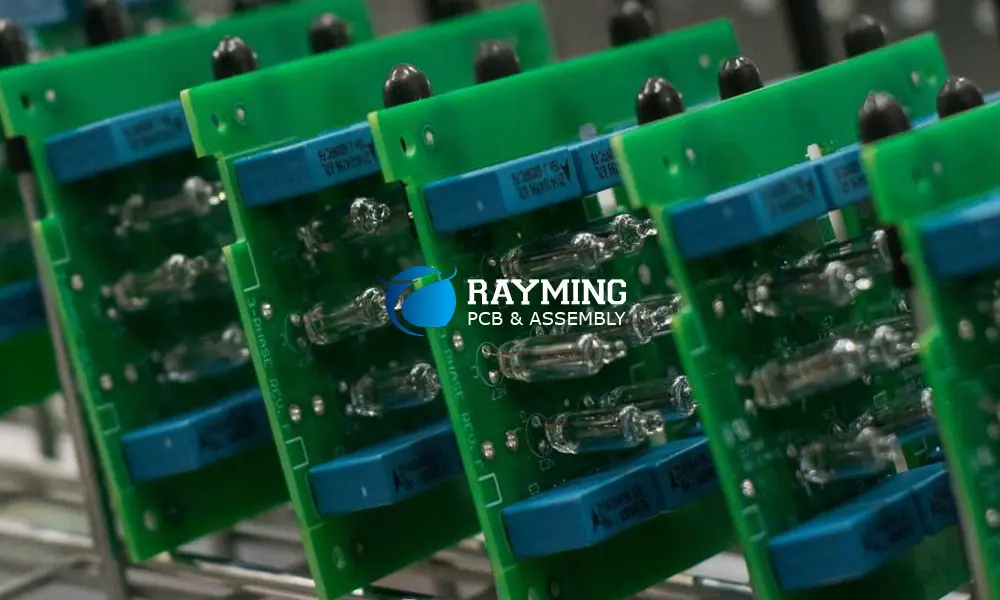
The subject of high volume PCB production and assembly can often prove confusing for both experienced and fresh faces in the circuit board industry. For starters, therefore, it becomes essential to detail what high volume PCB production and assembly refers to and get it out of the way. So what is it all about?
- High Volume PCB Production
High-volume PCB production means repeated fabrication of a released board design in quantities suited to the program; it is not a separate final manufacturing operation. The circuit board production process still includes the fabrication, inspection and testing steps specified for the construction. A stable design helps repeatability, but changes may still be needed. Control them by revision and approval rather than assuming the design can never change.
- High Volume PCB Assembly
High-volume PCB assembly adds components to bare boards through repeated production runs. There is no universal quantity threshold that makes every project high volume: board complexity, line setup, order cadence and annual demand matter. Before release, agree the assembly scope, component sourcing, inspection and test coverage. DFM review and design-for-test planning support this work, but do not replace product validation.
For a volume enquiry, distinguish the bare-board specification from the assembly requirements. Provide the released revision, order quantity, expected repeat demand and requested delivery dates. Agree material availability, capacity allocation, acceptance criteria and the records to accompany each lot before treating a quotation as an approved supply plan. Review assembly cost drivers separately if component population is included. A lower unit price alone does not establish supply continuity or product quality.
Maximizing the PCB Production and Assembly Process
In most instances, if not all, maximizing the high volume PCB production and assembly process efficiency often hinges on optimizing the low volume production process. So to maximize the high volume production and assembly process, it becomes imperative to maximize the printed circuit board prototyping phase. So how can you ensure this?
- Pick a qualified contract manufacturer for your printed circuit board design. The quality of low volume PCB production often hinges on the contract manufacturer’s expertise and equipment in meeting your design needs.
- Tailor your PCB design to your contract manufacturer’s capabilities. It becomes essential to use specifications that align with the contract manufacturer’s equipment capabilities to ensure timely deliveries, prevent the need for redesigning, and avoid extra development costs.
- Optimize the selection of your components. A shortage of components often proves a common reason for stalled or disrupted production. It, therefore, becomes pivotal to ensure that all crucial components (of acceptable quality) are available for your anticipated production levels.
- Apply decent DFM (design for manufacturing) guidelines. It becomes crucial to assist the low-level production of your printed circuit boards by following design for manufacturing guidelines and rules specific to your contract manufacturer. It will, in turn, help with your high-volume PCB production and assembly process.
- Define applicable product-validation and production-acceptance tests, with responsibilities and pass criteria. Choose additional tests to address identified risks rather than adding unspecified testing or treating a bare board as the complete regulated product.
If you optimize the low volume production phase by sticking to the detailed aspects, you will optimize your printed circuit boards’ high volume production and assembly process. Here, it becomes essential to remember that the initial stages of the production process prove essential as it acts as the basis for the high volume PCB production and assembly.
Easing the Transition from Low Volume/Prototyping to High Volume Printed Circuit Board Production

You sure understand the importance of PCBs and how the prototyping stage and its optimization impact high volume PCB production. So what happens during the transition process, and how can you seamlessly transition from prototyping to high volume mass production.
Moving from prototypes to volume production changes the planning problem. Besides confirming that the design works, the team needs a repeatable process, a released data package, supply arrangements and acceptance records suited to the intended production cadence. The transition can expose issues that were not visible in a small prototype run.
Becoming aware of the differences between the objectives becomes pivotal for engineers and designers of PCBs when picking the ideal contract manufacturer for the two product development phases. Additionally, such knowledge also becomes invaluable in easing the transition from the low volume/prototype phase into the mass or high volume production phase.
Before we delve into the transition process, it becomes necessary to understand what PCB prototyping and high volume production imply. Firstly, the prototyping of PCBs infers the development of small quantities of printed circuit boards that can get deployed for design validation processes by testing the system’s performance and operation. Therefore, the process must feature aspects such as flexibility, prove sufficiently fast, and get carried out by quality contract manufacturers besides consistent testing. At this stage, any design issues get corrected to avoid any issues on the development of the printed circuit board or post-production in its lifecycle when deployed.
Before volume release, identify which design and product-validation questions are closed and which remain open. Agree the bare-board electrical testing and other acceptance checks for the order. If components are included, confirm their approved identities and availability separately. A successful prototype is evidence to review, not an automatic approval for every later lot.
Compare lots using the agreed construction, test records and acceptance criteria. Larger order quantities may spread fixed costs across more accepted boards, but savings depend on yield, inventory, logistics and revision stability. Evaluate these costs together rather than assuming volume always reduces total expenditure.
Prototype and volume production have different planning priorities. Whether you retain the same supplier or transfer the job, confirm that the receiving operation can reproduce the approved construction and deliver the required records. Keep any change of material, stackup, panel design, test method or production site visible to the responsible engineering and purchasing contacts; do not assume a prototype approval covers a different production arrangement.
The Transition from Prototyping to High Volume Production of Printed Circuit Boards
The transition from the PCB prototyping phase into mass/high volume production must prove seamless and direct in ideal circumstances. However, the transition is never as seamless as everyone would want. Here, you can face countless challenges, such as the need for readjustment of the design files to facilitate quality printed circuit boards. However, the absence of such files can become costly as you will spend more time and money to rectify and produce quality PCBs by having to make engineering design changes.
Other crucial issues that may arise in the absence of design files include the need to obtain and submit extra design files from your prototype manufacturer to the contract manufacturer. Additionally, your contract manufacturer may lack the capacity to develop your circuit boards in line with similar specifications detailed by your prototype contract manufacturer. It also becomes typical to find components missing even during the PCB production phase. Finally, design changes may become necessary, especially when under performance and operational inadequacies need re-prototyping and redesigning.
Such issues, when they crop up, can delay the high volume PCB production process because of the countless redesign needs you will have to do before the mass production. While it may not always seem possible to resolve or avert all the potential issues that might crop up, it becomes possible to ease the transition by adopting some crucial PCB product development process guidelines. So how can you ease the transition process from the prototyping phase into the high volume production process?
Before releasing the next lot, establish a controlled PCB fabrication specification: revision identifier, layer stack, approved material, finished thickness, copper requirements, finish, dimensions and tolerances, electrical-test requirements, acceptance class and agreed reporting. Keep the released data package with the purchase order. If assembly is included, control its BOM, placement data, firmware and test instructions separately.
Do not try to eliminate engineering changes altogether. Record the proposed change, the affected lots and work in progress, the technical and delivery impacts, and who may approve it. Release the new revision only after that decision, and identify which revision was actually built. NASA’s configuration-management guidance describes this general principle of identifying a baseline, controlling changes and verifying their implementation; it does not certify a supplier or impose a NASA process on an ordinary commercial PCB order.
Benefits of Mass/High Volume PCB Assembly
The benefits that accrue from a high volume printed circuit board are numerous and significant. The benefits include the following.
- A released design and repeatable setup can reduce repeated engineering and setup work. Complete prototype validation before using its results to authorize a larger run.
- Volume assembly planning can coordinate component purchasing, line setup and shipment lots; availability and capacity still need confirmation.
- Larger runs may spread fixed costs across more accepted units. Compare quoted tooling, testing, logistics and inventory costs as well as board price; excess stock or an obsolete revision can offset unit-cost savings.
- Automation can improve repeatability when the process is suitable and controlled. It does not by itself guarantee a shorter delivery date or eliminate inspection.
- Common release data and agreed inspection records make lots easier to compare. Investigate defects and deviations rather than treating production volume as proof of quality.
Application Areas of High Volume Printed Circuit Board Assembly Services
- High-volume printed circuit board assembly services apply in the mass production of electronic appliances.
- Under typical circumstances, the entry process into new or existing markets in diverse geographical areas requires large-scale printed circuit boards. Because of this, high volume PCB assembly services apply significantly.
- When the approved prototype and production review support a larger release, volume orders can serve programs that need repeated lots and consistent records. Keep unresolved risks visible and use the agreed release authority instead of assuming every error has been eliminated.
Final Thoughts
To discuss a high-volume program, send the released board files and production requirements, including the initial order, expected repeat demand and delivery targets. Identify unresolved material, test or revision questions so they can be resolved before a production commitment.