
RAYPCB · Manufacturing decisions
Quick turn PCB fabrication: plan the path to a usable board
Prepare the release, resolve material and production dependencies, and separate fabrication time from delivery. Explore your own elapsed-hour scenario.
Share your current requirements and open questions. Tool use is optional.
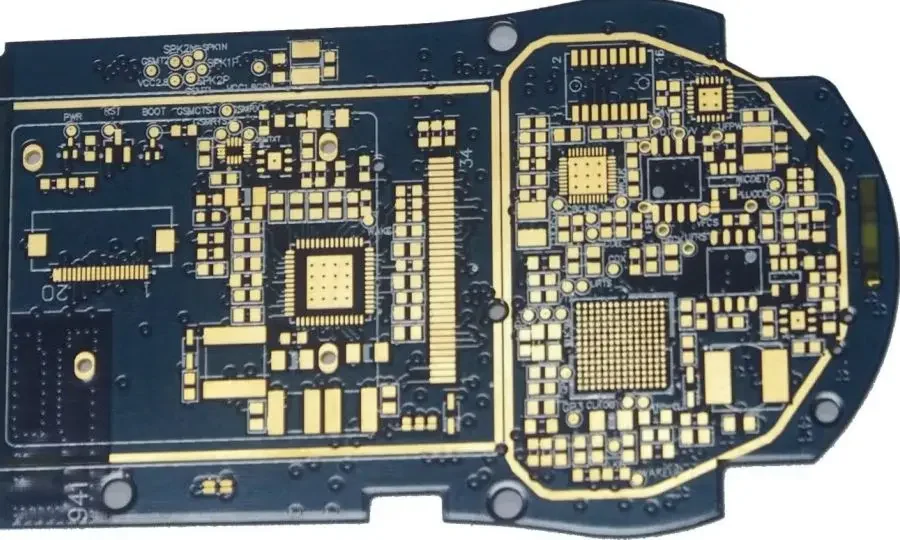
What does quick turn PCB mean?
Quick turn PCB fabrication is an expedited route for manufacturing unpopulated circuit boards against an agreed release and schedule. The important comparison is the time from a genuinely ready order to the milestone you need: finished boards, dispatch, receipt at an assembler or delivery to your own location. Those milestones are different, and a short fabrication interval does not automatically produce the earliest usable prototype.
RAYPCB can review your files and requested date to identify the construction, material, inspection and delivery dependencies. Availability and the achievable schedule require confirmation for the actual order. This page helps prepare that conversation; it does not offer an unverified 24-hour production promise. If you are still choosing what the first board should validate, begin with PCB Prototype.
The fastest useful order is usually the one with fewer unresolved decisions. A clear drawing, consistent data set and accessible decision owner can remove avoidable waiting without removing manufacturing steps. An inexpensive provisional quote is less useful than a confirmed route whose assumptions match the released board.
Define when the fabrication clock can start
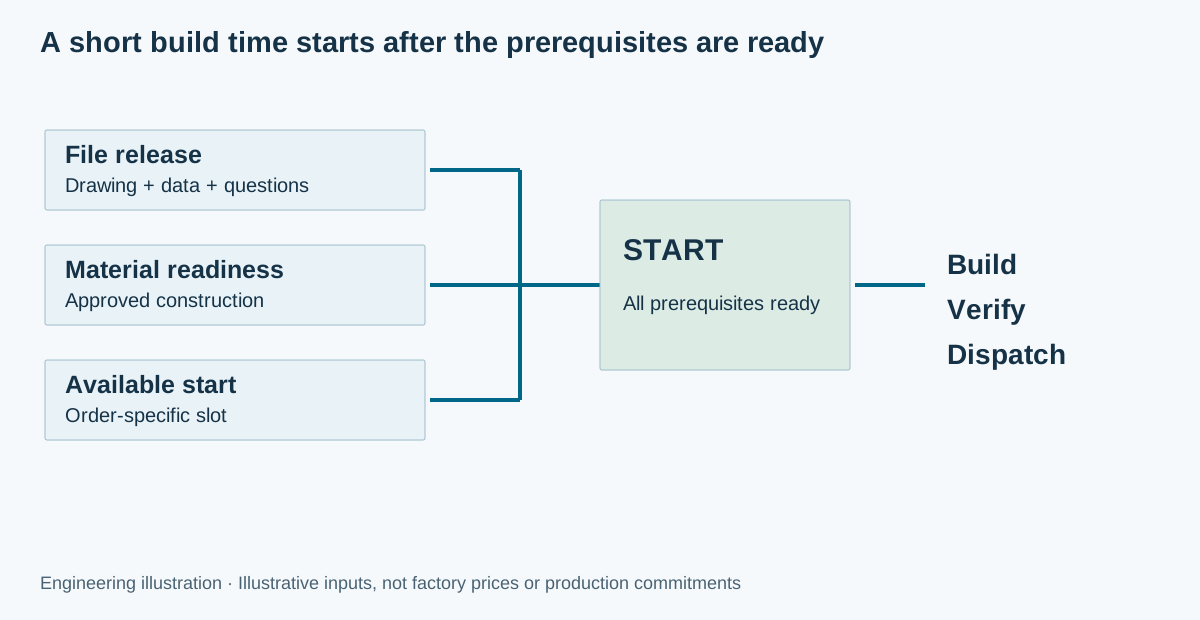
Ask the supplier to name the start condition in writing. File receipt, payment, engineering approval, material availability and a booked production slot may occur at different times. A schedule measured after engineering approval should not be compared directly with another measured from initial enquiry. Record the start event, time zone, working calendar, cutoff and required customer responses.
| Dependency | What should be settled | Useful evidence |
|---|---|---|
| Fabrication release | Files, drawing, revision and engineering questions agree | Accepted release reference and closed questions |
| Material readiness | Approved laminate, copper and stackup can enter the route | Confirmed material and procurement status |
| Production availability | The reviewed construction fits the agreed route | Order-specific slot and schedule acknowledgement |
| Verification | Required tests, coupons and reports are planned | Agreed inspection and acceptance scope |
| Dispatch | Packaging, address, documents and carrier arrangements | Named dispatch and delivery milestones |
These are connected conditions, not an invitation to order material from an unapproved drawing. If material selection depends on a stackup decision, its readiness time must include that dependency. Likewise, an early slot can be lost if files are approved late. Refresh the dates when an assumption changes rather than retaining an attractive but obsolete completion date.
Explore the schedule dependencies
Enter elapsed hours from one common planning start to file readiness, material readiness and an available production start. Then enter fabrication, verification, dispatch preparation, transit and your planning allowance. The tool visualizes how the latest readiness condition controls the start of the sequential route. All values must use the same elapsed-hour basis; it does not mix business days and calendar days.
RAYPCB ENGINEERING
Fabrication BuyingQuick turn PCB fabrication Planner
Loading Quick turn PCB fabrication Planner…
The model uses max(file-ready, material-ready, slot-ready) + fabrication + verification + dispatch + transit + allowance. It is a planning scenario, not a factory booking, carrier prediction or holiday calendar. Enter supplier-confirmed durations where available. If you only have working-day promises, translate them into an agreed elapsed timeline before using the model, or leave the timing discussion open.
Send a coherent fabrication package
Include the copper, mask, legend, outline and drill information needed for the actual construction. Add a fabrication drawing identifying thickness, material or approved alternatives, finish, hole requirements and any critical tolerances. State whether dimensions describe finished features and identify controlled impedance, special vias, edge features and the required delivery format.
Use one revision identifier across the archive, drawing and order. Remove superseded exports from the release folder. A filename such as “final-new” does not identify which mechanical drawing controls the board outline. The PCB file-format guide explains the roles of fabrication data and a release manifest. A supplier still needs to review the content, not just recognize file extensions.
The official Ucamco Gerber documentation distinguishes layer data from fabrication characteristics that can be carried in a Gerber Job file. Providing a supported machine-readable package helps communication, but it does not resolve contradictory engineering requirements automatically. Make the controlling specification explicit when several documents describe the same feature.
Which choices can constrain a fast build?
Start with the complete construction rather than a single feature such as layer count. A board with familiar material and conventional through holes can follow a different route from a design using sequential lamination, filled vias, a mixed-material stackup or a tightly controlled RF structure. The quantity and total manufacturing area can also affect the practical production arrangement.
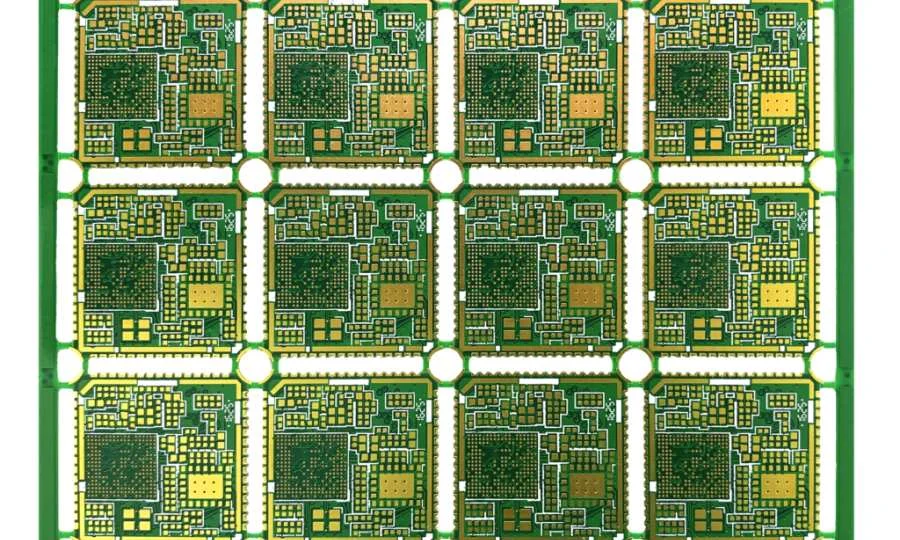
Ask which requirements actually constrain the route. A nonessential cosmetic preference may be negotiable; a dielectric thickness controlling impedance is an engineering requirement. Substituting a laminate or changing a finish without approval can invalidate the purpose of the prototype. Discuss alternatives through PCB DFM with their functional and manufacturing consequences visible.
Do not assume a fast quote authorizes every capability limit simultaneously. Hole geometry, copper thickness, registration, laminate construction and profile tolerances interact. Keep requested tolerances tied to product needs and ask for clarification where the design lies outside a routine combination. An early feasibility answer is more useful than an unsupported schedule based on incomplete parameters.
Example: the latest prerequisite controls the route
Consider an illustrative order whose files are ready after 12 elapsed hours, material after 36 hours and a provisional slot after 24 hours. Fabrication takes 48 hours, verification 6, dispatch preparation 6, transit 48 and the planning allowance 12. The model gives 156 elapsed hours, or 6.5 calendar days, from the common planning start to the scenario endpoint.
Moving file readiness from 12 hours to 6 does not improve this result because material still controls the start. Moving material readiness to 18 hours makes the 24-hour slot the limiting prerequisite and reduces the total to 144 hours. Those figures demonstrate dependency arithmetic only; they are not RAYPCB delivery options. A real slot must be reconfirmed after the prerequisites move.
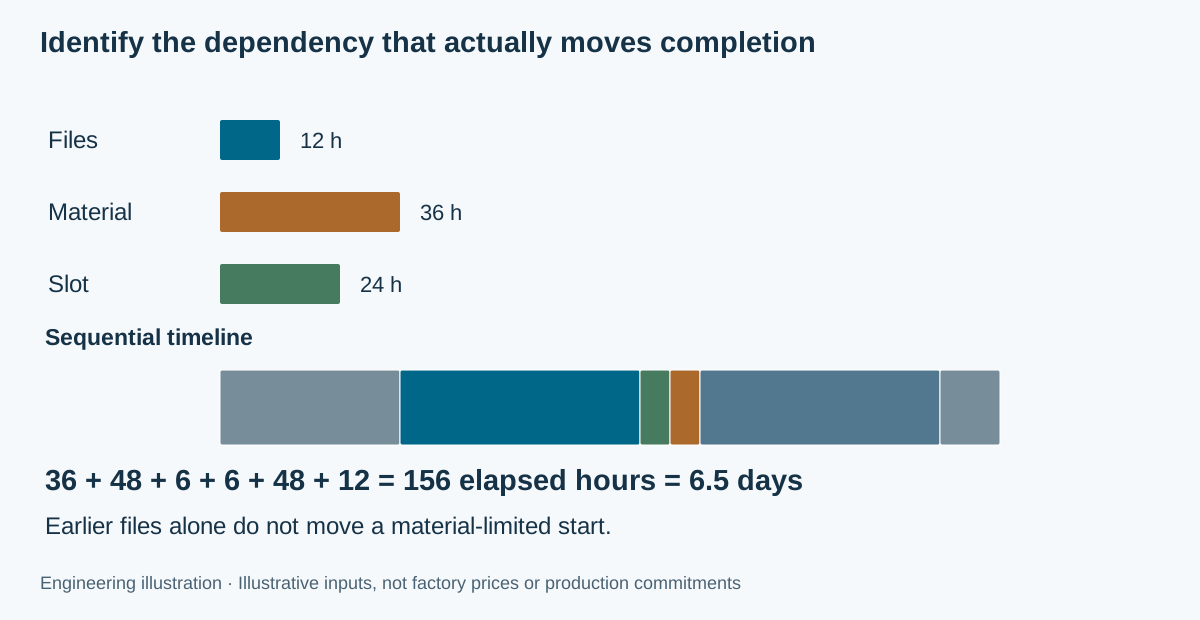
This is why paying an expedite fee on one operation can produce little benefit. Ask which step is on the actual delivery path and which preparatory tasks can proceed safely in parallel. Keep approval ownership clear so a question arriving outside your normal workday does not sit unresolved while manufacturing capacity is being reserved.
Preserve the checks that make the board usable
Expediting should address waiting, prioritization and preparation. It must not silently delete an agreed electrical test, dimensional check or evidence requirement. If you need a report, coupon result or retained sample, include it before panel and route preparation. Requesting it after fabrication may create a new delay or require additional material.
The PCB quality-control guide connects requirements to methods and records. Define the applicable acceptance documents, edition, class and customer-specific notes for the actual product. The IPC revision table helps identify documents; it does not specify a universal quick-turn inspection plan or guarantee that every test is included in a commercial price.

Keep nonconformity handling in the schedule discussion. A build that needs engineering disposition cannot be treated as released simply because the courier cutoff is approaching. Agree who can decide, which evidence they need and how revised dates will be communicated. The project benefits from a usable, traceable board rather than an on-time parcel containing an unresolved problem.
Separate dispatch, transit and assembly readiness
State the delivery address and the receiving party. If boards go directly to an assembler, confirm the quantity, panel format, labeling and approved revision expected by that team. A dispatch notification is not evidence that the assembler has received, checked and released the boards into production. Allow for those handoffs when defining the date of a populated prototype.
Bare-board quick turn also does not include component availability, stencil preparation, programming or functional-test development unless the order explicitly covers them. Move to Quick Turn PCB Assembly when your milestone is an assembled board. That page addresses kit and assembly dependencies rather than treating fabrication speed as the complete project schedule.
For budget planning, distinguish expedite charges from the underlying build and logistics scope. The PCB quote-comparison guide helps align start conditions, acceptance and delivery assumptions before comparing totals. Do not select an apparently faster offer until both offers describe the same endpoint and the same engineering obligations.
Request a schedule that can be reviewed
Send the current fabrication archive, construction summary, quantities and required arrival milestone. Identify what is released, what remains preliminary and when the responsible engineer can answer questions. Include the destination, assembly handoff requirements and whether partial delivery would be useful. A partial shipment is a proposal to evaluate, not an assumed entitlement.
Ask for a response that separates engineering closure, material readiness, confirmed manufacturing time, verification and dispatch. Request explicit treatment of changes after approval. A new board revision can require renewed review, tooling or material decisions, even if the outline looks similar. Keep the order acknowledgement with the release archive so later teams know which schedule and scope were accepted.
Quick turn PCB questions
Is a two-layer board always available faster than a multilayer board? No. Construction, material, quantity, engineering closure and available capacity all matter. Layer count is one input, not an independent delivery guarantee.
Can I send preliminary files for an urgent enquiry? Yes. Identify them as preliminary and list open decisions. A feasibility discussion can start before release, but production approval needs a coherent, accepted data set.
Does the planner book production or calculate public holidays? No. It compares user-entered elapsed-hour assumptions. Confirm the actual calendar, start event and slot with the supplier before relying on an arrival date.
Should I reduce test requirements to save time? Do not remove agreed acceptance requirements just to improve a date. Discuss scheduling and preparation first; any scope change needs the responsible approval and a clear record.
Request a fabrication schedule
Send the fabrication revision, quantities, construction, required verification and delivery milestone. Include the available files and identify unresolved scope so the engineering team can review a useful quotation.
Attach a downloaded tool brief manually. Contact does not automatically receive these inputs. References reviewed September 2026. Illustrations use planning examples; photographs do not establish prices, delivery times or project-specific acceptance.