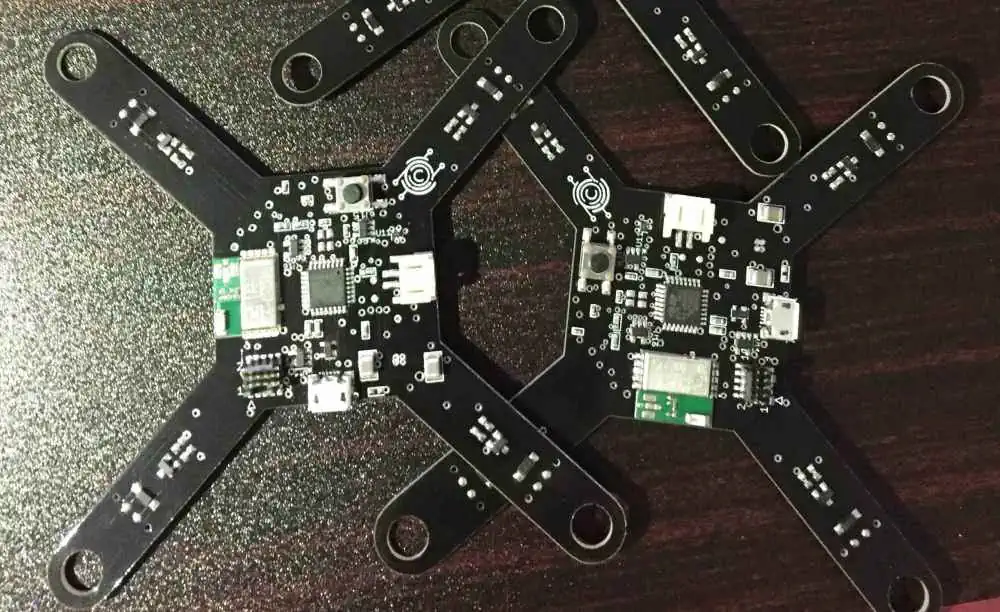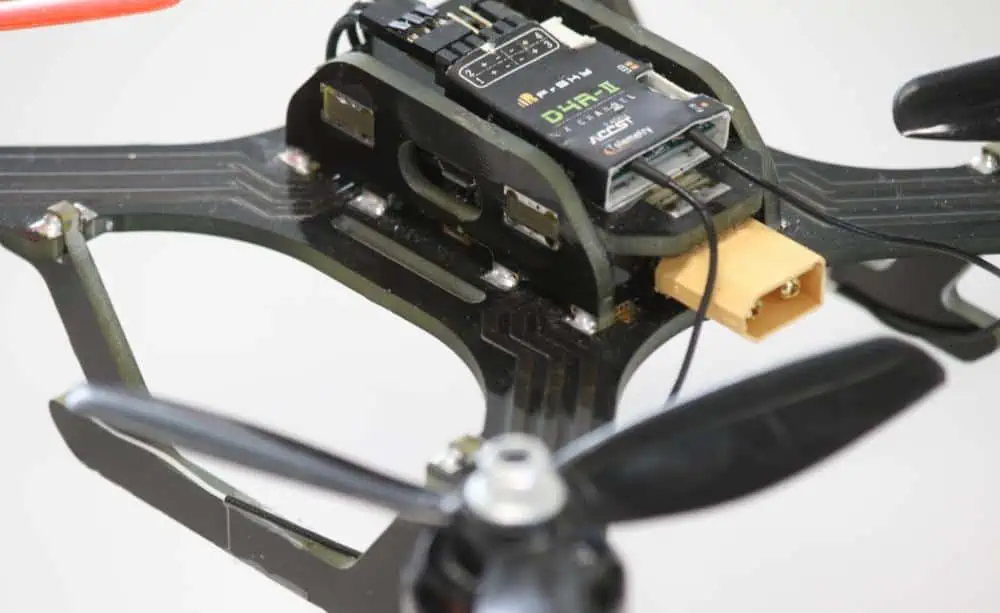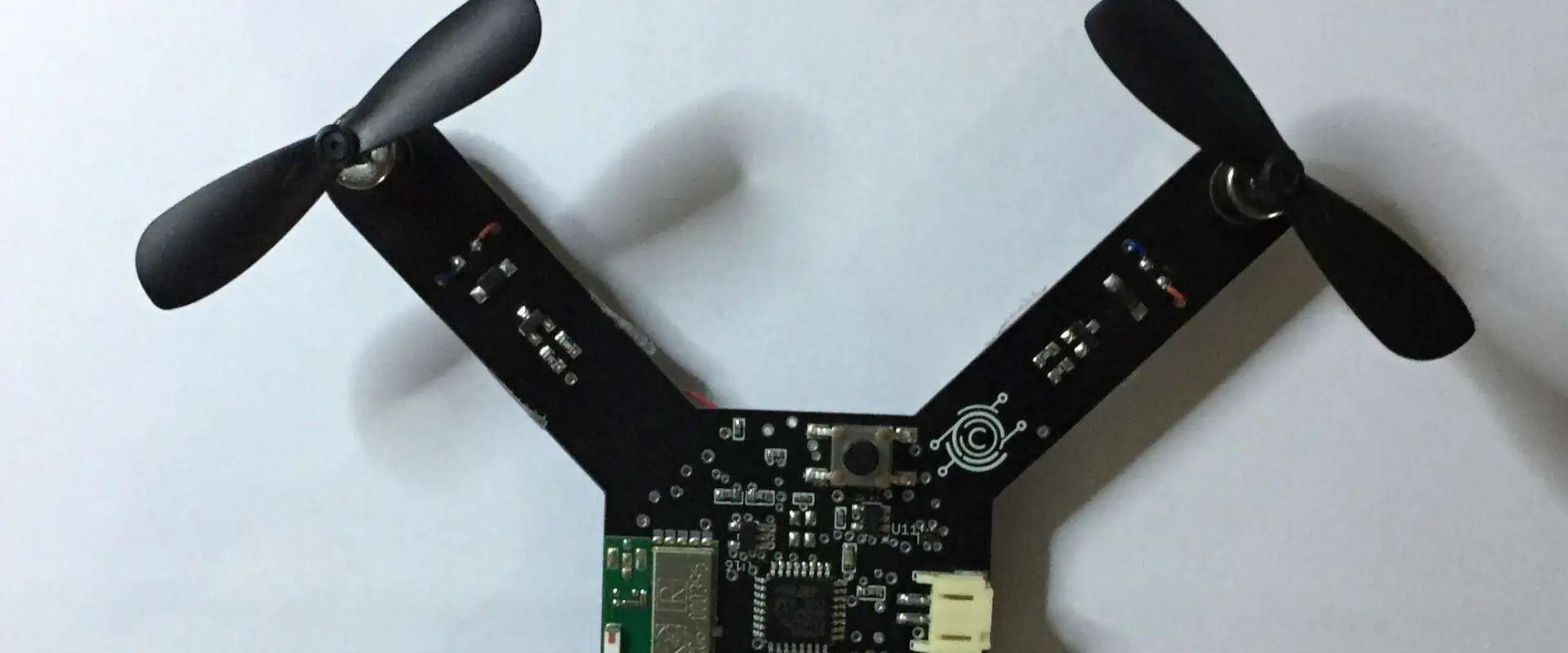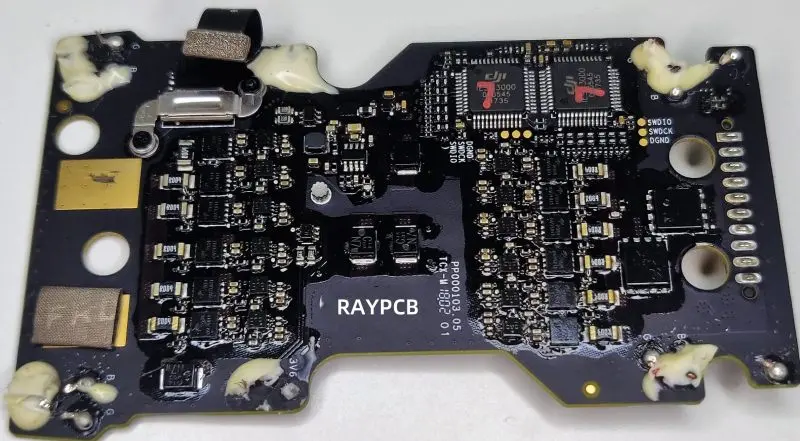
Analyzing Key Microcontroller PCB Characteristics for Embedded Design

Designing a microcontroller PCB is a critical step in building reliable and compact embedded systems. Whether you’re creating a prototype for a new IoT device or developing a custom control board for industrial automation, understanding the intricacies of microcontroller PCB design is essential. This comprehensive guide will walk you through the process of designing a microcontroller PCB, from initial concept to final testing.

I. Introduction

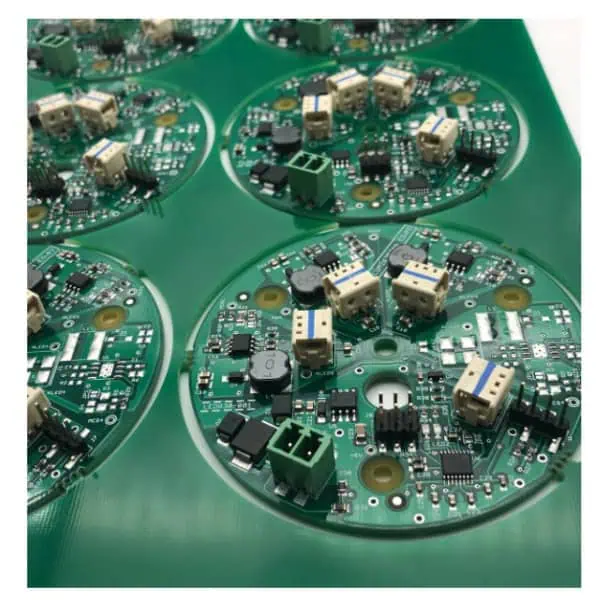
Microcontroller PCBs (Printed Circuit Boards) are the backbone of modern embedded systems. These specialized boards house microcontrollers โ€“ small computers on a single integrated circuit โ€“ along with necessary supporting components. The importance of custom PCB design in the realm of embedded systems cannot be overstated. A well-designed microcontroller PCB ensures optimal performance, reliability, and efficiency in your electronic projects.

As technology advances and devices become smaller and more complex, the demand for expertly designed microcontroller PCBs continues to grow. Whether you’re working on a smart home device, a wearable health monitor, or an industrial control system, mastering the art of microcontroller PCB design is crucial for success in the field of embedded systems.

II. Step 1: Define Your Project Requirements

Before diving into the schematic design, it’s essential to clearly define your project requirements. This crucial first step will guide all subsequent decisions in your microcontroller PCB design process.

Choosing the Right Microcontroller

Selecting the appropriate microcontroller is fundamental to your project’s success. Consider the following factors:

  1. Processing power: Decide between 8-bit, 16-bit, or 32-bit microcontrollers based on your application’s computational needs.
  2. Memory requirements: Evaluate the amount of flash memory and RAM your project requires.
  3. Peripheral support: Ensure the microcontroller supports the necessary interfaces and peripherals for your application.
  4. Power consumption: Consider battery life and overall power efficiency, especially for portable devices.
  5. Cost: Balance features with budget constraints, particularly for high-volume production.

Identifying Required Peripherals

List all the peripherals your project needs. Common peripherals include:

  • Analog-to-Digital Converters (ADC) for sensor inputs
  • Universal Asynchronous Receiver/Transmitter (UART) for serial communication
  • Inter-Integrated Circuit (I2C) and Serial Peripheral Interface (SPI) for interfacing with other devices
  • General Purpose Input/Output (GPIO) pins for basic digital interfacing
  • Timers and Pulse Width Modulation (PWM) modules for precise timing and control

Defining Power Supply Requirements

Determine the power needs of your microcontroller and all other components on the board:

  1. Voltage levels: Typically 3.3V or 5V for most microcontrollers, but some components may require different voltages.
  2. Current draw: Calculate the maximum current consumption of all components.
  3. Power source: Decide between battery power, USB power, or mains power with appropriate regulation.
  4. Efficiency: Consider using low-dropout (LDO) regulators or switching regulators for better power efficiency.

Board Dimensions and Enclosure Constraints

Factor in any size limitations or form factor requirements:

  1. Overall PCB dimensions
  2. Component height restrictions
  3. Mounting hole positions
  4. Connector placements for external interfaces

By thoroughly defining these requirements, you set a solid foundation for your microcontroller PCB design, ensuring that the final product meets all necessary specifications and performs optimally in its intended application.

III. Step 2: Schematic Design
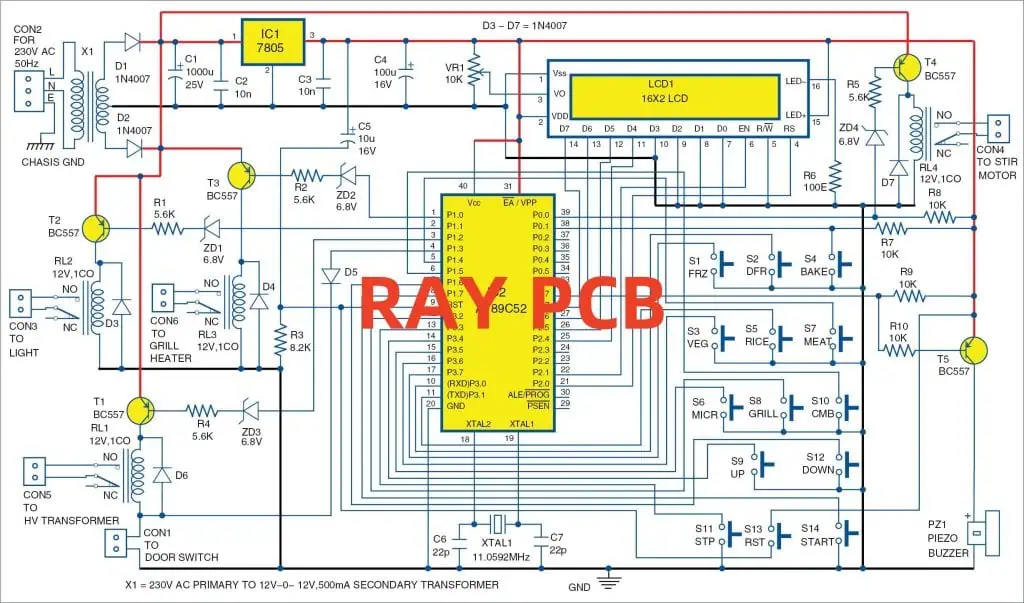
With your project requirements clearly defined, the next step in designing a microcontroller PCB is creating the schematic. This is where you’ll translate your conceptual design into a detailed electronic diagram.

Choosing EDA Tools

Selecting the right Electronic Design Automation (EDA) tool is crucial for efficient schematic design. Popular options include:

  1. KiCad: Open-source and feature-rich, suitable for beginners and professionals alike.
  2. Eagle: Known for its extensive component libraries and user-friendly interface.
  3. Altium Designer: A professional-grade tool with advanced features for complex designs.
  4. Autodesk Fusion 360 (Electronics): Integrates PCB design with 3D modeling capabilities.

Choose a tool that matches your skill level and project complexity. Many offer free versions or trials, allowing you to experiment before committing.

Drawing the Microcontroller Circuit Schematic

When creating your schematic, focus on these key areas:

Microcontroller Core Connections

  1. Power pins: Connect VCC and GND pins to appropriate power planes.
  2. Decoupling capacitors: Place 0.1ฮผF ceramic capacitors close to each power pin.
  3. Reset circuitry: Include a reset button and pull-up resistor.
  4. Clock source: Add a crystal oscillator circuit if using an external clock.

Power Supply and Decoupling

  1. Voltage regulator: Include appropriate linear or switching regulators.
  2. Bulk capacitors: Add larger electrolytic capacitors (10-100ฮผF) near voltage regulators.
  3. Ferrite beads: Use these for isolating digital and analog power supplies if necessary.

Crystal Oscillator and Reset Circuitry

  1. Crystal connections: Follow manufacturer recommendations for load capacitors.
  2. Reset circuit: Implement a simple RC circuit with a tactile switch for manual reset.

External Interfaces

  1. Sensors: Add necessary pull-up/pull-down resistors and filtering capacitors.
  2. Displays: Include level shifters if required (e.g., for LCD interfaces).
  3. Communication ports: Add protection components like TVS diodes for exposed interfaces.

Best Practices in Schematic Design

  1. Use clear and consistent naming conventions for components and nets.
  2. Group related components together for better readability.
  3. Use hierarchical sheets for complex designs to improve organization.
  4. Add detailed notes and comments to explain non-obvious design choices.
  5. Cross-check component footprints with their physical counterparts.
  6. Perform thorough electrical rule checks (ERC) to catch common errors.

By following these guidelines and paying attention to detail in your schematic design, you’ll create a solid foundation for the PCB layout phase of your microcontroller project.

Read more about:

IV. Step 3: PCB Layout
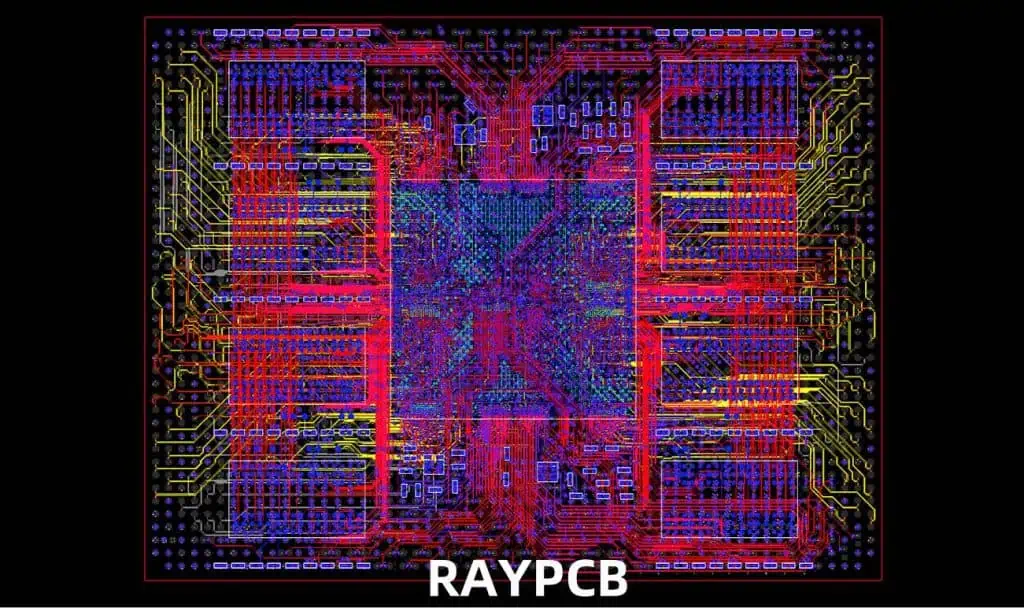
Once your schematic is complete and error-free, it’s time to move on to the PCB layout. This stage transforms your circuit diagram into a physical board design, considering factors like component placement, trace routing, and signal integrity.

Component Placement Strategy

Effective component placement is crucial for a successful microcontroller PCB design:

  1. Keep the microcontroller central: Place the microcontroller at the heart of your board for optimal connectivity.
  2. Group related components: Keep functionally related parts close together to minimize trace lengths.
  3. Consider thermal management: Place heat-generating components away from sensitive parts.
  4. Optimize for assembly: Align components in a way that simplifies the manufacturing process.
  5. Plan for test points: Leave space for test points near critical signals for easier debugging.

Routing Guidelines for Microcontroller PCB Layout

Signal Integrity for High-Speed Lines

  1. Keep high-speed traces short and direct.
  2. Use differential pairs for high-speed interfaces like USB or Ethernet.
  3. Avoid right-angle turns in traces; use 45-degree angles or curves instead.
  4. Consider impedance matching for critical high-frequency signals.

Ground Planes and Power Distribution

  1. Use a solid ground plane on a dedicated layer when possible.
  2. Implement star grounding for analog and digital grounds if necessary.
  3. Use wide traces or copper pours for power distribution.
  4. Place vias near decoupling capacitors to reduce inductance.

Trace Width, Via Usage, and DRC Checks

  1. Calculate appropriate trace widths based on current requirements.
  2. Use larger vias for power and ground connections.
  3. Avoid placing vias in pad unless necessary for high-density designs.
  4. Run Design Rule Checks (DRC) frequently to catch and correct errors early.

Single-Layer vs. Multi-Layer PCB Design Choices

Consider the trade-offs between single-layer and multi-layer designs:

Single-Layer PCBs

  • Pros: Lower cost, simpler manufacturing process.
  • Cons: Limited routing options, potential for more noise and interference.

Multi-Layer PCBs

  • Pros: Better signal integrity, more compact designs, easier routing.
  • Cons: Higher cost, more complex manufacturing process.

For most microcontroller projects, a 4-layer board offers a good balance between cost and performance. A typical 4-layer stackup might include:

  1. Top layer: Components and signal routing
  2. Inner layer 1: Ground plane
  3. Inner layer 2: Power plane
  4. Bottom layer: Components and signal routing

By carefully considering these layout guidelines and making informed decisions about layer count, you’ll be well on your way to creating a high-quality microcontroller PCB design.

V. Step 4: PCB Prototyping
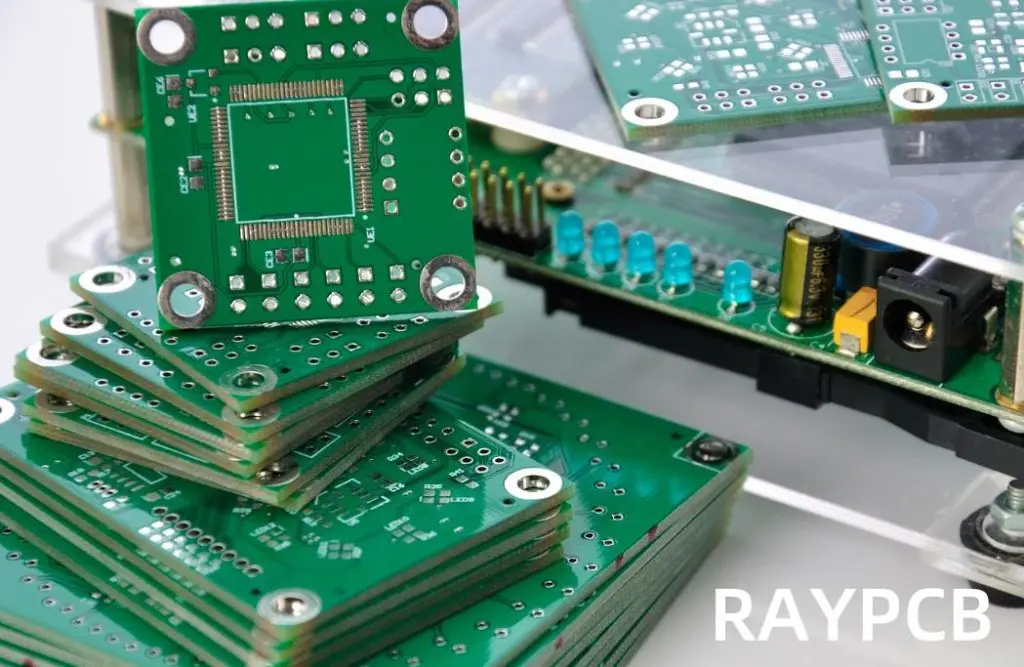
After completing your PCB layout, the next exciting phase is bringing your design to life through prototyping. This stage allows you to validate your design and make necessary adjustments before moving to full-scale production.

Generating Gerber Files and BOM

  1. Gerber file generation:
    • Use your EDA tool to export Gerber files, which contain all the necessary information for PCB fabrication.
    • Include files for all copper layers, solder mask, silkscreen, and drill holes.
    • Double-check that all layers are correctly aligned and scaled.
  2. Creating a Bill of Materials (BOM):
    • List all components, including their values, packages, and quantities.
    • Include manufacturer part numbers and potential alternative parts.
    • Organize the BOM in a clear, spreadsheet format for easy reference.

Choosing PCB Fabrication Services

For prototype runs or small batches, consider these factors when selecting a PCB manufacturer:

  1. Minimum order quantity: Some services offer as few as 3-5 boards for prototyping.
  2. Turnaround time: Look for services offering quick turnaround for faster iteration.
  3. Board specifications: Ensure the manufacturer can handle your design’s layer count, minimum trace width, and hole sizes.
  4. Quality and reliability: Read reviews and check for certifications like ISO 9001.
  5. Additional services: Some fabricators offer assembly services, which can be convenient for prototyping.

Popular PCB prototype services include:

  • PCBWay
  • JLCPCB
  • OSH Park
  • Seeed Studio

Assembly Tips

Decide between manual soldering and reflow soldering based on your design complexity and component types:

Manual Soldering

  • Ideal for through-hole components and simple designs.
  • Use a temperature-controlled soldering iron and appropriate flux.
  • Start with larger components and work your way to smaller ones.
  • Consider using a magnifying glass or microscope for fine-pitch components.

Reflow Soldering

  • Better for designs with many surface-mount components.
  • Apply solder paste using a stencil or syringe.
  • Place components using tweezers or a pick-and-place machine.
  • Use a reflow oven or hot air station to melt the solder paste.

Initial Testing of the Prototype

Before powering up your board:

  1. Perform a visual inspection for any obvious defects or solder bridges.
  2. Use a multimeter to check for shorts between power and ground.
  3. Verify continuity on critical nets and power connections.

When powering up for the first time:

  1. Use a current-limited power supply to prevent damage from potential shorts.
  2. Monitor power consumption to ensure it’s within expected ranges.
  3. Check for expected voltage levels at key test points.

By carefully managing the prototyping process, you can quickly identify and resolve any issues in your microcontroller PCB design, setting the stage for successful programming and comprehensive testing.

VI. Step 5: Programming and Testing

With your microcontroller PCB prototype assembled, it’s time to bring it to life through programming and conduct thorough testing to ensure it meets all your project requirements.

Uploading Code to Your Microcontroller PCB

The method for uploading code depends on your microcontroller and chosen programming interface. Common options include:

  1. In-System Programming (ISP):
    • Use programmers like PICkit for PIC microcontrollers, USBasp for AVR, or ST-Link for STM32.
    • Ensure your PCB has the necessary programming header pins.
  2. JTAG or SWD Interfaces:
    • Popular for debugging ARM-based microcontrollers.
    • Requires specific pins on the microcontroller to be accessible.
  3. Bootloaders:
    • Allow programming over standard interfaces like UART or USB.
    • Require initial bootloader programming but simplify subsequent updates.

Tips for successful programming:

  • Double-check connections between the programmer and your board.
  • Verify that your programming software recognizes the microcontroller.
  • Start with a simple “blink LED” program to confirm basic functionality.

Functional Testing and Debugging

Systematic testing is crucial to verify that your microcontroller PCB functions as intended:

  1. Power supply testing:
    • Verify voltage levels at various test points.
    • Check for voltage stability under different load conditions.
  2. Peripheral testing:
    • Test each GPIO pin for input and output functionality.
    • Verify analog inputs with known voltage sources.
    • Test communication interfaces (UART, I2C, SPI) with loopback tests or external devices.
  3. Sensor integration:
    • Calibrate and test any onboard sensors.
    • Verify sensor data acquisition and processing.
  4. System-level testing:
    • Run your full application code and observe overall system behavior.
    • Test for edge cases and potential failure modes.

Common Testing Tools

Equip yourself with these essential tools for effective microcontroller PCB testing:

  1. Multimeter:
    • Use for continuity testing, voltage measurements, and current draw analysis.
  2. Oscilloscope:
    • Essential for analyzing signal integrity, timing issues, and communication protocols.
    • Look for at least 50MHz bandwidth for most microcontroller applications.
  3. Logic Analyzer:
    • Useful for debugging multi-wire interfaces and complex timing issues.
    • Software-based options like Saleae provide affordable solutions for many projects.
  4. Power Supply:
    • A variable, current-limited power supply is invaluable for safe testing.
  5. Environmental Chamber (optional):
    • For testing your PCB under various temperature conditions, if applicable to your project.

By methodically programming and testing your microcontroller PCB, you can identify and resolve issues early, ensuring a robust and reliable final product. Remember to document your testing process and results thoroughly, as this information will be valuable for future iterations and troubleshooting.

VII. Optimization and Final Design Tips

After initial testing, you may find areas where your microcontroller PCB design can be improved. This optimization phase is crucial for enhancing performance, reliability, and manufacturability.

EMC and Noise Reduction Practices

Electromagnetic Compatibility (EMC) is crucial for ensuring your device operates correctly in its intended environment and doesn’t interfere with other electronics:

  1. Proper grounding:
    • Implement a solid ground plane.
    • Use star grounding for analog and digital sections if necessary.
  2. Signal routing:
    • Keep high-speed signals away from sensitive analog circuits.
    • Use guard traces for isolating noisy signals.
  3. Filtering:
    • Add ferrite beads on power lines to suppress high-frequency noise.
    • Use bypass capacitors near ICs to reduce noise on power rails.
  4. Shielding:
    • Consider adding a shield can for sensitive RF circuits or in noisy environments.

Thermal Management Considerations

Proper thermal management ensures your microcontroller and other components operate within their specified temperature ranges:

  1. Component placement:
    • Keep heat-generating components away from temperature-sensitive parts.
    • Use thermal vias under hot components to help dissipate heat.
  2. Copper pours:
    • Increase copper area for better heat dissipation.
    • Use thermal relief patterns to balance heat dissipation and solderability.
  3. Forced air cooling:
    • Consider adding spaces for fans or heat sinks if natural convection is insufficient.

Design for Manufacturability (DFM) and Testability (DFT)

Optimizing your design for manufacturing and testing can save time and reduce costs:

  1. Component selection:
    • Use commonly available parts to avoid supply chain issues.
    • Consider using parts with multiple sources.
  2. Board layout:
    • Maintain consistent component orientation for easier assembly.
    • Leave adequate space between components for pick-and-place machines.
  3. Testability:
    • Add test points for critical signals.
    • Excellent for both beginners and professionals.
    • Extensive library of components and active community support.
  4. Fusion 360 Electronics:
  • Combines electrical and mechanical design in one platform.
  • Great for projects requiring integrated enclosure design.

5. CircuitMaker:

  • Free, community-driven PCB design tool by Altium.
  • Good for collaborative projects and open-source hardware.

Free Libraries and Reference Designs

  1. SnapEDA:
    • Extensive library of PCB footprints and symbols.
    • Integration with multiple PCB design software.
  2. Ultra Librarian:
    • Large collection of pre-made component models.
    • Supports various EDA tools.
  3. Microcontroller Manufacturer Resources:
    • ST Microelectronics, Microchip, and Texas Instruments offer reference designs and development board schematics.
    • Valuable for understanding best practices and typical implementations.
  4. OpenCores:
    • Open-source hardware designs, including microcontroller-based projects.
    • Useful for learning from real-world implementations.

Online Communities for PCB Design and Embedded Systems

  1. EEVblog Forum:
    • Active community discussing electronics design and PCB layout.
    • Valuable for troubleshooting and getting expert advice.
  2. Reddit Communities:
    • r/PrintedCircuitBoard for PCB design discussions.
    • r/embedded for embedded systems and firmware development.
  3. Stack Exchange:
    • Electrical Engineering Stack Exchange for technical questions.
    • Arduino Stack Exchange for microcontroller programming queries.
  4. Hackster.io:
    • Platform for sharing and discovering hardware projects.
    • Offers tutorials and project ideas for microcontroller applications.
  5. element14 Community:
    • Forums, blogs, and webinars on electronics design.
    • Hosts design challenges and provides access to technical resources.

By leveraging these tools and resources, you can enhance your skills, stay updated with the latest trends, and connect with fellow enthusiasts in the field of microcontroller PCB design.

X. Conclusion

Mastering the art of microcontroller PCB design is a journey that combines technical knowledge, creativity, and practical experience. As we’ve explored throughout this guide, the process involves several key steps:

  1. Defining project requirements
  2. Creating a detailed schematic
  3. Developing an efficient PCB layout
  4. Prototyping and testing
  5. Optimizing for performance and manufacturability

Each of these stages is crucial in creating a successful microcontroller PCB that meets your project’s needs and performs reliably in real-world conditions.

The importance of this skill cannot be overstated in today’s technology-driven world. From IoT devices and industrial automation to consumer electronics and cutting-edge robotics, microcontroller PCBs are at the heart of countless innovations. By honing your ability to design these boards effectively, you open doors to faster innovation and more efficient product development.

Remember that PCB design is both an art and a science. While following best practices and guidelines is important, there’s also room for creative problem-solving and innovative approaches. Each project brings its own unique challenges and opportunities for learning.

We encourage you to take the knowledge gained from this guide and apply it to your own projects. Start with simple designs and gradually tackle more complex challenges. Experiment with different microcontrollers, explore various peripherals, and push the boundaries of what’s possible within the constraints of PCB design.

Keep in mind that the field of electronics is ever-evolving. Stay curious, keep learning, and don’t hesitate to engage with the vibrant community of makers, engineers, and hobbyists who share your passion for microcontroller PCB design.

By embracing the iterative process of design, prototyping, and testing, you’ll not only improve your skills but also contribute to the exciting world of embedded systems and IoT. Your next design could be the foundation of a groundbreaking product or the solution to a complex problem.

So, fire up your favorite EDA tool, choose a microcontroller, and start designing. The world of microcontroller PCB design is vast and full of possibilities โ€“ your next great project awaits!

XI. FAQ

To address common queries and enhance SEO, here are answers to frequently asked questions about microcontroller PCB design:

What is a microcontroller PCB?

A microcontroller PCB (Printed Circuit Board) is a specialized board designed to house and connect a microcontroller along with its supporting components. It serves as the physical foundation for embedded systems, integrating the microcontroller with various peripherals, power supply circuitry, and interfaces needed for the specific application.

How do I design a PCB for a microcontroller?

Designing a PCB for a microcontroller involves several steps:

  1. Define your project requirements and choose an appropriate microcontroller.
  2. Create a schematic diagram of your circuit using EDA software.
  3. Develop the PCB layout, carefully placing components and routing traces.
  4. Generate manufacturing files (Gerbers) and order a prototype.
  5. Assemble and test your PCB, making iterations as necessary.

Which software is best for microcontroller circuit design?

The best software depends on your specific needs and experience level. Popular options include:

  • KiCad: Free, open-source, and feature-rich.
  • Altium Designer: Professional-grade with advanced features.
  • Eagle: User-friendly with a large component library.
  • Fusion 360 Electronics: Integrates electrical and mechanical design.

Choose software that aligns with your project complexity and budget.

How do you test a microcontroller board?

Testing a microcontroller board involves several stages:

  1. Visual inspection for manufacturing defects.
  2. Continuity testing of power and critical signal paths.
  3. Power-on testing with a current-limited supply.
  4. Functional testing of individual peripherals and interfaces.
  5. Uploading and running test firmware to verify overall functionality.
  6. Stress testing under various operating conditions.

Use tools like multimeters, oscilloscopes, and logic analyzers for comprehensive testing.

What are the common mistakes in PCB layout?

Common PCB layout mistakes include:

  1. Inadequate clearance between components or traces.
  2. Poor power distribution and insufficient decoupling.
  3. Ignoring signal integrity for high-speed lines.
  4. Improper grounding techniques.
  5. Neglecting thermal considerations for heat-generating components.
  6. Failing to include test points for debugging.
  7. Overlooking manufacturing constraints and design for assembly.

Avoid these pitfalls by following best practices and thoroughly reviewing your design before fabrication.
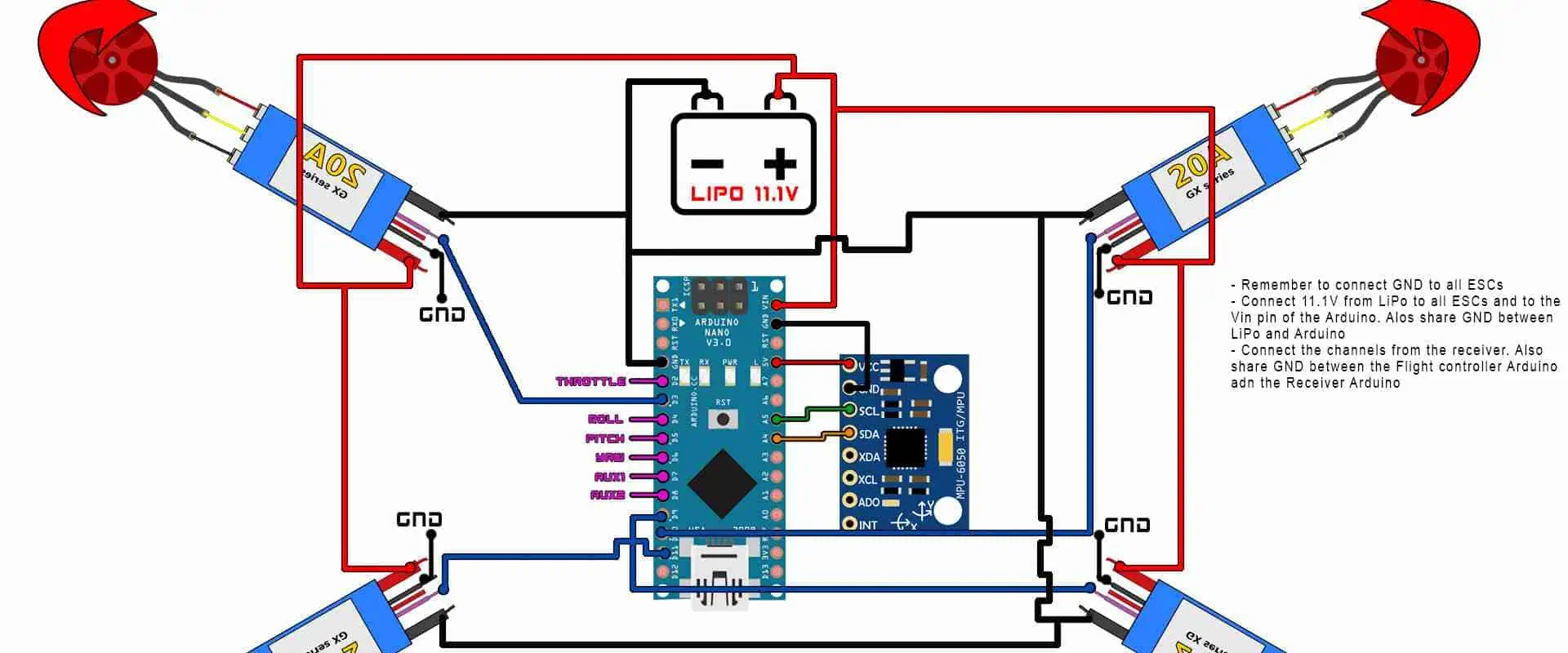
    Drone PCB Design: The Complete Guide On How To Choose The Best Drone Design Board

    drone pcb design

    The rapid evolution of unmanned aerial vehicle (UAV) technology has placed unprecedented demands on electronic systems, making advanced drone PCB design a critical factor in achieving superior flight performance, reliability, and efficiency. As drones become more sophisticated and take on increasingly complex missions, the printed circuit board serves as the central nervous system that orchestrates everything from basic flight stability to advanced autonomous navigation capabilities.

    Modern drone PCB architecture represents a convergence of multiple engineering disciplines, requiring expertise in high-frequency circuit design, power management, electromagnetic compatibility, and thermal engineering. The stakes are particularly high in drone applications, where a PCB failure can result in catastrophic consequences, making reliability and redundancy paramount considerations in the design process.

    YouTube video

    Understanding the Drone PCB Ecosystem

    The contemporary drone PCB ecosystem encompasses far more than traditional circuit board design principles. Today’s advanced UAV systems integrate multiple subsystems including flight control units, sensor arrays, communication modules, power distribution networks, and payload interfaces, all of which must coexist harmoniously on a single board or interconnected multi-board system.

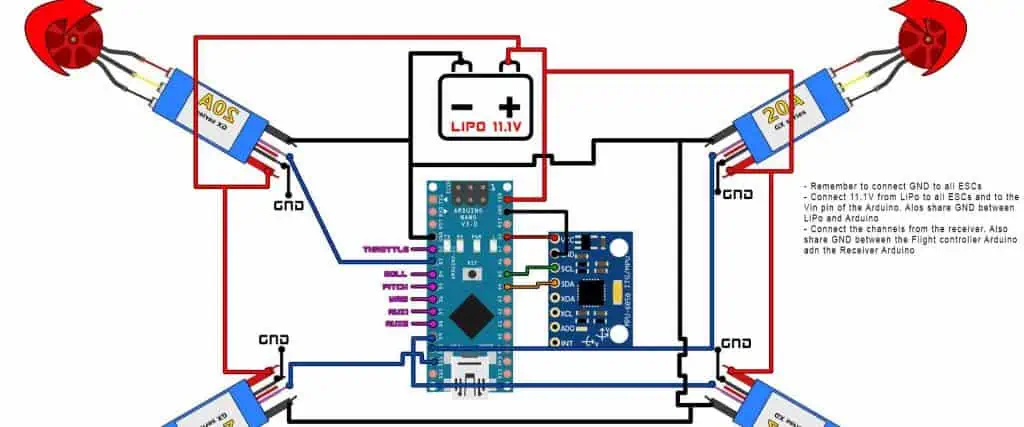
    Flight control represents the most critical aspect of drone PCB design, as it directly impacts the vehicle’s ability to maintain stable flight, respond to pilot commands, and execute autonomous missions. The flight control unit typically incorporates high-performance microcontrollers or specialized flight processors that must process sensor data in real-time while maintaining precise control over motor speeds and servo positions.

    Power distribution systems within drone PCBs face unique challenges due to the high current demands of brushless motors, the voltage sensitivity of onboard electronics, and the weight constraints inherent in aerial applications. Unlike terrestrial applications where weight is rarely a primary concern, every gram matters in drone design, making PCB weight optimization a crucial consideration.

    Flight Control System Architecture

    The heart of any advanced drone PCB lies in its flight control system architecture, which must seamlessly integrate multiple sensor inputs, process complex algorithms, and provide real-time outputs to actuators and motors. Modern flight controllers typically employ 32-bit ARM Cortex processors running at frequencies exceeding 100MHz, providing the computational power necessary for advanced flight modes and autonomous operations.

    Sensor integration represents one of the most challenging aspects of drone PCB design, as modern UAVs incorporate accelerometers, gyroscopes, magnetometers, barometric pressure sensors, GPS modules, and optical flow sensors. Each sensor type presents unique interface requirements, from high-speed SPI communications to precise analog signal conditioning. The drone PCB must provide clean, stable power to these sensitive components while minimizing electromagnetic interference that could compromise sensor accuracy.

    Inertial measurement units (IMUs) require particular attention in drone PCB layout, as they form the foundation of flight stability. These sensors are extremely sensitive to vibration and electromagnetic interference, necessitating careful mechanical isolation and strategic placement away from high-current switching circuits. Advanced drone PCBs often incorporate multiple IMUs for redundancy, requiring sophisticated sensor fusion algorithms to combine multiple data streams into a single, reliable state estimate.

    The real-time nature of flight control demands that the drone PCB architecture minimize latency between sensor input and actuator output. This requirement influences everything from processor selection to trace routing, as even microsecond delays can impact flight performance in high-speed or precision applications.

    Power Distribution Network Design

    Power distribution represents one of the most complex challenges in advanced drone PCB design, as the system must efficiently manage power flows ranging from high-current motor drives to sensitive low-voltage digital circuits. Modern drone power systems typically operate from lithium polymer batteries providing 11.1V to 25.2V, which must be converted to multiple voltage rails serving different subsystems.

    The drone PCB power distribution network must handle several critical requirements simultaneously. Motor electronic speed controllers (ESCs) may draw currents exceeding 30 amperes during peak operation, while flight control processors require clean, stable 3.3V or 5V supplies with minimal ripple. Camera gimbals and sensors often require additional voltage rails, creating a complex web of power requirements that must be efficiently managed.

    Switching power supplies have become the standard for drone PCB applications due to their superior efficiency compared to linear regulators. However, the high-frequency switching nature of these supplies introduces electromagnetic interference challenges that must be carefully managed through proper layout techniques and filtering strategies. The drone PCB designer must balance efficiency, size, weight, and electromagnetic compatibility to achieve optimal performance.

    Current sensing and monitoring capabilities are increasingly important in advanced drone PCBs, providing real-time feedback on system health and enabling sophisticated battery management features. These monitoring systems allow flight controllers to make intelligent decisions about power allocation, provide early warnings of impending system failures, and optimize flight parameters for maximum endurance.

    Electromagnetic Compatibility Challenges

    The confined space and high component density typical of drone PCBs create significant electromagnetic compatibility challenges that can compromise system performance if not properly addressed. Radio frequency interference from switching power supplies, high-speed digital circuits, and wireless communication modules can interfere with sensitive sensors, GPS reception, and radio control links.

    Advanced drone PCB designs employ multiple strategies to minimize electromagnetic interference, including strategic component placement, proper grounding techniques, and the use of shielding structures. High-current motor drive circuits are typically isolated from sensitive analog circuits, while communication modules are positioned to minimize interference with other subsystems.

    Ground plane design plays a crucial role in drone PCB electromagnetic compatibility, as improper grounding can create ground loops that introduce noise and interference. Advanced designs often employ multiple ground planes or split ground techniques to isolate different circuit blocks while maintaining proper return paths for high-frequency signals.

    The increasing use of wireless communication systems in drones, including WiFi, Bluetooth, and proprietary radio links, adds another layer of complexity to electromagnetic compatibility design. These systems must coexist with other onboard electronics without causing mutual interference, requiring careful frequency planning and antenna placement.

    Thermal Management Strategies

    Thermal management represents a critical yet often overlooked aspect of drone PCB design, as the confined spaces and limited airflow typical of UAV applications can lead to component overheating and performance degradation. Power-hungry components such as processors, power regulators, and motor drivers generate significant heat that must be effectively dissipated to maintain reliable operation.

    The drone PCB thermal design must account for both steady-state and transient thermal conditions, as component temperatures can vary dramatically during different flight phases. High-power maneuvers may cause temporary spikes in component temperatures that must be managed without compromising system reliability.

    Advanced thermal management techniques for drone PCBs include the use of thermal vias to conduct heat through the board substrate, copper pour areas to spread heat across larger surface areas, and strategic component placement to avoid thermal hotspots. In some cases, active cooling solutions such as small fans or heat pipes may be incorporated, though these add weight and complexity.

    The selection of appropriate PCB materials becomes crucial in high-temperature applications, as standard FR-4 substrates may not provide adequate thermal performance for demanding applications. Advanced materials such as metal-core PCBs or ceramic substrates may be required for the most challenging thermal environments.

    Component Selection and Integration

    The selection and integration of components for advanced drone PCBs requires careful consideration of multiple factors including performance, reliability, size, weight, and cost. Every component choice impacts overall system performance, making the selection process critical to mission success.

    Microcontroller selection forms the foundation of drone PCB design, with factors including computational performance, peripheral availability, real-time capabilities, and power consumption all playing important roles. Modern flight controllers often employ dual-core processors or heterogeneous processing architectures that combine high-performance application processors with dedicated real-time control units.

    Sensor selection requires balancing performance requirements with size and power constraints. High-performance inertial measurement units provide superior accuracy and stability but may consume more power and occupy more board space than lower-performance alternatives. The drone PCB designer must carefully evaluate these trade-offs based on specific mission requirements.

    Power management components represent another critical selection area, as the efficiency and reliability of voltage regulators directly impact flight time and system reliability. Advanced power management integrated circuits provide sophisticated features such as power sequencing, fault protection, and telemetry capabilities that enhance overall system performance.

    Manufacturing and Quality Considerations

    The manufacturing of advanced drone PCBs requires specialized processes and quality control measures to ensure reliable operation in demanding environments. The high component density and mixed-signal nature of drone circuits place stringent requirements on manufacturing tolerances and assembly processes.

    Surface mount technology (SMT) assembly has become the standard for drone PCB manufacturing due to its superior density and reliability compared to through-hole techniques. However, the small component sizes and tight spacing typical of drone applications require advanced assembly equipment and careful process control to achieve acceptable yields.

    Quality control measures for drone PCBs must address both electrical performance and mechanical reliability, as the vibration and shock environments encountered in flight can cause component failures or solder joint fatigue. Specialized testing procedures including vibration testing, thermal cycling, and accelerated aging may be required to validate design reliability.

    The use of automated test equipment (ATE) becomes increasingly important as drone PCBs become more complex, providing comprehensive functional testing that would be impractical to perform manually. These test systems can verify not only basic electrical functionality but also dynamic performance characteristics such as sensor response times and control loop stability.

    Future Trends and Innovations

    The future of drone PCB design is being shaped by several emerging trends and technologies that promise to further enhance UAV capabilities while addressing current limitations. Advanced materials, new component technologies, and innovative design approaches are driving the next generation of drone electronics.

    Three-dimensional PCB structures represent an emerging trend that promises to further increase component density while reducing overall system size and weight. These advanced structures allow components to be mounted on multiple layers of the PCB, creating truly three-dimensional electronic systems that maximize space utilization.

    The integration of artificial intelligence and machine learning capabilities directly into drone PCBs is becoming increasingly practical as specialized AI processors become smaller and more power-efficient. These capabilities enable advanced autonomous behaviors and adaptive control algorithms that can improve flight performance and mission success rates.

    Advanced power management technologies, including wireless power transfer and energy harvesting capabilities, are being explored as methods to extend flight endurance and reduce dependence on traditional battery systems. These technologies may fundamentally change how drone power systems are designed and integrated.

    Conclusion

    Advanced drone PCB design represents a complex engineering challenge that requires expertise across multiple disciplines and careful consideration of numerous competing requirements. The successful integration of flight control systems, power distribution networks, sensor arrays, and communication modules requires a holistic approach that considers not only individual component performance but also system-level interactions and emergent behaviors.

    As drone technology continues to evolve and UAVs take on increasingly sophisticated missions, the demands placed on drone PCB designs will only increase. Future designs must balance performance, reliability, size, weight, and cost while incorporating new technologies and capabilities that enable next-generation autonomous flight systems.

    The key to successful drone PCB design lies in understanding the unique requirements and constraints of aerial applications while applying advanced engineering principles and best practices. By carefully considering factors such as electromagnetic compatibility, thermal management, power distribution, and manufacturing requirements, designers can create drone PCBs that enable reliable, high-performance UAV operations across a wide range of applications and environments.

    Success in this field requires continuous learning and adaptation as new technologies emerge and mission requirements evolve. The most effective drone PCB designs will be those that not only meet current requirements but also provide the flexibility and scalability necessary to accommodate future enhancements and capabilities.

    IoT Embedded Systems: Design, Applications, and Future Trends in 2025

    5G IoT Technology

    Introduction

    In today’s rapidly evolving technological landscape, the Internet of Things (IoT) and embedded systems have become integral parts of our daily lives. IoT embedded systems, which combine the power of connectivity with the versatility of embedded computing, are revolutionizing industries and transforming the way we interact with our environment. As we approach 2025, the importance of these systems in driving innovation and efficiency cannot be overstated.

    This article aims to provide a comprehensive overview of IoT embedded systems, exploring their design principles, applications, and the exciting trends that will shape their future in 2025 and beyond. Whether you’re a developer, business leader, or technology enthusiast, understanding the intricacies of IoT embedded systems is crucial for staying ahead in this dynamic field.

    1. What Is an IoT Embedded System?

    Definition and Basic Components

    An IoT embedded system is a specialized computing system designed to perform specific tasks within a larger network of interconnected devices. These systems combine traditional embedded system technology with internet connectivity, allowing them to collect, process, and transmit data to other devices or cloud-based services.

    The basic components of an IoT embedded system typically include:

    1. Microcontroller or microprocessor
    2. Sensors and/or actuators
    3. Communication modules
    4. Power management unit
    5. Memory (RAM and flash storage)

    Difference Between Traditional Embedded Systems and IoT Embedded Systems

    While traditional embedded systems and IoT embedded systems share some similarities, there are key differences:

    1. Connectivity: IoT embedded systems are designed with built-in internet connectivity, while traditional embedded systems may operate in isolation.
    2. Data processing: IoT systems often rely on cloud-based processing and storage, whereas traditional systems process data locally.
    3. Scalability: IoT embedded systems are designed to be part of larger networks, allowing for greater scalability.
    4. Interoperability: IoT systems often need to communicate with diverse devices and platforms, requiring greater flexibility in communication protocols.

    Examples of IoT Embedded Systems in Everyday Life

    IoT embedded systems have permeated various aspects of our daily lives. Some common examples include:

    • Smart thermostats that learn user preferences and optimize energy usage
    • Fitness trackers that monitor physical activity and health metrics
    • Smart door locks that can be controlled remotely via smartphone apps
    • Connected vehicles that provide real-time navigation and maintenance alerts
    • Industrial sensors that monitor equipment performance and predict maintenance needs

    Read more about:

    2. Key Elements of IoT Embedded System Design

    Designing effective IoT embedded systems requires careful consideration of several key elements:

    Hardware Considerations

    Microcontrollers, Sensors, and Actuators

    The heart of any IoT embedded system is its microcontroller or microprocessor. When selecting these components, factors such as processing power, energy efficiency, and compatibility with other system elements must be considered. Popular choices include ARM Cortex-M series processors and ESP32 modules.

    Sensors play a crucial role in data collection, translating physical phenomena into electrical signals. Common sensors in IoT devices include:

    Actuators, on the other hand, allow the system to interact with its environment, converting electrical signals into physical actions. Examples include:

    • Motors
    • Relays
    • Solenoids
    • LED indicators

    Software Architecture

    Firmware, Real-Time Operating Systems (RTOS), Middleware

    The software architecture of an IoT embedded system is critical for its functionality and performance. Key components include:

    1. Firmware: Low-level software that controls the hardware directly
    2. Real-Time Operating Systems (RTOS): Specialized operating systems designed for real-time applications, such as FreeRTOS or Zephyr
    3. Middleware: Software that acts as a bridge between the operating system and applications, facilitating communication and data management

    Connectivity and Communication Protocols

    IoT embedded systems rely on various connectivity options and protocols to communicate with other devices and systems. Popular choices include:

    • Wi-Fi: For high-bandwidth, short-range communication
    • Bluetooth Low Energy (BLE): For energy-efficient, short-range communication
    • ZigBee: For low-power, mesh network applications
    • LoRaWAN: For long-range, low-power communication in IoT networks
    • Cellular (4G/5G): For wide-area, high-speed connectivity

    Power Management

    Efficient power management is crucial for IoT embedded systems, especially for battery-powered devices. Strategies for optimizing power consumption include:

    • Implementing sleep modes and wake-up mechanisms
    • Using low-power components and optimizing their usage
    • Employing energy harvesting techniques (e.g., solar, kinetic)

    Security and Privacy in Design

    As IoT devices often handle sensitive data, security and privacy considerations are paramount. Key aspects include:

    • Encryption of data in transit and at rest
    • Secure boot processes to prevent unauthorized firmware modifications
    • Implementing robust authentication and access control mechanisms
    • Regular security updates and patch management

    3. Major Applications of IoT Embedded Systems

    IoT embedded systems have found applications across various industries, revolutionizing processes and creating new possibilities:

    Smart Homes

    In the realm of smart homes, IoT embedded systems enable:

    • Intelligent lighting systems that adjust based on occupancy and time of day
    • Smart thermostats that optimize energy usage while maintaining comfort
    • Connected appliances that can be controlled remotely and provide usage insights

    Healthcare

    The healthcare industry has seen significant advancements through IoT embedded systems:

    • Wearable devices for continuous health monitoring and activity tracking
    • Remote patient monitoring systems for chronic disease management
    • Smart medication dispensers to improve medication adherence

    Industrial IoT (IIoT)

    In industrial settings, IoT embedded systems drive efficiency and productivity:

    • Predictive maintenance systems that reduce downtime and maintenance costs
    • Asset tracking and management solutions for improved logistics
    • Environmental monitoring systems for ensuring workplace safety

    Automotive

    The automotive industry is being transformed by IoT embedded systems:

    • Advanced driver assistance systems (ADAS) for improved safety
    • Connected infotainment systems for enhanced user experience
    • Vehicle-to-everything (V2X) communication for traffic optimization and autonomous driving

    Agriculture

    Smart farming and precision agriculture leverage IoT embedded systems for:

    • Soil moisture monitoring and automated irrigation systems
    • Livestock tracking and health monitoring
    • Crop yield optimization through data-driven decision making

    Smart Cities

    IoT embedded systems are at the heart of smart city initiatives:

    • Intelligent traffic management systems to reduce congestion
    • Smart waste management solutions for optimized collection routes
    • Public safety systems including smart surveillance and emergency response

    4. Challenges in Developing IoT Embedded Systems

    Despite their potential, IoT embedded systems face several challenges:

    Scalability Issues

    As IoT networks grow, ensuring seamless scalability becomes increasingly complex. Challenges include:

    • Managing and updating large numbers of devices
    • Handling increased data volume and network traffic
    • Maintaining system performance as the number of connected devices grows

    Security Vulnerabilities

    IoT devices are often targets for cyberattacks due to their widespread deployment and potential access to sensitive data. Common security challenges include:

    • Weak authentication mechanisms
    • Insufficient encryption of data in transit and at rest
    • Lack of regular security updates and patch management

    Interoperability Among Devices

    With a multitude of IoT devices from different manufacturers, ensuring seamless interoperability is a significant challenge:

    • Lack of standardized communication protocols
    • Differences in data formats and semantics
    • Compatibility issues between devices from different ecosystems

    Hardware Limitations

    IoT embedded systems often face constraints in terms of:

    • Processing power, limiting complex computations
    • Memory capacity, affecting data storage and processing capabilities
    • Battery life, especially for remote or mobile devices

    Regulatory Compliance

    As IoT devices collect and process vast amounts of data, compliance with data protection regulations (e.g., GDPR, CCPA) becomes increasingly important and challenging.

    5. Future Trends of IoT Embedded Systems in 2025

    As we look towards 2025, several exciting trends are expected to shape the future of IoT embedded systems:

    AI and Machine Learning Integration

    Artificial Intelligence (AI) and Machine Learning (ML) will become increasingly integrated into IoT embedded systems, enabling:

    • Edge AI for real-time data processing and decision-making
    • Predictive maintenance and anomaly detection
    • Personalized user experiences through adaptive learning

    5G and Beyond for Faster Connectivity

    The rollout of 5G networks and development of 6G technologies will revolutionize IoT connectivity:

    • Ultra-low latency for real-time applications
    • Massive device connectivity for dense IoT deployments
    • Enhanced mobile broadband for data-intensive applications

    Blockchain for Secure IoT Networks

    Blockchain technology will be leveraged to enhance security and trust in IoT networks:

    • Decentralized identity management for devices
    • Secure and transparent data sharing between devices
    • Smart contracts for automated, secure transactions

    Low-Power, High-Performance Embedded Hardware

    Advancements in semiconductor technology will lead to:

    • More efficient processors with higher performance-per-watt ratios
    • Novel memory technologies for faster, more energy-efficient data storage
    • Integration of specialized AI accelerators in IoT devices

    Increased Focus on Sustainability (Green IoT)

    Environmental concerns will drive the development of more sustainable IoT solutions:

    • Energy harvesting technologies for self-powered devices
    • Eco-friendly materials and manufacturing processes
    • IoT-enabled solutions for environmental monitoring and conservation

    Rise of Digital Twins and Simulation Technologies

    Digital twin technology will become more prevalent in IoT ecosystems:

    • Real-time virtual representations of physical devices for monitoring and optimization
    • Advanced simulation capabilities for predictive maintenance and performance optimization
    • Improved product development through virtual prototyping and testing

    Standardization Efforts for Better Interoperability

    Industry-wide efforts to standardize IoT protocols and interfaces will gain momentum:

    • Development of unified communication standards
    • Standardized data models for improved interoperability
    • Open-source initiatives to foster collaboration and innovation

    6. Best Practices for Designing IoT Embedded Systems

    To create effective and robust IoT embedded systems, consider the following best practices:

    Modular and Scalable Architecture

    • Design systems with modularity in mind to allow for easy updates and expansions
    • Implement scalable data management and processing solutions
    • Use microservices architecture for flexibility and easier maintenance

    Prioritizing Security from the Ground Up

    • Implement secure boot processes and firmware update mechanisms
    • Use strong encryption for data storage and transmission
    • Regularly update and patch systems to address security vulnerabilities

    Efficient Use of Resources

    • Optimize code for minimal power consumption
    • Implement intelligent power management strategies
    • Utilize edge computing to reduce bandwidth usage and cloud dependence

    User-Centric Design Principles

    • Focus on creating intuitive and user-friendly interfaces
    • Prioritize data privacy and give users control over their information
    • Design for accessibility to ensure usability for all potential users

    Regular Software Updates and Maintenance Strategies

    • Implement over-the-air (OTA) update capabilities
    • Develop a robust testing and quality assurance process
    • Plan for long-term support and maintenance of deployed devices

    7. Tools and Platforms for IoT Embedded System Development

    Developers have access to a wide range of tools and platforms for IoT embedded system development:

    Popular Hardware Platforms

    • Raspberry Pi: Versatile single-board computer suitable for prototyping and small-scale deployments
    • Arduino: Open-source electronics platform ideal for beginners and hobbyists
    • ESP32: Low-cost, low-power system on a chip (SoC) with integrated Wi-Fi and Bluetooth

    Development Environments and SDKs

    • Arduino IDE: Integrated development environment for Arduino boards
    • PlatformIO: Open-source ecosystem for IoT development
    • Zephyr RTOS: Scalable real-time operating system for connected, resource-constrained devices

    Cloud Services Integration

    • AWS IoT: Comprehensive suite of tools for connecting and managing IoT devices
    • Microsoft Azure IoT: Platform for building and managing IoT applications
    • Google Cloud IoT: Services for connecting, managing, and ingesting data from globally dispersed devices

    8. Real-World Case Studies

    Case Study 1: Smart Thermostat Development

    A leading home automation company developed a smart thermostat that leverages machine learning algorithms to optimize energy usage while maintaining user comfort. The system integrates temperature sensors, occupancy detectors, and weather data to create personalized heating and cooling schedules. By utilizing edge computing capabilities, the thermostat can make real-time decisions even when internet connectivity is lost.

    Case Study 2: Wearable Health Monitoring Device

    A healthcare technology startup created a wearable device for continuous monitoring of vital signs in patients with chronic conditions. The device incorporates multiple sensors to track heart rate, blood oxygen levels, and activity. Using low-power Bluetooth technology, the device transmits data to a smartphone app, which then securely sends the information to healthcare providers for remote monitoring and early intervention.

    Case Study 3: Industrial Automation Sensor Network

    A manufacturing company implemented an IoT-based sensor network to monitor equipment performance and predict maintenance needs. The system uses a mesh network of wireless sensors to collect data on vibration, temperature, and power consumption of various machines. By analyzing this data using cloud-based machine learning algorithms, the company reduced unplanned downtime by 35% and decreased maintenance costs by 20%.

    Conclusion

    The world of IoT embedded systems is evolving at a rapid pace, driven by advancements in technology and the growing demand for connected, intelligent devices. As we look towards 2025, the integration of AI, enhanced connectivity through 5G and beyond, and a focus on security and sustainability will shape the future of these systems.

    For businesses and developers, staying abreast of these trends and adopting best practices in IoT embedded system design will be crucial for remaining competitive in an increasingly connected world. By embracing emerging technologies and focusing on creating user-centric, secure, and efficient solutions, we can unlock the full potential of IoT embedded systems to transform industries and improve our daily lives.

    As we stand on the brink of this exciting future, it’s clear that IoT embedded systems will continue to play a pivotal role in driving innovation and solving complex challenges across various sectors. The opportunities are vast, and the future is bright for those ready to harness the power of these intelligent, connected devices.

    Premium Drone PCB Board & Circuit Board with Remote Control โ€“ Best Price for Drone Receiver & Controller PCBs

    drone PCB

    Introduction: The Rising Demand for Drone PCB Boards

    The drone industry has witnessed explosive growth in recent years, with applications spanning from recreational flying to professional cinematography, industrial inspections, and delivery services. At the heart of every drone lies a critical component โ€“ the drone PCB board. These sophisticated drone circuit boards serve as the central nervous system, connecting and controlling all essential components that keep unmanned aerial vehicles (UAVs) stable, responsive, and functional.

    The demand for specialized drone circuit boards with remote control capabilities continues to surge as more hobbyists and professionals seek to build custom drones or upgrade existing ones. Whether you’re assembling an FPV (First Person View) racing drone, a photography quadcopter, or a commercial UAV for surveying, understanding the intricacies of drone PCBs is crucial for achieving optimal performance.

    This comprehensive guide explores everything you need to know about drone PCB boards, their features, types, selection criteria, pricing, and where to find the best deals on drone receiver and controller PCBs. By the end, you’ll have the knowledge to make informed decisions when purchasing or upgrading the electronic backbone of your drone.

    What Is a Drone PCB Board?

    Defining the Drone PCB Technology

    A drone PCB (Printed Circuit Board) is a specially designed electronic board that serves as the foundation for connecting and integrating all drone components into a functional system. Unlike standard PCBs used in everyday electronics, drone PCB boards are engineered to meet the unique demands of flight โ€“ including weight restrictions, vibration resistance, and compact design requirements.

    These specialized circuit boards typically feature multiple layers of conductive pathways etched onto a non-conductive substrate, allowing for complex connectivity in a minimal footprint. The drone circuit board houses microcontrollers, sensors, connection points for motors, power distribution systems, and communication interfaces โ€“ all essential elements for controlled flight.

    Core Components of a Drone PCB

    A typical drone PCB board integrates several critical components:

    1. Microcontroller Unit (MCU): The “brain” that processes sensor data and executes flight commands
    2. Inertial Measurement Unit (IMU): Contains gyroscopes and accelerometers for orientation detection
    3. Barometer: Measures altitude through atmospheric pressure
    4. Power Distribution System: Regulates and distributes power to motors and electronics
    5. Communication Interfaces: Connect to receivers, GPS modules, cameras, and other peripherals
    6. Motor Control Circuits: Generate signals to precisely control motor speed and torque

    The sophistication of these components varies significantly between basic hobby-grade drone circuit boards and advanced professional-grade PCBs, directly impacting flight performance, stability, and available features.

    Drone Circuit Board with Remote Control: Features & Functions

    The Integrated Communication System

    A drone circuit board with remote control functionality represents an advanced integration that streamlines the connection between pilot inputs and drone responses. This integration is achieved through receiver circuits that interpret signals from the remote controller and translate them into commands for the flight control system.

    Modern drone circuit boards with remote capabilities operate on various frequencies, with 2.4GHz being the most common due to its resistance to interference and adequate range. Some professional-grade systems utilize dual-band technology (2.4GHz and 5.8GHz) for enhanced reliability and range.

    Essential Functions of Remote-Enabled Drone PCBs

    The primary functions of a drone circuit board with remote control integration include:

    • Signal Reception and Processing: Capturing and decoding control signals from the transmitter
    • Motor Control Command Generation: Converting pilot inputs into precise motor speed instructions
    • Flight Stabilization: Automatically adjusting motor outputs based on gyroscope feedback
    • Failsafe Implementation: Executing pre-programmed safety protocols during signal loss
    • Telemetry Feedback: Transmitting drone status information back to the remote controller
    • Flight Mode Management: Switching between different flight characteristics based on pilot selection

    The sophistication of these functions directly impacts the drone’s responsiveness, stability, and overall flying experience. Premium drone PCB boards offer faster processing speeds, resulting in reduced latency between control inputs and drone response โ€“ a critical factor for competitive drone racing and precision flying.

    Importance of Low Latency in Drone Control Systems

    Latency โ€“ the delay between a control input and the drone’s response โ€“ is one of the most critical considerations in drone PCB design. Professional-grade drone circuit boards with remote control functionality typically achieve latency figures below 20 milliseconds, ensuring that the drone responds almost instantaneously to pilot inputs.

    This ultra-low latency is achieved through optimized circuit design, high-speed microcontrollers, and efficient communication protocols. For FPV drone racing, where split-second decisions are crucial, minimizing this delay can be the difference between victory and crashing.

    Types of Drone Circuit Boards

    Flight Controller PCBs

    The flight controller is the primary drone PCB board responsible for maintaining stability and executing flight commands. Modern flight controllers are categorized by their firmware capabilities:

    • Basic Stabilization Controllers: Entry-level boards that provide basic self-leveling functionality
    • Acro Flight Controllers: Performance-oriented PCBs designed for aerobatic maneuvers
    • GPS-Enabled Controllers: Advanced boards that support position holding, return-to-home, and waypoint navigation
    • Autonomous Flight Controllers: High-end PCBs capable of executing pre-programmed flight paths without pilot input

    Popular flight controller firmware includes Betaflight, INAV, Ardupilot, and DJI’s proprietary systems, each offering different features and optimizations for specific use cases.

    Receiver PCBs

    Drone receiver circuit boards are specialized PCBs dedicated to capturing and interpreting signals from the remote controller. These boards come in various protocols:

    • PWM (Pulse Width Modulation): Traditional protocol with individual wire connections for each channel
    • PPM (Pulse Position Modulation): Simplified wiring with all channels on a single signal wire
    • SBUS/IBUS: Digital protocols offering many channels with minimal latency on a single wire
    • DSMX/DSM2: Proprietary Spektrum protocols known for reliability and range
    • CRSF (CrossFire): TBS’s long-range protocol with telemetry capabilities
    • FrSky: Widely used in hobbyist drones with good range and reliability

    Many modern drone circuit boards integrate the receiver directly onto the main flight controller PCB, reducing weight and simplifying wiring complexity.

    Power Distribution Boards (PDBs)

    Power distribution boards are specialized drone PCB boards that manage power flow from batteries to motors and electronics. Features include:

    • Current Sensors: For real-time power consumption monitoring
    • Voltage Regulators: Converting battery voltage to appropriate levels for electronics
    • Filter Capacitors: Reducing electrical noise that could interfere with sensitive components
    • Current Limiting: Protecting components from power surges

    Advanced PDBs often integrate with flight controllers, forming a stack of drone circuit boards that work together as a unified system.

    All-in-One (AIO) Circuit Boards

    For compact builds, all-in-one drone PCB boards combine multiple functions:

    • FC/ESC Combinations: Integrating flight controller and electronic speed controllers
    • FC/PDB/Receiver Combinations: Combining flight control, power distribution, and receiver functions
    • FC/VTX/PDB Combinations: Including video transmission capabilities alongside control functions

    These integrated solutions save space and weight but may offer fewer customization options compared to separate component systems.

    Read more about:

    Choosing the Right Drone PCB for Your UAV

    Matching PCB to Drone Type

    Different drone configurations demand specific drone circuit board considerations:

    • Micro Drones (under 100mm frame): Require extremely compact AIO drone PCB boards with integrated ESCs
    • Quadcopters (4 motors): The most common configuration, supported by virtually all flight controllers
    • Hexacopters (6 motors): Need flight controllers with at least 6 motor outputs and more robust power distribution
    • Octocopters (8 motors): Require specialized drone circuit boards with 8+ motor outputs and advanced redundancy features
    • FPV Racing Drones: Benefit from F4 or F7 processor-based PCBs optimized for low latency rather than advanced features
    • Photography Drones: Need GPS-enabled controllers with vibration dampening for stable imagery

    Critical Factors When Selecting Drone PCBs

    When evaluating drone circuit boards for your specific application, consider:

    1. Processor Type and Speed: F1, F3, F4, F7, or H7 processors (higher numbers indicate faster processing)
    2. Gyroscope Quality: MPU6000 or BMI270 sensors typically offer the best performance
    3. Input Voltage Range: Ensure compatibility with your battery configuration (2S-6S LiPo)
    4. Physical Size: Standard mounting patterns include 16x16mm, 20x20mm, 30.5×30.5mm
    5. UART Ports: More ports allow connecting additional peripherals like GPS, LED controllers, or cameras
    6. ESC Protocol Support: DShot150/300/600/1200, Multishot, or Oneshot for motor control
    7. Remote Receiver Compatibility: Ensure your chosen remote system is supported

    Considerations for Professional vs. Hobby Applications

    Professional drone applications often require advanced features not necessary for casual flying:

    • Redundancy Systems: Backup power circuits and sensor arrays
    • Black Box Recording: Detailed flight data logging capabilities
    • Advanced Filtering: Hardware designed to minimize motor vibration interference
    • Certification Compliance: Meeting regulatory requirements for commercial operations

    These professional-grade features typically command a premium price but provide reliability essential for mission-critical applications.

    Drone Circuit Board Price: What to Expect

    Price Ranges for Different Quality Tiers

    The drone circuit board price varies significantly based on capabilities and build quality:

    • Entry-Level ($15-$40): Basic flight controllers with fundamental stabilization features
    • Mid-Range ($40-$80): Quality F4/F7 processor-based boards with good sensor packages
    • Premium ($80-$150): Advanced flight controllers with GPS, telemetry, and robust construction
    • Professional ($150-$500+): Industrial-grade drone PCB boards with redundancy and advanced features

    The drone PCB board price tends to increase with processing power, sensor quality, and additional integrated features like OSD (On-Screen Display) and built-in receivers.

    Cost Factors for Drone PCBs

    Several factors influence the final drone circuit board price:

    1. Processor Type: F7 and H7 processors command higher prices than F3 or F4
    2. Integration Level: All-in-one boards with ESCs and receivers cost more initially but may save money compared to purchasing components separately
    3. Brand Premium: Established brands like DJI, TBS, and Holybro typically charge more for their reputation and support
    4. Manufacturing Quality: Higher-grade components and manufacturing processes result in better reliability but at increased cost
    5. Support and Warranty: Better post-purchase support typically correlates with higher prices

    Value Assessment: When to Invest More

    While budget constraints are always a consideration, certain drone applications justify investing in higher-priced drone PCB boards:

    • Long-Range Flying: Better receiver systems and reliable failsafes
    • Professional Photography/Videography: Stable flight characteristics and vibration isolation
    • Industrial Applications: Redundancy features and reliability
    • Competitive Racing: Ultra-low latency and high refresh rate gyroscopes

    For casual flying or learning, entry-level drone circuit boards provide excellent value while you develop skills before upgrading.

    Remote Control Options for Drone PCBs

    Understanding Remote Control Systems

    The remote control system consists of two primary components:

    1. Transmitter (TX): The handheld controller operated by the pilot
    2. Receiver (RX): The drone circuit board with remote reception capabilities

    These components must use compatible protocols to communicate effectively. Major remote control systems include:

    • FlySky: Budget-friendly option with good reliability for beginners
    • FrSky: Popular mid-range option with excellent range and features
    • Spektrum: Well-established brand with proprietary DSMX technology
    • TBS Crossfire/Tracer: Premium long-range systems popular with professional pilots
    • ExpressLRS: Open-source long-range system gaining popularity for performance and value

    Integrated vs. Standalone Receiver Solutions

    Drone PCB boards offer two approaches to receiver integration:

    Integrated Receivers

    Many modern flight controllers include built-in receiver circuitry for specific protocols. Benefits include:

    • Reduced Weight: Eliminating a separate receiver board
    • Simplified Wiring: Pre-connected internally
    • Compact Installation: Ideal for small builds
    • Cost Efficiency: Often less expensive than separate components

    Limitations include being locked into a specific protocol and potential complications if the receiver portion fails.

    Standalone Receivers

    External receivers connect to the drone circuit board through dedicated ports. Advantages include:

    • Protocol Flexibility: Can change receiver types without replacing the flight controller
    • Optimal Antenna Placement: Can position antennas for best signal reception
    • Upgrade Path: Can upgrade receiver technology independently
    • Redundancy Options: Some systems support multiple receivers

    Most professional setups use standalone receivers for maximum flexibility and performance.

    Protocol Compatibility Considerations

    When selecting a drone circuit board with remote control capabilities, ensure compatibility between:

    1. Physical Connections: UART, SPI, or dedicated receiver ports
    2. Signal Protocol: SBUS, IBUS, CRSF, DSMX, etc.
    3. Telemetry Support: Bidirectional communication capabilities
    4. Firmware Support: Controller firmware must support your chosen protocol

    Most modern flight controllers support multiple receiver protocols through configuration settings, but always verify compatibility before purchasing.

    Best Price Deals for Drone Receiver & Controller PCBs

    Trusted Sources for Quality Drone PCBs

    Finding the best price for drone PCB components without sacrificing quality requires knowing where to shop:

    • Specialized Drone Retailers: GetFPV, RDQ, Pyrodrone offer expertise and support
    • Direct from Manufacturers: Holybro, T-Motor, and other brands often sell directly
    • Large Electronics Distributors: Mouser, Digikey for component-level parts
    • Online Marketplaces: Amazon, Banggood, AliExpress offer competitive prices but require careful vendor vetting

    Evaluating Value Beyond Price

    When seeking the best price for drone PCBs, consider these factors beyond the sticker price:

    1. Shipping Time: Local vendors may cost more but provide faster delivery
    2. Warranty Support: Some vendors offer extended warranty or easy returns
    3. Bundled Components: Kits may offer better value than individual purchases
    4. Community Support: Popular boards have better documentation and troubleshooting resources
    5. Software Updates: Established brands provide longer firmware support

    Avoiding Low-Quality Counterfeit PCBs

    The drone market is unfortunately plagued with counterfeit and substandard drone circuit boards. Warning signs include:

    • Dramatically Lower Prices: If the drone PCB board price seems too good to be true, it likely is
    • Missing Holographic Stickers: Many premium brands use authentication stickers
    • Poor Soldering Quality: Inspect for consistent, clean solder joints
    • Unbranded Components: Quality boards use branded gyroscopes and processors
    • Vague Specifications: Legitimate products provide detailed technical specifications

    Purchasing from authorized dealers and well-reviewed vendors is the best protection against counterfeit drone PCB boards.

    Installation & Assembly Tips

    drone pcb design

    Preparing for Drone PCB Installation

    Before installing your drone circuit board, prepare properly:

    1. Read Documentation: Review manufacturer guidelines for your specific board
    2. Gather Tools: Quality soldering equipment, hex drivers, and tweezers
    3. Plan Wiring Routes: Map out how cables will connect to minimize interference
    4. Check Compatibility: Verify all components work with your chosen drone PCB board
    5. Create Clean Workspace: Electrostatic protection and good lighting are essential

    Step-by-Step Installation Guide

    Follow these general steps when installing a new drone PCB board:

    1. Mount the Flight Controller: Use the provided standoffs and vibration dampening
    2. Connect ESCs/Motors: Follow the motor rotation diagram in the documentation
    3. Install Power Distribution: Connect battery leads with proper polarity
    4. Connect Receiver: Wire according to your specific protocol requirements
    5. Add Peripherals: GPS, video transmitter, and other accessories
    6. Secure All Wiring: Use zip ties or tape to prevent wires from contacting propellers
    7. Configure Software: Use the manufacturer’s setup utility to configure settings

    Troubleshooting Common Issues

    Even perfectly installed drone circuit boards may encounter issues. Common problems include:

    • Random Resets: Often caused by power distribution problems
    • Motor Twitching: May indicate gyroscope calibration issues or ESC protocol mismatch
    • Drift in Hover: Usually related to improper gyroscope calibration
    • Remote Connection Problems: Check antenna placement and protocol settings
    • Erratic Behavior: Could indicate electromagnetic interference between components

    Most issues can be resolved through firmware updates, proper calibration, or improved wiring routing to reduce interference.

    Frequently Asked Questions (FAQ)

    Q1: What is the difference between a drone PCB board and a flight controller?

    A flight controller is a specific type of drone PCB board that focuses on processing sensor data and controlling flight dynamics. While all flight controllers are drone PCB boards, not all drone circuit boards are flight controllers. Other drone PCBs include power distribution boards, receiver boards, and ESC boards. Modern systems often integrate multiple functions into a single drone PCB board for efficiency.

    Q2: Can I replace my drone circuit board with a universal model?

    Yes, most drone frames follow standard mounting patterns (16x16mm, 20x20mm, or 30.5×30.5mm), allowing for relatively easy replacement with universal flight controllers. However, you must ensure compatibility with your motors, ESCs, and receiver system. Some proprietary systems, particularly in consumer camera drones, use custom drone circuit boards that cannot be easily replaced with universal options.

    Q3: How do I know if a drone circuit board is compatible with my remote control?

    Compatibility depends on the protocols supported by both your remote transmitter and the drone PCB board. Most flight controllers support popular protocols like SBUS, IBUS, CRSF, and DSMX through UART ports. Check the specifications of your remote system and ensure the flight controller supports that protocol. If you’re using an integrated receiver drone circuit board, it must specifically match your transmitter’s protocol.

    Q4: What’s the average drone circuit board with remote price?

    A complete drone circuit board with integrated remote receiver typically costs between $40-$100 for quality hobbyist components. Premium systems with long-range capabilities or advanced features can range from $100-$200. Budget options exist around $25-$40 but may compromise on performance and reliability. The drone circuit board price varies significantly based on included features and component quality.

    Q5: Do all drone PCBs include a receiver?

    No, not all drone PCB boards include integrated receivers. Many flight controllers require separate receiver modules that connect via dedicated ports. All-in-one (AIO) boards often include built-in receiver circuitry for specific protocols, while modular systems keep these components separate for flexibility and customization. When purchasing, carefully check whether the drone circuit board includes receiver functionality for your specific remote control system.

    Q6: Are drone PCB boards pre-programmed or do I need to configure them manually?

    Most drone circuit boards come with basic firmware pre-installed but require configuration to match your specific setup. This typically involves connecting the board to a computer and using software like Betaflight Configurator, Mission Planner, or manufacturer-specific utilities. The configuration process includes calibrating sensors, setting up receiver inputs, configuring motor outputs, and tuning flight characteristics. Some premium RTF (Ready-to-Fly) drones come with pre-configured boards, but customization options may be limited.

    Conclusion: Making the Right Drone PCB Investment

    Selecting the appropriate drone PCB board represents one of the most critical decisions in building or upgrading a drone. The right drone circuit board with remote control capabilities serves as the foundation for flight performance, reliability, and available features.

    As drone technology continues to evolve, the integration of more sophisticated functions into compact drone PCB boards enables increasingly capable aircraft. From the weekend hobbyist enjoying casual flights to the professional operator conducting industrial inspections, the quality of the drone circuit board directly influences the flying experience and capabilities.

    When evaluating options, consider your specific needs, future upgrade plans, and the ecosystem of components you’re building within. Compare drone PCB board prices across reputable vendors to ensure you’re getting genuine components at competitive rates. Remember that the lowest price doesn’t always represent the best value โ€“ reliability and support can be worth the additional investment, especially for professional applications.

    By understanding the fundamentals covered in this guide, you’re now equipped to make informed decisions when selecting premium drone PCB boards and circuit boards with remote control functionality at the best possible prices. Whether you’re building your first drone or upgrading an existing fleet, the right electronic foundation will elevate your flying experience and unlock new possibilities in the exciting world of unmanned aerial vehicles.

    Bendable PCBs vs Flexible PCBs: Key Differences and Advantages

    Bendable PCB

    Introduction: The Evolution of PCB Technology

    Printed Circuit Boards (PCBs) have undergone remarkable evolution since their inception in the early 20th century. From rigid, bulky structures to sophisticated, space-efficient designs, PCBs now power virtually every electronic device we use. In recent years, the electronics industry has witnessed surging demand for more adaptable circuit board solutions, with bendable PCB assembly technologies leading this transformation. These advanced boards are revolutionizing product design and enabling innovations that were previously impossible with conventional rigid boards.

    As consumer electronics become increasingly compact and wearable, the need for bendable PCB solutions has grown exponentially. Unlike their rigid counterparts, these specialized circuit boards can conform to non-traditional shapes and limited spaces, making them indispensable for modern electronic design. This article explores the distinct characteristics of bendable PCBs versus flexible PCBs, highlighting their key differences and unique advantages in various applications.

    What Is a Bendable PCB?

    Definition and Core Characteristics

    A bendable PCB is specifically engineered to be formed or bent into a particular shape during the assembly process. Unlike traditional rigid PCBs, these specialized boards allow for permanent or semi-permanent deformation to fit custom design requirements. The bendable PCB assembly process typically involves carefully bending the board to a specific angle or curvature, where it remains fixed throughout its operational life.

    The defining characteristic of bendable PCB technology is its ability to maintain electrical functionality and structural integrity after being bent into its final form. This one-time manipulation allows designers to create electronics that fit into curved, angular, or irregular spaces that would be impossible with conventional rigid boards.

    Materials and Construction

    Bendable PCB assembly relies on specialized materials that provide the perfect balance between flexibility and durability. The most common substrate material used in bendable PCB manufacturing is polyimide (PI), a high-performance polymer known for its exceptional thermal stability and mechanical strength. Other materials include:

    • Modified FR-4 with additives to enhance bendability
    • Polyethylene terephthalate (PET) for cost-sensitive applications
    • Liquid crystal polymer (LCP) for high-frequency applications

    The copper traces in a bendable PCB are typically thinner than those in rigid boards, usually ranging from 0.5oz to 1oz thickness. This reduced thickness helps prevent cracking during the bending process. The entire structure is often reinforced with specialized adhesives and coverlay materials to maintain integrity at the bend points.

    Common Applications

    The unique properties of bendable PCB assembly make these boards ideal for numerous cutting-edge applications:

    • Foldable smartphones and tablets with curved edges
    • Wearable health monitors that conform to body contours
    • Hearing aids and other compact medical devices
    • Curved display technologies
    • Automotive dashboard systems with non-flat surfaces
    • IoT devices with space constraints

    For example, the latest generation of foldable smartphones relies heavily on bendable PCB technology to accommodate the device’s folding mechanism while maintaining electrical connections across the fold.

    What Is a Flexible PCB?

    Definition and Key Features

    Flexible PCBs (often called “flex PCBs”) are circuit boards manufactured with materials that allow for continuous dynamic movement throughout their operational life. Unlike bendable PCBs that are formed once during assembly, flexible PCBs are designed to withstand repeated flexing, bending, and twisting motions without compromising functionality.

    The key distinction is that flexible PCBs remain in a constant state of adaptability rather than being permanently formed. This dynamic flexibility allows them to serve in applications requiring ongoing movement, such as printer heads that move thousands of times during normal operation.

    Materials and Design Considerations

    Flexible PCBs typically use polyimide or polyester films as base materials, with polyimide being the industry standard for high-reliability applications. These substrates are typically much thinner than those used in bendable PCB assembly, often ranging from 0.05mm to 0.125mm in thickness.

    The conductor layers in flexible PCBs are usually rolled-annealed copper, which offers superior flex life compared to the electrodeposited copper often used in rigid and bendable PCB designs. Special design considerations for flexible PCBs include:

    • Staggered trace routing to distribute stress
    • Rounded corners to prevent stress concentration
    • Dedicated flex zones with specific design rules
    • Specialized coverlays that can endure repeated flexing

    Typical Applications

    Flexible PCBs excel in applications requiring repeated movement:

    • Printer mechanisms with moving print heads
    • Camera lens assemblies with zoom functions
    • Rotating connections in wind turbines
    • Articulating robotic joints
    • Disk drive components
    • Medical devices requiring repeated movement

    For instance, a printer’s print head assembly uses a flexible PCB that bends thousands of times as the head moves back and forth during printing operations.

    Bendable PCB vs Flexible PCB: Key Differences

    Structural Design Philosophy

    The fundamental difference between bendable PCB assembly and flexible PCB design lies in their intended movement profile:

    Bendable PCBFlexible PCB
    Designed for one-time or occasional formingDesigned for continuous, repeated flexing
    Maintains shape after bendingReturns to original position after flexing
    Often thicker and more rigid once formedConsistently thin and pliable throughout life
    Optimized for specific bend anglesOptimized for flex endurance over many cycles

    These differences impact every aspect of their design, from material selection to manufacturing processes.

    Durability Factors and Service Life

    Bendable PCB assembly produces boards with excellent durability once they’ve been formed into their final shape. Since they’re not designed to undergo repeated flexing, they can use materials optimized for long-term stability rather than flex endurance. This results in several key durability advantages:

    • Reduced risk of conductor fatigue since bending occurs only during assembly
    • Lower stress on solder joints during operation
    • Higher resistance to environmental factors once installed
    • Better overall reliability in static applications

    Flexible PCBs, while excellent for dynamic applications, may experience conductor fatigue and stress-related failures when subjected to thousands of flex cycles beyond their design specifications.

    Design Complexity and Layer Count

    Bendable PCB designs often support higher complexity and layer counts compared to highly flexible PCBs:

    • Can typically accommodate 2-6 layers while maintaining bendability
    • Support higher component density in non-bend areas
    • Allow for more complex routing schemes
    • Can incorporate rigid-flex sections for component mounting

    Highly flexible PCBs are usually limited to 1-2 layers to maintain their dynamic flexing capabilities, though some advanced designs can achieve up to 4 layers with specialized manufacturing techniques.

    Manufacturing Challenges and Cost Implications

    The manufacturing processes for bendable PCB assembly differ significantly from those for flexible PCBs:

    Bendable PCB Manufacturing Considerations:

    • Requires precise control of bend radius and angle during assembly
    • Often needs specialized fixtures for the bending process
    • May use selective stiffeners to control bend locations
    • Generally costs 20-40% more than rigid PCBs but less than high-flex boards

    Flexible PCB Manufacturing Considerations:

    • Requires specialized materials optimized for flex endurance
    • Needs tighter process controls for consistent flex properties
    • Often uses dynamic flex testing during quality control
    • Typically costs 30-60% more than comparable rigid designs

    These manufacturing differences directly impact the final cost of the circuit boards, with true high-flex PCBs generally commanding premium prices.

    Read more about:

    Advantages of Bendable PCBs

    Space Optimization and Weight Reduction

    Bendable PCB assembly offers significant advantages in both space utilization and weight reduction:

    • Eliminates the need for multiple interconnected rigid boards
    • Reduces overall system volume by conforming to available space
    • Decreases weight by 60-80% compared to rigid PCB alternatives
    • Enables 3D space utilization in compact product designs

    For example, a modern hearing aid using bendable PCB technology can achieve a 40% smaller form factor compared to designs using traditional rigid boards.

    Enhanced Product Design Possibilities

    The formability of bendable PCBs opens new horizons for product designers:

    • Enables curved or contoured electronic products
    • Allows electronics to follow the natural ergonomic shape of products
    • Supports innovative form factors previously impossible with rigid boards
    • Facilitates integration of electronics into non-traditional materials and structures

    This design freedom has enabled breakthrough products like curved displays, anatomically-fitted wearable devices, and electronics integrated into complex automotive interior components.

    Thermal Management Benefits

    Bendable PCB assembly can provide unexpected advantages in thermal management:

    • Increased surface area for heat dissipation when bent into 3D shapes
    • Ability to position heat-generating components optimally within a 3D space
    • Opportunity to conform to heat sinks or thermal management structures
    • Enhanced options for integrating cooling channels or thermal vias

    These thermal advantages can translate to improved reliability and performance, particularly in compact, high-power devices.

    Reliability in Specific Environments

    Bendable PCBs demonstrate superior reliability in certain challenging environments:

    • Better resistance to vibration once formed into their final shape
    • Excellent performance in space-constrained applications
    • Superior durability in high-temperature environments when using polyimide substrates
    • Enhanced resistance to mechanical shock when properly designed

    These reliability advantages make bendable PCB assembly particularly valuable in aerospace, automotive, and medical applications where failure is not an option.

    When to Choose Bendable PCBs Over Flexible PCBs

    Application-Specific Selection Criteria

    Choosing between bendable PCB assembly and flexible PCB technology depends on several key factors:

    1. Movement Requirements:
      • Choose bendable PCBs for one-time forming or occasional repositioning
      • Choose flexible PCBs for continuous dynamic movement
    2. Space Constraints:
      • Choose bendable PCBs when the final product has a fixed curved or angled form
      • Choose flexible PCBs when the product requires changing shape during operation
    3. Component Density:
      • Choose bendable PCBs when higher component density is required
      • Choose flexible PCBs when minimal components are needed in the flex zones
    4. Environmental Considerations:
      • Choose bendable PCBs for high-temperature environments (up to 260ยฐC with PI)
      • Choose appropriate flexible PCB materials based on specific environmental needs

    Industry-Specific Considerations

    Different industries have distinct requirements that may favor bendable PCB assembly:

    Medical Devices:

    • Patient comfort requires anatomically-contoured devices
    • Space constraints in implantable devices
    • Need for reliable, long-term performance

    Consumer Electronics:

    • Aesthetic design requirements for curved surfaces
    • Space optimization in increasingly compact devices
    • Integration with curved displays and batteries

    Automotive Applications:

    • Conforming to interior design elements
    • Harsh environmental conditions requiring robust solutions
    • Weight reduction for improved fuel efficiency

    Aerospace and Defense:

    • Extreme reliability requirements
    • Weight-critical applications
    • Need to fit electronics into complex, non-rectilinear spaces

    Common Myths About Bendable PCBs

    Myth 1: Bendable PCBs Are Always More Expensive

    While bendable PCB assembly does typically cost more than rigid PCB manufacturing, it’s not always more expensive than all alternatives. When considering the total system cost, bendable PCBs can actually reduce expenses by:

    • Eliminating connectors between multiple rigid boards
    • Reducing assembly time and complexity
    • Decreasing overall product size and weight
    • Improving reliability by reducing connection points

    In many cases, a single bendable PCB can replace two or more rigid boards plus their interconnects, resulting in net cost savings for the complete product.

    Myth 2: Bendable PCBs Are Fragile and Unreliable

    This common misconception stems from confusing bendable PCBs with flexible PCBs that have been improperly used. In reality, properly designed and manufactured bendable PCB assemblies offer excellent reliability because:

    • They undergo stress primarily during the one-time forming process
    • They remain in a stable configuration during operation
    • Modern polyimide materials offer exceptional mechanical and thermal stability
    • Proper design rules minimize stress on conductors and components

    When designed correctly for their intended application, bendable PCBs can actually outperform rigid alternatives in challenging environments involving vibration, shock, or thermal cycling.

    Myth 3: Bendable PCBs Can’t Support Advanced Components

    Some engineers mistakenly believe that bendable PCB assembly is incompatible with advanced component technologies. In fact, modern bendable PCBs can support:

    • Fine-pitch BGA components (in non-bend areas)
    • High-frequency RF circuits
    • Dense micro-via structures
    • Advanced thermal management solutions

    The key is proper design that places sensitive components away from bend zones while taking advantage of the bendable nature of the board in appropriate areas.

    Future Trends in Bendable PCB Technology

    Integration with Advanced Materials

    The future of bendable PCB assembly will be shaped by integration with next-generation materials:

    • Graphene-enhanced conductors for improved flexibility and conductivity
    • Stretchable polymer substrates for enhanced conformability
    • Self-healing materials that can recover from micro-damage
    • Biodegradable substrates for environmentally friendly electronics

    These material innovations will expand the applications and performance of bendable PCBs in coming years.

    Expanding Applications in Emerging Markets

    Bendable PCB technology is poised for growth in several emerging application areas:

    • Soft robotics requiring conformable electronics
    • Biodegradable medical implants
    • Energy harvesting systems conforming to irregular surfaces
    • Smart textiles and e-textiles
    • Structural electronics integrated directly into product housings

    As these markets mature, demand for specialized bendable PCB assembly capabilities will increase dramatically.

    Manufacturing Innovations

    The manufacturing ecosystem for bendable PCBs continues to evolve with innovations including:

    • Automated optical guidance systems for precise bending
    • Laser-assisted forming techniques for complex geometries
    • Advanced simulation tools for predicting electrical performance after bending
    • Integrated design and manufacturing workflows specific to bendable PCB assembly

    These manufacturing advances will reduce costs and improve reliability, further accelerating adoption of bendable PCB technology.

    Conclusion: Making the Right Choice for Your Application

    Understanding the fundamental differences between bendable PCBs and flexible PCBs is essential for making optimal design decisions. Bendable PCB assembly offers unique advantages for applications requiring formed, three-dimensional circuit boards that maintain their shape during operation. Their ability to be shaped into specific geometries while providing reliable electrical connections makes them invaluable in numerous cutting-edge applications.

    As electronic devices continue to evolve toward more compact, ergonomic, and innovative form factors, bendable PCB technology will play an increasingly vital role. By selecting the appropriate circuit board technology based on movement requirements, space constraints, reliability needs, and cost considerations, designers can optimize their products for both performance and manufacturability.

    Whether your application calls for the dynamic flexibility of flexible PCBs or the formed precision of bendable PCB assembly, understanding the strengths and limitations of each technology will help ensure your next electronic design achieves its full potential.

    FAQs About Bendable PCBs

    What is a bendable PCB and how does it differ from a flexible PCB?

    A bendable PCB is designed to be formed or bent into a specific shape during assembly and maintain that form throughout its operational life. Unlike flexible PCBs that are designed for continuous dynamic movement, bendable PCB assembly focuses on one-time or occasional shaping to fit specific design requirements.

    Can a bendable PCB be reused after bending?

    While bendable PCBs are designed primarily for one-time forming, limited readjustment is possible depending on the design, materials, and severity of the original bend. However, repeated bending can potentially damage copper traces and reduce reliability. If frequent reconfiguration is needed, a flexible PCB would be more appropriate than a bendable PCB assembly.

    What materials are best for bendable PCB design?

    Polyimide (PI) is the most widely used substrate for bendable PCB applications due to its excellent thermal stability and mechanical properties. Other common materials include modified FR-4 with enhanced flexibility, polyethylene terephthalate (PET) for cost-sensitive applications, and liquid crystal polymer (LCP) for high-frequency requirements. The selection depends on specific application needs, including temperature range, bend radius, and environmental factors.

    Is a bendable PCB more expensive than a flexible PCB?

    The cost comparison between bendable PCB assembly and flexible PCB manufacturing depends on specific design requirements. Generally, bendable PCBs designed for one-time forming can be less expensive than highly flexible PCBs engineered for thousands of flex cycles. However, both technologies typically cost more than standard rigid PCBs due to specialized materials and manufacturing processes. When evaluating costs, it’s important to consider the total system cost, including connectors, assembly, and reliability factors.

    How do I specify bend requirements for a bendable PCB?

    When designing a bendable PCB, key specifications include bend radius (minimum radius without damage), bend angle (degree of bending required), bend location (specific zones designated for bending), and bend direction (perpendicular to or parallel with copper traces). Working closely with a bendable PCB assembly manufacturer early in the design process ensures these specifications are properly implemented for optimal reliability.

    Quick Turn PCB Manufacturing: 24-Hour Prototyping & Production Services

    Get your PCBs manufactured in as little as 24 hours without compromising quality. RayMing delivers rapid PCB prototyping and small-volume production services with over 20 years of manufacturing excellence, helping engineers accelerate their time-to-market while maintaining the highest quality standards.

    Whether you need emergency prototypes, pre-production testing, or full-scale manufacturing with tight deadlines, our quick turn PCB services provide the speed and reliability your projects demand. Experience the perfect balance of rapid turnaround, superior quality, and competitive pricing that has made RayMing a trusted partner for thousands of engineers worldwide.

    What is Quick Turn PCB Manufacturing?

    Quick turn PCB manufacturing is a specialized fabrication process that delivers printed circuit boards in dramatically reduced timeframesโ€”typically 24 to 72 hoursโ€”compared to standard manufacturing cycles that can take weeks. This accelerated approach revolutionizes product development by enabling rapid prototyping, faster design iterations, and emergency production runs without sacrificing quality or reliability.

    Quick Turn vs Standard PCB Fabrication

    Standard PCB Manufacturing:

    • Lead times: 2-4 weeks
    • Optimized for large volume production
    • Lower per-unit costs for high quantities
    • Less flexibility for design changes

    Quick Turn PCB Services:

    • Lead times: 24-72 hours
    • Optimized for prototypes and urgent orders
    • Premium pricing for expedited service
    • High flexibility for rapid iterations
    • Same quality standards as standard production

    The key difference lies in manufacturing prioritization and streamlined processes. Quick turn PCB manufacturers like RayMing maintain dedicated production lines, pre-stocked materials, and optimized workflows specifically designed for rapid fabrication without compromising on quality control measures.

    Industries That Benefit from Fast PCB Services

    Consumer Electronics: Smartphone manufacturers, wearable device companies, and IoT developers rely on quick turn PCB services for rapid prototyping and market testing of new products.

    Medical Devices: Medical equipment manufacturers require fast PCB prototyping for life-critical devices where rapid development cycles can bring life-saving technologies to market sooner.

    Automotive & Aerospace: These industries use quick turn services for testing advanced driver assistance systems (ADAS), electric vehicle components, and avionics prototypes.

    Telecommunications: 5G infrastructure development, network equipment prototyping, and communication device testing demand rapid PCB fabrication capabilities.

    Quick Turn PCB Capabilities & Specifications

    Turnaround Time Options

    24-Hour Express Service:

    • Simple 1-2 layer boards
    • Standard FR-4 materials
    • HASL or ENIG surface finish
    • Prototype quantities (1-50 pieces)

    48-Hour Fast Track:

    • Up to 6-layer boards
    • Multiple material options
    • Various surface finishes
    • Small production runs (1-200 pieces)

    72-Hour Standard Quick Turn:

    • Complex multilayer boards (up to 16 layers)
    • Specialized materials (Rogers, Polyimide)
    • Advanced surface finishes
    • Medium production volumes (1-500 pieces)

    Layer Count & Complexity Handling

    Layer CountQuick Turn CapabilityTypical Applications
    1-2 Layers24-48 hoursSimple prototypes, LED boards
    4-6 Layers48-72 hoursConsumer electronics, IoT devices
    8-12 Layers72 hours – 5 daysTelecommunications, computing
    14-16 Layers5-7 daysHigh-speed digital, servers

    Material Options for Rapid Fabrication

    Standard Materials (24-48 hour capability):

    • FR-4 Standard and High-Tg
    • CEM-1 and CEM-3
    • Aluminum-backed boards
    • Standard prepreg options

    Specialized Materials (48-72 hour capability):

    • Rogers RT/duroid series
    • Polyimide flexible materials
    • PTFE-based substrates
    • High-frequency materials

    Technical Specifications:

    • Minimum trace width: 0.1mm (4 mil)
    • Minimum via size: 0.2mm (8 mil)
    • Layer count: 1-16 layers
    • Board thickness: 0.4mm – 3.2mm
    • Maximum board size: 610mm x 1220mm

    Quick Turn PCB Manufacturing Process

    Design File Submission & DFM Review

    The quick turn PCB process begins when you submit your design files through our secure online portal. Our engineering team performs a comprehensive Design for Manufacturability (DFM) review within 2 hours of file submission, ensuring your design meets all technical requirements for rapid fabrication.

    Required Files:

    • Gerber files (RS-274X format)
    • Excellon drill files
    • Pick and place files (for assembly)
    • Bill of Materials (BOM)
    • Assembly drawings and specifications

    Our automated DFM software instantly checks for potential manufacturing issues while our experienced engineers verify design intent, material compatibility, and manufacturability constraints. Any concerns are immediately communicated to prevent delays in the production process.

    Rapid Prototyping Stage

    Quick turn PCB prototyping serves as the critical first step in validating your design before committing to larger production runs. During this stage, we manufacture small quantities (typically 5-50 pieces) that exactly represent your final product specifications.

    Prototype Validation Benefits:

    • Early detection of design flaws
    • Functional testing capabilities
    • Component fit verification
    • Signal integrity validation
    • Thermal performance assessment

    Our prototype PCBs undergo the same rigorous quality control procedures as production boards, including automated optical inspection (AOI), electrical testing, and dimensional verification. This ensures that prototype results accurately predict production performance.
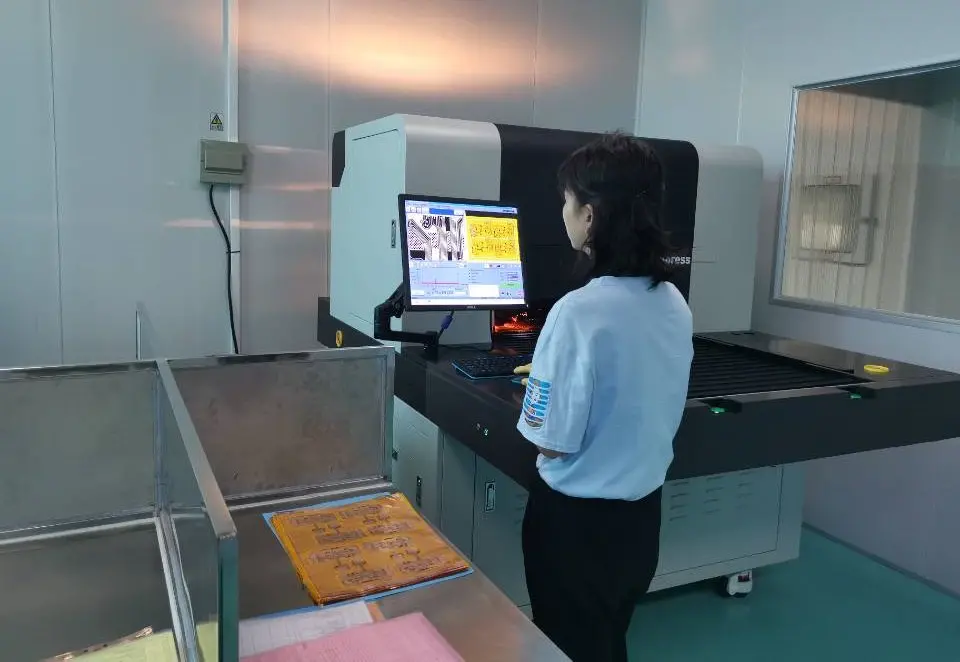
    Pre-Production Testing & Validation

    The pre-production phase involves manufacturing larger quantities (100-1000 pieces) to validate manufacturing processes and identify any potential issues before full-scale production. This critical stage helps optimize manufacturing parameters and ensures consistent quality across production volumes.

    Key Pre-Production Activities:

    • Manufacturing process optimization
    • Yield analysis and improvement
    • Quality system validation
    • Supply chain verification
    • Cost optimization strategies

    During pre-production, we conduct comprehensive electrical testing, including flying probe testing for prototype quantities and bed-of-nails testing for larger volumes. This thorough testing approach ensures that every board meets your specifications before moving to full production.

    Full Production & Quality Control

    Full production quick turn PCB manufacturing maintains the same accelerated timeline while scaling to meet your volume requirements. Our production facilities operate 24/7 to ensure rapid delivery of high-volume orders without compromising quality standards.

    Production Quality Controls:

    • 100% AOI inspection
    • Statistical process control monitoring
    • IPC-A-600 compliance verification
    • Final electrical testing
    • Packaging and shipping verification

    Advanced Technologies for Quick Turn Assembly

    Surface Mount Technology (SMT) for Fast Assembly

    Our state-of-the-art SMT lines feature high-speed pick-and-place machines capable of placing over 50,000 components per hour with placement accuracy of ยฑ25 microns. This advanced equipment enables rapid assembly of complex PCBs while maintaining exceptional quality standards.

    SMT Capabilities:

    • Component sizes: 01005 to large BGAs
    • Fine-pitch components: 0.3mm pitch and smaller
    • High-speed placement: Up to 50,000 CPH
    • Placement accuracy: ยฑ25 microns
    • Component types: Resistors, capacitors, ICs, connectors

    Our quick turn SMT assembly process includes automated solder paste printing, component placement, reflow soldering, and comprehensive quality inspectionโ€”all optimized for rapid turnaround without sacrificing reliability.

    Through-Hole Assembly Capabilities

    For components requiring through-hole assembly, our selective soldering systems and wave soldering equipment provide precise, reliable connections for quick turn projects. Our skilled technicians also perform hand soldering for prototype quantities and specialized components.

    Through-Hole Services:

    • Automated selective soldering
    • Wave soldering for high volumes
    • Hand soldering for prototypes
    • Mixed technology assembly
    • Component lead forming and preparation

    Mixed Technology PCB Assembly

    Many modern PCBs require both surface mount and through-hole components. Our mixed technology assembly capabilities seamlessly integrate both mounting methods in a single, streamlined process optimized for quick turn production.

    Mixed Assembly Advantages:

    • Single-pass manufacturing process
    • Reduced handling and potential damage
    • Optimized thermal profiles
    • Comprehensive testing procedures
    • Faster overall assembly times

    Quality Assurance in Quick Turn Manufacturing

    IPC Standards Compliance

    All quick turn PCB manufacturing at RayMing strictly adheres to IPC standards, ensuring that accelerated production timelines never compromise quality or reliability. Our quality management system maintains compliance with IPC-A-600 (acceptability standards) and IPC-6012 (qualification standards).

    Key IPC Standards:

    • IPC-A-600: PCB acceptability standards
    • IPC-6012: Qualification and performance specifications
    • IPC-2221: Generic standard for PCB design
    • IPC-A-610: Electronic assemblies acceptability
    • J-STD-001: Soldering requirements

    Our quality engineers continuously monitor compliance through statistical process control, ensuring that every quick turn PCB meets or exceeds industry standards regardless of production timeline.

    AOI and Electrical Testing Procedures

    Automated Optical Inspection (AOI) systems provide 100% inspection coverage for all quick turn PCBs, detecting manufacturing defects that could affect performance or reliability. Our advanced AOI systems use high-resolution cameras and sophisticated algorithms to identify issues invisible to manual inspection.

    Testing Procedures:

    • Pre-etch AOI for substrate quality
    • Post-etch AOI for trace integrity
    • Solder mask inspection
    • Silkscreen verification
    • Final dimensional inspection

    Electrical Testing:

    • Flying probe testing for prototypes
    • Bed-of-nails testing for production
    • In-circuit testing (ICT) when required
    • Boundary scan testing capabilities
    • Functional testing for assemblies

    Materials Certification & Traceability

    Every quick turn PCB project includes complete materials certification and traceability documentation. We maintain detailed records of all materials used, including substrate certifications, solder certifications, and component traceability for aerospace and medical applications.

    Certification Documentation:

    • Material test certificates (MTCs)
    • RoHS compliance certificates
    • UL recognition documentation
    • IPC test coupons and reports
    • Statistical process control data

    Quick Turn PCB Pricing & Cost Factors

    24 layer pcb

    Factors Affecting Quick Turn Costs

    Quick turn PCB pricing reflects the premium value of accelerated manufacturing while remaining competitive within the rapid fabrication market. Several key factors influence pricing for expedited orders:

    Primary Cost Factors:

    • Turnaround time requirements (24hr premium vs 72hr)
    • Board complexity and layer count
    • Panel utilization efficiency
    • Material requirements and availability
    • Surface finish specifications
    • Testing and inspection requirements

    Volume-Based Pricing:

    • Prototype quantities (1-50): Premium pricing
    • Small production (51-250): Moderate premium
    • Medium volumes (251-1000): Reduced premium
    • Higher volumes: Near-standard pricing

    Cost Comparison: Quick Turn vs Standard

    Service TypeLead TimeCost MultiplierBest For
    24-Hour Express1 day3.0-4.0xEmergency prototypes
    48-Hour Fast2 days2.0-2.5xUrgent testing needs
    72-Hour Quick3 days1.5-2.0xAccelerated development
    Standard Production2-3 weeks1.0xHigh-volume production

    Volume Pricing for Rapid Orders

    Our transparent pricing structure ensures competitive costs even for expedited orders. Volume discounts apply to quick turn services, making rapid fabrication economical even for larger prototype runs.

    Price Match Guarantee: If you find a lower price for equivalent quick turn PCB services, we’ll match or beat that price while maintaining our superior quality standards and reliable delivery performance.

    Industries & Applications for Quick Turn PCBs

    Consumer Electronics Prototyping

    The consumer electronics industry drives significant demand for quick turn PCB services, particularly for smartphone accessories, wearable devices, and smart home products. Rapid prototyping enables faster product development cycles and quicker market entry.

    Typical Applications:

    • Smartphone and tablet prototypes
    • Wearable device PCBs
    • IoT sensor boards
    • Consumer audio equipment
    • Gaming peripherals and accessories

    Medical Device Development

    Medical device manufacturers rely on quick turn PCB services for life-critical applications where rapid development can accelerate the delivery of life-saving technologies to market. Our medical-grade quality standards ensure reliability for healthcare applications.

    Medical Applications:

    • Patient monitoring equipment
    • Diagnostic instrument PCBs
    • Implantable device prototypes
    • Surgical equipment controllers
    • Telemedicine device boards

    Medical Certifications:

    • ISO 13485 quality management
    • FDA-compliant documentation
    • Biocompatibility testing support
    • IPC-6012 Class 3 manufacturing

    Automotive & Aerospace Applications

    Automotive and aerospace industries utilize quick turn PCB services for advanced driver assistance systems (ADAS), electric vehicle components, and avionics prototypes. These applications demand the highest reliability standards and comprehensive testing.

    Automotive Applications:

    • ADAS sensor boards
    • Electric vehicle charging systems
    • Infotainment system prototypes
    • Engine control modules
    • Battery management systems

    Aerospace Applications:

    • Avionics prototypes
    • Satellite communication boards
    • Navigation system PCBs
    • Flight control electronics
    • Ground support equipment

    IoT and Communications Equipment

    The explosive growth of IoT devices and 5G infrastructure creates substantial demand for quick turn PCB manufacturing. These applications often require rapid prototyping to test new communication protocols and device functionality.

    Communication Applications:

    • 5G infrastructure equipment
    • Wireless sensor networks
    • Bluetooth and WiFi modules
    • Cellular communication boards
    • Network switching equipment

    Choosing a Quick Turn PCB Manufacturer

    Key Capabilities to Evaluate

    When selecting a quick turn PCB manufacturer, several critical capabilities determine whether a supplier can meet your rapid development needs while maintaining quality standards.

    Essential Capabilities:

    • Proven track record of on-time delivery
    • Advanced manufacturing equipment and automation
    • Comprehensive quality control systems
    • Technical support and design assistance
    • Flexible capacity for varying order sizes
    • Global shipping and logistics capabilities

    Technical Considerations:

    • Maximum layer count capabilities
    • Minimum feature sizes and tolerances
    • Material options and availability
    • Surface finish capabilities
    • Testing and inspection equipment

    Certifications & Quality Standards

    Industry certifications provide confidence that your quick turn PCB manufacturer maintains consistent quality standards and can meet the requirements of regulated industries.

    Critical Certifications:

    • ISO 9001:2015 quality management
    • IPC-A-600 and IPC-6012 compliance
    • UL recognition for safety standards
    • RoHS and REACH compliance
    • ITAR registration for defense applications

    Industry-Specific Standards:

    • AS9100 for aerospace applications
    • ISO 13485 for medical devices
    • TS 16949 for automotive applications
    • IPC-6013 for flexible circuits

    Customer Support & Communication

    Effective communication becomes even more critical in quick turn manufacturing where timelines are compressed and there’s little margin for error. Choose manufacturers that provide dedicated support throughout the entire process.

    Support Features:

    • 24/7 customer service availability
    • Dedicated project management
    • Real-time order status updates
    • Technical design support
    • Rapid quote turnaround
    • Proactive issue communication

    RayMing’s Quick Turn PCB Services

    24-Hour Express PCB Fabrication

    RayMing’s 24-hour express service represents the pinnacle of rapid PCB manufacturing, delivering prototype and small production quantities in just one day after design approval. This industry-leading capability enables emergency prototyping and critical project rescue scenarios.

    Express Service Features:

    • Guaranteed 24-hour delivery for qualified designs
    • Real-time production status updates
    • Priority queue positioning
    • Expedited shipping options
    • Emergency customer support hotline

    Design Qualifications for 24-Hour Service:

    • 1-4 layer boards
    • Standard FR-4 materials
    • HASL or ENIG surface finish
    • Standard via sizes (โ‰ฅ0.2mm)
    • Minimum trace width โ‰ฅ0.1mm

    Advanced Manufacturing Equipment

    Our state-of-the-art manufacturing facility features the latest PCB fabrication equipment specifically configured for rapid production without compromising quality. Advanced automation and process optimization enable consistent delivery of quick turn orders.

    Key Equipment:

    • Laser Direct Imaging (LDI) systems for precise patterning
    • High-speed drilling equipment with micro-via capabilities
    • Advanced plating lines with precise thickness control
    • Automated optical inspection (AOI) systems
    • Flying probe and bed-of-nails testing equipment

    Quality Control Technology:

    • Statistical process control monitoring
    • Real-time defect detection systems
    • Automated thickness measurement
    • Impedance testing and verification
    • Environmental stress testing capabilities

    Customer Success Stories & Testimonials

    Automotive Tier 1 Supplier: “RayMing’s 48-hour quick turn service saved our ADAS project timeline when we discovered a critical design issue just days before the customer delivery deadline. Their engineering team worked with us through the weekend to optimize the design and deliver perfect boards on Monday morning.”

    Medical Device Startup: “The 24-hour PCB service was crucial for our FDA submission timeline. RayMing delivered prototype boards that passed all our testing requirements, enabling us to meet our regulatory milestones and secure additional funding.”

    IoT Technology Company: “We’ve used RayMing’s quick turn services for over 50 prototype iterations. Their consistent quality and reliable delivery have accelerated our product development by at least 6 months compared to traditional PCB suppliers.”

    Telecommunications Equipment Manufacturer: “RayMing’s quick turn assembly services enabled us to rapidly test multiple antenna configurations for our 5G equipment. Their technical expertise and rapid turnaround were instrumental in optimizing our design performance.”

    Frequently Asked Questions (FAQ)

    Q: What’s the fastest turnaround time available for PCB fabrication? A: RayMing offers 24-hour express fabrication for qualified designs, including simple 1-4 layer boards with standard materials and finishes. More complex designs typically require 48-72 hours.

    Q: Do quick turn PCBs maintain the same quality as standard production boards? A: Yes, all quick turn PCBs undergo the same rigorous quality control procedures as standard production, including AOI inspection, electrical testing, and IPC compliance verification.

    Q: What file formats do you accept for quick turn orders? A: We accept standard Gerber files (RS-274X), Excellon drill files, and native CAD files from major design software packages. Our engineering team can also work with PDF drawings for simple designs.

    Q: Can you source components for quick turn assembly projects? A: Yes, we maintain inventory of common components and have established relationships with distributors for rapid component procurement. For optimal speed, customer-supplied components are recommended.

    Q: What payment terms are available for quick turn orders? A: We accept major credit cards for immediate processing, wire transfers, and offer net payment terms for qualified customers. Express orders typically require advance payment or credit card authorization.
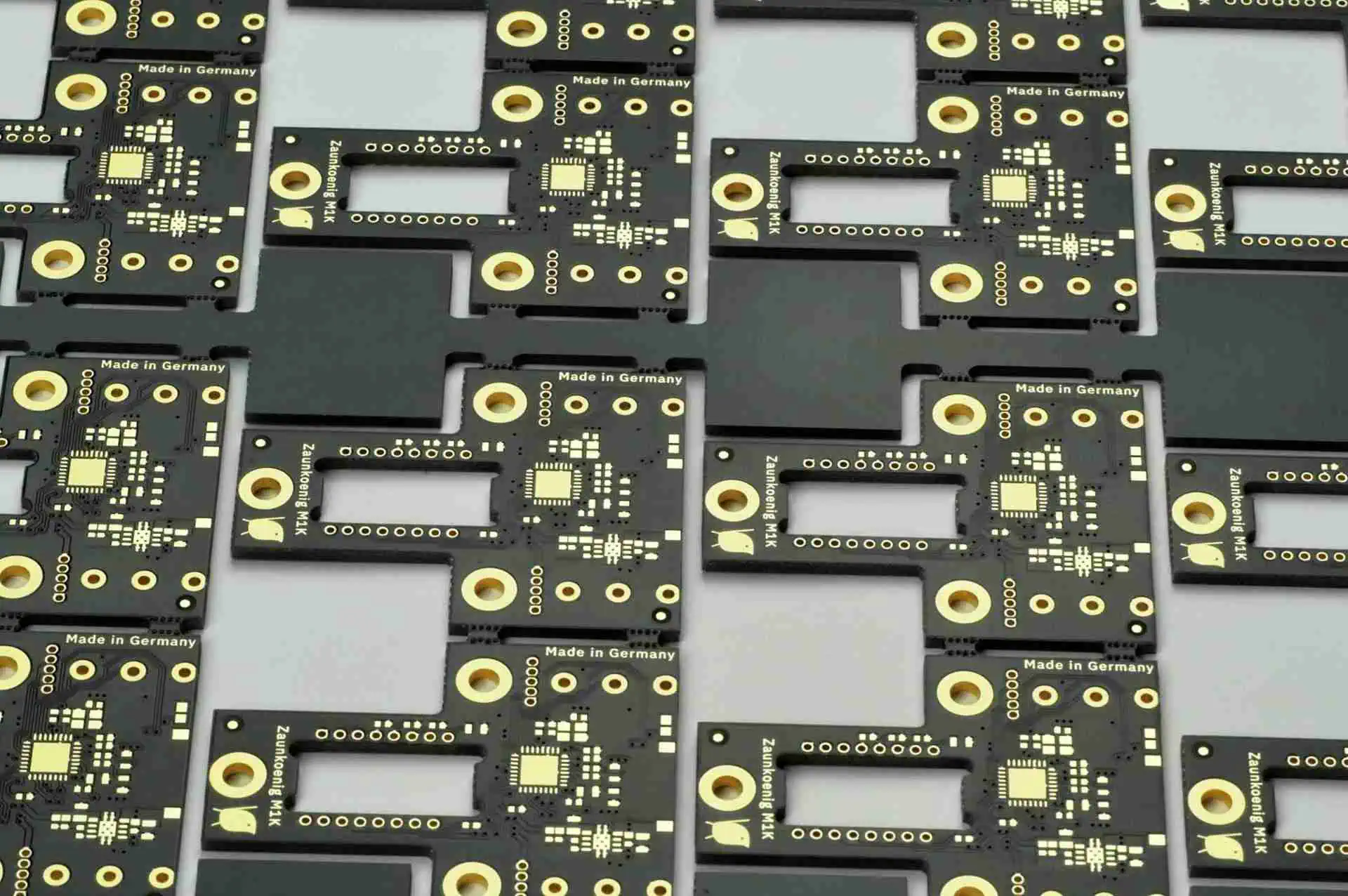
    Q: Do you provide design support for quick turn projects? A: Our engineering team offers comprehensive design support including DFM analysis, impedance calculations, stack-up recommendations, and design optimization for rapid manufacturing.


    Get Your Quick Turn PCB Quote Today

    Ready to accelerate your product development with industry-leading quick turn PCB manufacturing? Contact RayMing today for an instant quote and experience the perfect combination of speed, quality, and competitive pricing.

    Start Your Quick Turn Project:

    • Email: sales@raypcb.com
    • Phone: Contact our express hotline for urgent projects
    • Online Quote: Upload your files for instant pricing
    • 24/7 Support: Emergency project assistance available

    Transform your development timeline with RayMing’s proven quick turn PCB capabilities. Join thousands of satisfied customers who trust us for their most critical rapid manufacturing needs.

    Robot PCB Assembly: Design and Manufacturing for Robotics Applications

    The integration of printed circuit boards (PCBs) in robotics has revolutionized the way autonomous systems operate, communicate, and interact with their environments. Robot PCB assembly represents a specialized field within electronics manufacturing that combines the precision demands of robotics with the complexity of modern circuit board design. As robotics applications continue to expand across industries from manufacturing and healthcare to consumer electronics and space exploration, the need for sophisticated, reliable, and efficient robot PCB solutions has never been greater.

    YouTube video

    Understanding Robot PCB Fundamentals

    Robot PCBs differ significantly from conventional circuit boards due to the unique operational requirements of robotic systems. These boards must withstand constant motion, vibration, temperature fluctuations, and electromagnetic interference while maintaining precise control over motors, sensors, and communication systems. The design philosophy behind robot PCB assembly prioritizes durability, signal integrity, and real-time processing capabilities that enable seamless human-robot interaction and autonomous decision-making.

    Modern robotics applications demand PCBs that can handle multiple simultaneous functions including sensor data processing, motor control, wireless communication, and power management. This multifaceted approach requires careful consideration of component placement, thermal management, and electrical isolation to prevent interference between different subsystems. The complexity of these requirements has led to the development of specialized design methodologies and manufacturing processes tailored specifically for robotic applications.

    Design Considerations for Robotic PCB Systems

    The design phase of robot PCB assembly begins with a thorough analysis of the robotic system’s operational requirements. Engineers must consider factors such as power consumption, processing speed, environmental conditions, and mechanical constraints when developing the circuit board architecture. One critical aspect is the selection of microcontrollers and processors that can handle real-time control algorithms while maintaining low power consumption for battery-operated robots.

    Signal routing in robot PCBs requires particular attention to minimize electromagnetic interference (EMI) and crosstalk between high-speed digital signals and sensitive analog sensor inputs. The use of ground planes, proper trace routing techniques, and strategic component placement helps maintain signal integrity across the board. Additionally, the integration of power management circuits must be carefully planned to provide stable voltage levels to various subsystems while implementing efficient switching regulators to maximize battery life.

    Thermal management becomes increasingly important in compact robotic designs where heat dissipation is limited. The placement of high-power components such as motor drivers and processors must be optimized to prevent thermal coupling and ensure reliable operation across the robot’s operational temperature range. This often involves the use of thermal vias, heat sinks, and copper pour techniques to distribute heat effectively across the PCB.

    Component Selection and Integration

    The selection of components for robot PCB assembly requires balancing performance, size, cost, and reliability considerations. Microcontrollers specifically designed for robotics applications often feature integrated motor control peripherals, analog-to-digital converters for sensor interfacing, and communication interfaces such as UART, SPI, and I2C. Popular choices include ARM Cortex-M series processors, which offer excellent real-time performance and low power consumption.

    Sensor integration represents another crucial aspect of robot PCB design. Modern robots typically incorporate multiple sensor types including accelerometers, gyroscopes, magnetometers, proximity sensors, and cameras. The PCB must provide appropriate analog conditioning circuits, voltage level translation, and noise filtering to ensure accurate sensor readings. Inertial measurement units (IMUs) require careful placement away from magnetic interference sources and proper decoupling to maintain measurement accuracy.

    Motor control circuits form the backbone of most robotic systems, requiring robust driver circuits capable of handling the current and voltage requirements of various actuator types. The selection between brushed and brushless motor controllers depends on the specific application requirements, with brushless controllers offering higher efficiency and longer lifespan at the cost of increased complexity and cost.

    Manufacturing Processes and Quality Control

    Robotics Integration

    The manufacturing of robot PCBs follows specialized processes designed to meet the stringent reliability requirements of robotic applications. Surface mount technology (SMT) assembly has become the standard for most robot PCB manufacturing due to its ability to achieve high component density and excellent mechanical stability. The SMT process involves solder paste application through precision stencils, component placement using high-accuracy pick-and-place machines, and reflow soldering in controlled temperature profiles.

    Quality control measures in robot PCB manufacturing include automated optical inspection (AOI) to detect component placement errors, in-circuit testing (ICT) to verify electrical connectivity, and functional testing to ensure proper system operation. These testing procedures are particularly important for robotic applications where field failures can result in costly downtime or safety hazards.
    The use of lead-free soldering processes has become standard in robot PCB manufacturing to comply with environmental regulations and ensure long-term reliability. However, the higher processing temperatures required for lead-free soldering can present challenges for temperature-sensitive components, requiring careful process optimization and component selection.
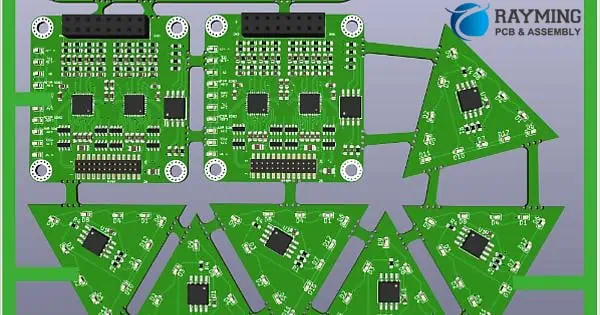
    Advanced Technologies in Robot PCB Design

    The evolution of robotics has driven the adoption of advanced PCB technologies including flexible and rigid-flexible designs that can accommodate the mechanical constraints of articulated robotic systems. Flexible PCB enable connections between moving parts while maintaining electrical continuity, making them ideal for robotic joints and rotating assemblies.

    High-density interconnect (HDI) technology has become increasingly important for compact robotic designs where space is at a premium. HDI techniques such as microvias, embedded components, and sequential build-up processes allow for increased routing density while maintaining signal integrity. This technology is particularly beneficial for mobile robots and drone applications where weight and size constraints are critical.

    The integration of wireless communication capabilities into robot PCBs has opened new possibilities for remote control, data logging, and swarm robotics applications. The design of antenna circuits and RF shielding requires specialized knowledge to prevent interference with other electronic systems and ensure reliable communication performance.

    Power Management and Energy Efficiency

    Power management represents one of the most critical aspects of robot PCB design, particularly for autonomous mobile robots that rely on battery power. Efficient power management circuits must provide stable voltage rails to various subsystems while minimizing power consumption to extend operational time. The use of switching regulators, low-dropout regulators, and power management ICs specifically designed for robotics applications helps optimize energy efficiency.

    Battery management systems integrated into robot PCBs monitor cell voltage, current, and temperature to prevent overcharging, over-discharging, and thermal runaway conditions. These systems are essential for ensuring safe operation and maximizing battery lifespan in robotic applications. The implementation of sleep modes and power gating techniques allows robots to reduce power consumption during idle periods while maintaining the ability to respond quickly to external stimuli.

    Energy harvesting technologies are increasingly being integrated into robot PCB designs to supplement battery power in specific applications. Solar cells, piezoelectric generators, and thermoelectric devices can provide additional power sources for sensors and low-power circuits, extending the operational range of autonomous robots.

    Connectivity and Communication Systems

    Modern robot PCBs must support multiple communication protocols to enable interaction with other systems, sensors, and network infrastructure. The integration of wired and wireless communication interfaces requires careful consideration of signal integrity, power consumption, and electromagnetic compatibility. Common communication standards include Ethernet, USB, CAN bus, and various wireless protocols such as Wi-Fi, Bluetooth, and Zigbee.

    The design of communication circuits must account for the harsh electromagnetic environment typically encountered in industrial robotic applications. Proper shielding, filtering, and isolation techniques help prevent interference from motor drives and switching power supplies that can disrupt sensitive communication signals.

    Real-time communication capabilities are essential for many robotic applications, particularly those involving coordinated motion or safety-critical operations. The implementation of time-sensitive networking protocols and deterministic communication stacks requires specialized hardware and software design considerations.

    Testing and Validation Methodologies

    The testing and validation of robot PCBs involves comprehensive procedures that verify both electrical functionality and mechanical reliability. Environmental testing includes temperature cycling, vibration testing, and humidity exposure to simulate real-world operating conditions. These tests are particularly important for robots operating in harsh environments such as manufacturing facilities, outdoor applications, or space missions.

    Functional testing of robot PCBs requires specialized test fixtures and software that can simulate the full range of robotic operations. This includes testing motor control algorithms, sensor calibration procedures, and communication protocols under various operating conditions. The use of hardware-in-the-loop (HIL) testing systems allows for comprehensive validation of control algorithms before deployment.

    Electromagnetic compatibility (EMC) testing ensures that robot PCBs meet regulatory requirements and do not interfere with other electronic systems. This testing is particularly important for robots operating in sensitive environments such as hospitals, laboratories, or near critical infrastructure.

    Future Trends and Innovations

    Line following robot

    The future of robot PCB assembly is being shaped by several emerging technologies and trends. The increasing adoption of artificial intelligence and machine learning in robotics is driving demand for more powerful processing capabilities and specialized AI accelerator chips. These developments require PCB designs that can accommodate high-speed interfaces and provide sufficient power delivery for computational intensive operations.

    The miniaturization of robotic systems continues to push the boundaries of PCB design, with the development of three-dimensional circuit architectures and embedded component technologies. These advances enable the creation of smaller, more capable robots while maintaining the functionality and reliability required for practical applications.

    The integration of advanced materials such as graphene, carbon nanotubes, and metamaterials into PCB designs offers new possibilities for improving thermal management, reducing weight, and enhancing electromagnetic performance. These materials are particularly promising for aerospace and military robotics applications where performance requirements are most demanding.

    Conclusion

    Robot PCB assembly represents a rapidly evolving field that combines the precision requirements of robotics with the complexity of modern electronics manufacturing. The successful design and manufacturing of robot PCBs requires a deep understanding of robotic system requirements, advanced PCB technologies, and specialized manufacturing processes. As robotics applications continue to expand across industries, the demand for sophisticated, reliable, and efficient robot PCB solutions will continue to grow, driving innovation in design methodologies, manufacturing processes, and testing procedures. The future of robotics depends heavily on the continued advancement of PCB technologies that can support the increasingly complex requirements of autonomous systems while maintaining the reliability and performance standards essential for practical deployment.

    Embedded Components in PCB Design: Benefits, Materials, and Manufacturing Techniques

    PCB Embedded Components

    mbedded components function much like standard components in an assembly environment, but with enhanced integration capabilities. Designers can:

    • Activate and modifyย embedded elements by adjusting dimensions and editing features (rounds, chamfers, etc.)
    • Reposition componentsย through intuitive drag-and-drop functionality
    • Create dynamic mechanismsย by manipulating embedded parts within the assembly

    This flexibility allows for seamless integration of passive components (resistors, capacitors) and even some active elements directly into the PCB substrate while maintaining full design control.

    Understanding Embedded Components in PCBs

    Before delving into the specifics, it’s essential to understand what embedded components are and how they differ from traditional surface-mount technology (SMT) or through-hole components.

    What Are Embedded Components?

    Embedded components are electronic parts that are integrated directly into the layers of a printed circuit board, rather than being mounted on the surface or through holes. These components become an integral part of the PCB structure, offering numerous advantages in terms of space utilization, performance, and reliability.

    Types of Embedded Components

    There are several types of components that can be embedded within PCBs:

    1. Passive components (resistors, capacitors, inductors)
    2. Active components (diodes, transistors)
    3. Integrated circuits (ICs)
    4. Sensors and MEMS devices
    5. Antennas and RF components

    Benefits of Embedding Components in PCBs

    The integration of embedded components in PCB design offers a wide range of benefits that make this technique increasingly popular in various industries.

    Miniaturization and Space Savings

    One of the primary advantages of embedded components is the significant reduction in overall PCB size. By incorporating components within the board layers, designers can achieve a more compact layout, leading to smaller and lighter electronic devices.

    Improved Performance

    Embedded components often result in shorter signal paths, which can lead to:

    • Reduced signal interference
    • Lower parasitic capacitance and inductance
    • Improved signal integrity
    • Enhanced high-frequency performance

    Enhanced Reliability

    By protecting components within the PCB structure, embedded designs offer:

    • Increased mechanical stability
    • Better protection against environmental factors
    • Reduced risk of component damage during assembly and handling

    Design Flexibility

    Embedding components allows for greater design flexibility, enabling engineers to:

    • Optimize component placement
    • Reduce the number of required layers
    • Simplify routing and improve overall board layout

    Cost-Effectiveness

    While the initial costs of embedding components may be higher, the long-term benefits often result in cost savings through:

    • Reduced material usage
    • Fewer assembly steps
    • Improved yield rates
    • Lower failure rates in the field

    Read more about:

    Materials Used in Embedded Component PCBs

    The success of embedded component technology relies heavily on the materials used in the PCB manufacturing process. Let’s explore some of the key materials involved.

    Substrate Materials

    The choice of substrate material is crucial for embedded component PCBs. Common options include:

    1. FR-4 (Flame Retardant 4): A popular and cost-effective choice for many applications
    2. High-frequency laminates: For improved signal integrity in RF and high-speed digital designs
    3. Ceramic substrates: Offer excellent thermal management for power electronics
    4. Flexible substrates: Enable the creation of flexible and rigid-flex PCBs with embedded components

    Conductive Materials

    Conductive materials are essential for creating electrical connections within the PCB. Common choices include:

    1. Copper: The most widely used conductive material in PCBs
    2. Silver: Offers lower resistance and improved high-frequency performance
    3. Aluminum: Used in specific applications for its lightweight properties and cost-effectiveness

    Dielectric Materials

    Dielectric materials provide insulation between conductive layers and components. Some popular options are:

    1. Epoxy resins: Widely used for their excellent electrical and mechanical properties
    2. Polyimide: Offers high temperature resistance and flexibility
    3. PTFE (Teflon): Provides low dielectric constant and loss tangent for high-frequency applications

    Embedding Materials

    Specific materials are used to embed and protect components within the PCB layers:

    1. Resin systems: Epoxy-based resins are commonly used to encapsulate components
    2. Prepregs: Pre-impregnated fabric layers that provide both insulation and structural support
    3. Adhesives: Specialized adhesives are used to bond components to the substrate

    Manufacturing Techniques for Embedded Component PCBs

    The production of PCBs with embedded components requires specialized manufacturing techniques. Let’s explore some of the most common methods used in the industry.

    Cavities and Laser Drilling

    This technique involves creating cavities in the PCB layers to accommodate components:

    1. Laser drilling is used to create precise cavities in the substrate
    2. Components are placed in the cavities and secured with adhesive
    3. Additional layers are added to complete the PCB structure

    Film-Based Embedding

    Film-based embedding utilizes thin film materials to create component layers:

    1. Components are placed on a thin film substrate
    2. The film is laminated onto the PCB core
    3. Subsequent layers are added to complete the board

    Liquid Crystal Polymer (LCP) Embedding

    LCP embedding is particularly useful for high-frequency applications:

    1. Components are placed on an LCP substrate
    2. The LCP layer is bonded to the PCB core
    3. Additional layers are added as needed

    3D Printing and Additive Manufacturing

    Emerging techniques in 3D printing and additive manufacturing offer new possibilities for embedded component PCBs:

    1. Conductive and dielectric materials are deposited layer by layer
    2. Components are placed and embedded during the printing process
    3. The entire PCB structure is built up additively

    Design Considerations for Embedded Component PCBs

    While embedded components offer numerous benefits, their implementation requires careful consideration during the design phase.

    Thermal Management

    Embedded components can face challenges with heat dissipation. Designers must consider:
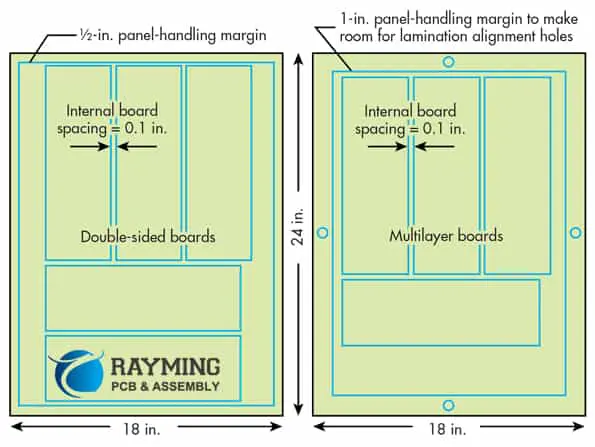
    • Thermal vias and copper planes for heat spreading
    • Selection of thermally conductive materials
    • Strategic placement of heat-generating components

    Signal Integrity

    Maintaining signal integrity is crucial in embedded component designs:

    • Careful routing of high-speed signals
    • Use of appropriate materials for impedance control
    • Consideration of electromagnetic interference (EMI) and crosstalk

    Testing and Inspection

    Embedding components can make testing and inspection more challenging:

    • Implementation of design for test (DFT) strategies
    • Use of X-ray and other non-destructive testing methods
    • Consideration of test points and access for in-circuit testing

    Repairability and Rework

    Embedded components are generally more difficult to repair or replace:

    • Careful component selection to minimize potential failures
    • Design for modularity where possible
    • Documentation of embedded component locations and specifications

    Applications of Embedded Component PCBs

    The advantages of embedded components make them suitable for a wide range of applications across various industries.
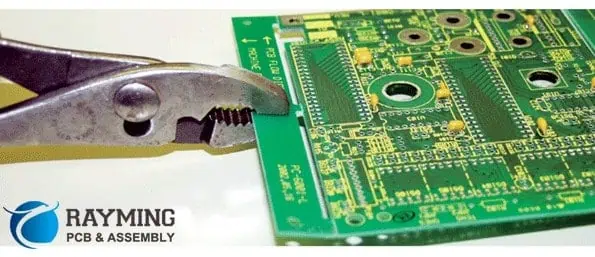
    Consumer Electronics

    • Smartphones and tablets
    • Wearable devices
    • Smart home appliances

    Automotive Industry

    • Advanced driver-assistance systems (ADAS)
    • Electric vehicle control units
    • In-vehicle infotainment systems

    Aerospace and Defense

    • Satellite communications equipment
    • Radar and electronic warfare systems
    • Avionics and flight control systems

    Medical Devices

    • Implantable medical devices
    • Portable diagnostic equipment
    • Hearing aids and other miniature medical electronics

    Industrial Electronics

    • IoT sensors and actuators
    • Industrial control systems
    • High-reliability electronics for harsh environments

    Future Trends in Embedded Component PCB Technology

    As technology continues to advance, several trends are shaping the future of embedded component PCBs:

    Integration of More Complex Components

    Advancements in manufacturing techniques are enabling the embedding of increasingly complex components, including:

    • Multi-chip modules (MCMs)
    • System-in-Package (SiP) solutions
    • 3D IC integration

    Improved Materials and Processes

    Ongoing research is focused on developing new materials and processes to enhance embedded component performance:

    • Novel substrate materials with improved electrical and thermal properties
    • Advanced embedding techniques for better component integration
    • Environmentally friendly and sustainable manufacturing processes

    Automation and AI in Design

    The increasing complexity of embedded component PCBs is driving the adoption of advanced design tools:

    • AI-assisted component placement and routing
    • Automated design rule checking for embedded components
    • Machine learning algorithms for optimizing thermal and electrical performance

    Enhanced Testing and Quality Control

    As embedded components become more prevalent, new testing and quality control methods are being developed:

    • Advanced X-ray and CT scanning techniques
    • In-situ monitoring during the manufacturing process
    • AI-powered defect detection and analysis

    Conclusion

    Embedded components in PCB design represent a significant advancement in electronics manufacturing, offering numerous benefits in terms of miniaturization, performance, and reliability. As the demand for smaller, more powerful electronic devices continues to grow, the adoption of embedded component technology is likely to increase across various industries.

    While challenges remain in terms of design complexity, thermal management, and repairability, ongoing research and development in materials, manufacturing techniques, and design tools are addressing these issues. As the technology matures, we can expect to see even more innovative applications of embedded components in PCBs, driving the next generation of electronic devices and systems.

    For engineers, designers, and manufacturers in the electronics industry, staying informed about the latest developments in embedded component PCB technology is crucial. By embracing these advanced techniques and continually refining their implementation, they can create cutting-edge products that meet the ever-increasing demands of the modern world.

    Quick Turn Flex PCB Manufacturing – Fast Delivery 1-10 Layer Flexible Circuits

    quick turn flexible PCB prototype

    Flexible printed circuit boards (PCBs) have become essential components in countless modern devices. As product development cycles shorten and demand for miniaturized electronics grows, manufacturers require not just high-quality flex PCBs but increasingly rapid production timelines. Quick turn flex PCB manufacturing has emerged as the solution to this pressing need, enabling companies to move from design to prototype to production with unprecedented speed.

    The ability to produce complex 1-10 layer flexible circuits with fast delivery times has transformed how electronic products reach the market. Whether you’re developing cutting-edge medical devices, next-generation consumer electronics, or automotive systems that demand both reliability and flexibility, quick turn flex PCB services provide the competitive advantage necessary in today’s market.

    What is a Quick Turn Flex PCB?

    Understanding Flexible PCBs

    Flexible PCBs (also called flex circuits) are electronic circuits mounted on flexible substrate materials, typically polyimide (PI) or polyester (PET). Unlike rigid PCBs, these circuits can bend, fold, and twist without compromising electrical connections or performance. This flexibility makes them ideal for applications with space constraints, movement requirements, or complex three-dimensional configurations.

    Flex PCBs offer several advantages over their rigid counterparts:

    • Reduced weight and space requirements
    • Ability to conform to irregular shapes
    • Improved resistance to vibration and movement
    • Enhanced thermal management capabilities
    • Greater design freedom for product development

    The “Quick Turn” Advantage

    In PCB manufacturing terminology, “quick turn” refers to expedited production processes designed to significantly reduce lead times. Traditional flex PCB manufacturing can take weeks or even months from design submission to delivery. Quick turn services compress this timeline dramatically, often delivering finished boards in days rather than weeks.

    This acceleration is achieved through:

    • Streamlined design review processes
    • Dedicated manufacturing capacity
    • Optimized material sourcing
    • Advanced production techniques compliant with standards like IPC 2152
    • Parallel processing of manufacturing steps when possible

    The result is a production process that maintains quality while eliminating unnecessary delays, allowing companies to iterate designs rapidly or meet urgent production needs.

    Capabilities: 1-10 Layer Flexible Circuit Manufacturing

    Layer Options and Complexity

    Modern quick turn flex PCB manufacturers offer impressive capabilities spanning from simple single-layer designs to sophisticated multi-layer configurations:

    • Single-layer flex: Basic circuits with components mounted on one side
    • Double-layer flex: Circuits with traces on both sides, connected by plated through-holes
    • Multi-layer flex (3-10 layers): Complex designs with multiple conductive layers separated by insulating materials

    The advancement in manufacturing technology now enables quick turn production even for sophisticated 10-layer flexible circuits that previously required extended lead times. This capability is particularly valuable for designs requiring dense component placement, controlled impedance, or advanced signal integrity features.

    Material and Technical Specifications

    Quick turn flex PCB manufacturing accommodates a range of materials and technical requirements:

    Base Materials

    • Polyimide (PI) – Most common for high-performance applications
    • Polyester (PET) – Cost-effective option for simpler applications
    • Liquid Crystal Polymer (LCP) – For high-frequency applications

    Copper Thickness

    • Standard: 1/2 oz (17.5 ฮผm), 1 oz (35 ฮผm)
    • Available options: 1/4 oz to 2 oz (8.75 ฮผm to 70 ฮผm)

    Trace/Space Capabilities

    • Standard: 4/4 mil (0.1/0.1 mm)
    • Advanced capabilities: Down to 2/2 mil (0.05/0.05 mm)

    Hole Sizes

    • Mechanical drilling: Down to 0.2 mm
    • Laser drilling: Down to 0.075 mm for microvias

    IPC 2152 Compliance in Flex PCB Design

    A critical consideration in flex PCB manufacturing is current-carrying capacity, particularly for power distribution applications. The IPC 2152 standard provides essential guidelines for determining appropriate trace widths based on current requirements, temperature rise constraints, and copper thickness.

    Quick turn manufacturers implement IPC 2152 calculations during the design review phase to ensure:

    • Sufficient trace widths for required current loads
    • Prevention of excessive heating in flexible circuits
    • Reliable operation under various environmental conditions
    • Optimized copper distribution for thermal management

    Adherence to IPC 2152 standards is particularly important in flex PCBs, where thermal considerations can be more complex than in rigid boards due to different heat dissipation characteristics of flexible substrates.

    Fast Delivery Without Compromising Quality

    Realistic Lead Time Expectations

    Quick turn flex PCB manufacturing significantly compresses traditional production timelines:

    • Prototype services: 24-72 hours for simple designs
    • Standard quick turn: 3-5 business days
    • Complex multi-layer designs: 5-10 business days
    • Production volumes: Custom schedules based on quantity and complexity

    These accelerated timelines represent the production period after design files have been approved and prepared for manufacturing. For most projects, the complete timeline includes design review, file preparation, production, testing, and shipping.

    Quality Assurance in Expedited Production

    Legitimate quick turn manufacturers maintain rigorous quality control processes despite compressed timelines:

    • Automated optical inspection (AOI) for all layers
    • Flying probe electrical testing
    • Impedance testing for controlled impedance designs
    • Microscopic inspection of critical features
    • Bend and flex testing specific to flexible circuits

    These quality measures ensure that fast delivery doesn’t come at the expense of reliability or performance.

    Industry Certifications and Standards

    Reputable quick turn flex PCB manufacturers maintain certifications that validate their quality systems:

    • IPC Standards: Including IPC-6013 (Flexible Printed Boards) and IPC 2152 (Standard for Determining Current-Carrying Capacity)
    • ISO 9001: Quality management systems
    • ISO 13485: For medical device applications
    • UL Certification: For safety and reliability
    • RoHS and REACH Compliance: For environmental and health standards

    These certifications provide assurance that expedited manufacturing processes still adhere to established industry standards for quality and reliability.

    Read more about:

    Industries That Rely on Quick Turn Flex PCBs

    Medical Devices and Healthcare

    The medical industry increasingly depends on flex PCBs for applications where space constraints, reliability, and biocompatibility are crucial:

    • Wearable health monitors
    • Implantable medical devices
    • Diagnostic equipment
    • Surgical tools with embedded electronics
    • Patient monitoring systems

    Quick turn capabilities are particularly valuable in this sector, where device iterations may be frequent during development and regulatory approval processes.

    Consumer Electronics

    Consumer electronics manufacturers leverage quick turn flex PCB services to:

    • Accelerate product development cycles
    • Respond rapidly to market trends
    • Implement design improvements between production runs
    • Create increasingly thin and lightweight devices
    • Enable innovative form factors

    From smartphones and tablets to smart home devices, flex PCBs enable the compact, lightweight designs consumers demand.

    Automotive and Aerospace Applications

    These industries require flex PCBs that perform reliably under extreme conditions:

    • Engine control systems
    • Advanced driver assistance systems (ADAS)
    • Lighting systems
    • Instrument panels and displays
    • Satellite components
    • Aircraft avionics

    The rigorous testing requirements in these sectors make quick turn prototyping especially valuable for validating designs before full production.

    IoT and Wearable Technology

    The explosive growth in IoT and wearable devices has created significant demand for flex PCBs that can:

    • Fit into compact, ergonomic form factors
    • Conform to curved surfaces
    • Withstand repeated flexing
    • Integrate with batteries and sensors
    • Operate with low power consumption

    Fast delivery of flexible circuits enables the rapid innovation cycle that characterizes this dynamic market segment.

    Key Considerations for Quick Turn Flex PCB Orders

    rpt

    Design File Requirements

    To ensure the fastest possible turnaround, provide complete and accurate design files:

    • Gerber files: RS-274X format is preferred
    • Drill files: Excellon format with clearly defined tool sizes
    • Bill of Materials (BOM): Complete parts list with manufacturer part numbers
    • Assembly drawings: For flex PCB assembly services
    • Fabrication drawing: Including stack-up, dimensions, and special requirements
    • IPC 2152 calculations: For power distribution traces

    Complete documentation minimizes clarification delays that can extend production timelines.

    Design for Manufacturability (DFM) Review

    Even with quick turn services, a thorough DFM review is essential to identify potential manufacturing issues before production begins:

    • Trace width and spacing validation against manufacturing capabilities
    • Drill size and placement verification
    • Layer registration analysis
    • Bend and flex zone evaluation specific to flexible circuits
    • Impedance requirements review

    Many manufacturers offer expedited DFM review as part of their quick turn service package.

    Common Mistakes to Avoid in Urgent Orders

    When time is critical, avoiding these common pitfalls can prevent delays:

    • Incomplete or inconsistent design files
    • Unrealistic technical requirements (e.g., trace/space beyond manufacturing capabilities)
    • Insufficient consideration of flex zones and bend radius limitations
    • Overlooking IPC 2152 requirements for current-carrying traces
    • Incomplete material specifications
    • Neglecting controlled impedance requirements

    Tips for Reducing Turnaround Time

    Maximize the speed of your quick turn flex PCB order with these strategies:

    • Consult with manufacturers during the design phase
    • Submit designs during standard business hours for immediate processing
    • Respond promptly to any clarification requests
    • Consider design simplifications if timeline is critical
    • Evaluate whether all features require IPC Class 3 standards or if Class 2 is sufficient
    • Plan for concurrent assembly when possible

    Why Choose Our Services for Quick Turn Flex PCB Manufacturing

    Unmatched Production Capabilities

    Our state-of-the-art manufacturing facility specializes in quick turn flex PCB production with capabilities including:

    • Complete in-house production from 1-10 layers
    • Advanced equipment for laser drilling, precision etching, and automated testing
    • Specialized flex PCB handling processes to maintain material integrity
    • IPC 2152 compliant design validation and manufacturing
    • 24/7 production capabilities for truly urgent projects

    Engineering Support Throughout the Process

    Our experienced engineering team provides:

    • Pre-production design consultation
    • Real-time DFM feedback
    • Material selection guidance
    • Stack-up recommendations for complex designs
    • IPC 2152 compliance verification
    • Production updates throughout manufacturing

    Quality Assurance Guarantee

    We maintain rigorous quality standards even with expedited timelines:

    • 100% electrical testing on all boards
    • Automated optical inspection at multiple production stages
    • Dedicated quality control team for flex PCB inspection
    • Full compliance with IPC-6013 standards
    • Traceable quality documentation

    Customer Success Stories

    Our quick turn flex PCB services have enabled customers to:

    • Launch innovative medical devices months ahead of schedule
    • Recover from supply chain disruptions without production delays
    • Iterate wearable device designs through multiple prototypes in weeks rather than months
    • Meet unexpected production demands for automotive components
    • Develop cutting-edge aerospace applications with compressed development timelines

    Get a Quote or Start Your Quick Turn Flex PCB Order Today

    Ready to experience the advantages of our quick turn flex PCB manufacturing services? Our streamlined ordering process makes it easy to get started:

    1. Submit your design files through our secure online portal
    2. Receive a detailed quote within hours, not days
    3. Approve your project to initiate immediate production
    4. Track your order status in real-time through our customer dashboard
    5. Receive your high-quality flex PCBs in as little as 24 hours

    Our instant online quoting tool provides immediate pricing for standard configurations, while our engineering team is available for consultation on more complex designs requiring detailed IPC 2152 analysis or specialized manufacturing processes.

    Conclusion

    Quick turn flex PCB manufacturing has revolutionized how companies develop and produce electronic devices that require flexible circuits. With capabilities spanning from simple single-layer designs to complex 10-layer configurations, modern manufacturing processes deliver both speed and quality without compromise.

    By partnering with an experienced quick turn flex PCB manufacturer, you gain more than just fast deliveryโ€”you acquire a competitive advantage in bringing your products to market. Whether you’re developing medical devices, consumer electronics, automotive systems, or IoT products, the ability to rapidly iterate designs and move quickly from prototype to production can be the difference between market leadership and playing catch-up.

    Don’t let traditional PCB manufacturing timelines constrain your innovation. Contact us today to discover how our quick turn flex PCB manufacturing services can accelerate your product development and production cycles while maintaining the highest quality standards and IPC 2152 compliance.

    How Do You Make a PCB Panel ?

    PCB panelization

    Why should we make PCB panel for production ?

    1. The Quest of PCB Manufacturing  Cost

    Cost saving in every step of any engineering product development is very crucial by the first day. All steps of electronic product development including circuit design, PCB design, manufacturing, assembling and fixing into final product has no exception. The PCB developers demand always to keep manufacturing cost low and low. For this purpose every developer adopts all methods to save money at every step. The PCB manufacturers understand this psyche of product developers very well. This is why they guide their customers at every step to produce maximum number of PCBs and best usable techniques in a competitive price amount. This motivates and encourages the industry partners in product development. Every aspect of PCB manufacturing has variety of options and their pitfalls.

    2. PCB Panelization for Testing

    To reduce cost to some extent PCB development customers combine more than one PCB design files into one final file and then generate Gerber files. Gerber format is one of the most leading formats understood by the manufacturers. To produce one PCB Gerber file data after adding multiple PCB designs i.e., array of PCB designs is called PCB Panelization. PCBs are panelized after designing all PCBs and before to generating gerber data. It is usually done in two different ways:

    1- Multiple copies of same PCB are combined in one PCB i.e., an array of PCBs.

    In this case the extra charges are not added in manufacturing price. It is very popular in high production setups.

    2- Different PCB designs are combined to one PCB file

    pcb panel & pcb panelization

    In this method multiple different designs are added to same PCB panel. It becomes slightly complicated task for manufacturer to cut, package and ship different PCBs. An additional cost is added to total manufacturing cost of PCB. Customers generate one gerber file rather than multiple gerber files to save one time manufacturing cost. However, as a whole, it gives benefit to customer to save a handsome amount at manufacturing PCB phase. Both can be used for cost saving strategies for prototype testing and small scale PCB productions.

    Figure 1,4 to 1 PCB Panelization of same PCB-design

    Figure 1: 4 to 1 PCB Panelization of same PCB-design

    pcb panel

    Figure 2: Panelization of two different PCB-designs

    Generally, in good CAD software tools multiple PCBs can be panelized after discussion with manufacturer. Figure 1 and Figure 2 shows two different approaches for PCB Panelization.

    3. PCB Panelization for Production

    PCB Panelization gives great benefits to PCB producers. It saves cost as well as assembly time, human effort, material cost and hence time-to-market of product.

    A PCB for large scale production purposes i.e., for massive production of single PCB in form of PCB array is connected together physically as in Figure 1 and Figure 2. It makes it easier to move PCBs array across the assembly line much like a electronic component tray. The individual boards are easily separable after assembling for QC-inspection or to fit into the product enclosure. For production of tens of thousands of PCBs, component placement for PCB Panelization also does matter. Especially connectors and components hanging off the boundaries of PCB can create difficulty in PCB assembling process.

    • PCB Shape and size

    Some PCB assembly contractors require minimum size of PCB to fit in a conveyor. A smaller size PCB which cannot fit physically within conveyor is needed to add small catch-in-hold area for processing.  This extra PCB area is removed after PCB assembling. The situation is more complex in case of odd shaped PCBs. The rectangular PCB shape does fit easily in a panel however curved and odd-shaped PCBs need also some extra PCB area for handing by SMT conveyor. This situation can complicate PCB Panelization or assembly. Rectangular PCBs can be placed ideally both in vertical and horizontal axis. The CAD Software tools alongwith guidance of manufacturer and assembler can lead to early time measures. By involving manufacturer, assembly and PCB design engineer maximum benefits can be reaped.

    • Panel Space

    Typically PCB manufacturers run standard panels sizes like 24 x 18 inches. They need 0.5 inches clearance from components on the perimeter of panel.  So 23 x 17 inches Panel size is actually available panel space for manufacturing. They need small gaps i.e., 0.1 inches for routing board arrays which is another unusable panel space. The PCB developer may get help to use panel space effectively by using calculation Tools available by manufacturers or online. PCB panel area is shown in Fig 4.

    pcb panelization

    Figure 4:  Standard (24 x18 inches) PCB panale area

    A V-groove is way to split panelized PCBs. It is a small โ€œVโ€-shaped cut on top and bottom side of panel leaving a small easily breakable base pcb raw material. The PCBs remain intact unless they are separated by applying a small force. The advantage of V-grooves is the distance between two boards is 0 inches.

    Figure 5,Breaking cut-in-hold part from PCB

    Figure 5: Breaking cut-in-hold part from PCB.

    Figure 6, Removing cut-in-hold part from PCB

    Figure 6: Removing cut-in-hold part from PCB

    Figure 5 and Figure 6 show breaking and removing the cut-in-hold PCB area from actual usable PCB area.

    4. Advantages:

    1- The Panelization is much popular among  producers for cost and time saving, ease of shipment, easy fitting into assembly plants etc.

    2- It saves standard workable area for PCB manufacturing.

    3- Prototype PCB panels can add multiple different designs. It saves one time cost which is applicable by manufacturer. So multiple PCBs can be made in one go only on extra cost.

    4- In assembling process the Panelizationprotects PCBs from vibration and shock jerks.

    5- Maximum PCBs can be manufactured form a standard size panel.

    PCB Panelization When considering design construction

    FULL PCB MANUFACTURING Quote

    Panelization of printed circuit board has consideration with PCB manufacturing efficiency. Printed circuit boards are required to be kept safe during manufacturing, shipping and assembly process to avoid damaging of unit.Panelization contribute two factors to the manufacturing of board, one is the lead time of manufacturing can be reduced. Another advantage that panelization offers is, it is an aid for manufacturing of small printed circuit boards of irregular shapes. In broader sense the product quality can be controlled easily. The size of printed circuit board panel must confirm with the manufacturing ability of unit. It should have capabilities of automation equipment including paste printer, SPI system, re-flow oven, wave soldering machine. Some irregular printed circuit board of smaller sizes cannot be panelized.

    A paramount problem which has been consistent in the process panelization of printed circuit board, the prototype pcb assembly fail to take consideration of manufacturing in terms of cost. This method has to depend on the combination methods according to the printed circuit boards requirements.

    Some combination method of panelization

    Order Panelization:

    This method is the vastly used panelization method. It brings lots of advantages as far manufacturing of the printed circuit board is concern. First and foremost advantage is that, it is compatible in all situations, with no consideration to be taken of SMT manufacturer fabrication conditions and product combination. Another advantage is there is no influence of manufacturing item numbers on panelization. There is a unique process for some components of printing stencil design, because of panelization the printing quality will not diminish because of orientation of pad. For manufacturing of printed circuit board the cost of panelization is acceptable by manufacturers and the highest quality level of boards can be maintained.

    Order Panelization

    Rotation Angle Panelization:

    This is basically a material saving method from waste. In order to make the material utilization optimum, panelization is implemented by rotating 90 or 180 degrees. This method is called rotation angle panelization. The method of rotation angle panelization also offers some disadvantages. The mounting efficiency in printed circuit board manufacturing is decreased by method of rotation angle panelization and mounting quality will not a part of consideration in stable state. If the state is stable the visual inspection method of quality check is providing good results and on the other hand because of continuous rotation for the operator it is difficult to have observation regarding printed circuit board and chances of error in inspection result would increase. Ultimately it decreases the quality of board.

    Rotation Angle Panelization

    Double side panelization:

    In this method of panelization both sides of the printed circuit board are panelization on one side as a panel. This method panelization is used in case where the volume of board on either size is not large and the heat resistivity of component is very poor. It has some advantages. It increases the efficiency of the process and also decreases manufacturing cost. Double layer printed circuit board in one-time craft, it cause saving of printing stencil and increases the utilization efficiency of the SMT equipments. The manufacturing of such board do not cause much waste of materials. By and large it can be said that this sort of panelization is beneficial for mass production of printed circuit boards.

    Double side panelization

    Combination Panelization:

    It is also known as characteristic panelization, in this process different types of printed circuit boards are combined together according to the combination principles. This process certainly has some good features. This process is suitable for production of such models which has combination of different types of printed circuit boards, for example households and some toys. It also contribute in terms increasing the production efficiency and cost cutting so that the products turnover and semi-finished products would not get piled up as inventory, and also makes it capable enough to meet the customer requirements of quick shipment. On the other hand it has some disadvantages as well. In the assembly line of printed circuit board, differentiation of products is difficult to manage, ultimately it cause chaos in the process. In the process of making combination if unfortunately one board is of good quality and another is of bad quality, then the overall number of such panelization will decreases and it bring down the manufacturing efficiency.

    Combination Panelization

    The ideal method of panelization is for production of a specific printed circuit board is decided through the manufacturing efficiency, process complexity, economy, the techniques of depanelization; of the process. The processes of depanelization are viz. V-groove and snap hole. In this process of depanelization, the pressure applied in the process is very critical. Hence it should be taken into full account , in order to restrict the deformation and also assurance regarding depanelization. The process of snap hole is generally utilized for printed circuit boards, whose thickness is less than 1 mm and consists with electronic components which are sensitive to external force like BGA so that the possibility of reflow deformation can be restricted. Ultimately the quality of product, improvement in efficiency of manufacturing process and distribution of external forces; such objectives can be achieved.

    PCBA

    Panelization also offers a number of challenges. The method of depanelization produces lot of dust which is required to be vacuumed out. Laser cutting process must be used with board of thickness of 1 mm or less. The hanging part of printed circuit board must be managed, during the process of panelization possibility that these components can be damaged. Tolerances are also a critical consideration, if not defined well in initial design phase, then the cumulative effect of small variances in dimensions could cause abrupt failure. With more boards this problem usually get multiplied.

    How to Make altium panelization ?

    With the continuous development of the entire electronics industry, many products in the electronics industry have already established sophisticated upstream and downstream supporting enterprises. From a mature product design, design, manufacturing, assembly testing, packaging, wholesaler channels, etc., such an industrial chain is naturally generated in a specific environment. Therefore, the connection between design and manufacturing is extremely tight and in an inseparable position.

    One of the most important aspects of electronic products from design completion to manufacturing is the processing of PCB boards. Most of the bare boards processed by the PCB are assembled by the placement machine.

    Then the problem is coming, and now the electronic products are developing in the direction of small and light. When your design PCB board is particularly small, and some electronic product modules are as small as a few centimeters square, PCB manufacturing is better, but when it comes to prototype PCB assembly, a small area is placed on the placement machine for assembly. It brings problems. There is no way to assemble the production line!

    Here, it is necessary to make a small PCB to be assembled into a suitable area that meets the requirements of the assembly machine, or to form a yin and yang board, which is more convenient for patch assembly. In general, the manufacturing board factory will provide the services of the panelization, but in the design of the AlTIum Designer software, in addition to more clearly showing the designerโ€™s intention, there are many benefits, they are as follows:

    1. Can be made in the direction you want.

    2. The panelized file is associated with the source board, and the source board changes are automatically updated to the panelized board.

    3. You can put together several different boards.

    4. Can spell the yin and yang boards (reverse sides).

    How to panelize in AlTIum Designer?

    Here we use an example to introduce the process and operation steps of the panelization in AlTIum Designer.

    1. Firstly,determine the size of the board. This can be viewed with Report > Board informaTIon. As shown in the figure below, this board is used as an example PCB board with a size of 75.18 x 30.23mm. We are going to spell a 2ร—2 PCB array in a new PCB.
    How to Panelize in AlTIum Designer
    1. Use File > New > PCB to create a rectangular PCB with a size of 160 x 65mm, 2 signal layers, no power plane, and vias. The newly created PCB for the panelization is as follows, saved.
    How to Panelize in AlTIum Designer
    1. On the newly created PCB, click Place > Embedded Board Array/Panelize. As shown below.
    How to Panelize in AlTIum Designer

    This is our jigsaw function. After entering it, you can see the following figure. Output the length and width in the Embedded Board Array window (this parameter is generally slightly larger than the original board. Depending on your needs). Select the board PCB file you want to spell in the PCB Document column. Then enter the number of horizontal and vertical rows to be spliced in the row and column element input boxes of the Column Count and Row Count.Each fill chooses 2.

    How to Panelize in AlTIum Designer
    1. After setting the above parameters, click OK to place the array board on the PCB. Adjust the position just right. And reposition the origin of the PCB to the origin of the array board.
    How to Panelize in AlTIum Designer
    1. Enter the level color manager below, rename Mechanical2 to Route Cutter Tool Layer, the line drawn on this layer is defined as the milling cutter milling PCB trace; the mechanical5 is renamed FabNotes, the line definition drawn on this layer In order to wash out the V-groove (V-GROOVE) trace on the PCB.
    How to Panelize in AlTIum Designer

    The following picture shows the array board with the detailed traces.

    How to Panelize in AlTIum Designer

    Note that we need to draw the Route Cutter Tool Layer traces and Fab Notes traces on the PCB array board. We need to let the processing board CAM drawing staff understand our specific needs and intentions. However, it is necessary to take the Cut or the V-slot, and the communication and communication between us and the board factory engineers shall prevail. Here is just a schematic.

    Finally, it is to convert the PCB array board into a processing drawing file such as Gerber. Give the PCB processing board factory and communicate the specific process requirements and details with the board factory.

    Jigsaw and source board synchronization update

    If any changes are made to the source PCB, these changes are updated in the PCB template file with one click. For example, in the figure below, place a pad in the source PCB.

    How to Panelize in AlTIum Designer

    Then in the PCB panelized file, click Refresh to refresh, and each of these boards will have such a pad. Update with the source board. As shown below.

    How to Panelize in AlTIum Designer

    How to put different PCBs together?

    Put together different PCBs, just select a PCB file and spell out the array. Then select another PCB file and then spell out the array. As shown below.

    How to Panelize in AlTIum Designer

    It should be noted here that for different PCBs to be put together, the number of layers and the thickness setting of the PCBs that need to be put together must be exactly the same. Can be put together for processing.

    If you want to spell the yin and yang board, the method is to first use the panel function to place an array of boards, and then place another array of boards, then select the mirror. Similarly, the yin and yang boards must have the same thickness for each layer. Can be put together for processing.

    Except altium panelize, if you want to know about easyeda panelize, eagle panelize, kicad panelize pcb , we will spend time to write a pcb panel  guider about those software