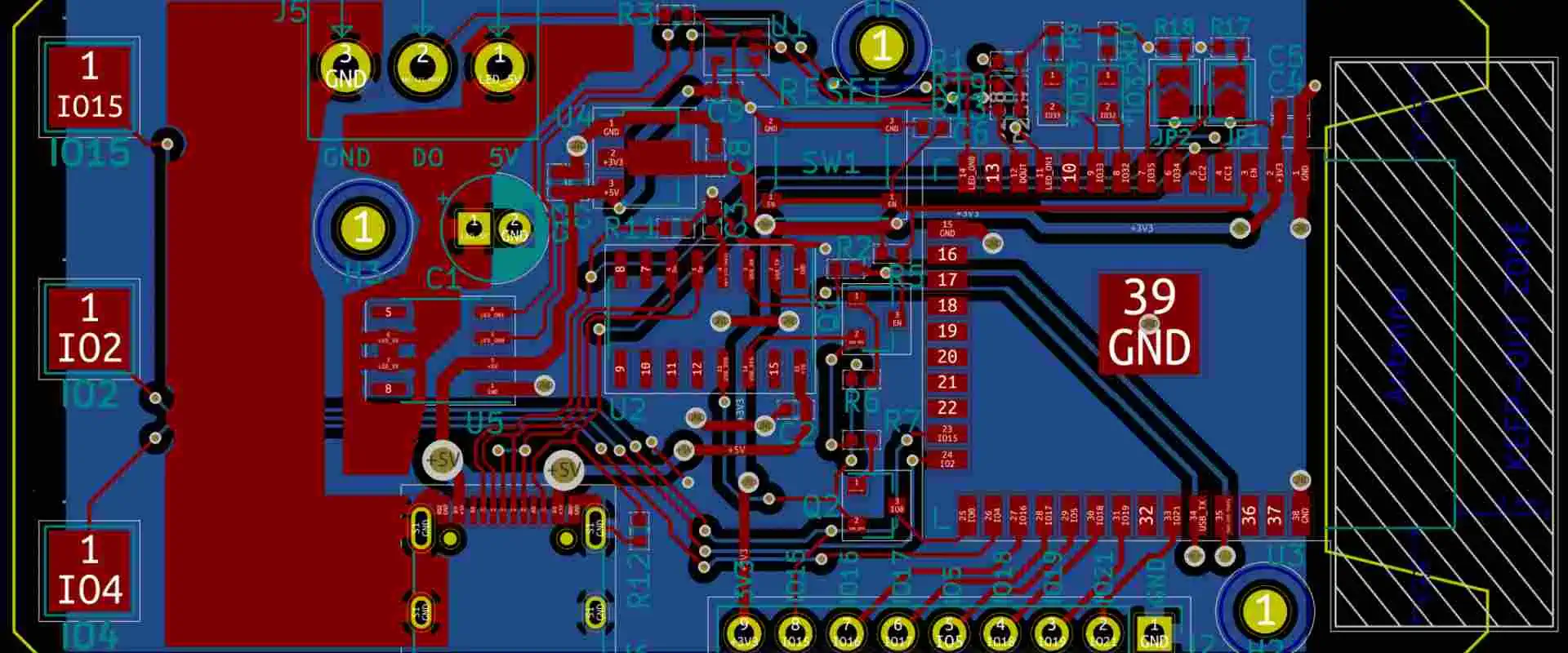
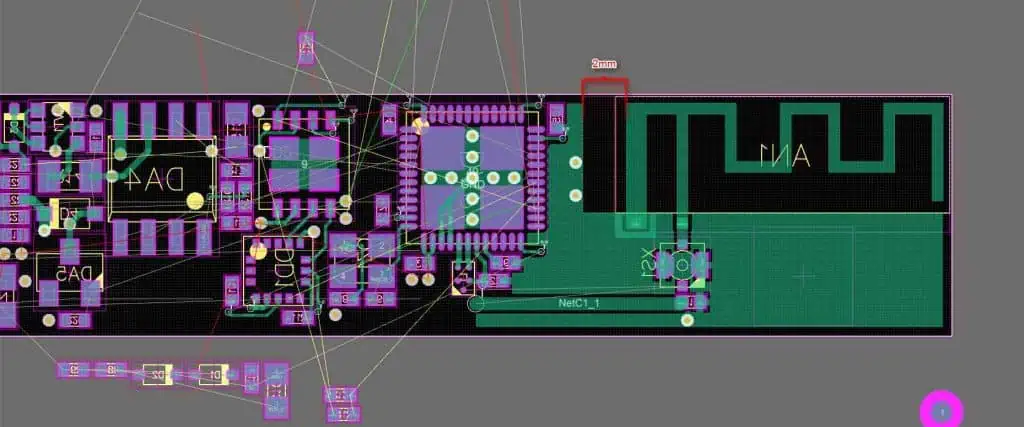
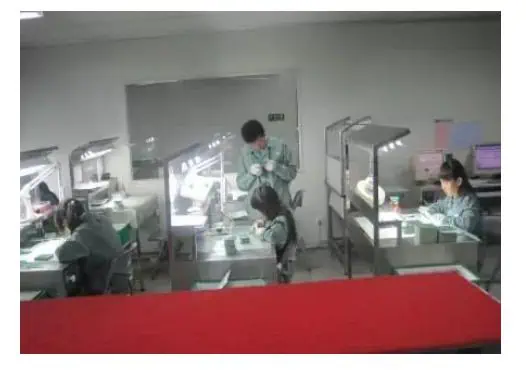
Designing the layout and circuitry of a printed circuit board (PCB) is a key step in developing an electronic product. The PCB provides the foundation for component assembly and enabling system operation. For those new to PCB design, the process can seem intimidating at first. However, by following a step-by-step approach, even beginners can learn the fundamentals of PCB design.
This article provides 16 easy steps to guide you in getting started with designing simple PCBs quickly.
Step 1: Have a Clear Design Idea
Design a circuit board
Define the electronic product or device you want to build. This provides the requirements for the PCB design.
Research similar products and circuits to guide the architecture.
List out the key functions and components needed.
Having a clear design concept is vital before jumping into the PCB layout software.
Step 2: Select the Core Components
Make a list of the major ICs and other critical components like microcontrollers, sensors, connectors etc.
These provide the core functionality and drive the design.
Check availability, datasheets, footprints and pricing.
Order samples for prototyping.
Choosing the key components early provides a framework for the PCB design process.
Use online PCB services for affordable quickturn prototyping.
Review quoted costs and lead times before ordering.
Share manufacturing files.
Test circuits with actual boards instead of just software simulations.
Step 16: Assemble and Test Boards
With the PCB prototypes received, populate components following BOM.
Test power-up, voltages, signals and intended functionality.
Update design as needed to rectify any issues observed.
Thoroughly testing prototype boards verifies the design and avoids costly mistakes.
Conclusion
The prospect of designing a PCB from concept to completion can seem daunting for beginners. By following a structured, step-by-step approach, breaking down the design into smaller logical blocks, and leveraging the right software tools, even amateurs can get started with simple PCB layout and circuit design quickly. Hands-on testing of prototypes is key to progressively building up expertise. With practice, new designers gain the experience needed to bring more advanced electronic product ideas to fruition.
Key Takeaways
Have a clear design idea and requirements before starting
Select the core components early to guide design
Leverage reference designs to accelerate learning
Use beginner-friendly PCB design software
Develop the schematic diagram first visually
Include power supply, bypass capacitors and supporting components
Follow design rules and PCB capabilities
Add identifying silkscreen markings and labels
Verify all outputs before manufacturing release
Test prototypes to validate the design
Recommended Next Steps
To take your PCB design skills further:
Create more advanced circuits using sensors, communication ICs, high speed interfaces etc.
Learn key principles like impedance control, thermal management, EMI/ESD protection etc.
Get familiar with your PCB manufacturer’s capabilities and process limitations
Experiment with more complex component packages like BGAs
Study example designs across various applications and circuits
Join PCB design communities to connect with experts
With diligent practice and an systematic approach, PCB design skills can be readily developed.
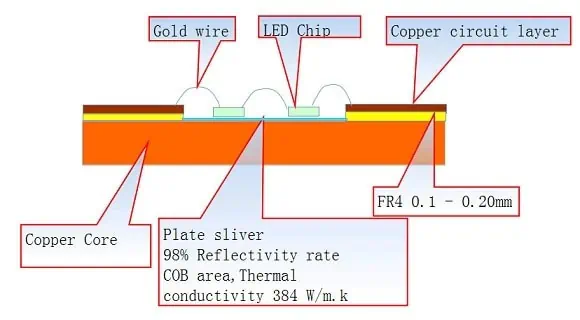
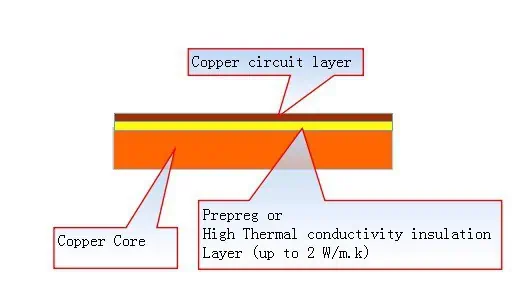
Metal core printed circuit boards (MCPCB) refer to boards which incorporate a metal plate or substrate as the central layer instead of the typical FR4 dielectric. Metals like aluminum, copper or iron alloys can be used as the core material in MCPCBs.
The high thermal conductivity of the metal core enables heat dissipation from mounted electronic components. This makes MCPCBs well suited for thermal management in applications with high power devices.
This article provides a detailed comparison between the different metal core materials used in PCBs covering properties, performance, applications, pros/cons and costs.
Aluminum is the most common metal base material used in metal core PCBs due to its combination of good thermal performance, ease of fabrication and lower cost:
Iron alloys like iron-nickel-cobalt provide a good compromise between performance and cost for an intermediate thermal conductivity core material.
Comparing Metal Core PCB Materials
Key properties of the main metal core PCB base materials:
Parameter
Aluminum
Copper
Iron Alloy
Thermal conductivity
130 W/mK
400 W/mK
Up to 65 W/mK
CTE
23 ppm/°C
17 ppm/°C
10-15 ppm/°C
Density
2.7 g/cm3
8.9 g/cm3
7-8 g/cm3
Specific heat
0.9 J/g°C
0.39 J/g°C
0.44-0.46 J/g°C
Cost
Low
High
Medium
Common thickness
1-3mm
0.5-2mm
0.1-0.5mm
General material selection guidelines:
Aluminum – Cost-driven applications where thermal conductivity >130 W/mK is sufficient
Copper – Where maximum heat dissipation is critical
Iron alloy – Applications constrained by weight or cost but need higher thermal performance than aluminum
Metal Core MCPCB Fabrication
Fabricating metal core PCBs requires specialized processes compared to standard FR4 PCB construction:
Base Metal Preparation
The metal is cut into specified panel sizes and thicknesses. Holes are punched for mounting components if needed. The surfaces are chemically cleaned.
Dielectric Layer Lamination
Thin dielectric films like polyimide or FR4 prepregs are laminated onto the metal core under pressure and temperature. Bonding agents help adhesion.
Circuit Formation
Similar to rigid PCB fabrication, the circuit layers are formed on the dielectric layers using processes like photolithography, plating and etching.
Component Assembly
Components can be conventionally soldered. For higher heat tolerance, sintering of silver paste or transient liquid phase bonding is used.
Enclosure Integration
The metal core MCPCB can sometimes directly serve as a housing or enclosure surface for mechanical stiffness, shielding and heat spreading.<img src=”https://drive.google.com/uc?export=view&id=1pNpZjav6MG438K0wGShZbZ8eqy3llH-S” alt=”metal core PCB fabrication” style=”width:500px;height:300px;”>
The specialized materials, processes and integration considerations involved in metal core PCB manufacturing demand working with an expert supplier.
Aluminum MCPCB Pros and Cons
Benefits of aluminum metal core PCBs:
Excellent thermal conductivity for heat dissipation
Cost-effective material and fabrication
Lightweight construction
Mature, established manufacturing processes
Readily machinable or punchable
Solderable and recyclable
Limitations of aluminum MCPCBs:
Lower thermal conductivity than copper or alloy cores
Higher CTE than copper causes greater component warping stresses
Metal core PCBs have higher fabrication cost than FR4 PCBs due to specialized materials, processes and lower panel utilization.
However, the ability to remove heat from high power components results in overall system cost savings.
Aluminum core is the most economical metal base material. Iron alloy adds moderate cost increment over aluminum. Copper core can double the cost over aluminum.
But metal core PCB cost is typically a small fraction of overall system cost for an electronic product. The thermal and reliability benefits justify the premium.
Cost reduces in high production volumes due to improved material utilization and manufacturing efficiency.
Applications of Metal Core PCBs
Some common application areas where metal core PCBs provide benefits include:
LED Lighting
The high power LEDs used require metal core PCBs for heat extraction. Aluminum is widely used but copper or iron allows driving LEDs at higher currents for greater luminosity.
Power Converters
Switching converters and inverters for power electronics require metal core PCBs to manage substantial heat dissipation from components like inductors and FETs.
Motor Drives
Motor drives work under challenging operating temperatures. Metal core PCBs allow efficient thermal management in the tightly packed drives.
Servers
Within data centers, high compute density server blades need effective cooling to maintain reliability.
RF Power Amplifiers
High frequency RF amplifiers using GaAs or GaN ICs benefit from the electrical and thermal conductivity of copper metal core PCBs.
Aerospace & Defense
Rugged aluminum or copper core PCBs meet demanding thermal and mechanical performance requirements in aerospace and military applications.
Conclusion
Metal core PCB technology enables integration of electronic components and systems with higher power densities by effectively managing dissipated heat. Aluminum, copper and iron alloys provide a range of core material options to suit different design constraints and applications. Aluminum MCPCBs offer the best value for most cost-driven commercial applications demanding higher thermal conductivity than standard FR4 PCBs. Where maximum heat transfer is critical for product functioning, the highest performing copper MCPCBs are the optimal choice despite increased cost. Iron alloys provide a middle ground alternative. With each material having unique benefits and tradeoffs, designers must make informed selections to match the metal PCB technology used to the specific thermal, weight, frequency, mechanical and cost requirements of the application.
FAQs
What are some key considerations when selecting metal core PCB thickness?
Some guidelines for choosing thickness:
Thicker cores allow mounting larger, higher power components
Thinner cores weigh less but have reduced stiffness
Thicker cores increase trace lengths if routing on outer layers
Optimal thickness balances weight, cost and layout space
What fabrication challenges are common with metal core PCBs?
Some potential issues include:
Delamination or cracking due to CTE mismatches
Voids or lack of adhesion with dielectric bonding
Drilling precision on thicker metal cores
Higher scrap rates and lower panel utilization
Warping when cooling after lamination
How are components assembled on MCPCBs?
Assembly options:
Conventional SMT soldering for moderate temperature parts
Sintered silver joints for high power devices
Transient liquid phase soldering where high heat capacity is required
Press fit pins, clips or thermal adhesives for selective mounting
What alternatives exist to using metal core PCBs for thermal management?
Some options are:
Thick copper planes within conventional PCBs
Thermal cladding, gap pads or vias for heat extraction
Heat sinks, heat pipes or cold plates attached to PCBs
Liquid cooled plates with internal fluid circulation
Insulated metal substrate PCBs
Are electrically insulating coatings required on metal cores?
Yes, the metal core must be coated with insulating dielectric films on both sides to avoid electrical shorts. This adds material cost but allows routing signals like conventional PCBs.
IC Unlock, IC Crack and IC Decipher – All You Need to Know
Rayming continues to be recognized as the Southern China Leader in Services for IC Clone, MCU Crack, Microcontroller Unlock service. With the advancement of today’s modern circuit board technology, it is more important than ever to have specialists available to help you at a moment’s notice. Our engineering and commercial teams collectively have a vast amount of electronic experience covering field include Consumer Electronics, Industrial Automation Electronics, Wireless Communication Electronics., etc. For more information please contact us through email: Sales@raypcb.com
We have more than 100 software and hardware rich experience expert for chip decryption, IC Crack, MCU unlock, IC reverse analysis/ ASM Code, chip burnish and model identification, PCB cloning and mass production.We have a shocking price advantage and success rate. Proficient in medical and health equipment, industrial control equipment and game boards clone. Rich experience for chip decryption, quality and price is guaranteed. We can provide the relevant electronic technical support allows customers to assured that doing good product.We always explore others can’t reach areas of technology, and constantly improve our technology service attributes, to help more people realize their riches dream in short-term.
Integrated Circuits are circuits that feature inseparable elements that are electrically interconnected in a way that the IC remains together due to commerce and construction. IC is also known as a microelectronic circuit, chip, or microchip.
The development of IC has changed the electronic industry. It is an important aspect of electronics production. This article discusses all you need to know about IC unlock.
What is IC Unlock?
IC unlock refers to the decryption of the IC via the semiconductor reverse engineering methods. After IC unlocking, the program of the integrated circuits becomes readable. IC unlock is also referred to as IC decryption, IC crack, or IC attack. IC unlock is an important step in PCB cloning. To clone a printed circuit board, it is important you do IC crack.
How to Unlock an Integrated Circuit
To unlock IC, there are different approaches. Some of these methods will be discussed here;
Electronic detection cracks
In this approach, the technology monitors the analog attributes of all interface and power connections of the processor. This is done during usual operation at high resolution by checking its electromagnetic radiation attributes. There is a change in the power consumption as it carries out different instructions since the microcontroller is also a functional electronic device.
This enables the attacker to get critical detail in the microcontroller through the detection and analysis of these changes. To achieve this, electronic measuring instruments are used. The radio frequency programmer can read the encryption MCU program’s old model.
UV attack method
This method simply utilizes UV radiation on the chip and then transforms this chip into a non-encrypted chip. The programmer will then directly read the program. This approach is ideal for OTP chips. Engineers specialized in microcontrollers design understand that only UV light can erase OTP chips.
Therefore, UV is used to remove encryption. UV light can irradiate this type of IC directly. It is important the chip is opened first if the package is plastic. Since the encryption of this chip is poor, no cost is required for the basic decryption. This makes the cost of the chip decryption very cheap.
Software attacking
This approach utilizes the exploit protocols and processor communication interfaces to fight the IC. The attack on the ATMELAT89C family of microcontrollers is an example of a software attack. The attacker utilized a designed program, preventing the next step of eliminating the memory data of the program.
The program turned out to be non-encrypted. The encryption methods can also be used to attack integrated circuits depending on the new attacking device’s development.
FIB recovery encryption fuse method
This is another method of unlocking IC. It is an ideal method for chips having fuse encryption. TI’s MSP430 cracking is a good example. Since the MSP430 encryption is meant for burning fuse, the IC becomes non-encrypted chips. The probe is normally utilized to get the fuse re-connection.
This can be achieved by change lines that contract to semiconductor modification industries. The focused ion beam (FIB) equipment can be used to connect the line. However, this method isn’t really ideal since the demands for consumables and equipment increase the cost of IC unlock work.
Error generation attack technology
To unlock an IC, this technology utilizes unusual operating conditions to make processor errors and the processor gives more access to allow the attacks. Clock strikes and voltage are the errors generation technologies that are commonly used.
High-voltage and low-voltage attacks can help to disable the shield to circuit or make the processor forcefully carry out incorrect operations. The protection circuitry may reset without disturbing the protected data by using a clock transition. Clock and power transitions can have an impact on the execution and decoding of instruction in some processors.
Chip loopholes
IC circuit can be unlocked using chip loopholes. Several chips are cryptographically vulnerable during design time. These types of chips can take advantage of vulnerabilities to force the chip to read out the code in memory. The program can be reversed if the continuous FF code can be found.
Furthermore, the chip has some obvious loopholes when including the electronic signal, like a pin in the encryption becoming a non-encrypted chip. To achieve IC unlock, today’s chip decryption devices use the loopholes in the program or the chip.
Adjusting the encryption circuit
DSP and CPLD designs are complicated. This method could be difficult to carry out decryption. It is important to analyze the structure of the chip and then identify the encryption circuit. The chip circuit adjusting equipment can be used to make some changes.
Probe technology
In this type of approach, the chip internal connections are directly exposed. The technology then studies, interacts, manipulates the microcontroller to accomplish the attack’s purpose. IC unlock is related to MCU reverse engineering.
The price of IC crack defers and this depends on the model. It is important to know that the price of IC unlock is related to expenses incurred on it. The decryption price is higher when the cost of the solution is higher. The cost of developing solutions varies for different companies. This is due to their technical strength.
The payment of IC crack depends on the requirements and situation of the customer. Payments can be made through PayPal service, Bank, and western union. The disadvantage of PayPal service is the high handling fee. The price of the seller is often charged by 5 percent.
This type of integrated circuit functions by attacking continuous signals. It can perform tasks like modulation, filtering, demodulation, and amplification. Examples of Analog ICs include OP-AMP’s, RF ICs, Sensors, and Linear ICs
Digital IC features two levels which are 0’s and 1’s. This means that it uses binary mathematics where 0 means off and 1 means on. This type of IC is achieved when they include millions of whatnot, flip flops, and logic gates. Microprocessors and microcontrollers are good examples of digital integrated circuits.
Mixed signal
An integrated circuit is mixed-signal when both analog and digital ICs are utilized on a chip. Examples of mixed ICs include clock or timing ICs and data acquisition ICs.
Benefits of ICs
Integrated circuits have several benefits. They feature millions of electronic components like capacitors, resistors, and transistors which are fixed into a chip. Almost all devices use IC due to their size and reliability. Devices such as mobile phones, digital watches, and Televisions use integrated circuits. ICs help electronic devices work in good condition.
ICs have improved performance and operating speed which make them ideal for small signal operation. These circuits are reliable and consume less power. They are small in size and more consistent. Integrated circuits are also known for operating at extremely high temperatures. IC cracker also has its benefits
They have the ability to withstand high temperatures. Due to these benefits, they are used in applications like memory devices, video processors, radar, logic devices, audio amplifiers, etc.
IC Unlock Services – What do they do?
An IC unlock service helps you to crack your IC sample. Your IC program will be given out in the Bin/Hex file. This service will decap IC sample and the sample won’t work again after you break IC.
IC services feature unlockable models like Lattice/ TMS/ AT/ DSP56/ STM and more. To get your pricing for IC crack, you will need to send the correct IC model to prepare a quotation. Some of these services allow 50 percent payment to begin the project.
IC crack can begin after initial and sample payment has been received. After the customer has tested the project, the IC unlock service receives the remaining 50% payment. Most IC unlock services work with stringent rules and regulations.
Frequently Asked Questions
Can IC be returned after IC crack has been done?
The integrated circuit can’t be returned. After IC unlock, IC cap would have been opened. So, the technology used will be exposed from the integrated circuit.
What file is given to the customer once the IC has been unlocked? Immediately the IC has been unlocked, the customer will get a Binary file. This file can be burned into the integrated circuit via a programmer to allow the IC to remain in working condition. If the customer needs an assembler code file, then a reverse compiling tool is required.
How long does it take to do IC crack? Normally, IC unlock can be done within 10-50 minutes. However, it can take longer than this. This depends on certain factors. Some IC unlock services rent laboratories from third parties.
Can the IC be reused after the IC break?
Some integrated circuits need focused ion beam technology to decode them. This technology uses decapsulation. This procedure makes the IC not fit to be reused after the unlock has been done. If the IC decoding utilizes software, these integrated circuits can be reused after unlock.
Conclusion
IC unlock refers to decrypting integrated circuits using the semiconductor reverse engineering methods. After the IC has been cracked, the programmer can read the program of the integrated circuits. Integrated circuits are very essential in the production of electronics. Therefore, IC unlock should never be overlooked. In this article, we have discussed important things about IC unlock.
We focus on Crack unlock break IC list:
NEC chip crack. UPD78F0515, UPD78F0886, UPD70F3425 and so on. ST MCU code extraction. STM32F103, STM32F105,STM32F207, STM8S103, STM8S003, STM8S903,STM8S105 etc.
Fujitsu chip unlock. MB89F202, MB90F462, MB90F562, MB95F136 and so on. Lattice IC Attack. LC4128V, LC4064V, LC4256C, LC4032V and so on. Mitsubishi chip attack. M30620, M30624, M306N4,M306N5,M30853, M16C10,M16C20 and so on.
Renesas IC unlock. HD64F7047F50v, HD64F3672fpvh8, R5F6456, R5F72544, R5F2136, R5F2134 and so on.
C8051 code unlock crack. C8051F330, C8051F340, C8051F310 and so on. CPLD crack unlock. XC9572XL, XC9536XL, XC95144XL, XC95288, XC95216 and so on. ATMEL series MCU crack. AT89C51,AT89S52, ATMEGA8L, ATMEGA16L, ATMEGA88PA, ATMEGA48PA, AT89C2051, AT88SC0104C etc. DSP chip unlock. TMS320F2812, TMS320F2810, TMS320F2815, TMS320F28335, TMS320F2407, TMS320F240 etc.
Microchip MCU crack. PIC16F883, PIC17C44, PIC18F4220, PIC16F1937, PIC16F1936, PIC18F45K22, PIC18F97J60, PIC18F67K22,PIC18F25K20, PIC18F66K80, PIC18F46K22, pic18F14k22-I/ml, PIC18f46k80,PIC18F24K20,PIC18F4620,PIC18F14K50 and so on. Cypress Chip decryption. CY8C24533, CY8C21534B-24PVXI, CY8C27433, CY8C20346A, CY8C21534B, cy8c3866 and so on. Freescale IC Crack. MC95FG6128AL MC56F84452V MC9S08ACS2 QFP44 MC908JL3E DIP28, mc9s08ac32 MC56F8345 MC56F8322 and so on. Silicon IC Unlock. C8051F001, C8051F002,C8051F300,C8051F301, C8051F410 and so on.
TI IC Code Extraction. MSP430F149, MSP430F1121, M430F5308, M430F1232, M430F5418 etc. NXP Mcu crack. LPC89F932, LPC89F931, LPC89F936, LPC2378FBD144, LPC1114FBD48, LPC2106, LPC2119 and so on.
Altera IC Code Extraction:EPM7128, EPM3064, EPM7192SQC160-15, EPM240, EPM570t100c5n, EPM1270T144C5N etc. Dallas MCU Code extraction. DS2431, DS2432, DS2433, DS1845 and so on.
Holtek IC Crack: HT46R22 HT49R50A, HT46R64, ht46r48a etc.
STC MCU IC unlock.:STC89F516, STC89c52, STC90C58RD,STC90C54RD,STC11F60XE, STC11F02E, STC12c5a60s2, STC12C5410AD, STC10F08XE STC10F12XE, STC10F10XE etc.
Printed Circuit Board Manufacturing and Aluminum-Based PCBs
A tremendous changing everywhere can be seen as the concept of everything and work has been changed completely. Nowadays, electronic appliances are not an exception to this changing. Today, the electronic manufacturing heavily depends on the quality of printed circuit board and its manufacturing. Because of the broad use of these innovative boards in electronic appliances like television, computer cell phones and even in tiny cables has persuaded renowned manufacturers to get involved in PCB manufacturing.
Since their inception, a tremendous changing can also be seen in the printed circuit manufacturing as previously they were manufactured by using polyester as well as polyimide materials. But, today aluminum based PCBs have captured the market. Apart from this they also have the first choice, when it comes to electronic manufacturing. There are a number of benefits associated with aluminum-based PCBs as aluminum is safe and durable. Apart from this, it is lightweight that can be used for any purpose.
Moreover, it can also afford the heat and electricity conductivity in those electronic applications that are more prone to get quick heat. Moreover, in PCB manufacturing, using a base that should have excellent heat as well as electrical conductivity is vital. And aluminum is the metal that is a perfect base for PCB manufacturing for the dissipation of heat devoid of extra heat sinks. In addition the aforesaid benefits of aluminum, there are also a number of other benefits associated with it. It is a common fact that aluminum is the most commonly used metal used in power transmission lines globally and it eliminates the effect of thermal stress on all the modules.
In this way, aluminum-based PCBs are very helpful in increasing the life of electronic manufacturing and appliances. Reducing the temperature of component operating, improving reliability and also improving thermal conductions are some of the added advantages of aluminum-based PCB manufacturing. Because of having a number of benefits of aluminum-based PCB, they are also called metal core printed circuit boards. A doctor to thermal conduction that leads to versatility in component tracking layout, aluminum-based PCB manufacturing also make them more useful.
The PCB Manufacture, Manufacturing, and the Aluminum PCB
PCB stands for the printed circuit board. The manufacturing of this printed board specializes in the prototype to medium production volumes. There is a wide range of products that are the latest in the industry of the PCB. These products are accompanied by the latest model of the equipment’s to produce precise boards and meet the requirements. No matter what one’s special needs and applications are the printed circuit board will work to meet them. The circuit boards that come from the printed board are good and they exceed the expectations of the user. A printed circuit board is a mechanically devised path, track or pathway leading to the electronic receipt and connection of electronic devices.
PCB: How to Choose the Right One
It is very important to choose the right manufacturer while selecting an electric board for a device. One-sided; two-sided as well as multi-layered circuit boards are available and are utilized in different devices these days. The multilayered boards are usually used in small devices and they are settled one upon another. Some of these boards are also available with aluminum plating or hot air leveling.
A number of companies have a knowhow of designing electronic boards of different sizes and they also provide with several materials used for the production purpose. These materials are tested and verified time and again so that the customers can get smooth working devices. It takes a lot of time and effort to learn about the designing of a printed circuit board. Thus, instead of going through such a complex process, it is always advisable to order them from a trustworthy and experienced company or resource.
Aluminum PCB Applications
Aluminum is one of the world’s widely used metal. Its use is not limited to industrial purposes alone, and can also be seen in homes, offices, and highways. This metal is also used in building vehicles due to its remarkable ability to withstand corrosion. The metal is also renowned for its low-density characteristic.
Since aluminum is malleable, using it for various purposes is not difficult. It is perfect for vehicles and can be used in machinery since it does not ignite easily unlike other metals. Apart from this, it is also a hundred percent recyclable, which makes it a favorite among recycling centers and junkyards. This metal also maintains its physical properties even after it is recycled.
PCB manufacturing involves many materials and many procedures that come with it. The PCB manufacturer makes sure that when they manufacture this board they are accompanied by the safety measures that they need to be followed when you are handling this printed board. The dimensions of the board, including the entire diameter, copper wire thickness, and material length, are closely monitored in the manufacture of these products. Before the printed circuit, there was the point to point constructions were used. Originally the electronic components had wire leads and the printed circuit board had holes drilled for each wire of each component. There are many types of the aluminum-based PCB that exist. All these types are useful to you as an individual. Their makes are unique and hence they are long-lasting. There are many types of the aluminum base PCB that are there in the market today depending on what you want. There are the aluminum printed boards for led, the aluminum PCB for high power led, led street light, high thermal led and the aluminum board for the garden lamp.
Supporting the military is something RayMing is very proud of, and we were contracted to assemble a PCB for use in a military communications application. The RF prototype PCB assembly used Rogers 4350B material, and the board required surface mount technology for the double-sided assembly that featured 250 placements. Board specs included 3 layers, standard vias, and 1 panelization. Final measurements came to 8 x 5.75 in. We performed final testing using automated optical inspections and x-ray inspection before delivering product to the customer.
Introduction
Rogers RO4350B laminates are widely used for manufacturing high frequency PCBs for defense and aerospace applications like radars, electronic warfare systems, satellite communications, etc. This high performance PCB material enables circuits to operate reliably at microwave and mm-wave frequencies beyond 10 GHz.
However, assembling PCBs using RO4350B substrates requires special considerations during fabrication, component selection and assembly processes owing to its unique properties. This article provides guidelines on how to assemble RO4350B PCBs for mission-critical military applications.
RO4350B is a glass reinforced fluoropolymer composite circuit board material designed for exacting microwave and mm-wave circuit needs. Here are some of its key properties:
RO4350B’s electrical and mechanical attributes make it suitable for aerospace RADARs, satellite communication, electronic warfare systems and radio communications.
Design Considerations
The PCB layout for an RO4350B board destined for military usage must account for the following:
Controlled Impedance
Maintain tight impedance control over traces and match to RF IC terminations
RF Shielding
Incorporate adequate shielding enclosures for emission control
Minimal Passives
Limit passive components to reduce losses at high frequencies
RF Transitions
Carefully design components/connectors interfaces
Thermal Management
Use thermal vias and/or metal backing to spread heat
Reliability Testing
Subject prototype to thermal cycling, vibration and shock tests
PCB Fabrication Process
RO4350B PCBs require specialized fabrication to meet military specifications:
Material – Use RO4350B laminates from Rogers or equivalent suppliers
Layer Count – Typical stackups have 4 to 32 layers depending on complexity
Dielectrics – Combination of RO4350 prepregs and bondplies
Trace width – RF traces down to 3 mils line with 3 mil spacing
Hole walls – Copper plated through holes with 1 oz copper
Surface finish – Immersion silver or ENIG surface finish
Testing – Full electrical testing and quality inspection per IPC standards
Component Selection
The active and passive components used on the PCB assembly must also conform to RF application needs:
RF Transistors
Gallium arsenide (GaAs) RF power transistors with operating frequency > 10 GHz
Power Amplifiers
GaN or GaAs MMIC power amplifiers from suppliers like Qorvo, Microchip, etc.
RF Connectors
High frequency SMP, SMPM, SSMP connectors rated for microwave bands
Passive Components
Chip resistors, capacitors and inductors with tight tolerances rated for high frequency use
EMI Suppression
Multi-layer ceramic capacitors, ferrite chip beads for noise filtering
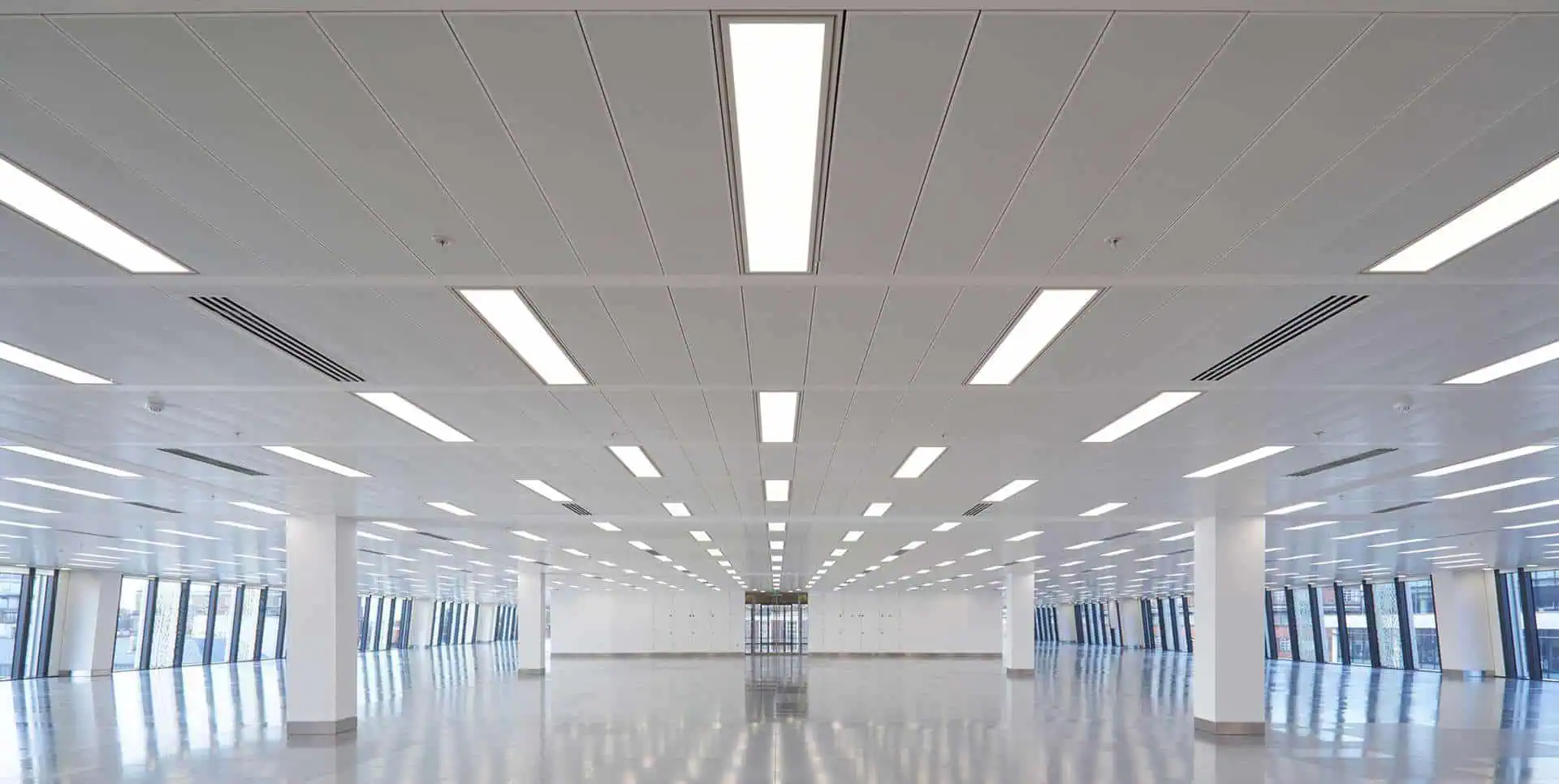
LED lighting has transformed how we illuminate our homes, offices, streets and virtually every aspect of our lives. LED bulbs and fixtures provide huge advantages over traditional incandescent and CFL lighting in terms of efficiency, lifetime, durability and lighting quality. This article looks at some of the best LED lighting products across various categories that consumers can choose to buy for their lighting needs.
Dimmable – Dimmable LED lights allow adjusting brightness levels.
Specialty – Select specialty LEDs for path lighting, accent lighting, under cabinet, etc.
Indoor/Outdoor – Ensure IP-rating for outdoor LED fixtures for moisture resistance.
Safety – LED products must meet safety standards like UL/ETL, FCC.
Brand – Reputable brands assure quality and performance.
Warranty – Multi-year warranties cover LED lifespan claims.
Budget – LED prices range from value packs to premium smart fixtures.
Best LED Light Bulbs
LED light bulbs have become the top choice for energy efficient, long lasting and high quality lighting for homes and businesses. Here are some of the best LED bulbs:
Philips LED Bulbs
Philips offers an extensive range of LED bulbs including clear, frosted, globe, candle, reflector and 3-way models. Great value for money with good color quality and 10-year lifespan.
Key Features:
800-2000 Lumens brightness options
2700K-5000K CCT range
90+ CRI for vivid colors
10 year lifespan
ENERGY STAR certified
Cree Lighting LED Bulbs
With 90+ CRI and soft lighting, Cree’s wide assortment of LED bulbs deliver beautiful illumination. 5000K-6500K Tunable White models allow adjusting the color.
Key Features:
800-1600 Lumens output
Available in standard and candelabra bases
High efficiency – 100 Lumens per Watt
Changeable color temperature
Dimmable
GE LED Light Bulbs
A household lighting brand, GE offers LED bulbs in all common shapes with a range of brightness and color temperatures. Affordable pricing with good 10-year lifespan.
Key Features:
450-1600 Lumens models
Standard and decorative options
2700K/3000K/5000K CCT
Up to 90 CRI
Omnidirectional and directional bulbs
Rated for 25,000 hours
Sylvania LED Bulbs
Sylvania makes a wide range of replacement LED bulbs for homes and businesses that deliver crisp, bright light using latest LED technology for efficiency and longevity.
Smart LED bulbs can be remotely controlled and scheduled via smartphone apps over Wi-Fi/Bluetooth. Here are the top options:
Philips Hue Smart Bulbs
Philips Hue is the most popular smart LED lighting system. The color-changing A19 bulbs can recreate millions of shades. Controls lights from anywhere.
Key Features:
800 Lumens brightness
16 million colors
App and voice control
Automation and schedules
Works with Alexa, Google Home etc.
Create lighting scenes
Sync with movies and music
C by GE C-Life Smart Multicolor Bulbs
These smart C-Life bulbs from GE allow changing any shade from soft white to daylight to colored lighting. Offers both Bluetooth and Wi-Fi connectivity.
Key Features:
800 Lumens output
Tunable shades and colors
Scheduling and automation
Voice control integration
Group control of multiple bulbs
Energy monitoring
LIFX Smart Wi-Fi LED Bulbs
LIFX bulbs are packed with features including millions of colors, effects, schedules and integrations. No hub required with direct Wi-Fi setup. Vivid colors and brightness.
Key Features:
1100 Lumens
16 million colors and tones
Effects like candle flicker
Scheduling and automation
Apps for iOS, Android
Works with Alexa, Google Assistant
Kids friendly scenes
TP-Link Kasa Smart KL130
Budget-friendly smart bulbs from TP-Link offering 16 million colors, scheduling, grouping, voice control and energy usage monitoring. Reliable performance.
Key Features:
800 Lumens brightness
Tunable white to full colors
Scheduling and timers
Voice control via Alexa, Google
Create scenes and groups
Monitor energy usage
No hub required
Best LED Recessed Ceiling Lights
Recessed lighting provides even ceiling illumination. Here are top rated LED recessed lighting kits suitable for different room types:
Philips All-in-One 5/6 in. LED Recessed Lighting Kit
Complete recessed lighting kit from Philips with integrated LED module and trim for fast installation. 90+ CRI for vibrant colors.
Key Features:
900-1300 Lumens flux options
90+ CRI
CCT choices: Soft White, Bright White, Daylight
Dimmable
Included integrated LED and trim
Fast installation
Sunco Lighting 5/6 in. Selectable CCT LED Recessed Kit
Affordable recessed lighting kit with selectable 3000K, 4000K and 5000K color temperatures controlled by a simple switch.
Key Features:
1080 Lumens output
3000K/4000K/5000K CCT
Damp location approved
Can be dimmed
Rotatable light for directing beam
Quick installation
Commercial Electric UltraSlim 4 in. LED Recessed Lighting
Commercial Electric offers an ultra-thin recessed lighting kit using state-of-the-art LEDs with 5000K daylight output. Energy saving and long life.
Key Features:
740 Lumens flux
5000K cool daylight
Super slim only 1.5 inches deep
90+ CRI
Dimmable
50,000 hours lifespan
ENERGY STAR certified
Hyperikon 4 Inch LED Recessed Lighting
Versatile recessed lighting kit with adjustable CCT of 3000K, 4000K and 5000K using sliding switch. High cri and lumen output. Low profile design. Damp location rated.
Key Features:
1000 Lumens flux
Slide switch for 3000K/4000K/5000K
90+ CRI with no flicker
Only 1.25 in. depth
Air tight IC housing
Wet location approved
Best LED Landscape Lighting
Outdoor landscape lighting illuminates gardens, yards, pathways and architecture features at night using low-voltage LEDs. Here are top options:
Volt Lyte Landscape LED Lighting Kit
Complete 12V outdoor LED lighting kit with 8 adjustable spotlights, transformers, cables and ground stakes for accent lighting.
Key Features:
8 bright LED spotlights
Adjustable light angles
Warm white 3000K
25 ft. cable, connectors and transformer included
Low voltage safe operation
Automatic shut-off timer
Easy DIY installation
JEMLIGHT 4-Head LED Outdoor Landscape Spotlights
Pack of 4 weatherproof adjustable 12V spotlights producing 300 lumens each. Durable die-cast housing with flood to spot beam control.
Key Features:
4 x 300 lumens spotlights
Warm white 3000K CCT
Die-cast aluminum housing
Adjustable flood to spot beams
IP65 weatherproof rating
Low voltage 12V operation
Stake and screw mounts included
Malibu Low Voltage Landscape Lighting Fixture Kit
Malibu offers versatile lighting kit containing path lights, spot lights, well lights and step lights for accenting gardens, patios, driveways.
Key Features:
6 x 35W LED lights
Warm white and cool white
10W transformer
25 ft low voltage cable
Stakes, mounting screws
Durable UV resistant design
Easy installation
Brilliance LED Buried Well Light
Durable recessed well light allows hiding LED fixture underground with only the light visible for a clean, invisible installation.
Solar powered LED lights harness the sun’s energy during daytime and automatically turn on at night without any wiring. Some top options are:
Sunnest Solar Landscape Spotlights
Bright integrated solar spotlights with adjustable heads and convenient ground stakes. Automatically activate at night. Weather resistant construction.
Key Features:
Built-in mono-crystalline solar panel
400 lumen LED spotlight
Adjustable light angle
IP65 weatherproof rating
Auto on/off at dusk/dawn
Stainless steel housing
Easy installation
Gigalumi Solar Path Lights
Affordable solar LED path lights to illuminate walkways and gardens. The solar panel tops each lamp post charging the Lithium battery. Made from durable materials.
Key Features:
Integrated solar panel
400 lumens output
Warm white 3000K CCT
Durable ABS housing
IP65 waterproofing
Auto dusk to dawn operation
6 hours runtime on full charge
Pack of 6 path lights
Aootek 182 LED Solar Motion Sensor Light
Solar powered LED security light with smart motion and light sensors. Bright illumination activated by movements at night to deter intruders.
Key Features:
Built-in solar panel
Motion and light sensors
180 ultra-bright LEDs
6000K cool white light
120° wide beam angle
IP65 weather resistance
Easy wall or ground installation
SolarGlow Solar Garden Lights
Decorative looking LED lights powered by tiny solar panels. Turn on automatically providing a warm glow. Great for gardens, driveways and landscape lighting applications.
Key Features:
Integrated small solar panel
Warm white 2700K light
Customizable with interchangeable tops
Durable ABS plastic body
Shatterproof polyethylene lens
Auto on/off at night and day
4-6 hours operation
Weatherproof IPX4 rating
Best Smart WiFi LED Light Strips
WiFi controlled LED light strips that can change colors, brightness and effects using smartphone apps are great for accent lighting.
Philips Hue LightStrip Plus Smart LED
Philips Hue Lightstrip Plus offers millions of colors that can be wirelessly controlled via smartphones and voice assistants. High 800 lumen output and 16 million colors. Flexible and cuttable.
Key Features:
Voice control through Alexa, Google Assistant
16 million colors
800 lumens bright output
1M and 2M lengths available
Flexible and cuttable
Adhesive tape backing
Create lighting scenes and schedules
Sync with music and videos
Govee RGBIC WiFi LED Strip Lights
Govee’s WiFi LED strip lights deliver colorful accent lighting with app control and Alexa/Google Assistant voice commands. Multiple modes and effects including music sync.
Key Features:
16 million colors
Works with Alexa and Google Home
App control and scheduling
64 scene modes and music sync
Brightness up to 2200 lumens
16.4 ft reels available
Adhesive backing for easy install
Control multiple strips together
Eve Light Strip – Apple HomeKit
Apple HomeKit compatible LED light strip from Eve Systems providing beautiful, energy efficient accent lighting. Control lighting conveniently using Apple devices and Siri.
Key Features:
HomeKit allows Siri and app control
Energy monitoring and automations
1600 lumens max brightness
Color temperature tuning
6.6 ft length
Weatherproof IP67 construction
Flexible and cuttable strip
Lifx Z TV LED Backlight Strip
Sync Lifx Z TV backlight with the colors on your TV for an immersive viewing experience. Tape it behind any screen. Works with Alexa, Google Assistant and Apple HomeKit.
Key Features:
Voice control through smart speakers
Real-time picture syncing
16 million colors
65 inches strip length
Adheres to back of TV
Setup zones and scenes
Schedule on/off times
Diffused lighting spread
Best LED Shop Lights
led light
Bright, efficient LED shop lights provide high lumen illumination over work benches, storage rooms, garages and other utility areas. Here are top options:
Barrina LED T5 Integrated Single Fixture
4 feet long LED integrated fixture with clear shatterproof cover. Ultra bright 6500 lumens output with energy saving 45W power consumption. Link up to 3 fixtures.
Key Features:
Super bright daylight 6500K
Integrated LED with clear cover
45W power, 6500 lumens
4000K and 5000K options available
120° beam angle
Lightweight aluminum housing
Linkable integrated connectors
Hykolity 4 FT LED Utility Shop Light
Feature packed LED shop light fixture producing 5000 lumens crisp white light. Sensible motion sensor turns on when area is occupied to save power. Linkable and mountable design.
Key Features:
Motion sensor for auto on when occupied
5000K cool white light
Integrated 120° reflector
Sturdy aluminum housing
5000 lumens flux output
40W power consumption
Chain up to 3 lights together
Costway 4 FT LED Shop Light
Versatile plug and play LED shop light with hanging chain hooks. Energy efficient with 800 lumens per tube. Daylight color ideal for work spaces.
Key Features:
Plug in cord – no wiring needed
Two 4 feet T8 tubes
6500K daylight output
800 lumens per tube
Built-in power switch
Pull chains for easy on/off
Hanging hooks provided
Plastic end caps
Lithonia Lighting Shop Light 8-Tube Fixture
Large 8 foot long LED shop light fixture containing (8) double tube sections for extremely bright illumination. Ideal for large work areas.
Key Features:
96″ long fixture
Contains (8) 48″ T8 LED tubes
6000 lumens total light output
Daylight color temperature
120-277V AC voltage range
Clear shatterproof lens
Painted steel housing
Surface mount
Best LED Grow Lights
Specialized LED grow lights provide indoor plants and vegetables the full visible light spectrum they need for nurturing photosynthesis and growth.
Spider Farmer SF-2000 LED Grow Light
The Spider Farmer SF-2000 uses cutting edge LEDs and drivers to deliver intense full spectrum light ideal for indoor cultivation. Excellent PAR and Lumen output.
For small and medium sized grow areas, the high efficiency XS1500 provides the right amount of light intensity for indoor plants at various growth stages.
Powerful and affordable full spectrum LED lamp containing triple-chip 10W LEDs. Ideal for home gardening and commercial horticulture applications.
Key Features:
10W triple-chip LEDs
1000W equivalent HPS replacement
Adjustable hanging height
Full spectrum including UV and IR
High PAR value for growth
90° reflector coverage area
Excellent thermal dissipation
MARS HYDRO TS 600W LED Grow Light
The Mars Hydro TS 600W grow light utilizes advanced LED technology to offer high intensity sunlight-like light for indoor gardening. Robust lamp for seedlings to flowering plants.
Printed circuit boards (PCBs) that operate reliably at high frequencies are critical for applications like 5G, satellites, radars, avionics and other wireless communications systems. Manufacturing such high frequency PCBs requires expertise in specialized materials, stackups, fabrication processes and quality control. This article profiles the top 10 manufacturers of high frequency PCBs based on their capabilities.
1. RayMing Technology
Headquarter Location: Shenzhen, China
RayMing Technology is an expert in high frequency PCB prototyping and volume production using cutting edge fabrication technologies and testing. They manufacture boards up to 24 layers for RF frequencies above 10 GHz such as mmWave antennas, radar systems, satellite communication, electronic warfare and aerospace/defense electronics.
Core Capabilities:
PCB materials including Rogers, Taconic, Arlon for mw and mmWaves
Stackups with signal-power-ground layer sequencing
Industry Segments Served: Defense, avionics, telecom, space, automotive
2. TTM Technologies
Headquarter Location: California, United States
TTM Technologies is among the top high frequency PCB manufacturers in the world headquartered in the United States. They fabricate RF/microwave boards for defense and aerospace applications including radars, electronic warfare systems, satellite communications, telemetry systems etc.
Core Capabilities:
PTFE, ceramic and hydrocarbon based laminates
Complex multilayer and HDI boards
Fine line capabilities down to 2/2 mils
Laser microvias and back drilling
ENIG, immersion silver and IPC coatings
Rigid-flex PCBs
Testing for HF parameters
Industry Segments Served: Defense, aerospace, industrial
3. AT&S
Headquarter Location: Leoben, Austria
AT&S is Europe’s largest high frequency PCB manufacturer serving the automotive, industrial, medical and aerospace sectors. They produce advanced HDI, multilayer and rigid-flex boards capable of over 100 GHz frequencies.
Industry Segments Served: Automotive, industrial, medical, aerospace
4. Compeq Manufacturing
Headquarter Location: Taiwan
Compeq Manufacturing is a leading high frequency PCB manufacturer in Asia. They fabricate boards using FR4, Rogers, Teflon, Polyimide for wireless communication applications up to 77 GHz. Their key expertise is in automotive radar PCBs.
Core Capabilities:
Materials including Rogers 4350, 4003C, TMM 3
Stackups for 77GHz automotive radars
HDI with 2 mil lines and 4 mil microvias
Sequential lamination process
Fine line printing down to 4 mil
Rigid-flex PCBs
IATF 16949 automotive qualified
Industry Segments Served: Automotive, communication
5. Elec & Eltek
Headquarter Location: Taiwan
Elec & Eltek specialize in making high frequency PCBs for communication infrastructure applications including 5G antennas, base stations, small cells and satellite communications. They offer advanced HDI and RF boards.
Headquarter Location: Stafford Springs, Connecticut, United States
The Defense and Aerospace division of Hillmancurtis specializes in fabricating complex, high reliability PCBs and substrates for defense electronics operating in extreme environments. They manufacture rigid, rigid-flex and ceramic boards for mission-critical applications.
Core Capabilities:
High speed digital, RF and thermal management PCBs
Industry Segments Served: Defense, military aerospace
7. Park Electrochemical
Headquarter Location: Melville, New York, United States
Park Electrochemical develops advanced materials and designs cutting-edge RF/digital multilayer boards catering specifically to aerospace and defense markets. They also build PCBs for satellite antennae applications.
Industry Segments Served: Defense, aerospace, satellite
8. San Francisco Circuits
Headquarter Location: San Francisco Bay Area, California, United States
San Francisco Circuits manufactures advanced RF, microwave and millimeter wave PCBs for communications infrastructure and aerospace/defense applications. Their high frequency PCBs range up to 90 GHz.
Core Capabilities:
PTFE, quartz and hydrocarbon ceramic materials
Multilayer RF/digital/mixed signal designs
Modeling and signal integrity analysis
ENIG surface finish on exposed pads
Via stub elimination techniques
100% electrical testing
Low to mid volume production
Industry Segments Served: Aerospace, communication infrastructure
9. Cicor Group
Headquarter Location: Boudry, Switzerland
Cicor Group provides sophisticated PCBs and microelectronics solutions for industries including aerospace, defense, medical and industrial automation. Their PCB technologies support high frequency applications.
This comparison shows that leading high frequency PCB manufacturers leverage materials like PTFE composites and ceramics along with processes like laser drilling to achieve very high operating frequencies demanded by modern RF/wireless applications.
How to Choose a High Frequency PCB Manufacturer?
Here are some tips on selecting the right PCB manufacturer for high frequency applications:
Frequency range – Ensure they can support the target frequency range like >10 GHz mmWave boards.
Materials expertise – Use of substrates like Rogers, Taconic demonstrating high frequency knowledge.
HDI capabilities – Availability of HDI technology with microvias, fine features.
Stackup experience – Ability to design optimal layer stacks separating digital and RF signals.
Design services – End-to-end design support from schematic to fabrication.
Modeling and analysis – Simulation of signal, power integrity, impedance and EMI.
Quality systems – Certifications like IPC, ISO, AS9100 demonstrate disciplined quality.
Testing capabilities – Range of electrical, RF and functional tests offered.
Prototyping abilities – Capability for both low volume prototyping and volume production.
Applications experience – Expertise for the specific product application like radars or 5G.
Cost effectiveness – Competitive pricing combined with strong technical capabilities.
Future Outlook for High Frequency PCBs
The market for high frequency PCBs will witness strong growth in the coming years driven by:
5G infrastructure – mmWave PCBs for 5G base stations, small cells, test equipment
Aerospace/defense – Satcom, electronic warfare, radar, guidance systems
Automotive – Radar PCBs for collision detection and autonomous driving
High speed computing – High bandwidth data centers, supercomputers, AI/ML
Space communications – Satellite constellations for global broadband access
Technology advances – Innovations in materials, fabrication and assembly enabling higher performance
To cater to this surging demand, high frequency PCB manufacturers are expanding production capacity, capabilities and forming strategic customer partnerships.
Frequently Asked Questions
Q: What frequencies do high frequency PCBs support?
A: High frequency PCBs operate reliably from microwave bands (~3-30 GHz) up to mmWave frequencies >30 GHz. Materials and processes enable these high frequencies.
Q: What are some key materials used in high frequency PCBs?
A: Common materials are PTFE composites like Rogers 4000, Taconic RF materials, Arlon, Isola Astra. Ceramics like aluminum nitride are also used.
Q: What fabrication processes are critical for high frequency PCBs?
A: Laser drilling, photolithography to achieve fine features, sequential lamination, controlled impedance traces, SI analysis and modeling are key processes.
Q: What are some challenges in high frequency PCB manufacturing?
A: Maintaining signal integrity at high speeds, impedance control, thermal management, PCB distortion control and reliability are some key challenges.
Q: How are high frequency PCBs tested?
A: They undergo electrical testing focused on insertion loss, VSWR, time domain reflectometry, impedance and functional RF testing.
Printed circuit boards(PCB), are everywhere in our technology-based society. Everything from computers to medical equipment to cars contains these PCB in one form or another. However, not all PCB are the same— many of them use different designs or materials to suit a unique purpose. The base material is especially important for the circuit board, which helps determine how effectively the circuit board transfers heat.
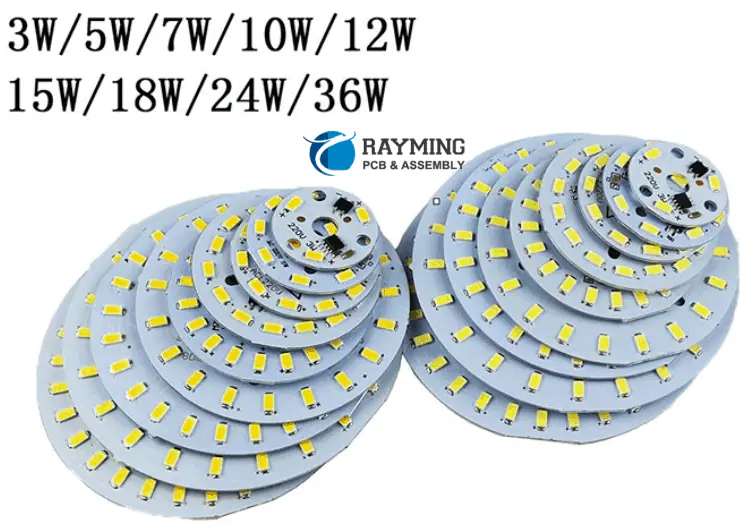
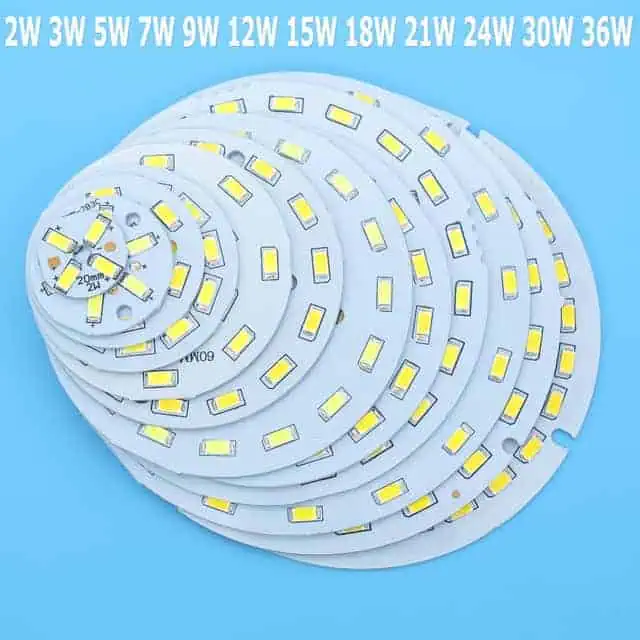
Some applications require specific properties in their circuit boards. This is especially true for temperature-sensitive applications, one of which is LED lighting. The LED lighting industry is expanding rapidly in response to increased interest in the more efficient and cost-effective lighting method, but much of the functionality of LED lights depends on the temperature of its system. For many companies, the solution to this problem is in aluminum-based PCBs,We call it LED PCB.
To help you understand why the LED lighting industry uses Led PCB, we’ve outlined the nature of PCB base layers, the attractive qualities of aluminum PCBs and why they work well in the LED lighting industry.
LED PCB now widely used in more and more areas because of it’s Energy Saving and Environmental Protection. With over years experience in turnkey service from PCB,Components Sourcing and oem prototype pcb assembly, RayMing Could you provide the LED PCB, LED Chips and OEM LED PCB Assembly Service. If you have some inquiries with the LED PCB
PCB Cores
Engineers design printed circuit boards to work best within their particular application. The designs can specify the nature of the circuit, the PCB coating material, the size of the PCB and a variety of other qualities. One of the most basic qualities to change, however, is the core of the circuit board.
PCB bases come in a variety of materials, including:
FR-4: Most common of these materials is FR-4, a base composed of glass and epoxy. While fire-retardant, FR-4 tends to be relatively inefficient at transferring heat.
Epoxies: Another, albeit less common substrate for PCBs is a material known as an epoxy. While less durable than other options, epoxy-based PCBs are much cheaper to manufacture.
Metal-core: Metal-core PCBs are very effective for a variety of applications, specifically those involving heat transfers. These bases consist of metal, usually aluminum, laminated with copper. These metals give the circuit board improved electrical insulation and thermal conductivity. When thermal qualities are not as important, FR-4 or epoxy bases are more common, as these tend to be relatively less expensive. However, when thermal qualities are important for the proper function of the end product, metal-core printed circuit boards are likely the solution.
How to Make a LED Board or LED Circuit Board?
Making a LED (light emitting diode) circuit board is a good exercise for those new to electronics. It does not require a lot of components or expertise, and it is a useful circuit to know. When making a LED PCB, LED circuit board, you should be familiar with how a circuit board works. Columns of holes are electrically connected with exceptions for the first and last rows of holes. The first and last rows (rather than columns) of holes are electrically connected and are slightly offset from the main grid. This property of a circuit board makes the job of building a LED circuit board much simpler.
Make a LED Board or LED Circuit Board Instructions
1.Wrap an end of your first wire around the positive terminal of your 9-volt battery. 2.Insert the other end of your first wire into the hole of your circuit board located in the first row and the first column. 3.Insert one end of your 100 ohm resistor into the same row as your wire,but this time in the second column of your circuit board. 4.Place the other end of your 100 ohm resistor in the hole of your circuit board located in the second row and second column. 5.Insert the anode (long wire) of your LED into the hole located in the third row, second column of your circuit board. 6.Insert the cathode (short wire) of your LED into the hole located in the third row, third column of your circuit board. 7.Wrap an end of your second wire around the negative terminal of your 9-volt battery. 8.Insert the other end of your second wire into the hole of your circuit board located in the fourth row, third column. You now have a completed LED circuit board and your light emitting diode will illuminate.
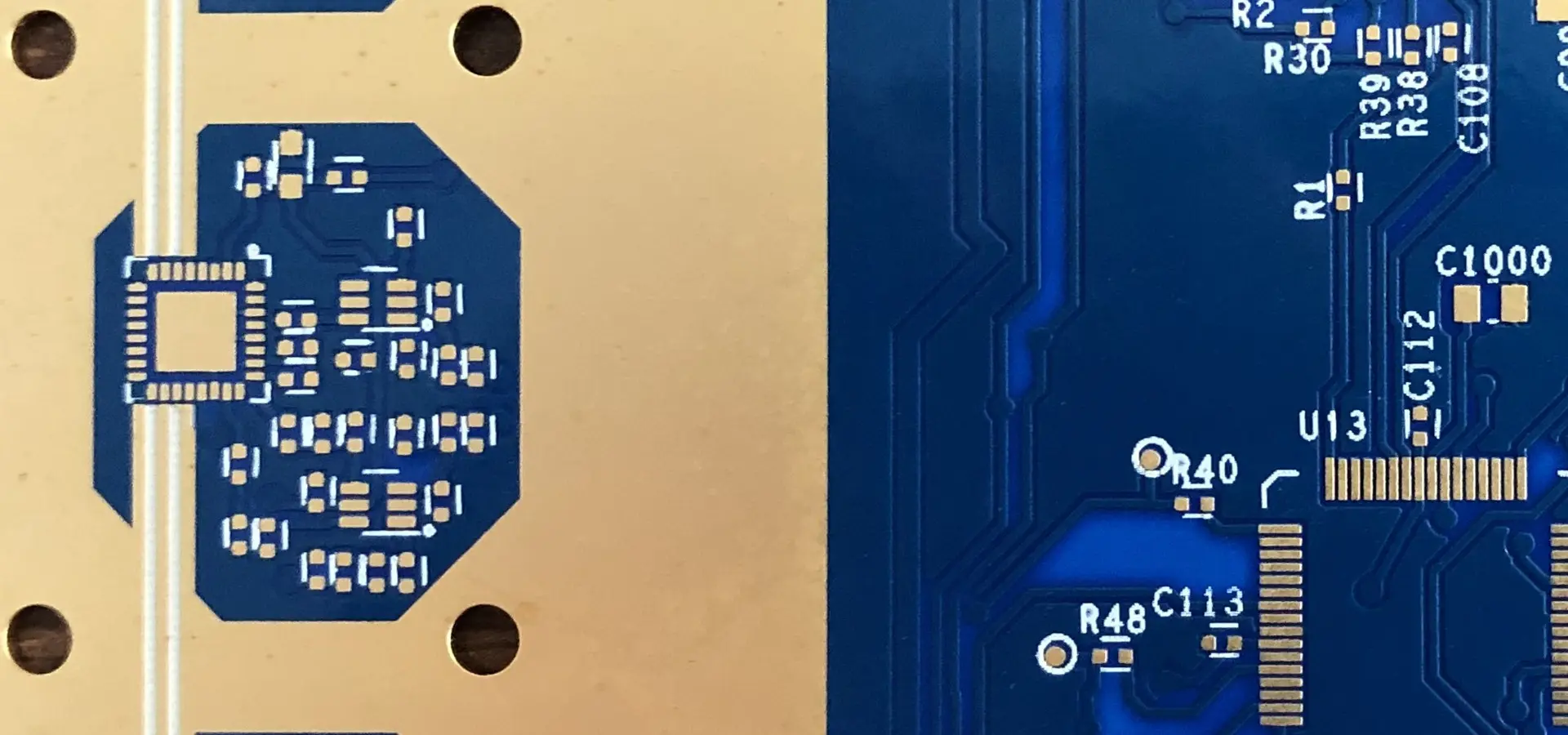
A printed circuit board (PCB) prototype is an early sample version of a PCB designed to test the viability of the PCB design before full-scale manufacturing. Building a high-quality PCB prototype is a crucial step in the electronics design process, allowing the designer to verify the PCB’s functionality and catch any errors before committing to mass production. This guide will walk through the key steps involved in creating a functional PCB prototype.
The following sections will explore each of these steps in greater detail, from designing the board to testing the finished prototype.
Schematic Capture and PCB Layout
The first step is to design the schematic and PCB layout files that define the structure of the board. This is done using EDA (electronic design automation) software such as Eagle, Altium, OrCAD, KiCad, etc.
The schematic will include all the components and connectivity on the board. The PCB layout will take the schematic and lay out the traces, pads, silkscreen, drill holes, etc. Some key considerations when designing the board:
Ensure the schematic follows best practices for readability and manufacturability. Pay attention to conventions for symbols, net names, etc.
Make the PCB layout match the schematic exactly. Any discrepancies will lead to an non-functional board.
Follow manufacturer design rules and capabilities. For example, trace widths, hole sizes, clearance rules.
Minimize traces lengths for better performance, especially for high-speed signals
Include test points, programming headers, and other features to support prototyping
To fabricate the board, the PCB layout data must be converted to a standard format called Gerber files along with drill data. These files provide all the info needed to produce the bare PCB.
Most EDA tools can generate Gerber files and Excellon drill files from the PCB layout. Double check for errors before submitting to your board house.
Standard Gerber files required:
Copper layers – Top, Bottom, Internal layers
Soldermask top and bottom
Silkscreen layers top and bottom
Board outline/profile layer
Drill drawing and Excellon drill file
Zip the files and upload to your chosen manufacturer. Be sure to order any specified surface finishes.
Once the bare PCBs come back from fabrication, the next step is populating the boards with components by soldering. This can be done manually or by using SMT assembly equipment for high volume production.
Bill of Materials
You’ll need a complete bill of materials (BOM) specifying all required components before assembling the board. Ensure you order the correct parts specified in the BOM and extra spares.
Manual Assembly
For prototyping it’s common to manually assemble boards. Some tips:
Use a soldering iron, solder, and basic tools like tweezers. Use flux for easier soldering.
Solder components in order of profile height, lowest first.
Double check values and orientations as you populate.
Inspect joints under magnification for potential bridges or cold joints.
Take care when soldering sensitive components like ICs to avoid damage. Use sockets.
SMT Assembly
For higher quantity assembly, SMT equipment can place and solder surface mount components much faster and more reliably than manual work. Some options for small prototype runs:
DIY Reflow Oven – Modified toaster oven with thermal profile
Desktop SMT Prototyping Machine – Small pick and place + reflow oven combo units
SMT Assembly Service – Machine assembly services for quick turnaround
Testing the Prototype
Once all components are soldered in place, the prototype board can be validated by testing. This may involve:
Visual Inspection – Check for correct assembly, no short circuits
Functional Testing – Power up board and test operation against requirements
Debugging – Identify and fix any functional or design issues
Testing will determine if the board functions correctly or requires another design iteration. Use any issues found to improve the design before final production.
What are the key benefits of building a PCB prototype?
The main benefits of prototyping a PCB design are:
Validates the design by testing it works correctly
Allows debugging issues before large scale manufacturing
Tests manufacturability and tolerances for the design
Provides something to evaluate for potential customers
Reduces project risk by ensuring quality before high volume production
What are some tips for designing a good PCB layout?
Some best practices for PCB layout:
Follow manufacturer design rules and capabilities
Minimize trace lengths for better signal integrity
Provide adequate spacing and clearance for routing and components
Incorporate test points and programming connectors to assist testing
Clearly label layers with silkscreen and use legible text sizes
Double check footprints match chosen component packages
How many PCB prototypes should be ordered?
As an initial test run, 5-10 boards is generally recommended. This allows distributing prototypes for evaluation and provides spare boards for rework if needed. For simple boards, starting with 3-5 is reasonable. Order extras if producing complex boards or still debugging the design.
What are common SMT assembly techniques for PCB prototyping?
Typical assembly options for SMT prototyping include:
Reflow soldering with a DIY modified toaster oven
Small desktop SMT assembly machines optimized for prototyping
Using stencil + solder paste + hot air rework station
Full assembly services using professional SMT pick-and-place equipment
How should PCB prototypes be tested?
Recommended ways to test a prototype PCB:
Visual inspection of the board for errors
Verify power and ground connectivity
Check basic I/O operation for components
Validate core functionality against requirements
Stress test inputs/outputs and environmental performance
Try intentional fault injection to check robustness
Inspect solder joints and connections under a microscope
Put the stencilpaper on the steel plate, use a pen to draw the circuit diagram on the stencil paper (diagram size should be 1:1), cut it out according to the PCB size, and place it on the copper-clad laminate. Take a small amount of paint and talcum powder into a suitable printing material, dip the printing material with a brush, and evenly apply it to stencil paper. Repeat it several times. Then the circuit can be printed on the printed board. This printed board can be used repeatedly and is suitable for small batch production.
Use 1g of potassium chlorate and 40ml of 15% hydrochloric acid to prepare a corrosive solution, and then apply it to the printed board where it needs to be corroded for corrosion.
Wash corroded printed boards repeatedly with water. Wipe off the paint with banana oil, and then wash it several times to clean theprinted board without leaving corrosive liquids. Apply a layer of rosin solution. Let it dry before drilling.
There are many ways amateurs can create PCB, but they are either time-consuming, complex in “craftsmanship,” or low quality. My method of making PCB is one of the methods with a better overall effect. The method is as follows:
Printed circuit board diagram. The pads in the figure are represented by dots, and the connection can be a single line, but the position and size must be accurate.
Cut the printed circuit board according to the circuit diagram’s sizeand clean the surface of the copper foil.
Use carbon paper to copy the diagram to the printing board. If the circuit is simple and the producer has extensive board-making experience, this step can be omitted.
Depending on the components, paste standard pre-cut symbols (pads) with different inner and outer diameters. Then stick tape lines of different widths according to the current. Electronic stores provide standard pre-cut symbols and tape. Common specifications of pre-cut symbols include basic materials such as D373 (0D-2.79, ID-0.79), D266 (0D-2.00, ID-0.80), D237 (OD-3.50, ID-1.50). Try not to use (black) and plastic (red) materials. The general specifications of tape are 0.3, 0.9, 1.8, 2.3, 3.7, etc. The unit is millimeters.
Use a softer hammer, such as smooth rubber, plastic, etc.,to hit the sticker to make it fully adhere to the copper foil. Focus on the turning and overlapping of the line. It is best to use a heater in cold weather to heat the surface to enhance the adhesion effect.
Put it in ferric chloride to start the corrosionprocess. Be noted that the liquid temperature cannot be higher than 40° After corrosion, it should be taken out and rinsed at the correct time, especially if there are thin lines.
Make holes, polish the copper foil with fine sandpaper, apply rosin alcohol solution, and let it dry. The quality of this printed board is very close to that of a conventional printed board. The 0.3 mm tape can be passed between the two legs of the IC, which can greatly reduce the short jumpers on the front of the circuit board, thus saving trouble and time.
PCB fabrication Method 3#:
Dissolve lacquer flakes (namely shellac, available from chemical stores) in three parts of absolute alcohol, and stir appropriately. After all the flakes dissolve, add a few drops of medical purple potion (gentian violet) to make it show a particular After evenly mixing, it can be used as protective paint for the pcb fabrication.
First,polish the copper-clad board with fine sandpaper. Then use the duckbill pen in the drawing instrument (or the ink duckbill pen used to draw graphics on the compass) for drawing. There are nuts on the duckbill pen to adjust the thickness of the stroke. You can also use a triangle ruler to draw thin straight lines. The drawn line should be smooth, uniform, without jagged edges, giving people a smooth and fluent feeling. You can also write Chinese characters, English, pinyin, and symbols in the free space of the circuit board.
If the drawing line penetrates the surrounding environment, the concentration is too small,and you can add some paint chips. If the drawing line does not stretch smoothly and becomes too thick, you need to drop a few drops of absolute alcohol. It doesn’t matter if you make a mistake. Just wipe it off with a small cotton swab dipped in absolute alcohol, and then redraw. After drawing the circuit board, it may corrode in the ferric chloride solution. After the circuit board is corroded, it is very convenient to remove the paint. Dip a cotton ball in absolute alcohol to wipe the protective paint to dry, and then apply rosin.
Because the alcohol evaporates quickly, the prepared protective paint should be sealed and stored in a small bottle,such as an ink bottle. Cover the bottle cap after use. If the concentration becomes thicker in the next use, add the appropriate amount of anhydrous alcohol to dilute the solution.
Paste the self-adhesive labels on the copper foil of the copper-clad laminate, then draw the circuit on the veneer. Use a cutter to cut the veneer to form the required circuit prototype, remove the non-circuit parts, and finally use ferric chloride to corrode theideal circuit board.
The corrosion temperature can be performed at about 55°C, and the corrosion rate is more rapid. Rinse the corroded circuit board with clean water, remove the self-adhesive labels on the circuit board, make holes, wipe clean, and then apply rosin alcohol solution prior to
Method 5#:
Arrange the components’ density and positionaccording to the shape of the components used in the schematic circuit diagram and the size of the printed board area. The components‘ location should be determined according to the principle of large first, then small, first overall, and then local. The adjacent components in the circuit are placed nearby and arranged neatly and evenly.
The connecting tracebetween components cannot be bent at right angles at the corners or intersections of the two traces. They must transition through a curve, and they cannot cross each other and turn too far. When certain traces cannot achieve this, you can consider placing printed trace on the back of the printed board and then using stud bolts to connect to the front circuit. Another solution is to use insulated trace when soldering components.
The distance between the input part and the output part is better to avoid mutual interference.
Method 6#:
Print the circuit board diagram on the printer at a ratio of 1:1 on 80 grams of copy paper. Hand drawing is also possible, but the bottom paper should be flat.
Find a fax machine, take out the fax paper from the machine, and replace it with a hot-melt plastic film. Put the circuit diagram into the fax machine’s outgoing fax trayand use the copy button to copy the circuit diagram on the hot-melt plastic film. At this time, the “printed manuscript” of the printed circuit board is ready.
Use double-sided adhesive tape to affix the drawn plastic film to the copper-clad board evenly. The plastic film and board shouldbe flat and not wrinkled. The tape paper can not cover the melted part. Otherwise, it will affect the production quality of the circuit board.
Use a paintbrush to brush the paint on the plastic film evenly. Note: Only brush in one direction. Otherwise,the plastic film will wrinkle, and the lines on the copper plate will overlap. After the circuit diagrams have been brushed, carefully remove the plastic film. At this time, a printed circuit board is finished. After drying, it can be corroded.
If you want to print manypieces, you can make a wooden frame that is a little larger than the circuit board, lay the PCB stencil (our company sells it) flat on the wooden frame, and fix it. Then use double-sided tape to stick the fixed plastic film under the screen. Put the copper-clad board on the table, close the screen frame (the printed image and the copper-clad board should be aligned left and right), use a paintbrush to paint in one direction, and remove the screen frame. The printed circuit board is printed. If there is any defect, it can be modified with paint and bamboo.
Pay attention to the above process. When painting, the hand force should be light and heavy. If there is too much paint or the film is too thick, the lines will be smudged. If the force is too light, the lines will break. And the plastic film must face up.
SET: Refers to multiple units that engineers put together to improve production efficiency and facilitate production. This is what we often call the puzzle, which includes unit graphics, process edges,etc.
PANEL: Refers to a pcb fabrication composed of multiple sets. It is added with tool board edges to improve efficiency and facilitate production when PCB manufacturers producethe product.
The inner layer dry film is the process of transferring the inner layer circuit pattern to the pcb manufacturing board.
In PCB production, we will mention the concept of graphics transfer because the production of conductive graphics is the basis of PCB production. Therefore, the graphics transfer process is of great significance to pcb fabrication process.
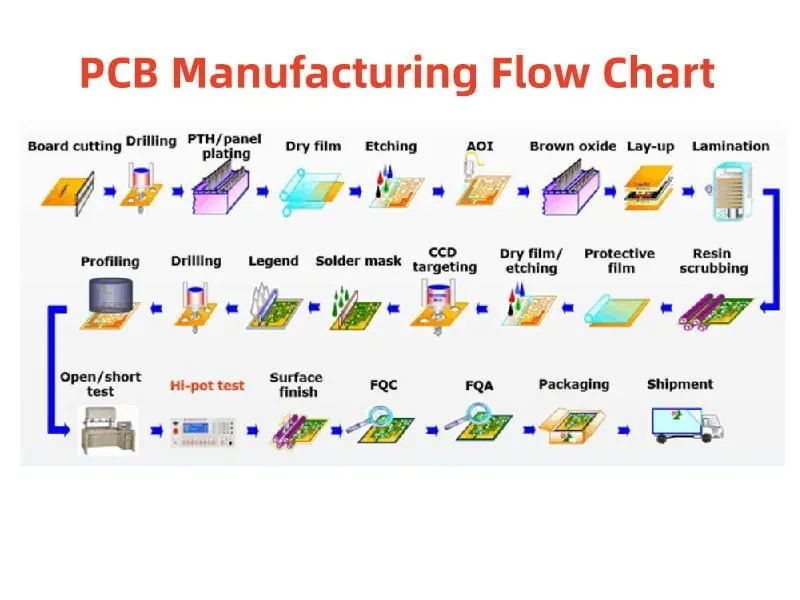
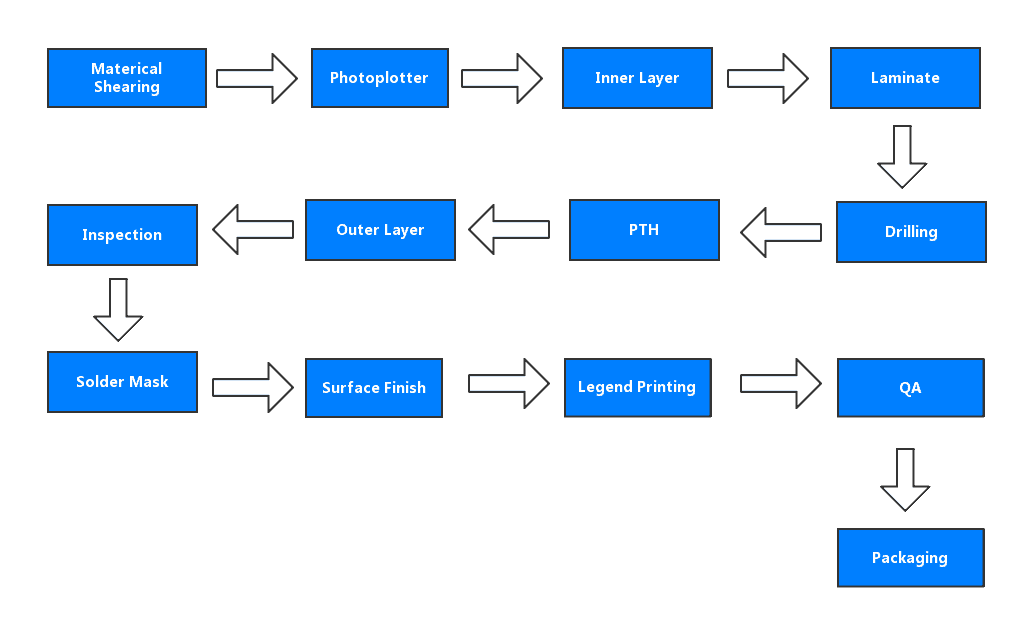
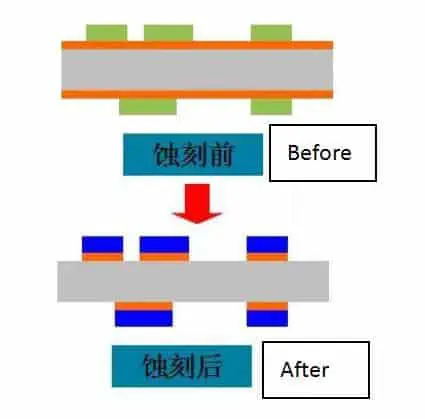
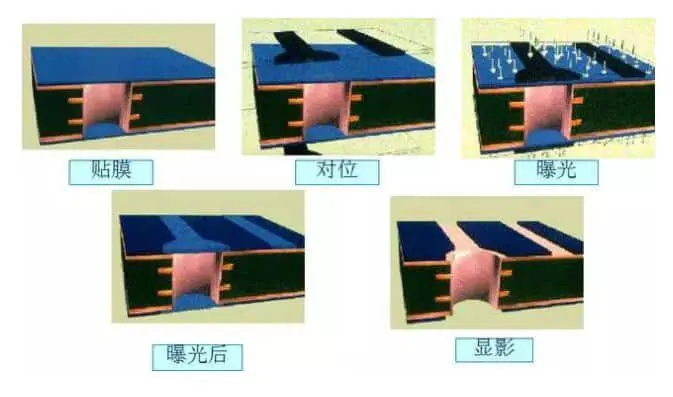
The inner dry film application includes many processes such as inner layer filming, exposure, development, and etching. The inner film is to paste a special photosensitive film on the copper plate’s surface, which we call a dry film. This film will cure when exposed to light, forming a protective film on the board. Exposure and development expose the board with the film, the transparent part is cured, and the non-transparent part is still the dry film. After developing, the uncured dry film is removed, and the board with the cured protective film is etched. After removing the film, the inner circuit pattern is transferred to the board. The whole process flow is shown in the picture below.
For designers, our main consideration is the minimum line width, spacing control, and wiring uniformity. If the distance is too small, it will cause film clamping. If this occurs, the film cannot be removed entirely and will cause a short circuit. If the line width is too small, the film’s adhesion is insufficient, resulting in an open circuit. Therefore, the safety spacing during circuit design (including line to line, line to pad, pad to pad, line to the copper surface, etc.) must be considered during pcb manufacturing.
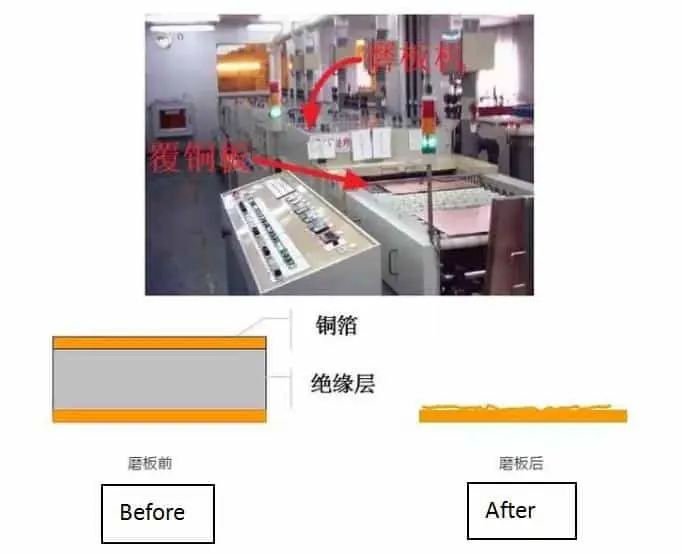
Grinding board
The primary function of the grinding plate: The basic pretreatment is mainly to solve the problems of surface cleanliness and roughness. Remove oxidation and increase the copper surface’s roughness, which will increase the film’s adhesion effect to the copper surface.
Filming
Paste the processed substrate with dry film or wet film by hot pressing or coating to facilitate subsequent exposure production.
Align the negative film with the substrate on which the dry film is pressed, and use ultraviolet light on the exposure machine to transfer the negative film pattern to the photosensitive dry film.
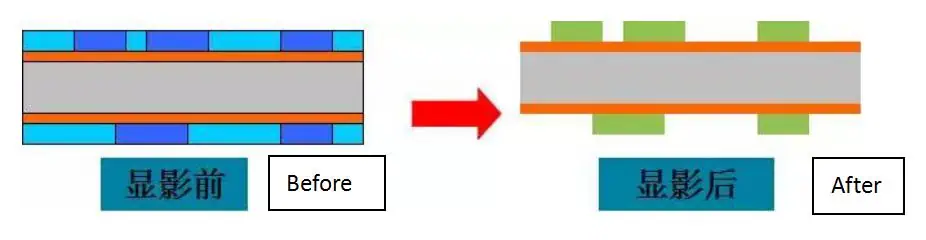
Development
Use the weak alkalinity of sodium carbonate to dissolve and rinse the unexposed dry film/wet film, leaving the exposed part.
Etching
After the unexposed dry film and wet film are removed, the copper surface will be exposed. Use acid copper chloride to dissolve and corrode the exposed copper surface to obtain the required circuit.
Film stripping
Use sodium hydroxide solution to peel off the exposed dry film that protects the copper surface to expose the circuit pattern.
Purpose: To form a microscopic roughness and organic metal layer on the inner copper surface to enhance the adhesion between the layers.
Process principle: Through chemical treatment, a uniform and good adhesion characteristic of the organic metal layer structure is produced. The copper layer’s surface, which is before the inner layer, is roughened in a controlled matter. This is to strengthen the inner copper layer and the prepreg after pressing the plate strength.
Stack up is the process of bonding each layer into a whole utilizing the PP sheet’s adhesiveness. This bonding is achieved by mutual diffusion, penetration between macromolecules on the interface, and interweaving. The multi-layer pcb manufacturing and PP sheets are pressed together to form a multi-layer board with the required number of layers and thickness. In actual operation, the copper foil, bonding sheet (prepreg), inner layer, stainless steel, isolation board, kraft paper, outer layer, and other materials are laminated according to the process requirements.
For designers, the first consideration for stack up is symmetry. Because the pcb fabrication will be affected by pressure and temperature during the lamination process, stress will remain on the board after the lamination is completed. Therefore, if the two sides of the laminated board are not uniform, the stress on the two sides will be different, causing the board to bend to one side, which greatly affects the PCB’s performance.
In addition, even in the same layer, if the copper distribution is uneven, the resin flow rate at each point will be different. As a result, the area with less copper will be slightly thinner, and the area with more copper will be slightly thicker.
In order to avoid these problems, various factors such as the uniformity of the copper distribution, the symmetry of the stack, the design and layout of the blind and buried holes, etc., must be considered in detail during the design.
Plated through-holes are also called chemical copper. After drilling, the PCB board undergoes redox reactions in the sinking copper cylinder to form a copper layer to metalize the holes. Copper is deposited on the surface of the original insulating substrate to achieve an interlayer electrical connection.
Plating
Plating creates the PCB board surface that has just been copper-immersed. The copper in the hole is thickened to 5-8um to prevent the thin copper in the hole from being oxidized or micro-etched and leaking the substrate before pattern plating.
The copper layer of the hole and circuit is plated to a specific thickness (20-25um) to meet the copper thickness requirements of the final PCB board. The useless copper on the board surface is etched away, exposing useful circuit patterns.
9. Solder mask
Solder mask, also called and green oil, is one of the most critical PCB fabrication processes. Solder mask is achieved mainly through screen printing or coating solder mask ink, coating a layer of solder mask on the board surface, and developing through exposure. The processes also expose the disk and hole to be soldered and cover other areas with solder mask to prevent short circuit during soldering.
10. Silkscreen
The required text, trademark, or part symbol is printed on the board surface by screen printing. Afterward, it is exposed on the board surface by ultraviolet radiation.
11. Surface treatment
The solderability of bare copper itself is very good, but long-term exposure to the air can cause oxidation and saturation. It tends to exist in the form of oxides and is unlikely to remain as the original copper for an extended period. Therefore, surface treatment of the copper surface is required. The primary purpose of surface treatment is to ensure good solderability or electrical properties.
Simulate the status of the pcb fabrication and check the electrical performance after power on to see if there is an open or short circuit.
14. Final inspection, sampling test, packaging
Check the appearance, size, hole diameter, thickness, and marking of the pcb fabrication process to meet customer requirements. The qualified products are packed into bundles, which are easy to store and transport.