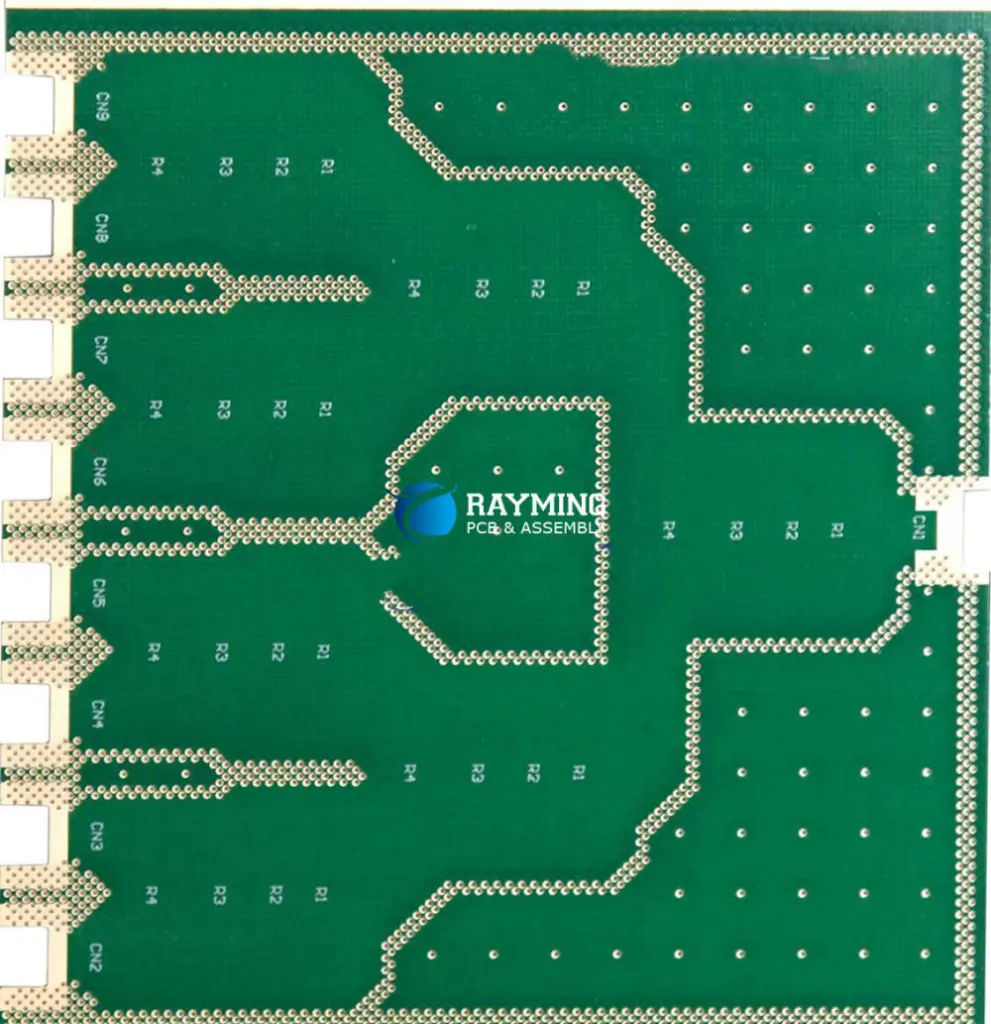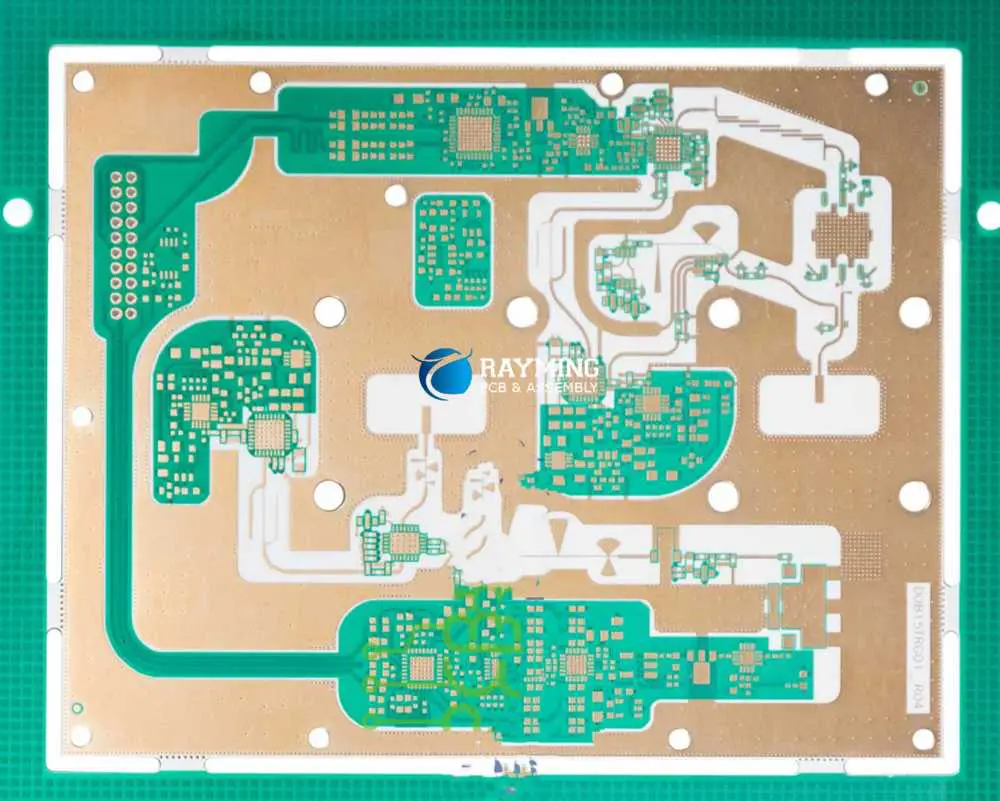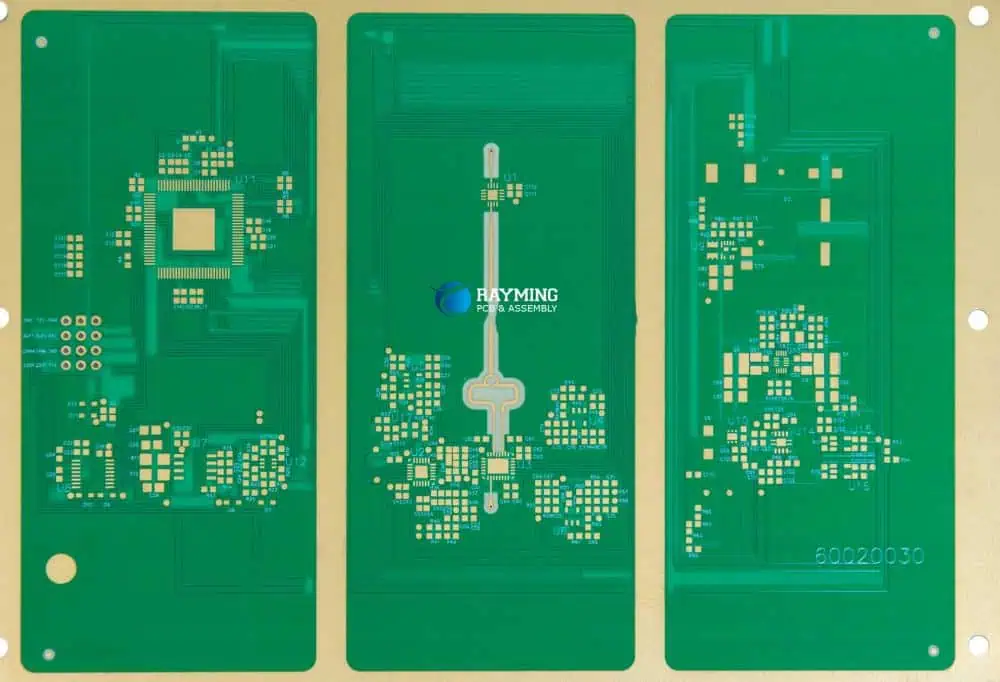
Looking for Rogers RO3210 PCB Manufacturer

Rogers RO3210

The Rogers RO3210 materials are laminates that are strengthened using woven fiberglass. The engineering of these materials is to provide great mechanical stability and electrical performance at competitive prices. Compared to the ro3000 series, the design of the Rogers ro3210 was done with improved mechanical stability.

Features of the Rogers RO 3210

The ro3210 boasts superior and stable mechanical and electrical properties. This product boasts all the features of the Rogers ro3000; however, its mechanical stability is more enhanced.

The ro3210 has these features:

  • Great dimensional stability
  • Smoother laminate and copper surface e
  • Better substrate rigidity as a result of woven glass reinforcement
  • Low insertion loss
  • Priced competitively
  • The dielectric constant is high
  • Stable dielectric constant in different frequencies and temperatures
  • The coefficient of thermal expansion is low
  • Uniform electrical and mechanical properties

Reasons Why You Should Use RO 3210 Laminate

The ro3210 laminates deliver many advantages for applications that require using mechanically rigid materials. These advantages include:

  • Great for use in applications requiring high frequency, which needs a high dielectric constant
  • Ideal for portable and mobile devices that operates under harsh conditions
  • It is less fragile and can be handled easily. This is because of the great rigidity of the material
  • Provides higher yields during production as a result of the unique dimensional stability of the material
  • With its smoother surface, it tolerates finer line etching
  • Great for the construction of epoxy, complex, multi-layer boards as a result of stable and uniform mechanical and electrical properties
  • Ideal for mounting surface assemblies due to low in-plane expansion

Applications that Require Using RO 3210 Laminates

Rogers RO3210 PCB

The ro3210 laminate can be used in different radio-frequency and commercial microwave applications. It was manufactured with reinforcement of the woven glass, thereby making it more superior that the RO 3010. The rogers ro3210 can be used in these applications:

  • Automotive GPS antennas
  • Base stationsโ€™ infrastructure
  • Satellites for direct broadcast
  • Backplanes for power
  • Wireless telecommunication systems
  • Remote meter readers
  • LMDS and wireless broadband
  • Datalink systems in cables
  • Antennas-wireless communications with microstrip patch
  • Automotive collision avoidance systems

Advantages of the High Dielectric Constant of the RO 3210 Laminates

Today, PCB materials having high dielectric constants can be employed in power antennas and amplifiers involving large volumes.

Although PCB materials having a high dielectric constant have many benefits, which are mostly based on delivering power integrity, people donโ€™t usually consider them. A good number of fabricators usually prefer to choose PCB materials having low dielectric constant (Dk) over those with high Dk for high-speed applications and high frequency due to their low loss tangent.

Below are some of the advantages of choosing a PCB material with high Dk:

Thermal Conductivity is Much Higher

Materials having high Dk made from PTFE, and are ceramic filled like RO 3210, usually have higher thermal conductivity. Asides from their better heat-skin designs, these materials provide heat transfer from active components and devices into heat sinks.

Optimal Economics

The use of materials with high Dk will help in producing multilayer PCBs. Here, just a few layers prove critical for the operation of the microwave. Also, PCB materials with low cost can be used in scenarios like this.

A multilayer stack-up with high Dk material can ensure the separation of ground power and planes thereby causing lower transfer and self impedance.

Also, a material with lower Dk in the stack-up makes sure that the signal is well supported in the interior and surface layers of a sufficiently encased stripline.

The ro3210 also delivers a unique opportunity for fabricating antennas having reduced element area. You can make use of an easy plasma process in navigating through the costs involved in preparing through-holes that are plated.

Miniaturization

With a high dielectric constant material like the roger ro3210, the dimension of your circuit can be reduced at a specific frequency. This material can also reduce electromagnetic wavesโ€™ phase velocity. They also function using smaller circuits and shorter wavelengths. Miniaturization comes with these benefits:

  • Better Coupling
  • Reduced radiation losses
  • Slow-wave signal propagation/enhancement
  • Higher-order modes reduced
  • Reduction in circuit size
  • Delays possible fluctuations between different components of PCB significantly
  • Lesser transfer impedance

Is it Possible to Construct a PCB with Multilayer Using RO 3210?

It is possible. The rogers ro3210 laminate is a great material for multilayer PCB fabrication. It features an in-plane expansion with a low coefficient, which makes it great for constructing an epoxy hybrid multi-layer PCB design.

Majorly, the electrical performance and mechanical characteristics of the rogers RO3210 material are stable, which is great for other laminates of the RO 3200 series.

The mechanical properties consistency also makes it possible to utilize materials having different dielectric constant on individual layers without going through incompatibility or warpage issues.

It can be used along with other less expensive materials to reduce the cost of production.

What Features of the Rogers RO3210 Laminate makes them Appropriate for High-Frequency Application?

Ro3210 laminates can be used for high-frequency radio frequency and commercial microwave applications. The suitability of this laminate in high-frequency applications can be seen in the features below:

  • It has a high Dielectric constant value of 10.2
  • The coefficient of thermal expansion is low
  • Has the V-0 rating for the UL flammability test and works fine with processing techniques that are lead-free.
  • The dissipation factor is low at 0.0027
  • Suitable for use in applications running above 40 GHz
  • The dimensional stability is great

What Must You Consider Before Making Use of the RO 3210 Laminate?

The following should be considered when choosing this laminate for any PCB project:

  • The thickness and size of the panel
  • Copper-clad size and type used
  • Installation space size
  • Impedance control
  • Turnaround time
  • Equipment and manufacturability capability
  • Compatibility with the requirements of your application
  • Compatibility of the component

Conclusion

The Rogers ro3210 laminate can deliver outstanding dimensional stability, thereby ensuring a high yield in production. It is great for multilayer hybrid designs and provides surface smoothness for a much better line etching tolerance.

How to Manufacturer Rogers RO3203 PCB

Rogers RO3203

Rogers ro3203 are ceramic-filled laminates that provide improved and superior mechanical properties. This laminate is one of the ro3003 series designed for high-frequency applications.  Ro3203 is circuit material reinforced with woven glass cloth.

This ceramic-filled circuit material is ISO 9002 certified, so it is a reliable material that meets designersโ€™ needs and specifications. This laminate was specifically designed to offer a wide frequency range. This Rogers PCB material comes with several features and benefits.

These laminates are produced with the use of PTFE substrates and reinforced with woven glass. Ro3203 is an improved version of RO3003 laminates designed to offer better mechanical properties. As a result of this, it has similar electrical and mechanical features to RO3003.

These laminates are suitable for a lot of applications which include direct broadcast satellites, base station infrastructure, power backplane, and collision avoidance systems. The woven fiberglass reinforcement added to Rogers 3203 enhanced its mechanical stability. A major reason, it is used in applications where mechanical strength is a major factor.

Properties of RO3203

Rogers RO3203 has unique properties that distinguish it from the RO3000 series. Some of its properties include:

Low coefficient of thermal expansion: The coefficient of thermal expansion in the X and Y axis of RO3203 is measured at 13 ppm/ยฐC. This property makes it ideal for use in producing multilayer epoxy fiberglass hybrid boards.

Low dimensional stability: The dimensional stability of ro3203 is measured at 0.8 mm/m. This dimensional stability is considered to be very low. This material can maintain its size in any environmental condition.

Excellent dielectric constant: The dielectric constant of this material is 3.02. This value is considered an ideal one for material like Rogers 3203. Materials with low dielectric constants help to minimize electric power loss, hence they are ideal for high-frequency applications.

Lower moisture absorption:ย ro3203 materials feature <0.1% moisture absorption. This level of moisture absorption is extremely low, which is desirable for designers. Low moisture absorption will have minimal impact on the thermal and electrical properties of the material.

Benefits of RO3203

Rogers RO3203 PCB

Rogers RO3203 offers a lot of benefits that make them exceptional in the RO3000 series. These laminates provide benefits such as;

  • Smooth copper surface that enables finer line etching tolerances
  • Excellent rigidity that makes it very easy to handle
  • Low in-plane expansion that matches with copper
  • A wide range of dielectric constant
  • Uniform mechanical and electrical properties
  • Exceptional dimensional stability
  • Cost-effective

Applications of Rogers RO3203

RO3203 circuit materials are used for high frequencies that are up to 20 GHZ. These materials are used for a wide range of applications which include:

  • Base stations infrastructure
  • Direct broadcasts satellites
  • Systems for datalinks on cables
  • Power backplanes
  • Remote meter reader
  • Automotive global positioning system antennas
  • Patch antennas for wireless communication
  • Wireless and LMDS broadband

Factors to Consider when choosing Rogers RO3203

There are several factors that should be taken into consideration when selecting RO3203, these factors include:

Application requirements: It is important the electrical and mechanical properties of this material meet the requirements of your application.

Availability: This is a vital factor that needs to be considered. Make sure you ask your supplier if there is an adequate stock of RO3203 laminates.

Thickness tolerance: RO3203 has thickness tolerance and tight Dk control. These materials are available in varying thicknesses that provide different individual needs to consumers.

Selecting materials with appropriate thicknesses is important for high-frequency applications.  The thickness of the laminate will affect the height and weight of the PCB.

Type of copper cladding: RO3203 comes in different types of copper cladding. However, there are three main dimensions as electrodeposited copper which are 2 oz. (70 ฮผm) ED foil, 1 oz. (35 ฮผm) ED foil, and 1/2 oz. (17ฮผm) ED foil.  You can order the type of cladding that suits your application.

Why Rogers RO3203 is used in RF and Microwave Application

RO3203 is a PTFE composite that features advanced mechanical and electrical properties. This material has a stable and low Dk over a wide range of temperatures and frequencies.

This material is well suited for high-frequency applications since it combines a low Dk of 3.02 and a low dissipation factor of 0.0016. This material is used in RF and microwave applications due to its low moisture absorption, tight Dk control, and thickness tolerance.
Its improved rigidity also makes it ideal for applications that require mechanical stability. ro3203 is a core material in RF and microwave applications due to its low in-plane and Z-direction expansion.

Procedures to follow when ordering for Rogers RO3203 laminate

When ordering for RO3203 laminate, you are required to follow the procedures outlined below

  • Determine the specifications of the material that meets the requirements of your application.
  • Choose the right material thickness and thickness tolerance.
  • Choose the right panel size.
  • Select the right material cladding type.
  • For customized size material, you need to make agreements before you place an order.
  • Contact customer care for more directions on how to place an order.
  • Once a purchase is made, you will receive a certificate of conformance.

Limitations of Rogers RO3203

Although RO3203 laminates have several benefits, these materials also have their limitations.

Requires special manufacturing procedure: These laminates require special production processes that involve special treatment of PTH walls after drillings and before plating. This procedure includes drilling, preparation of holes, metallization, etc.

Weave effect: Due to the woven glass reinforcement, designers can experience the “weave effect” when using these laminates at high frequencies. This can have a critical impact on thinner laminates.

Conclusion

Rogers 3203 laminates offer improved electrical performance, excellent dimensional stability, and an ideal coefficient of thermal expansion. These laminates have been a leading material in the industry due to the features they offer.

The woven glass reinforcement in RO3203 makes them easy to fabricate. These materials also have great peel strength and the CTE is great for thinner laminates. RO3203 also features a low dielectric constant that helps to maintain stability over various frequencies and temperatures.

What is Rogers RO3035 PCB Price

Rogers RO3035

The Rogers RO3035 circuit material with high frequency are PTFE composites filled with ceramic and intended to be used in RF and commercial microwave applications. It was designed to provide mechanical and electrical stability at great and competitive prices.

They boast of circuit materials with consistent mechanical properties regardless of the chosen dielectric constant. This permits the designer to build multilayer board designs utilizing varying materials for dielectric constant for individual layers, without coming across reliability or warpage issues.

The dielectric constant against temperature of Rogers RO3035 materials is highly stable.  The materials used here possess a CTE โ€“coefficient of thermal expansion of 17 ppm/ยฐC in both X and Y axis. This coefficient is compared to that of copper. This permits the material to show great dimensional stability and reduces the possibility of bow and twist. The expansion coefficient also gets rid of the possibility for the thick metal cladding from delaminating.

The CTE of the Z-axis is 24 ppm/ยฐC. This delivers a great through-hole plated reliability, and will work fine even in harsh thermal environments. These laminates can be transformed into PCBs utilizing standard processing techniques of the PTFE circuit board, with mirror modifications.

Benefits of the Rogers ro3035

Rogers RO3035 PCB
  • Its application frequency can get to 30-40 GHz ย as a result of the low dielectric loss
  • This application is reliable in multilayer and stripline pcb structure
  • It is appropriate for pcb designs with multilayer and varying dielectric constant
  • It is great for the structural design of pcb with multilayer with a mix of epoxy resin
  • Great for applications that are sensitive to temperature
  • Higher reliability, lower operating temperature for power amplifier applications
  • Great dimensional stability
  • It is available globally and therefore is great for multi-site production use.

Features of RO 3035

The Rogers RO3035 has the following features and properties:

  • Dielectric loss is low
  • Great mechanical properties against temperature
  • Mechanical properties are uniform
  • Dielectric constant is stable versus frequency and temperature
  • High thermal conductivity
  • In-plane expansion coefficient is low
  • Low loss tangent and dielectric constant
  • Works fine with processing techniques that are lead-free.

What Factors can Affect the Performance of the Rogers RO3035

The efficiency of the rogers ro3035 is dependent on some factors. Some of them depend on the materialโ€™s inherent features, while the rest are dependent on how the environment of operation is.

The way the material of your Rogers RO3035 will function depends on:

  • The copper surfaceโ€™s roughness
  • The dissipation factor
  • Cladding type utilized
  • Type of surface finishing or solder mask used
  • The laminateโ€™s thickness
  • The laminateโ€™s thermal conductivity
  • The copperโ€™s thickness
  • The insertion loss, which includes dielectric loss, leakage loss, conductor loss, and radiation loss
  • The thermal coefficient of the dielectric constant
  • The PCBโ€™s thermal management efficiency

What are the Limitations of the RO 3035?

The PCB material of the RO3035 is much more expensive compared to the PCB material of the standard FR-4. This higher cost is as a result of the higher costs involved in the manufacturing, which has to do with the PTFT-based laminates.

Also, RO3035 is very prone to corrosion and oxidation whenever it is stored or whenever it is operating under humid conditions and high temperature.

Why are Thin RO 3035 laminates Appropriate for Fabricating PCBs used in Application requiring High-Frequency?

Making use of thinner PCB laminates comes with its benefits and pitfalls, and you must consider them carefully before making a decision regarding the use of thin laminates.

Some major benefits of utilizing thinner laminates includes their low profile and reduced weight, which makes them great for use in mobile and portable devices.

These thinner laminates are also great for much higher frequencies i.e. 30 GHz and higher. They help in preventing signal propagation modes that are unwanted, which are usually what characterize such high frequencies.

The traveling waves that are unwanted can disrupt the intended propagation of the circuit wave. This thinner laminate possesses a very low loss tangent and dielectric constant.

You can utilize a wider conductor anytime the Dk value of your ro3035 is low, and you have to maintain the controlled impedance lines.

What Processing Techniques (Lead-Free) can be used in Fabricating RO 3035 Laminates?

Consider the different processes during SMT assembly that are important when manufacturing PCBs that are RoHS compliant. You may consider these:

Materials

Try making use of other options of surface finishing that don’t have lead in it like organic solder preservatives. Make sure that you are using thermally-stable solder masks. Also, for the etch resist, make use of pure tin.

Assembly

Reflow

  • Optimize your ro3035 materialโ€™s reflow profile
  • Use conventional ovens and avoid using the infra-red type
  • Check the temperature range of your equipment and maintain great temperature control
  • This process may be performed using the atmosphere of an inert gas.

Soldering

  • Make use of inert gas atmosphere
  • Optimization of your equipment to help resist damage due to high temperatures
  • Make sure you optimize your wave design
  • Consider the rising copper levels while replenishing bath

Health and Safety

  • Donโ€™t be exposed to lead fumes
  • Make use of the right protective measure when high temperature is in use
  • Choose the solder alloys appropriately
  • Donโ€™t use unnecessary excess temperatures when soldering to prevent damage to your equipment

ATM Standards during PCB Fabrication

Several methods are available to test and check the properties of this PCB laminate. The testing standards of the ASTM laboratory helps in harmonizing test methods.

It achieves this through specifying dimensions, standard designs, equipment types, apparatus used for testing the different aspects of the laminate. By adhering to these standards, you will be able to ascertain workmanship and quality.

Conclusion

You have a lot to gain while using the Rogers RO3035. This is because it comes with great properties. These include low dielectric loss, great mechanical properties against temperature, high thermal conductivity, and more.

Top 21 PCB Production Suppliers In 2025

copper trace pcb

Introduction

Printed circuit boards (PCBs) form the foundation of electronics products. As products become more complex and quality demands rise, manufacturers need reliable PCB suppliers with robust fabrication capabilities. This article profiles the top 21 PCB production suppliers in 2023 who deliver advanced technologies, quality, capacity and responsive services to meet electronics production needs.

1. Rayming Technology

Rayming Technology is an ISO 9001 and IATF 16949 certified PCB manufacturer providing advanced fabrication including HDI, rigid-flex and high frequency boards. With over 500 skilled staff and 15 years of experience, Rayming provides robust quality, on-time delivery and responsive customer service.

Location: Zhongshan, China

Capabilities:

  • Technology – HDI, any-layer, Flex/Rigid-Flex
  • Size – Up to 24 x 24 inches
  • Thickness – Up to 4mm
  • Layers – Up to 32 layers
  • Line width/space – 3/3 mil microvias
  • Volume – Up to 30,000 boards per day

Industries Served: Automotive, industrial equipment, medical, aerospace, telecom infrastructure.

Certifications: ISO 9001, IATF 16949, UL, TS 16949

Key differentiators: Fast quote turnaround, engineering review, focus on quality, robust supply chain.

rogers substrate

2. TTM Technologies

TTM Technologies is one of the world’s largest PCB manufacturers providing solutions from prototype through high volume production. With a global footprint, they offer advanced capabilities and technologies.

Headquarters: Costa Mesa, CA, USA

Capabilities:

  • Rigid, rigid-flex, flex, HDI PCBs
  • 0.25 mm lines/spaces, 0.125mm microvias
  • Quick turn prototyping in 3 days
  • Defense and aerospace certified

Markets served: Aerospace, automotive, computing, medical, networking

Certifications: ISO 9001, AS 9100, IATF 16949, ITAR Registered

Locations: North America, Asia

3. AT&S

AT&S is a leading manufacturer of high-end PCBs focused on modules for automotive, industrial, medical and advanced packaging customers globally. They provide systems integration and new technology introduction.

Headquarters: Leoben, Austria

Capabilities:

  • HDI multilayer up to 30 layers
  • 0.080mm vias, 0.050mm lines
  • Rigid-flex, flex, backplanes, IC substrates
  • Miniaturization, embedded components

Markets served: Automotive, industrial, healthcare, home electronics

Certifications: IATF 16949, ISO 9001, ISO 45001, ISO 14001

Locations: Europe, India, China, Korea

4. Tripod Technology

Tripod Technology is a major Taiwanese PCB manufacturer providing high quality, high mix PCB fabrication and assembly services. They focus on serving tier 1 multinational companies.

Headquarters: Hsinchu, Taiwan

Capabilities:

  • Technology: HDI, Flex, Flex-Rigid, high TG substrates
  • Complex multilayer boards up to 30 layers
  • 0.06mm lines/spaces and 0.05mm microvias

Markets served: Computing, communications, automotive

Certifications: IATF 16949, ISO 9001

Locations: Taiwan and China

5. Wรผrth Elektronik

Wรผrth Elektronik is a PCB manufacturer focused on producing high frequency circuit boards using advanced technologies. They have extensive engineering expertise.

Headquarters: Niedernhall, Germany

Capabilities:

  • PCB technology: Flex, rigid-flex, HDI
  • Materials: High frequency laminates, ceramic-filled thermoplastics
  • Applications: Power electronics, automotive, telecom

Markets served: Automotive, industrial, aerospace, medical

Certifications: ISO 9001, IATF 16949, ISO 14001

Locations: Germany, Austria, France, Americas, Asia

6. Compeq Manufacturing

through-hole assembly process

Compeq Manufacturing is a major PCB manufacturer in Taiwan providing services from quick-turn prototyping to volume production of advanced HDI boards.

Headquarters: Neihu, Taipei, Taiwan

Capabilities:

  • Volume production – Rigid, build-up, flex, rigid-flex
  • Own raw materials – Prepreg, RCC
  • Quick-turn prototypes in 24 hours
  • 0.15mm lines/spaces, 0.10mm microvias

Markets served: Networking, telecom, industrial, automotive, consumer

Certifications: IATF 16949, ISO 9001, ISO 14001

Locations: Taiwan, China

7. Unimicron Technology

Unimicron is a global provider of IC substrates and PCB fabrication services. They focus on high-end applications requiring advanced packaging substrates and HDI PCBs.

Headquarters: Taoyuan City, Taiwan

Capabilities:

  • Core technologies – Build-up substrates, flip chip substrates, HDI
  • High density interconnect, fine line patterning
  • Advanced packaging – AiP, SiP, PoP, SoC, MCM

Markets served: Telecom, automotive, industrial, consumer, medical

Certifications: IATF 16949, ISO 9001, ISO 14001

Locations: Taiwan, Germany, China, Japan, USA

8. Zhen Ding Technology Holding

Zhen Ding Tech provides advanced PCB manufacturing services and flexible printed circuits. They focus on high layer count boards and flex-rigid solutions.

Headquarters: Taipei, Taiwan

Capabilities:

  • Multilayer PCB capabilities up to 36 layers
  • Flexible PCB and rigid-flex technology
  • HDI solutions with 3 mil line/space
  • Quick turn prototype fabrication

Markets served: Automotive electronics, server, mobile devices

Certifications: ISO 9001, IATF 16949

Locations: Taiwan, China

9. Ibiden Co. Ltd

Ibiden is a leading manufacturer of multilayer printed wiring boards for electronics. They focus on high density interconnect and IC substrate technologies.

Headquarters: Gifu, Japan

Capabilities:

  • Build-up multilayer boards – up to 12 layers
  • High density interconnect – 20ฮผm lines/spaces
  • IC substrates for smartphones, automotive, AI
  • Quick turn prototypes

Markets served: Automotive, industrial equipment, consumer electronics

Certifications: IATF 16949, ISO 9001, ISO 14001

Locations: Japan, Malaysia, Germany, USA

Shengyi mmWave77 PCB

10. Shennan Circuits Co. Ltd.

Shennan Circuits provides a comprehensive range of PCB manufacturing solutions from rapid prototypes to volume production.

Headquarters: Shenzhen, China

Capabilities:

  • Volume production – 24 hour delivery of 2-4 layer boards
  • Multilayer PCBs – up to 36 layers
  • HDI technology – 4 mil line/space
  • Flex and rigid-flex PCB manufacturing

Markets served: Consumer electronics, automotive electronics, industrial

Certifications: ISO 9001, UL, TS 16949, OHSAS 18001

Locations: China

11. Kingboard Laminates Holding

Kingboard Laminates is a major manufacturer of laminates and provider of PCB fabrication services in China. They focus on high-end PCB technologies.

Headquarters: Hong Kong

Capabilities:

  • Multilayer PCBs with 16-36 layers
  • HDI capabilities down to 2 mil line/space
  • Rigid, flex, rigid-flex PCBs
  • Quick-turn prototyping

Markets served: Telecom infrastructure, consumer electronics, automotive

Certifications: ISO 9001, TS 16949, UL

Locations: China

12. Multek Technologies

Multek Technologies is a manufacturer of flexible circuits, rigid flex PCBs and assemblies for medical, automotive and electronics customers.

Headquarters: Zhuhai, China

Capabilities:

  • Flexible circuits, rigid-flex PCBs
  • Flex and rigid-flex assemblies
  • Multilayer rigid boards
  • Engineering support and NPI services

Markets served: Medical, automotive, industrial, aerospace

Certifications: ISO 13485, IATF 16949, AS 9100

Locations: China, Slovakia, USA

13. Daeduck Electronics

Daeduck Electronics is a PCB manufacturer providing services ranging from prototype to volume production. They focus on small and mid-size orders.

Headquarters: South Korea

Capabilities:

  • Volume production – double sided, multilayer, HDI
  • Small quantity orders – 10 piece prototype
  • Mid-size orders – up to 1000 pieces
  • SMT assembly services

Markets served: Defense, aerospace, semiconductor fabrication

Certifications: KCAS, JIS Q 9100, ISO 9001

Locations: South Korea

14. Electropac Co. Ltd.

Electropac manufactures high-precision PCBs focused on Japan domestic market. They offer quick delivery of rigid multilayer boards.

Headquarters: Osaka, Japan

Capabilities:

  • Multilayer boards up to 32 layers
  • Mass lamination technology
  • 7 day delivery of rigid boards in small lots
  • Testing – AOI, flying probe, HAL, x-ray

Markets served: Industrial equipment, consumer electronics, medical, robotics

Certifications: ISO 9001

Locations: Japan

15. Cicor Group

Headquartered in Switzerland, Cicor provides high-end printed circuit boards and hybrid electronics solutions from prototype to volume production.

Headquarters: Bronschhofen, Switzerland

Capabilities:

  • Rigid, flex, rigid-flex PCBs
  • Miniaturization and advanced packaging
  • Expertise in substrates for medical and aerospace
  • Quick-turn prototypes

Markets served: Industrial, aerospace, defense, medical, automotive

Certifications: ISO 9001, ISO 13485, EASA, AS 9100

Locations: Europe, Asia

16. AT&P Austria Technologie & Systemtechnik

AT&P is an Austrian manufacturer of high-end printed circuit boards focused on miniaturization and advanced packaging.

Headquarters: Leoben, Austria

Capabilities:

  • High density interconnect PCBs
  • Miniaturization using mSAP technology
  • Advanced IC substrates and SIPs
  • Rigid, flex, rigid-flex PCBs

Markets served: Automotive, industrial, medical, mobile computing

Certifications: IATF 16949, ISO 9001, ISO 50001, ISO 45001

Locations: Austria, India, China

17. Elite Material

Isola FR406N PCB

Elite Material manufactures heavy copper, high layer count PCBs focused on the needs of high power electronics products.

Headquarters: Fremont, CA USA

Capabilities:

  • Thick copper up to 20 oz. layers
  • 20 layer to 42 layer multilayer boards
  • Lines and spaces to 5 mil
  • Panel sizes up to 23 x 27 inches
  • Quick turn prototypes

Markets served: Power electronics, battery systems, automotive

Certifications: IATF 16949, ISO 9001, ITAR, IPC Class 3

Locations: USA

18. Elec & Eltek International

Elec & Eltek provides a range of PCB solutions including standard multilayer, HDI, flex and rigid-flex boards.

Headquarters: New Taipei City, Taiwan

Capabilities:

  • Technology – Rigid, flex, rigid-flex PCBs
  • HDI multilayer boards up to 8 layers
  • Quick-turn PCB prototypes
  • SMT assembly services

Markets served: Consumer electronics, industrial, networking

Certifications: ISO 9001, ISO 14001

Locations: Taiwan, Thailand, China

19. Lenthor Engineering

Lenthor manufactures quick turn PCB prototypes, small batches and volume production boards. They focus on rigid multilayer and flex board fabrication.

Headquarters: Richardson, TX, USA

Capabilities:

  • Prototypes in 24 hours
  • Multilayer PCBs up to 30 layers
  • Flexible circuits and rigid-flex
  • Defense and medical certified
  • SMT assembly services

Markets served: Aerospace, defense, medical, industrial controls

Certifications: ISO 9001, ITAR, AS 9100

Locations: USA

20. Advanced Circuits

Advanced Circuits specializes in providing advanced PCB prototyping solutions to engineers requiring fast turnaround of precise multilayer boards.

Headquarters: Aurora, CO, USA

Capabilities:

  • Prototype PCBs – 24 hour turnaround
  • Production – up to 1000 boards, 15 day delivery
  • Multilayer – up to 32 layers
  • Panel plating, 4 mil trace/space

Markets served: Startups, engineering design teams

Certifications: ISO 9001:2015

Locations: USA

21. Panasonic Corporation

Panasonic manufactures a wide range of PCBs for electronic products including multilayer boards for avionics, automotive and industrial applications.

Headquarters: Osaka, Japan

Capabilities:

  • Multilayer rigid and flex boards
  • High frequency boards – BT and PPE substrates
  • Quick turn prototypes – 5 day delivery

Markets served: Automotive, avionics, industrial, healthcare

Certifications: IATF 16949, AS 9100, ISO 9001

Locations: Japan, Asia, Europe

Conclusion

PCB production requires robust technological expertise combined with stringent process execution and quality control. The PCB manufacturing landscape is dominated by Asian companies, but also includes niche technology leaders from Europe, North America and Japan. As electronics applications demand greater performance, reliability and cost-efficiencies, OEMs need reliable PCB fabrication partners to enable their roadmaps. The PCB manufacturers profiled above provide advanced capabilities, rigorous quality systems and responsive services sought by electronics manufacturers worldwide.

Frequently Asked Questions

Q1. What are some key capabilities to look for in a PCB production supplier?

Some key capabilities include:

  • Technology expertise – rigid, flex, rigid-flex, HDI, high layer counts
  • Robust quality certifications and processes
  • Volume production capacity and scalability
  • Supply chain performance – on-time delivery, responsiveness
  • Engineering support – DFM analysis, technical review
  • Process consistency and repeatability
  • Reasonable lead times and NPI cycle times
  • Proven expertise for target industries like automotive, aerospace, medical

Q2. How should PCB suppliers be evaluated for outsourcing production?

Important aspects to evaluate are:

  • Review technical capabilities in relation to product requirements
  • Assess their quality certifications and processes
  • Audit their factory if possible for infrastructure and process maturity
  • Understand their supply chain model for assurance of delivery
  • Review NPI, prototyping and development process
  • Evaluate support engineering team and responsiveness
  • Discuss contingency plans for business continuity
  • Consider cultural fit and ease of communication
  • Request referrals from existing customers on performance

What is Rogers Ro3006 PCB ?

Rogers R03006

Rogers RO3006 laminates are ceramic-filled polytetrafluoroethylene composites specifically designed for commercial microwave and Radio Frequency applications. These high-frequency circuit materials provide excellent mechanical and electrical properties that make them stable and reliable.

RO3006 materials offer a stable dielectric constant which helps to get rid of the change in Dk. These materials feature mechanical properties that are stable irrespective of the Dk selected. This helps designers to build multi-layer board designs that make use of various dielectric constant materials for single layers without experiencing reliability issues.

These high-frequency circuit materials have an extremely low dielectric loss of 0.00020 at 10 GHz. RO3006 has a coefficient of thermal expansion of 17 ppm m/oC. This material is ideal for building stripline and multilayer boards. Due to its mechanical features, it can be utilized with epoxy glass multi-layer board designs.

The CTE matches with copper which makes it suitable for applications susceptible to temperature change. The production process of this circuit material is similar to PTFE PCB; therefore, it is ideal for the volume manufacturing process.

RO3006 circuit materials are available with multi-layer, double-sided, and hybrid construction. This ceramic-filled PTFE material meets the requirements of designers since it features a low dissipation factor.   

Properties of RO3006

Rogers R03006 pcb

RO3006 has some unique properties which make them ideal for some applications. These ceramic-filled microwave materials are high-grade laminates that feature outstanding mechanical and electrical properties. Some of these properties will be discussed below

Dielectric constant of 6.5: RO3006 features a Dk of 6.5 up to 40GHz; this is higher than that of RO3003. This enables the production of larger electrostatic forces.

Dissipation factor of 0.0020: This laminate features a dissipation factor of 0.0020 at 10GHz at 23ยฐ. This electrical property indicates that Rogers RO3006 can act as a good insulator. A lower dissipation factor means that a material is a more efficient insulator system. Therefore, RO3006 is ideal for high-frequency applications.

Low coefficient of thermal expansion: The coefficient of thermal expansion in the X and Y-axis is measured at 17 and 17 ppmยฐ/C.  Coefficient of thermal expansion measures how a material expands due to changes in temperature.

Rogers RO3006 features a low coefficient of thermal expansion which makes this material ideal for use in any type of environment. This high-frequency circuit material maintains its initial size when exposed to heat.

Thermal conductivity of 0.79w/m.k: The thermal conductivity of a material measures how a material can conduct or transfer heat. Rogers RO3006 has a low thermal conductivity which makes it conduct less heat; it doesn’t allow heat to pass through. This circuit material is considered a good insulator because of its low rate of thermal conductivity.

Low moisture absorption:ย Ro 3006 has moisture absorption of 0.002. Moisture absorption measures the ability of a material to absorb moisture. This material can withstand a humid environment since it features low moisture absorption.

Benefits of Rogers RO3006

Rogers RO3006 is considered a high-frequency ceramic-filled material used for high-performance applications. This material has reliable mechanical and electrical properties that meet the requirements of some specific designers. Some of the benefits of this material include:

Exceptional mechanical properties: This PTFE composite has great mechanical properties which make them well suited for designing high-reliability stripline and multilayer boards.

Low in-plane expansion coefficient: The low in-plane expansion coefficient of this material matches with copper, which makes it suitable for applications that are susceptible to changes in temperature.

Cost-effective option: Rogers RO3006 is sold at an affordable price compared to its counterparts. This is one of the major reasons it is a preferred option for most designers. This material offers great value for its price.

ISO 9001 certified: Rogers RO3006 meets the standard of ISO 9001. This international standard shows the ability of a company to consistently supply products that meet regulatory requirements.

Rogers RO3006 Applications

Rogers ro3006 is a PTFE composite designed for several applications. With its great mechanical and electrical properties, it has provided lasting solutions to some of the problems faced by engineers. These materials can be used in the applications below.

Automotive radar system

Automotive radars consist of a receiver and a transmitter. Rogers RO3006 is a core part of the automotive radar system. Due to its excellent and stable mechanical properties, this material is considered a suitable option for this application.

Radar sensors help to detect any object around a vehicle and these sensors are very important in the automobile industry. Due to Rogers RO3006โ€™s low coefficient of thermal expansion and dissipation factor, this material is well suited for building automotive radars.

Global Positioning Satellite Antenna

The global positioning satellite antenna is used for sending and transmitting radio signals sent by different frequencies from GPS satellites. When building GPS antennas, a high-frequency material is needed as a framework.

Since these antennas convert radio signals into electronic signals, they require ceramic-filled PTFE composites with stable electrical and mechanical properties like the Rogers RO3006.

Remote Meter Reader

RO3006 is a circuit material required for high-performance applications. This material is used in designing remote meter readers. This device requires high-frequency circuit materials with excellent properties. Printed board circuit is a core part of a remote meter reader. RO3006 offers properties required for this application.

Power Amplifiers

High-frequency power amplifiers are needed in transmitting cellular signals to IoT devices and mobile users through remote radio heads. Power levels keep rising in order to offer higher data rates. As long as designing high-reliability power amplifiers is important, low loss dielectrics with high thermal conductivity should be considered.

When it comes to RF power amplifier design, Rogers RO3006 has proved to be a reliable material for this application. Due to this laminateโ€™s dimensional stability, high thermal conductivity, low dielectric loss, and low CTE, it is considered a good option for power amplifiers.

Conclusion

Rogers RO3006 is a high frequency circuit material used in high performance applications. This PTFE composite features reliable electrical, mechanical, and thermal properties. Rogers has maintained a long-standing reputation in the industry. This company is known for designing high-grade laminates that offer maximum and efficient power output. Rogers RO3006 has been one of the core frameworks in several applications.

High Quality Rogers RO3206 PCB Manufacturer

Rogers RO3206

Rogers RO3206 is an advanced laminate that belongs to the RO 3000 series. These laminates are ceramic-filled composites reinforced with woven fiberglass. RO3026 offers great mechanical and electrical properties that meet the requirements of designers.

Rogers RO3206 PCB material has similar properties with other RO3000 versions, but it comes with advanced mechanical stability. RO3206 are used in various RF and microwave applications.

These high-frequency laminates are fabricated with the use of ceramic-filled composites and reinforced with woven fiberglass. With a dielectric constant of 6.15 and a dissipation factor of 0.0027, this material is considered to offer advanced electrical and mechanical stability.

Properties of Rogers RO3206

Rogers RO3206 features excellent mechanical, thermal, and electrical properties. Due to these properties, these laminates are well suited for high-frequency applications.

Low coefficient of thermal expansion: RO3206 features a coefficient of thermal expansion of 13 along the X, Y axis.

Dimensional stability of 0.8: A dimensional stability of 0.8mm/m along X, Y-axis, which is considered an excellent one. This dimensional stability allows high production yield. This material will also maintain its original dimension when subjected to a wide range of temperatures.

<0.01% moisture absorption: The moisture absorption of this laminate is less than 0.01% which is considered extremely low. Low moisture absorption is ideal because it will have a low impact on the electrical and mechanical properties of RO3206 when in operation.

Dissipation factor of 0.0027: The dissipation factor of RO3206 is 0.0027 at 10GHz and 23ยฐc along the Z-axis. This dissipation factor is considered low which makes it ideal for high frequency applications.

Dielectric constant of 6.15: The dielectric constant of RO3206 is 6.15 at 10GHz and 23ยฐC along the Z-axis. This dielectric constant is ideal for high-frequency applications.

Excellent Thermal conductivity:ย The thermal conductivity of Rogers RO3206 is 0.67 W/m/K. This value indicates that this material has good thermal properties.

Advantages of Rogers RO3206

Rogers RO3206 pcb

RO3206 offers various advantages for application that require mechanically stable materials. These laminates offer the following advantages:

Improved rigidity for easy handling: Rogers ro3206 is reinforced with woven glass which allows for easy handling. The material rigidity also makes it flexible.

Excellent mechanical and electrical performance: This material features excellent electrical and mechanical performance that makes it ideal for fabricating multilayer boards with epoxy fiberglass.

Low dielectric loss: Due to its low dielectric loss, Rogers RO 3206 can be used in applications beyond 20GHz. This makes it ideal for use in any environmental condition.

Great value for its price: RO3206 is cost-effective. This circuit material offers great mechanical and electrical properties for an affordable price. This is considered a budget-friendly option for designers who want to use it for high-frequency applications.

Smooth surface: The smooth surface of this material makes it withstand finer line etching.

Low in-plane expansion: The low in-plane expansion makes it ideal for mounting stable surface assemblies. It also makes it well suited for devices subject to harsh conditions.

Rogers RO3206 Applications

RO3206 are used in several high-frequency applications due to their mechanical and electrical performance.

  • LMDS broadband
  • Wireless telecommunication systems
  • Microstrip patch antennas
  • Satellites for direct broadcasts
  • Automotive GPS antennas
  • Remote meter readers
  • Infrastructure for base stations
  • Automotive collision avoidance systems
  • Power backplanes

Why Rogers RO3206 is ideal for High-Frequency Applications

Rogers RO3206 is considered an ideal option for high-frequency applications like radio frequency and microwave circuit board due to their stable and reliable mechanical and electrical performance. However, the following features also make them suitable for these applications.

  • High dielectric constant of 6.15
  • Dimensional stability of 0.8 mm/m along the X and Y axis
  • For UL 94 flammability test, it is rated V-0
  • Suitable for applications operating above 20GHz
  • Low coefficient of thermal expansion
  • Low dissipation factor
  • Low thermal resistivity

Factors to Consider when Choosing Rogers RO3206

Rogers 3206 board

There are several factors that should be considered when purchasing RO3206. Considering these factors will help you opt for the appropriate laminate that suits your requirements.

Panel size and thickness: RO3206 laminates are available in various thicknesses and panel sizes to meet the varying demands of consumers. These laminates come in thicknesses such as 0.025โ€ (0.64mm) and 0.050โ€ (1.28mm).

Application requirements: It is important to consider if the properties of this laminate are compatible with the requirements of your application.

Availability: You should make a prior inquiry about the availability of the material. Ensure you confirm that RO3206 laminates are in large supply.

Size of installation space: The size of the space you intend to install RO3026 also matters. Determining the size of space available for installation will help you choose the appropriate size of laminate.

Type of copper cladding: RO3026 comes in different types of copper cladding. Choosing the type of cladding material that suits your requirements is important.

Type of surface finished used:ย You should also consider this factor whenever you are purchasing RO3206 laminates. These laminates are available in different surfaces finishing.

Procedures to Follow when Ordering Rogers RO3026 Laminates

There are certain steps you take when ordering RO3026 laminates. These steps are:

  • Determine the product specifications of RO3026 in the catalogue
  • Choose the right thickness and thickness tolerance you desire
  • Select the right panel size
  • Choose the right type of cladding
  • Make proper arrangements if you want a customized sized material by giving the right specifications
  • Contact the customer care to confirm your order
  • Once you make a purchase, you will get a certificate of conformance

Conclusion

Rogers RO3206 is a high-frequency laminate that offers advanced mechanical stability. This material is fabricated with the right equipment and is certified. RO3206 laminate is reinforced with woven fiberglass. With its great properties and benefits, this laminate is considered an ideal option for high-frequency applications.

Rogers Corporation is a leading manufacturer in the industry and is well-known for delivering top quality laminates for several applications. This material is a good choice for designers since it is cost-effective and reliable. With Rogers RO3206, you can never get it wrong.

High Qualtiy Rogers SYRON 7000 PCB Board

Rogers 7000

Rogers SYRON 7000 high-performance thermoplastic circuit materials offer an exceptional solution for PCB applications used in various environmental conditions. These materials are specifically designed for applications that require high-temperature stability. These thermoplastic circuit materials are known to offer a higher melt temperature.

The estimated relative thermal index of Rogers 7000 is more than 210ยฐC (410ยฐF). These laminates feature great chemical and radiation resistance. They are flame retardant and environmentally friendly. These halogen-free laminates match with lead-free solder processes.

They can withstand solvents and chemical reagents used in PCB processing and can perform well in harsh chemical environments. These laminates are fabricated for maximum operating temperature. They also offer excellent signal transmissions and electrical qualities. This is an ideal option for designers since they are suitable for circuits operating via microwave frequencies.

Properties of Rogers SYRON 7000

Rogers SYRON 7000 laminates are recommended for flex-to-install applications, automotive sensors, and feed manifolds. These laminates have exceptional electrical, mechanical, and thermal properties. Some of these properties include;

Low dielectric constant: The dielectric constant of Rogers SYRON 7000 is 3.4 at 10GHz. This material features a low dielectric constant which makes it suitable for high-performance applications. This property enables this material to perform over a wide range of frequencies.

Excellent coefficient of thermal expansion: The coefficient of thermal expansion measures the rate at which a material expands when exposed to varying temperatures. The CTE of Rogers SYRON 7000 in the X and Y axis is measured at 18 and 23 ppm/ยฐC.

High thermal conductivity: The thermal conductivity of Rogers SYRON 7000 is 0.35 W/m/K, this is considered high.  This implies that this material can transfer thermal energy easily. This property also helps to contribute to better performance.

Low dissipation factor: The dissipation factor of this material is measured at 0.0045 at 10GHz. This is considered low, which makes Rogers SYRON 7000 exhibit a low loss of power. With a low dissipation factor, the material is of great importance when used in high-frequency applications.

Excellent dimensional stability: The dimensional stability of this material is measured at -0.04 and -0.1. This dimensional stability is great for a high-frequency material.  Rogers 7000 laminate can maintain its size in any environmental condition.

Excellent dielectric thickness and thickness tolerance: The dielectric thickness of SYRON 7000 is measures at 0.002 while its thickness tolerance is +/ 12.5%

Advantages of Rogers SYRON 7000

Rogers 7000 pcb

Rogers 7000 is a high-frequency thermoplastic material with a lot of advantages. This laminate is mechanically and electrically stable which makes them a perfect option in applications demanding high temperatures.

Flame retardant: Rogers 7000 is flame-retardant and this is a great advantage for designers. This material conforms to the standards of flammability. This material has passed through the flammability test and has proved to be a flame-retardant circuit material.

Maximum operating temperature: This material is ideal for applications that require high-temperature stability. It is a mechanically stable material ideal for high temperature applications. Its melt temperature is higher than that of PTFE circuit materials.

Environmentally friendly: Rogers 7000 is halogen-free and is lead-free solder capable. It also has low smoke. This material is free of halogen and any lead element. It is designed to maintain high-performance standards but with safe environmental impacts

Exceptional chemical resistance: This material can withstand solvents and chemical reagents used in the processing of PCBs. Rogers 7000 can also perform well when subjected to harsh chemical environments. This material provides great radiation and chemical resistance.

Low-profile cladding:ย This high-performance material is clad with low-profile electrodeposited copper foil. SYRON 7000 is also available in different metal cladding such as copper, nickel, and aluminum.

Rogers SYRON 7000 Applications

Rogers 7000 offers stable performance in very low and high temperatures. These high-frequency thermoplastic laminates have a track record in different critical applications. These adhesiveless laminates have improved tensile strength, impact resistance, and dimensional stability. It is ideal in applications like;

  • Lightweight feed manifolds
  • Conformal circuitry
  • Automotive sensors
  • Airborne lightning strike protection
  • Flex-to-install applications
  • Oil and gas exploration
  • Battery packaging

Factors to Consider When Ordering Rogers SYRON 7000

There are several factors to take into consideration when ordering Rogers SYRON 7000. It is important you consider the following:

Application requirements: Ensure that the mechanical and electrical properties of this material are compatible with the applications you intend to use it for. Consider properties like dielectric constant, peel strength, CTE, dissipation factor, and the likes.

Installation space size: You must consider the size of the installation space. Since these circuit board laminates are available in several sizes, you should choose a size that matches the installation space.

Type of cladding: Rogers SYRON 7000 laminates are clad with low-profile electrodeposited copper foil available in different dimensions.

Panel size:  Rogers 7000 is available in various panel sizes such as 12 x 18 in. (305 x 457 mm) and 24 x 18 in. (610 x 457 mm).

Availability:ย You should make a proper and prior inquiry about the availability of the material. Ensure you confirm that this material is available in bulk.

Frequently Asked Questions

Why is copper used as the PCB material for conductive layers? Although other materials like silver and gold can be used in PCBs as the conductive layer, copper materials are commonly used for the conductive layer. This is because copper is an excellent conductor of electrical signals. Copper is economical and widely available compared to silver and gold. Also, this material is considered a good thermal conductor.

How do I order Rogers 7000? When ordering Rogers 7000, you should determine the material specifications you are interested in and select the right panel size. You should also choose the right material thickness and thickness tolerance.

Conclusion

Rogers SYRON 7000 high-frequency laminates are used in the production of PCBs with high-frequency requirements. These laminates have a low dielectric loss and are dielectric constants that meet your requirements. These innovative laminates are fabricated for environments with maximum operating temperature.

Rogers 7000 laminates provide impressive electrical and mechanical properties. They provide excellent signal transmissions which makes them suitable in microwave frequency applications.

Top 30 Electronic Manufacturing Companies in USA

electronic manufacturing companies in usa

Introduction

The United States has a robust electronics manufacturing industry with companies that develop and produce a diverse range of sophisticated electronic systems, components and equipment. Its advanced manufacturing infrastructure, skilled engineering workforce and large domestic market support the growth of electronics companies in the USA.

This article profiles the top 30 electronic manufacturing companies in the USA based on their capabilities, revenue, reputation and impact. The companies span various electronics segments including aerospace and defense, computing, semiconductors, telecom equipment, medical devices and automotive electronics.

Top 30 Electronic Manufacturing Companies in USA

1. Apple

  • Headquarters: Cupertino, CA
  • Revenue: $274.5 billion
  • Products: iPhone, iPad, Mac PCs, smartwatches, services
  • Manufacturing locations: China, Taiwan, USA
  • Global leader in consumer electronics, renowned for product design

2. Dell Technologies

  • Headquarters: Round Rock, TX
  • Revenue: $101.2 billion
  • Products: Computers, servers, monitors, storage systems
  • Manufacturing locations: Malaysia, China, USA
  • Major global provider of computer hardware and IT systems

3. Hewlett-Packard

  • Headquarters: Palo Alto, CA
  • Revenue: $58.5 billion
  • Products: PCs, printers, 3D printing solutions
  • Manufacturing locations: South East Asia, Mexico, USA
  • Leading producer of computers, printers and imaging products

4. Cisco Systems

  • Headquarters: San Jose, CA
  • Revenue: $51.6 billion
  • Products: Routers, switches, telecom equipment, software, services
  • Manufacturing locations: China, Malaysia, USA, Mexico
  • Global leader in enterprise networking solutions

5. Intel

  • Headquarters: Santa Clara, CA
  • Revenue: $79 billion
  • Products: Microprocessors, chipsets, solid state drives
  • Manufacturing locations: USA, Ireland, Israel, China
  • World’s largest semiconductor chip maker

6. Qualcomm

  • Headquarters: San Diego, CA
  • Revenue: $33.6 billion
  • Products: Cellphone chipsets, baseband processors, licensing
  • Manufacturing locations: China, Singapore, Taiwan, USA
  • Leading company in wireless technologies and products

7. Nvidia

  • Headquarters: Santa Clara, CA
  • Revenue: $16.7 billion
  • Products: GPUs, AI chips, autonomous driving platforms
  • Manufacturing locations: Taiwan, China, USA
  • Specialized in visual computing chips and platforms

8. AMD

  • Headquarters: Santa Clara, CA
  • Revenue: $16.4 billion
  • Products: Microprocessors, motherboard chipsets, graphics cards
  • Manufacturing locations: Taiwan, China, Malaysia, USA
  • Major manufacturer of x86 microprocessors

9. Corning Inc.

  • Headquarters: Corning, NY
  • Revenue: $14 billion
  • Products: Display glass, optical fiber, cables, ceramic substrates
  • Manufacturing locations: Asia, Europe, USA
  • Leading innovator in materials for electronics displays

10. Caterpillar Inc.

  • Headquarters: Deerfield, IL
  • Revenue: $54.7 billion
  • Products: Heavy equipment, engines, power solutions
  • Manufacturing locations: USA and across the globe
  • World’s leading manufacturer of heavy construction machinery

11. Honeywell International

  • Headquarters: Charlotte, NC
  • Revenue: $34.6 billion
  • Products: Sensors, wireless systems, aircraft systems, software
  • Manufacturing locations: Asia, Europe, USA
  • Provides aerospace, building and industrial automation technologies

12. Emerson Electric

  • Headquarters: St. Louis, MO
  • Revenue: $18.2 billion
  • Products: Industrial automation systems, power supplies, tools
  • Manufacturing locations: Americas, Asia, Europe
  • Major provider of automation solutions for manufacturing

13. General Electric

  • Headquarters: Boston, MA
  • Revenue: $74.2 billion
  • Products: Power generation, aircraft engines, medical imaging
  • Manufacturing locations: Global
  • Conglomerate with large industrial manufacturing business

14. TE Connectivity

  • Headquarters: Berwyn, PA
  • Revenue: $14.9 billion
  • Products: Connectors, sensors, relays, cabling, switches
  • Manufacturing locations: Americas, Europe, Asia
  • Global leader in connectivity and sensor solutions

15. Flex Ltd.

  • Headquarters: Singapore
  • Revenue: $25.4 billion
  • Products: Contract manufacturing services for electronics
  • Manufacturing locations: Global
  • Provides design, engineering and manufacturing services

16. Jabil Circuit

  • Headquarters: St. Petersburg, FL
  • Revenue: $29.3 billion
  • Products: Contract manufacturing for electronics
  • Manufacturing locations: Europe, Asia, Americas
  • Leading provider of manufacturing services for EMS

17. Synaptics

  • Headquarters: San Jose, CA
  • Revenue: $1.7 billion
  • Products: Touchpads, fingerprint sensors, display drivers, AI processors
  • Manufacturing locations: Taiwan, China, USA
  • Specialized in human interface solutions

18. Knowles Corporation

  • Headquarters: Itasca, IL
  • Revenue: $1.5 billion
  • Products: Microphones, audio processing tech, haptic drivers
  • Manufacturing locations: Asia, USA
  • Leading provider of advanced micro-acoustic components

19. Velodyne Lidar

  • Headquarters: San Jose, CA
  • Revenue: $101 million
  • Products: Lidar sensors for autonomous vehicles and automation
  • Manufacturing locations: USA, India
  • Specialized in lidar technology and solutions

20. Litmus Automation

  • Headquarters: Fremont, CA
  • Revenue: $20 million
  • Products: Industrial edge computing platforms, IIoT solutions
  • Manufacturing locations: USA
  • Provides industrial automation and IIoT solutions

21. Plexus Corp.

  • Headquarters: Neenah, WI
  • Revenue: $3.8 billion
  • Products: Electronic manufacturing services
  • Manufacturing locations: Americas, Europe, Asia
  • Major EMS company serving networking, healthcare, aerospace, defense and industrial

22. Benchmark Electronics

  • Headquarters: Tempe, AZ
  • Revenue: $2.3 billion
  • Products: Electronic manufacturing services
  • Manufacturing locations: USA, Mexico, China, Thailand
  • Provides contract electronics manufacturing services

23. Sanmina Corporation

  • Headquarters: San Jose, CA
  • Revenue: $6.7 billion
  • Products: Printed circuit board assembly, test manufacturing services
  • Manufacturing locations: Asia, Europe, Americas
  • Leading electronic manufacturing services (EMS) company

24. Kimball Electronics

  • Headquarters: Jasper, IN
  • Revenue: $1.4 billion
  • Products: Electronic manufacturing services
  • Manufacturing locations: Mexico, China, Poland, Thailand, USA
  • Provides contract electronic manufacturing services

25. Key Tronic

  • Headquarters: Spokane, WA
  • Revenue: $449 million
  • Products: Electronic manufacturing services
  • Manufacturing locations: USA, Mexico
  • Provides contract manufacturing services for computer peripherals

26. Sparton Corporation

  • Headquarters: Schaumburg, IL
  • Revenue: $246 million
  • Products: Defense and aerospace systems, contract manufacturing
  • Manufacturing locations: USA, Vietnam
  • Provides products to defense, medical and industrial industries

27. Control Module Inc.

  • Headquarters: Amityville, NY
  • Revenue: $75 million
  • Products: Power supply manufacturering services
  • Manufacturing locations: USA
  • Specialized contract manufacturer of power supplies

28. Vexos Inc.

  • Headquarters: Markham, Ontario
  • Revenue: $230 million
  • Products: Electronics manufacturing and supply chain services for mid-high volume
  • Manufacturing locations: Canada, USA, China
  • Provides EMS and NPI product introduction services

29. Creation Technologies

  • Headquarters: Burnaby, British Columbia
  • Revenue: $1 billion
  • Products: Electronic manufacturing services, precision metal fabrication
  • Manufacturing locations: Global
  • Provides complete end to end manufacturing services

30. SMTC Corporation

  • Headquarters: Toronto, Ontario
  • Revenue: $418 million
  • Products: Electronics manufacturing services
  • Manufacturing locations: Canada, USA, Mexico, China
  • Leading mid-size EMS company serving aerospace, industrial, IT segments

Conclusion

Electronic Devices Manufacturing

The United States has a strong ecosystem of electronic manufacturing companies ranging from large multinational corporations to smaller specialized players that together produce a vast array of sophisticated electronics systems and components. Their advanced capabilities in R&D, engineering, and manufacturing enable them to drive innovation in diverse application areas from consumer devices to automotive, aerospace, industrial and medical electronics. With its skilled workforce and business environment, the USA will continue fostering leading electronics manufacturers.

Frequently Asked Questions

Q1. Which region in the USA has the strongest concentration of electronics manufacturing companies?

The Silicon Valley region in California has the highest concentration of electronics companies in the USA. Many semiconductor, computer, telecom equipment, IoT and consumer electronics firms like Intel, Nvidia, Cisco, Apple, HP, AMD are headquartered in Silicon Valley and the surrounding San Francisco Bay area. Other major hubs include Texas with players like Dell, Compal Electronics and National Instruments.

Q2. What factors make the USA conducive for electronics manufacturing companies?

Some favorable factors are:

  • Availability of skilled engineering and technical talent from universities and immigration
  • Strong presence of the entire electronics ecosystem including components suppliers, materials, tools, software
  • Large domestic end market for electronics goods and rapid adoption of new technologies
  • Ease of doing business, intellectual property protection and a culture of innovation and entrepreneurship
  • Substantial investment capital and government funding for technology research
  • Quality infrastructure for reliable power, water and logistics

High Quality Rogers RO4360 PCB Manufacturer

Rogers RO4360

The Rogers 4360 PCB is a 6.14 Dk, low loss hydrocarbon that features a glass reinforcement material and a ceramic filling thermoset. This offers the best equilibrium possible between processing ease and achievement.

Features of the RO4360 PCB Material

Features of this material include:

  • A 6.15 Dk and a +/- 0.15 variation
  • It resists CAF
  • With low loss, it integrates a high thermal conductivity
  • It provides a high Tg, which is higher than 280 degrees centigrade TMA
  • Z-axis CTE is low and its glass transition temperature is high

Advantages of the RO4360 PCB Material

The benefits of this PCB material include:

  • It can be fabricated easily
  • Ensures easy automatic assembly
  • It permits an effective supply chain
  • Its design is flexible and works fine with plated through-hole
  • The material is environmentally friendly; it offer lead-free compatibility
  • It is affordable, compared to other PTFE products
  • The RO4360 can duplicate RO4000 materials

Things that make up the RO4360 PCB Material

Below are the components used by the manufacturers in making rogers ro4360.

Copper foil: These are traces found on the RO 4360 PCB. They are conductive in nature.

Prepreg: The prepreg is a sticky B stage material and ensures the bonding of different foils or laminates.

Copper Laminates (Core):ย This core is made up of copper coils and prepregs, which you must cure and laminate.

Properties of the Rogers RO 4360 PCB

The properties of this PCB include:

Coefficient of Thermal Expansion

This is denoted as CTE. This measures the rate at which the expansion of a PCB material takes place whenever it heats up. It is expressed in ppm (parts per million), which expands for every degree Celsius of heat. It is measured in PPM/oC. Anytime the materialโ€™s temperature rises higher than the Tg, there will be a rise in CTE as well.

Thermal Conductivity

This is denoted as k. This property tells the materialโ€™s capability to conduct heat. When the thermal conductivity is low, it means the heat transfer is low, and vice versa. This property is measured in Watts/meter Kelvin.

Glass Transition Temperature

This is denoted as Tg. This temperature is one at which the substrate changes into a deformable and soft state from the glassy rigid state. It is measured in degrees Celsius.

Decomposition Temperature

This temperature is where the material will decompose chemically. It is also measured in degrees Celsius.

Relative permeability (Er) or Dielectric Constant (Dk)

This value is the ratio of the electric permeability of the material to that of free spaces.

Dissipation factor (Df) or Loss Tangent

This value is the tan of the phase angle, which is between the reactive and resistive currents of the dielectric. There is an increase in dielectric loss whenever the dissipation factor increases. A dissipation factor that is low delivers fast substrates, while dissipation factors that are large deliver slow substrates.

Can RO 4360 be used for Multi-layer PCB?

Rogers RO4360 pcb

Sure, it is possible to form a multilayer PCB after applying some RO 4360 together. The RO 4360 provides a low level of interference and high signal integrity. In every multilayer PCBs, there must be at least three conductive layers.

The production of multilayer PCB requires the lamination of the core items and prepegโ€™s alternating layers at high pressure and temperature. This makes sure that no air stays between the layers, and also ensures that these layers are held by resin.

What to do when Choosing the Rogers 4360

There are things to do before choosing rogers 4360, these include:

Make sure there is a match in the Coefficient of Thermal Expansion: The coefficient of thermal expansion is a very important thermal trait when dealing with substrates. Difference in the CTE rates tells that during fabrication, they will expand at different rates.

Choose Materials Having Similar Dielectric constant: Make sure you go for substrates having identical dielectric constant.

Go for Tight and Flat Substrate Weaves: Doing this makes it great for high-speed and high-frequency usages. Also, it offers an even distribution of the dielectric constant.

Choose Low Moisture Absorption Materials: Moisture absorption has to do with the PCB materialโ€™s resistance when it is submerged in water. There will be an increase in the PCBs weight as the material gets absorbed in water and it falls within the range of 0.01 and 0.02%.

Avoid Using FR-4 for Applications Requiring High Frequency: Donโ€™t do this, because their dielectric loss is high. In addition, there is a sharp Dk when compared to the frequency response curve.

Application of the Rogers RO 4360

Rogers ro4360 comes with different uses, which includes:

Automotive

Modern vehicles feature many electrical components that ensure their functionality. Some of these applications are:

  • Media devices
  • Navigation systems i.e. satellites
  • Proximity systems such as sensors which notifies the driver anytime objects come near
  • Control systems such as power supply, fuel generators, etc.

Consumer Electronics

Millions of people depend so much on these devices. They include:

  • Computers such as laptops, desktops, satellite navigation devices, etc.
  • Home appliances such as coffee makers, microwaves, alarm clocks, etc
  • Communication devices like smartwatches, smartphones, radios, etc.
  • Entertainment systems like TV sets, DVD players, stereos, etc.

Industrial Application

The RO 4360 are useful in their manufacturing firms and production lines. These include:

  • Industrial equipment such as assembly machines, ramps, etc.
  • Power equipment such as inverters, power supplies, power distribution devices, etc
  • Measuring equipment, which controls pressure, temperature, and other parameters for manufacturing

Medical Application

It is relevant in applications such as:

  • Monitors detecting heart rate, sugar level, blood pressure, etc.
  • Scanners such as CT scans, X-ray machines, ultrasonic scans, etc.
  • Medical devices such as compressors, electronic microscopes, etc

Conclusion

The Rogers 4360 is a very reliable material with lots of great benefits. It can be fabricated easily and permits an effective supply chain. Its design is flexible and works fine with plated through-hole. Also, its material is environmentally friendly, and it is affordable, compared to other PTFE products.

What is Rogers RO3010 PCB ?

Rogers RO3010

The Rogers RO3010 laminates are products with competitive prices having great electrical and mechanical stability. With this stability, the broadband componentsโ€™ design is simplified, allowing the utilization of materials in different applications over a wide range of frequencies. The characteristics of this material make the RO3010 laminates great for circuit miniaturization.

The design of this circuit board has to do with the microwave circuitโ€™s electrical performance requirements. This is manufactured from high-frequency high-quality insulting and laminated material. It possesses great mechanical strength and high signal anti-interference ability.

This PTFE ceramic-filled laminate/composite can be utilized in applications reaching 77 GHz. At room temperature, it has a dielectric constant of 11.20, which can reach 40 GHz. Asides from this, its dissipation factor at 10 GHz is 0.0022, which is suitable for patch antennas, GPS antennas, direct satellite applications, and automotive radars.

Its mechanical properties are usually consistent no matter the dielectric constant chosen. This allows the development of multi-layer board designs by the designer. These multi-layer board designs utilize different materials for dielectric constant for individual layers, without facing reliability or warpage problems.

Its expansion coefficient is similar to that of copper. This allows the material to show great dimensional stability, with etch shrinkage. The RO3010 can be transformed into PCBs (Printed Circuit Boards) making use of standard processing techniques of PTFE circuits, with minimal modifications.

General Parameters

Rogers Ro3010 PCB

The Roger RO3010 has a dielectric constant of 11 and a dissipation factor of 0.0022. It also has a Td of 500 ยฐC.ย Its flammabilityย rating is UL 94-VO, which indicates that PCB material specimens shouldnโ€™t burn with combustion for over 10 seconds. Its peel strength and water absorption values are 9.4 lb/in and <0.1%. Also its thermal coefficient and thermal conductivity values are 11 ppm/ยฐC and 0.79 W/m/K respectively.

Benefits

  • Has ISO 9001 certification
  • Great for use with board designs having multi-layers
  • Material has dimensional stability and has an expansion coefficient similar to that of copper. This permits more surface mounted assemblies. Also, this makes them great for applications that are sensitive to changes in temperature. With this, great dimensional stability is ensured.
  • Dielectric constant is stable versus frequency and temperature. This makes the roger RO3010 great for microstrip patch antennas, voltage-controlled antennas, and band pass filters.
  • Its mechanical properties are uniform for a range of dielectric constants. This makes them ideal for board designs with multi-layers for a range of dielectric constants. Also, suitable when used with epoxy glass board hybrid designs with multiple layers.
  • Low dielectric loss. This laminate can be utilized in applications up to 77GHz.

Applications of Roger RO3010

Antenna Systems

The Rogers RO3010 is designed to meet the challenges antenna designers face, which includes the high requirements of antenna systems used by the military as well as automotive radar systems that are advanced. These solutions provide different dielectric products for feed networks, antennas, radiating elements, and phased arrays.

Patch Antennas

At any frequency, Rogers RO3010 provides different thicknesses and dielectric constant to ensure space and bandwidth requirements. These options also include the stability of the dielectric constant over temperature and thickness control for conformal antennas and thick antenna structures.

Phased Array

For phased-array antennas, before going ahead to choose circuit laminate materials for them, some key designs to consider include stable and low loss performance and dielectric constant uniformity. The advanced materials used here are specifically designed to be used in antenna fabrication, high speed and multilayer RF digital boards.

Conformal Antennas

The Roger RO3010 is also great for non-planar uses, and has been successful in different conformal antenna applications involving simple curvatures, which includes small diameter cylinders.

Active Electronically Scanned Array

Designs made up of multilayer structures that are complex in nature are usually common here. The Roger RO3010 controls mechanical and electrical properties to ensure phase accuracy over temperature and frequency. High thermal conductivity and low CTE ensures more reliability compared to power cycling.

Communication Systems

The innovative materials used in Rogers RO3010 ensure advancement in microwave and RF technology and great functionality of the microwave communications systems. Regarding complex microwave applications, laminates with high-frequency wonโ€™t just deliver low loss, they also deliver well-controlled dielectric constant. Most RF subsystem applications reveal that controlling the dielectric constant for that material may be very critical, just like controlling the substrate thickness.

Power Amplifiers

 Rogers has been well-known for providing materials for advanced and RF microwave power amplifiers and the Rogers RO3010 is not left out. High thermal conductivity, great long-term aging features under heat, stability over temperature, and low loss, offer the highest power output and efficiency possible.

Low Noise Receivers and Amplifiers

Thereโ€™s a need for low noise amplifiers to function efficiently across different environmental conditions, and this is where the Rogers RO3010 comes in. The low loss, as well as the thermally-stable RF materials goes a long way in achieving the best performance even in environments that are very demanding.

Control Circuitry of Digital Communications

For advanced systems of microwave communications, precision circuitry becomes important in maintaining the high-speed signalsโ€™ integrity. The low loss materials of the Rogers 3010 supports lower crosstalk, higher data rates, and faster switching. The design of the RO3010โ€™s composites is for skew reduction via using relatively low fiberglass and flat glass content.

WiFi and Handheld Device Cellular Antenna

The Roger RO3010 is useful for Wifi and handheld device cellular antennas. This is because most handheld devices have WiFi and cellular antennas. This ensures even the smallest of mobile devices has access to the internet through local WiFi access points or global mobile networks. It also has the ability to convert the device into a hotspot. With high performance antennas, you are sure to have reliable connectivity, as well as access to different global frequencies and wireless standards.

Conclusion

The Rogers RO3010 laminates have great electrical and mechanical stability. This ensures the simplifying of the broadband componentsโ€™ design, allowing the utilization of materials in different applications over a wide range of frequencies. This circuit board is manufactured from high-frequency high-quality insulting and laminated material. Its mechanical properties are usually consistent no matter the dielectric constant chosen. Its expansion coefficient is similar to that of copper. This allows the material to show great dimensional stability, with etch shrinkage.