
RAYPCB · ENGINEERING GUIDE
Automotive Electronics Design: Assign Requirements and Evidence Before Releasing the PCB
Automotive electronics design turns a product's intended function and installation into coordinated hardware, software, mechanical and verification requirements. A schematic and layout are necessary deliverables, but they cannot explain every vehicle-level responsibility on their own. The project needs a visible chain from requirement to implementation, observation and approved release.
This page is an evidence-planning guide for that chain. It does not replace the automotive PCB manufacturing service, assign a safety integrity level or certify a design. The worksheet records requirements and supporting references so open decisions remain visible during engineering and procurement.
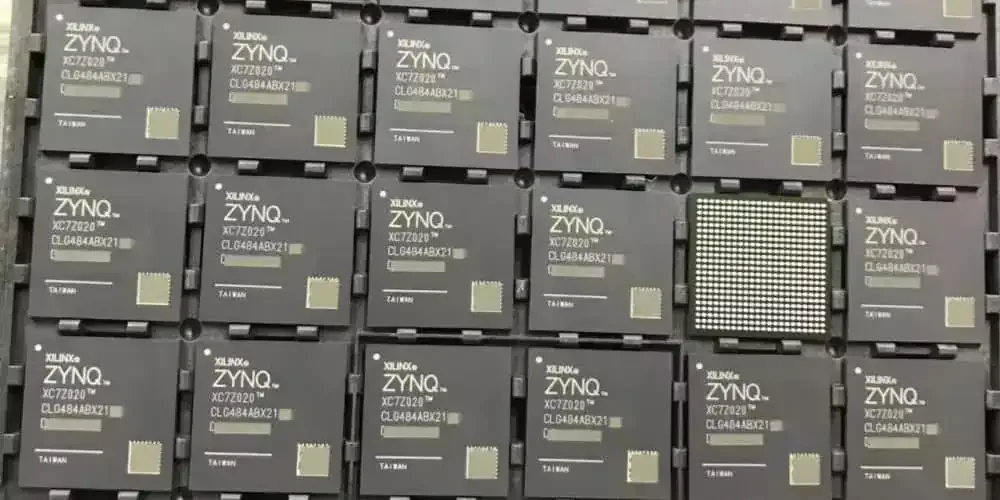
Define the product boundary and its mission
Identify what the electronic unit does, where it is installed and what it connects to. Record supply, external wiring, mechanical mounting and relevant operating conditions through the program's controlled requirements. Avoid assuming that every automotive unit faces the same temperature, vibration or electrical exposure.
Distinguish normal function from relevant fault behavior and service states. Name the system owner responsible for each requirement. A board designer should not have to infer vehicle-level behavior from a component application diagram or a general request for automotive quality.
Separate the delivered object from the complete product. The supplier may manufacture a bare PCB, assemble a customer design or deliver an agreed tested subassembly. State what remains with the product team, including any vehicle integration, regulatory or functional-safety process applicable to the program.
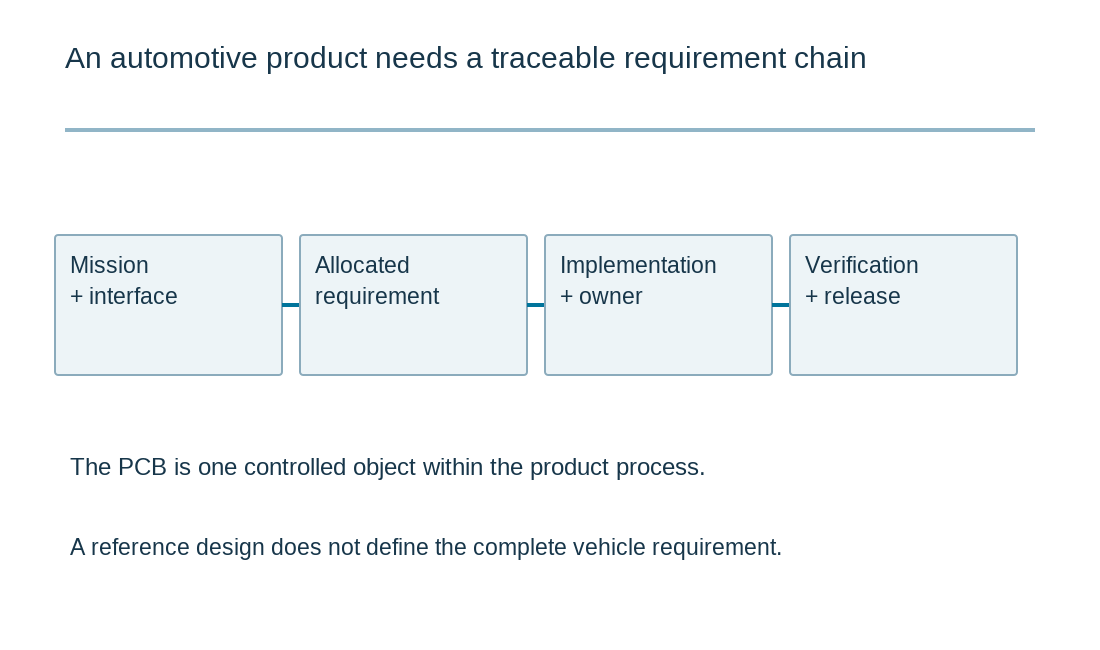
Allocate requirements to interfaces that can be reviewed
Create an interface record for sensors, communication, actuators, power and service access. For each, identify the electrical meaning, data or timing expectation, relevant power states and responsible implementation. Keep connector assignment and protocol interpretation synchronized with the hardware revision.
The automotive sensor-conditioning guide develops normal-range and fault-boundary questions at an analog input. Other interfaces require their own exact device and system documents. A common connector or signal name does not establish interchangeable behavior.
Allocate verification at the same time as implementation. A requirement without an observable method or responsible owner can survive many design reviews without being resolved. Identify whether evidence comes from analysis, component documentation, board testing or integrated-product evaluation, and retain its limits.
| Review item | What to establish |
|---|---|
| Mission | Function, installation, interfaces, operating conditions and responsible system owner. |
| Allocation | Requirement-to-hardware/software/interface mapping and verification method. |
| Qualification scope | Component, board, assembly and product evidence kept distinct. |
| Configuration | Normal/fault/recovery behavior tied to controlled hardware and firmware. |
| Release discussion | Actual files, delivery object, critical characteristics and open decisions. |
Automotive requirement evidence review
Automotive requirement evidence review
Use the current inputs and keep the assumptions
Load the example to see the units and record format, then clear it before entering your own revision. Example values are illustrative and do not select components or establish acceptance limits. Every field needs an intentional value; a blank number is not treated as zero. For CSV input, retain the header and put one item on each row. Quoted cells can contain commas, but duplicate headers and malformed rows are rejected.
Generate a result only after checking the measurement boundary, operating condition and units. Editing an input invalidates the old result and disables its download until you calculate again. An edited example stays labeled as an example. The report is created locally; it does not upload a design, send an enquiry or populate the Contact form. Attach it manually if it helps explain a requirement. You can contact RAYPCB without completing the tool.
| Input | What to establish before using it |
|---|---|
| Review reference | Use a nonconfidential revision label. |
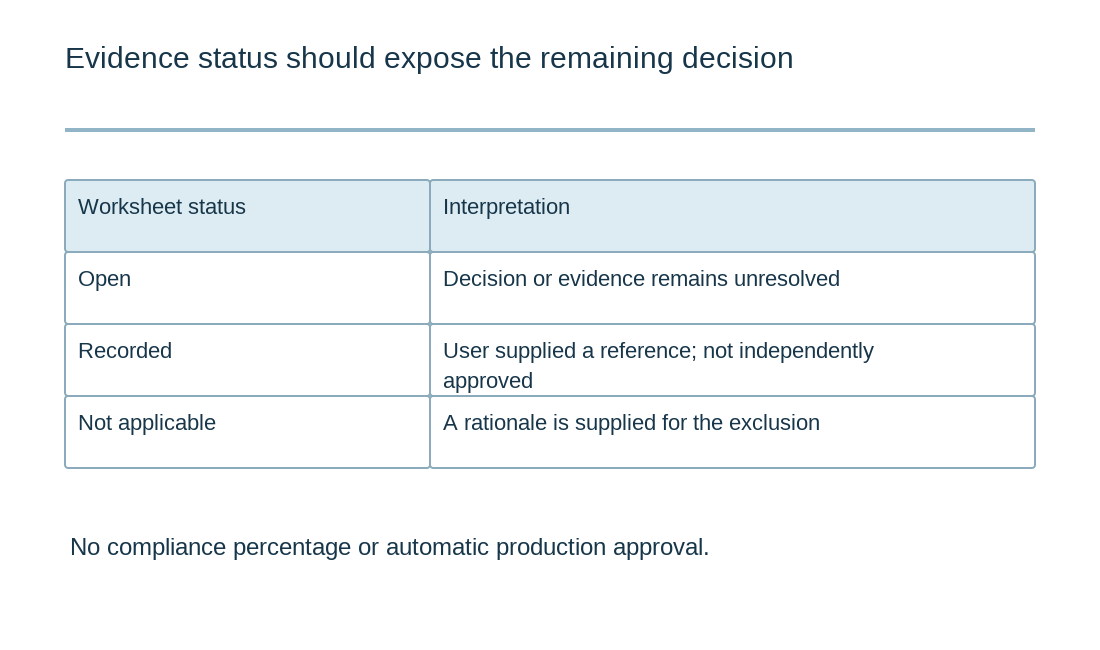
| Review record · CSV | Statuses: Open, Recorded, Not applicable. Recorded needs an evidence reference; Not applicable needs a reason. Entries are self-reported, not compliance approval. |
Keep different kinds of qualification separate
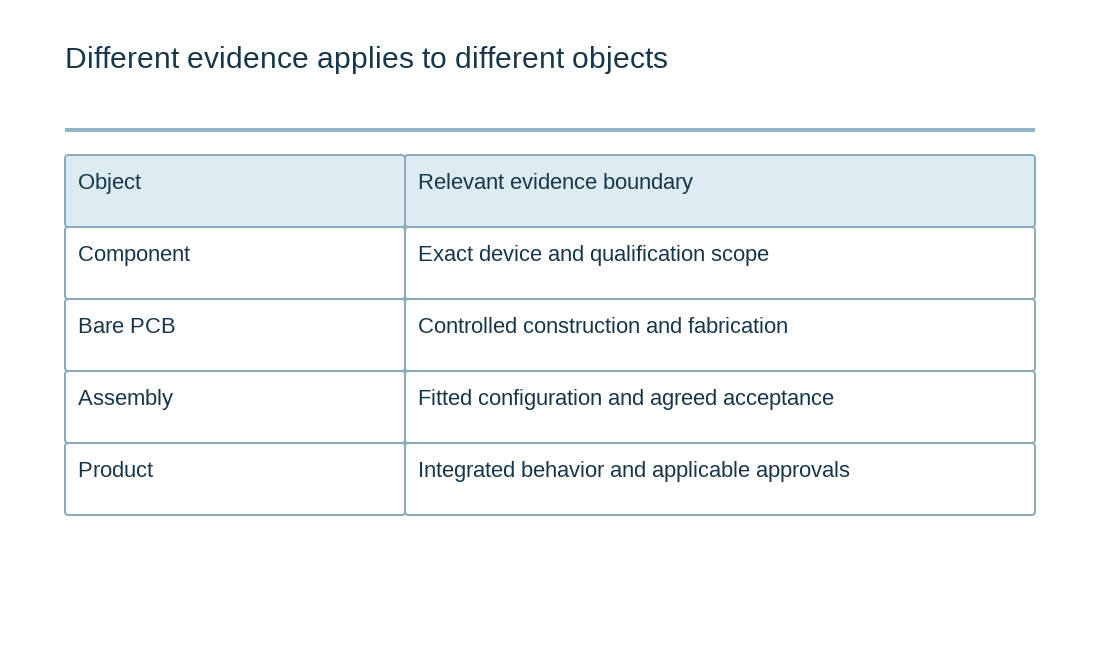
Component qualification concerns the exact device and its stated scope. PCB construction and assembly acceptance concern different objects. Product validation and any required system approval add further responsibilities. None should be substituted for another merely because all are discussed under automotive quality.
The automotive-grade component guide helps review exact orderable parts and supplier support. A qualified IC does not qualify the entire board, and a workmanship inspection does not validate the unit's behavior in its intended vehicle installation.
Record the evidence required by the program rather than adding every standard acronym to a sales list. Use the actual revisions and applicable scope through the controlled agreement. Where a licensed standard or customer requirement governs detailed criteria, this public planning page cannot reproduce or replace the complete controlled process.
Review normal, degraded and recovery behavior together
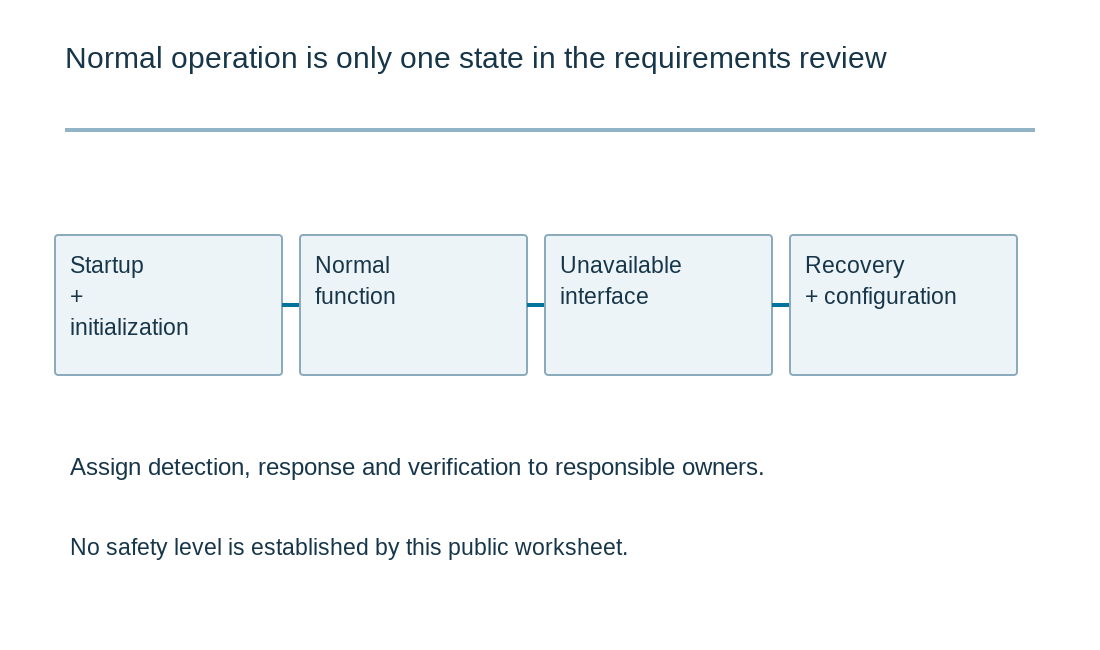
Define the product's expected state during startup, reset, unavailable inputs, communication interruption and relevant supply conditions. Distinguish detection, continued operation and recovery. A diagnostic indication can report an abnormal observation without establishing its unique cause.
Keep any independently required protective functions under the appropriate qualified design process. Ordinary firmware logic, a watchdog or redundant-looking circuit is not by itself evidence of a safety classification. The board release should describe its assigned responsibility without making unsupported system-level claims.
Changes to firmware and hardware can interact at these boundaries. A new input filter may change response timing; a different memory or processor revision may change startup or update behavior. Preserve a configuration that connects the requirements, implementation and verification evidence.
Select construction from the actual mission
Material and stackup decisions should follow electrical, thermal, mechanical and manufacturing needs. A higher glass-transition temperature alone does not establish suitability for every vehicle environment. RF loss, expansion, moisture-related behavior and the finished construction may matter differently for different functions.
Use the automotive circuit-material guide to organize exact material, foil and method information. Keep supplier proposals tied to the controlled construction and approval conditions. An alternative with a similar marketing description may still require a design and verification review.
Make the fabrication and assembly requirements readable to the supplier. Identify critical characteristics and the records needed to support acceptance. Avoid relying on a broad automotive label to communicate details that should be on a drawing, BOM or test specification.
Use the evidence register to expose decisions, not score compliance
The worksheet accepts a requirement, status and reference for each item. Open means a decision or evidence remains unresolved. Recorded means a reference was supplied, not that the tool verified it. Not applicable requires a stated reason. The tool deliberately does not convert these labels into a compliance percentage.
Review open items by consequence and dependency. Some can remain open while a prototype is built for a specific test; others may prevent a meaningful quotation or safe integration. The responsible team should make that distinction through its controlled process and record the scope of any allowed prototype activity.
For a RAYPCB enquiry, provide current manufacturing files, quantity, delivery scope and the relevant evidence requirements. Include the specific unresolved interface or construction question. This supports a quotation and review tied to the actual program, while keeping product validation and approval responsibilities with their defined owners.
Tie the evidence to the actual vehicle installation
A component label cannot define the mission of the assembled electronics. Record the mounting location, temperature exposure, supply behavior, external wiring and service life assumptions used in the project. Keep device qualification information separate from PCB construction, assembly acceptance and the product-level verification plan.
Ask for evidence on the exact orderable part, material construction and revision being considered. A similar family name or typical application diagram is not a substitute. When a requirement changes, identify which circuit, layout, test and approval record must be revisited. Public worksheets can clarify arithmetic or missing information; they cannot declare automotive compliance, establish a functional-safety level or replace the customer's controlled validation process. A useful enquiry states the required evidence and which party owns each unresolved requirement.
Standards, source context and limits
Use the exact device, system and material documents relevant to the released design. A public reference design demonstrates a particular implementation under its stated conditions; changing its parts, layout, enclosure or firmware creates a different verification task. Standards summaries here identify the type of evidence to request, not every clause of a licensed standard. Component qualification, board workmanship, product validation and regulatory acceptance are separate decisions.
For fabrication scope and the agreed construction requirements, see PCB manufacturing.