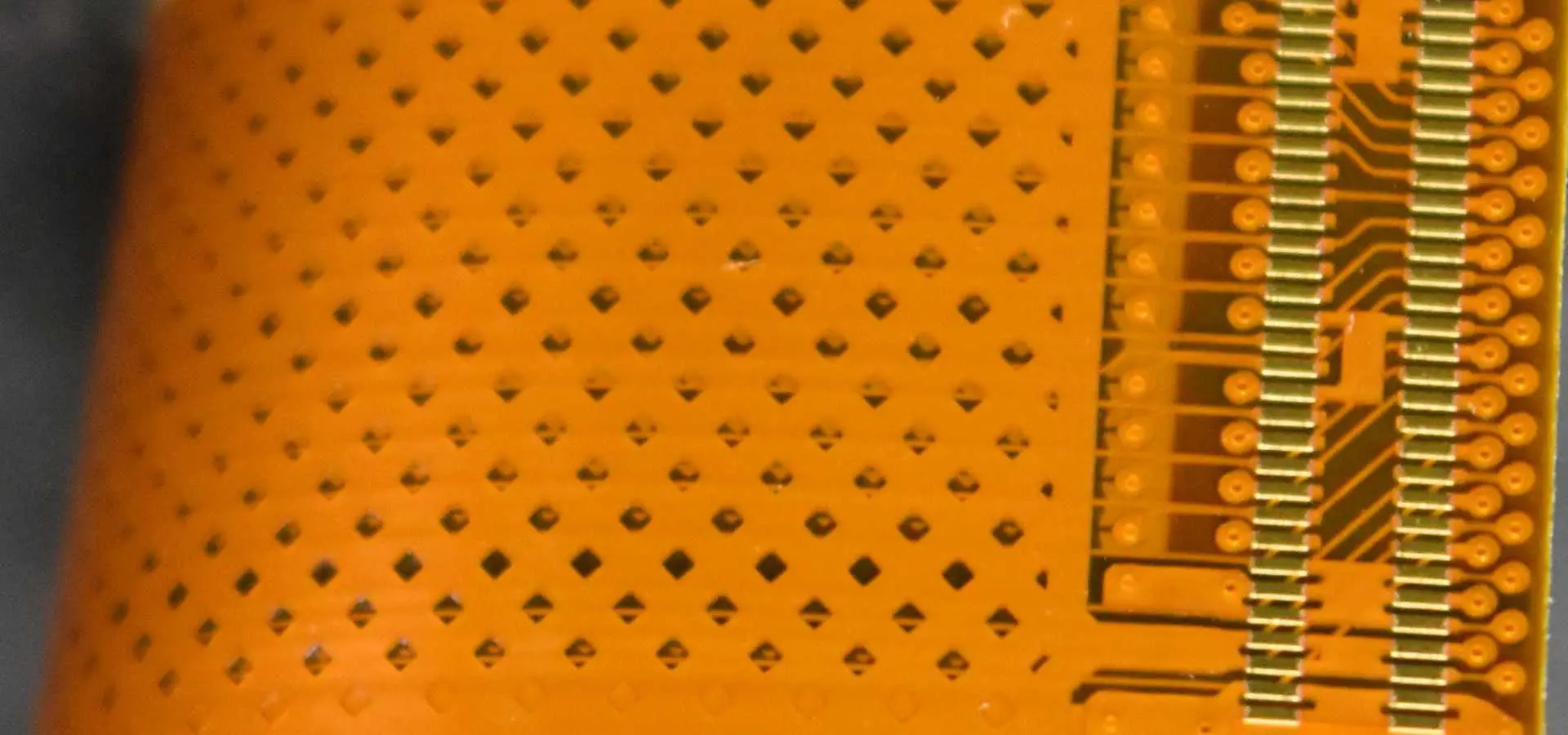
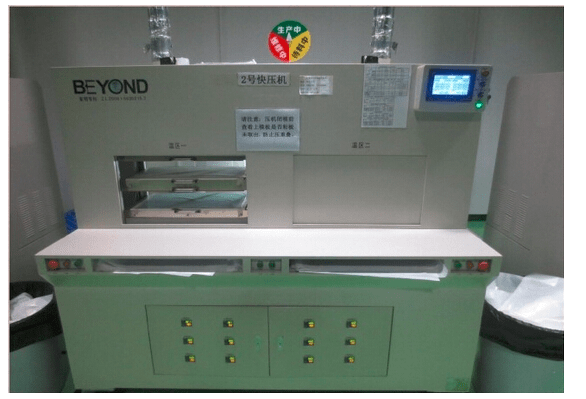
How are Circuit Boards Made ?

pcb manufacturing machines

Introduction

Printed circuit boards (PCBs) form the foundation of electronics, providing the mechanical structure and electrical connections for components. The manufacturing process to transform raw materials into completed circuit boards is complex, requiring dozens of steps with specialized equipment.

This article provides a comprehensive overview of PCB fabrication including:

  • Raw PCB materials like laminates, prepregs, foils and coatings
  • Major fabrication steps for double-sided and multilayer boards
  • Drilling processes for through holes and vias
  • Conductive plating operations
  • Imaging and etching of circuit traces
  • Layer alignment and lamination methods
  • Final finishing processes
  • PCB assembly and population with components
  • Quality inspection and test procedures
  • Recent advances in fabrication technologies
  • Comparison between prototype, low volume and mass production
  • Examples of real-world PCBs and their construction

By understanding the sequences and options for manufacturing, electrical engineers can design optimized boards and collaborate effectively with fabrication partners.

Raw Materials for Constructing PCBs
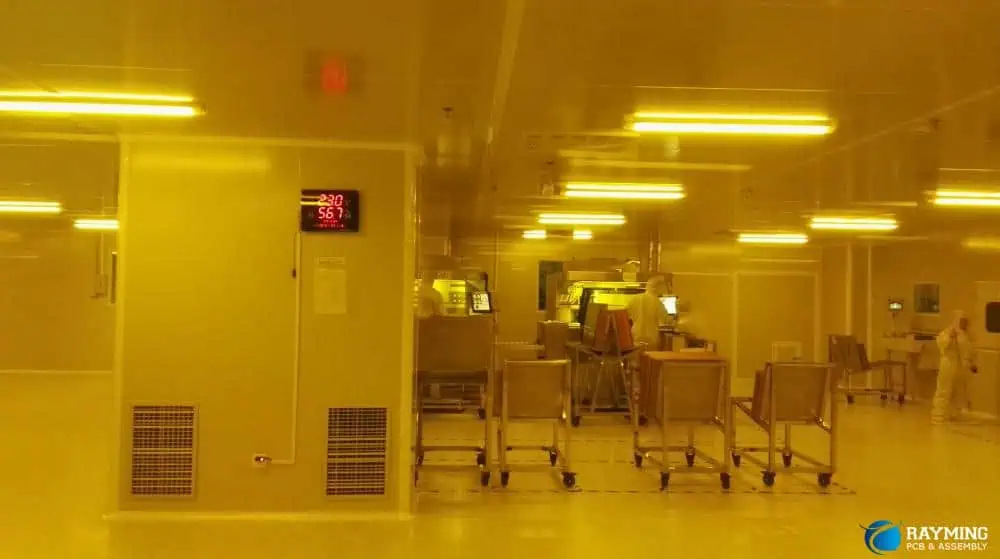
circuit board manufacturing

A typical PCB comprises various specialized raw materials:

Substrate – The core dielectric material forms the main board layers. Common options:

  • Woven fiberglass reinforced epoxy resin (FR-4)
  • Ceramic-filled PTFE composites for high frequencies (Rogers RO3003)
  • Cyanate ester or polyimide for high temperature (Panasonic TR-77)

Prepreg – Fiberglass fabric impregnated with partially cured epoxy. Bonds layers together under heat and pressure.

Metal Foil – Thin copper foil that is patterned into conductive traces and pads. Standard thicknesses range from 0.5 oz (17 ฮผm) to 3 oz (105 ฮผm).

Coatings – Protective layers such as solder mask, silkscreen, and plating finishes.

Bonding Film – Adhesives used in multilayer press lamination processes.

Via Fill – Plating resins or conductive pastes to plug vias in high density interconnect boards.

These raw PCB materials are fabricated together using specialized equipment and processes.

PCB Fabrication Process Overview

PCB manufacturing involves three main phases:

1. Circuit Imaging

  • The conductive pattern of traces, pads and features are formed on each individual board layer

2. Layer Alignment and Lamination

  • Individual layers are precisely aligned and bonded together into a multilayer board

3. Final Finishing

  • Protective coatings are applied and the board edges finished

Dozens of individual steps are required within each phase during PCB fabrication. These generally fall into several broad categories:

  • Imaging – transferring the circuit layout onto each layer
  • Etching – selectively removing copper to form the circuit traces
  • Drilling – creating holes for electrical connectivity between layers
  • Plating – electroplating boards to build up conductive traces
  • Bonding – laminating together the stack of circuitized layers
  • Coatings – applying solder mask, legend, markings
  • Finishing – trimming, beveling, testing finished boards

We will now examine each of these operations in greater detail.

Imaging the Circuit Layout onto Layers

The first step in fabricating a circuit board is transferring the layout artwork onto each individual layer. This is accomplished using photographic imaging processes.

Photoresist Application

  • Photosensitive epoxy coating spread across copper surfaces
  • Adheres where cured, rinsed away where exposed

Imaging

  • Mask or direct laser light transfers layout pattern
  • Light either cures or degrades photoresist

Developing

  • Uncured photoresist rinsed off with developer chemical
  • Leaving behind circuit trace pattern in cured photoresist

Repeating this imaging process transfers the layout onto the copper layers. Next, etching forms the conductors.

Etching to Form Circuit Traces
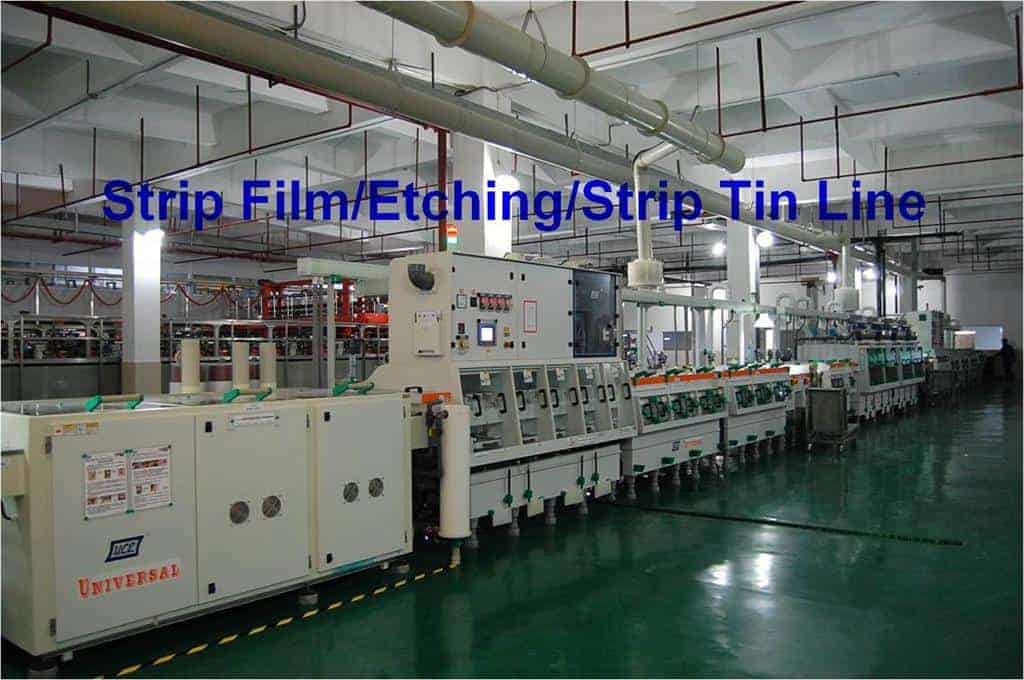
Strip film etching line

With the photoresist imaging complete, the exposed copper is chemically etched away to form the conductive circuit traces and features.

Etchant Chemicals

  • Usually cupric chloride or ammonium persulfate solutions
  • Dissolve exposed copper but do not attack cured photoresist or substrate

Etching Process

  • Boards submerged in etchant baths or sprayed
  • Solution dissolves away exposed copper not protected by resist
  • Leaves behind circuit pattern where resist remains

Photoresist Stripping

  • Once etching completes, leftover photoresist is removed
  • Usually washed off with hot caustic stripper solution

Etching therefore converts the imaging step into the physical conductive copper traces that form the circuitry.

Drilling Holes for Interlayer Connectivity

Holes drilled through the PCB layers provide electrical connectivity between traces on different layers. These are known as through holes or vias.

Mechanical Drilling

  • Computer numerical control (CNC) drill machines
  • High spindle speeds with small diameter drill bits
  • Achieves moderate throughput on standard boards

Laser Drilling

  • Pulsed UV lasers vapourize material in precise locations
  • Allows high density microvias down to 0.005โ€ diameter or less
  • Used on complex multilayer boards

Plasma Etching

  • Ionized gas plasma ablates material in circuit boards
  • Enables extremely small microvia diameters down to 0.002โ€
  • Reserved for most advanced HDI boards

The density of interconnections depends on the drilling and via formation capabilities.

Conductive Plating Processes

To form a continuous electrical connection through drilled holes and form durable conductive traces, boards are plated with copper and other metals.

Electroless Plating

  • Auto-catalytic chemical deposition process
  • Coats surfaces uniformly without electric current
  • Provides initial thin copper layer (~0.1 mil)

Electrolytic Plating

  • Thicker copper plated on top of electroless layer
  • Uses electrical current to deposit up to 2 oz copper in holes/traces

Surface Finishing

  • Coatings like ENIG (electroless nickel immersion gold)
  • Provide solderability, corrosion resistance, contact surfaces

Plating deposits the conductive metal that carries signals across the finished boards.

Layer Alignment and Lamination

multilayer pcb stackup

To produce multilayer boards, individual internal and external circuitized layers are precisely aligned and fused together into the final board stackup.

Layer Alignment

  • Optical recognition systems align layers
  • Target registration accuracy under 0.003โ€
  • Minimizes misalignment between layers

Lamination

  • Aligned stack pressed under heat and pressure
  • Melts dielectric prepreg materials to fuse together
  • Bonds layers into solid multilayer board

Via Hole Plugging

  • Prepregs flow to fill via holes during lamination
  • Forms pad on each layer interconnected through hole

Careful alignment and lamination ensures reliable interconnections between the many layers.

Final PCB Finishing Steps

To complete board fabrication, various finishing operations are performed:

Solder Mask Application

  • Liquid photoimageable coatings cover surface
  • Provides solder bridges prevention and insulation

Silkscreen Legending

  • Prints markings for components, logos, identifiers
  • Improves appearance and aids manufacturing

Surface Finishes

  • Coatings like ENIG, immersion tin or silver provides solderability
  • OSP (organic solderability preservative) protects during storage

Edge Trimming

  • Routers cut boards from panel edges
  • High tolerance dimensional trimming

Electrical Testing

  • In-circuit test (ICT) fixtures validate board assembly
  • Confirms functioning before population

These finishing steps conclude the bare board fabrication process.

PCB Assembly and Component Population

To form a functional printed circuit board assembly (PCBA), electronic components must be added to the bare board through insertion and soldering:

Screen Printing Solder Paste

  • Solder paste deposited on pad areas
  • Forms temporary adhesive to hold components

Pick and Place Assembly

  • Robotic placement systems position components precisely onto paste
  • Accurately orients parts with great speed and repeatability

Reflow Soldering

  • Heat melts solder paste to form permanent solder joints
  • Stationary or conveyor ovens with heat profiles
  • Alternative soldering methods exist (e.g. wave, drag)

Inspection and Test

  • Optical and x-ray inspection of assemblies
  • ICT fixtures confirm component placement and solder joints
  • Validates part correctness and orientation
  • Functionally tests populated board

This transforms the bare PCB into a functional electronic circuit assembly.

PCB Prototype vs. Production Comparison
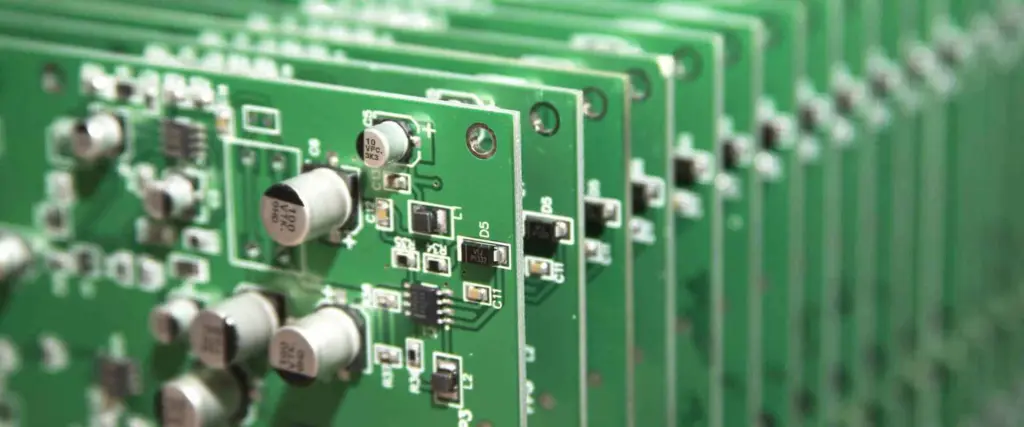
PCB prototype assembly suppliers

Fabricating one-off prototypes differs substantially from volume production:

MetricPrototype PCBVolume Production PCB
ProcessLow volume linesDedicated mass production
MaterialsSmall sheetsLarge panel sizes
EquipmentLower throughputFaster, automated
TestingBasic electricalFull ICT and functional test
AccuracyLooser tolerancesTighter tolerances
Lead Time5-10 days4+ weeks
Cost per boardHighLow

In summary, prototypes prioritize fast turnaround while volume production maximizes efficiency and consistency.

Recent Advances in PCB Fabrication

Ongoing advances provide more capabilities:

HDI Technology

  • Laser drilled microvias combined with thin dielectrics and trace widths enable further miniaturization

3D Printing

  • Additive processes fabricate multilayer boards from liquid Polymers and inks
  • Enables greater design freedom

Embedded Components

  • Passive components inserted into inner layers
  • Saves space and simplifies assembly

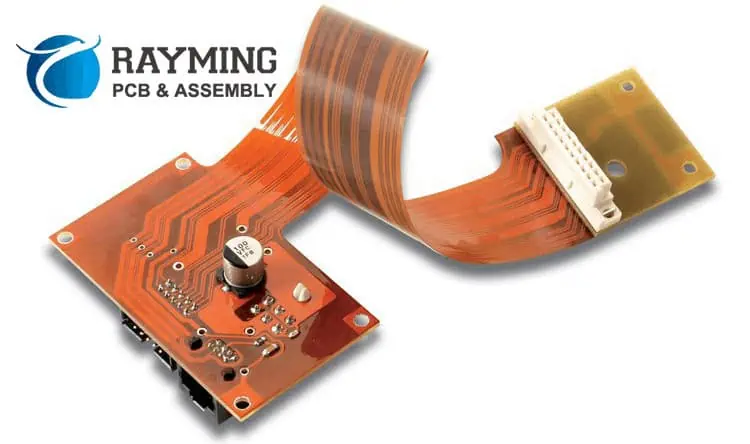
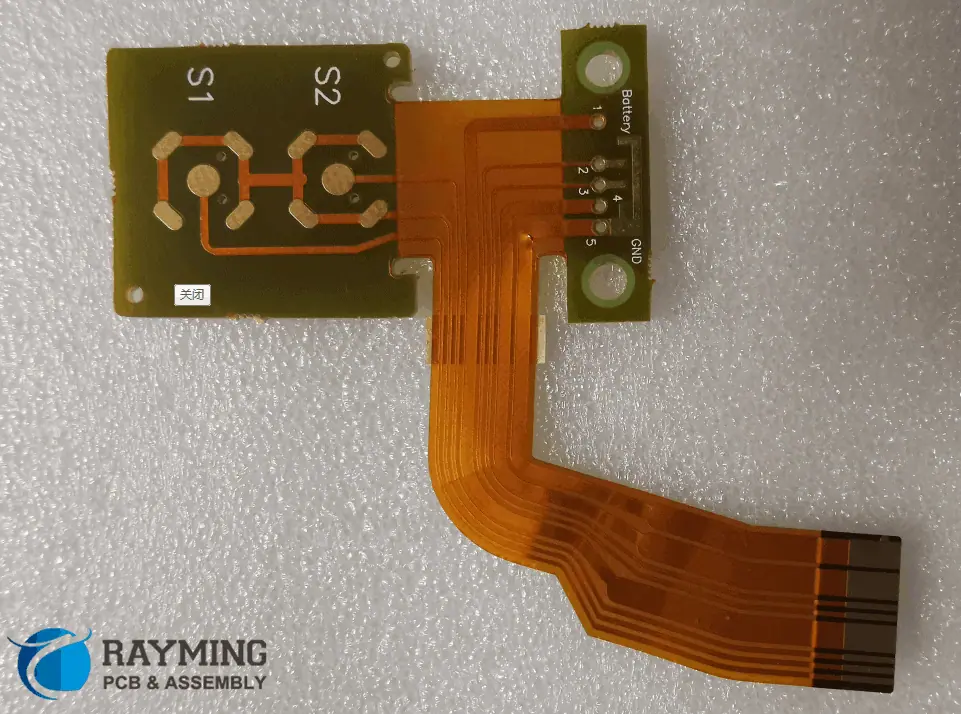
Flex/Rigid Flex

  • Combines flexible polyimide films with standard laminate layers
  • Foldable and shapeable boards

Board on Chip

  • Entire PCBs fabricated directly onto silicon through semiconductor processes
  • Ultimate space savings

Real-World PCB Fabrication Examples

Here are some examples highlighting the manufacturing processes:

6-Layer Server Motherboard

  • Glass-epoxy FR-4 laminate multilayer
  • ~0.062โ€ thick
  • Mechanical through-hole drilling
  • Plated copper traces and barrel-plated through holes
  • LPI solder mask and silkscreen
  • Lead-free HASL surface finish
  • Wave soldering for mass assembly

16-Layer HDI Telecom Switch PCB

  • High frequency PTFE-ceramic composite material
  • Complex layer stackup with >150 um line widths/spaces
  • Blinds and buried vias ablated by UV laser
  • Copper electroplating to fill microvias and traces
  • Stencil printed solder paste and SMT assembly
  • Functional test and boundary scan

Flexible Wearable Health Tracker

  • Flex-rigid construction combining polyimide and FR-4
  • Flex section bends to contour body
  • Adhesiveless lamination for flex layer bonding
  • Plasma etching forms microvias in flex layers
  • LDS laser activation for polymer plating
  • Inkjet solder mask deposition
  • ENIG finish, 01005 passives, micro-BGA packages

These case studies showcase the broad range of PCB manufacturing techniques tailored to meet diverse product needs.

Frequently Asked Questions

Here are some common questions surrounding PCB fabrication:

Q: What are the key differences between double-sided vs multilayer PCB construction?

Double-sided boards involve only a single substrate laminated on both sides with copper foil. Multilayer boards fuse together several laminate and prepreg layers for interlayer connectivity.

Q: How many drill bits are used to drill the holes in multilayer PCBs?

A large multilayer board might utilize 50-100 or more progressively larger bit sizes to sequentially increase each hole diameter from the starting drill through to the final size.

Q: What are common defects found during post-etch inspection?

Potential defects include underetching, overetching, nicks, scoring, pinholes, presence of debris, incomplete curing, and photoresist adhesion problems.

Q: What is the function of solder mask on the surface of PCBs?

Solder mask serves as a protective coating preventing solder bridges, providing insulation, and guarding against environmental corrosion and dendrite growth during operation.

Q: How accurate is layer-to-layer alignment in multilayer boards?

Alignment accuracy during lamination is generally around 0.003โ€ for standard density boards. Even greater precision below 0.001โ€ is achievable with advanced processes.

Conclusion

Printed circuit board manufacturing integrates an enormous range of chemical, mechanical and electrical processes spanning fabrication, assembly and test. By understanding the sequences required to transform raw materials into fully functional PCBs populated with components, engineers can optimally design boards for these manufacturing processes. A strong comprehension of PCB fabrication technologies enables effective collaboration throughout the electronics product development cycle.
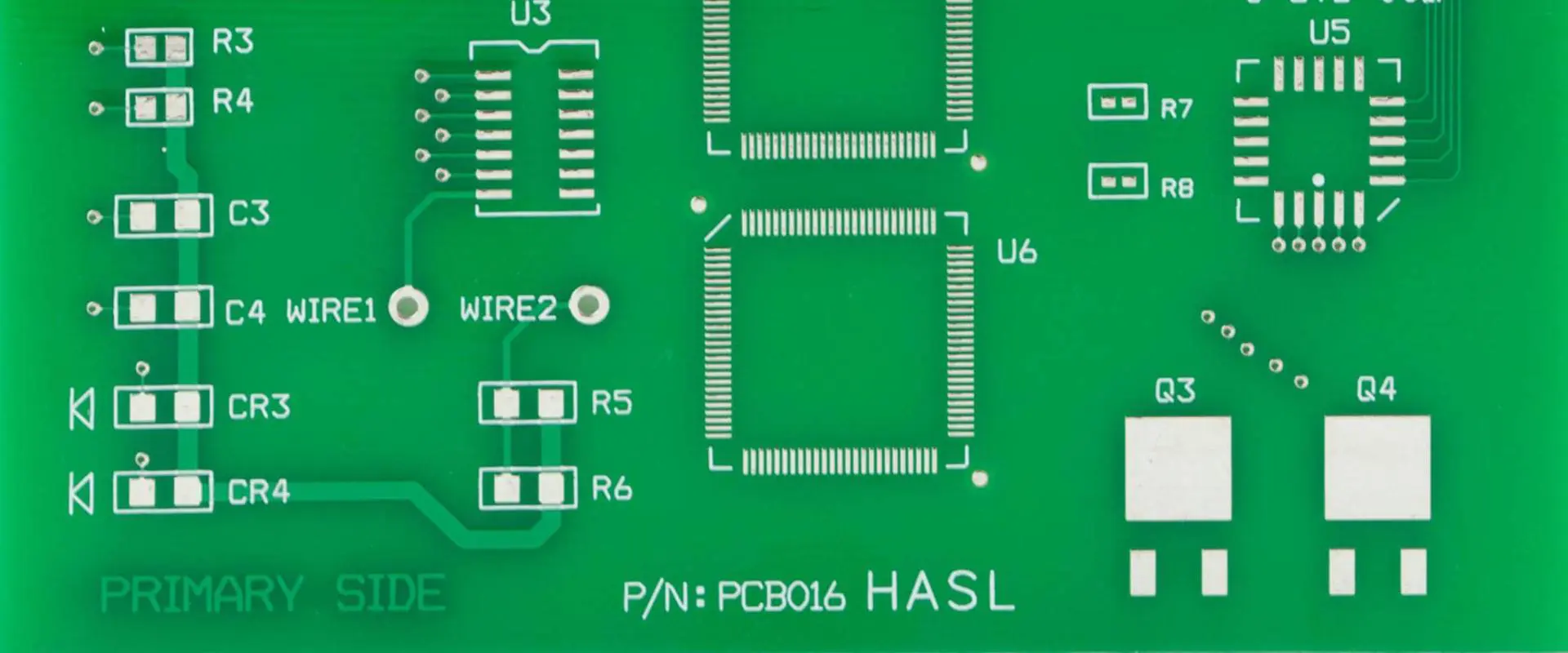
The Difference and Role of PCB Paste Mask and Solder Mask

PCB hot air solder leveling

Introduction

Printed circuit boards integrate a wide array of materials and coatings beyond just traces and laminates. Two of the most important additional PCB layers are paste mask and solder mask. While their names sound similar, these materials serve distinct roles in the PCB fabrication and assembly processes.

This article provides an in-depth look at PCB paste mask and solder mask including:

  • The composition and properties of each material type
  • Key differences between paste mask and solder mask
  • The roles and purposes they serve in PCB manufacturing
  • Typical application and patterning methods
  • New developments in these materials
  • Examples illustrating paste mask and solder mask usage
  • Guidelines for designing and applying these layers
  • Common defects to avoid
  • FAQs about these critical PCB coatings

Developing a strong understanding of paste mask and solder mask enables electrical engineers to apply them optimally during design and production to improve manufacturing yields, long-term reliability and product quality.

PCB Paste Mask Overview

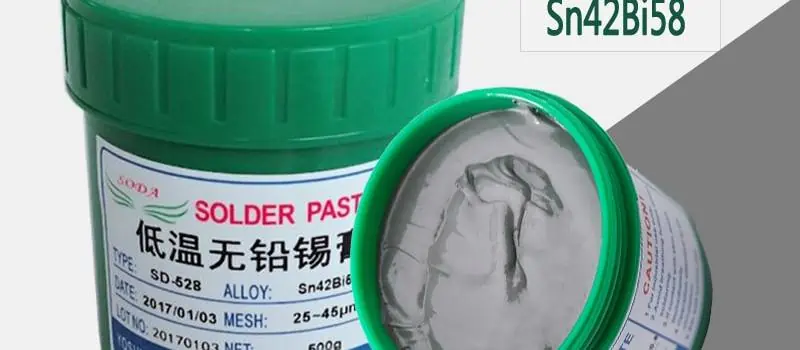
Low Temperature Solder Paste

Paste mask, also referred to as solder paste mask or solder resist, is a temporary coating used during the SMT assembly process to facilitate solder paste application. Key properties include:

Composition

  • Polymer materials like epoxy or acrylic resins
  • Solvent carriers for deposition
  • Filler particles for rheology

Key Characteristics

  • Excellent solder paste release and wetting
  • Solder bleed resistance during reflow
  • Easy stripping and cleaning after soldering

Patterning Methods

  • Liquid photoimageable mask exposed via lithography
  • Laser direct imaging of dry film masks
  • Screen printing of liquid masks

Paste masks provide a low-cost, processing-friendly material optimized for the demands of high-yield SMT manufacturing.

Solder Mask Overview

Solder mask serves as a permanent protective coating on PCBs. Typical properties:

Composition

  • Epoxy or acrylic polymers for adhesion, toughness
  • Solvents carriers to enable coating
  • Fillers like silica for rheological properties

Key Characteristics

  • Electrical insulation and corrosion resistance
  • Repairability and chemical compatibility
  • Soldering heat resistance
  • Color options from green to black to white

Patterning Methods

  • Liquid photoimageable solder mask is dominant
  • Also dry film laminates and screen printed masks

Solder masks safeguard PCBs throughout long-term use across demanding operating environments.

Key Differences Between Paste Mask and Solder Mask

Solder paste stencil frame

While both materials facilitate soldering, there are significant differences:

ParameterPaste MaskSolder Mask
PurposeDefine solder paste regionsLong-term protective coating
LocationsOnly on pads/landsAcross conductors and board surface
Typical MaterialsWater soluble epoxiesSolvent resistant epoxies
Deposition MethodLamination, screen printingLiquid coating, curtain coating
Patterning ProcessPhoto, laser imagingPhotoimaging
Soldering Process RoleConfine pasteProtect underlying features
After SolderingRemoved by cleaningRemains as permanent coating
Reliability ConsiderationsMinimize solder ballsWithstand environment; prevent corrosion and dendrites

These distinct roles mandate different material properties and processes for optimal results.

The Role and Purpose of PCB Paste Mask

Paste masks provide several key functions:

Defines Solder Paste Regions

  • Mask openings expose pads for paste printing
  • Eliminates solder beads between pads

Facilitates Consistent Paste Deposit

  • Apertures act as stencil for uniform paste release
  • First article inspection confirms coverage

Confines Paste During Reflow

  • Prevents solder spreading across board
  • Reduces bridging and solder balls

Enables Solder Paste Recovery

  • Easily wipe and clean after reflow
  • Retrieving unused paste minimizes waste

Protects Board During Soldering

  • Mask prevents solder adhering where unwanted
  • Guards against pad etching or lifting during reflow process

Thoughtful paste mask design is crucial for defect-free SMT assembly.

Solder Mask Key Roles and Functions

Conversely, solder masks provide long-term protection:

Electrical Insulation

  • Isolates conductors from unintended connections
  • Prevents short circuits across board surface

Corrosion Resistance

  • Barrier against environmental contaminants
  • Guards against tin whiskers, dendritic growth

Mechanical Protection

  • Cushions board against impacts
  • Stabilizes conductors against vibration loads

Soldering Heat Resistance

  • Withstands repeated soldering and desoldering
  • Prevents pad lifting or separation

Marking

  • Mask color contrasts with metal
  • Allows component designators and identifiers

Aesthetics

  • Color coats board
  • Branding or camouflage options

Robust solder masks are integral for PCB durability across product lifetimes.

Typical Paste Mask Application and Patterning

Applying paste mask requires compatible processes:

Liquid Photoimageable Mask

  • Mask deposited by curtain coating
  • Dried then exposed through lithography artwork
  • Developed to reveal solder paste regions

Laser Direct Imaging (LDI)

  • Dry film laminate applied
  • Laser scans image directly based on CAD
  • Etchant dissolves exposed mask

Screen Printing

  • Screens transfer mask material
  • Print, dry, clean, inspect steps
  • Well-suited for high volume

Tenting Vias

  • Mask coats over vias
  • Prevents solder wicking into holes

Automated optical inspection after patterning validates paste mask registration and expected openings.

Typical Solder Mask Application and Patterning

Solder mask requires similar steps:

Liquid Photoimageable Mask

  • Deposited by curtain coating
  • Dried then exposed through artwork
  • Developed then cured at elevated temperature

Laser Direct Imaging (LDI)

  • Same dry film process but with different dedicated material
  • Laser defined openings based on CAD data

Screen Printing

  • Screens transfer solder mask ink
  • Used for high volume or simple boards

Covering Copper

  • Mask coats over remaining exposed copper
  • Windows opened over connectors, testpoints etc.

The solder mask process is refined for smooth, complete coverage and adhesion.

Recent Advances in Paste Masks and Solder Masks

Developments in materials and processing aim to enhance performance:

Laser Ablatable Solder Masks

  • Excimer laser removes mask in precise locations
  • No additional coating/imaging steps

Flexible Solder Masks

  • Withstand repeated bending and flexing motions
  • Enable flexible PCBs

Reworkable Masks

  • Designed for selective removal
  • Replace components without full mask strip

Thermally Conductive Masks

  • Filled epoxies dissipate heat
  • Aid thermal management

Hydrophobic Masks

  • Repel water, moisture and fluids
  • Improve reliability

High Aspect Ratio Masks

  • Allow coating high topography and cavities
  • Protect complex surface mount parts

Electrically Insulating Anisotropic Pastes

  • Prevent solder bridging
  • Redirects current flow from paste

Innovation continues expanding capabilities.

Paste Mask Design Guidelines

To maximize manufacturing yield and quality solder joints, engineers should:

  • Provide sufficient registration margins between paste mask and pads
  • Account for potential mask misalignment and smearing
  • Surround pads with mask to limit solder spreading
  • Tent vias to prevent solder wicking
  • Include generous fillets spacing pads
  • Keep openings large enough for even paste release
  • Follow manufacturer design rules for minimum apertures
  • Verify adequate paste opening coverage through inspection
  • Test stripability to avoid pad lifting

Thoughtful paste mask layout prevents defects for optimized SMT assembly.

Solder Mask Design Guidelines

For robust solder mask performance:

  • Maintain adequate overlap over traces and spacing from pads
  • Account for misalignment margins in design rules
  • Include generous fillets spacing between traces
  • Surround exposed copper with mask to prevent oxidation
  • Cover all unused board surface area
  • Mask bottom side if components mounted on both sides
  • Leave openings only where required like connectors
  • Follow minimum trace/space rules for coating coverage
  • Test final adhesion, hardness, and dielectric strength

Careful solder mask design ensures complete insulation and protection.

Common Paste Mask Defects

Some potential paste mask flaws to avoid:

Misalignment

  • Apertures shift from pads
  • Causes missing or blocked solder paste deposition

Undersized Openings

Smearing

  • Mask material partially covers pads
  • Hinders solder wetting and adhesion

Delamination

  • Mask lifts from board during soldering
  • Allows solder leaching under mask

Poor Strippability

  • Mask leaves residue after cleaning
  • Contaminates pads prior to next process steps

Following design guidelines and inspection helps prevent defects.

Common Solder Mask Defects

And some potential solder mask flaws:

Insufficient Overlap

  • Exposes copper traces to corrosion and contamination

Excessive Spacing

  • Allows solder to bridge between features
  • Reduces insulation resistance

Misalignment

  • Opens up keepout regions to solder leaching

Voids

  • Creates uncoated regions without insulation
  • Allows traces to lift during soldering

Cracking or Peeling

  • Permits moisture ingress degrading insulation

Discoloration

  • Aesthetic issue suggesting material degradation

Proper process controlsCoupled with design rule checks minimizes defects.

Paste Mask and Solder Mask Example Applications

Here are some examples highlighting use cases:

Sensors Product

  • Epoxy-based black solder mask provides electrical insulation and water resistance for reliability
  • Acrylic paste mask on pads prevents solder bridging between fine pitch leads

Automotive Control Module

  • High temperature solder mask withstands heat cycling in engine bay
  • LPI paste printing on top side opens pads for component placement

HDI Telecom PCB

  • Photoimageable solder mask coats 6 mil traces spacing microvias
  • Tented vias prevent solder wicking into holes

Large LED Video Display

  • Screen printed solder mask quickly coats boards in high volume
  • matching black paste mask provides cosmetic surface

Medical Diagnostic Kit

  • Flexible, biocompatible solder mask enables repeated bending
  • Water-soluble paste mask simplifies post-reflow cleaning

Proper selection and integration secures performance.

Frequently Asked Questions

Here are some common questions regarding solder mask and paste mask:

Q: What are some typical minimum clearance gaps for paste mask apertures?

A minimum 2-3 mil overlap onto pads or clearance between openings is typical. High tolerance processes allow smaller 1-2 mil gaps.

Q: How do you determine the right solder mask overlap over traces?

The overlap margin is dictated by design rules, with 3-5 mils typical. Mask misalignment tolerance must also be considered.

Q: What are key parameters used to specify solder mask properties?

Adhesion strength, dielectric breakdown voltage, surface insulation resistance, thermal conductivity, and flammability are typical specifications.

Q: What are some methods to improve solder mask adhesion?

Surface treatments, cleanliness, proper curing, thermal cycling testing, choosing compatible mask and substrate materials, and roughening surfaces help adhesion.

Q: How does solder mask color impact manufacturing?

Light backgrounds like white make inspection easier. Dark masks can require longer exposure times and risks lower cure depth.

Conclusion

Although their names sound similar, paste mask and solder mask provide distinct capabilities essential to PCB fabrication and reliability. Leveraging the in-depth overview provided in this article, PCB designers can apply these materials optimally to secure manufacturing yields while enhancing circuit protection, insulation and product lifetimes.

High Thermal Conductivity PCB Material Will Solve The Heat Dissipation Problem

fr4 thermal conductivity

With the development of integration technology and microelectronic packaging technology, the total power density of electronic components is increasing, while the physical dimensions of electronic components and electronic devices are gradually becoming smaller and miniaturized, and the generated heat is rapidly accumulated, leading to integration. The heat flux density around the device is also increasing, so the high temperature environment will definitely affect the performance of electronic components and equipment, which requires a more efficient thermal control scheme. Therefore, the heat dissipation problem of electronic components has evolved into a major focus of current electronic components and electronic device manufacturing.

YouTube video

In response to this situation, engineers have come up with some thermal management strategies: for example, by increasing the thermal conductivity of the PCB (high TC) to improve heat dissipation; focusing on allowing materials and devices to withstand higher operating temperatures (high Thermal Decomposition Temperature) Strategy; need to understand the operating environment and the thermal adaptation of the material to the degree of thermal cycling (low CTE). Another strategy is to use more efficient, lower power or lower loss materials to reduce heat generation.

thick copper pcb

There are three general heat dissipation methods: heat conduction, convection, and radiation heat transfer. Therefore, the commonly used thermal management methods are as follows: whenย designing the circuit board, deliberately increase the thickness of the heat-dissipating copper foil or use a large-area power supply, ground copper foil; use more heat-conducting holes; use metal heat dissipation, including heat sink, local Inlaid copper block. Or in the assembly, add a heat sink to the high-power device, the whole machine is added with a fan; either use thermal conductive adhesive, thermal grease or other thermal conductive material; or use heat pipe cooling, steam cavity radiator, high efficiency radiator.

At present, a new thermal solution has emerged on the market: it is advocated to use high Thermal Decomposition Temperature (TD) and high thermal conductivity (TC) plates for circuit board design. For example, Rayming currently represents ROGERSโ€™s 92ML series laminates. As a global leader in high-frequency circuit materials, Rogersโ€™ high thermal conductivity PCB material 92 ML series has several excellent features, the most notable of which is that the thermal conductivity of rogers 92ML is 4 to 8 times that of standard FR-4 (epoxy).

special pcb

The characteristics of the high thermal conductivity PCB material rogers 92 ML are as follows:

  • Thermal conductivity (Z-axis) is 2W/M.K (ASTM E1461)
  • Glass transition temperature Tg: 160 ยฐC
  • Thermal Decomposition TemperatureTd: 400 ยฐ C (5%)
  • Z-axis thermal expansion coefficient (50-260 ยฐ C): 1.8%
  • UL maximum operating temperature: 150 ยฐ C
  • The same medium thickness withstand voltage is higher, the stability is good, suitable for high power and high pressure design
  • Halogen free
High-Frequency-PCB

Then, compared with the general thermal management plan, where is the Raymingย rogers pcbย 92ML material solution winning?

In standard industrial test methods and models, it is assumed that the material is isotropic and only passes through the thermal conductivity of the plane; planar heat dissipation is usually used to reduce the hot spot temperature and increase the heat transfer throughout the region. The Rayming 92ML solution not only reduces the junction temperature of the device, but also increases the power output by about 15% or higher. Compared to the conventional FR-4, the 92ML can be further reduced by 30 ยฐ C to 35 ยฐ C (depending on the specific design).

It can also reduce the hot spot peak temperature by increasing the Z-axis heat transfer and increasing the thermal diffusion of the X and Y axes. With a 1โ„4 brick DC-DC converter that does not exceed the recommended temperature of the device, it also has a higher power output, and an increase in heat transfer also increases power capacity. Moreover, the rogers 92ML solution has a very strict design for flatness and improves the flatness of the PCB. Its lower Z expansion factor also increases PTH reliability. The 92 ML series is available: prepreg, copper clad, metal substrate (SC92ยฎ); and the test sample has passed the Interconnect Stress Test (IST).

What is Differences Between Fr4 Glassfiber and Aluminum substrate for PCB?

aluminum substrate pcb

Introduction

Printed circuit boards (PCBs) are essential components of modern electronics. A PCB provides mechanical support and electrically connects different components using copper traces etched from copper sheets laminated onto a non-conductive substrate material. The substrate material plays a vital role in determining the performance and characteristics of the PCB. The two most common substrate materials used today are FR4 glass epoxy and aluminum.

FR4 glass epoxy is the ubiquitous substrate material used in the majority of PCBs. However, for certain demanding applications where high performance and thermal management are critical, aluminum substrates are being increasingly adopted.

This article provides a detailed comparison between FR4 and aluminum PCB substrates across various parameters like electrical performance, thermal conductivity, mechanical strength, ease of manufacturing, and cost. Understanding the pros and cons of both materials will help design engineers select the right substrate for their specific application requirements.

Electrical Performance

aluminum pcb Vs Fr4 PCB

Dielectric Constant

The dielectric constant of the substrate influences impedance control, signal integrity, and crosstalk on the PCB. The dielectric constant of FR4 is typically between 4.2 to 4.6 over the signal frequency range. In comparison, aluminum substrates have a lower dielectric constant of around 3.7.

The lower dielectric constant of aluminum allows tighter trace spacing and routing on outer layers without compromising signal integrity. This makes aluminum suitable for densely populated high-speed digital boards requiring tight impedance control.

Loss Tangent

The loss tangent indicates the inherent signal loss in the substrate material. FR4 has a loss tangent ranging from 0.01 to 0.025. In comparison, aluminum has an extremely low loss tangent of 0.001.

The lower loss tangent translates to lower signal loss and intersymbol interference. High-speed signals experience less distortion over aluminum substrates compared to FR4. This allows aluminum substrates to support higher signal frequencies and data rates.

Insulation Resistance

Insulation resistance indicates how effectively the substrate can insulate between conductors or layers carrying different signals. FR4 typically has an insulation resistance above 1000 Mฮฉ. Aluminum substrates have a much lower insulation resistance of around 10-25 Mฮฉ.

While the insulation resistance of FR4 is adequate for most applications, the lower insulation resistance of aluminum substrates makes them unsuitable for high-voltage boards.

Breakdown Voltage

Breakdown voltage is the maximum voltage that can be applied across the substrate before electrical breakdown occurs. FR4 has a breakdown voltage of around 12 kV/mm. Aluminum substrates have a comparatively lower breakdown voltage of 1.5 kV/mm.

The high breakdown voltage allows FR4 boards to operate safely at higher voltages. Aluminum substrates are not recommended where high potentials may be present between conductors or layers.

Summary of Electrical Performance

Electrical PropertyFR4Aluminum
Dielectric Constant4.2 – 4.63.7
Loss Tangent0.01 – 0.0250.001
Insulation Resistance>1000 Mฮฉ10-25 Mฮฉ
Breakdown Voltage12 kV/mm1.5 kV/mm

Thermal Performance

Thermal Conductivity

The thermal conductivity of the substrate determines how efficiently heat can be conducted across the PCB. FR4 has a poor thermal conductivity around 0.25 W/mK. In comparison, aluminum has a very high thermal conductivity of 237 W/mK.

The high thermal conductivity of aluminum allows it to rapidly conduct heat away from hot components. This makes aluminum substrates ideal for thermal management in high-power boards. FR4 does not conduct heat well, leading to localized heating and reliability issues.

Coefficient of Thermal Expansion (CTE)

The CTE indicates how much the material dimensions change with temperature. FR4 has a CTE of around 14-16 ppm/ยฐC. Aluminum has a CTE of 23 ppm/ยฐC.

The CTE mismatch between FR4, copper traces, and components leads to thermal stresses during heating and cooling cycles. Aluminum’s CTE is closer to copper, reducing thermal stresses on interconnects.

Thermal Cycles Withstood

Repeated thermal cycling can lead to failures like solder cracks and delamination due to material expansion and contractions. FR4 can typically withstand around 150 cycles from 0ยฐC to 100ยฐC. Aluminum substrates can endure over 2000 such cycles without failures.

Aluminum’s superior thermal cycling capability makes it suitable for applications with frequent thermal load fluctuations like aerospace and automotive.

Maximum Operating Temperature

The maximum temperature a substrate can reliably operate at depends on the glass transition temperature for organic materials like FR4 and the melting point for metals like aluminum. FR4 has a glass transition temperature of around 130ยฐC. Aluminum has a higher melting point of 660ยฐC.

The higher maximum operating temperature rating allows aluminum substrates to function in high-temperature environments beyond the capability of FR4 boards.

Summary of Thermal Performance

Thermal PropertyFR4Aluminum
Thermal Conductivity0.25 W/mK237 W/mK
CTE14-16 ppm/ยฐC23 ppm/ยฐC
Thermal Cycles Withstood150 (0ยฐC to 100ยฐC)2000+ (0ยฐC to 100ยฐC)
Max Operating Temperature130ยฐC660ยฐC

Mechanical Performance

FR4-PCB-Material

Flexural Strength

Flexural or bend strength indicates the ability of the substrate to withstand bending forces without damage. FR4 has a flexural strength of around 275-380 MPa. Aluminum has a higher flexural strength of 110-350 MPa depending on the alloy.

The higher flexural strength provides more mechanical robustness to aluminum substrates compared to FR4.

Tensile Strength

Tensile strength indicates the ability to withstand tensile loads before fracturing. FR4 has relatively low tensile strength of 70-80 MPa. Aluminum has a tensile strength of 90-190 MPa depending on the alloy.

Aluminum substrates can endure higher pulling or tension forces compared to FR4 substrates.

Hardness

Hardness indicates the resistance of the material to indentation, scratching, and abrasion. On the Rockwell scale, FR4 has a hardness of 100-110. Aluminum has a lower hardness of 25-50 depending on the alloy.

The higher hardness provides FR4 substrates better resistance against physical damage like scratches compared to softer aluminum.

Density

Density is the mass per unit volume of the substrate material. FR4 has a density of 1900-2000 kg/m<sup>3</sup>. Aluminum has a lower density of 2700 kg/m<sup>3</sup>.

The lower density of FR4 provides a weight advantage in weight-sensitive aerospace and portable applications.

Summary of Mechanical Performance

Mechanical PropertyFR4Aluminum
Flexural Strength275-380 MPa110-350 MPa
Tensile Strength70-80 MPa90-190 MPa
Hardness100-110 (Rockwell)25-50 (Rockwell)
Density1900-2000 kg/m<sup>3</sup>2700 kg/m<sup>3</sup>

Manufacturability

Layer Count

Modern PCBs utilize multi-layer designs to accommodate complex circuity and component density requirements. FR4 boards are available in high layer counts of over 30 layers from mainstream manufacturers. In comparison, aluminum boards are typically restricted to 2 or 4 layers.

For simpler boards, aluminum substrates can provide adequate layer counts. But for complex multilayer applications, FR4 provides far greater flexibility.

Via and Hole Fabrication

Vias and through-holes on PCBs allow interconnection between layers and component terminations. The standard process of drilling and plating holes is easily done on FR4 boards. But drilling smooth holes in aluminum is difficult due to the tendency of aluminum to smear around drill bits.

Mechanical punching and microvia laser drilling techniques allow holes to be formed in aluminum, but at higher cost. This restricts the minumum via size achievable on aluminum boards.

Component Assembly

Soldering is the predominant method of attaching components onto PCBs. The glass transition temperature of FR4 allows it to withstand soldering temperatures with minimal damage. Aluminum can dissolve into molten solder or get oxidized at elevated temperatures, requiring specialized soldering processes.

Aluminum boards may need higher temperature solders and fluxes as well as protective coatings in pad areas. This complicates component assembly compared to FR4 boards.

Material Availability

FR4 laminates are manufactured globally in large volumes and are readily available at low cost. In contrast, aluminum PCB substrates require specialized fabrication and have lower availability. Lead times over 8 weeks are common for aluminum boards.

For prototyping and production ramp-up, FR4 offers a time-to-market advantage over aluminum substrates.

Summary of Manufacturability Comparison

Manufacturing ParameterFR4Aluminum
Max Layer Count>30 layers2-4 layers
Via/Hole FabricationStandard drilling/platingChallenging
Component AssemblyStandard solderingSpecialized processes
Material AvailabilityReadily availableLower, longer lead times

Environmental Performance

Operating Temperature Range

As discussed earlier, the maximum operating temperature of FR4 is around 130ยฐC. Aluminum substrates can operate to over 300ยฐC.

For applications with temperature requirements beyond 130ยฐC, aluminum provides the only option. FR4 substrates will be unsuitable beyond their glass transition point.

Resistance to Solvents

Organic substrates like FR4 can be attacked by strong solvents like acetone leading to swelling and mechanical damage. Aluminum exhibits excellent chemical resistance and is unaffected by solvents.

In applications where solvent resistance is critical like military avionics, aluminum provides a durable substrate resistant to chemicals.

Flame Retardancy

FR4 is naturally flammable due to its resin system. Flame retardants are incorporated to provide V-0 and V-1 flame ratings as per UL 94 standards. In contrast, aluminum is intrinsically non-flammable and does not require flame retardant additives.

For safety-critical applications like automotive, aluminum substrates eliminate the risk of flammability and smoke/toxic gas generation during fires.

Outgassing and Vacuum Compatibility

In vacuum environments, organic substrates like FR4 outgas moisture and other volatiles that can condense on sensitive surfaces. Aluminum has negligible outgassing and is well-suited for space and vacuum applications.

Additionally, FR4 laminates absorb atmospheric moisture affecting electrical performance. Aluminum substrates have lower moisture absorption issues.

Summary of Environmental Performance

Environmental AspectFR4Aluminum
Max Operating Temperature130ยฐC>300ยฐC
Solvent ResistancePoorExcellent
FlammabilityV-0, V-1 ratingsNon-flammable
Outgassing/Vacuum CompatibilityHigh outgassingNegligible outgassing
Moisture AbsorptionHighLow

Cost Considerations

Aluminum PCB substrates are significantly more expensive than conventional FR4 laminates. Raw material costs of aluminum are higher. Additional fabrication steps like thermal bonding of insulation layers and specialized hole-making techniques also add cost.

Complex multilayer aluminum boards can cost anywhere from 5-10 times more than an equivalent FR4 board. However, for demanding applications where performance merits the cost, aluminum may still provide the optimal value proposition.

Summary of FR4 vs Aluminum Substrates

ParameterFR4Aluminum
Electrical PerformanceModerateExcellent signal integrity
Thermal PerformancePoorExcellent thermal conductivity
Mechanical PerformanceModerate strength and hardnessHigher strength
ManufacturabilityExcellent, well-establishedChallenging
Environmental PerformanceModerate thermal and chemical resistanceExcellent high-temp and chemical resistance
CostLow5X to 10X of FR4

When to use FR4?

  • Cost-sensitive applications
  • Consumer electronics with moderate performance requirements
  • Multi-layer complex boards >8 layers
  • Applications operating below 130ยฐC

When to use Aluminum?

  • High-frequency RF/analog circuits requiring tight impedance control
  • High-power boards requiring heat dissipation (>3 kW/m2)
  • Rugged boards requiring high mechanical strength
  • Boards requiring resistance to high temperatures, chemicals, fire
  • Applications with weight constraints like aerospace and portable devices

Conclusion

FR4 continues to be the dominant PCB substrate with its balanced electrical performance, fabrication ease and low cost. Aluminum substrates provide superior thermal management, signal integrity, and environmental resistance but at significantly higher cost.

Engineers should weigh these trade-offs for their particular application requirements while selecting between the two. Hybrid boards combining aluminum base layers for thermal spreading and FR4 outer layers are also an option. The continued innovation in board materials will provide ever more options to designers to optimize the PCB substrate.

Frequently Asked Questions (FQA)

Q1: How are aluminum PCBs insulated if aluminum itself conducts electricity?

A1: Aluminum is sandwiched between insulating dielectric layers to prevent electrical conduction through the aluminum core. These dielectric layers typically use thermally conductive ceramics like aluminum oxide or aluminum nitride that are bonded to the aluminum under high pressure and temperature. This creates a well-insulated aluminum substrate.

Q2: Can components be soldered directly onto aluminum PCBs?

A2: Directly soldering component leads onto aluminum can cause metallurgical issues like solder voids, dissolution of aluminum into solder, and oxidation. To avoid this, aluminum boards usually have copper pads and lands on the outer layers where components are placed and soldered. Additionally, protective coatings like nickel or gold may be applied selectively over aluminum areas needing soldering.

Q3: Are aluminum PCBs prone to corrosion?

A3: Bare aluminum is prone to surface oxidation and corrosion when exposed to moisture. However, aluminum PCB substrates are coated with protective lacquers, anodization layers or conformal coatings to prevent corrosion. This provides excellent protection against harsh operating environments.

Q4: Can aluminum PCBs be made with as many layers as FR4 PCBs?

A4: Manufacturing technology currently limits aluminum-based boards to 2 or 4 layers in most cases. The difficulties in insulating layer bonding and drilling/plating via holes makes building complex multi-layer aluminum boards very challenging. FR4 based boards can reach over 30 layers using established processes.

Q5: Does weight saving justify the use of aluminum instead of FR4?

A5: In very weight-sensitive applications like aerospace, the lower density and weight of aluminum can provide tangible benefits. Up to 15% weight reduction is possible with aluminum versus FR4 boards of similar size. However, this advantage diminishes if aluminum is only used selectively in the core layers, with FR4 used on outer layers. The weight saving should be weighed against the higher cost.

What Is The FPC Board Manufacturing Process?

one layer flex pcb board

Introduction

Flexible printed circuit boards (FPCs) enable reliable interconnects and circuits in applications where rigid boards are impractical. Producing high quality FPCs requires specialized fabrication processes tailored for flexible substrates.

This article provides an in-depth look at the end-to-end FPC manufacturing process. Weโ€™ll explore the step-by-step sequence from material preparation through final fabrication. Understanding the considerations at each stage allows designers to optimize designs for manufacturability and achieve consistent results.

By the end, the full progression for transforming raw materials into complete FPC assemblies will be clear.

FPC Board Materials

Creating the flex board begins with selecting suitable substrate and coverlay materials:

Base Dielectric

  • Polyimide films like Kapton are most common
  • Other options include PET, PEN, PI composites

Bonding Adhesives

  • Acrylic or epoxy adhesives
  • Thermally activated bonding films

Coverlay

  • Liquid photoimageable solder mask (LPI)
  • Adhesive coated polyimide laminates

Stiffeners

  • Polyimide, FR4, aluminum inserts

Materials are certified to IPC specs ensuring consistent quality and performance.

Copper Clad Laminates

Rolls of copper clad flex laminate formed through adhesive bonding:

  • Available in single or double sided
  • Standard 1/2 to 2 oz copper foils
  • Available on quick-turn rolls or panels
  • Cut to size for specific designs

Large volume cost savings result from maximizing material utilization.

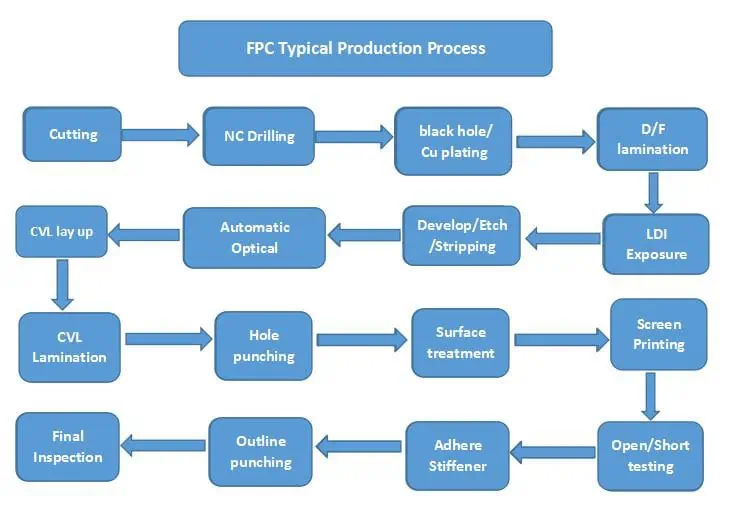
Inner Layer Preparation

Multilayer FPCs require individually imaging inner layers:

  • Copper patterning using lithography
  • Etch away unwanted copper
  • Strip photoresist masks
  • Visually inspect layer quality
  • Electrical testing checks shorts and opens

Completed inner layers are interleaved during layup and lamination.

Layup and Lamination

FPC material layers are stacked and bonded together:

  • Cut materials to size for each design
  • Clean all layers to remove debris
  • Precisely align films and foils
  • Load into thermal presses
  • Apply heat and pressure cycle
  • Cool under controlled pressure

Result is a solid laminate with all layers fused into a monolithic board.

Drilling

Holes drilled through the laminated stack:

  • Tooling holes for alignment
  • Through vias for interconnection
  • Depth controlled vias in multilayer boards
  • Precise process prevents barreling or tearing
  • Deburring cleans up hole walls

Hole walls prepared for subsequent plating process.

Hole Metallization

Coat drilled holes with conductive material using electroless and electrolytic plating processes:

  • Electroless copper builds initial seed layer
  • Electrolytic copper plates up conductive hole barrels
  • Copper thickness from 0.5 to >25 microns
  • Optional tin or gold finish over copper

This creates electrical connections between layers through drilled vias.

Patterning

With substrates fully prepared, photolithographic imaging defines circuit conductors:

  • Apply photoresist layer onto copper
  • Expose with UV through patterning artwork
  • Develop to selectively remove resist
  • Etch exposed copper regions
  • Strip remaining resist after etch
  • Repeat for double sided circuits

Result is the complete desired conductor pattern on the flex board.

Solder Mask

Solder mask is applied to prevent solder bridging and protect traces:

  • Liquid photoimageable mask (LPI) typically used
  • Screens away mask from desired exposed pads
  • Cures mask into tough permanent layer
  • Optional selective openings for test points

Provides electrical and environmental insulation to the circuitry.

Silk Screening

Printed silkscreen legends help identify components and connectors:

  • Ink applied through patterned screens
  • Denotes polarity, part numbers, text
  • Highly durable epoxy ink resists wear
  • White legend on black mask is common
  • Also used for board outlines/scoring

Silkscreen guides assembly and identifies the board.

Stiffener Attachment

FR4 Stiffener

Optional stiffeners added to reinforce boards:

  • Cut metal or laminate layers to size
  • Bond in place with adhesive films
  • Improves connector durability
  • Located only in required high stress areas

Stiffeners prevent flexing damage but increase cost.

Electrical Testing

Each board validated electrically after completion:

  • Tests check for short and open circuits
  • Validates design connectivity
  • Detects any fabrication defects
  • Testing may also include loaded capacitance and impedance measurements

Confirms properly functioning boards before shipment and assembly.

Final Processing

FPCs undergo final steps before shipment:

  • Route scores for break-apart boards
  • V-score flexing joints
  • Edge bead removal along routed edges
  • Cleaning removes residues
  • Package boards to avoid damage during shipment

Resulting finished FPCs are ready for customer assembly.

Conclusion

While requiring tight process control, the sequence of FPC fabrication steps enables reliable flexible printed circuits. Understanding the progression from raw materials through finished boards allows designers to optimize designs for manufacturability. The specialized fabrication processes produce high performance FPCs able to withstand dynamic mechanical environments.

Frequently Asked Questions

Q: What are typical FPC substrate and copper thicknesses?

A: Polyimide dielectric films commonly range from 1 to 5 mils. Copper foil is usually 0.5 to 2 oz (18 to 70 microns).

Q: How many FPC circuit layers can be fabricated?

A: Practical limits are typically around 12 layers. More than 20 requires special processes with limited suppliers.

Q: What minimum trace/space is achievable on FPCs?

A: 3/3 mil lines/spaces are typical on outer layers. 5/5 mil tolerances for buried traces. Even smaller features possible with advanced equipment.

Q: What types of connectors mount to FPC boards?

A: Common connectors are pressure-contact ZIF types or flex-tail soldered terminals into plated through holes.

Q: What are recommended design for assembly guidelines for FPCs?

A: Allow tolerance for misalignment, provide strain relief, keep components small and low-mass, and minimize mechanical stress points.

The Ceramic PCB Manufacturing Process: Step by Step

Ceramic PCB and Substrate

Introduction to Ceramic PCBs

Ceramic PCBs (Printed Circuit Boards) have revolutionized the electronics industry with their exceptional thermal conductivity, superior electrical insulation, and strong corrosion resistance. These unique properties make ceramic PCBs ideal for demanding applications involving high temperatures, high frequencies, and high power.

In this comprehensive guide, we’ll explore the ceramic PCB manufacturing process in detail, providing insights into how these advanced circuit boards are made and why they’re gaining popularity in various industries.

Learn more about:

Understanding Ceramic PCBs

YouTube video

What Are Ceramic PCBs?

Ceramic PCBs are circuit boards that use ceramic materials as the base substrate instead of traditional materials like FR-4 (fiberglass-reinforced epoxy laminate). The most common ceramic materials used in PCB manufacturing are:

  1. Alumina (Al2O3)
  2. Aluminum Nitride (AlN)
  3. Beryllium Oxide (BeO)

Advantages of Ceramic PCBs

5050c ceramic board
5050c ceramic board

The ceramic PCB manufacturing process results in boards with several advantages over traditional PCB materials:

  1. Excellent Thermal Conductivity
  2. High Temperature Resistance
  3. Superior Electrical Insulation
  4. Low Dielectric Constant
  5. Dimensional Stability
  6. Chemical Resistance

Applications of Ceramic PCBs

Due to their unique properties, ceramic PCBs find applications in various industries:

The Ceramic PCB Manufacturing Process: Step by Step

YouTube video

Let’s dive into the detailed ceramic PCB manufacturing process, which requires precision and expertise to produce high-quality, reliable circuit boards.

1. Material Selection and Preparation

Selecting the Ceramic Material

  • Alumina (Al2O3): Most common, balances cost and performance
  • Aluminum Nitride (AlN): Higher thermal conductivity, more expensive
  • Beryllium Oxide (BeO): Highest thermal conductivity, but toxic when processed

Preparing the Ceramic Substrate

  1. Powder Preparation
  2. Mixing
  3. Tape Casting
  4. Drying

2. Via Formation

Types of Vias in Ceramic PCBs

  • Punched Vias
  • Laser-Drilled Vias

Via Formation Process

  1. Designing Via Patterns
  2. Punching or Drilling
  3. Via Filling

3. Metallization

Metallization Techniques

  • Screen Printing
  • Thin Film Deposition
  • Thick Film Technology

Metallization Process

  1. Pattern Design
  2. Paste Preparation
  3. Screen Printing
  4. Drying

4. Lamination

Lamination Process

  1. Layer Alignment
  2. Stacking
  3. Pressing
  4. Pre-Firing

5. Surface Finish

Chemical plating with gold or silver to enhance solderability.

6. Laser Profiling

Using lasers to profile the PCB outline.

7. Electrical Testing

Testing Procedures

  • Continuity Testing
  • Insulation Resistance Testing
  • High-Potential (Hi-Pot) Testing
  • Functional Testing

8. Final Inspection and Packaging

Final Quality Control

Packaging

  • Cleaning
  • Moisture-Proof Packaging
  • Shock-Resistant Packaging

Types of Ceramic PCB Manufacturing Processes

1. Thin Film Circuit Process

Key Steps in Thin Film Process

  • Magnetron Sputtering
  • Pattern Lithography
  • Dry/Wet Etching
  • Electroplating

Direct Plate Copper (DPC) Variation

2. Thick Film Circuit Process

  • a. High-Temperature Co-fired Ceramic (HTCC)
  • b. Low-Temperature Co-fired Ceramic (LTCC)
  • c. Direct Bonded Copper (DBC)

3. LAM Technology Process

Key Features of LAM Technology

  • High Bonding Strength
  • Excellent Conductivity
  • Customizable Metal Layer Thickness
  • High Resolution
  • Superior Thermal Management

Advantages of LAM Technology

Comparison of Ceramic PCB Manufacturing Processes

ProcessResolutionThermal PerformanceCostTypical Applications
Thin FilmHighest (< 10 ฮผm)GoodHighRF/Microwave, High-Density Interconnect
Thick Film (HTCC/LTCC)Moderate (50-100 ฮผm)Very GoodModerateMulti-layer designs, Sensors
DBCLow (> 100 ฮผm)ExcellentLowPower Electronics, LED Lighting
LAMHigh (10-20 ฮผm)ExcellentHighAerospace, Advanced Power Modules

Choosing the Right Ceramic PCB Manufacturing Process

Factors to consider:

  1. Application Requirements
  2. Design Complexity
  3. Production Volume
  4. Budget Constraints
  5. Environmental Conditions

Challenges in Ceramic PCB Manufacturing

  1. High Processing Temperatures
  2. Material Shrinkage
  3. Cost
  4. Limited Repairability
  5. Brittleness

Future Trends in Ceramic PCB Manufacturing

  1. 3D Printing
  2. Nano-Ceramic Materials
  3. Green Manufacturing
  4. Integration with Flexible Electronics
  5. AI and Machine Learning

Conclusion: The Growing Importance of Ceramic PCBs

As electronic devices become more powerful and are used in increasingly demanding environments, the role of ceramic PCBs continues to grow. Their unique combination of thermal management, electrical performance, and reliability makes them indispensable in cutting-edge applications.

Understanding the ceramic PCB manufacturing process is crucial for engineers and designers looking to push the boundaries of what’s possible in electronic design. While challenges remain, ongoing research and technological advancements are continuously improving the manufacturing process, making ceramic PCBs more accessible and versatile.

As we look to the future, ceramic PCBs will undoubtedly play a pivotal role in enabling the next generation of high-performance electronic devices, from advanced aerospace systems to revolutionary medical technologies. The ceramic PCB manufacturing process, with its precision and complexity, stands as a testament to human ingenuity in the ever-evolving world of electronics.

Brown oxide vs. black oxide, immersion tin processes for PCB

pcb black-oxide

Introduction

In PCB fabrication, copper conductors are coated with solderable surface finishes to protect the copper from oxidation and improve solder joint formation. The three most common surface finishes are:

This article examines the processing, performance, and applications of these three surface treatments for PCBs. Their benefits and limitations are compared to help select the optimal finish.

Brown Oxide

Brown oxide is the simplest and lowest cost PCB surface finish. It involves:

Process

  1. PCBs are immersed in an alkaline sodium chlorite solution
  2. The solution reacts with exposed copper to deposit a brown-colored oxide layer
  3. PCBs are rinsed and sent for assembly

Composition

The brown deposit comprises cuprous oxide (Cu2O) and cupric oxide (CuO).

Thickness

The oxide coating thickness ranges from 300 to 1000 ฮผin (8-25 ฮผm).

Properties

  • Simple room temperature process
  • Very low cost
  • Provides moderate protection against oxidation
  • Brown color provides solder mask alignment aid
  • Oxide dissolves into molten solder during assembly

Applications

  • Low cost consumer electronics
  • Non-critical connections not needing solderability
  • PCBs with selective spot plating
  • For solder mask alignment reference

Limitations

  • Not RoHS compliant due to high lead content
  • Poor solderability as oxide does not dissolve well
  • Thick coatings impair thermal transfer
  • Can flake off and contaminate assemblies
  • Limited component lead adherence

Black Oxide

Black oxide produces a thinner and more solderable finish than brown oxide:

Process

  1. PCBs immersed in alkaline sodium chlorite solution
  2. More aggressive chemistry converts copper to black oxide
  3. Followed by hot water rinse

Composition

Primarily cupric oxide (CuO).

Thickness

50 to 500 ฮผin (1-13 ฮผm).

Properties

  • Room temperature process
  • Low cost
  • More solderable than brown oxide
  • Provides good oxidation resistance
  • Black color gives high contrast for inspection

Applications

  • Cost-sensitive consumer and industrial electronics
  • Selective soldering requiring solderability
  • Improved solderability versus brown oxide

Limitations

  • Inferior leach resistance to most other finishes
  • Lower surface insulation resistance
  • Can still flake off boards over time
  • Not RoHS compliant due to high lead content

Immersion Tin

white tin

Immersion tin is an electroless plating process for depositing a uniform solderable tin layer:

Process

  1. PCBs pass through concentrated tin salt solutions
  2. Tin ions simultaneously deposit onto exposed copper
  3. The deposited tin catalyzes further tin plating
  4. Fully coats copper traces with matte tin finish

Composition

Nearly pure tin (Sn).

Thickness

20 to 500 ฮผin (0.5-13 ฮผm).

Properties

  • Excellent solderability maintained over shelf life
  • Reflows into bright shiny solderable surface
  • RoHS compliant and lead-free
  • Superior leach and corrosion resistance

Applications

  • Consumer and industrial electronics
  • Automotive electronics
  • High reliability assemblies
  • Lead-free soldering processes

Limitations

  • Higher cost than oxides
  • Not suitable for press-fit connections
  • Requires process control to minimize voids
  • At high temperatures can oxidize to non-solderable surface

Comparison of Performance

ParameterBrown OxideBlack OxideImmersion Tin
CostVery LowLowModerate
SolderabilityPoorModerateExcellent
Oxidation ResistanceModerateGoodExcellent
Corrosion ResistancePoorModerateExcellent
Leach ResistancePoorModerateExcellent
Shelf LifeShortMediumLong
Thermal ConductivityPoorModerateExcellent
EnvironmentalNot RoHS CompliantNot RoHS CompliantRoHS Compliant

Recommended Combinations

  • For moderate cost and solderability – Black oxide with selective immersion tin
  • For lowest production cost – Non-soldered connections use brown oxide, soldered pads/terminals use immersion tin
  • For high reliability assemblies – Immersion tin finish over copper pads, nickel/gold on component leads

Process Considerations

Strip film etching line

Preparation โ€“ Thorough cleaning and microetching improves adhesion and uniformity.

Operating Parameters โ€“ Parameters like temperature, solution concentrations and dwell times need optimization for quality finishes.

Agitation โ€“ Solution agitation improves deposition uniformity.

Solution Maintenance โ€“ Regular analysis and replenishment of solution prolongs bath life.

Rinsing โ€“ Generous rinsing prevents staining or contamination of surfaces.
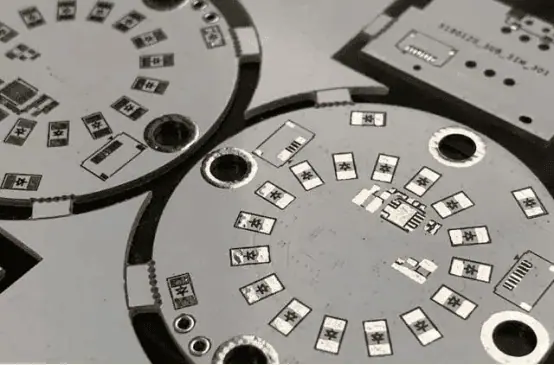
Drying โ€“ Ambient drying in clean air avoids water stains.

Summary

  1. Brown oxide provides the most cost-effective finish for PCBs not requiring soldering ormaximized performance.
  2. Black oxide offers moderately improved solderability and protection over brown oxide for low cost boards.
  3. Immersion tin provides the best solderability, oxidation resistance, shelf life and leach resistance for quality requirements.

The finish can be selected based on cost, performance and reliability needs and mixed on selective basis.

Frequently Asked Questions

What is the main composition of brown oxide and black oxide finishes?

Brown oxide contains a mixture of cuprous oxide (Cu2O) and cupric oxide (CuO) while black oxide is primarily cupric oxide (CuO).

Which provides better oxidation resistance โ€“ black oxide or immersion tin?

Immersion tin provides significantly better oxidation resistance compared to black oxide due to the formation of a uniform metallic tin layer.

What PCB metallization works best under immersion tin plating?

A heavy copper layer on PCB pads and traces works best for immersion tin plating. Nickel underplating can also improve adhesion and corrosion resistance.

What is the typical thickness of immersion tin finish on PCBs?

A thickness between 50-500 microinches (1.25-13 microns) is commonly used for immersion tin coatings on PCBs. Thicker finishes improve leach resistance.

Is black oxide suitable for lead-free soldering processes?

Black oxide is not suitable for lead-free soldering because of its poor leach resistance causing tin-copper intermetallics to leach out, degrading solder joints. Immersion tin is preferred.

Research on the Causes of black-oxide copper process

1. Introduction

The super-roughening liquid is a copper surface treatment process designed for the copper surface. The solder mask uses the ultra-roughening process, which have good adhesion between the soldering oil and the copper surface, prevent the soldering ink from falling off.

YouTube video

Therefore, the ultra-roughening process in the PCB industry has been widely used.

2. Background

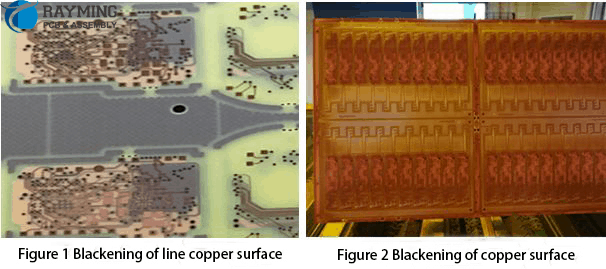
In the process of super-roughening, there are a large number of blackening of the copper surface. The picture is as follows:

blackening the copper surface

3. Analysis of the reason of blackening of super-roughened copper surface

3.1 SEM comparison analysis of super-roughened blackening position and normal copper surface position; see the following figure:

3.2 SEM analysis: It can be seen from the above picture that the copper crystal lattice is irregularly irregular in the blackout position. The normal copper lattice is in the form of a honeycomb, and the copper lattice distribution is better. The preliminary analysis of the abnormal black copper surface shows that the copper lattice is poorly distributed or the copper lattice is too coarse, resulting in blackening of the over-roughened copper surface.

 black-oxide copper process
black-oxide copper process

4 Test verification

4.1 Compare the simulated test with 20ASF, 27ASF and 38ASF respectively; the results of super-roughening are as follows:

4.2 Comparison test with different current densities, the results show that the current density of copper plating on the VCP pattern plating line is too large, resulting in blackening of the super roughened copper surface.

5 Improvement method and improvement results

5.1 Improvement method: Adjust the copper lattice. (In order to facilitate the over-roughening of the chemical water, the electroplated copper lattice distribution is better, the copper current density is lowered, and the copper plating time is extended).

blacken copper surface

5.2 Test PCB board verification:

5.2.1 Because there are only two program line speeds for the VCP diagram wire of our pcb factory, the first line speed is 0.8m/min copper plating time 30 minutes, the second line speed is 0.4m/min copper plating time 60 minute.

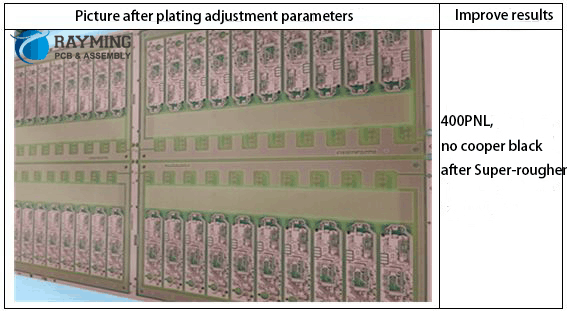
5.2.2 Quantity 400PNL. (Test board parameters: copper plating time of 60m for the second wire speed of 0.4m/min, copper current density of 18ASF)

5.2.3 Tracking test the effect after improvement.

blacken copper

6 Conclusion

Verification of VCP pattern plating by test plate The large current density production method has an effect on the super-roughening process of the solder mask. The current density of the VCP pattern plating copper plating is adjusted from 32ASF*30 minutes to 18ASF*60 minutes, which can solve the super roughening copper surface blackening problem.

What’s the Difference Between HASL and HASL Lead-free in PCB?

PCB hot air solder leveling

The process requirements in the PCB production are very important, which directly determines the quality and positioning of a board. Such as HASLgold plating pcb , ENIG.

Due to the good quality of ENIG, the price is higher too. Many customers choose the most common HASL process.

The Difference Between HASL and HASL Lead-free

Many people know the HASL process, but they donโ€™t know what the difference is between HASL and HASL-LF. Please refer to the difference as below:

1. On the surface, Lead-tin is brighter and lead-free tin (SAC) is dim.

2. Lead in HASL is harmful to humans, but lead-free not. The lead eutectic temperature is lower than lead-free, which depend on Lead-free alloy composition. For example, The eutectic of SNAGCU is 217 degrees, the pcb soldering temperature is eutectic temperature plus 30 to 50 degrees. The lead eutectic is 183 degrees. The mechanical strength and brightness with lead is better than lead-free.

3. The Lead content in HASL-LF is not more than 0.5, while HASL has a lead of 37.

4. The lead will increase the activity of the tin wire during the welding process, so Lead wire is easier to use than lead-free wire. However, lead is toxic and not good for the human body. What is more, Lead-free tin will have a higher melting point than lead-tin, so the solder joint is much stronger.

Introduction

In printed circuit board (PCB) manufacturing, a protective and conductive coating is applied on the copper traces to facilitate soldering of components. The two most common solder coatings are Hot Air Solder Leveling (HASL) using tin-lead solder alloys and Lead-free HASL using tin-based lead-free alloys. This article provides a detailed comparison between traditional leaded HASL and modern lead-free HASL processes.

Overview of HASL Process

YouTube video

The Hot Air Solder Leveling (HASL) process deposits a thin solder coating on the PCB conductors to protect them from oxidation and provide a solderable surface. The key steps are:

  • PCBs are pre-heated to warm them up before soldering
  • Flux is sprayed or foamed over the board to remove oxides and improve solder wetting
  • Boards pass over a pumped wave or fountain of molten solder
  • Excess solder is air-knifed off as boards leave the solder wave
  • Hot air levels the remaining solder to a uniform thickness

This coats the exposed copper traces with a smooth solder layer ready for component assembly. Lead-tin alloys like Sn63/Pb37 used to be common for HASL but environmental concerns over lead has led to a transition to lead-free solders.

Traditional Leaded HASL Coatings

Traditional HASL used tin-lead solder alloys containing 30-40% lead to coat PCBs. The most common composition was 63% tin (Sn) and 37% lead (Pb) or Sn63/Pb37:

  • Melting point of 183ยฐC allowing lower solder bath temperatures
  • Good wetting on copper traces
  • Ductile coating absorbs mechanical shocks and stresses
  • Resists corrosion and oxidation of copper conductors

However, lead is a toxic heavy metal banned under RoHS. This prompted a shift to lead-free HASL processes using tin-based solders.

Lead-Free HASL Materials

HASL PCB Board
HASL PCB Board

Lead-free HASL eliminates lead and uses greener tin-based solder alloys. The main options are:

1. Pure Tin (Sn100)

  • Melting point of 232ยฐC requires higher solder bath temperatures
  • Prone to tin whisker growth causing electrical shorts
  • Harder coating prone to cracking under stress

2. Tin-Copper (SnCu)

  • Eutectic Sn0.7Cu0.05 alloy melts at 227ยฐC
  • Improved strength, hardness and wetting over pure tin
  • 3-4% copper reduces risk of tin whiskers

3. Tin-Silver-Copper (SAC305)

  • Eutectic Sn96.5Ag3Cu0.5 alloy with 217ยฐC melting point
  • Silver content improves fatigue resistance and strength
  • Small copper addition prevents tin pest corrosion

4. Tin-Bismuth (SnBi)

  • Low melting alloys like Sn42Bi58 (138ยฐC) or Sn57Bi43 (179ยฐC)
  • Bismuth reduces melting point significantly
  • Lower process temperatures than pure tin
  • Brittle with poor drop/shock resistance

Among these, SnCu and SAC alloys are most popular for lead-free HASL. The specific alloy is selected based on soldering process needs and costs.

Lead-Free HASL Coating Thickness

Lead-free HASL coatings are typically thinner than traditional leaded HASL:

  • Leaded HASL – Average thickness of 100-300 microinches (2.5 – 7.5 ฮผm)
  • Lead-free HASL – Average thickness around 50-100 microinches (1.25 – 2.5 ฮผm)

Thinner coatings are used to conserve higher priced lead-free solders and account for their higher hardness. Thick leaded deposits tend to crack and warp under board flexure.

Lead-Free HASL Process Differences

Switching from leaded to lead-free HASL requires optimizing the soldering process:

  • Higher preheat temperatures – About 150-160ยฐC needed for lead-free solders compared to 130-140ยฐC for leaded.
  • Higher solder pot temperatures – Lead-free solders need around 240-255ยฐC bath versus 200-210ยฐC for leaded. This imposes stricter requirements on solder pot metallurgy.
  • More aggressive fluxing – Extra flux aids wetting of lead-free solders onto copper traces.
  • Nitrogen blanketing – Nitrogen atmosphere prevents oxidation of lead-free solders.
  • Tight temperature control – Lead-free solders are less forgiving than lead, requiring tight control of preheat, flux, and bath temperatures.

With the right parameters, the lead-free HASL process can match leaded HASL for solderability and surface finishes.

Lead-Free HASL Process Options

There are three main equipment configurations used for lead-free HASL processes:

1. Pumped Molten Solder

  • Boards pass over continuously pumped wave of molten solder
  • Simple, low maintenance, and fast process
  • Limited flexibility in solder volume and dwell times

2. Foam/Spray Flux + Static Solder Pot

  • Foam flux applied first, boards passed through static solder bath
  • Allows greater control of flux amount, temperature, exposure
  • Simpler maintenance than solder wave pumps

3. Selective Deposition

  • Solder selectively sprayed only onto the required areas
  • Reduces solder consumption by 60-70%
  • Minimizes solder beads around edges and connectors
  • Slower process requiring precise application control

Each has its own pros and cons. The method is selected based on production environments, volumes, and flexibility needs.

Comparison of Properties

The properties of traditional leaded HASL versus lead-free HASL are compared below:

PropertyLeaded HASLLead-Free HASL
Solder AlloyTin-Lead (SnPb)Tin-Copper (SnCu), SAC
Lead Content30-40%<0.1%
Melting Temperature183ยฐC217-232ยฐC
Solder Bath Temperature200-210ยฐC240-255ยฐC
Coating Thickness100-300 ฮผin (2.5-7.5 ฮผm)50-100 ฮผin (1.25-2.5 ฮผm)
WettabilityGoodModerate to Good
SolderabilityExcellentGood to Excellent
Ductility/HardnessDuctile/SoftHarder/More Brittle
Corrosion ResistanceModerateGood
Leach ResistanceModerateBetter
Creep ResistanceModerateBetter
Fatigue ResistanceModerateGood
Drop/Shock ResistanceGoodModerate
WhiskeringNoMinor risk (mitigated)
CostLowerHigher

Pros and Cons of Lead-Free HASL

Some key advantages and disadvantages of switching to lead-free HASL are:

Benefits

  • Environmentally friendly – RoHS and lead-free compliant
  • Eliminates risks from lead contamination
  • Enhanced corrosion resistance
  • Improved leach resistance in humid conditions
  • Better creep resistance under thermal cycling
  • Reduced tin whisker problems with SnAgCu alloys

Drawbacks

  • Higher process temperatures require equipment changes
  • Narrower process windows require tight control
  • Material costs are higher
  • Harder deposit prone to damage from board flexure
  • Reduced shock/drop resistance
  • Brittle alloys like SnBi have poor mechanical properties

Reliability Considerations

immersion-gold-pcb

For acceptable reliability some important factors to consider are:

  • Good metal finish on traces prior to HASL
  • Sufficiently thick copper weights on outer layers
  • Smooth base copper to maximize bonding
  • Void-free immersion in solder with adequate dwell times
  • Clean fluxes to prevent residue entrapment
  • Well-controlled solder bath temperatures and atmosphere
  • Graduated thermal profiles during preheat, immersion and cooling
  • Removal of solder beads at connectors to prevent tombstoning

With optimal processing, lead-free HASL can achieve the adhesion, solderability, and reliability needed for most applications.

Summary

The electronics industry has widely adopted lead-free HASL surface finishes to meet environmental regulations and market demands. While the switch from conventional SnPb involves process changes and cost impacts, lead-free coatings offer important advantages. With proper control of materials, fluxes, temperatures and equipment parameters, high quality and reliable lead-free HASL coatings can be achieved. The process continues to evolve with newer solder alloys and selective deposition methods for further improvements.

Frequently Asked Questions

What are the most common lead-free alloys used for HASL solder coatings?

The popular lead-free HASL alloys are pure Tin (Sn100), Tin-Copper (SnCu), Tin-Silver-Copper (SAC305/405), and Tin-Bismuth (SnBi). SnCu and SAC305 are most common allowing better wetting, strength and whisker resistance than pure Tin.

How does the thickness of lead-free HASL coatings compare to traditional leaded HASL?

Lead-free HASL deposits are typically 50-100 microinches thick versus 100-300 microinches for leaded HASL. Thinner coatings conserve costlier lead-free solders and prevent cracking issues seen with thick lead-free layers.

What PCB surface finishes work best under lead-free HASL coating?

Organic Solderability Preservatives (OSPs) and Immersion Silver provide excellent solderability under lead-free or no-lead HASL. Other options like ENIG, Immersion Tin, and Immersion Gold also work well.

What solder pot temperature is needed for lead-free SnCu HASL process?

To suit the higher 227-240ยฐC melting point of SnCu alloys, the solder pot temperature needs to be maintained between 245-255ยฐC, compared to 200-210ยฐC used for leaded SnPb solders.

What selective deposition methods are available for lead-free HASL processes?

Jet printing selectively sprays lead-free solder using drop-on-demand inkjet heads only onto required areas. Another method uses laser-cut stencils allowing solder paste application just on exposed traces. Both dramatically reduce solder usage.

The Complete Guide to Aluminum PCB Manufacturing Process: From Design to Delivery

metal core printed circuit board

In recent years, the demand for aluminum PCBs has surged due to their numerous advantages over traditional FR4 PCBs. Aluminum PCBs are lightweight, highly conductive, and capable of withstanding high temperatures, making them ideal for applications in aerospace, automotive, LED lighting, and beyond.

This comprehensive guide will take you through the aluminum PCB manufacturing process step by step. Weโ€™ll explore the fabrication of single-layer, double-layer, and multilayer aluminum PCBs, providing a detailed look at how our engineers create these specialized boards. By the end, youโ€™ll have a clear understanding of the entire process.

At RAYMING, we bring deep expertise in aluminum PCB manufacturing. Our state-of-the-art factory in China produces all types of aluminum PCBs, adhering to strict quality control and inspection protocols at every stage. With optimized fabrication techniques, we ensure high yields, fast turnaround times, and consistently flawless results.

Learn more about:

Understanding Aluminum PCBs

Before diving into the manufacturing process, let’s understand what makes aluminum PCBs special.

What Are Aluminum PCBs?

Aluminum PCBs are circuit boards that use an aluminum base as the substrate instead of the traditional FR-4 material. This aluminum core provides excellent thermal conductivity, making these PCBs ideal for high-power applications.

Advantages of Aluminum PCBs

  • Superior Heat Dissipation: Up to 5 times better than FR-4 PCBs
  • Higher Current Capacity: Allows for more powerful circuits
  • Improved EMI Shielding: Better protection against electromagnetic interference
  • Cost-Effective: Often requires fewer layers than traditional PCBs
  • Durability: Resistant to vibration and shock
YouTube video

The Aluminum PCB Manufacturing Process: Step by Step

Let’s break down the aluminum PCB manufacturing process into its key stages.

1. Design and Layout

The journey begins with careful design and layout planning.

  • Design Considerations:
    • Larger trace widths and spacing are allowed
    • Thermal management paths must be considered
    • Minimal through-hole vias are preferred
  • Output: Gerber files containing images for each PCB layer

2. Material Selection

The Technical Requirements and Circuit Fabrication of Aluminum PCB

Choosing the right aluminum alloy is crucial for performance.

  • Popular Choices:
    • Aluminum alloy 5052: Good electrical conductivity and corrosion resistance
    • Aluminum alloy 6061: High thermal conductivity and easy machinability
    • Aluminum alloy 7075: Highest strength among aluminum alloys
  • Thickness: Typically ranges from 1.6 mm to 6 mm

3. Surface Preparation

Proper surface preparation ensures strong adhesion of the copper layer.

  • Key Steps:
    1. Degreasing: Removes oils and contaminants
    2. Desmutting: Eliminates the aluminum oxide layer
    3. Texturing: Creates microscopic roughness for better adhesion

4. Direct Bond Copper (DBC) Application

This crucial step bonds copper to the aluminum substrate.

  • Process:
    • Stack oxygen-free high thermal conductivity (OFHC) copper foil on the aluminum
    • Heat to around 500ยฐC under pressure
    • Copper atoms diffuse into the aluminum, creating a strong metallurgical bond

5. Imaging and Etching

Now we create the circuit pattern on the copper layer.

  • Steps:
    1. Apply photoresist to the copper layer
    2. Expose to UV light through phototools
    3. Develop the resist
    4. Etch away exposed copper to create the circuit pattern

6. Solder Mask and Silkscreen Application

These layers protect and identify components on the PCB.

  • Solder Mask: Prevents solder bridges between pads
  • Silkscreen: Prints component placement and polarity information

7. Drilling and Plating

Creating and preparing holes for electrical connections.

  • Process:
    1. Drill holes at specified locations
    2. Plate hole walls with conductive material (copper, silver, or gold)

8. Panel Sizing and Routing

YouTube video

Preparing the PCB for individual use or assembly.

  • Steps:
    1. Mechanically route the large PCB panel into individual units
    2. Create breakaway tabs if needed for easier handling

9. Testing and Inspection

aluminum pcb test

Ensuring quality and functionality of the finished PCB.

  • Methods:
    • Electrical conductivity tests
    • Automated Optical Inspection (AOI)
    • Hole plating verification
    • Component fit checks

10. Panelization (If Required)

Arranging individual PCBs for efficient assembly.

  • Process:
    • Arrange PCB units in a panel frame
    • Create score lines for easy separation after assembly

11. Assembly (Optional)

If requested, components can be mounted on the PCB.

  • Methods:
    • Manual soldering
    • Automated surface-mount assembly

Key Differences from FR-4 PCB Manufacturing

While the overall process is similar, aluminum PCBs require some special considerations:

  1. Special surface treatments for the aluminum substrate
  2. High-temperature copper bonding process
  3. More relaxed design rules allowing thicker copper
  4. Special soldering techniques due to aluminum’s heat sensitivity
  5. Use of more flexible materials for drilling and routing

Applications of Aluminum PCBs

aluminum pcb photo

Aluminum PCBs excel in various high-performance applications:

  • High-power LED lighting
  • Automotive electronics
  • Power electronics and inverters
  • Industrial motor drives
  • RF and wireless infrastructure
  • Aerospace and military systems

Conclusion: The Future of PCB Manufacturing

As electronics continue to demand higher power and better thermal management, aluminum PCBs are set to play an increasingly important role. Their unique properties make them ideal for a wide range of applications, from everyday consumer electronics to cutting-edge industrial and military systems.

By understanding the aluminum PCB manufacturing process, designers and engineers can better leverage these innovative boards to create more efficient, powerful, and reliable electronic systems. As technology advances, we can expect to see even more applications benefiting from the unique properties of aluminum PCBs.

FPC lamination process and its main compaction material introduction

2 layer flex pcb board

FPC circuit board is also called flexible circuit board, or โ€œflexible boardโ€. In the industry, FPC, is a printed circuit board made of flexible insulating substrate (mainly polyimide or polyester film), which has many advantages that hard printed circuit boards do not have. For example, it can bend, roll, fold, use FPC can greatly reduce the volume of electronic products, meet the needs of electronic products in the direction of high density, miniaturization, high reliability, therefore, FPC in space, military, mobile communications, Laptop computers, computer peripherals, PDA, digital cameras and other fields or products have been widely used.

YouTube video
FPC machine

FPC lamination process: lamination and opening die feeding / closed die prepressing / cooling / opening / cutting process ready TPX detached film\ steel\ silica gel and dust adhesive cloth or dusting paper to clean steel before the production of the following process: 1. Board\ silica\ off film surface dust, Sundries, etc. The size of the detached film (500m*500m) is opened and placed in the laminated area. After one cycle of each lamination, 400 pieces of spare steel plates are needed, so that the continuous production will not break the material. When laminating operation, you should wear gloves with both hands or fingers with 5 fingers.

It is strictly forbidden to touch soft plates with bare hands. D. When the plate is stacked, the steel plate is placed first. Keep this stack of 10 layers (except for special requirements), with the number of FPC placed on each layer to determine the number of pendulable FPC layers per 1PNL plate size (the distance from the plate to the four sides of the silica gel should be maintained above 7cm), The FPC should be placed in the middle of the silica gel as far as possible, and each plate should be spaced at a distance of 2 cm.

The thickness of the FPC should be consistent in each layer (for example, the single panel cannot be mixed with the multilayer pcb), and every opening and every layer of FPC should be the same. And the position and order of the pictures are roughly the same. When placing, the FPC coating surface or the paste reinforcement surface should be faced up, and the detached film should be flat and covered on the soft plate without wrinkling or folding. After the operation, the stacked FPC should be laid flat on the transport belt. To the next procedure.

FPC lamination material

1.Detached membrane

With the aid of strict quality control and curing through the back stage, it has the characteristics of high temperature resistance, good separation effect and no pollution in the pressing process. The detached film can be supplied in the form of rolls and customized sizes to meet the different specifications of the customer and provide the appropriate and onlook-applied liquid pressure required to drive the laminate electronic components to the dense lamination. It eliminates air entering the bottom of the protective layer and between the circuit board.

2.TPX detached membrane

the effect is similar to that of the above type membrane, but some manufacturers ofย FPC circuit boardย have strict requirements. TPX detached film is a kind of high performance molecular material and can be used for all kinds of applications of high performance demoulding film. It is used as the main circuit board and cutting edge material of flexible printing substrate (FPC) by its excellent demembrane and heat resistance. Demoulded film for various occasions, with single-layer and multi-layer products, can be selected according to the use.

3.Steel plate

pcb material

4.Silicone cushion / silicone cushion

divided into red rubber pad and green rubber pad, it is a kind of synthetic elastic cushion made from silicone gel and polymer. The intermediate layer is glass fiber substrate, which greatly improves the strength and times of use of red silicone cushion. It has the characteristics of buffer, detachable, thermal equalization and so on. It is mainly used in hot pressing situations with high buffer requirement, such as: circuit board (FPC,PCB, soft and hard bonding board), solar energy, aerospace, power locomotive, die pressing, etc. Busbar compression and other fields.

5.The cushioning pad used repeatedly

it is developed and produced in accordance with the ultra-high temperature press used in the PCB industry at present. When the pressing temperature of the circuit board exceeds 260 โ„ƒ, the general auxiliary materials such as Kraft paper, cushioning pad and other auxiliary materials can no longer meet the high temperature pressing demand. Higher temperature resistant fibre must be used