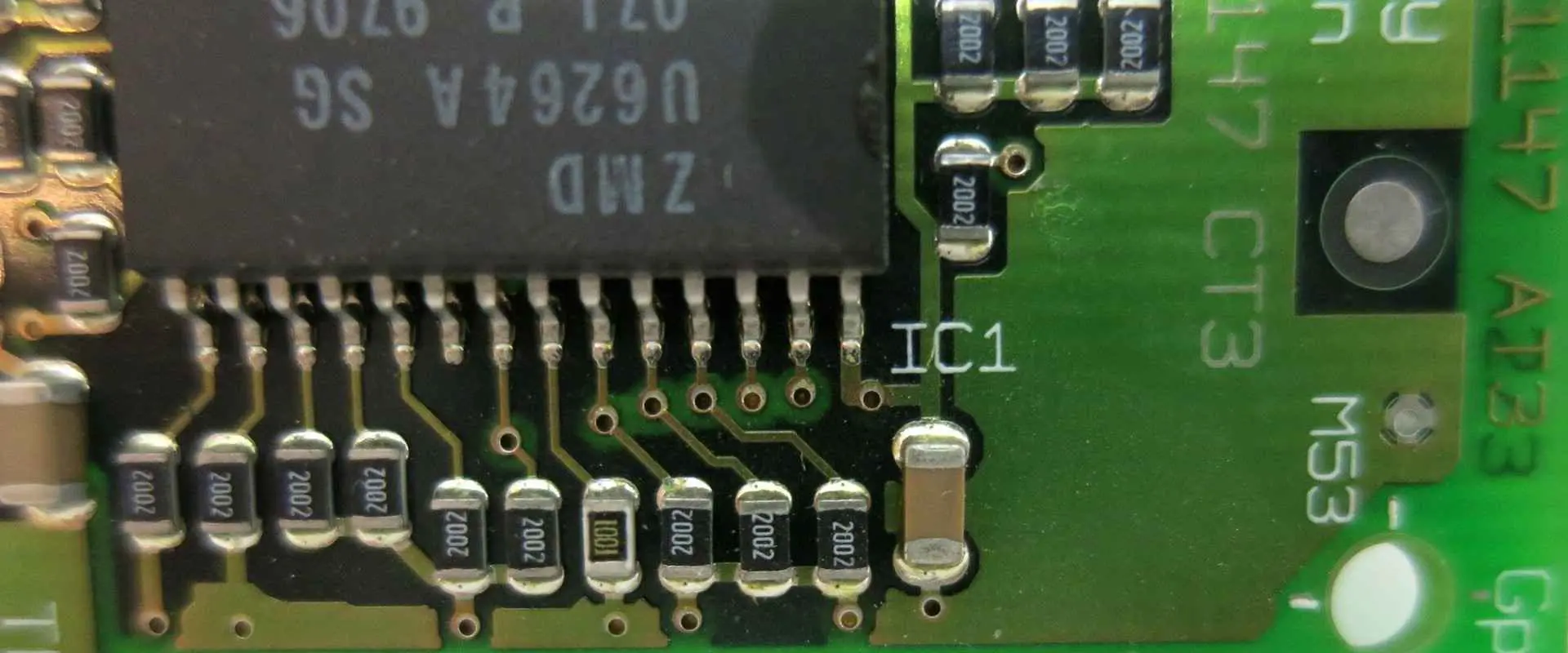
Design Tips of Power Frequency Converter PCB

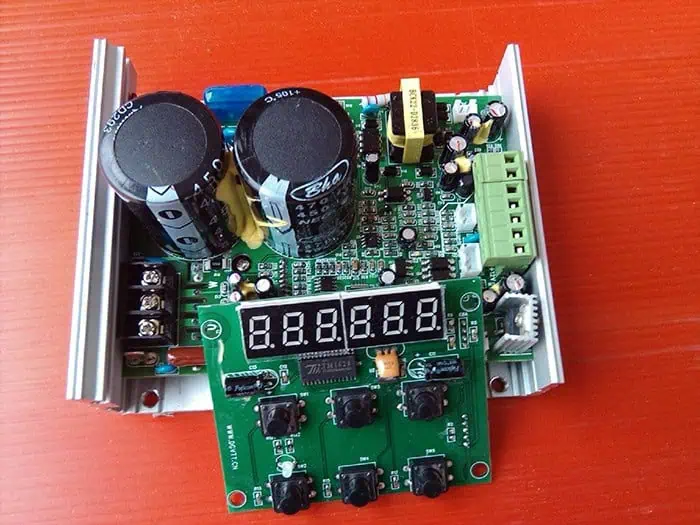
Frequency converter PCBA Circuit Board

What is Frequency converter Circuit Board  used for 

frequency changer or frequency converter is an electronic or electromechanical device that converts alternating current (AC) of one frequency to alternating current of another frequency. The device may also change the voltage, but if it does, that is incidental to its principal purpose.

How do Frequency converter device work ?

To increase the voltage, a DC to AC converter uses a electronic component called a step-up transformer. In a transformer, AC electricity flows through a coil of wire. .. The electricity from the second coil can then be used to power appliances.

Introduction

A power frequency converter (PFC) is an electronic circuit used to convert the input AC voltage to a DC voltage. It provides a stabilized DC bus voltage for the inverter stage in variable frequency drives and helps meet harmonic current requirements. Proper printed circuit board (PCB) design is crucial for optimal performance and reliability of the power frequency converter. This article provides key design tips and considerations for laying out the PFC circuit on a PCB.

PFC Topology Selection
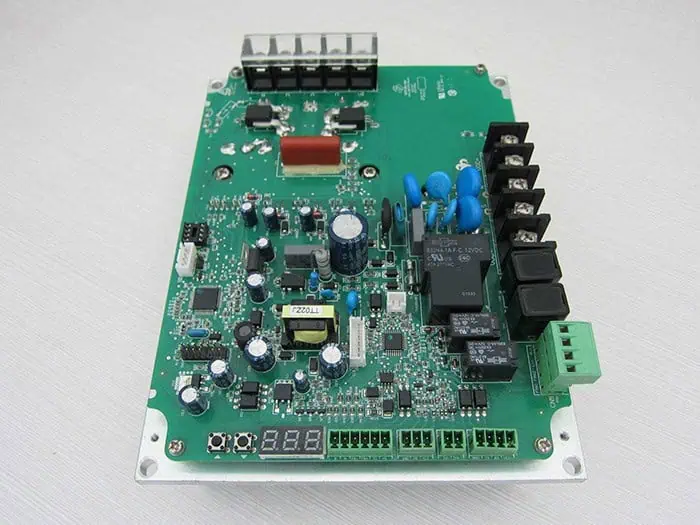
The most common PFC topologies are:

  • Passive PFC – Uses passive components like inductors and capacitors. Simple and low cost but has poor power factor and high harmonics.
  • Active PFC – Uses active switches like MOSFETs or IGBTs. Provides high power factor and low harmonics. Commonly used topologies are:
    • Boost PFC – Most widely used thanks to its high efficiency and power factor.
    • Buck PFC – Good for applications requiring step-down voltage conversion.
    • Bridgeless PFC – Eliminates bridge rectifier to reduce losses. Complex control.

Boost PFC is usually preferred due to its simplicity and performance. The PCB design guidelines covered in this article will focus on boost PFC.

Boost PFC Design Considerations

Following are some of the key factors to consider when designing a boost PFC PCB:

Input Filtering

An input EMI filter is required to attenuate high frequency noise and prevent conducted EMI. X capacitors, Y capacitors, common mode chokes, and line filters need to be properly selected. Careful component placement and routing techniques should be adopted to minimize EMI noise coupling. Keep traces short and use ground planes for shielding.

PFC Inductor

The boost inductor is one of the key components. It’s important to select the right inductor for the design requirements and lay it out properly on the PCB. Use thick copper tracks/planes for power connections to reduce losses. Minimize parasitic trace inductance by keeping traces short and wide. Provide sufficient clearances between the inductor and other components for cooling. Use via stitching around the pads for thermal relief.

Bus Capacitor

The PFC generates a high frequency ripple on the DC bus which must be filtered. A low ESR aluminum or film capacitor is required to minimize voltage ripple. Manage its location and orientation to facilitate cooling due to its heating. Provide sufficient capacitance based on requirements. Use multiple parallel capacitors if needed. Include fusing for safety.

Power Devices

The MOSFETs or IGBTs used must be properly rated for the design. Use Kelvin connections for the power terminals to avoid measurement inaccuracies. Provide proper gate drive design with low impedance traces. Include protection circuitry against transients. Use coplanar PCB pads for the devices with adequate thermal reliefs.

Sense Resistor
YouTube video

A current sense resistor is used for measuring inductor current. Select an appropriate high power, low drift, low tolerance resistor. Use a 4-terminal Kelvin connection for maximum accuracy. Manage its PCB location to minimize coupling noise.

Driver and Control Circuitry

The PFC controller and gate driver circuits require careful layout for signal integrity. Use proper grounding, decoupling capacitors, and isolation techniques. Route gate drive traces away from power traces to prevent coupling. Minimize trace lengths for fast switching response. Follow datasheet layout recommendations.

Thermal Management

The PFC circuit generates significant heat which must be dissipated properly. Use a multilayer PCB with sufficient copper thickness and thermal vias. Ensure unobstructed airflow over hot components. Provide adequate clearances around the heat generating parts. Use proper thermal interface materials. Include temperature monitoring circuity.

Key PCB Design Guidelines
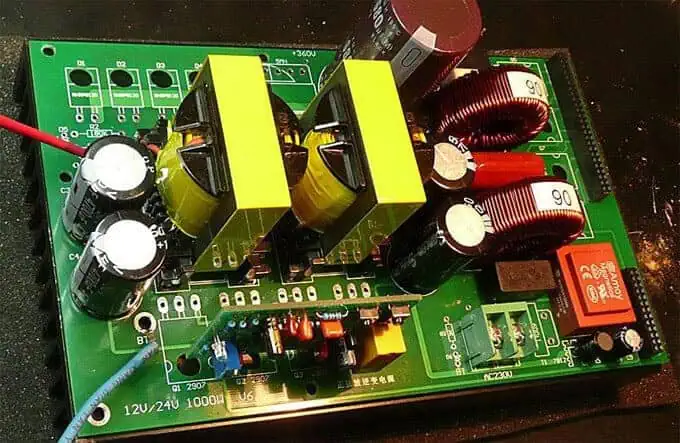
Below are some key guidelines to follow when designing the PCB layout for a boost power factor correction circuit:

Separate Power and Signal Grounds

Have separate ground planes for power ground and signal ground to prevent coupling of noise. Connect the grounds properly at a single point. Power ground should use a large lower layer plane.

Optimize Component Placement

Strategically place components to minimize current loop lengths. Group associated circuits together. Position heat generating parts for better cooling. Ensure clearance requirements are met. Follow manufacturer guidelines.

Use Multilayer PCB

A 4-layer or 6-layer PCB with solid power and ground plane layers is highly recommended. This provides shielding, noise isolation and allows handling large currents.

Route Power Traces Carefully

Use adequate trace widths for current ratings. Avoid right angle turns. Minimize length of high current traces. Use 45ยฐ angles and arcs for traces carrying high di/dt currents to reduce EMI.

Provide Shielding

Use grounded copper planes and shields between noisy circuits and sensitive analog parts. Use shielding cans over critical high frequency circuits. Provide input EMI filtering.

Include Thermal Reliefs

Use thermal reliefs/spokes and vias under pads of heat generating components. This allows the heat to dissipate into inner board layers.

Follow DFM Guidelines

Design for manufacturability ensures the PCB can be easily and correctly fabricated. Use design rules for track spacing, via sizes, annular rings, etc.

By following these guidelines, a power factor correction circuit can be implemented on a PCB optimally for performance, cooling and reliability.

Example Boost PFC PCB Layout
Below is an example PCB layout for a boost power factor correction circuit with key components highlighted:

Figure 1. Example Boost PFC PCB Layout

Layout Details

  • 4-layer PCB with complete ground plane layers for noise isolation
  • Input bridge rectifier and filter capacitors placed close to the input terminal block for short leads
  • Boost inductor placed close to the bridge output for short power loop
  • Gate driver circuitry placed close to the MOSFETs to minimize trace lengths
  • Bus capacitors distributed evenly near the MOSFETs
  • Current sense resistors positioned near the inductor for accurate measurement
  • Analog ground plane used under the control circuitry section
  • Power ground fills the bottom layer under the power components
  • EM fields contained with strategic slots in ground planes
  • Shielding partition used between power and analog sections

This example demonstrates an effective layout for a boost PFC tailored for electrical and thermal performance. The techniques shown here should be applied when designing the PCB.

Conclusion

Designing a good quality PCB for a power factor correction circuit requires careful consideration of electrical parasitics, thermal management, EMI control and signal integrity. By using proper schematic design, component selection, and following the layout techniques described in this article, a high performance and reliable PFC can be realized. Some key takeaways are:

  • Select appropriate PFC topology based on requirements
  • Use quality PFC controller IC and optimized passive components
  • Strategically place parts to minimize loop parasitics
  • Provide sufficient cooling for heat generating parts
  • Use 4-layer or 6-layer PCB with solid power/ground planes
  • Route high current traces over ground plane using 45ยฐ angles
  • Separate analog and power ground planes
  • Incorporate shielding and noise control methods
  • Follow datasheet recommendations and DFM guidelines

Using these PCB design best practices will lead to a power factor correction circuit with excellent electrical performance, thermal management, and noise immunity. This maximizes the reliability and efficiency of the complete power conversion system.

Frequently Asked Questions

What are some common issues seen with poor PFC PCB designs?

Some common issues with poor PFC PCB designs include:

  • High trace inductance due to long power loops
  • Poor cooling of heat generating components
  • High EMI noise coupling due to lack of filtering
  • Voltage spikes and transients due to uncontrolled di/dt
  • Low efficiency due to high I^2R losses
  • Unstable operation due to layout parasitic oscillations
  • Inaccurate current/voltage sensing due to layout

How can the EMI from a PFC be minimized in the design?

To minimize EMI, use proper input line filters, enclose the PFC in a shielded metal enclosure, use grounded metal planes on the PCB, prevent gaps in ground planes using slots/stitching vias, route high di/dt traces over planes, use shield cans over noisy components, keep traces short, and follow good layout practices.

What PCB layers should be used for a boost PFC design?

A 4-layer board is usually adequate, with top and bottom layers for power components, signals, and connectors. The two inner layers should be assigned as ground and power plane layers for shielding and low impedance current flow. For complex designs, a 6 or more layer board can be used.

How can voltage spikes on the DC bus be reduced?

Voltage spikes can be minimized by using a snubber circuit across the power devices, minimizing loop inductance in bus wiring, using multiple decoupling capacitors near loads, slowing down dv/dt with inductive filtering, and using TVS diodes for clamping transients.

What design factors affect the efficiency of a PFC?

PFC efficiency is impacted by factors like proper choice of topology, devices, magnetics, optimum switching frequency, use of low loss components, minimizing parasitics, managing thermal dissipation, and good PCB layout. Every effort should be made to reduce I^2R losses in wiring and devices.

Basic circuit diagram analysis of the Frequency inverter

At present, most of the general-purpose Frequency  inverters are AC-DC-AC inverters, usually the voltage converter is common, and its main circuit diagram (see Figure 1.1) is the core circuit of the inverter. (AC-DC exchange), DC filter circuit (energy-consuming circuit) and inverter circuit (straight-to-transform), of course, including finite current circuit, brake circuit, control circuit and other components.

1) Rectifier circuit

3) Inverter circuit

2) Filter circuit

1) Drive circuit

2) Protection circuit

3) Switching power supply circuit

4) Communication circuit on the main control board

5) External control circuit

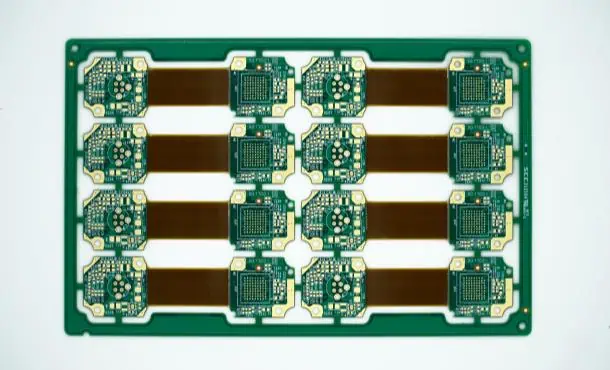
CCTV Camera Rigid Flex PCB circuit board Design

rigid-flex pcb fabrication
Camera Rigid Flex PCB Cost

Name : Camera Rigid Flex PCB Cost

Layer count : 6 Layer PCB

Board thickness : 0.9 mm

Copper thickness :1 oz

Fr4 Material: IT180A + AK

Application: Vehicular HD camera

Feature: Rigid-flexible

Rayming provide rigid flex pcb assembly service too, send your files to get quote now.

Introduction

Closed-circuit television (CCTV) cameras used for video surveillance rely on small, lightweight printed circuit boards (PCBs) to host the image sensor, processor, and interconnect components. Rigid-flex PCB technology is well-suited for integrating the high density functions within the tight space constraints of camera modules.

This article provides an overview of key design considerations for rigid-flex PCBs used in CCTV cameras. We will focus on the layout, materials selection, stackup, and fabrication factors required to ensure reliable performance under mechanical and electrical stresses.

CCTV Camera System Overview

CCTV cameras capture video using a lens that transmits images onto a photosensitive image sensor. Key components include:

  • Image Sensor – CMOS or CCD sensor that converts light into electrical signals
  • Lens – Focuses scene onto image sensor; types include fixed, vari-focal, P-iris
  • Image Processor – Chip processes sensor data into video output format
  • Flexible PCB – Interconnects sensor to processor board
  • Memory – Buffers video data before transmission
  • Power Supply – Provides regulated voltages to components

These subsystems are packaged into compact camera modules rugged enough for harsh environments.

Benefits of Rigid-Flex PCBs for CCTV Cameras

Rigid-flex PCBs provide several benefits for CCTV camera applications:

  • Compact integration – Interconnect various rigid PCB assemblies flexibly
  • Layer flexibility – Optimize trace routing using multiple rigid/flex layers
  • 3D configuration – Route traces on multiple axes efficiently
  • Reliability – Withstand vibration/shock without solder cracks
  • Serviceability – Allow disassembly to service/replace modules
  • Signal integrity – Carefully match impedances for video signals
  • High speed support – Facilitate fast data interfaces like MIPI
  • Thermal dissipation – Sink heat using thermally conductive rigid sections

Rigid-flex integration enables packaging innovations not possible with rigid PCBs alone.

CCTV Camera Rigid-Flex PCB Design Considerations

Here are some of the major design aspects and challenges for rigid-flex PCBs used in CCTV cameras:

Electrical Interface Planning

  • Sensor selection influences resolution, pixel formats, and data rates
  • Processor determines video compression methods used
  • Memory capacities depend on video buffering needs
  • High speed serial interfaces like MIPI CSI-2 require impedance control

Routing Complexity

  • Route sensor inputs to processor via flexible layers
  • Fan-out GPU outputs to numerous memory ICs
  • Creative use of rigid-flex layers avoids congestion

Layer Stackup

  • Optimize stackup for routing needs balancing rigidity, flexibility
  • Ensure stackup can support high speed signals without reflections
  • Embed ground planes between critical high speed traces

Component Layout

  • Layout sensor and processor ICs for shortest interconnect
  • Group decoupling capacitors adjacent to ICs
  • Ensure clearance for connectors and components on both sides

Thermal Management

  • Sensor and GPUs generate significant heat needing conduction
  • Incorporate thermally conductive rigid sections to spread heat
  • Allow for thermal expansion and contraction effects

Environmental resilience

  • Withstand humidity, contaminants, shock and vibration
  • Avoid brittle materials prone to cracking

Careful electrical and mechanical design is key to withstand electrical and environmental stresses.

CCTV Camera Rigid-Flex PCB Material Selection

Material selection for the rigid and flexible portions of the PCB stackup requires balancing electrical, mechanical, thermal, and cost considerations:

Rigid Substrate

  • Thermally stable, stronger materials handle stresses
  • FR-4 glass reinforced epoxy is commonly used
  • Low CTE polymers manage expansion effects

Flexible Dielectric

  • Thin polyimide films enable dynamic flexing
  • Adhesive “bondply” layers integrate rigid and flex
  • Modified acrylic and polyimide adhesives are options

Copper Foil

  • 1โ„2 to 2 oz. foil is typical for signal traces
  • Selectively thicken power traces for current flow

Soldermask

  • Liquid photoimageable (LPI) preferred for finer features
  • Cured epoxy coating protects circuitry

Coverlay

  • Polyimide films with acrylic adhesive
  • Protects delicate flex circuit traces from damage

Material selection balances cost, manufacturability, and performance.

Stackup Configuration Guidelines

Here are some stackup configuration guidelines for CCTV camera rigid-flex PCB layout:

  • Signal reference planes – Embed ground layers adjacent to critical high speed interfaces for controlled impedance
  • Balance layer counts – Maintain symmetry of dielectric layers through cross-section to minimize warpage
  • Interface isolation – Assign separate ground returns for isolated digital and analog domains
  • Controlled impedances – Match trace widths and spacings to dielectric materials to achieve 50/100 Ohm differential impedances
  • Power integrity – Incorporate power and ground planes to supply clean, regulated voltages with decoupling capacitors
  • Reduce crosstalk – Provide ground/power isolation between noisy circuits and sensitive analog traces
  • Bend radius – Ensure minimum flexible circuit bend radius โ‰ฅ 10X material thickness
  • Reliability – Model stresses and validate design margins through simulation

Careful stackup design ensures signal and power integrity while withstanding stresses.

Fabrication Process Considerations

Fabricating reliable rigid flex PCBs for CCTV cameras involves precision in key process steps:

Lamination

  • Eliminate voids between rigid and flex layers
  • Apply uniform pressure and temperature to bond layers
  • Address resin starvation issues around thick copper shapes

Drilling

  • Tight depth control for holes spanning multiple sections
  • Excellent hit-to-hole registration on dense designs
  • Avoid smear generation compromising hole walls

Routing

  • Precise depth control maintaining target stackup
  • Minimize undercuts violating trace spacing rules
  • Smooth copper foil surfaces; no folds or wrinkles

Plating

  • Uniform copper plating distribution inside holes
  • Good throwing power on high aspect ratio micro-vias
  • Validate hole wall plating integrity through cross-sectioning

Etching

  • Tight process control for 5 mil line widths
  • Eliminate opens or shorts violating tolerances
  • Anisotropic etching on flexible circuits

Soldermask

  • LPI photosensitive coatings for fine features
  • Eliminate voids, gaps or alignment issues
  • Proper curing to avoid outgassing or delamination

A rigorous fabrication process focus enables building high reliability rigid flex boards.

PCB Design Guidelines

Here are some key PCB design guidelines to ensure CCTV camera rigid flex manufacturability and reliability:

  • Maintain minimum bend radius โ‰ฅ 10X flex material thickness
  • Eliminate acute angles; use teardrops when unavoidable
  • Allow tolerances for hole positions spanning rigid-flex areas
  • Check impact of hole densities on alignment accuracy
  • Ensure stackup construction is within lamination capabilities
  • Watch for trapped resin around thick copper shapes
  • Model thermal expansion mismatch stresses using FEA
  • Verify electrical performance under dynamic flexing

Reviews with the manufacturer during design validation phases prevents issues afterwards.

Testing and Inspection

Testing rigid flex PCBs for CCTV cameras involves:

Pre-Treatment Testing

  • Microsection internal layers to validate fabrication quality
  • C-SAM inspection for delamination or interface gaps
  • Cross-section plated holes to check hole wall plating

Post-Etch Testing

  • Verify electrical connectivity between layers catches any shorts
  • Impedance testing of controlled impedance interfaces
  • Check hole registration accuracy using flying probe testing

Post Soldermask Testing

  • AOI scan checks soldermask and legend quality
  • Detect spacing violations or misregistrations

Post-Assembly Testing

  • Validate video signal integrity and bit error rates pre and post flexing
  • Environmental stress testing of populated assembly
  • Life cycle flexure testing for robustness

Rigorous testing at multiple stages ensures quality and reliability.

Conclusion

Rigid flex PCBs provide an enabling packaging solution for integrating the image sensor, processor, memory and interconnects within the tight confines of CCTV camera modules. The combination of rigid sections and dynamic flex layers facilitates routing complexity and 3D configurations not possible with rigid technology alone.

Careful design practices including matching controlled impedances, managing signal isolation, allowance for mechanical stresses, and design-for-manufacturing verification with fabrication partners are vital to ensure reliable performance in demanding conditions. With reliable PCBs, CCTV cameras can capture high quality video securely.

Frequently Asked Questions

Q: What are the main benefits of using rigid-flex PCBs in CCTV cameras?

Rigid-flex PCBs enable creative packaging integration and interconnect within tight spaces while resisting dynamic bending stresses better than rigid PCBs.

Q: What are some key electrical interfaces used in CCTV cameras?

High speed serial interfaces like MIPI CSI-2 are used between image sensors and processors. DDR3/4 memory interfaces support video buffering. HDMI, SDI outputs connect to displays.

Q: What are important design factors from a signal integrity standpoint?

Matching trace geometries to achieve 50 Ohm controlled impedances, isolating analog/digital signals, and minimizing discontinuities is vital for signal integrity.

Q: What fabrication processes need specific attention?

Steps like lamination, drilling, plating, etching and soldermask application require precision when working with thin materials spanning rigid-flex PCBs.

Q: What testing validates the quality and reliability of finished boards?

Pre-treatment inspections, post-etch electrical testing, AOI checks, and post-assembly validation testing provides full quality assurance.

Radar Rigid Flex PCB Manufacturing for Military Warships

WarShip Radar Rigid Flex PCB

PCB Type : Rigid-flex PCB

Application: Warship Radar

Material: Taconic RF-35A2

Characteristics ๏ผš

1. High frequency signal, low dielectric loss

2. Stepped groove structure, immersion gold + thick gold

Rigid flex PCB Manufacturer with high quality control , We provivde Rigid flex PCB assembly too, Send your files to get quote now .

Introduction

Printed circuit boards (PCBs) used in radar systems for naval ships and submarines require high frequency, precision transmission line characteristics to maintain signal integrity. Rigid-flex PCBs enable integrating rigid board sections containing components with flexible circuits interconnecting modules.

This article provides an overview of design and manufacturing considerations for rigid flex PCBs used in shipborne radar systems operating in tough environmental conditions. We will focus on key electrical, mechanical and testing factors involved in ensuring the reliability and performance needed for these critical defense applications.

Overview of Shipborne Radar Systems

Radars are complex electronic systems that detect targets, ascertain bearing and distance, and facilitate navigation and collision avoidance for military vessels. Key types include:

  • Search radar – Detects surface contacts and provides situational awareness
  • Fire control radar – Precisely tracks targets to enable weapon aiming
  • Navigation radar – Identifies terrain, obstacles; supports safe passage
  • Weather Radar – Monitors conditions like storms; helps plan navigation

These high power systems transmit and receive directional radio frequency signals that are processed to generate visual maps on displays. Operating parameters include:

  • Frequency bands – L, S, C, X band (1-12 GHz typical)
  • Peak transmission power – Megawatts
  • Pulse widths – 0.1 to 250 microseconds
  • Scan rates – 6 to 60 RPM continuous rotation

The radar PCBs must deliver RF consistency and reliability in harsh shipborne environments.

Rigid-Flex PCB Technology Overview

Rigid-flex PCBs contain interconnected rigid board areas and flexible circuits allowing three-dimensional configuration. Key elements include:

Rigid Sections

  • Glass reinforced resin laminates for strength
  • Copper layers with etched tracks and pads
  • Components like ICs, passives are mounted here

Flexible Areas

  • Polyimide films that can bend repeatedly
  • Thin copper traces etched on films
  • Interconnects between separate rigid sections

Coverlayer

  • Polyimide film bonded over traces for protection
  • Openings in coverlayer allow connections

Bonded Construction

  • Rigid and flex materials bonded using adhesive sheets
  • Ensure adhesion reliability under shock, vibration

Rigid-flex integration enhances layout efficiency, ruggedness and serviceability.

PCB Substrate and Dielectric Materials

The PCB substrate materials for radar systems need to deliver:

  • Stable dielectric constant over temperature
  • Low thermal expansion for reliability
  • Tight thickness and dielectric tolerances
  • High thermal conductivity for heat dissipation
  • Compatibility with lamination and drilling processes

Typical microwave materials used are:

  • PTFE Composites – Lowest loss; costlier (Rogers 4000, Teflon)
  • Hydrocarbon Ceramics โ€“ Balance cost, performance (Rogers 3003)
  • WF CAF Free Laminates โ€“ Lead-free; improved stability (Isola 370HR)
  • Quartz Loaded Glass Laminates – Improved Q values (Rogers TMM)

The materials determine loss characteristics, wave impedances and propagation speed.

Layer Stackup Configuration

A typical layer stackup for radar rigid flex PCBs comprises:

LayerFunction
SignalHigh frequency traces routed matching impedance
GroundGround plane for return currents, controlled impedance
PowerPower distribution network
DielectricPrepreg bonding matrix between laminates
SoldermaskProtective coating over traces

Key considerations for layer planning include:

  • Number of routing layers required to fit all traces
  • Minimizing overall PCB thickness for form factor
  • Placement of ground and power planes to isolate RF and digital circuits
  • Selectively thickening copper and dielectric to manage currents
  • Balancing number of layers to facilitate lamination

The cross-section is optimized to achieve electrical performance within constraints.

PCB Design Factors

Here are key rigid flex PCB design guidelines for radar systems:

Controlled Impedance

  • Match transmission line impedance to system impedance, often 50ฮฉ
  • Consistent trace geometry for controlled inductance and capacitance
  • Tight thickness tolerances of dielectric materials

Signal Integrity

  • Minimize discontinuities on transmission path – vias, etc
  • Isolate noisy digital routes using ground/power planes
  • Model effects of connectors, trace width changes

Reduced Loss

  • Use low loss dielectric materials to minimize insertion loss
  • Minimize trace length variations between routes

Flex Bend Radius

  • Allow sufficient flexible circuit bend radius โ‰ฅ 10X material thickness
  • Avoid acute bends and tearing under motion

Reliability

  • Eliminate stubs; use teardrop pads at junctions
  • Allow for thermal expansion and contraction stresses
  • Model vibration, shock loads using FEA

Simulating the electrical performance using 3D EM analysis ensures the design meets radar signal integrity requirements prior to fabrication.

PCB Fabrication Process Considerations

Here are key aspects of the fabrication process for high reliability radar rigid flex PCBs:

Lamination

  • Quality laminate materials with controlled thicknesses
  • Careful process control for bond reliability without voids
  • Minimize resin starvation around thick copper shapes

Drilling

  • Excellent hit-to-hole registration accuracy
  • Precise depth control on multilayers
  • Minimal smear generation โ€“ no via wall pulls

Metallization

  • High quality electroless copper uniform coverage
  • Dry film resist patterning for fine features
  • Etching process control to hit 5 mil lines
  • No undercuts or opens violating spacing rules

Plating

  • Excellent throw power on high aspect ratio holes
  • Uniform plating distribution inside barrels
  • No measling or pullaway from hole walls

Soldermask

  • LPI for registration precision, 5 mil openings
  • Cure profile matched to dielectric materials used
  • Adhesion processes ensure robustness

A rigorous process focus enables fabrication of high performance radar boards.

PCB Testing and Inspection

Testing rigid flex boards for radar systems involves:

Pre-Treatment

  • Cross-section microsectioning to validate fabrication quality
  • Microscope inspection of holes for plating defects
  • Scanning acoustic microscopy to identify delamination issues

Post-Etch Testing

  • Verify electrical connectivity and isolate shorts
  • Impedance testing of critical traces and transmission lines
  • Detect ANY layer registration problems using flying probe

Automated Optical Inspection

  • Scan soldermask and legend print quality
  • Detect spacing violations from fabrication process

Post-Assembly Testing

  • Radar module functional testing
  • Power-on system-level test of populated board
  • Burn-in stress testing for early life failures

This combination of fabrication quality checks and post-assembly validation ensures reliability.

Design for Manufacturing Guidelines

Here are some key design-for-manufacturing guidelines for radar rigid flex PCBs:

  • Allow adequate spacing around fine pitch traces for fabrication tolerance
  • Minimize use of acute angles; use tear drops when unavoidable
  • Keep rigid section thickness uniform; avoid sudden changes
  • Eliminate copper stubs; provide radius at conductor junctions
  • Check minimum hole size with stackup thickness
  • Verify registration capabilities for dense microvia transitions
  • Take vibration into account for flexible circuit bend radius
  • Budget for connector spacing and rotations
  • Simulate thermal expansion mismatches in layout
  • Partner with manufacturer early to review design

DFM practices tailored to rigid flex boards prevent issues during fabrication and assembly.

Conclusion

Rigid flex PCB technology provides an optimal solution enabling advanced radar systems for naval platforms that require high frequency circuitry combined with ruggedness. Careful design practices including matching transmission line impedances, managing discontinuities, allowance for thermal stresses, and design for manufacturability verification are vital for manufacturing complex boards that perform reliably in harsh conditions over long system lifetimes. Partnering with manufacturers that have demonstrated expertise building high-reliability rigid flex circuits for defense applications helps mitigate risks for these critical programs. With rigorous quality processes that verify fabrication and assembly quality prior to population, smooth integration into radar modules with confidence is achieved.

Frequently Asked Questions

Q: Why are rigid flex PCBs suited for shipborne radars vs. rigid boards?

Rigid flex integration enables optimal electrical performance through flat rigid sections for components while providing flexible interconnections that withstand shock/vibation better without solder joint cracks.

Q: What are some key dielectric materials used for radar PCBs?

Low loss thermoplastic hydrocarbon ceramics like Rogers 3003TM and glass reinforced hydrocarbon/ceramics such as Rogers 4000ยฎ series are commonly used for radar boards.

Q: How do standard impedances vary for different PCB stackups?

A 50 ohm transmission line could have width variations from ~9 mils on 5 mil dielectric to ~4.4 mils on 3 mil dielectric depending on stackup.

Q: Why is impedance control important for radar PCBs?

A consistent impedance match to radar components is vital to minimize signal reflections and insertion loss which can reduce operating range and resolution.

Q: What tests validate radar module performance?

Testing focuses on verifying directionality, sidelobe suppression, gain uniformity, noise figure, and mapping radiation patterns in azimuth and elevation.

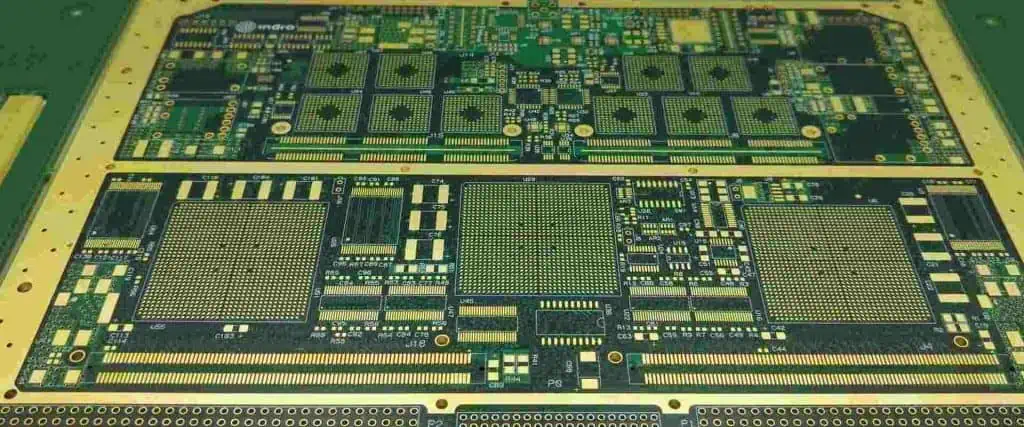
52 Layer PCB Board Flash Gold + Hard Gold Manufacturing

52 layer PCB board

Layer :52 Layer Multi-layer PCB

Material TU-872 SKK Board

Thickness :6.2mm

Size : 440*440mm

Pitch :0.8mm

Board Aspect Ratio:25:1,

VIA DISPOSAL: Non-conductive epoxy filled

Surface Treatment : Flash Gold+Hard Gold

Board Warpage: 0.3% ( Board surface flatness<8mil )

52 layer PCB board
52 layer PCB board

Introduction

High density interconnect (HDI) PCBs with layer counts greater than 20 are increasingly being used in advanced electronics designs to pack more functionality into smaller form factors. 52 layer PCBs represent leading-edge technology, enabling complex routing in tight spaces not possible with conventional boards.

This article provides an overview of the special manufacturing considerations for fabricating 52 layer boards, with a focus on the importance of flash gold and hard gold plating finishes to ensure solder joint reliability. We also outline key factors in partnering with a capable PCB manufacturer able to reliably produce these dense, advanced boards cost-effectively in lower quantities.

Drivers for 52 Layer HDI Technology

Here are some of the key reasons why electronics products utilize 52 layer PCBs:

  • Accommodate I/O-intensive complex devices like FPGAs, ASICs, GPUs
  • Enable length and impedance matching for multi-gigabit interfaces
  • Tightly integrate various functional blocks within strict height limits
  • Avoid connector interfaces by routing multilayer daughtercards onto mainboard
  • Maximize PCB real estate utilization via dense HDI routing
  • Reduce layer counts versus >100 layer builds using lamination stacking
  • Lower costs by eliminating packaging interfacing PCBs

With 52+ layers, electrical engineers can break free from routing congestion limitations and optimize board layout for electrical performance, thermal dissipation, manufacturing yields and system miniaturization.

Key Technology Elements of 52 Layer PCBs

Building reliable 52 layer HDI boards requires mastery of various advanced PCB fabrication and plating processes:

Fine Line Capabilities

  • Tolerances to reliably etch 5/5 mil line/space on external layers
  • 3/3 mil line/space etching on select inner layers
  • Tighter impedance control using thinner copper traces

High Aspect Ratio Plating

  • Semi-additive process (SAP) to plate high aspect ratio through-holes
  • Ensuring uniform plating of via barrels with >10:1 depth to diameter ratio

Microvias

  • Laser drilling to reliably create 0.10 to 0.15mm microvias
  • Forming connections between layers using staggered microvia stacks

Registration Accuracy

  • Tight layer-to-layer alignment of +/- 0.025mm or better
  • Accumulation of registration error across 50+ layers

Lamination

  • Balancing pressures to bond large panel sizes with up to 50 foil layers
  • Eliminating air pockets while curing sheets at up to 200ยฐC

By leveraging advanced processes, 52+ layer count boards with high interconnect densities between layers can be manufactured.

Importance of Flash Gold and Hard Gold Plating

A key process step vital for solder joint reliability of high layer count boards is surface finishing using flash gold over hard gold plating:

Flash Gold

  • 25 to 50 microinches thick gold deposit over nickel barrier
  • Protects nickel from oxidation during storage and assembly
  • Provides excellent solderability for component terminations

Hard Gold

  • Underlying 1 to 2 microns thick gold directly over copper
  • Prevents copper traces from leaching into tin solder over long usage
  • Maintains conductive continuity of traces during thermal cycles

Solder Joint Reliability

  • Flash gold dissolves rapidly into molten solder, enabling strong IMC bonding
  • Hard gold layer prevents brittle intermetallics between copper and tin-based solders
  • Reduces risks of opens, intermittent contacts under thermal cycling

Gold layers cost more but are vital for solderability, oxidation resistance and long-term robustness needed in high-reliability, longer lifetime electronics.

Partnering with an Expert 52 Layer PCB Manufacturer

Building dense, thinner 52 layer boards requires know-how, precision process execution and quality focus within the PCB factory. Key capabilities in a manufacturing partner include:

Technical Expertise

  • Extensive experience manufacturing 20+ layer count boards reliably
  • Fine line PCB technology down to 3/3 mil etching
  • Excellent registration accuracy of +/- 0.025mm or better
  • Smooth lamination using optimized pressures for layer count

Quality

  • Process control focus on plating thickness uniformity
  • Microsectioning and metallography analysis skills
  • Cross-sectioning vias to validate hole wall plating quality
  • Attention to electroless nickel thickness under gold

Testing

  • Specialized bare board electrical testing for shorts between dense circuitry
  • Microsectioning boards from initial runs to verify plating quality
  • Coupon testing for solderability per IPC J-STD-003

Precautions

  • Shielding boards from scratches during handling with 52+ layers
  • Protection of thin traces from nickel corrosion if flash gold omitted
  • Eliminating moisture absorption and preventing delamination

Cost Optimization

  • Maximum panel utilization to batch small run quantitues
  • Value engineering for cost reduction where possible
  • Tight process controls to maximize yields on low volumes

Partnering with manufacturers that have a demonstrated track record building and delivering complex, high layer count boards provides assurance that the first articles will meet design expectations.

Key Specification Considerations

multilayer pcb stackup

Here are some key specifications to review with prospective PCB manufacturers when planning 52+ layer HDI boards:

ParameterConsiderations
Board ThicknessTarget thickness with layer count, dielectric materials used
Number of Layers52-60+ active signal layers are typical range
Line Width/Space5/5 mil on outer layers, 3/3 mil on selected inner layers
Aspect Ratio10:1 depth:diameter ratio needs plating process finesse
Hole Size~0.15mm range including annular ring
Microvia TechnologyStaggered laser drilled blind and buried vias
Dielectric MaterialsResin system selection e.g. BT, epoxy, polyimide
Registration+/- 0.025mm tolerance ideal on >50 layer builds
Surface FinishesElectroless Ni/Immersion Au or HASL, important for soldering
Solder Mask TypeLPI preferred for small openings/registration accuracy
TestingUse bare board electrical tester able to detect shorts
InspectionMicrosectioning of plated holes to check plating distribution
Impedance ControlMatching differential pair impedances vital for high-speed
Plating OptionsFlash gold over hard gold recommended

Rigorously reviewing capabilities against above parameters ensures manufacturer can satisfy design requirements.

Factors that Impact 52 Layer PCB Cost

Here are key considerations impacting the cost of advanced 52+ layer HDI PCBs:

  • Small quantities – High setup costs for low volume prototype builds
  • Panel utilization – Balancing board sizes to maximize use of panel area
  • Board thickness – More layers and thinner dielectrics increase material costs
  • Registration – Tighter tolerances require precision lamination rigs
  • Microvias – High density microvia drilling tied to quantity of holes
  • Plating – Thick gold over entire surface is more expensive
  • Handling – Careful handling required to avoid scratches and contamination
  • Testing – Investment in test fixtures to probe high-density boards
  • Rework – Lower yields increase cost; rework opportunities limited
  • Lead time – Advanced planning enables cost optimization

While significant effort is required for reliability, the approach balances performance with cost manageability.

Assembly Considerations

Here are some key considerations when assembling populated boards using 52+ layer PCBs:

  • Allow slightly thicker solder stencil apertures for adequate paste volume on fine pitch ICs
  • Use adhesive on components susceptible to tombstoning e.g. larger connectors
  • Optical inspection of solder paste print quality before component placement
  • Ensure sufficient preheat ramp rate for even heating of larger boards
  • Characterize optimal reflow profile considering layers; adjust convection reflow
  • Limit rapid cooling after reflow to avoid thermally induced stresses
  • Thoroughly clean any trapped flux residues under components post soldering
  • Conduct shock/vibration testing for mechanically reliable solder joints

With careful assembly process optimization, reliable soldering and inspection can be achieved.

Conclusion

Advanced 52 layer PCB designs enable packing of high component densities and routing complex signals between layers. Producing these leading-edge boards cost-effectively requires know-how in fabrication using fine line technology, laser microvias, thin dielectrics, and high aspect ratio plating across 50+ layers with tight registration tolerances.

Flash gold over hard gold plating is highly recommended for solder joint integrity. Partnering with expert manufacturers skilled in leveraging automated processes for scale is key while applying stringent process controls on lower volume complex PCBs.

With attention to design, materials, special processes, testing and handling precautions, 52+ layer HDI boards can deliver powerful functionality within tight form factor constraints across long product life cycles.

Frequently Asked Questions

Q: Why are 52 layer boards preferred over boards with 100+ layers?

Stacking 52-60 layers achieves routing density goals while avoiding reliability and cost issues with boards having 100+ layers. Key issues with 100+ layer designs include high thermal stresses, potential for plating folds in ultra-thin dielectrics, limited fabricator expertise and exponential costs.

Q: What drives the need for increasing PCB layer counts?

Key drivers for higher layer counts are integrating more functionality into constrained spaces, accommodating high I/O device pinouts, enabling 3D stair-step routing, and avoiding connectors between boards through vertical system-in-package integration.

Q: What insulating dielectric materials are commonly used?

Common dielectric materials for high layer count boards include FR-4, polyimides, bismaleimides (BT), Isola, ceramics and liquid crystal polymers. Material selection balances cost, performance and manufacturability.

Q: How does the cost scale with layer count increases?

As layer counts increase, raw materials and processes involving handling, preparation, lamination, drilling and plating become exponentially more expensive due to higher precision requirements and yields. Testing costs also rise significantly.

Q: What design guidelines help maximize manufacturability?

Key guidelines aiding manufacturability include maximum utilization of panel area, maintaining symmetry of metal and dielectric thickness across layers, allowing adequate annular rings on microvias, minimizing high aspect ratio plating, and applying finish over all exposed copper.

Top 10 PCB Assembly Manufacturers in China

pcb assembly cost down

Introduction

Printed circuit board (PCB) assembly involves soldering and assembling electronic components onto fabricated PCBs using surface mount technology (SMT) and/or through-hole assembly processes. As products become more complex and miniaturized, PCB assembly requires advanced technical capabilities, stringent process controls and quality checks.

China has emerged as a global electronics manufacturing hub with an expansive PCB assembly industry catering to diverse end markets and geographies. This article highlights the top 10 premier PCB assembly manufacturers in China based on factors like production expertise, quality systems, capacity, customer service and value.

Overview of PCB Assembly Process

FULL PCB MANUFACTURING Quote

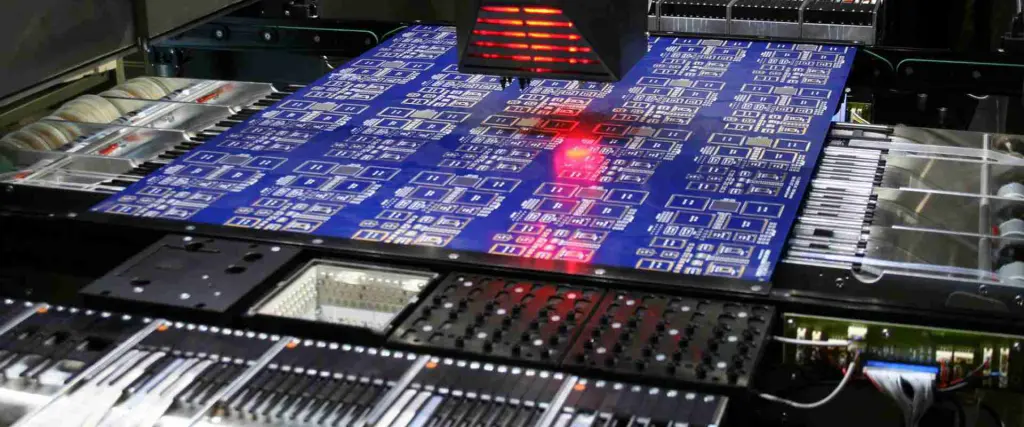
The typical SMT assembly process involves the following key steps:

  • Solder Paste Printing – Solder paste is applied on PCB pads where components will be placed to form solder joints post reflow. Stencils control solder deposition.
  • SMT Pick and Place – Surface mount components are picked from reels/trays by high-speed pick-place machines and accurately placed on target pads.
  • Reflow Soldering – The PCB travels through a convection reflow oven heating the board. The solder paste melts, fuses and solidifies to form solder joints securing components.
  • Cleaning – Flux residues left after soldering are cleaned using systems like batch cleaning.
  • Inspection – Automated optical inspection (AOI) systems check for defects in solder joint quality or component placement accuracy.
  • Testing – Electrical tests validate boards for correct functionality adhering to IPC standards. Common tests include in-circuit (ICT), flying probe, boundary scan.
  • Conformal Coating – A protective plastic coating may be applied on the assembled board surfaces.

For through-hole assembly, leads are inserted into plated holes in boards either manually or by automated insertion, then wave soldered.

Rigorous process controls and testing ensures reliable, high-yield PCB assemblies. Premier manufacturers invest in advanced automation, inspection and quality systems.

Benefits of Outsourcing PCB Assembly to China

Here are some of the major advantages of outsourcing PCB assembly to China:

Cost Savings

  • Lower labor costs compared to Western countries
  • Highly competitive vendor market drives down pricing
  • Reduced logistics costs due to availability of components locally

Production Expertise

  • Skilled engineering workforce adept in assembly processes
  • Extensive experience across diverse, complex product assemblies
  • Technologically advanced manufacturing equipment and processes

Quality

  • Many manufacturers certified to IPC Class 2 and 3 standards
  • Rigorous quality control and inspection systems
  • Strong focus on process improvement and quality

Capacity

  • Massive production capacity across thousands of assembly facilities
  • Ability to scale easily from prototypes to high-volume production

Supply Chain

  • Close proximity to upstream PCB fabricators and component suppliers
  • Local sourcing of passive components, connectors etc.

Service

  • Strong emphasis on customer service and technical support
  • Responsiveness to quote and design turnaround requests
  • Communication and IP protection mechanisms

By selecting the right partner, companies can leverage China’s PCB assembly capabilities, capacity flexibility and cost advantages while ensuring quality standards.

Top 10 PCB Assembly Manufacturers in China

1. RayMing Technology

RayMing-PCB-and-Assembly

Founded in 2005, RayMing Technology is a leading technologically advanced PCB solutions provider with over 500 employees globally.

Key capabilities:

  • SMT assembly with components as small as 01005 (0.4mm x 0.2mm)
  • 0201 (0.6mm x 0.3mm) chip components assembly
  • Advanced SMT technologies – uBGA, 0.3mm pitch QFN, 0.4mm pitch CSP
  • 12 high-speed SMT assembly lines with 55,000 CPH capability
  • Double-sided, multilayer, HDI, rigid-flex PCB assembly expertise
  • Through-hole, mixed technology assembly support
  • Full functional/ICT/flying probe testing, x-ray inspection
  • Conformal coating, potting, gluing, heat sinking services

RayMing is certified to ISO 9001, ISO 13485, ISO 14001 standards and provides full turnkey assembly solutions from prototyping through volume production for medical, industrial equipment, telecom infrastructure and automotive customers globally.

2. WT Microelectronics

WT Microelectronics is a technologically advanced EMS company providing SMT, through-hole and mixed PCB assembly services from China.

Key capabilities:

  • High-mix, low-volume SMT assembly capabilities
  • 01005 component assembly with 0.2mm pitch
  • BGA, 0.4mm pitch CSP, 0201 and 0.3mm pitch components
  • 9 high-speed SMT assembly lines with 36,000 CPH capacity
  • Double-sided and multilayer PCB assemblies
  • Functional testing, AOI, X-ray inspection, ICT
  • Box build, coating, precision cleaning services

WT Microelectronics provides full assembly solutions including procurement, turnkey NPI, test development and global logistics. They cater to industrial, automotive, and medical OEMs across the world.

3. Hollison Electronics

Hollison provides advanced electronics manufacturing services including PCB assembly from China for global customers since 2000.

Key capabilities:

  • High mix, low-mid volume PCB assembly expertise
  • SMT lines handle BGAs with 0.5mm pitch, 0201 components
  • 9 high-speed SMT assembly lines with 50,000 CPH
  • Testing services include ICT, AOI, flying probe
  • Conformal coating, potting, gluing, heat sinks
  • UL, ISO 9001, ISO 14001, ISO 13485 certifications
  • Full turnkey assembly with procurement, inventory management

Hollison services diverse industries including industrial equipment, automotive electronics, LED lighting, and home appliances using automated assembly technologies for reliable quality.

through-hole assembly process

4. ChuangLian Electronics

ChuangLian Electronics provides advanced SMT and through-hole PCB assembly in China across 8 plants with over 4000 employees.

Key capabilities:

  • High, medium and low volume PCB assembly
  • 90 high-speed SMT lines with 50,000 CPH capacity
  • Assembly down to 01005 components, 0.3mm QFNs, 0.4mm BGAs
  • ICT, AOI, X-ray testing performed post assembly
  • Conformal coating line for protection
  • UL, ISO 9001, ISO 14001, ISO 13485 certified
  • Full procurement, turnkey assembly and order tracking

ChuangLian services diverse customers globally in computing, medical, industrial, communications sectors using automated processes for consistent quality.

5. Shenzhen geomettry electronics Co.Ltd

Geomettry Electronics provides advanced PCB assembly solutions from China with manufacturing facilities in Dongguan and Fuqing.

Key capabilities:

  • Medium to high volume SMT assembly expertise
  • SMT lines handle 0201 discretes and 01005 passives
  • 0.3mm pitch QFNs, 0.4mm pitch CSPs assembly support
  • Functional test, flying probe test capabilities
  • X-ray inspection, AOI, SPI offered
  • ISO 9001 and ISO 13485 quality certified
  • Full procurement, turnkey assembly services

Geomettry focuses on quality and efficient manufacturing of high-mix or low-to-medium volume assemblies for global OEM customers across industries.

6. Shenzhen Zowie Technology

Zowie Technology is an ISO 9001 and ISO 13485 certified electronic manufacturing service providing SMT assembly in China.

Key capabilities:

  • Medium to high volume production support
  • SMT lines handle 01005 discretes and 0.3mm pitch ICs
  • QFPs, CSPs, 0201 capacitors assembly expertise
  • AOI, flying probe, X-ray inspection testing
  • Protection using solder mask, silkscreen, conformal coating
  • Full turnkey assembly with procurement
  • UL certified manufacturing processes

Zowie services customers globally in industrial controls, IoT, telecom infrastructure and medical devices segments requiring high-mix, flexible assembly.

smt assembly equipment

7. EpochSensation EMS

EpochSensation provides end-to-end EMS including PCB assembly in China for customers across consumer, industrial, automotive and medical segments.

Key capabilities:

  • Low to medium volume, high-mix assembly
  • SMT lines handle 01005 to 0402 components
  • uBGAs, QFNs, 0201 LED assembly expertise
  • ICT, flying probe and functional testing
  • AOI, x-ray inspection and SPI offered
  • Conformal coating and related protection
  • UL, ISO 9001, ISO 14001, ISO 13485 certified
  • Full turnkey assembly with procurement

EpochSensation focuses on flexibility in efficiently assembling highly complex, low to medium volume products for reliability.

8. Shenzhen Depue Technology

Depue Technology offers advanced SMT and mixed PCB assembly solutions from China with over 500 employees.

Key capabilities:

  • High mix, low-mid volume assembly expertise
  • SMT lines handle 01005 passives and 0201 actives
  • Optical inspection and X-ray capabilities
  • Rigid, flex, rigid-flex PCB assembly support
  • Functional testing expertise
  • Supply chain and logistics management
  • UL, ISO 9001, ISO 14001, ISO 13485 certified
  • Full box build, precision cleaning assembly

Depue Technology provides full turnkey and new product introduction (NPI) assembly services for industrial, medical and communications segments.

9. Shenzhen Enkson Electronics

Enkson provides advanced electronics manufacturing services from China including PCB assembly, testing and box build.

Key capabilities:

  • Medium to high volume SMT assembly
  • SMT component sizes down to 01005 handled
  • uBGAs, QFNs, 0201 and 0402 passives assembly
  • Triple inspection process – AOI, X-ray, ICT
  • Rigid, flex and rigid-flex assemblies
  • Potting, gluing, heat sink assembly services
  • UL, ISO 9001, ISO 13485, IATF 16949 certified
  • Full procurement, inventory, kitting services

Enkson specializes in quality focused Automotive, Industrial and Medical PCB assemblies.

10. Shenzhen Seaory Technology

Seaory Technology offers high mix PCB assembly solutions from China to customers globally.

Key capabilities:

  • Low to medium volume, high mix assemblies
  • SMT lines handle 01005 to 0402 components
  • uBGAs, 0201 LEDs, QFN components assembly
  • Functional test, flying probe, boundary scan testing
  • X-ray inspection and AOI capabilities
  • Conformal coating, boxing, heat sinking services
  • UL, ISO 9001, ISO 14001, ISO 13485 certified
  • Complete turnkey assembly with procurement

Seaory provides flexible, high-quality assembly solutions catering to Industrial Controls and IoT market segments.

Key Factors for Selecting a PCB Assembly Partner in China

Here are the most important criteria to evaluate when selecting a PCB assembly partner in China:

Technical Expertise

  • Type of assembly technology – SMT, thru-hole, mixed
  • SMT component sizes handled – 01005s, 0201s etc.
  • Fine-pitch component capabilities – uBGAs, QFNs etc.
  • Number of SMT assembly lines and overall capacity
  • Skill in assembling high-complexity PCBs
  • Testing capabilities – ICT, flying probe, functional

Quality

  • Quality certifications – ISO 9001, IPC Class 2 or 3
  • AOI, X-ray inspection and SPI process implementation
  • Process control and monitoring systems
  • Corrective action processes – 8D reporting etc.
  • Quality engineering support and analysis

Volume Flexibility

  • Prototyping to low, medium and high-volume expertise
  • Short-run vs. volume pricing models
  • Changeover process agility between mixed volumes

Service

  • Technical sales engineering support
  • Design for manufacturing (DFM) analysis
  • Procurement and inventory management services offered
  • Programming and test development support

Cost

  • Pricing model – per component, operation charge etc.
  • Geographic labor rate differences
  • Total delivery cost – assembly + logistics
  • Value engineering recommendations

Customer Focus

  • Responsiveness to requests and communication
  • Order tracking transparency and tooling
  • Continuous improvement and feedback processes
  • Program management during product lifecycle
  • Information security and IP protection

By thoroughly evaluating partners on these key parameters, product teams can identify the right PCB assembly partner matching technical needs, quality expectations, volume flexibility, cost targets and ease of doing business.

Key Success Factors for High-Quality PCB Assembly

Here are some of the vital factors that PCB assemblers need to focus on continuously to achieve consistent quality and reliability:

PCB Design

  • Well-defined assembly drawings and documentation
  • DFM review of placements for manufacturability
  • Sufficient test points for validation and debugging

Components

  • Rigorous sourcing processes for certified suppliers
  • Handling and moisture sensitivity controls
  • Proper storage conditions and expiration management

Processes

  • Documented SMT assembly procedures for repeatability
  • Optimization of solder paste printing
  • Thermal profiling to specifications of soldering equipment and materials used
  • Minimizing placement disruptions e.g. mid-batch component loading

Inspection

  • Clearly defined AOI inspection criteria and review
  • X-ray inspection focus on hidden solder joints
  • Solder joint criteria aligned with IPC standards

Testing

  • Validating test fixtures match design regularly
  • Focusing on functionality testing, not only continuity
  • Debugging capability using flying probes

Training

  • Skills development for machine operators on latest assembly technologies
  • Cross-training staff on multiple functions
  • Process knowledge sharing across production teams

Data Analysis

  • Capture and trending of key process performance metrics
  • Root cause analysis of defects and process deviations
  • Correlating inspection, test and field data

By rigorously focusing on each step of the assembly process and driving continuous improvement, premier partners deliver exceptionally high yields with uncompromising quality.

Frequently Asked Questions

Q: What documentation is required from customers for PCB assembly?

Typical documents needed for assembly are:

  • Manufacturing drawings showing component placements
  • BOM listing reference designators, components and sources
  • Gerber, drill, and assembly drawings
  • IPC netlist detailing connectivity
  • Special process instructions e.g. gluing steps
  • Approved vendor lists
  • Test procedures

Q: How is component procurement handled for PCB assembly?

There are three approaches:

  1. Customer supplies components
  2. Manufacturer procures components
  3. Manufacturer makes recommendations, customer procures

Supplying excess component quantities upfront avoids lead time delays. Some assemblers stock common components.

Q: What manufacturing defects can be detected during PCBA inspection?

AOI inspection finds issues like:

  • Missing or skewed components
  • Insufficient or excess solder
  • Solder balls/bridges
  • PCB damage
  • Foreign object debris

X-ray catches phenomena like:

  • Head-in-pillow
  • Voids in QFN/BGA joints
  • Misalignments under components
  • Broken joints and lifts

Q: How is the PCBA prototyping process different from production?

Prototyping involves more close collaboration between engineers on:

  • Design reviews to resolve manufacturability issues
  • Procurement of small component quantities
  • Testing via debug points vs. test fixtures
  • Incremental build approach to check key functions
  • Additional inspection points to characterize assembly
  • Version control of BOMs, drawings, software

The focus is on flexibility, validation, quality characterization and learning.

Q: What key data should be tracked for process control?

Key PCBA metrics to track include:

  • Assembly yields – SMT, thru-hole, box build
  • Workmanship defects from AOI
  • Test yields and failure pareto
  • Process parameters like solder paste volumes
  • Down times
  • Supplier quality ratings
  • Field returns and failure analysis

Data drives continuous improvement.

Summary

As products require increased functionality in smaller formats, the PCB assembly process needs to evolve with more precise equipment, smaller component handling capability, better inspection systems and quality focus. China offers a vast range of advanced assembly facilities to address diverse prototyping, low to high-volume PCB assembly needs while delivering quality, service, transparency and program management excellence.

By partnering with the premier manufacturers showcased above, companies around the world can leverage China’s PCB assembly value proposition to achieve technology leadership, quality excellence and cost competitiveness necessary to compete and win globally across many dynamic end markets and applications.

What are Solder Paste Stencils?

LASER STENCIL MANUFACTURER
Solder Paste Stencils

As the electronics technology is advancing, the use of through-hole electronic components is getting out of fashion, and Surface Mount Devices have replaced them. The production of modern components is mostly Surface Mount Technology based.

Consequently, many manufacturers prefer using SMDs based products. When it comes to bulk production, manually soldering each board can be hectic and time-consuming. Besides the quality of each joint matters, even a poor joint can trigger malfunctioning in the product.

YouTube video

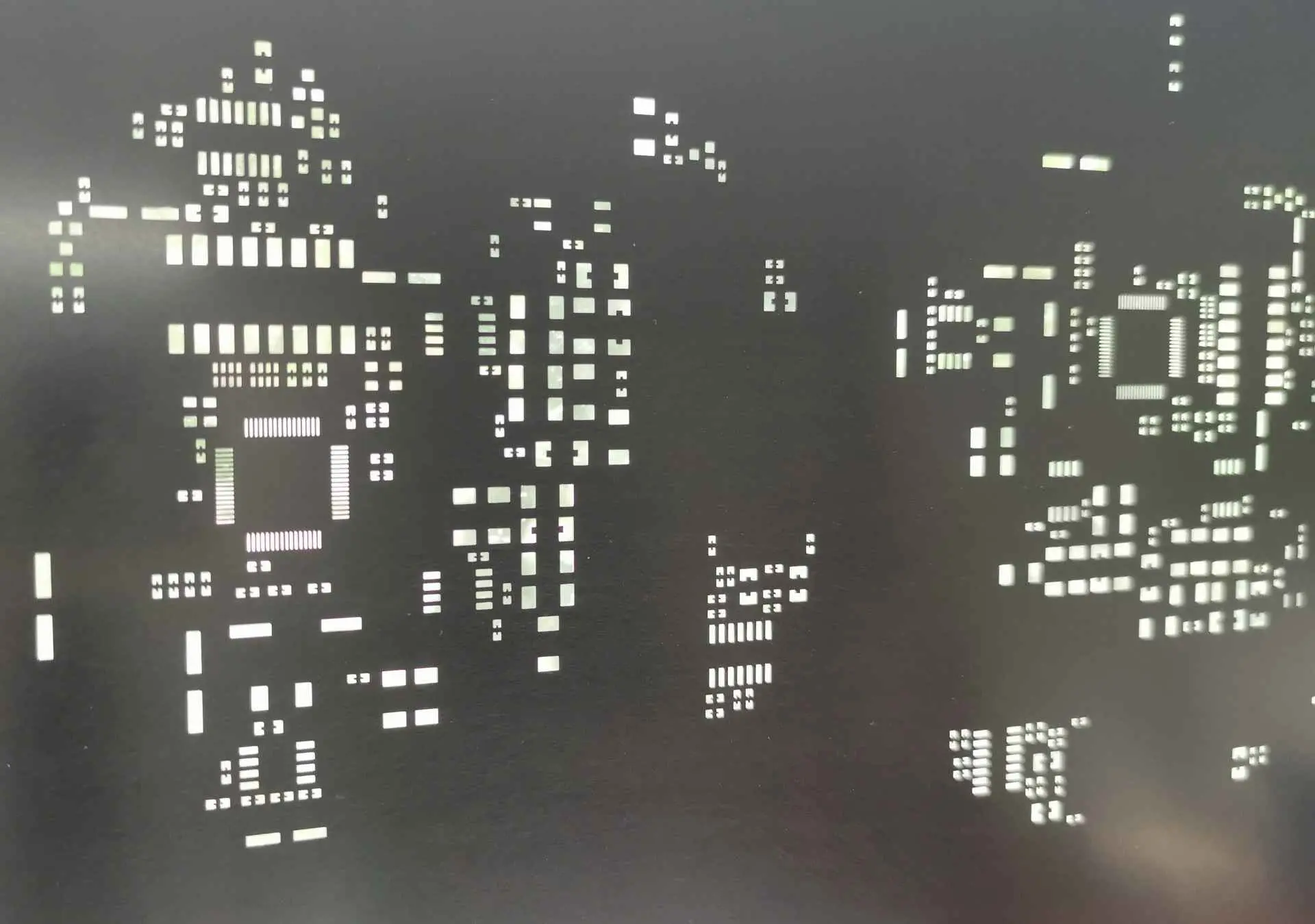
Surface Mount Technology Stencils offer convenience in depositing solder paste within perfect quantity and shape. All you need to do is to set up your board, put some solder paste and swipe it. In case of a single prototype to be developed, using an SMT stencil can be costly and, but for bulk production, SMT stencils can considerably reduce production time and cost.

Stencils are usually used in industry for bulk production, and a single stencil can serve thousands of PCBs. However, for few units production, metal stencils can be expensive. For small quantity of units to be produced, polyimide stencils are more suitable. These laser cut stencils works reliably if you are working on a few boards. Since these laser stencils are made of synthetic polymer, and the development cost is low, they are suitable for a limited quantity of boards to be developed.

How are Solder Paste Stencils Designed?

FULL PCB MANUFACTURING Quote

The solder paste stencil is designed using a soft version of the project. During the circuit is designed using any designer software such as Altium, Eagle, DipTrace or Kicad. The soft design includes a layer of solder paste and using this layer machine is instructed to cut holes in exact dimensions are precise locations.

The dimensions and location of each stencil hole determine its efficiency, designing a stencil using original design files of circuit ensure the locations are accurate and the solder paste is deposited in precise dimensions.

Since the solder paste needs to be deposited in a limited region and it can spread slightly out the hole boundaries. To cover up the excessive deposition, the stencil holes are designed a bit smaller the component pads.

How is a Solder Paste Stencil Used?

Using a solder paste stencil is simple and easy. The hardware must be set up properly before deposition, and the PCB needs to be in stationary position, in case of vibrations or movement, the solder paste might be deposited out the pads.

After setting up hardware, the stencil and PCB must be appropriately aligned. The alignment should ensure each solder pad is exposed through the holes of the stencil. Fix stencil on PCB. When aligning the stencil and PCB, look for IC pads, they are easy to track as they have multiple pads.

Carefully verify each pad is exposed through the hole and then put some solder paste on the stencil, using a card, slowly spread solder paste on holes. The paste needs to be spread in all direction to ensure the hole is appropriately covered with paste and the pad is not left uncovered partially.

Solder paste should be used within a few hours of pasting, in case of delay, its efficiency might reduce. Usually, solder paste deposited on stencil is more than needed and the extra paste is used for the next board. It is recommended to use a limited quantity of paste that can be served on a single board.

When the paste has been deposited entirely, remove tapes on the stencil and carefully remove the stencil from the PCB. Inspect each pad, check if the paste has been appropriately deposited. In case, the paste has spread more than needed, it must be removed, and if the paste is missing on any locations, it must be deposited manually.

After the paste is deposited on a PCB, often some paste is left in the stencil holes. This leftover paste is not harmful to the stencil and can be wiped later.

laser cut stencils

Carefully place all components using SMT pick and place machine, ensure the direction of the component is according to the design. Sometimes, during the placement of components, the component is misplaced or disoriented. Such misplacements can cause improper or no soldering of any legs. In such case, carefully move disoriented component and bring it in a proper place. A minute quantity of paste is often spread around the pad during the replacement. But during heating, this paste reaches back to the pad.

After a detailed examination of each component, the PCB is passed through an oven which heats the board from the top and the paste turns into molten solder. The paste is usually in flat formation before heating but as soon as it is heated, it takes the form of a proper solder joint, and the corresponding componentโ€™s leg is soldered with the pad.

Solder paste deposition demands patience and practice. The procedure is easy, but the process needs to be handled carefully.

Solder Paste Stencils manufacturing at RAYMING

RAYMING is a top notch seller of a variety of solder paste stencils. It doesnโ€™t matter if you belong to a small or large industry with a few or several units order, RAYMING will come up with an affordable offer for you.

We offer various services related to prototype PCB assembling. The modern technologies and state of the art machinery at RAYMING labs maintain superior quality of our services. So far, we have assisted industries belonging to different segments of the market, and we have developed a name for quality services.

We understand that the product reliability and durability are the core qualities that should not be compromised at any cost. Our automated systems enable us to focus even on microscopic level details of products.

Product development with proper testing makes it reliable and builds the confidence of consumer in using it. We, as a manufacturer of solder paste stencils, test each stencil on our advanced systems and our team ensures the product quality is maintained according to international standards.

RAYMING cares about small industries, and it has played a significant role in uplifting small industries. If you are looking for a PCB stencil manufacturer, share your order details, and we will offer an appealing package.

We are always open to queries, if you need support, contact us at sales@raypcb.com and you will be responded in a short time.

Quick Turn PCB Assembly: Speed Without Compromise

pcb assembly cost down

In today’s fast-paced electronics industry, time-to-market is crucial for staying competitive. Quick turn PCB assembly has emerged as a game-changer, allowing companies to rapidly prototype and produce small batches of printed circuit boards without sacrificing quality. This article delves into the world of quick turn PCB assembly, exploring its benefits, processes, and how to choose the right partner for your needs.

What is Quick Turn PCB Assembly?

Quick turn PCB assembly refers to the rapid production of printed circuit boards, typically for prototyping or small production runs. This service emphasizes speed and efficiency without compromising on quality or reliability. Quick turn assembly involves expedited processes at every stage, from design review to component procurement and final assembly.

Key Features of Quick Turn PCB Assembly:

  • Accelerated turnaround times
  • Flexible production quantities
  • Advanced manufacturing technologies
  • Streamlined communication and project management
  • Rigorous quality control measures

Learn more about:

Benefits of Quick Turn PCB Assembly Orders

Opting for quick turn PCB assembly offers numerous advantages for businesses across various industries. Let’s explore the key benefits:

1. Faster Time-to-Market

In today’s competitive landscape, being first to market can make all the difference. Quick turn PCB assembly significantly reduces production time, allowing you to:

  • Launch products ahead of competitors
  • Capitalize on market opportunities
  • Respond rapidly to customer demands

2. Cost-Effective Prototyping

Quick turn assembly enables efficient prototyping, which can lead to substantial cost savings:

  • Identify and resolve design issues early
  • Reduce the need for multiple revision cycles
  • Minimize waste and material costs

3. Flexibility in Design Iterations

The ability to quickly produce and test prototypes allows for greater flexibility in the design process:

  • Easily implement design changes
  • Experiment with different components or layouts
  • Optimize performance before full-scale production

4. Improved Quality Control

Despite the emphasis on speed, quick turn PCB assembly maintains high-quality standards:

  • Catch and correct errors early in the production process
  • Ensure functionality and reliability of the final product
  • Meet industry-specific quality requirements

5. Enhanced Customer Satisfaction

By reducing lead times and improving product quality, quick turn assembly leads to:

  • Faster delivery of products to end-users
  • Increased customer trust and loyalty
  • Competitive advantage in the market

How to Get Quick Turn PCBAs?

Securing quick turn PCB assembly services involves several key steps:

  1. Prepare Your Design Files: Ensure your PCB design files are complete and error-free.
  2. Choose a Reliable Partner: Select a PCB assembly service provider with a track record of quick turnaround and quality results.
  3. Submit Your Order: Provide all necessary information, including design files, bill of materials (BOM), and any special requirements.
  4. Review and Approve: Quickly review and approve any design for manufacture (DFM) feedback or quotations.
  5. Track Your Order: Stay in close communication with your assembly partner throughout the process.

What is Considered a Quick Turn for PCB Assembly?

The definition of “quick turn” can vary depending on the complexity of the PCB and the capabilities of the assembly partner. However, general guidelines include:

  • Prototypes: 24-72 hours
  • Small Production Runs: 3-5 business days
  • Medium Production Runs: 5-10 business days

It’s important to note that these timeframes can be influenced by factors such as board complexity, component availability, and specific customer requirements.

RAYMING’s Typical Turnaround Time for Quick Turn PCB Assembly

At RAYMING, we pride ourselves on our ability to deliver high-quality PCBAs with industry-leading turnaround times. Our typical quick turn assembly timeframes are:

  • Prototype PCBAs: As fast as 72hours
  • Small Production Runs (1-100 units): 5-8 business days
  • Medium Production Runs (101-500 units): 10-15 business days

These timelines showcase our commitment to speed without compromising on quality or reliability.

Factors that Affect the Turnaround Time of a Prototype

Several factors can impact the turnaround time for quick turn PCB assembly:

1. PCB Complexity

  • Number of layers
  • Board size and shape
  • Component density

2. Component Availability

  • Standard vs. specialized components
  • Lead times for specific parts
  • Alternative component options

3. Assembly Requirements

4. Testing and Quality Assurance

  • Level of testing required
  • Compliance with industry standards
  • Documentation needs

5. Production Volume

  • Prototype vs. small-batch production
  • Scalability of assembly processes

Understanding these factors can help you work more effectively with your assembly partner to achieve the fastest possible turnaround times.

What is the Quick Turn PCB Assembly Process?

The quick turn PCB assembly process involves several key stages, each optimized for speed and efficiency:

1. Design Review and DFM Analysis

  • Rapid assessment of PCB design files
  • Identification of potential manufacturing issues
  • Quick feedback and design optimization suggestions

2. Component Procurement

  • Fast sourcing of required components
  • Utilization of extensive supplier networks
  • Strategic inventory management for common parts

3. PCB Fabrication

  • High-speed PCB manufacturing processes
  • Advanced equipment for quick board production
  • Rigorous quality control checks

4. Component Placement

  • Automated pick-and-place machines for SMT components
  • Skilled technicians for through-hole component insertion
  • Optimized production line setup for efficiency

5. Soldering

6. Inspection and Testing

  • Automated optical inspection (AOI)
  • X-ray inspection for hidden solder joints
  • Functional testing as per customer requirements

7. Quality Assurance and Packaging

  • Final quality checks and documentation
  • Secure packaging for safe transportation
  • Rapid shipping arrangements

By streamlining each of these stages, quick turn PCB assembly providers can deliver high-quality boards in record time.

Choosing the Right Quick Turn Assembly Partner in China

Selecting the right quick turn PCB assembly partner in China is crucial for the success of your project. Consider the following factors:

1. Experience and Expertise

  • Years in the industry
  • Range of PCB assembly capabilities
  • Industry-specific knowledge

2. Technology and Equipment

  • State-of-the-art assembly equipment
  • Advanced inspection and testing technologies
  • Continuous investment in new capabilities

3. Quality Certifications

  • ISO 9001 certification
  • IPC standards compliance
  • Industry-specific certifications (e.g., AS9100 for aerospace)

4. Communication and Customer Service

  • English-speaking support staff
  • 24/7 availability
  • Transparent and responsive communication

5. Flexibility and Scalability

  • Ability to handle various order sizes
  • Quick adaptation to design changes
  • Scalability for future production needs

6. Intellectual Property Protection

  • Robust IP protection policies
  • Confidentiality agreements
  • Secure data handling practices

7. Cost-Effectiveness

  • Competitive pricing
  • Value-added services
  • Transparent quotation process

Why Should You Choose RAYMING as Your Preferred Partner?

RAYMING stands out as a leading quick turn PCB assembly partner in China for several compelling reasons:

1. Unparalleled Expertise

With over 15 years of experience in the PCB industry, RAYMING has developed deep expertise in quick turn assembly across various sectors, including automotive, aerospace, medical, and consumer electronics.

2. Cutting-Edge Technology

We invest continuously in the latest assembly equipment and technologies, ensuring that we can handle even the most complex PCB designs with speed and precision.

3. Rigorous Quality Control

Our ISO 9001-certified facilities and adherence to IPC standards guarantee that every PCBA we produce meets the highest quality standards, regardless of the turnaround time.

4. Customer-Centric Approach

We pride ourselves on our responsive customer service, with dedicated project managers ensuring clear communication and rapid resolution of any issues throughout the assembly process.

5. Flexible and Scalable Services

Whether you need a single prototype or a production run of thousands, RAYMING can adapt to your requirements, providing consistent quality and speed at any scale.

6. Comprehensive Capabilities

From design review to final testing and packaging, we offer end-to-end PCB assembly services, streamlining your supply chain and reducing time-to-market.

7. Competitive Pricing

Our efficient processes and strategic location in China allow us to offer highly competitive pricing without compromising on quality or speed.

Conclusion

Quick turn PCB assembly has revolutionized the electronics manufacturing industry, enabling companies to bring products to market faster than ever before. By choosing the right assembly partner, you can leverage this powerful service to gain a competitive edge, reduce costs, and improve product quality.

RAYMING’s commitment to speed, quality, and customer satisfaction makes us the ideal choice for your quick turn PCB assembly needs. Whether you’re a startup looking to prototype your first product or an established company seeking to optimize your production process, we have the expertise and capabilities to exceed your expectations.

Don’t let slow turnaround times hold your projects back. Experience the RAYMING difference in quick turn PCB assembly today. Contact us to discuss your PCB assembly needs and discover how we can help accelerate your time-to-market without compromising on quality.

What is 3 layer PCB?

double layer pcb circuit board

3 Layer PCB or Three layer PCB Board , Is less in the normally in the market, most most multilayer plural layer like 4 layer , 6 layer, 32 Layer.

Sometime some electronic device need special layer stack up to get the performance , and sometime ,just PCB designer want to save cost , not do 4 layer

RayMing is 3 layer PCB manufacturer ,Welcome to send your design to sales@raypcb.com , We will give your quote asap

Introduction

A printed circuit board (PCB) forms the foundation for building electronic circuits by providing the base for mounting and interconnecting components. PCBs with multiple conductive layers enable increased component density and complex circuit routing. A 3 layer PCB refers to a board with three copper layers separated by insulating dielectric substrates.

This article provides a comprehensive overview of 3 layer PCB technology. We will cover the advantages of 3 layer boards, their construction, common design techniques, applications, and manufacturing considerations. With an understanding of their capabilities and limitations, engineers can effectively utilize 3 layer PCBs in many types of electronic designs.

Advantages of 3 Layer PCBs

Shengyi S1000h PCB

Three layer boards provide the following benefits compared to simpler 2 layer PCBs:

  • Added routing flexibility – The extra layer allows more interconnectivity and circuit optimization. Parts placement and routing are less constrained.
  • Improved signal integrity – The middle layer can be a continuous ground plane. This provides controlled impedance signal routing on outer layers.
  • Lower EMI/noise – Enclosing signals between power and ground layers reduces interference and crosstalk.
  • Better power distribution – Additional layer allows power-ground plane pairs for each voltage domain.
  • Higher component density – Components can be placed on both sides with vertical interconnects through the middle layer.
  • Smaller board sizes – Miniaturization by utilizing both sides for SMT parts placement.
  • Mixed signal designs – Analog and digital sections can be segregated across layers.

For these reasons, 3 layer construction provides excellent capability and cost-benefit for many electronic products.

Construction of 3 Layer PCBs

The fabrication of 3 layer printed circuit boards involves laminating conductive copper layers separated by insulating dielectric substrates:

  • The center substrate is called the core. It provides mechanical support. The default material for core and prepreg layers is typically glass reinforced FR-4.
  • A sheet of copper foil is laminated onto both sides of the core. These form the top and bottom conductive layers of the PCB.
  • Photolithographic processing patterns the copper layers into the required circuit traces, pads, and features.
  • Plated through holes and buried vias provide vertical interconnections between the layers.
  • Soldermask selectively coats the copper layers for protection and isolation.

This creates a 3 layer board ready for component assembly. The sequence can be repeated to build multilayer boards.

Typical 3 Layer Stackups

While all 3 layers can be used for routing signals, some standard layer assignments provide good design starting points:

3 Layer With Ground Plane

  • Layer 1 – Signals
  • Layer 2 – Ground plane
  • Layer 3 – Signals

This offers a continuous reference ground plane for controlled impedance routing and shielding.

3 Layer With Split Power Planes

  • Layer 1 – Signals
  • Layer 2 – Split power planes (VCC and VDD)
  • Layer 3 – Signals

Separate power supply domains can be isolated between the split power planes.

3 Layer With Buried Signal Plane

  • Layer 1 – Ground
  • Layer 2 – Signals
  • Layer 3 – Ground

The buried signal layer fully encompasses routing surrounded by ground planes.

The stackup can be customized based on signal isolation, thermal and EMI requirements.

Design Considerations for 3 Layer Boards

Isola FR406N PCB

Here are some important design practices when working with 3 layer PCBs:

  • Split power planes correctly for digital and analog domains based on current levels.
  • Use a large number of via stitches to connect split power planes for lowest impedance.
  • Assign critical signals to outer layers adjacent to the ground/power planes.
  • Route opposing signal polarities on same layer to minimize crosstalk.
  • Use diagonal routing over middle layer to change layers when needed.
  • Enable thermal relief stitching for highest current paths.
  • Maximize copper area on outer layers for best heat dissipation.
  • Follow adequate design clearances between planes and traces.
  • Model power and ground impedances to avoid resonance and coupling issues.
  • Simulate signal integrity and radiated emissions to high frequencies.

Proper 3 layer stackup design and layout techniques result in schematics which transition smoothly through manufacturing.

Typical Applications of 3 Layer PCBs

Here are some examples of products where 3 layer boards are commonly used:

  • Consumer electronicsIoT devices, smart home gadgets, wearable tech
  • Vehicles – Auto infotainment panels, GPS display units
  • Industrial – PLCs, motor controllers, sensors
  • Instrumentation – Meters, analyzers, handheld testers
  • Medical – Diagnostic equipment, body-worn monitors
  • IT – Ethernet switches, modems, routers
  • Communications – Radio transceivers, video gear

3 layer boards balance cost, complexity and performance for mid-range applications. The proliferation of digital electronics drives large volumes of 3 layer PCBs today.

3 Layer PCB Manufacturing Overview

3 layer PCB fabrication in volume involves the following key steps:

  • Materials – Core substrates, prepreg, copper foils
  • Imaging – Photoresists, direct laser/mechanical patterning
  • Lamination – Stacking layers under heat and pressure
  • Etching – Chemically etching away unwanted copper
  • Drilling – Machines drilling holes for vias and mounting
  • Plating – Electroplating copper over hole walls and surfaces
  • Solder mask – Liquid photoimageable solder resist layers
  • Silkscreen – Printed reference markings
  • Testing – Electrical testing, quality inspection
  • Assembly – SMT component placement and soldering

High-yielding fabrication lines enable cost-effective mass production of 3 layer boards.

Conclusion

With three conductive layers to work with, PCB designers have sufficient flexibility to route out interconnects and partition domains without undue complexity. 3 layer boards offer excellent capability per unit cost, enabling their ubiquity across industrial and consumer electronics. Advances in PCB materials, fabrication equipment and assembly technologies will continue to improve technical features, density and reliability while reducing manufacturing costs.

Frequently Asked Questions

Here are some common questions about 3 layer PCBs:

What are the typical substrate thicknesses used in 3 layer boards?

Standard cores are commonly 0.8mm, 1.0mm, 1.6mm while prepregs range from 0.1mm to 0.25mm. Overall thickness is usually between 1.6mm to 2.4mm.

What are the minimum track/spacing dimensions achievable on 3 layer boards?

With processes like direct imaging, trace/space down to 125um (5 mils) is routinely achievable on outer layers.

What are common 3 layer PCB sizes?

Smaller boards of around 50x50mm to 160x100mm are typical. Large boards up to 460x360mm area are also manufactured cost-effectively.

What are the limitations of 3 layer boards compared to 4+ layer ones?

Design constraints in routing congestion, inability to isolate multiple signals, lower component density and lack of flexibility for high pin-count parts.

What are common materials available for core and prepreg in 3 layer PCBs?

Standard FR-4, High Tg FR-4, Halogen-free FR-4, Rogers materials for high frequency, Polyimide for flexibility, Ceramic-filled substrates for thermal conduction.

High Quality 20 Layer PCB Manufacturer

10 oz pcb circuit board

4.8mm  20 Layer PCB Manufacturing  

RayMing is 20 layer PCB manufacturer ,Welcome to send your 20 layer PCB Design to sales@raypcb.com , We will give the best quote for you .

20-Layer <a href="https://www.raypcb.com/how-to-plan-multilayer-pcb-stackup/">PCB Stackup</a> Selector

20-Layer PCB Stackup Selector 20LULTRA

Configure layer thicknesses for ultra-high-density 20-layer server, HPC, AI accelerator, datacenter switch, and advanced networking PCB designs

Quick Presets

Layer Assignment (10 Signal + 5 GND + 5 PWR)
L1 SIG
L2 GND
L3 SIG
L4 PWR
L5 SIG
L6 GND
L7 SIG
L8 PWR
L9 SIG
L10 GND
L11 PWR
L12 SIG
L13 GND
L14 SIG
L15 PWR
L16 SIG
L17 GND
L18 SIG
L19 PWR
L20 SIG

Copper Layers (20)

Prepreg Layers (10)

Core Layers (9)

Total Board Thickness
3.500mm
3500 ยตm
vs 3.5mm
+0 ยตm
Copper (20L)
700 ยตm
Prepreg (10L)
1310 ยตm
Core (9L)
1600 ยตm
10
Signal
5
GND
5
PWR
8
Stripline
2
Microstrip

Stackup Visualization

L1 – Top SignalSIG 35ยตm
PP1 114ยตm
L2 – GNDGND 35ยตm
Core 1 100ยตm
L3 – SignalSIG 35ยตm
PP2 114ยตm
L4 – PWRPWR 35ยตm
Core 2 200ยตm
L5 – SignalSIG 35ยตm
PP3 114ยตm
L6 – GNDGND 35ยตm
Core 3 200ยตm
L7 – SignalSIG 35ยตm
PP4 114ยตm
L8 – PWRPWR 35ยตm
Core 4 200ยตm
L9 – SignalSIG 35ยตm
PP5 (Center) 185ยตm
L10 – GND (Center)GND 35ยตm
Core 5 (Center) 200ยตm
L11 – PWR (Center)PWR 35ยตm
PP6 185ยตm
L12 – SignalSIG 35ยตm
Core 6 200ยตm
L13 – GNDGND 35ยตm
PP7 114ยตm
L14 – SignalSIG 35ยตm
Core 7 200ยตm
L15 – PWRPWR 35ยตm
PP8 114ยตm
L16 – SignalSIG 35ยตm
Core 8 200ยตm
L17 – GNDGND 35ยตm
PP9 114ยตm
L18 – SignalSIG 35ยตm
Core 9 100ยตm
L19 – PWRPWR 35ยตm
PP10 114ยตm
L20 – Bottom SignalSIG 35ยตm
SOLDER MASK (BOTTOM)
Outer SIG
Inner SIG
GND
PWR
Prepreg
Core
๐Ÿ’ก 20L Targets
3.2mm: High-density HDI
3.5mm: Standard 20L
4.0-4.5mm: Server/HPC
5.0mm+: Backplane
๐Ÿ“ Impedance
Microstrip: L1โ†’L2, L20โ†’L19
Stripline: All inner SIG
Center: L10โ†”L11 tightly coupled
โšก Power Integrity
5 GND: Distributed ref planes
5 PWR: Multi-rail support
L10-L11: Ultra-low Z decoupling
๐Ÿ”Œ Applications
HPC: GPU/TPU accelerators
Network: 400G+ switches
Server: Multi-socket CPU
๐Ÿ”ง 20-Layer Design Strategy
10 Signal Layers: L1, L3, L5, L7, L9, L12, L14, L16, L18, L20 โ€” Ultra-high routing density for complex BGA fanout (0.3mm pitch), HBM3 memory, 224G PAM4 / 112G NRZ SerDes, and PCIe Gen6.
5 GND Planes: L2, L6, L10, L13, L17 โ€” Ground reference within 4 layers of every signal; L10 center GND provides symmetry axis and shielding.
5 PWR Planes: L4, L8, L11, L15, L19 โ€” Support 6+ voltage rails with splits (VCore, VIO, VDDA, VDDQ, VPP, VCCSA); L10-L11 form ultra-low-inductance decoupling pair.
Via Strategy: Requires sequential lamination with blind/buried vias and microvias (stacked or staggered); via aspect ratio typically 12:1 max.
Material: Consider low-loss materials (Megtron 6/7, Tachyon, I-Tera MT40) for high-speed lanes >25Gbps.
Symmetry: Structure symmetric about Core 5 center for optimal CTE matching, warpage control (<0.5%), and reliable BGA/LGA reflow.

20 Layer PCB Stack Up

20 layer PCB

Introduction

20 layer PCBs enable remarkably dense and complex circuit designs for advanced applications. The multilayer board integrates signals, power distribution and components in a compact form factor. However, fabricating 20 layer boards reliably requires expertise in process control and testing. Selecting the right manufacturer is key to ensuring high yields and performance.

This article discusses capabilities required of a high quality 20 layer PCB production facility. We will go over recommendations for stringent process standards, precision equipment, rigorous testing and qualifications needed to deliver complex multilayer boards with high yields and low defects.

Key Capabilities for 20 Layer PCB Fabrication

Producing 20 layer PCBs pushes fabrication equipment and process limits. Here are some must-have capabilities:

  • Handling board sizes exceeding 460mm x 610mm
  • Stackup with 20 conductive copper layers interleaved with dielectric
  • Tight layer to layer registration accuracy of ~50um
  • Line width and spacing down to 3/3 mil with tolerances of +/- 0.5 mil
  • Laser drilled and plated microvias with 5 mil diameter and pitch down to 8 mil
  • 1 oz copper on outer layers, 0.5 oz for inner layers
  • Various dielectric materials – FR4, Rogers, Polyimide, PTFE etc.
  • Sequential lamination with advanced process controls
  • Fine line imaging and etching on inner layers
  • Excellent hole wall plating quality and copper bonding
  • HDI technologies – microvias, stacked vias, blind/buried vias
  • UL, ISO, and other certifications

Fabrication must also assure high yields across large board sizes typical for high layer count.

Critical Process Control Requirements

multilayer pcb manufacturing

Achieving quality and repeatability involves refined process controls:

  • Metrology tools to precisely monitor panel parameters in real-time
  • Maintaining laminate and etchant integrity across long cycles
  • Precise control of lamination temperature and pressure profiles
  • Real-time drilling parameter adjustment – speed, depth, pressure
  • High uniformity copper plating across panel with minimum voids
  • Imaging, etching, stripping processes tuned for high yields
  • Statistical feedback loops for continuous tolerance improvements

Refined process tuning, monitoring and control minimizes scrap and rework even when producing complex stackups.

Advanced Fabrication Equipment Essential

latest equipment allows holding the tight tolerances needed:

  • Direct imaging with 50um lines/spaces rather than using artwork films
  • High accuracy layer-to-layer registration system for stacking and lamination
  • Laser microvia drilling machines with ~5mil capability
  • Advanced plating equipment for uniform copper filling of blind and buried vias
  • Automatic optical inspection systems to detect defects during fabrication
  • Advanced patterning machinery capable of fine features on inner layers

Investment into cutting-edge fabrication tools enables reliable volume production of dense HDI boards.

Comprehensive Testing Is A Must

With the high layer count and complexity, testing assumes even more critical importance:

  • Automated optical inspection after major fabrication steps
  • Netlist testing of bare panels for opens, shorts and impedance
  • Test point integration to enable probing all layers for shorts
  • Microsection analysis of layer alignment, lamination and plated holes
  • Complete functional testing of populated boards
  • In-circuit tests for assembled boards with boundary scan capability

Extensive testing at bare board, assembly and functional stages is essential to achieve final yield targets for 20 layer PCBs.

Qualifications and Certifications

Validated capabilities, quality management and consistency controls differentiate tier-one manufacturers:

  • ISO 9001, ISO 14001 certified facilities
  • IPC 6012 Class 3, IPC 6018 Class 3 qualifications
  • ITAR registration support for defense products
  • UL listing for safety compliance assurance
  • RoHS, REACH, Conflict Minerals compliance
  • Ongoing reliability and improvement testing
  • Statistical process control monitoring

These qualifications provide confidence in their process capabilities and infrastructure.

Finding Reliable 20 Layer PCB Manufacturers

Here are helpful tips when selecting a 20 layer PCB production partner:

  • Review online capabilities – specifically for 20+ layer expertise
  • Validate certifications are current and relevant
  • Ask for customer references with 20 layer boards made
  • Check facilities, equipment investments
  • Review sample quality and test data
  • Have initial engineering discussion – DFM, DFT, capabilities
  • Assess supply chain – inventory, sourcing for prompt delivery
  • Consider locations near your team for operational agility

Taking the time for thorough due diligence during selection ensures you choose the right long-term fabrication partner.

Conclusion

With stringent process controls, advanced fabrication equipment and comprehensive testing, capable manufacturers can reliably produce high-density 20 layer PCBs. Validated infrastructure and certifications provide confidence to take on challenging multilayer builds. Partnering early in design with an experienced 20 layer PCB producer helps navigate design and process complexities for a successful outcome. As electronics innovation pushes further, these partnerships continue enabling intricate products integrating multilayer boards with refined manufacturing.

Frequently Asked Questions

Here are some common FAQs on 20 layer PCB manufacturing:

What are typical 20 layer board thicknesses?

A 20 layer board with standard dielectrics and 1 oz copper can end up around 0.260โ€ (6.6 mm) thickness. Using thinner dielectrics and copper under 0.5 oz reduces thickness.

What line width/space is achievable on 20 layer boards?

Leading manufacturers can achieve 3/3mil line/space on external layers and 5/5mil for internal layers using direct imaging down to 50um resolution.

What materials are used in 20 layer PCB construction?

FR-4 is common for cost-effective boards. High frequency boards use RF materials like Rogers RO4350b or ceramic-filled PTFE. Flexible boards may use polyimide films.

What are the main difficulties in fabricating 20 layer boards?

Maintaining tight layer registration and plating quality through many lamination cycles. Also achieving fine features on inner layers and high yields across large board sizes.

How is component density achieved on 20 layer boards?

High component density is enabled by HDI technologies like microvias, blind/buried vias and thinner dielectrics for routing channels.

Recommended 16 Layer PCB stackup From Manufacturer

16 layer pcb stackup

Rayming Is 16 Layer PCB manufacturer

Material:FR4,TG170 (ITE180).
Thickness: 2.0mm.
min hole: 0.2mm
min trace/space:0.11/0.11mm
200*300 mm per panel ,6 units/panel.
Immersion gold and press fit hole (tolerance 0.05mm)

16-Layer <a href="https://www.raypcb.com/how-to-plan-multilayer-pcb-stackup/">PCB Stackup</a> Selector

16-Layer PCB Stackup Selector 16LPRO

Configure layer thicknesses for enterprise-grade 16-layer server, networking, and AI accelerator PCB designs

Quick Presets

Layer Assignment (8 Signal + 4 GND + 4 PWR)
L1 SIG
L2 GND
L3 SIG
L4 PWR
L5 SIG
L6 GND
L7 SIG
L8 PWR
L9 GND
L10 SIG
L11 PWR
L12 SIG
L13 GND
L14 SIG
L15 PWR
L16 SIG

Copper Layers (16)

Prepreg Layers (8)

Core Layers (7)

Total Board Thickness
2.800mm
2800 ยตm
vs 2.8mm
+0 ยตm
Copper (16L)
560 ยตm
Prepreg (8L)
1142 ยตm
Core (7L)
1200 ยตm
8
Signal Layers
4
GND Planes
4
PWR Planes
6
Stripline

Stackup Visualization

L1 – Top SignalSIG 35ยตm
PP1 114ยตm
L2 – GNDGND 35ยตm
Core 1 100ยตm
L3 – SignalSIG 35ยตm
PP2 114ยตm
L4 – PWRPWR 35ยตm
Core 2 200ยตm
L5 – SignalSIG 35ยตm
PP3 114ยตm
L6 – GNDGND 35ยตm
Core 3 200ยตm
L7 – SignalSIG 35ยตm
PP4 185ยตm
L8 – PWRPWR 35ยตm
Core 4 (Center) 200ยตm
L9 – GNDGND 35ยตm
PP5 185ยตm
L10 – SignalSIG 35ยตm
Core 5 200ยตm
L11 – PWRPWR 35ยตm
PP6 114ยตm
L12 – SignalSIG 35ยตm
Core 6 200ยตm
L13 – GNDGND 35ยตm
PP7 114ยตm
L14 – SignalSIG 35ยตm
Core 7 100ยตm
L15 – PWRPWR 35ยตm
PP8 114ยตm
L16 – Bottom SignalSIG 35ยตm
SOLDER MASK (BOTTOM)
Outer SIG
Inner SIG
GND
PWR
Prepreg
Core
๐Ÿ’ก Common 16L Targets
2.4mm: High-density HDI
2.8mm: Standard 16L
3.2mm: Server/networking
3.5-4.0mm: Backplanes, AI/HPC
๐Ÿ“ Impedance Zones
Microstrip: L1โ†’L2, L16โ†’L15
Stripline: L3,5,7,10,12,14
Tightly-coupled: L8โ†”L9 center
โšก Power Integrity
4 PWR planes: Multiple voltage domains
L8-L9: Low-inductance decoupling
Symmetric: Balanced thermal
๐Ÿ”ง 16-Layer Design Strategy
8 Signal Layers: L1, L3, L5, L7, L10, L12, L14, L16 โ€” Maximum routing density for complex BGA fanout (0.4mm pitch+), DDR4/5, PCIe Gen4/5, and 112G SerDes.
4 GND Planes: L2, L6, L9, L13 โ€” Distributed ground reference every 4 layers minimizes return path inductance and provides EMI shielding.
4 PWR Planes: L4, L8, L11, L15 โ€” Support multiple voltage rails (VCore, VIO, VDDA, etc.); L8-L9 form tightly-coupled power/ground pair for superior decoupling.
Signal Integrity: Every signal layer has an adjacent reference plane within 0.1-0.2mm for controlled impedance. Inner signal layers (L3,5,7,10,12,14) are fully shielded striplines.
Symmetry: Structure is symmetric about Core 4 center axis for optimal CTE matching, warpage control, and reflow reliability.
16 layer pcb

16 Layer PCB Stack Up

16-layer PCB stack up

Introduction

Printed circuit boards with a high layer count are needed for complex, dense electronic designs. 16 layers is typical in many advanced control systems, telecom/networking and medical applications. The layer stackup requires careful planning to optimize electrical performance, thermal management and manufacturability.

This article provides guidelines on how to best use the 16 layers. We discuss recommended approaches for partitioning the layers into signal, ground and power distributions. A sample reference stackup is presented that can be tailored to specific system requirements. We also go over key considerations for 16 layer PCB design and fabrication.

Layer Planning Guidelines

Here are some principles to follow when planning out the layers in a 16-layer board:

  • Split layers evenly between top and bottom of the board for symmetry. This avoids warping.
  • Assign at least 20% layers for ground and 20% for power distribution. This leaves 60% for signals.
  • Place ground and power layers adjacent to signal layers for controlled impedance and decoupling.
  • Locate ground layers outermost as much as possible for easiest routing and heat dissipation.
  • Assign one full uninterrupted ground plane layer on each side adjacent to signal layers.
  • Define several split power planes to isolate analog, digital and high-current power.
  • Order signal layers for optimized grouping based on high-speed, RF or isolated sections of the system.

Using these guidelines results in a versatile stackup suited for mixed-signal, digital and RF system designs.

16 Layer PCB Stackup Example

multilayer pcb design

Here is an example 16 layer stackup designed using the above guidelines:

Layer NumberLayer TypeNotes
1SignalTop-side RF/High-speed signals
2GroundUninterrupted ground plane
3SignalDigital signals
4PowerSplit power planes – 3.3V, 1.2V
5SignalDigital signals
6GroundUninterrupted ground plane
7SignalAnalog signals
8PowerSplit power planes – 5V, 12V
9SignalAnalog signals
10GroundUninterrupted ground plane
11SignalDigital signals
12PowerSplit power planes – 1.8V, 2.5V
13SignalDigital signals
14GroundUninterrupted ground plane
15SignalBottom-side RF/High-speed signals
16GroundUninterrupted ground plane

This stackup ensures:

  • Symmetric top and bottom layer distribution
  • 40% of layers assigned for ground and 40% for various power domains
  • Adjacent ground planes for controlled impedance routing
  • Outer ground planes for easiest heat dissipation and routing
  • Logical grouping of signal layers based on analog, digital, RF domains

The sequence can be modified to suit high density routing requirements and thermal design.

Key Design Considerations

Here are some key points to consider when designing a 16 layer PCB:

  • Via technology – Laser drilled microvias with ~0.2mm holes allow dense interconnections between layers. Backdrilling clears unused sections of vias.
  • Routing channels – Thinner dielectrics like 0.008″ prepregs between layers provide adequate trace routing channels.
  • Controlled impedance – Ground + power layer next to signals allows impedance control for high-speed traces.
  • Decoupling – Multiple power-ground pairs spread across layers provides decoupling capacitors access.
  • Thermal – Thermal reliefs and thermal core layers help conduct heat out from inner layers.
  • Signal integrity – Follow length matching, tuning and crosstalk guidelines for high-speed traces.
  • ** manufacturability** – Work with fabricator early to check DFM, panel utilization, fabrication tolerances.

A disciplined approach is needed when laying out complex 16-layer designs while working closely with the PCB manufacturer to ensure producibility.

Fabrication and Testing Considerations

Here are some key considerations during fabrication and testing of densely packed 16 layer boards:

  • Registration accuracy is critical for drilled holes to match pads across 16 layers when stacking up.
  • Layer alignment must be highly precise over large board sizes typical of 16+ layer PCBs.
  • Uniform heat dissipation across multilayer stackup requires careful processing during lamination.
  • Plating quality and hole wall profiles should be strictly controlled for reliable interlayer connections.
  • Electrical test coverage becomes more extensive with the high node count on large multilayer boards.
  • Impedance control, signal integrity and RF performance testing requires advanced test equipment.

The fabrication facility must have proven experience in manufacturing complicated high layer count PCBs cost-effectively.

Recommendations When Ordering

  • Partner with a fabricator experienced in building 16+ layer PCBs
  • Request pre-DFM analysis before finalizing layer stackup
  • Have quickturn prototypes made to validate design and process before committing to production
  • Understand capabilities – layer tolerance, hole size ranges, line/space etc.
  • Discuss any thermal design and signal integrity validation needs
  • Review test coverage – bare board electrical testing, flying probe, ICT
  • Get recommendations for optimal panel sizes, layout and breakout

Conclusion

multilayer pcb manufacturers

A well-planned layer stackup strategy is key to effectively utilize the routing real-estate available in 16 layer designs. The layer sequence must balance signal routing needs, power distribution, heat dissipation and manufacture-ability constraints. A collaborative approach between designer and fabricator ensures a practical stackup optimized for cost, quality and performance. Rigorous design reviews and testing will validate the complex multilayer implementation before volume production.

Frequently Asked Questions

Here are some common FAQs about 16 layer PCB stackups:

What is a typical thickness for a 16 layer board?

A 16 layer board with standard 1oz copper and 0.008″ dielectric layers will result in a total thickness around 0.25″ (6.5mm). Thinner dielectrics can reduce thickness.

What are thermal cores used for in multilayer PCBs?

Thermal cores made of metallic or ceramic layers buried inside the stackup help conduct heat from inner layers to the board surfaces for efficient cooling.

What is backdrilling of PCB holes?

Backdrilling selectively removes the unused lower portions of through hole vias to avoid trapping heat inside multilayer boards. This improves thermal performance.

What are common dielectric materials used in 16 layer boards?

FR-4 glass epoxy is common. High frequency boards use RF materials like Rogers RO4350b. Flexible boards may use polyimide films. Ceramic filled PTFE substrates aid thermal conduction.

What testing is typically done on complicated multilayer PCBs?

Extensive bare board testing for shorts, opens, impedance control, signal integrity and review of fabrication quality before assembly and functional testing of populated boards.