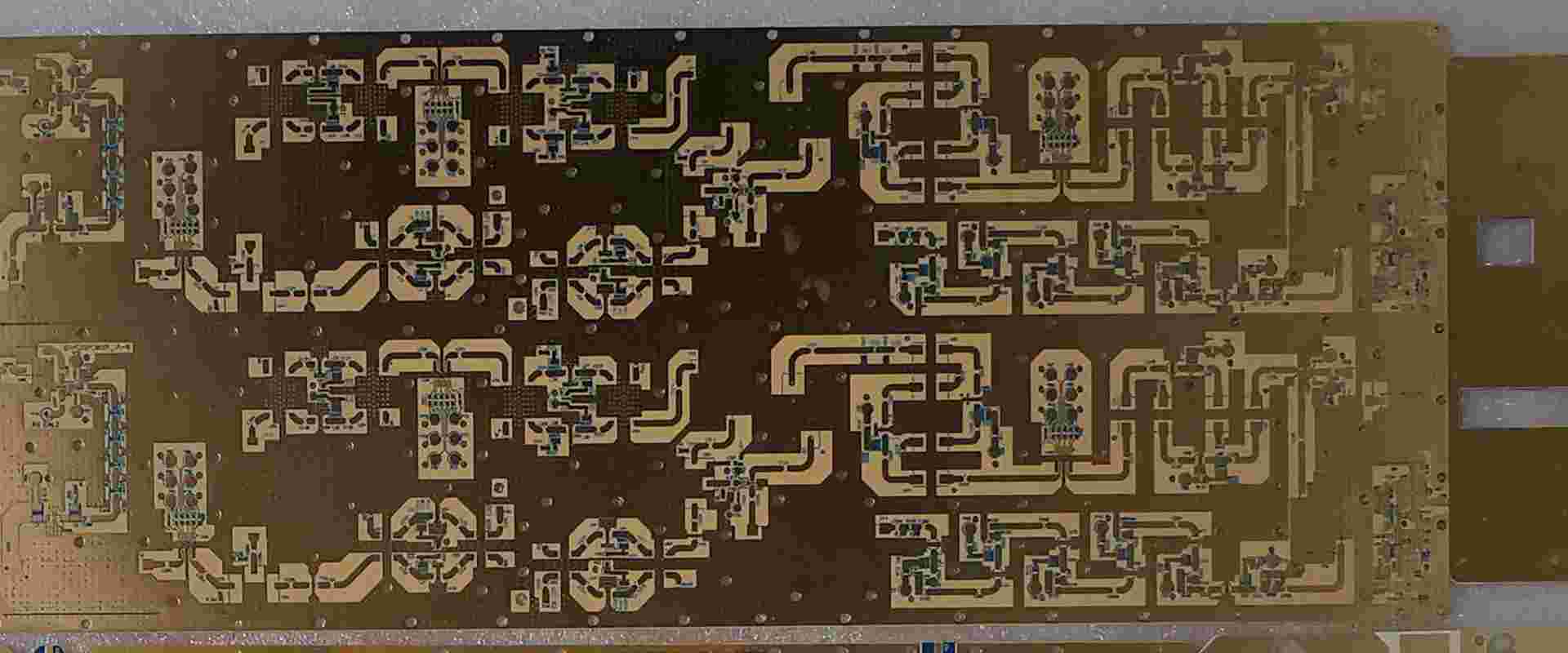
What is Rogers CuClad 233 PCB ?

Rogers PCB

The Rogers CuClad 233 is a pretty popular cross-plied laminate that is reinforced using PTFE and woven fiberglass. Due to these features, this laminate can offer a dielectric constant that is pretty low, as low as 2.33. In addition, the reinforcements on this laminate boost its stability and efficiency. You hence get quality as a net result each time you opt to utilize this laminate on your PCB. However, is there more to the Rogers CuClad 233 laminate that makes it stand out? Which benefits do you get when you utilize this laminate? And what properties make up this incredible laminate?

About the Rogers CuClad 233 laminate

The Rogers CuClad 233 laminate utilizes a medium PTFE/fiberglass ratio which balances off the lower Dk. Due to this feature, the Rogers CuClad 233 laminate can boost its dissipation factor with no effect on the mechanical properties. In addition, the laminate is also reinforced using woven glass, which in turn increases the laminate’s dimensional stability. These two features make the Rogers CuClad 233 an excellent choice for low-noise amplifiers, couplers, and filters.

The Rogers CuClad 233 laminate has a construction that is cross plied. Due to this construction, the laminate can maintain impeccable dimensional stability. It can also balance mechanical and electrical properties, which in turn boost its efficiency immensely.

Features of the Rogers CuClad 233 laminate

The Rogers CuClad 233 laminate bears the following features that make it stand out when you compare it with other laminates:

  1. A low Dk (dielectric constant) โ€“ The Rogers CuClad 233 laminate has a pretty low Dk. Due to this Dk, the laminate can handle signal propagation impeccably. It also boosts the laminates dissipation factor making the laminate more efficient.
  2. A dissipation factor (Df) of 0.0013 at a bandwidth of 10GHz โ€“ The Rogers CuClad 233 laminate has great Df. With this dissipation factor, the laminate can dissipate heat aggressively, which is suitable for PCBs.
  3. Out-gassing and a low rate of moisture absorption โ€“ The Rogers CuClad 233 laminate has a low rate of moisture absorption. The laminate absorbs water at a rate of 0.02%. Due to this absorption rate, the Rogers CuClad 233 laminate can function well in different environments.
  4. A stable dielectric constant โ€“ The Rogers CuClad 233 laminate has a stable dielectric constant. Hence, you can utilize it over a more comprehensive frequency range with little to no effect on the laminate’s dielectric constant.

Benefits of utilizing the Rogers CuClad 233 laminate

If you are looking to utilize the Rogers CuClad 233 laminate, here are some benefits that you are going to get:

  1. Support for Large antennas and PCB formats
  2. A lower dielectric constant that supports a broad line width which ultimately lowers insertion loss
  3. Lower circuit losses even in higher frequencies
  4. An in-plane value that matches that of aluminum utilized in aircraft structures/ skins

Typical applications of the Rogers CuClad 233 laminate

The Rogers CuClad 233 has a couple of applications which include:

  1. Applications in military electronics (ESM, ECM, Radar)
  2. Application in microwave components (LNAs, couplers, filters, et cetera)

Properties of the Rogers CuClad 233 laminate

The Rogers CuClad 233 laminate features the following properties. Each one curves the laminate into one of the best laminates in the world today.

Physical properties

Physical properties are the properties that we can observe and measure without affecting a component’s chemical composition.

The Rogers CuClad 233 laminate bears the following physical properties:

Density

The Rogers CuClad 233 laminate has a density of:

  • 2.26 g/cc

Water Absorption

Water absorption is one feature that stands out in the Rogers CuClad 233 laminate. The laminate bears a pretty low water absorption rate that hits:

  • 0.02% under normal conditions

Outgassing (total mass loss)

The Rogers CuClad 233 laminate has an outgassing value of 0.00% (and 0.010 via NASA) under the following conditions:

  • The pressure that is less than or equal to 1.33e-10MPa
  • And a temperature of 1250C

Volatile condensable components (collected)

The laminate has 0.010% volatile condensable components under the following test conditions:

  • Pressure that is less than or equal to 1.33e-10MPa
  • And temperatures hitting up to 1250C

Mechanical properties of the Rogers CuClad 233 laminate

When you apply a force upon a Rogers CuClad 233 laminate, it is bound to exhibit the following mechanical properties:

Tensile strength

Under normal conditions, the Rogers CuClad 233 laminate has a tensile strength of:

  • 67.6 MPa

Modulus of elasticity

The Rogers CuClad 233 laminate has the following modulus of elasticity:

  • 2.85 GPA

Flexure modulus

The flexure modulus of the Rogers CuClad 233 laminate under a temperature of 230C is:

  • >=2.56 GPA

Compressive modulus

The compressive modulus of this laminate under 230C stands at:

  • 1.90 GPA

Peel strength

After applying thermal stress to the Rogers CuClad 233 laminate, its peel strength hits a whooping:

  • 2.45 kN/m

Electrical properties of the Rogers CuClad 233 laminate

Electrical properties bring out a component’s ability to conduct electricity efficiently. These properties are crucial when dealing with Print Circuit Board laminates.

The Rogers CuClad 233 laminate features the following electrical properties:

Volume resistivity

Under normal conditions, the Rogers CuClad 233 laminate bears the following volume resistivity:

  • 8.00e + 14 ohms- cm

Surface resistance

The surface resistance of the Rogers CuClad 233 laminate is:

  • 2.40e + 12 ohm

Under C96/35/90 test conditions.

Dielectric constant (Dk)

The Rogers CuClad 233 laminate has a dielectric constant of 2.33 under the following test conditions:

  • A frequency of 1.00e + 6 Hz

When you up the frequency to 1.00e + 10 Hz, the Dk of the Rogers CuClad 233 laminate remains stagnant at:

  • 2.33

Dielectric Breakdown

The Rogers CuClad 233 laminate has the following dielectric breakdown:

  • >= 45000V

To attain these values, you have to utilize D48/50 test conditions:

Dissipation factor

The Rogers CuClad 233 laminate has a dissipation factor of 0.0013 under the following conditions:

  • A frequency of 1.00e + 10Hz

Arc resistance

The Rogers CuClad 233 laminate has an arc resistance that is:

  • >= 180 sec

Thermal properties of the Rogers CuClad 233 laminate

Thermal properties are a significant factor to consider as PCBs are almost always under constant heat. Hence having a laminate with impeccable thermal properties is essential.

The Rogers CuClad 233 laminate has the following thermal properties:

CTE linear

The Rogers CuClad 233 laminate has an X CTE linear of 23.0 ยตm/m-ยฐC under the following conditions:

  • A temperature range of 0.000 โ€“ 100 0C

Under the same test conditions, the y-direction CTE linear value hits 24.0 ยตm/m-ยฐC under the same test conditions.

Thermal conductivity

The Rogers CuClad 233 laminate has the following thermal conductivity:

  • 0.258 W/m-K

Under the following test conditions:

  • A temperature that hits up to 1000C

Flammability

The Rogers CuClad 233 laminate has a flammability rating of:

  • V-0

Conclusion

The Rogers CuClad 233 laminate is a durable, efficient and effective laminate. Its feature and benefits make it one of a kind in the tech market. Hence if you are looking for a laminate to utilize on your PCB, look no further.

Everything You Wanted to Know About Rogers RO3003 Laminates

Rogers RO3203

Have you shopped for laminates? If the answer is “yes,” you know that there are plenty of options, including Rogers. With a wide range of colors, finishes, and thicknesses, Rogers offers high-quality products to give your home or office a new look while protecting them from scratches, fading, and dents.

However, shopping for laminates can be overwhelming with all the choices and information to digest. So, if you’re looking for a quick reference to the main information you need, here’s your guide:

Rogers RO3003 comes with a premium-quality, high-pressure laminate that is scratch and stain-resistant. This economical option is available in a variety of finishes and colors. In addition, the products are covered by a 15-year manufacturer’s warranty against fading, peeling, or denting.

All of the Rogers laminates operate in a zero-landfill facility. As a result, the manufacturing process generates no waste, and all offcuts are recycled.

Rogers RO3003 single-sided laminates come in 11 colors and a wide range of finishes, including satin, matte, metallic and high gloss. RO3003 is available in 7 color options for printable laminates with white on one side. Additionally, this product comes in 6 colors with winter wood finish and three colors with summer wood finish.

Fabrication guidelines

Rogers has laminates available in two finishes: metalized and matte.

a) Metalized finish is essential for metallic colors, satin, and high gloss finishes.

b) Matte finish is necessary for silvery, snowflake, and summerwood finishes.

In addition to the metalized and matte finishes, there are also five laminate colors (none of which contain metal) made from Rogers’ proprietary blend of 40% recycled plastic material (with a minimum of 6% post-consumer content).

RayMing Rogers Ro3003 PCB Board 0.8 Thickness

RayMing Rogers Ro3003 PCB Board 0.8 Thickness

Original price was: $540.00.Current price is: $520.00.

Rogers Ro3003 PCB Board 0.8 Thickness 2 Layer PCB Dielectric Constant: 3.0 Size: 220 x 80mm Rogers Ro3003 Laminates Datasheet RO3000 Laminate Data Sheet RO3003 – RO3006RO3010RO3035 What is Rogers Ro3003 ? The Rogers Ro3003 is a high-frequency laminate material widely used for printed circuit boards (PCBs) in various applications, such…

Category:
Tags: ,

Inner Layer Preparation

Rogers’ laminates use top-quality material precisely cut and adhered to a base layer of high-tensile, 1.5-mil polyethylene plastic. The material consists of recycled plastic bottles designed to withstand extreme heat and cold temperatures.

The first step in using your laminates is prepping the inner layer.

Tooling:

Before you use your laminates, you’ll need to set up your machine.

Rogers recommends using a tooling roller. If you’re using a GBC SDS-plus machine or an indigo press, the tooling roller should ideally be 1/16 inch or a sharp utility knife with a less than 24 inches long blade. You must also replace the blade frequently due to the wear and tear on it from the laminate’s material.

Surface Preparation for Photoresist Applications:

This is the only time you need to set up your machine for an adhesive-based lamination application.

To prepare for a photoresist lamination, remove decal/trim from your laminate. Next, put the laminate in your press and activate the heating element until it reaches room temperature.

After removing the laminate from the press, you should now have a rippled effect along its edge. This results from the top layer rolling down over itself during heating.

Photoresist Applications:

After prepping the laminate for lamination, you’re ready to begin applying the photoresist.

The recommended method is with a dropper bottle, typically delivering about 32 drops per bottle. We apply the resist supplied by Rayming PCB & Assembly with a spray gun with a built-in pump system. You should also ensure that you have protective gear on because some resists can be harmful if inhaled or ingested.

DES Processing:

Rogers recommends using a press with a temperature control system on the heat plates and rollers that can reach 150 degrees F or above.

The recommended solvent for desorption is methyl ethyl ketone (MEK) or a MEK-based product. Other options include xylene and toluene.

Your desorption time will depend on the type of resistance. Unlike traditional solvent-based laminates, desorption can take between ten to 20 minutes to complete.

Oxide Treatment:

Rogers recommends using methyl ethyl ketone (MEK) without any additives.

After the MEK process is complete, you can lay your laminate onto your substrate.

Bonding

Rogers recommends heating the adhesive bonder to at least 170 degrees F and applying it between the laminate and substrate.

Rogers laminates use a high-pressure laminate system that allows for a proprietary process known as a high-vacuum state (HV). This allows for a water-based adhesive bond to be applied, eliminating the need for aggressive adhesives.

Rogers also makes a custom-size bonding tool that is available for purchase.

After applying the HV adhesive, you should allow your laminate to cure for 24 hours.

Rogers recommends testing your laminate before using it in your end-use application. This is an essential step to make sure the laminate will withstand a commercial environment’s day-to-day usage and stresses.

Pth And Outer Layer/Double-Sided Circuit Processing

Rogers offers the PTH (press-thru hole) or PTO (press-thru option) and outer layer stencil processes. However, they only offer standard non-printable materials for these processes.

Rogers RO3003 is compatible with inkjet, laser, and digital printing technologies. However, for optimal results when printing on laminate, make sure to follow the guidelines below:

Check that your printer has a “smear guard” installed. With a smear guard, the layer of ink will be printed on the outer surface first and then the laminate layer. If you have not set your printer for a smear guard, adjust your print settings accordingly.

Rogers recommends printing on a flatbed or roll-to-roll system, which can withstand large print runs without stretching or distortion.

If possible, go for the higher humidity version of your printer.

You’ll need to set the print speed for 4 mm/sec for most printers.

Use a white or clear laminate if you aren’t printing directly on top of a color laminate.

If you plan to print images from a design file, download the .84mm version. This will give you a sharp image less affected by how close your laminate is to your substrate surface area.

Pth Plating And Outer Layer Imaging

Rogers uses a proprietary chemical bonding process to bond laminate to steel, aluminum, brass, and other metals. The PTH process requires a special curing system that allows the laminate to adhere just like standard adhesives but withstand standard chemical attacks.

Rogers recommends using their SP5005 optically clear PTH laminate and the outer layer of the SP5002 (silver) or SP5003 (gold).

The RO3003 Laminates use a very thin (0.008″) inner surface layer typically plated with metal within 24 hours of the PTH process.

Rogers’ recommended metal is gold, which you should specify in your quote.

Before lamination, the plating should be done in a Class 100 clean room environment.

Applications

Rogers has a wide range of lamination applications. For example, you can use it to create a variety of packaging, vehicle displays, signage, point-of-purchase display, or as an on-shelf label.

You can also use it for easy-to-remove items such as food containers, musical instrument covers, trophies, and even as a protective layer for products that might be damaged.

Lastly, you can use it to create 2D or 3D inlays, which typically help

Once the laminate is applied to your substrate and cured, you could use Rogers RO3003 as a stand-alone product.

Rogers also offers laminates for lamination, which we can use to extend the life of products in their current form. It has three main lamination processes: HC (hot-crank), cold roll, and thermo roll.

Conclusion

Rogers has been around since 1955, and they are currently one of the leading manufacturers of laminates, lamination materials, and adhesive products.

The RO3003 Laminates offers a wide range of laminate products compatible with the three most popular lamination processes.

Rogers provides an array of high-quality laminates, which we can use for various applications.

The testing process is an essential step to ensure your laminate will withstand the day-to-day usage and stresses of a commercial environment.

What Everyone Ought to Know About Rogers RT/DUROID 6202PR

Rogers RO4533

Youโ€™ve come to the right place if youโ€™ve been looking for information on the high-frequency laminate, Rogers RT/DUROID(r) 6202PR. This article covers everything you need to know about this laminate and what it can do for your electronics.

Rogers RT/duroid(r) 6202PR high-frequency laminate

RT/duroid(r) 6202PR high-frequency laminate is a ceramic-filled PTFE composite material specifically designed for RF and high-power applications. Its thermal conductivity (CTE) is 2.4 times higher than standard RT/duroid 6000 products. It makes it an exceptional choice for high-power applications. Rayming PCB & Assembly provides RT/duroid6202PR laminates available in ENIG, HASL, and bare copper versions.

RT/duroid 6202PR laminate is ideal for high-frequency and ultrahigh-frequency applications. This material combines good electrical, mechanical, and thermal properties with low dielectric loss. Its low dimensional stability reduces the risk of circuit degradation, and it enables high-frequency circuitry reliability. In addition, its limited woven glass reinforcement eliminates double etching and minimizes tool wear.

RT/duroid 6202PR high-frequency laminate has similar TCDk characteristics to LNAs and PAs, and it maintains consistent Dk behavior in the same way as copper. As a result, it is suitable for high-frequency applications and guarantees reliable plated through holes. Furthermore, this material is compatible with most circuit materials. Therefore, in addition to high-frequency applications, it is also ideal for use in radar and automotive systems.

RF/microwave applications require accurate modeling of a materialโ€™s dielectric constant (Dk). We can calculate the Dk value of a material from its design Dk. The design Dk is a more accurate estimate of the dielectric constant. The MWI-2010 Microwave Impedance Calculator and the Product Selector Guide include Dk values for high-frequency applications.

RT/duroid(r) 6202PR materials

The Rogers RT/DUROID 6202PR high-frequency laminate offers excellent dimensional stability, a low thermal conductivity, and a dielectric constant in the z-axis (Tgof) of 3.5 when at 10 GHz. Its properties make it ideal for high-frequency multilayer circuits. The material is also available with electrodeposited copper foil that is reverse-treated.

The RT/DUROID 6202PR high-frequency circuit material features ceramic-filled PTFE laminates designed for use in RF and microwave applications. They have exceptional thermal conductivity, with a Dk value of 2.94, almost twice that of standard RT/DUROID 6000 products. These laminates also have good drill-ability, thanks to a sophisticated filler system.

The RT/DUROID 6202PR incorporates the latest advancements in technology. Its ultra-thin, airborne design allows for use in various environments, including airports. Its low weight makes it ideal for airborne satellite applications. Moreover, its high-quality coatings can withstand temperatures up to -40ยฐC. These features make it an excellent choice for any commercial or domestic application.

RT/duroid(r) 6202PR high-frequency laminate features

The high-frequency laminate provides superior electrical and mechanical properties that enable engineers to construct substrates efficiently. The Rogers RT DUROID 6202PR features an extremely low dielectric constant and is well-suited for high-frequency applications. Its low dielectric constant allows for repeatability in manufacturing and processing, making it an excellent choice for high-frequency RF circuitry.

At the European Microwave Week, there were highlights on a range of materials solutions, including RT/duroid 6202PR high-frequency laminate, RO4003C, and RO4350B. These laminates are available with enhanced copper bond technology, allowing cost-effective circuit solutions and reduced passive intermodulation distortion. In addition to high-frequency materials, Rogers will also exhibit its thin RT/duroid 8000 circuit laminates and TMM laminates.

Another important application for the Rogers RT DUROID 6202PR is in radar systems. This system is essential in aircraft to detect targets at long range. A high-frequency laminate offers excellent sensitivity, low loss, and outstanding dimensional stability. Its high-frequency performance allows for the design of complex microwave structures. In addition to high-frequency performance, it is durable, reliable, and offers excellent dimensional stability.

Besides the RT DUROID 6202PR, Rogers will showcase its complete range of high-frequency laminate materials at DMC 2010. They will showcase the latest high-frequency XT/duroid 8000 and RT/duroid 8100 laminate materials. Both high-frequency laminate materials are compatible with ULTRALAM 3908 bondply and many other material systems.

Rogers RT/duroid 6202PR has outstanding dimensional stability and a low dissipation factor. As a result, this laminate is ideal for antennas and multilayer circuits that require a high-frequency frequency. For example, a TGOF of 1.96 at 10 GHz offers unmatched stability with low losses and a dissipation factor of 30 ppm/degC in the z-direction.

Application

The RT/Duroid 6202PR high-frequency laminate is helpful in high-frequency applications such as active and passive electronic circuits, multilayer circuit structures, filters, and RF structures.

Because it has low Tg, the 6202PR provides a cost-effective solution for microwave applications. It is suitable for high-frequency applications that require thin laminates and excellent thermal stability. When paired with a glass cloth dielectric, it is ideal for power divider circuits used in radar systems.

Advantages

The RT/Duroid 6202PR high-frequency laminate is easy to fabricate by conventional microwave technology and has good mechanical properties, making it a good choice for high-frequency applications. In addition, the thermal conductivity (approximately 0.9 W/mK) is higher than that of most other available materials.

The RT/Duroid 6202PR has a high dielectric constant and low dissipation factor, suitable for high-frequency applications such as multilayer circuit structures and filter designs.

The RT/duroid 6202PR is a flexible, thin (less than 1 mm), multilayer, high-frequency laminate thatโ€™s easy to fabricate. As a result, a circuit designer can use it for prototype building. In addition, it is available in the form of standard off-the-shelf sizes, which further simplify its use.

The material is well-suited for designs requiring high dielectric constant and low dissipation factor. We also use it in narrowband filters and multilayer circuit structures.

The RT/Duroid 6202PR is a high-frequency laminate (1โ€“8 GHz) composed of ceramic-filled PTFE with a Tgof of 3.5 and a loss tangent of 0.0048.

The Rogers Duroid 6202PR is available in 1 mm thickness and with either film or foil adhesive. A standard circuit thickness is 1 ยตm (0.001 in). The standard finished size is 1016mm x 2025mm. However, we can make it in other sizes.

Disadvantages

The RT/Duroid 6202PR has a high dielectric constant and good thermal conductivity but a low dissipation factor. As a result, it is not well-suited for passive infrared applications because of its relatively high Tgof.

IEEE 802.11n PIF was the first IEEE 802 committee to focus on wireless local area networks (WLANs). The IEEE 802.11n standard had significant enhancements over the previous IEEE 802.11 standards in throughput, range, and security. The IEEE approved the IEEE 802.11n standard in June 2008.

The RT/Duroid 6202PR high-frequency laminate is well-suited for RF designs in RF vacuum tube radio amplifier circuits due to its low dissipation and dielectric constant. Furthermore, its high-frequency performance allows for complex microwave structures. In addition to high-frequency performance, it is durable, reliable, and has excellent dimensional stability.

Rogers RT/Duroid 6202PR high-frequency laminate is a reliable material that offers good performance at frequencies 1 GHz to 10 GHz. In addition, the copper bond technology and film or foil adhesive provide flexibility and aesthetics.

The RT/Duroid 8100 laminateโ€™s close TGOF of 1.9X allows the design of complex microwave structures, such as mobile phone base stations, scanners, and waveguide elements, with a significant gain.

Conclusion

Rogers RT/Duroid 6202PR high-frequency laminate is a reliable, cost-effective laminate material that works well at frequencies 1 GHz to 10 GHz. It is easy to fabricate by conventional microwave technology. It has good mechanical properties allowing it to help in high-frequency applications such as RF vacuum tube radio amplifier circuits. In addition, a circuit designer can use it for prototype building and other functions.

Fabrication Guidelines Rogers RO4830 High-Frequency Laminates

Rogers 7000

It is often necessary to fabricate the semiconductor layers of HFC Laminates and high-frequency substrates in a laboratory. Especially those made of PEDOT: PSS, TPT, or PEDOT: PSS/TPT (if you want to fabricate at a lower frequency), as well as quite different materials used for the device and substrate layers. This blog post gives an overview of fabrication guidelines from the RO4830 standard for these laminates.

First, it is good to study the fabrication training manual for the Semiconductor Processes and Laminates, which is available on the Rayming PCB & Assembly website. This training manual includes information that applies to many of these laminates even though people are not using them yet. It is also good to study the HFC design notes in RO4830. These notes are on memory frequency, leakage current, maximum bias voltage, and other issues that affect device performance.

When you have made all the design decisions and fabricated a few samples, you are ready to know more about fabrication guidelines. RO4830 has several chapters that define fabrication guidelines and process procedures, but an introductory list is above.

Overview

The RO4830 standard defines fabrication guidelines for most laminate types used in high-frequency printed circuit boards. The standard also requires a laminate sample sent to Rohm and Haas for fabrication qualification testing. This is to verify that the properties of the laminate fabricator’s production parts meet specified values as closely as possible. Rohm and Haas have developed a qualification procedure. This procedure helps verify that a laminate fabricator’s laminate meets RO4830 standard values. We use it as the basis for the acceptance of a supplier.

Intended Use

We identify the intended use of the laminate in RO4830. It helps to clarify the requirements for each type of laminate. For example, suppose you deposit solid conducting material on both sides. It must have a specified thickness and surface finishing so as not to touch the sides of other layers and shorts out electrical contacts. If we use a conductive surface for high-frequency chip carriers, there may be some limitations on patterns allowed on this surface.

Storage:

How is the laminate stored influence its performance? First, it is necessary to store. You should keep the samples in a desiccator until they are ready to send for fabrication qualification testing. If you do not keep the laminates appropriately, some may fail the qualification process.

Manipulation:

The laminates are typically quite thin. In some cases, they are usually less than 1 mil and less than 250 nm. Therefore, the material handling requirements to handle them without damage are greater than for thicker laminates. It may be necessary to use a vacuum pick-up tool, a clean room with proper glove boxes, or another similar method for transporting the samples from place to place during the fabrication process.

Inner Layer Preparation

We remove the two substrates into an alignment fixture. Then we glue together the substrates on the insulator material, with PEDOT: PSS on the dielectric side and PEDOT: PSS/TPT on the conductive side. Finally, we place the laminates in a vacuum oven at 200ยฐC to cure the epoxy.

1. Tooling:

The tooling consists of stainless steel or aluminum. As a result, the tooling materials are most susceptible to metal contamination and internal oxidation during laminating. Therefore, verify that the material meets RO4830 requirements when ordering tooling from a fabricator.

2. Surface Preparation for Photoresist Processing and Copper Etching:

We clean the surfaces by wiping them with a detergent wipe. Then the silicon photoresist is spun on the substrate by an air knife. It is contact printed to produce a 0.5-0.8ยตm thick cross-section of the dielectric used in the laminate. The thickness of this section must be within 0.2% of the laminate’s thickness specification for that type of laminate.

3. Oxide Treatment:

The oxide layer of each substrate is wet etched with a solution of 1:1 HF and H2O2. Select a wet to etch chemistry that will remove the copper but not attack the PEDOT: PSS/TPT.

4. Multi-Layer Bonding:

We realign the photoresist surface, and a new copper surface layer is etched. Then we immerse the copper surfaces in an HF-H2O2 solution to remove oxides from the dielectric. There are two types of bonding between two laminates – through layer, used for chip carriers, and through- via, used for other circuit patterns on high-frequency laminates.

Drilling

We do the drilling to provide access to adjacent layers. The drill must first penetrate one surface and then exit through the other using an end mill to access the adjacent layer. Normally, we lay out a correctly orientated photoresist pad pattern on the substrate surface that provides alignment for drilling. The drill bit usually consists of cobalt-tungsten carbide (CoWC) material. This material must be free of any oxide contamination when using a 0.

Calculating Spindle Speed And Infeed

We calculate the spindle speed by dividing the end mill’s diameter by the depth of the cut. So, the end mill does not meet any plated through-holes since we make partial cuts in some cases. Therefore, the laminate thickness must be greater than the end mill’s diameter. For example, a 6- and 0.5-layers thick laminate with an end mill diameter of .025 inches would require a spindle speed to cut off about 8,000 RPM. An alternative is to use a smaller diameter and higher spindle speed. For example, a 7- and 0.35-layers thick laminate with an end mill diameter of .020 inches would require a spindle speed to cut about 27,000 RPM.

We feed the cut end mill along the length of the through-hole to produce the laminate’s thickness requirement.

PTH Processing

Three major PTH process steps affect the strength of materials used in biomedical applications.

1. Surface Preparation: The PTH process helps clean and remove oxides from the surfaces of the materials. You should perform the process in a cleanroom. The first step is a wet etch to remove any oxides and phosphorous from the material surface, thus exposing bare metal. Next, an HF-H2O2 solution must be applied and annealed to remove any phosphorous that may taint the PTH exposure. Since barium sulfate will float during this step, you must remove it during washing afterward.

2. Metal Deposition: The metal is deposited by first depositing a barrier layer and then a metal layer.

Copper Plating & Outer-Layer Processing

There are two ways to deposit the outer layers of the laminates. We can apply the outer layers to both laminate surfaces or use them only on one surface. A double-sided copper process is helpful when applied to both surfaces. A single-sided copper process is useful when applied only to one surface.

“Double-Sided Copper” Process: (A) we tin-plate the PTH hole using an additive-free mix of tin/lead. We can do this in a dip tank or continuous plating line. Then we clean the substrate surface by a bright dip, and then the dielectric layer is deposited by electroless plating. Next, we deposit the conductive layer by electrolytic copper plating.

Final Circuitization

We solder the electrical leads to each substrate. The final is to inspect and test circuit design for functionality.

Conclusion

The process of lamination is ideal for a variety of biomedical applications. To produce alternating laminate patterns, we only coat one surface needs with copper. After placing the laminate in a vacuum furnace, we remove the excess copper by striping through a PTH plating process or via electropolishing.

What is Rogers RT Duroid 5870 Laminate for PCB ?

rogers rt duroid 5870

Introduction

Printed circuit boards (PCBs) provide the foundation for mounting and interconnecting electronic components using conductive copper traces on an insulating base material. The properties of this insulating laminate substrate are critical in determining the performance limits of the PCB. Rogers RT/Duroid 5870 is a specialized microwave laminate designed for high frequency applications demanding tight electrical tolerances.

This article provides an in-depth look at Rogers 5870 covering its characteristics, properties, applications and usage considerations for PCB designers.

What is Rogers RT/duroid 5870?

rogers-5870-pcb

Rogers RT/duroid 5870 is a glass microfiber reinforced fluoropolymer composite laminate material tailored for exacting radio frequency (RF) and microwave circuit designs. Some key features include:

  • Extremely tight dielectric constant tolerance of ยฑ0.40%
  • Low dissipation factor (loss tangent) of 0.0019
  • Z-axis coefficient of thermal expansion (CTE) of 16.5 ppm/ยฐC
  • Thermoset polymer system requiring no fusion during lamination
  • Woven E-glass reinforcement for dimensional stability
  • Halogen-free material for reduced environmental impact
  • RoHS compliant and UL 94V-0 rated

These electrical and mechanical characteristics make 5870 well-suited for demanding high frequency applications up to mmWave bands.

Dielectric Properties

Rogers 5870 possesses very stable dielectric properties across a wide frequency range along with low loss, which are desirable traits for microwave PCBs:

Dielectric Constant (Dk)

  • Dk of 2.33 ยฑ0.0040 at 10 GHz
  • Nearly constant Dk over 1-40 GHz
  • Extremely tight tolerance of ยฑ0.40%

Loss Tangent (Df)

  • Low loss tangent of 0.0019 at 10 GHz
  • Df less than 0.002 up to 20 GHz
  • Enables higher Q factors for RF circuits

Temperature Coefficient

  • Dielectric constant variation of -17 ppm/ยฐC
  • Excellent thermal stability of electrical properties

These attributes allow achieving target impedances accurately during RF circuit design and simulations using 5870 material.

Mechanical Properties

In addition to electrical performance, Rogers 5870 also possesses good mechanical characteristics:

Density

  • Uniform density of 1.79 g/cm3
  • Provides good thickness consistency

Glass Transition Temperature

  • High Tg of 280ยฐC

Decomposition Temperature

  • Extremely high 405ยฐC decomposition point

Moisture Absorption

  • Low moisture absorption of 0.02% (immersion, 24 hours)

Z-axis CTE

  • 16.5 ppm/ยฐC coefficient of thermal expansion

The woven glass reinforcement results in lower Z-axis CTE for reliability under temperature changes. The high Tg and decomposition temperature enable soldering steps required in PCB fabrication.

Available Thicknesses

Rogers 5870 laminate can be obtained in a range of standard thicknesses from as low as 0.127mm to as high as 6.35mm.

Some commonly used thicknesses include:

  • 0.127 mm (5 mils)
  • 0.2 mm (8 mils)
  • 0.25 mm (10 mils)
  • 0.5 mm (20 mils)
  • 1.0 mm (40 mils)

The thin flexible laminates are useful for flex PCB applications, while thicker sheets provide rigidity and dimensional stability required in rigid boards.

Common Designations

duroid-5870

Rogers 5870 material is available under variants like:

  • RT/duroid 5870
  • RT/duroid 5870LM
  • RT/duroid 6002
  • RO4003C

Where:

  • RT/duroid is the Rogers brand name
  • 5870 denotes the dielectric constant value
  • LM signifies low moisture absorption version

These all refer to the same base microwave laminate with minor modifications. The differing nomenclatures indicate process variations or compliance levels.

Lead-Free Compatibility

Rogers 5870 laminate is compatible with lead-free fabrication which is mandatory for RoHS compliance:

  • Glass transition temperature exceeds Pb-free soldering temperatures
  • Withstands multiple reflow cycles with peak temperatures up to 280ยฐC
  • Near zero Z-axis CTE minimizes stresses from temperature excursions
  • Low moisture absorption reduces risk of delamination or blistering

PCBs made using 5870 can be reliably assembled using standard lead-free soldering processes.

Typical Applications

Rogers 5870 is used in demanding RF and high speed digital designs including:

  • Satellite communication systems
  • 5G equipment – MIMO antennas, splitters
  • Military and aerospace avionics
  • Automotive driver assistance radar
  • High speed data acquisition
  • Low noise amplifiers and power amplifiers
  • Broadband transformers
  • Medical imaging
  • Test and measurement equipment
  • Microwave components

The tight and stable electrical tolerances provided by 5870 laminate are critical for achieving optimized impedance control and signal integrity in such applications.

Benefits of Using Rogers 5870

Here are some of the key benefits offered by Rogers 5870 laminates for PCB fabrication:

  • Extremely consistent dielectric constant for impedance control
  • Low loss tangent for high frequency and Q factor
  • Tight thickness tolerance for etch consistency
  • Excellent dimensional stability under temperature fluctuations
  • High Tg and decomposition rating for lead-free assembly compatibility
  • Reduced EMI/RFI interference due to woven glass reinforcement
  • Halogen-free and RoHS compliant for environmental needs
  • Cost effective compared to PTFE substrates
  • Good availability due to widespread usage in RF industry

For designs requiring precision electrical performance under 10+ GHz along with robust mechanical characteristics, Rogers 5870 provides an optimal microwave PCB substrate solution.

Design and Fabrication Guidelines

Here are some guidelines to follow when designing PCBs using Rogers 5870 material:

  • Allow ยฑ0.2mm thickness tolerance in layouts
  • Use teardrop pads at junctions to reduce potential cracks
  • Limit unsupported copper spans to under 0.25mm to prevent lifting
  • Watch for acid entrapment under traces causing potential leakage
  • Remove residues after wet processing steps
  • Allow for 0.1% shrinkage during lamination stage
  • Use two-stage lamination for boards over 3mm thick
  • Select compatible FR4 and prepreg materials if designing hybrid multilayer boards

Rogers provides detailed design manuals that cover additional fabrication and assembly recommendations when working with their microwave laminates.

Comparing Rogers 5870 to Other Materials

Rogers 5870 has some advantages compared to other common PCB substrate materials:

ParameterRogers 5870FR4PolyimidePTFE
Dielectric ConstantStableFairGoodExcellent
Loss TangentExcellentFairGoodExcellent
Lead-free Process CompatibilityGoodGoodFairPoor
Moisture ResistanceGoodFairExcellentExcellent
Thermal ConductivityFairFairPoorGood
CostModerateLowHighVery high

So Rogers 5870 provides a good balance of electrical, thermal, mechanical and cost characteristics for optimal RF PCB performance.

Conclusion

Rogers RT/duroid 5870 is a specialized glass microfiber reinforced fluoropolymer laminate engineered specifically to meet the tight tolerances and low loss required in high frequency PCBs. It enables accurate impedance control and signal integrity up to mmWave bands. The stable dielectric properties, lead-free soldering compatibility, low moisture absorption and moderate cost make 5870 a popular choice for fabricating microwave circuits used in radar, communication, aerospace and other demanding RF applications.

Frequently Asked Questions

Can Rogers 5870 be used for common FR4 processing?

Yes, Rogers 5870 can be processed using standard FR4 PCB fabrication methods. It is compatible with typical PCB manufacturing processes involving etching, drilling, plating, lamination etc.

Does Rogers 5870 require special handling or storage?

No special storage conditions are needed. It has an indefinite shelf life at room temperature before lamination. Low moisture absorption also avoids special drying requirements before processing.

Can I use 5870 with different dielectric constant materials in one PCB?

Rogers 5870 can be combined with properly selected FR4 prepregs to produce hybrid multilayer boards. But significant Dk mismatches could cause issues and is not recommended.

What is the typical copper thickness used with Rogers 5870?

1/2 oz to 3 oz copper foils are commonly used. 1 oz provides a good balance for moderate thickness and current capacity for most RF designs. 2 oz may be preferred for high power applications.

Is Rogers 5870 material expensive?

5870 is costlier than FR4 but less expensive than PTFE or ceramic substrates. The tight tolerances and specialization for RF applications lead to higher cost than standard glass epoxy PCB laminates.

Where to Buy Rogers RT Duroid 5880 Laminate

The Rogers RT duroid 5780 and the 2929 bondply are two great wireless radio antennas that people mostly compare. In this Rogers RT duroid 5880 review, you’ll learn what to expect from these two products. We’ll also talk about the benefits of each. So, let’s dive in! Is this the best wireless radio antenna? And is it worth the money?

Rogers RT duroid 5880

In this Rogers RT duroid 5880 (RT-5880) review, we’ll examine its pros and cons. Thanks to its low-loss and low-dissipation properties, the Rogers RT-5880 is a very popular choice among electronics designers. It also has a uniform dielectric constant over a wide frequency range. The price tag is reasonable too, at around $180.

The RT/duroid 5880 consists of a composite with a unique filler with an extremely low dielectric constant and dielectric loss. This makes it perfect for both high-frequency and broadband applications. In addition, the RT/duroid 5880 also boasts a low-density design, with only 1.4 grams per cubic centimeter.

The RT/duroid 5880 supports the electrodeposited copper layer from eight to 70um thickness. Its surface resists various chemicals and solutions. Furthermore, it is highly resistant to corrosion and exhibits good isotropy. In other words, the electrical performance does not change much with frequency, so Rayming PCB & Assembly uses it for millimeter-wave applications. In addition, the low dielectric loss and moisture absorption make it an excellent choice for a wide range of applications.

This device uses a dual-band antenna array. It is a high-performance RF antenna that works in the fundamental mode of TM11 resonance. The Rogers RT/Duroid 5880 has a height of 0.508 millimeters and dielectric permeability of 0.086 mm. The RT/Duroid 5880 has a relatively high simulated realized gain of 1.7519 W, making it an excellent choice for mobile and fixed communications use.

RayMing 2 Layer Rogers rt duroid 5880 PCB 2.2 Dielectric Constan

RayMing 2 Layer Rogers rt duroid 5880 PCB 2.2 Dielectric Constan

Original price was: $650.00.Current price is: $625.00.

2 Layer Rogers rt duroid 5880 PCB 1.mm Thickness Dielectric Constan: 2.2 Size: 100×100 mm Rogers 5880 datasheet RT-duroid 5870 – 5880 Data Sheet What is Rogers RT/duroid 5880 ? Rogers RT/duroid 5880 is a high-performance laminate material designed for use in demanding circuit board applications, such as those found in communication systems, radar applications,…

Rogers RT duroid 5880 uses

Rogers RT/Duroid 5880 is a high-frequency laminate made from a PTFE composite reinforced with glass microfibers. The material has an extremely low dielectric constant and a very low coefficient of thermal expansion, which makes it an ideal material for broadband and high-frequency applications. The material is also remarkably resistant to high-temperature and corrosion processes. Here are some of its main uses.

It has excellent mechanical and chemical properties, low dielectric constant, and low loss. It is suitable for demanding stripline circuit applications. Its low dissipation factor is another significant advantage. The material is available in different types of configurations. The different types of laminates have different uses and benefits. Rogers RT/Duroid 5880 is an excellent choice for aerospace and defense applications.

The RT/Duroid 5880 laminate is easily cut and sheared and is highly corrosion-resistant. This material is also a good choice for through-hole processes, as it has a low level of dielectric loss. The laminate is also resistant to moisture. Furthermore, it is isotropic, meaning that the electrical properties of the laminate remain constant over a wide range of frequencies. So whether you are looking for a high-quality edge or a smooth, flat surface, you can rely on Rogers RT/Duroid 5880 laminate to meet your needs.

Another essential characteristic of the Rogers RT/Duroid 5880 PCB is its low CTE. It has a low coefficient of thermal expansion (CTE) of less than 0.02%. This feature means that the Rogers RT/Duroid 5880 PCB can withstand high moisture levels without changing its properties. Further, this PCB’s low CTE makes it ideal for high-frequency applications, which is crucial for preventing any malfunctioning.

Rogers RT duroid 5880 properties

If you are in the market for a new laminate material, you might be interested in the properties of Rogers RT/duroid 5880. These materials are full of PTFE composite laminates in demanding aerospace, defense, and communications applications. These laminates are highly resistant to moisture and abrasion and have excellent electrical properties. In addition, they are ideal for high-frequency applications in phone companies, microcircuits, millimeter-wave systems, and missile systems.

Rogers RT/Duroid 5880 laminates exhibit low dielectric loss and low moisture absorption, ideal for high-frequency and wide-band applications. The material also exhibits very low moisture absorption, ideal for high-humidity environments. Because of these properties, RT/Duroid 5880 laminates are widely used in microwave radio frequency PCBs.

The Rogers RT/Duroid 5880 laminate material can be easily cut to size and shape and exhibits high-frequency and low-emission characteristics. The material is also resistant to corrosion from various reagents, making it a popular choice for high-frequency applications. Among other things, Rogers RT/Duroid 5880 laminates are tolerant to high temperatures and corrosion.

Rogers 2929 bondply

The Rogers RT duroid 5880 multilayer circuit board is compatible with thermoplastic and thermoset adhesive systems. The board’s material consists of a composite of fiberglass cloth and self-extinguishing resin. This combination of materials provides superior performance in high-frequency applications, including RF. In addition, its low dissipation factor, low dissipation coefficient, and excellent conformal adhesion make it an ideal choice for applications where we bond the circuits to one another.

The RT/duroid 5880 laminate dielectric constant is low (Dk) and has a low dielectric loss. These properties make it an excellent choice for broadband and high-frequency applications. In addition, the low coefficient of thermal expansion allows easy cutting of the laminate. It also has a low dielectric constant. This means lower overall costs and greater vehicle payloads. Whether the laminate is essential for power conversion, antennas or electronic components will provide excellent results.

The high-frequency circuit materials to enjoy include RT/duroid 5880 and RT/duroid 4000. These high-frequency laminates are ideal for use in demanding stripline circuit applications. In addition, this material is suitable for military radar, missile guidance, microstrip circuits, and radio antennas.

Rogers RT duroid 5880 laminate

Despite its name, the Rogers RT/duroid 5880 laminate is a high-frequency composite made from glass microfiber reinforced PTFE. It has a low dielectric constant and is resistant to solvents, making it the perfect choice for high-frequency applications. The high-frequency properties of this material make it ideal for microstrip and stripline circuits. In addition to being lightweight and durable, it is also easy to fabricate and is environmentally friendly.

This Rogers RT/duroid 5880 laminate is suitable for many circuit applications. Its low density and low dielectric constant make it ideal for demanding stripline circuit applications. The laminate is available in different thicknesses and features. There is a choice of a standard or a double-sided version. Both have excellent drill-ability. They also feature high-quality glass microfiber reinforcement.

This high-frequency PCB can also withstand various high-temperature and corrosion-resistant processing processes. In this way, it is ideal for radio antennas and microstrip circuits. In addition, the laminate is suitable for high-frequency applications, including military radar and missile guidance.

The RT/duroid 5880 laminate is one of the best materials for circuits. The laminate is easily cleaned with chemicals and has the minimum force needed to remove debris. It is also easy to apply metal plating. Its dielectric constant is low, which means it has high corrosion resistance and wears. It is also compatible with other electronic components. However, it can be costly if used in applications where the laminate is a primary component.

Rogers RT duroid 5880 PTFE composite

High-frequency laminates made from PTFE with glass microfiber reinforcements have excellent dielectric constant (Dk) uniformity and low weight, making them ideal for aerospace and defense applications. These materials have a very low dielectric loss and moisture absorption. They also exhibit excellent thermal stability at microwave and millimeter-wave frequencies. Rogers RT/duroid 5880 PTFE composites have excellent mechanical and electrical properties, ideal for demanding high-frequency circuitry and satellite payloads.

The two types of Rogers RT/duroid 5880 PCB materials are easy to fabricate. In addition, the former is easier to assemble than the latter, while the latter requires special plating. However, if you design a circuit that requires extreme electrical properties, the 5880 is a better choice.

RT/duroid 5880LZ, RT/duroid 6010LZ, and RT/duroid 6010LM are PTFE-filled ceramic laminates with dielectric constants of 10.2, allowing for high-frequency, ultra-high-reliability, and lightweight applications. In addition, these materials are lightweight, are easy to fabricate, and feature excellent thermal and mechanical stability.

RT/duroid 5880 PTFE composite is suitable for processing in conventional soldering and plating. Its glass-microfiber-reinforced PTFE laminate is ideal for single-bend applications and has low loss and dielectric constant, making it the ideal candidate for forming and bending. In addition, the Rogers RT/duroid 5880 PTFE composite is compatible with standard solder masks and etching processes.

Rogers RT/duroid 6035HTC High-Frequency Laminates

Rogers RT duroid 6035HTC PCB

Rogers RT/duroid 6035HTC Laminates can withstand heat and high-frequency electrical fields. As a result, they have a long history of use in power transformers, industrial electronics, commercial restaurant equipment, and other applications.

This blog post will detail why Rogers RT/duroid 6035HTC Laminates are the best choice for your technology project; they offer decades of performance at an economical price.

These Rogers RT/duroid 6035HTC Laminates are suitable for use at or above ambient temperatures. These laminates are ideal for use with alternating current up to a maximum frequency of 100 kHz when mounted on copper-clad substrates and 1 MHz on an aluminum-clad substrate. They have excellent electrical insulation properties and good mechanical toughness. In addition, they are resistant to high-frequency radiation, and we can solder them directly.

History

The first use of high-frequency laminates in power transmission was in the late 1930s. However, they appeared in applications that were not tied to specific frequencies such as heating elements, for a long time. The first documented use of these laminates for direct-current (DC) transmission was on the Rogers ALU transmitter at the Livermore Laboratories in 1947.

In the mid-1950s, these laminates were helpful in commercial equipment such as microwave oven door frames, which generated high frequencies since they were always on. The first application of these laminates to power transmission was on the Westinghouse Company’s 39 kV AC Rectifier Transformer at the Whitaker Power Station in 1955. The first application to DC transmission was a large BOSAN trolley for a coal mine in Germany, where it was in use for many years.

Features

The main factor that has kept high-frequency laminates in the market is their strength, durability, and resistance to high-frequency radiation. As a result, the current demand for these laminates is increasing, with Rayming PCB & Assembly driving applications using high-frequency equipment.

Rogers RT/duroid 6035HTC Laminates are suitable for use at or above ambient temperatures. We can use them for applications with alternating current up to a maximum frequency of 100 kHz when mounted on copper-clad substrates and 1 MHz on an aluminum-clad substrate. They have excellent electrical insulation properties, good mechanical toughness, and are resistant to high-frequency radiation. In addition, we can solder them directly.

Rogers RT/duroid 6035HTC Laminates are suitable for use with alternating current up to a maximum frequency of 100 kHz when mounted on copper-clad substrates and 1 MHz on an aluminum-clad substrate. They have excellent electrical insulation properties and good mechanical toughness. In addition, they are resistant to high-frequency radiation.

High-frequency laminates can help in various power transmission applications requiring high-frequency performance characteristics.

Dielectric constant of 3.50 +/- .05:

The dielectric constant is one of the most important quality factors for a high-frequency laminate. The dielectric constant of a laminate can be varied to optimize the laminate properties for a specific application.

We measure dielectric constants by alternating current or direct current (AC/DC) methods.

Dissipation factor of .0013 at 10GHz:

The dissipation factor is a material property that indicates energy loss from an electromagnetic field. We measure the dissipation factors in a non-inductive field on a test sample with dimensions of .25 x .25 x .4 inches.

Dissipation factors for Rogers RT/duroid 6035HTC Laminates are low compared to other materials such as RCC612 and 200CST. Therefore, we can reduce heat buildup and power losses by improving the dissipation factor.

Thermal conductivity of 1.44 W/m/K at 80ยฐC:

This is the quantity of heat transmitted through the material in unit time when there is a temperature gradient perpendicular to the direction of heat flow.

Thermal conductivity is essential for thermal management and dissipation. This thermal conductivity of Rogers RT/duroid 6035HTC Laminates is higher than the other processes, which improves thermal performance.

This helps minimize static electrical discharges and helps prevent fires by facilitating heat dissipation.

Thermally stable low profile and reverse treat copper foil:

The copper foil on the laminate has a low profile, delicate structure and etched on both sides. The copper foil helps improve the electrical insulation properties of Rogers RT/duroid 6035HTC High-Frequency Laminates.

Benefits

Excellent thermal stability of traces:

The Rogers High-Frequency laminates have excellent thermal stability. They can maintain their dimensional stability up to and beyond 200ยฐC. This is an essential property since no other material, including aluminum, can withstand these high temperatures without delamination or excessive warping. In some applications, the Rogers High-Frequency laminate is used without any copper foil, demonstrating excellent dimensional stability.

Lower insertion loss:

High-frequency laminates have lower attenuation than other materials, maintaining signal transmission at higher frequencies and reducing insertion loss. Rogers’ high-frequency laminates are to withstand the high-frequency fields that occur with direct current. It allows them to be effective in older systems. In addition, the materials have an excellent dielectric breakdown voltage, which means that the traces will not break down when a high voltage is applied.

Excellent high-frequency performance:

The Rogers high-frequency laminates have excellent performance when it comes to high-frequency applications. The material can withstand a magnetic field greater than 10kV/mm, which is higher than aluminum, copper, or other substrates commonly used in the electronics industry. It is essential in applications where high radiation levels are present, like in military and aviation technology. The material also has an excellent 9 kV/mm dielectric breakdown strength.

Improved dielectric heat dissipation:

Rogers’ high-frequency laminates are helpful in high-voltage and high-power applications where we subject them to large changes in temperature. The material’s ability to dissipate heat is essential to prevent damage to the conductors and traces. In addition, the high-frequency laminates can maintain their dimensional stability up to and beyond 200ยฐC, while other materials like copper can only withstand temperatures up to 60ยฐC.

When the temperature of the material increases, the material expands. If a copper-clad material were helpful, it would cause cracks in the copper foil due to the expansion of the laminate. The high-frequency laminates also do not show warping when exposed to elevated temperatures.

Rogers high-frequency laminates have excellent thermal stability. They can maintain their dimensional stability up to and beyond 200ยฐC.

High thermal conductivity:

High-frequency laminate has excellent heat dissipation, allowing minimal heat buildup at the PCB. The material also exhibits very low thermal conductivity, allowing for better dissipation of the high-frequency heat.

High-frequency laminates are being used more often in high-frequency transmission because they allow for less attenuation when compared to other substrates. In addition, they have excellent electrical insulation properties, good mechanical toughness, and are resistant to high-frequency radiation. High-frequency laminates can be soldered directly, and some have an adhesive backing that allows for better bonding to terminals on a PCB.

Applications

The Rogers 6035HTC Laminate is helpful in commercial and military aviation, aerospace, communications, and WLAN equipment. It is used for signal transmission and as a powerful medium in telecommunications. The materials are also essential for radar jamming applications, RFID tags and tracking systems, microwave vacuum tubes, high-power pulse generators, and other high-power applications. However, the material is mainly helpful in high-frequency transmitting circuits because of its electrical properties.

IEC, VDE, and IEEE have recognized the Rogers 6035HTC Laminate. It is a UL-recognized component. This means that it meets all safety requirements to operate in commercial and military applications. It has also been certified by IEC and VDE.

Rogers 6035HTC Laminate is useful in the following applications, among others:

Infrared Image Sensor, Mobile Radars, Radar Jamming Systems, Military Aircrafts, Alcatel Cell Phones & Telecommunications Networks.

Conclusion

Rogers 6035HTC Laminate can provide reliable performance and meet the high requirements of the military, aerospace, telecommunications, and industrial markets. In addition, the laminates are available in a wide range of thicknesses suitable for various applications.

Rogers RT/duroid 6006 and 6010.2LM High-Frequency Laminates

Rogers RT duroid 6006 PCB

The Rogers RT/duroid 6006 and 6010.2LM are wireless routers that deliver superfast Wi-Fi to your home or office for a small monthly fee. The routers enable you to stream high-quality video on your devices without buffering, latency, or dips in quality. In addition, the routers have a lot of benefits. They include strong security, parental controls, guest networking, and multi-device networking. It is a wireless router that works with almost any Wi-Fi-enabled device in your home network.

Why Rogers RT/duroid 6006 and 6010.2LM?

Since the discontinuation of the RT/duroid 6006 and the 6010.2LM wireless routers, the world has changed. Many Internet users never thought of buying a wireless router due to its low price. Now they are using it after using this high-speed wireless router with its long list of features. The company has discontinued this router due to the drop in popularity. However, the functionality is still available in most of the modems sold by Rayming PCB & Assembly. Customers willing to try this network device can save money and get outstanding performance.

What are the features?

Multi-device Networking:

You can easily connect all your devices, including smartphones, tablets, and computers, to this wireless router with a single connection.

The Rogers RT/duroid 6006 has four ports for wired connections. It means you can use the same device for wired and Wi-Fi. The 6010.2LM is a 2-in-1 device with four ports for wired connections and two high-power antennas for better performance.

Quality Streaming:

The 6006 or 6010.2LM delivers fast and consistent performance, thanks to the technical power of the dual-band signal. It uses multiple antennas to increase the signal strength and speed. The RT/duroid 6006 also has a 2.4GHz band for transferring data and a powerful 5GHz band for faster-transmitting videos and other information.

Strong security:

Multiple layers of wireless security secure the new device from the company, so you can guarantee a high level of privacy as desired by you.

Real-time Parental Control: It is easy to control what your kids can do online with their devices.

Tight and thickness control for repeatable circuit performance:

The RT/duroid 6006 and 6010.2LM can meet the basic power and performance standards. However, it also supports advanced features. They include traffic management, monitoring, and diagnostic functions. These features will help you to get a better network performance.

Solid Wi-Fi coverage: The RT/duroid 6006 has an ethernet port so users can connect their wired or wireless devices for better connection quality.

Low moisture absorption:

The RT/duroid 6006 and 6010.2LM can get the best performance from your network to use confidently in any place in your home. As a result, you will not need to frequently replace the device and save money on the service plan. In addition, the RT/duroid 6006 and 6010.2LM have special components to isolate the device from moisture in your home. As a result, the router will stay in good condition and keep its performance even after long periods of use.

Low Z-axis expansion:

The RT/duroid 6006 and 6010.2LM consist of special materials that can absorb very little moisture and prevent expansion.

Smaller devices for convenient use: The RT/duroid 6006 is a smaller device that can be easily placed anywhere in your house, unlike larger devices that require support and space.

Provides reliable or steadfast through holes that are plated in multilayer boards:

The RT/duroid 6006 and 6010.2LM consist of advanced materials to resist moisture. In addition, the components are full of plated through holes in multilayer boards. It makes the device resistant to weak signals, noise, and interference from adjacent sources. All these features will result in better signal quality and more stable performance.

Good to operate at the X-band or lower:

The RT/duroid 6006 and 6010.2LM use only suitable material to control moisture absorption, making them the ideal option for operating at a low frequency of X-band.

Longer product life span:

The 6006 or 6010.2LM consists of advanced components for better performance and durability. As a result, your device will be more resistant to strong interference from adjacent sources and other limits that can cause it to work poorly or even stop working altogether.

 The high dielectric constant for circuit size reduction:

The Rogers RT/duroid 6006 and 6010.2LM have a high dielectric constant. It means the wires and the circuit board are longer than other devices. This design feature can help you to save money on installation costs that require additional wiring because you will use less of it when installing these devices.

Low dielectric loss:

The Rogers wireless routers can resist moisture absorption, thanks to their special features like low-loss components and tight controls over moisture.

How much do the Rogers RT/duroid 6006 and 6010.2LM cost?

The pricing depends on the size of your home network, but most customers can save 10% on the yearly plan. For example, if your home network consists of four modems, you can get it for $59 per year (A one-time setup fee is also required. The setup fee may vary depending on your location and the equipment provided).

Once you register for a Rogers RT/duroid 6006 or 6010.2LM, you get a complimentary trial period of three days. After that, if you are not satisfied with the service and want to return it, then the company will not charge you anything.

These features are not unique for a Rogers RT/duroid 6006 or 6010.2LM, but they make having a home wireless network simpler and more convenient. In addition, the design of the 6006 and 6010.2 allows you to get rid of any unnecessary additional wiring. It will save you money in installation costs and help you better organize the traffic inside your house by having the routers placed closer to rooms where the hosts are.

Applications

The RT/duroid 6006 and 6010.2LM devices can help in any network. They can work in a variety of applications, including:

Power & Connectivity

The RT/duroid 6006 has two removable 18650s that can be recharged or replaced if necessary. In addition, the device has a power input of 22-36 VDC. This means it can be powered by a power bank, for example, for better mobility.

The RT/duroid 6006 and 6010.2LM support the 802.11a, a, b, g, and n standards and can work in any home such as a bedroom, living room, kitchen, or anywhere else you want it to be.

Space Saving Circuitry

The RT/duroid 6006 and 6010.2LM are suitable for tight spaces to work wherever you want them to be in the house. Like other devices, the 608 and 6010.2 need a power bank or wall outlet for power and signal connectivity.

The RT/duroid 6006 and 6010.2LM can save space on your home network, as it is smaller than other routers at 9.87 x 5.

 Patch Antennas

The RT/duroid 6006 and 6010.2LM can be helpful for Internet connectivity. The router uses a patch antenna to achieve the best signal connectivity and stable network performance.

The RT/duroid 6006 and 6010.2LM both have a single antenna with a length of 1cm (3/8”) which can be suitable for connecting to Internet sources.

 Satellite Communications Systems

The RT/duroid 6006 and 6010.2LM can provide coverage in the areas of your home if you want to use them for a satellite communications system.

These devices can convert between analog and digital signals for extended transmission distances. We can use it for a satellite communications system.

Power Amplifiers

The RT/duroid 6006 and 6010.2LM are also helpful for power amplifiers or home communications systems. These devices provide coverage for the UHF, VHF, or any other frequency that the users want to cover.

The RT/duroid 6006 and 6010.2LM both have a power amplifier that we can use for any communications system.

 Aircraft Collision Avoidance Systems

The RT/duroid 6006 and 6010.2LM are also helpful for aircraft collision avoidance systems. This means that these devices are well suited for different applications. First, the users have to communicate with the aircraft during a flight.

Ground Radar Warning Systems

The RT/duroid 6006 and 6010.2LM are also helpful for the ground radar warning systems. The main purpose of these devices is to alert users in the case of any danger that can occur in the airport.

Conclusion

In conclusion, the Rogers RT/duroid 6006 or 6010.2LM is ideal for anyone looking for a networking router. It can provide a stable connection to the Internet and does not require any wires or other connections from different sources. This device can work in any network. Thanks to its features like high dielectric constant, low dielectric loss, and power amplifier, it can work in satellite communications systems, ground radar warning systems, and aircraft collision avoidance systems.

Rogers RO4835T and RO3003G2 High-Frequency Laminates for Automotive Radar Sensor

Rogers RO4835T PCB

Applications

High-frequency laminates are a crucial element in developing 5G networks and autonomous vehicles. The company’s new RO4835T laminates and bonding materials offer improved insertion loss and reduced Dk variation while introducing low-profile ED copper. In addition, the RO3003G2 is a next-generation high-frequency pcb laminate for automotive radar sensor applications. All products have excellent thermal and electrical properties and are suitable for use in rugged environments.

The essential characteristic of a high-frequency PCB is its ability to operate at the highest temperature. Therefore, a PCB material’s thermal expansion (CTE) is crucial for its construction. The CTE of a circuit board must match its substrate. Otherwise, the thermal expansion coefficient can cause de-lamination or solder joint failure. For this reason, CTE should be under 70 ppm, which is lower than that of the conductive foil.

The RO3003G2 high-frequency laminates depend on ceramic rather than glass fiber. Their unique properties provide improved dielectric constant, lower temperature stability, and consistent thermal expansion coefficient. These features make them suitable for automotive radar applications. The 1.4dB/inch insertion loss is the highest in the industry, and they are perfect for high-humidity environments. In addition, the ED copper helps reduce the thermal conductivity of the circuit board, making it compatible with the requirements of RF and microwave equipment.

The RO4835T is a multi-layer FR-4 laminate with the capability to be used in different technologies. The high-frequency laminates are commonly used in 10 GHz digital PCB applications. However, these laminates are also helpful in lower-data-rate applications. The manufacturer is the company’s global network of sales offices. The RO4835T has an excellent reputation in the industry. Therefore , these materials are known for their high quality and high performance.

Features of Rogers RO4835T PCB

Flame retardant dielectric

The Rogers RO4835T high-frequency circuit board combines flame retardant dielectric with low loss thermoset dielectric and a proprietary filler system. It addresses many current design challenges for advanced antennas, including those required for 5G and 4G (LTE-Advanced). In addition, this material is highly stable at high temperatures and has excellent oxidation resistance.

As a leading global provider of engineered materials, Rayming PCB & Assembly provides high-performance and power electronics solutions. Its elastomeric material solutions are essential in mobile devices, transportation interiors, apparel, and advanced connectivity. So, the company operates manufacturing facilities in Germany, Hungary, China, joint ventures in the United States, and sales offices around the world. Depending on the application and the desired function, these are available in various configurations.

The Rogers RO4835T PCB laminate is ideal for high-frequency, multi-layer applications that require stability at high temperatures. It is dielectric constant, thickness, and electrical properties are highly optimized to meet the requirements of various electronics. In addition, the product is suitable for circuits that require superior oxidation resistance and low cost of circuit processing. Its metallization properties are optimum, as well as its electrical properties.

Designed for the inner layers of a multi-layer board

The RO4835T laminate is specifically suitable for the inner layers of a multi-layer board. Its material attributes provide an excellent price, performance, and durability balance. The RO4835T is compatible with standard FR-4 processes. Therefore, you can use it in high-speed electronic applications. The RO4835T will make your job a breeze when you have high-speed data-processing needs.

The Rogers RO4835T is suitable for the inner layers of a multi-layer board. Its features complement the RO4835M laminate and its benefits for the highest-frequency circuits. The RO4835T offers the perfect price, performance, and durability. As a result, we can fabricate these products using standard FR-4 processes. Once you order them, they can be shipped immediately. Its advantages will be obvious.

Glass-reinforced PCB

The RO4835T is an advanced-performance spread glass-reinforced PCB. Its high-speed capabilities and high-temperature resistance will enhance the productivity and reliability of your design. You can find it in various materials and designs. We can manufacture it in a variety of ways. The versatility of the RO4835T makes it an ideal choice for several applications.

The RO4835T carries a wide range of properties that make it ideal for high-frequency multi-layer PCBs. Its dielectric constant is extremely stable, meaning that it is highly resistant to temperature changes. Additionally, the EMI/RFI characteristics also make it ideal for high-frequency circuits. Finally, its low Dk ensures that the PCB will retain its electrical resistance even at extreme temperatures.

Benefits of Rogers RO4835T

Low-power circuit board

The Rogers RO4835T is an advanced, low-power circuit board. Its unique design and properties enable designers to solve complex problems in mmWave and other high-frequency applications. The advantages of Rogers RO4835T go beyond its superior performance in conventional RF systems. In addition, the RO4835T is a cost-effective solution for high-frequency and RF design.

Advanced elastomeric materials

We manufacture the RO4835T using advanced elastomeric materials, such as FR4, which provide excellent high-frequency performance. In addition, this material is more stable and has a lower dissipation factor than FR4. Moreover, Rogers RO4835T laminates exhibit less temperature variation and higher Dk values. These benefits of Rogers RO4835T make it the preferred choice for many applications.

Thermal conductivity

A key benefit of RO4835T is its high thermal conductivity, making it a good choice for the inner layers of multi-layer boards. In addition, the R4835T laminates are compatible with standard FR-4 processes. Therefore, we can easily manufacture them without any special equipment. The benefits of Rogers RO4835T are immense. Aside from being cost-effective, this material is durable and offers excellent signal transmission.

Versatile

The versatility of Rogers RO4835T is another benefit. The RC4835T has a wide range of thicknesses, ensuring that all applications benefit from its high thermal conductivity. The high thermal conductivity of Rogers RO4835T laminates also helps it perform better in multi-layer designs. In addition, its wide-bandwidth and low-loss features make it the best choice for applications requiring a high-speed signal.

The TC4835T is a multi-layer circuit board designed for IC manufacturing. The TC4835T’s thermal conductivity makes it an excellent choice for the aerospace and mobile networking industries. Aside from the flexibility of this circuit board, the RO4835T’s high-density laminates are an excellent choice for a wide range of applications. The company’s products offer the flexibility needed in the millimeter-wave design.

Ideal for millimeter-wave application

The RO4835T is a new generation of circuit boards designed for millimeter-wave applications. The company’s new generation of products can address millimeter-wave design challenges. The RO4835T is an ideal choice for multiple-layer designs by meeting these needs. Aside from its excellent thermal conductivity, this product also has high-speed and high-performance capabilities.

The Rogers RO4835T glass-fiber bolstered ceramic-filled laminates are ideal for millimeter-wave applications. The low-loss properties of this laminate make it a good choice for high-speed electronics. The materials are compatible with various circuits, including those that require ultra-high-speed communication. In addition, its low-temperature stability makes it an excellent choice for millimeter-wave PCBs.

Suitable for multi-layer designs

The RO4835T is an excellent choice for multi-layer designs. It has a high-temperature resistance of up to 105ยฐC and can withstand multiple lamination cycles. This makes the RO4835T an ideal choice for high-speed IP infrastructure. This material also has a high-temperature rating of UL 94-V. In addition, the RO4835T is a highly durable product and is also a UL-94 V-0 flame-retardant.

Summary

The high-performance properties of Rogers RO4835T laminates make them a popular choice for inner layers in multi-layer boards. These laminates combine high-performance material attributes with a low cost. They are also compatible with standard FR-4 processes, making them an excellent choice for multi-layer board applications. To learn more, visit the company’s website. Here are some of the advantages of this laminate:

The RO4835T laminates exhibit good Dk control. The RO4450T bondplys are flame-retardant and have a high-frequency rating of UL 94 V-0. The FR-4435T is compatible with standard epoxy/glass processes. This laminate’s UL 94 V-0 fire-retardant rating ensures its compatibility in many applications.

Improved Flatness of Rogers RO4835 Hybrid Multi-layer Boards

Rogers RO4835 PCB

The Rogers RO4835 Hybrid Multi-layer Board has become a popular choice with many manufacturers as they have improved their product’s flatness and accuracy of the board.

We can use this new design for several different purposes, and any attempt to factor in these benefits will explain how it functions. However, the primary benefit of this design is that the layers are close. It allows for minimal separation between the layers. The closer placement of the layers minimizes the amount of separation and reduces the risk of cracked layers.

Unfortunately, increased CTE leads to material warping and flexibility, which is not desirable in PC Boards. The smaller layer area minimizes this disadvantage by minimizing warping effects and yielding flexible yet easily bent board configurations.

The main disadvantage to this board is the difficulty in achieving higher layer accuracy. This deficiency is not due to design flaws but rather to inaccuracies in mechanical shifting when high layer counts are required.

Since these boards require less material, less copper is needed, which reduces weight and cost. Therefore, production costs go down by an amount directly related to copper weight.

The main advantage of the Rogers RO4835 Hybrid Multi-layer Board is that it is an extremely accurate board. This is because of its well-designed structure, which allows for a more resistant layer configuration.

Adding copper typically does not increase accuracy because the angles are around 0.0 degrees C. We can attribute this fact to the design of the Rogers RO4835 Hybrid Multi-layer Board.

Features

The Rogers RO4835 Hybrid Multi-layer Board represents a significant new development in PC Board construction and is no longer limited to specific parameters. As a result, Rayming PCB & Assembly use it for any application requiring accurate layer placement and zero CTEs.

High Tg FR4 Cores

CFR4 is a high-temperature and high-reliability material that holds up well in industrial applications. The Rogers RO4835 Hybrid Multi-layer Board utilizes this technology to create a more resistant board to cracking.

When the temperature exceeds the Tg point of FR4, the material becomes brittle. Because this technology can withstand temperatures up to 1500C, we can use it for PCBs with minimal warping of the layers. It offers excellent resistance to thermal fatigue and does not lose its properties or properties at elevated temperatures.

Low Tg FR4 Prepreg

This is a process that companies use to reduce the density of the board and increase its flexibility. We can apply this technology to the Rogers RO4835 Hybrid Multi-layer Board. The result is a board that holds up well to flexing and bending.

The Rogers RO4835 Hybrid Multi-layer Board offers about 40% more flexibility than standard boards due to this extra density reduction and increased surface area. As a result, the board can be bent and flexed, making it easier to handle during assembly.

Adhesive Free Laminate

This is a special type of bonding technology that involves using an adhesive to join laminated boards together. This process allows for a thicker laminate that increases material strength and durability. The result is that this process further improves the performance of the Rogers RO4835 Hybrid Multi-layer Board by increasing its resistance to warping in high-temperature environments and effectively maintaining its properties at elevated temperatures.

Balanced RO4835 Layers

Also known as Multi-Layer Boards, this new construction method allows for more layers in the same amount of space. This design feature helps increase accuracy and reduce CTEs in the layers.

This board structure also reduces warping and increases flexibility due to its improved design.

The Rogers RO4835 Hybrid Multi-layer Board utilizes this technology to allow for more layers and reduces the number of layers needed by about 15% compared with standard multi-layer boards.

Metal Distribution

This is a new technique that allows for increased flexibility in the layers. This method has been used on the Rogers RO4835 Hybrid Multi-layer Board to increase accuracy and reduce layer separation.

This new design greatly reduces warping by increasing the vertical force exerted on each layer, making it easier to get accurate results. In addition, the vertically applied pressure ensures that each layer remains flat during production and assembly.

The metal shim increases resistance to thermal fatigue and overall bending by increasing metal mass in the laminate.

Reduced Ramp Rate to Temperature

This new process results in more accurate board dimensional control used to achieve better layer to layer separation. The Rogers RO4835 Hybrid Multi-layer Board uses a ramp rate of 10C/min and keeps the temperature above the glass transition temperature (Tg).

This method reduces warp due to thermal fatigue and maintains high accuracy due to reduced thermal gradients.

Step-Down Pressure Profile

This is a new technique used in Rogers RO4835 Hybrid Multi-layer Boards production. It uses a ramp rate of 10C/min, keeping the temperature above the glass transition temperature (Tg).

The results are more accurate boards, requiring fewer layers and offering better dimensional control. In addition, this method uses pressure profiles that produce better quality output while reducing warping and enabling thinner board constructions.

Pre-Baked RO4835 Cores

This technology is helpful in the production of Rogers RO4835 Hybrid Multi-layer Boards. It allows for better dimensional control and reduced warping due to its use.

This process involves using a temperature of 100C and a ramp rate of 10C/min. This method increases stability, consistency, and accuracy compared with the previously used Rogers RO4835 Hybrid Multi-layer Board manufacturing processes. In addition, this process allows for boards that are more resistant to thermal fatigue and further increases overall accuracy.

Post-Process Flattening

This method helps to increase accuracy and reduce warping. It involves using a temperature of 100C in combination with a ramp rate of 10C/min.

This process was used as part of the Rogers RO4835 Hybrid Multi-layer Board manufacturing process to increase thermal stability and reduce warping. In addition, this method allows for better dimensional control, greater accuracy, reduced mass loss, and fewer CTEs.

Benefits

1. Large, One-Step Process Increases Flexibility

This new process allows for better dimensional control and reduced warping due to its use.

This new design greatly reduces warping by increasing the vertical force exerted on each layer, making it easier to get accurate results. In addition, the vertically applied pressure ensures that each layer remains flat during production and assembly.

2. Improved design flexibility

This technology allows for more layers in the same amount of space. This technology has been used on the Rogers RO4835 Hybrid Multi-layer Board to increase accuracy and reduce CTEs in the layers.

This board structure also reduces warping and increases flexibility due to its improved design

3. Minimizes local variation of dielectric constant

This technology produces more accurate boards, requiring fewer layers and better dimensional control.

This method uses pressure profiles that produce better quality output while reducing warping and enabling thinner board constructions.

4. Ease of PCB manufacturing and assembly in line with FR-4

This board structure also reduces warping and increases flexibility due to its improved design.

This process results in more accurate board dimensional control to achieve better layer-to-layer separation.

This technique uses a temperature of 100C combined with a ramp rate of 10C/min. This method reduces warp due to thermal fatigue and maintains high accuracy due to reduced thermal gradients. It involves using a temperature of 100C in combination with a ramp rate of 10C/min.

5. CAF resistant

This new process uses a ramp rate of 10C/min, keeping the temperature above the glass transition temperature (Tg). The results are more accurate boards, requiring fewer layers and offering better dimensional control.

This method produces boards that are more resistant to thermal fatigue and further increase overall accuracy.

Conclusion

The Rogers RO4835 Hybrid Multi-layer Board is a multi-layered copper PCB made of FR-4.

This board structure is essential in Rogers RO4835 Hybrid Multi-layer Boards production, which allows for greater thermal and electrical performance.

The Rogers RO4835 Hybrid Multi-layer Board provides digital signal integrity by reducing signal reflection and signal loss. It offers two layers on a single PCB to reduce mass and costs simultaneously.