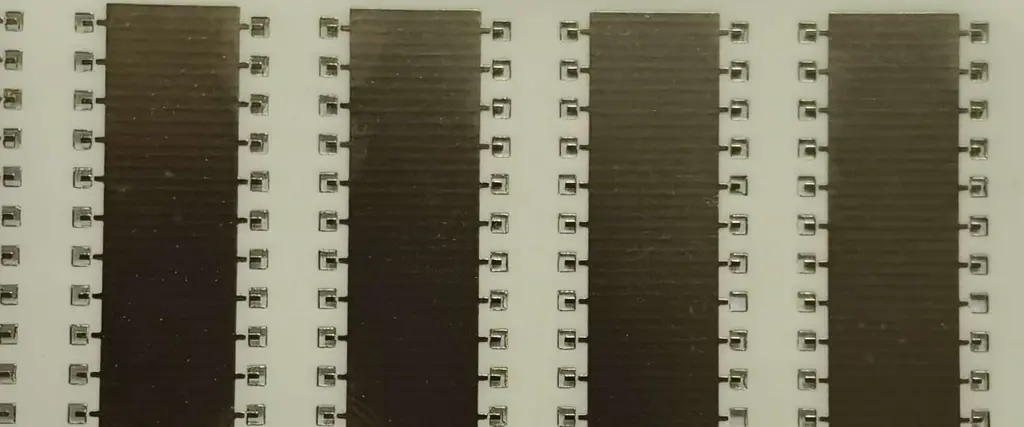
Advantages and Applications of the Rogers AD350A

Rogers RO4533

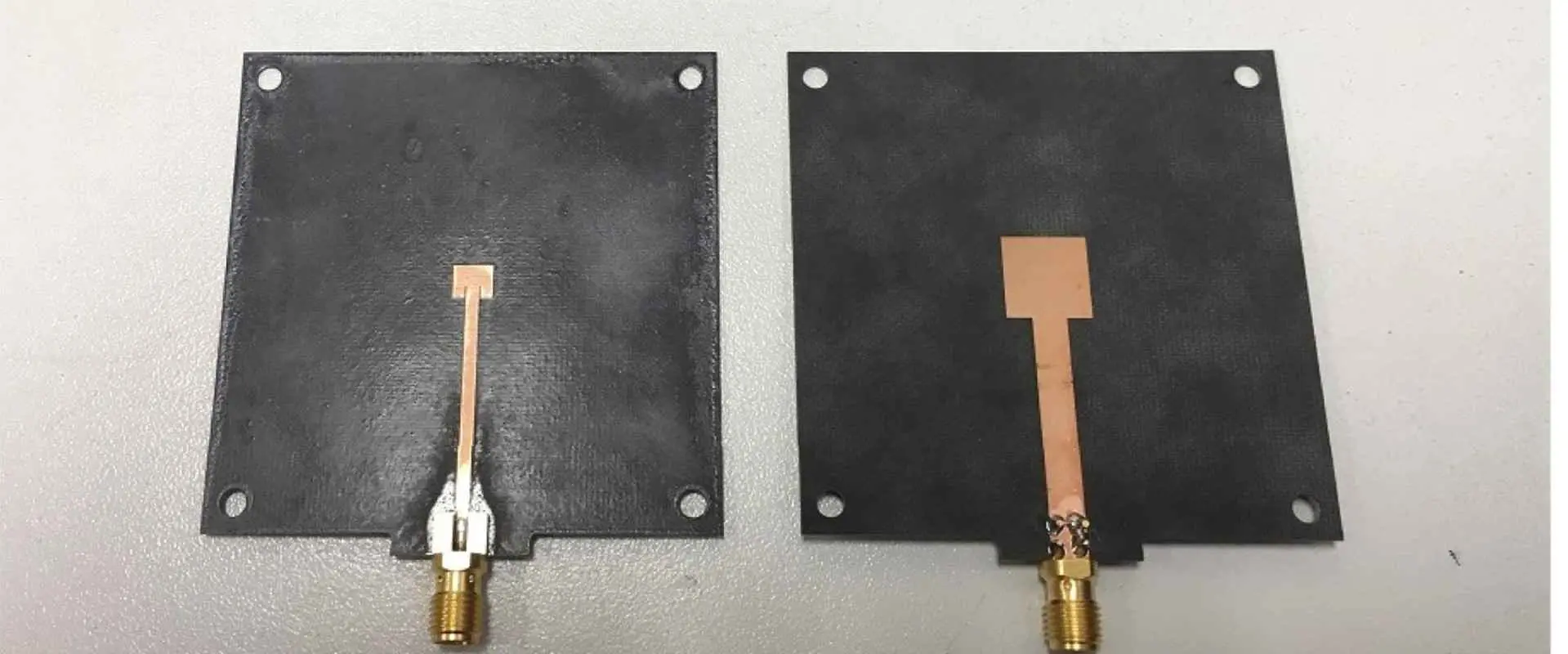
The Rogers AD350A antenna is good for use in the military. It is in common use for its ability to provide long-distance communication and for its ability to pick up signals from large distances.

The Rogers AD350A can pick up signals from large distances because it has a wide bandwidth, which means that it has a wide range of frequencies that one can pick up. This allows for signal transmission without any interference, making this antenna very useful for long-distance communication.

The Rogers AD350A offers a variety of performance features and cost-effective composite construction. As a result, these laminates are ideal for high-performance telecommunications infrastructure. Rogers AD350A laminates combine PTFE, woven fiberglass, and ceramic fillers to provide outstanding thermal conductivity. Because of their high thermal conductivity, they continue to perform even when the primary function is heat rejection. This article will discuss the advantages and applications of this material.

The performance features of this antenna make it ideal for use in high-performance telecommunications infrastructure. This antenna transmits a signal from one place to another because it has a wide bandwidth, which means that it can pick up large amounts of frequencies without any interference. In addition, the PTFE dielectric material used in the construction allows for the signal to be transmitted without any interfering factors.

Overview of Rogers AD350A

Rogers AD350A laminates have the highest thermal conductivity of any high-frequency material on the market. You can make the laminates from PTFE, woven fiberglass, and ceramic filled materials, which deliver high performance under varying temperature and humidity conditions. The advantages of AD350A over other high-frequency materials include low dielectric constant and superior mechanical properties. The following are some of the features of this high-performance material.

Dielectric Constant: The dielectric constant of a board determines its impedance. The higher the dielectric constant, the higher the board’s impedance. For example, FR4 is the cheapest substate, with a dielectric constant of 4.5. However, Roger PCBs have a higher dielectric constant and lower outgassing. Therefore, it makes them ideal for high-frequency devices and RF products.

Features of Rogers AD350A

The AD350A is a high-performance insulated circuit board made from a ceramic-filled and PTFE-reinforced laminate. The material’s dielectric constant (DK) is low, which will perform better in higher-power applications. The material is also compatible with FR-4, which helps keep the temperature and other environmental factors within the operating range. Here are some of its other features.

The first and most important feature of a Rogers PCB is its versatility. It is easy to design circuits using the Rogers 4350B. It is a high-frequency RF circuit board designed to work in a wide range of applications, from automotive radar to radio frequency identification tags. We can also use it for other high-frequency applications, such as in power amplifiers. Its other major feature is its ease of use.

The dielectric constant of a PCB defines its impedance. The higher the dielectric constant, the more impedance it has. FR4 is the cheapest substate, with a dielectric constant of 4.5. Roger PCBs are more expensive than FR4 materials. Nevertheless, they are better suited for applications that require high-frequency performance and high-temperature capabilities. This is because the dielectric constants of Roger PCBs are more varied and higher than those of FR4 boards.

Moreover, the Dk value of a Rogers AD350A is higher than that of FR-4 material. This difference is due to the FR-4 material’s higher dissipation factor and lower thermal stability. However, the Dk value of a Rogers AD350A is 4.5 to 11. Therefore, it has lower signal loss and higher Dk. Therefore, if you’re looking for a high-frequency antenna, you should choose a Rogers device instead.

The Benefits of Rogers AD350A

The Rogers AD350A is a high-frequency ceramic-filled, woven fiberglass PCB with an extremely low thermal expansion coefficient. In addition, the material has a high dielectric constant, a property that improves capacitance and increases the voltage transmitted through a PCB. The Rogers 4350B offers a dielectric constant of 3.66, making it ideal for use in microwave point-to-point links and other applications. The Rogers AD350A also features a very low moisture absorption of 0.01% to 0.2%, resulting in superior thermal performance.

Rogers AD350A Series of PCB materials offer excellent electrical performance and are well suited for high-frequency applications. They are available in ceramic laminates, glass reinforced hydrocarbon, and ceramic laminates. They are also cost-efficient and are great for high-frequency circuits and RF PCBs. Rogers AD350A series PCBs also have high thermal conductivity and dimensional stability. In addition, they offer low signal loss and cross-over and are excellent for circuit fabrication.

Applications of Rogers AD350A

We can use the Rogers AD350A in many different fields. You can use it in electronic warfare, radar technology, telecommunication, domestic and military applications. One specific example includes the search for weapons of mass destruction (WMD). The Rogers AD350A is also commonly used in satellite communications because of its ability to cover long distances. The technology and components of the Rogers AD350A help in the area of signal integrity and transmitting/receiving capabilities, which helps these satellites communicate with each other from a longer distance.

The Rogers AD350A is a PTFE-filled, woven fiberglass, ceramic-filled specialty material that offers high thermal conductivity and a low CTE. This material is ideal for higher-power designs where temperature extremes are normal and heat rejection is the primary goal. This material is a versatile, highly effective solution for power electronics and a variety of other applications. Learn more about this material. Its applications include:

Various industrial applications benefit from the durability and reliability of Rogers PCBs. As a result, High-frequency PCBs are a frequent use for this circuit board. Rogers PCBs have excellent thermal management and superior performance. In addition, they offer dimensional stability and low-cost circuit fabrication. The Rogers RO4000 PCB series also guarantee high-frequency performance.

Among the many uses for Rogers PCBs, the most popular is for high-frequency, high-voltage, and microwave circuit boards. Compared to FR4 composites, Rogers laminates are better at high-frequency properties. Additionally, Rogers PCBs have one or two-sided metallization. Both types of PCBs benefit from Rogers’ high-frequency characteristics. They combine with FR4 for optimal performance and minimal signal loss.

Conclusion

Rogers AD350A are the key materials for building Aerospace products, especially high-end radar systems, communication systems, aircraft and their components etc.

Rogers AD350A has an important role in this field. It can make better performance high-speed aerospace products with low cost but good quality.
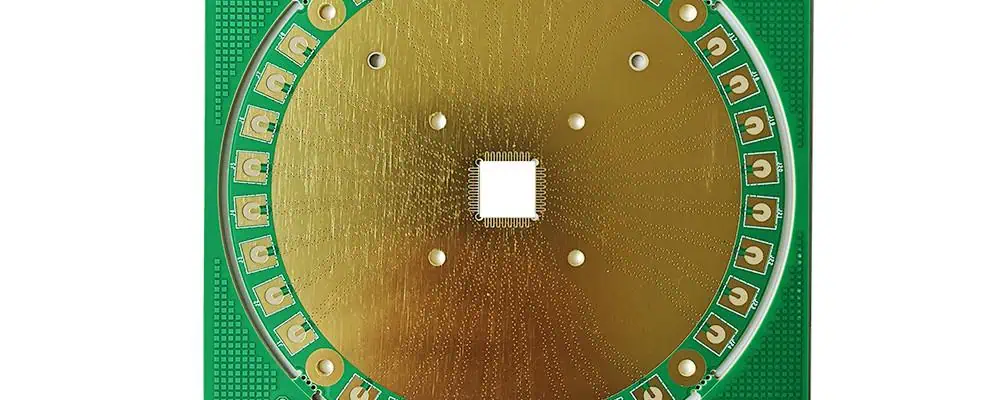
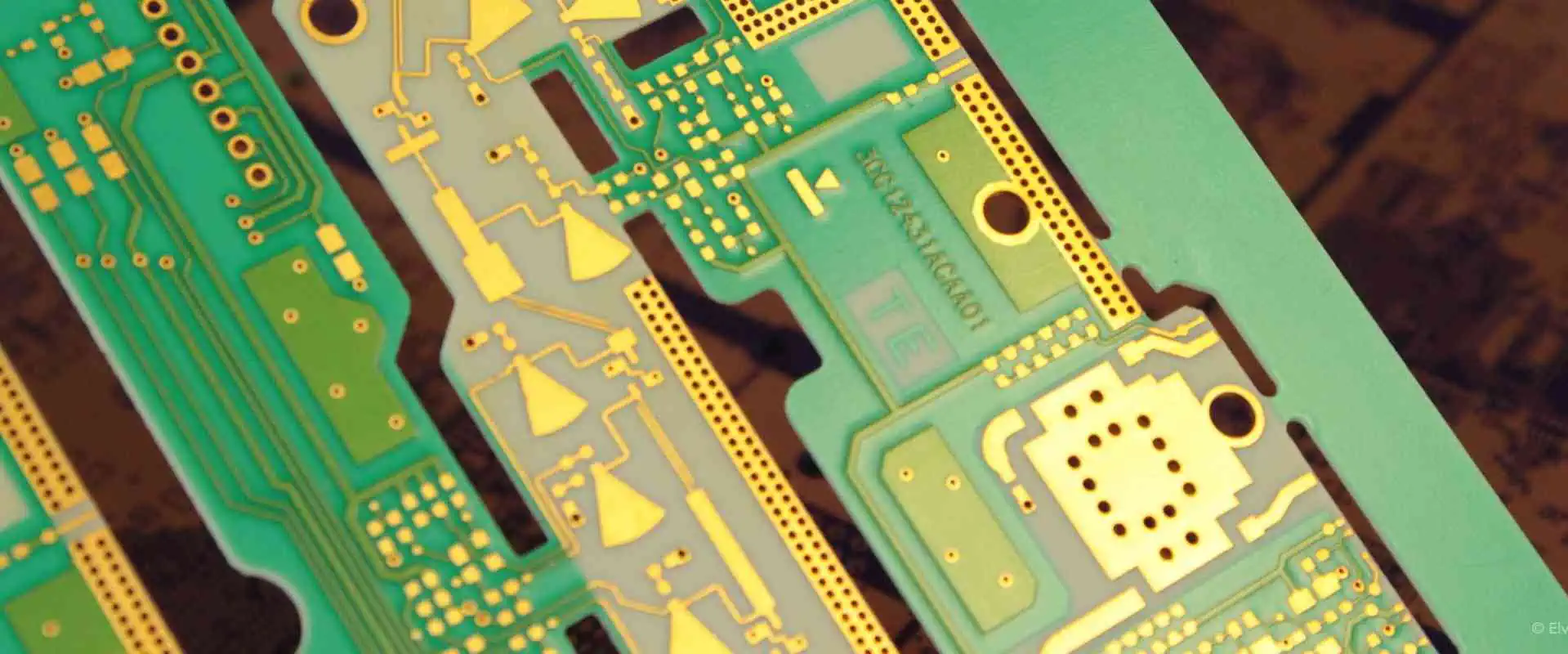
What is Rogers AD255C PCB ?

Rogers AD255C PCB

If you are in the market for laminates, you have probably already come across the Rogers AD255C. This article will provide you with a brief introduction to the product and its benefits and applications. Read on to learn more about this product.

Rogers AD255C laminates combine ceramic materials with fluoropolymer resin to produce RF laminate material with low thermal expansion and loss. These laminates have good mechanical toughness and dielectric constant, and are compatible with a wide variety of microwave applications. The material combines superior thermal characteristics of fluoropolymer resin systems, having unique fiberglass reinforcement and materials to produce RF laminate materials. The produced materials have:

  • Less thermal expansion characteristics
  • Lower loss
  • Less PIM (passive intermodulation)

An AD255C laminate is suitable for different RF and microwave applications. These applications are in telecommunication infrastructures. The two reasons for this suitability are:

  • PTFE stability over many temperatures and frequency ranges
  • Low loss characteristics

Features of Rogers AD255C Laminates

It has reduced loss PTFE, and the composite for the ceramic field is a loss tangent of 0.0014 at 10GHz. The Rogers AD255C offers a dielectric constant of three and a dissipation factor of 0. 0019. The company’s facility is privately owned, employs 150 people, and is ITAR-listed for small businesses. The Rogers Ultralam 2000 and Rogers RO4350 are made of polyimide.

AD255C Laminates have a 2.55 dielectric constant and tight tolerance. The Rogers AD255C offers a combination of ceramic materials with the excellent thermal properties of the fluoropolymer resin system. The combination of ceramic materials and fiberglass reinforcement provides a low-loss RF laminate material with lower thermal expansion and passive intermodulation. This material is stable over a broad frequency range and features low loss properties, making it the ideal choice for microwave high frequency PCB .

The profile power of V is low. 

The laminate has a reduced Z-directions CTE of 50 ppm/ ยฐC

Available panel sizes are extensive. 

The Rogers AD255C has a patented high-frequency technology that supports a broad range of applications. Advanced Driver Assistance Systems (ADAS) and vehicular thermal management are just a few of the uses of the Rogers AD255C. The new circuit materials are also useful for IoT devices, communications systems, radar systems, and backhaul radios for both present and future wireless networks. These laminates also offer the best in-class performance and durability, and are compatible with all major antenna systems.

Advantages of Rogers AD255C Laminates

A wide variety of microwave applications benefit from the unique properties of Rogers AD255C laminates. The composite materials of these laminates combine the superior thermal properties of fluoropolymer resins with glass fiber reinforcement for improved strength, low dielectric loss, and low passive intermodulation. In addition, the high-frequency performance of PTFE makes them ideal for use in a wide variety of microwave applications.

They have a low insertion loss. 

The antenna applications PIM is low.

The Rogers AD255C Laminates have phase stability because of a better TCEr. 

Rogers AD255C Laminates are compatible with the used processing PTFE standards. These standards based on PCB substrates. 

Rogers AD255C laminate materials

The increase in antenna performance needs is a constant trend in the current market. As a result, the materials meet the market design needs of the current and future markets. 

These AD series products are PTFE-based, glass-reinforced antenna materials. They give:

They are good in PIM (passive intermodulation) performance. In addition, the glass-reinforced antenna affords better circuit processability. The processability enables the high fabrication of the circuit board. 

The manufacture of the AD series products aims to meet the huge dielectric constant varieties. These varieties get needed in the current antenna requirements. The available options for dielectric constant are 2.55, 2.50, 2.60, 3.20, 3.50 and 3.00. they have a tolerance of negative or positive 0.05. The tight control and the different options help the circuit always get the needed impedance.

The AD series products for antennas have standard ED (electrodeposited), and ED reverse treated copper foils. They offer enough options to help in reducing antenna PIM and circuit losses. The PIM values of ED reverse treated copper foils are -163 dbc at 60 and -159 dbc at 30 mil thickness. These are values obtained from extensive PIM testing at 1900 MHz. The testing uses a 2-tone reflective method using a 50ฮฉ vehicle microstrip test. 

The AD antenna series products have different thicknesses. For example, the AD255C laminates range from 10 mils to 250 mils. Therefore, you need to seek help from customer service when selecting the suitable material.

PTFE composite-based products AD series materials have a lower loss (0.002 or less at 10GHz). In addition, they have little moisture absorption (0.1% or less) and high-strength copper steel of more than 10 pli. Therefore, the AD series laminates the best option for antenna use. 

Rogers AD255C laminate material description

AD255C laminates combine superior thermal characteristics of fluoropolymer resin with selected fiberglass reinforcement. They also combine with ceramic filters. They produce laminated products that have reduced PIM (passive intermodulation). The produced products have minor thermal expansion features. The Rogers AD255C laminates have PTFE stability over many temperatures and frequency ranges. It makes them ideal for RF and microwave use in the telecommunication industry.

Micro-dispersed ceramic gives thermal stability to laminates in the form of low CTE values. It also gives in the form of great phase stability at all temperatures. 

The guidelines developed give fabricators basic information on producing multi-layer and double-sided boards. It’s done using copper-clad, and PTFE reinforced materials. 

Rogers AD255C laminate storage 

You can store these laminates in ambient conditions. The recommended inventory system for record-keeping is FIFO (first in, first out). It permits tracking of the material numbers. 

Storing Rogers AD255C laminate in shipping cartons

Store the cartons on flat surfaces safely. They should be free from moving equipment and mobile handling. You can store the cartons on their sides if you don’t stack anything on top. 

You can stack up to five cartons high to limit the weight of cartons at the bottom. 

Storing Rogers AD255C laminate removed from cartons

The copper surfaces of the laminates can have discoloration. It’s because of oxidation that can happen in the storage. You can remove the oxidation by Microtech (chemical exposures) standard to PCB fabrication methods. 

Panels exceeding 20 mils in thickness, store them on edge slotted shelving. It provides easy access with reduced metal surface damage. 

If your storage facilities don’t allow vertical stocking:

  • Shelves should be smooth, clean, and flat
  • The shelf should extend past the area where you will store the panels.
  • Free the surface from all debris
  • Keep the shelf loads below 50 pounds per square foot
  • Interleave the panels with nonabrasive soft separator sheets

Handling of Rogers AD255C laminate

All PTFE materials are soft than many rigid printed laminates for wiring boards. As a result, they are susceptible to handling damage. It’s easy for a core clad that only has copper foils to get creased. The materials prone to dents, pits, and scratches are bonded by brass, copper, or aluminum plates. You need to uphold reasonable handling procedures. 

Rogers AD255C laminate applications

Antenna system

Rodgers provides unique antenna-grade laminates that meet all challenges faced by designers. In addition, they meet antenna designer needs for antenna systems in the military and more advanced systems for automotive radars.

The antenna systems have consistent and high-reliability performance. They have slight circuit losses at higher frequencies. They provide different dielectric products for:

  • Feed networks
  • Antennas
  • Radiating elements
  • Phased arrays

Types of antenna systems

Patch antennas

Phased array

Conformal antennas

AESA (active electronically scanned array)

Antennas

Low PIM advanced AD255C laminates enable good RF antenna performance and design. The 4G LTE and 3G mobile networks use different antenna technologies. They use them in building linkages between fixed stations and mobile users. You need high-performance antennas to operate the Internet of things (IoT). You also need the performance for both mobile wireless and fixed communications. The growth in technology and system needs permits printed circuits to offer high grain and low loss at microwave frequencies. 

Carrier-grade wi-fi and LAA devices

They are innovative material circuits that meet new and higher standards that surpass the standard FR-4 abilities. With the rise in wireless data demands, you need higher mobile network performance and capacity levels. The wireless carrier-grade solution observes the standards to meet the high reliability and performance needs. 

Communication systems

They are innovative AD255C laminate materials that enable better performance communication systems. Examples of these systems used in communications are power amplifiers, digital communication control circuitry, and reduced noise amplifiers. 

Infotainment and telematics

They are high-frequency AD255C laminates reliable for onboard antenna systems. The current enhanced connectivity and intelligence make automotive telematics and infotainment application systems complex. They offer two-way communication that receives, stores, and sends data. 

Conclusion

Get customer service help in choosing a suitable AD255C laminate material. However, the technological advancements make it a challenge to choose on your own. 

Custom Design of Rogers TC600 Circuit Board

Rogers TC600 PCB

Rogers Corporation has its headquarters in Basking Ridge, New Jersey. The company was founded in 1944 by Richard Rogers and Joseph Rousselot. The company is a global leader in high-performance materials for the electronics and communications industries. Rogers has been the world’s leading supplier of RF components since the 1960s. They are also the international leader in circuit board manufacturing technology.

Rogers Corporation is one of the world’s largest producers of copper-based laminate. They are also a large producer of high-frequency circuit boards. With over seven thousand patents, Rogers is suitable as one of the leaders in laminate technology. In addition, Rogers makes heat sinks widely used for power supplies and transmitters in laboratories.

Rogers is one of the world’s leading manufacturers of materials for printed circuit board assemblies (PCBAs). Its products are helpful in antennas, satellite antennas, microwave transmitters and receivers, wireless phones, and military communications equipment. Companies in many countries use these products.

Rogers Corporation is also one of the world’s leading manufacturers of copper-based laminates. Its copper foil laminate is widely used in signal processing equipment and consumer electronics by Rayming PCB & Assembly. The company also produces RF front-end modules for analog radio and TV receivers.

With this PCB, you can expect improved thermal management, impedance control, low-cost circuit fabrication, and low outgassing. Your circuit board will meet your exact specifications with OurPCB’s advanced technology, materials, and services. The possibilities for customization are endless. Contact Us to learn more about our PCBs. Contact Us to Learn More About Custom Design of Rogers TC600 Circuit Board

TC600 laminates

The Rogers Corporation filed a lawsuit against Arlon, Inc. in Hartford, CT, alleging that the TC600 circuit board material infringes on its U.S. Patent No. 5,552,210. Arlon believes that Rogers’ lawsuit lacks merit and intends to defend itself vigorously. Nevertheless, Arlon believes that the lawsuit does not address the issue and will continue to pursue it vigorously.

As a result of the materials used in Rogers PCBs, they have low signal losses and a wide range of dielectric constant. Unlike traditional microwave laminates, Rogers PCBs do not require special handling techniques or through-hole treatments. Moreover, we can customize them to meet the specific requirements of customers. Custom design of Rogers TC600 circuit board becomes a breeze if you are using modern computer-aided engineering (CAE) software and a qualified Rogers PCB design company.

The Rogers PCB is an ideal choice for high-frequency applications. The high-frequency properties of the Rogers PCB material make it suitable for the manufacture of radio-frequency (RF) and microwave equipment. It is made from high-frequency-sensitive materials and is ideal for use in high-frequency devices. Besides, this material has excellent dimensional stability and offers minimum signal loss. And last but not least, it’s highly cost-effective for circuit fabrication.

RT/duroid 6035HTC laminates

RT/duroid 6035HTC is a ceramic-filled PTFE laminate produced by Rogers Corporation and intended for high-frequency, high-voltage RF applications. These laminates feature excellent thermal conductivity and dimensional stability and are available in bare copper, HASL, and ENIG. In addition, both materials exhibit high-frequency electrical stability and excellent through-hole reliability.

The RT/duroid 6035HTC is one of the best-selling high-frequency PCB laminates manufactured by Rogers. This laminate has a low dielectric constant, improving performance in high-frequency applications. In addition, we reinforce this material with randomly oriented microfibers. As a result, it is the most popular high-frequency PCB laminate available today.

RT/duroid 6035HTC and RT/duroid 6202 high-frequency laminates offer excellent electrical, mechanical, and dimensional stability. They are compatible with standard epoxy/glass processes and are ideal for applications requiring low insertion loss. RT/duroid 6035HTC and Rogers TC600 circuit boards are compatible with each other, and both products are compatible with standard epoxy/glass processes.

RT/duroid 5870 laminates

The RT/duroid 5870 laminate provides maximum protection against electrical arcs and splatters and offers a wide range of dielectric constant values. The material is easy to work with, cutting and shearing are no problems, and the laminate resists any plating reagents.

This material is highly suitable for electronic circuits, as it offers uniform electrical and thermal properties. The dielectric constant is 2.33+/-.02, and the material is lead-free. The Rogers 5870 laminate is very easy to shape, and it is also resistant to etching agents. The material is also isotropic, which means it can be easily shaped and re-shaped without damage.

The RT/duroid 5870 laminate provides exceptional dimensional stability and is designed for high-frequency PCB applications. A Dk of 1.96 at ten GHz is ideal for use in antennas and other applications requiring a high-frequency operation. In addition, the low dissipation factor makes it an excellent choice for broadband and high-frequency circuits.

The RT/duroid 5870 laminate is a renowned material for high-speed digital boards. It is also widely used in antenna fabrication. In addition, it has a longstanding reputation in RF, with many RF power amplifiers using this material. In addition to being an excellent material, RT/duroid 5870 is known for its low thermal conductivity.

RT/duroid 5880 laminates

RT/Duroid 5880 high-frequency circuit boards consist of PTFE glass fiber reinforced material. The dielectric constant of this material is 2.2 at ten GHz, which is considerably lower than comparable materials. The material also offers excellent mechanical strength and dimensional stability. These advantages enable a streamlined PCB design that reduces space requirements while delivering superior electrical stability and reliability.

Low-cost circuit fabrication is made possible by Rogers RO4835 laminates. These materials are compatible with standard glass/epoxy processes. In addition, LoPro(r) Reverse-treated copper foil is available for applications that require low insertion loss. RT/duroid 5880 laminates have consistent mechanical properties, which allow designers to experiment with materials with different dielectric constants.

RT/Duroid 5880 is an outstanding choice for high-power applications. Its copper foil offers excellent thermal stability and a dielectric constant almost 2.4 times higher than standard RT/duroid 6000 products. In addition, the advanced filler system offered by Rogers enables excellent drilling capabilities and reduced drilling costs. You can even request a custom design of Rogers TC600 Circuit Board with RT/duroid 5880 laminates.

Rogers RT/duroid 5880 laminate is a highly versatile material that helps maintain uniform Dk. RT/duroid 5880 laminates are commonly helpful for PCBs with high-frequency applications. These materials are available in two and one-sided metallization. They have high parameters and can combine with FR4 in manufacturing.

RT/duroid 4350b laminates

The dielectric constant of a Rogers TC600 circuit board must be within a specific range. A higher Dk value will improve the performance of the circuit board. The dielectric constant is the difference between the electrical conductivity and its ability to transmit heat. Its absorption factor is a key component in determining the quality of a PCB.

High-frequency circuit boards have two materials’ dielectric “system.” In most cases, the dielectric constant of a layered circuit board is less than one ohm. Rogers RT/duroid 4350B laminates is one such example. They are made of a polytetrafluoroethylene (PTFE) dielectric and reinforced with glass microfibers for enhanced electrical properties. For example, the dielectric constant of an RT/duroid 5880 circuit board is 1.96 +-0.04 at 10 GHz, and the dissipation factor is 0.0019 at the same frequency.

RT/duroid 4350B is an excellent choice for microwave applications. Its low-thermal-transmission interface (CTE) is amazing and enables a wide range of frequencies up to 4 GHz. In addition, this material is compatible with FR-4 and offers the same mechanical and electrical stability as the RO4350B. This material entered the market in the late 1980s as a solution to the limitations of PTFE-based materials.

For spacecraft applications, low levels of outgassing are crucial. Therefore, the RT/duroid circuit-board materials used by Rogers Corporation pass the NASA guidelines. This testing shows that these materials are suitable for spacecraft applications. The RT/duroid 4350B laminates consist of a thermoset polytetrafluoroethylene (PTFE) dielectric with a ceramic filler. These materials have excellent TML and CVCM values.

Conclusion

The copper foil is an essential part of the Rogers TC600 circuit board. The R20 glue is the most critical factor in the Rogers TC600 assembling process. Glue has greatly influenced the market, which depends on its containing ability, adhesiveness, and drying speed. Rogers TC600 products have high-quality performance and are ideal due to their proven reliability.

What is Rogers TC350 PCB ?

Rogers TC350 PCB

This Rogers TC350 Plus laminates review will focus on the qualities that make this material unique. These laminates can perform in several applications, such as amplifiers, combiners, power dividers, couplers, filters, etc. Their range of uses extends beyond the commercial and consumer markets and even into aerospace and defense applications. Read on to find out how this material stacks up against other similar materials.

Low loss tangent

The TC350 Plus from Rayming PCB & Assembly are PTFE-based composite materials reinforced with woven glass and filled with ceramic. These materials provide high thermal conductivity and exceptional thermal dissipation in a circuit board. The advanced filler system also allows this composite to possess improved drilling performance. The improved drilling performance results in reduced manufacturing costs. These laminates are ideal for high-power RF signal applications, such as power amplifiers and passive components sensitive to temperature phase stability.

The new material features a combination of lower tangent and insertion loss, low moisture absorption, and excellent dimensional stability. The low loss tangent and high thermal conductivity properties of TC350 Plus materials help improve the reliability of the panels and reduce operating temperatures. In addition, they are present in various sizes. As a result, we can use them for different types of applications. They are also a preferred choice for telecommunications and other high-power applications.

RO4835 high-frequency laminates from Rogers Electronics have improved oxidation resistance and a dielectric constant of 3.48. They exhibit low loss tangent at the 10 GHz mark and are compatible with lead-free processing methods. Their low loss tangent and high electrical stability make them viable for demanding RF/microwave circuits. They also exhibit similar expansion coefficients to copper and are RoHS-compliant.

High-frequency laminates are better for projects with broad mechanical, electrical, and mechanical requirements. Rogers TC350 Plus laminates exhibit low loss tangents, reducing the cost of a high-frequency board. The loss factor, or Df, is a significant consideration when choosing the best material for your circuit boards. It’s the essential aspect of a printed circuit board, and the type of material is the biggest determining factor. For example, if you use FR-4 materials, you will experience higher losses.

High thermally conductive fillers

Designed for RF signal applications, TC Series(tm) laminates from Rogers Corporation feature high thermal conductivity, low loss tangent, and excellent drilling performance. With their high thermal conductivity and high dielectric strength, they are ideal for high-power RF designs, including power amplifiers and passive components that are sensitive to changes in dielectric constant with temperature.

TC350 Plus laminates feature a unique combination of low tangent and insertion losses and high thermally conductive fillers. Combining these features increases reliability and reduces operating temperatures in high-power applications. As a result, we can use them for various high-performance applications, including RF antennas, power dividers, couplers, filters, and amplifiers.

Rogers’s high thermally conductive circuit material is suitable for RF and microwave applications. Unlike standard PTFE materials, it has an impressive thermal conductivity of almost twice the standard RT/duroid 6000 products. The circuit material also boasts excellent drill-ability, which reduces drilling costs. Once you’ve decided on the Rogers TC350 Plus Laminates material for your application, you’ll want to consider the many benefits.

Arlon TC 350 laminate is a superior PCB substrate. It has superior heat-transfer properties and can help in various high-frequency applications, including digital communication control systems and power amplifiers. It also boasts a low insertion loss and has low CTE. It’s also easy to fabricate. Using industry-standard manufacturing processes, you can assemble the Rogers TC 350 laminate and store it in a flat, cool environment, away from sunlight.

Smooth copper foil cladding

There has been introduction of new TC350 Plus laminates made of woven glass PTFE-based and ceramic-filled materials that exhibit excellent thermal dissipation within circuit boards. These materials are capable of low-cost manufacturing while offering high-performance thermal management in the industrial heating and higher-power microwave applications. These products also feature a cutting-edge filler system that helps the composite achieve excellent drilling performance.

TC350 Plus laminates have various applications, including amplifiers, combiners, power dividers, couplers, filters, and more. They are accessible in a variety of thicknesses, ranging from 0.01 to 0.06 in. In addition to these applications, TC350 Plus laminates are applicable in aerospace and defense markets. Despite the advantages of using copper foil as a cladding material, it is not without its drawbacks.

Thermoset materials process similarly to FR-4, resulting in lower costs when ultimate performance is not required. However, when high-speed digital applications are necessary, thermoset laminates with low permittivity and low loss must be designed accordingly. This is a challenge requiring engineering solutions to overcome the challenges of high-frequency digital applications. Rogers introduced a line of high-frequency laminates in 1968. The RO4000(r) series of high-frequency laminates feature fused silica and a high glass content to reduce CTE in all three axes.

The Rogers TC350 Plus copper foil cladding meets the strictest electrical and mechanical properties requirements. Copper foil is a cathodic material easily bonded to a PCB base. In addition, copper foil laminates with cladding have a printed protective layer that protects against corrosion. It is also important to note that copper foil laminates need to meet specific size, diagonal deviation, and warpage requirements.

Advantages

There are several advantages to using a copper foil laminate. The CCLs offer a highly conductive surface and allow for efficient heat transfer. They are often helpful as the outermost layer of the PCB. This is because of their ability to draw heat away from the inner layers of the board. This can be helpful in high-power electronics applications that require optimal performance, even at high temperatures.

In addition to these benefits, CCLs can increase circuit speed while keeping tight control over impedance matching. The high conductivity of the laminate allows for the creation of circuits that can harness much more power from a power supply and produce less heat. This property allows the creation of high-power amplifiers that are much easier to cool than their counterparts. In addition to these advantages, CCLs can also help prevent corrosion in environments where salt spray or humidity is present.

Disadvantages

Despite these benefits, there are some limitations to using copper foil laminates. Although they offer good heat transfer, they can trap and store heat near the surface of the PCB. This limits their use as an outermost layer in high-power applications. To use a CCL as an outer layer, we must pair it with a lower Z-axis coefficient material like FR4 or polyimide for the internal layers of the board.

There are also some performance challenges when using CCLs in high-frequency applications. They are somewhat difficult to process and may require special equipment. In addition, they are sensitive to moisture. Whenever we process a CCL in a heated environment, we must seal it with a protective lacquer coating. This prevents the copper foil from reacting with water vapor present in the air.

Another drawback of using CCLs is that they are at risk for corrosion when used in harsh environments. Therefore, we should not use them in salt spray or humidity environments.

Conclusion

Despite the status of CCLs as a niche material, they are available and can operate in specific applications. They offer several benefits that make them viable in certain situations. They can handle higher current loads, making them ideal for power amplifiers. In addition to this, they have excellent heat dissipation characteristics and are therefore suitable for creating circuit boards with efficient thermal management, even at high temperatures.

Nelco N5000 BT Epoxy Laminate and Prepreg

Nelco N4000-12 PCB

For many, the thought of a laminate is what it took to make their flooring inert and spill-resistant. Thatโ€™s where Epoxy Laminate and Prepreg come in. We take these two items, epoxy laminate, and prepreg, and we use them together to create beautiful finishes for all sorts of projects.

What are they? Epoxy laminates are sheets that have a high-temperature resistant resin coat on one side and a release agent on the other. The two items can be helpful individually, but these two items create a layer that is resistant to spills, breaks, and scratches when combined.

What are prepregs? Prepregs are a particular type of resin embedded in the shape of a part. You can then finish using epoxy laminate and prepreg. It takes some ingenuity to use the prepreg, but it pays off when done right.

So, what can you do with it when youโ€™ve got epoxy laminate or prepreg? First, you could make a desk or a dresser or any tabletop. You could turn any item into a shelf. One could wrap an entire bathtub in one coat of epoxy laminate and prepreg.

You might also use epoxy laminate and prepreg to make cabinets resistant to spills and scratches. So, they can keep things from breaking as quickly as possible.

Nelco N5000 BT Epoxy Laminate and Prepreg

The N5000 resin system is a polyester resin used to laminate the two products together. Itโ€™s gloss white and extremely flexible. The N5000 can also be helpful on its own in high-performance applications.

The N5000 is helpful with nearly any laminate or prepreg to create beautiful finishes for your projects.

One highly useful product when working with N5000 is the Clear Shot Mist Sealer. It creates a protective layer that keeps the material from getting contaminated or yellowing in the sunlight. It also acts as an intercoat to ensure that the paint or finish youโ€™re using is smooth. These are items youโ€™re going to need as you work with prepregs.

The N5000 is a flexible, hard-wearing, and non-yellowing resin system. Itโ€™s resistant to oils, solvents, etching, and most other chemicals commonly used in the industry. It can be helpful on wood, metal, and many types of plastic. It has excellent impact resistance while being very clean-cutting for weldments.

Features

RoHS compliant:

The resin is free of heavy metals restricted by the RoHS directive.

Meets UL 94V-0 and IPC-4101/30 specifications:

The resin is helpful in many industries, and the UL 94V-0 and IPC-4101/30 are two of the most widely adopted standards. The UL 94V-0 refers to hazardous materials packaging, while IPC 4101/30 refers to training, safety, health, and environmental management.

Available in a wide variety of constructions:

The N5000 will work with a variety of prepregs and laminate constructions, allowing you to make a wide variety of finishes. Glass styles and copper weights form the basis of the prepregs. In contrast, the laminate has a range of choices available.

Vacuum laminated:

The prepregs are very useful for vacuum lamination because they keep in place as you finish the part. In addition, the N5000 will adhere to the top layer of prepreg without bubbling.

Wide Processing Latitude:

The N5000 has a very wide processing latitude, making it ideal for use in temperatures and pressures. It uses  90 min press at 190ยฐC and 200-350 psi, with a ramp-up rate of 5-10 ยฐC per minute. It also has a Unique BT/epoxy blend that results in a wide processing latitude.

CAF* Resistant:

The resin is resistant to CAF, which can cause some epoxy resins to be yellow and go brittle.

Very Good Chemical Resistance:

The N5000 has excellent resistance to solvents and other chemical compounds commonly used in the industry. However, it is also sensitive to heat, so it is often used in hot-melt adhesives or forced condensers.

Excellent Reliability and Performance:

The N5000 is helpful in many industries, and it has excellent reliability under extreme conditions. It is also resistant to cold weather, making it very popular in Europe. Tg 185ยฐC by DSC,  10 sec at 25ยฐC by DMA.

Excellent Electrical Properties:

The N5000 is not a surface coating, so it doesnโ€™t wear off easily, resulting in excellent electrical properties. It has a high dielectric breakdown strength and maintains the strength of the resin over time. The low, low Dk, and Df values make it more suitable for high-end uses.

Perfecting Touch:

The N5000 is very hardy, making it perfect for finishing applications that work under various conditions. It also combines well with epoxy laminates and prepregs, giving you some great results.

BT Resin Chemistry:

The BT resin chemistry is ideal for high-performance industries that use the Hysol N5000. It is low in viscosity, allowing you to have better control over the final finish. The BT resin chemistry also helps with UV stability and durability, making it a very useful resin for this application.

Applications

1. Cabinet and furniture finishing:

The N5000 can be used to make wooden cabinets, furniture, and other items that need resistance to spills and scratches. It also helps to reduce the risk of warping as itโ€™s harder than many other laminates.

2. High-Density Interconnects:

This resin is often used in the connection of high-density interconnect boards. It can resist heat and oxidation, keeping the connectors even more durable.

3. Wireless Communications:

This resin is often used in wireless communications, as it does not yellow or become brittle over time. It is also very flexible and resistant to UV rays. In addition, the N5000 will not further degrade when exposed to magnetic fields, making it an excellent choice for this application.

4. Direct Chip Attach:

This resin has a high dielectric breakdown strength, making it suitable for high-end applications that require high performance. It is also suitable for wire bonding and direct chip attach.

5. MCM-Ls:

This resin has excellent moisture resistance, making it perfect for use with metalized films and MCM-Ls. In addition, as it is resistant to CAF, it will not become brittle or yellow from overexposure to the sun.

6. BGA Multilayers:

This resin is often helpful in producing BGA multilayers, which are widely essential for wireless communications. It is also suitable for use with ceramic substrates. In addition, the N5000 does not yellow or become brittle over time, making it an excellent choice for this application.

7. Surface-Mount Multilayers:

The N5000 is often used to finish assembly lines and surface-mount multilayer structures. In addition, it is beneficial for hot-melt adhesives because they will not yellow or become brittle due to overexposure to the elements.

8. Backplanes:

This resin is often essential in backplanes, and it is an excellent choice for this application. It is very hardy under various conditions, and it also has excellent moisture resistance.

9. Aluminium Inserts:

The N5000 makes an excellent choice for aluminum inserts, as it can be helpful with many different materials and constructions. In addition, it will not yellow or become brittle over time, making it ideal for use with parts that need to resist UV rays or other types of exposure.

10. Fine-Line Multilayers:

This resin is often helpful in fine-line multilayer boards, and it is an excellent choice for this application. It has excellent adhesion properties, making it very durable and hardy in the elements.

Conclusion

With all the options available to you when it comes to selecting an epoxy resin, you must choose that will provide you with good results. To make sure you get the best results possible, you should take the time to consider how your product will be necessary before making a final decision. This will help ensure that you make a wise choice.

If your product has unique requirements, such as electrical conductivity or chemical resistance, you may need to seek a resin with special specifications from Rayming PCB & Assembly. In addition to making sure your resin has the right specifications, you will also want your resin to be easy to work with.

How Isola Tachyon 100g PCB Material Impacts High-Speed Digital Applications

Isola FR406 PCB

The PCB industry keeps advancing. Therefore, the need for high performance PCB material is increasing. Not all PCB materials are suitable for high-speed digital applications. However, Isola has designed the Tachyon 100g to meet the requirement of this application. Also, this PCB material features great properties. This article seeks to provide more information about Isola Tachyon 100g PCB material.

What is Isola Tachyon 100g?

The Isola Tachyon 100g PCB material is specifically designed to meet the demands of high-speed digital applications. These applications are about or above 100 Gb/s speeds. Also, this PCB material has great electrical properties. These properties maintain stability over a wide range of temperature and frequency.

Isola Tachyon 100g comes in handy for scaling current devices to their next generation via new backplanes design. Therefore, this enables improvements from data rates of 10 Gb/s. Also, this material focuses on line cards that need the greatest thermal performance. Isola Tachyon 100g features a 30% improvement in its Z-axis CTEs. Therefore, this material is a great choice for greater layer line cards with several 2 oz. planes. Also, higher layer line cards featuring pitches at 0.8mm or lower.

In addition, Isola Tachyon 100g utilizes reduced profile copper and spread glass. This helps to improve rise times and mitigate skew. Also, it helps to minimize jitter and improve height and eye width. It also enables the use of ultra smooth copper. Isola Tachyon 100gfeatures a nominal Dk value of 3.02. This dielectric constant is stable between -55 degrees Celsius and +125 degrees Celsius. Also, Isola Tachyon 100g has a low and stable dissipation factor of 0.0021.

This PCB material is available in prepreg and optimized laminate forms. Also, it is available in standard panel sizes to offer a material solution for daughter cards and multilayer backplanes. Isola Tachyon 100g was specifically designed to create hybrid high-layer count backplanes. This material was successful when used on signal integrity TVs.

Properties of Isola Tachyon 100g

The following are the properties of Isola Tachyon 100g:

Thermal properties

The glass transition temperature of Isola Tachyon 100g is 220 degrees Celsius by DMA. This value is very high. Therefore, Isola Tachyon 100g offers great thermal performance. The Tg by DSC is 185 degrees Celsius. Also, the Tg value by TMA is 180 degrees Celsius.

The CTE on the Z axis is 45 ppm/ยบC before glass transition temperature. After Tg, the Z-axis CTE is 250 ppm/ยบC.  The CTE value at X and Y axis before Tg is 15 ppm/ยบC.

The thermal conductivity of this material is 0.42 W/m/K at (-100-250 ยฐC). Isola Tachyon 100g features a moisture absorption rate of 0.05%. Also, this material has a low water absorption rate.

Electrical properties

The Dk permittivity is 3.04and 3.02 at 2 GHz and 5 GHz respectively. At 10 GHz, the Dk is 3.02. This value is very low and stable.

The dissipation factor (Df) of Isola Tachyon 100g is 0.0021 at 2 GHz, 5 GHz, and 10 GHz. Isola Tachyon 100g features a low and stable (Df). The electric strength is 60 (1500) KV/mm (V/mil).

Mechanical properties

The peel strength of Isola Tachyon 100g is  0.79 (4.5) N/mm. After thermal stress, the peel strength at 125 degrees Celsius is 0.96 (5.5) N/mm

The flexural strength is 44 ksi in lengthwise direction. At crosswise direction, the flexural strength is 41 ksi. The tensile strength is 3D ksi at lengthwise direction. At crosswise direction, the tensile strength is 25 ksi

Thermal Analysis Methods of Isola Tachyon 100g

There are several ways of analyzing the thermal properties of Isola Tachyon 100g.

Differential scanning calorimetry (DSC)

This is a popular thermal analysis method. It helps to determine the Tg of Isola Tachyon 100g. Therefore, it determines the flow of heat in and out of this material.

Thermal Gravimetric Analysis (TGA)

This analysis determines the degradation temperature. TGA evaluates the change in weight against varying temperature. Also, PCB degradation often occurs over a wide temperature range.

Dynamic mechanical analysis (DMA)

This evaluates the modulus properties and energy dissipation of Isola Tachyon 100g as it is deformed under a periodic strain. Also, this analysis is ideal for evaluating mechanical characteristics of viscoelastic polymeric laminates.

Advantages of Isola Tachyon 100g PCB Material

Isola Tachyon 100g features great benefits. This is one of the reasons this material is highly preferred among PCB manufacturers. The benefits of this material include:

Great electrical performance

Isola Tachyon 100g features stable electric properties over a wide frequency range. For instance, the Df and Dk value of this material are stable and low.

High thermal performance

Several factors contribute to the thermal performance of a PCB material. For more advanced circuits, a material with great thermal performance is very crucial. Therefore, Isola Tachyon 100g is an ideal material for advanced circuits.

Complies with industry standards

One of the greatest advantages of this PCB material is that it complies with most of the industry standards. This PCB material adheres to IPC-4103/17, UL 94 V-0 and Non-ANSI. Therefore, Isola Tachyon 100g PCB material is safe for the environment.

Available in optimized prepreg and laminate forms

This PCB material is available in optimized prepreg forms and laminates. Therefore, it is ideal for fabricating multilayer circuits.

Frequently Asked Questions

What are the types of copper foil used in Isola Tachyon 100g?

There are three types of copper foils used in Isola Tachyon 100g PCB material. These foils are RTF, standards THE Grade 3 and VLP-2.

What are the types of prepreg used in Isola Tachyon 100g?

The types of prepregs used in Isola Tachyon 100g are panel or roll form. Also, tooling of prepreg panels are available.

What are the standard glass fabrics for Isola Tachyon 100g?

The square weaves glass fabric and the spread glass fabric. However, the square weave is commonly used for Isola Tachyon 100g.

Is Isola Tachyon 100g flammable?

The high-speed digital Isola Tachyon 100g prepreg and laminate is lead-free compatible. The flammability rating of this PCB material is UL94 V-0. This implies that Isola Tachyon 100g will stop burning within 10 seconds.

What are the areas of applications of Isola Tachyon 100g?

Isola Tachyon 100g is widely used in aerospace and defense. Also, you will find it useful in storage and peripherals.

Conclusion

This article has shed light on the Isola Tachyon 100g. Also, it answered some questions pertaining to that Isola Tachyon 100g.

A Quick Guide to Rogers AD300D Laminates

Rogers AD300D pcb

Before you decide to buy the Rogers AD300D laminate, it’s important to know some of its benefits and features. Keep reading to learn more about this new material. You’ll also discover how to apply it for different purposes. Here’s a quick guide to AD300D laminates. Listed below are some of the advantages and features of this material. Before you buy them, consider these tips for a successful application.

Overview

A quick introduction to Rogers AD300D laminates will introduce you to the different types of high-frequency PCB materials available. In addition to the high-frequency laminates, the company also produces a variety of adhesive and bonding materials, including FR-4, woven-glass, and micro-dispersed ceramic composites. These materials provide superior high-frequency performance while maintaining a balance between cost, durability, and electrical properties.

We have also introduced a new series of adhesive materials, called the IM Series. The new adhesives meet the toughest PIM specifications and offer the highest production yields. This is great news for antenna manufacturers looking for a high-quality, cost-effective product for their customers. With Rogers’ IM series, you can expect high-quality antennas that perform like professional-grade components. This high-quality adhesive provides unmatched performance and durability for the most critical applications.

As an industry leader, RayMing has developed advanced materials for electronic applications. The company recently expanded its production facility in other states. Application and Technical Services engineers are available to help customers design circuit boards that best meet their needs. Further, our highly skilled technical support staff are always happy to answer your questions and provide assistance. You can trust RayMing for high-quality, custom-made adhesives. So, start building your brand with us.

Features of Rogers AD300D

IM Series high-frequency laminates are an outstanding high-frequency performer. This series features an innovative, copper-foil-based IM system and ultra-smooth copper foil with excellent adhesion to the substrate material. These laminates provide typical PIM performance values, as measured using two 43-dBm swept tones at 1900 MHz. These properties make them suitable for many microwave applications.

RayMing manufactures laminate materials for PCBs. You can make PCBs from FR4 composite, a composite of glass fiber and epoxy resin. The company offers laminates with higher high-frequency properties than FR4 and a variety of metallization configurations. Regardless of the application, we offer laminate materials with high parameters and excellent dimensional stability. They can be used alone or in combination with FR4 for superior high-frequency performance.

Our PCBs are available with dielectric layers for insulating and conducting electrical signals. This insulating layer also serves as a poor conductor for signal transmission. Mica and oxides of metals are good insulators. The insulating layer reduces signal loss and maintains the dielectric constant within a specified range. These laminates are suitable for various industries and applications and have the best performance in high-frequency environments.

IM Series and AD300D laminates are two new product grades. They are capable of extending the capabilities of Rogers AD300 product grade. They are glass-reinforced and PTFE-based and offer excellent passive intermodulation performance. These materials are ideal for many antenna applications, including those that require a high-frequency and long-range operation. For example, if you are constructing an antenna for a wireless network, these products can help with that.

Benefits of Rogers AD300D

Adhesive dielectric coatings, referred to as conductive adhesives, are used for circuit boards and other electronic devices. You can make these adhesives from ceramic hydrocarbons. These materials exhibit very low loss, and are very suitable for circuit fabrication using standard epoxy/glass (FR-4) processes. The advantages of conductive adhesives are unmatched in the industry, and they make the product a very attractive choice for high-volume production.

RayMing recently introduced two new PTFE-based, ceramic-filled, glass-reinforced, IM-system-enabled laminates. The IM Series combines a newly developed IM system with ultra-smooth copper foil for superior adhesion. The IM system is capable of achieving excellent electrical and mechanical performance and is compatible with standard PTFE fabrication.

Applications of Rogers AD300D

RayMing produces circuit board laminates for the manufacture of high-frequency PCBs. Usually, these circuit boards are made from FR4 composite, a mixture of glass fiber and epoxy resin. We sell FR4 laminates with better high-frequency properties. The laminates feature high parameters and one or two-sided metallization. The laminates can be used alone or combined with FR4 in manufacturing.

RayMing is a leading global supplier of high-performance RF materials. We use its advanced solutions in power electronics and elastomeric materials in many industries. Its specialty materials, perfect for many applications, have excellent dialectic constant control. Some of these applications include automotive radar sensors, satellites, and high-frequency laminates. Here are some of the applications of Rogers AD300D Laminates

Achieving a controlled dielectric constant, low loss performance, and excellent PIM response are just some of the advantages of Rogers AD300D laminates. These high-frequency laminates also provide an efficient construction and are compatible with standard PTFE fabrication processes. Their high-frequency properties make them ideal for base station antennas. Moreover, they have very good mechanical and electrical performance. They also help improve the reliability of the system, which makes them ideal for the manufacturing of high-frequency circuits.

Conclusion

In terms of DK values and CTE, Rogers AD300D Laminates offer low thermal expansion and dimensional stability. The dimensional stability of this laminate allows it to maintain its size even when subjected to temperature changes. In addition, we can complement the insulating properties of this laminate by its low thermal conductivity and dielectric constant. This makes it an excellent choice for applications susceptible to changes in temperature.

Another advantage of Rogers AD300D Laminates is that they exhibit low dielectric loss and excellent PIM response. Their high dielectric constant and low dissipation coefficient allow for efficient insulator operation and are compatible with most PTFE fabrication processes. This means that they offer a low cost of construction yet still offer superior electrical and mechanical performance. The Rogers AD300D Laminates offer several benefits that make them an excellent choice for high-frequency applications.

The Rogers AD300D microwave laminate is a new product grade that extends the capabilities of the AD300 product grade. Its PTFE-based, glass-reinforced design provides low loss and controlled dielectric constant. These properties make it a good choice for microwave structures with a high density of layers. Another benefit is its dimensional stability, making it an excellent choice for complex microwave structures.

The Rogers AD300D is an RF composite that you can make from multiple materials. It offers good board stiffness and excellent thermal conductivity. As a result, the AD300D can help you reduce electromagnetic interference and optimize your circuit design. It’s also great for antennas and filters in high-frequency applications. You can even use this laminate to build your own PCBs in the office or at home.

Why choose the Rogers RO4360G2 for you PCB

Rogers RO4360G2 pcb

RO4360G2 laminates are the first high dielectric constant (Dk) thermoset laminate that we can process like FR-4. It is a high-strength, lightweight composite made of polyphenylene sulfide (PPS) for advanced performance at a low cost. It has an extension co-efficient of -0.112%/C, with a heat deflection temperature below 260ยฐC and good adhesion to metal and other base materials.

This product offers many benefits like:

Outstanding strength at high temperatures ranges from -40ยฐC to +200ยฐC.

Low Cost $4.98/sq.ft (in 2010)

Able to be machined and drilled using ordinary metalworking tools.

This article will discuss the processing of this material about the benefits and provide electrical performance data for this material over various temperatures, humidity levels, and frequencies. In addition, a discussion of the properties, cost, and durability of RO4360G2 will also take place in this paper.

Composition and properties

Rogers RO4360G2 is a composite of crystalline PPS as its matrix and colloidal silica powder as its reinforcing phase. The crystals are rod-like particles approximately 7 nm in diameter. Silica has a melting point of 478ยฐC, making it brittle and not easily machined. As with most semiconductors, the PPS matrix is an insulating material. However, the large density of minuscule crystal particles gives the material a high dielectric constant.

Wet density Dry density Tensile strength (psi) Tensile strength (MPa) Expanded thickness (in.) at 100% elongation temperature (ยฐC) Density @ operating temperature% Hysteresis loss (%) Dielectric constant for P-N junction % Dielectric constant at rated frequency (GHz) Dielectric loss factor @ rated frequency Thermal conductivity k< 0.3ยฐC/cm k > 0.3ยฐC/cm at ambient ยฐC

The dielectric constant of this material is very high at 7.5, which can lead to problems in the design of electrical components using this material. However, all plastics have very low dielectric constants, ranging from 5 for polyethylene (PE) to 11 for polystyrene (PS). The high dielectric constant of this material comes from the crystalline nature of PPS. We enhance it by the silica addition contained in it.

The thermal conductivity of this material is non-linear and ranges between 0.3 and 1.1 k/cm at ambient temperatures. Therefore, the dielectric loss for this material is moderate at about 12%, with a frequency of 100 MHz. The dielectric loss factor at high frequencies is a problem associated with any dielectric material and gets more severe as the temperature increases. However, the thermal conductivity values are excellent and stay relatively constant from 0ยฐC to 100ยฐC. This increase in thermal conductivity at higher temperatures compensates for the loss factor values and helps keep this material from overheating.

Dielectric loss vs. frequency

This material can be machined, drilled, and soldered using ordinary metalworking tools. It is not advisable to use acids, solvents, or other chemicals. This material should work in conjunction with a PEMF device to aid in the healing of cuts and abrasions and improve its durability.

This material’s cost per square foot was $4.98 in 2010 and has been very stable in price over the past few years, despite rampant price increases in other polyphenylene sulfides (PPS).

Durability

This material has excellent durability when used with PEMF as part of a treatment program. As a result, we can use it as a platform for implanted electronic components fabricating electronic packaging, antennas, and RF shielding enclosures. In addition, several pieces of this material have been exposed to air at 90% relative humidity (RH) over one year with no effect on its electrical or physical properties.

The material is essential in various applications, including electrical connectors, wiring harnesses, RF applications, heat sinks, and electronic packaging.

Environmental protection

This material does not have to be heat treated because it has a very high thermal stability of about 90ยฐC/hr. It can also withstand high radiation levels and impact through its excellent insulation properties.

The strength and durability of this material are excellent in the range of -40 to +200ยฐC. The dielectric property of this material also makes it a good choice for applications requiring its dielectric properties at temperatures over 100ยฐC. However, it is not as good as high-temperature thermoplastic polymers (TPUs) for these applications. Nevertheless, we can use it in low-temperature applications to +60ยฐC.

The electrical properties of this material are quite stable, with temperatures over the range of -40ยฐC to +70ยฐC, which makes it an ideal material for use in any connector or switch. In addition, its high dielectric constant leads to better electrical properties at higher temperatures and frequencies. The cost of this material is moderate but still below $7/sq.Ft currently, compared to prices ranging from $15-30+ for other materials.

Plated through-hole reliability

This material is essential in a variety of applications for through-hole soldering. We can use it in most solder processes and provides good adhesion. It has a wide temperature range and can withstand temperatures up to 180ยฐC, making it useful for any fillet or spring soldering process. We can also use it for through-hole lamination.

It could be helpful as a low-cost substrate for high-temperature/high-frequency surface mount devices. We can use it to make electrical components and wire harnesses currently underused. Its wide temperature range and strength make it useful for many applications in corrosive environments where its physical properties are needed more than its dielectric properties. Its strength and dielectric properties allow it to help as a sacrificial laminate in tough environments.

The durability of this material has a rate of 150ยฐC/hr, which is typical for a PPS. It is also resistant to oxidation and requires no special treatment or coating. In the last five years, there have been no major changes to the cost of this material, with prices staying between $6-7/sq.ft, which makes it very economical compared to other materials in its class.

Efficient supply chain

This material is a product of St. Gobain. It has approximately 60% of the world market share for PPS and controls over 80% of the PEMF market. Having a single dominant supplier has allowed certain economies of scale to be taken advantage of over the years, which has kept pricing on this material constant while other materials have had huge price increases during that time.

Rayming PCB & Assembly also controls the market for polycarbonate, one of its main competitors in the PPS market. Polycarbonates require four times as much energy to produce per unit mass as PPS, and they are significantly more expensive. Polycarbonates are also highly susceptible to environmental influences, leading to a loss in strength over time and requiring special treatment to maintain their integrity. This can result in increased costs and added time for processing applications.

Automated assembly compatible

This material has good mechanical properties, which allows for automated assembly processing and pick and place operations.

This material produces electrical connectors, wire harnesses, PCBs, and switch components. It is also an excellent platform for electronic components such as sensors, transistors, and other electronic assemblies.

We can plate it using solder paste or selective soldering (explosive or thermal) processes and easily soldered using conventional surface mount equipment. It is also helpful in several other applications, such as RF shielding enclosures, heat sinks, and electronic packaging.

This material has good mechanical properties and processed using a variety of processes. They include hot-melt extrusion, spraying, cutting, and embossing. It can also be injection molded.

It has a very high dielectric constant, holding its dielectric properties over a wide temperature range.

Conclusion

Rogers RO4360G2 is ideal if you want an inexpensive functional, and durable material to use in your next product. Rogers RO4360G2 is a very popular material for making medical devices, Aircraft Electronic Fixtures, and many other applications. It is available in an open-cell material with a U-type cross-section. Its dielectric constant of 60 indicates that it has excellent electrical properties. In addition, its high tensile strength and excellent oxidation resistance make it suitable for many types of electronic assemblies.

What is Rogers RT/Duroid 5880LZ Material?

Rogers RT Duroid 5880LZ

Introduction to RT/Duroid 5880LZ

RT/Duroid 5880LZ is a ceramic-filled, PTFE composite material manufactured by Rogers Corporation for use in high frequency circuit boards and microwave components.

Some key facts about RT/Duroid 5880LZ:

  • Belongs to the RT/duroid 6000 series of high frequency laminates
  • Features a dielectric constant of 1.96 at 10 GHz
  • Enables performance up to mmWave frequencies
  • Low loss material suitable for exacting circuit applications
  • Uses a filler system to achieve properties and performance
  • Utilized in designs from HF to Ku band and above

With its optimal electrical and mechanical properties, RT/duroid 5880LZ allows circuits to achieve excellent gain and low insertion loss even at millimeter-wave frequencies. In this article, we examine RT/Duroid 5880LZ in more detail including its properties, applications, key benefits, and usage guidelines.

Dielectric Composition

rt duroid 5880
rt duroid 5880

Rogers RT/duroid 5880LZ is a filled, ceramic-PTFE composite dielectric material, consisting of:

  • PTFE (Polytetrafluoroethylene): This provides the basic matrix and gives the material is low dielectric constant. PTFE offers high strength and flexibility along with heat and chemical resistance.
  • Ceramic filler: This is a proprietary formulation of ceramic particulate blended with the PTFE. The filler system enables the dielectric properties while also enhancing thermal and mechanical performance.
  • Glass reinforcement: Glass microfibers are added for improved dimensional stability and temperature coefficient of expansion (CTE).

The composition results in a flexible circuit material that is lightweight and easily fabricates while delivering electrical performance beyond conventional PTFE. The material offerings include prepreg, laminates, bondply, and cable dielectrics.

Dielectric Properties

The dielectric properties of Rogers RT/Duroid 5880LZ that make it suitable for high frequency applications include:

  • Dielectric constant (Dk): 1.96 ยฑ 0.02 @ 10 GHz
  • Dissipation factor (Df): 0.0019 @ 10 GHz
  • Dielectric strength: > 1.6 kV/mil (> 63 kV/mm)

The low and stable dielectric constant over frequency allows for tighter circuit layouts and high frequency operation. The low loss tangent means more of the transmitted signal is retained as it passes through transmission lines, striplines, and other circuit elements. High dielectric strength enables thinner laminates and improved power handling.

Key Material Benefits

Rogers RT/Duroid 5880LZ offers several benefits that make it advantageous for engineers to design high frequency PCBs and components:

  • Extremely low loss for optimal circuit efficiency up to mmWave bands
  • Lightweight with outstanding dimensional stability
  • Allows miniaturization of circuits with thin laminates
  • Good thermal conductivity for power handling
  • Low moisture absorption for reliable electrical performance
  • Excellent CTE match to common metal platings
  • Simple machining and fabrication
  • RoHS compliant and lead-free
  • Enables circuits to achieve wider bandwidths

Typical Applications

RT/Duroid 5880LZ is well suited for the following typical applications:

  • Wireless infrastructure antennas and filters
  • Military phased array radar and communications
  • Satellite communications and telemetry
  • Automotive radar transceivers
  • Point-to-point backhaul radios
  • Test and measurement equipment
  • 5G equipment and mmWave antennas

The low loss, dimensional stability, and fabricability make it an optimal choice where every dB of loss matters. circuits operating from L through Ku band and beyond benefit the most from 5880LZ’s properties.

Available Product Forms

Rogers-RO3203-pcb

Rogers offers RT/Duroid 5880LZ in the following product formats:

Prepreg

  • 5880LZ reinforced prepreg
  • Available on various glass styles
  • Multiple resin content options
  • Rolls or panel forms

Laminates

  • Double-sided clad sheets
  • Thicknesses from 0.005″ to 0.125″
  • Rolls or panel sizes
  • One ounce ED copper standard

Bondply

  • Adhesive bonded multilayer material
  • Alternating dielectric and double-sided copper layers
  • Eliminates press cycles for multilayer boards

Wire and Cable

  • Coaxial and multi-conductor cables
  • Semirigid and flexible constructions
  • Custom cable solutions

Key Properties Data

Below table summarizes the key properties of RT/Duroid 5880LZ laminates:

PropertyValueTest Method
Dielectric Constant (Dk)1.96 ยฑ 0.02IPC-TM-650 2.5.5.5 Clamped Stripline
Dissipation Factor (Df)0.0019IPC-TM-650 2.5.5.5
Dielectric Strength1.6 kV/mil minIPC-TM-650 2.5.6.2
Volume Resistivity1 x 10^15 Ohm-cmIPC-TM-650 2.5.17
Surface Resistivity5 x 10^15 Ohm-cm minIPC-TM-650 2.5.17
Coefficient of Thermal Expansion (CTE)13IPC-TM-650 2.4.24
Thermal Conductivity0.69 W/mKASTM C518
Moisture Absorption<0.02%IPC-TM-650 2.6.2.1
Density2.2 g/cm3ASTM D792
Hardness50 (Shore D)ASTM D2240
Flexural Strength27.6 ksiIPC-TM-650 2.4.4
Tensile Modulus540 ksiASTM D638
Compressive Modulus12.7 ksiASTM D695
Peel Strength6.5 pliIPC-TM-650 2.4.8
Shear Strength750 psiIPC-TM-650 2.4.8
Glass Transition Temperature (Tg)280ยฐCIPC-TM-650 2.4.24

Design and Layout Guidelines

duroid-5870

To achieve optimal circuit performance on RT/Duroid 5880LZ, designers should follow these PCB layout recommendations:

  • Maintain line width/spacing ratio of โ‰ฅ 0.5
  • Use smaller traces and spacing at higher frequencies
  • Include a continuous ground plane whenever possible
  • Minimize number of laminate cuts and material discontinuities
  • Watch for resonance points and avoid narrowband designs
  • Use impedance matching, coupling andtransitions as needed
  • Add more power supply filter โ€“ing as frequency increases
  • Allow sufficient distance between circuits and board edges
  • Carefully model losses as frequency increases

Fabrication and Assembly

RT/Duroid 5880LZ laminates can be easily fabricated using conventional PCB processing techniques:

  • Imaging: Photolithography, laser direct imaging
  • Etching: Ammoniacal or cupric chloride etchants
  • Plating: Electrolytic and electroless copper plating
  • Solder mask: Liquid photoimageable or dry film
  • Silkscreen: Epoxy and UV ink compatible
  • Automated routing, milling, drilling processes
  • V-scoring for snap separation of circuits

For best results, refer to the IPC specifications together with the RT/duroid fabrication guidelines published by Rogers Corporation.

Solder assembly can be done using standard surface mount and through-hole component attachment processes. Rogers recommends 250ยฐC as the maximum soldering temperature for most applications.

Availability and Costs

RT/Duroid 5880LZ material is available directly from Rogers Corporation or through their global network of distributors. It is offered in panel sizes up to 18 x 24 inches and 24 inch wide master rolls.

Being a premium microwave material, RT/Duroid 5880LZ costs more than standard FR-4 laminates. However, it enables far superior performance for demanding high frequency applications. Volume discounts may be available for qualified customers.

Comparing to Other Microwave Materials

There are several other PTFE-based microwave laminate options for high frequency designs besides RT/Duroid 5880LZ:

RT/Duroid 5870

  • Similar ceramic-filled PTFE material
  • Slightly higher dielectric constant of 2.33
  • Better for broader bandwidths

RT/Duroid 6002

  • Pure PTFE with Dk of 2.94
  • Excellent dimensional stability
  • Lower cost alternative

Rogers RO3000 Series

  • Woven glass reinforced ceramic/PTFE
  • Dk options from 3.0 to 10.2
  • Provides good balance of cost and performance

Rogers RO4000 Series

  • Filled hydrocarbon ceramic laminates
  • Dk of 3.38 to 3.55 for optimal high frequency use
  • Low cost, high yield

Each material has different trade-offs between frequency coverage, loss, cost, and fabricability. 5880LZ provides the best overall combination at mmWave bands.

Rogers Corporation Company Profile

Rogers Corporation (NYSE: ROG) is a global leader in engineered materials solutions. Founded in 1832 and headquartered in Chandler, Arizona, Rogers develops advanced materials for mission-critical applications in electrification, 5G infrastructure, connected mobility, clean energy and more.

Rogers invented the first circuit materials that enabled the growth of modern electronics. RT/duroidยฎ materials launched in 1958 were the worldโ€™s first ceramic-filled thermoset fluoropolymer circuit materials. Today, Rogersโ€™ advanced circuit materials enable the performance, reliability and density demands of evolviny technologies.

Some key facts about Rogers Corporation:

  • 2021 sales of $974 million with 49% in Advanced Connectivity Solutions
  • Over 200 patents on advanced materials technologies
  • Operations in Asia, Europe and the Americas
  • Major R&D centers in the USA, Belgium, China and Germany
  • Employs over 3,500 people worldwide

In addition to circuit materials, Rogers offers specialized components for EVs/HEVs, wireless infrastructure, rail and clean energy applications through its EMS division. The company also produces engineered foams and composites for automotive and industrial markets.

Conclusion

Rogers RT/Duroid 5880LZ gives engineers a high performance microwave dielectric to achieve low loss circuits through mmWave frequencies. The ceramic-filled PTFE composite enables stable dielectric properties, tight dimensional control, excellent circuit fabrication, and rugged reliability.

With its precisely engineered filler system, 5880LZ achieves the optimal balance of electrical performance and mechanical stability needed for today’s cutting-edge wireless, radar and satellite communication systems. It allows maximum utilization of available bandwidth while overcoming losses that limit conventional materials.

As high frequency circuits push to 40 GHz and above, RT/Duroid 5880LZ will continue enabling next-generation microwave PCB innovations well into the future through its industry-leading low loss, consistency and fabrication strengths.

Frequently Asked Questions

Here are some common questions about RT/Duroid 5880LZ answered:

Q: What is the dielectric constant of RT/Duroid 5880LZ?

A: RT/Duroid 5880LZ has a dielectric constant of 1.96 ยฑ 0.02 at 10 GHz. This low, stable dielectric constant enables excellent performance up to mmWave frequencies.

Q: What are some typical applications for 5880LZ material?

A: Typical applications include wireless infrastructure, radar and satellite communications, automotive radar, test equipment, and 5G mmWave. Its low loss and stability suits it for applications where circuit efficiency is critical.

Q: Does Rogers 5880LZ require special fabrication processes?

A: No, standard PCB manufacturing processes like imaging, etching, drilling/routing can be used. Rogers provides guidelines for optimal results based on IPC standards.

Q: What copper foil types are used with 5880LZ laminates?

A: One ounce electrodeposited or rolled copper foil is typically used. Other foil weights up to 4 oz. copper are optionally available.

Q: What is the difference between RT/duroid 5880 and 5870 materials?

A: RT/duroid 5880LZ has a lower Dk of 1.96 while 5870 has a Dk of 2.33. 5880LZ achieves lower loss for mmWave, while 5870 offers wider bandwidths.

What is Rogers Ro4003c Material?

Rogers RO4003C

Rogers 4003C is a popular radio frequency (RF) circuit board laminate material designed for high frequency applications up to gigahertz frequencies. This article provides an in-depth look at 4003C material properties, key electrical and physical characteristics, design considerations, and datasheet parameters that engineers need to know when using this versatile microwave substrate.

Overview of Rogers 4003 Material

The Rogers Corporation 4003C laminate is a ceramic-filled thermoset PTFE composite reinforced with microfiber glass fabric. It was engineered to meet the demands of high frequency analog and digital circuits operating up to frequencies as high as 3GHz.

Some key properties that make 4003C suitable for microwave PCBs include:

  • Stable dielectric constant of 3.55 +/- 0.05
  • Low dissipation factor of 0.0027
  • Tight dielectric tolerance for impedance control
  • High thermal conductivity of 0.71 W/m/K
  • Low z-axis coefficient of thermal expansion (CTE)
  • Lead-free assembly compatibility
  • UL 94 V-0 flammability rating
  • Excellent dimensional stability
  • High strength and moisture resistance
  • RoHS compliant materials

Ro4003c achieves an optimal balance of electrical performance, mechanical integrity, and ease of fabrication for RF applications. Next weโ€™ll look at the 4003C datasheet specs in more detail.

Rogers 4003C Datasheet Parameters

Rogers RO4533

Here are some of the key parameters and characteristics provided on the Rogers 4003C datasheet for PCB design and fabrication:

ParameterValue
Dielectric Constant (ฮตr)3.55 +/- 0.05
Dissipation Factor0.0027
Volume Resistivity>1×10^14 ohm-cm
Surface Resistivity>5×10^13 ohms
Dielectric Strength>1.5 kV/mil
Loss Tangent0.0009 (2.5GHz)
Z-Axis CTE60 ppm/ยฐC
XY CTE17 ppm/ยฐC
Tg280ยฐC
Td340ยฐC
Thermal Conductivity0.71 W/m/K
Moisture Absorption<0.2%
Copper Peel Strength1 lb/in
Lead-Free Process260ยฐC

These properties make 4003C suitable for controlled impedance RF circuits through microwave frequencies. Weโ€™ll look at some of the key parameters in more detail.

Rogers RO4003C Calculator – RayPCB Engineering Tools

Rogers RO4003C Calculator

RayPCB Engineering Tools

Rogers RO4003C

Dk
3.38
Df @10GHz
0.0027
Tg
>280ยฐC
Thermal K
0.71 W/mยทK
โšก Impedance Calculator
๐Ÿ“Š Material Data
๐Ÿ“ Stack-up Builder
๐Ÿ“ก RF Analysis
๐Ÿ”ฌ Material Compare
Transmission Line Calculator
โ•โ•โ•
Microstrip
โ‰กโ‰กโ‰ก
Stripline
โ•”โ•โ•—
GCPWG
Calculated Impedance
50.00ฮฉ
Effective Dk: 2.800
Cross Section View
โšก Electrical Properties
Dielectric Constant (Dk)3.38 ยฑ0.05@10GHz, 23ยฐC
Dissipation Factor (Df)0.0027@10GHz, 23ยฐC
Volume Resistivity1.7ร—10ยนโฐ MฮฉยทcmC-96/35/90
Surface Resistivity5.7ร—10โน MฮฉC-96/35/90
Electrical Strength31 kV/mmIPC-TM-650
๐ŸŒก๏ธ Thermal Properties
Thermal Conductivity0.71 W/mยทK
CTE (X-axis)11 ppm/ยฐC-55 to 288ยฐC
CTE (Y-axis)14 ppm/ยฐC-55 to 288ยฐC
CTE (Z-axis)46 ppm/ยฐC-55 to 288ยฐC
Glass Transition (Tg)>280ยฐCTMA
Decomposition (Td)425ยฐCTGA
๐Ÿ”ง Mechanical Properties
Peel Strength (1 oz Cu)6.0 lb/inAfter solder float
Flexural Strength200 MPaLengthwise
Density1.79 g/cmยณ
Moisture Absorption0.06%48hr immersion
FlammabilityUL 94 V-0
๐Ÿ“ Standard Core Thicknesses
0.203 mm (8 mil)
0.305 mm (12 mil)
0.406 mm (16 mil)
0.508 mm (20 mil)
0.813 mm (32 mil)
1.524 mm (60 mil)
Copper Foil Options
0.5 oz (17.5 ฮผm)
1 oz (35 ฮผm)
2 oz (70 ฮผm)
๐Ÿ“ Stack-up Builder
Total Stack-up Thickness: 0.578 mm (22.8 mil)
Visual Stack-up

Stack-up Summary

Copper Layers
2
Dielectric Layers
1
๐Ÿ“ก Frequency Analysis
10.0 GHz
Wavelength (ฮป)
17.932 mm
ฮป/4 = 4.483 mm
Skin Depth (ฮด)
0.661 ฮผm
In copper
Effective Dk
2.800
For microstrip
๐ŸŽฏ Application Frequency Bands
GPS L1/L2
1.2-1.6 GHz
WiFi 2.4G
2.4-2.5 GHz
WiFi 5G
5.1-5.8 GHz
X-Band
8-12 GHz
Ku-Band
12-18 GHz
K-Band
18-27 GHz
Ka-Band
26-40 GHz

RO4003C Frequency Performance

  • Ultra-low loss (Df=0.0027) for superior signal integrity
  • Stable Dk (ยฑ0.05) across frequency range up to 40 GHz
  • Excellent phase stability for antenna designs
  • Consistent performance across temperature range
๐Ÿ”ฌ Material Comparison
Property RO4003C โ˜… FR-4 RO4350B RT/duroid 5880
Dk @10GHz 3.38 4.2-4.5 3.48 2.20
Df @10GHz 0.0027 0.02 0.0037 0.0009
Tg (ยฐC) >280 130-140 280 >500
CTE Z (ppm/ยฐC) 46 60-70 32 237
Thermal K (W/mยทK) 0.71 0.25 0.69 0.20
Cost Index $$ $ $$ $$$$
Lead-Free Compatible โœ“ โœ“ โœ“ โœ—
Max Frequency 40 GHz ~3 GHz 77 GHz 110 GHz

Why Choose RO4003C?

  • Lowest loss in the RO4000 series (Df=0.0027)
  • Excellent for high-frequency applications up to 40 GHz
  • Compatible with standard FR-4 fabrication processes
  • Lead-free assembly compatible
  • Ideal for LNAs, filters, and antenna feed networks
  • Cost-effective alternative to PTFE materials
Get RO4003C PCB Quote from RayPCB
RayMing 4 Layer 1.6mm Rogers 4003 Circuit Board

RayMing 4 Layer 1.6mm Rogers 4003 Circuit Board

Original price was: $760.00.Current price is: $720.00.

Rogers 4003 is a ceramic-filled, woven glass reinforced hydrocarbon/ceramic laminate material specifically engineered for high-frequency and high-speed digital applications

Dielectric Constant and Loss Tangent

The dielectric constant of 4003C is 3.55 with tight tolerances of +/- 0.05. This allows circuit designers to engineer precise, consistent impedances across fabricated boards.

The low loss tangent of 0.0027 (at 10GHz) ensures signals propagate through 4003C PCBs with minimal attenuation. Loss increases gradually with frequency but remains below 0.005 up to 3GHz.

Thermal Performance

Rogers ro4003c provides excellent thermal conductivity at 0.71 W/m/K in the z-axis. This allows heat to dissipate in the dielectric layer which helps maintain signal integrity and component life at high power levels.

The moderate z-axis coefficient of thermal expansion (CTE) of 60 ppm/ยฐC provides good reliability under temperature cycling to reduce risks of trace fractures.

Lead-Free Assembly Compatibility

4003C laminates withstand the 260ยฐC soldering temperatures required for lead-free electronics assembly. The material remains stable through multiple reflow cycles without electrical or mechanical degradation.

Microwave/RF Design Capability

With its stable electrical properties and tight tolerances, 4003C enables fabrication of controlled impedance transmission lines and passive networks that function consistently through microwave frequencies up to several GHz.

The low loss tangent allows complex RF circuits with many lamination layers to avoid excessive signal loss.

4003C Material Grades

Rogers offers several variants of 4003C tailored for different applications:

  • 4003C for general RF/microwave use up to 3GHz
  • 4003C-AP for automotive applications
  • 4003C-2 (double clad) for stripline impedance layers
  • High frequency laminates above Rogers ro4003c for mmWave

Consult Rogers for guidance selecting the optimal 4003C grade for your particular cost, performance and reliability requirements.

Design Considerations Using Rogers 4003C

Here are some key design practices engineers should follow when working with Rogers 4003C material:

  • Use impedance calculators like Saturn PCB Toolkit to determine stripline dimensions
  • Select laminate thickness to achieve target impedance
  • Model discontinuities like stubs, vias, bends in traces
  • Include power and ground plane effects in impedance models
  • Account for frequency-dependent Dk variations
  • Limit glass weave skew to under 5 degrees
  • Watch for resin starvation, voids and thickness variations
  • Allow for Dk tolerance when budgeting impedances

Paying attention to these factors is necessary to achieve repeatable RF performance that matches simulations.

Typical Applications of Rogers 4003C

Rogers RO4500 PCB

Some examples of products using Rogers 4003C laminates include:

  • RADAR systems
  • Radio transceivers
  • Wireless infrastructure
  • High speed data links
  • Test and measurement equipment
  • Broadband amplifiers
  • Medical imaging equipment
  • Automotive sensors
  • Aerospace avionics

4003C is commonly used in wireless and industrial electronics operating up to several GHz where low cost, high performance circuit materials are needed.

Comparison to Other Popular RF Laminates

Parameter4003CRO4350BRO3003Taconic RF-35
Dielectric Constant3.553.483.03.5
Loss Tangent0.00270.00370.00130.0019
Dk Toleranceยฑ0.05ยฑ0.05ยฑ0.04ยฑ0.05
Lead-Free Process260ยฐC280ยฐC288ยฐC260ยฐC
Thermal Conductivity0.71 W/m/K0.69 W/m/K0.69 W/m/K0.35 W/m/K
CostMediumMediumLowLow

Ro4003c provides a good balance of cost and high frequency performance.

Availability of Rogers 4003C Material

As one of Rogersโ€™ most popular laminates, 4003C is well-stocked by authorized distributors worldwide. Common inventory includes:

  • 0.005โ€ to 0.125โ€ dielectric thicknesses
  • Reinforced and non-reinforced cores
  • Isola 370HR resin system
  • 1โ„2, 1, and 2 oz. electrodeposited copper foils
  • Glass fabric styles 1035, 2113, 3313
  • Sheets and panel sizes up to 18โ€ x 24โ€

Work closely with your PCB supplier to ensure adequate material availability and lead times for your prototype through production needs.

FQA about Rogers 4003C Laminates

Rogers RT duroid 6006 PCB

What is the dielectric constant of Rogers 4003C?

Ro4003c has a stable dielectric constant of 3.55 +/- 0.05 tolerance across a wide frequency range up to gigahertz frequencies.

Can Rogers 4003C withstand lead-free soldering temps?

Yes, Ro4003c remains stable through lead-free assembly reflow profiles up to 260ยฐC and multiple soldering cycles.

What are some typical applications for Rogers 4003?

4003C is commonly used for RF circuits in wireless communications, RADAR, medical and test equipment and other applications up to 3GHz.

Does Rogers 4003C laminate meet UL flammability ratings?

Rogers 4003C achieves a UL 94 V-0 rating for flame resistance to meet safety requirements.

What is the loss tangent of Rogers 4003C at 5GHz?

The loss tangent of 4003C at 5GHz frequencies is approximately 0.0035 which provides good low loss microwave performance.

Conclusion

With its controlled dielectric constant, low loss, thermal performance, and stability, Rogers 4003C laminate has become a popular PCB substrate for high frequency RF and microwave circuits through multi-GHz frequencies. Careful modeling of transmission lines, discontinuities, and plane effects is necessary to achieve impedances and performance that match simulations. When designed properly, Rogers 4003C enables consistent, repeatable RF PCB performance across prototyping through volume production for wireless, aerospace, defense and industrial electronics applications.