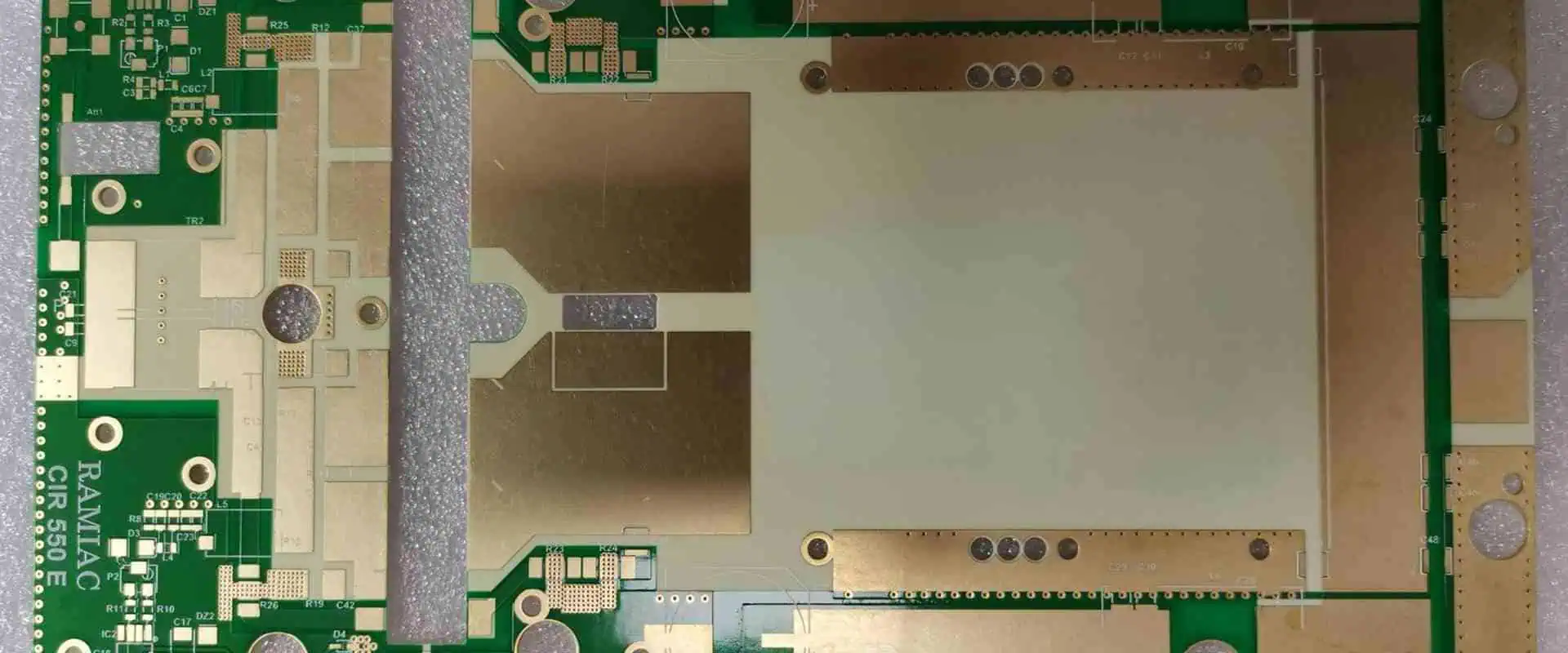
What is Nelco N4000-29 PCB ?

40 Layer PCB

The Nelco N4000-29 Multifunctional Emepoxy is an advanced lead-free epoxy PCB material. It is ideal for tough, high-performance lead-free applications and has a low CTE. In addition, its high Tg and Toughness Grade (TG) ratings make it the right choice for standard multilayer PWBs. Here is a brief overview of this epoxy laminate.

The n4000 – 29 is a lead-free multifunctional epoxy. It has excellent thermal stability and a low CTE. It is suitable for multilayer, sophisticated PCB designs. Its excellent moisture and CAF resistance make it ideal for buried capacitor applications. Its thermal and chemical resistance makes it a good choice for buried capacitors.

The n4000 – 29 Multifunctional Epoxy is a lead-free multifunctional epoxy. It has excellent thermal stability and Tg. The n4000 & 29 have excellent mechanical and electromechanical properties. In addition, it has excellent electrical properties. It is ideal for various applications, including medical, aerospace, and military. It is a high-performance, high-quality epoxy.

The n4000 – 29 Multifunctional Epoxy is a lead-free multifunctional epoxy with exceptional moisture and heat resistance. Its peel strength and CAF resistance make it suitable for complex multilayer PWBs. Furthermore, its excellent physical and electrical properties make it an ideal choice for many industrial applications. In addition, it has excellent thermal and mechanical properties and offers excellent thermal and electrical performance.

The Nelco N4000-29 Multifunctional Epoxy is a lead-free laminate with high Tg and CTE. Its low CTE and Tg are ideal for lead-free and CAFE applications. This epoxy also offers excellent moisture and CAF resistance. As a result, it is suitable for a wide range of electronic circuits among its many benefits. Its dielectric constant is a key property for electromechanical components.

Features

Nelco N4000-29 is a lead-free multifunctional epoxy PCB material with excellent thermal stability and high Tg. In addition, the material is available as a buried capacitor solution. Rayming PCB & Assembly offers improved thermal and moisture resistance and enhanced wire bonding abilities.

The N4000-29 is an enhanced epoxy resin system with exceptional thermal and reliability characteristics and a glass transition temperature of 185 degrees centimeters. The N4000-13 EP is a high-speed, low-loss PCB laminate with excellent CAF resistance. It is compatible with lead-free assembly and is ideal for multilayer sophisticated PWB designs.

The N4000-29 is a lead-free dielectric substrate with low CTE and high Tg. As a result, it’s ideal for lead-free, halogen-free applications, and it also has a glass transition temperature of 185 degrees centimeters. The N4000-13 EP is a multifunctional epoxy resin system designed specifically for multiple solder reflow applications that require temperatures approaching 260 degrees centimeters. In addition, it offers enhanced thermal and electrical properties, which make it an industry standard for high-speed, low-loss designs.

The N4000-29 is an advanced lead-free dielectric substrate with a high CTE and Tg. As a result, it is ideal for a variety of lead-free applications. It is also compatible with high-temperature assemblies. Further, the N4000-29 provides superior signal speed, a low dissipation factor, and other electrical properties.

The N4000-29 laminate has excellent mechanical, electrical, and thermal properties. It has a high CTE, making it ideal for tough lead-free applications. In addition, it is compatible with a wide range of temperature levels, so it is suitable for high-temperature PCBs. Moreover, it features a controlled dielectric constant (Dg = 4.5), essential for high-temperature assemblies.

Advantages of Nelco N4000-29 Multifunctional Epoxy

In the lead-free era, Nelco N4000-29 Multifunctional Epoxy is ideal for high-layer-count printed-wire-boards (PWBs). It features low CTE, a very low expansion of the Z-axis, and an extremely low dissipation factor. In addition, unlike other lead-free laminates, this one does not delaminate when exposed to excessive heat.

The N4000-29 is a lead-free multifunctional epoxy substrate with low CTE and high Tg for tough lead-free applications. In addition to these features, it also provides excellent thermal stability and excellent CAF resistance. Other advantages of Nelco N4000-29 include its ability to resist corrosion, and it is ideal for many applications that require high thermal resistance.

The multifunctional Epoxy of Nelco N4000-29 is an advanced lead-free dielectric substrate. It has a low CTE and a high Tg and is suitable for tough lead-free applications. The N4000-29 is also available as an accelerated buried capacitor solution. It provides better thermal reliability and electrical properties and has become the industry standard for high-speed/low loss designs.

The N4000-29 Multifunctional Epoxy is a lead-free multifunctional epoxy material. It has low CTE and high Tg, making it ideal for PCB material applications. Its buried capacity and excellent thermal stability make it an excellent option for various CMOS and other high-speed applications. In addition, its thermal stability and high reliability make it the ideal choice for a wide range of applications.

The N4000-29 Multifunctional Epoxy is an advanced lead-free dielectric substrate with a high Tg and low CTE. It is available as a buried capacitor solution for higher thermal performance and reduced CAF. Its excellent electrical properties are essential in CMOS applications. It is also suitable for various CMOS applications. The Nelco N4000-29 offers an advanced alternative to Pb&S and Pb/PCB manufacturing.

Applications of Nelco N4000-29 Multifunctional Epoxy

The lead-free Nelco N4000-29 multifunctional epoxy laminate has outstanding thermal and mechanical properties and is ideal for tough lead-free applications. The material’s low CTE and high Tg make it ideal for use in electronic circuits. Its excellent electrical and thermal properties make it ideal for buried capacitor solutions. In addition, it has excellent moisture and CAF resistance, which makes it a perfect choice for IC manufacturing.

The laminates made from Nelco N4000-29 Multifunctional Epipoxy have excellent chemical and moisture resistance. The high-performance lead-free epoxy is ideal for high-layer PWBs and is suitable for tough lead-free environments. Its excellent electrical and mechanical properties make it ideal for use in many industries, including the electronics industry. Its flexibility and high-performance features make it the ideal choice for demanding applications.

The laminates made from Nelco N4000-29 are ideal for multilayer PWB designs. Their excellent moisture and CAF resistance make them ideal for lead-free applications. Their low expansion and high Tg also make them suitable for high-layer-count PWBs. Despite their high density, they are highly flexible, allowing for high-density PCB designs.

The high layer-count Nelco N4000-29 laminate is the best choice for lead-free PWBs in tough environments. Its low expansion of the Z-axis and its high Tg make it the most suitable for lead-free PWB designs. In addition to these, it is also suitable for the toughest lead-free applications. This multifunctional epoxy is especially useful for high-layer-count PCBs.

The Nelco N4000-29 multifunctional epoxy laminates are suitable for high-layer-count PWBs. They are also suitable for lead-free and multilayer PWB designs. Its high CTE and Tg make it the best choice for these PCBs. Moreover, the high-layer-count Nelco N4000-29 laminates are also very flexible and exhibit mechanical properties when we apply force to them.

Conclusion

The Park Electrochemical Nelco N4000-29 Multifunctional Polyester (PFE) is an advanced lead-free epoxy PCB material that exhibits high-performance thermal and mechanical properties. It is suitable for standard and high-performance multilayer PCB designs. A low-CTE, medium-viscosity PSU offers superior electrical and mechanical properties.

Nelco N4000-29 BC Buried Capacitance Multifunctional Epoxy

multilayer pcb manufacturers

PCBs are electronic gadgets that electrically connect and mechanical support electronic components using:

  • Conductive pathways and
  • Signal traces or tracks etched from a copper sheet that’s laminated onto some non-conductive substrate.

Lamination of the copper sheet is crucial as that determines the quality of the PCB well, among other things. Furthermore, the epoxy should:

  1. Withstand high-temperature conditions and
  2. Avoid causing damage to the components that connect to the PCB

Due to these reasons, we shall be looking at one of the best epoxies to utilize. The Nelco N4000-29 BC Buried Capacitance Multifunctional Epoxy is a durable and efficient epoxy. But what does this epoxy entail? And why does it stand out?

About the Nelco N4000-29 BC Buried Capacitance Multifunctional Epoxy

The Nelco N4000-29 BC is a high Tg, low-CTE, lead-free epoxy substrate that you can utilize for multiple purposes. The design of this epoxy makes it suitable for:

  • Standard multilayer PWD designs
  • The most challenging lead-free, high-performance applications

The Nelco N4000-29 BC offers an efficient buried capacitance (BC) solution. It also provides a higher degree of design freedom for less complex and reliable assemblies.

What are the key features of the Nelco N4000-29 BC

The Nelco N4000-29 BC Buried Capacitance Multifunctional Epoxy has the following features:

Lower Z-axis expansion

  • Low expansion boosts THT (through-hole) reliability
  • It makes these epoxies great for assemblies that utilize a high layer count
  • The design help this epoxy withstand many reflow excursions plus repair operations

Moisture resistance, thermal stability, and high Tg

  • These features improve the compatibility of the Nelco N4000-29 BC with lead-free assemblies
  • It boosts the peel strength of this epoxy and makes it suitable for:
  • High layer count
  • Complex PWD designs

CAF Resistance

  • CAF Resistance provides prolonged reliability of the end product.

Proprietary resin chemistry

  • Proprietary resin chemistry improves the following:
  • Thermal stability
  • CAF
  • Moisture resistance of the Nelco N4000-29 BC.

These advantages make this epoxy better than the traditional epoxies.

FR-4 processing

The Nelco N4000-29 BC has superior rheology, which offers:

  • Consistent control flow and
  • Superior via topography

Buried Capacitance

Buried capacitance improves the designing freedom for more reliable assemblies.

Applications of the Nelco N4000-29 BC

The Nelco N4000-29 BC has the following applications:

  1. Developing telecommunication infrastructure
  2. Generating high-tech information storage applications
  3. Tight tolerance (Via โ€“ Via) applications
  4. In Backplanes that have large formats
  5. To carry out assemblies that are lead-free
  6. In the generations of high-density interconnections
  7. For DCA lead-free applications
  8. In extreme layer count multilayers
  9. In underhood high temperature automotive
  10. For high input and output count, BGA

The Nelco N4000-29 BC is RoHS compliant. It also meets the following specifications:

  • IPC-4101/28
  • /98
  • /99
  • /126

Physical Properties of the Nelco N4000-29 BC

We understand that physical properties are the features that you can only observe without altering the identity of the component.

Physical properties may include:

  • Boiling points
  • Melting points
  • Hardness
  • Density etc

The Nelco N4000-29 BC has the following physical properties:

Density โ€“ the Nelco N4000-29 BC has the following density:

  • 1.99 g/cc

Water absorptions โ€“ The water absorption rate of the Nelco N4000-29 BC stands at 0.15%

Mechanical properties of the Nelco N4000-29 BC

When you apply force onto a component, you will note some fascinating features. These features are known as mechanical features, and they are distinct among different components.

The Nelco N4000-29 BC has the following mechanical features:

Peel strength โ€“ The Nelco N4000-29 BC has the following peel strength:

  1. at high temperatures, the Nelco N4000-29 BC has a peel strength of 1.56 kN/m
  2. after coming into contact with the process solutions, the peel strength of the Nelco N4000-29 BC goes up to 1.70 kN/m
  3. after the solder float process, the peel strength of this epoxy hits 1.77kN/m

Thermal properties of the Nelco N4000-29 BC

The thermal properties of an epoxy are pretty crucial. That is because, in PCBs, epoxies have to withstand high temperatures during the reflow phase. As a result, weak epoxies suffer complex damages, but strong epoxies survive and make excellent print circuit boards.

The Nelco N4000-29 BC has the following thermal properties:

Specific Heat Capacity โ€“ As per specific heat capacity, the Nelco N4000-29 BC stands at:

  • 0.920 J/g-0C

Thermal conductivity โ€“ the thermal conductivity of the Nelco N4000-29 BC is:

  • 0.460 W/m-K

The Tg, Glass transition temperature – Nelco N4000-29 BC epoxies have a Tg of:

  • >=1750C and,
  • >= 1850C

Decomposition temperature โ€“ the decomposition temperature of the Nelco N4000-29 BC stands at:

  • 3500C thatโ€™s is 6620F (at 5% weight loss)

Flammability, UL94 โ€“ The Nelco N4000-29 BC has the following flammability value:

  • V-0

Electrical properties of the Nelco N4000-29 BC

In electrical properties, we look at a component’s ability to conduct electricity.

Therefore the Nelco N4000-29 BC bears the following electrical properties:

Dielectric constant โ€“ The dielectric constants of the Nelco N4000-29 BC are as follows:

  • At a frequency of 1.00e + 10 Hz, the Nelco N4000-29 BC has a dielectric constant of 3.7 (split post cavity)
  • At a frequency of 1.00e + 9 Hz, the Nelco N4000-29 BC has a dielectric constant of 3.9
  • However, at a frequency of 1.00e + 6 Hz, the dielectric constant of the Nelco N4000-29 BC goes up to 4.1

Dielectric strength โ€“ The dielectric strength of the Nelco N4000-29 BC stands at:

  • 43.3 kV/mm (1100 VK/in)

Dissipation factor โ€“ The Nelco N4000-29 BC has the following dissipation factors:

  • At a frequency of 2.50e + 10 Hz, the dissipation factor of the Nelco N4000-29 BC stands at 0.016 (split post cavity)
  • At a frequency of 1.00e + 6 Hz, the dissipation factor goes up to 0.22

Descriptive properties of the Nelco N4000-29 BC

The Nelco N4000-29 BC has the following descriptive properties:

Methylene chloride resistance โ€“ The Nelco N4000-29 BC has a methylene chloride resistance rate of:

  • 0.01

T260 (minutes) โ€“ The T260 of the Nelco N4000-29 BC is:

  • >60

T288 (minutes) โ€“ The T288 of the Nelco N4000-29 BC stands at:

  • 15

Conclusion

The Nelco N4000-29 BC Buried Capacitance Multifunctional Epoxy is pretty efficient. Its design makes it suitable for complex lead-free applications. Furthermore, it has CAF resistance which gives the end product a prolonged life span. The many benefits and applications of the Nelco N4000-29 BC make it one of a kind in the market today. Hence, if you are looking for an epoxy to utilize in your Print Circuit Board, you can try this one out. The results are bound to surprise you.

Nelco N4000-13 BC Buried Capacitance, High-Speed Multifunctional Epoxy Laminate and Prepreg

rogers rt duroid 5870

Modern-day PCBs have to be pretty efficient to carry out their functions properly. Hence, manufacturers utilize the best materials to build high-quality and durable PCBs. The Nelco N4000-13 BC is a high-speed multifunctional Epoxy laminate and prepreg that is one of a kind. The efficiency of this material is unmatched by many others. But what does it entail? And is it worth trying out?

About the Nelco N4000-13 BC

The Nelco N4000-13 BC is a system of epoxy resin which is enhanced to fit today’s lead-free assembly requirements. The Nelco N4000-13 BC is pretty efficient as it can withstand multiple reflow soldering processes at temperatures of up to 2600C. What’s more, the Nelco N4000-13 BC also provides excellent thermal reliability with little to no compromises on:

  • Electrical properties
  • Signal loss properties

The Nelco N4000-13 BC also offers Buried capacitance, which provides a higher degree of designing freedom for:

  • Reliable assemblies
  • Smaller assemblies

Material components of the Nelco N4000-13 BC laminate

To manufacture the Nelco N4000-13 BC, you can utilize many materials available in the market today. These materials, however, have to exhibit impressive thermal resistance and provide signal integrity. They should also have dielectric constants and low dissipation factors that lead to the generation of a high frequency.

The main components that you can utilize to build the Nelco N4000-13 BC are:

  • Teflon materials which provide high-frequency Nelco N4000-13 BC laminates
  • Copper clad materials which provide high voltage circuits
  • Polyimide materials which provide rigid-flex and flexible Nelco N4000-13 BC laminates
  • BT Epoxy Resin components which offer multilayer print circuit boards that are lead-free

Main Benefits and Features of the Nelco N4000-13 BC

Lead-free assembling

You can efficiently utilize the Nelco N4000-13 BC in assemblies that hit reflow temperatures of up to 2450C. However, the results of this procedure mainly depend upon your PCB design.

Excellent thermal, signal loss, and electrical properties

The Nelco N4000-13 BC has incredible thickness control for better tolerance impedance utilization having:

  • Low dielectric constants and
  • Differential factors.

These remarkable properties promote higher signal transfer and relatively fast signal distortion for:

  • Higher reliability
  • High-frequency utilization

CAF resistance

The Nelco N4000-13 BC has CAF resistance which provides reliability for RF and digital applications.

Buried Capacitance

The buried capacitance property of Nelco N4000-13 BC enhances its electrical performance immensely.

Construction varies

The Nelco N4000-13 BC has multiple construction designs. You can choose different copper weights and glass styles to customize your Nelco N4000-13 BC.

Other features that make the Nelco N4000-13 BC stand out

  • It offers higher-Tg and FR-4 processing
  • The Nelco N4000-13 BC has incredible thermal stability
  • It also has signal loss and electrical properties
  • Advanced propriety resin technology is another feature that makes the Nelco N4000-13 BC stand out

Qualifications/Applications of the Nelco N4000-13 BC

The Nelco N4000-13 BC has a couple of applications which include:

  • Routing or internet switching
  • It is helpful in fast storage networks
  • Fast service applications due to their quick computing capability
  • Wireless communication applications
  • CSP attachment application
  • BGA multilayers
  • Surface mounting multilayers
  • Backplanes applications
  • Creating interconnections of high density
  • It is helpful in PCB multilayers which have fine lines
  • MCM-Ls applications

Physical properties of the Nelco N4000-13 BC

The Nelco N4000-13 BC has the following physical properties:

Density โ€“ its density stands at 1.77 g/cc

Water absorption โ€“ its water absorption stands at 10%

Mechanical properties

The Nelco N4000-13 BC has the following mechanical properties:

  • Peel strength of 1.31 kN/m after the solder float process
  • At high temperatures, the peel strength of Nelco N4000-13 BC stands at 1.42 kN/m
  • After going through the process solutions, its peel strength stands at 1.58 kN/m

Electrical properties of the Nelco N4000-13 BC

Dielectric constant

  • The Nelco N4000-13 BC has a dielectric constant of 3.2 at frequencies of 1.0e plus 10 Hz
  • At a frequency of 1.0 plus 9 Hz, the Nelco N4000-13 BC has a dielectric constant of 3.3
  • At a Frequency rate of 2.5e plus 9Hz, you get a dielectric constant of 3.3

Dielectric Strength

The Nelco N4000-13 BC has a dielectric strength of 47.2 kV/mm

Dissipation Factor

  • At a frequency of 2.5 e plus 9 Hz, the Nelco N4000-13 BC has a dissipation factor of 0.0080
  • On the other hand, when it is at a frequency of 1.00e plus 10 Hz, the Nelco N4000-13 BC has a dissipation factor of 0.0090

Thermal properties of the Nelco N4000-13 BC

The Nelco N4000-13 BC has a specific heat capacity of 1.21 J/g

Its thermal conductivity stands at 0.350 W/m-K

The glass transition temperature or Tg of the Nelco N4000-13 BC stands at 2000C, 2100C, and 2400C.

As per decomposition temperature, the Nelco N4000-13 BC stands at 3500C that is 6620F

The Nelco N4000-13 BC has s flammability value of v-0

Descriptive properties

The Nelco N4000-13 BC has a methylene chloride resistance value of 0.7

Whatโ€™s more, its T260 (minutes) stands at >30.

Advantages of using the Nelco N4000-13 BC

The Nelco N4000-13 BC is a unique laminate that comes bearing numerous benefits that include:

High durability

The Nelco N4000-13 BC is pretty durable; you can utilize it for a pretty long time with little to no maintenance.

The tensile strength of the Nelco N4000-13 BC is strong

The Nelco N4000-13 BC laminate is a pretty strong material that has impressive tensile strength. Due to this, it can withstand push and pull pressure without causing any damage to the print circuit board.

The Nelco N4000-13 BC has impressive thermal stability

The Nelco N4000-13 BC can remain stable under pretty high temperatures. You can hence utilize it in applications that demand the utilization of high temperatures.

Lightweight

The Nelco N4000-13 BC is pretty lightweight, hence reducing the final product’s total weight. Furthermore, the lightweight factor of the Nelco N4000-13 BC also makes it pretty mobile.

Nelco N4000-13 BC cost factor

If you are looking to purchase the Nelco N4000-13 BC, then here are a couple of things that you have to consider:

The number of Nelco N4000-13 BC โ€“ you should significantly consider how many Nelco N4000-13 BC you will purchase.

Quality of the Nelco N4000-13 BC โ€“ high-quality Nelco N4000-13 BC costs more than low-quality Nelco N4000-13 BC.

Size of Nelco N4000-13 BC โ€“ the dimensions of the Nelco N4000-13 BC also affect its cost. Larger Nelco N4000-13 BCs cost more than small Nelco N4000-13 BCs.

Conclusion

The Nelco N4000-13 BC is one of the best epoxy resin systems out there that is built to fit modern-day lead-free assembling. Hence, if you are looking for a laminate to utilize in your project, we recommend the Nelco N4000-13 BC. The results are bound to surprise you.

Nelco N4000-12 SI High Speed/Low Loss, CAF Resistant Laminate and Prepreg

Nelco N4000-6 FC PCB

A PCB is a flat laminated composite. PCBs are composed of substrate conductive materials which have a copper circuitry layer. Have you ever seen a PCB out of this description? However, our focus in this article shall be on the laminate part. First, we shall look at the Nelco N4000-12 SI laminate and what it entails.

Nelco N4000-12 SI

The Nelco N4000-12 SI is a pretty enhanced epoxy resin system. The design of the Nelco N4000-12 SI supports low loss, high-speed applications which require:

The Nelco N4000-12 SI has some great features that make it stand out. Some of these features include:

Compatibility with lead-free assembling

It is suitable for assemblies with the maximum temperature reflow ranging between 245 degrees โ€“ 260 degrees.

Its thermal stability is impressive.

The thermal stability of this laminate remains stable even when put through temperatures that go beyond 190 degrees.

You can hence utilize it in certain applications which require a wider bandwidth.

Low loss at fast speed

If you utilize the Nelco N4000-12 SI in operations that range from 1 – 10GHz with pretty low Dk and Df, you can achieve signal distortion.

CAF resistance

The Nelco N4000-12 SI has proven that it has low Z-CTE and CAF resistance. The Nelco N4000-12 SI has extended reliability for RF and digital applications with these two features.

Signal Integrity (SI) Option

SI provides high electricity performance. The Nelco N4000-12 SI is pretty efficient even in applications with more significant demands.

High FR-4 Tg Processing

These incredible processes are the same as the traditional high Tg-FR4 components. They offer proper drilling of the Print Circuit Board.

Material components of the Nelco N4000-12 SI

To manufacture the Nelco N4000-12 SI, you have to utilize some unique components, which are:

  • Soldering mask materials
  • Copper foil
  • Prepreg materials
  • Resin Materials
  • Epoxy Materials
  • FR4 Materials

Which features determine the Nelco N4000-12 SI’s efficiency?

Here are some pretty crucial features that determine the efficiency of the Nelco N4000-12 SI:

  • Thermal properties
  • Chemical and physical properties
  • Electrical properties
  • Mechanical properties

Mechanical features of the Nelco N4000-12 SI

The mechanical characteristics of a component are the physical properties of the component upon the use of force on it. It is dictated as the peeling strength.

The Peeling strength of the Nelco N4000-12 SI :

  • At high temperatures, the Nelco N4000-12 SI has a peeling strength of 1.53 kN/m
  • After the solder float process, the Nelco N4000-12 SI has a peeling strength of 1.61kN/m
  • After going through the process solutions, it has a peeling strength of 1.63 kN/m

Nelco N4000-12 SI thermal properties

CTE, linear 

The Nelco N4000-12 SI has a CTE of 12.0 to 15.5 at a temperature range of -400C to 1250C.

At a temperature range of 500C to 1900C the Nelco N4000-12 SI has a CTE of 60.05

At a temperature range of 1900C to 2600C the Nelco N4000-12 SI has a CTE of 260.21

Heat capacity

The Nelco N4000-12 SI has a heat capacity of 1.13j/g-0C

Thermal conductivity

The thermal conductivity of the Nelco N4000-12 SI stands at 0.290W/m-K

Glass Transition temperature

The glass transition temperature of the Nelco N4000-12 SI stands at 1800C, 1900C and 21000C

Decomposition temperature

The decomposition temperature of the Nelco N4000-12 SI stands at 3700C

Physical properties

The Nelco N4000-12 SI has a density of 1.78g/cc and a water absorption rate of 0.90 percent.

Electrical properties

Volume resistivity

The Nelco N4000-12 SI has a volume resistivity of 1.00e + 14 ohms.

Surface resistance

The Nelco N4000-12 SI has a surface resistance of 1.00e + 12 and 1.00e plus 14 ohms.

Dielectric constant

The Nelco N4000-12 SI has a dielectric constant of 3.3 at a frequency rate of 1.00e + 10Hz.

At a frequency rate of 1.00 + 9, it has a dielectric constant of 3.4

Dissipation Factor

The Nelco N4000-12 SI has a dissipation factor of 0.0060 at a frequency of 2.50e + 9 Hz.

At a frequency rate of 1.00e + 10Hz, it has a dissipation factor of 0.0070

Arc Resistance

The arc resistance of the Nelco N4000-12 SI is 65 seconds.

Descriptive properties

The Nelco N4000-12 SI has a methylene chloride resistance of 1

It also has a T260 (minutes) of >60 and a 3.6 expansion of the Z axis

Applications or Qualification of the Nelco N4000-12 SI

The Nelco N4000-12 SI has a couple of applications in the Tech world which include:

Assemblies that do not require Lead

The Nelco N4000-12 SI is pretty helpful in applications that don’t need the utilization of Lead. However, utilizing Lead with Nelco N4000-12 SI might produce adverse effects.

Multilayer Fine lane

Typically, you can utilize the Nelco N4000-12 SI to laminate Print circuit boards with multiple layers.

The Nelco N4000-12 SI laminate fits incredibly in the fine lane multiple layers of PCBs, which you can utilize in various applications.

Backplanes

Manufactures utilize the Nelco N4000-12 SI to manufacture backplane electronic PCBs. It lets manufacturers contain connections found on the backplane hence forming complete circuits.

Storage of Networks

You can utilize the Nelco N4000-12 SI to build network storage gadgets because they operate pretty fast.

Apart from creating storage devices, this high-speed feature also has another sneaky benefit. It makes Nelco N4000-12 SI great for wireless transmission which boost its applications.

Nelco N4000-12 SI benefits

If you plan on utilizing the Nelco N4000-12 SI, then here are some advantages that you are likely to encounter:

Extensive construction

While utilizing the Nelco N4000-12 SI, you will enjoy construction variations. In addition, you get to select between different glass styles and copper weights to customize your Nelco N4000-12 SI.

You can also choose different variations that have a double treat, standard copper, and RTFOIL laminates.

High Durability

The Nelco N4000-12 SI is pretty durable. It can withstand varying environmental conditions with ease.

Since the Nelco N4000-12 SI is durable, you can utilize it for a pretty long time with minimal maintenance.

Thermal stability is pretty impressive.

You can expose the Nelco N4000-12 SI to high temperatures for a long time as it has impressive thermal stability. It works perfectly at high temperatures and also cools off perfectly with no hitches.

High efficiency

The Nelco N4000-12 SI has a lot of applications because of its high-speed processing property. What’s more, you can utilize it in applications that have low loss hence providing excellent CAF resistance and signal speed.

Global availability

The Nelco N4000-12 SI laminates are available worldwide.

Conclusion

The Nelco N4000-12 SI is pretty efficient in terms of its functionality. Combining its signal integration factor, speed, and durability, you get one of the best laminates in the market. Even with its few limitations, the Nelco N4000-12 SI remains as one laminate that you should try out. We hope this article has provided you with sufficient information on the Nelco N4000-12 SI.

Nelco N4000-11 Multifunctional Epoxy Laminate and Prepreg

Nelcote E-766B pcb

The Nelco N4000-11 Multifunctional Epoxy Laminate and Prepreg is a high-performance composite material used by Rayming PCB & Assembly. The epoxy resin offers a variety of benefits that make this a top choice for manufacturers and contractors. This article will provide an overview of what the manufacturer claims to offer, how each characteristic is beneficial, the essential materials, and how to use them productively.

Nelco describes its product as “A new age in composite technology.” The Nelco N4000-11 is a high-performance product that benefits manufacturers and contractors.

The benefits cited by the manufacturer:

1) Addresses industrial labor cost savings

2) Reduced scrap and waste in manufacturing processes, requiring a mere 1% of resins rejected due to poor quality compared to other suppliers in the industry. As a result, materials are also used more efficiently by reducing waste.

3) Increased productivity, both on-site and in a manufacturing plant.

4) Supports the goal of sustainable manufacturing by reducing the usage of natural resources such as water, energy, and plastics.

5) Reduces energy use. The product is non-flammable. We can use it in a wide range of temperatures.

6) Decreases manual labor and time for various manufacturing processes.

Nelco N4000-11 composition

The Nelco N4000-11 Multifunctional Epoxy Laminate and Prepreg is a composite resin used in a wide range of applications. The epoxy comes in two forms,

1) A molding compound that we can apply to molds (low viscosity),

2) We can easily pick up a more viscous epoxy material from the application area with brushes or fingers (high viscosity).

The Nelco N4000-11 Epoxy Resin is an industrial-grade material formulated to meet rigorous quality control standards. The resin meets the Q1A/Q1B/Q2A/Q2B specifications as set forth by the Aerospace Materials Division of AMS 2780 and MIL-DTL-81705C. As a result, we can use it in aircraft structures and composites, automotive applications, manufacturing, aerospace structures, consumer goods, and construction equipment.

We can use the Nelco N4000-11 to make all types of composites and is also FDA, USDA, UL, and CE approved.

Nelco has been producing epoxy resin for 45 years and is a pioneer in polyester and composite resins. The manufacturing process starts with a raw material that experienced technicians then mix to meet the customer’s requirements. The mix is then sent through a 2-step curing process to create the final product.

The Nelco N4000-11 Epoxy Resin is a high performance product and comes in Density 0.030 lbs./cu.ft., Density 0.035 lbs./cu.ft., Density 0.040 lbs./cu.ft., Density 0.045 lbs./cu.ft., and Density 0.050 lbs/cu-ft..

The standard resin offers excellent chemical resistance, and the “advanced” resin offers maximum performance.

Features

Products manufactured from the Nelco N4000-11 Epoxy Resin have a tensile strength of greater than 2800psi, Tg of greater than 140 degrees F, the Shore D Hardness and Flexural Strength increases significantly with increased glass fiber loading. The resin is also chemically resistant, making it a versatile material for manufacturing all types of composites and structures.

The Nelco N4000-11 is a top-performing industrial epoxy resin that we can use in various applications. The materials are versatile and very helpful in meeting many manufacturing requirements of customers.

Physical properties

The Nelco N4000-11 is a medium viscosity product. WE can use it as a tooling resin or adhesive, making it a versatile and helpful material to use in manufacturing processes. In addition, we can easily clean the resin by using flame retardants and solvents. The only negative impact on performance is the low-temperature upper limit of -40 degrees F.

Color Variations

The Nelco N4000-11 Epoxy Resin comes in 8 standard color variations, with any color being possible for customers. The eight standard colors are: blue, green, grey (light or dark), black, yellow, orange, purple, and red.

Mechanical properties

The Nelco N4000-11 Epoxy Resin significantly increases mechanical properties, namely high strength and stiffness, for all fiber loading. The resin is also suitable for manufacturing a variety of composites and other materials because we can easily mold it into various shapes.

The material is also physically tough and has an excellent thermal resistance. As a result, manufacturers can use the resin to produce a wide range of items that will stand up to harsh elements or environments.

The N4000-11 is resistant to heat, weathering, and chemicals, making it useful for manufacturing materials that need to be resistant to harsh environmental conditions.

Thermal Properties

The Nelco N4000-11 can withstand temperatures of up to 200 degrees Celsius. This makes it a useful material for manufacturing components that need to be resistant to high temperatures.

We can easily store the resin at room temperature because of its low sensitivity to temperature changes. The resin will not become brittle when stored in cold temperatures. However, we must keep it in a dry area without any potential for dampness or moisture.

The Nelco N4000-11 is not for use in applying heat over 150 degrees Celsius.

Electrical Properties

The Nelco N4000-11 exhibits excellent electrical properties and will not degrade when exposed to voltage or electromagnetic fields.

The resin can be easily molded into any shape needed and will conduct electricity. This makes it a useful material for manufacturing various components that need to be resistant to high temperatures and electricity, such as wiring harnesses or other electrical appliances.

Applications

The N4000-11 Epoxy Resin is a versatile composite material used in a wide range of applications. For example, we can use it to manufacture components for medical supplies, aircraft and aerospace structures, heaters, or other products that need to withstand harsh environments.

1. Lead-Free Assembly Substrate

N4000-11 is one of the few epoxy systems lead-free and compliant with the RoHS Directive. In addition, the curing process does not generate any hazardous air pollutants or volatile organic compounds, making it safe for the environment.

2. Large Format Backplanes

Nelco 4000-11 is a suitable material for manufacturing the substrate of large format backplanes, such as LCD panels and other flat panel displays.

3. Tight Tolerance Via to Via Applications

Nelco 4000-11 epoxy is a perfect material for tight tolerance via applications. The characteristics of this epoxy provide a high degree of precision and accuracy in putting together lots of small components relative to other products in the market.

4. High I / O Count BGA Substrates

Nelco 4000-11 features a high degree of breakdown strength and we can use it to manufacture substrates with very large I / O counts. This is beneficial to customers because they can produce multiple chips or boards.

5. Extreme Layer count Multilayers

We can use the resin to manufacture multilayers with extreme layer counts of over 400 layers. The non-combustible nature of the Nelco 4000-11 epoxy makes it an excellent material for producing high-density multilayer substrates.

6. Lead-Free DCA Applications

The Nelco 4000-11 is a very strong and heat-resistant product. This makes it an excellent material for manufacturing components required to have low contact resistance at high temperatures, such as inductors and capacitors.

7. High-Temperature Underhood Automotive

Nelco 4000-11 resin is an excellent material for manufacturing parts in the underhood of a vehicle because it is heat resistant and has a very high-temperature rating. Customers can use this epoxy to manufacture parts exposed to high temperatures, such as sensors, control units, and other automotive systems.

8.   Telecommunications Infrastructure

N4000-11 resin is an excellent material for manufacturing telecommunications infrastructure, such as connectors or other electrical components. We can use it to build equipment required to withstand high temperatures and various weather conditions.

Conclusion

Nelco N4000-11 Multifunctional Epoxy Laminate and Prepreg is a versatile composite material with good mechanical, thermal, and electrical properties. In addition, the resin is incredibly strong. As a result, we can use it in various applications. It is also environmentally friendly, making it very cost-effective to use in manufacturing products that are required to be resistant to harsh environments and harsh conditions.

Nelco N4000-11 BC Buried Capacitance Epoxy Laminate and Prepreg

Nelco N4000-11 BC Buried Capacitance Epoxy Laminate and Prepreg is a self-adhesive product that is a high-performance building material. It consists of 100% epoxy resin. This product can be helpful for different applications such as water pipes, flooring, roofs, concrete decking covering, steps, etc. It’s also great for use on auto racing tracks because of its performance and reliability.

Method Of Application

Nelco N4000-11 BC Buried Capacitance Epoxy Laminate can be helpful as a high-performance building material in many different applications. Corpco Plastic Inc. will not take responsibility for the improper use of this product in any application deemed to be improper or unintended.

Preparation For Use

You must be clean, dry, and free from all oils, dust, dirt, and other foreign material on all the surfaces you intend to coat. We should inspect the application area in advance to ensure that the surfaces are properly. If there is any doubt or question concerning which we will coat the surface, or if you have any doubt about the surface condition you are coating, please consult with a professional.

1. Remove any loose material by smoothing the surface with a plastic scraper or rag, and then lightly dry the surface.

2. Pre-treat all joints and edges where you will apply the epoxy, exposed to water, oil, weather, and other contaminants that could result in poor epoxy coating adhesion.

3. In an open area for application, remove all debris (soil, grass clippings, leaves, etc. ).

4. Mix one part hardener to two parts resin (by volume, not weight) in a plastic container.

5. Stir the mixture by hand until dissolved and keep mixing until it becomes clear and the mixture is smooth.

Application And Coatings

1. For vertical surfaces, layout the first coat of epoxy onto the surface with a squeegee or roller to a thickness of about two mils dry (0.05 mm). Apply the epoxy in multiple passes to ensure that the epoxy will not be shearing during the curing process. Apply the first coat of about two mils dry (0.05 mm).

2. After about 20 minutes, apply a second coat of epoxy over the surface and then lay out a second coat with a squeegee or roller to a thickness of about 2 mils dry (0.05 mm).

3. Apply a third coat after about 20 minutes.

4. After about 3 hours, apply a fourth coat.

5. Cure the epoxy to a fully cured state before applying additional coats or performing any adhesive work.

6. Keep wet for seven days before handling for full adhesion to the substrate during installation and handling of this material before handling this product or making any cuts or other construction operations on this product that may damage the performance.

7. After the curing of the surface, the surface may be finished with a high build one- or two-part epoxy clear coating to achieve a hard glossy or satin finish to enhance the appearance of this product.

8. When calculating the amount of epoxy needed for any given project, always account for 5-10 % waste due to uneven surfaces and other factors that can reduce the amount of material required for a given project.

9. Store in a cool, dry place out of direct sunlight and extreme temperatures. It is essential to note that the shelf life is limited to a maximum time of 18 months. We should not use it after this time has expired.

10. Also, store all unused material under proper storage conditions.

Adhesive Properties And Mechanical Properties

Epoxy, high-performance building material, is a closed-cell resin that cures to form a hard solid with good tensile strength and flexural strength.

It does not require heat curing due to how we cure it. Epoxy is a thermosetting epoxy. Therefore, it cannot be recrystallized and will not soften or become more flexible at room temperature after being cured.

Epoxy has a very high resistance to most common solvents (fluids). It also does not have any appreciable moisture absorbency. Therefore, even after exposure to 100% relative humidity for long periods, its physical properties will not change significantly.

Epoxies are helpful in many applications like auto racing tracks, noise barriers, automotive panels, parts, etc. Nelco N4000-11 BC Buried Capacitance Epoxy Laminate is a high-performance building material used by Rayming PCB & Assembly.

Nelco N4000-11 BC Buried Capacitance Epoxy Laminate consists of 100% epoxy resin. Its unique capabilities include high resistance to water, oil, weather, and other toxic chemicals that can sometimes damage or reduce the performance of a material. There are several different grades of epoxy available. ASTM governs these grades.

This product has lower heat distortion than other products in its class, essential when used in extreme heat applications. It also has a very high resistance to aging compared to other available products on the market.

N4000-11 BC Buried Capacitance Epoxy Laminate has an epoxy equivalent weight of approximately 160 lbs per cubic foot. It features a thickness of 2 mils dry and 9 mil wet. It has excellent adhesion to mineral surfaces like concrete, brick, and stone. N4000-11 BC Buried Capacitance Epoxy Laminate is also compatible with high-strength materials like fiberglass, steel, and aluminum. In addition, there is no flame spread or smoke development. It means we can apply it in areas that require a fire rating.

Applications

1. Sophisticated Data Storage: Use N4000-11 BC Buried Capacitance Epoxy Laminate for sophisticated data storage in government, computer, and financial institutions.

2. Telecommunications Infrastructure: Heavy-duty commercial, residential, and industrial electronics equipment such as telephone lines, phone, and cable networks, as well as antennae. Use N4000-11 BC Buried Capacitance Epoxy Laminate for these applications.

3. High-Temperature Underhood Automotive: Utilize N4000-11 BC Buried Capacitance Epoxy Laminate in a high-temperature environment where moisture, oil, and dust are present. Additionally, the product has a high corrosion barrier, which makes it an excellent protective application under these conditions.

4.   Lead-Free DCA Applications: Lead-free DCA applications and in other applications where there are performance requirements to meet or exceed standards.

5. Military Equipment: Use N4000-11 BC Buried Capacitance Epoxy Laminate for military equipment and weapons systems that require durability, high flexural strength, electrical insulation, and fire rating while meeting low smoke development standards.

6. Extreme Layer count Multilayers: Construct multilayers beyond 2000 layers.

7.   High I / O Count BGA Substrates: Use N4000-11 BC Buried Capacitance Epoxy Laminate for high I/O count BGA substrates either as a core material or face material.

8. Tight Tolerance Via to Via Applications: Use N4000-11 BC Buried Capacitance Epoxy Laminate for tight tolerance via applications where we cure the material within the seat.

9. Large Format Backplanes: Use N4000-11 BC Buried Capacitance Epoxy Laminate for large format backplanes.

10.    Lead-Free Assembly Substrate: Use N4000-11 BC Buried Capacitance Epoxy Laminate in lead-free assembly substrates.

Conclusion

Nelco N4000-11 BC Buried Capacitance Epoxy Laminate and Prepreg are high-performance building materials for professionals. In the current economic climate, professionals need to save money wherever possible. These products provide a good solution for saving money without sacrificing performance qualities. The Epoxy resin used in these products is a closed-cell epoxy that is not prone to moisture absorption and can hold its shape in a wide range of temperatures.

The use of epoxy resin in these products results in a product that will not shrink or warp over time. Its unique self-leveling characteristics allow the application of the material to vertical or horizontal surfaces without adding additional coatings. The use of epoxy resin also results in a product compatible with most high-strength materials like fiberglass, steel, and aluminum. Both products have been thoroughly tested. As a result, we can rely upon quality performance and reliability when installing, applying, and performing on the job site.

Nelco N4000-7 SI FR-4 Epoxy Laminate and Prepreg

Nelcote E-718 Epoxy Prepreg PCB

What is an FR-4 laminate? FR-4 is a flame retardant, homogeneous, thermosetting material. The fiberglass substrate has a flame-resistant epoxy resin coating in the application. The substrate typically consists of epoxy glass fabric, Kevlar, and woven roving. The laminate is then covered with pressure-sensitive adhesive (PSA). Next, we encapsulate it in fiberglass cloth. Finally, we cure the laminate under heat at approximately 300 to 400 degrees Fahrenheit. The FR-4 epoxy is high-temperature resistant. Additionally, it offers excellent adhesion qualities of the laminate by its adhesive properties.

The N4000 Series offers the best blends of high-performance epoxy for your new product. We offer more than 15 colors, six shores A hardness grades, and four mil thicknesses. The N4000 Series meets your exact performance requirements at a price that exceeds your expectations.

Epoxy Advantages

The high-performance epoxy utilized in this product is high-strength and has low permeability. Therefore, it makes it ideal for environmentally critical applications. As a result, we can formulate the epoxy compounds to meet your critical requirements. Examples include UL94 V-0 flame retardant, PCB level control, low smoke and halogen levels, and microwave compatibility. In addition, the epoxy is solvent-free. Also, it has excellent leveling, adhesion, and sanding characteristics.

It is ideal for the “Green Revolution” with a plastic resin formulation free of solvents and halogens. So, this material possesses excellent bonding and leveling characteristics. It can be helpful in thermoset, thermoplastic, and hybrid applications. The epoxy compound combines with no additives. As a result, it provides an ideal blend of adhesion and leveling compounds to perform at or above industry standards.

We formulate the epoxy as FR-4 to meet electrical requirements and have excellent threshold level control.

Technical Specifications

NELCO N4000-7 SI Compatible Materials (first column) and Thickness(s) or Layer(s) (second column).

N4000 Series includes three different glass grades (1.5 mm, 1.2 mm, and 0.6 mm) with an epoxy resin in a binder system. The glass cloths have excellent toughness, color stability. Additionally, it has thermal shock resistance and high-temperature capability.

Standard Roll Sizes:

All standard rolls are 185 ft / 115 meters long by 25 in / 64 cm or 50 in / 127 cm wide. Custom dimensions are available upon request.

Central Composite Pattern lamination refers to a laminate made from a finer weave cloth. It includes a denser pattern than the standard motif in which the warp and fill yarns of all plies are parallel in the same direction.

Modern manufacturing processes now permit the construction of this type of laminate. It has as many as 24 different plies and up to three layers of each plus over-plies, prepregs, and reinforcements. In addition, the modern manufacturing process, including vacuum infusion molding, pressure impregnation, etc., is sufficiently automated. As a result, they allow for virtually unlimited quantities of matrices, patterns, and reinforcements. This can result in an enormous variety of components and laminates.

CAF Resistant:

CAF-resistant materials are available for protection against the CAF biohazard.

CAF Resistant is a term applied to materials that resist the production of Crystalline Alpha-Fiber. It is a potentially hazardous substance to biological systems. Applications of CAF Resistant materials include automotive interior components and protective garments. It is also useful with contact lenses.

RoHS Compliant:

These materials are available for protection against the RoHS biohazard.

RoHS Compliant is a term applied to materials that resist the production of Rosin-Derived Phosphorus and Sulfur compounds. As a result, they are potentially hazardous to biological systems. Applications of RoHS Compliant materials include automotive interior components and protective garments.

Lead-Free Assembly Compatible:

These materials are available for protection against the Leaded biohazard.

Lead-Free Assembly Compatible is a term applied to materials that resist the production of lead and lead compounds which are potentially hazardous to biological systems. As a result, applications of Lead-free Assembly Compatible materials include automotive interior components and contact lenses.

Low CTE FR-4 Epoxy:

Low CTE FR-4 Epoxy materials are available for protection against the CTE biohazard.

CTE or “shot peening” is discoloration and cracking in metals after high-temperature heat.

Package Information:

Package dimensions are subject to change without notice. Therefore, actual package dimensions may vary from those listed below. It depends on the laminate pattern and thickness selected by the customer or designer.

SI (Signal Integrity) option:

N4000 Series SI is an option that offers the best properties to allow signal integrity.

Signal Integrity refers to the ability and speed with which an electrical signal, for example, a radio wave, travels through a material. For example, materials such as FR-4 epoxy laminate are helpful in high-frequency products. Examples include cellular phones and satellite receivers, where quick response times are critical.

Outstanding Z-axis, thermal stability, and hole wall integrity:

The N4000 Series has excellent thermal, mechanical, and electrical properties.

The unique features of the N4000 Series are its outstanding Z-axis (pitch), thermal stability, and hole wall integrity. You can read more about our N4000 Series in these blog posts:

Z-axis: Z-axis is the longest cross-section dimension of a laminate. So, we can consider it a “depth” measurement between two parallel planes. As the thicknesses increase in the Z-axis, so does thermal resistance.

N4000 Series Vs. Other Fr4 Laminates

The N4000 Series FR-4 laminates are fully compatible with standard woven glass cloth prepregs. The most common FR-4 material uses a 3.2 mil (83 ยตm) glass cloth, epoxy resin, and B-stage hardener in a 1.5 mm thickness. The woven glass cloth prepreg typically has a nominal width of 2 in / 51 ยตm and an effective area of 0.3 sq ft / 32 sq cm.

The N4000 Series FR-4 laminates have a denser pattern than the standard motif. As a result, the plies are parallel rather than crosswise in the same direction as in most conventional laminates.

The weave pattern is three layers of 0.6 mm glass cloth on the outside and 1.2 mm on the inside, with a total fillet area of 0.7 sq ft / 65 sq cm. The prepregs have a nominal width of 3 in / 76 ยตm and an effective area of 0.35 sq ft / 32 sq cm.

N4000 Series FR-4 laminates are also compatible with traditional woven glass cloth prepregs and similar prepregs such as Spectraโ„ข Glass and SCS Laminate.

N4000 Series FR-4 laminates are compatible with other prepregs, such as those made by Rayming PCB & Assembly. The prepreg is thin enough and has a finer pattern than those typically used in modern woven glass cloth prepregs.

The N4000 Series laminates are compatible with a wide variety of prepregs, including heavier, thicker fabrics, such as 2.5 mm (68 ยตm) or 3.0 mm (84 ยตm) different fabrics unidirectional prepregs.

Conclusion

We do not believe that the best epoxy is 2.5 times stronger than another, but rather the strongest one. Nelco is a world leader in epoxy materials, and we are proud to offer you this product as part of our broad line of N4000 Series epoxy laminates. It meets or exceeds all ASTM standards, and its exceptional performance will provide long-lasting results for your application.

How Does a Water Pressure Sensor Work

water pressure sensor

Introduction

Water pressure sensors play a crucial role in monitoring and controlling water distribution systems and fluid flow processes. By precisely measuring water pressure, these sensors provide vital data for regulating pressures, detecting leaks, assessing flow rates, and automating water systems.

This article will examine the operating principles, design variations, applications, and selection criteria for the main types of water pressure sensors used in industrial and commercial settings. Whether for large municipal water networks or smaller irrigation and plumbing systems, understanding water pressure sensor functionality is key to leveraging these devices.

Operating Principles

Water pressure sensors detect the force exerted by water against the walls of pipes or vessels containing it. The detected pressure indicates the energy level of the water and indirectly measures the flow rate.

Some common physical effects leveraged in water pressure sensors include:

Piezoresistive Effect

Piezoresistive sensors use a pressure-sensitive element that changes resistance when flexed. A common choice is a Wheatstone bridge configuration where water pressure induces stress that unbalances the bridge and produces an analog voltage signal.

Piezoelectric Effect

These sensors use a crystal material that generates an electric charge proportional to applied pressure. The small voltage can be amplified into a pressure output.

Capacitance Change

Capacitive pressure sensors have a flexible diaphragm that deflects with applied pressure. This deflection causes a change in capacitance that can be measured.

Strain Gauges

Strain gauges detect tiny changes in elongation of the sensor material. Water pressure flexes a diaphragm with bonded strain gauges to produce a measurement.

By converting pressure into an electrical value, these effects allow pressure transducers and transmitters to interface with monitoring systems and controllers.

Designs and Configurations

Water pressure sensors come in a diverse range of package types, mounting configurations, and measurement principles tailored to different pressure ranges, environments, and pipe diameters.

Insertion/Clamp-On Sensors

These portable pressure sensors can be temporarily clamped onto pipes without tapping or cutting the line. Insertion depth sets the measurement pressure. Useful for temporary measurements.

Inline/Pipe Sensors

Inline sensors contain measurement elements inserted into the fluid flow in a short pipe section. Provides constant readings without depth adjustment.

Flush Diaphragm Sensors

A flush circular diaphragm mounts directly to pipe walls to measure pressure. Simple, low-cost option. Limited range.

Submersible Sensors

Fully waterproof transducers can be lowered into tanks or wells. Provides pressure at submerged depth. Useful for level measurements.

Manifold Sensors

Multiple pressure ports feed a central sensor though a manifold. Allows single sensor to monitor multiple points.

In addition to these mounting styles, sensors can output various signal types:

  • Analog – Continuously variable voltage or current
  • Switches – Discrete on/off at setpoint
  • Digital – Serial digital communication protocols

Packaging is also designed for different environments from dust-proof to underwater submersible.

Key Specifications

To select an appropriate pressure sensor, there are several key specifications to consider:

Pressure Range: The minimum and maximum pressures that can be reliably measured. Standard ranges are 30, 100, 300 psi etc.

Pressure Rating: The maximum pressure that can be applied without damaging the sensor. At least 1.5-3x the range.

Accuracy: The closeness of the measurement to the true value across the range. Look for ยฑ0.25% accuracy or better for most water applications.

Output Signal: The type of electrical output signal – 4-20mA, 0-5V, 0-10V etc. Match to monitoring system.

Response Time: The time taken to reach 90% of final output during a pressure change. Millisecond response critical for transient monitoring.

Temperature Limits: Maximum and minimum temperatures the sensor can operate within. Account for water temperature variations.

Power Supply: Power requirements and options – 4-20mA loop power, 5-24VDC input voltage etc.

Selecting a sensor matched for the expected pressure range, piping size, output type, and operating conditions ensures optimal performance. Consult manufacturers for recommendations.

Typical Applications

Water pressure sensors are ubiquitous across residential, commercial, industrial, and municipal water installations. Typical applications include:

Water Supply Monitoring

Municipal Networks

Monitor district metered zones, reservoir levels, and pipe main pressures. Detect bursts and optimize pumping.

Plumbing Systems

Read well pump pressure and control pressurized tanks. also detect developing leaks/breaks in plumbing.

Irrigation

Measure head pressure at sprinklers and determine pump requirements and flow rates. Automate valve sequencing.

Leak Detection

Paired sensors before and after zones isolate pressure drops indicating possible leaks. Also installed on critical pipe sections.

Pump Control

Maintain discharge pressure by varying pump speed. Prevents over-pressurization and pump damage.

Flow Monitoring

Combined with flow meters, pressure sensors can help calculate flow rates using pressure drop.

Level Monitoring

Submersible pressure sensors convert hydrostatic pressure into water level. Used in tanks, rivers, wells.

Water pressure sensors provide critical data for optimizing water distribution, quality, efficiency, and equipment health. Their flexibility makes them indispensable across a wide variety of water systems and process industries.

Installation Considerations

To obtain accurate and reliable measurements, water pressure sensors must be properly installed and maintained. Here are some key guidelines:

  • Install a straight pipe run before the sensor to avoid turbulence and obtain stable readings. A run of 10x pipe diameter is recommended.
  • Flush pipes to remove debris. Isolate sensors from particulates or slurries with a manifold if necessary.
  • Avoid air bubbles and cavitation which can affect readings. Keep piping full. Install at horizontal sections.
  • Position at least 1 ft vertically from pipe fittings causing turbulence – valves, elbows, pumps, etc.
  • Anchor rigidly to avoid pipe vibration and movement artifacts.
  • Cooling fins on industrial sensors should align with water flow for heat dissipation if high temperatures are expected.
  • Access should be provided for inspection, calibration, cleaning, and element replacement. Provide block valves to isolate sensors.

Proper installation is required to produce accurate pressure values that can be reliably analyzed. Consult manufacturer guidelines for each sensorโ€™s requirements.

Maintenance Considerations

Routine maintenance ensures continued measurement accuracy and extends the service life of water pressure sensors:

Inspect sensors periodically for leaks, corrosion, debris buildup, and damage. Check for electrical failures.

Clean diaphragms and ports if sediment builds up using soft brush and mild detergent. Avoid damaging elements.

Calibrate annually against a known accurate reference sensor. Adjust output or replace drift-prone piezoresistive sensors.

Replace damaged, non-functional, or out of calibration sensors. Use proper sealing to avoid leaks.

Lubricate O-rings on submersible sensors with silicone grease. Replace worn O-rings and seals.

Avoid chemical or shock/freezing damage which can impair sensor function and calibration.

Periodic checks and calibration from testing equipment or manufacturersโ€™ services spot potential issues before accuracy drifts outside tolerance limits.

Conclusion

Water pressure sensors are essential across a wide variety of residential, commercial, and industrial water systems. Leveraging technologies like piezoresistive elements and capacitance changes, they accurately convey water pressure data to monitoring and control systems through standardized signals. Their proper installation, sizing, and maintenance helps ensure measurements of flow rates, leak detection, pressure regulation, and equipment health can be conducted reliably. The capabilities of modern water pressure sensors provide insight into the performance of both small scale plumbing systems and large municipal distribution networks.

Frequently Asked Questions

Here are some common questions about water pressure sensors:

Q: How are pressure sensors installed on pipes?

A: Sensors can be threaded, flanged, or clamped in place. Inline sensors integrate into the flow while insertion types clamp onto the exterior. Proper support and a section of straight pipe helps accuracy.

Q: What are common pressure sensor failure modes?

A: Failure can occur from aging elements, calibration drift, corrosion, debris fouling, freezing damage, or leaks in the pressure membrane or seals. Electronics and wiring issues can also occur. Regular inspection catches issues early.

Q: Can one sensor monitor the whole house water pressure?

A: Yes, a single sensor is usually adequate for plumbing systems. It should be installed downstream on the main water service line after initial treatment components. Temperature compensation may be needed.

Q: What communication protocols are used with digital sensors?

A: Digital pressure sensors can communicate via 4-20 mA, HART protocol, Modbus, Profibus, and industrial ethernet among other options. The protocol must match the receiving monitoring system.

Q: How often should water pressure sensors be calibrated?

A: An annual calibration check against a traceable standard is recommended. High performance applications may require more frequent checking. Sensors within specifications should hold 1-2 year intervals between calibrations.

Have you ever wondered how pressure in water impacts our daily lives? We often take water pressure for granted, from kitchen pipes to washing machines. But what is the pressure like in our homes? How does boiling water – which happens at sea level – feel under normal conditions? Weโ€™ll explore how a water pressure sensor works to answer these questions and more.

Understanding the working of water pressure sensors is essential in any industry dealing with water. It does not matter if it is at home or a commercial establishment. The water pressure sensor gives you the humidity, temperature, and pressure of the water in your home.

Essentially, a water pressure sensor provides information about water pressure and temperature. To get this information, you need to connect a water pressure sensor with a socket in your outdoor device. You can use this information in your home, washing machines, and heating systems. If you want to know the pressure of hot or cold water at home, you should use a water pressure sensor.

What is a water pressure sensor

Water pressure is the force applied to water. The pressure of water is of two types: static and dynamic pressure.

Static

Static pressure is the difference between atmospheric and water pressure at a given location. It can also be between the air in a room and the supply pressure for drinking taps.

We can measure static water pressure by applying a gauge to a tap or valve or via a manometer on an external tank. However, these methods are cumbersome. Consequently, scientists have developed simpler forms of measuring this pressure. This is where water pressure sensors come in. These devices have a device that measures water pressure quickly and accurately.

Dynamic

The other type of water pressure is โ€œdynamic pressure.โ€ It arises from the movement of the fluid in question, such as a wave on the sea surface or water moving through a pipe. This movement can create friction and turbulence in the fluid. In addition, it results in heat generation and loss. Therefore, it is essential to accurately measure the actual water pressure in a pipe or a tank.

The most commonly used water pressure sensor is the diaphragm-type pressure sensor operated by a pad and spring system. There are different types of water pressure sensors available for you. They include piezoelectric, mounted on a laboratoryโ€™s turbine shaft, and barometric. However, these are not as popular as the diaphragm type.

We operate the diaphragm-type pressure sensor using a pad and spring system. It has two pads, one on the diaphragm and the other for mounting. These pads connect to a pressure chamber to measure the pressure using an electronic circuit.

The diaphragm also has a small gap to reduce the area of contact with water. Because of this, the pressure on the diaphragm will be less when compared with the static water pressure. The outside diameter of the diaphragm is almost in direct proportion to the diaphragmโ€™s thickness. Therefore, a thicker diaphragm is preferable as it gives an accurate result.

How does water pressure sensor work?

The water pressure sensor works by measuring the force (pressure) on a diaphragm located underneath the water surface. First, a pressure sensor measures the pressure by converting it into an electrical signal. Then it records this voltage for later analysis. We do this by placing the diaphragm underwater. Next, we measure how it deforms under static or dynamic pressure force.

It directs the force (pressure) parallel to its surface when the diaphragm rest. We distribute the two poles of a simple voltage divider over its surface to measure the water pressure. The lower pole will be underwater and connected to the upper one by a wire. If static pressure exists, then this voltage will be constant. There is no dynamic pressure in an ideal situation as such force would not affect the diaphragm.

When we apply water pressure to the diaphragm, it will alter surface tension, resulting in a change in the force acting on it. The lower pole of the voltage divider will magnify this effect and change its value from 1volt to 2 volts and so on. We convert the signal into an electrical signal using a circuit and record it for later analysis by a long-term memory unit.

Measurement options

The water pressure sensor can measure the state of liquid water. It can measure the pressure exerted by liquid water in a closed area or atmospheric pressure in an open area. The water pressure sensor has different measuring modes of operation:

Absolute:

We measure the water pressure against zero. It is similar to an analog pressure gauge. We measure the pressure against a reference value (zero). The water pressure sensor is not affected by a pressure change in the liquid water circuit.

We need to install the diaphragm above the liquid or atmospheric environment to its surface above zero. It helps measure absolute water pressure. We need to install a diaphragm on top of a liquid-tight container to measure absolute pressure. For instance, a laboratory water container. In this case, the diaphragm will be in direct contact with water.

Gauge:

This technique measures the pressure of a liquid about atmospheric pressure. Therefore, itโ€™s similar to a manometer. The water pressure sensor is sensitive to changes in atmospheric pressure. It can only measure relative pressures. If we submerge the water pressure sensor under the liquid, there will be no contact with the atmosphere and work as a gauge. If we want to use it as a manometer, we need to install a diaphragm in the vessel so that its surface is completely submerged underwater.

Differential:

Itโ€™s similar to a barometer. We measure the pressure difference between two points.

Typical measurement techniques are Pressure Pipette or Pressure Manifold). The diaphragm must be fully in a liquid-tight container. If we want to measure the pressure differential, we need to install more than one diaphragm in series. We can use this to measure pressure drops across filters and blowers. The water pressure sensor can also measure this pressure difference.

Water pressure sensor technology

The technology behind water pressure sensors is stable and reliable. They are very accurate in measuring the pressure of a liquid in a closed area (capacitor). This technology can also measure atmospheric pressure. However, this measurement mode is not very popular. It is a transducer that generates electric signals in response to changes in pressure. This resistance to pressure change is usually a gauge or transducer for absolute pressure measurement.

The diaphragm is silicon, and it bends as pressure changes.

There are two pads on it:

1. One for the pressure sensor

2. Another for vibration resistance and protection.

This diaphragm technology is suitable for a wide range of applications. They include pressure control valves, water flow control, circulation pumps, and air ejectors. In addition, it provides zero-based outputs in a very small package.

The diaphragm sensor construction consists of anodized aluminum. It uses an electric circuit management system to monitor its pressure output. We connect the mounting metal to the top of the diaphragm with a spring clamp and bottom nut mechanism. The mounting bars are also adjustable. It allows for repositioning at different points on the diaphragm.

Water pressure sensor installation

Water pressure sensors are essential for rapid and accurate installation. Usually, you donโ€™t even need a professional like Rayming PCB & Assembly to install them. The process is very simple, and it doesnโ€™t require any special skills or equipment. Some water pressure sensor types require additional piping. Others may not require drilling or cutting the pipe wall.

Water pressure sensor installation considerations

When installing a water pressure sensor, we should observe some essential points:

1. We should measure a static liquid environment. Do it in a closed area where the dynamic water velocity flow will not affect the diaphragm. If this is not possible, we can install an additional flow meter on-site to measure the flow.

2. It is essential to know the static water pressure (atmospheric pressure). Itโ€™s important because we use it as a reference point.

3. We should avoid excessive noise on the output signal at the sensor output connector. We can have noise from phone lines or flashlights on other sensors.

4. Avoid any contact or short circuit that would result in an incorrect measurement of water pressure.

5. We need to avoid wearing the diaphragm (between the sensor and the container).

6. Ensure that a short circuit or high current flow does not damage the sensor.

7. We should not connect voltage higher than .01 volts (the danger of overvoltage is very high).

8. For a remote water pressure measurement, we can use an electrical detector and communication module (EPROM or ROM). We use them to send an output signal towards the sensor without installing it on site.

Maintenance of the water pressure sensor

Water pressure sensors are not very expensive, and they require low maintenance. Their lifespan ranges between 4 and 10 years (depending on the model). You should replace them if they start to give unreliable results. The most important thing to remember is that you shouldnโ€™t repair the water pressure sensor yourself. The manufacturer will warranty it. Make sure to take its calibration certificate with you if you want to have it serviced by a professional.

Water pressure sensor calibration

Water pressure sensors have a unique and easy-to-use calibration system. It makes it super easy to calibrate them. Water pressure sensors are precision instruments, calibrating them against static pressure. The calibration process is quite simple. It does not need any special instruments or equipment. The calibration can give the correct output of water pressure measurements using a fixed reference value.

We should calibrate the water pressure sensor in the following:

1. We measure the water pressure at the reference point on the diaphragm. Therefore, we should measure several times (at different times).

2. We perform the calibration procedure by placing a calibrated reference pressure in contact with the sensor for a few seconds. The result will be an output signal. It indicates the difference between two points on the diaphragm.

3. We perform a mathematical calculation to compare it with a known value and print it on our computer or printer. In this way, we have measured the measured water pressure. We can determine water pressure in the sensorโ€™s container through a simple equation.

4. The pressure drop of the sensor depends on several factors. They include wall thickness, the specific gravity of the liquid, and the rated pressure. We should not pay much attention to this factor, as we can use an adjustable diaphragm to compensate for it. The pressure drop will typically be less than 0.1 bar (at full scale).

Different output signals of the water pressure sensor

Water pressure sensors can measure a wide range of water pressures. It depends on the model of the sensor. Most water pressure sensors have a voltage-output signal. But some models have current output. Therefore, depending on its application, we can use any model of a water pressure sensor. It gives us an adequate level of accuracy in measuring our needs.

We use the voltage output signal of the water pressure sensor in a wide range of applications. It has a wide dynamic range, and itโ€™s precise enough for direct calibration against static pressure. We can place the output signal in a very small housing. So, you donโ€™t have to take it out from the water pressure system and install it on your instrument. We can display the sensorโ€™s output signal on our PC or PLC for remote control or monitoring.

The current-output signal we can use in systems where the measurement speed is more important than precision. For example, the pressure drop at the sensor is higher. But it has a very fast response to pressure changes as a flow sensor (i.e., mass flow meter).

This type of output signal is helpful in applications that need frequent measurements, for instance, filter systems and boiler flow monitoring.

Arduino water pressure sensor

We can use an Arduino board for the water pressure sensor measurement. Arduino is an open-source platform that enables users to build interactive devices and software.

The water pressure sensor can measure changes in the flow through a filter or in a pump circuit. This is possible using a capacitive displacement sensor.

The analog voltage signal from the water pressure sensor will go to one of the digital input pins of the Arduino board. It can then process it and feed our software or application.

The PCB circuit design of the Arduino water pressure sensor is very simple. A relay or optoisolator can interface the sensor with the processor. The circuit consists of a water pressure sensor, an Arduino board, a relay, and an optoisolator.

The optoisolator interfaces the sensor with the Arduino board to isolate both voltages. In addition, we connect the water pressure sensor with a 10 Kฮฉ resistor and a voltage divider circuit. Finally, it allows for using some other Arduino pins as input.

We can easily attach the water pressure sensor to the PCB using screw terminals. The Arduino board has an ATmega32U4 processor, which can handle up to 5 V and 16 MHz frequencies.

Mercruiser water pressure sensor

It can monitor the engine or transmissionโ€™s leaky or overheated cooling system. The sensor generates an alarm when it detects water leaks. It gives you a chance to fix the problem before it causes any damage to the engine.

We can place the Mercruiser pressure sensor in the cooling system to track water leakage. It has a temperature range of 0 ยฐC to 140 ยฐC and a pressure range of 0 bar (0 PSI) to 15 bar (210 PSI). Its measurements are accurate and reliable.

The sensor uses a bimetallic strip for temperature measurement. A molybdenum disulfide covers the bi-metallic strip. It is in the sensor housing that changes electric resistance at different temperatures.

The bi-metallic strip will change electric resistance as the temperature varies. The sensor can monitor the temperature of the coolant, engine oil, or transmission fluid level.

The sensor is accurate and reliable. It will help you in many applications where you need to know the temperature of your cooling system. The sensor will send the temperature information to your PC for real-time monitoring.

You can use this sensor in applications where you need to immerse it in water or oil. However, in some cases, this may cause more damage than good.

Factors to consider when selecting a good sensor

The correction factor of the sensor should be as close as possible to the rated value. That will minimize errors to allow you to compare results directly.

The pressure drop of the sensor in applications also depends on several factors. They include:

1. Type of measurement (absolute vs. gauge)

When selecting a suitable pressure gauge, we should be careful about its accuracy. We can choose a pressure gauge with 1% or more accuracy.

Our application does not need absolute pressure readings but measures fluid flow rate. Therefore, we should use a measuring sensor connected to our flow meter or other flow measuring device. However, we can still calibrate the pressure gauge or sensor to measure our flow rate, whether gauge or absolute.

2. Pressure measurement range

The range of the sensor directly affects the amount of pressure that our measurement can handle. We widen our measurement as we increase the range. It makes our instrument more versatile for several applications. Since this is a cost-savings project, we should select a sensor whose range will cover most of our needs. Avoid buying another one shortly after.

3. Accuracy 

The accuracy of a pressure sensor can vary with its type and range. The high-end sensors should have better accuracy than low-end or economy-grade sensors. But in general, the pressurized fluids have higher pressure (up to around 100 psi) than air (about 0 psi). Therefore, a pressure range of 0 to 10 psi is sufficient for most applications.

As we increase the size of our flow meter, we will most likely want to increase our pressure range.

4. Media compatibility

Getting the media compatible with our sensor is one of the essential factors in selecting a good sensor. We can use as many different media types as we want, but some will not work together. Also, we make some sensors for specific materials and not for other materials without adjustments.

Most pressure sensors are suitable for low-pressure, high-temperature media. These are suited more for pressure gauges in industrial applications. Some sensors can work with even very high-pressure media. But you can use those only on rare occasions and under special circumstances.

5. Moisture resistance

Use a sensor in an oil or water-filled system if it is not moisture-resistant. Oils and fluids tend to collect on the surface of the seal, which will make the sensor readings inaccurate. They will also degrade the seal, creating dust inside the system or damaging the sensor.

Some sensors are specially designed for use in water and oil and can handle moisture.

We make sensor wires of Beryllium copper. They prevent short-circuiting when moisture enters a circuit.

6. Operating temperature range

The reason that most sensors operate at high temperatures is to protect the whole system. Therefore, they are usually rated to operate at 120 ยฐC or higher temperatures. But these sensors may not be suitable for all applications. Depending on its type, its operating temperature can vary from -30 ยฐC to 200 ยฐC, depending on its type.

This is one of the most important factors to consider when selecting a sensor.

7. Venting

To vent the sensor requires using a tee, a 90-degree elbow, or another proper fitting. If there are any leaks in the system, this will cause pressure loss in the line and inaccurate measurement. If the sensor measures pressure, it will also measure flow rate, tee the sensor, and install a dummy check valve at the end of the line. Some sensors have a vent hole in their top cap, and we can vent them using a small tubing.

8. Vibration resistance

We install most sensors under the hood, making them susceptible to the engineโ€™s vibration. Several โ€œrubber tiresโ€ are available to prevent this. We can also use special brackets and mounting points. This will guarantee high performance in a real-time application.

Dynamometer may include a vibration resistance system. A good example is a shim between the sensor and dynamometer to isolate them from vibration. Dynamometers with good isolation systems are generally more accurate than those without them.

9. Transmitter wiring

We must connect a water pressure sensor to a transmitter for a real-time measurement display. It is good to use wiring that moisture and oil do not affect. If the wire does get contaminated, try to clean it without damaging the insulation. If it is really dirty, use more than one wire. But be careful not to use too many wires, which may cause electrical interference. Connect multiple wires in parallel or in a series branch to get the distance from one of the contacts. Use proper wire size and gauge for the installation. Use EPROM for extra protection. Avoid installing a bare sensor with your transmitter. It helps you avoid the possibility of a direct short-circuit or open circuit.

10. Radio frequency identification (RFID)

We can install many pressure sensors with an RFID reader and transmitter in the vehicle. The receiver then reads sensors without any human intervention. The RFID technology is excellent in construction technology. We use it to automatically count and maintain track of materials that move from one place to another.

We adapt the principle using sensors mounted on pallets or warehouses in industry.

11. Electromagnetic interference

Excessive electromagnetic interference can cause the sensor to malfunction. We shield sensors with a metal wrap or Faraday cage to remove potential electromagnetic interference. A necessary compromise is to use shielded wiring and shielding on the sensorโ€™s case and wires.

There is a very low probability of RFI from the vehicleโ€™s electronic components with a shielded system.

Summary

In conclusion, water pressure sensors are essential to any automated system. They help to monitor the liquid level and pressure in lines and tanks. Furthermore, water pressure sensors are not expensive, and we can install them easily. These sensors are very useful in many industries and applications. So it will continue to operate for many years to come. Knowing how the work and choosing a good one will get good results.

Rogers RO4500 – A Cost-Effective High-Frequency PCB

Rogers RO4500 PCB

The first general-purpose Rogers material, the RO3200, was introduced in the early 1990s. It offers excellent high-frequency electrical and thermal properties. It can operate at frequencies as high as 40 GHz. This material is ideal for hybrid circuit assemblies and is widely essential in automotive and satellite communications. It has excellent electrical and thermal properties and has a low coefficient of thermal expansion (CTE) along the Z-axis.

The RO4500 series features a conductive polymer core with a high dielectric constant. This high dielectric constant provides stability in applications where high-frequency signals are needed. It also helps reduce signal loss and is suitable for microwave and millimeter-wave frequencies. In addition, the material’s temperature coefficient makes it compatible with a wide range of temperatures. The low-coefficient dielectric constant also makes it cost-effective and reliable for use in various applications.

A dielectric constant is a significant factor in the performance of a PCB. The higher the dielectric constant, the shorter the wavelength. The same principle applies to plated rout. An improved dielectric constant increases the speed of electron transfer from the carrier panel to the circuit board. It is also essential for PCBs to have a high-temperature coefficient since a higher temperature increases the material’s conductivity.

The properties of the RO4500 are excellent for electronic projects that require high frequencies. They are fully compatible with FR-4 processing and lead-free soldering and do not require special treatment for through-hole preparation. The RRO4500 product series is a cost-effective alternative to conventional antenna technologies. And, unlike traditional antenna technologies, these materials are fully compatible with a broad range of applications. It is a cost-effective solution for electronics and semiconductor manufacturers.

Key Features of Rogers RO4500

The RO4500 is a high-frequency laminate that is suitable for PCB designers. This PCB material can be processed with FR-4 or lead-free solder and does not require special through-hole preparation. The RO4500 also offers excellent thermal and mechanical performance and features many options for customers. In addition, it is an affordable alternative to traditional antenna technologies. Let’s look at its key features and benefits.

The RO4500 is compatible with FR-4 PCB fabrication methods. It features a wide variety of dielectric constant grades and is compatible with standard FR-4 PCB fabrication. The circuit material is also dimensionally stable and offers high thermal conductivity. As a result, the RO4500 is a preferred material for antennas and other high-frequency electronics. As a result, the Rogers RO4500 is one of the best choices for RF and microwave applications.

When considering a Rogers RO4500 laminate, it is essential to look at the thickness of the material. A lower dielectric constant means that the laminate has a higher capacitance. It is also capable of handling higher voltages. For RF and microwave applications, high-frequency laminates can be a good choice. Lastly, the RO4500 is ideal for the fabrication of ultra-high-frequency components.

The Rogers RO4500 is also ideal for applications requiring a high-frequency circuit. This circuit consists of a high-frequency hydrocarbon laminate. This material is not PTFE and offers low-cost fabrication. Its dielectric constant is 3.38. Using this material is ideal for a wide range of frequencies. In addition, we can fabricate it using standard equipment. As a result, the RO4500 is an excellent choice for RF and microwave applications.

Benefits of Rogers RO4500 Flexible PCBs

The Rogers RO4500 can deliver the highest RF performance with the lowest overall cost of ownership. In addition, the RO4350B laminate offers low dissipation, boosting power delivery. This feature enables high-power applications. Its durability and ease of use are also benefits. For these reasons, Rogers has established itself as a leading manufacturer of flexible printed circuit boards.

The low dispersion rate offered by Rogers PCBs is an essential quality in high-speed applications. Dispersion comes from the fluctuation of the dielectric constant and deteriorates signal transmission. High-speed signals are affected by this phenomenon. Furthermore, dispersion reduces the frequency. To achieve a superior level of performance, you must consider the size and shape of your board. The Rogers RO4500 PCB is the right choice for those looking for the best performance at a low price.

The RO4500 PCB is ideal for Rayming PCB & Assembly high-frequency applications. It offers superior high-frequency performance and is suitable for low-cost circuit fabrication. Its standard epoxy/glass (FR-4) process allows fast, easy, and low-cost circuit fabrication. In addition, the RO4500 PCB has properties essential to RF microwave circuit designers, including matching networks, controlled impedance transmission lines, and a wide range of dielectric constants. It is also available in flame retardant versions.

The low-dispersion Rogers PCB meets specific performance requirements for high-speed applications. It has a low coefficient of thermal expansion and promotes excellent performance for high-speed radio-frequency data transmission. It also helps reduce signal loss. Moreover, the high-temperature-stabilized material can prevent delamination. Its CTE is 70 ppm and above.

Applications of Rogers RO4500 Antenna Grade Laminate

Rogers Corporation has announced the availability of the new RO4500(TM) laminates, part of the RO4000(r) product family. These materials offer controlled dielectric constant and low loss, with excellent passive intermodulation response. As a result, the high-volume commercial antenna applications benefit from uniform mechanical properties and improved power handling over a wide frequency range. In addition, the products are compatible with conventional epoxy/glass (FR4) circuit board processing. This allows for a simple process flow without special through-hole preparation.

High-frequency applications

The low-loss, low-bow, and low-twist properties of the RO4500 Series laminates make them ideal for a wide variety of high-frequency applications. Additionally, these laminates require no special treatment for through-hole preparation, making them a cost-effective alternative to conventional antenna technologies. The RO4500 Series is compatible with the FR-4 PCB fabrication process. The cost-effectiveness of the Rogers RO4500 product line makes it a competitive choice for the manufacture of antennas.

Rogers RO4500 is the ideal material for high-frequency antenna. The materials’ dimensional stability and low thermal conductivity allow easy integration into RF designs. They are also compatible with standard FR-4 PCB fabrication. Furthermore, Rogers RO4500 high-frequency laminates are compatible with standard FR-4 PCB fabrication processes. Because they provide the properties needed for optimal performance, the Rogers RO4500 product series offers an excellent alternative to traditional antenna technologies.

Antennas

The Rogers RO4500(TM) Antenna Grade Laminate is an ideal material for microwave circuit boards. The materials have high dimensional stability and are compatible with conventional FR-4 and high-temperature lead-free soldering processes. Because these laminates are highly resistant to temperature changes, they are the preferred choice for applications in RF and microwave. Aside from the excellent thermal properties, these materials are also compatible with FR-4 fabrication techniques.

The RO4500 high-frequency laminate is compatible with standard FR-4 PCB processes. Its dielectric constant is 3.3 to 3.5 (+0.08), and its loss tangent is 0.0020 to 0.037 at 2.5 GHz. The RO4500 product series is also compatible with FR-4 PCB fabrication. Its low thermal conductivity of only 0.6 W/m/K makes it suitable for many applications.

The Rogers RO4500 Antenna Grade Laminate has excellent electrical and thermomechanical performance. Its dielectric constant is 3.3 at 2.5 GHz, and its tangent of loss angle is 0.0020-0.0037 at 2.5 GHz. As a result, the R4500 is the ideal laminate for use in various applications, from commercial microwave to broadband WiMAX systems. In addition, its excellent electrical and mechanical properties make it an ideal choice for a wide range of antennas.

Summary

The Rogers RO4500 is an RF-optimized, low-cost, high-quality PCB. It consists of hydrocarbon ceramic, an excellent choice for high-volume PCB production. As a result, the materials are compatible with FR-4 PCB fabrication and lead-free soldering. As a result, Rogers RO4500 has a higher dielectric constant and better functionality than other PTFE materials.

The RO4500’s benefits are numerous. Its dielectric constant is lower than that of FR4, and it has a low dissipation factor, making it ideal for high-power applications. It is therefore compatible with FR-4. In addition, the RO4500 is compatible with other materials, including FR-4. Finally, unlike FR-4, it’s compatible with Rogers RO4500.

Rogers RO4400 /RO4400T Series Bondply Configuration and specifications

Taconic NF-30L PCB

Manufacturers design RO4400 dielectric materials in Rogers RO4400 and RO4400T series RF connectors. These dielectric materials are low-loss and resistive-type data cables. Additionally, they have an excellent shielding performance offered in wide lengths and configurations to meet almost any application. As a result, the low-loss dielectric material minimizes the amount of loss caused by the cable and its insulation. This results in a reduction in losses during signal transmission between RF connectors. They then submit the signals through a greater portion of the cable length.

The dielectric materials are helpful for data cables, where the cable’s impedance is low. So, they are good in applications where most signals travel along the entire cable length without being routed through internal wiring. Additionally, the dielectric material is ideal for medical applications. Examples include magnetic resonance imaging (MRI) equipment that uses 26 to 28 AWG conductor sizes. In addition, these dielectric materials are essential with Rogers RO4400 and RO4400T series connectors.

Materials

End-to-end cable assemblies consist of copper or copper alloy conductors. Therefore, the RO6400 and RO4400 dielectric materials consist of various materials, including Mylar. These 32-AWG (0.01-inch) Mylar conductors feature excellent shielding performance and low capacitance for cable data applications. In addition, the configuration of the RO6400 and RO4400 dielectric materials is suitable for data transmission in any environment. Finally, they work best where signals must pass through the entire length of the cable without being shifted through internal wiring.

Features

These dielectric materials are resistant to electromagnetic interference (EMI) and offer high RF performance. In addition, the dielectric material also provides good insulation resistance and excellent mechanical and environmental properties.

RO4400T Series Bondply cables meet or exceed all applicable military specifications for design, construction, and performance. Moreover, RO4400T Series Bondply cable assemblies consist of standard 25-mil (0.01 in.) or 50-mil (0.02 in.

1. Lead-free solder processing compatible:

SAC305, SAC305L, and RO/RO44ES are lead-free solder processing compatible and meet or exceed Mil-PRF-55342 Class 1M requirements. As a result, RO44ES and RO4400T Series Bondply cables are well suited for military and aerospace applications.

2. High-performance EMI shielding:

The dielectric materials have excellent shielding performance. As a result, the EMI shielding reduces interference with nearby radios, radios in neighboring vehicles, and equipment susceptible to external interference, such as cell phones or pagers.

3. Sequential lamination capable:

We can process the RO4400T Series Bondply cables by sequential lamination. Also, the sequentially laminated structure provides additional mechanical strength. As a result, this protects the conductors from physical damage and increases cable flexibility.

4. Robust construction:

The dielectric materials have excellent bend recovery properties that allow for greater flexibility and less signal degradation than other materials. As a result, RO4400T Series Bondply cables do not experience strand slippage due to kinking or folding. As a result, it can compromise performance.

5. Low z-axis coefficient of thermal expansion ranging from 43 to 60 ppm/ยฐC:

The RO4400T Series Bondply cable offers a low z-axis coefficient of thermal expansion properties that allow for less signal loss and better flexibility in the field.

6. Prepreg grades based on RO4000 series core materials:

The RO4400T Series Bondply cable comprises conductors and dielectric materials based on RO4000 series core materials.

Benefits

Some of the benefits of using RO4400T Series Bondply cable include:

1. High reliability plated through-hole:

The RO4400T Series Bondply cable offers a double-enclosed cable structure that provides additional mechanical strength. In addition, the dielectric material provides good shielding performance and excellent environmental and mechanical properties. As a result, the dielectric material resists environmental deterioration. Also, it retains its performance even when the cable is in a damp or moist environment.

2. High-frequency thermoset prepreg compatible with FR-4 bond temperatures:

The RO4400T Series Bondply cable is compatible with high-performance thermoset prepreg. As a result, we can process the RO4400T Series Bondply cable assemblies with FR-4 (fiberglass-filled polyester) or other prepreg materials using conventional fiberglass preform curing, impregnation, and lamination processes. In addition, the High Frequency (HF) thermoset prepreg offers a wide choice of conductor and dielectric materials in various configurations to meet almost any application.

3. CAF resistant:

The RO4400T Series Bondply cable is resistant to the effects of high-speed automated fiber placement (CAF) wire bonders. Additionally, itย uses a high-frequency electrical field to melt the conductors and dielectric material. As a result, the CAF-resistant materials are well suited for use in any environment where there may be a threat of interference or tampering. Examples include military and aerospace applications.

4. Compatible with multi-layer board constructions:

The RO4400T Series Bondply cable is well suited for multi-layer printed circuit boards. As a result, the dielectric materials allow the cable to help in 100 percent rigid, high-performance FR-4, Rogers RO311 and RO421, and other PCBs.

5. Complete solution:

The complete bondable pre-compound line covers a wide range of applications and materials. Therefore, this simplifies the selection process and lowers inventory needs, saving time and money for engineers in all phases of design work and production.

Applications

The RO4400T Series Bondply cables are suitable for use in various applications. Some of the application areas include:

1. Military/aerospace systems and equipment:

The RO4400T Series Bondply cable is well suited for building MIL-STD and MIL-PRF cable assemblies to work in military, aerospace, and other harsh environments.

2. Industrial control and instrumentation:

The RO4400T Series Bondply cable is a proven performer in industrial control and instrumentation equipment. Therefore, Rayming PCB & Assembly rely on the quality, performance, and availability of RO4400T Series Bondply cables.

3. In-vehicle data communication applications:

The RO4400T Series Bondply cable offers a highly reliable solution for vehicle data communications in harsh environments. As a result, the RO4400T Series Bondply cable is helpful in a variety of applications, including Vehicle data communications, Automatic test equipment, Telemetry systems and instruments, Test set instrumentation, Temperature measurement instruments

4. Medical devices:

The RO4400T Series Bondply cable is well suited for use in medical devices that must comply with stringent regulatory standards for materials and quality control. RO4400T Series Bondply cable is helpful in numerous medical instrumentation applications, including Anesthesia, anesthesia monitoring, and ventilators, Biomedical equipment, Clinical instrumental testing and diagnostic devices, and Electrophysiology

Conclusion

Many factors affect the level of electromagnetic interference present in a cable or wiring system. Therefore, Rogers Corporation products with dielectric materials have been designed and tested in cooperation with our customers to ensure that their electromagnetic performance is suitable for their application. Additionally, the RO4400T Series and RO6400T Series Bondply cables meet all applicable military design, construction, and performance specifications.

The dielectric materials have excellent shielding performance. As a result, the EMI shielding reduces interference with nearby radios, radios in neighboring vehicles, and equipment susceptible to external interference, such as cell phones or pagers. Cable assemblies consist of copper or copper alloy conductors.