Top 8 Electronic Equipment Manufacturers in the World

Electronic Equipment Manufacturers

Electronic equipment has now become a very significant aspect of our daily life. These electronic gadgets and products include all the electronic equipment used in our daily life. These include communication, entertainment, as well as some other office and home electronic gadgets and equipment. Telephones, television, laptops, personal computers, MP4 players,MP3 player, mobile cell phone, calculator, DVDs, camcorders, VHSs, cameras, GPS navigation system, and more.

Furthermore, electronic equipment, products, and gadgets are usually manufactured globally by some of the best electronic companies. With respect to research & development, coupled with the manufacturing as well as exporting of some electronics products.

The majority of todayโ€™s electronic products are becoming smaller, smarter, and slimmer. This has become possible thanks to the more advanced and new technology, which is used in manufacturing of the equipment.

One recent trend in the production of electronic products is the utilization of Lead-free, and RoHS AND Surface Mount Technology.

Who are the Top 8 Electronic Equipment Manufacturers in the World?

FULL PCB MANUFACTURING Quote

Sony

Sony is a popular Japanese corporation, which has its headquarters in the Tokyo area of Japan. The company is highly rated as one of the best electronic equipment manufacturers in the world. Their main purpose is to help in filling the entire world with lots of emotion. This they hope to achieve with the power of technology and creativity.

This electronic equipment manufacturer is known to operate as one of the largest electronic equipment manufacturers as well manufacturers of professional and consumer electronic products in the world. Furthermore, Sony is ranked among the biggest music companies. In terms of record label, it is ranked second, wh8le as a music publisher, it is ranked first.

Sony Group understands that it has an indirect and direct impact on different communities that they function and operate. Furthermore, there is Sony Middle East and Africa, which is a subsidiary of the Sony Corporation. It is also the headquarters for the Africa and Middle East regions.

Please follow this link to learn more about Sony

Toshiba

Toshiba is well known as an innovator and world leader in the pioneering of high technology. Furthermore, it is known as a diversified marketer and manufacturer of advanced electrical and electronic products, which spans from digital consumer products, communications and information systems, the digital consumer products, power systems, electronic components and devices, to social and industrial infrastructure systems as well as home appliances.

For more than five decades, Toshiba has been well involved in the manufacturing and development of storage solutions which are useful by a good number of important consumer and IT electronics brands.

The values of Toshiba offer products and technology which are great for their artistry and innovation. This contributes to a more productive, more comfortable, and a safer life.

Concerning the passion, Toshiba has set a standard regarding service delivery, via commitment to innovation, excellence, continuous improvement and ongoing learning. The company stands up for what they believe in. Also, they go further to achieve all their activities.

With respect to reliability, we know the significance of trust. This is why with respect to our practices, behaviors, and interactions in the company as well as with stakeholder, partners, and the community as a whole, Toshiba strives in communicating loyalty, honesty, and trustworthiness.

In addition, we respect and acknowledge the differences, and offer a supportive, fair environment hereby all the staff and individuals are valued as well as encouraged so as to engage in a two-way communication.

Please follow this link to learn more about Toshiba

Panasonic

Microchip FPGA

Matsushita Konosuke established Panasonic back in 1918 to help in the manufacturing and marketing of the electric plugs and lamp sockets that he has designed. This company was integrated back in 1935 and then started expanding quickly in different lines of electrical product lines.

In the 1930s, Panasonic included some electrical devices like light bulbs, phonographs, radios, and irons. Then in the 1950s, it started manufacturing the television sets, transistor radios, stereo equipment,  tape recorders, and huge household appliances. When the next decade came to be, it included the air conditioner, microwave ovens, videotape recorders, and air conditioners. Majority of the products marketed are under the Panasonic, National, Quasar, JVC, and Victor brand names.

Furthermore, the non-consumer products are the telephone equipment, minicomputers, solar and chemical batteries, electric motors, as well as cathode-ray tubes. In addition, Panasonic has also marketed and developed electronic timing and measuring instruments, automatic devices for traffic control, copy machines, equipment for office automation, and products that serve the solar energy,  communications, and broadcasting fields. Also, this company is well-known for its huge investments in research & development. Aside from its major research laboratories, every division of Panasonic manufacturing is well supported by a research team.

Please follow this link to learn more about Panasonic

Samsung

Samsung Group is a South Korean manufacturing conglomerate with its headquarters in Seoul, South Korea. It is made up of many affiliated businesses, with many of them grouped under Samsung. This electronic equipment manufacturer is also the biggest and largest South Korean business conglomerate. In 2020, Samsungโ€™s global brand value was the 8th highest.

In addition, Samsung Electronics keeps reinventing the future. It is one of the top electronic equipment manufacturers that explore the unknown so as to discover and invent technologies that assist people all around the globe to live healthier and happier lives.

In addition, the company helps in creating a culture that offers infinite possibilities. Their customerโ€™s loyalty and deep trust is that it allows the company to lead innovation and grow continually.

Furthermore, the company is expanding their highly-differentiated mobile devices. They are also striving hard in order to develop the next-generation innovation.

It is clear that all the developers and researchers all over the globe are striving hard to discover the next technologies that offer changes to life to help in creating new values, as well as make a much better world.

Please follow this link to learn more about Samsung

LG

The establishment of LG Electronics came to be in 1958. This has played a huge role in leading us into the digital age. We can attribute this to the professional technological expertise that was acquired through the manufacturing of a good number of home appliances like TVs and radios.

From LG Electronics, a good number of new products have been unveiled. Furthermore, they have applied different new technologies taking the form of digital TVs and mobile devices in this century and keep reinforcing its status as one true global company.

The brand helps in enhancing the life of humans with the product of the LG company features great benefits, personality, promise, and values. It also offers innovation or a much better life.

This is because the philosophy of LG revolves around sincerity, people, and working with the fundamentals. This helps them to understand their customers as well as provide optimum new experiences and solutions via ceaseless innovation. This helps customers to lead much better lives.

Furthermore, LG has successfully developed their brand image consistently and gradually, just to communicate that Life is Good.  LG is always evolving their fundamental philosophies to suit the modern space.

Please follow this link to learn more about LG

Microsoft

This is one of the top electronic equipment manufacturers that produces personal computer, consumer electronics, computer software, as well as other related services. Microsoft Windows is its best software product which features different operating systems, Microsoft Office suite, as well as the Edge and Internet Explorer web browsers.

This also includes hardware products like the Xbox game consoles as well as the different Microsoft touchscreen PCs. In 2021, Microsoft claimed 21st position in the Fortune 500 rankings 2020 of the largest corporations in the United States by total revenue. As at 2016, Microsoft became one o the largest makers of software in the world by revenue.

Microsoft is ranked among the top Five American companies involved in information technology coupled with Apple, Amazon, Alphabet, and Meta. Furthermore, the company is also involved in the production of different enterprise and consumer software that serves gadgets, tabs, laptops, desktops, and servers, which includes Internet search (featuring Bing), as well as the market for digital services (via MSN), cloud computing with Azure, mixed reality, as well as software development through Visual Studio).

Please follow this link to learn more about Microsoft

Apple

This company is a technology company that deals in online services, software, and consumer electronics. Furthermore, it has its headquarters in the California area of the United States. Also, this company is known as the biggest technology company with respect to revenue. In 2021, this value was about US$365.8 billion and in June 2022, became the largest company in the world by market cap. This period, it also became the 4th-largest PC vendor globally with respect to the unit sales as well as 2nd-largest mobile phones manufacturer. Microsoft is ranked among the top Five American companies involved in information technology coupled with Microsoft, Amazon, Alphabet, and Meta.

On the 1st of April 1976, Apple was established as the Apple Computer Company by Ronald Wayne, Steve Wozniak, and Steve Jobs. This move is to help in the development and sale o the Apple I PC of Wozniak. In 1977, it was integrated by Wozniak and Jobs as the Apple Computer, Inc. Later the next computer o the company – the Apple II, soon turned out to be the best seller. In 1980, Apple became public to immediate financial success.

Please follow this link to learn more about Apple

Intel

Intel was established back in 1968, and since then its technology has formed the basis of huge breakthrough in computing. Also, Intel is a leader in the industry. It is one of the best electronic equipment manufacturers, which ensures global progress, as well as enriches lives.

Furthermore, the company stands at different technology inflections. These include transformation of the 5G network, AI (artificial intelligence), rise of intelligent edge. All these in combination will help in shaping the eventual future of technology. Software and silicon helps in driving these inflections, and at the center of all of this is Intel.

Intel has successfully evolved with their data. They have been able to transform to have a greater focus on data. Also, this has allowed them to address the necessary needs of the newly created data-centric world.

Furthermore, Intelโ€™s product portfolio offers different solutions, which addresses the requirements and needs of the ever evolving data centric world. Also, this company keeps developing brand new products and technologies for different markets.

Edge computing, cloud computing, 5G network, autonomous driving, AI, as well as our products help in delivering important building blocks for the increasingly connected and smart world. In addition, the Intel chips are regarded as some very complex devices that require a manufacturing technology that is advanced. Also, their manufacturing processes advance in line with Mooreโ€™s law.

It delivers more performance and functionality, lower cost for each transistor per generation, and great energy efficiency. The six sites for wafer fabrication as well as four manufacturing assembly test locations ensure that the manufacturing facilities of Intel work with great flexibility on a virtual, global network.

Please follow this link to learn more about Intel

How to Choose Electronic Equipment Manufacturers

There are some things to consider when choosing electronic equipment manufacturers. Let us consider some of them.

Experience

It is advisable to work with electronic equipment manufacturers that have the necessary experience in the field. This also means that they will handle all your requests with a professional hand.

Reputation

Reputation is a very important factor as well. This ensures that the company is well-known for offering top-notch services

Quality

Only work with electronic contract manufacturers that offer high quality services. These quality services mean that they have what it takes to deliver the best.

Conclusion

Electronic equipment manufacturers play a very significant role in our technology. The devices we use today are possible, thanks to the great innovation of these electronic equipment manufacturers. We have reviewed the best 8 electronic equipment manufacturers in the world.  If you have any suggestions please let us know.

8 Best Online PCB Manufacturers in the World

printed circuit board manufacturers

The printed circuit board is a very important consideration you need to make to ensure that your electronics come out with an excellent design. This cannot happen if you donโ€™t work with the best online PCB manufacturer. Only by this will you be sure you have gotten high-quality PCBs to use for your products.

Finding the best online PCB manufacturer has proven to be a risky and time-consuming task. Searching on the web will bring in lots of search returns and there is no easy way for you to compare the different PCB manufacturers and what they can offer.

However, we have good news for you. We have taken our time to some research for you. We have also done some analysis to make you research for the best online PCB manufacturer an easy and stress-free affair. Now, continue reading as we answer the question โ€œwho is the best online pcb manufacturer?โ€

Who is the Best Online PCB Manufacturer?

FULL PCB MANUFACTURING Quote

Finding the best online PCB manufacturer is not something e can choose for you. However we have some reliable companies you can work with.

Rayming PCB & Assembly

This best online PCB manufacturer is there to offer what many PCB designers will offer. That is offering both in-house and full services. This is why they stand out. Also, the company is always ready to offer their services including prototyping and full assembly of printed circuit boards.

Also, this best online PCB manufacturer will handle everything including circuit board customization. RayMing PCB & Assembly usually takes their time and dedication to ensure that the job comes out easy and perfectly. This company also offers full and partial turnkey online PCB design.

Other services that Rayming PCB & Assembly offers include PCB testing, IC programming, SMT stencil, short-run assembly and more. For every reason, Rayming PCB & Assembly fits into all the areas, if you are searching for the best online PCB manufacturer.

JLCPCB

There are several reasons why JLCPCB is among this list. This best online PCB manufacturer work with an advanced PCB technology, which ensures compact and sturdy products with completely automated lines of production. To order your printed circuit board, they provide an easy online system. All you need is to fill the requirements present on your online form and then upload your Gerber file and your quote will be given to you

JLC PCB is also your reliable hop for SMT assembly and PCB prototype and be sure that your PCB will be delivered to your doorstep.

PCBWay

This company is a top-notch PCB fabrication and prototype company. PCBWay is focused on satisfying its customer globally with top-notch circuit boards whereby the eventual product undergoes advanced inspecting and testing equipment which includes the flying probe tester, AOI machine, and more.

Furthermore, they have a pricing software online where new customers will be able to have a rough estimate of the PCB that you wish to manufacture. In addition, they provide successful PCB assembly and manufacturing.

With PCBWay, you will be dealing with the company directly and you will get the standard printed circuit boards at an affordable price. Also, you can monitor the order fabrication, as well as the processing status to ensure that you follow through the entire process.

Tripod Technology

This best online PCB manufacturer is known to offer excellent inputs that are made to ensure proper circuit board development. Furthermore, Tripod Technology works with top-notch processes that help in the manufacturing of different circuit boards.

For many years back, this best online PCB manufacturer has been known to specialize in PCB design. Also, they keep making new and great waves in the industry due to its great business model. The sustainability of its manufacturing goes further into Research & Development as one of the strategies that pushes its process of manufacturing to another level.

 A-tech Circuits

A-tech circuits was established in 2003 and deals in PCB manufacturing, quick PCB prototypes, and PCB assembly services. This best online PCB manufacturer and their large stock PCB inventory helps them in covering different industries including medical, aerospace, automotive, telecommunication, and more.

Their staff is also made up of experts that go far to work with the clientโ€™s PCB requirements. Their priority is customer satisfaction and their products are always in compliance with strict standards.

Gultech

rayming hdi pcb

Gultech is another best online PCB manufacturer that focuses on finding problems to the challenges that PCB consumers face. This company has been in the business for long, and this is why it understands that one important factor in PCB manufacturing is customer satisfaction.

Another important thing to know about Gultech is that it has eyes for the future. This is because this best online PCB manufacturer flows continuously with recent developmental trends in the PCB industry.

PCBCart

PCBCart was founded in 2005 and is known as an expert provider of PCB production offering outstanding service in over 80 countries globally. It offers top-notch PCB fabrication, PCB manufacturing, components sourcing, PCB assembly, and more.

Furthermore, this best online PCB manufacturer works with strict guidelines for manufacturing that makes sure that the products are reliable and functional.

PCBgogo

This highly-specialized company offers small volume and state-of-the-art medium PCB fabrication. This PCB prototype company adheres to very strict standards that help in the manufacturing and assembling of printed circuit boards.

Furthermore, the company is UL certified. This guarantees the reliability of the product with careful inspection whereby all the circuit boards are well tested before the delivery of the products. In addition, they work with the latest equipment for professional production. This ensures a PCBA and PCB manufacturing process that is seamless.

Conclusion

By now, working with a reliable PCB manufacturer should not be a problem right now. The best online PCB manufacturer will meet all the necessary requirements and adhere strictly to the standards. You may work with the companies we have discussed in this article or you can go online and search for the best online PCB manufacturer. Go through these companies carefully to determine which of them suits your needs.

Impact of Industrial IoT in Digital Transformation and Business Models

Industrial IoT

The Industrial Internet of Things brings together analytics, machines, cloud computing, and people to enhance the performance of different industrial processes. Furthermore, with IIoT, companies can transform business models and increase productivity with IIoT. Also, IIoT has continued to play a significant role in digital transformation.

What is Industrial IoT?

Industrial Internet of Things refers to the integration of IoT in industrial sectors and applications. IoT helps enterprises and industries to operate better. Also, it helps ensure reliability in the operations carried out in industrial sectors. The Industrial IoT comprises industrial applications such as medical devices and robotics.

Furthermore, industrial IoT goes beyond internetworking of devices linked with the IoT. Therefore, one can simply say that the industrial IoT integrates data from sensors and machines to improve industrial processes. Predictive maintenance is one good example of industrial IoT. Also, Industrial Internet of Things is widely used across industries like manufacturing, aviation, transportation, and other industrial sectors.

It covers several industries and applications just like the Internet of Things. Also, Industrial IoT plays a crucial role in converging IT and Ot. Therefore, Internet IoT offers several opportunities in intelligent manufacturing, smart industry, and automation optimization.

Industrial Internet of Things brings together analytics, machines, cloud computing, and people to enhance the performance of industrial processes. Companies can transform business models and increase productivity with IIoT.

The Industrial IoT works just like the Internet of Things (IoT). Internet of Things describes physical objects embedded with software, sensors, and other technologies. These technologies are connected by a network, enabling them to transmit data with other systems and devices.

The operational technology (OT)and information technology (IT) make industrial IoT distinct. OT involves networking of industrial control systems and networking of operational processes. OT and IT convergence offers industries with advanced system integration as regards optimization and automation. Also, it offers enhanced visibility of logistics and supply chain.

The integration of actuators and smart sensors has made the control and monitoring of physical infrastructures in industrial operations easier.

Roles of Industrial IoT Across Major Industries

FULL PCB MANUFACTURING Quote

The Industrial Internet of Things takes a center stage as part of an integrated approach. Also, IIoT is the most important and biggest part of IoT. It plays crucial roles in several industries and sectors.

Manufacturing industry

From an IoT spending perspective, the manufacturing industry is the largest. Manufacturing operations recorded an IOT spending of $102.5 billion. The manufacturing industry is the largest industry in the IoT with an aggregate spend of $178 billion. Manufacturing operations are more than IoT use case investment in several industries. According to the IDC, the maintenance & field service and production asset management are the two important IoT use cases in manufacturing.

Transportation

From an IoT spending perspective, the transportation industry is the second largest market. Also, transportation firms are seeking ways to increase the value chain with monitoring systems and advanced communication enabled by IoT.  The transportation industry spent &78 billion on IoT and this spending will continue to grow.

Furthermore, freight monitoring is the primary use case in transportation. This is great for a large majority of aggregate transportation IoT spend. The increasing emergence of connected logistics reality and a digital supply chain is evident in the overall IIoT evolutions. At the same time these are challenges for transportation and logic market.

Energy and utilities

The energy and utilities market is a major part of the Industrial IoT market. According to IDC, from an IoT spending perspective, utilities are the third industry. Smart grid for gas and electricity accounted for a huge $57.8 billion.

The industrial IoT plays a crucial role in the digital transformation. Smart grids are important in supply and network distribution.

Main Applications of Industrial Internet of Things

Industrial Internet of Things is very important in several businesses. The integration of IIoT is becoming a global trend in businesses.

Predictive maintenance

Predictive maintenance involves identifying the need to maintain a machine before problems occur. If there is any need for maintenance, production will stop immediately. Therefore, it is important to adopt data acquisition, analysis and management system. This system works via sensors that send alerts when some particular risk factors occur.

For instance, the sensors that control robots or the machines that submit data to platforms apply advanced algorithms. These algorithms issue warnings as per vibrations or extreme temperatures that are above normal parameters.

Quality control

Industrial Internet of Things is widely used in monitoring manufactured productsโ€™ quality at any production stage. It monitors the raw materials used, the transportation method, and the reactions of final consumers after receiving the product.

This information is very crucial when applying changes when case failures are identified. Also, the main purpose of quality control is prompt detection of issues in the manufacturing chain. Furthermore, it is crucial to prevent certain risks in industries like food or pharmaceutics.

Automated management of equipment

The automated management of equipment enables a system to remotely monitor and control all company processes. Also, the ability to use digital software and machines to remotely monitor equipment shows that you can control several plants at various geographic locations.

Therefore, this helps companies to monitor advances in their production. Also, companies can analyze historical data they get as regards to their processes. The main goal of utilizing the data is to improve processes and generate an environment that prioritizes information-based decisions.

Other Use Cases of Industrial IoT

Industrial-IoT-Devices
  • Connected logistics
  • Livestock monitoring and smart farming
  • Manufacturing equipment monitoring
  • Asset performance management
  • Energy consumption optimization
  • Smart grid and smart metering
  • Industrial security systems
  • Smart warehousing and smart factory applications
  • Smart logistics and asset tracking
  • Industrial security systems
  • Remote maintenance, field service, and control use cases
  • Smart environment solutions

Advantages of Industrial IoT

Increased operator productivity

Industrial Internet of Things can enhance the manufacturing workforceโ€™s productivity in several ways. Also, operators can work faster without having to compromise quality with the use of IIoT enabled tools. For instance, operators can easily find the piece they want by using the pick-to-light devices. Also, an IoT enabled tool like the torque driver can enhance work adjusting the settings of the tools.

Minimizes quality management systems cost

It is difficult to adopt and maintain the quality management system (QMS). Also, Industrial IoT can minimize the cost of QMS by streamlining and automating the process control plan. With the use of sensors, organizations can check variables that are crucial to quality. Therefore, this reduces the resources and tine needed for QMS. Also, organizations can streamline the process by using IoT sensors instead of performing quality inspections manually.

Improves machine utilization

Industrial Internet of Things helps organizations to link their machines to the internet. Also, this allows organizations to monitor their machines. They can measure critical KPIs like overall process effectiveness and overall equipment effectiveness. Organizations can detect and fix unplanned downtime by tracking these metrics. Also, it could offer preventive maintenance and as such increase the machine use during the operation.

Production visibility

Industrial Internet of Things connects tools, sensors, and machines to offer the needed visibility into production. For instance, organizations can track parts automatically while moving through assemblies utilizing sensors like break beams and RFID. Also, Industrial IoT use can offer plant managers and supervisors a real-time view of the result of their team. This visibility level can help organizations to detect bottlenecks and find the cause of the problems.

Other Benefits of IIoT

Faster improvement cycles

Operators, manufacturing engineers, and process engineers all benefit from industrial Internet of Things. Also, operation engineers will have to collect and analyze data manually without industrial IoT. Therefore, an industrial IoT helps them to automate collection of data.

Ensures predictive maintenance

IIoT devices enables predictive maintenance. Predictive maintenance helps organizations to utilize real-time data from IIoT systems to know when to service a machine. Therefore, this helps to perform the necessary maintenance before failure happens. Also, an organization will be able to achieve improved operation efficiency by addressing maintenance issues on time.

More efficient field service

This is another benefit of IIoT. With IIoT technologies, field service technicians can detect possible issues in equipment before they cause further issues. Therefore, technicians can fix the issue before they become a big problem to customers. Also, IIoT technologies can provide these technicians with vital information about the parts that need repair.

Asset tracking

Asset management systems can help customers, manufacturers, and suppliers to track the condition and location of products. Also, this system helps stakeholders to know if the goods are damaged. The system achieves this by sending instant alert once it detects any damage or risk of damage. Therefore, this helps to adopt immediate measures to solve the problem.

Enhanced customer satisfaction

With IIoT, manufacturers can analyze and capture data on how customers utilize their products. Therefore, this enables product designers and manufacturers to design more customer-centric approach. Also, industrial internet of things offers operational efficiency in manufacturing.

Industrial Internet of Things Enabling Technologies

There are several technologies that enable industrial IoT. These technologies include cloud computing, machine-to-machine, 3D printing, and edge computing. We will be discussing the most important technologies.

Edge computing

This is a computing paradigm that makes computer data storage much closer to where you need it. Also, edge computing is the processing of decentralized data at the edge of the network. Furthermore, the industrial internet needs edge-plus-cloud architecture to improve performance, services, and products in the industrial world.

Cloud computing

You can upload resources and retrieve the internet with cloud computing IT resources and services. Also, you can keep files on cloud-based storage systems.

Radio frequency identification (RFID)

RFID offers a low energy and simple option for connection bootsrapping, and identity & access tokens. Also, this technology integrates a radio transmitter-receiver to track and identify tags related with objects. The integration of RFID technology is very diverse and broad. Also, RFID tags are mainly used to make objects interact with each other. Banking, manufacturing, and logistics are among the industries that integrate RFID IoT solutions.

Cyber-physical systems (CPS)

CPS is the fundamental technology platform for IIOT and IoT. Therefore, it is the main technology that helps to link physical machines that were initially disconnected. Also, CPS incorporates the dynamics of the physical process similar to software and communication. Therefore, it offers design, abstractions and modeling techniques.

Low energy wireless

The major concern for IoT developers is power. Although you can power down sensors and other peripherals for longer time, communications, especially receivers need to remain in listening mode. Also, low-energy wireless extends the lifespan of the device and reduces consumption. Low energy wireless also minimizes the inconvenience and cost of replacing the batteries or the device.

The Major Challenges of Industrial internet of Things

iot-home-devices

The Industrial IoT faces some challenges despite its significant growth. These challenges include:

Data analysis

Data analysis is a never-ending challenge of transferring data to business value. One way to integrate IoT solutions in industrial sectors is to provide tools for data visualization, analysis, and acquisition. These include human-machine interfaces, cloud-based analysis tools, and sensors.

Furthermore, data analysis is crucial in making this huge amount of data generated every minute through rapidly increasing number of embedded systems and sensors.

Lack of skills

Lack of skill is one of the challenges faced by Internet IoT. Inadequate access to the right expertise and skill is a challenge. The skill gap is one of the challenging issues and how to address it. Microsoftโ€™s 2019 Signal report revealed that 29% of organizations hold off on IoT adoption due to lack of resources.

Cybersecurity

One of the major challenges faced by Industrial IoT is how to secure industrial IoT devices. The security problems for Industrial IoT technologies are a major concern as any security breach impacts both organizations and individuals that are prone to operational  efficiency and financial damage. The majority of cybersecurity protection tools mainly focus on cloud and network. However, they miss OTA vulnerabilities. A suitable architecture can help to control security risks. Also, this architecture will ensure that the functionality of the automation system is in cloud or hardened edge computing environment.

Patch management

This is a great challenge as regards IIoT devices. Device manufacturers are now providing periodic firmware updates. Also, organizations need to have a good means of evaluating devices to determine the most recent firmware installed. Furthermore, this kind of tool must work according to maintenance schedule of an organization. This is necessary to avoid disrupting operations.

How to Optimize Industrial Internet of Things Projects

Build partnerships

Collaborations between IT and OT are very important. Also, the business decision makers need to get involved in these processes. Therefore, form partnerships and work with both external and internal parties.

Clarify ROI and business outcomes

Most IoT experts often state that the benefits of the business arenโ€™t clear enough. An Industrial Internet of Things usually begins with an idea, an opportunity or need that is already detected. However, the business case must be clear enough.

Start small

This is a good approach in the Industrial Internet of Things projects. Starting small always gives room to detect failures and amend any mistake.

Security first

Security is very crucial. Also, security by embedded security and design is necessary. It is very important to integrate security as early as possible. You should look at security from a perspective in which there are several components involved.

Architect for analytics

There are data integration problems. It is all about turning data into action, insights, and automation in your industrial IoT project. You will need to utilize analytics to transform data into insights.  

How Enterprises and Industries should Secure the Industrial IoT

Security is crucial in Industrial internet of things. With the use of several sensors and real time data generated, businesses can be more viable when OT connects to the internet. However, the failure to invest in cybersecurity could cause a lot of loopholes. Therefore, security by design and embedded security is critical.

Manufacturers once designed IoT devices without really considering security. Therefore, this resulted in the belief that IoT devices can be insecure. The similarities between IoT and IIoT devices can make one to start considering the safety of IIoT devices. Just like other connected devices, it is crucial to evaluate IIoT devices on a device-by-device.

It is possible the device of a manufacturer is secure while some devices arenโ€™t. Security is of utmost importance among device manufacturers. Some technology companies like IBM, Cisco, and General Electric established the Industrial Internet Consortium (IIC) in 2014. The primary objective of this group is to enhance Industrial Internet of Things adoption. The other working groups of IIC include Industry, Liaison, and Technology.

Security is the greatest risks associated with IIoT. Therefore, IIoT devices keep using default passwords. Many IIoT devices transfer data clearly. This makes interception of data coming from IIoT devices easy. An attacker could can take advantage of insecure IIoT devices and use it to launch an attack.

Security is indeed a very big challenge for people who are in charge of the IIoT devices of an organization. So is device management. It becomes more crucial to implement a great device management strategy if an organization integrates more IIoT devices.

Organizations can identify IIoT devices in order to prevent the utilization of rogue devices. Furthermore, it is crucial to create ways of identifying individual device.

Differences between IIoT and IoT

IIoT and IoT both share some technologies like machine-to-machine communications, sensors, and connectivity. However, they serve different purposes. Internet of Things connect devices across several verticals like healthcare, consumer and utilities. Also, IoT devices comprise fitness bands, smart appliances, and other applications.

On the other hand, industrial Internet of Things offer connection to devices and machines in industries like utilities and manufacturing,. There can be high-risk situations due to downtime and system failures in IIoT deployments. Also, the applications of industrial internet of things are majorly concerned with improving safety or health and improving efficiency.

Also, IIoT offers industrial data. This industrial data is beneficial to industries that depend on IIoT. The automotive industry has witnessed great development due to the impact of IIoT. Furthermore, IIoT has contributed to digital transformation. Providing industrial data and ensuring energy management are crucial for digital transformation. With proper energy management, industries can function better.

What is the Relationship Between IIoT and 5G?

5G is the current standard for mobile networks. Also, it has been designed to offer low latency. 5G feature high data transmission speed. It supports download speeds of about 20 gigabits per seconds. The advent of 5G will impact the utilization of IIoT devices. The low latency as well as high throughput of 5G will enable real time data share in devices.

Before the emergence of 5G, real-time data share was only possible when devices on private networks had high-speed connectivity. Also, real-time connectivity is ideal in use cases like smart cities and driverless cars.

Furthermore, 5G can impact the adoption of industrial internet of Things by resulting in device proliferation. Also, industrial operations might utilize several 5G connected devices. The low latency and high data speed of 5G indicates that IIoT devices are ideal for use in remote locations. Previously, IIoT devices were impractical in these areas due to lack of high-speed connectivity.

IIoT Trends and Future

The future of our industrial Internet of Things follows a trend popularly known as industry 4.0 which means fourth industrial revolution. However, the first industrial revolution, industry 1.0 happened in the late 1700s. Also, this revolution occurred as companies started using stream powered and water-powered machines in manufacturing.

In the early 1990s, industry 2.0 began. Also, the second industrial revolution occurred as a result of the introduction of assembly lines and electricity. In the late 1990s, industry 3.0 occurred and was a result of the utilization of computers in the production process.

Moving forward, we are presently in industry 4.0 today. Also, the fourth industrial revolution was a result of the utilization of connected electronic device, especially IIoT devices. Therefore, industrial Internet of Things devices will impact digital transformations, particularly as some organizations try to digitize heir supply chains and manufacturing lines.

Also, big data analytics will integrate IIoT data. Therefore, this will help organizations to identify changing conditions in real time and act according to results. IIoT devices have been existing for several years; the adoption of real-world is still in the early stage. This will definitely change as 5G become more prevalent. Also, more organization will begin to realize the purpose of IIoT and how it can be of great help.

Conclusion

Industrial Internet of Things helps to ensure predictive maintenance and digital transformation. Also, it helps business models in their supply chain. IIoT plays a significant role across the automotive industry, transportation industry, and more.

Altium Designer 20 Basic Tutorial

Altium Designer 20

The Altium Designer 20 has a whole lot of functionality and features, which includes:

  • Support for rigid-flex circuit board design
  • Routing technology is advanced
  • Powerful reuse tools for design
  • Powerful tools for data management
  • Dynamic intelligence for the supply chain
  • Real-time tracking and cost estimation
  • Flexible management tools
  • Native clearance checking and 3D visualizations
YouTube video

All these functionality is offered through. Also, the whole process of design is performed in one design environment. It is one of a kind, and it is also engineered to offer optimal productivity.

This unified nature of the Altium Designer 20 ensures seamless and easy movement of the design data. This is from a specific design realm to another. However, to start with, the expected learning curve could appear as a strong blockade. This gets to the productivity-enhancing landscape, as well as a whole lot of features that it contains.

Therefore, the main space for the documentation is unique to the Altium Designer 20. This offers the whole information required to help you get started quickly with using the software. Furthermore, from the high-level overviews as well as stepped walk-throughs, and to the complete coverage of the entire resources of the nuts-and-bolts offered via the intuitive interface of the software, this Altium Designer 20 documentation offers you a whole lot of information and knowledge.

Getting Started With PCB Design and the Altium Designer

FULL PCB MANUFACTURING Quote

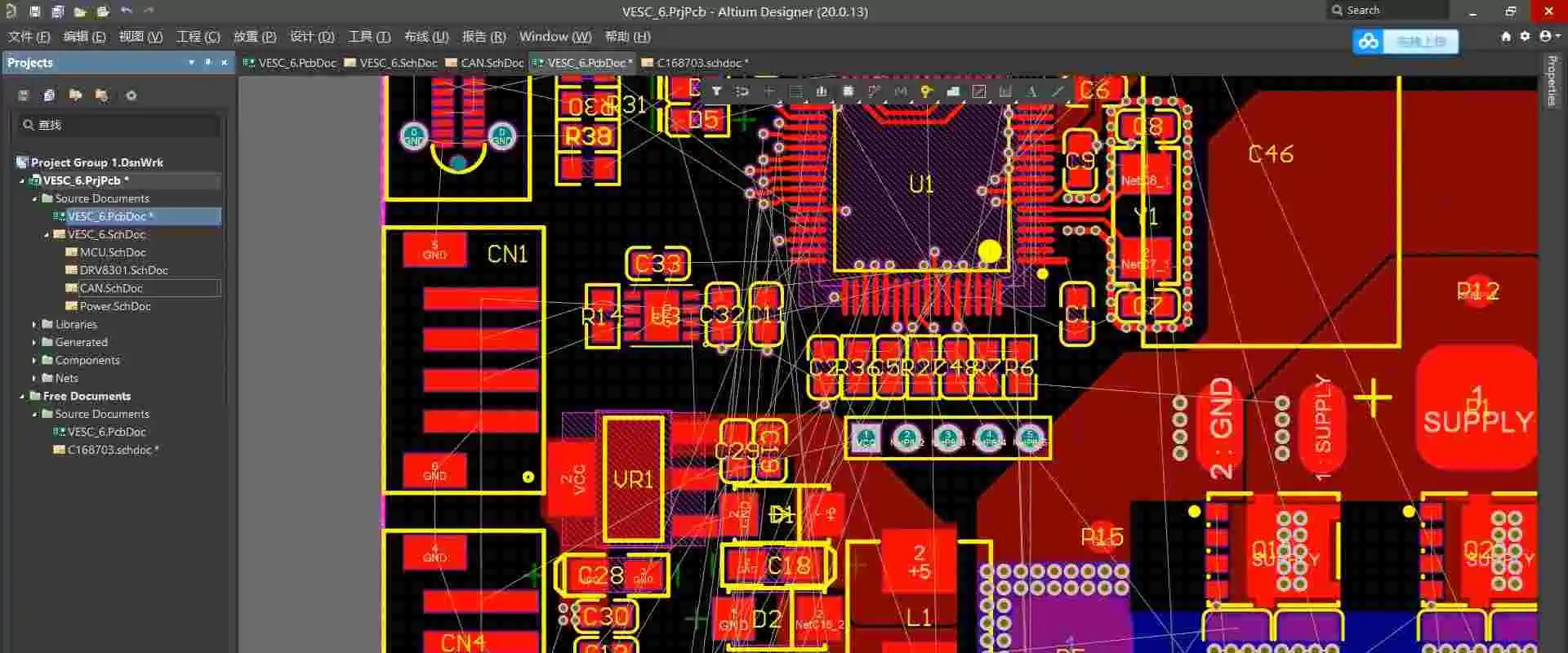
Is this your first time working with Altium Designer 20 or board design? Are you looking for a place to start? With this Altium designer 20 tutorial, we will reveal to you all you need to know. These include generating the necessary files for the fabrication of bare boards for the 9-component circuit.

This design weโ€™ll be working with in capturing, as well as designing the PCB, is the astable multivibrator. This tutorial will also touch many areas of the altium designer 20 software. With this, you may need to understand properly in your daily design work. This is a great way for you to get used to this software.

Exploring the Altium Designer 20

The Altium Designer 20 has to do with all the software engineers and editors required to perform the development process of electronic products. Furthermore, all the document processing, compiling, and editing is handled in the environment of the Altium Designer 20.

This Altium Designer is twice the integration platform that brings the different functionality and features of the Altium Designer. It also offers a reliable user-interface all through the editors and tools. It also offers further flexibility and the environment is completely customizable. This allows users to set up their workspace the way they work

Also, you will be able to explore the interface and features of the Altium Designer 20, just by experimenting with it. You can also achieve this by creating a new project, and better still, by scanning through the documentation first to help you start ahead.

Extending the Altium Designer

The Installation Management System of the Altium Designer 20 will allow users to handcraft the installation of this software at all times after the initial installation. This will cover not just the updates to the system resources or core functionality, but it can also update, install, or remove the extra functionality. This extra functionality is possible via the optional Extensions available.

The extension is essentially an extra feature to the software, offering the extended functionality and features. A major set of functions and features are handled and installed transparently, which is part of your initial install. This is called System Resources. Furthermore, there are different Optional Extensions. These include optionally removed or installed functionality as required by users.

This is that extension concept, which enables the handcrafting of the installation in line with the design needs. The functionality may add a new exporter or importer. This is a tool that aids the generation of schematic symbol or provides support for a mechanical CAD partnership. To summarize, it is all the targeted functionality packages that enhance and extend the features of the Altium Designer 20

You can get the extensions either as paid subscription or for free. It could also be from Altium or a 3rd party

. Furthermore, with your Altium Developer extension, it is possible to extend the Altium Designer 20 functionality by using the Altium Designer Software Development Kit. This helps you to create your personal extensions for the Altium Designer 20 software.

How the Managed Content Server Works

The managed content server usually works in line with the Altium Designer 20. This is just to offer a good answer to questions regarding the handling of design data using secured integrity.

This server wonโ€™t just offer secure and rock-solid data storage, it also allows data re-release as separate and distinct revisions. This is essentially the changes in tracking design over time. This excludes the need to overwrite the data previously released.

Also, it caters for the entire lifecycle of that data you wish to manage. This allows people that wish to use the data to see at once, the stage of the data. It also reveals what you can use it for safely.

Furthermore, this server is useful in managing the managed data. These include domain models, components, design templates, and schematic circuitry sheets

You can indeed create as well as manage the whole design projects in the server. When you furnish some reusable โ€˜building blocksโ€™ for the design in the server, you will be able to start a new project.

By so doing, you are sure that each component, model, and other design element are now approved and ratified

What are the Preferences of the Altium Designer 20?

PCB Layout in KiCA
PCB Layout in KiCA

The Altium Designer 20 offers the main location whereby you will be able to set up different preferences all through the different areas that are functional on the software. These setting are for the global system and they are applicable across relevant documents and products.

You can perform the preferencesโ€™ configuration from inside the dialog of the preferences. All you need to do is click the control you find on the top right section of the workspaceโ€™ top right. Make use of the options and controls available on your loaded page in configuring what you prefer for that software area

Also, this can be a mix of the satisfying policy of the company policy, as well as the working environment you prefer working in. In addition, the dialog of the preferences offers different tools to make sure that your preferences is just the way you need it. These include:

  • The ability to import the preferences that were defined in an initial instance, or the softwareโ€™s version
  • Ability to save the preferences to, as well as load it from the preference file

Furthermore, if youโ€™ve managed the content server, it becomes possible for you to release your preferences for the Altium Designer 20 formally to the target item in the server

Reference of the PCB Design Rules

The PCB Editor of the Altium Designer 20 makes use of the Design Rules concept in order to explain the designโ€™s requirements. The rules altogether forms a set of instructions that the PCB editor should work with. They include all the aspects of the design, which includes the clearances, routing widths, styles of the routing via, and more. Also, you can monitor a good number of these rules in real-time using the online DRC (Design Rule Checker).

In addition, the design rule targets some objects that are applied in hierarchical form. It is also possible to set up many rules of one type. It could happen that the design object gets covered by two or more rules with a similar scope

For this instance, there is a contention. A priority setting helps in resolving all the contentions. The system passes via the rules from the highest to the lowest priority and then chooses the first one having the scope matching the objects that are being checked.

Reference of the Project Compiler Violations

Compiling is very important in producing an effective netlist for any project. To explain further, it is the compilation process, which yields the designโ€™s data model. This is the dataโ€™s single model, which can be accessed all through the domains of the design in the design environment of the Altium designer 20

You can verify the connectivity awareness in the schematic diagram when compiling according to the rules that are defined as a part of options present in the project. This can be found on the tabs of Error Reporting as well as the Connection Matrix respectively.

The Altium Designer 20 documentation area offers an easy reference that describes every possible drafting and electrical violations, which can result or are present in the source documents during the compilation of a specific project.

Conclusion

We hope you enjoyed and have a good understanding of our article on Altium Designer 20. This unified nature of the Altium Designer 20 ensures seamless and easy movement of the design data from a specific design realm to another.

Top 8 SMD Crystal Dealers In The World

SMD Crystal

Are you in the middle of a design rut requiring crystal units and not knowing which dealer is best to buy from? The best of this type is SMD crystal units. Many dealers worldwide specialize in the production and distribution of SMD crustal units. The choice of the most reliable dealer depends on availability, accessibility, experience, etc. However, thatโ€™s quite a simple task with the following information, highlighting the top 8 global SMD crystal dealers.

River Eletec Corporation

River Eletec Corporation is one of the largest companies dealing with SMD crystal units’ production, development, and sales. The company has its headquarters in Fujimigaoka, Nirasaki, Yamanashi, Japan. In addition, River Eletec has established over 55 operation points globally. The company traces its history in October 1949 as Fuji Sangyo Company but later changed its name to River Eletec in October 1991. The company has established solid associations with one domestic and four overseas companies. Moreover, the company can boast of the ISO9002 certification acquired in September 1999.

Products

The company deals with the following electronic components:

  • Crystal Oscillators
  • SMD diodes
  • Thermistors
  • Crystal resistors
  • SMD capacitors
  • Ceramic capacitors
  • Thyristors
  • Varactors etc

Application of Products

River Eletec Company deals with products applied in the following fields:

  • Manufacture of quartz crystal units such as AT-cut and tuning forks
  • Automotive electronics
  • Audiovisual equipment assembly
  • Wireless communication
  • Internet of Things (IoT)
  • Medical electronics
  • Smartphones assembly
  • Homes automation etc

Market

In 2021, the company’s market capital was approximately 9.80 billion Japanese Yen. Additionally, in April 2022, the company’s working capital was around 80 million US dollars. The company hosts over 195 talented employees, with 50 staff members. With over 55 operation points, the company has a solid global market, with the domestic market occupying the second position in the companyโ€™s market rank.

Nidho Dempa Kogyo Co. Ltd (NDK)

Nidho Dempa Kogyo Co. Ltd (NDK)

In 1948, NDK was initially Nanbu Shoko Co. Ltd. However; the company started the production and sales of SMD crystal units in 1949. Moreover, the company later changed its name to Nihon Dempa Kogyo (NDK) in 1950. Equally important is that the company’s headquarters are in Tokyo, Japan. Throughout the years, the company has dramatically advanced in electronic production and sales. Consequently, the company has established many operation points globally in the Asia-Pacific region (APAC), the USA, and other worldwide locations. Furthermore, dueFurthermore, due to its production of high-quality products, NDK has received many accreditations, such as:

  • ISO9001(1994)
  • QS-9000(1998)
  • Environment system management ISO14001(1999) certification
  • ISO/IEC 17025 (2005)
  • (2014) ISO13485

Products

Being a famous electronic producer and seller, NDK company deals with the following components:

  • Crystal Unit
  • SPXO (Differential Output)
  • Synthetic Quartz Crystal
  • Frequency synthesizers
  • Biosensors
  • Outgas analysis system
  • Crystal Clock Oscillator
  • SAW devices
  • Crystal filler etc.

Application of Products

NDK’s products have a wide range of applications. The following are fields in which the products are relevant:

  • 5G connectivity
  • Automotive technology
  • Network devices
  • Manufacture of watches
  • Digital camera assembly
  • Smartphone fabrication
  • Internet of Things (IoT)
  • Digital consumer electronics
  • Audio visual systems
  • Personal computer fabrication etc.

Market

The company has established solid and improved worldwide investor relations, leading to its relatively large working capital. Additionally, the many global operation points ensure a comprehensive client population coverage, creating a solid international market. On the other hand, the domestic market takes a lower proportion, occupying the second position. Nevertheless, the company’s well-established online marketing platform cuts across the two market types.

Mercury Crystal Electronic Company Ltd.

FULL PCB MANUFACTURING Quote

Founded in 1982, the company has 40 years of experience producing and selling SMD crystal units. Its headquarters are in Taiwan. Despite having made SMD crystal Units for 40 years, the company’s products have considerably evolved from the old designs. Moreover, they have modified their packaging style from lead type to surface mount type. Additionally, the frequency range has increased from Several kilohertz (kHz) to hundreds of megahertz (MHz).

Consequently, the precision calculation has changed to parts per million. In addition to the headquarters, the company has established many other operation points worldwide. Moreover, Mercury Crystal has over 30 functional global labs. Furthermore, the company works towards providing a healthy and secure working environment for its more than 500 workers, hence increasing their productivity. To avoid energy and resource losses, the company implements the ISO14001 certification.

Products

Mercury Crystal company deals in the production and sale of the following products:

  • Quartz crystal
  • Crystal filters
  • VCXO
  • Clock oscillators
  • TCXO/VCTXO
  • OCXO etc.

Application of Products

The companyโ€™s products are applicable in such fields as:

  • Automotive electronics
  • Consumer electronics
  • Communication development
  • Industrial Electronics
  • Computing and automation
  • Internet of Things (IoT) etc.

Market

With its headquarters in Taiwan, the company’s domestic market is in the Asia-Pacific (APAC) region. However, the numerous operation points facilitate a more solid global market. Additionally, the company’s research labs allow for the designing of more developed items, attracting many end clients globally. Consequently, the company has a competitive advantage over similar companies.

Abracon

abracon

Founded in 1992, Abracon is a leading producer and supplier of electronic circuit components. The company’s main office was initially in Irvine, CA, but later relocated its headquarters to Spicewood, TX, at the center of Texas Hill Country, Near Austin. Moreover, the company remains a private but highly excelling company. Abracon is a high-quality supplier of SMD crystal units with one of the highest customer counts in the world. Furthermore, the company has established solid associations with many other similar companies worldwide, helping it study the competitors’ trends and strong points. Equally important is that the company actively supports the ECIA PACE Training Program. The program offers its employees and member companies key industrial concepts.

Products

Abracon is a famous dealer in such products as:

  • Quartz oscillators
  • XO
  • TCXO
  • MEMS
  • Resonators
  • Real-Time Clocks
  • VCXO etc.

Application of Products

The companyโ€™s products offer electronic solutions in the following fields:

  • Automotive electronics
  • Consumer electronics
  • Industrial Electronics
  • 5G facilitation
  • Internet of Things (IoT)
  • Medical electronics etc.

Market

Abracon can boast over 25,000 active customers in both the domestic and the global market. Moreover, as a largescale producer, the company records an annual overseas shipment of over 600 million parts. Furthermore, the US end clients make up the company’s solid domestic market. Additionally, the company’s flexible supply chain enables it to deliver to its clients through the most modern means. The company’s talented engineers help maintain its reputation due to their high-precision goods. Consequently, the company has a competitive advantage over its competitors.

Rayming Technology Company Ltd.

Founded in 2005, the company is one of the leading SMD crystal producers and suppliers in China and also globally. Raymingโ€™s headquarters are in Shenzhen, Guangdong, China. Moreover, through the years, RayMing corporation has established the QS9000 and ISO9001 quality system certifications. Customer satisfaction is guaranteed by the two. Since more customers get attracted to this confidence, the market size grows. The business can also take pride in an upgraded quality assurance system and other quality inspection tools. By assisting in monitoring the entire production process, the device gives the retailers confidence in the stability of the product. Moreover, Rayming corporation has held membership with ECPlaza since 2014.

Products

The company also deals with other circuitry components besides SMD crystal units. These components include:

  • SMD resistors
  • ceramic capacitors
  • thick and thin film capacitors
  • SMD diodes
  • wireโ€“wound resistors
  • inductors
  • switches etc.

 In addition, RayMing tech also deals with the manufacture and assembly of printed circuit boards (PCBs).

Application of Products

Raymingโ€™s products have a wide range of applications. The following are some of these applications:

  • Automotive electronic connections
  • Industrial Electronics
  • Consumer appliances
  • Internet of Things (IoT)
  • Telecommunication electronics
  • Space surveillance systems
  • Smart homes
  • Building automation etc.

Market

The profit-driven RayMing corporation exports its goods all over the world. The domestic market in the Asia-Pacific region makes up the primary market. The domestic market generates the rest of the demand. Additionally, the company’s primary market target is the USA and Europe. The company’s employees work to provide high-quality goods that will help the market grow and result in increased profit. Furthermore, the company’s developed online selling platform offers a solid worldwide market to the company.

Crystek Corporation

Crystek Corporation

Founded in 1958, Crystek is among the world’s best SMD crystal unit dealers. The company is privately owned and has its headquarters in Fort Myers, Florida, United States of America. In addition, the company deals in producing and selling frequency control solutions and RF microwaves. More precisely, the company has unique expertise in SMD crystal units. Additionally, the company has established numerous operating points and branches worldwide. Also, the company can boast over 50 functional research labs globally.

Furthermore, Crystek holds the ISO9001 (2015) certification of quality management. Consequently, their products are of reliable and effective quality. In addition, the company hosts over 450 employees in all its stations, with over 120 staff members. Crystek has also established a solid connection with similar companies that act as market surveillance and study platforms.

Products

Crystek company deals with the following components besides SMD crystal units:

  • Temperature Compensated Crystal Oscillators (TCXOs)
  • PLL (Phase Lock Loop)
  • RF power detectors
  • Attenuators
  • RF coaxial cable accessories
  • Synthesizers
  • Quartz-based resonators
  • Connectorized amplifiers
  • Power regulators etc.

Application of products

Crystek company’s products have relevance in the following fields:

  • Telecom systems
  • Industrial Electronics
  • Aerospace technology
  • Microwave/radio systems
  • Wireless transmission systems
  • Antenna receivers
  • Medical electronics etc.

Market

Owing to its advanced research labs and skilled personnel, Crystek produces high-quality, reliable products. Consequently, the company gets a competitive advantage over similar companies, boosting the company’s market. Furthermore, its certification helps in building a robust reputation, attracting more clients as a result. Governmental bodies are the company’s leading domestic market, with the online platform connecting it to its global market.

Micro Crystal AG company

 Founded in 1978, Micro Crystal company has its Headquarters in Grenchen, Switzerland. Additionally, the company is a long-time member of the Swatch Group Inc. Moreover, the company is a renowned SMD crystal unit and tuning fork watch crystals. Micro Crystal is among the leading producers and suppliers of SMD crystal units, and Miniature Quartz Crystals range between 30KHz and 250 MHz. Furthermore, the company facilitates the fabrication and testing of new electronic ideologies, allowing for an up-to-date distribution system. The company has numerous well-established operating points globally, with over 40 operational research labs.

Products

Micro Crystal company deals with the following products other than SMD crystal units:

  • kHz Oscillators
  • Real-Time Clock modules (RTC)
  • High-frequency crystal
  • Whitepapers and LCDs
  • Temperature Compensated Crystal Oscillators (TCXOs) etc.

Application of Products

Micro Crystalโ€™s products have a wide range of relevancies in such electronic fields as:

  • Medical implantable electronics
  • Consumer appliances
  • Industrial Electronics
  • Automotive electronics
  • Internet of Things (IoT)
  • Telecommunication
  • Marine electronics etc.

Market

Due to the many operating points, the company has a solid global market. Moreover, Micro Crystal has shipped more than 500 million SMD crystal parts to over 200,000 customers. Additionally, the company’s domestic Swiss market occupies the second market rank. Furthermore, Micro Crystal company offers superb after-sales services to its customers and a ready client consultancy to achieve a competitive advantage over similar firms.

Aker Solutions

Aker provides integrated and developed circuit solutions to electronic engineers worldwide. Consequently, the company boosts the global energy industry. Aker company traces its history to 1841 in Oslo, Norway. Therefore, the company has 181 years of existence and experience. In addition, the company has over 53 well-established branches and operation points and over 20 global research labs. Furthermore, the company started as a small workshop, Akers Makeniske Versted, near the Aker River. Later, the company grew steadily, first into shipbuilding and then a stable engineering company.

Products

Other than SMD crystal units, the company also deals in the following products:

  • PLL (Phase Lock Loop)
  • RF power detectors
  • Attenuators
  • RF coaxial cable accessories
  • SMD capacitors
  • Antenna receivers etc.

Application of Products

Akerโ€™s products are relevant in the following fields:

  • Telecommunication
  • Positioning systems
  • Automotive electronics
  • Internet of Things
  • Consumer appliances
  • Industrial electronics
  • 5G modulation systems etc.

Market

With over 14000 employees, the company is among the largest SMD crystal dealers in the world. Consequently, the company manufactures and then supplies its SMD crystal units and other products to a vast global market via air or water. Moreover, the price of a single share is approximately 34.92 US dollars. The company’s developed products accord it a competitive advantage over fellow firms.

Conclusion

The above information makes it possible to understand the best SMD crystal dealers in the world. Moreover, it gives a short history of each dealer company, including the year the company and the location of the companyโ€™s establishment. In addition, the information clearly explains the current day headquarters of each company. Furthermore, the range of products dealt with by each company, and their applications, are no longer an issue with the above information. Finally, the information examines the market specs of each of these eight companies. In conclusion, the above information equips you with the knowledge on which SMD crystal company to consider for your research.

Top 12 Industrial Robot Manufacturers in the world

Robots in Industries

Industrial robot manufacturers design, produce, install, and maintain these systems. In addition, they provide the physical robot, the computational interface, and guidance on integrating the system into the existing manufacturing space.

Some industrial robotics manufacturers produce their components, while others outsource specific parts. These machine automation suppliers typically produce specialized robots for applications, while generalized robots can serve in several manufacturer-designated roles.

In the end, the ultimate purpose of industrial robots is to enhance productivity and quality in manufacturing environments.

Industrial robotics companies often provide customized robot solutions for specific industries, such as car manufacturing. In addition, some industrial robotics companies, like Denso, specialize in various applications.

Others, like Kuka, are innovative and have launched new designs in their field. Some companies, like Toyota Motor Company’s Kuka, have roots in the automotive industry, while others focus on manufacturing industrial robots.

Midea, for example, is a sprawling conglomerate that owns a robotics division, which has nothing to do with its automotive division. Mitsubishi, meanwhile, has become one of the world’s largest industrial robot manufacturers.

What Makes a Leading Industrial Robot manufacturer?

When choosing a robot, you have several key features to consider. A top-quality industrial robot should include the most advanced technology for the application. It should also be easy to maintain and safe to use. For example, controller specifications are essential to an industrial robot’s success.

Its memory capacity, human-machine interface, and internal sensing capabilities are essential. Each robot has a unique requirement and may require different controller specifications.

For example, a simple pick-and-place application may require the essential software, whereas a high-precision manufacturing application requires sophisticated software and a more complex controller.

The Benefits of Industrial Automation in robotic automation systems

Industrial automation can increase your productivity and efficiency. The advantages of automation are many, and the initial costs are low. Unlike human operators, robots can save time, money, and effort.

They can also help you reduce waste and improve quality. In addition, robots can improve your speed to market and reduce lead times. Additionally, automation can even make in-house production more affordable. In other cases, industrial automation systems can help you increase your profit margins.

One of the best things about industrial automation is that it can reduce employee costs. Using industrial automation can free up human workers to perform more complex tasks. As a result, you can eliminate the need for healthcare benefits, paid holidays, and more.

Moreover, workers do not need to worry about the maintenance of industrial automation machinery, which saves you money on wages. However, you must be careful not to sacrifice quality in the process, as industrial automation is highly repeatable.

Top Industrial Robotics Manufacturers around the world

These industrial robotics companies are developing new industrial robots to help businesses operate more efficiently.

Read on to learn about these innovative companies and see what differentiates them. You might even be surprised that KUKA invented the robot called the Kukabot.

KUKA

KUKA has been at the forefront of industrial robot design since the early 1970s. They released their first industrial robot, the Famulus, in 1973. It was the first industrial robotย companyย with six axes powered by electric motors.

KUKA continued to push the boundaries of industrial robotics in 1985 with the introduction of their Z-shaped robotic arm, which allowed for six degrees of freedom and simplified maintenance. By the late 1980s, they were leading suppliers in Europe and the United States.

KUKA is a global automation corporation with over 3.3 billion euros in annual sales and more than 14,000 workers. The company has subsidiaries in Asia and Europe and is one of the leading providers of intelligent automation solutions.

The company provides complete automation solutions for a variety of different industries. Its robots help increase productivity and reduce costs for various businesses. In addition to manufacturing robots, KUKA also designs and builds software to improve productivity and efficiency.

KUKA offers flexible manufacturing systems for many industries, including automotive and rail vehicles. Its products are ideal for mounting vehicle bodies and chassis, installing components, and more.

Its customers include GM, BMW, and the BSH rail vehicle manufacturer. KUKA has also set up innovative production lines for freight wagons, subways, and locomotives. In addition to robotics, Kuka also provides services and solutions for various industries, including the food and beverage industry.

TAL

The report is a comprehensive list of the top companies in the industrial robot industry, and it also lists the top companies in the service robotics industry. This list includes companies like ABB Ltd., Fanuc Corp., and Kawasaki Robotics.

These companies offer industrial robot solutions that are highly customizable and customized to suit the needs of specific industries. In addition, these companies have years of experience in the industry, and they are considered one of the top industrial robot manufacturers.

The global industrial robotics market is currently in two parts – the European and the North American sectors. Unfortunately, the two regions saw a significant decline in revenue in the first two quarters of 2020.

The impact on service and collaborative robots will be more limited, as their growth rates are higher than those of industrial robots. However, the APAC region has a much higher growth rate.

FANUC

FULL PCB MANUFACTURING Quote

In the US, FANUC is the largest industrial robotics company, with more than a hundred models of robots and intelligent automation systems. Its revenue is diversified, with 15 percent coming from Japan, 21 percent from the Americas, 19% from Europe, and 33% from Asia, excluding China. As a result, it can serve any industry with standardized processes that justify robot installation.

The company has been in business since 1892 and has a presence in more than 100 countries. Its mission is to make the future a better place by providing the latest technology and out-of-the-box thinking.

It has become a leader in industrial robotics and uses more than 400,000 robots. Its products are renowned for their durability and ease of use and are ideal for various manufacturing processes.

Yaskawa Electric

To invest in industrial robots, you should consider the following manufacturers: Comau Robotic Systems, Yaskawa, and Kuka. These companies have a history of providing innovative industrial robots, ultra-precision machines, and robotic systems.

The MZ12 industrial robot, for example, is designed to carry up to 12 kilograms. In addition to its strong market position in the electronics and EMS industry, the company also manufactures other industrial robots, such as the Compact MZ Series, WING SLICER Type EZ Series, and FlexGui.

Japan’s economic miracle began to unravel after the country’s housing bubble burst in 1991, and the economy stagnated for the next two decades. However, the sudden rise of personal computers spurred an increase in the demand for semiconductors, a key component for industrial robots.

The global market for industrial robots remained strong until the 2008 Great Financial Crisis. The country’s supply of industrial robots declined significantly after the 2011 Tohoku Earthquake.

Another Japanese company, Yaskawa electrics, has a history of manufacturing industrial robots. The company’s main products include servos, AC motor drives, and motion controllers.

The Motoman industrial robot is one of the most well-known industrial robots on the market, with more than 400,000 installed worldwide. Yaskawa also makes cobots, welding robots, and materials handling robotic arms.

Omron industrial robots

arm-Robots-

The company has five innovation centers throughout the world. Its products have been essential in more than 120 countries. So, what makes a leading industrial robot brand? First, let’s take a closer look at some of the most well-known brands in this industry.

Automation is becoming an increasingly popular option for many industries, but the cost of labor and COVID-19 concerns have created an even greater need for collaboration and automation. As such, OMRON has invested in Techman Robot Inc., the second largest manufacturer of collaborative robots.

Upon completion of the deal in December 2021, Omron will hold a 10% stake in the company. Demand for collaborative robots is increasing as workers look for cobots – robots that can work alongside humans, handle multiple tasks, and ensure safety.

Omron, an industrial automation company, based in Kyoto, Japan, has been in the robotics business for over 30 years. Its innovative robotic systems include the Parallel Link Quattro robot, a two-armed industrial robot.

The company has been working to advance its robotics and software technologies for years. A recent Adept acquisition by Omron enabled it to provide automation for multiple industries, including medical and automotive. Omron also has an extensive business in components and sensors for industrial robots.

It is also widely considered one of the world’s first collaborative robot manufacturers. Omron’s robotic solutions make integration easy. Their automation solutions offer flexible, modular programming and SQL connectivity. Omron is a global robotic manufacturing leader with more than 37,000 employees.

Another innovative product from Omron is the Factory Drive Recorder. This innovation lets engineers record videos of key production events. This feature makes it easy to identify quality problems and improve processes. Omron is one of the ten industrial robot companies that lead the industry

Staubli

As one of the top mechatronics solution providers worldwide, Staubli Group excels in three main areas: textiles, robots, and software solutions. Since its founding in 1892, Staubli has grown geographically and technologically.

Its acquisition of Unimation expanded its portfolio into some of the most advanced industrial sectors. In addition to industrial robots, Staubli has also expanded its software business to offer a range of collaborative robots, and the company has recently invested more in its software business.

Germany leads the way with a strong presence in the industrial robotics market. Its industrial robotics division serves the automotive, electronics, logistics, and consumer goods industries. Its six-axis robots include ones with dirt resistance and palletizing capabilities.

It was acquired by the Midea group in 2016, enabling the company to diversify its product offering. Another company leading the way in robotics is Staubli. Based in Horgen, Switzerland, Staubli’s business has grown to more than $1 billion.

Epson Robots is a Japanese company that produces industrial robots. Based in California, Epson Robots has 35 years of experience manufacturing industrial robots. The company is also the world’s leading SCARA robot manufacturer.

Staubli Corporation is a global mechatronics solution provider with operations in 29 countries. With its flexible robotics solutions, the company is one of the top 10 industrial robot companies that lead the industry.

ABB Robot Systems

ABB robotics creates flexible and adaptable machines that can perform multiple tasks. The GoFa collaborative robot, for example, can handle larger payloads. In addition, its collaboration with humans eliminates physical barriers, allowing continuous workspace sharing and cooperation.

Its lead-through programming makes it easy for non-experts to program it, and it is ABB Wizard’s easy programming software that helps users program the robot with graphical blocks.

ABB is a leading manufacturer of industrial robots, with over 300,000 units installed in over 53 countries. The company also offers information technology services, a competitive edge over other industrial robot manufacturers.

Yaskawa, a Japanese manufacturer, was founded in 1915 and has since evolved from a motor manufacturing company into a world-class robotics manufacturer. Its products span virtually every industrial sector.

EPSON Robots

EPSON Robots is the robotics design division of Japanese corporation Seiko Epson, the company that makes computer printers and watches. The company is focusing on developing a fully autonomous robotic arm for the future.

While it is unclear when the robot will be ready for market, it has shown promising signs for the future. In the meantime, it has several projects, including autonomous walking and navigation.

Kawasaki Heavy Industries

Kawasaki robotics is one of the oldest companies in the industrial robots industry. In 1969, the Japanese company developed the first industrial robot. It continues to produce quality industrial robots to this day. It is the top industrial robot manufacturers’ sector and regularly surprises the world with innovative innovations.

To help humans, Kawasaki Heavy Industries has been working on humanoid robots. For example, in 2017, the company unveiled the humanoid robot Kaleido. Kaleido will be more humane and valuable in human society.

Kawasaki shared details about the robot’s progress at the International Robot Exhibition (iREX) 2019, held at the Tokyo Big Sight from December 18 to 21. And if you’re looking for a brand with a long history, Kawasaki is a must-have.

Mitsubishi Electric Corporation

Mitsubishi Electric Corporation is an internationally recognized electrical and electronics manufacturer with a long list of products. While most robots manufactured by this company are white, those manufactured by this company consist of distinctive branding and product design.

For instance, robots manufactured by ABB are white with a red logo. RoboDK is a global company that provides solutions to industrial robotics problems and supports them.

Doosan

Doosan, a major South Korean company interested in almost every industry, is also a leading industrial robotic manufacturer. Moreover, this company has recently launched new types of industrial robots for the electronics industry, which is growing faster than the automotive industry.

Meanwhile, Denso is known for its car parts, a Japanese brand that has frequently appeared at Hannover Messe. With all these advantages, it’s no wonder that Toyota has acquired a leading industrial robot brand.

Nachi Fujikoshi Corporation

To understand the company’s products better, consider the following information. What makes Nachi-Fujikoshi Corporation different?

The Nachi-Fujikoshi Corporation is a major Japanese corporation that manufactures a range of machine components, systems, and industrial robots. Its other products are known for their innovative manufacturing and assembly process solutions.

Summary

Robotics is a rapidly growing industry, and the need for companies that manufacture these machines is as great as ever. Since their first use in the 1960s, robots have come a long way.

They are now less expensive to buy and install than ever, and their quality and safety standards have improved. They can also operate twenty-four hours a day, seven days a week, which increases production and decreases downtime.

The Differences Between Flexible Solder Masks and Coverlay FPC

Coverlay FILM FPC

The differences between a flexible solder mask and a coverlay are significant but often overlooked. A coverlay is a solid sheet of material with mechanical openings. As a result, a small amount of adhesive squeezes out. Coverlay design rules are different than those of flexible solder masks. However, they do have a few things in common.

Flexible PCB coverlay

A few differences exist between a flexible solder mask and a PCB coverlay. One is a solid sheet of material, while the other is flexible. The difference lies in the material and design rules. Generally, a coverlay overlaps the solder mask by 0.4 mm, while a solder mask overlaps by 0.2 mm. Different manufacturers have different design rules, and there are some essential things to remember when selecting a coverlay for your flex circuit.

The flexible PCB coverlay is a layer that protects the circuit board and copper foil. It serves the same function as a solder mask but adds flexibility. Its thickness is usually one mil thick, but different thicknesses are available to meet the exact design requirements. They are laminated using heat and force. Flex circuit board coverlays are more costly than rigid PCBs but are worth the extra expense.

When comparing flexible solder masks and PCB coverlay, it is essential to keep in mind the different materials and processes used. Both materials are helpful in flexible PCB applications. A flexible solder mask uses a photo-imaged liquid that adheres to the PCB. Because it is flexible, it allows larger feature openings. A flexible solder mask is also less expensive than a film-based polyimide coverlay. Flexible PCB coverlay is more versatile than a rigid PCB and offers the same functionality as a rigid PCB.

Flexible solder mask

fpc-flexible-printed-circuit

When evaluating the pros and cons of a coverlay versus a flexible solder mask, it is essential to comprehend how they differ from each other. While both masks provide adequate protection, flexible solder masks have advantages over coverlays. These products are less expensive and have lower copper content. However, they are not ideal for tight bends or folding.

The thickness is the most notable difference between a coverlay and a flexible solder mask. With a coverlay, we must mechanically create openings so the solder can adhere to it. This can leave small gaps between the two materials; in some cases, even adhesive squeezeout can occur. In addition, the design rules for these two materials are different. Because of this, flexible solder masks often don’t adhere to a polyimide coverlay and fail to meet IPC quality standards.

A coverlay is a solid material, such as Kapton, while a flexible solder mask consists of plastic. The former combines plastic polyimides with adhesive, while the latter uses a liquid. Coverlay dams are generally ten mils thick, while solder mask dams are four mils. So if you’re using a flexible solder mask, check the dam size to ensure it’s the correct thickness.

A coverlay has a minimum opening size. The minimum size for an opening is 0.6mm. It is better to avoid openings that are too small. Otherwise, we risk damaging the coverlay during manufacturing, and the adhesive may squeeze out. It is also essential to consider the minimum distance between the trace and solder mask opening. If the overlap is too significant, the coverlay may not be able to do its job.

Cost

A flexible solder mask is a cost-effective alternative to a traditional coverfilm. It is more flexible than a coverfilm, allowing fabricators to create smaller solder pads closer together. They are also more durable than coverfilm, which can be helpful in more applications. The following compares the two materials and their relative advantages and disadvantages. Depending on the specific circuit design, a flexible solder mask may be a better choice for particular applications.

When choosing a coverlay, it’s essential to consider the benefits and drawbacks of each type. A coverlay is a solid sheet with no seams or creases. Its openings must be mechanically created and may display a small amount of adhesive. As a result, the coverlay may be more expensive than a flexible solder mask. On the other hand, a flexible solder mask can protect a more expensive PCB.

While polyimide and flexible solder masks are inexpensive, the adhesives are expensive, and a thin coverlay is better for a tight bend radius. A flexible coverlay’s thickness depends on the thickness of the copper. For example, if your copper is 1oz thick, you’ll need a polyimide coverlay of 1 mil. This material is thin enough to fit an ounce of copper but thick sufficient to encapsulate it fully.

Dielectric strength

One method of improving the dielectric strength of a flexible solvent mask is to incorporate a power source. The electrical power source can be removable or incorporated into the mask during manufacture. In addition, an electrical power source may be a DC voltage source or an electronic circuit that can vary the voltage over a specific period.

The high breakdown strength of a polymer combined with its high dielectric constant is one of the advantages of these composites. We can use these masks in the production of semiconductors and other electronics. In addition, we can change the dielectric constant of a polymer to control the amount of energy stored. The dielectric constant of polymer films can be varied by systematically varying the constituent layers of the composite.

PPC was ideal as a substrate and dielectric. Its surface energy was 47 mN m-1, and the dielectric constant was 3. PPC exhibits good compatibility with organic semiconductors. Further, it is biocompatible. Its surface energy can influence the growth of organic semiconductors. Using PPC as a substrate, researchers have been able to improve the performance of OTFTs.

EMI reduction

FULL PCB MANUFACTURING Quote

There are several advantages of flexible and coverlay PCB in EMI reduction projects. Both are made from epoxy-reinforced materials and provide a consistent dielectric thickness. However, flexible PCBs do not offer EMI shield layer lamination and cannot guarantee maximum protection from electromagnetic interference. On the other hand, Coverlay PCBs are more reliable and are helpful in high-frequency PCB projects.

The most effective way to minimize EMI is to shield the flex sections using a coverlay. We construct a coverlay with an EMI/RF shielding layer using a specialized film. China’s APlus and Tatsuta are good examples. These highly effective films allow for a much thinner flex construction than conventional FR-4. Shielding is significant for low-voltage circuitry, and a flex area coverlay will provide EMI/RF shielding while maintaining an electrical connection.

Coverlay is a layer of insulating film with adhesives that adhere to the copper structure. Unlike conventional solder masks, which have limited bendability, coverlay films adhere to the copper structure. Coverlay films are drilled or cut, making them suitable for small apertures. This film has limited application in finepitch SMD areas. However, the EMI/RFI protection offered by a flexible coverlay PCB is more than worth the cost of the coverlay.

Unlike rigid boards, flexible solder masks can resist EMI. This EMI-resistive solder mask is photo-imaged liquid, allowing almost the same capabilities as rigid boards. However, the flexibility of flexible PCBs requires a larger number of feature openings. Unlike coverlay, flexible solder masks do not require the assembly of multiple openings.

How to Get the Most Out of Your LCD FPC

lcd fpc

What is an LCD FPC?

An LCD FPC is a flexible circuit that connects an LCD to a customer’s product. A flat cable is a better choice than a round or a wire because it provides greater suppression of RFI and EMI. A flexible printed circuit is custom-built with additional circuitry and lengths to carry data signals from an LCD to the customer’s product. This type of circuit is also called a ZIF connector.

Flexible Printed Circuit (FPC)

An FPC is an electronic device that uses a conductive carbon ink instead of a traditional circuit board. The carbon/silver paste replaces the traditional copper conductor and is flexible and light. In many applications, an FPC is ideal for replacing wires and cables. In addition, its flexibility and low cost make it an attractive alternative to conventional PCBs. However, some applications are more suited for FPC than others.

An FPC is typically thinner, lighter, and more functional than conventional circuits. Therefore, we can make it in a subtractive or an additive process. A subtractive process begins with a solid area of metal and removes unwanted areas to create traces. Additive processes begin with a bare dielectric layer and add metallic traces where needed. Some of the processes involve plating, printing, or other means of depositing a conductive layer.

An FPC has many benefits. It is more cost-effective than rigid PCBs because it can be bent or applied to odd shapes. It also takes up less space on the motherboard and reduces waste heat. FPC also has much greater reliability than rigid PCBs. It is also easier to assemble than rigid PCBs. So, it may be the best option for your electronic device.

Another advantage of an FPC is that we can shape it in any way you can imagine. It can be attached to virtually any electrical device and folded or bonded to a curved surface. Additionally, the FPC can be formed into any 3D shape, making it a highly versatile alternative to traditional PCBs. Flex circuits can also withstand dynamic flexing, which makes them perfect for electronics packages that include rotating or moving parts.

ZIF connector

The ZIF connector for LCD FPC is a common failure point for Apple iPad 3 and 4. The problem with this component is that it easily breaks during connection or disconnection. The best way to prevent this is to avoid any contact that might damage the connector.

Specifications

When we talk about the LCD FPC, we talk about the connector that holds LCD screens together. This connector is flexible and can be helpful in many applications, such as mobile phones and navigation equipment. Its main characteristics include high transmission speed, small spacing, and high density. These features can help to ensure the reliability of the transmission of the signal. In addition, it can also convert electrical signals into optical signals. Hence, it is essential to know the specifications of the connector before it is helpful in an application.

Repairing an LCD FPC

Identifying the exact problem with your LCD FPC can be difficult. It may require the use of specialized tools. Therefore, it is critical to know how to perform a diagnosis before starting any repair work. In most cases, the fault is not a hardware one but rather a software issue. Sometimes, a simple FPC repair is sufficient to fix the problem. In other cases, purchasing a replacement LCD FPC may be necessary.

Efficient FPC LCD Display FPPC Units

the flexible board requires a stiffener to obtain external support

If you’re looking for an LCD unit, there are some key features that you should look for. Some of these factors include energy efficiency, easy connections, and easy cleaning. Other considerations include GPIO pins and GPIO bus compatibility. Then, you can begin shopping for the best LCD unit to meet your needs. Continue reading to learn more.

Energy-efficient

LCDs are an increasingly popular choice for computer systems. This is because they are energy-efficient and feature many other benefits. For example, FPC displays’ energy efficiency helps decrease energy usage. Additionally, the FPC-based units offer better connectivity than their LCD counterparts. However, they are not the only energy-efficient displays.

Easy to clean

FPC or flat panel connectors have been used for many years to provide easy connectivity between multiple devices. These connectors use a flexible cable that adheres to the display with conductive glue. Many of these connectors consist of silicone, and we can easily clean them with a wet toothbrush. However, following the manufacturer’s cleaning instructions is essential, as some are more sensitive than others and may require special care to avoid damaging them.

You can use microfibre cloths and a spray bottle with water to clean LCD displays. You can use these clothes to remove stubborn stains and fingerprints. However, you must be careful not to get any liquid or residue on display, as this may damage the coatings. You should also avoid using liquid soaps and detergents near your display, as they can harm the LCD screen.

Easy to connect

The efficiency of FPC/FFC cables has risen rapidly and is now used to connect LCD panels to other printed circuit boards. These cables are helpful in various applications from industrial equipment to home appliances, LCD television sets, printers, and mobile devices. The increasing usage of these cables has resulted in a growing demand for these units.

GPIO pins

Using the GPIO pins of efficient FPC LCD FPPC units allows you to connect peripherals such as sensors to the display. The display itself has few connectors to connect peripherals, but these FFC units will enable you to hook up peripherals directly. You can also connect the display to an expandable header to connect additional boards.

Common LCD modules

FULL PCB MANUFACTURING Quote

Common FPC LCD modules share several common features. These include a Hitachi HD44780 compatible controller, common pins and connectors, and a standard set of communication interfaces. In addition, these common LCD modules support all eight data lines, including register-select, enable, and data. They also share a LiquidCrystal library.

FPC is the most common type of connection between LCDs. Its major function is to transmit data safely. This connection consists of a conductive strip that is malleable. The strips fit between the controller and display connection ports. To make sure the strips are securely connected, bezels are necessary. This ensures proper connection and prevents surface-to-surface reflections. In addition, this helps to produce better viewing angles and contrast.

Cleaning methods

If you have a new display, you should carefully follow the manufacturer’s instructions when cleaning it. It can damage the LCD by allowing it to come in contact with moisture or other liquids. Instead, you should use a soft cloth dampened in a mild detergent solution to remove stubborn dirt and other grime. You should avoid using abrasive pads, solvents, or scouring powders on the LCD.

Avoid using paper towels to clean the display. They leave small fibers that can compromise the accuracy of the LCD. Instead, use a lint-free microfiber cloth. This will remove most of the dirt and dust without damaging the display. The final step is to dry the display with a soft cloth.

Understanding the integration between USB 3.1 Gen 2 and FPC Connectors

USB FPC

USB 3.1 gen 2 has a board-to-board high-speed transmission capability. This is a significant advancement in the field of data transmission. In addition, the Compact FH58M series FPC connector is capable of board-to-board high-speed transmission. Its capabilities also make it possible to connect FPC devices. For more information, read on.

Gen 2

USB 3.1 Gen 2 is a new standard for high-speed data communication. It was to meet the increasing demand for higher data capacity and faster transmission speeds. As the number of compatible devices increases, FPC connectors will become more important to ensure high-speed data transmission. FPC connectors have a fine coaxial wire pitch and allow board-to-board connections.

This cable is compatible with both USB Type-C and Type-A devices. The Mini Flex is a 5″-long USB cable with a flexible FPC design. The cable is compatible with various devices and can transfer data up to 10 Gb/s. Because it is so flat, it fits neatly in your pocket. And because it’s a flexible FPC, it’s perfect for connecting mobile devices to your PC or power bank.

USB 3.1 Gen 2×2 is the latest USB standard. The new USB spec promises up to 20Gbps of data transfer with dual 10Gbps lanes. In addition, USB 3.1 Gen 2 has a higher impedance than USB 3.1 Gen 1 (which provides 5Gbps of data). It also has two signal lines, which help connect multiple devices to a PC. Choosing a USB adapter with the latest USB spec is essential, as older adapters may be unable to support the higher speeds.

0.5-mm-pitch fine coaxial wire connectors

In the context of board-to-board high-speed transmission, 0.5-mm-pitch fine coax wire connectors (FFC) are the best. They allow manufacturers to replace existing connectors without reworking the circuit. Thus, FFC connectors can reduce the cost of high-speed data communication devices. Besides, they are suitable for both input/output boards and mainboards.

The ICC AutoLock FPC connector by Amphenol has a zero-insertion force (ZIF) mechanism that prevents cable dropout during assembly. With its 0.5-mm pitch and 2.5-mm-profile design, this connector offers superior signal integrity and robust shock resistance. Moreover, its high-speed FPC capability makes it suitable for automotive, consumer, and industrial automation applications.

The FPC is available in many styles. They are available in both tin-lead and lead-free plating. They also feature a right-angle board mount receptacle and a straight plug. This provides a high-speed, parallel-to-board interface and reduces shielding and copper thickness. Moreover, FPC connectors feature various contact points and actuators to minimize incorrect mating risk.

Compact FH58M series FPC connector

FULL PCB MANUFACTURING Quote

The Compact FH58M series USB FPC Connector from Hirose offers high-speed transmission and excellent impedance characteristics. Its features include 0.2mm fine pitch, dual-sided top and bottom contacts, and an insertion tab to hold the FPC in place. As a result, it is ideal for various applications, including consumer electronics. In addition, it is suitable for use in small-to-medium-sized devices.

The compact FH58M series USB FPC connector offers a 0.25mm pitch and a depth of 3.1mm. Its lightweight and user-friendly design make it an ideal choice for wearable electronic devices like watches and fitness bands. It also comes with a metal locking mechanism for easy FPC insertion. It weighs just 0.046g and is available in 31, 35, 41, and 51 position configurations.

Hirose is one of the top global connector manufacturers. Their products include coaxial, RF, board-to-board, and USB FPC connectors. Their comprehensive product line supports various industries, including medical, consumer electronics, and industrial applications. Hirose also offers supply chain services to help customers meet their connector needs. When it comes to choosing FPC connectors, be sure to check their product catalog to find the right one for your application.

Compatible devices

Panasonic Corporation has commercialized USB 3.1 Gen 2 compatible FFC connectors with USB 3.1 Gen 2 computers. These connectors can achieve transmission speeds of up to 10 Gbps. In addition, they are compatible with various high-speed data communication devices and can serve as FPC connectors. This innovation will further reduce the costs of high-speed data communication devices. USB 3.1 Gen 2 came to be in response to the growing demand for faster transmission speeds and larger data capacities. In addition, the new connectors maintain signal quality between boards and help reduce the cost of high-speed data communication devices.

The USB standard aims to eliminate tampering and allows USB-enabled devices to connect with their computers without any problems. The latest USB 3.1 gen two standard allows high-speed data transfer from device to device without drivers or other software. However, USB 3.1 gen two is also ideal for board-to-board high-speed data transfer. Despite its limited support for PCs, USB-enabled PDAs are compatible with USB.

Using USB FPC To Get The Most Out of It

Using USB FPC is a great way to transfer data to your PC. There are many benefits to using USB FPC, including the ability to transfer data from mobile devices. In addition, using USB FPC instead of Wi-Fi or Ethernet will ensure your devices are as secure as possible and save you time.

Transfer data to PC using USB Fpc

You can transfer data between two computers using a USB cable. You must have a USB port on both computers to transfer data. Once you have one of these USB cables, you can easily transfer data between your computers and share files. There are many USB transfer cable products on the market, so it’s essential to find one that works for you.

A USB cable is one of the easiest ways to transfer data between computers. The cable can connect two computers simultaneously and will transfer data faster than a wireless network. You can also use a pluggable USB-A 3.0 cable to connect two computers with USB ports. The cable will come with software to help you connect the two computers.

Transfer data to PC using Ethernet

It’s easy to transfer files between your PC and USB flash drive, but if you need to transfer a large amount of data, then an Ethernet cable is the way to go. Ethernet cables don’t have capacity limits and transfer data much faster than USB flash drives. However, you’ll need to ensure your PC has a USB 3.0 port. If your PC doesn’t have this, you can always use a USB 2.0 port, which will slow down the data transfer speed.

One of the main differences between USB and Ethernet cables is the capacity. USB flash drives and SD cards have a limited capacity, while Ethernet cables don’t have this limit. Ethernet cables also transfer data faster due to the physical connection between two devices. They are in direct contact with each other during the transfer process. Ethernet cables can be a little more expensive, but they can be worth it if you transfer large amounts of data.

To connect two computers with Ethernet, you’ll need to connect them to your network. To do this, open the Control Panel and click Network and Internet. Then, click on the other PC and select the shared folder. You can now start transferring files between the two computers.

Transfer data to PC using Wi-Fi

There are a couple of options when you are looking to transfer data from your smartphone to your PC. The fastest method is using a USB 3.0 cable with compatible hardware. Bluetooth is also an option but is not as widely used or well-known as Wi-Fi. In addition, while Bluetooth is quick and easy to use, it is not as secure as a wired connection. However, it is a great way to transfer files from your phone to your PC.

When transferring data from your phone to your PC, always make sure that you use a secure connection. Wi-Fi networks are prone to hacking, and packet sniffers can steal your data. Even if you have a private network, it is still possible for hackers to steal your data. This can cause data corruption and loss. You can use a USB-to-Fi adapter or a Wi-Fi network when transferring data from your smartphone to your PC.

Rigid Flex PCB Assembly: Process and Tips

Rigid Flex PCB Assembly

Rigid-flex PCB assembly is gaining significant traction in modern electronics due to its ability to merge the advantages of both flexible and rigid circuit boards. By incorporating both rigid and flexible substrates, this technology allows electronic engineers to seamlessly integrate multiple layers of flexible and rigid subcircuits.

The combination of these two assembly types empowers engineers to develop innovative and high-performance products. However, it is crucial to understand the appropriate scenarios for employing rigid-flex PCB design and the best practices for its implementation.

Learn more about:

What is Rigid Flex PCB Assembly?

WarShip Radar Rigid Flex PCB

Rigid flex PCB assembly is a cutting-edge technology that combines the best features of both rigid and flexible PCBs into a single, integrated circuit board. This innovative approach to PCB design and manufacturing offers a solution that bridges the gap between traditional rigid boards and fully flexible circuits.

Key Features of Rigid Flex PCBs

  1. Hybrid Construction: Rigid flex PCBs consist of both rigid and flexible sections, allowing for a versatile and adaptable design.
  2. Reduced Interconnections: By integrating flexible sections, rigid flex PCBs minimize the need for connectors and cables, reducing potential points of failure.
  3. Space Efficiency: The ability to bend and fold allows for more compact designs, making rigid flex PCBs ideal for space-constrained applications.
  4. Durability: The flexible sections can withstand repeated bending and folding, increasing the overall lifespan of the PCB.

Applications of Rigid Flex PCB Assembly

Rigid flex PCB assembly finds applications in various industries, including:

  • Aerospace and defense
  • Medical devices
  • Automotive electronics
  • Consumer electronics
  • Telecommunications
  • Industrial automation

The unique properties of rigid flex PCBs make them particularly suitable for devices that require high reliability, compact design, and resistance to vibration and shock.

Rigid Flex PCB Assembly Process: Step by Step

The assembly process for rigid flex PCBs requires careful planning and execution to ensure the integration of rigid and flexible sections. Here’s a detailed look at the step-by-step process:

1. Design and Layout

The first step in rigid flex PCB assembly is creating a comprehensive design that accounts for both the rigid and flexible sections. This involves:

  • Determining the number of layers for both rigid and flex sections
  • Planning the transition areas between rigid and flex parts
  • Designing the circuitry and component placement
  • Considering the bend radius and stress points in the flexible sections

2. Material Selection

Choosing the right materials is crucial for the performance and durability of rigid flex PCBs. Common materials include:

  • Rigid Sections: FR-4, high-temperature FR-4, or polyimide
  • Flexible Sections: Polyimide or polyester films
  • Adhesives: Acrylic or epoxy-based adhesives for bonding layers

3. Fabrication of Rigid and Flex Sections

The rigid and flexible sections are typically fabricated separately before being combined:

  • Rigid Sections: Follow standard PCB manufacturing processes, including etching, drilling, and plating.
  • Flexible Sections: Require special handling and processing to maintain flexibility and prevent damage.

4. Lamination

The rigid and flexible sections are carefully aligned and laminated together using heat and pressure. This process creates a strong bond between the layers while maintaining the flexibility of the designated areas.

5. Component Placement

Components are placed on the rigid sections of the PCB using automated pick-and-place machines. The flexible sections are typically kept free of components to maintain their bendability.

6. Soldering

Soldering techniques for rigid flex PCB assembly may include:

Special care must be taken to avoid excessive heat exposure to the flexible sections during soldering.

7. Cleaning and Inspection

After soldering, the assembled PCB undergoes thorough cleaning to remove flux residues and other contaminants. Inspection processes may include:

  • Visual inspection
  • X-ray inspection for hidden solder joints
  • Electrical testing to ensure proper connectivity

8. Conformal Coating (Optional)

In some applications, a conformal coating may be applied to protect the PCB from moisture, dust, and chemicals. The coating must be flexible enough to accommodate the bending of the flex sections.

9. Final Testing and Quality Control

Rigorous testing is performed to ensure the functionality and reliability of the rigid flex PCB assembly. This may include:

  • Electrical continuity tests
  • Bend and flex tests for the flexible sections
  • Environmental stress testing (e.g., temperature cycling, humidity exposure)

Rigid-Flex Assembly Array Panelization

Panelization is a crucial aspect of rigid flex PCB assembly that can significantly impact manufacturing efficiency and cost. It involves arranging multiple PCB designs on a single panel for simultaneous production.

Benefits of Proper Panelization

  1. Increased Production Efficiency: Processing multiple boards at once reduces overall manufacturing time.
  2. Cost Reduction: Efficient use of materials and streamlined production can lead to lower costs per unit.
  3. Improved Quality Control: Consistent processing conditions for all PCBs on the panel.

Panelization Considerations for Rigid Flex PCBs

When designing panelization for rigid flex PCBs, several factors must be taken into account:

  1. Flex Circuit Protection: Ensure that flexible sections are adequately supported and protected during manufacturing processes.
  2. Balanced Panel Design: Distribute rigid and flexible sections evenly across the panel to maintain stability during processing.
  3. Tooling Holes and Fiducials: Incorporate appropriate registration marks and tooling holes for accurate alignment and assembly.
  4. Breakaway Methods: Choose suitable methods for separating individual PCBs from the panel, such as V-scoring or tab routing, considering the presence of flexible sections.

Optimization Strategies

To maximize the benefits of panelization in rigid flex PCB assembly:

  • Nesting: Efficiently arrange PCB designs to minimize material waste.
  • Standardization: Develop standard panel sizes and layouts for common rigid flex PCB designs.
  • Automation Compatibility: Ensure panel designs are compatible with automated assembly equipment.

Rigid-flex Assembly VS. Rigid Assembly VS. Flex PCB Assembly

Understanding the differences between rigid-flex, rigid, and flex PCB assembly is crucial for selecting the most appropriate solution for a given application. Let’s compare these three types of PCB assemblies:

Rigid PCB Assembly

Characteristics:

  • Composed entirely of rigid materials (e.g., FR-4)
  • Cannot be bent or flexed
  • Typically less expensive than rigid-flex or flex PCBs

Advantages:

  • High component density
  • Good for high-frequency applications
  • Straightforward manufacturing process

Disadvantages:

  • Limited design flexibility
  • May require multiple interconnected boards for complex 3D layouts

Flex PCB Assembly

Characteristics:

  • Made from flexible materials (e.g., polyimide)
  • Can be bent, folded, or flexed repeatedly
  • Thinner and lighter than rigid PCBs

Advantages:

  • Ideal for dynamic applications requiring movement
  • Can conform to unique shapes and spaces
  • Excellent for reducing weight and space in devices

Disadvantages:

  • Limited component density compared to rigid PCBs
  • More expensive than rigid PCBs
  • Can be challenging to handle during assembly

Rigid-Flex PCB Assembly

Characteristics:

  • Combines rigid and flexible sections in a single PCB
  • Allows for three-dimensional design solutions
  • Offers a balance between rigidity and flexibility

Advantages:

  • Reduces the need for connectors and cables
  • Improves reliability by minimizing interconnection points
  • Enables compact and complex 3D designs
  • Combines benefits of both rigid and flex PCBs

Disadvantages:

  • More complex and expensive manufacturing process
  • Requires specialized design considerations
  • May have longer lead times due to complexity

Choosing the Right PCB Assembly Type

The selection between rigid, flex, or rigid-flex PCB assembly depends on various factors:

  1. Application Requirements: Consider space constraints, need for flexibility, and environmental conditions.
  2. Component Density: Evaluate the number and types of components to be mounted.
  3. Cost Considerations: Balance the initial manufacturing cost with long-term reliability and space savings.
  4. Production Volume: Higher volumes may justify the initial investment in rigid-flex designs for long-term benefits.

By carefully weighing these factors, designers can choose the most appropriate PCB assembly type for their specific application, optimizing performance, cost, and reliability.

Cost of Rigid Flex Assembly

While rigid flex PCB assembly offers numerous advantages, it’s important to consider the cost implications of this technology. Understanding the factors that influence the cost can help in making informed decisions during the design and manufacturing process.

Factors Affecting Rigid Flex PCB Assembly Costs

  1. Design Complexity
    • Number of layers in rigid and flex sections
    • Complexity of the flex-to-rigid transitions
    • Density of components and traces
  2. Material Selection
    • Quality and type of substrate materials
    • Special materials for high-performance applications
  3. Manufacturing Process
    • Specialized equipment requirements
    • Additional processing steps compared to standard PCBs
  4. Production Volume
    • Economies of scale in larger production runs
    • Setup costs for small volume production
  5. Testing and Quality Control
    • Additional testing requirements for flex sections
    • Specialized inspection equipment

Cost Comparison with Traditional PCBs

Generally, rigid flex PCB assembly is more expensive than traditional rigid PCB assembly due to:

  • More complex manufacturing processes
  • Higher material costs
  • Specialized handling and testing requirements

However, it’s essential to consider the total cost of ownership rather than just the initial manufacturing cost. Rigid flex PCBs can offer long-term cost savings through:

  • Reduced assembly time and costs
  • Elimination of connectors and cables
  • Improved reliability, leading to fewer field failures
  • Space and weight savings in the final product

Strategies for Cost Optimization

To manage the costs associated with rigid flex PCB assembly:

  1. Optimize Design: Minimize the number of layers and simplify flex-to-rigid transitions where possible.
  2. Standardize Materials: Use standard materials when performance requirements allow.
  3. Consider Panelization: Efficient panelization can reduce material waste and improve manufacturing efficiency.
  4. Volume Production: Where possible, increase production volumes to benefit from economies of scale.
  5. Design for Manufacturability (DFM): Work closely with manufacturers to optimize designs for their specific processes.
  6. Balance Flexibility and Rigidity: Only use flexible sections where necessary to minimize costs.

ROI Considerations

When evaluating the cost of rigid flex PCB assembly, consider the return on investment (ROI) in terms of:

  • Improved product reliability
  • Enhanced performance in challenging environments
  • Reduced maintenance and repair costs
  • Competitive advantage through innovative design

By carefully weighing these factors, designers and manufacturers can determine whether the benefits of rigid flex PCB assembly justify the additional costs for their specific application.

Conclusion

Rigid flex PCB assembly represents a significant advancement in PCB technology, offering a unique combination of flexibility and stability. While it presents challenges in terms of design complexity and manufacturing costs, the benefits in terms of reliability, space savings, and design flexibility make it an attractive option for many high-performance applications.

As the demand for more compact and reliable electronic devices continues to grow, rigid flex PCB assembly is likely to play an increasingly important role in the electronics industry. By understanding the process, benefits, and cost considerations of rigid flex PCB assembly, designers and manufacturers can make informed decisions about incorporating this technology into their products, potentially gaining a competitive edge in their respective markets.

The key to successful implementation lies in careful planning, close collaboration between designers and manufacturers, and a thorough understanding of the specific requirements of each application. With continued advancements in materials and manufacturing processes, we can expect to see even greater adoption of rigid flex PCB assembly across a wide range of industries in the coming years.