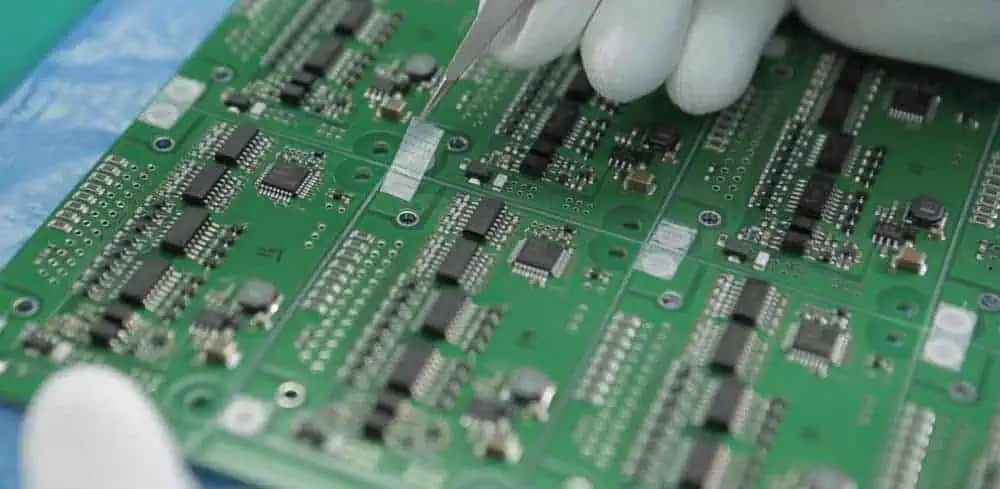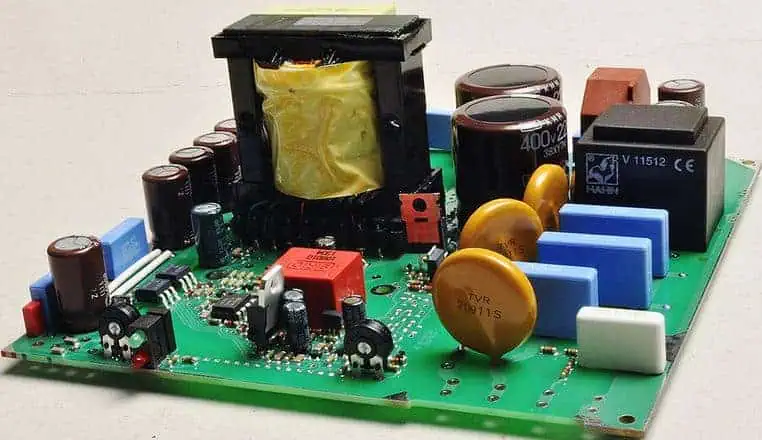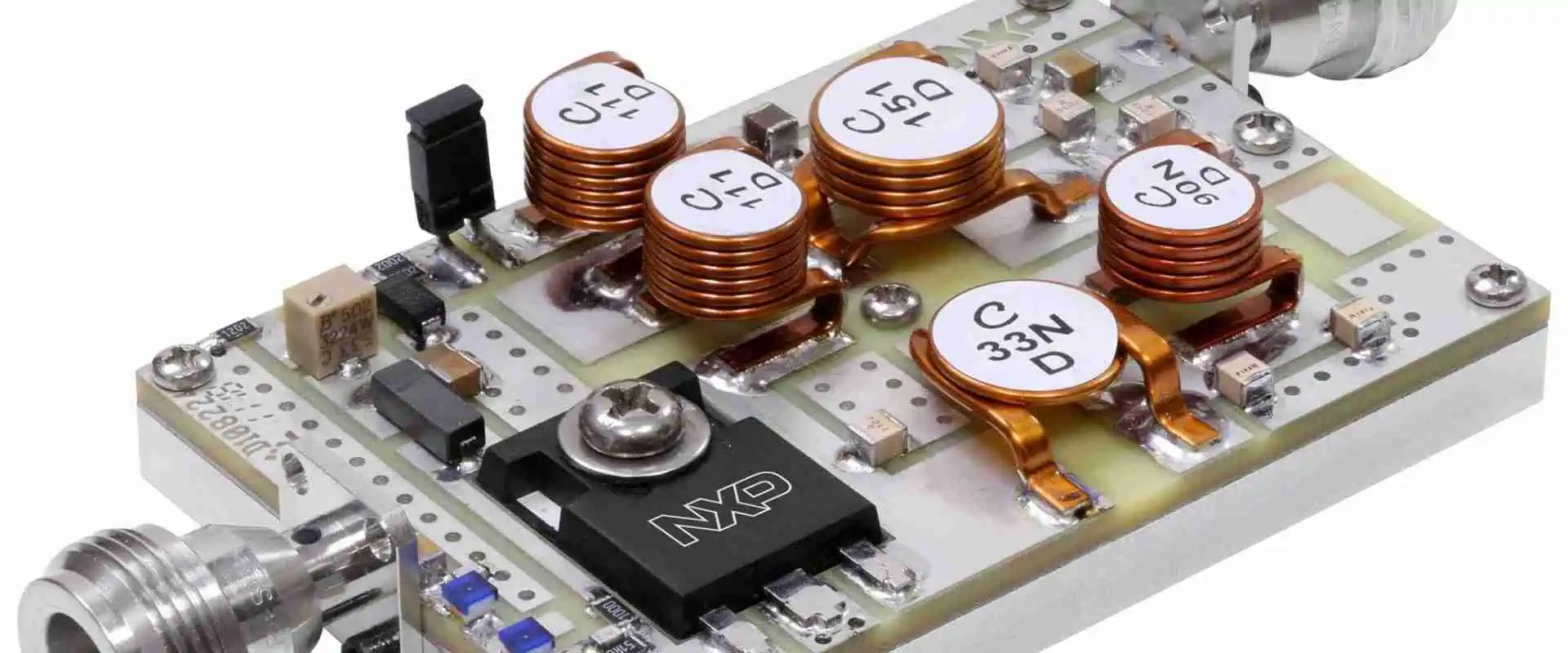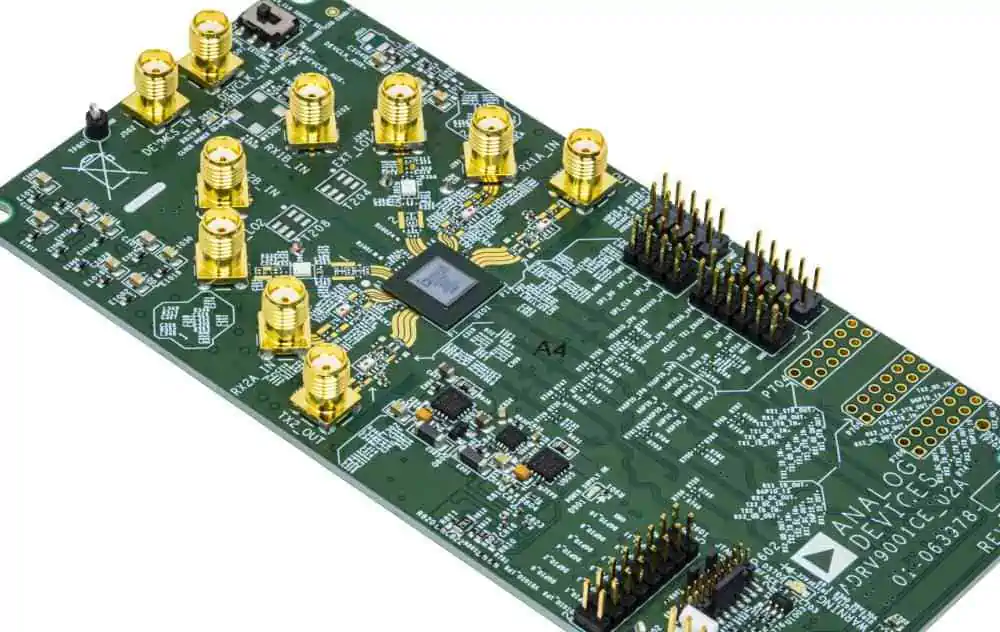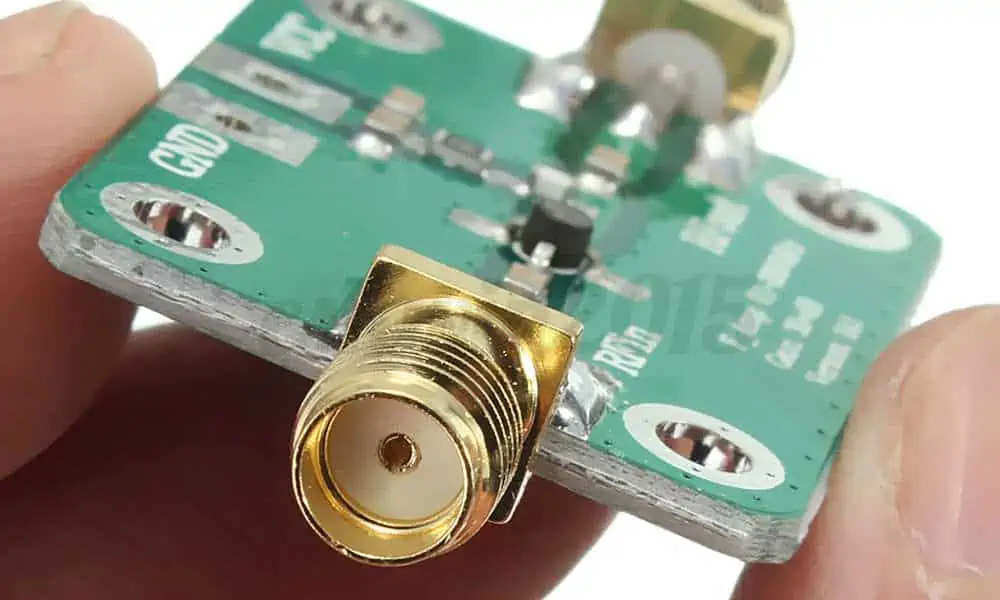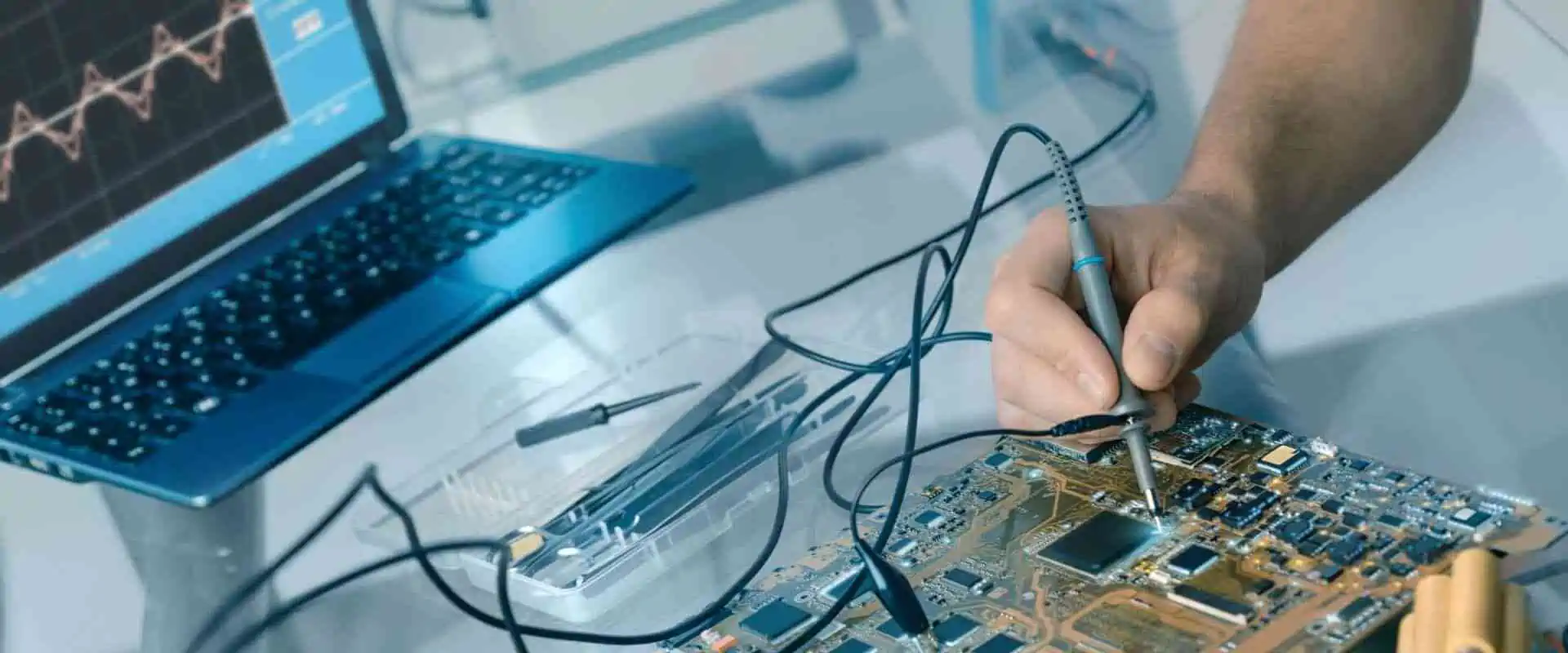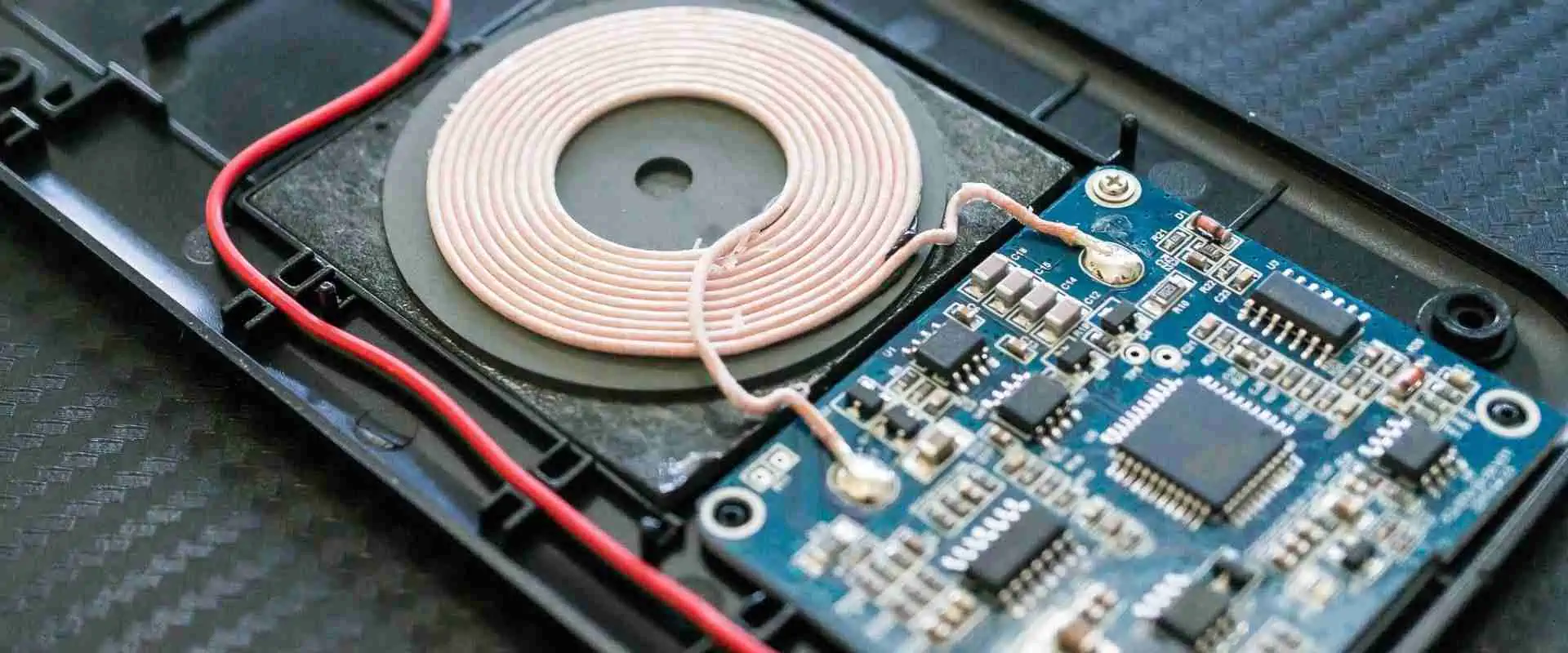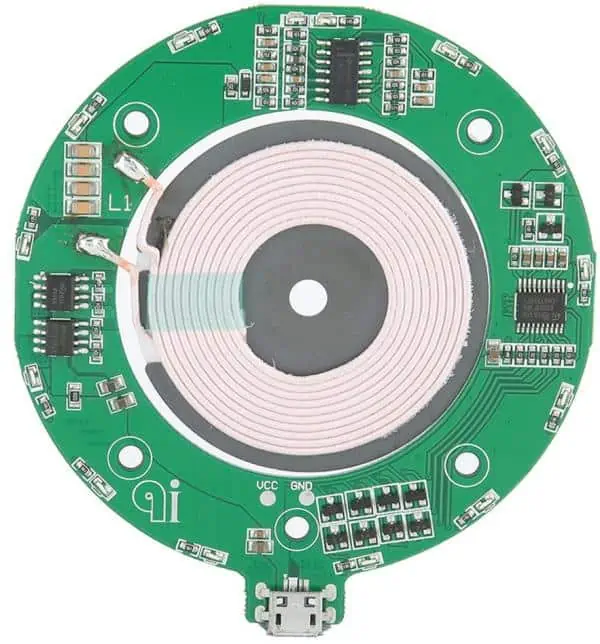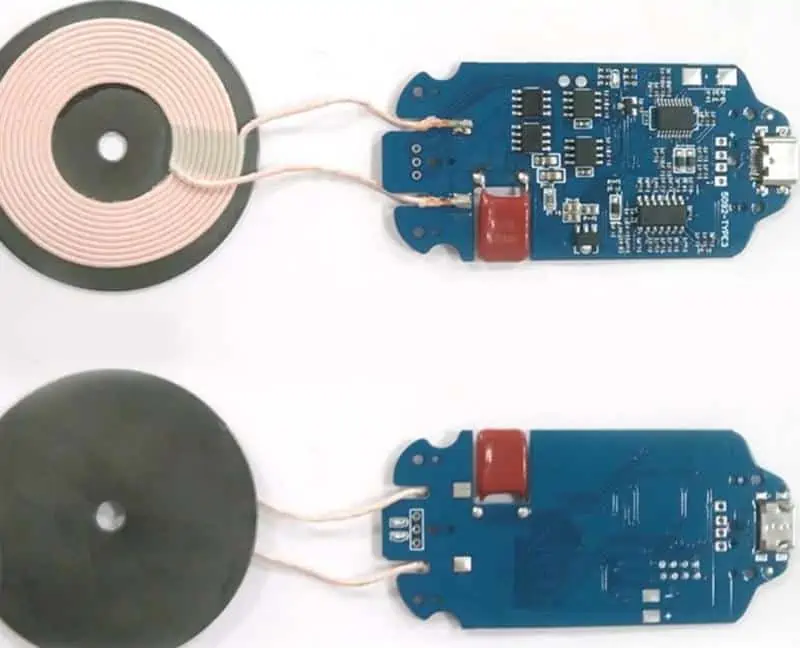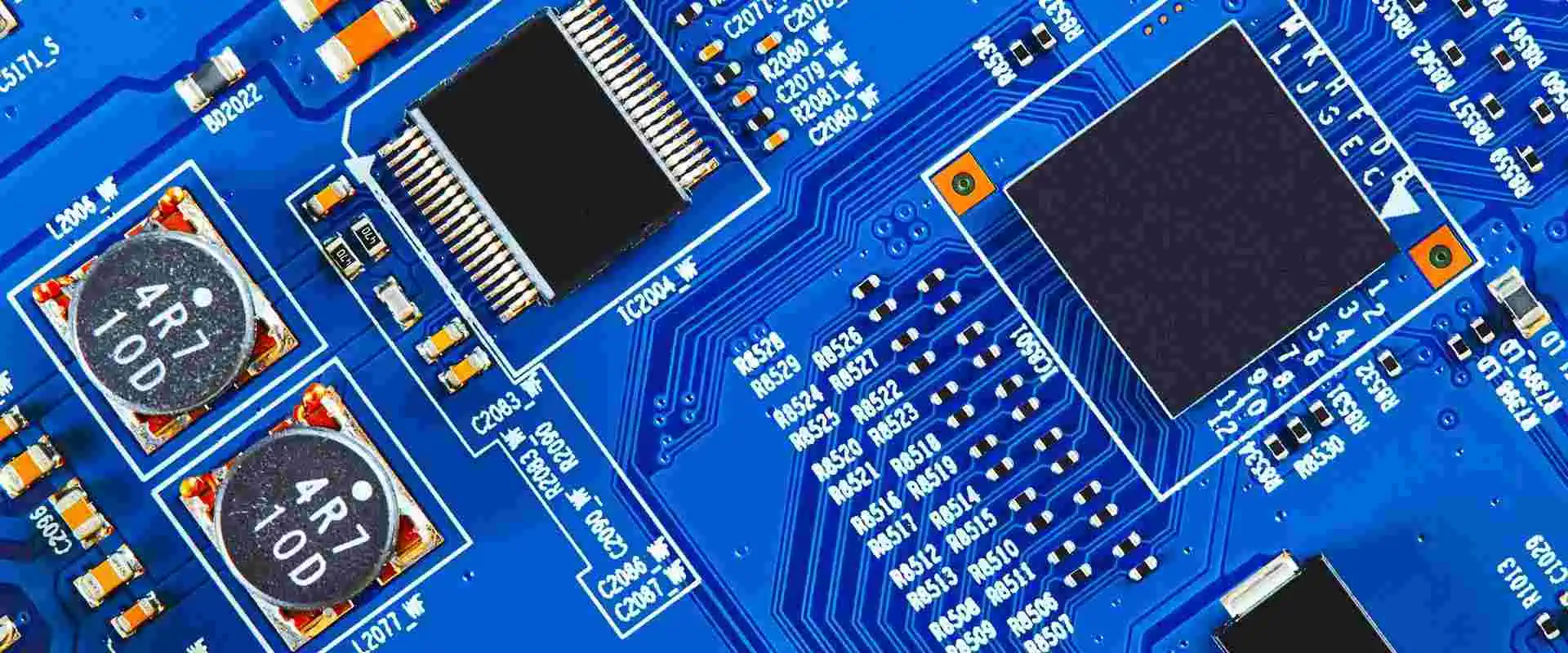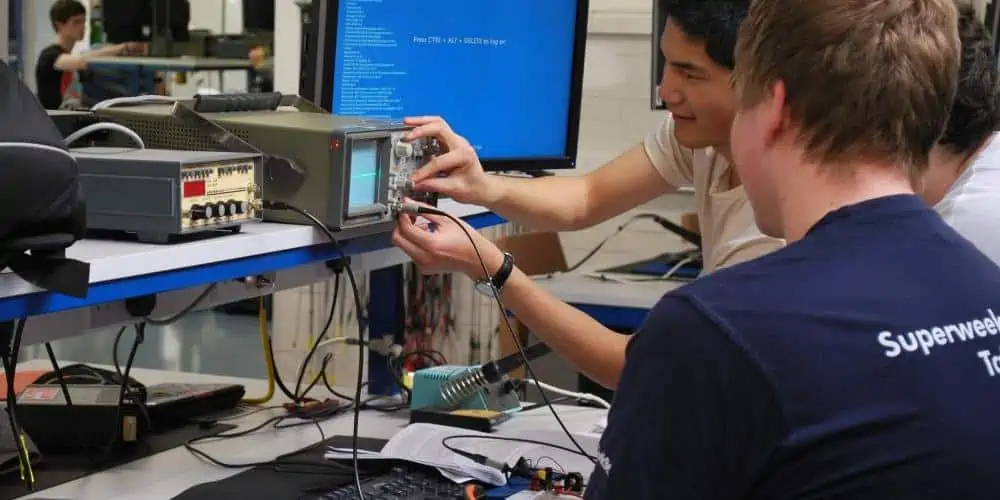
Functions and Types of Motor Control PCB Board

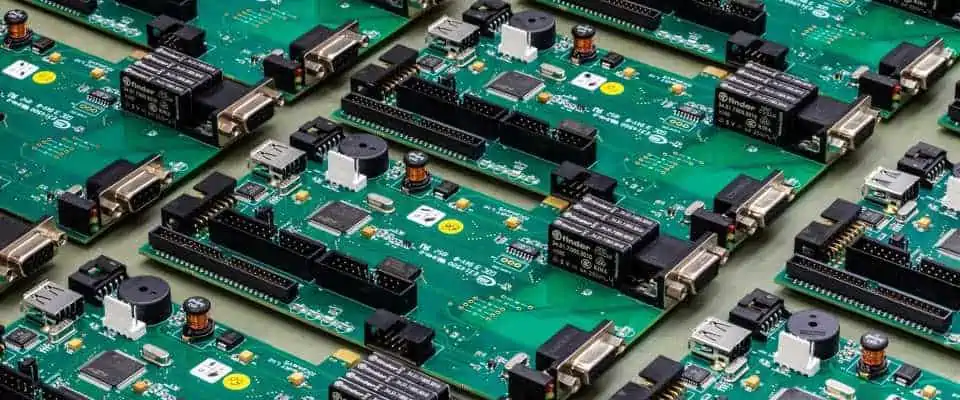
Motor Control PCB

Motor control systems are crucial to the protection and functioning of industrial equipment usually powered by electric motors. Basic motor control technologies are widely integrated in devices. Also, motors are crucial components in several electrical engineering projects. It is important to have a good understanding of motor operation and motor control. Also, you should know how motor control impacts engineering projects.

What are Motor Control Devices?

Motor control devices govern the functioning of an electric motor in a controlled manner. Also, these devices can help to start or stop a motor fixed to a machine. Motor control devices are also known as motor controllers. Also, they can be controlled automatically or manually. Motor controllers control the operation of an electric motor.

Also, motor controllers can regulate or limit the torque of an artificial system and protect against faults and overloads. In artificial lift applications, motor controllers are devices integrated with VFDs or switchboards to regulate the prime moverโ€˜s operation. Also, some motor control devices include additional features like data logging and data collection.

Motor controllers often use automatic or manual methods to control speed, stop, start, and reverse a motor. Also, they are often used with both AC and DC motors. Controllers can link the motor to the supply of electrical power. Furthermore, they may protect the motor from overload. Motor control devices can check the field circuit of the motor or identify issues like incorrect phase sequence, low voltage supply, and incorrect polarity.

Some motor control devices restrict the inrush starting current and as such, enable the motor to increase itself and link mechanical load slower than direct connection.

Functions of Motor Control

Motor Control board

Motor control systems perform some basic functions. We have mentioned some of their functions earlier.  We will be discussing these basic functions extensively in this section.

Starting

One of the primary functions of a motor control system is starting the motor. Motor controllers can employ several methods, based on the circuitโ€™s requirement. However, the across the-line starting is the simplest method. This method involves linking the motor directly to the power line. In some cases, the motor may need to start at a low speed and increase to full speed. Also, this is usually known as ramping.

Stopping

This is another important function of a motor control system. Also, the easiest method to stop a motor is to disconnect it from the power line. However, the motor may need to stop more quickly in some cases.

Motor and circuit protection

Motor control offers protection for the motor and the circuit components. Circuit breakers and fuses are usually integrated for circuit protection. Also, overload relays help to protect the motor.

Jogging  and inching

These are methods motor control employs to move a motor with short power. Jogging and inching are usually performed to move a load or motor in desired position. However, there is a slight difference between the two. You can accomplish jogging by momentarily linking the motor to full line voltage. On the other hand, you can achieve inching by linking the motor to reduce voltage.

Types of Motor Control Devices

Motor controllers can be either controlled manually or automatically. Also, you can control them in a remote manner. Motor control devices offer protection against several degrees of electrical faults and overloads. However, these controls are in different categories based on the type of motor they can operate.

Reduced voltage starters

For this type, two or more starters start a motor in low voltage conditions. Lower voltage is at the motor terminals via a series of autotransformer and inductance. Also, this helps to minimize the inrush electric current and the starting torque. The starter will send full voltage to the motor terminals immediately the motor gets to a particular portion of its top-load speed.

Intelligent controllers

These motor control devices integrate advanced microprocessors for regulating electronic devicesโ€™ power used in an electric motor. Also, these motor controllers regulate the load on a motor and ensure he torque matches with the recorded load.

Motor starters

To start small motors, plug the electric switch in the receptacle and then switch on the power button. Larger motors require contractors or motor starters. Moto starters are switching units that power an electric motor. After it has been powered, there is a connection between the direct on-line starters and motor terminals.

Servo controllers

These motor control devices have unique features such as fast acceleration rate, precise speed control, and precise closed-loop positional control. Also, these control devices integrate position feedback to close the control loop.

Adjustable-speed drives

Adjustable-speed drives are unified combination of devices that allow operators to drive and also adjust a mechanical loadโ€™s operating speed. Such drives include power converter, speed controller, and various auxiliary devices and equipment. An electrical adjustable-speed drive features a speed controller and an electric motor.

Types of Motor Controllers and Drives

FULL PCB MANUFACTURING Quote

Alternating Current (AC)

AC motor controllers and drives can adjust the frequency power of the motor thereby, modifying the input power to motors. This helps to regulate the torque and output speed. You need to consider key specifications such as power rating, drive operating mode, loop system classification, and motor type. Also, AC motor controllers are primarily integrated in process applications to regulate the speed of blowers, pumps, etc.

Furthermore, they are known as AC inverters or variable speed drivers. The controller supplies the driveโ€™s control signals. AC motors may not have much speed response to adjust terminal voltage. Therefore, controllers for AC adjust rotor circuit resistance.  AC motor drives regulate the speeds of motors that drive fans, pumps, and more

Direct Current (DC)

DC motor controllers and drives adjust the alternating current source to modify the input power. Key specifications here include drive operating mode, communication interface, intended application, and motor type. Also, these controllers and drives help in regulating torques and motor speeds for electric vehicles, machine tools, and more.  The controllers in direct current motors may adjust the voltage use for the motor.

DC motor drives regulate permanent magnet DC motors operating from AC sources. Also, these drives feature low-speed torque, which makes them ideal for cranes, winches, and more

Stepper

Steppers are electronic devices that change the input power by simply adjusting the source of alternating current to a โ€œsteppedโ€ or pulsed current output. Stepper motor controllers and drives are mainly integrated in motion control applications in construction and manufacturing environment. Also, they are widely used in controlling torques, motor speeds, and position.

These motor controllers and drives are commonly used in applications like robotics, machine tools, and other types of machinery.

Considerations in Selecting Motor Controllers and Drives

You need to know the motor type when selecting motor controllers and drives. If you are deciding to use AC or DC drives, you will need to consider some factors. For instance, DC motor drives feature good low-speed torque and as a result, this makes them an ideal option for cranes and winches. Also, these drives are suitable in applications where you need to lift loads without a โ€œrunning start.โ€

On the other hand, AC motor drives are ideal for applications that need to regulate the speeds of motors. Therefore, they are widely used in fans and pumps. AC motor drives increase efficiency by setting the speed of fan and pump to match requirements.

The nature of application is another consideration when choosing between AC drives and DC drives. AC drives are specially designed for constant or variable speed applications.

Types of Control Systems in Motor Controllers

There are three types of control methods in motor control systems. These are automatic, manual, and semiautomatic.

Automatic control

In automatic control, some actions initiate automatically. Once the operator sets the control conditions, the motor control system will operate on its own. The cooling and heating system in several homes is a good example of automatic control system. Also, the control circuit comprises sensing devices that shut the system automatically when there is an unsafe condition like excessive current.Automatic control integrate current sensors or internal timers to increase the motor.

Manual control

In manual controls, the operator must initiate any change. Also, manual controllers are usually simple devices that directly link the motor to the line. However, this type of control may not protect overload or release low-voltage. You can accomplish manual control by connecting a switch in series.

Semiautomatic control

This involves the use of pressure switches, push buttons, and other sensing devices to regulate the operation of a magnetic starter or contactor. Also, the starter links the motor to the line and other pilot devices to regulate the coil of the starter.

Motor Control Components
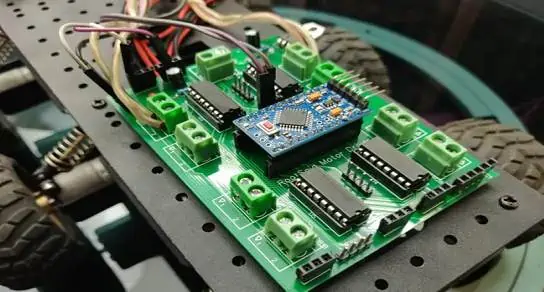
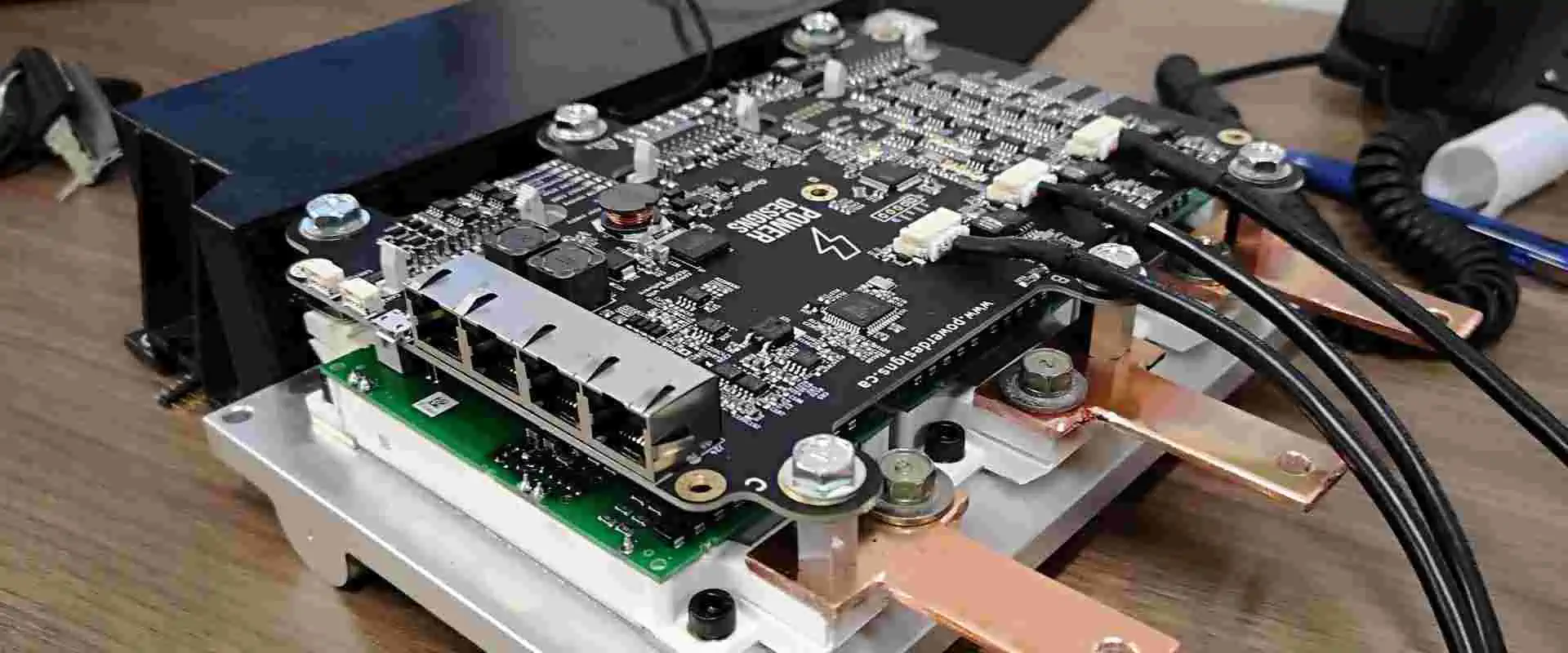
Motor Controller board

As explained earlier, there are various types of motor controls. Each of these motor controls integrates different mechanisms. Therefore, they are different types of motor control components. It is crucial to know the function of these components.

Motor circuit breaker

This component protects against short circuits and overloads. It works in a similar way with an ordinary circuit breaker. When short circuit or overload occurs, the device switches off the motor. You can fit in auxiliary contacts to offer a tripping feedback details to a pilot light indication. Furthermore, you can use motor circuit breakers with contractors for the loadโ€™s control.

Thermal overload relay

Thermal overload relay offers protection against current overloads that may result in overheat and service disruption. Also, this relay uses bimetallic strips. These strips heat up when overcurrent occurs.

Contractor

This is an electro-mechanical devices that switch off or switch on motor load. To switch on this contractor, voltage has to be applied across the coil terminals. A contractor works better than relay as it is ideal for higher power rating. Also, a contractor isnโ€™t only used for interrupting short circuits only. It serves other purposes.

Mini contractors

In reality, mini contractors function like contractors. However, they are much smaller. This offers reliability and efficiency where space saving is necessary.

Motor control accessories

These are peripheral devices attached with a motor to ensure its smooth operation. There are various motor control accessories based on the motor need.

What are DC Motors?
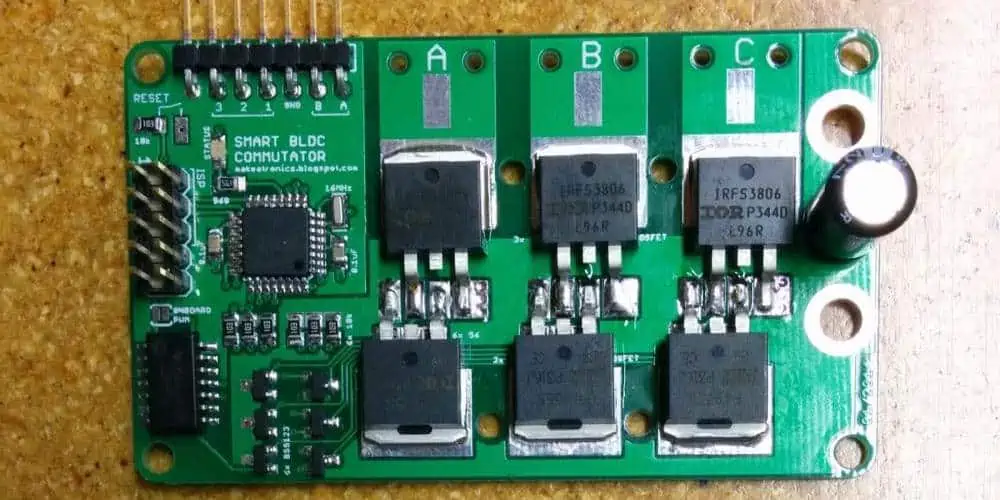
Motor Controller PCBA

DC motors convert electrical energy into mechanical energy. They operate on DC power-non-sinusoidal. Also, DC motors include basic parts such as stator, rotor, field magnets, and commutator. These motors function based on a principle of electromagnetism introduced by Faraday. This principle states that when you place current-carrying conductor present in the magnetic field, it feels and experiences a specific force.

DC motors are available in different types based on their construction. The brushed or brushless, series, and permanent magnet, are the most common types of DC motors.

Types of DC Motors

Brushed and brushless motors

Brushed DC motors use carbon brushes to deliver current from the armature. These brushes are close to the commutator. The brushless DC motors donโ€™t have graphite or carbon brushes. Also, these DC motors  comprise permanent magnets. Furthermore, brushless DC motors integrate electronic circuits to regulate the direction of speed and rotation.

Series-wound DC motors

Series motors have their field windings and stator windings usually connected in series. Also, the field currents and armature currents are always equal.

Permanent magnet DC motors

These DC motors comprises a rotor with two opposing permanent magnets. When you pass DC, these magnets deliver a magnetic field flux. This makes the rotor to spin in ant-clockwise or clockwise direction. One advantage of this type of DC motor is that it can function at synchronous speed.

Shunt DC motors

Shunt DC motors comprises field windings and armature which are usually connected in parallel. Also, both windings get the same voltage supply due to the parallel connection. Shunt DC motor can feature excellent speed regulation. However, they donโ€™t have high starting torque.

What RayMing Offers You

RayMing has the experience and sophisticated manufacturing facilities to help you design your motor control project. Regardless of your motor control needs, we offer you the best. We work with a team of experienced engineers devoted to offering the best solution to your motor controller needs.

Also, our motor control devices are ideal for use in different applications. We would like to provide the best motor controllers for you.  Furthermore, we offer support services such as assembly and technical support.
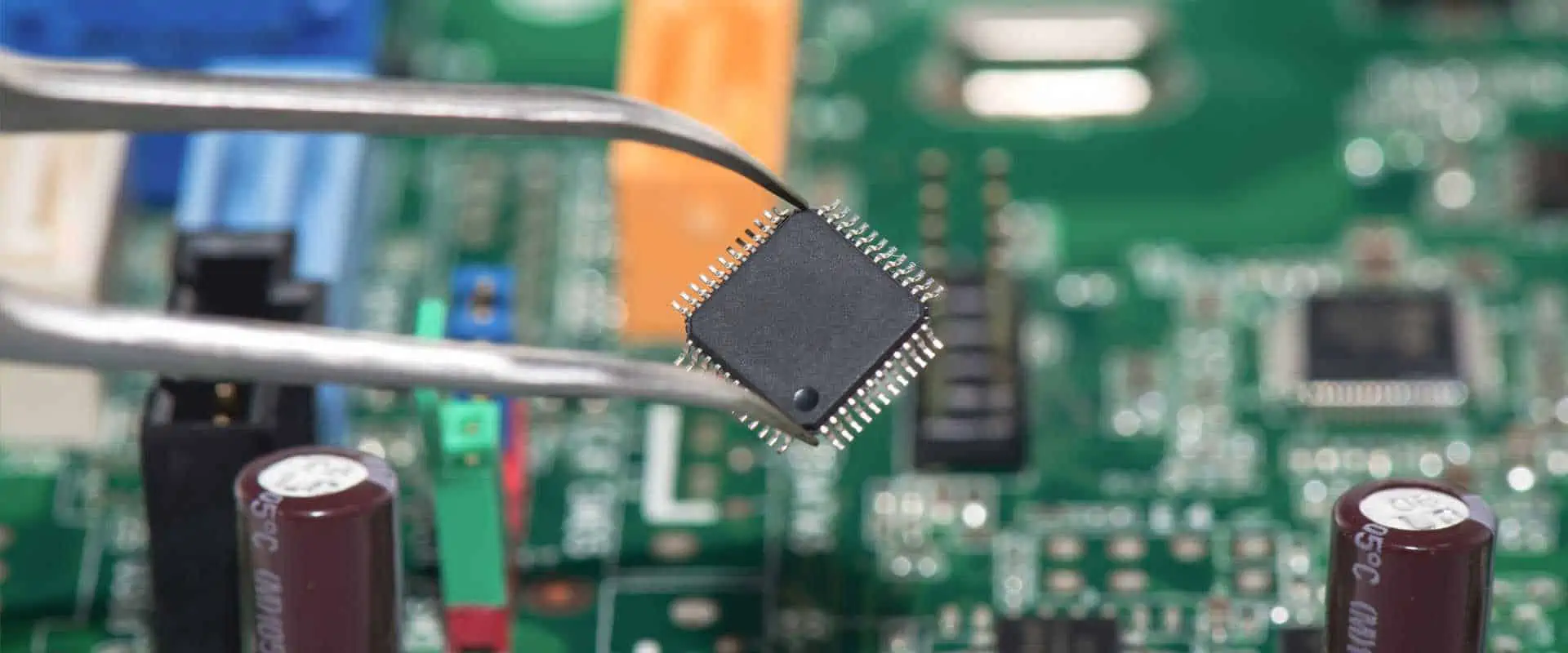
What are the Components of PCB?

PCB Embedded Components

PCB components are the parts making up a Printed Circuit Board (PCB). Without these parts, the circuit board might not be fully optimized to attain all the potentials. In this article, we explain what these components have to contribute to the PCB.

What is a PCB?

The full name is Printed Circuit Board. It is a centralized or mono-circuit-board โ€œwarehouseโ€ designed to accommodate most of the components used in consumer electronics. PCBs are in high-demand because of the less complicated process they bring when designing modern electronics.

Before the introduction, consumer electronics were mainly designed with different components and wires all scattered inside the product. But with the introduction and the continuous innovations in PCB designs, these parts can now be housed or placed inside one place โ€“ the circuit board.

Wikipedia defined PCB as one of the core engineering concepts and processes that allow for the โ€œconnection of electronic components to one another in a controlled manner.โ€

Today, PCBs can be manufactured with different process technologies, such as the Surface Mount Technology (SMT) and the Through Hole Technology (THT). PCBs have also been optimized to work with and accept the integration of different parts, including Integrated Circuits (ICs).

How Do You Identify PCB Components?

If a Printed Circuit Board (PCB) is placed in front of you, how are you going to identify it? What are some of the clues to look out for when checking for the components on the board?

The first thing to have in mind is that identifying the electronic components might be difficult, but luckily, there are some clues to figure it all out.

Thus, below is a table showing some of the designators โ€“ the letters or alphabets likely to be printed on the PCBโ€™s surface. Beside each of those designators is the full meaning. So, the next time you see the letters or alphabets marked on the PCB, you know what they mean.

DesignatorsFull Name
ATTAttenuator
BTBattery
CBCircuit Breaker
BRBridge Rectifier
DDiode
CCapacitor
GOscillator
DCDirectional Coupler
FFuse
ICIntegrated Circuit
JJack or Jumper
LInductor
KContractor/Relay
PPlug
LEDLight Emitting Diode
PSPower Supply
LSLoudspeaker
MOVMetal Oxide Varistor
SWSwitch
QTransistor
TBTerminal Block
POTPotentiometer
TPTest Point
RResistor
TRTransistor
TTransformer
XTransducer
TCThermocouple
UIntegrated Circuit
Z/ZDZener Diode
VRVariable Resistor
XTALCrystal

Understand the General Classifications of the Components

FULL PCB MANUFACTURING Quote

One of the best ways of identifying the components mounted or placed on a Printed Circuit Board (PCB) is by understanding the general classifications.

Generally, the components are classified into the mechanical and electrical components. Each of the two works in different ways and understanding these processes will help you figure out the PCB components faster.

How the Electrical Components Work

As the name signifies, these are the components that rely on electrical energy. They are usually placed on the PCB using either of the Surface Mount Technology (SMT) or Through Hole Technology (THT). Both are process technologies used in the design and configuration of Printed Circuit Boards (PCBs).

The electrical components are either soldered directly to the PCB or passed into the circuit board, using wires.

Mechanical Components

These types of PCB components use a โ€œmechanizedโ€ process, which has to do with the type of metal used in them. Typically, the mechanical PCB components are made of aluminum, but there are a couple of others made from steel, copper and bronze.

The difference between the mechanical and the electrical components is that unlike the electrical that provide electrical functions, the mechanical components donโ€™t. Instead, the primary function of mechanical components is to provide additional or secondary support to the PCB.

How to Identify the Through Hole Components

The Through Hole Technology (THT) is one of the process technologies used to manufacture Printed Circuit Boards (PCBs).

The components placed on the board via this technology are typically large-sized and have long leads. These leads have openings for holes to be passed through them to enable the placement on the PCB.

So, if you see a PCB component that has is attached to a pad with solder, it is likely to be a THT component.

While it is easy to identify a Through Hole Technology (THT) component, it is not always the case with a Surface Mount Technology (SMT) component.

What are SMT Components?

These are the PCB components โ€œmountedโ€ or โ€œplaced atopโ€ the Printed Circuit Board (PCB). Unlike the THT components, they do not use holes for the mounting process.

While these components can be identified because of the shorter leads and absence of holes, there are a couple of other important factors to have in mind.

Below are some of them:

  • These components have shorter leads.
  • They do not have holes.
  • These components rely on soldering of the surfaces to the coppers pads atop the Printed Circuit Board (PCB).

The Broader Division of Electrical PCB Components

Printed Circuit Boards (PCBs), which are classified under the electrical components, are furthered divided into the passive and the active electrical components.

Remember that the electrical PCB components are the circuit board parts, which are acting as secondary materials. Thus, all they do most of the time is to provide electrical connection of the components/parts to the PCB, either in the form of direct soldering or through wired connections.

Now, most of the electronic power configurations of a PCB are delivered via these electrical components. These parts are also further broken down into the passive and the active components, depending on how they transmit the electrical signal.

The Passive Electrical Components

Being โ€œpassiveโ€ implies that these parts do not directly transfer electrical energy or control the flow or passage of energy through them. Most of the passive electrical components have two (2) leads.

While the easiest way to identify a passive electrical component is via the silk screen printing atop the Printed Circuit Board (PCB), there can be other ways to identify it.

Below are some of the popular linear passive components you can find as a way of identifying the passive electrical parts on a PCB.

1. Capacitors (C)

Capacitors are one of the popular through hole components. They are identified with the Capacitance Value or โ€œC.โ€ So, if you see a component or circuit part marked as โ€œCโ€ or starting the alphabet โ€œC,โ€ there is a chance that it is a capacitor.

Now that we know how to identify a capacitor, let us understand how it works. It is used to store energy in an โ€œelectric fieldโ€ and is usually rated in Farads. The rating can either be written in Millifarads (mF) or in Microfarads (ยตF).

2. Fuse (F)

Denoted by the alphabet โ€œF,โ€ the Fuse is one of the most outstanding components used in PCB manufacturing. It is also easy-to-identify. You can recognize it because of the typical glass body, through which a fuse wire can be seen. The Fuse also has metal caps, which protect both ends of the fuse.

Note that it is common for the fuse to have the above characteristics if it is a through hole component. However, if you are working with a surface mount fuse, the properties typically include a semi-clear tube axial leaded slightly above the fuseโ€™s surface.

3. Resistors

As the name signifies, the resistors are used for โ€œresistanceโ€ โ€“ but the question is, what are the resistors resisting?

Resistors are one of the passive electrical PCB components, because they are designed in the form of passive two-terminal components. At the core of the operation is the โ€œresistance,โ€ โ€œrestrictionโ€ or โ€œpreventionโ€ of electric currents to pass through them.

Resistors can also be used to โ€œwedgeโ€ or stop the passage of the voltage in each of the connected components.

Since the function of a resistor is โ€œcurrent or voltage restriction,โ€ how then can one tell if it is a resistor or not? We have an idea on how to identify it faster.

First, check if the component has a longish body or structure and if green or blue bands of different colors are imprinted on it. If it does, it means that it is a resistor, because those varying colors highlight the important elements, such as the tolerance and value.

The second way to identify a resistor is by checking the alphabets. Resistors typically start with the alphabet โ€œR.โ€

The third and most difficult way to identify this component is by considering the body size. Although the ideal size is longish, there are some that could be smaller, especially if these resistors are manufactured with the Surface Mount Technology (SMT). For this type of resistors, the body size is smaller and might not any marking or color to signify them. But if you are able to pick out the alphabet โ€œR,โ€ it will be a lot easier for you.

4. Connectors

These are also one of the passive PCB components. Ideally, connectors are used for โ€œconnecting,โ€ โ€œattachingโ€ or โ€œintegratingโ€ multiple components. The ideal design is the attachment of the circuit board to a larger component. It can also be used to connect the attach one circuit board to another.

The simplest way to identify a connector in a PCB is to look out for the initial alphabet โ€œK.โ€ It is also possible to make the identification by:

  • They can integrate with jumpers. In this instance, the jumper wires will have connector pins at each end of the wires.
  • The sizes of the connectors also vary. They can either be slim or large. If they are slim, it means that the connectors are optimized for the flat cables to connect to them. But, if they are larger, it implies that other connectors can connect or be plugged into them.

5. Inductors

Inductors are easily denoted by the alphabet โ€œL.โ€ They are also a two-terminal component, primarily used for storing the electric power or store energy in a magnetic field. The energy storage happens when electric current passes through the inductors.

Note that the inductors are easily identified with the initial alphabet โ€œL,โ€ but there could be some other technicalities making it impossible to identify the component. Due to these, you want to pay more attention to the values or markings imprinted on it.

Inductors can be identified with any of the following markings or values:

  • H
  • ยตH
  • mH

6. Battery

We will not complete the list of electronic components mounted or โ€œpassed throughโ€ a circuit board without mentioning the battery.

The commonest way to identify a battery is to look out for the alphabets โ€œBTโ€ on the body. The battery is one of the passive electrical components and is used for storing energy and providing backup power for the Printed Circuit Board (PCB).

Aside from the imprinting of either โ€œBTโ€ or โ€œBโ€ on the body, the battery can also be identified with any of the following:

  • Check if it has either a blue or a green shrink-wrapping.
  • The shape can be in any of the following forms: coin-shaped, rectangular-shaped or cylindrical-shaped.

The Active PCB Components

Now that we understand some of the small electronic devices or components used in the passive states, let us look at the active ones.

The following are some of the active PCB components, all generally classified under electric current PCB component.

First, let us understand why they are called active components. They are so-called, because these are the components that help facilitate the electric signal passage in the PCB. These components are also available in both the Surface Mount and Through Hole process technologies.

Besides, you can use the active PCB components to enable electrical signal passage in different ways.

With that said, here are some of the popular active components in todayโ€™s PCB assembly process:

7. Integrated Circuits

Denoted by either the alphabet โ€œUโ€ or the alphabets โ€œIC,โ€ the Integrated Circuit is one of the easiest PCB components to identify. It has been in use for over 6 decades now, but the modern electronics spot new features, such as microcontrollers and microprocessors.

It is pertinent to mention here that the IC is the โ€œpowerhouseโ€ of the Printed Circuit Board (PCB), as the absence can hamper the boardโ€™s further configuration. It attained that status because of the following factors:

  • Integrated Circuits (ICs) hold the major โ€œbuilding blocksโ€ of a PCB. These blocks include but are not limited to oscillator, amplifier (especially the Operational Amplifier), microprocessor, memory and timer devices.
  • Because of the optimization as a microchip, the ICs help to save circuit board space.

Integrated Circuits (ICs) are also known by other names, such as Microchip, Chip and IC.

While you can identify the IC with the alphabets โ€œUโ€ or โ€œICโ€ imprinted on the silk screen next to the circuit board, it can also be identified some other way.

An alternative identification method is by checking the size of the body and the number of lads. That brings us to the different classifications of the IC. It can be broadly classified into the through-hole and the surface-mount variants.

If you are working with the through-hole IC, the identification metrics are:

  • The ICs can come either in form of dual-in-line or single-in-line packages.
  • The through-hole chips have several leads on either one side or on both the long sides.
  • You can also identify a through-hole IC because of the longish body.

On the other hand, the surface-mount Integrated Circuit (IC) offers more package options than the through-hole chips do. In addition to supporting the dual-inline and the single-inline packages, the surface-mount ICs also support the following:

  • Ball Grid Array (BGA)
  • Quad chip packaging

We want to mention that before an IC is made, it has to be processed via a wafer or wafers of semiconductor materials. Despite housing multiple components, on a standalone basis, ICs are small electronic devices, which have been โ€œunitedโ€ or โ€œintegratedโ€ in the same footprint to offer multiple functionalities at once, while saving circuit board space.

8. Diodes

Denoted by the alphabet โ€œD,โ€ Diodes are one of the PCB components you can easily identify. Note that these components typically regulate voltages, most times, doing so in a one-way model. It means that the diodes act as a one-way switch for currents or voltages in a Printed Circuit Board (PCB).

How Diodes Work

As a one-way switch for currents or voltages, diodes help to pass โ€œone current at a time.โ€ Thus, it allows currents or voltages from one direction to pass, while preventing the same coming from a different direction from passing.

Aside from the current or the voltage restriction capabilities, the diodes also help to rectify the Alternating Current (AC) into the Direct Current (DC).

Here are some clues on how to identify if the component you find on circuit boards are diodes:

  • The through-hole diodes are identified by the transparent glass cylinders, small cylindrical shapes with protruding leads, and black opaque bodies.
  • For the surface-mount diodes, they can be identified by the following: polarity marking and denoting with either the alphabets โ€œZโ€ or โ€œZDโ€ โ€“ for the Zener Diodes.

Classifications of Diodes for Easy Identification

You may have seen diodes, but you didnโ€™t know what they are. Well, there are several types of diodes and understanding these can help you in placing a hand on them when you see one.

First, you want to understand that the diodes are made of semiconductors and typically have the P-N junction. With that being said, here are some of the types of diodes:

  • Tunnel diode
  • Zener diode
  • Rectifier diode
  • Silicon-Controlled Rectifier (SCR)
  • Photodiode
  • Bridge rectifier
  • Varicap diode
  • Schottky diode
  • Constant-current diode
  • Shockley diode
  • Light-Emitting Diode (LED): The Light-Emitting Diode, also called the LED, is one of the popular diodes. It is generally known to be used to emit light. The process of emitting the light involves the use of the LED to convert the electrical energy into light.

9. Transistors

Transistors are a part of semiconductor devices. It plays an important role in the electrical connections of PCBs, especially those requiring mass production.

Transistors work by amplifying and rectifying electrical signals inside Integrated Circuits (ICs). Transistors also perform several other functions, such as:

  • Conducting and insulating electrical signals
  • Acting as amplifiers
  • Transistors also act as switches for these electrical signals

The following are some ideas on how to identify a transistor inside a Printed Circuit Board (PCB):

  • Check for the marking. Transistors typically start with the alphabet โ€œQ.โ€
  • Transistors can operate at lower voltages, even when they donโ€™t use a filament current.
  • These components are smaller in size
  • There are several variants of transistors, ranging from Field Effect Transistors (FETs), PNP Darlington Transistors, Metal-Oxide-Semiconductor Field-Effect Transistors (MOSFETs), PNP Bipolar Junction Transistors (BJTs) and N-Channel MOSFETs.

What are the 3 Types of PCB?

Product-Assembly
Product-Assembly

There are several types of Printed Circuit Boards (PCBs), but three (3) of them are outstanding. Here are the 3 and how they work:

Single-Sided PCB

Also called the single sided boards, these are the Printed Circuit Boards (PCBs) that donโ€™t use multiple conductive layers. Instead, it uses just one conductive copper layer, which is placed above the substrate.

The general specifications include:

  • The placement of one layer of the base substrate and one single, conductive layer, which make up the fiberglass and copper, respectively.
  • The single-sided boards also have the electrical components placed on one side and the conductive circuit placed on the other side.

Double-Sided Boards

The double-sided PCBs are the opposite of the single sided boards in the sense that they use one layer or conductive material (preferably copper) on both the top and bottom sides of the circuit board (the two sides of the substrate).

The double-sided PCBs can be connected on either side using either the Through-Hole Technology (THT) or Surface Mount Technology (SMT). If the through-hole is to be used, the through-hole components or the lead components must be installed into the pre-drilled holes on the Printed Circuit Board, before using a soldering iron to apply a solder mask to the pads on both sides of the circuit board.

If you are to use the surface-mount process, the process simply involves mounting the electrical connections on the circuit boardโ€™s surface.

Multi-Layer Boards

If you are looking for a PCB manufacturing process that uses several copper layers, it has to be the multi-layer PCB.

As the name suggests, it supports the use of multiple conductive layers, usually exceeding two (2).

The minimum number of supported copper layers is 3 and it can be as high as 40. The configuration process involves interconnecting the conductive layers with copper plated holes.

How are Components Connected in a PCB?

Proto Electronics highlighted some of the relevance of electronic component placement on a PCB to include:

  • Helping the electrical engineers to make an accurate positioning of the electronic components mounted or drilled into the circuit board. That way, the circuitโ€™s operation will be improved, while the signal paths will be clearer.
  • Aiding the separation of the analog components from the digital components or parts.

Then, when it comes to how electronic or electrical components are connected in the Printed Circuit Board (PCB); it all boils down to two (2) process technologies.

The first process technology is the Surface Mount Technology (SMT), which involves mounting or placing the PCB components atop the circuit board.

The second is the Through Hole Technology (THT), which allows for the components with leads to be โ€œdrilledโ€ or โ€œpassed throughโ€ the pre-drilled holes before the components are added to the circuit board.

Conclusion

We hope that you now understand most of the technicalities involved in mounting or adding PCB components to circuit boards. You also understood the different processes used to do that, how they differ and the best ways to identify some of the popular PCB components.

Finally, the Surface Mount Technology (SMT) and the Through Hole Technology (THT) may be the major processes to connecting components to Printed Circuit Boards (PCBs). However, you also want to double-check the componentโ€™s orientation/placement, positioning the components before wiring and soldering the parts into place.

Everything You Need to Know About RF Amplifier Manufacturer

RF Amplifier Manufacturer

RF Amplifiers are components or solutions commonly found in devices that use a speaker to produce sound. They also have various applications in other electronic equipment and instruments. The main purpose of this gadget is to increase or amplify the signal strength. This component is considered an audio component, but the truth is that it is not just an audio component; today, they are found everywhere around us.

You will find RF systems in TVs, public address systems, vehicle audio, and musical instruments. You will also find these RF systems in many other devices or solutions that require speakers for sound. They improve the overall sound quality of any audio equipment or musical instrument to which it is connected.

What is the Function of RF Amplifiers?

Many people have heard about RF power amplifiers used in different solutions and communications, but only a few know how these RF power amplifiers work or what these RF power amplifiers are used for. If you do not understand what RF power amplifiers are and what they are used for, then the list below provides some.

1. RF power amplifiers gain

This is necessary when the amplitude of all RF power amplifiers signal communications is small and too low to be used elsewhere in the circuit and must be increased so that the overall SNR (signal-to-noise ratio) does not degrade as the signal passes through the circuit.

2. RF buffer amplifier

This is needed when a circuit function or signal needs to maintain its shape and amplitude even as the load changes or it needs to be connected to a higher load than it normally receives. The buffer amplifier ensures that the presence of this inductor does not affect the accuracy of the ยฑ1 V signal or cause distortion.

3. RF driver amplifier

The primary function of a driver, an RF power amplifier, is to generate and deliver enough current at the operating frequency to drive a low-impedance load, such as a 50 or 75 ฮฉ coaxial cable. An RF driver can also be considered an RF power amplifier if its role is to provide power amplification (current and voltage) to drive a load such as an antenna.

Understanding RF Amplifier Specifications

These are the features and specifications to consider when choosing a general-purpose linear RF power amplifier.

โ— Frequency range

Wider is better for versatile rooms when discussing frequency range for wireless applications. Most designs of RF power amplifiers for wireless applications have a frequency range from 500 MHz to nearly 5 GHz to cover most applications. Ensure the frequency range of the RF power amplifiers you choose aligns with the room’s frequency range.

โ— Gain blocks

The gain block of the RF power rack mount amplifiers depends on the application, but something in the 10-20dB range is useful. In most RF amplifiers, the gain block will vary quite a bit over a wide frequency range for some rack mount amplifiers. Look for an RF power amplifier with gain blocks in segments of ยฑ100 MHz as low as possible, less than about ยฑ0.2 dB. These gain blocks will ensure effective delivery and durability.

โ— Input/output impedance

50 ฮฉ is the mandatory standard impedance specification for most RF power amplifier signal circuits. However, there may be a slight modification depending on whether it is a high-power or low-noise amplifier. For high-power amplifiers, the input is always higher than the low-noise amplifiers. On the other hand, low-noise amplifiers have a lower output impedance than other RF power amplifiers made by manufacturers.

โ— Noise figure

The noise figure is high if amplifier systems go with high frequencies set by the manufacturer. Therefore, the noise factor (NF) of the amplifier systems you buy is usually critical. Remember that NF measures the amount of noise an amplifier produces. It is the ratio of the amplifier’s input signal-to-noise ratio (S/N or SNR) to the amplifier’s output signal-to-noise ratio (S/N or SNR), expressed in dB. However, this may differ if there are any bipolar device technologies in the market.

โ— Output power

This maximum output power is possible with a 50 ฮฉ load at the highest supply voltage. This is usually expressed in dBm, denoting 1 mW. A typical range is usually 12 to 28 dBm, and there must be adequate power supplies along a linear power supply line to keep this going. The power supplies for the linear power can be medium power for bipolar device technologies or any of the other power levels depending on the radio and its capabilities.

How to Choose An RF Amplifier

FULL PCB MANUFACTURING Quote

When choosing an RF power amplifier, choosing one that can provide a high output power level is important. We often define this output level in several ways, including the saturation power level.

1. Class AB amplifier

Class AB amplifiers have similar characteristics to PNP amplifiers, with one major difference. Class AB uses a configuration that requires push and pulls off, combining the positive and negative waves of the signal going in. With this, the RF amplifier has no cross or distortion when amplifying the required sound output.

2. Class C power amplifier

When using a class C amplifier to drive an RF power amplifier, you must ensure that the output is parallel with the RF power amplifier. The parallel connection reduces the internal resistance of the RF power amplifier.

3. Class G amplifier

The inverter amplifier 32 power converter provides positive and negative voltages without a charge pump. Limiting the supply voltage across the output transistor increases the efficiency of the class G amplifier. Thanks to the increase in efficiency, the class G amplifier can be operated from a low-voltage supply.

4. Class J amplifier

This amplifier uses a capacitor tuned to the fundamental frequency at a low level. We will also look at waveforms and waveforms in the time domain of a Class J amplifier.

A class J amplifier is an RF power amplifier with a bifurcation circuit. This means that the transistor conducts half the time and is grounded the other half.

5. S-class

Class A amplifiers use switching transistors and have high gain and linearity. They also have a wide transmission range that causes less distortion. Note that the working components of Class A amplifiers get very hot, which can reduce their efficiency.

6. S+ class

Class S+ amplifiers are perfect for carrying RF power amplifiers. This power amplifier can drive high-quality sound. Therefore, we can increase the efficiency of the Class S+ amplifier in analog devices with higher switching frequencies.

What is An RF Power Amplifier Module?

An RF power amplifier module is an electronic part that produces a high-frequency signal. It must be very dense to produce this signal. Some features you can look for in an RF power amplifier module are compact design, high linearity, high gain, and high efficiency. This compact design also helps increase its lifespan.

โ— Compact

RF power amplifiers also help reduce noise, which is especially important for NMR reception.

โ— High linearity

Bandwidth is a limited commodity in modern communication RF systems, and high spectral efficiency is essential to transmit large amounts of data over limited channels. Achieving this requires amplifier linearity to maintain the integrity of the complex modulation format. Furthermore, maintaining high data rates requires precise phase and amplitude control.

โ— Power with high gain

An example of a module that can increase the transmitter or receiverโ€™s power is the high-gain RF power amplifier. They are stored with hermetic modules and operate from -55ยฐC to +85ยฐC. As a result, it is very versatile and suitable for broadband amplification. In addition, it has low noise and high RF gain.

โ— Wide dynamic range

An amplifier with a wide dynamic range can be useful in many applications. For example, a transmitter may require a wide dynamic range, and an amplifier may be useful for increasing the power of a weak signal. Conversely, if the input signal has a low dynamic range, the resulting output signal must have a higher dynamic range.

Practical Steps to Start the Typical RF Power Amplifier Design Process

As you might expect, designing a custom RF amplifier is subject to various implementation challenges and environmental conditions, including balancing performance, efficiency, size, and weight. Technological limitations are also always an issue, as while older technologies may offer greater predictability, they often sacrifice size and efficiency.

1. Research and plan for size and performance

Think about the variables that make a distinct and measurable difference. Size and weight can be important performance advantages that should be carefully considered during design. The main trade-offs are cost, efficiency, linearity, and power. Balancing these trade-offs against the end application will help you make the best technology decision.

2. Design, simulation, production

There are always design challenges when bringing an innovative product to market and getting to the production stage. Be prepared to spend on extensive modeling, simulation, and testing. This requires incorporating selected device design features into a simulation and modeling software package.

3. Test, adjust, and iterate

Computer modeling can be used to perform embedded software simulations of potential amplifier performance. However, sometimes, the performance of a published device compared to the real world can significantly impact the final design.

Once the final design is accepted internally, the engineer has one more job before submitting it to production. This includes testing the device, characterizing its performance, and modifying or adapting the design to optimize its performance.

Overcoming RF Design Challenges

Even with a clear customer plan, an RF design engineer’s job is still full of market research, business studies, and design decisions. Many design issues are involved in developing the final product; you should consider this when looking for an RF amplifier. Here are some:

โ— Technology limitations

RF design engineers can choose from various FET technologies to base your RF amplifier design. Using newer technologies such as gallium nitride (GaN) enables more efficient designs in smaller packages, especially when SWaP is a priority. However, this decision may prove more difficult to figure out.

โ— The weight, size, and power of the amplifier

Regarding the structure of any RF amplifier, the weight, size, and power can be a very different challenge to achieving your goal. Size requirements usually dictate the size of the network or circuit board to be used by the RF engineer. The smaller the size, the more complex the design should be.

โ— Environmental requirements

The environment in which your RF amplifier will operate is important to your design. RF amplifiers in space have a very different cooling design than standard space amplifiers. This environment can greatly impact amplifier design and is always a big challenge. Is your environment a stable test lab where power and cooling are generally not limited or an air vehicle with major vibration issues?

โ— Ambiguous/conflicting customer requirements

Customer requirements dictate the design of custom RF amplifiers but can create design problems due to conflicting or ambiguous requirements. It is important that engineering is involved in the design as early as possible, including during the requirements generation phase. This can help communicate any obstacles clearly and early to ensure the design process runs as smoothly as possible.

Understanding Custom RF Amplifiers: Planning and Finding the Right Supplier

The importance of using the right RF amplifier cannot be understated. Getting a higher power signal for long-distance applications without signal or data degradation is out of the question.

ย Because these long-range applications are critical, custom RF amplifiers are often required to meet specific criteria for a long-range radio system. Our extensive experience will help you get a custom RF amplifier.

What Does Your RF Amplifier Need?

The first thing you need to know is the precise function of your RF amplifier. What are your RF amplifier application and environment? Using an RF amplifier in Low Earth Orbit (LEO) will be very different from using an RF amplifier in an uncrewed aircraft. What kind of weather will it be? RF amplifiers used in the military may need to be built for MIL-STD shocks.

The second thing you need to know is what the RF amplifier needs in terms of specifications. Does it work on the UHF band, L band, and S band, or does it have to be ultrawideband? What are the input DC and output RF power requirements? Do you have size, weight, or power (SWaP) limitations? Identifying these factors is important because they can act as constraints and affect functionality and design.

The third thing you need to know is to ensure that any special features your RF amplifier needs are identified. In terms of applications, do you need high-speed video download, or is the MANET/MESH radio network more of a priority?

Finding the Right RF Amplifier Supplier

Find a partner who will work with you to build an RF amplifier that best meets your target goals. Any vendor can ask for a list of requirements and give you a quote, but the right partner will work with you to understand the big picture and ultimately add value to the larger system.

The right partner should have relevant experience in your area of โ€‹โ€‹interest, which can be in high-power applications, industrial applications, or wireless applications, and be able to pass it on to you. Sending a system with high-power applications into space requires a reliable RF amplifier, which means a partner with space heritage is a must. Do they provide specific amplifiers for use in driverless UxV RF systems?

Vendors in this industry have expertise in establishing, diagnosing, and improving ISR datalinks for uncrewed vehicles and other custom products with a noise figure. They will be able to understand your needs and best meet them because your specific environment has its challenges.

Another example of what a good partner should demonstrate is to provide examples of common design requests, ranging from output power balancing, DC input power, and efficiency to size and weight issues. Are their plug-in RF and microwave power amplifiers designed for easy integration and reliable operation? Does it provide the best protection and performance even under the most demanding system conditions?

What Are the Top Skills All Engineers Should Possess?

Between the availability of near-complete design platforms and the growing interest in the Internet of Things, the opportunity to design electronic products has never been greater. However, developers need skills to be successful designers who can face different challenges. Here are ten of the most common and most valuable skills that electronics engineers should possess:

โ— Understand analog filters

Although designing active analog filters for RF amplifiers is not necessary for all product designs, understanding the effects of components on analog signals is still an important skill. You must know that the analog filters for high-power amplifiers differ from that of low-power amplifiers. It becomes easy to work on and with RF systems when you understand how analog filters work.

โ— Digital filter design

Today, most audio, video, and wireless infrastructure become digital at some point, and the digital realm involves various signal manipulation. Knowing how a digital filter manipulates the analog signal underlying the data stream will be important to avoid surprises, even if developers use predefined functions instead of creating a filter.

โ— Feedback control design

Autonomous vehicles, robots, and RF systems rely on quality loops to function properly. (And these loops include filters, see above.) Designers need to know how the control loop works, how to determine its efficiency, and how to keep it stable. No one wants a system that says, “oops.”

โ— Manage hot components

As CPU power dissipation increases, so does component density in tight workspaces so that you might record cases of component overheating. Designers need to know their options for keeping things cool and how to analyze heat transfer to ensure they’ve provided enough relief.

โ— Work with RF amplifiers

Not long ago, designing for the radio frequency (RF) spectrum was a specialized discipline that most developers never had to worry about. But knowing how RF signals propagate and carry energy is critical with demanding IoT wireless infrastructure connectivity and ever-increasing speed that can cause PCB circuit traces to become RF waveguides.

โ— Software acknowledgment

Like it or not, more than half of the design efforts in the electronics industry today involve embedded software, and most electronic RF systems use microprocessors or microcontrollers to provide some or all of their functionality. However, material design decisions can significantly impact the ease and efficiency of code development.

โ— Use of statistics to determine manufacturability

Putting the prototype to work in the lab is only the first step to creating a product for the market. The design must be robust enough to accommodate all the changes in component values โ€‹โ€‹during mass production and the wide range of operating environments the product will encounter.

โ— Career management

With all the technical knowledge of satellite and commercial power amplifiers, developers must have basic business and career management skills. Getting and keeping a job, increasing access to opportunities and compensation, moving up in the hierarchy or starting a business, and maintaining long-term job satisfaction require conscious effort, interpersonal interaction, and learning. You must learn about different areas, like how an RF microwave works and the watts needed to run a MOSFET or scientific radar.

Let Rayming PCB and Assembly Take Care of Your RF Systems

For your RF systems, you need the best basic PA modules and test equipment that is ROHS compliant. That way, you can be sure that the status of your RF systems is in the best condition at all times. Rayming PCB assembly is one brand you can trust with your RF systems. Whether you have a power amplifier, low-noise amplifier, or similar controllers, we have the best knowledge and experience to ensure you get the best.

Conclusion

Many design challenges and manufacturing decisions play a role in the final custom RF amplifier design. We’ve written technical notes to guide your team through a custom development process to ensure your team meets your cost, schedule, and performance requirements.

The simple term “RF amplifier” covers many amplifier functions across the RF spectrum, from a few MHz to the multi-GHz range. Although the RF amplifier does not convert the signal or perform any analog signal processing, it still plays an important and distinct role in each stage of the signal chain.

Factors to Consider When Choosing a Volume PCB

Shengyi S1000 PCB

PCBs are one of those components that have been around since the mid-โ€™30s, firstly designed and manufactured as a big object with fewer functionalities. Still, they have since then integrated into a much smaller, more functional, and more cost-efficient production process. This is due to the ability to mass produce the boards and components, regarded as high-volume PCB and its alternative; low -volume PCB.

Both low-volume and high-volume PCBs have advantages and disadvantages; these will be discussed in this article. First, let us define a PCB and its manufacturing process to help you better understand what volume PCB assembly is all about.

What Are PCA and PCB: Application and Types?

In most electronics, the printed circuit board (PCB) serves as the base for supporting the wiring mounted on the surface and its socketed components.

In applications requiring fine conductive wiring, such as computer systems, PCBs are created using a photolithographic process, a larger-scale version of how connections in processors are created.

A machine typically fixes electronics onto a finished compatible PCB with solder dabs. The PCB is baked in an industrial microwave to melt the solder that connects the components. Most PCBs are composed of fiberglass or glass-reinforced polymers with copper traces.

PCBs used for simple electronic devices are single-layered. Complex electronic printed circuit boards, such as motherboards and digital graphics cards, can have up to twelve layers. PCBs typically come in green, but they can be custom-made to any color.

PCBs generally link electrical components with copper tracks, unlike regular wires. Drilled holes in the board are used to secure the electrical components. They are soldered into place, and the copper tracks connect them to form a circuit. The PCB and the components fixed together are known as a PCB Assembly or PCA (printed circuit assembly). A PCB is nothing more than a board with no functionality without this assembly process, so its significance is obvious.

What Are the Different Types of PCA Available?

nanya-pcb-material
  • Single-sided PCA
  • Double-sided PCA
  • Multi-layer PCA
  • Rigid PCA
  • Flexible PCA
  • Rigid-flex PCA

Applications of Printed Circuit Boards

PCBs can be found in almost every electronic device we see and use daily. They are responsible for many devices we use daily to appear smaller while containing more technology. Its applications include:

  • Televisions and Radios
  • Computers
  • Alarm Systems
  • Coffee Machines
  • Washing Machines
  • Games Consoles
  • Mobile phones
  • Oven
  • Other application areas include military, medical and industrial components (bikes, cars, airplanes, etc.)

An Overview of the Manufacturing Process of PCBs

Understanding the distinction between PCB manufacturing and its assembly process is critical. PCB assembly production includes PCB design and prototyping processes, while PCB assembly involves installing components on the printed circuit board.

And now, we will be delving into PCB manufacturing.

The three main procedures of PCB fabrication are board design, component sourcing, and assembly. Design for testing (DFT) and design for manufacturing (DFM) are indispensable operations to guarantee maximum return within your project cost, regardless of whether the PCB assembly and production are low-volume PCB or high-volume PCB. In contrast to manufacturing, the assembly of a specific PCB may vary depending on your preferences or application.

There are two means of manufacturing PCBs: Low volume PCB and High volume PCB.

Low-Volume PCB Assembly and Production

Low-volume PCB assembly and production is nothing more than producing and assembling a small amount of printed circuit board (PCB) that requires DFM and DFT checking. In simple terms, the number of PCBs produced and assembled is the most important factor to consider.

Low-Volume PCB Application

FULL PCB MANUFACTURING Quote

Low-volume PCB assembly and production are commonly found in aerospace with bare boards, technical and medical devices, and automated military PCBs with bare boards and multiple assembly lines.

As the name implies, low-volume PCB packaging has limited assembly batches. While some manufacturers require bulk PCBAs for electromechanical components like surface mount technology across a supply chain, low-volume PCB production and assembly may be required for limited products with very distinct specifications. In such a case, the contract manufacturer creating a low-volume prototype PCB understands that board manufacturing is critical to get a sense of the final result and whether any changes are required.

Types of Low-Volume PCB Assembly

While low-volume may appear similar, it is important that you understand the different types of low-volume PCBs available in the market and the contract manufacturer that makes them. Some of the notable PCB fabrication types you will come across in the production process for low volumes include:

Design for manufacturing (DFM)

DFM generally aids in the execution of integrity inspections on engineering diagrams, testing services, circuit diagrams, rigorous quality checks, assembly drawings, and manufacturing processes, including bill of materials, circuit diagram representation, assembly sequence, and so on.

As a result, the authentication is examined, and we avoid further manufacturing complexities. This goes a long way toward eliminating emissions and reducing the backtracking time of low volumes during manufacturing services.

Design for testing (DFT)

As eager clients express their desire to have test points on their PCBs during assembly or manufacturing services, these services assist them in better understanding the process. Typically, DFT includes the functions and features of checking regulations, defining issues, and so on, and they are available at competitive prices.

Options for Low-Volume PCB Assembly Prototyping

Unlike high volumes, you must know your prototyping options for PCB assemblies, especially when it is a low-volume PCBA and the other components that come with it, either in a small quantity or large low-volume orders available for customers at a quick turnaround time with the relevant test conducted.

Sequential prototyping

This prototyping approach involves only a few minor layout changes with the capabilities, equipment, and other benefits customers can enjoy. Sequentially examining each cycle is also a popular strategy for establishing reliable confirmation of the prototype, speed, delivery capabilities, and fabrication. So far, this is the best option for Design For Testing.

Parallel prototyping

Unlike the sequential prototype technique, this one reduces the possibility of production gaps. This procedure is carried out by assigning numerous layout changes to a marginal integer of the low-volume PCBs and evaluating each variant preceding the next production race.

Advantages of Low-Volume PCB Assembly

Here are a few advantages of choosing a low-volume PCB assembly or development if you are considering it but do not know what the development offers.

  1. Feasible layout modification before going to excess proceeds
  2. Stringent examination for all small batch pcb assembly for efficiency
  3. Low-volume PCBs ensure the required standard by undergoing robust testing mechanisms
  4. Cost-effective with value for cost and a cheap delivery cost

High-Volume PCB Production and Assembly

High-volume PCB production and assembly is a batch manufacturing technique. The smallest amount of PCBs produced in a single batch is 1000. The operation, however, may be as much as a set of 100000.

This Production and assembly method is a powerful volume PCB method due to the large number it can produce at once. This production technique is more popular in electronic testing and design changes due to its qualities, like process consistency, uniformity, and computer-aided automation.

The Benefits of High-Volume PCB Assembly

PCB Manufacturing with Immersion Gold-ENIG Surface Finish

Some of the numerous and vital advantages of high-volume Printed Circuit Boards include the following:

  1. High-volume printed circuit board production and assembly necessitate completing prototyping and design functions in a single step for the benefit of customers.
  2. High-volume PCB assembly services ensure a large production run of printed circuit board products in response to high market demand and a re-work of existing Gerber files or a sub-circuit while ensuring quality testing, as you will get with small batches. A situation like this is ideal for rapidly entering the market and getting ahead of the competition.
  3. It leads to low production costs compared to low-volume and ray inspection of PCB assemblies.
  4. Automation is also possible in high-volume printed circuit board production and assembly, resulting in a shortened production cycle and maximum capabilities.
  5. High-volume PCB production helps maintain feature consistency and uniformity.

Application Areas of High Volume PCBs Assembly Services

  • In the mass production of electronic appliances with uniformity needs.
  • New or existing geographical areas with large market demands.

Factors to Consider When Choosing a Volume PCB

The only distinction between low-volume and high-volume PCB is the number of products produced. In low-volume PCB, the amount of PCB production and assemblies will be 250 or less, whereas, in high-volume production, the number of PCB productions and assemblies will be 10000 or possibly 100,000.

If your goal is to maximize profits return, then the low volume is the best option. At the same time, a high-volume PCB is the better alternative to choose if you produce in larger quantities and have a uniform appearance and functionality.

Conclusion

Printed circuit boards have been and will always be a significant building block for most electronics. Its integration over the last decades leaves us wondering how much it will advance with future technologies. We hope this article gives you enough up-to-date information about PCBs; keep coming back for more updated information on its design and production improvement.

Choosing the Right Electronics Manufacturing Testing Equipment

electronics manufacturing testing

Choosing the right testing equipment is a crucial task for electronics manufacturing. Thankfully, many products on the market are affordable and will meet your testing needs. These include circuit breakers, dielectric withstand (hipot) test sets, oscilloscopes, load banks, and digital generators.

Oscilloscopes

Using an oscilloscope is one of the best ways to check the operation of your electronics. It can provide a high level of insight into your circuit’s operation and is a key piece of equipment for resolving problems.

Oscilloscopes have many applications, including testing electronic engine management systems. They can also help to test serial bus messages. In addition, most oscilloscopes can trigger on pulse widths, and some models also have a strip chart capability. As a result, these features make it possible to record rare electronic events, such as circuit failures.

There are two types of oscilloscopes: analog and digital. An analog scope has a limited bandwidth because it relies on an analog signal amplifier. A digital scope is a standalone instrument with a PC platform.

Circuit breakers

A circuit breaker is a great way to protect your electrical circuits from overcurrent. But the right type of breaker depends on the application. For example, you can choose between AC, DC, single-phase, three-phase, or a phase-to-phase circuit. The circuit breaker will have different features depending on the type of circuit you are looking to protect.

A microcomputer-based breaker can determine the RMS value of the current in your circuit. This allows the breaker to perform better and faster. The microcomputer can take many samples of the current waveform per second and calculate the true RMS value of the current. Even with harmonic distortions, the microcomputer can determine the true RMS value of the current.

Dielectric withstand (hipot) test sets

electronics testing

Using dielectric withstand (hipot) test sets for electronics manufacturing is essential to maintaining the safety and quality of an electrical device. A hipot test is a method of detecting possible design defects and workmanship flaws.

When conducting a hipot test, the test operator should be careful to operate the equipment with safety in mind. For example, if the equipment connects to the main power supply, an emergency switch should help to cut off the mains power immediately.

Load banks

Increasing electricity production and growing demand for electrical energy worldwide have led to an increased demand for load banks. Today, load banks help to test power sources and battery systems. So, they can be purchased, rented, or permanently installed at a site.

Load banks come in several different types. The most common types are resistive and inductive load banks. These are essential for testing AC power supplies, DC power supplies, generators, UPS systems, electrical distribution panels, and more.

In-circuit component testing (ICT)

Printed Circuit Boards (PCBs) are the core of electronic products. They are complex assemblies containing hundreds of electronic components. These boards are often green in color. There are thousands of solder connections on the board.

In-Circuit testing is an advanced type of PCB component testing. This type of testing is highly accurate and delivers component-level fault diagnosis. It also delivers consistency and reliability.

Digital generator

Various advanced testing equipment is available in the market to test the operation of electronics projects. This equipment are helpful in all kinds of electrical and electronic industries. They measure various circuit parameters such as voltage, current, resistance, and continuity. In addition, this equipment helps to analyze circuits.

A digital generator is an electronic testing equipment that produces electronic signals. It simulates the operation of a device under test. So, it is essential for testing electronic circuits, electro-acoustic devices, and electro-acoustic products.

Strategies for Testing Electronic Components

FULL PCB MANUFACTURING Quote

Some strategies will ensure that the product is not damaged in the process, whether you are testing a device for safety, security, or power requirements. For example, you might use Test criteria, Test access, and JTAG/boundary-scan techniques.

Test access

Developing test access strategies is essential for electronic testing. Choosing components and designing the circuit correctly can be difficult without proper access. These strategies include JTAG, boundary scan, and in-circuit testing.

The Joint Test Action Group (JTAG) developed the JTAG standard to address the challenges of probe access. So, this standard includes a protocol definition, open expandability of register architecture, and non-intrusive standards.

Boundary-scan-based device interconnections tests can be run at high speeds and provide excellent fault diagnostics. As a result, these tests can help detect manufacturing faults.

Test criteria

Different test criteria may be necessary depending on the component for testing. For example, the test criteria may depend on input parameters, such as resistances, voltages, and time intervals. We can perform some of these tests with digital multimeters, the most versatile testing devices available.

For example, a digital multimeter can measure various circuit parameters, such as voltages, currents, resistances, and continuity. These can validate day-to-day maintenance tasks, new designs, and manufacturing processes.

There are several other tests. However, that is not as well known. These include test and screening strategies, the long-term behavior of relevant parameters, and the quality of the end product. These are all introduced in Chapter 8 of this manual.

Pre-defined power-on and power-off periods at fixed current

Using pre-defined power-on and power-off cycles for testing your electronics components is a great way to test your products’ reliability and power efficiency. The key to success is to ensure that the power-on and power-off cycles are properly sequenced. Moreover, it helps reduce long-term reliability and quality degradation in the process.

Performing the best power-on and power-off cycles is a complex process. Depending on the power supply and its tolerance, some designs might require a voltage-sequencing IC to accomplish this task.

In identifying the best power-on and power-off sequence, you might be in the dark about which power-on and power-off devices to use. Sometimes, your microprocessor might power off during the testing process. In such cases, a manual reset is a good option.

Tests that assess the thermal performance and reliability of power electronics components

Using tests that assess the thermal performance and reliability of power electronics components is essential to understand the performance of these devices. Testing can also help identify the potential causes of failure. These tests can help improve understanding of emerging technologies.

Thermal testing measures how components perform when exposed to different environmental conditions. Additionally, it determine the performance of components when exposed to moist or damp atmospheres. This test mimics the operation of a device across a drive cycle.

Temperature uniformity is critical for power electronics performance. A small change in temperature causes a large variation in the failure rate. Therefore, ensuring that the materials used in the heat sink maintain a uniform temperature is also essential.

JTAG/boundary-scan techniques

Using JTAG/boundary-scan techniques in testing electronic components helps to speed up the test process and decrease the cost of testing. It can also generate tremendous business value for an OEM or EMS. In addition, this technology is helpful in high-volume consumer and defense applications, such as computer and telecommunication products.

This test method allows test systems to gain access to boards, ICs, and peripherals without requiring physical probes. Also, this eliminates the need for expensive testing equipment and procedures. Also, it reduces the time necessary to bring up a board in the production process.

The test system generates test vectors that can help to test ICs, memory, and peripherals. It can also be helpful for hardware/software integration testing. In addition, the test system can be beneficial for PCB-level testing.

What Does Fast Charging Technology Entail?

Fast Charging PCB

One important feature to have in phones of today is fast charging. It ensures that all through the busy day or batteries remain topped up and ensure we are back in action in a few minutes. Moreover, there are different standards that different companies offer, and the speed of charging is usually dependent on chargers and cables. All of these could be a little bit confusing; therefore, weโ€™ll be making some sense of it here.

If this is your first time getting to know about the fast charging technology, the whole idea is providing additional power to your battery through the USB port instead of the connectorโ€™s power of 2.5W. If you have been wondering why it takes several hours for your USB port to charge your device, this is the reason.

In the absence of this fast charging quality, the old USB-A poets could be very slow. By default, the USB-C ports could be faster (about 15W faster0, however, no guarantees exist. Furthermore, the fast charging devices of today falls within 18W and 65W power worth.

In addition, the charge time ranges between 30 minutes to one hour. On the market, you can find 120W very fast charging phones, though they are not the norm. In addition, the fast charging is not only reserved for the wired charging today. Wireless charging also involves getting in the game.

If you really wish to know how the technology functions as well as the well-known fast charging standards, please continue reading.

Ways of Fast Charging a Battery

15w Fast Charging

Before we consider the standard of fast charging, let us consider some of the basics concerning the charging up of batteries. Just like other electronic devices, batteries can function with some voltage. Also, they can output and input a specific quantity of current. In addition, having extra of the two yields more power, which will lead to faster charging.

Moreover, batteries feature extremely strict limits of operation, most especially in terms of voltage. This has to be followed to help in safe charging. In addition, the fast charging of any battery isnโ€™t just about throwing much current and voltage possible at the battery. Rather, the process of battery charging is divided in two major phases. These are constant voltage and constant current.

Furthermore, fast charging technology exploits the constant phase. It achieves this through the pumping of enough current in the battery before reaching the peak voltage. What this means is that the fast charging technology will be most effective when the battery is below 50%. However, its impact on the charge time is diminishing immediately the battery surpasses 80%.

Incidentally, the constant current charging is known as the least detrimental period to the long-term health of the battery. Higher constant voltage, coupled with heat is detrimental to the life of the battery.

Other Methods

Many manufacturers make use of some techniques in increasing their batteryโ€™s capabilities to improve the charging time of batteries. Take for instance, batteries that are more expensive could come with a greater C-rate as well as new materials that have the ability to fight against higher temperatures and higher currents.

In addition, batteries having multi cathode and anode tabs could reduce the internal resistance of a battery. It can also increase the current. Furthermore, the dual cell batteries usually divide this current across the two batteries that are in parallel. This is to ensure that the battery have a faster charging appearance.

Optimizing the charge times of a battery also deals with the current and voltage monitoring. It also involves the optimization of algorithms. Coupled with temperature, you can feed this data back to the smart chargers of optimizing the power delivery onto a device like the Smartphone. Now, the power negotiation is the place where the fast charging standards are relevant.

Overview of the Fast Charging Standards

fast charging pcba

Now, we understand the way fast charging functions, now it is time to consider the different standards that you can find in smartphones, as well as other gadgets.

USB Power Delivery

This is the first charging specification, which the USB-IF published in 2012. The USB power delivery since 2020 has now become the most commonly supported of all charging standards when it comes to the Smartphone industry. Although, so many phones sports faster standards, most of todayโ€™s phones supports USB power delivery over the USB-C port.

Also, like the fast charging technology standards, the USB power delivery works with a data protocol for communication between the phone and the charger. This helps in negotiating the highest power delivery that is tolerable for the handset and its charger. In addition, the USB power delivery usually scales in power ranging between 0.5W and 100W.

Usually smartphones utilize about 18 to 25W of charging power with the USB PD. Also, the standards allow bi-directional power. This enables the phone to be able to charge some other peripherals. In addition, smartphones making use of USB PD includes Google Pixel5 AND Apple iPhone 12.

In addition, the latest USB power delivery standard also involves the programmable power supply (USB PD PPS), which is optional. Also, this helps in introducing additional flexible voltage control, which makes it more useful for quick fast charging. An example of a fast charging phone that makes use of the USB PD PPS is the Samsung Galaxy Series (S21).

Qualcommโ€™s Quick Charge

This might not be as prominent in the charging space as it was some years back. This is due to the growth in the USB PD and proprietary standards. However, it is currently in the 5th generation and it is still being supported in different smartphones.

Also, the most recent of the Quick Charge 5 is compatible with the initial revisions of the Quick Charge and the USB PD. In addition, it is compatible with the specification of the USD PD, and can provide a power of about 100W to gadgets that are more demanding. This power is much more than initial revisions that typically offers about 27W and 18W of power to gadgets that are compatible.

Furthermore, with an incremental voltage of operation that can reach 20V, a current of 3A โ€“ 5A, the Quick Charge 5 resembles the USB PD PPSโ€™ fast charging abilities. In addition, Qualcomm usually augments the standard with the identification capabilities of the charger coupled with the thermal, current, and voltage protection protocols. In the words of Qualcomm, it is designed to be safer compared to the standard.

Other well-known proprietary standards

Over these years, many other companies created t5heur own quick-charging standards. Also, most of these were developed when the USB-A ports were well-known. Although, some of them are now less or more obsolete due to the USB PD proliferation and the move to the USB-C. Moreover, some still stick around as a result of great support by the legacy devices or due to the fact that they are faster compared to whatโ€™s on offer with standards that are more universal.

The protocol of the Apple 2.4A helps in augmenting the standard USB-A ports having a current of 2.4A instead of the 0.5A capabilities. IPhones that are older, as well as the choosing of much older gadgets, use these capabilities in charging up from the older ports.

The Adaptive Fast Charge of Samsung is a similar standard that is designed to serve the older smartphones of Samsung Galaxy. Also, it is supported in generation models that are newer. This offers a power of about 15W, which makes it slower compared to the modern fast charging technology.

Other older and less popular standards like Pump Express of MediaTek and the Turbo Charge of Motorola have depreciated. You can still find extremely quick charging standards across the phone industry, especially from the Chinese manufacturers. These include SuperVooc of Oppo, SuperCharge of Huawei, Warp Charge of OnePlus and the 120 watts charging technology of Xiaomi. In addition, these technologies can range between 40W to 120W, surpassing the implementations that is seen with the USB Power and Quick Charge Delivery Standards.

Regarding good news, the proprietary chargers from Xiaomi and OnePlus are becoming to support USB PD coupled with their personal protocols. This makes sure that these power brinks fast charge different devices and reduces the requirements for many adapters.

What is Wireless Fast Charging?

FULL PCB MANUFACTURING Quote

Wireless charging features similar hurdles and principles as the wired fast charging. Still, devices need a quick chargeable battery as well as a method that aids the communication of information from a gadget to its charger. Then, thereโ€™s an additional complication of transferring large amounts of power efficiently over air.

Furthermore, Qi, which is pronounced as chee, is a widely adopted standard for the wireless charging space. Similar to the USB PD, this standard has been able to pass through several revisions. This improved the communication use and power capabilities of the standard. Also, Qi integrates reverse wireless charging, this allows phone to slow charge the other wireless devices and gadgets.

The version 1.0 of Qi which was released back in 2010, offered a power of just 5W. Over a few years, this has now expanded to power of 15W, 30W, up till 65W for the larger devices. Moreover, the 15W seems to be known as the upper limit for the Smartphone world. O many devices even decide to opt for configurations that are slower like 7.5W and 10W configurations. Therefore, compared to wired charging, Qi is slower.

Other Wireless Fast Charging Technologies

Also, Apple released its wireless fast charging technology in 2020 with MagSafe. Furthermore, MagSafe charges at a power of 15W. This makes it slower than the 20W of the wired power of iPhone 12, which the USB Power Delivery provides.

Moreover, there is an increasing market for a faster wireless charging standard, most especially among the Chinese brands. In addition, Oppo has a 65W wireless SuperVooc. Also, Huawei has the 40W technology and OnePlus has 50W Warp Charge, just to explain a few. Also, at least 100W wireless charging is touted as well. However, we are not yet able to see any technology appear in the commercial products.

The main key to achieving fast wireless charging is using more coils for the transfer of current over air. Moreover, this comes with a side effect, which costs more to be able to implement. This usually takes extra space, and then increases the charging temperatures.

Although fast and wireless charging is very possible, it isnโ€™t the best way to charge smartphones as well as other gadgets.

What is the Future of the Fast Charging Technology?

We all know that technology is evolving rapidly. Also, you can have little faith in the fact that the fast charging technology will become the universal standard very soon. Furthermore, there is a high chance that fast charging will replace the average chargers slowly within a few years.

Fortunately, as a result of a huge growth in cords, adapters, charge controllers, and integrated circuitry, phones can potentially recharge within a few minutes rather than several hours. Also, of recent, the early model fast chargers gained wide recognition due to their promises to be able to increase the portability of your device, and charge it at a faster rate.

As the fast charging technology becomes very accessible and evolves, then fast charging will only keep growing. With manufacturing, it only improves further. The present prototypes have incredible speeds. This can be seen in the claim of Xiaomi that it has a HyperCharge technology that has the ability to charge a battery of 4000mAh within eight minutes. However, as these new standards are completely developed and made available in the market, weโ€™ll surely learn about them.

RayMing PCB and the Fast Charging Technology

Rayming is one of the top manufacturers of fast charger PCB circuit boards. This shows that our company is top-notch and is ready to work with recent developments and trends. The fast charging technology is evolving and becoming very accessible and only time will tell if it will take over or not. But the fact is that some of our mobile phones already fast charging technology is already in use today.

The Complete Guide to PCB Design and How It Affects Video Electronics and Systems

Video Electronics PCB

Whether you are planning to enter the world of video electronics and PCB or you already work in this field, there are many things to consider before you begin. You’ll want to read about the history of video electronics and PCB engineering and the challenges of designing and building a working circuit board. You’ll also want to learn about the functions of different video electronic components.

PCB design is a complex and time-consuming process, but it can be quick and easy with the right tools and technology. It’s also one of the most important steps in designing any electronic device. With today’s hardware complexity, PCB designers have to deal with challenges not just limited to circuit design but also software and firmware development, prototyping, troubleshooting and testing.

The PCB design process is not just about drawing lines on paper anymore. Itโ€™s about using the right software to do the job. The software should help you easily create your circuit board and make it easy to test for errors.

Video electronics engineering is an engineering branch focusing on designing and developing video-related equipment.

Video electronics engineers are responsible for designing, developing and testing video systems. They are also responsible for researching new methods to improve these systems.

Using PCB in Video Electronics is a great way to bring your design to life, but before you start, make sure you know all about the different components, such as the camera, which you’ll be using, and how to handle them. Then, you’ll be ready to start the design process.

Introducing Video Electronics in the PCB Design Industry

Video Electronics

Video electronics is a branch of electronics that deals with the generation, processing, storage, retrieval, and display of images. We also term Video Electronics as VLSI (Very Large Scale Integration), which deals with integrating large circuits on a single chip.

PCB design is designing an electronic circuit for use in a computer or other electronic device. It typically includes both printed circuit board design and integrated circuit design.

The video electronics industry is fast-paced and competitive. To stay ahead of the competition, PCB design is crucial for manufacturing. With the help of PCB design software, engineers can create new products faster and more efficiently.

PCB design software has been around for decades and has evolved to meet the needs of todayโ€™s engineering professionals. These days, itโ€™s not just about creating a plan for your PCB but also about simulating it to ensure it will work before you start manufacturing.

What is Video Electronics and How Does it Work?

Video Electronics is a complex system with many components working together to create the video signal. It starts with an analog signal, before conversion into a digital signal. Finally, this digital signal is encoded and compressed before transmission to the TV or other display device.

It’s important to understand how video electronics work because they have many benefits that make them better than other video display methods. For example, video electronics are more efficient, provide better quality and are cheaper than some of the alternatives on the market today.

Video electronics is a technology that enables the transfer of digital video. We can measure its functionality in terms of bandwidth, color depth, and other parameters. Several electronic devices have incorporated video electronics into their specifications, including plasma displays, LCDs, televisions, computer monitors, and even video game consoles.

The modern interconnect standards for digital video playback include HDMI, DisplayPort, and Digital Visual Interface. These standards transfer digital video from a computer to a television or monitor, with resolutions ranging from 640×480 to 7680×4320.

The best quality video is delivered at the smallest average bit rate. The size of the frame, and the number of pixels in the image determine the average bit rate. A high bit rate is suitable for video played at real-time, such as games, while a low BPP is suitable for less demanding scenes.

The MPEG file is an example of the fusing of still images to produce moving images. It is one of the most complex processes in video technology. The MPEG file is a sequence of multiple processes; each demonstrated on a computer screen.

PCB Manufacturing Processes and Technologies

FULL PCB MANUFACTURING Quote

PCBs are the heart of any electronic device. Printed circuit boards (PCBs) are the basic building blocks of electronic circuits. They are the system’s brain where all the components connect and interact.

A PCB is a thin, flat board with copper tracks on it, on which you mount and connect electronic components to form an electrical circuit. They have thin boards, usually fiberglass, which provide the board’s core strength and resist breakage.

There are many different types of PCBs. You can make some PCBs from commercial off-the-shelf components (COTS). These components are available in pre-made forms. They are often less expensive than traditional PCBs.

A common PCB industry trend is using autoplacers, which reduce the number of steps required to produce a PCB. This technology uses laser sensors to scan layers and compare a digital image to a Gerber file. The machine then marks the locations of the components with ink-jet writing.

There are many manufacturing processes and technologies used to manufacture PCBs. The process depends on PCB complexity, your technology, and a company’s production capacity.

PCB Manufacturing Processes:

  • Drilling
  • Soldering
  • Assembly
  • Lamination
  • Coating

These boards also undergo a thorough testing process. This test ensures that the board is functional.

PCB manufacturing is a complex process that requires a high level of expertise. In addition, PCB manufacturers must focus on quality at every stage of the process.

Printed circuit board manufacturing has significantly improved components’ size, track, and reliability. It also has made components cheaper and easier to produce. The Internet of Things (IoT) is also a growing trend. It enables wireless home connections and remote monitoring. This trend has increased the demand for smart, scalable devices.

How Video Electronics Affects PCB Industry

Printed circuit boards (PCBs) are critical components of many electrical devices. They are useful in everything from TVs to smartphones. They connect different components through a complex array of circuits. This allows them to provide advanced features.

Advances in 3D printing technology are impacting the PCB industry. These printers are smaller and more affordable. They are also eco-friendlier. There are expectations of increased demand for PCBs. Projections show that this market will grow at a CAGR of 3.3% until 2023.

The rapid development of consumer electronics drives the growth of the PCB market. The computer industry will continue to lead the market as the most common application for PCBs. However, the consumer electronics industry will also experience the highest growth.

The telecom industry uses PCBs in telecom towers, which transmit signals to cell phones. These towers need PCBs that can withstand outdoor environments. They also require PCBs for internal devices.

PCBs are useful in medical applications, including heart rate and blood glucose monitors. The industry is also experiencing increased demand for wearable electronics. We can incorporate these devices into clothing, sports helmets, and other accessories.

The medical industry is constantly developing uses for electronics. These devices are also becoming part of the Internet of Things. Various wearable electronics are now applicable in devices such as smartwatches. They also incorporate sensors, which monitor blind spots.

Advances in biodegradable PCBs are also impacting the PCB industry. This technology will also allow for more flexible PCB designs. It will also reduce the amount of components in a PCB. This will decrease the environmental impact of the electronics industry.

The demand for PCBs will continue to grow due to the increasing demand for high-speed data. However, the consumer electronics industry will experience the largest growth because of the increased demand for connected devices.

Challenges in Video Electronics Design

Various companies are taking their first plunges into the microfabrication scene. While some design engineers are well versed in microfabrication, others are still in the dark. The evolution of the microelectronics market is causing many companies to grapple with microfabrication for the first time. The resulting solutions can potentially improve a company’s bottom line, but taking the plunge requires careful thinking.

The best place to start is by defining the key roles and responsibilities of the various design reviewers. Next, the agency manager must communicate internally and with all reviewers to ensure everyone is on the same page. Finally, it will ensure a more efficient review process.

The best way to do this is to establish an open line of communication with all key reviewers, so that each is aware of the others’ viewpoint. This will also ensure that each reviewer has an opportunity to discuss their opinion and make a contribution.

The most obvious solution to this challenge is to hire a third party design house. These firms have the technical expertise and the know-how to design for you. In addition to video and audio, these companies offer a variety of other microelectronics and software solutions. The key to success is finding a design house with a deep understanding of the microelectronics space and a willingness to partner with you.

As a result of this partnership, you will take advantage of the best in class microelectronics solutions. This includes a high-end video processor from TI integrated with a Spartan-6 FPGA from Xilinx. This combination allows you to take advantage of the latest and greatest video and audio technology.

Why it is Hard to Design and Build a Working Circuit Board

Video device

Printed circuit boards are useful for mechanically supporting electronic components. They are typically composed of copper sheets laminated onto a non-conductive board. The circuit board is then assembled and wired with components.

If you plan to build a PCB, there are many things to know. One of them is how to minimize design problems. You can do this by using specific software and expertise. The best way to do it is to look for companies that offer a thorough DFM check.

EMI, or electromagnetic interference, refers to the unwanted effects of electromagnetic energy. It can cause problems with a circuit board’s function. One way to prevent EMI is to increase the ground area of the PCB. Another way is to compartmentalize the board. This means that some parts of the board are for power circuitry and others are for passive components.

If you plan to design a circuit board, you can start by drawing a schematic. There are several tools that you can use to draw a schematic. You can also use a schematic that someone else created. But you should be aware that a schematic is not a complete design. It simply contains information about the connections of components on the board.

After drawing a schematic, you can transfer it to a PCB. The best way to do this is to use a laser printer or photocopy machine. Another option is to print the schematic on magazine paper and then iron it onto the PCB board. Finally, you can paint the PCB board with a silkscreen, which can be any ink color.

Before soldering, you should clean the conductor area. You can use a soft cloth with no lint or use isopropyl alcohol to clean it.

Mousebites for separating boards from panels

Printed circuit boards are applicable in various consumer electronics, including computers, video games, TVs, cell phones, and home entertainment systems. To produce and assemble them, manufacturers need reliable boards that will meet the requirements of consumers. They also need low cost PCBs to meet the demand.

To get the most out of a PCB, it’s important to choose the right manufacturer. You need a manufacturer with a track record and experience. And Rayming Technology is your goo to PCB manufacturer. They have the right tools and know-how to prepare the PCB for assembly. In addition, they can customize the panel design to suit your company’s needs.

You must clean the PCB before each assembly. This is important to avoid liquid damage to the PCB. The design of the PCB is also important. Plan the layout of the holes to ensure that the components are firm.

It’s also important to have enough tabs to support the PCB. The tabs must be large enough to withstand the board’s weight and have a clean edge to avoid splintering.

The PCB needs testing. This will ensure that the mouse bites are not faulty and that you place the components in the right locations. It’s also a good idea to check for short circuits and defects in the copper layer. This will ensure that the mouse bites are the best PCB of all time.

Clean the PCB to prevent splattering liquid. You can achieve this with the use of hooks on the holes. It’s also a good idea to use a high-quality drill bit to ensure that you drill the holes as deep as possible.

Fingers

Printed Circuit Boards (PCBs) are good in video electronics to transfer signals. They help connect external devices to a PCB, enhance video graphics, and distribute digital signals.

A PCB gold finger is a gold-plated connector, or interconnection point, used to transfer signals. Gold has excellent conductivity and oxidation resistance, which prevents wear and tear on board edges.

We always standardize a PCB gold finger into a variety of thicknesses. Thinner fingers are good for prototypes and prototype boards, while thicker fingers are for boards needed in production.

Use Gold Fingers for connecting two boards or other peripheral devices to a motherboard. These connections are necessary for transferring signals and ensuring that a PCB does not wear out or fail. Gold Fingers can connect external speakers, scanners, and subwoofers to a PCB.

Gold Fingers should be able to handle up to 1,000 plug-out cycles. They should also have a smooth texture and no excess plating. They should never be near solder masks. Design them with great precision.

In addition to the standard thickness of 0.062 inches, PCB Gold Fingers should also contain 5 to 10 percent cobalt for increased rigidity. In addition, cobalt enhances the PCB gold finger’s ability to resist abrasion.

Making PCB gold fingers involves several steps, such as beveling, surface finish, and plating. The beveling process smoothens the edges of PCB Gold Fingers, which helps minimize sloping edges.

Automated optical inspection

Video electronic test

AOI or automated optical inspection is a visual inspection technique that uses light imaging. Automated inspection is becoming a major part of the PCB manufacturing industry. Using an AOI system is critical to ensuring that a product is of high quality.

An AOI system consists of an image capture system, a camera, and processing software. These components work together to provide the best possible image of the PCB assembly. The image capture system can consist of a single camera or several cameras. Using multiple cameras can provide more detailed imaging. The software controls allow the cameras to move to the proper position to maximize the quality of the imaging.

An AOI system can detect a variety of defects. For example, it can help to identify surface defects, open circuits, and thin solders. It can also detect poorly placed parts or shorts.

Various algorithms identify the errors. The AOI system then compares the image with the pattern from a good board. This gives the AOI system the information it needs to determine whether the assembly is defect-free.

AOI systems can be programmed to identify defects in PCB assemblies. To use an AOI system, the manufacturer must supply the specifications for an acceptable board. The specifications will serve as a gold standard during the inspection process.

An AOI system consists of a machine vision camera to capture an image of the PCB assembly. The processing software processes and analyzes this image before generating a product profile. You can compare this profile with the image of the golden board, which is known to be defect-free.

Electromagnetic compatibility

During PCB design, electromagnetic compatibility issues are typically responsible for re-design cycles. The good news is that there are some simple steps that you can take to improve PCB performance.

First, you should group the PCB components according to the type of signal they will carry. For example, designing a D/A converter should include analog PCB components. On the other hand, if you are designing a PCB that uses digital signal processing, you should include digital PCB components.

Second, you should route the signal traces properly. The length of the signal traces will determine how much electromagnetic interference it will carry. To avoid electromagnetic interference, keep the length of the signal traces short.

Third, you should decouple capacitors to avoid a large loop. A large loop can cause problems such as ringing.

Electromagnetic interference

EMI (electromagnetic interference) is a form of interference that disrupts the signaling in electronic devices. Natural or man-made sources can generate it. It can travel through space, plastic, insulators, or other materials. The interference can cause severe damage to electronic devices.

Two types of sources cause EMI: electromagnetic fields (electrical energy) and static discharges. Natural or man-made sources create electromagnetic fields, while static discharges result from any static source, including lightning.

Both types of interference have different characteristics. The most common type is continuous electromagnetic interference. This type occurs when a circuit is steadily running.

Lightning and switching systems produce impulse electromagnetic interference (EMI). However, you can reduce natural EMI by separating high-speed signals and filtering them to reduce their length.

Thermal expansion

Using a PCB in video electronics can mean high temperatures and associated problems. These issues can lead to circuit failures and even combustible substrates. The best way to avoid these problems is to select the right materials for your board.

The best material for your board depends on the type of circuitry and the frequency at which you will use it. The dielectric constant of the materials used to make your PCB is also a consideration. For example, titanium ceramics can have a higher dielectric constant.

The best way to minimize thermal expansion is to choose a high Tg matrix. The dielectric breakdown voltage of a material is also important. This is because it indicates how much voltage a material can handle before it breaks down.

Soldering techniques

Using PCBs in video electronics requires some soldering techniques. For starters, you need to have the proper tools to get the job done. You should also know your parts and how they are connected. If you don’t, you might end up with a mess.

The first step in soldering is to apply liquid flux to the PCB. This will remove any deposited oxides and make the board cleaner. Alternatively, you can use a flux pen.

Next, you must apply the correct solder amount to your component. You don’t want to put too much solder on your part, or you could end up with a short. This is where a multimeter comes in handy.

You may also need to use a piece of cardboard or silicone to hold your component. This will prevent it from getting all over your hands and keep your board flat.

PCB camera

Among the latest innovations in the field of camera electronics, the PCB camera is one of the most popular. The basis of this technology is the principle of electronic shuttering, which guarantees a unified image. It is common in surveillance systems and cellular phones.

PCB cameras have a picture sensor mounted directly on the camera board. The image sensor consists of a CCD (charge-coupled device) and CMOS (complementary metal oxide semiconductor). The CCD is a sensitive device that reacts to various electrical transients. A hermetically sealed chamber houses the CCD. This prevents condensation and allows for a wider range of detection.

The image sensor has an auto-exposure feature. The camera also uses several selectable lens types.

Conclusion: The Necessity of PCB Design for Video Electronics

PCB design is the backbone of any video electronics. Therefore, it is important to have a PCB design that you can customize according to the needs of the product. In this case, it is important to have a PCB design that you can customize according to the needs of the product. If there is an existing schematic or PCB design for a video product and if it can be modified to accommodate your project’s specific needs, use this rather than starting from zero.

Why You Should Opt For PCB Assembly Outsourcing

indian pcb manufacturer

Due to the growing demand for electronics by consumers, there has been a corresponding increase in the demand for PCB assembly services. Of course, it was the standard practice (and still is) for some OEMs to handle PCB assembling, but outsourcing PCB assembly accrues many benefits.

Itโ€™s, therefore, no surprise that companies are now looking to PCB assembly outsourcing to ensure they do not get overloaded on PCB assembling and miss-delivery schedules and lose customers as a result. This has induced an uptick in the number of companies dealing in PCB assembly outsourcing, and its benefits multiply by the day.

Should You Outsource Your PCB Assembly?

Outsourcing your PCB assembly is usually a good choice for new and old electronics manufacturers. From trying to match the costs of maintaining a manufacturing line to traversing the intricacy of PCB production, the advantages are just too many to count.

However, as with many sectors and industries, consistent quality benefits matter greatly, and this sector is no different. This article refreshes some definitions and highlights the benefits and processes of PCB assembly outsourcing.

What is PCB Simplified for a Beginner?

FULL PCB MANUFACTURING Quote

A PCB (printed circuit board) is a completely assembled circuit board with all the electronic circuitry devices needed to function effectively. These are unlike typical wiring boards used in standard electronics that do not offer complex functionalities.

What is a Printed Circuit Board Assembly?

This describes a completed board; after all processes, such as soldering and installation, have taken place on it. The pathways (conductive) etched in the laminated copper printed circuit boards are applied in a non-conductive substrate to create the assembly.

The last stage of the manufacturing process of a PCB design layout is adding electronic components to the boards. Only then can an electronic device be capable of performing its function.

Who Handles PCB Assembly Services?

A circuit board assembler handles PCB assembling. While their basic role is to solder electronic components such as (transistors, diodes, resistors, inductors, etc.), they also have to be able to recognize board patterns, follow sample boards correctly, and select electrical components.

In addition, they should know how to read wiring diagrams and handle tools needed for a quality finished product. All of this must be according to the important data in the product documentation.

How to Know Itโ€™s Time to Change Your PCB Assembly Outsourcing

PCB assembly outsourcing can be a tad difficult without the right PCB manufacturer. While your current supplier might seem like the best business partner you ever had (probably they offer some other services), you need to know when itโ€™s time to ditch that supplier for a new one. You must recognize and spot signs that itโ€™s time to change your supplier.

Below are some indicators and situations that can help you decide to change your supplier:

  • There is a general rumor about the scarcity of specific components making the rounds, and you need more news about it from your supplier. Either he is getting it somewhere else, or he has yet to learn what is happening.
  • You need to learn about how exactly your Printed Circuit Boards are manufactured. Your supplier deigns to inform you about how exactly he handles mass production. This answers your question of who is in control, you or your supplier.
  • Your deliveries, especially for medical projects, need to be on time, and production is getting less efficient. This might mean your supplier can no longer handle the agreed levels of delivery, or he is no longer working effectively.
  • You begin to receive more complaints about product defects and control devices, and more partners are returning defective items to such a vendor. This has to do with the quality of your products’ desired volume, which takes you back to your supplier.

What Are the Benefits of Outsourcing PCB Assembly?

Below are some reasons why you should opt for PCB assembly series outsourcing:

โ— Lesser Lead Times

There is so much good collaboration between contractors in numerous fields, which is no different in the PCB assembly industry. These long-lasting ties with their colleagues in the business can help you in a way. It can help you get your components faster and even allow for easy logistics once in a while. In other words, they can help you with lead times.

This is not a bad idea to handle all of these yourself, but you might get more benefits from using PCB contractors with more beneficial connections, and the network is, of course, more advantageous. The choice is yours anyway, like with low volume high mix or high mix low volume design modifications.

โ— Operating Cost Rationalization

Most SMT assembly for general manufacturing companies comprises far more than the costs of a manufacturing line and the staff required to run it properly. Experienced EMS companies that offer a legacy product usually have a better and well-structured environment for production than your own SMT assembly or any regular SMT assembly company that can assemble high-volume orders of parts in-house.

You will get good value for your money, even in tens of thousands or tens to hundreds, from shipping, storage, or procurement at a reduced cost of the PCB design you want. All of this is due to the beauty of specialization and the safety of inspection equipment at a lower cost.

Experienced and professional EMS are well-versed in cutting costs to manufacture and oversee assembly services for any business without sacrificing the quality of production batches or product versions.

Factors such as price and material availability disparities and short component life cycles must be handled equally and as smartly as possible. Mistakes at this stage are very costly, so highly experienced hands are needed.

Also, outsourcing your production to a proficient PCB contractor and suppliers of well-run SMT assembly services is a good choice for startups and low-capital organizations in this field. Not only will you get good inventory management, but you can also subscribe to product batch manufacturing because these company types depend on cash stored in material for a long while from time to time is crucial.

Conclusion

You may have an idle team on the ground and new and hungry machines ready to create all you need. Maybe you donโ€™t have one or understand how contract PCB fabrication works. Whichever way, you need solid PCB assembly services from a skilled electronics manufacturer like Rayming PCB & Assembly with proven system solutions and a short component life cycle you can trust.

If you need added advantages such as design assistance, ensure that the electronics manufacturer you choose can handle all that you need, and that means ensuring they can do what you need. Ensure you do your homework on your full-service PCB vendor.

Top 10 Companies to Manufacture semiconductor – Complete Guide

manufacture semiconductor

Semiconductors are big assets for different domains, so it is beneficial to learn about the products that function similarly to semiconductors for various devices and the giant companies that specialize in producing semiconductors. These are made from a fine substance called silicon. An extensive process is what manufactures extremely useful semiconductors. These include oxidation, metallic wiring, and many other crucial steps. 

In this post, we will explore the production process of semiconductors with all the essential steps in detail for better understanding. 

Steps in the Manufacturing Semiconductor Industry

1. Silicon Substrate Semiconducting Properties 

The initial step in producing semiconductors is to position them on each other to form a stack. It is a complex symmetry and a complicated structure. The main factor that makes the semiconductors strong and efficient is the silicon wafer chip. It is the foundation that makes the semiconductors serve long through their performance. This silicon which is useful for semiconductors is obtainable directly from the sand. Below is the detail of the process that extracts silicon from sand for the production of semiconductors. 

  • Collect a considerable amount of sand from melting, and then turn this sand into small or big crystals. 
  • This forms the ingots of silicon which are broad and heavy. Cut these ingots into fine wafer surfaces of silicon which are fragile and slim to appear. 
  • The upper layer of these ingots is not only uneven but also needs proper refining so that the circuitry that includes the semiconductor performs well on all counts. 
  • These wafers have a special line-based design on the upper layer. 

The average size of the silicon wafer processing determines the number of semiconductors. Small wafers cannot produce semiconductors in bulk. 

2. Oxidation 

Semiconductor Manufacturing Process

The silicon wafer produced recently does not contain the conductive ability. There is another process that makes these wafers conductive. It is a crucial step, and the slightest negligence in this step can ruin the ability of wafers. The process of oxidation is important for silicon wafers. Spray the oxygen in the form of vapors on these wafers, which creates a fine coating on these wafers. Now, this layer acts as a protective layer from water leakages and protects the circuits from sparks as well. Due to this fact, it is important to execute the process of oxidation on the wafers with complete vigilance and care to not compromise their functioning while on the circuit boards. 

3. Photolithography 

The step of photolithography refers to producing a design of the circuit with the help of water. It is identical to the process of capturing a photo from a camera. It includes a photo mask which is an important factor in the process of photolithography. There is a special computer that produces the design of the circuit in an efficient way. The photoresist is a material that actually produces circuit design on water. It gets applicable equally on the oxide layer present on the wafer when this substance comes into contact with the light. The light penetrates the photo mask. 

4. Etchin โ€“ Remove Unnecessary Materials

Etching means cleaning the wafer from unwanted residue and remains of the process so far. It helps in excluding the residue from the water layer just produced in the previous step. It ensures that only patterns are with the wafers. A special method of gas or liquid etching is useful to remove substances from the layers. There is a difference between both types of etching which is why it is important to consider both techniques before beginning to implement one of them. 

  • Wet Etching: It includes effective chemical substances only. 
  • Dry Etching: It includes plasma or gas in some cases for the process. 

Suppose there is a stack of semiconductors that is smaller than the width of a common paper. Both the steps of etching and photolithography are frequently executable on each layer present in this stack. There is also a fine insulator which is in the form of a film, that divides these layers to provide feasibility during these processes. It also protects the stack as well. The entire process is also identical to the production process of Multilayer printed circuit boards. 

5. Deposition & Implementation of Ion  

The deposition is the process that delivers a thin atomic layer on the wafer. There are several benefits to attaching this layer to the previous layers already present on a particular wafer. It is a feasible method and does not take much time as well, and It accurately attaches the deposition layer to the wafer. It is the main layer that provides the semiconductors with different electrical as well as conductive attributes. The process also includes a sub-step of ion implementation. A semiconductor also has some impurities due to the extensive process of manufacturing. All the abovementioned steps are important to give electrical and conductive attributes to these wafers so that they can work with several other circuits without any complications. 

6. Metal Wiring

Metallic wiring is important to make this entire set-up work which is why this should be done with utmost precision by the responsible technicians. This step conducts the electrical signals throughout the entire circuit. A clear and uninterrupted path is needed for the smooth current flow of the circuit. A thin layer of metals like titanium, tungsten, or others is also useful to conduct electricity in a flawless manner regarding the performance of the semiconductor in the future. 

7. EDS โ€“ Energy Dispersive Spectroscopy

The step is energy dispersive spectroscopy. This is a crucial step since it develops effective chip manufacturing of semiconductors. It can also be useful to eliminate faulty microchips that can create complications in the future while performing. The unit of yield is for measuring the relativity of prime chips as compared to one wafer on the basis of MCC or maximum chip count. This testing step is important to shortlist the best pieces for assembling into the circuit boards. 

8. Packaging in the semiconductor manufacturing process

Packaging is the step that winds up the production process. The whole structure of the previously produced wafers is divided into small chips that can be easily attached to an electronic device that functions with the help of a semiconductor. The chips that have been securely cut are then positioned on the printed circuit boards. The sub-step of bonding combines both the contact points of these chips and the substrates. Then another sub-step of molding gives these chips a proper shape that fits with the circuit boards. Then sealing and naming of these chips is important to differentiate them from others that have been produced. This mainly helps in shipping and delivering the semiconductors to the suppliers and direct clients. 

Top Best Semiconductor Manufacturing Companies

FULL PCB MANUFACTURING Quote

1. Intel 

Intel operates from California. It has been a giant producer of semiconductors for many years. It houses a huge workforce of employees and technicians, which are spread around 45-46 countries. The famous product of Intel is the X86 microprocessor and its other variants. These are important for the smooth functioning of laptops and other similar devices. These processors get assembled in the devices of Lenovo, HP, and many more. There are motherboards, integrated circuits, graphics chips, and others delivered and produced by the company. The company is reliable to get in touch with regarding such services. 

2. Samsung Electronics

Samsung is a Korean producer of world-class electronics. The most famous of them are Samsung smartphones and smartwatches. It has been operational for many years and provides consumers with extraordinary electronic appliances. The semiconductors of the company are exceptional in their functioning. These semiconductors are present in tablets as well. The company has a solid stance among the pool of electronic producers, which makes it reliable for new consumers on all counts. 

3. (TSMC) Taiwan Semiconductor Manufacturing Company

It is on the list of major producers of semiconductors and relevant chips. It is a standalone producer of these chips in Taiwan, which is an impressive factor about the company. These semiconductors are useful for Apple products and others. The company has also been successful in generating decent revenue through the delivery of its well-produced semiconductors and chips.ย 

4. SK Hynix Inc

This is a special agency to produce memory semiconductors which are important for electronic gadgets. It is functional in South Korea and has different offices in many regions of the globe. There is a large workforce that handles the company and its global operations. The clients of the company are Apple, Dell, and HP. The other products offered by the company are smartphones and CD players, along with others. All of its products have no parallel in performance, durability, and precision. 

5. Broadcom Corporation

It is an American manufacturer of semiconductors that have been functional for many years. Their semiconductors are useful to be installed in mobile phones, PCs, and many other devices. The company produces encryption-based chips, which are helpful in the domains of E-commerce and defense. The main objective of these chips is to accelerate the functions of the electronic devices they are attached to. A special series offered by the company delivers uninterrupted WiFi, which is an important feature in mobile phones. These chips are also supportive of different brands like Android and Apple. 

6. Qualcomm

The products of Qualcomm are not only wireless but also helpful in the domain of software development and implementation. These services are the main character for the progress and solid stance of the company. The company offers not only semiconductors but also laptops and transportation equipment for its consumers. The first ever chip produced by the company was Centriq 240. Its success and acceptance among consumers empowered the company to produce more chips identical and different from this flagship chip that address the problems of digital users. 

7. Micron Technology

The company operates from Idaho. Its specialty is semiconductors, and it also offers services that enhance data storage for consumers. These devices are effective in securing personal data on computers. Also, the semiconductors produced by Micron are useful when it comes to precise functioning. The agency is a giant and houses many employees who are all adept and devoted to their responsibilities. There have been some incredible innovations brought to light by the company. These are microSD cards with exceptional storage capacity.  

8. Applied Materials

It is another good producer of semiconductors. They specialize in electronic gadgets, computer accessories, mobile phones, and other devices. These also deliver the raw materials needed for the production of the chips of semiconductors. These are also important for the production of useful coatings and layers needed for some devices. The company is reliable when it comes to its claims and services. It is also one sole reason to provide feasibility to the consumers on all counts. 

9. Nvidia Corporation

It is another producer that operates from California. The company produces not only remarkable semiconductors and relevant chips for them but also manufactures graphic processing units as per the orders of the clients and the needs of the consumers. These are inevitable for gaming computers which contain some extra and unique features as compared to other computers. The most renowned processing unit from Nvidia is the GeForce RTX 3060 Ti which is on top of the dependable GPUs for gaming enthusiasts. The company is also important to consider for supercomputing websites that are highly active around the globe. The processors of the company are useful for mobile phones, tablets, and other devices for daily usage. 

10. Texas Instruments Inc.

Texas Instruments (TI) is a seasoned player in the game. It is among the most experienced producers of semiconductors for consumers. The company works with the help of a large workforce, which is the backbone of the company. The main products are the special embedded processors and also analog chips and microchips, along with the production of useful semiconductors. The products offered by the company are accessible and are supportive of all types of devices, no matter the software. The company itself is a major supporter of the industry. There have been several successful devices produced by the company that laid the foundation for the modern production of tech-based electronics. These are transistors and calculators. 

Reasons Why Manufacturing Semiconductors Is Essential

semiconductor manufacturing machine

There is no doubt in the fact that several authorities have reported the downfall and deficit of semiconductors in the industry. There are many reasons for it. These factors can greatly impact the perspective of using semiconductors in a laymanโ€™s life. These induce power in all the electronic appliances that might be portable or not. Whether it is a small device like a mobile phone or a giant device like a plane, semiconductors are equally beneficial for their performance. These devices have actually helped technology evolve to a large extent. These are responsible for the amount of progress and joy we all have experienced over the last years through the existence of technology. In this section, we will learn why semiconductors are important for smooth work-life balance and typical electronic devices. 

Why are Semiconductor Manufacturing Processes Essential?

In the past days, computers were the only devices that were reliable for people. These were invented way before the early silicon oxide film microchips. Computers were big in size and also consumed a huge amount of power all the time for proper functioning. Semiconductors became a good alternative to fussy computers. These were quick to produce, function, and more reliable than others. These were more affordable than computers. The adjustable shapes and sizes of these semiconductors helped in the astonishing emergence of mobile phones, smartwatches, and other gear, which developed a whole industry of electronics for producers, suppliers, and consumers. It is important to know about those sectors which cannot survive without semiconductors. 

Industries Count on Semiconductor Manufacturers 

All sorts of machines with variable magnitudes work with semiconductors. These chips are important for their fine performance. These semiconductors are important for internet connections, automobiles, and smart devices, which are commonly used by every other consumer. Below are some important sectors which completely depend on semiconductors for their well-being and commercial progress at the same time. It is not wrong to say that these sectors have the ability to generate bigger revenue due to the existence of semiconductors and pertinent chips. 

  • Computing

The most integral domain which relies on semiconductors is computing. The chips, like semiconductors, are integral to developing strong connections between the servers and the clients. These work with the help of a binary code to give directions to the instructions of the users. It can be either for downloading something or saving a file on the computer. Typical types of semiconductors used in the computing industry are GPUs and microprocessors. These are designed to assist the devices in non-jarring performance. These secure the battery life and maintain the performance as well. 

  • Telecommunication

The semiconductors function similarly to the computing industry for telecommunicate operations. The goal is to regulate machine-based activities. This can also vary according to the type of semiconductor chip used for a certain operation. The patterns also vary from one electronic to the other. The chips for mobile phones have the ability to smooth out navigation, battery life, and many other features. The function of these chips is also different when it comes to overall performance. Other devices used in the telecommunication field also include such chips for effective functioning.

  • Household Appliances

Typical household electronic appliances like washing machines, microwaves, ACs, and others cannot work properly without semiconductors. These semiconductors render different features like temperature regulation, automation, and timing functions, all due to the installment of semiconductors in these devices. These have made the functioning of home appliances easier. So that these can contribute to making the life of users more feasible, these chips are being evolved at a rapid pace, and the bar of their excellence is rising at the same time to meet the expectations of the clients.

  • Banking

Semiconductors are also helpful in banking operations. These are tech-based and ease the hectic banking activities for the officials and the customers as well. Banks are among the top investors of semiconductors owing to their benefits on a regular basis. These rely on expanding chip manufacturing for flawless operations. The computers for digital interaction, accounting activities, and others related to banking are all feasible due to semiconductors. These can prove to be beneficial when installed in surveillance cameras and ATMs when enhanced technically. 

  • Security

The field of security can gain huge advantages by using semiconductors. These can be used in alarm systems, security equipment, and locking systems to ensure complete security and protection of the premises regarding houses and offices. These are tech-based, which makes them effective in sending quick alerts to the users through their computers and mobile phones if someone sneaks into their premises discreetly.

  • Healthcare

Healthcare is another big fan of semiconductors. It is true that healthcare centers and hospitals implement cutting-edge technologies for different purposes. The medical equipment that uses semiconductors is not only reliable and durable but also performs quick surgeries and diagnoses, which save the lives of hundreds of patients daily. These are accurate pacemakers, monitors, diagnostic machines, scanners, and many more. The chip production of semiconductors in these machines is for enhancing the features like scanning fingerprints, hands, temperatures, patientโ€™s vitals, and much other stuff regarding the health of a patient. 

Final Thoughts 

The existence of semiconductors is important for daily survival. These have transformed a complex life into a much simpler one for millions of people. These are also beneficial for the essence of life and regular commute. Plus, the activities related to office and home are equally feasible due to the effective performance of these semiconductors through various devices. 

In this post, we have learned about some major producers of semiconductors and the industries where semiconductors are mostly used for the daily survival of consumers. So that technical complications can be kept at bay that can be irreversible later. 

Your Guide to Getting the STM32F427VIT6 32-Bit Microcontroller

STM32F427VIT6

STM32F427VIT6 is a 32-bit single-core Microcontroller (MCU). It is designed for the low-power applications.  This MCU is also used with a variety of applications or devices, such as home audio appliances, motor drive and application control devices and alarm systems.

In this article, we cover the STM32F427VIT6 extensively, talking about the function of its 32-bit core processor and every other thing in-between.

STM32F427VIT6 is a User-Centric MCU

Microcontrollers are those semiconductor devices used for enabling user-based configuration of the logic elements. It is therefore, not a surprise that the STM32F427VIT6 inherits the same characteristic, as it is a fully user-programmable MCU.

That is why you can optimize it for a wide range of applications, ranging from alarm systems, printers, medical equipment, scanners and HVAC systems.

Another aspect of STM32F427VIT6โ€™s user-programmability is the compatibility with the STM32F2xx devices โ€“ which is the family of Microcontrollers (MCUs) from where it came from.

We also want to point out that STM32F427VIT6โ€™s functionality is largely buoyed by the 32-bit single-core Microcontroller (MCU) architecture.

According to the manufacturer, this core is derived from the wider Arm Cortex-M4 CPU, which comes with a combination of Floating Point Unit (FPU), and an Adaptive Real-Time Accelerator (ART).

From the above, one can say that the STM32F427VIT6, besides being fully user-programmable, it also designed to facilitate the MCUโ€™s functions.

The 32-Bit Architecture

FULL PCB MANUFACTURING Quote

One would think that the 32-Bit single-core on the STM32F427VIT6 is the only point where a 32-bit would be used on this MCU.

Interestingly, this type of bit is also used in a number of other places. For example, there is a 32-bit RISC processor attached to the Arm Cortex, from where STM32F427VIT6 is able to deliver the highest levels of performances expected of a Microcontroller (MCU) powered by this type of processor.

There is also a 32-bit data word that serves as the โ€œderivative pointโ€ for the Cyclic Redundancy Check (CRC).

For emphasis, the CRC is a protective feature on STM32F427VIT6, which is designed to verify the transmission and storage of data on this Microcontroller (MCU).

The calculation unit needed by the CRC to do that is to be derived from both a fixed generator polynomial and the 32-bit data word.

The Multi-AHB Bus Matrix

The 32-bit architecture is also deployed for use with the Multi-AHB Bus Matrix. The function or role here is to be the โ€œinterconnectorโ€ that combines all the major peripherals (masters), such as the USB HS, CPU, DMA2D, DMAs, LCD-TFT, and Ethernet.

The interconnection made here is designed to help both the aforementioned master (peripherals) and the slave (peripherals) to be connected. Examples of the slaves connected to the masters are:

  • APB
  • Flash Memory
  • AHB
  • RAM
  • FMC

The interconnection made via the Multi-AHB Bus Matrix allows for the aforementioned peripherals (both the masters and the slaves) to be optimized for the highest levels of speedy functions.

Robust Application Security

It wouldnโ€™t be worth it if the Microcontroller (MCU) doesnโ€™t โ€œspeed things up.โ€ For that reason, STM32F427VIT6 has been optimized to offer the highest performance levels, such as the protection of the target applications.

A combination of the Memory Protection Unit (MPU) and the full set of DSP instructions are required to further enhance the target applicationsโ€™ security.

STM32F427VIT6 is Designed for the Latest Embedded Applications

Newer technologies and operating modules are rolled out as the days go by. When it comes to MCUs, the configuration processes and techniques have to be top-notch to assure of the devicesโ€™ capabilities.

The basis of the STM32F427VIT6 on the Arm Cortex-M4 core processor with the Floating Point Unit (FPU) is a major step to that end. The combined function of the processor and the FPU allows for the real-time application and or implementation of all that the STM32F427VIT6 MCU has to offer.

Besides, this dual architecture is also responsible for STM32F427VIT6โ€™s capability to provide a low-cost MCU development platform, cut down on design iterations through the advanced response to interrupts and offer an improved computational performance.

STM32F427VIT6 also boasts of one of the lowest-cost Microcontroller (MCU) architectures because of the dramatic reduction of the pins and the overall reduction of excessive power/current usage.

Program Memory

Different memory types are used to program a Microcontroller (MCU). The choice has to do with the target applications, the extent of the applications and the data reading mode.

STM32F427VIT6 packs a punch of those with the integration of the Flash program memory type. Flash is a type of non-volatile memory used in most semiconductor devices. The Flash memory offers data reprogramming and erasing.

On the STM32F427VIT6, it offers much more than that โ€“ it can also be embedded to the device. The embeddable nature of the Flash program memory allows for the storage of both programs and data/wireless information.

Interestingly, the Flash memory, despite the non-volatility, also offers fast data processing, up to 2 Megabytes per second (Mbps).

STM32F427VIT6 Uses DMA for Memory Management

The Flash program memory allows for fast data transfer, but much more can be done to that end. STM32F427VIT6 uses the DMA Controller (DMA) to achieve a more stable and facilitated data transfer process.

The core attributes of the DMAโ€™s functions to the STM32F427VIT6 include:

  • Dual configuration by software and the hardware connected to the DMA Controller to handle the DMA requests.
  • The support of two general-purpose dual-ports DMA on the STM32F427VIT6. The DMA1 and the DMA2 helps the MCU to manage different memory functions by leveraging the 8 streams attached to each of the DMAs. It is therefore, through this connection that STM32F427VIT6 can handle the memory-to-peripheral, memory-to-memory and peripheral-to-memory data-induced transfers, almost at the same time.

Conclusion: STM32F427VIT6 Achieves a Balanced Performance Via the ART Architecture

STM32F427VIT6โ€™s Adaptive Real-Time Accelerator (ART) is a concise architecture for scaling this Microcontroller (MCU)โ€™s functions.

It functions or works by optimizing its memory accelerator to align with STM32F427VIT6โ€™s Art Cortex Floating Point Unit (FPU)โ€™s processors.

The optimization made here sees to the dual function of the two to achieve an increased program execution speed, from the 128-bit Flash memory.