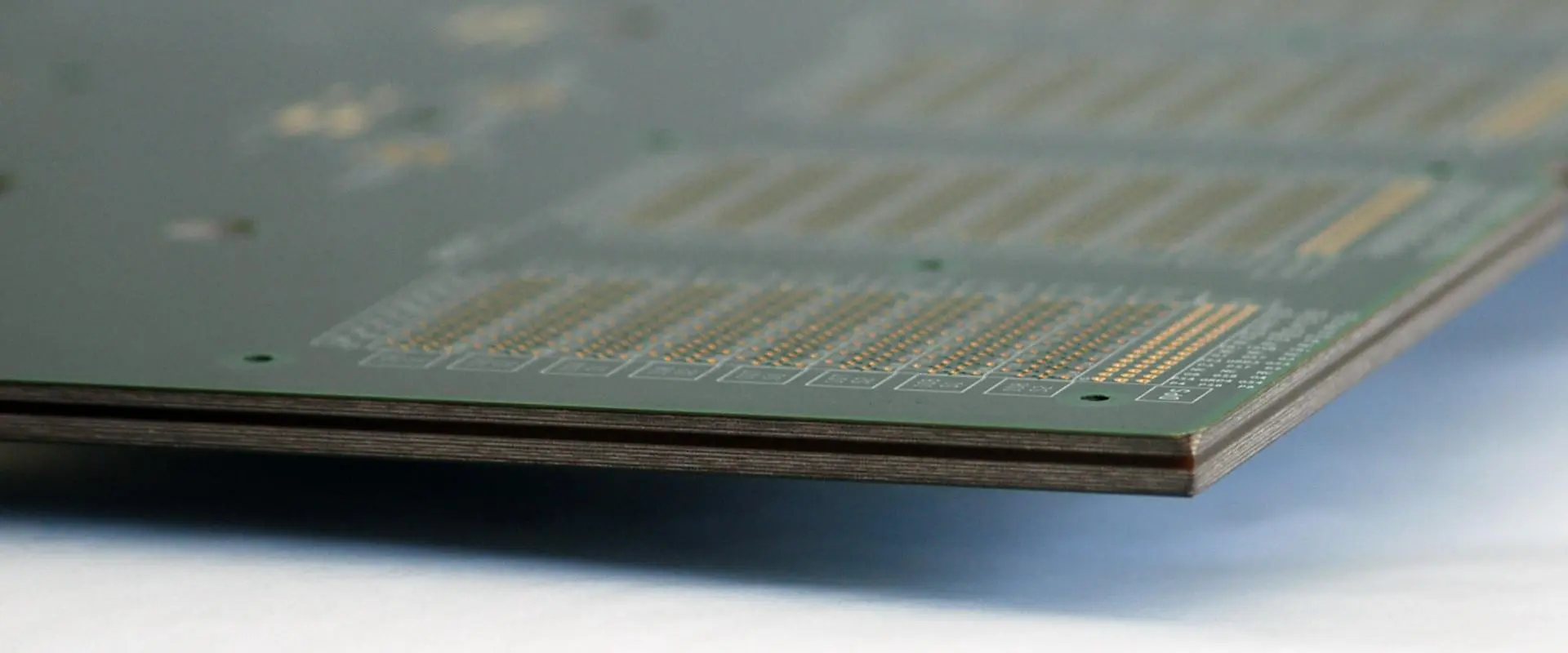
All about TACONICย material RF-35 PCB Manufacturing

taconic laminates

Introduction

Taconic RF-35 is a popular high frequency laminate material designed for performance-driven RF PCB applications. With a dielectric constant of 3.5, low loss, and tight material uniformity, RF-35 enables excellent signal integrity for today’s high speed digital and analog circuits.

This article provides an in-depth look at RF-35 material properties, performance capabilities, design considerations, and applications. We’ll explore everything engineers need to know about specifying and working with this versatile RF material.

RF-35 Overview
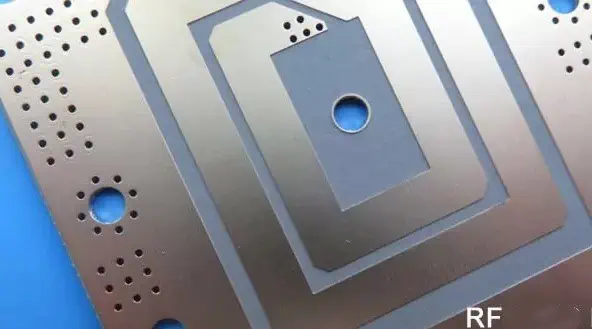
Taconic RF-35 is a PTFE composite laminate comprised of:

  • Woven fiberglass reinforcement
  • Ceramic filler particles
  • PTFE (polytetrafluoroethylene) resin system

With a dielectric constant of 3.5, it provides:

  • Excellent high frequency signal performance
  • Very low loss characteristics
  • Tight dielectric constant tolerance

RF-35’s properties make it suitable for a wide range of radio frequency, microwave, millimeter-wave, and multi-gigabit digital applications. It strikes an optimal balance between cost and high frequency signal integrity.

Some key traits of Taconic RF-35 include:

  • Dielectric constant of 3.5 +/- 0.05
  • Low loss with tight uniformity
  • Excellent thermal stability
  • Good CTE for reliability
  • Lead-free compatible
  • US laminator source
  • ITAR free
  • RoHS compliant
  • Cost-effectiveness

For designs from 10+ Gbps digital to Ku band RF, RF-35 delivers proven results across countless commercial and defense programs.

Material Properties

RF-35 is formulated from PTFE reinforced with ceramic particles to achieve:

Dielectric Constant – The k-value determines velocity of signal propagation and affects many circuit parameters. RF-35 provides an Er of 3.5 with very tight +/- 0.05 tolerance for consistent performance. This enables excellent impedance control compared to typical FR-4 (Er=4.5).

Loss Tangent – With a loss tangent of just 0.0019, RF-35 provides very low loss for high frequency energy. This maximizes Q factors in resonant circuits and insertion loss in transmission lines. Wide range of tested Dk from DC to Ku band.

Moisture Absorption – At just 0.02% moisture absorption, RF-35 resists detrimental effects of humidity and water ingress far better than conventional FR-4 material. This enhances long term reliability.

Thermal Performance – With a Z-axis CTE of 82 ppm/C, close PCB/laminate CTE matching reduces stresses under temperature cycling for excellent reliability. Good thermal conductivity (0.71 W/mK) spreads heat.

Lead-Free Assembly – RF-35 achieves high Tg (>280C) allowing compatibility with lead-free solder profiles of up to 260C for modern assembly.

Available Forms

RF-35 laminate allows flexibility through different standard offerings:

Copper Cladding

  • 1โ„2, 1, and 2 oz ED copper foil
  • Standard HTE copper and rolled copper available
  • Double-sided cladding enables signal layers

Core Thicknesses

  • From 0.005 inches to 0.125 inches
  • Typical stackups use multiple 0.005″ cores
  • Thicker cores provide rigidity when needed

Panel Sizes

  • 18โ€ x 24โ€, 18โ€ x 36โ€, and 24โ€ x 36โ€ standard panels
  • Custom panel sizes possible

Prepreg

  • 106 and 1067 styles available
  • Enables bonding multilayer board stackups
  • Matching resin system

Rod and Plate

  • For machined parts, spacers, and non-PCB applications
  • Reduces PIM in RF assemblies
  • Ideal for fixtures and testing

This range covers the needs of most RF-35 PCB implementations from prototyping to production.

PCB Performance Capabilities

Taconic RF-60TC PCB

RF-35 laminate provides excellent RF and high speed digital performance when designed properly:

Frequency Range

  • Usable continuous range from DC to Ku band (18 GHz)
  • Material characterizations up to 40+ GHz
  • Q factors exceeding 300 above 8 GHz

Loss

  • Low loss tangent of 0.0019
  • Insertion loss < 0.016 dB/inch at 20 GHz in 50ฮฉ stripline

VSWR

  • Tight dielectric constant tolerance enables excellent impedance control
  • VSWR < 1.2 up to 15 GHz achievable

Propagation Delay

  • Delay = 1.7 ns/inch typical at 50ฮฉ
  • Enables high data rates and rise time performance

Pulse Response

  • TDR shows minimal discontinuities and reflections
  • Clean time domain performance for ultra high-speed digital

Leveraging these attributes allows RF-35 PCBs to deliver highly repeatable RF and high speed digital operation.

Design Considerations

To obtain maximum benefit from RF-35 laminates, engineers should follow best design practices:

Stackup Planning

  • Use multiple thinner cores instead of one thick core
  • Alternating grain direction improves dimensional stability
  • Model expected performance in solver

Impedance Control

  • Leverage precise Er of 3.5 to maintain target impedance
  • 50ฮฉ striplines for RF and high-speed routing
  • Controlled line width, dielectric height, trace geometry

Skin Effect

  • Consider skin effect depth above ~ 8-10 GHz
  • Utilize surface treatments like micro-etching

Signal Coupling

  • Careful gap/spacing rules between traces
  • Ground plane isolation techniques
  • Avoid 90 ฬŠ bends; use arc/tapered geometries

Thermal Management

  • Ensure sufficient thermal ground plane spreading
  • Efficient component layout to avoid hotspots
  • Consider thermal vias for heat transfer

Paying attention to these guidelines helps achieve first-pass PCB layout success with RF-35.

Recommended Stackups

Typical RF-35 PCB stackups may use configurations like:

Show Image

  • Multiple thin dielectric cores
  • Signal routing on surface layers
  • Dedicated ground planes near signals
  • Buried capacitance within stackup
  • Component cavities in ground planes

The thin cores and smooth copper foils of RF-35 enable tight impedance tolerance and high performance interconnects between ICs, filters, amplifiers, control logic, and other components.

Benefits vs. FR4

Compared to conventional FR-4 laminates, RF-35 provides:

Superior Loss Characteristics

  • Lower loss tangent: 0.0019 vs 0.02 for FR-4
  • Much flatter loss vs. frequency curve
  • Maintains low loss to > 10 GHz

Tighter Dielectric Constant Tolerance

  • Tolerance +/- 0.05 vs +/- 0.25 for FR-4
  • Enables consistent impedance across PCBs

Improved Moisture Resistance

  • 0.02% moisture absorption vs 0.2% for FR-4
  • Far less susceptible to humidity effects

Higher Frequency Support

  • Usable range to Ku band vs drop-off around 5 GHz with FR-4
  • Significantly better Q factors at high microwave bands

For peak signal integrity at microwave and mmWave frequencies, RF-35 is a clear choice over FR-4 material.

Typical RF-35 Applications

The capabilities of RF-35 make it a frequent choice for products including:

  • Satellite communications
  • Radar and remote sensing
  • 5G telecom infrastructure
  • Automotive radar
  • Wireless networking
  • Microwave radio/links
  • Defense electronics
  • Mobile devices
  • High speed digital design
  • Aerospace and avionics

Any application where optimizing signal integrity, reducing loss, and maintaining consistent performance over frequency are critical requirements will benefit from RF-35 PCB material.

Pros and Cons

Like any material, RF-35 has both advantages and disadvantages:

Pros

  • Excellent high frequency signal integrity
  • Low loss PTFE material
  • Tight dielectric constant tolerance
  • Lead-free assembly compatible
  • Good thermal conductivity
  • Reduced moisture absorption

Cons

  • Higher cost than FR-4
  • Lower flexural strength than glass-reinforced laminates
  • Requires advanced fabrication processes
  • Limited global supply chain

Conclusion

With its precise dielectric constant of 3.5 and low loss PTFE composition, Taconic RF-35 delivers proven performance for today’s emerging RF, microwave, and multi-gigabit digital designs. When engineered properly, RF-35 PCBs provide consistent behavior across fabrication lots and excellent high frequency response. For designers pursuing every last dB of loss or GHz of bandwidth, RF-35 remains an enabling material.

Frequently Asked Questions

Q: What are the key differences between RF-35 and common FR-4 laminates?

A: RF-35 provides much lower loss, tighter dielectric tolerance, lower moisture absorption, and extended high frequency range versus economical FR-4.

Q: What are some tips for working with thinner RF-35 cores?

A: Use dedicated layer alignment equipment, employ smaller component sizes, plan sufficient panelization spacing, and minimize handling to avoid cracking thin cores.

Q: Does RF-35 require special PCB fabrication processes?

A: RF-35 benefits from advanced PTFE processes for via formation, hole walls, and drilling. It also requires lamination processes tailored to thinner cores.

Q: What are typical finished RF-35 PCB thicknesses?

A: High frequency designs aim for overall PCB thickness under 0.030 inches. This requires precision lamination of multiple 0.005 inch dielectric cores.

Q: Are there lead-free soldering implications with RF-35 material?

A: RF-35 achieves high Tg (>280C) for compatibility with lead-free profiles up to 260C peak temperatures. Thermal relief in multilayers is recommended.

Do you know RF-35 (TACONIC material)?
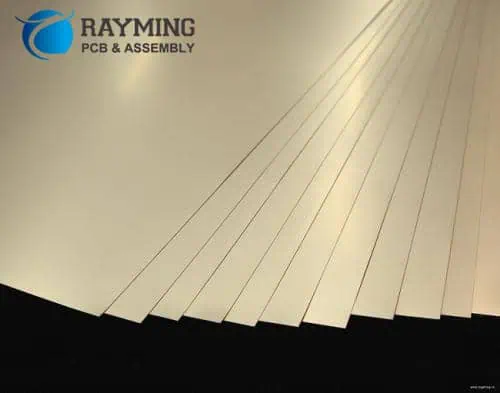
RF-35๏ผˆTACONIC material๏ผ‰

Performance:

(1) low cost;

(2) Excellent peel strength;

(3) Extraordinary low loss factor;

(4) low water absorption rate;

(5) Enhanced surface smoothness.

Application:

(1) power amplifier;

(2) filters and connectors;

(3) Passive components.

1)RF-35 is an organic-ceramic laminate material in the ORCER of TACONIC products.

2)It is a reinforced glass material based on woven glass cloth, and a combination of TACONICโ€™s ceramic filling technology and glass fiber coated PTFE technology.

3)RF-35 is the best choice for low cost, high volume commercial microwave and wireless frequency applications.

3)RF-35 of 1/20Z and 10Z copper foil boards, even with standard epoxy materials, have excellent peel strength and provide rework at any time.

4)The glass transition temperature of RF -35 exceeds 315 โ„ƒ.

5)The ultra-low water absorption and low loss factor of RF-35 minimizes phase shift in the frequency range of use.

6)The dimensional stability of RF-35 is due to the use of woven glass cloth in its design development.

7)RF-35 laminate material, generally with single or double-sided 1/20Z, 10Z and 20Z thickness of electrolytic copper foil. Different sizes of sheets can be selected according to requirements.

8)For the RF-35 microwave material, the relationship between the thermal expansion rate in the Z-axis direction and the temperature is shown in the figure below:
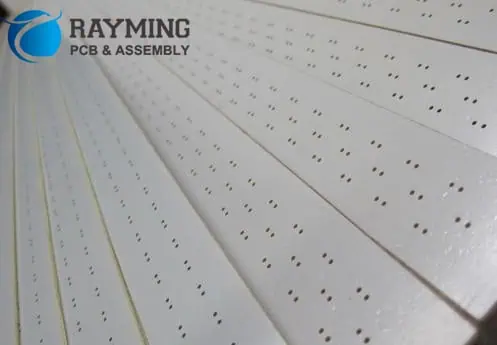
RF-35๏ผˆTACONIC brand๏ผ‰

9)RF-35 dielectric constant changes with temperature:
PCB TACONIC brand material

10)RF-35 dielectric loss changes with temperature:

PCB RF-35 material

10)The relationship between the dielectric constant and frequency of RF-35 microwave materials is shown in the figure below:

Special PCB material

11)The relationship between the dielectric loss of RF and the frequency of microwave materials is shown in the figure below:
R35 TACONIC material

What is the difference between FFC connector and FPC connector ?

one layer flex pcb board

What is ffc wiring and what is  fpc wiring ?

Wiring, also known as flexible circuit board (FPC). It is used for the transmission of data within the active parts and areas, such as the hard disk connected to the mainboard of the computer, the data line of the optical drive, the data line of the mobile phone motherboard connected to the display screen, and so on. There are also connected devices between the data lines are collectively known as wiring. Wire layout is mainly divided into two kinds of round head (R-FFC for direct welding) and flat ends (for short FFC, for socket insertion). Most suitable for data transmission cables between moving parts and motherboards, between board and board, and for miniaturized electrical equipment. Because the price of FFC cable is better than that of FPC (flexible Printing Circuit), its application will become more and more extensive. In most places where FPC is used, you can basically replace it with FFC.

https://www.youtube.com/watch?v=pG2FsS7ZXuo
FPC

Wiring characteristics

  1. The wire layout is small, light weight, the original design of the wiring board is used to replace the larger wire harness wire. Wiring is usually the only solution to miniaturization and mobility on the current cut TIng-edge assembly board. Wire placement (sometimes referred to as flexible printed circuit) is the etching of copper circuit or printed polymer thick film circuit on the polymer substrate. For thin, light, compact and complex devices, the design solutions range from single-sided conductive circuits to complex multi-layer three-dimensional prototype pcb assembly. The total weight and volume of wire arrangement is 70% less than the traditional round wire harness method. Wire placement can also increase strength by using reinforced materials or linings to achieve additional mechanical stability.
  2. Wire placement can be moved, bent, twisted without damaging the wire, and can conform to different shapes and special package sizes. The only limitation is the volume space problem. Because it can withstand millions of times of dynamic bending, wiring can be well applied to continuous or periodic motion of the internal system, as part of the final product function. The solder joints on the rigid PCB are subjected to thermal mechanical stresses that fail after hundreds of cycles. โ€œrequire electrical signals / power to move,โ€ said Jenny, a product manager at EECX. Some products with smaller shape coefficients / package sizes benefit from wire placement.
long FPC board

3, wiring has excellent electrical properties and dielectric properties,โ€ said the CEO of heat-resistant. LT Electronic. โ€œlow dielectric constants allow electrical signals to be transmitted quickly; Good thermal properties make the element easy to cool down; higher glass conversion temperature or melting point make the element work well at higher temperature.

4, wiring has higher assembly reliability and quality. Wiring reduces the hardware required for internal wiring, such as solder joints, trunk wires, backboard lines and cables commonly used in traditional electronic packaging, enabling wiring to provide higher assembly reliability and quality. Ping.Wu, a marketing manager with a higher misalignment rate ofย electronic components, said Ping.Wu, a marketing manager of. EECX Electronic Products Division, a market manager with complex multiple systems, said, โ€œthe stiffness of wiring is low and the size is small,โ€ said Ping.Wu, the market manager of. EECX Electronic Products Division, which is composed of complex multiple systems. It is precisely because of the small size of the wiring board components, so the use of less material. โ€ With the emergence of quality engineering, a thin flexible system is designed to be assembled in only one way, thus eliminating many human errors usually associated with independent wiring engineering.

What is FFC wiring

FFC wiring is also called flexible flat cable, which can choose the number and spacing of wire arbitrarily, make the wire more convenient, greatly reduce the volume of electronic products, reduce production cost, improve production efficiency, and is most suitable for moving parts and motherboards. PCB board is used for data transmission cable between PCB boards and miniaturized electrical equipment. The common specifications are 0.5mm / 0.8mm / 1.0mm / 1.25mm / 1.27mm / 1.5mm / 2.0mm / 2.54mm and so on.

long fpc

Line arrangement difference between FFC and FPC

FPC is the Flexible Printed Circuit flexible printed circuit, and in terms of their manufacturing, they are formed in a different way:

1, FPC is a kind of flexible circuit board with different single and double sides and multilayer pcb structure, which is treated by FCCL (flexible copper foil) by chemical etching.

2, FFC is made of flat copper foil with upper and lower layers of insulating foil film, the finished product is simple and the thickness is thicker.

FPC

Flex PCB Cost Estimator: Key Factors Affecting Flexible Circuit Board Pricing (From Design to Manufacturing)

Flex PCB Cost

Introduction

In the rapidly evolving world of electronics, flexible printed circuit boards (flex PCBs) have gained significant popularity due to their versatility, space-saving capabilities, and ability to conform to complex shapes. As engineers, startups, and manufacturers increasingly turn to flex PCBs for their projects, understanding the costs associated with these innovative components becomes crucial. This comprehensive guide will take you on a journey from initial design considerations to final production pricing, helping you navigate the intricacies of flex PCB costing.

1. What is a Flex PCB?

1.1 Definition and Structure of a Flexible PCB

Flex PCBs are circuit boards that can bend, flex, or conform to a desired shape. Unlike their rigid counterparts, flex PCBs are constructed using flexible base materials, typically polyimide or polyester films. This unique structure allows them to be:

  • Bent or folded to fit into tight spaces
  • Dynamically flexed during operation
  • Shaped to follow contours of product designs

The key differences between flex PCBs and rigid PCBs lie in their materials, manufacturing processes, and applications. While rigid PCBs use stiff substrates like FR-4, flex PCBs employ thin, pliable materials that enable their characteristic flexibility.

1.2 Common Applications of Flex PCBs

Flex PCBs have found their way into numerous industries and applications, including:

  • Wearable technology (smartwatches, fitness trackers)
  • Automotive (dashboard displays, sensor connections)
  • Aerospace (satellite components, aircraft control systems)
  • Medical devices (hearing aids, implantable devices)
  • Consumer electronics (smartphones, cameras)
  • Industrial equipment (robotics, automated systems)

The ability of flex PCBs to save space, reduce weight, and withstand mechanical stress makes them ideal for these applications where traditional rigid PCBs would be impractical or impossible to use.

2. Overview of Flex PCB Costing

2.1 Why Flex PCBs are Generally More Expensive than Rigid PCBs

Flex PCBs typically come with a higher price tag compared to their rigid counterparts. This cost difference stems from several factors:

  1. Specialized materials: Flex PCBs require more expensive base materials like polyimide.
  2. Complex manufacturing processes: Producing flex PCBs involves more intricate steps and specialized equipment.
  3. Stringent quality control: Flex PCBs often need more rigorous testing to ensure reliability under bending and flexing conditions.
  4. Lower production volumes: Flex PCBs are often produced in smaller quantities, leading to higher per-unit costs.

2.2 Flex PCB Cost vs. Rigid PCB Cost: Quick Comparison

To give you a general idea of the cost difference, here’s a quick comparison:

FactorRigid PCBFlex PCB
Base material costLowerHigher
Manufacturing complexityLowerHigher
Tooling costsLowerHigher
Minimum order quantitiesOften lowerOften higher
Per-unit cost (small volumes)LowerSignificantly higher
Per-unit cost (large volumes)LowerModerately higher

The most significant cost differences come from:

  1. Material expenses (flex materials can be 2-3 times more expensive)
  2. Manufacturing process complexity
  3. Specialized handling and quality control requirements

Read more about:

3. Key Factors Affecting Flex PCB Cost

3.1 Design Complexity

The complexity of your flex PCB design plays a crucial role in determining its cost. Key aspects include:

Number of Layers

  • Single-layer flex: Simplest and most cost-effective
  • Double-layer flex: Moderate complexity and cost
  • Multilayer flex: Most complex and expensive

Trace Width and Spacing

Finer traces and tighter spacing require more advanced manufacturing processes, increasing costs.

Via Structures

  • Through-hole vias: Standard and less expensive
  • Microvias: More complex and costly
  • Blind and buried vias: Most expensive due to additional processing steps

Bending Requirements

Designs that require tight bending radii or frequent dynamic flexing may need special materials or manufacturing techniques, increasing costs.

3.2 Material Selection

The choice of materials significantly impacts flex PCB cost:

Base Materials

  • Polyimide: More expensive but offers better performance and temperature resistance
  • Polyester: Less expensive but with limitations in performance and durability

Adhesive Types

  • Adhesive-based: Traditional and less expensive
  • Adhesiveless: More expensive but offers better electrical and thermal performance

Coverlay vs. Solder Mask

  • Coverlay: More expensive but provides better protection and flexibility
  • Solder mask: Less expensive but may crack under extreme bending

Material Grade

  • Standard-grade materials: Suitable for most applications
  • High-temperature materials: More expensive but necessary for certain high-reliability applications

3.3 Size and Shape of the PCB

The physical dimensions and outline of your flex PCB affect its cost:

  • Larger boards require more material and processing time
  • Irregular or complex shapes necessitate advanced cutting techniques and may result in more material waste

3.4 Manufacturing Process Complexity

Additional manufacturing steps can significantly increase costs:

Stiffeners

Adding rigid areas (e.g., FR4 or polyimide stiffeners) for component mounting increases complexity and cost.

Shielding Requirements

Incorporating EMI shielding films or layers adds to material and processing costs.

Surface Finishes

Different finishes impact both cost and performance:

  • ENIG (Electroless Nickel Immersion Gold): More expensive but offers excellent surface protection
  • OSP (Organic Solderability Preservative): Less expensive but with shorter shelf life
  • Immersion Silver: Moderate cost with good solderability

3.5 Quantity and Volume

Order quantity plays a significant role in per-unit costs:

  • Prototyping (1-10 pieces): Highest per-unit cost due to setup fees and minimum order quantities
  • Small production runs (100-1000 pieces): Moderate per-unit cost
  • Mass production (10,000+ pieces): Lowest per-unit cost due to economies of scale

3.6 Testing and Quality Assurance

Rigorous testing requirements add to the overall cost:

  • Electrical testing: Ensures proper connectivity and functionality
  • Dynamic flex testing: Verifies durability under repeated bending
  • Environmental reliability testing: Assesses performance under various conditions (temperature, humidity, etc.)

More stringent QA requirements increase labor and equipment costs, reflecting in the final price.

3.7 Lead Time and Turnaround Speed

Faster production times come at a premium:

  • Standard lead times (2-3 weeks): Most economical option
  • Expedited services (3-5 days): Can increase costs by 50-100%
  • Super rush (24-48 hours): Highest premium, often 2-3 times the standard price

4. Typical Flex PCB Cost Breakdown

Understanding the cost components helps in identifying areas for potential savings:

4.1 Material Costs (30-40% of total cost)

  • Base materials (polyimide, polyester)
  • Copper foils
  • Adhesives or bonding films
  • Coverlay or solder mask materials

4.2 Labor and Processing Costs (25-35%)

  • Machine operation
  • Handling and assembly
  • Engineering and design review

4.3 Tooling and Setup Charges (10-20%)

  • Photomasks
  • Drill files
  • Machine setup and calibration

4.4 Testing and Inspection Fees (10-15%)

  • Electrical testing equipment usage
  • Visual inspection
  • Reliability testing

4.5 Logistics and Shipping Costs (5-10%)

  • Packaging materials
  • Shipping fees
  • Import/export charges for international orders

5. Cost Estimation at Different Project Stages

5.1 Early Design Phase: Ballpark Estimates

At this stage, focus on:

  • Approximate board size
  • Estimated layer count
  • Rough idea of design complexity
  • Projected production volume

Use online calculators or consult with manufacturers for initial estimates, but expect these to be within ยฑ30-50% of the final cost.

5.2 After Finalizing the Stackup and BOM (Bill of Materials)

With detailed specifications, you can get more accurate quotes:

  • Precise dimensions and layer stackup
  • Specific material requirements
  • Detailed via structures and trace/space requirements
  • Finalized component list and placement

Expect these estimates to be within ยฑ10-20% of the final cost.

5.3 Manufacturing Phase: True Final Costs

Final costs are determined after:

  • DFM (Design for Manufacturability) review
  • Any necessary design modifications
  • Confirmation of all manufacturing processes
  • Finalization of testing requirements

At this stage, you should have a precise cost figure, barring any unforeseen issues during production.

6. How to Reduce Your Flex PCB Costs

flexible pcb circuit board

6.1 Simplify the Design Where Possible

  • Minimize the number of layers
  • Use standard trace widths and spacings
  • Avoid unnecessary use of advanced via structures

6.2 Use Standard Materials and Standard Sizes

  • Opt for commonly used polyimide thicknesses
  • Choose standard copper weights
  • Design within standard panel sizes to minimize waste

6.3 Consolidate Orders (Batch Production Strategies)

  • Combine multiple designs into a single order
  • Plan for larger production runs to benefit from economies of scale

6.4 Work with Manufacturers Early During Design (DFM: Design for Manufacturability)

  • Consult with manufacturers about design choices
  • Implement DFM guidelines to avoid costly revisions later

6.5 Choose the Right Manufacturer Specializing in Flex PCBs

  • Look for manufacturers with experience in flex PCB production
  • Consider the balance between cost, quality, and capabilities

7. Flex PCB Cost Estimator Tools and Services

7.1 Online Flex PCB Quote Calculators

Many PCB manufacturers offer online quote calculators, including:

These tools provide instant estimates based on basic design parameters.

7.2 How to Use Instant Pricing Tools Accurately

To get the most accurate quotes:

  1. Input exact specifications (dimensions, layers, materials)
  2. Specify all special requirements (stiffeners, surface finish)
  3. Include quantity and lead time preferences
  4. Check for any design rule violations flagged by the tool

7.3 Factors to Double-Check Before Finalizing an Estimate

Be aware of potential hidden costs:

  • Setup fees or tooling charges
  • Testing and inspection costs
  • Shipping and handling fees
  • Import duties for international orders
  • Taxes (VAT, sales tax)

8. Examples: Flex PCB Cost Scenarios

8.1 Small Batch Prototype (10 pieces, 2-layer flex PCB)

  • Size: 50mm x 100mm
  • Material: Standard polyimide
  • Finish: ENIG
  • Estimated cost range:ย 300โˆ’300โˆ’500 total (30โˆ’30โˆ’50 per piece)

8.2 Mid-Sized Production (500 pieces, multilayer flex PCB with stiffeners)

  • Size: 75mm x 150mm
  • Layers: 4 layers with FR4 stiffeners
  • Material: High-temp polyimide
  • Finish: Immersion gold
  • Estimated cost range:ย 7,500โˆ’7,500โˆ’10,000 total (15โˆ’15โˆ’20 per piece)

8.3 High-Volume Production (10,000+ pieces, single-layer flex)

  • Size: 25mm x 50mm
  • Material: Standard polyimide
  • Finish: OSP
  • Estimated cost range:ย 30,000โˆ’30,000โˆ’40,000 total (3โˆ’3โˆ’4 per piece)

Note: These examples are for illustration purposes only. Actual costs can vary significantly based on specific design details and manufacturer pricing.

Conclusion

Understanding the intricacies of flex PCB costing is crucial for anyone involved in electronic product development. From the initial design phase to final production, numerous factors influence the overall cost of flexible circuit boards. By carefully considering elements such as material selection, design complexity, manufacturing processes, and production volume, you can make informed decisions that balance performance, reliability, and budget.

Remember that while flex PCBs may come with a higher upfront cost compared to rigid PCBs, they often offer significant advantages in terms of space savings, weight reduction, and design flexibility. These benefits can lead to overall cost savings in your final product design and assembly.

As you embark on your flex PCB project, keep these key takeaways in mind:

  1. Start with a clear understanding of your project requirements and constraints.
  2. Engage with manufacturers early in the design process for DFM guidance.
  3. Consider the total cost of ownership, not just the initial PCB price.
  4. Leverage online tools and expert consultations for accurate cost estimates.
  5. Look for opportunities to optimize your design for cost-effectiveness without compromising performance.

By applying the knowledge and strategies outlined in this guide, you’ll be well-equipped to navigate the flex PCB costing landscape, make informed decisions, and achieve the best possible balance between performance and budget for your flexible circuit board projects.

FAQs: Common User Questions about Flexible PCB Pricing

  1. Q: How much more expensive are flex PCBs compared to rigid PCBs? A: Flex PCBs can be 2-5 times more expensive than rigid PCBs, depending on complexity and volume.
  2. Q: What’s the minimum order quantity for flex PCBs? A: This varies by manufacturer, but many offer prototyping services with MOQs as low as 1-5 pieces.
  3. Q: How can I reduce the cost of my flex PCB design? A: Simplify the design, use standard materials, increase order quantity, and work closely with manufacturers for DFM optimization.
  4. Q: Are there any hidden costs I should be aware of when ordering flex PCBs? A: Watch for tooling charges, testing fees, expedited service costs, and shipping/import fees for international orders.
  5. Q: How long does it typically take to manufacture flex PCBs? A: Standard lead times are often 2-3 weeks, but can range from 24 hours (super rush) to 4-6 weeks for complex designs.

Xilinx XA6SLX16-2CSG225Q Datasheet and Introduction

Xilinx fpga chip

Mounting Type:  Surface Mount

Logical Description: IC, Xilinx DS170 XA Spartan-6 Automotive FPGA Family

Physical Description: Ball Grid Array (BGA), 0.80 mm pitch, square; 225 pin, 13.00 mm L X 13.00 mm W X 1.40 mm H body

IC XA6SLX16-2CSG225Q

Product Attributes

Maximum Number of User I/Os : 160Number of Registers: 18224
RAM Bits: 576KbitDevice Logic Cells: 14579
Process Technology: 45nmNumber of Multipliers: 32 (18ร—18)
Programmability: YesProgram Memory Type: SRAM
Minimum Operating Temperature: -40ยฐCMaximum Operating Temperature: 125ยฐC
Dedicated DSP: 32Speed Grade: 2
Device Number of DLLs/PLLs: 6Total Number of Block RAM: 32
Basic Package Type: Ball Grid ArrayPackage Family Name: BGA
Package Description: Chip Scale Ball Grid ArrayLead Shape: Ball
Pin Count: 225PCB: 225
Mount: Surface MountMSL: 3
Maximum Reflow Temperature (ยฐC): 260Reflow Solder Time (Sec): 30
Number of Reflow Cycle: 3

For Use With

XA6SLX16-2CSG225Q

Overview

The Xilinx XA Spartan-6 Automotive FPGA family delivers low-cost, reliability-optimized programmable logic for automotive applications. Within this family, the XA6SLX16-2CSG225Q provides a balance of logic density, features, and thermal performance.

In this article, we will take a look at the key capabilities and specifications of the XA6SLX16 from its datasheet and reference manual. We’ll examine its programmable logic, embedded blocks, I/O, package, reliability, and other details relevant to automotive usage.

XA6SLX16 FPGA Characteristics

The XA6SLX16 sits in the middle of the Spartan-6 XA family with these high-level characteristics:

Programmable Logic

  • 16,000 logic cells
  • 1008 Kb (504×2) block RAM
  • 12 DSP slices

I/O

  • 225 general purpose I/O pins
  • Support for common standards (LVDS, LVPECL, SSTL)

Clock Management

  • 7 clock management tiles with DCM and PLL
  • Sub-ns clock skew matching

Configuration

  • SPI and BPI flash loading
  • MultiBoot support for safe firmware updates

Packages

  • 225-pin BGA package
  • 15mm x 15mm, 0.8mm pitch
  • Supported temperature -40C to +125C

This provides a solid amount of logic, I/O, and routing in a relatively compact footprint.

FPGA Logic Cells

The core programmable logic inside the XA6SLX16 consists of 16,000 logic cells arranged in a matrix of CLBs (configurable logic blocks):

  • Each CLB contains 4 slices, each with 4 6-input LUTs and 8 flip-flops
  • 160 D-type flip-flops per CLB for register-heavy designs
  • Arithmetic carry chains for high performance math

In addition to basic logic, the FPGA contains dedicated routing for high-speed connections:

  • Direct connections between adjacent CLBs
  • Low-skew global clock networks
  • Fast carry chains for arithmetic
  • Low-latency bypass paths

These optimize performance for real-time automotive systems.

Block RAM

For data buffering and memory storage, the XA6SLX16 contains 1008 Kb of fast block RAM in 504 dual-port 18 Kb blocks.

Key capabilities:

  • True dual port for simultaneous access
  • Configurable as single 36 Kb RAM
  • Byte write enable for partial updates
  • Optional ECC for safety-critical data
  • 6500 memory access per second

The ample block RAM enables data processing without external memories.

DSP Slices

For digital signal processing, the FPGA includes 12 dedicated DSP slices. Each slice provides:

  • 25×18 bit signed multiply with 48-bit accumulate
  • Fast parallel multiply accumulation
  • Pipelining and shifting capabilities
  • Cascadable to 72-bits for high precision

DSP use cases include filters, FFTs, digital modulation, and more.

Clock Management

The XA6SLX16 contains 7 clock management tiles (CMTs), each including a mixed-mode clock manager (MMCM) and digital clock manager (DCM).

Key features:

  • Clock synthesis from 6-740 MHz
  • Zero delay buffers, low skew routing
  • Phase aligned clocking for high speed data
  • Input jitter filtering
  • Precision clock division and multiplication

This enables low noise system clocks derived from common automotive oscillator sources.

I/O Capabilities

With 225 I/O pins, the XA6SLX16 can interface to a wide range of automotive peripherals and signals.

I/O Support:

  • 1.2V to 3.3V signaling
  • LVDS, LVPECL, differential inputs
  • SSTL, HSTL, LVCMOS standards
  • SDR and DDR interfacing up to 800Mbps
  • High current drive up to 24mA
  • Slew rate and impedance control

Banks of I/O pins are grouped into power domains that can be shut off when unused. This allows optimizing I/O power consumption.

Configuration and Security

The XA Spartan-6 supports both SPI and parallel BPI flash for configuration:

  • MultiBoot enables safe dual-image firmware updates
  • AES-GCM 256-bit encryption secures bitstream
  • RSA authentication prevents tampering
  • Battery-backed RAM for key storage

Robust protections against tampering assist functional safety certifications.

Automotive Reliability

The XA family undergoes additional qualification for automotive environments:

  • AEC-Q100 Grade 2 qualified production flow
  • Full Xilinx standard qualification flow
  • Production monitory and change control
  • Zero defects and fit policy
  • Extended -40C to +125C temperature range
  • MTTF >100 years for safety-critical applications

This level of qualification provides confidence for deploying XA FPGAs in vehicle systems.

XA6SLX16 Packaging

The 225-pin 15mm x 15mm ball grid array package offers flexibility in PCB mounting:

FPGA Ball Map:

Relevant specifications:

  • 1mm ball pitch for routing access
  • Lead-free solder process
  • Corner chamfer indicates pin 1 location
  • Solid BGA balls for improved thermal conduction

The compact footprint fits space constrained PCBs while allowing sufficient routing escape. A thermal pad improves heat dissipation to the PCB.

Development Tools

Xilinx provides multiple options for developing with the XA6SLX16, including:

  • Xilinx ISE Design Suite for RTL synthesis and Place and Route
  • SDAccel development environment for OpenCL designs
  • SoftConsole integrated development environment (IDE)
  • Hardware debugging using ChipScope Pro and SignalTap analysis

These represent a mature, full-featured toolchain for developing and deploying XA6SLX16 designs.

Conclusion

With its automotive-grade qualification, security features, logic density, and blend of programmable logic and hardened blocks, the Xilinx XA6SLX16-2CSG225Q FPGA provides a compelling option for automotive applications like ADAS, infotainment, and digital instrument clusters. Engineers can take advantage of its optimized price/performance/power for embedded vision, sensor interfacing, and real-time control systems in next-generation vehicles.

Frequently Asked Questions

Q: What are the main advantages of the XA Spartan-6 family compared to a microcontroller?

A: FPGAs provide custom hardware parallelism, real-time responsiveness, and hardware-based reliability compared to sequential microcontroller execution.

Q: What is the difference between the XA Spartan-6 vs standard Spartan-6 FPGAs?

A: The XA family has additional automotive qualification, extended temperature range, multi-time programming fuse, AES encryption, and other features tailored for automotive.

Q: How is configuration firmware loaded onto the XA6SLX16 FPGA?

A: An external SPI or parallel flash is used to load the bitstream at power up. MultiBoot provides dual-image support.

Q: What is the typical static (leakage) power consumption of the XA6SLX16?

A: Depending on configuration, 20-100 mW is typical. Power gating domains and shutdown allow minimizing static power.

Q: What tools are available for developing with the XA6SLX16 FPGA?

A: Xilinx provides the ISE, Vivado, and SDAccel toolchains. SoftConsole is available as an IDE. Simulation, place and route, and debugging tools are included.

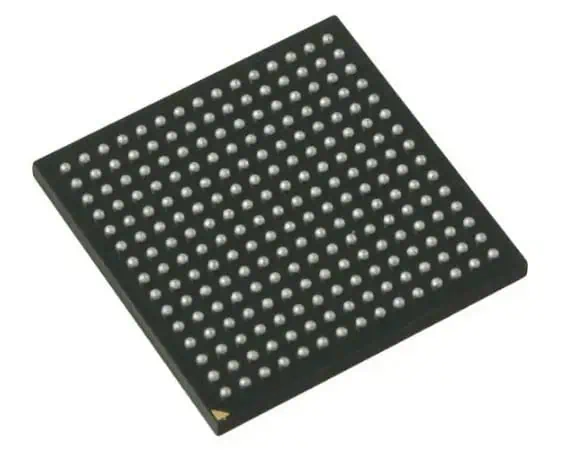
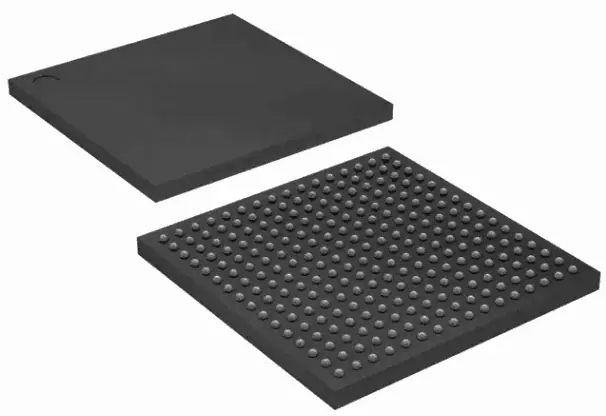
How Much for Xilinx XA2S100E-6FT256Q FPGA

Xilinx fpga chip
XA2S100E-6FT256Q

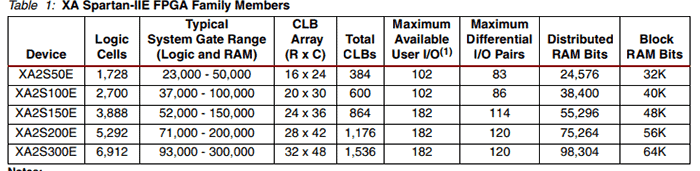
The Xilinx Automotive (XA) Spartanโ„ข-IIE 1.8V Field-Programmable Gate Array family is specifically designed to meet the needs of high-volume, cost-sensitive automotive electronic applications. The family gives users high performance, abundant logic resources, and a rich feature set, all at an exceptionally low price. The five-member family offers densities ranging from 50,000 to 300,000 system gates, as shown in Table 1. System performance is supported beyond 200 MHz. Spartan-IIE devices deliver more gates, I/Os, and features per dollar than other FPGAs by combining advanced process technology with a streamlined architecture based on the proven Virtexโ„ข-E platform. Features include block RAM (to 64K bits), distributed RAM (to 98,304 bits), 19 selectable I/O standards, and four DLLs (Delay-Locked Loops). Fast, predictable interconnect means that successive design iterations continue to meet timing requirements. XA devices are available in both the extended-temperature Q-grade (-40ยฐC to +125ยฐC) and industrial I-grade (-40ยฐC to +100ยฐC) and are qualified to the industry-recognized AEC-Q100 standard. The XA Spartan-IIE family is a superior alternative to mask-programmed ASICs. The FPGA avoids the initial cost, lengthy development cycles, and inherent risk of conventional ASICs. Also, FPGA programmability permits design upgrades in the field with no hardware replacement necessary (impossible with ASICs).

Features

  • AEC-Q100 device qualification and full PPAP support available in both extended temperature Q-grade and I-grade
  • Guaranteed to meet full electrical specifications over TJ =โ€“40ยฐC to +125ยฐC
  • Second generation ASIC replacement technology
  • Densities as high as 6,912 logic cells with up to 300,000 system gates โ€“ Very low cost
  • System-level features

โ€“ SelectRAM+โ„ข hierarchical memory: ยท 16 bits/LUT distributed RAM ยท Configurable 4K-bit true dual

-port block RAM ยท Fast interfaces to external RAM

โ€“ Dedicated carry logic for high-speed arithmetic

โ€“ Efficient multiplier support

โ€“ Cascade chain for wide-input functions

โ€“ Abundant registers/latches with enable, set, reset

โ€“ Four dedicated DLLs for advanced clock control ยท Eliminate clock distribution delay ยท Multiply, divide, or phase shift

โ€“ Four primary low-skew global clock distribution nets โ€“ IEEE 1149.1 compatible boundary scan logic

  • Versatile I/O and packaging

โ€“ Low-cost packages available in all densities

โ€“ 19 high-performance interface standards ยท LVTTL, LVCMOS, HSTL, SSTL, AGP, CTT, GTL ยท LVDS and LVPECL differential I/O

โ€“ Up to 120 differential I/O pairs that can be input, output, or bidirectional โ€ข Fully supported by powerful Xilinx ISE development system โ€“ Fully automatic mapping, placement, and routing

โ€“ Integrated with design entry and verification tools

โ€“ Extensive IP library including DSP functions

XA Spartan-IIE FPGA Family Members

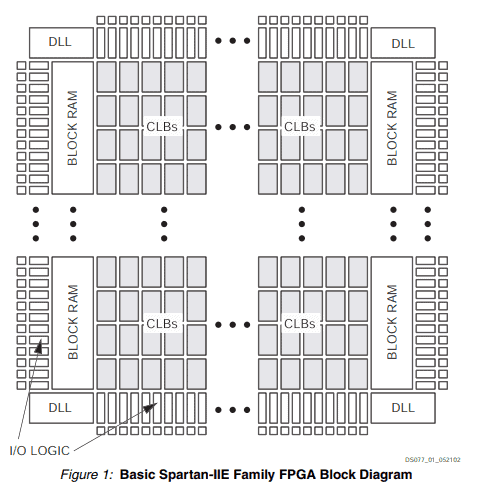
General Overview The Spartan-IIE family of FPGAs have a regular, flexible, programmable architecture of Configurable Logic Blocks (CLBs), surrounded by a perimeter of programmable Input/Output Blocks (IOBs). There are four Delay-Locked Loops (DLLs), one at each corner of the die. Two columns of block RAM lie on opposite sides of the die, between the CLBs and the IOB columns. The XC2S400E has four columns of block RAM. These functional elements are interconnected by a powerful hierarchy of versatile routing channels (see Figure 1). Spartan-IIE FPGAs are customized by loading configuration data into internal static memory cells. Unlimited reprogramming cycles are possible with this approach. Stored values in these cells determine logic functions and interconnections implemented in the FPGA. Configuration data can be read from an external serial PROM (master serial mode), or written into the FPGA in slave serial, slave parallel, or Boundary Scan modes. Spartan-IIE FPGAs are typically used in high-volume applications where the versatility of a fast programmable solution adds benefits. Spartan-IIE FPGAs are ideal for shortening product development cycles while offering a cost-effective solution for high volume production. Spartan-IIE FPGAs achieve high-performance, low-cost operation through advanced architecture and semiconductor technology. Spartan-IIE devices provide system clock rates beyond 200 MHz. Spartan-IIE FPGAs offer the most cost-effective solution while maintaining leading edge performance. In addition to the conventional benefits of high-volume programmable logic solutions, Spartan-IIE FPGAs also offer on-chip synchronous single-port and dual-port RAM (block and distributed form), DLL clock drivers, programmable set and reset on all flip-flops, fast carry logic, and many other Spartan-IIE Family Compared to Spartan-II Family.

  • AEC-Q100 device qualification and full PPAP support available in both extended temperature Q-grade and I-grade  Spartan-IIE Family Compared to Spartan-II Family
  • Higher density and more I/O
  • Higher performance โ€ข Unique pinouts in cost-effective packages
  • Differential signaling โ€“ LVDS, Bus LVDS, LVPECL โ€ข VCCINT = 1.8V โ€“ Lower power โ€“ 5V tolerance with external resistor โ€“ 3V tolerance directly โ€ข LVTTL and LVCMOS2 input buffers powered by VCCO instead of VCCINT โ€ข Unique larger bitstream.
Basic Spartan-IIE Family FPGA Block Diagram

Ready use the product as bellow:

1. MCU/MPU Modules provide a simple solution that includes on-board RAM and memory to help minimize dimensional impact while allowing for powerful calculating ability.

MCU & MPU Modules

2. Embedded Computer:For use when building a design for Digital Signage, a Kiosk, POS, Industrial Control, and so on, and available in several form factors.

3. RF Transceiver Modules:These are complete modules with antennas or which have the electronic components ready for an antenna. Some product is available with FCC Certifications.

4. Sensors:Includes Temperature, Magnetic, Pressure, Optical, Inertia, Current, Environmental, Image/Camera, Capacitive Touch, Ultrasonic, Encoders, IrDA, Solar Sensors and Sensor Amplifiers.

5. Maker/DIY, Educational:Digi-Key stays with its roots as a company for hobbyists, now known as makers. Explore small robots, build-it-yourself kits, wearables, and educational kits here to expand your knowledge and creativity.

6. Internet of Things (IoT):Here you will find everything IoT related. From one-way radios and wireless modules to IoT specific development platforms down to RF connectors and antennas, Digi-Key is the go-to distributor for the Internet of Things.

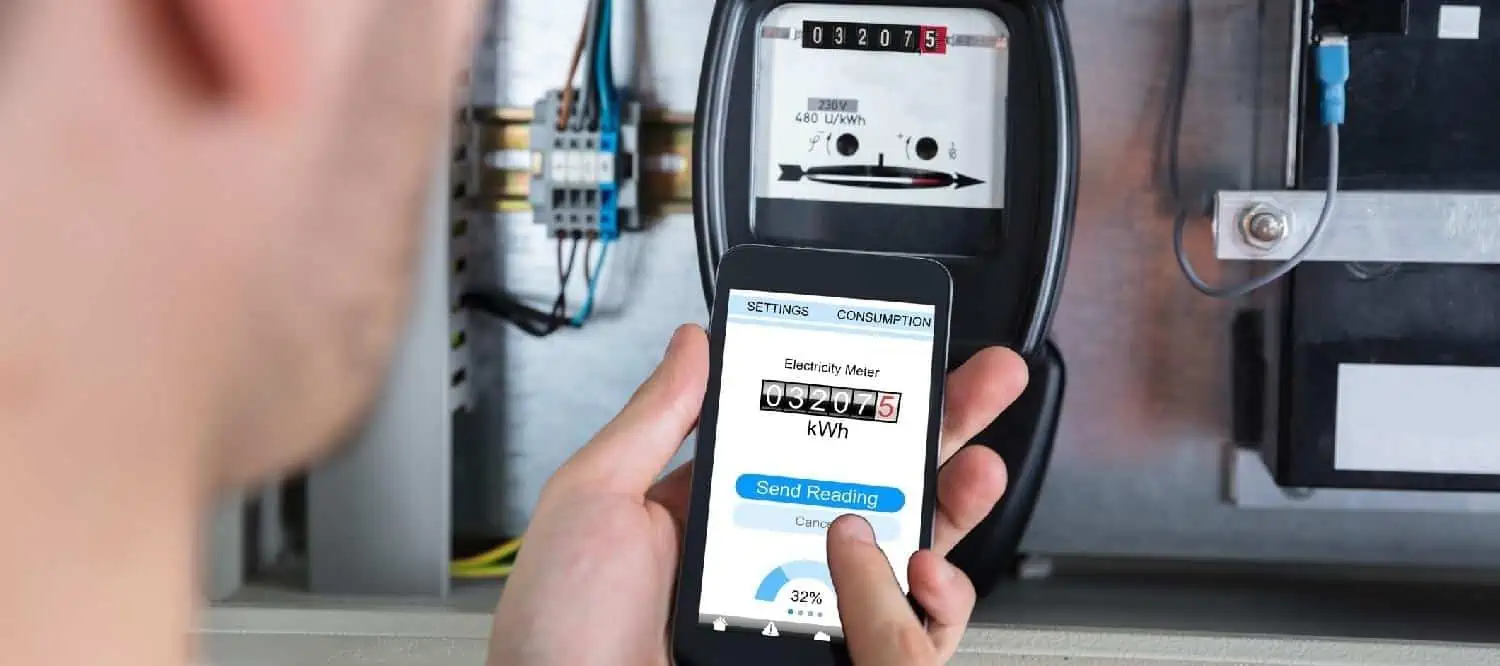
Design, Manufacturing and Application of Smart Energy Meter

Introduction

Smart energy meters represent the next generation of technology for monitoring and managing electrical consumption. As utilities worldwide move towards advanced metering infrastructure (AMI), understanding smart meter design and capabilities is increasingly important.

This guide provides a comprehensive overview of smart meter technology. It explores key design factors, manufacturing considerations, features and benefits, installation practices, and data applications across the electrical grid.

Smart Meter Design

Smart Energy Meter PCB control board

Designing smart meters involves bringing together metrology, communications, security, and telemetry into a reliable device suitable for mass deployment.

Measurement Circuitry

The core of any smart meter is precision measurement of voltage, current, power, and associated parameters. This is accomplished via:

  • Voltage dividers and shunt resistors for sampling voltages and currents.
  • High resolution ADCs and DSP to digitize signals.
  • Microcontroller running advanced digital power calculation algorithms.
  • Secure firmware to totalize and record meter readings.

Challenges include maintaining accuracy over wide temperature ranges, rejecting noise, and avoiding tampering. Smart algorithms accurately measure even complex waveforms.

Communications Hardware

To transmit data back to the utility, smart meters contain built-in communications hardware. This includes protocols such as:

  • Cellular radios – 3G, LTE for cloud-based networks
  • RF mesh – 900MHz links to neighborhood collectors
  • WiFi – For local HAN connectivity
  • PLC – Data over power line carrier

Redundant multi-radio designs ensure reliable connectivity. Radios must be compact and have low power consumption from the meterโ€™s supply.

Power Supply

Operating over the utility supply range requires a wide input range power supply:

  • Capable of 80V-300V minimum input range
  • Extracts power from voltage lines or neutral-line combo
  • Regulates and isolates internal circuitry
  • Withstands lightning surges and transients

Low power operation maximizes battery backup time during outages. Power supply must be robust and fault-tolerant.

Security Features

Data integrity and preventing tampering are critical. Security measures include:

  • Encrypted storage and communications
  • Signed and authenticated firmware updates
  • Hardware tamper detection circuits
  • Full compliance with utility cybersecurity standards
  • Ability to disable meter remotely if compromised

Rugged Enclosure

As an outdoor device, smart meters require rugged enclosures that are:

  • Weatherproof – rain, snow, humidity, direct sun
  • Corrosion resistant – prevent conductive debris buildup
  • Withstand impact – abuse from animals or debris
  • Non-flammable – mitigate arc faults and overloads

Polycarbonate or reinforced plastic enclosures with IP54 rating or higher are typical.

Smart Meter Manufacturing

Producing reliable smart meters on a massive scale requires thoughtful design and manufacturing strategies.

Sourcing Components

With hundreds of individual parts inside smart meters, thoughtful component selection and sourcing is crucial:

  • Leverage high volume components for lower pricing
  • Select utility-grade semiconductors over consumer versions
  • Partner with reputable suppliers to ensure quality
  • Plan for component lifecycle and replacements

Common parts like connectors, pins, housings, and fasteners should be standardized across product generations.

PCB Assembly

Printed circuit boards with mixed-technology assembly are at the core:

  • SMD components for metrology and control circuitry
  • THD devices for power supply and connector interfaces
  • Double-sided or multilayer boards to enable complex wiring
  • Extensive DFM to ensure manufacturability

Automated SMT assembly and selective wave soldering streamline production. Testing and inspection at each stage ensures reliability.

Final Assembly

Modular designs allow subassemblies to be integrated into the enclosure:

  • Power supply board
  • Metrology board
  • Communications boards
  • Display board and user interface
  • Battery for backup operation

Interconnections between boards must be robust and well-secured. Conformal coating protects PCBs.

Configuration and Activation

Prior to shipment, final configuration takes place:

  • Cryptographic keys for security are injected
  • Metrology calibration coefficients are loaded
  • Software/firmware at shipped version levels
  • Burn-in testing across operating conditions

Parameters are locked down securely post-configuration for production use.

Quality Control

With millions of units deployed, statistically robust quality control and testing prevents field failure:

  • Incoming component inspection
  • In-circuit tests during assembly
  • Power-on functional testing
  • Metrology calibration and accuracy verification
  • Burn-in testing over temperature, voltage
  • Sample destructive testing for robustness

Comprehensive data collection and traceability for process improvements.

Smart Meter Features

Modern smart meters represent a significant upgrade over traditional electromechanical meters:

Precision Metering

  • Energy (kWh)
  • Voltage (Voltage avg, min, max)
  • Current (Amps avg, min, max)
  • Power (kW demand, kVAR, PF)
  • Power quality

Captures even complex waveforms under normal and abnormal line conditions.

Tamper Prevention

  • Enclosure seals
  • Magnetic tamper detection
  • Notification of meter cover open events

Reduces vulnerability to customer meter tampering.

Outage Notification

  • Last gasp message on outage
  • Power restoration notification
  • Outage tracking

Enables faster utility crew dispatch and restoration.

Remote Service Switch

  • Remotely connect/disconnect service
  • Avoid trips for move ins/outs
  • Reduce theft of service

Eliminates manual trips to customer sites for service changes.

Two-Way Communications

  • Software and firmware updating
  • Dynamic pricing signals
  • Meter health data

Allows new capabilities without truck rolls for hardware swaps.

Home Area Network (HAN)

  • Energy use dashboards
  • Programmable smart appliances
  • Home automation integration

Provides real-time usage monitoring and automation control.

Smart Meter Applications

Smart meter infrastructure delivers advantages across the entire grid ecosystem:

For Utilities

  • Improved billing accuracy
  • Reduced site trips and costs
  • Remote connect/disconnect
  • Outage and restoration tracking
  • Load forecasting and profiling
  • Theft detection
  • Power quality monitoring

For Customers

  • Accurate time-of-use billing
  • Energy usage feedback
  • Cost savings from conservation
  • Faster outage response
  • Emergency notifications
  • Prepaid billing options

Grid Optimization

  • Optimized transformer and line loading
  • Conservation voltage reduction (CVR)
  • Volt/VAR optimization (VVO)
  • Demand response management
  • Distributed energy resource integration

Smart Meter Network Architecture

Connecting millions of endpoints into an intelligent network requires careful systems architecture:

Key components:

  • Smart meters at customer sites record and transmit data.
  • Neighborhood collectors aggregate data from hundreds of meters over RF mesh.
  • Cellular, PLC, or fixed networks backhaul to utility headend.
  • Meter data management (MDM) software manages data collection and acting on information.
  • Distribution grid management system utilizes meter data for optimization.
  • Customer web portal provides real-time usage feedback and statistics.

The systems must be robust, scalable, and cost efficient to deploy across entire service territories. Open standards like DLMS/COSEM help enable interoperability.

Smart Meter Installation Process

To maximize efficiency, utilities follow optimized processes for installing smart meters:

Planning Phase

  • GIS mapping of meter locations
  • Customer notification of replacements
  • Logistics planning for crews
  • Inventory of required materials

Deployment Phase

  • Crews follow established safety procedures
  • RF testing ensures meter communication functionality
  • Meters enrolled and linked to network
  • Testing and verification post-installation

Follow Up

  • Notification cards left if customer absent
  • Troubleshooting for any connectivity issues
  • Databases updated with meter IDs

Well-defined methodology minimizes disruptions and keeps projects on schedule across large service areas.

Challenges and Concerns

While beneficial overall, smart meter deployment has not been without challenges:

Cost

  • Smart meters costs 3-5x traditional meters
  • Significant upfront investment required
  • Expensive IT infrastructure for data management

Interoperability

  • Hundreds of meter models complicate long term support
  • Lack of standards hampers third party integration

Security

  • Meters at customer sites vulnerable to physical tampering
  • Cybersecurity threats against grid infrastructure

Privacy

  • Granular energy usage data raises privacy concerns
  • Perception of surveillance from frequent readings

Health

  • Low-power RF emissions trigger health complaints
  • FCC maintains meters are well below safety limits

Utilities must address these concerns proactively while transitioning to smart meters.

The Future of Smart Meters

Even as adoption continues to grow, ongoing innovation will expand smart meter capabilities:

  • Integration of IoT endpoints like gas, water, electric meters
  • Leveraging meter data for grid edge control
  • On-meter local analytics to reduce data traffic
  • Support for emerging PLC and mesh technologies
  • Next-generation metrology chips for higher precision
  • Incorporation into transactive energy ecosystems
  • Increased cybersecurity as grid faces ever-evolving threats
  • New end-user engagement models

Smart meters installed today may see two or more decades of continual advancement through software upgrades and new features.

Conclusion

Smart meters represent a fundamental building block of the intelligent, responsive electrical grid. Their design, manufacturing, networking, and data are enabling greater sustainability, reliability, and efficiency across the utility ecosystem. As adoption accelerates globally, smart meters will continue to be a crucial grid technology.

Frequently Asked Questions

Q: What are the primary elements contained inside a smart meter?

A: Key internal components are measurement circuitry, communications radios, microcontroller, memory, power supply, and user interface. Rugged housing and connectors provide the external enclosure.

Q: How frequently do smart meters transmit data to utilities?

A: Most smart meters support configurable intervals from seconds up to daily data. Typical intervals range from 5 minutes to 1 hour for residential meters. Commercial meters can transmit sub-minute data.

Q: What communication technologies do smart meters use?

A: Common networks include RF mesh over 900MHz, cellular networks, WiFi, and power line carriers. Hybrid meters support multiple methods as fallback.

Q: How long do smart meter batteries last in the event of an outage?

A: Backup batteries can keep meter and communications active for 1-2 days typically. Extended batteries can last for over a week to maintain outage monitoring.

Q: What cybersecurity measures are used to protect smart meter networks?

A: Encryption of sensitive data, signed firmware updates, tamper resistant hardware, regular key rotation, and voluntary security standards are just some of the protections employed.

MAX77680 Datasheet and Technical Info

Xilinx fpga chip
MAX77680

Introduction

The MAX77680 from Maxim Integrated is a highly integrated power management IC targeted at space-constrained, battery-powered applications. This chip combines a high-efficiency step-down DC-DC converter, real-time clock, multiple LDO regulators, and housekeeping monitoring into a tiny 3mm x 3mm WLP package.

In this article, we will explore the key technical details from the MAX77680 datasheet. This includes its features, electrical characteristics, application circuits, and usage considerations. For designers working on size-optimized wearables, medical devices, or IoT sensors, the MAX77680 provides an ideal power management solution.

Key Features

  • High efficiency 1.8MHz step-down converter with 1A peak output
  • Wide 2.9V to 5.5V input voltage range
  • Multiple LDO outputs: 1.8V, 2.5V, 3.3V, 5V at 150mA each
  • Integrated real-time clock with alarm function
  • Housekeeping and telemetry for voltage/current/temperature
  • Watchdog timer, power-on reset, and fault protections
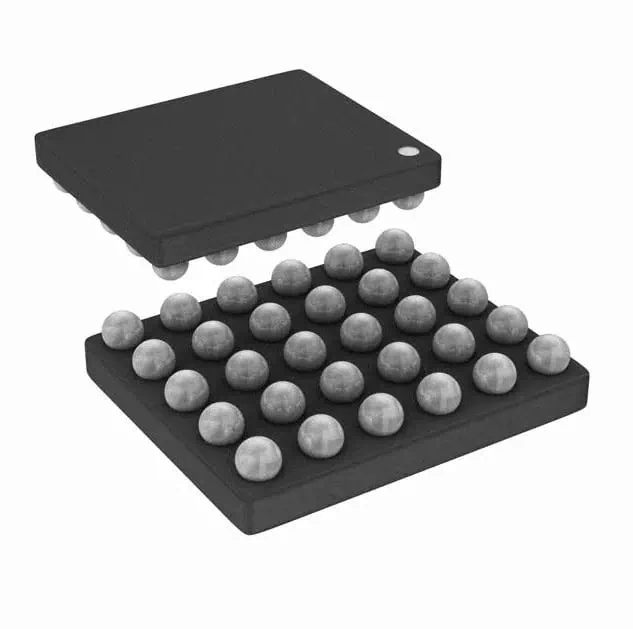
  • 3mm x 3mm wafer level package (WLP)

Functional Block Diagram

The MAX77680 integrates a wealth of functions into a single tiny chip:

Show Image

Key blocks:

  • Step-down DC-DC converter with 1.8MHz switching frequency
  • LDO1/2/3/4 linear regulators with enable control
  • Real-time clock with alarm capabilities
  • Analog front end for voltage/current/temp telemetry
  • Fault protection and housekeeping logic

Step-down DC-DC Converter

The step-down converter is the heart of the MAX77680, allowing wide input voltage range and efficient conversion to a lower voltage.

Features:

  • Up to 95% efficiency
  • 2.9V to 5.5V input range
  • Adjustable output voltage from 0.8V to 3.4V
  • 1A peak output current
  • 1.8MHz fixed switching frequency
  • PFM/PWM low power modes

The switching converter uses a current-mode control scheme for fast transient response and stability. An internal compensating ramp simplifies loop compensation design.

For light load efficiency, a Power-Save Mode automatically reduces switching frequency based on output current. Full shutdown is also available to disable the DC-DC converter when not needed.

LDO Regulators

Four integrated 150mA LDO regulators provide auxiliary supply rails from the main converter output:

OutputVoltage
LDO11.8V
LDO22.5V
LDO33.3V
LDO45V

Each LDO can be enabled/disabled via an EN control pin. This allows unused regulators to be shut off for power savings.

RTC and Alarm

An integrated real-time clock keeps track of time in battery backed operation. Useful features include:

  • Calendar mode with automatic leap year compensation
  • 24-hour timekeeping
  • Alarm function with interrupt
  • Watchdog timer for system health monitoring
  • 1Hz clock output pin

With only a 32kHz crystal and backup battery, the RTC can maintain timekeeping for years. The alarm allows wake up events to be scheduled by an MCU.

Telemetry and Protection

For monitoring system health, the MAX77680 provides analog telemetry of critical parameters:

  • Input voltage
  • DC-DC output voltage
  • LDO voltages
  • DC-DC output current
  • Die temperature

These signals allow an MCU to digitize and monitor for out of range conditions indicating a fault. Protection features include UVLO, power-on reset, and watchdog timer.

Recommended Application Circuit

A typical MAX77680 application schematic looks like this:

Show Image

The key components are:

  • C1/C2 – DC-DC converter input/output caps
  • L1/D1 – DC-DC inductor and diode
  • C3-C7 – LDO output capacitors
  • R1 – Feedback resistor divider for DC-DC
  • Q1 – External FET for DC-DC (1A rating)
  • X1 – 32kHz RTC crystal
  • FB1 – Battery for RTC backup

This configuration allows generating multiple regulated rails from a single lithium ion cell input.

Package Options

The MAX77680 is available in two tiny package options optimized for space-constrained applications:

PackageSizePitch
wafer-level package (WLP)3mm x 3mm0.35mm
12-bump WLP2mm x 2mm0.4mm

Both packages allow excellent PCB layout efficiency. The WLPs use bump interconnects rather than pins or leads.

Electrical Characteristics

Key DC and AC parameters from the MAX77680 datasheet:

DC-DC Converter

ParameterConditionMinTypMaxUnit
Input Voltage2.95.5V
Output Voltage0.83.4V
Feedback Voltage0.7880.80.812V
EfficiencyVIN=3.6V95%
Shutdown IQEN=0V26uA

LDO Regulators

ParameterConditionMinTypMaxUnit
Output Voltage 1.8V1.7821.81.818V
Output Voltage 2.5V2.4852.52.515V
Output Voltage 3.3V3.2793.33.321V
Output Voltage 5V4.9555.05V
Dropout VoltageIOUT=150mA0.20.4V
Quiescent CurrentEN=0V15uA

RTC

ParameterConditionMinTypMaxUnit
AccuracyTA=25ยฐCยฑ3ppm
Frequency31.2532.76834.286kHz
Alarm Accuracyยฑ60sec
Backup Battery LifeVBAT=3V6months

Conclusion

The MAX77680 delivers sophisticated power management and monitoring in an extremely compact footprint. With its high efficiency DC-DC converter, LDOs, RTC, and telemetry, it integrates all essential functions needed for space-constrained battery-powered devices. Engineers can leverage the MAX77680 to reduce system size and cost.

Frequently Asked Questions

Q: What is the main benefit of the MAX77680 compared to using discrete solutions?

A: The MAX77680 saves PCB space by combining many functions like the DC-DC converter, LDOs, and RTC into one tiny chip. This simplifies design and lowers BOM cost.

Q: What external components are required around the MAX77680?

A: At minimum it requires input/output capacitors for the DC-DC converter, an inductor, and feedback resistors. LDO caps and a DC-DC FET are also typical.

Q: Does the MAX77680 require an external MCU?

A: Yes, a host MCU is needed to configure the MAX77680, receive telemetry, set alarm times, etc. The IC contains no programmable logic itself.

Q: What packages is the MAX77680 available in?

A: It comes in a 3mm x 3mm WLP and an even smaller 2mm x 2mm WLP package. These provide excellent PCB space savings.

Q: What is the main limitation of the MAX77680 DC-DC converter?

A: The DC-DC converter is limited to 1A peak output current. For higher current applications, parallel chips or a discrete solution may be required.

What is ENEPIG Plating Finish in PCBs?

ENEPIG pcb

Introduction

Printed circuit boards (PCBs) serve as the core component in virtually every electronic device. They provide the substrate to mount and interconnect electronic components using copper traces. To protect these copper traces from corrosion and ensure reliable solder joints, the copper pads are plated with solderable surface finishes.

ENEPIG (Electroless Nickel Electroless Palladium Immersion Gold) has emerged as an advanced plating finish for PCBs, providing excellent solderability while also resisting corrosion. This article provides a comprehensive understanding of ENEPIG plating technology, its properties, process steps, pros and cons, and applications.

YouTube video

What is ENEPIG Plating?

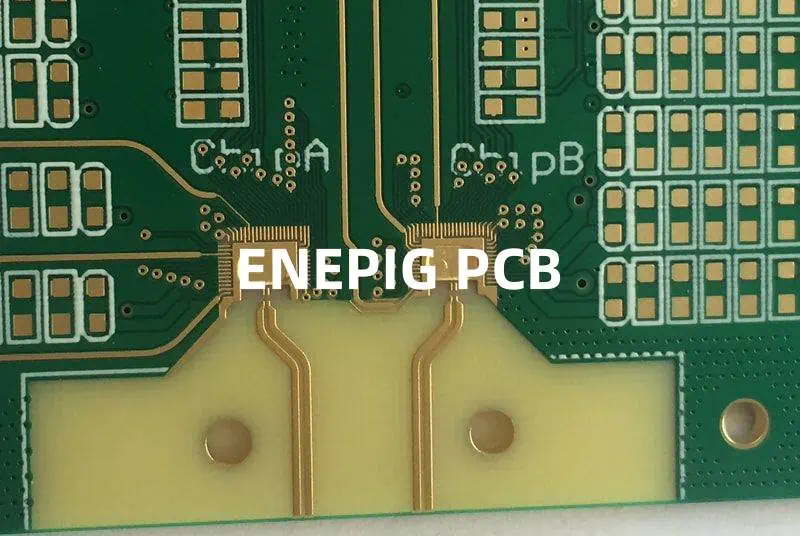
ENEPIG PCB

ENEPIG or electroless nickel electroless palladium immersion gold plating is a PCB surface finish comprising of three metal platings deposited sequentially on copper pads – nickel, palladium and gold.

  • Electroless nickel – Corrosion resistant layer
  • Electroless palladium – Barrier layer prevents nickel diffusion
  • Immersion gold – Outermost layer provides solderability

The term โ€˜electrolessโ€™ refers to autocatalytic deposition without using electrical current. The metals deposit through a chemical reduction reaction. โ€˜Immersionโ€™ uses a chemical displacement reaction.

This tri-metal finish provides excellent solderability while also resisting corrosion and oxidation. It is an alternative to conventional finishes like electrolytic nickel/gold, immersion tin and OSP (Organic Solderability Preservatives).

Key Properties

  • Excellent solderability and wettability
  • Low and stable contact resistance
  • Corrosion resistance comparable to gold
  • Good wirebondability
  • Lead-free solder compatibility
  • Halogen-free formulation available

Why Use ENEPIG Plating?

Advantages of ENEPIG

ENEPIG plating offers following benefits over other PCB finishes:

1. Reliable Solderability

  • Gold outer layer provides excellent solderability, similar to immersion gold.
  • The underlying nickel and palladium enhance adhesion of the gold layer.

2. Lead-free Solder Compatibility

  • Gold allows reliable lead-free soldering, unlike tin finishes which are prone to tin whiskers.
  • Palladium barrier layer prevents diffusion of nickel into solder joint.

3. Corrosion Resistance

  • The nickel underlayer provides corrosion resistance comparable to gold.
  • Palladium isolates the nickel from the solder joint.

4. Halogen-free Formulations

  • Electroless nickel and palladium use halogen-free chemistries, avoiding issues with immersion gold.

5. Contact Resistance Stability

  • The nickel and palladium base preserves the low contact resistance of gold finishes.

6. Wire Bond Compatibility

7. Self-Limiting Thickness

  • Immersion plating process provides self-limited uniform thickness.

ENEPIG Plating Process Steps

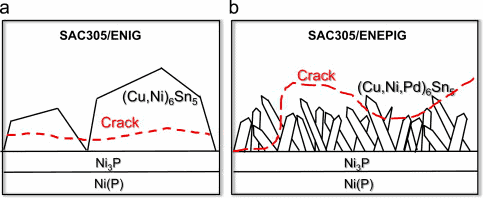
The Features Between ENIG and ENEPIG

ENEPIG finish deposition involves sequential electroless plating of nickel, palladium and immersion gold:

1. Electroless Nickel Plating

  • PCB undergoes dilute acid cleaning and microetching.
  • Activated in palladium chloride to initiate nickel deposition.
  • Electroless nickel plating solution deposits nickel through an autocatalytic chemical reaction.
  • Thickness of 5 to 8 micro-inches nickel is plated.

2. Electroless Palladium Plating

  • Nickel layer is activated in an acidic solution.
  • Electroless palladium solution deposits a thin layer of palladium, typically 0.2 to 0.5 micro-inches.
  • Palladium prevents diffusion of nickel into solder joint.

3. Immersion Gold Plating

  • PCBs are dipped in immersion gold solution which contains gold salts.
  • The gold displaces palladium through a galvanic exchange reaction.
  • Gold layer of 0.1 to 0.5 micro-inches is plated.
  • Provides solderability and wire bondability.

Comparison of ENEPIG vs Other Finishes

ENEPIG and ENIG
ENEPIG and ENIG
ParametersENEPIGENIGImm. TinOSP
SolderabilityExcellentExcellentGoodFair
Process ControlModerateDifficultEasyEasy
Lead-free solder compatibleYesYesProne to whiskersYes
Corrosion resistanceExcellentModeratePoorFair
Contact resistanceLow and stableUnstableLowModerate
Shelf life12 months6-9 months4-6 months3-6 months
Soldering heat resistanceGoodFairExcellentPoor
Wirebond compatibilityExcellentExcellentFairPoor
CostModerateHighLowVery low

Pros and Cons of ENEPIG Finish

Pros:

  • Excellent solderability and contact reliability
  • Resists corrosion as effectively as gold
  • Compatible with lead-free solders
  • Allows wire bonding
  • Provides stable low contact resistance
  • Halogen-free formulations available
  • Self-limiting and uniform thickness

Cons:

  • More expensive than tin, silver, OSP finishes
  • Requires precise process control
  • Palladium is expensive
  • Multiple plating steps increase cycle time
  • Shelf life shorter than tin finishes

Applications of ENEPIG Plating

The key applications where ENEPIG finish provides benefits are:

1. Lead-free Soldering

Compatible with lead-free solders, unlike tin finishes prone to whiskering.

2. Automotive Electronics

Withstands under-hood temperatures. Halogen-free for reduced outgassing.

3. Avionics and Aerospace

High reliability needed for extreme conditions.

4. Medical Electronics

Biocompatible finish.

5. Wireless and Portable Electronics

Supports lead-free soldering and tin whisker mitigation.

6. High Speed Digital Circuits

Gold provides low contact resistance stability.

7. Wire Bonding

The gold layer enables wire bonding.

ENEPIG Plating on Different PCB Pad Types

ENEPIG can be deposited on various finishes present on PCB pads:

Pad TypeProcess
Bare CopperDirectly applies ENEPIG finish
Immersion TinPre-activates with palladium before ENEPIG
Immersion SilverMasks pad surface before ENEPIG deposition
OSPRemoves OSP completely prior to ENEPIG
Electrolytic Nickel GoldStrips nickel and activates for ENEPIG process
Immersion GoldStrips gold, activates nickel, then follows ENEPIG steps
Solder Mask DefinedSelectively strip solder mask before plating ENEPIG

Key Process Challenges with ENEPIG

Some process challenges associated with ENEPIG plating include:

  • Uniformity: Electroless deposition depends on local chemical conditions. Careful monitoring and tank agitation is required.
  • Palladium Activation: Insufficient activation can cause non-uniform nickel deposition and gold embrittlement.
  • Bath Maintenance: Regular analysis and replenishment of electroless baths is critical.
  • Solder Mask Adhesion: Compatibility between solder mask and ENEPIG chemistry must be ensured.
  • Via Filling: Deposits thin coating only. For thicker coatings, additional electroless copper buildup may be required.

Frequently Asked Questions (FAQs)

Q1. Does ENEPIG finish contain any nickel on the surface?

No. The top surface is pure gold, with palladium and nickel below it. Palladium acts as diffusion barrier to isolate nickel from gold layer.

Q2. Can ENEPIG finish withstand multiple reflow cycles?

Yes, ENEPIG provides excellent soldering heat resistance. The underlying nickel and palladium enhance adhesion of the gold layer through repeated temperature cycling.

Q3. What is the typical thickness of ENEPIG finish?

Thickness values are: Nickel: 5-8 microinches, Palladium: 0.2-0.5 microinches, Gold: 0.1-0.5 microinches. Total thickness is usually under 1 micron.

Q4. Does ENEPIG allow both lead and lead-free soldering?

Yes, the gold outer layer of ENEPIG is highly solderable with both lead-based and lead-free solders. Underlying nickel and palladium enhance intermetallic formation.

Q5. Can ENEPIG finish withstand board assembly in wave soldering?

ENEPIG finish has adequate thermal resistance to withstand wave soldering processes, unlike PCB finishes like OSP which have poor heat resistance.

What is Xilinx XC4VLX25-10FF668C ?

Xilinx fpga chip
XC4VLX25-10FF668C - Feature Summary

Introduction

Xilinx is a leading provider of programmable logic devices including FPGAs (Field Programmable Gate Arrays). The Xilinx XC4VLX25 part number refers to a specific FPGA belonging to the Virtex-4 FPGA family that was introduced in 2006. The XC4VLX25 combines high performance, logic density and low power consumption making it well suited for a wide range of applications.

This article will provide an in-depth understanding of the Xilinx XC4VLX25-10FF668C FPGA in terms of its key features, architecture, available packages, and target applications.

XC4VLX25 FPGA Overview

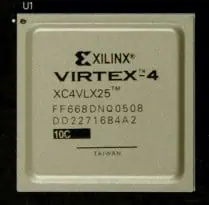
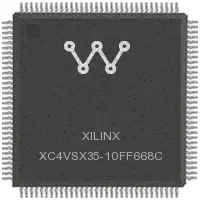
Xilinx XC4VLX25-10FF668C

The Xilinx XC4VLX25 device is a mid-range FPGA in the Virtex-4 series catering to cost-sensitive, high-volume applications. Some key characteristics are:

  • Built on 90nm copper CMOS process for power efficiency
  • Up to 25,660 logic cells providing over 200K equivalent logic gates
  • 1866 Kbits (216 blocks) of 36-Kbit fast block RAM with 2-port access
  • Up to 3.8 Gbps serial transceiver data rate per channel
  • Up to 444 user I/O pins for flexible connectivity
  • Power consumption as low as 0.15W per 1000 logic cells
  • Partial reconfiguration capability to load sections of the FPGA dynamically
  • Hard IP blocks for PCI, Ethernet, memory control etc. available

The XC4VLX25 combines Virtex-4 family features like advanced routing, DSP blocks, clock management, processors etc. in a mid-density, lower cost package suitable for high volume markets.

FPGA Architecture and Features

The Xilinx XC4VLX25 FPGA provides following key architectural components and features:

Configurable Logic Blocks (CLBs)

The basic logic building block, each CLB contains 4 interconnected slices. Each slice has two 4-input LUTs and register storage. CLBs implement logic functions and macros.

36Kb Block RAM

With 216 in-built 36Kb RAM blocks that can be cascaded for wider words, the FPGA offers up to 7.8Mb of fast on-chip RAM for data buffering.

Digital Clock Managers (DCMs)

8 on-chip DCMs provide a range of clock management features like frequency synthesis, deskew, jitter filtering etc. for high performance.

Multi-Gigabit Transceivers

Up to 16 integrated multi-gigabit serial transceivers with data rates reaching 3.8Gbps support high-speed protocols.

PCI Express Endpoint Block

The integrated Endpoint block enables PCIe connectivity with flexible lane width support.

PowerPC Processor Block

An optional on-chip IBM PowerPC 405 processor enables embedded control, peripheral management and other functions.

These advanced architectural capabilities make the XC4VLX25 suitable for complex projects beyond just glue logic.

Available Packages

The XC4VLX25 FPGA is available in three Flip-chip packages, offering pin counts of 668 to 1517 pins:

PackagePinsBall Pitch
FF6686681mm
FF9009001mm
FF114811481mm
FF151715171mm

The fine 1mm ball pitch allows these high density packages to accommodate the several hundred I/O pins. The flip-chip design provides direct die contact to the package substrate minimizing parasitics.

Applications of XC4VLX25

With its balance of logic capacity, features and cost-effectiveness, the Xilinx XC4VLX25 FPGA suits a wide spectrum of applications:

  • Automotive – Engine control units, driver assistance systems
  • Industrial – Motor drives, robotics, instrumentation
  • Video and Imaging – Video conferencing systems, medical imaging
  • Wired Communications – Switching, routing, base stations
  • Wireless Infrastructure – 3G/4G wireless base stations
  • Aerospace and Defense – Radars, guidance systems, encryption
  • High-end Consumer Devices – Gaming consoles, A/V receivers

The Virtex-4 family FPGAs offer ASIC-like capabilities but with reduced risks, cost and faster time-to-market. The density, performance and power efficiency specifically make the XC4VLX25 suitable for high volume markets like automotive, consumer devices and communications infrastructure.

XC4VLX25-10FF668C Part Number Significance

The full Xilinx part number reveals more details regarding the specific device:

XC4VLX25 – Base FPGA model

-10 – Operating speed grade (-10 = 100MHz)

FF668 – 668 pin Flip-Chip BGA package

CRoHS 6/6 compliant lead-free package

Therefore, the XC4VLX25-10FF668C indicates:

  • Virtex-4 XC4VLX25 family FPGA
  • Lowest cost -10 speed grade
  • High density 668 pin FF BGA package
  • RoHS 6/6 compliant Pb-free solder balls

This combination targets cost-driven high volume applications which can use the available logic and features without needing max performance.

Summary

The Xilinx XC4VLX25-10FF668C FPGA delivers an optimal mix of capacity, capabilities and cost-effectiveness on proven 90nm Virtex-4 technology. Over 200K logic cell density, 3600Kb of on-chip RAM, up to 16 multi-gigabit serial transceivers, abundant hard IP blocks and 1mm fine pitch 668 pin packaging suit the device to a large variety of applications in automotive, industrial, communications, aerospace/defense and other high volume segments. The performance, features and smaller cost provides ASIC-class value at lower risk and time-to-market.

FAQs

What is the main difference between Virtex-4 and Virtex-5 FPGAs?

Virtex-5 moved to 65nm process advancing to 40nm lithography for added density and performance compared to 90nm Virtex-4 generation.

What voltage does XC4VLX25 operate at?

XC4VLX25 supports voltage from 0.97V to 1.2V allowing optimized power efficiency. 1.0V is the nominal supply voltage.

Does XC4VLX25 support partial reconfiguration?

Yes, the early access partial reconfiguration feature is available in XC4VLX25 to dynamically modify sections of the FPGA as needed.

What is the typical power consumption of XC4VLX25?

At 500K gate utilization, supply voltage of 1V and speed grade -10, power is typically under 2W. Maximum thermal power reaches 15W.

What is the difference between FX668 and FF668 packages?

FF668 is the Flip-chip version while FX668 is the same 668 pin count but wire-bonded package. FF provides better electrical performance than FX.

Introduction

Xilinx is a leading provider of programmable logic devices including FPGAs (Field Programmable Gate Arrays). The Xilinx XC4VLX25 part number refers to a specific FPGA belonging to the Virtex-4 FPGA family that was introduced in 2006. The XC4VLX25 combines high performance, logic density and low power consumption making it well suited for a wide range of applications.

This article will provide an in-depth understanding of the Xilinx XC4VLX25-10FF668C FPGA in terms of its key features, architecture, available packages, and target applications.

XC4VLX25 FPGA Overview

The Xilinx XC4VLX25 device is a mid-range FPGA in the Virtex-4 series catering to cost-sensitive, high-volume applications. Some key characteristics are:

  • Built on 90nm copper CMOS process for power efficiency
  • Up to 25,660 logic cells providing over 200K equivalent logic gates
  • 1866 Kbits (216 blocks) of 36-Kbit fast block RAM with 2-port access
  • Up to 3.8 Gbps serial transceiver data rate per channel
  • Up to 444 user I/O pins for flexible connectivity
  • Power consumption as low as 0.15W per 1000 logic cells
  • Partial reconfiguration capability to load sections of the FPGA dynamically
  • Hard IP blocks for PCI, Ethernet, memory control etc. available

The XC4VLX25 combines Virtex-4 family features like advanced routing, DSP blocks, clock management, processors etc. in a mid-density, lower cost package suitable for high volume markets.

FPGA Architecture and Features

The Xilinx XC4VLX25 FPGA provides following key architectural components and features:

Configurable Logic Blocks (CLBs)

The basic logic building block, each CLB contains 4 interconnected slices. Each slice has two 4-input LUTs and register storage. CLBs implement logic functions and macros.

36Kb Block RAM

With 216 in-built 36Kb RAM blocks that can be cascaded for wider words, the FPGA offers up to 7.8Mb of fast on-chip RAM for data buffering.

Digital Clock Managers (DCMs)

8 on-chip DCMs provide a range of clock management features like frequency synthesis, deskew, jitter filtering etc. for high performance.

Multi-Gigabit Transceivers

Up to 16 integrated multi-gigabit serial transceivers with data rates reaching 3.8Gbps support high-speed protocols.

PCI Express Endpoint Block

The integrated Endpoint block enables PCIe connectivity with flexible lane width support.

PowerPC Processor Block

An optional on-chip IBM PowerPC 405 processor enables embedded control, peripheral management and other functions.

Show Image

These advanced architectural capabilities make the XC4VLX25 suitable for complex projects beyond just glue logic.

Available Packages

The XC4VLX25 FPGA is available in three Flip-chip packages, offering pin counts of 668 to 1517 pins:

PackagePinsBall Pitch
FF6686681mm
FF9009001mm
FF114811481mm
FF151715171mm

The fine 1mm ball pitch allows these high density packages to accommodate the several hundred I/O pins. The flip-chip design provides direct die contact to the package substrate minimizing parasitics.

Applications of XC4VLX25

With its balance of logic capacity, features and cost-effectiveness, the Xilinx XC4VLX25 FPGA suits a wide spectrum of applications:

  • Automotive – Engine control units, driver assistance systems
  • Industrial – Motor drives, robotics, instrumentation
  • Video and Imaging – Video conferencing systems, medical imaging
  • Wired Communications – Switching, routing, base stations
  • Wireless Infrastructure – 3G/4G wireless base stations
  • Aerospace and Defense – Radars, guidance systems, encryption
  • High-end Consumer Devices – Gaming consoles, A/V receivers

The Virtex-4 family FPGAs offer ASIC-like capabilities but with reduced risks, cost and faster time-to-market. The density, performance and power efficiency specifically make the XC4VLX25 suitable for high volume markets like automotive, consumer devices and communications infrastructure.

XC4VLX25-10FF668C Part Number Significance

The full Xilinx part number reveals more details regarding the specific device:

XC4VLX25 – Base FPGA model

-10 – Operating speed grade (-10 = 100MHz)

FF668 – 668 pin Flip-Chip BGA package

C – RoHS 6/6 compliant lead-free package

Therefore, the XC4VLX25-10FF668C indicates:

  • Virtex-4 XC4VLX25 family FPGA
  • Lowest cost -10 speed grade
  • High density 668 pin FF BGA package
  • RoHS 6/6 compliant Pb-free solder balls

This combination targets cost-driven high volume applications which can use the available logic and features without needing max performance.

Summary

The Xilinx XC4VLX25-10FF668C FPGA delivers an optimal mix of capacity, capabilities and cost-effectiveness on proven 90nm Virtex-4 technology. Over 200K logic cell density, 3600Kb of on-chip RAM, up to 16 multi-gigabit serial transceivers, abundant hard IP blocks and 1mm fine pitch 668 pin packaging suit the device to a large variety of applications in automotive, industrial, communications, aerospace/defense and other high volume segments. The performance, features and smaller cost provides ASIC-class value at lower risk and time-to-market.

FAQs

What is the main difference between Virtex-4 and Virtex-5 FPGAs?

Virtex-5 moved to 65nm process advancing to 40nm lithography for added density and performance compared to 90nm Virtex-4 generation.

What voltage does XC4VLX25 operate at?

XC4VLX25 supports voltage from 0.97V to 1.2V allowing optimized power efficiency. 1.0V is the nominal supply voltage.

Does XC4VLX25 support partial reconfiguration?

Yes, the early access partial reconfiguration feature is available in XC4VLX25 to dynamically modify sections of the FPGA as needed.

What is the typical power consumption of XC4VLX25?

At 500K gate utilization, supply voltage of 1V and speed grade -10, power is typically under 2W. Maximum thermal power reaches 15W.

What is the difference between FX668 and FF668 packages?

FF668 is the Flip-chip version while FX668 is the same 668 pin count but wire-bonded package. FF provides better electrical performance than FX.

All about Xilinx XC4020XL-09HT176C FPGA

circuit board electronic components

XC4020XL-09HT176C

XC4020XL-09HT176C

XC4020XL-09HT176C Features

Third Generation Field-Programmable Gate Arrays

โ€“ On-chip ultra-fast RAM with synchronous write option

โ€“ Dual-port RAM option

โ€“ Fully PCI compliant

โ€“ Abundant flip-flops

โ€“ Flexible function generators

โ€“ Dedicated high-speed carry-propagation circuit

โ€“ Wide edge decoders (four per edge)

โ€“ Hierarchy of interconnect lines

โ€“ Internal 3-state bus capability

โ€“ 8 global low-skew clock or signal distribution network

Flexible Array Architecture

โ€“ Programmable logic blocks and I/O blocks

โ€“ Programmable interconnects and wide decoders

Sub-micron CMOS Process

โ€“ High-speed logic and Interconnect

โ€“ Low power consumption

Systems-Oriented Features

โ€“ IEEE 1149.1-compatible boundary-scan logic support

โ€“ Programmable output slew rate (2 modes)

โ€“ Programmable input pull-up or pull-down resistors

โ€“ 12-mA sink current per output

โ€“ 24-mA sink current per output pair

Configured by Loading Binary File

โ€“ Unlimited reprogrammability

โ€“ Six programming modes

XACT Development System runs on โ€™386/โ€™486/

Pentium-type PC, Apollo, Sun-4, and Hewlett-Packard 700 series

โ€“ Interfaces to popular design environments like

Viewlogic, Mentor Graphics and OrCAD

โ€“ Fully automatic partitioning, placement and routing

โ€“ Interactive design editor for design optimization

โ€“ 288 macros, 34 hard macros, RAM/ROM compiler

XC4020XL-09HT176C

XC4020XL-09HT176C Description

The XC4000E family of Field-Programmable Gate Arrays

(FPGAs) provides the benefits of custom CMOS VLSI, while avoiding the initial cost, time delay, and inherent risk of a conventional masked gate array.

The XC4000E family provides a regular, flexible, pro-grammable architecture of Configurable Logic Blocks (CLBs), interconnected by a powerful hierarchy of versa-tile routing resources, and surrounded by a perimeter of programmable Input/Output Blocks (IOBs).

XC4000E devices have generous routing resources to accommodate the most complex interconnect patterns.

They are customized by loading configuration data into the internal memory cells. The FPGA can either actively read its configuration data out of external serial or byte-parallel PROM (master modes), or the configuration data can be written into the FPGA (slave and peripheral modes).

The XC4000E family is supported by powerful and sophis-ticated software, covering every aspect of design: from schematic entry, to simulation, to automatic block place-ment and routing of interconnects, and finally the creation of the configuration bit stream.

FPGAs are ideal for shortening the design and develop-ment cycle, but they also offer a cost-effective solution for production rates well beyond 1,000 systems per month.

The XC4000E family is a superset of the popular XC4000 family.