Understanding IPC-A-630: Inspection & Testing Standards for Electronic Housings (PDF Download)

Introduction

In the rapidly evolving world of electronics manufacturing, ensuring the quality and reliability of electronic housings is paramount. The IPC-A-630 standard plays a crucial role in this process, providing comprehensive guidelines for the inspection and testing of electronic housings. This article delves deep into the intricacies of IPC-A-630, exploring its scope, key components, and significance in the electronics industry.

Powered By EmbedPress

What is IPC-A-630?

Definition and Purpose

IPC-A-630, titled “Acceptability Standard for Manufacture, Inspection, and Testing of Electronic Enclosures,” is a set of guidelines developed by the IPC (Institute for Printed Circuits). This standard establishes the criteria for visual, mechanical, and functional acceptability of electronic enclosures and housings.

YouTube video

Historical Context

The development of IPC-A-630 stems from the need for standardized quality control in the electronics manufacturing industry. As electronic devices became more complex and prevalent, the demand for reliable and consistent housing standards increased, leading to the creation of this comprehensive guideline.

Scope and Application of IPC-A-630
ipc-6012-class-2

Types of Electronic Housings Covered

IPC-A-630 applies to a wide range of electronic housings, including:

  1. Consumer electronics enclosures
  2. Industrial equipment housings
  3. Automotive electronic enclosures
  4. Aerospace and defense electronic housings
  5. Medical device enclosures

Industries Impacted

The standard is crucial for various sectors:

  • Consumer Electronics
  • Automotive Industry
  • Aerospace and Defense
  • Medical Devices
  • Industrial Automation
  • Telecommunications

Key Components of IPC-A-630

1. Visual Inspection Criteria

Surface Finish Requirements

  • Uniformity: Guidelines for consistent surface appearance
  • Defect Tolerances: Acceptable limits for scratches, dents, and other visual imperfections
  • Color Matching: Standards for color consistency across housing components

Dimensional Accuracy

  • Tolerances: Specified dimensional tolerances for various housing types
  • Measurement Methods: Recommended techniques for accurate dimensional verification

2. Mechanical Testing Standards

Durability Tests

  • Impact Resistance: Procedures for testing housing resilience to impacts
  • Vibration Testing: Methods to assess housing stability under vibration
  • Thermal Cycling: Evaluating housing performance under temperature fluctuations

Structural Integrity

  • Load Bearing Capacity: Standards for weight-bearing capabilities
  • Stress Testing: Procedures to assess housing resistance to mechanical stress

3. Environmental Testing Guidelines

Ingress Protection (IP) Ratings

  • Dust Resistance: Testing methods for dust ingress prevention
  • Water Resistance: Procedures for assessing water ingress protection
  • IP Code Interpretation: Understanding and applying IP ratings

Temperature and Humidity Testing

  • Extreme Temperature Performance: Evaluating housing integrity in extreme hot and cold conditions
  • Humidity Resistance: Assessing housing performance in high-humidity environments

4. Electromagnetic Compatibility (EMC) Considerations

Shielding Effectiveness

  • EMI Shielding: Standards for electromagnetic interference protection
  • RF Leakage: Testing procedures for radio frequency containment

Grounding and Bonding

  • Electrical Continuity: Requirements for proper grounding of housing components
  • Bonding Methods: Approved techniques for ensuring electrical continuity

5. Material Compliance and Safety

Material Selection Criteria

  • Flammability Ratings: Requirements for fire-resistant materials
  • Toxicity Standards: Guidelines for using non-toxic materials in housing construction

Safety Certifications

  • UL Compliance: Aligning with Underwriters Laboratories safety standards
  • CE Marking: Ensuring conformity with European safety standards

Read more about:

Inspection Methodologies in IPC-A-630

Visual Inspection Techniques

Naked Eye Inspection

  • Lighting Conditions: Specified lighting requirements for accurate visual inspection
  • Inspection Angles: Recommended viewing angles for comprehensive surface examination

Magnification Methods

  • Microscope Usage: Guidelines for using microscopes in detailed inspections
  • Digital Imaging: Utilizing digital cameras and image analysis for defect detection

Non-Destructive Testing (NDT) Methods

X-ray Inspection

  • Internal Structure Analysis: Using X-rays to examine internal housing components
  • Defect Detection: Identifying hidden flaws or inconsistencies

Ultrasonic Testing

  • Thickness Measurement: Assessing housing wall thickness uniformity
  • Void Detection: Identifying internal voids or delaminations in housing materials

Functional Testing Approaches

Electrical Continuity Tests

  • Conductivity Checks: Ensuring proper electrical pathways in metal housings
  • Insulation Resistance: Testing the insulating properties of non-conductive housing materials

Thermal Imaging

  • Heat Distribution Analysis: Evaluating heat dissipation properties of housings
  • Hotspot Detection: Identifying areas of thermal stress or poor heat management

Importance of IPC-A-630 in Quality Assurance

Ensuring Product Reliability

Longevity and Durability

  • Lifecycle Predictions: Using IPC-A-630 standards to estimate product lifespan
  • Failure Rate Reduction: Minimizing product failures through stringent testing

Performance Consistency

  • Batch-to-Batch Uniformity: Ensuring consistent quality across production runs
  • Environmental Adaptability: Guaranteeing product performance in various environments

Regulatory Compliance

Meeting Industry Standards

  • ISO Compliance: Aligning with International Organization for Standardization requirements
  • Industry-Specific Regulations: Adhering to sector-specific regulatory frameworks

Legal and Liability Considerations

  • Product Safety Assurance: Minimizing legal risks associated with product failures
  • Warranty Support: Providing a basis for comprehensive warranty policies

Implementing IPC-A-630 in Manufacturing Processes

Integration into Quality Control Systems

Training and Certification

  • Inspector Certification: Programs for training and certifying quality control personnel
  • Continuous Education: Keeping staff updated on standard revisions and updates

Documentation and Record-Keeping

  • Inspection Logs: Maintaining detailed records of all inspection and testing procedures
  • Traceability Systems: Implementing methods to track housing components through production

Automated Inspection Technologies

Machine Vision Systems

  • Automated Visual Inspection: Utilizing AI and machine learning for defect detection
  • High-Speed Imaging: Incorporating rapid imaging techniques for production line inspection

Robotic Testing Systems

  • Automated Mechanical Testing: Using robots for consistent and repeatable mechanical tests
  • Integrated Testing Stations: Designing production lines with built-in testing capabilities

Challenges in Adhering to IPC-A-630

Balancing Cost and Quality

Investment in Testing Equipment

  • Cost-Benefit Analysis: Evaluating the return on investment for advanced testing equipment
  • Scalability Considerations: Adapting testing processes for different production volumes

Training and Skill Development

  • Workforce Upskilling: Costs associated with training personnel in IPC-A-630 standards
  • Expert Consultation: Engaging industry experts for complex implementation challenges

Keeping Up with Standard Updates

Revision Management

  • Standard Versioning: Tracking and implementing updates to the IPC-A-630 standard
  • Legacy Product Considerations: Managing older products against updated standards

Industry Collaboration

  • Participation in Standards Development: Engaging with IPC and industry peers in standard evolution
  • Feedback Loops: Providing industry feedback for future standard improvements

Future Trends in Electronic Housing Standards

Advancements in Material Science

New Composite Materials

  • Lightweight Alloys: Exploring advanced alloys for improved strength-to-weight ratios
  • Smart Materials: Incorporating materials with self-healing or adaptive properties

Sustainable Manufacturing

  • Eco-Friendly Materials: Developing standards for environmentally sustainable housing materials
  • Recyclability Guidelines: Incorporating end-of-life considerations into housing design

Integration with Internet of Things (IoT)

Smart Housing Features

  • Embedded Sensors: Standards for integrating diagnostic sensors into housing designs
  • Connectivity Requirements: Guidelines for housing designs compatible with IoT ecosystems

Data Security Considerations

  • Physical Tampering Prevention: Standards for tamper-evident and tamper-resistant housings
  • Electromagnetic Security: Enhanced EMI shielding for data protection

Case Studies: IPC-A-630 in Action

Automotive Electronics

Electric Vehicle Battery Housings

  • Thermal Management: Applying IPC-A-630 principles to EV battery enclosure design
  • Safety Standards Compliance: Ensuring housings meet stringent automotive safety requirements

In-Vehicle Infotainment Systems

  • Durability in Varied Conditions: Testing housings for resistance to temperature extremes and vibrations
  • EMC Compliance: Ensuring infotainment system housings meet automotive EMC standards

Aerospace Applications

Avionics Housings

  • Extreme Environment Testing: Applying IPC-A-630 guidelines for high-altitude and space environments
  • Weight Optimization: Balancing durability with weight constraints in aerospace applications

Satellite Components

  • Radiation Resistance: Incorporating additional testing for radiation-hardened housings
  • Thermal Cycling in Vacuum: Specialized testing procedures for space-bound electronics housings

Conclusion

The IPC-A-630 standard plays a vital role in ensuring the quality, reliability, and safety of electronic housings across various industries. By providing comprehensive guidelines for inspection and testing, it helps manufacturers produce housings that meet the rigorous demands of modern electronic devices.

As technology continues to evolve, the importance of standards like IPC-A-630 will only grow. Manufacturers, quality control professionals, and engineers must stay abreast of these standards to ensure their products meet the highest quality benchmarks. The future of electronic housing design and manufacturing will likely see even more stringent standards, incorporating new materials, smart technologies, and environmental considerations.

Adhering to IPC-A-630 not only ensures product quality but also drives innovation in the field of electronic housings. As we move towards more complex and demanding electronic applications, the role of robust, reliable, and well-tested housings becomes increasingly critical. By understanding and implementing these standards, industry professionals can contribute to the advancement of electronic technology while ensuring the safety and satisfaction of end-users.

IPC-6018 Standard Explained: High-Frequency/Microwave PCB Qualification for Aerospace & Military (PDF Download)

PCB IPC standards

Introduction to IPC 6018

The IPC-6018 standard is a crucial document in the world of high-frequency and microwave printed circuit boards (PCBs), particularly for aerospace and military applications. This standard, developed by the Association Connecting Electronics Industries (IPC), sets forth the qualification and performance requirements for PCBs used in high-reliability electronic systems operating at high frequencies.

The Importance of IPC 6018

In an era where electronic systems are becoming increasingly complex and operating at higher frequencies, the IPC 6018 standard plays a vital role in ensuring the reliability and performance of PCBs in critical applications. This standard is especially important for aerospace and military sectors, where failure is not an option, and performance must be guaranteed under extreme conditions.

Powered By EmbedPress

Understanding the IPC-6018 Standard

What is IPC 6018?

IPC 6018 is a standard that specifies the qualification and performance requirements for high-frequency (RF, microwave, and millimeter-wave) printed boards. It covers both rigid and flexible PCBs used in high-reliability electronic systems, with a particular focus on aerospace and military applications.

Scope of IPC 6018

The standard encompasses various aspects of PCB manufacturing and testing, including:

  1. Material requirements
  2. Electrical performance specifications
  3. Mechanical properties
  4. Environmental durability
  5. Quality assurance measures

Evolution of IPC 6018

The IPC 6018 standard has evolved over time to keep pace with advancements in PCB technology and the increasing demands of high-frequency applications. The current version, IPC-6018D, was released in 2019, incorporating the latest industry knowledge and best practices.

Key Components of IPC 6018

Material Requirements

Substrate Materials

IPC 6018 specifies the types of substrate materials suitable for high-frequency PCBs. These materials must exhibit specific electrical and mechanical properties to ensure optimal performance at high frequencies.

  1. Low dielectric constant (Dk)
  2. Low dissipation factor (Df)
  3. Consistent electrical properties across frequencies
  4. Thermal stability
  5. Dimensional stability

Conductor Materials

The standard also outlines requirements for conductor materials, typically copper, used in high-frequency PCBs:

  1. Surface roughness specifications
  2. Purity requirements
  3. Thickness tolerances

Electrical Performance Specifications

Impedance Control

One of the critical aspects of high-frequency PCB design is impedance control. IPC 6018 sets forth stringent requirements for impedance tolerances, typically ยฑ10% or tighter, depending on the application.

Insertion Loss

The standard specifies maximum allowable insertion loss values across different frequency ranges, ensuring signal integrity in high-frequency applications.

Return Loss

IPC 6018 also defines acceptable return loss values, which are crucial for minimizing signal reflections in high-frequency circuits.

Mechanical Properties

Dimensional Stability

Given the critical nature of aerospace and military applications, IPC 6018 places great emphasis on the dimensional stability of PCBs. This includes:

  1. Strict tolerances for board thickness
  2. Flatness requirements
  3. Bow and twist limitations

Thermal Management

The standard addresses thermal management considerations, crucial for high-power RF and microwave applications:

  1. Thermal conductivity requirements
  2. Coefficient of thermal expansion (CTE) specifications
  3. Guidelines for thermal vias and heat-sinking techniques

Environmental Durability

Temperature Extremes

Aerospace and military applications often involve exposure to extreme temperatures. IPC 6018 specifies requirements for PCB performance across a wide temperature range, typically from -55ยฐC to +125ยฐC or beyond.

Humidity Resistance

The standard includes specifications for humidity resistance, ensuring that PCBs can maintain their electrical and mechanical properties in high-humidity environments.

Vibration and Shock Resistance

Given the harsh conditions often encountered in aerospace and military applications, IPC 6018 sets forth requirements for vibration and shock resistance:

  1. Vibration testing protocols
  2. Shock testing specifications
  3. Requirements for component attachment strength

Read more about:

Quality Assurance in IPC 6018

Inspection and Testing Requirements

Visual Inspection

IPC 6018 outlines detailed visual inspection criteria for high-frequency PCBs, including:

  1. Surface finish quality
  2. Conductor width and spacing tolerances
  3. Via and hole quality
  4. Solder mask and legend requirements

Electrical Testing

The standard specifies a range of electrical tests to ensure PCB performance:

  1. Impedance testing
  2. Insertion loss measurements
  3. Return loss testing
  4. Time-domain reflectometry (TDR) analysis

Reliability Testing

IPC 6018 includes requirements for various reliability tests:

  1. Thermal cycling
  2. Thermal shock
  3. Humidity aging
  4. Salt spray resistance

Documentation and Traceability

Manufacturing Process Documentation

The standard requires detailed documentation of the manufacturing process, including:

  1. Material certifications
  2. Process control records
  3. Inspection and test results

Traceability Requirements

IPC 6018 emphasizes the importance of traceability in high-reliability applications:

  1. Unique identification for each PCB
  2. Lot traceability for materials and processes
  3. Record retention requirements

Implementing IPC 6018 in PCB Manufacturing

Design Considerations

Layout Guidelines

To meet IPC 6018 requirements, PCB designers must adhere to specific layout guidelines:

  1. Controlled impedance routing techniques
  2. Proper grounding and shielding practices
  3. Minimization of crosstalk and electromagnetic interference (EMI)

Material Selection

Choosing the right materials is crucial for compliance with IPC 6018:

  1. Selection of appropriate substrate materials
  2. Consideration of copper foil properties
  3. Evaluation of surface finish options

Manufacturing Process Controls

Process Capability Analysis

Manufacturers must demonstrate process capability to consistently meet IPC 6018 requirements:

  1. Statistical process control (SPC) implementation
  2. Ongoing monitoring of critical parameters
  3. Continuous improvement initiatives

Employee Training and Certification

IPC 6018 emphasizes the importance of skilled personnel:

  1. IPC certification requirements for key personnel
  2. Ongoing training programs
  3. Demonstration of proficiency in high-frequency PCB manufacturing

Challenges in Meeting IPC 6018 Requirements

Technological Challenges

Increasing Frequencies

As applications push into higher frequency ranges, meeting IPC 6018 requirements becomes more challenging:

  1. Increased sensitivity to material properties
  2. Stricter tolerances for manufacturing processes
  3. More complex testing and measurement requirements

Miniaturization Trends

The trend towards smaller, more densely packed PCBs presents challenges:

  1. Maintaining impedance control in tighter spaces
  2. Balancing thermal management with size constraints
  3. Ensuring reliability in more compact designs

Economic Considerations

Cost of Compliance

Meeting IPC 6018 requirements often involves significant investments:

  1. Advanced manufacturing equipment
  2. Specialized testing and measurement tools
  3. Higher-grade materials

Balancing Quality and Cost

Manufacturers must find ways to meet stringent requirements while remaining cost-competitive:

  1. Process optimization strategies
  2. Investment in automation technologies
  3. Continuous improvement initiatives to reduce waste and rework

Future Trends and Developments in IPC 6018

Emerging Technologies

5G and Beyond

As 5G technology rolls out and research into 6G begins, IPC 6018 will likely evolve to address new challenges:

  1. Higher frequency requirements
  2. More complex antenna designs
  3. Integration of RF and digital circuits

Additive Manufacturing

The adoption of additive manufacturing techniques in PCB production may lead to updates in IPC 6018:

  1. New material specifications
  2. Modified testing protocols
  3. Revised manufacturing process requirements

Sustainability Considerations

Environmental Regulations

Future revisions of IPC 6018 may incorporate more stringent environmental considerations:

  1. Restrictions on harmful substances
  2. Requirements for recyclable or biodegradable materials
  3. Energy efficiency standards for manufacturing processes

Life Cycle Assessment

The standard may evolve to include life cycle assessment criteria:

  1. Carbon footprint considerations
  2. End-of-life disposal guidelines
  3. Repairability and upgradability requirements

Conclusion

The IPC 6018 standard plays a crucial role in ensuring the reliability and performance of high-frequency and microwave PCBs in aerospace and military applications. By setting forth comprehensive requirements for materials, electrical performance, mechanical properties, and quality assurance, IPC 6018 helps manufacturers produce PCBs that can withstand the rigorous demands of these critical sectors.

As technology continues to advance and new challenges emerge, the IPC 6018 standard will undoubtedly evolve to address these changes. Manufacturers, designers, and engineers working in the high-frequency PCB domain must stay abreast of these developments to ensure continued compliance and maintain their competitive edge in this demanding field.

By adhering to the IPC 6018 standard, the industry can continue to push the boundaries of what’s possible in high-frequency and microwave electronics, enabling new advancements in aerospace, military, and other high-reliability applications. The ongoing collaboration between industry stakeholders and standards bodies like IPC will be crucial in shaping the future of high-frequency PCB technology and ensuring its continued success in meeting the ever-increasing demands of modern electronic systems.

Complete Guide to IPC-6012: Class 2 & 3 PCB Standards, Copper Thickness, Annular Ring & Solder Mask Requirements (PDF Download)

PCB IPC standards

Introduction to IPC-6012

IPC-6012 is a crucial standard in the printed circuit board (PCB) industry, providing comprehensive requirements for the qualification and performance of rigid PCBs. This guide delves into the intricacies of IPC-6012, focusing on Class 2 and Class 3 PCB standards, copper thickness specifications, annular ring requirements, and solder mask guidelines. Whether you’re a PCB designer, manufacturer, or quality assurance professional, understanding IPC-6012 is essential for producing high-quality, reliable PCBs.

Overview of IPC-6012

What is IPC-6012?

IPC-6012 is a standard developed by the Association Connecting Electronics Industries (IPC) that specifies the qualification and performance requirements for rigid printed boards. It covers various aspects of PCB manufacturing, including materials, mechanical and electrical properties, and quality assurance measures.

Evolution of IPC-6012

The IPC-6012 standard has undergone several revisions to keep pace with advancements in PCB technology. The current version, IPC-6012E, was released in 2019, building upon previous iterations to address new challenges and technologies in the PCB industry.

Importance of IPC-6012 in PCB Manufacturing

IPC-6012 plays a critical role in ensuring consistency and quality in PCB production. By providing clear specifications and requirements, it helps:

  1. Standardize PCB quality across the industry
  2. Improve communication between PCB manufacturers and customers
  3. Ensure reliability and performance of finished PCBs
  4. Facilitate quality control and inspection processes

Class 2 and Class 3 PCB Standards

ipc-6012-class-2

IPC-6012 defines three classes of PCBs, each with different levels of quality and reliability requirements. We’ll focus on Class 2 and Class 3, as they are the most commonly used in the industry.

Class 2 PCB Standards

Definition and Applications

Class 2 PCBs are designed for dedicated service electronic products where extended life and continued performance are required, but uninterrupted service is not critical.

Key Requirements for Class 2 PCBs

  1. Moderate allowances for physical imperfections
  2. Stricter tolerances compared to Class 1
  3. Focus on extended life and reliability

Common Applications for Class 2 PCBs

  1. Consumer electronics
  2. Industrial equipment
  3. Automotive electronics

Class 3 PCB Standards

Definition and Applications

Class 3 PCBs are intended for high-reliability electronic products where continued performance or performance on demand is critical, equipment downtime cannot be tolerated, and the end-use environment may be uncommonly harsh.

Key Requirements for Class 3 PCBs

  1. Minimal allowances for physical imperfections
  2. Tightest tolerances among all classes
  3. Emphasis on high reliability and performance in demanding conditions

Common Applications for Class 3 PCBs

  1. Aerospace and defense systems
  2. Medical devices
  3. Critical infrastructure equipment

Comparing Class 2 and Class 3 Standards

While both Class 2 and Class 3 have stringent requirements, Class 3 is generally more demanding in several areas:

  1. Dimensional Tolerances: Class 3 has tighter tolerances for board thickness, hole diameters, and other dimensional aspects.
  2. Electrical Performance: Class 3 requires stricter adherence to electrical parameters such as impedance control.
  3. Visual Acceptance Criteria: Class 3 allows fewer cosmetic imperfections and requires higher standards for visual quality.
  4. Testing and Inspection: Class 3 often requires more extensive testing and inspection procedures to ensure reliability.

Read more about:

Copper Thickness Requirements

Copper thickness is a critical factor in PCB performance and reliability. IPC-6012 provides detailed specifications for copper thickness in various PCB applications.

Importance of Copper Thickness

Proper copper thickness is essential for:

  1. Current-carrying capacity
  2. Thermal management
  3. Mechanical strength
  4. Signal integrity

IPC-6012 Copper Thickness Specifications

External Copper Thickness

IPC-6012 specifies minimum copper thickness requirements for external layers:

  1. Class 2: Typically 0.5 oz/ftยฒ (17.5 ยตm) minimum
  2. Class 3: Often requires 1 oz/ftยฒ (35 ยตm) minimum

Internal Copper Thickness

For internal layers, the standard specifies:

  1. Class 2: Typically 0.5 oz/ftยฒ (17.5 ยตm) minimum
  2. Class 3: Often requires 0.5 oz/ftยฒ (17.5 ยตm) minimum, with some applications requiring 1 oz/ftยฒ (35 ยตm)

Factors Affecting Copper Thickness Requirements

  1. Current Capacity: Higher current applications require thicker copper.
  2. Thermal Management: Thicker copper helps dissipate heat more effectively.
  3. Impedance Control: Copper thickness affects trace impedance, crucial for high-speed designs.
  4. Plating Processes: Consider the impact of plating on final copper thickness.
annular ring via
annular ring via

Annular Ring Requirements

Annular rings are crucial for the reliability of plated through-holes in PCBs. IPC-6012 provides specific requirements for annular ring dimensions and quality.

Definition of Annular Ring

An annular ring is the copper area surrounding a drilled hole in a PCB. It provides mechanical strength and electrical connectivity between layers.

IPC-6012 Annular Ring Specifications

Minimum Annular Ring Requirements

  1. Class 2: Typically requires a minimum of 2 mil (0.05 mm) annular ring
  2. Class 3: Often requires a minimum of 3 mil (0.075 mm) annular ring

Breakout Allowances

  1. Class 2: Allows up to 90-degree breakout on isolated instances
  2. Class 3: Generally does not allow any breakout

Factors Affecting Annular Ring Requirements

  1. Hole Size: Smaller holes generally require larger annular rings for reliability.
  2. Layer Count: Higher layer count boards may have more stringent annular ring requirements.
  3. Board Thickness: Thicker boards may require larger annular rings to maintain reliability.
  4. Manufacturing Processes: Consider the impact of drilling and plating processes on annular ring size.

Solder Mask Requirements

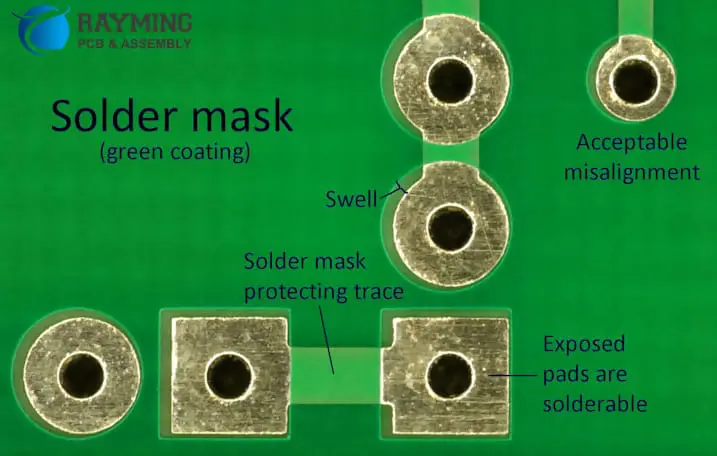
Solder mask is a critical component in PCB manufacturing, providing protection and insulation. IPC-6012 outlines specific requirements for solder mask application and quality.

Importance of Solder Mask

Solder mask serves several crucial functions:

  1. Protecting copper traces from oxidation
  2. Preventing solder bridges during assembly
  3. Improving the board’s appearance and readability

IPC-6012 Solder Mask Specifications

Coverage Requirements

  1. Class 2: Allows minor imperfections in solder mask coverage
  2. Class 3: Requires more complete and uniform solder mask coverage

Thickness Specifications

IPC-6012 specifies solder mask thickness requirements:

  1. Minimum thickness over conductors
  2. Maximum thickness in non-conductor areas

Alignment Tolerances

The standard provides guidelines for solder mask alignment:

  1. Class 2: Allows moderate misalignment
  2. Class 3: Requires tighter alignment tolerances

Solder Mask Considerations

  1. Color: While green is traditional, other colors may be used based on application requirements.
  2. Type: Liquid photoimageable solder masks are most common, but dry film options are available.
  3. Selective Application: Some designs require selective solder mask application for specific areas.

Quality Assurance and Inspection

IPC-6012 provides comprehensive guidelines for quality assurance and inspection processes to ensure PCBs meet the required standards.

Visual Inspection Requirements

Class 2 Visual Inspection

  1. Moderate allowances for cosmetic imperfections
  2. Focus on functional aspects of the PCB

Class 3 Visual Inspection

  1. Stricter criteria for visual defects
  2. Emphasis on both cosmetic and functional perfection

Electrical Testing Requirements

IPC-6012 specifies various electrical tests, including:

  1. Continuity testing
  2. Isolation testing
  3. Impedance testing (for controlled impedance boards)

Microsection Analysis

Microsection analysis is crucial for verifying internal structure:

  1. Plated through-hole quality
  2. Layer-to-layer registration
  3. Internal layer copper thickness

Thermal Stress Testing

IPC-6012 outlines thermal stress testing requirements:

  1. Solder float test
  2. Thermal cycling
  3. Thermal shock testing

Implementation of IPC-6012 in PCB Manufacturing

Steps for Adopting IPC-6012 Standards

  1. Education and Training: Ensure all relevant staff are familiar with IPC-6012 requirements.
  2. Process Evaluation: Assess current manufacturing processes against IPC-6012 standards.
  3. Equipment Upgrades: Invest in necessary equipment to meet IPC-6012 specifications.
  4. Quality Control Implementation: Develop and implement quality control procedures aligned with IPC-6012.
  5. Documentation: Create comprehensive documentation for all processes and quality control measures.
  6. Supplier Alignment: Ensure suppliers understand and can meet IPC-6012 requirements.

Challenges in Implementing IPC-6012

  1. Cost Considerations: Meeting higher standards may initially increase production costs.
  2. Technical Expertise: Requires a high level of technical knowledge and skill.
  3. Process Changes: May necessitate significant changes to existing manufacturing processes.
  4. Equipment Upgrades: May require investment in new or upgraded manufacturing and testing equipment.

Benefits of IPC-6012 Compliance

  1. Improved Product Quality: Ensures consistently high-quality PCBs.
  2. Customer Confidence: Demonstrates commitment to industry-recognized standards.
  3. Reduced Defects: Helps minimize manufacturing defects and field failures.
  4. Competitive Advantage: Positions manufacturers as quality-focused suppliers.

Future Trends and Updates in IPC-6012

Emerging Technologies

  1. High-Density Interconnect (HDI): Expect future revisions to address advanced HDI technologies.
  2. Flexible and Rigid-Flex PCBs: Increased focus on requirements for flexible circuit technologies.
  3. Embedded Components: Guidelines for PCBs with embedded active and passive components.

Sustainability Considerations

  1. Environmental Compliance: Future updates may include more emphasis on environmentally friendly materials and processes.
  2. Energy Efficiency: Guidelines for energy-efficient manufacturing processes.

Industry 4.0 Integration

  1. Smart Manufacturing: Integration of IPC-6012 requirements with Industry 4.0 concepts.
  2. Data-Driven Quality Control: Emphasis on using big data and analytics in quality assurance processes.

Conclusion

IPC-6012 remains a cornerstone standard in the PCB industry, providing crucial guidelines for manufacturing high-quality, reliable printed circuit boards. Whether dealing with Class 2 dedicated service products or Class 3 high-reliability applications, understanding and implementing IPC-6012 is essential for success in the PCB manufacturing industry.

By focusing on key aspects such as copper thickness, annular ring requirements, and solder mask specifications, PCB manufacturers can ensure their products meet the exacting standards demanded by modern electronics applications. As technology continues to evolve, staying up-to-date with the latest revisions and trends in IPC-6012 will be crucial for maintaining competitiveness and delivering superior PCB products.

PDF Download

For a detailed reference guide on IPC-6012 standards, including specific requirements for Class 2 and Class 3 PCBs, copper thickness specifications, annular ring requirements, and solder mask guidelines, download our comprehensive PDF guide:

Powered By EmbedPress

This downloadable resource provides:

  1. Detailed tables of Class 2 and Class 3 requirements
  2. Visual guides for copper thickness and annular ring measurements
  3. Checklists for solder mask quality assurance
  4. Quick reference sheets for common IPC-6012 specifications

Download the PDF now to have a handy reference for all your IPC-6012 related queries and ensure your PCB manufacturing processes align with industry-leading standards.

IPC-A-610 Standard Explained: Certification, Classes (1/2/3), and Latest Revisions (H/G/F) (PDF Download)

The IPC-A-610 standard, titled “Acceptability of Electronic Assemblies,” is a crucial document in the electronics manufacturing industry. It provides visual acceptance criteria for electronic assemblies and is widely recognized as the most comprehensive guide for PCB assembly inspection. This article delves deep into the IPC-A-610 standard, exploring its certification process, the three classes of product quality, and the latest revisions that keep it relevant in an ever-evolving industry.

Understanding the IPC-A-610 Standard

What is IPC-A-610?

IPC-A-610 is a set of standardized requirements for the manufacture of electronic assemblies. It is published by IPC (Association Connecting Electronics Industries), a global trade association serving the printed board and electronics assembly industries.

The Importance of IPC-A-610 in Electronics Manufacturing

The IPC-A-610 standard plays a crucial role in ensuring the quality and reliability of electronic products. It provides:

  1. Consistent quality criteria across the industry
  2. A common language for manufacturers and customers
  3. Guidelines for training and certification of assembly personnel
  4. A framework for continuous improvement in manufacturing processes
YouTube video

Historical Context and Evolution

The IPC-A-610 standard has its roots in the military standard MIL-STD-454, which was first published in the 1960s. Over the years, it has evolved to meet the changing needs of the electronics industry:

  • 1983: First edition of IPC-A-610 published
  • 1990s: Adoption of the standard accelerates in the commercial sector
  • 2000s: Regular updates to keep pace with miniaturization and new technologies
  • Present: Continuous revisions to address emerging technologies and manufacturing processes

Powered By EmbedPress

IPC-A-610 Certification Process

Certification in IPC-A-610 is a valuable credential for professionals in the electronics manufacturing industry. It demonstrates a thorough understanding of the standard and the ability to apply it in practical situations.

Types of Certification

There are two main types of IPC-A-610 certification:

  1. Certified IPC Specialist (CIS): For operators and inspectors who need to understand and apply the standard in their daily work.
  2. Certified IPC Trainer (CIT): For individuals who will train and certify others as CIS.

Certification Process

For CIS Certification:

  1. Attend a training course led by a Certified IPC Trainer
  2. Complete hands-on exercises and demonstrations
  3. Pass a written examination
  4. Receive certification valid for 2 years

For CIT Certification:

  1. Have at least 2 years of industry experience
  2. Attend a 4-5 day training course led by an IPC-authorized Master Trainer
  3. Pass written and practical examinations
  4. Demonstrate ability to teach the material
  5. Receive certification valid for 2 years

Recertification

To maintain certification, individuals must recertify every 2 years. This involves:

  1. Attending a recertification course
  2. Passing a written examination
  3. Demonstrating continued proficiency in applying the standard

Benefits of IPC-A-610 Certification

  1. Enhanced career prospects
  2. Improved quality control in manufacturing processes
  3. Reduced rework and associated costs
  4. Better communication with customers and suppliers
  5. Compliance with industry standards and customer requirements

IPC-A-610 Classes: Understanding Product Classifications

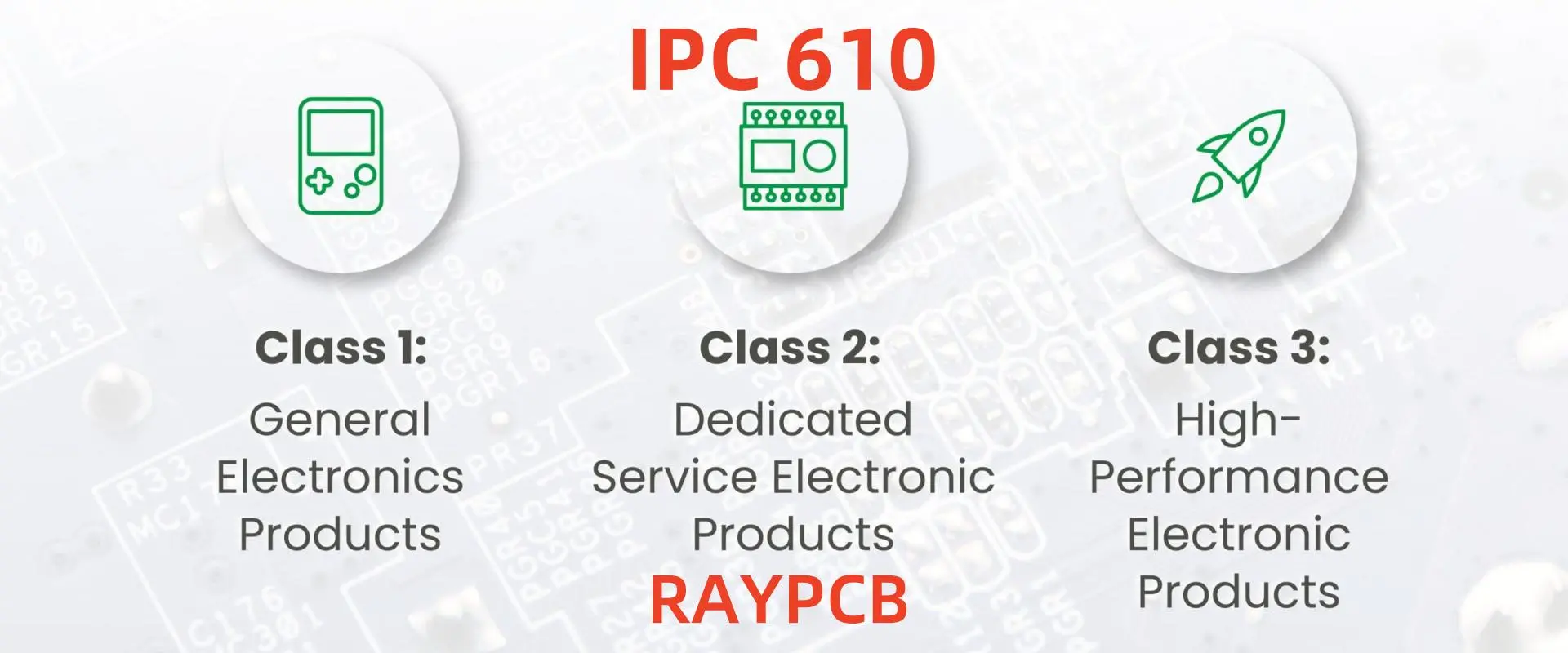
The IPC-A-610 standard defines three classes of electronic products, each with its own set of acceptance criteria. These classes help manufacturers and customers agree on the appropriate level of quality for a given application.

Class 1: General Electronic Products

Definition:

Products where the major requirement is function of the completed assembly.

Characteristics:

  • Lowest level of reliability requirements
  • Cosmetic imperfections are generally acceptable
  • Typical lifespan of 1-3 years

Examples:

  • Consumer electronics (e.g., toys, remote controls)
  • Non-critical industrial equipment
  • Disposable or short-lived products

Class 2: Dedicated Service Electronic Products

Definition:

Products where continued performance and extended life are required, and for which uninterrupted service is desired but not critical.

Characteristics:

  • Moderate reliability requirements
  • Some cosmetic imperfections are acceptable
  • Expected lifespan of 3-7 years

Examples:

  • Home appliances
  • Personal computers
  • Audio/video equipment
  • Industrial control systems

Class 3: High-Performance/Harsh Environment Electronic Products

Definition:

Products where continued high performance or performance-on-demand is critical, equipment downtime cannot be tolerated, and the product must function when required.

Characteristics:

  • Highest reliability requirements
  • Minimal cosmetic imperfections allowed
  • Expected lifespan of 7+ years
  • Often used in harsh or mission-critical environments

Examples:

  • Aerospace and defense systems
  • Medical devices
  • Automotive safety systems
  • Industrial safety equipment

Choosing the Appropriate Class

Selecting the right class for a product involves considering several factors:

  1. Intended use and environment of the product
  2. Consequences of product failure
  3. Maintenance and serviceability requirements
  4. Expected lifespan
  5. Cost considerations

It’s important to note that while higher classes generally imply higher quality, they also typically involve increased production costs and more stringent inspection criteria.

Read more about:

Key Aspects Covered in IPC-A-610

The IPC-A-610 standard covers a wide range of topics related to the acceptability of electronic assemblies. Some of the key areas include:

1. Component Mounting and Attachment

  • Through-hole component mounting
  • Surface mount solder connections
  • Component placement and orientation
  • Lead forming and trimming

2. Solder Joint Quality

  • Solder amount and wetting
  • Solder profile and contour
  • Void content in solder joints
  • Intermetallic compound formation

3. Printed Circuit Board (PCB) Condition

  • PCB cleanliness
  • Laminate condition
  • Conductor spacing and width
  • Via and plated-through hole quality

4. Conformal Coating and Encapsulation

  • Coating thickness and coverage
  • Bubbles, voids, and foreign material in coating
  • Adhesion and cure of coating
  • Encapsulant fill and adhesion

5. Wire and Cable Assemblies

  • Wire stripping and preparation
  • Crimp connections
  • Wire bundle and harness construction
  • Connector assembly and soldering

6. Terminal Connections

  • Wrap connections
  • Press-fit connections
  • Clinched and staked terminals
  • Insulation displacement connections (IDC)

7. Mechanical Assembly

  • Hardware installation
  • Fastener tightness and security
  • Mechanical support for components
  • Strain relief and cable clamping

8. Cleanliness and Contamination Control

  • Flux residues
  • Foreign material and debris
  • Moisture and corrosion
  • Cleanliness testing methods

Latest Revisions of IPC-A-610: H, G, and F

The IPC-A-610 standard is regularly updated to keep pace with technological advancements and industry needs. Understanding the differences between revisions is crucial for maintaining compliance and improving manufacturing processes.

IPC-A-610H (Current Revision)

Released in October 2020, IPC-A-610H is the latest version of the standard.

Key Changes and Additions:

  1. Enhanced criteria for bottom terminated components (BTCs): Improved guidance on solder joint and void requirements for BTCs, including land grid arrays (LGAs) and quad flat no-leads (QFNs).
  2. Updated requirements for flexible and rigid-flex circuits: New criteria for flex circuit inspection, including bend radius and material handling considerations.
  3. Expanded coverage of conformal coating: More detailed requirements for coating thickness, coverage, and inspection techniques.
  4. Revised criteria for press-fit connections: Updated acceptance criteria for press-fit pins and connectors, including plating thickness and insertion force considerations.
  5. New section on additive manufacturing: Guidance on the inspection of 3D-printed electronic components and assemblies.
  6. Updated photographic examples: New high-resolution images to illustrate acceptance criteria more clearly.
  7. Harmonization with other IPC standards: Improved alignment with related standards such as IPC-6012 (Qualification and Performance Specification for Rigid Printed Boards) and J-STD-001 (Requirements for Soldered Electrical and Electronic Assemblies).

IPC-A-610G (Previous Revision)

Released in 2017, IPC-A-610G introduced several important updates:

Key Changes from F to G:

  1. Expanded coverage of surface mount technology (SMT): More detailed criteria for inspecting fine-pitch and ultra-fine-pitch components.
  2. Introduction of criteria for embedded components: New guidelines for inspecting and accepting assemblies with embedded passive and active components.
  3. Updated requirements for lead-free solder joints: Refined criteria for assessing the quality of lead-free solder connections, including considerations for different alloy compositions.
  4. Enhanced guidance on conformal coating: More detailed requirements for coating thickness measurement and acceptance.
  5. Revised cleanliness requirements: Updated criteria for assessing PCB cleanliness, including new guidance on ionic contamination testing.
  6. Improved alignment with other IPC standards: Better harmonization with IPC-7711/7721 (Rework, Modification and Repair of Electronic Assemblies) and IPC-WHMA-A-620 (Requirements and Acceptance for Cable and Wire Harness Assemblies).

IPC-A-610F

Released in 2014, IPC-A-610F marked significant updates in several areas:

Key Changes from E to F:

  1. Introduction of criteria for board-in-board assemblies: New guidelines for inspecting and accepting PCBs that are mounted directly onto other PCBs.
  2. Expanded coverage of area array packages: More detailed criteria for ball grid arrays (BGAs) and column grid arrays (CGAs), including X-ray inspection requirements.
  3. Updated requirements for through-hole technology (THT): Refined criteria for assessing solder fill and wetting in plated-through holes.
  4. Introduction of new component types: Criteria for accepting package-on-package (PoP) assemblies and other emerging component technologies.
  5. Enhanced guidance on rework and repair: More detailed requirements for accepting reworked or repaired assemblies.
  6. Revised criteria for wire and terminal connections: Updated requirements for wire wrap, crimp, and insulation displacement connections.

Implementing IPC-A-610 in Manufacturing Processes

Effectively implementing the IPC-A-610 standard in a manufacturing environment requires a systematic approach. Here are some key steps and considerations:

1. Training and Certification

  • Ensure that key personnel are certified in IPC-A-610
  • Provide regular refresher training to maintain skills and knowledge
  • Consider developing internal training programs based on IPC-A-610 principles

2. Documentation and Procedures

  • Develop clear, written procedures that incorporate IPC-A-610 requirements
  • Create inspection checklists based on the relevant class and product requirements
  • Establish a system for managing and updating documentation as the standard evolves

3. Equipment and Tools

  • Invest in appropriate inspection equipment (e.g., microscopes, X-ray systems)
  • Ensure that measurement tools are calibrated and maintained according to IPC recommendations
  • Consider automated inspection systems for high-volume production

4. Process Control

  • Implement statistical process control (SPC) methods to monitor key quality indicators
  • Use IPC-A-610 criteria to set process control limits
  • Regularly review and adjust manufacturing processes based on inspection data

5. Supplier Management

  • Communicate IPC-A-610 requirements clearly to suppliers
  • Include IPC-A-610 compliance in supplier agreements and quality assurance processes
  • Conduct regular audits of supplier compliance with the standard

6. Continuous Improvement

  • Establish a system for collecting and analyzing defect data
  • Use root cause analysis techniques to address recurring quality issues
  • Regularly review the effectiveness of IPC-A-610 implementation and seek opportunities for improvement

7. Customer Communication

  • Clearly define the applicable IPC-A-610 class in customer agreements
  • Educate customers on the implications of different classes and acceptance criteria
  • Use IPC-A-610 terminology and criteria in customer communications about quality issues

Challenges and Best Practices in IPC-A-610 Compliance

While the IPC-A-610 standard provides valuable guidance for electronics manufacturing, implementing and maintaining compliance can present challenges. Here are some common issues and best practices for addressing them:

Challenges:

  1. Interpreting subjective criteria: Some IPC-A-610 requirements involve visual inspection and can be subject to interpretation.
  2. Keeping up with revisions: The standard is updated regularly, requiring ongoing education and process adjustments.
  3. Balancing quality and cost: Higher class requirements can increase production costs.
  4. Applying the standard to new technologies: Emerging components and processes may not be fully covered in the current revision.
  5. Maintaining consistency across inspectors: Different inspectors may interpret criteria differently.

Best Practices:

  1. Develop a robust training program:
    • Provide hands-on training with real-world examples
    • Use visual aids and sample boards to illustrate acceptance criteria
    • Conduct regular proficiency testing for inspectors
  2. Implement a change management system:
    • Assign responsibility for monitoring IPC standard updates
    • Develop a process for reviewing and implementing changes to the standard
    • Maintain a system for version control of internal procedures and training materials
  3. Use technology to aid inspection:
    • Implement automated optical inspection (AOI) systems where appropriate
    • Use digital imaging systems to capture and share examples of defects
    • Consider artificial intelligence and machine learning tools for defect classification
  4. Foster a culture of quality:
    • Educate all employees on the importance of IPC-A-610 compliance
    • Encourage open communication about quality issues
    • Recognize and reward contributions to quality improvement
  5. Conduct regular internal audits:
    • Perform periodic checks of inspection processes and results
    • Cross-train inspectors to promote consistency
    • Use audit results to identify areas for improvement and additional training needs
  6. Engage with the IPC community:
    • Participate in IPC standards development committees
    • Attend IPC conferences and workshops
    • Network with other professionals to share best practices and challenges
  7. Maintain clear documentation:
    • Develop detailed work instructions that incorporate IPC-A-610 requirements
    • Create a library of annotated images illustrating acceptable and unacceptable conditions
    • Maintain records of inspection results and corrective actions

The Future of IPC-A-610 and Electronics Manufacturing

As the electronics industry continues to evolve, the IPC-A-610 standard will need to adapt to new technologies and manufacturing processes. Some trends and potential future developments include:

1. Integration of Artificial Intelligence and Machine Learning

  • AI-assisted inspection systems that can learn and improve over time
  • Machine learning algorithms for predicting potential quality issues based on historical data

2. Additive Manufacturing and 3D-Printed Electronics

  • Expanded criteria for inspecting and accepting 3D-printed electronic components and assemblies
  • Guidelines for hybrid manufacturing processes combining traditional and additive techniques

3. Flexible and Stretchable Electronics

  • New acceptance criteria for flexible and stretchable circuit assemblies
  • Guidelines for inspecting and testing electronics integrated into textiles and wearable devices

4. Miniaturization and Advanced Packaging

  • Updated criteria for ultra-fine pitch components and advanced packaging technologies
  • Guidelines for inspecting and accepting chiplets and other modular IC technologies

5. Sustainability and Environmental Considerations

  • Criteria for assessing the environmental impact of manufacturing processes
  • Guidelines for design for recycling and use of sustainable materials

6. Industry 4.0 and Smart Manufacturing

  • Integration of IPC-A-610 requirements into smart manufacturing systems
  • Real-time quality monitoring and adaptive process control based on IPC-A-610 criteria

7. Enhanced Training and Certification Programs

  • Virtual reality and augmented reality tools for IPC-A-610 training
  • Online platforms for continuous learning and skill assessment

Conclusion: The Enduring Importance of IPC-A-610

The IPC-A-610 standard has been a cornerstone of quality assurance in electronics manufacturing for decades, and its importance continues to grow. As we’ve explored throughout this comprehensive guide, the standard provides crucial guidance on acceptability criteria for electronic assemblies across various product classes and applications.

Key takeaways from our exploration of IPC-A-610 include:

  1. Versatility: The standard’s three-class system allows for appropriate quality levels across a wide range of products, from consumer electronics to mission-critical aerospace systems.
  2. Continuous Evolution: Regular revisions ensure that IPC-A-610 remains relevant in the face of rapid technological advancements.
  3. Industry-Wide Impact: From certification programs to manufacturing processes, IPC-A-610 influences every aspect of the electronics manufacturing industry.
  4. Global Recognition: As an internationally recognized standard, IPC-A-610 facilitates communication and consistency across global supply chains.
  5. Driving Innovation: By setting clear quality benchmarks, the standard encourages manufacturers to innovate and improve their processes continually.

As we look to the future, it’s clear that IPC-A-610 will continue to play a vital role in shaping the electronics manufacturing landscape. The standard’s ability to adapt to new technologies, such as additive manufacturing and flexible electronics, while maintaining its core principles, ensures its ongoing relevance.

For professionals in the electronics manufacturing industry, maintaining a deep understanding of IPC-A-610 and staying current with its revisions is not just a matter of complianceโ€”it’s a pathway to excellence. Whether you’re an engineer, a quality assurance specialist, or a manufacturing manager, the knowledge and application of IPC-A-610 principles can significantly enhance the quality, reliability, and competitiveness of your products.

As we navigate the challenges and opportunities of Industry 4.0, emerging technologies, and increasingly complex electronic systems, the IPC-A-610 standard will remain a guiding light, ensuring that the electronics we rely on daily meet the highest standards of quality and reliability.

IPC/WHMA-A-620 Standard: The Ultimate Guide to Cable & Wire Harness Acceptance Criteria

In the world of electronics manufacturing, ensuring the quality and reliability of cable and wire harness assemblies is paramount. This is where the IPC/WHMA-A-620 standard comes into play. As a crucial set of guidelines for the industry, it provides comprehensive acceptance criteria for cable and wire harness assemblies. This article will delve deep into the IPC 620 standard, exploring its significance, key components, and how it impacts the electronics manufacturing sector.

Understanding IPC/WHMA-A-620: An Overview

What is IPC/WHMA-A-620?

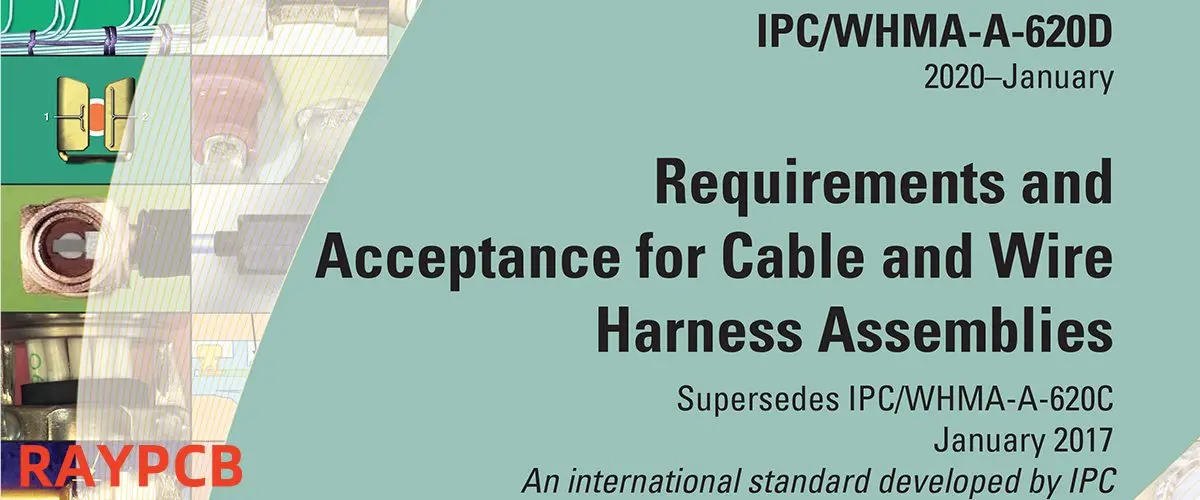
IPC/WHMA-A-620 is a set of acceptance criteria for cable and wire harness assemblies developed jointly by the IPC (Association Connecting Electronics Industries) and the WHMA (Wire Harness Manufacturer’s Association). This standard provides detailed guidelines for the production and acceptance of cable and wire harness assemblies across various industries, including aerospace, automotive, and consumer electronics.

The Importance of IPC 620 in Electronics Manufacturing

The IPC 620 standard plays a crucial role in ensuring the quality, reliability, and consistency of cable and wire harness assemblies. By providing a common set of acceptance criteria, it helps manufacturers:

  1. Maintain consistent quality standards
  2. Reduce manufacturing defects and rework
  3. Improve product reliability and longevity
  4. Enhance customer satisfaction
  5. Streamline communication between manufacturers and customers

Powered By EmbedPress

Key Components of the IPC/WHMA-A-620 Standard

1. Classes of Products

The IPC 620 standard recognizes that different applications require varying levels of performance, reliability, and quality. To address this, it defines three classes of products:

Class 1: General Electronic Products

These are products where the major requirement is the function of the completed assembly. Examples include consumer electronics and some business equipment.

Class 2: Dedicated Service Electronic Products

This class includes products where continued performance and extended life are required, and for which uninterrupted service is desired but not critical. Examples include communications equipment and sophisticated business machines.

Class 3: High-Performance Electronic Products

These are products where continued high performance or performance-on-demand is critical. Equipment downtime cannot be tolerated, and the end-use environment may be uncommonly harsh. Examples include life support systems and critical aerospace equipment.

2. Acceptance Criteria Categories

The IPC 620 standard covers a wide range of acceptance criteria for various aspects of cable and wire harness assemblies. Some of the key categories include:

Wire and Cable Preparation

This section covers guidelines for:

  • Proper stripping of wire insulation
  • Acceptable levels of conductor damage
  • Correct wire cutting and tinning techniques

Soldered Connections

The standard provides detailed criteria for:

  • Solder joint appearance
  • Acceptable solder quantities
  • Proper wetting of solder joints

Crimped Connections

This category includes guidelines for:

  • Proper crimp height and width
  • Acceptable levels of conductor deformation
  • Correct positioning of conductors in crimp barrels

Connector Assembly

The IPC 620 standard covers:

  • Proper seating of contacts in connectors
  • Acceptable levels of damage to connector housings
  • Correct assembly of multi-piece connectors

Cable and Harness Securing

This section provides criteria for:

  • Proper use of cable ties and clamps
  • Acceptable routing and bundling techniques
  • Correct strain relief methods

Implementing IPC/WHMA-A-620 in Your Manufacturing Process

Training and Certification

To effectively implement the IPC 620 standard, it’s crucial to have properly trained personnel. The IPC offers various levels of training and certification:

  1. Certified IPC Specialist (CIS): For operators and inspectors
  2. Certified IPC Trainer (CIT): For in-house trainers
  3. Master IPC Trainer (MIT): For those who train CITs

Investing in proper training ensures that your team understands and can correctly apply the IPC 620 standard in day-to-day operations.

Quality Control and Inspection

Implementing robust quality control processes based on the IPC 620 standard is essential. This includes:

  1. Developing clear inspection checklists
  2. Establishing acceptance and rejection criteria
  3. Implementing regular audits and reviews
  4. Using appropriate inspection tools and equipment

Documentation and Traceability

Proper documentation is a key aspect of compliance with the IPC 620 standard. This includes:

  1. Maintaining detailed work instructions
  2. Keeping records of inspections and test results
  3. Implementing a system for traceability of materials and processes
  4. Regularly updating documentation to reflect the latest revision of the standard

Read more about:

Benefits of Adhering to IPC/WHMA-A-620

1. Improved Product Quality

By following the detailed acceptance criteria outlined in the IPC 620 standard, manufacturers can significantly improve the quality of their cable and wire harness assemblies. This leads to:

  • Reduced defect rates
  • Improved product performance
  • Enhanced reliability and longevity of assemblies

2. Cost Reduction

While implementing the IPC 620 standard may require initial investment, it can lead to significant cost savings in the long run through:

  • Reduced rework and scrap
  • Fewer field failures and warranty claims
  • Improved efficiency in manufacturing processes

3. Enhanced Customer Satisfaction

Adhering to the IPC 620 standard can greatly improve customer satisfaction by:

  • Meeting or exceeding customer expectations for quality
  • Providing consistent, high-quality products
  • Reducing product failures and returns

4. Competitive Advantage

Companies that fully implement and comply with the IPC 620 standard can gain a competitive edge in the market by:

  • Demonstrating commitment to quality
  • Meeting stringent requirements for high-reliability applications
  • Qualifying for contracts that require IPC 620 compliance

Challenges in Implementing IPC/WHMA-A-620

While the benefits of implementing the IPC 620 standard are clear, there are some challenges that manufacturers may face:

1. Initial Cost and Resource Allocation

Implementing the standard may require:

  • Investment in training and certification
  • Upgrading equipment and tools
  • Allocating resources for documentation and process changes

2. Resistance to Change

Employees may resist changes to established processes. Overcoming this requires:

  • Clear communication of the benefits
  • Proper training and support
  • Gradual implementation of changes

3. Maintaining Compliance

Staying compliant with the IPC 620 standard requires ongoing effort, including:

  • Regular training and recertification
  • Continuous process improvement
  • Keeping up with revisions to the standard

Future Trends and Updates to IPC/WHMA-A-620

The IPC 620 standard is regularly reviewed and updated to keep pace with technological advancements and industry needs. Some areas of focus for future updates may include:

1. Emerging Technologies

As new technologies emerge in cable and wire harness manufacturing, the standard will need to evolve to address:

  • New materials and processes
  • Advanced automation techniques
  • Miniaturization trends in electronics

2. Environmental Considerations

Future revisions may place greater emphasis on:

  • Eco-friendly materials and processes
  • Energy efficiency in manufacturing
  • End-of-life considerations for cable and wire harness assemblies

3. Integration with Industry 4.0

As the industry moves towards smart manufacturing, the IPC 620 standard may need to address:

  • Integration with digital manufacturing systems
  • Real-time quality monitoring and control
  • Data-driven process optimization

Conclusion: The Enduring Importance of IPC/WHMA-A-620

The IPC/WHMA-A-620 standard remains a cornerstone of quality assurance in the cable and wire harness industry. Its comprehensive guidelines and acceptance criteria continue to shape manufacturing practices, ensuring the production of high-quality, reliable assemblies across various sectors.

As technology advances and industry needs evolve, the IPC 620 standard will undoubtedly continue to adapt. However, its fundamental principles of quality, reliability, and consistency will remain crucial for manufacturers striving to produce top-tier cable and wire harness assemblies.

By embracing and implementing the IPC 620 standard, manufacturers can not only improve their products and processes but also position themselves as leaders in quality and reliability in the competitive electronics manufacturing landscape. As we look to the future, the IPC/WHMA-A-620 standard will continue to play a vital role in driving innovation, quality, and excellence in the industry.

IPC-SM-840 Explained: Qualification & Performance Standards for Permanent Solder Mask

Introduction

In the world of printed circuit board (PCB) manufacturing, ensuring the quality and reliability of components is paramount. One crucial element in PCB production is the solder mask, a thin layer of polymer applied to the copper traces of a PCB to protect against oxidation and to prevent solder bridges from forming between closely spaced solder pads. The IPC-SM-840 standard plays a vital role in defining the qualification and performance requirements for permanent solder mask used in PCB manufacturing. This article will delve into the intricacies of IPC-SM-840, exploring its significance, key requirements, and impact on the electronics industry.

What is IPC-SM-840?

Definition and Purpose

IPC-SM-840 is a standard developed by the Association Connecting Electronics Industries (IPC) that specifies the qualification and performance requirements for permanent solder mask materials used in the production of printed circuit boards. This standard ensures that solder masks meet specific criteria for durability, resistance to environmental factors, and compatibility with various manufacturing processes.

Scope of the Standard

The IPC-SM-840 standard covers a wide range of aspects related to solder mask performance, including:

  1. Physical properties
  2. Chemical resistance
  3. Electrical properties
  4. Environmental performance
  5. Marking permanence
  6. Coating quality

Importance in the PCB Industry

IPC-SM-840 serves as a crucial benchmark for solder mask quality in the PCB industry. It provides manufacturers, suppliers, and end-users with a common set of expectations and requirements, ensuring consistency and reliability across different products and manufacturers.

Powered By EmbedPress

Key Requirements of IPC-SM-840

The IPC-SM-840 standard outlines several key requirements that solder masks must meet to be considered compliant. Let’s explore these requirements in detail.

Physical Properties

Appearance

The solder mask must have a uniform appearance without blisters, scratches, or other visible defects that could impact its performance or the board’s aesthetics.

Thickness

The standard specifies minimum thickness requirements for the solder mask, ensuring adequate coverage and protection of the underlying copper traces.

Adhesion

Solder masks must demonstrate strong adhesion to the PCB substrate to prevent peeling or flaking during manufacturing processes or product use.

Chemical Resistance

Flux Resistance

The solder mask must withstand exposure to common flux materials used in PCB assembly without degradation.

Solvent Resistance

IPC-SM-840 requires solder masks to resist various solvents that may be encountered during manufacturing or cleaning processes.

Hydrolytic Stability

The standard includes tests for the solder mask’s ability to maintain its properties when exposed to moisture and elevated temperatures.

Electrical Properties

Surface Insulation Resistance (SIR)

Solder masks must maintain high surface insulation resistance to prevent current leakage between conductors.

Dielectric Withstanding Voltage

The standard specifies requirements for the solder mask’s ability to withstand high voltages without breakdown.

Environmental Performance

Thermal Shock Resistance

Solder masks must withstand rapid temperature changes without cracking, peeling, or losing adhesion.

Humidity Resistance

The standard includes tests for the solder mask’s ability to maintain its properties in high-humidity environments.

UV Light Stability

For applications where the PCB may be exposed to sunlight or UV radiation, the solder mask must demonstrate resistance to degradation from UV exposure.

Marking Permanence

Legend Ink Adhesion

If legend ink is applied over the solder mask, it must demonstrate adequate adhesion to prevent peeling or smearing.

Resistance to Marking Solvents

The standard includes tests for the solder mask’s ability to resist common solvents used in marking processes.

Coating Quality

Coverage

The solder mask must provide complete and uniform coverage of the areas it’s intended to protect.

Hardness

IPC-SM-840 specifies requirements for the hardness of the cured solder mask to ensure durability and scratch resistance.

Testing and Qualification Procedures

solder mask
solder mask

To ensure compliance with IPC-SM-840, solder masks undergo a rigorous series of tests and qualification procedures. These procedures are designed to evaluate the solder mask’s performance across various criteria.

Sample Preparation

Before testing, samples are prepared according to the manufacturer’s recommended application and curing processes. This ensures that the tests accurately reflect the solder mask’s performance in real-world applications.

Physical Testing

Physical tests include measurements of thickness, adhesion strength, and hardness. These tests often involve specialized equipment such as micrometers, adhesion testers, and durometers.

Chemical Resistance Testing

Samples are exposed to various chemicals, including fluxes, solvents, and cleaning agents, to evaluate their resistance. The solder mask’s appearance and physical properties are assessed before and after exposure.

Electrical Testing

Electrical tests involve measuring surface insulation resistance and dielectric withstanding voltage. These tests often require specialized electrical testing equipment and controlled environmental conditions.

Environmental Stress Testing

Samples are subjected to thermal shock cycles, high humidity, and UV exposure to evaluate their performance under extreme conditions. These tests often involve environmental chambers capable of rapid temperature and humidity changes.

Long-Term Reliability Testing

Some tests in IPC-SM-840 are designed to evaluate the long-term reliability of the solder mask. These may include extended exposure to high temperatures or repetitive thermal cycling.

Read more about:

Revisions and Updates to IPC-SM-840

Like many industry standards, IPC-SM-840 undergoes periodic revisions to keep pace with advancements in technology and manufacturing processes. Understanding these revisions is crucial for staying compliant with the latest requirements.

IPC-SM-840C

Released in 2002, this revision introduced updates to several test methods and requirements, reflecting advancements in solder mask technology and PCB manufacturing processes.

IPC-SM-840D

Published in 2007, this update further refined the standard, incorporating feedback from industry professionals and addressing emerging challenges in PCB production.

IPC-SM-840E

The latest revision, released in 2016, includes updates to align with other IPC standards and incorporates new test methods to address evolving industry needs.

Impact of IPC-SM-840 on the Electronics Industry

Liquid Photo-imageable Solder Mask

The IPC-SM-840 standard has had a significant impact on the electronics industry, influencing both manufacturers and end-users of PCBs.

For Manufacturers

  1. Quality Assurance: The standard provides a clear benchmark for solder mask quality, helping manufacturers ensure consistent product performance.
  2. Process Optimization: By adhering to IPC-SM-840, manufacturers can optimize their production processes to meet or exceed the standard’s requirements.
  3. Competitive Advantage: Compliance with IPC-SM-840 can be a selling point, demonstrating a commitment to quality and reliability.

For End-Users

  1. Reliability: Products using IPC-SM-840 compliant solder masks are more likely to perform reliably in various environmental conditions.
  2. Consistency: The standard ensures a level of consistency across different manufacturers, simplifying the component selection process.
  3. Long-Term Performance: Adherence to IPC-SM-840 helps ensure the long-term durability and performance of PCBs in finished products.

Challenges in Implementing IPC-SM-840

While IPC-SM-840 provides valuable guidelines for solder mask performance, implementing the standard can present challenges for some manufacturers.

Cost Considerations

Meeting all the requirements of IPC-SM-840 may require investments in new equipment, materials, or processes, potentially increasing production costs.

Technical Complexity

Some of the tests specified in IPC-SM-840 are technically complex and may require specialized equipment or expertise to perform accurately.

Balancing Requirements

Manufacturers must often balance the requirements of IPC-SM-840 with other considerations, such as production speed, cost-effectiveness, and compatibility with specific applications.

Future Trends and Developments

As technology continues to evolve, we can expect future revisions of IPC-SM-840 to address emerging challenges and opportunities in PCB manufacturing.

Integration with Other Standards

Future updates may focus on better integration with other IPC standards, creating a more cohesive framework for PCB quality assurance.

Addressing New Technologies

As new PCB technologies emerge, such as flexible and stretchable electronics, IPC-SM-840 may evolve to include requirements specific to these applications.

Environmental Considerations

Future revisions may place greater emphasis on environmental sustainability, potentially including requirements for eco-friendly solder mask materials or processes.

Conclusion

IPC-SM-840 plays a crucial role in ensuring the quality and reliability of solder masks used in PCB manufacturing. By providing a comprehensive set of qualification and performance standards, it helps maintain consistency across the industry and ensures that PCBs can withstand the rigors of various applications and environments.

For manufacturers, adhering to IPC-SM-840 is not just about meeting a set of requirementsโ€”it’s about committing to quality and reliability in PCB production. For end-users, the standard provides assurance that PCBs will perform as expected, even under challenging conditions.

As technology continues to advance, IPC-SM-840 will undoubtedly evolve to address new challenges and opportunities in the world of electronics manufacturing. By staying informed about these standards and their updates, industry professionals can ensure they remain at the forefront of PCB quality and performance.

FAQs

  1. Q: How often is IPC-SM-840 updated? A: While there’s no fixed schedule, major updates have occurred approximately every 5-10 years, with the latest revision (IPC-SM-840E) released in 2016.
  2. Q: Is compliance with IPC-SM-840 mandatory? A: While not legally mandatory, many companies require compliance with IPC-SM-840 as part of their quality assurance processes.
  3. Q: How can I obtain a copy of the IPC-SM-840 standard? A: The standard can be purchased directly from the IPC website or through authorized distributors.
  4. Q: Are there different levels of compliance within IPC-SM-840? A: Yes, the standard typically defines different classes of performance to accommodate various application requirements.
  5. Q: How does IPC-SM-840 relate to other PCB manufacturing standards? A: IPC-SM-840 is part of a larger family of IPC standards that collectively cover various aspects of PCB design, manufacturing, and quality assurance.

IPC-2226: Sectional Design Standard for High Density Interconnect (HDI) Printed Boards

In the rapidly evolving world of electronics, the demand for smaller, faster, and more complex devices continues to grow. This has led to the widespread adoption of High Density Interconnect (HDI) technology in printed circuit board (PCB) design. To ensure consistency, reliability, and manufacturability in HDI PCBs, the industry relies on standards such as IPC-2226. This comprehensive guide will explore the key aspects of IPC-2226, its importance in HDI PCB design, and how it impacts the electronics manufacturing industry.

What is IPC-2226?

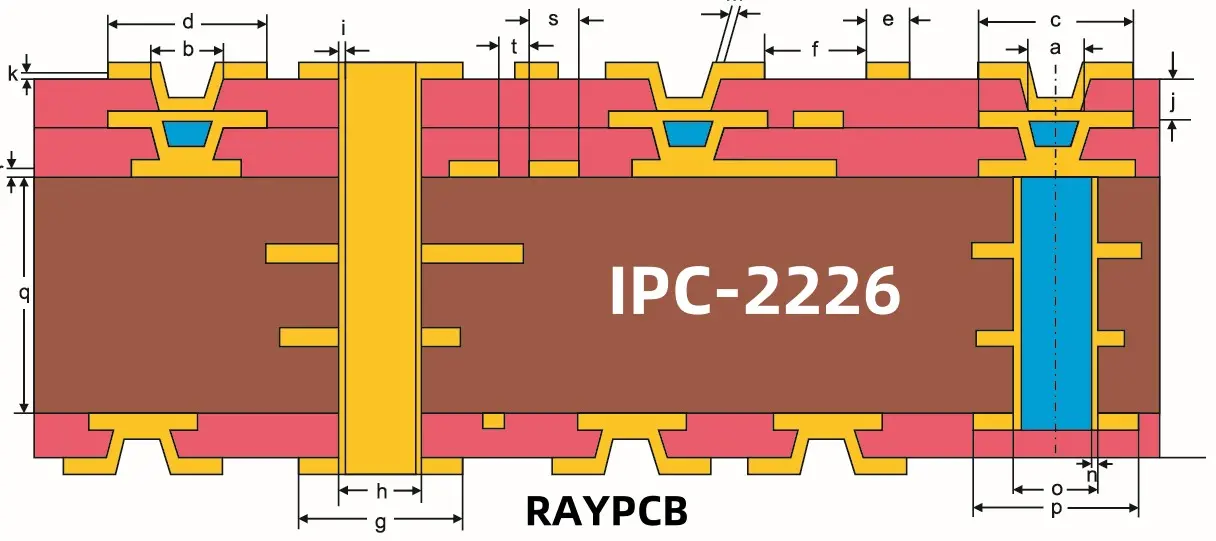
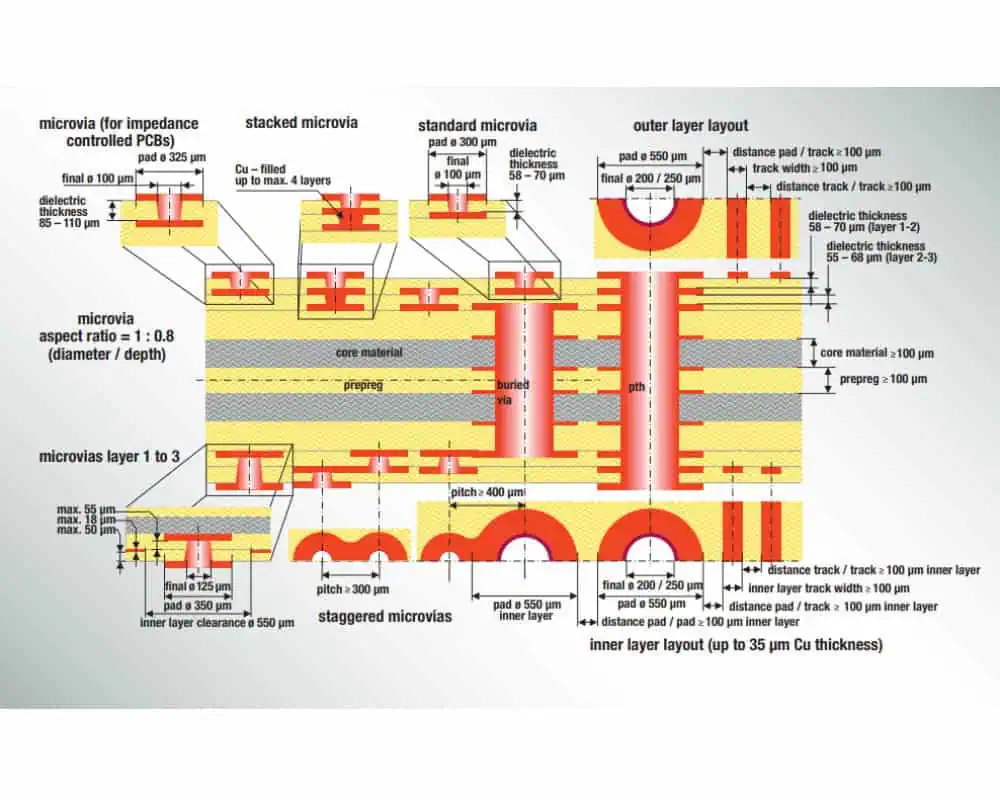
IPC-2226 is a sectional design standard developed by the Institute for Printed Circuits (IPC) specifically for High Density Interconnect (HDI) printed boards. This standard provides guidelines, requirements, and best practices for designing HDI PCBs, which are characterized by their use of microvias, fine lines, and advanced lamination techniques.

Key Objectives of IPC-2226

  1. Establish common terminology for HDI PCB design
  2. Define HDI structures and their characteristics
  3. Provide design guidelines for reliable HDI PCBs
  4. Ensure consistency in HDI PCB manufacturing processes
  5. Promote best practices for HDI PCB design and fabrication

Scope of IPC-2226

IPC-2226 covers various aspects of HDI PCB design, including:

  • Microvia structures and types
  • Layer stack-up designs
  • Material selection considerations
  • Design rules for line width and spacing
  • Pad and land pattern guidelines
  • Testing and reliability requirements

Powered By EmbedPress

The Importance of IPC-2226 in HDI PCB Design

As HDI technology becomes increasingly prevalent in electronics manufacturing, adherence to IPC-2226 offers several crucial benefits:

1. Standardization

IPC-2226 provides a common language and set of guidelines for HDI PCB design, ensuring consistency across different manufacturers and designers.

2. Reliability

By following IPC-2226 guidelines, designers can create HDI PCBs that meet stringent reliability requirements, crucial for applications in industries such as aerospace, medical devices, and telecommunications.

3. Manufacturability

The standard addresses key manufacturability concerns, helping designers create HDI PCBs that can be produced efficiently and cost-effectively.

4. Performance

IPC-2226 guidelines help optimize HDI PCB designs for electrical performance, addressing issues such as signal integrity and impedance control.

5. Innovation

While providing a framework for HDI PCB design, IPC-2226 also allows for innovation and advancement in HDI technology.

Read more about:

Key Components of IPC-2226

Let’s delve into some of the critical components of the IPC-2226 standard:

HDI Structure Types

IPC-2226 defines several types of HDI structures, each with its own characteristics and applications:

Type I HDI

  • Single microvia layer on each side of the core
  • Suitable for moderate density requirements
  • Relatively simple manufacturing process

Type II HDI

  • Multiple microvia layers on each side of the core
  • Higher density than Type I
  • More complex manufacturing process

Type III HDI

  • Microvias that connect three or more layers
  • Highest density option
  • Most complex manufacturing process
  • Subtypes include stacked microvias and staggered microvias

Microvia Definitions and Requirements

IPC-2226 provides detailed specifications for microvias, including:

  • Size definitions (typically โ‰ค150ฮผm in diameter)
  • Aspect ratio guidelines
  • Plating requirements
  • Reliability testing criteria

Layer Stack-Up Design

The standard offers guidelines for designing HDI layer stack-ups, considering factors such as:

  • Number of layers
  • Microvia types and placement
  • Impedance control requirements
  • Signal integrity considerations

Material Selection

IPC-2226 addresses the selection of materials for HDI PCBs, taking into account:

  • Dielectric materials suitable for laser drilling
  • Copper foil types and thicknesses
  • Thermal management considerations
  • Electrical performance requirements

Design Rules

The standard provides specific design rules for HDI PCBs, including:

Implementing IPC-2226 in HDI PCB Design

To effectively implement IPC-2226 in HDI PCB design, consider the following steps:

1. Familiarize Yourself with the Standard

  • Obtain a copy of the IPC-2226 document
  • Study the terminology and definitions used in the standard
  • Understand the different HDI structure types and their applications

2. Assess Your Design Requirements

  • Determine the required circuit density
  • Evaluate signal integrity and impedance control needs
  • Consider thermal management requirements
  • Assess reliability expectations based on the intended application

3. Choose the Appropriate HDI Structure

  • Select the HDI type (I, II, or III) that best meets your design requirements
  • Consider manufacturability and cost implications of different HDI structures

4. Design Your Layer Stack-Up

  • Follow IPC-2226 guidelines for layer stack-up design
  • Consider signal layer pairing and reference planes
  • Optimize for impedance control and signal integrity

5. Apply Design Rules

  • Implement IPC-2226 design rules for line width, spacing, and pad sizes
  • Adhere to microvia design guidelines, including aspect ratios and land patterns

6. Select Appropriate Materials

  • Choose dielectric materials suitable for HDI applications
  • Consider copper foil types and thicknesses recommended by IPC-2226

7. Plan for Manufacturability

  • Consult with your PCB manufacturer to ensure alignment with IPC-2226 requirements
  • Consider design for manufacturing (DFM) guidelines specific to HDI PCBs

8. Implement Reliability Testing

  • Follow IPC-2226 recommendations for reliability testing
  • Consider additional testing based on your specific application requirements

Challenges in Implementing IPC-2226

While IPC-2226 provides valuable guidelines for HDI PCB design, implementing the standard can present some challenges:

1. Complexity

HDI PCB design is inherently complex, and fully understanding and implementing all aspects of IPC-2226 can be challenging, especially for those new to HDI technology.

2. Balancing Requirements

Designers often need to balance various requirements, such as density, performance, reliability, and cost. Strictly adhering to IPC-2226 may sometimes conflict with other design objectives.

3. Rapid Technological Advancements

As HDI technology continues to evolve rapidly, keeping the standard up-to-date with the latest advancements can be challenging.

4. Manufacturing Capabilities

Not all PCB manufacturers may have the capability to produce HDI boards that meet all IPC-2226 requirements, potentially limiting design options.

5. Cost Considerations

Implementing some aspects of IPC-2226 may increase manufacturing costs, which needs to be balanced against performance and reliability requirements.

Future Trends and IPC-2226

As HDI technology continues to advance, we can expect to see ongoing updates and revisions to IPC-2226. Some potential future trends include:

1. Even Higher Density

Future revisions of IPC-2226 may address even higher density HDI structures, potentially defining new types beyond the current Type III.

2. Advanced Materials

As new materials are developed for HDI applications, IPC-2226 may be updated to include guidelines for their use and implementation.

3. Integration with Other Standards

We may see closer integration between IPC-2226 and other related standards, such as those dealing with flex and rigid-flex circuits or embedded components.

4. Additive Manufacturing

As additive manufacturing techniques become more prevalent in PCB production, IPC-2226 may be updated to address design considerations specific to these processes.

5. Artificial Intelligence and Machine Learning

Future versions of IPC-2226 might incorporate guidelines for using AI and ML in HDI PCB design and verification processes.

Conclusion

IPC-2226 plays a crucial role in standardizing and guiding the design of High Density Interconnect (HDI) printed boards. By providing comprehensive guidelines for HDI structures, materials, design rules, and reliability requirements, this standard helps ensure the production of high-quality, reliable HDI PCBs that meet the demands of modern electronic devices.

As the electronics industry continues to push the boundaries of miniaturization and performance, the importance of standards like IPC-2226 will only grow. Designers and manufacturers who familiarize themselves with this standard and implement its guidelines will be well-positioned to create cutting-edge HDI PCBs that meet the evolving needs of the market.

While implementing IPC-2226 can present challenges, the benefits in terms of standardization, reliability, and manufacturability make it an essential tool in the HDI PCB design process. As technology advances, we can expect IPC-2226 to evolve alongside it, continuing to provide valuable guidance for the next generation of HDI PCBs.

By staying informed about updates to IPC-2226 and related standards, PCB designers and manufacturers can ensure they remain at the forefront of HDI technology, creating innovative and reliable electronic products that push the boundaries of what’s possible in modern electronics.

Understanding IPC-4761: A Comprehensive Guide to Via Protection Types in PCB Design

Via protection is a critical aspect of modern PCB design, enhancing manufacturability and assembly reliability while reducing defects. The IPC-4761 Design Guide for Protection of Printed Board Via Structures outlines multiple via protection methods, which are detailed on pages 5โ€“11 of this document.

YouTube video

What is IPC-4761?

IPC-4761 is a standard developed by the Association Connecting Electronics Industries (IPC) that provides guidelines for the design and manufacturing of vias and plated through holes in PCBs. This standard is essential for ensuring the reliability and functionality of PCBs across various applications.

The Importance of Via Protection

Vias are critical components in PCB design, serving as electrical connections between different layers of a multi-layer board. Protecting these vias is crucial for several reasons:

  1. Preventing contamination
  2. Enhancing electrical performance
  3. Improving mechanical strength
  4. Ensuring long-term reliability

Powered By EmbedPress

Understanding the Seven Via Protection Types

IPC-4761 defines seven distinct via protection types, each serving specific purposes and offering unique benefits. Let’s explore each type in detail:

Type I: Tented Via

Tented vias are the most basic form of via protection. They are covered with a layer of solder mask, which provides minimal protection against contamination.

Advantages:

  • Cost-effective
  • Simple manufacturing process

Disadvantages:

  • Limited protection against moisture and contaminants
  • Not suitable for high-reliability applications

Type II: Tented and Covered Via

This type offers an additional layer of protection compared to Type I. A thin layer of copper is placed over the via before applying the solder mask.

Advantages:

  • Improved protection against contamination
  • Better electrical performance

Disadvantages:

  • Slightly more complex manufacturing process
  • May not be suitable for all PCB designs

Type III: Plugged Via

Plugged vias are filled with a non-conductive material, typically epoxy resin, before applying the solder mask.

Advantages:

  • Excellent protection against contamination
  • Improved planarity for component placement

Disadvantages:

  • Higher manufacturing costs
  • Potential for voids in the filling material

Type IV: Plugged and Covered Via

This type combines the benefits of plugged vias with an additional copper layer for enhanced protection and electrical performance.

Advantages:

Disadvantages:

  • Higher manufacturing costs
  • More complex production process

Type V: Filled Via

Filled vias are completely filled with conductive material, typically copper or conductive paste.

Advantages:

  • Excellent thermal management
  • Improved electrical performance
  • Enhanced structural integrity

Disadvantages:

  • Higher production costs
  • Requires specialized equipment

Type VI: Filled and Covered Via

This type builds upon the filled via by adding an additional copper layer over the filled hole.

Advantages:

  • Superior electrical and thermal performance
  • Excellent protection against contamination
  • Ideal for high-reliability applications

Disadvantages:

  • Highest manufacturing costs
  • Most complex production process

Type VII: Filled and Capped Via

IPC-4761 Type VII, also known as filled and capped vias, represents the most advanced form of via protection. This type combines the benefits of filled vias with an additional capping layer for enhanced protection and performance.

Advantages:

  • Ultimate protection against contamination
  • Exceptional electrical and thermal performance
  • Ideal for high-frequency and high-reliability applications

Disadvantages:

  • Highest production costs
  • Requires specialized equipment and expertise

Read more about:

Choosing the Right Via Protection Type

Selecting the appropriate via protection type depends on various factors:

  1. Application requirements
  2. Budget constraints
  3. Manufacturing capabilities
  4. Desired level of reliability

Consider the following when making your decision:

  • Performance needs: High-frequency or high-reliability applications may require more advanced protection types.
  • Environmental conditions: Harsh environments may necessitate better protection against contamination.
  • Cost considerations: Balance the need for protection with budgetary constraints.
  • Manufacturing capabilities: Ensure your PCB manufacturer can produce the chosen via protection type.

IPC-4761 and PCB Design Best Practices

Incorporating IPC-4761 standards into your PCB design process can significantly improve the quality and reliability of your products. Here are some best practices to consider:

  1. Early planning: Consider via protection requirements during the initial design phase.
  2. Consistent documentation: Clearly specify the required via protection types in your design documentation.
  3. Communication with manufacturers: Discuss via protection options with your PCB manufacturer to ensure feasibility.
  4. Regular updates: Stay informed about updates to IPC-4761 and other relevant standards.

The Impact of IPC-4761 on PCB Manufacturing

Implementing IPC-4761 standards can have several positive effects on PCB manufacturing:

  1. Improved quality control: Standardized via protection types enable better quality assurance processes.
  2. Enhanced reliability: Proper via protection leads to more reliable PCBs with longer lifespans.
  3. Streamlined production: Clear guidelines reduce confusion and potential errors during manufacturing.
  4. Global consistency: IPC-4761 promotes consistency across different manufacturers and regions.

Future Trends in Via Protection and IPC-4761

As PCB technology continues to evolve, we can expect to see advancements in via protection methods and updates to IPC-4761. Some potential trends include:

  1. New materials: Development of novel materials for via filling and protection.
  2. Miniaturization: Adapting via protection techniques for increasingly smaller PCB designs.
  3. Integration with other standards: Closer alignment of IPC-4761 with other PCB design and manufacturing standards.
  4. Automation: Increased use of automated processes for via protection application.

Conclusion: The Significance of IPC-4761 in Modern PCB Design

Understanding and implementing IPC-4761 standards is crucial for producing high-quality, reliable PCBs. By selecting the appropriate via protection type and following best practices, designers and manufacturers can ensure their products meet the demanding requirements of today’s electronics industry.

Whether you’re working on a simple consumer device or a complex aerospace application, incorporating IPC-4761 guidelines into your PCB design process will contribute to better performance, longer product life, and improved customer satisfaction.

As the electronics industry continues to advance, staying informed about standards like IPC-4761 will be essential for professionals in PCB design and manufacturing. By embracing these standards and adapting to new developments, we can drive innovation and push the boundaries of what’s possible in electronic design.

Resources for Further Learning

To deepen your understanding of IPC-4761 and via protection types, consider exploring the following resources:

  1. IPC-4761 PDF: The official IPC-4761 document provides detailed information on via protection types and implementation guidelines. While the full document is not freely available, you can purchase it from the IPC website.
  2. IPC-4761 Training: Many organizations offer training courses on IPC standards, including IPC-4761. These courses can provide hands-on experience and in-depth knowledge.
  3. PCB Design Software: Many modern PCB design tools incorporate IPC-4761 standards. Familiarize yourself with these features in your preferred software.
  4. Industry Forums and Communities: Engage with other professionals in PCB design forums to share experiences and learn about real-world applications of IPC-4761.

By continually expanding your knowledge and staying current with industry standards like IPC-4761, you’ll be well-equipped to tackle the challenges of modern PCB design and contribute to the advancement of electronic technology.

What is IPC-2581?

PCB IPC standards

In the ever-evolving world of electronics manufacturing, efficient and accurate data exchange between design and production stages is crucial. IPC-2581, also known as the “Generic Requirements for Printed Board Assembly Products Manufacturing Description Data and Transfer Methodology,” is a standard that addresses this need. This comprehensive article will explore the intricacies of IPC-2581, its significance in the electronics industry, and its impact on the PCB design and manufacturing process.

Understanding IPC-2581

Definition and Purpose

IPC-2581 is an open, neutral, and extensible data format standard developed by the IPC (Institute of Printed Circuits) to streamline the exchange of printed circuit board (PCB) design, fabrication, and assembly data. Its primary purpose is to provide a single, comprehensive XML-based data format that can replace multiple files typically used in the PCB manufacturing process.

Historical Context

Evolution of PCB Data Exchange Standards

  1. Gerber Format (RS-274D, RS-274X)
  2. ODB++ (Open Database++)
  3. IPC-2511 (GenCAM)
  4. IPC-2581 (Current standard)

Key Features of IPC-2581

  1. XML-based format
  2. Single file containing all necessary data
  3. Support for complex board structures
  4. Embedded component information
  5. Stackup details
  6. Manufacturing process instructions

The Structure of IPC-2581

Data Hierarchy

  1. Header Information
  2. Board Outline
  3. Stackup Definition
  4. Component Definitions
  5. Placement Data
  6. Artwork Data
  7. Test Points
  8. Manufacturing Instructions

XML Schema

The IPC-2581 standard uses an XML schema to define the structure and content of the data file. This schema ensures consistency and validation of the data across different software platforms.

Advantages of IPC-2581

IPC-for-pcb

Comprehensive Data Exchange

IPC-2581 eliminates the need for multiple file formats by consolidating all necessary information into a single file.

Improved Accuracy

By reducing the number of files and translations required, IPC-2581 minimizes the risk of data loss or corruption.

Enhanced Efficiency

The use of a single file format streamlines the design-to-manufacturing process, reducing time and potential errors.

Vendor Neutrality

As an open standard, IPC-2581 is not tied to any specific software vendor, promoting interoperability across different tools and systems.

Future-Proofing

The extensible nature of XML allows for easy updates and additions to the standard as technology evolves.

Challenges in IPC-2581 Adoption

Legacy System Compatibility

Many existing systems are built around older file formats, requiring significant updates to support IPC-2581.

Industry Inertia

The PCB industry has been slow to change, with many companies hesitant to move away from established processes.

Software Support

While growing, the number of software tools fully supporting IPC-2581 is still limited compared to older formats.

Training and Education

Adopting IPC-2581 requires training for design and manufacturing personnel to effectively use the new format.

IPC-2581 in the PCB Design Process

Design Creation

  1. Schematic Capture
  2. Component Selection
  3. PCB Layout
  4. Design Rule Checking

Data Export

  1. Generating IPC-2581 File
  2. Validation of Exported Data
  3. Review and Approval Process

Design Handoff

  1. Transferring IPC-2581 File to Manufacturers
  2. Addressing Manufacturer Queries
  3. Design Revisions and Version Control

IPC-2581 in PCB Manufacturing

Data Import and Validation

  1. Loading IPC-2581 File into CAM Systems
  2. Automated Design Rule Checking
  3. Identifying and Resolving Data Discrepancies

Fabrication Process

  1. Generating Manufacturing Tooling
  2. Stackup Creation
  3. Drill and Rout Programming

Assembly Process

  1. Component Placement Programming
  2. Solder Paste Stencil Design
  3. Automated Optical Inspection (AOI) Programming

Comparison of PCB Data Exchange Formats

To better understand the position of IPC-2581 in the context of PCB data exchange, let’s compare it with other common formats:

FeatureIPC-2581GerberODB++GenCAM
File FormatXMLASCIIProprietarySGML
Number of FilesSingleMultipleMultipleSingle
Stackup InformationYesLimitedYesYes
Component DataYesNoYesYes
Manufacturing InstructionsYesNoYesYes
Netlist InformationYesNoYesYes
ExtensibilityHighLowMediumMedium
Industry AdoptionGrowingHighHighLow
Vendor NeutralityHighHighLowHigh

IPC-2581 Consortium

Purpose and Goals

The IPC-2581 Consortium is an industry group dedicated to promoting and accelerating the adoption of the IPC-2581 standard.

Key Activities

  1. Standard Development and Maintenance
  2. Industry Outreach and Education
  3. Interoperability Testing and Validation
  4. Collaboration with Software Vendors

Member Companies

The consortium includes a diverse range of companies from the electronics industry, including:

  1. PCB Design Software Providers
  2. Electronic Design Automation (EDA) Companies
  3. PCB Manufacturers
  4. Electronics Assembly Companies
  5. Original Equipment Manufacturers (OEMs)

Future Trends in IPC-2581

Integration with Industry 4.0

Exploring ways to incorporate IPC-2581 into smart manufacturing and IoT systems.

Enhanced Security Features

Developing methods for secure data transfer and intellectual property protection within the IPC-2581 format.

Artificial Intelligence and Machine Learning

Leveraging AI and ML techniques for improved data validation and manufacturing process optimization.

Cloud-Based Collaboration

Facilitating cloud-based design and manufacturing collaboration using IPC-2581 as the central data format.

Expansion to New Technologies

Adapting IPC-2581 to support emerging technologies such as flexible electronics and 3D-printed electronics.

Best Practices for IPC-2581 Implementation

Comprehensive Training

Provide thorough training for design and manufacturing teams on IPC-2581 usage and benefits.

Phased Adoption

Implement IPC-2581 in stages, starting with pilot projects before full-scale adoption.

Software Evaluation

Carefully assess and select software tools that fully support IPC-2581 functionality.

Collaboration with Partners

Work closely with manufacturing partners to ensure smooth data exchange and process integration.

Continuous Improvement

Regularly review and update IPC-2581 implementation processes based on feedback and industry developments.

Economic Impact of IPC-2581 Adoption

To illustrate the potential economic benefits of implementing IPC-2581 in a PCB design and manufacturing environment, consider the following hypothetical scenario:

FactorWithout IPC-2581With IPC-2581
Annual PCB Designs100100
Average Design-to-Manufacturing Time5 days3 days
Design Revisions Due to Data Issues20%5%
Cost per Day of Delay$5,000 $5,000 
Annual Delay Costs$100,000 $15,000 
Data Translation Software Costs$50,000 $10,000 
Training and Implementation Costs$0 $25,000 
Total Annual Costs$150,000 $50,000 
Annual Savings$100,000 

This simplified example demonstrates how the adoption of IPC-2581 can lead to significant cost savings through reduced design-to-manufacturing time, fewer revisions, and streamlined software requirements, despite initial training and implementation costs.

Frequently Asked Questions (FAQ)

1. How does IPC-2581 differ from Gerber files?

IPC-2581 differs from Gerber files in several key aspects:

a) File Format: IPC-2581 uses a single XML-based file, while Gerber requires multiple files for different layers and data types.

b) Comprehensiveness: IPC-2581 includes all necessary PCB data (layout, stackup, components, etc.) in one file, whereas Gerber primarily focuses on image data for each layer.

c) Intelligent Data: IPC-2581 contains intelligent data about components, nets, and manufacturing instructions, which Gerber files lack.

d) Stackup Information: IPC-2581 includes detailed stackup data, while Gerber files typically require separate documentation for this information.

e) Extensibility: As an XML-based format, IPC-2581 is easily extensible to accommodate new technologies, while Gerber has limited extensibility.

f) Manufacturing Instructions: IPC-2581 can include specific manufacturing and assembly instructions, which are not part of the Gerber format.

g) Netlist Information: IPC-2581 includes netlist data, which is not present in Gerber files.

The comprehensive nature of IPC-2581 allows for a more streamlined and accurate design-to-manufacturing process compared to the traditional Gerber approach.

2. What are the main challenges in adopting IPC-2581?

The main challenges in adopting IPC-2581 include:

a) Software Support: Not all PCB design and manufacturing software fully support IPC-2581, limiting its widespread adoption.

b) Industry Inertia: Many companies are resistant to change, preferring to stick with familiar formats like Gerber.

c) Training Requirements: Adopting IPC-2581 requires training for design and manufacturing personnel, which can be time-consuming and costly.

d) Legacy System Compatibility: Existing manufacturing systems may require significant updates to support IPC-2581.

e) Supply Chain Alignment: All parties in the supply chain (designers, fabricators, assemblers) need to support IPC-2581 for maximum benefit.

f) Initial Implementation Costs: There may be upfront costs associated with software upgrades and process changes.

g) Data Validation: Ensuring the accuracy and completeness of IPC-2581 files requires new validation processes.

h) Intellectual Property Concerns: Some companies may be hesitant to include all design data in a single file due to IP protection concerns.

Overcoming these challenges often requires a coordinated effort between design teams, manufacturers, and software vendors, as well as a clear understanding of the long-term benefits of IPC-2581 adoption.

3. Can IPC-2581 completely replace all other PCB data formats?

While IPC-2581 has the potential to replace many existing PCB data formats, it may not completely replace all formats in the short term due to several factors:

a) Legacy Systems: Many manufacturers still rely on older formats and may be slow to upgrade their systems.

b) Specialized Formats: Some niche applications may require specialized formats not fully covered by IPC-2581.

c) Industry Adoption Rate: Widespread adoption takes time, and some sectors may be slower to transition.

d) Regulatory Requirements: Certain industries or regions may have specific requirements that necessitate the use of particular formats.

e) Vendor-Specific Features: Some proprietary formats may offer unique features that companies are reluctant to abandon.

f) Parallel Use: During the transition period, companies may use IPC-2581 alongside other formats to ensure compatibility.

g) Design Tool Limitations: Not all PCB design tools fully support IPC-2581 export, necessitating the use of other formats.

h) Verification and Comparison: Some companies may continue to use multiple formats for cross-verification purposes.

While IPC-2581 offers significant advantages and could potentially become the primary PCB data exchange format, it’s likely that other formats will continue to coexist in the industry for some time. The goal is for IPC-2581 to become the central, comprehensive format while potentially interfacing with other specialized or legacy formats as needed.

4. How does IPC-2581 handle revisions and version control?

IPC-2581 incorporates several features to handle revisions and version control effectively:

a) Revision Attributes: The standard includes specific attributes for revision numbers and dates, allowing clear tracking of design versions.

b) Change History: IPC-2581 can include a change history section, detailing modifications made between versions.

c) Component Revisions: Individual component revisions can be specified within the file, allowing for granular tracking of part changes.

d) Layer Versioning: Each layer in the PCB stackup can have its own revision information.

e) Global Unique Identifiers (GUIDs): Use of GUIDs for various elements allows for consistent tracking across revisions.

f) Annotation and Comments: The format supports detailed annotations and comments, which can be used to document changes.

g) ECO (Engineering Change Order) Support: IPC-2581 can include ECO information, linking design changes to specific orders.

h) Differential Comparisons: The XML structure facilitates easy comparison between different versions of a design.

i) Metadata: Additional metadata fields can be used to store version control information from external systems.

These features allow for comprehensive version control within the IPC-2581 file itself, facilitating clear communication of design changes throughout the supply chain. However, it’s important to note that effective version control also relies on proper processes and practices in addition to the capabilities of the file format.

5. What steps should a company take to implement IPC-2581 in their workflow?

Implementing IPC-2581 in a company’s workflow involves several key steps:

a) Assessment:

  • Evaluate current workflows and identify areas where IPC-2581 can provide benefits
  • Assess the capability of existing software tools to support IPC-2581

b) Planning:

  • Develop a phased implementation plan
  • Set clear goals and metrics for the implementation

c) Software Updates:

  • Upgrade or acquire PCB design software that supports IPC-2581 export
  • Ensure CAM and manufacturing systems can import and process IPC-2581 files

d) Training:

  • Provide comprehensive training for design and manufacturing teams
  • Develop internal guidelines and best practices for working with IPC-2581

e) Pilot Project:

  • Start with a small-scale pilot project to test the implementation
  • Gather feedback and identify any issues or bottlenecks

f) Supply Chain Collaboration:

  • Communicate with manufacturing partners about the transition to IPC-2581
  • Ensure all parties in the supply chain are prepared to work with the new format

g) Process Refinement:

  • Based on the pilot project results, refine internal processes and workflows
  • Develop new quality control and validation procedures for IPC-2581 files

h) Full Implementation:

  • Gradually expand the use of IPC-2581 across more projects
  • Monitor and measure the impact on efficiency and quality

i) Continuous Improvement:

  • Regularly review and update IPC-2581 implementation processes
  • Stay informed about updates to the IPC-2581 standard and industry best practices

j) Feedback and Participation:

  • Provide feedback to software vendors and the IPC-2581 Consortium
  • Consider participating in industry groups to share experiences and contribute to the standard’s development

By following these steps, companies can systematically implement IPC-2581 and maximize the benefits of this comprehensive data exchange format. It’s important to approach the implementation as a strategic initiative, involving all relevant stakeholders and allowing time for adaptation and optimization.

IPC-A-600 Acceptability of Printed Boards: Classes

The IPC-A-600 standard, developed by the Association Connecting Electronics Industries (IPC), is a crucial document in the printed circuit board (PCB) industry. It provides guidelines for the acceptability of printed boards, ensuring consistency and quality across the manufacturing process. One of the key aspects of this standard is the classification system, which defines different levels of performance requirements for PCBs based on their intended use and reliability needs.

In this comprehensive article, we will explore the IPC-A-600 standard, focusing on its classification system and the implications for PCB manufacturing and quality control. We’ll delve into the specifics of each class, discuss their applications, and examine the criteria used to determine acceptability within each category.

Understanding IPC-A-600

What is IPC-A-600?

IPC-A-600 is a widely recognized standard that establishes the criteria for acceptability of printed circuit boards. It serves as a visual quality standard, providing detailed descriptions and illustrations of PCB imperfections and their acceptable limits. The standard is used by both manufacturers and customers to ensure that PCBs meet the required quality levels for their intended applications.

The Importance of IPC-A-600

The IPC-A-600 standard plays a crucial role in the electronics industry for several reasons:

  1. Quality assurance: It provides a common language and set of criteria for evaluating PCB quality.
  2. Consistency: Manufacturers can maintain consistent quality across different production runs and facilities.
  3. Customer satisfaction: Customers can specify the required quality level based on their application needs.
  4. Troubleshooting: The standard helps identify and resolve quality issues in PCB production.
  5. Training: It serves as an educational tool for training quality control personnel and PCB inspectors.

IPC-A-600 Classification System

PCB IPC standards

Overview of the Three Classes

The IPC-A-600 standard defines three classes of PCBs, each representing a different level of performance requirements:

  1. Class 1: General Electronic Products
  2. Class 2: Dedicated Service Electronic Products
  3. Class 3: High-Reliability Electronic Products

Let’s examine each class in detail:

Class 1: General Electronic Products

Definition and Characteristics

Class 1 PCBs are designed for general electronic products with the following characteristics:

  • Limited life expectancy
  • Basic functionality is the primary concern
  • Cosmetic imperfections are generally acceptable

Applications

Typical applications for Class 1 PCBs include:

  • Consumer electronics (e.g., toys, remote controls)
  • Disposable electronic devices
  • Simple household appliances

Acceptability Criteria

The acceptability criteria for Class 1 PCBs are the least stringent among the three classes. Some key points include:

  • Larger tolerances for dimensional variations
  • Less strict requirements for solder joint quality
  • More lenient standards for surface imperfections

Class 2: Dedicated Service Electronic Products

Definition and Characteristics

Class 2 PCBs are intended for dedicated service electronic products with the following characteristics:

  • Extended performance and life expectancy
  • Uninterrupted service is desired but not critical
  • Higher reliability than Class 1, but less demanding than Class 3

Applications

Typical applications for Class 2 PCBs include:

Acceptability Criteria

The acceptability criteria for Class 2 PCBs are more stringent than Class 1 but less demanding than Class 3. Key points include:

  • Tighter tolerances for dimensional variations
  • Stricter requirements for solder joint quality
  • More rigorous standards for surface imperfections
  • Greater emphasis on electrical performance and reliability

Class 3: High-Reliability Electronic Products

Definition and Characteristics

Class 3 PCBs are designed for high-reliability electronic products with the following characteristics:

  • Continuous performance or on-demand performance is critical
  • Equipment downtime cannot be tolerated
  • End-use environment may be uncommonly harsh
  • The equipment must function when required

Applications

Typical applications for Class 3 PCBs include:

  • Aerospace and defense systems
  • Medical devices (e.g., life support equipment)
  • Critical industrial control systems
  • High-end telecommunications infrastructure

Acceptability Criteria

IPC-for-pcb

The acceptability criteria for Class 3 PCBs are the most stringent among the three classes. Key points include:

  • Very tight tolerances for dimensional variations
  • Highest standards for solder joint quality
  • Minimal allowance for surface imperfections
  • Strict requirements for electrical performance and reliability
  • Extensive testing and documentation requirements

Comparison of IPC-A-600 Classes

To better understand the differences between the three classes, let’s compare them across various criteria:

CriteriaClass 1Class 2Class 3
Life ExpectancyLimitedExtendedLongest
Performance RequirementsBasic functionalityModerate reliabilityHigh reliability
Downtime ToleranceHighModerateVery low
Cost ConsiderationsLowestModerateHighest
Inspection LevelBasicThoroughExtensive
Acceptable Defect RateHighestModerateLowest
Environmental Stress ToleranceLowModerateHigh
Documentation RequirementsMinimalModerateExtensive

Key Factors in Determining PCB Class

When deciding which IPC-A-600 class to use for a particular PCB, several factors should be considered:

  1. End-use environment
  2. Expected lifespan of the product
  3. Criticality of the application
  4. Cost constraints
  5. Regulatory requirements
  6. Customer specifications
  7. Reliability and performance expectations

Impact of Classification on PCB Manufacturing

The IPC-A-600 classification system has significant implications for PCB manufacturing processes:

Design Considerations

  • Class 3 PCBs may require more conservative design rules
  • Higher classes may necessitate the use of more robust materials
  • Stricter tolerances may influence component selection and placement

Manufacturing Processes

  • Higher classes often require more sophisticated manufacturing equipment
  • Stricter process controls are necessary for Class 2 and Class 3 PCBs
  • Cleaning and handling procedures become more critical in higher classes

Quality Control and Inspection

  • Inspection criteria become more stringent with higher classes
  • More extensive testing is required for Class 2 and Class 3 PCBs
  • Documentation and traceability requirements increase with each class

Cost Implications

  • Higher class PCBs generally incur greater manufacturing costs
  • Increased inspection and testing requirements add to overall costs
  • Material selection for higher classes may impact pricing

Best Practices for Implementing IPC-A-600 Classes

To effectively implement the IPC-A-600 classification system, consider the following best practices:

  1. Proper training of design, manufacturing, and quality control personnel
  2. Clear communication of class requirements to all stakeholders
  3. Regular audits and process controls to ensure compliance
  4. Investment in appropriate equipment and technologies
  5. Continuous improvement of manufacturing processes
  6. Collaboration with suppliers to ensure material quality
  7. Regular review and updates of internal quality standards

Future Trends and Developments

As technology advances and industry needs evolve, the IPC-A-600 standard continues to adapt. Some potential future developments include:

  • Integration with Industry 4.0 and smart manufacturing concepts
  • Enhanced focus on environmental sustainability and RoHS compliance
  • Adaptation to new PCB materials and manufacturing technologies
  • Increased emphasis on reliability for emerging applications (e.g., autonomous vehicles, IoT devices)

Conclusion

The IPC-A-600 classification system plays a vital role in ensuring the quality and reliability of printed circuit boards across various industries. By understanding the specific requirements of each class and implementing appropriate manufacturing and quality control processes, PCB manufacturers can meet the diverse needs of their customers while maintaining consistent quality standards.

As the electronics industry continues to evolve, the IPC-A-600 standard will remain a cornerstone of PCB quality assurance, adapting to new technologies and applications while preserving its core principles of reliability and performance.

Frequently Asked Questions (FAQ)

1. Can a single PCB design be manufactured to different IPC-A-600 classes?

Yes, it is possible to manufacture the same PCB design to different IPC-A-600 classes. However, this may require adjustments in manufacturing processes, materials, and quality control procedures to meet the specific requirements of each class. It’s important to communicate the desired class to the manufacturer clearly and ensure that they have the capabilities to produce PCBs to the required standard.

2. How often is the IPC-A-600 standard updated?

The IPC-A-600 standard is typically reviewed and updated every 2-3 years. However, the exact timing can vary depending on industry needs and technological advancements. It’s important for PCB manufacturers and users to stay informed about the latest revisions and any significant changes to the standard.

3. Are there any sub-classifications within the three main IPC-A-600 classes?

While the IPC-A-600 standard primarily defines three main classes, some manufacturers may use internal sub-classifications to further refine their quality control processes. These sub-classifications are not officially part of the IPC-A-600 standard but may be used to address specific customer requirements or niche applications.

4. How does the IPC-A-600 standard relate to other IPC standards?

The IPC-A-600 standard is closely related to other IPC standards, particularly IPC-6012 (Qualification and Performance Specification for Rigid Printed Boards) and IPC-A-610 (Acceptability of Electronic Assemblies). While IPC-A-600 focuses on bare PCB quality, these other standards complement it by addressing board qualifications and assembled PCB quality, respectively.

5. Is IPC-A-600 certification required for PCB manufacturers?

While IPC-A-600 certification is not mandatory for PCB manufacturers, many customers prefer or require their suppliers to be certified. Certification demonstrates a manufacturer’s commitment to quality and their ability to produce PCBs that meet the standard’s requirements. It can be a valuable credential in the competitive PCB manufacturing industry.