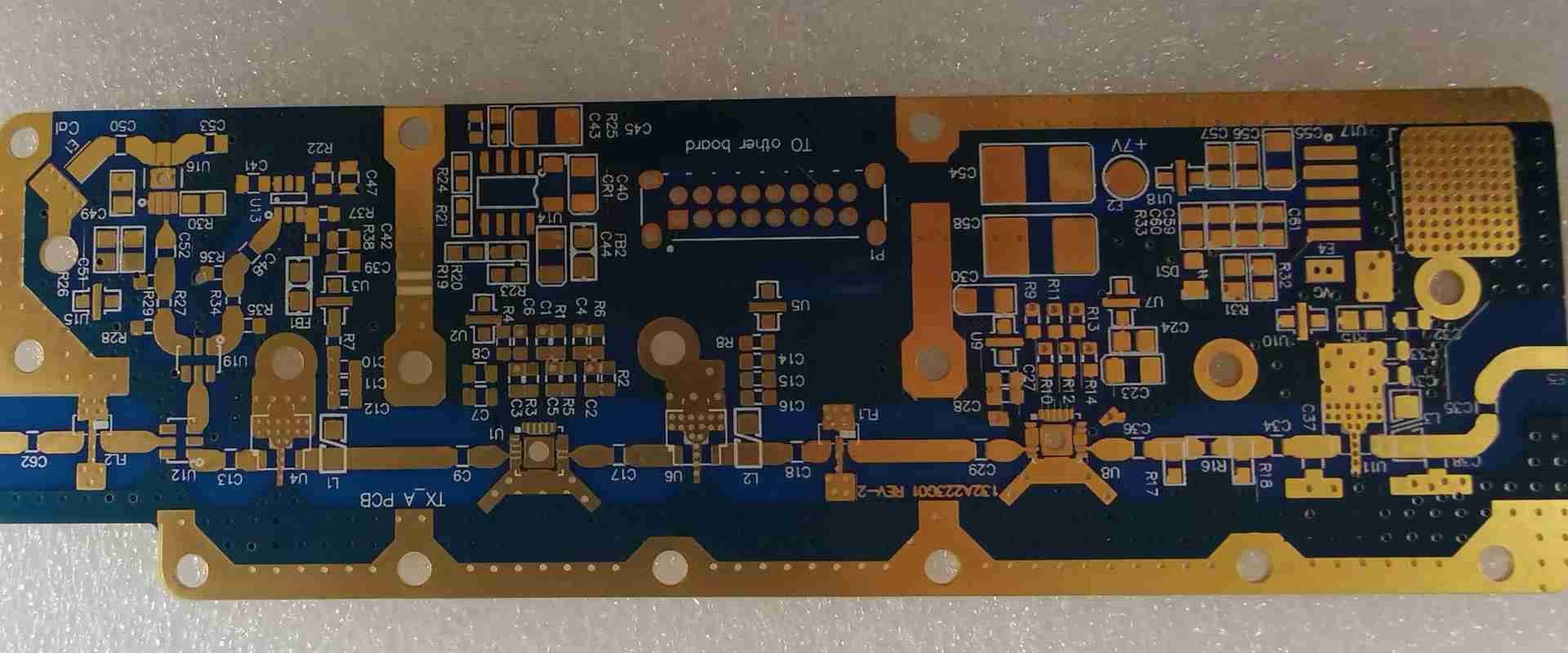
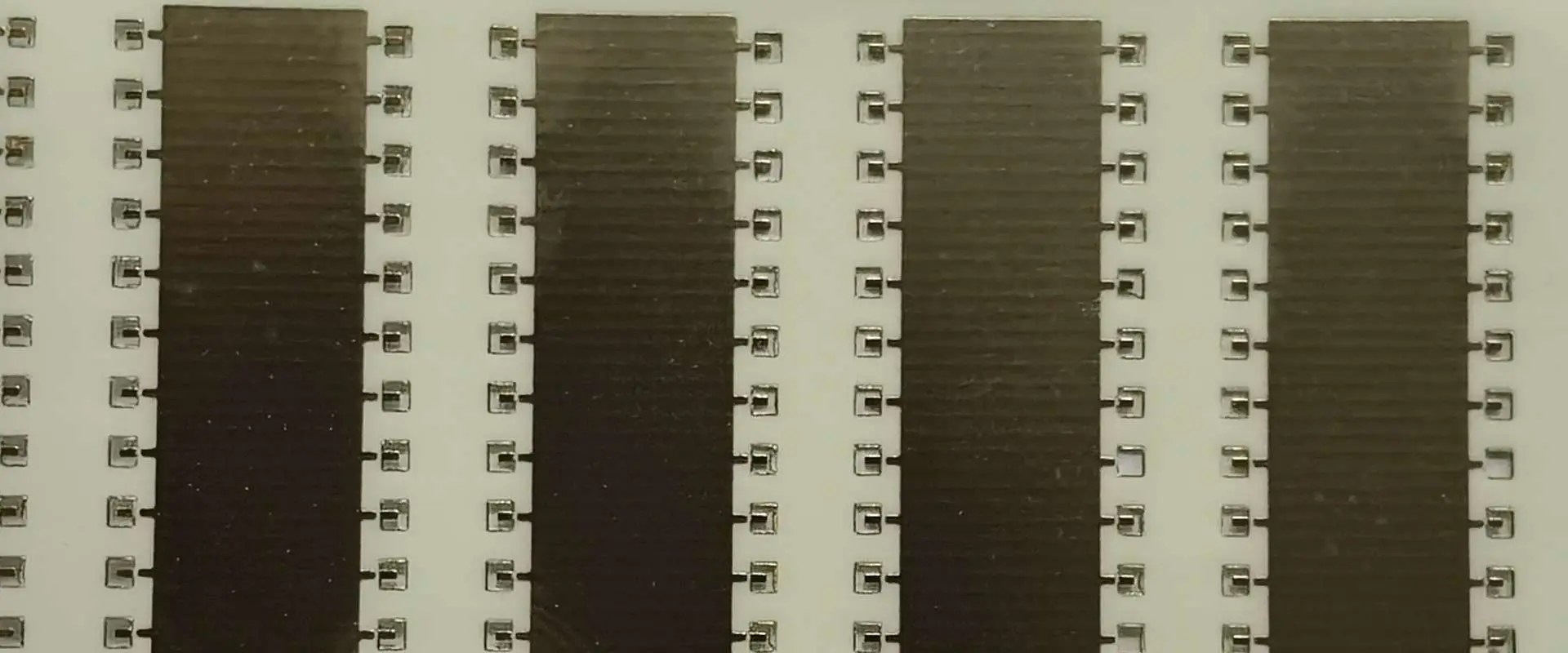
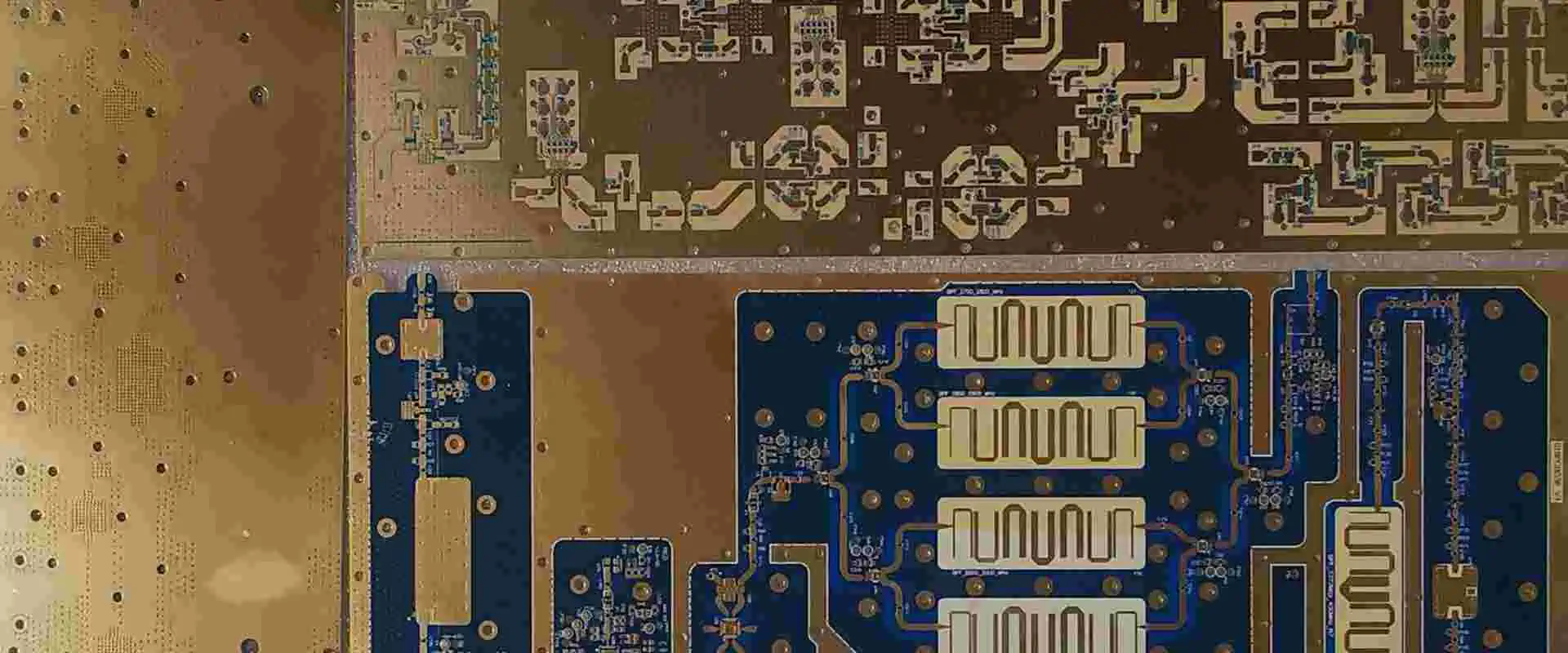
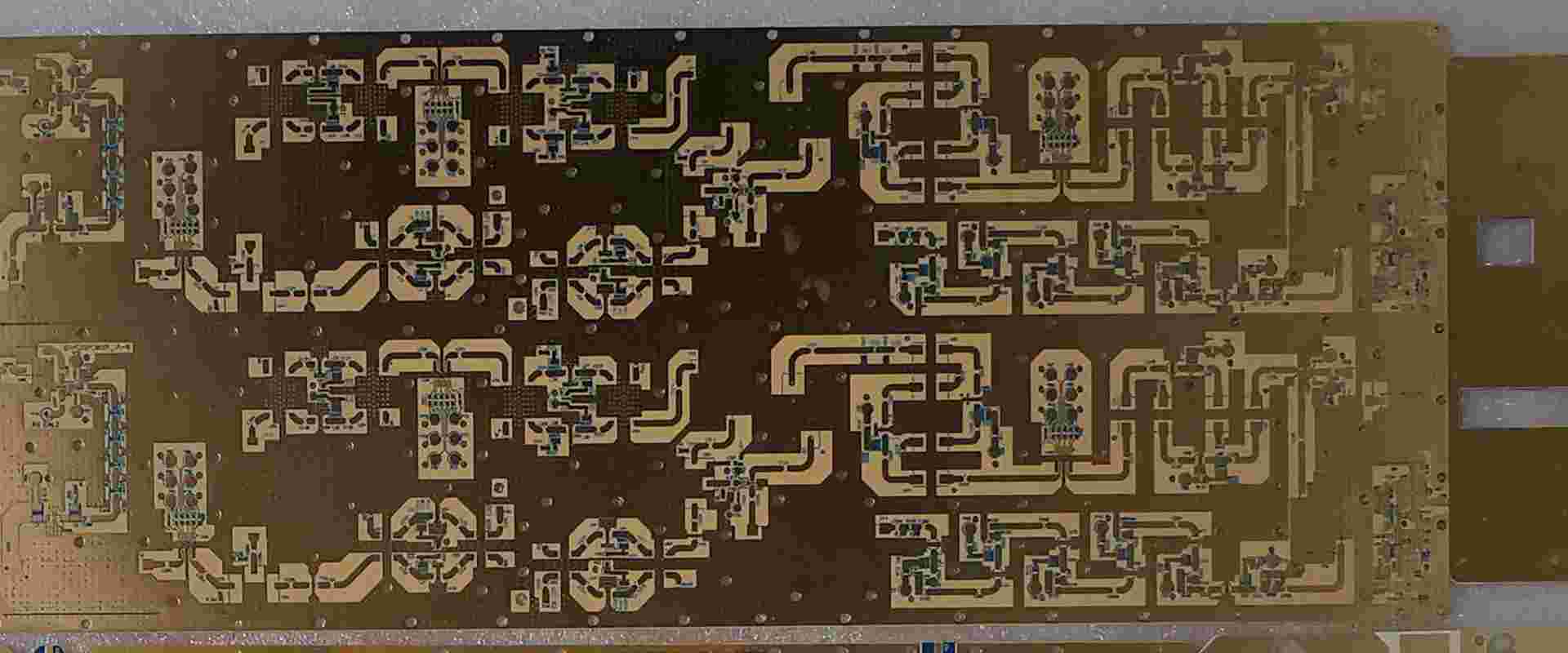
What is Rogers RT Duroid 5870 Laminate for PCB ?

rogers rt duroid 5870

Introduction

Printed circuit boards (PCBs) provide the foundation for mounting and interconnecting electronic components using conductive copper traces on an insulating base material. The properties of this insulating laminate substrate are critical in determining the performance limits of the PCB. Rogers RT/Duroid 5870 is a specialized microwave laminate designed for high frequency applications demanding tight electrical tolerances.

This article provides an in-depth look at Rogers 5870 covering its characteristics, properties, applications and usage considerations for PCB designers.

What is Rogers RT/duroid 5870?

rogers-5870-pcb

Rogers RT/duroid 5870 is a glass microfiber reinforced fluoropolymer composite laminate material tailored for exacting radio frequency (RF) and microwave circuit designs. Some key features include:

  • Extremely tight dielectric constant tolerance of ยฑ0.40%
  • Low dissipation factor (loss tangent) of 0.0019
  • Z-axis coefficient of thermal expansion (CTE) of 16.5 ppm/ยฐC
  • Thermoset polymer system requiring no fusion during lamination
  • Woven E-glass reinforcement for dimensional stability
  • Halogen-free material for reduced environmental impact
  • RoHS compliant and UL 94V-0 rated

These electrical and mechanical characteristics make 5870 well-suited for demanding high frequency applications up to mmWave bands.

Dielectric Properties

Rogers 5870 possesses very stable dielectric properties across a wide frequency range along with low loss, which are desirable traits for microwave PCBs:

Dielectric Constant (Dk)

  • Dk of 2.33 ยฑ0.0040 at 10 GHz
  • Nearly constant Dk over 1-40 GHz
  • Extremely tight tolerance of ยฑ0.40%

Loss Tangent (Df)

  • Low loss tangent of 0.0019 at 10 GHz
  • Df less than 0.002 up to 20 GHz
  • Enables higher Q factors for RF circuits

Temperature Coefficient

  • Dielectric constant variation of -17 ppm/ยฐC
  • Excellent thermal stability of electrical properties

These attributes allow achieving target impedances accurately during RF circuit design and simulations using 5870 material.

Mechanical Properties

In addition to electrical performance, Rogers 5870 also possesses good mechanical characteristics:

Density

  • Uniform density of 1.79 g/cm3
  • Provides good thickness consistency

Glass Transition Temperature

  • High Tg of 280ยฐC

Decomposition Temperature

  • Extremely high 405ยฐC decomposition point

Moisture Absorption

  • Low moisture absorption of 0.02% (immersion, 24 hours)

Z-axis CTE

  • 16.5 ppm/ยฐC coefficient of thermal expansion

The woven glass reinforcement results in lower Z-axis CTE for reliability under temperature changes. The high Tg and decomposition temperature enable soldering steps required in PCB fabrication.

Available Thicknesses

Rogers 5870 laminate can be obtained in a range of standard thicknesses from as low as 0.127mm to as high as 6.35mm.

Some commonly used thicknesses include:

  • 0.127 mm (5 mils)
  • 0.2 mm (8 mils)
  • 0.25 mm (10 mils)
  • 0.5 mm (20 mils)
  • 1.0 mm (40 mils)

The thin flexible laminates are useful for flex PCB applications, while thicker sheets provide rigidity and dimensional stability required in rigid boards.

Common Designations

duroid-5870

Rogers 5870 material is available under variants like:

  • RT/duroid 5870
  • RT/duroid 5870LM
  • RT/duroid 6002
  • RO4003C

Where:

  • RT/duroid is the Rogers brand name
  • 5870 denotes the dielectric constant value
  • LM signifies low moisture absorption version

These all refer to the same base microwave laminate with minor modifications. The differing nomenclatures indicate process variations or compliance levels.

Lead-Free Compatibility

Rogers 5870 laminate is compatible with lead-free fabrication which is mandatory for RoHS compliance:

  • Glass transition temperature exceeds Pb-free soldering temperatures
  • Withstands multiple reflow cycles with peak temperatures up to 280ยฐC
  • Near zero Z-axis CTE minimizes stresses from temperature excursions
  • Low moisture absorption reduces risk of delamination or blistering

PCBs made using 5870 can be reliably assembled using standard lead-free soldering processes.

Typical Applications

Rogers 5870 is used in demanding RF and high speed digital designs including:

  • Satellite communication systems
  • 5G equipment – MIMO antennas, splitters
  • Military and aerospace avionics
  • Automotive driver assistance radar
  • High speed data acquisition
  • Low noise amplifiers and power amplifiers
  • Broadband transformers
  • Medical imaging
  • Test and measurement equipment
  • Microwave components

The tight and stable electrical tolerances provided by 5870 laminate are critical for achieving optimized impedance control and signal integrity in such applications.

Benefits of Using Rogers 5870

Here are some of the key benefits offered by Rogers 5870 laminates for PCB fabrication:

  • Extremely consistent dielectric constant for impedance control
  • Low loss tangent for high frequency and Q factor
  • Tight thickness tolerance for etch consistency
  • Excellent dimensional stability under temperature fluctuations
  • High Tg and decomposition rating for lead-free assembly compatibility
  • Reduced EMI/RFI interference due to woven glass reinforcement
  • Halogen-free and RoHS compliant for environmental needs
  • Cost effective compared to PTFE substrates
  • Good availability due to widespread usage in RF industry

For designs requiring precision electrical performance under 10+ GHz along with robust mechanical characteristics, Rogers 5870 provides an optimal microwave PCB substrate solution.

Design and Fabrication Guidelines

Here are some guidelines to follow when designing PCBs using Rogers 5870 material:

  • Allow ยฑ0.2mm thickness tolerance in layouts
  • Use teardrop pads at junctions to reduce potential cracks
  • Limit unsupported copper spans to under 0.25mm to prevent lifting
  • Watch for acid entrapment under traces causing potential leakage
  • Remove residues after wet processing steps
  • Allow for 0.1% shrinkage during lamination stage
  • Use two-stage lamination for boards over 3mm thick
  • Select compatible FR4 and prepreg materials if designing hybrid multilayer boards

Rogers provides detailed design manuals that cover additional fabrication and assembly recommendations when working with their microwave laminates.

Comparing Rogers 5870 to Other Materials

Rogers 5870 has some advantages compared to other common PCB substrate materials:

ParameterRogers 5870FR4PolyimidePTFE
Dielectric ConstantStableFairGoodExcellent
Loss TangentExcellentFairGoodExcellent
Lead-free Process CompatibilityGoodGoodFairPoor
Moisture ResistanceGoodFairExcellentExcellent
Thermal ConductivityFairFairPoorGood
CostModerateLowHighVery high

So Rogers 5870 provides a good balance of electrical, thermal, mechanical and cost characteristics for optimal RF PCB performance.

Conclusion

Rogers RT/duroid 5870 is a specialized glass microfiber reinforced fluoropolymer laminate engineered specifically to meet the tight tolerances and low loss required in high frequency PCBs. It enables accurate impedance control and signal integrity up to mmWave bands. The stable dielectric properties, lead-free soldering compatibility, low moisture absorption and moderate cost make 5870 a popular choice for fabricating microwave circuits used in radar, communication, aerospace and other demanding RF applications.

Frequently Asked Questions

Can Rogers 5870 be used for common FR4 processing?

Yes, Rogers 5870 can be processed using standard FR4 PCB fabrication methods. It is compatible with typical PCB manufacturing processes involving etching, drilling, plating, lamination etc.

Does Rogers 5870 require special handling or storage?

No special storage conditions are needed. It has an indefinite shelf life at room temperature before lamination. Low moisture absorption also avoids special drying requirements before processing.

Can I use 5870 with different dielectric constant materials in one PCB?

Rogers 5870 can be combined with properly selected FR4 prepregs to produce hybrid multilayer boards. But significant Dk mismatches could cause issues and is not recommended.

What is the typical copper thickness used with Rogers 5870?

1/2 oz to 3 oz copper foils are commonly used. 1 oz provides a good balance for moderate thickness and current capacity for most RF designs. 2 oz may be preferred for high power applications.

Is Rogers 5870 material expensive?

5870 is costlier than FR4 but less expensive than PTFE or ceramic substrates. The tight tolerances and specialization for RF applications lead to higher cost than standard glass epoxy PCB laminates.
Where to Buy Rogers RT Duroid 5880 Laminate

The Rogers RT duroid 5780 and the 2929 bondply are two great wireless radio antennas that people mostly compare. In this Rogers RT duroid 5880 review, you’ll learn what to expect from these two products. We’ll also talk about the benefits of each. So, let’s dive in! Is this the best wireless radio antenna? And is it worth the money?

Rogers RT duroid 5880

In this Rogers RT duroid 5880 (RT-5880) review, we’ll examine its pros and cons. Thanks to its low-loss and low-dissipation properties, the Rogers RT-5880 is a very popular choice among electronics designers. It also has a uniform dielectric constant over a wide frequency range. The price tag is reasonable too, at around $180.

The RT/duroid 5880 consists of a composite with a unique filler with an extremely low dielectric constant and dielectric loss. This makes it perfect for both high-frequency and broadband applications. In addition, the RT/duroid 5880 also boasts a low-density design, with only 1.4 grams per cubic centimeter.

The RT/duroid 5880 supports the electrodeposited copper layer from eight to 70um thickness. Its surface resists various chemicals and solutions. Furthermore, it is highly resistant to corrosion and exhibits good isotropy. In other words, the electrical performance does not change much with frequency, so Rayming PCB & Assembly uses it for millimeter-wave applications. In addition, the low dielectric loss and moisture absorption make it an excellent choice for a wide range of applications.

This device uses a dual-band antenna array. It is a high-performance RF antenna that works in the fundamental mode of TM11 resonance. The Rogers RT/Duroid 5880 has a height of 0.508 millimeters and dielectric permeability of 0.086 mm. The RT/Duroid 5880 has a relatively high simulated realized gain of 1.7519 W, making it an excellent choice for mobile and fixed communications use.

RayMing 2 Layer Rogers rt duroid 5880 PCB 2.2 Dielectric Constan

RayMing 2 Layer Rogers rt duroid 5880 PCB 2.2 Dielectric Constan

Original price was: $650.00.Current price is: $625.00.

2 Layer Rogers rt duroid 5880 PCB 1.mm Thickness Dielectric Constan: 2.2 Size: 100×100 mm Rogers 5880 datasheet RT-duroid 5870 – 5880 Data Sheet What is Rogers RT/duroid 5880 ? Rogers RT/duroid 5880 is a high-performance laminate material designed for use in demanding circuit board applications, such as those found in communication systems, radar applications,…

Rogers RT duroid 5880 uses

Rogers RT/Duroid 5880 is a high-frequency laminate made from a PTFE composite reinforced with glass microfibers. The material has an extremely low dielectric constant and a very low coefficient of thermal expansion, which makes it an ideal material for broadband and high-frequency applications. The material is also remarkably resistant to high-temperature and corrosion processes. Here are some of its main uses.

It has excellent mechanical and chemical properties, low dielectric constant, and low loss. It is suitable for demanding stripline circuit applications. Its low dissipation factor is another significant advantage. The material is available in different types of configurations. The different types of laminates have different uses and benefits. Rogers RT/Duroid 5880 is an excellent choice for aerospace and defense applications.

The RT/Duroid 5880 laminate is easily cut and sheared and is highly corrosion-resistant. This material is also a good choice for through-hole processes, as it has a low level of dielectric loss. The laminate is also resistant to moisture. Furthermore, it is isotropic, meaning that the electrical properties of the laminate remain constant over a wide range of frequencies. So whether you are looking for a high-quality edge or a smooth, flat surface, you can rely on Rogers RT/Duroid 5880 laminate to meet your needs.

Another essential characteristic of the Rogers RT/Duroid 5880 PCB is its low CTE. It has a low coefficient of thermal expansion (CTE) of less than 0.02%. This feature means that the Rogers RT/Duroid 5880 PCB can withstand high moisture levels without changing its properties. Further, this PCB’s low CTE makes it ideal for high-frequency applications, which is crucial for preventing any malfunctioning.

Rogers RT duroid 5880 properties

If you are in the market for a new laminate material, you might be interested in the properties of Rogers RT/duroid 5880. These materials are full of PTFE composite laminates in demanding aerospace, defense, and communications applications. These laminates are highly resistant to moisture and abrasion and have excellent electrical properties. In addition, they are ideal for high-frequency applications in phone companies, microcircuits, millimeter-wave systems, and missile systems.

Rogers RT/Duroid 5880 laminates exhibit low dielectric loss and low moisture absorption, ideal for high-frequency and wide-band applications. The material also exhibits very low moisture absorption, ideal for high-humidity environments. Because of these properties, RT/Duroid 5880 laminates are widely used in microwave radio frequency PCBs.

The Rogers RT/Duroid 5880 laminate material can be easily cut to size and shape and exhibits high-frequency and low-emission characteristics. The material is also resistant to corrosion from various reagents, making it a popular choice for high-frequency applications. Among other things, Rogers RT/Duroid 5880 laminates are tolerant to high temperatures and corrosion.

Rogers 2929 bondply

The Rogers RT duroid 5880 multilayer circuit board is compatible with thermoplastic and thermoset adhesive systems. The board’s material consists of a composite of fiberglass cloth and self-extinguishing resin. This combination of materials provides superior performance in high-frequency applications, including RF. In addition, its low dissipation factor, low dissipation coefficient, and excellent conformal adhesion make it an ideal choice for applications where we bond the circuits to one another.

The RT/duroid 5880 laminate dielectric constant is low (Dk) and has a low dielectric loss. These properties make it an excellent choice for broadband and high-frequency applications. In addition, the low coefficient of thermal expansion allows easy cutting of the laminate. It also has a low dielectric constant. This means lower overall costs and greater vehicle payloads. Whether the laminate is essential for power conversion, antennas or electronic components will provide excellent results.

The high-frequency circuit materials to enjoy include RT/duroid 5880 and RT/duroid 4000. These high-frequency laminates are ideal for use in demanding stripline circuit applications. In addition, this material is suitable for military radar, missile guidance, microstrip circuits, and radio antennas.

Rogers RT duroid 5880 laminate

Despite its name, the Rogers RT/duroid 5880 laminate is a high-frequency composite made from glass microfiber reinforced PTFE. It has a low dielectric constant and is resistant to solvents, making it the perfect choice for high-frequency applications. The high-frequency properties of this material make it ideal for microstrip and stripline circuits. In addition to being lightweight and durable, it is also easy to fabricate and is environmentally friendly.

This Rogers RT/duroid 5880 laminate is suitable for many circuit applications. Its low density and low dielectric constant make it ideal for demanding stripline circuit applications. The laminate is available in different thicknesses and features. There is a choice of a standard or a double-sided version. Both have excellent drill-ability. They also feature high-quality glass microfiber reinforcement.

This high-frequency PCB can also withstand various high-temperature and corrosion-resistant processing processes. In this way, it is ideal for radio antennas and microstrip circuits. In addition, the laminate is suitable for high-frequency applications, including military radar and missile guidance.

The RT/duroid 5880 laminate is one of the best materials for circuits. The laminate is easily cleaned with chemicals and has the minimum force needed to remove debris. It is also easy to apply metal plating. Its dielectric constant is low, which means it has high corrosion resistance and wears. It is also compatible with other electronic components. However, it can be costly if used in applications where the laminate is a primary component.

Rogers RT duroid 5880 PTFE composite

High-frequency laminates made from PTFE with glass microfiber reinforcements have excellent dielectric constant (Dk) uniformity and low weight, making them ideal for aerospace and defense applications. These materials have a very low dielectric loss and moisture absorption. They also exhibit excellent thermal stability at microwave and millimeter-wave frequencies. Rogers RT/duroid 5880 PTFE composites have excellent mechanical and electrical properties, ideal for demanding high-frequency circuitry and satellite payloads.

The two types of Rogers RT/duroid 5880 PCB materials are easy to fabricate. In addition, the former is easier to assemble than the latter, while the latter requires special plating. However, if you design a circuit that requires extreme electrical properties, the 5880 is a better choice.

RT/duroid 5880LZ, RT/duroid 6010LZ, and RT/duroid 6010LM are PTFE-filled ceramic laminates with dielectric constants of 10.2, allowing for high-frequency, ultra-high-reliability, and lightweight applications. In addition, these materials are lightweight, are easy to fabricate, and feature excellent thermal and mechanical stability.

RT/duroid 5880 PTFE composite is suitable for processing in conventional soldering and plating. Its glass-microfiber-reinforced PTFE laminate is ideal for single-bend applications and has low loss and dielectric constant, making it the ideal candidate for forming and bending. In addition, the Rogers RT/duroid 5880 PTFE composite is compatible with standard solder masks and etching processes.

Rogers RT/duroid 6035HTC High-Frequency Laminates

Rogers RT duroid 6035HTC PCB

Rogers RT/duroid 6035HTC Laminates can withstand heat and high-frequency electrical fields. As a result, they have a long history of use in power transformers, industrial electronics, commercial restaurant equipment, and other applications.

This blog post will detail why Rogers RT/duroid 6035HTC Laminates are the best choice for your technology project; they offer decades of performance at an economical price.

These Rogers RT/duroid 6035HTC Laminates are suitable for use at or above ambient temperatures. These laminates are ideal for use with alternating current up to a maximum frequency of 100 kHz when mounted on copper-clad substrates and 1 MHz on an aluminum-clad substrate. They have excellent electrical insulation properties and good mechanical toughness. In addition, they are resistant to high-frequency radiation, and we can solder them directly.

History

The first use of high-frequency laminates in power transmission was in the late 1930s. However, they appeared in applications that were not tied to specific frequencies such as heating elements, for a long time. The first documented use of these laminates for direct-current (DC) transmission was on the Rogers ALU transmitter at the Livermore Laboratories in 1947.

In the mid-1950s, these laminates were helpful in commercial equipment such as microwave oven door frames, which generated high frequencies since they were always on. The first application of these laminates to power transmission was on the Westinghouse Company’s 39 kV AC Rectifier Transformer at the Whitaker Power Station in 1955. The first application to DC transmission was a large BOSAN trolley for a coal mine in Germany, where it was in use for many years.

Features

The main factor that has kept high-frequency laminates in the market is their strength, durability, and resistance to high-frequency radiation. As a result, the current demand for these laminates is increasing, with Rayming PCB & Assembly driving applications using high-frequency equipment.

Rogers RT/duroid 6035HTC Laminates are suitable for use at or above ambient temperatures. We can use them for applications with alternating current up to a maximum frequency of 100 kHz when mounted on copper-clad substrates and 1 MHz on an aluminum-clad substrate. They have excellent electrical insulation properties, good mechanical toughness, and are resistant to high-frequency radiation. In addition, we can solder them directly.

Rogers RT/duroid 6035HTC Laminates are suitable for use with alternating current up to a maximum frequency of 100 kHz when mounted on copper-clad substrates and 1 MHz on an aluminum-clad substrate. They have excellent electrical insulation properties and good mechanical toughness. In addition, they are resistant to high-frequency radiation.

High-frequency laminates can help in various power transmission applications requiring high-frequency performance characteristics.

Dielectric constant of 3.50 +/- .05:

The dielectric constant is one of the most important quality factors for a high-frequency laminate. The dielectric constant of a laminate can be varied to optimize the laminate properties for a specific application.

We measure dielectric constants by alternating current or direct current (AC/DC) methods.

Dissipation factor of .0013 at 10GHz:

The dissipation factor is a material property that indicates energy loss from an electromagnetic field. We measure the dissipation factors in a non-inductive field on a test sample with dimensions of .25 x .25 x .4 inches.

Dissipation factors for Rogers RT/duroid 6035HTC Laminates are low compared to other materials such as RCC612 and 200CST. Therefore, we can reduce heat buildup and power losses by improving the dissipation factor.

Thermal conductivity of 1.44 W/m/K at 80ยฐC:

This is the quantity of heat transmitted through the material in unit time when there is a temperature gradient perpendicular to the direction of heat flow.

Thermal conductivity is essential for thermal management and dissipation. This thermal conductivity of Rogers RT/duroid 6035HTC Laminates is higher than the other processes, which improves thermal performance.

This helps minimize static electrical discharges and helps prevent fires by facilitating heat dissipation.

Thermally stable low profile and reverse treat copper foil:

The copper foil on the laminate has a low profile, delicate structure and etched on both sides. The copper foil helps improve the electrical insulation properties of Rogers RT/duroid 6035HTC High-Frequency Laminates.

Benefits

Excellent thermal stability of traces:

The Rogers High-Frequency laminates have excellent thermal stability. They can maintain their dimensional stability up to and beyond 200ยฐC. This is an essential property since no other material, including aluminum, can withstand these high temperatures without delamination or excessive warping. In some applications, the Rogers High-Frequency laminate is used without any copper foil, demonstrating excellent dimensional stability.

Lower insertion loss:

High-frequency laminates have lower attenuation than other materials, maintaining signal transmission at higher frequencies and reducing insertion loss. Rogers’ high-frequency laminates are to withstand the high-frequency fields that occur with direct current. It allows them to be effective in older systems. In addition, the materials have an excellent dielectric breakdown voltage, which means that the traces will not break down when a high voltage is applied.

Excellent high-frequency performance:

The Rogers high-frequency laminates have excellent performance when it comes to high-frequency applications. The material can withstand a magnetic field greater than 10kV/mm, which is higher than aluminum, copper, or other substrates commonly used in the electronics industry. It is essential in applications where high radiation levels are present, like in military and aviation technology. The material also has an excellent 9 kV/mm dielectric breakdown strength.

Improved dielectric heat dissipation:

Rogers’ high-frequency laminates are helpful in high-voltage and high-power applications where we subject them to large changes in temperature. The material’s ability to dissipate heat is essential to prevent damage to the conductors and traces. In addition, the high-frequency laminates can maintain their dimensional stability up to and beyond 200ยฐC, while other materials like copper can only withstand temperatures up to 60ยฐC.

When the temperature of the material increases, the material expands. If a copper-clad material were helpful, it would cause cracks in the copper foil due to the expansion of the laminate. The high-frequency laminates also do not show warping when exposed to elevated temperatures.

Rogers high-frequency laminates have excellent thermal stability. They can maintain their dimensional stability up to and beyond 200ยฐC.

High thermal conductivity:

High-frequency laminate has excellent heat dissipation, allowing minimal heat buildup at the PCB. The material also exhibits very low thermal conductivity, allowing for better dissipation of the high-frequency heat.

High-frequency laminates are being used more often in high-frequency transmission because they allow for less attenuation when compared to other substrates. In addition, they have excellent electrical insulation properties, good mechanical toughness, and are resistant to high-frequency radiation. High-frequency laminates can be soldered directly, and some have an adhesive backing that allows for better bonding to terminals on a PCB.

Applications

The Rogers 6035HTC Laminate is helpful in commercial and military aviation, aerospace, communications, and WLAN equipment. It is used for signal transmission and as a powerful medium in telecommunications. The materials are also essential for radar jamming applications, RFID tags and tracking systems, microwave vacuum tubes, high-power pulse generators, and other high-power applications. However, the material is mainly helpful in high-frequency transmitting circuits because of its electrical properties.

IEC, VDE, and IEEE have recognized the Rogers 6035HTC Laminate. It is a UL-recognized component. This means that it meets all safety requirements to operate in commercial and military applications. It has also been certified by IEC and VDE.

Rogers 6035HTC Laminate is useful in the following applications, among others:

Infrared Image Sensor, Mobile Radars, Radar Jamming Systems, Military Aircrafts, Alcatel Cell Phones & Telecommunications Networks.

Conclusion

Rogers 6035HTC Laminate can provide reliable performance and meet the high requirements of the military, aerospace, telecommunications, and industrial markets. In addition, the laminates are available in a wide range of thicknesses suitable for various applications.

Rogers RT/duroid 6006 and 6010.2LM High-Frequency Laminates

Rogers RT duroid 6006 PCB

The Rogers RT/duroid 6006 and 6010.2LM are wireless routers that deliver superfast Wi-Fi to your home or office for a small monthly fee. The routers enable you to stream high-quality video on your devices without buffering, latency, or dips in quality. In addition, the routers have a lot of benefits. They include strong security, parental controls, guest networking, and multi-device networking. It is a wireless router that works with almost any Wi-Fi-enabled device in your home network.

Why Rogers RT/duroid 6006 and 6010.2LM?

Since the discontinuation of the RT/duroid 6006 and the 6010.2LM wireless routers, the world has changed. Many Internet users never thought of buying a wireless router due to its low price. Now they are using it after using this high-speed wireless router with its long list of features. The company has discontinued this router due to the drop in popularity. However, the functionality is still available in most of the modems sold by Rayming PCB & Assembly. Customers willing to try this network device can save money and get outstanding performance.

What are the features?

Multi-device Networking:

You can easily connect all your devices, including smartphones, tablets, and computers, to this wireless router with a single connection.

The Rogers RT/duroid 6006 has four ports for wired connections. It means you can use the same device for wired and Wi-Fi. The 6010.2LM is a 2-in-1 device with four ports for wired connections and two high-power antennas for better performance.

Quality Streaming:

The 6006 or 6010.2LM delivers fast and consistent performance, thanks to the technical power of the dual-band signal. It uses multiple antennas to increase the signal strength and speed. The RT/duroid 6006 also has a 2.4GHz band for transferring data and a powerful 5GHz band for faster-transmitting videos and other information.

Strong security:

Multiple layers of wireless security secure the new device from the company, so you can guarantee a high level of privacy as desired by you.

Real-time Parental Control: It is easy to control what your kids can do online with their devices.

Tight and thickness control for repeatable circuit performance:

The RT/duroid 6006 and 6010.2LM can meet the basic power and performance standards. However, it also supports advanced features. They include traffic management, monitoring, and diagnostic functions. These features will help you to get a better network performance.

Solid Wi-Fi coverage: The RT/duroid 6006 has an ethernet port so users can connect their wired or wireless devices for better connection quality.

Low moisture absorption:

The RT/duroid 6006 and 6010.2LM can get the best performance from your network to use confidently in any place in your home. As a result, you will not need to frequently replace the device and save money on the service plan. In addition, the RT/duroid 6006 and 6010.2LM have special components to isolate the device from moisture in your home. As a result, the router will stay in good condition and keep its performance even after long periods of use.

Low Z-axis expansion:

The RT/duroid 6006 and 6010.2LM consist of special materials that can absorb very little moisture and prevent expansion.

Smaller devices for convenient use: The RT/duroid 6006 is a smaller device that can be easily placed anywhere in your house, unlike larger devices that require support and space.

Provides reliable or steadfast through holes that are plated in multilayer boards:

The RT/duroid 6006 and 6010.2LM consist of advanced materials to resist moisture. In addition, the components are full of plated through holes in multilayer boards. It makes the device resistant to weak signals, noise, and interference from adjacent sources. All these features will result in better signal quality and more stable performance.

Good to operate at the X-band or lower:

The RT/duroid 6006 and 6010.2LM use only suitable material to control moisture absorption, making them the ideal option for operating at a low frequency of X-band.

Longer product life span:

The 6006 or 6010.2LM consists of advanced components for better performance and durability. As a result, your device will be more resistant to strong interference from adjacent sources and other limits that can cause it to work poorly or even stop working altogether.

 The high dielectric constant for circuit size reduction:

The Rogers RT/duroid 6006 and 6010.2LM have a high dielectric constant. It means the wires and the circuit board are longer than other devices. This design feature can help you to save money on installation costs that require additional wiring because you will use less of it when installing these devices.

Low dielectric loss:

The Rogers wireless routers can resist moisture absorption, thanks to their special features like low-loss components and tight controls over moisture.

How much do the Rogers RT/duroid 6006 and 6010.2LM cost?

The pricing depends on the size of your home network, but most customers can save 10% on the yearly plan. For example, if your home network consists of four modems, you can get it for $59 per year (A one-time setup fee is also required. The setup fee may vary depending on your location and the equipment provided).

Once you register for a Rogers RT/duroid 6006 or 6010.2LM, you get a complimentary trial period of three days. After that, if you are not satisfied with the service and want to return it, then the company will not charge you anything.

These features are not unique for a Rogers RT/duroid 6006 or 6010.2LM, but they make having a home wireless network simpler and more convenient. In addition, the design of the 6006 and 6010.2 allows you to get rid of any unnecessary additional wiring. It will save you money in installation costs and help you better organize the traffic inside your house by having the routers placed closer to rooms where the hosts are.

Applications

The RT/duroid 6006 and 6010.2LM devices can help in any network. They can work in a variety of applications, including:

Power & Connectivity

The RT/duroid 6006 has two removable 18650s that can be recharged or replaced if necessary. In addition, the device has a power input of 22-36 VDC. This means it can be powered by a power bank, for example, for better mobility.

The RT/duroid 6006 and 6010.2LM support the 802.11a, a, b, g, and n standards and can work in any home such as a bedroom, living room, kitchen, or anywhere else you want it to be.

Space Saving Circuitry

The RT/duroid 6006 and 6010.2LM are suitable for tight spaces to work wherever you want them to be in the house. Like other devices, the 608 and 6010.2 need a power bank or wall outlet for power and signal connectivity.

The RT/duroid 6006 and 6010.2LM can save space on your home network, as it is smaller than other routers at 9.87 x 5.

 Patch Antennas

The RT/duroid 6006 and 6010.2LM can be helpful for Internet connectivity. The router uses a patch antenna to achieve the best signal connectivity and stable network performance.

The RT/duroid 6006 and 6010.2LM both have a single antenna with a length of 1cm (3/8”) which can be suitable for connecting to Internet sources.

 Satellite Communications Systems

The RT/duroid 6006 and 6010.2LM can provide coverage in the areas of your home if you want to use them for a satellite communications system.

These devices can convert between analog and digital signals for extended transmission distances. We can use it for a satellite communications system.

Power Amplifiers

The RT/duroid 6006 and 6010.2LM are also helpful for power amplifiers or home communications systems. These devices provide coverage for the UHF, VHF, or any other frequency that the users want to cover.

The RT/duroid 6006 and 6010.2LM both have a power amplifier that we can use for any communications system.

 Aircraft Collision Avoidance Systems

The RT/duroid 6006 and 6010.2LM are also helpful for aircraft collision avoidance systems. This means that these devices are well suited for different applications. First, the users have to communicate with the aircraft during a flight.

Ground Radar Warning Systems

The RT/duroid 6006 and 6010.2LM are also helpful for the ground radar warning systems. The main purpose of these devices is to alert users in the case of any danger that can occur in the airport.

Conclusion

In conclusion, the Rogers RT/duroid 6006 or 6010.2LM is ideal for anyone looking for a networking router. It can provide a stable connection to the Internet and does not require any wires or other connections from different sources. This device can work in any network. Thanks to its features like high dielectric constant, low dielectric loss, and power amplifier, it can work in satellite communications systems, ground radar warning systems, and aircraft collision avoidance systems.

Rogers RO4835T and RO3003G2 High-Frequency Laminates for Automotive Radar Sensor

Rogers RO4835T PCB

Applications

High-frequency laminates are a crucial element in developing 5G networks and autonomous vehicles. The company’s new RO4835T laminates and bonding materials offer improved insertion loss and reduced Dk variation while introducing low-profile ED copper. In addition, the RO3003G2 is a next-generation high-frequency pcb laminate for automotive radar sensor applications. All products have excellent thermal and electrical properties and are suitable for use in rugged environments.

The essential characteristic of a high-frequency PCB is its ability to operate at the highest temperature. Therefore, a PCB material’s thermal expansion (CTE) is crucial for its construction. The CTE of a circuit board must match its substrate. Otherwise, the thermal expansion coefficient can cause de-lamination or solder joint failure. For this reason, CTE should be under 70 ppm, which is lower than that of the conductive foil.

The RO3003G2 high-frequency laminates depend on ceramic rather than glass fiber. Their unique properties provide improved dielectric constant, lower temperature stability, and consistent thermal expansion coefficient. These features make them suitable for automotive radar applications. The 1.4dB/inch insertion loss is the highest in the industry, and they are perfect for high-humidity environments. In addition, the ED copper helps reduce the thermal conductivity of the circuit board, making it compatible with the requirements of RF and microwave equipment.

The RO4835T is a multi-layer FR-4 laminate with the capability to be used in different technologies. The high-frequency laminates are commonly used in 10 GHz digital PCB applications. However, these laminates are also helpful in lower-data-rate applications. The manufacturer is the company’s global network of sales offices. The RO4835T has an excellent reputation in the industry. Therefore , these materials are known for their high quality and high performance.

Features of Rogers RO4835T PCB

Flame retardant dielectric

The Rogers RO4835T high-frequency circuit board combines flame retardant dielectric with low loss thermoset dielectric and a proprietary filler system. It addresses many current design challenges for advanced antennas, including those required for 5G and 4G (LTE-Advanced). In addition, this material is highly stable at high temperatures and has excellent oxidation resistance.

As a leading global provider of engineered materials, Rayming PCB & Assembly provides high-performance and power electronics solutions. Its elastomeric material solutions are essential in mobile devices, transportation interiors, apparel, and advanced connectivity. So, the company operates manufacturing facilities in Germany, Hungary, China, joint ventures in the United States, and sales offices around the world. Depending on the application and the desired function, these are available in various configurations.

The Rogers RO4835T PCB laminate is ideal for high-frequency, multi-layer applications that require stability at high temperatures. It is dielectric constant, thickness, and electrical properties are highly optimized to meet the requirements of various electronics. In addition, the product is suitable for circuits that require superior oxidation resistance and low cost of circuit processing. Its metallization properties are optimum, as well as its electrical properties.

Designed for the inner layers of a multi-layer board

The RO4835T laminate is specifically suitable for the inner layers of a multi-layer board. Its material attributes provide an excellent price, performance, and durability balance. The RO4835T is compatible with standard FR-4 processes. Therefore, you can use it in high-speed electronic applications. The RO4835T will make your job a breeze when you have high-speed data-processing needs.

The Rogers RO4835T is suitable for the inner layers of a multi-layer board. Its features complement the RO4835M laminate and its benefits for the highest-frequency circuits. The RO4835T offers the perfect price, performance, and durability. As a result, we can fabricate these products using standard FR-4 processes. Once you order them, they can be shipped immediately. Its advantages will be obvious.

Glass-reinforced PCB

The RO4835T is an advanced-performance spread glass-reinforced PCB. Its high-speed capabilities and high-temperature resistance will enhance the productivity and reliability of your design. You can find it in various materials and designs. We can manufacture it in a variety of ways. The versatility of the RO4835T makes it an ideal choice for several applications.

The RO4835T carries a wide range of properties that make it ideal for high-frequency multi-layer PCBs. Its dielectric constant is extremely stable, meaning that it is highly resistant to temperature changes. Additionally, the EMI/RFI characteristics also make it ideal for high-frequency circuits. Finally, its low Dk ensures that the PCB will retain its electrical resistance even at extreme temperatures.

Benefits of Rogers RO4835T

Low-power circuit board

The Rogers RO4835T is an advanced, low-power circuit board. Its unique design and properties enable designers to solve complex problems in mmWave and other high-frequency applications. The advantages of Rogers RO4835T go beyond its superior performance in conventional RF systems. In addition, the RO4835T is a cost-effective solution for high-frequency and RF design.

Advanced elastomeric materials

We manufacture the RO4835T using advanced elastomeric materials, such as FR4, which provide excellent high-frequency performance. In addition, this material is more stable and has a lower dissipation factor than FR4. Moreover, Rogers RO4835T laminates exhibit less temperature variation and higher Dk values. These benefits of Rogers RO4835T make it the preferred choice for many applications.

Thermal conductivity

A key benefit of RO4835T is its high thermal conductivity, making it a good choice for the inner layers of multi-layer boards. In addition, the R4835T laminates are compatible with standard FR-4 processes. Therefore, we can easily manufacture them without any special equipment. The benefits of Rogers RO4835T are immense. Aside from being cost-effective, this material is durable and offers excellent signal transmission.

Versatile

The versatility of Rogers RO4835T is another benefit. The RC4835T has a wide range of thicknesses, ensuring that all applications benefit from its high thermal conductivity. The high thermal conductivity of Rogers RO4835T laminates also helps it perform better in multi-layer designs. In addition, its wide-bandwidth and low-loss features make it the best choice for applications requiring a high-speed signal.

The TC4835T is a multi-layer circuit board designed for IC manufacturing. The TC4835T’s thermal conductivity makes it an excellent choice for the aerospace and mobile networking industries. Aside from the flexibility of this circuit board, the RO4835T’s high-density laminates are an excellent choice for a wide range of applications. The company’s products offer the flexibility needed in the millimeter-wave design.

Ideal for millimeter-wave application

The RO4835T is a new generation of circuit boards designed for millimeter-wave applications. The company’s new generation of products can address millimeter-wave design challenges. The RO4835T is an ideal choice for multiple-layer designs by meeting these needs. Aside from its excellent thermal conductivity, this product also has high-speed and high-performance capabilities.

The Rogers RO4835T glass-fiber bolstered ceramic-filled laminates are ideal for millimeter-wave applications. The low-loss properties of this laminate make it a good choice for high-speed electronics. The materials are compatible with various circuits, including those that require ultra-high-speed communication. In addition, its low-temperature stability makes it an excellent choice for millimeter-wave PCBs.

Suitable for multi-layer designs

The RO4835T is an excellent choice for multi-layer designs. It has a high-temperature resistance of up to 105ยฐC and can withstand multiple lamination cycles. This makes the RO4835T an ideal choice for high-speed IP infrastructure. This material also has a high-temperature rating of UL 94-V. In addition, the RO4835T is a highly durable product and is also a UL-94 V-0 flame-retardant.

Summary

The high-performance properties of Rogers RO4835T laminates make them a popular choice for inner layers in multi-layer boards. These laminates combine high-performance material attributes with a low cost. They are also compatible with standard FR-4 processes, making them an excellent choice for multi-layer board applications. To learn more, visit the company’s website. Here are some of the advantages of this laminate:

The RO4835T laminates exhibit good Dk control. The RO4450T bondplys are flame-retardant and have a high-frequency rating of UL 94 V-0. The FR-4435T is compatible with standard epoxy/glass processes. This laminate’s UL 94 V-0 fire-retardant rating ensures its compatibility in many applications.

Improved Flatness of Rogers RO4835 Hybrid Multi-layer Boards

Rogers RO4835 PCB

The Rogers RO4835 Hybrid Multi-layer Board has become a popular choice with many manufacturers as they have improved their product’s flatness and accuracy of the board.

We can use this new design for several different purposes, and any attempt to factor in these benefits will explain how it functions. However, the primary benefit of this design is that the layers are close. It allows for minimal separation between the layers. The closer placement of the layers minimizes the amount of separation and reduces the risk of cracked layers.

Unfortunately, increased CTE leads to material warping and flexibility, which is not desirable in PC Boards. The smaller layer area minimizes this disadvantage by minimizing warping effects and yielding flexible yet easily bent board configurations.

The main disadvantage to this board is the difficulty in achieving higher layer accuracy. This deficiency is not due to design flaws but rather to inaccuracies in mechanical shifting when high layer counts are required.

Since these boards require less material, less copper is needed, which reduces weight and cost. Therefore, production costs go down by an amount directly related to copper weight.

The main advantage of the Rogers RO4835 Hybrid Multi-layer Board is that it is an extremely accurate board. This is because of its well-designed structure, which allows for a more resistant layer configuration.

Adding copper typically does not increase accuracy because the angles are around 0.0 degrees C. We can attribute this fact to the design of the Rogers RO4835 Hybrid Multi-layer Board.

Features

The Rogers RO4835 Hybrid Multi-layer Board represents a significant new development in PC Board construction and is no longer limited to specific parameters. As a result, Rayming PCB & Assembly use it for any application requiring accurate layer placement and zero CTEs.

High Tg FR4 Cores

CFR4 is a high-temperature and high-reliability material that holds up well in industrial applications. The Rogers RO4835 Hybrid Multi-layer Board utilizes this technology to create a more resistant board to cracking.

When the temperature exceeds the Tg point of FR4, the material becomes brittle. Because this technology can withstand temperatures up to 1500C, we can use it for PCBs with minimal warping of the layers. It offers excellent resistance to thermal fatigue and does not lose its properties or properties at elevated temperatures.

Low Tg FR4 Prepreg

This is a process that companies use to reduce the density of the board and increase its flexibility. We can apply this technology to the Rogers RO4835 Hybrid Multi-layer Board. The result is a board that holds up well to flexing and bending.

The Rogers RO4835 Hybrid Multi-layer Board offers about 40% more flexibility than standard boards due to this extra density reduction and increased surface area. As a result, the board can be bent and flexed, making it easier to handle during assembly.

Adhesive Free Laminate

This is a special type of bonding technology that involves using an adhesive to join laminated boards together. This process allows for a thicker laminate that increases material strength and durability. The result is that this process further improves the performance of the Rogers RO4835 Hybrid Multi-layer Board by increasing its resistance to warping in high-temperature environments and effectively maintaining its properties at elevated temperatures.

Balanced RO4835 Layers

Also known as Multi-Layer Boards, this new construction method allows for more layers in the same amount of space. This design feature helps increase accuracy and reduce CTEs in the layers.

This board structure also reduces warping and increases flexibility due to its improved design.

The Rogers RO4835 Hybrid Multi-layer Board utilizes this technology to allow for more layers and reduces the number of layers needed by about 15% compared with standard multi-layer boards.

Metal Distribution

This is a new technique that allows for increased flexibility in the layers. This method has been used on the Rogers RO4835 Hybrid Multi-layer Board to increase accuracy and reduce layer separation.

This new design greatly reduces warping by increasing the vertical force exerted on each layer, making it easier to get accurate results. In addition, the vertically applied pressure ensures that each layer remains flat during production and assembly.

The metal shim increases resistance to thermal fatigue and overall bending by increasing metal mass in the laminate.

Reduced Ramp Rate to Temperature

This new process results in more accurate board dimensional control used to achieve better layer to layer separation. The Rogers RO4835 Hybrid Multi-layer Board uses a ramp rate of 10C/min and keeps the temperature above the glass transition temperature (Tg).

This method reduces warp due to thermal fatigue and maintains high accuracy due to reduced thermal gradients.

Step-Down Pressure Profile

This is a new technique used in Rogers RO4835 Hybrid Multi-layer Boards production. It uses a ramp rate of 10C/min, keeping the temperature above the glass transition temperature (Tg).

The results are more accurate boards, requiring fewer layers and offering better dimensional control. In addition, this method uses pressure profiles that produce better quality output while reducing warping and enabling thinner board constructions.

Pre-Baked RO4835 Cores

This technology is helpful in the production of Rogers RO4835 Hybrid Multi-layer Boards. It allows for better dimensional control and reduced warping due to its use.

This process involves using a temperature of 100C and a ramp rate of 10C/min. This method increases stability, consistency, and accuracy compared with the previously used Rogers RO4835 Hybrid Multi-layer Board manufacturing processes. In addition, this process allows for boards that are more resistant to thermal fatigue and further increases overall accuracy.

Post-Process Flattening

This method helps to increase accuracy and reduce warping. It involves using a temperature of 100C in combination with a ramp rate of 10C/min.

This process was used as part of the Rogers RO4835 Hybrid Multi-layer Board manufacturing process to increase thermal stability and reduce warping. In addition, this method allows for better dimensional control, greater accuracy, reduced mass loss, and fewer CTEs.

Benefits

1. Large, One-Step Process Increases Flexibility

This new process allows for better dimensional control and reduced warping due to its use.

This new design greatly reduces warping by increasing the vertical force exerted on each layer, making it easier to get accurate results. In addition, the vertically applied pressure ensures that each layer remains flat during production and assembly.

2. Improved design flexibility

This technology allows for more layers in the same amount of space. This technology has been used on the Rogers RO4835 Hybrid Multi-layer Board to increase accuracy and reduce CTEs in the layers.

This board structure also reduces warping and increases flexibility due to its improved design

3. Minimizes local variation of dielectric constant

This technology produces more accurate boards, requiring fewer layers and better dimensional control.

This method uses pressure profiles that produce better quality output while reducing warping and enabling thinner board constructions.

4. Ease of PCB manufacturing and assembly in line with FR-4

This board structure also reduces warping and increases flexibility due to its improved design.

This process results in more accurate board dimensional control to achieve better layer-to-layer separation.

This technique uses a temperature of 100C combined with a ramp rate of 10C/min. This method reduces warp due to thermal fatigue and maintains high accuracy due to reduced thermal gradients. It involves using a temperature of 100C in combination with a ramp rate of 10C/min.

5. CAF resistant

This new process uses a ramp rate of 10C/min, keeping the temperature above the glass transition temperature (Tg). The results are more accurate boards, requiring fewer layers and offering better dimensional control.

This method produces boards that are more resistant to thermal fatigue and further increase overall accuracy.

Conclusion

The Rogers RO4835 Hybrid Multi-layer Board is a multi-layered copper PCB made of FR-4.

This board structure is essential in Rogers RO4835 Hybrid Multi-layer Boards production, which allows for greater thermal and electrical performance.

The Rogers RO4835 Hybrid Multi-layer Board provides digital signal integrity by reducing signal reflection and signal loss. It offers two layers on a single PCB to reduce mass and costs simultaneously.

Nelcote V-376 Cyanate Ester Epoxy Prepregs, 7781 E-Glass Reinforced

Shengyi S1000 PCB

Nelcote V-376C Cyanate Ester Epoxy Prepregs and 7781E + AS4A E-Glass reinforcement are prepregs or fabrics. As a result, we use them with a BPO/BMS resin system. So, these composites help demand airframe applications. So, they require good heat resistance and high performance.

Nelcote V-376C Cyanate Ester Epoxy Prepregs offer an epoxy-based adhesive bond strength of approximately 50 MPa. Additionally, they also offer a unidirectional tensile strength of approximately 38 MPa. Combined with the resin systemโ€™s heat resistance and good mechanical properties, these materials are ideal for applications where we need a high-temperature cure.

Nelcote V-376C Cyanate Ester Epoxy Base Resins are thermosetting resins. They cure at elevated temperatures and show broad temperature resistance. Nelcote V-376C Cyanate Ester Epoxy Base Resins are highly resistant to moisture, water vapor, alcohols, acids, and most organic solvents. Additionally, they have good chemical resistance. This includes aromatic solvents, oils, greases, and many food products.

Nelcote V-376C Cyanate Ester Epoxy Prepregs feature;

1). A solvent dissolving resin system that provides good adhesion to and bonding with various materials. They include low-temperature plastic and rubber,

2). An epoxy resin/hardener combination provides excellent tensile and impact strength.

Additionally, the 7781 EB resin system is also compatible with other polyester-based polycarbonate resins such as 3 Mโ€™s Rocol and Eskimo. In addition, the 7781 + AS4A E-Glass reinforcement system can also be helpful in the fabrication of composite parts where the heat of repair requirement is high.

3). A high wet out of fabric with no need for โ€œbackingโ€ with a release agent and

4). An excellent dielectric strength of 2500 V/mil.

The Nelcote V-376C Cyanate Ester Epoxy Prepregs is suitable for use with the 7781 EB resin system. The 7781 EB resin system is a modified butyl rubber-based epoxy binder. As a result, it allows general-purpose resins to fabric fiberglass-reinforced prepregs and composite parts. In addition, the 7781 EB resin system utilizes chlorinated butamides to lower the viscosity. Therefore, it enables the impregnating of more epoxy and more resin into the fiberglass fabric.

The Nelcote V-376C Cyanate Ester Epoxy Prepregs are suitable for use with the 7781 EB resin system. Additionally, other composite materials, such as ABS and polycarbonate, may also be helpful with the Nelcote V-376C Cyanate Ester Epoxy Prepregs.

Properties:

V-376C Cyanate Ester Epoxy Prepregs come in widths up to 122 inches (3.15 m) and lengths up to 200 inches (5.08 m).

Physical Properties:

1). Thickness, nominal, 0.020″ to 0.250″; Specific Gravity, 1.89 ยฑ 0.05;

2). Water Absorption, 24 hours at 23ยฐC (73ยฐF), by weight, ASTM D570

3). Ultimate Tensile Strength at Break and Elongation at Break of Fabric in 8โ€ (20 cm) wide specimens as Tensile Strength, 35%, ยฑ5%;

4). Compressive Stress-at Break, 40% of Specimen width, ยฑ3%; and

5). Apparent Density (Air = 1), g/cm3 at 25ยฐC (77ยฐF), 915 to 945; and a Specific Gravity of 1.895 to 1.915.

Adhesive Properties:

The resin-epoxy adhesive on Nelcote V-376C Cyanate Ester Epoxy Prepregs provides a bond strength of approximately 50 MPa. They also offer a unidirectional tensile strength of approximately 38 MPa.

Tensile Testing:

Tensile testing (ASTM D638B Method A) happened on 2โ€ร— 2โ€ samples of the fabric in tension at room temperature (23ยฐC ยฑ2ยฐC).

Stripping:

We test the stripping characteristics of the V-376C Cyanate Ester Epoxy Prepregs by placing a 20 gm sample of prepreg in a glass jar. Then, we added distilled water and measured weight after 24 hours at 23ยฐC ยฑ2ยฐC. We do not add any solvent to the water.

Adhesion Testing:

We test the adhesion strength of the V-376C Cyanate Ester Epoxy Prepregs by applying ten gms/sq. The prepreg-inch to a steel plate and heat curing at 160ยฐC in an oven for 30 minutes.

Functionality Testing:

Then we conduct functionality testing on the V-376C Cyanate Ester Epoxy Prepregs. We measure dielectric strength, tensile strength, and compression test results.

BPO/BSS system

The variable thicknesses and composition of the fibers in the high-performance BPO/BSS system added flexibility to design alternatives that they could now incorporate into airframe designs.

Then they evaluate three different BPO/BSS resin systems in airframe applications. Additionally, Rayming PCB & Assembly test the first system in a simple, one-piece foam sandwich structure and a two-piece foam sandwich structure.

Secondly, they test the second BPO/BSS system in a one-piece carbon-fiber sandwich structure that incorporated some Nelcote V-376C Cyanate Ester Epoxy Prepregs. Finally, they compare this sandwich

The third BPO/BSS system helped test Nelcote V-376C Cyanate Ester Epoxy Prepregs in an airframe prototype deployed as a โ€œdrone.โ€ As a result, we build this prototype with a carbon fiber/epoxy sandwich. They use a Nelcote V-376C Cyanate Ester Epoxy Prepregs in the airframe and the fuselage.

The final prototype, built with BPO/BSS resin systems, had more than 350 pounds (160 kg) and a wingspan of 41.5 feet (12 m). This airframe was also the first to incorporate a one-piece integral air intake duct and an integral, heavily modified Pratt & Whitney JT8D engine.

As with the previous BPO/BSS applications, a five-layer laminate was helpful. The first four layers were fiberglass/epoxy and comprised the pre-engineered structure. We applied the final layer over the engine in a glass/epoxy matrix to dissipate heat from the engine.

The prototype was subject to various testing and evaluation procedures. It includes static and dynamic tests, oil/gas/vapor diffusion testing, LCA studies, and thermal fatigue testing. This testing revealed that the structural integrity of the BPO/BSS airframe design was excellent, with no unexpected failures.

Advantages of BPO/BSS Systems

Using the BPO/BSS system significantly decreased the cost of manufacturing these resulting aircraft. The cost of labor was also considerably reduced. In addition, BPO/BSS did not generate any hazardous waste and could safely work using standard shop tools and skills.

Disadvantages of BPO/BSS Systems:

 BPO/BSS systems also had structural limitations, such as poor resistance to crush and vibration. In addition, this application-specific batch design influences the mechanical properties of the resin and fiber. For example, it creates a thermal mismatch between the epoxy and fiberglass layers. However, it presented problems with heat dissipation during flight.

 They constructed the simple sandwich design from a 3โ€ โ€œTโ€ shaped fiberglass backplate attached to a 4โ€ ร— 2โ€ ร— .125โ€ (10 ร— five ร— 3 mm) layer of 1.25 lb/ft2 (86 g/m) BPO-31 epoxy. The laminate was then bonded (I-beam style tooling) onto a backplate. Finally, they bonded the upper portion of the sandwich to a 1โ€ round fiberglass nosecone. They used this BPO/BSS system as a prototype for a mid-size aircraft.

Conclusion

Nelcote V-376 Cyanate Ester Epoxy Prepregs, 7781 E-Glass Reinforced Epoxy Resins, and the BPO/BSS System have met or exceeded all testing and performance requirements aircraft, aerospace, defense, and industrial applications.

The durability of the V-376C Cyanate Ester Epoxy Prepreg remained intact. After exposure to an oil/gas/vapor test, it has no significant degradation. A fuel surrogate was helpful in this test because its results are like those of jet fuel. 

The Nelcote 7781 E-Glass Reinforced Epoxy Resins performed as expected in all LCA studies. In addition, it did not produce any negative effects.

The end-user was extremely satisfied with the performance of Nelcote V-376C and the BPO/BSS system. This airframe prototype incorporated a one-piece carbon-fiber sandwich. It was a unique construction in aircraft design at that time, and it performed flawlessly.

How to Understand Nelcote E-765 Epoxy Prepreg, 120 E-Glass Reinforced

Isola FR408 PCB

Today, working with epoxy resin is easier than ever. Rayming PCB & Assembly use it for bonding metal, plastic, or rubber. The epoxy resin has been pre-mixed with epoxide hardeners and stabilizers when we deliver it to you in the form of prepreg sheets. Then, we cut the sheet length. One side contains the low viscosity binder, while the other side has high viscosity binder and optional fillers that we can mix into either side depending on your needs.

The epoxy resin’s high resistance to heat and solvents and low cost make epoxy resin a good choice for use in cabinetry, automotive, and construction applications. In addition, epoxy resin can be helpful to repair cracked glass or plastic panes. Finally, we can incorporate it into a laminate product for added strength and durability. The epoxies are especially useful in any situation where you need to bond small or large glass areas together.

Depending on the size and appearance of the repairs you need to make, you will need to order up to a quarter or half of a ton. Nelco offers prepreg panels that we can cut into any shape and thin braid and fiberglass reinforcement ideal for tough situations. You also have the choice of using different types and quantities of filler. If you use epoxy resin in layered construction, you can even add metal sheeting to your project.

Why use Reinforced E-Glass

Building with reinforced glass can be one of the most satisfying, convenient, and secure ways of transforming your building or home. Installation is simple, removal can be expensive and challenging, and the material is virtually unbreakable.

The main reasons that people choose reinforced glazing are:

1. Security

Unless you deal with a high-tech, high-powered laser beam, there is no way of “peeling” or breaking through the reinforced glass. This makes it ideal for bank and retail installations. If you find yourself in the unfortunate situation of being robbed, you can safely retreat behind your reinforced windows and doors until the police arrive to apprehend the criminal.

2. Cost-Effective

The cost of reinforced glazing is relatively low compared with other security solutions. However, you will find that even the most expensive windows are still significantly cheaper than installing metal bars or grilles.

3. Easy to Install

The most common method of installing reinforced glass is using a product called glass-reinforced epoxy (GRE). We can do this in a few hours without any need for special tools.

4. Durable

Once installed, reinforced glazing will last forever and is virtually unbreakable. With proper maintenance and cleaning, reinforced glazing never needs replacing. Even if we expose the glass to extreme temperatures, it has a long-lasting surface. This means that your window will be able to withstand heat, frost, or rain in winter or heat during the summer months. Your glass will not crack, and therefore there will be no sharp edges.

5. Low Maintenance

There is no need for paint or preservatives as the surface of the glass is permanently sealed. If you want to change or update your window or door, you can replace the glass without having to change any of its other components.

6. Environmental

As a 100% natural product, glass-reinforced can be recycled and is 100% recyclable. The glass itself is over 90% sand and has zero impact on the environment. This material is non-toxic, waterproof, will not rot or mold, and will not lose strength in extreme temperatures. As it does not contain any additives that conventional glazing does, this material does not release harmful gases when exposed to fire or extreme temperatures.

Properties of Nelcote E-765

1. Shelf Life:

When you get the Nelcote E-765, it can last for up to 10 years if stored in a cool and dry location. Nelcote E-765 is often helpful in applications that require quick curing epoxy adhesives where high-performance durability and maximum bond strength are necessary. We determine the shelf-life of any resin by how soon we must use it after delivery by the manufacturer. If the user wants a longer-lasting product, it is essential to store Nelcote E-765 under the recommended conditions.

2. Gel Time:

The gel time indicates the consistency of the resin. We should mix the resin until it is viscous (almost like a syrup). If the epoxy is too thick, sand or grit can be helpful to thin it. If it is too thin, we can add more resin. In most cases, a 24-hour period is sufficient for curing.

3. Glass Transition Temp, Tg, Dry; DMA

The glass transition temperature indicates the melting point of the epoxy system and its susceptibility to heat. The glass transition temperature is a critical measurement because it can help decide if the resin is suitable for use in applications where we encounter high temperatures. For example, Nelcote E-765 has a Tg of 105ยฐC, making it suitable for hot climate areas.

4. Dissipation Factor, Df

The dissipation factor (DF) indicates how much the epoxy system changes temperature with time. The higher the DF, the more the epoxy system will absorb and lose heat. As a result, the resin could become too thick and harden while curing or shrink while cooling

5. Dielectric Constant, e

The dielectric constant is a measurement used to describe the effectiveness of an insulator, particularly electrical insulation. Nelcote E-765 has a high dielectric constant of 4.3. This means Nelcote E-765 will not conduct electricity. However, it contains an electrically insulating material to protect the electrical components from short circuits or damage.

6. Shear Strength

Nelcote E-765 has a shear strength of 250 psi. Shear strength is the measurement of the force that the resin can withstand when pulled apart in a direction parallel to its surface. It is important to note that shear strength is not a measurement of tear resistance.

7. Compressive Modulus

This describes the force required to deform a material/substance (i.e., compress it). For example, if you were to apply a load in a direction parallel with the surfaces of the resin, then it would require a certain amount of force to compress it. Compressive modulus is essential in conjunction with the shear strength and elongation to determine the strength(s) and weakness(es).

8. Compressive Strength

This describes the amount of force that a material can withstand when placed under a load. It is important to note that shear and compressive strength are two separate measurements used for different purposes.

9. Tensile Modulus

This describes the force required to deform a material/substance (i.e., elongate it). For example, if you were to apply a load in a direction perpendicular to the surfaces of the resin, then it would require a certain amount of force to elongate it.

10. Tensile Strength

This describes the amount of force that a material can withstand when placed under a load. It is important to note that shear and tensile strength are two separate measurements used for different purposes.

11. Thickness, cured, per ply

We describe the thickness of the cured epoxy in terms of the amount of pressure required to be applied before the epoxy system reaches its maximum compressive/tensile strength.

12. Volatiles

Volatiles refers to compounds used in the epoxy resin. Amounts and volatiles can cause problems curing or imbuing their properties on the epoxy system. We should consider this when evaluating the potential for problems with a particular resin.

Conclusion

Glass-reinforced plastic consists of glass fibers embedded in epoxy resin to produce a rigid but lightweight material. The fibers are sustained in the resin by being coated in resin from the outside. Nelcote E-765 Epoxy Prepreg, 120 E-Glass Reinforced, is used for making non-structural glass-reinforced plastic parts. We should store this in an environment with stable temperatures and relatively low humidity.

Nelcote E-763 Epoxy Prepreg, the 3K 2×2 Twill Carbon Reinforced

Isola FR406N PCB

We refere to Nelcote E-763 as a 3K woven carbon reinforced prepreg with a high modulus and strength. We ensure the excellent mechanical properties of this epoxy by using the highest quality raw materials available in the prepreg industry. We can use this material for either wet or dry areas.

The carbon content and density influence the mechanical properties of the prepregs. Nelcote E-763 Epoxy Prepreg is a high-performance prepreg that can be helpful in various applications. It offers outstanding tensile strength and is available in extremely large widths, up to three full sheets. This material can be beneficial for either wet or dry areas. Nelcote E-763 Epoxy Prepreg is helpful in automotive and aerospace applications where we need high tensile strength or stiffness.

This is because it offers outstanding tensile strength and is available in extremely large widths, up to three full sheets.

What is Twill Carbon Reinforced?

The Twill weave consists of a series of X-shaped cables (laid in alternating directions) on the diagonal instead of the regular weave, which consists of a series of straight and parallel lines.

Interlacing successive layers of fiberglass develop the Twill structure in the longitudinal direction. The carbon fiber yarns are then woven back and forth over the diagonals. We repeatedly repeat this to create a very strong material with higher tensile strength than woven carbon fiber.

What’s Special About Epoxy Prepregs?

The prepreg can be produced from high-grade fibers, like aramid and glass fiber resins, thus offering higher tensile strength than traditional fabrics. Prepregs are being used more and more by Rayming PCB & Assembly since they show much better performance than woven fabrics.

We can do webbing, sleeves, and other types of weaving from prepregs to obtain custom-shaped parts that are not possible with woven fiber fabrics.

What are the Benefits of Epoxy Prepregs?

The epoxy prepreg composite’s tensile strength is higher than the tensile strength of traditional fabrics, such as spun-bonded polypropylene. In addition, the flexibility and water resistance (up to 60 minutes) obtained by using this material can allow for custom manufacturing processes in aerospace applications.

1. Good low-pressure consolidation:

Epoxy prepregs exhibit good low-pressure consolidation. The high air pressures will not damage the materials. It can be a problem when using other types of fibers. In addition, this material has excellent dimensional stability, which is essential in applications like bonding or adding reinforcements to various parts of aircraft.

2. Good oxidation resistance:

The epoxy prepreg composite has excellent oxidation resistance and shows no embrittlement over time. This material offers superior resistance to oxidation compared to natural fibers or urethane resins.

3. Excellent handling characteristics and out-time

We can fabricate epoxy prepregs on various production equipment, including conventional fiberglass layup tools. In addition, these materials offer excellent handling characteristics and have a high out-time for composite parts.

4. High strength and elongation to break:

Epoxy prepreg composite material is well suited for aerospace applications due to its high strength and elongation to break. This material also has excellent temperature resistance, with some epoxy resin systems able to withstand temperatures up to 200ยฐC (392ยฐF).

5. 250ยฐF cure epoxy system

A 250ยฐF cure epoxy system is available to meet the requirements of BFRAP type certification. This system is a unique prepreg with low out-time and significantly improved dimensional stability.

6. 3K Carbon prepreg material

Combining the high modulus, low density, and high tensile strength of the 3K carbon fabric ensures that load transfer applications are possible.

7. Clear surface finish for an excellent cosmetic appearance on finished parts

We can obtain a clear surface finish on the parts using a cold-curing system. This improves the structure’s visual appeal and makes it very clear, which is not possible using other types of tools.

8. Low CTE (coefficient of thermal expansion)

The low coefficient of thermal expansion makes this material much more suitable for applications where temperature fluctuations occur over a wide range.

Physical Properties

The physical properties of epoxy prepregs are dependent on the resin system. The tensile strength and elongation to break values presented below are typical values obtained using the MCS matrix with low-density carbon cloth. The volatiles in the resin system reduces to a minimum in the MCS matrix. The MCS matrix is a “lightweight” epoxy resin system with low prepreg density.

Mechanical Properties

The carbon content and density influence the mechanical properties of epoxy prepregs. The mechanical properties of this material are higher than the properties of woven fabrics and most other types of prepreg materials.

1. Tensile Strength, Yield:

The tensile strength and yield values of epoxy prepregs are similar to woven fabrics, but they exhibit much better elongation to break. As a result, the material’s mechanical performance is superior compared to other non-woven fabric resins.

2. Tensile Modulus:

The modulus for the material is higher than that of woven fabrics and most other types of prepreg materials. This feature makes the epoxy prepregs material more adaptable to custom manufacturing processes.

3. Flexural Strength

The flexural strength is better than that of woven fabrics and most other types of prepreg materials. The material is also able to withstand high degrees of elongation without damage.

4. Flexural Modulus:

The flexural modulus is higher than that of woven fabrics and most other types of prepreg materials. This feature makes the epoxy prepregs material more adaptable to custom manufacturing processes.

5. Compressive Strength

The compressive strength is higher than that of woven fabrics and most other types of prepreg materials.

6. Compressive Modulus:

The compression modulus is higher than that of woven fabrics and most other types of prepreg materials. This feature makes the epoxy prepregs material more adaptable to custom manufacturing processes.

Processing Properties

The properties of the epoxy prepregs are superior to those of woven fabrics and most other types of prepreg materials. The processability is comparable to woven fabrics, except this material doesn’t need to be wetted out before processing. In addition, the difference in surface conditions between the two materials does not affect processing since we process the fabric in a deckle-less manner.

1. Gel Time and Heat Build-up: The gel time of epoxy prepregs is intermediate between woven fabrics and most other prepreg materials. The material does not require an extended period for the resin to reach the desired viscosity. In addition, this material exhibits a low heat build-up during cure. This makes it possible to use short cycle times in large lamination processes where we complete the cure at the end of the lamination process.

Applications

Epoxy prepregs are suitable for many aerospace applications, including:

Recreational Applications

Most recreational craft such as personal watercraft, sailboats, and canoes utilize epoxy surfboards to construct the hull. These boards are very lightweight and have superior strength compared to glass fiber surfboards. Ester resin-based epoxy prepreg is also helpful to construct kayaks because it is a material that is highly resistant to damage, has good stiffness, and has low weight.

Industrial Applications

Industrial applications of epoxy prepregs include the manufacture of tooling, molds, and fixtures. Since this material has a low heat build-up and can withstand high degrees of elongation without damage, it is suitable for large lamination processes. This material also has applications in constructing components that require high stiffness, low weight, and good thermal properties.

Conclusion

The Japan Epoxy Resins Association (JERA) classified the prepregs as an environmentally friendly material because of their low environmental impact. In addition, the epoxy prepregs have excellent mechanical properties, chemical resistance, and the ability to withstand high temperatures.

The Japan Epoxy Resins Association (JERA) classified the prepregs as an environmentally friendly material because of their low environmental impact. In addition, the epoxy prepregs have excellent mechanical properties, chemical resistance, and the ability to withstand high temperatures.

What is Nelcote E-761 PCB ?

Isola IS420 PCB

This is an architectural grade resin that can help fabricate components in a wide range of industries, including aerospace and wind turbine manufacturing. Additionally, Nelcote E-761 Epoxy Prepreg offers exceptional formability, high shear strength, excellent surface hardness, and corrosion resistance. The resilient material also exhibits low viscosity for easy handling with no shrinkage or gel at room temperature.

Nelcote E-761 Epoxy Prepreg works well with Nelcoteโ€™s solvent-based 2K polyurethane topcoat and a polyester/polyamide prepreg as the substrate.

Nelcote E-761 Epoxy Prepreg is a high-speed resin with an epoxy equivalent weight of approximately 280. The material features three components that combine to form a material with good physical and thermal properties. As a result, Nelcote E-761 Epoxy Prepreg is compatible with a wide range of resins. We can use it for various adhesive applications, including adhesives for luggage tags, magnetic tape, and electric wire insulation.

Why use reinforced E-Glass?

Reinforced epoxy is ideal for advanced composite processing, industrial applications, and large-scale manufacturing. Reinforced formulations improve the strength of the material without increasing weight or altering the formability. As a result, E-Glass offers high mechanical strength and provides abrasion, impact, and fracture-resistance benefits.

Nelcoteโ€™s reinforced epoxy can provide significant improvements in mechanical strength. Furthermore, the material is compatible with a wide range of resins, including silicones, epoxies, and unsaturated polyesters. Nelcoteโ€™s reinforced epoxy prepreg also offers excellent electrical properties and thermal stability.

What additional properties can I expect from reinforced E-Glass?

The addition of glass fibers creates a stiffer, more uniform composite material with improved physical properties. E-Glass reinforced epoxy is ideal for creating a wide range of industrial composites and applications for the aerospace, automotive, and general manufacturing sectors. Therefore, the material offers superior strength, durability, and electrical properties.

The addition of 20 percent glass fibers improves the ultimate tensile strength and fracture toughness of epoxy by approximately 50 percent compared to conventional un-reinforced (non-reinforced) epoxy.

Product Forms

Nelcote E-761 Epoxy Prepreg, 120 E-Glass Reinforced contains a prepreg of 90 percent E-Glass fiber and 10 percent polyester fiber. The material has an epoxy equivalent weight of approximately 280, and it can be helpful in a wide range of applications. In addition, the material offers exceptional formability and high shear strength, along with excellent surface hardness.

Compatible with Autoclave, Vacuum Bag/Oven, or Press Cure processes:

We can cure E-761 in an autoclave, vacuum bag, or oven. Additionally, it has a pot life of approximately 7 hours at room temperature, which means users can begin to process the material as soon as it is delivered. Nelcoteโ€™s updated curing literature offers specific guidance on the curing process based on material composition and thickness. In addition, users can consult Rayming PCB & Assembly for more information about their available curing processes and material delivery options.

b)  Also available on aluminized fiberglass (TEF-7):

Nelcote also offers a version of E-761 prepreg adhered to an aluminized fiberglass carrier. This material has the same properties as the standard E-761 prepreg. As a result, it is available in varied thicknesses.

c)  Solution coated fabrics up to 60 inches wide:

Nelcote E-761 Epoxy Prepreg, 120 E-Glass Reinforced can be applied to various fabrics. Its properties are like those of conventional epoxy coatings. However, users need to care about the fabric and the curing process (as described above). Users should consult Nelcote sales representatives for available fabrics and coating thicknesses.

d)   Available on a wide variety of reinforcements:

Nelcote also offers a range of reinforced epoxies available on various reinforcements, including glass, quartz (including Astroquartzยฎ), graphite, aramid, and various laminates. So, these epoxies are available in varying thicknesses, and they exist in various colors and sheens.

How do I get started with reinforced E-Glass?

Thermally cured property refers to the materialโ€™s thermal and mechanical properties. We usually describe it by high-temperature strength; glass fibers in reinforced epoxy (E-Glass) are comparable to Kevlarยฎ in terms of high-temperature tensile strength, leading to a greater ability to withstand heat exposure during manufacturing /or transportation. In addition, reactive fiberglass in E-Glass is generally easier on the coated fabric than conventional fiberglass.

Nelcote E-761 Epoxy Pre-Preg, 120 E-Glass Reinforced is a high-speed material used to create advanced composite composites, which are lightweight and impact resistant. In addition, the material offers excellent formability. As a result, it can be helpful for various applications, including adhesives for luggage tags, magnetic tape, and electric wire insulation.

Applications

1. Widely specified on commercial and military aircraft programs:

Nelcoteโ€™s reinforced epoxy appears on several commercial and military aircraft programs. The material creates various structural panels, fuel cells, and interior components.

2.   MRI Resonators:

Nelcote reinforced epoxy is also used to create MRI resonators and nuclear spin couplings. The material features excellent stiffness and strength to resist heat/stress while maintaining mechanical properties that ensure good signal quality.

3. Sandwich Panels:

Nelcote reinforced epoxy is also used to create structural panels (e.g., sandwich panels in manufacturing, structures in military and critical infrastructures). The material offers high mechanical properties, improved strength, and superior abrasion resistance.

4.   Secondary Aircraft Structures:

Nelcoteโ€™s reinforced epoxy helps create secondary aircraft structures like fuel cells, wall and floor assemblies, and interior components. The material offers superior thermal, water, chemical, and electrical properties.

5.   Aircraft Interiors:

Nelcote reinforced epoxy also creates interior components such as bulkheads and fuselage skins. The material has excellent thermal, water, chemical, and electrical properties.

6.    Radomes:

Nelcote reinforced epoxy is also used to create radomes for the aerospace, defense, and satellite industries. The material offers excellent resistance against impacts, heat, and chemicals.

Features and benefits

1. Wet service temperatures up to 180ยฐF:

Nelcote reinforced epoxy is available in a variety of thicknesses and colors. In addition, the material has excellent thermal, water, and chemical resistance (IP 45 ratings) and electrical properties. As a result, the material can be helpful in applications ranging from liquid nitrogen to high-temperature brazing (1200ยฐF).

2.   Flame and fire retardant per FAR 25.853

Nelcote reinforced epoxy is rated for flame and fire retardant per FAA/DOT/FAR 25.853. In addition, the material has a UL94 V-0 rating when cured, which means we can use it in electrical panel insulation and wire harnesses.

3. Good electrical properties

Nelcote reinforced epoxy is an in-house developed material that offers excellent electrical properties in various applications.

4.   Flexible cure temperature range of 180ยฐF to 250ยฐF

Nelcote reinforced epoxy has a fully flexible cure temperature range of 180ยฐF to 250ยฐF. It means we can process it in various applications.

5. Controlled flow for ease of processing

Nelcote reinforced epoxy offers controlled flow for ease of processing. This allows the material to be processed at lower temperatures, preventing overheating and distortion.

6. Highly recyclable

Nelcote reinforced epoxy is highly recyclable. We can regenerate it at up to 90% of the original resin content, and it has excellent mechanical properties (e.g., temperature strength). The material also features a long storage life, making it cost-effective for its users.

7. Lightweight and lower density

Nelcote reinforced epoxy is a lightweight material that we can use to create in-house produced components with reduced weight. The material has lower density and tensile strength than carbon fiber, which makes it more cost-effective for its users.

8. High strength and stiffness resistance

Nelcote reinforced epoxy has high strength and stiffness resistance compared to conventional reinforced glass fibers.

9. Excellent physical and electrical properties

Nelcote reinforced epoxy has excellent physical properties (e.g., flexural modulus, tensile strength, hardness). The material has good surface flatness and smoothness due to the low coefficient of thermal expansion. The material also offers good electrical properties (e.g., high dielectric strength, resistivity, and thermal stability).

Conclusion

Reinforced epoxy is ideal for advanced composite processing, industrial applications, and large-scale manufacturing. Reinforced formulations improve the strength of the material without increasing weight or altering the formability. E-Glass offers high mechanical strength and provides abrasion, impact, and fracture-resistance benefits.

Nelcoteโ€™s reinforced epoxy can provide significant improvements in mechanical strength. In addition, the material is compatible with a wide range of resins, including silicones, epoxies, and unsaturated polyesters.