The Design and Analysis of Rogers TMM 13I Microstrip Multilayer Transistor

Rogers TC600 PCB

The Design and Analysis of Rogers TMM 13I Microstrip Multilayer Transistor (TMM 13i) is a technical article that focuses on the performance of this new device. In this article, we will discuss some of the fundamental parameters of TMMs, including the Thermal Expansion Coefficient, Insertion Loss, and Dielectric constant. We also cover some of the key concepts related to the Microstrip design.

Coefficient of Thermal Expansion

The thermal conductivity of Rogers TMM laminates is more than twice that of conventional PTFE or ceramic laminates. You can bond them to brass or aluminum plates and cover with the electrodeposited copper foil. They are also available in bare copper and immersion tin. A wide range of application options makes Rogers TMM laminates an excellent choice for the fabrication of high-reliability plated through holes.

The CTE of TMM 13i microwave material is 15.15/15/23 in X, Y, and Z directions. This value is consistent with the thermal expansion coefficient of copper foil. In addition, the material’s isotropic dielectric constant (Dk) of 15/15/23 ensures the reliability and stability of microstrip lines. It can also help in microwave applications. TMM 13i microwave materials are available in both PTFE and ceramic substrate versions.

The high CTE and softness of PTFE laminates make them challenging to use in plated through-hole processing. To overcome these problems, we reinforce Rogers PTFE laminates with woven fiberglass. This helps solve issues related to softness and dimensional stability. As a result, Rogers TMM laminates are suitable for microstrip and strip-line applications and exhibit low dissipation.

The thermal conductivity of Rogers TMM microwave laminates is excellent. Its dissipation factor is 0.0019 – 0.0023 at 10 GHz. The thermal expansion coefficient of Rogers TMM 13i matches that of copper. This enables the high reliability and performance of microwave circuits. It also reduces consumption of energy and facilitates heat removal.

To ensure high-quality performance of Rogers materials, always ensure that the Dk and CTE of the substrates match. Different substrates have varying CTE, leading to functional failures and reliability concerns. In addition, the woven features of Rogers laminates must mesh tightly with one another to maximize their dielectric properties. This is important for the performance of PCBs when the high-frequency frequency is necessary.

Insertion Loss

PTFE and ceramic substrates are both popular for microwave applications. However, they both have significant insertion losses. The TMM 13i microwave material, with its isotropic dielectric constant, combines the advantages of both materials. Soft substrate processing also facilitates the design and fabrication process, making it an ideal choice for many applications. However, PTFE has a limited frequency range, and the TMM 13i is suitable for many applications.

This loss is a result of the roughness of the copper conductor. The degree of loss depends on the frequency of operation and the skin depth. Insertion loss is negligible at specific frequencies, while it can be significant at other frequencies. Insertion loss also becomes a thermal management issue, as it causes the PCB to warm up when RF power is applied. Despite this, low insertion loss can help maintain the digital pulse integrity.

The CuClad bonding film used by Rayming PCB & Assembly is a PTFE-based compound. Its maximum insertion loss is 8.4%, with minimal warpage. PTFE-based adhesives are typically suited for use in Rogers TMM 13i. But in some cases, the bonding film is not thick enough to prevent the adhesive from adhesion. Hence, a suitable bonding film is necessary to ensure a high level of signal integrity.

The highly controlled dielectric constant of Rogers laminates is also a significant consideration when choosing a substrate. It is just as crucial as the substrate thickness, which can be up to 3 GHz. Rogers also offers high-frequency laminates with greater control over the dielectric constant. They are also compatible with more sophisticated signal processing technologies. So, if you are looking for a high-frequency PCB, then it’s time to consider a high-frequency Rogers laminate.

Dielectric constant

The dielectric constant (Dk) of a particular microwave circuit board material is vital in determining its performance. The higher the Dk, the shorter the wavelength will be. However, a high Dk value doesn’t always equate to a higher frequency. Therefore, to ensure that you select the suitable dielectric constant, it is essential to understand the difference between dielectric constant (Dk) and tangent loss (TML) for microwave circuit boards.

Regarding thermal conductivity, Rogers TMM thermoset microwave materials have excellent values of between 0.70 and 0.76. They are twice as efficient as conventional PTFE laminates and ceramics. In addition, their high thermal conductivity allows for excellent heat removal and reduces energy consumption. The dielectric constant and low thermal expansion of Rogers TMM 13i materials perfectly match copper for excellent PTH reliability.

We can easily measure the difference between TMM 10i and TMM 13i materials by using the Dk of each material. For example, the Dk of a TMM 13i sheet is 9.80 in the x-direction, while that of a TMM 10i sheet is just over ninety-one. The difference between the two is quite remarkable and is a critical factor when comparing the dielectric constant values of different materials.

The CTE of Rogers TMM 13i is 15 to 26 ppm/degK, similar to the copper foil. That makes it an excellent choice for microwave circuits that need a range of thicknesses. However, if you are worried about the thickness of a TMM13i patch antenna, you can download the free PDF manual for your TMM13i microstrip line.

Microstrip technology

Thermosetting microwave PCB materials, such as Rogers TMM 13i, feature a consistent dielectric constant, a low thermal expansion coefficient, and excellent insulator performance. These materials are well-suited for microstrip and strip-line applications and have outstanding electrical and mechanical properties. These laminates are a cost-effective alternative to traditional copper-clad insulators.

The TMM 13i has an exceptionally low thermal coefficient of expansion (CTE), resulting in high-reliability plated through holes. It also has a thermal expansion coefficient that is nearly equivalent to copper, allowing for wire bonding without pad lifting. Moreover, the TMM 13i material is available in various colors and materials, including bare copper and immersion tin.

Because microvias require laser drilling, the price of Rogers substrates can increase by five to 10 percent. In addition, custom-made Rogers laminates have extra costs due to their uniqueness. These designs typically require special tools and equipment. In addition, the process can be time-consuming, and buried vias can add 20 percent to the overall substrate price. While it may seem a hassle to splice multiple layers of copper on one substrate, the advantages of microstrip PCBs are many.

Microstrip circuits have many advantages, and TMM materials are especially versatile. For example, the TMM 13i material has an excellent dielectric constant. This is a critical attribute when using this type of technology in high-frequency circuits. It also allows a wide range of temperatures and moisture content. As a result, it is particularly compatible for use in high-frequency applications. For this reason, it is an ideal material for microstrip circuits.

Surface plating

Using Rogers TMM as the surface plating material can produce high-quality microwave elements. We bond these laminates to brass or aluminum plates with an electrodeposited copper film. This coating is available in TMM 3, TMM 4, and TMM 10 varieties. To learn more, read on! Below are some benefits of this surface plating process. Here is a closer look at the advantages of TMM.

Producing these materials is similar to FR-4 laminate, with minor differences in lamination parameters. Rogers laminates are often essential for digital and RF applications and microwave frequencies. The surface plating process may require an edge-coupled sequence of conductors or a PCB conductor pattern. This process also allows for a band-pass filter. For this reason, this type of surface plating is ideal for RF, microwave, and digital circuit boards.

The TMM laminates are extremely flexible and have a low thermal coefficient. As a result, they do not soften under high temperatures, making wire bonding a snap. Another advantage of Rogers TMM materials is their isotropic coefficient of thermal expansion. Compared to other materials, they are resistant to etching shrinkage and high loss. The TMM material is also available with woven fiberglass reinforcement.

Surface plating of Rogers TMM 13I may also require the addition of microvias, which require a laser drilling process. This adds five to ten percent to the total price of the substrate. This process is necessary because the current PCB designs require very tiny components. These tiny components need a small space between conductive copper elements. By leaving sufficient space, it helps keep the PCB substrate costs low.
Shengyi SI10US PCB Material: A Solution to Thermal Problems in PCB Fabrication

Shengyi SI10US PCB

When it comes to high-quality PCB materials, Shengyi PCB materials are the best. Using the best PCB material for your PCB fabrication has a lot of advantages. Therefore, it is important to always consider the type of PCB material you use for your boards.

Also, some applications demand high performance PCBs. Therefore, it is crucial to use a reliable and high performance PCB material. The Shengyi SI10US PCB material is such a material.

What is Shengyi SI10US PCB Material?

Shengyi SI10US is a halogen-free PCB laminate. It serves as the main raw material used in the fabrication of PCBs. This PCB material is lead free. Therefore, it is commonly used in fabricating PCBs. Also, it features great mechanical and thermal properties.  Also, this PCB material meets the thermal demands of applications.

With a high flexural modulus and lower CTE, this material is ideal for high performance applications. Also, this material contributes to the functionality of a printed circuit board. In addition, Shengyi SI10US is a high Tg material with high flexural modulus.

General Properties of Shengyi SI10US PCB Material

Shengyi SI10US performs well in several applications. This is because of its thermal and mechanical properties. Also, the dielectric properties of this material are exceptional.

High glass transition temperature (Tg)

The glass transition temperature of Shengyi SI10US is measured at 280 degrees Celsius. This is very high. Therefore, this means that this material will soften when it is at 280 degrees Celsius. Also, this value guarantees the mechanical stability of Shengyi SI10US PCB material. PCB laminates with high Tg offer several advantages. Shengyi SI10US features high temperature durability due to its very high Tg value.

Low Dielectric constant (Dk)

The dielectric constant is crucial for the signal integrity of a circuit board. Also, the dielectric constant of Shengyi SI10US is 4.4 at 1 GHz.

Low coefficient of thermal expansion (CTE)

The CTE of this material is 10 ppm/โ„ƒ of x and Y-axis. Also, the CTE of Shengyi SI10US is 25 ppm/โ„ƒ. This property measures the extent of a materialโ€™s expansion in relation to temperature changes. The CTE of Shengyi SI10US is low. Therefore, this PCB material is suitable for use in high temperature environments.

High decomposition temperature (Td)

The Td of Shengyi SI10US is above 400 degrees Celsius at 5% weight loss. Also, Td measures the temperature at which Shengyi SI10US decomposes chemically. Most PCB materials feature a decomposition temperature > 320 degrees Celsius.

Low dissipation factor

The dissipation factor of Shengyi SI10US laminate is 0.007 at 1GHz. This property measures the inefficiency of Shengyi SI10US to hold energy. The dissipation factor of Shengyi SI10US is very low. A material with a low dissipation factor has a more efficient insulator system.

Advantages of Shengyi SI10US PCB Material

Environmentally friendly

Shengyi SI10US PCB material features no halogen constituents. Therefore, this PCB is safe for the environment. The inclusion of fluorine, chlorine, and bromine in PCB material is harmful to humans. Therefore, PCB manufacturers prefer to use halogen-free PCB material for fabricating circuit boards.

Cost-effective

This PCB material strikes a balance between its price and performance. Therefore, it is a cost-effective option. Also, it offers great value for its price.

Great performance

This material provides great functionality when used in PCB fabrication. The dielectric, thermal, and mechanical properties of this material contribute to its performance.

High flexural modulus

The flexural modulus of Shengyi SI10US material is very high. This means this laminate can bend. Flexural modulus is equivalent to the measure of a materialโ€™s elasticity. Therefore, this laminate is ideal for fabricating semi-flex and flexible printed circuit boards.

Used in a wide range of applications

Shengyi SI10US PCB material is useful in various applications. This PCB material has proved effective in high performance and high frequency applications.

A reliable option

Shengyi SI10US PCB material is a reliable option for fabricating circuit boards. This material offers a compact solution to PCB fabrication. Also, it meets the demands of modern day devices.

Impact of High Glass Transition Temperature on Shengyi SI10US PCB Material

Change in temperature has a significant impact on the performance of a PCB material. Tg measures the transformation of a material from its solid state to a rubber-like state. Also, this property indicates the highest temperature at which a PCB material stays rigid. The Tg of Shengyi SI10US is 280 degrees Celsius. This is a very high Tg value.

A material with a Tg above 170 degrees Celsius has a high Tg material. Therefore, Shengyi SI10US is a high Tg material. Due to this, this material features long delamination durability and high temperature durability.

The Tg value should be more than the expected operating temperature of the PCB.  Shengyi SI10US has a Tg value of 280 degrees Celsius. Therefore, the working temperature of the PCB for which the material is used should be 260 degrees Celsius. If the operating temperature is above the Tg value of the material, it will have a negative effect on PCB fabrication.

Materials with high Tg are widely used in PCB fabrication. Therefore, the Shengyi SI10US PCB material is a suitable material for PCB fabrication. This material provides high functionality. With the development in the electronics industry, the use of high Tg material is increasing.

Shengyi SI10US PCB material enhances heat resistance and chemical resistance. Also, this material is a great solution for heat management in PCBs. Also, the high Tg value allows the dissipation of heat in PCBs. High Tg has a great impact on the performance of this PCB material. Also, this makes Shengyi SI10US a reliable option for high performance boards.

Frequently Asked Questions

Where is Shengyi SI10US PCB material applicable?

Shengyi SI10US is ideal for use in several applications. You will find this PCB laminate in embedded Multimedia Card (eMMC) and RF module. Also, it is widely used in dynamic random-access memory (DRAM).

Is Shengyi SI10US PCB material suitable for multilayer PCBs?

Yes, Shengyi SI10US PCB material is ideal for fabricating multilayer boards.

Conclusion

Shengyi SI10US PCB material is one of the most reliable PCB materials. This material guarantees efficiency and great performance. This article discussed facts about Shengyi SI10US PCB material.

Properties, Applications, Benefits, and Storage conditions of the Shengyi ST115G PCB Material

Shengyi ST115G PCB

The material used for your printed circuit board is very important. This is because it has to meet the necessary conditions required for PCBs. Furthermore, it must possess several qualities that suit what the pcb engineers need it for.

You are here to understand what the Shengyi ST115G PCB material is and its properties, and if it will fit for project needs. You are in the right place. We are going to discuss the properties of this material, as well as areas where they are applicable.

Please read on to understand better.

What is Shengyi ST115G?

This is a material for printed circuit boards having great insulation and thermal reliability, great heat dissipation. Furthermore, it has a high temperature for glass transition at Tg175, as well as a low coefficient of thermal expansion at the Z-axis.

In addition, the Shengyi ST115G PCB material is applicable in areas such as PCB heat dissipation solution, consumer electronics, automotive electronics, and LED headlamps.

To understand better, let us consider the properties of the Shengyi ST115G PCB material. This will help you know if this is fit for your PCB project or not.

Properties of the Shengyi ST115G PCB Material

Thermal conductivity

This material has a thermal conductivity of 1.6 W/ (m-k). This is the rate at which the transfer of heat from the PCBโ€™s heat source to a cooler region. This is the ability to transfer or conduct heat. From the value, this material has a high thermal conductivity.

Glass transition temperature (Tg)

Shengyi ST115G PCB Material has a Tg of 170. This is why this material is very useful for higher temperatures. This helps in improving heat resistance, stability resistance, moisture resistance, and chemical resistance when used in printed circuit boards.

Surface Resistivity

Its surface resistivity stands at 107 Mฮฉ.cm. At this value, you can measure the insulation or electrical resistance of the Shengyi ST115G PCB material. Furthermore, it is affected by temperature and moisture.

Decomposition Temperature (Td)

This is also known as thermal decomposition. The Shengyi ST115G PCB Material has a decomposition temperature of 410 degrees centigrade. It is at this temperature that the substance can decompose chemically. This means decomposing the Shengyi ST115G PCB Material will require a very high temperature, which shows its reliability.

Coefficient of Thermal Expansion

This material has a coefficient of thermal expansion of 37 ppm/โ„ƒ before Tg, and 166 ppm/โ„ƒ after Tg. Furthermore, between 50 to 260 degrees centigrade, it has a CTE for the Z-axis as 2.2%.

Water absorption

This material has a water absorption value of 0.11%. This means that the ability of the Shengyi ST115G PCB Material to absorb water is low. This makes it a top-quality material and this makes it suitable for different applications.

Volume Resistivity

Its volume resistivity stands at 108ย Mฮฉ.cm. This value measures the electrical resistance and insulation of the Shengyi ST115G. Once high, then the circuit will experience a less movement of electric charge.

Benefits of the Shengyi ST115G PCB Material

Below are some benefits you get from using the Shengyi ST115G PCB material.

Great Heat Dissipation

The Shengyi ST115G PCB Material has high heat dissipation. This is the ability of the material to transfer heat from its body to other colder objects.

Great Insulation and thermal reliability

Another benefit of this material is its great insulation and thermal reliability. This means that this pcb material has a great ability to prevent heat from coming in.

Halogen Free

This Shengyi ST115G PCB Material is halogen-free. This means that it doesnโ€™t contain halogens like Bromine, Chlorine, and Fluorine.

High CTI

A high CTI means a high comparative tracking index. This indicates the extent at which a PCBโ€™s insulating material can resist the flow of any current found between the traces of the board that is unwanted.

Also, this measures a PCB substrateโ€™s ability to withstand any breakdown. Furthermore, with this material, you can be sure it has a high CTI or an Excellent tracking resistance.

Lower CTE (Z-axis)

The Shengyi ST115G PCB Material has a lower coefficient of thermal expansion. This is great for through-hole reliability.

Applications of the Shengyi ST115G PCB Material

Shengyi ST115G PCB Material can be applied in several areas.

Consumer Electronics

This Shengyi ST115G PCB Material is useful in consumer electronics. These are also home electronics that are digital or analog equipment meant for daily use, most especially in a private home. This Shengyi ST115G PCB Material is useful here due to its great properties.

Automotive Electronics

Another area where you can use the Shengyi ST115G PCB Material is automotive electronics. Examples of these are computers, vehicles, radios, in-car entertainment, ignition, radios, etc.

LED Headlamp

LED headlamps also use the Shengyi ST115G PCB Material. You can find it in FLB capacitors. With these capacitors, you are sure that the amount of electricity flowing into a lighting fixture is regulated.

Conditions for Storing Shengyi ST115G PCB Material

The following are the conditions necessary for the storage of the Shengyi ST115G PCB Material.

It can be stored for three months, when storage is done below 23 degrees centigrade and a relative humidity of less than 50%.

Furthermore, you can store it for six months at a temperature less than 5 degrees centigrade. Make sure that before you use it, you must normalize it at room temperature and should stay for at least four hours.

Also, during storage, make sure you keep it in a material that is damp proof. Also keep it in normal condition. This is because the prepreg may absorb the moisture, thereby causing the bonding strength to weaken.

Conclusion

We hope we have been able to clarify what the Shengyi ST115G PCB Material is and what it offers.  We discussed each and every one of its properties so that you understand clearly. Please we advise that you read the article over again to have a full understanding of what the topic is all about. If you still have any questions, please message us. We will respond swiftly.

What is Xilinx XA3S100E-4VQG100I ?

Xilinx Virtex-5 fpga

Building a new circuit design can be fun and exciting. However, one of the most daunting tasks of the process is choosing the right board.

With many available options in the market, the decision-making process can be a little difficult, especially if you are a newbie. In this case, knowing about the Xilinx XA3S100E-4VQG100I can be helpful. It’s one of the top board options today, and it might just be what you are looking for.

What is AN FPGA Used For?

Before discussing the specifications and attributes of the Xilinx XA3S100E-4VQG100I, you first need to understand what a Field Programmable Gate Array or FPGA is. So, what exactly is it?

It’s an integrated circuit that is programmable by its users after its manufacturing. These contain logic elements and adaptive logic modules connected using programmable interconnects. These then create a physical array of logic gates customizable to perform computing tasks.

FPGAs are different from Central Processing Units (CPU) or other types of microcontrollers. This is because CPUs and microcontrollers have set configurations that manufacturers seal. In short, you will be unable to modify them.

Xilinx XA3S100E-4VQG100I Overview

Here’s a closer look at the attributes and features of the Xilinx XA3S100E-4VQG100I:

Physical Attribute

Thin Quad Flat Package

The Xilinx XA3S100E-4VQG100I is a Thin Quad Flat Package (TQFP).

This is similar to Quad Flat Package (QFP) in a way that it has a “gull-wing” extending on all its sides. The socketing for this type of package is a bit rare. At the same time, you can use through-hole mounting with it.

TQFP packages, in particular, have the same benefits as QFT. The only difference is that it is way thinner. Compared to regular QFP, which are between 2.0 to 3.88 mm thick, TQFP package thickness can range between 1 mm to 1.4 mm thick.

In addition, since it’s a TQFP package, it can address issues such as die shrink programs, increasing board density, and portability.

Surface Mount

This device can be placed or mounted directly onto the PCB surface. These are preferred because they are more compact compared to wired elements.

Technical Specifications

100 Degrees Celsius Max Operating Temperature

This device can withstand temperatures up to 100 degrees celsius. This is a fairly decent maximum operating temperature for a device like this.

However, it does not mean that if you use it in a setting beyond the maximum temperature, then it will be destroyed. It’s just that its performance can be significantly affected, and there’s also a high chance that it can sustain damage. Nevertheless, this max operating system is okay for moderate users.

On the other hand, its minimum operating temperature is -40 degrees celsius. This means that it can operate in a cold environment without any problem. So, if you live in colder areas, this can still be a reliable board which is why it’s worth considering.

9 kB RAM Size

The Xilinx XA3S100E-4VQG100I has a 9 kB RAM size. The RAM size you need depends on what your application requires. This means you may or may not need a bigger or smaller RAM size.

4 Speed Grade

FPGA speed grade refers to the maximum frequency that its flop can run. Usually, the speed grade of an FPGA can be revealed using a magnifying glass. But, this one says that its speed grade is 4 based on what’s indicated by the manufacturer.

240 Logic Blocks

Logic Blocks, also known as Configurable Logic Blocks are fundamental components of an FPGA. Engineers can configure it to provide reconfigurable logical gates. The Xilinx XA3S100E-4VQG100I, in particular, has 240 logic blocks.

2160 Cells

There are several cells in an FPGA. Every cell is configurable to implement a particular set of functions. Every cell has a set number of output and input. For the Xilinx XA3S100E-4VQG100I, the number of configurable cells it contains is 2160.

1.2 V Operating Supply

FPGA devices are usually used to transfer input voltage. These are mostly from a DC bus supplied by an SMPS that ranges between 5V to 12.

Compliance

This device is ROHS Compliant. This means that the difficult to dispose substances or hazardous material used in making the device is below the set maximum.

Although RoHS compliance is not a federal requirement, knowing that the device you are using follows its standard can give you peace of mind. At the same time, these products are also much better for the environment since they contain little to no hazardous materials.

Who Will Benefit This Product?

Devices such as Xilinx XA3S100E-4VQG100I are used in various industries. This include:

Military equipment such as electronic warfare systems, radars, and sensors utilize FPGA devices such as Xilinx XA3S100E-4VQG100I.

  • Infractures-as-a-Service

The IaaS industry has also been using FPGA devices to keep up with the growing demand for cloud services. Many cloud service providers are deploying FPGA to increase the productivity of their memory caching, network encryption, deep learning, and many more.

The automotive industry can benefit from an FPGA device like Xilinx XA3S100E-4VQG100I. Many designers like using these types of devices for vision processing applications that need high-level processing.

Other Important Information

Xilinx has multiple brands worldwide. Because of this, some distributors might use alternate names for the brand, which can be confusing.

With this in mind, here are some of its notable alternate names in case you want to buy from this brand:

  • XIL
  • XILI
  • XILIN
  • XILINX
  • XINLINX
  • XILNX
  • XILX
  • XILL
  • EXILNX
  • XIL/97(B)
  • Xilinx Incorporate

Final Words

There you have it; those are everything that you need to know about the Xilinx XA3S100E-4VQG100I.

Choosing the right FPGA is vital in a circuit build. This is why it’s important to choose the one that you will be using carefully. Based on the information mentioned above, the Xilinx XA3S100E-4VQG100I can be a decent choice.

However, by the end of the day, you need to consider what type of application you are working on when it comes to choosing an FPGA. This way, you won’t find it difficult to find the right fit for your needs.

Why Choose Xilinx XA7A25T-1CPG238Q

Xilinx Kintex UltraScale FPGA Board

If youโ€™re looking for a new product to design your next application-specific integrated circuits, then look no further! Whether you’re a tired electronics engineering student, an actual professional in the field, or just someone who has a hobby related to programming looking for new FPGA solutions, then Xilinx XA7A25T-1CPG238Q is just the right fit for you.

Xilinx XA7A25T-1CPG238Q Overview

The Xilinx XA7A25T-1CPG238Q is another product in the Xilinx FPGA lineup. Xilinx FPGAs are digital logic devices that are generally useful because of their programmable trait, which means itโ€™s able to satisfy the unique computing needs of each customer.

Additionally, they help reduce the complexities of an integrated circuit design while at the same time minimizing its risk. They are used widely all over the world because of their extreme usefulness as being the critical ingredient for AI applications especially, like self-driving cars, robots, and other related applications.

Xilinx XA7A25T-1CPG238Q is an Artix-7 device that is optimized to perform high-volume and high-quality automotive applications with only the lowest cost and power required, and with small form-factor packaging. It uses the same resources as Kintex-7 but is scaled a lot smaller in size while still sharing similar advantages that the Kintex-7 has. These Artix-7 devices typically operate at 1.0V core voltage.

This cost-optimized FPGA features the MicroBlaze soft processor and 1,066Mb/s DDR3 support, making it incredibly valuable for various cost and power-sensitive applications like software-defined radio, low-end wireless backhauls, and machine vision cameras to name a few.

Itโ€™s also worth mentioning that the Xilinx XA7A25T-1CPG238Q was built on state-of-the-art HPL 28 nm high-k metal gate process technology, which assures the quality performance it provides.  The Xilinx XA7A25T-1CPG238Q also sees an unparalleled and unrivaled increase in performance with its capacity of 100,000 logic cells, a bandwidth of 52 Gb/s I/O, 264 GMAC/s DPS, and a flexible built-in DDR3 memory interface.

Furthermore, the Xilinx XA7A25T-1CPG238Q offers exceptional performance-per-watt fabric. Not to mention. It has the highest quality transceiver line rates, DPS processing, and Analog Mixed Signal (AMS) technology integration.

Features of Xilinx XA7A25T-1CPG238Q

With the intention of addressing the small form factor and lesser power performance that are required by battery-powered portable ultrasound equipment, communications equipment, military avionics, and commercial digital camera lens control, Xilinx developed the Artix family and by extension, the Xilinx XA7A25T-1CPG238Q.

The Xilinx XA7A25T-1CPG238Q is able to deliver fifty percent lower power and thirty-five percent lower cost. Each slice from this programmable logic device contains four LUTs and eight flip-flops, with their LUTs having memory capabilities and real 6-input look-up tables.

Its packaging is of the low-cost wire-bond variety, which allows for easy migration between the different Artix-7 devices in the same package.

The Xilinx XA7A25T-1CPG238Q also has a wide variety of configuration options. This includes a 256-bit AES encryption. The device also supports commodity memories with HMAC/SHA-256 authentication and a built-in SEU detection and correction. It has a maximum block RAM of 13Mb, with a maximum transceiver count going up to 16.

Its transceiver speed can also go up to 6.6Gbps at most and its peak DPS performance at 930 GMACS. It also has a peak serial bandwidth of 211Gbps, and its maximum memory interface at 1,066Mbps.

In addition to that, itโ€™s designed for high-quality performance at the lowest power with 28 nm HKMG, HPL process, and a 1.0V core voltage process technology.

It also has an analog interface that can be configured by the user and incorporates dual 12-bit 1MSPS analog-to-digital converters with on-chip thermal and supply sensors.

The Xilinx XA7A25T-1CPG238Q also includes a clock management architecture that has high-speed buffers and routing to contribute to a lower skew clock distribution. Its features also include frequency synthesis and phase shifting, low jitter clock generation, and jitter filtering.

This programmable XA Artix-7 FPGA chip has 3 to 6 Clock Management Tiles or CMT. Each tile then consists of one mixed-mode clock manager and one phase-locked loop, containing a voltage-controlled oscillator found in the center of both components that is responsible for frequency synthesizing, depending on the input voltage it receives from the Phase Frequency Detector (PFD).

Benefits

This device is definitely an ideal fit for creating custom, reconfigurable systems. Its onboard processing allows for solving complex controls and measuring challenges at a lower overall cost. It is the right combination of performance and power savings.

It also accelerates design productivity with its scalable optimized architecture, along with comprehensive tools. Not to mention its strong network of automotive-specific third-party ecosystems with IP, development boards, and design services.

Its seamless implementation of independent dual 12-bit, 1 MSPS, and 17-channel analog-to-digital converters allow for a reduction in its BOM cost.

In addition to that, the Xilinx XA7A25T-1CPG238Q is RoHs-compliant, which means it has its green credential and you wonโ€™t have to worry about contributing to the slow destruction of the environment when you use it.

Its programmable FPGA integration also allows for multimedia activities like video frame capture and video processing, along with 3D graphics and overlay abilities.

Other applications of the Xilinx XA7A25T-1CPG238Q include portable/handheld ultrasound, 3D cameras and camcorder, D-SLR still cameras, 3D TV, portable eReaders, automotive infotainment, multifunction printers, and video surveillance.

Conclusion

FPGAs contribute greatly to the simplification of what would have been otherwise complex integrated circuit applications. Although it can be used in various industries, itโ€™s more common in the field of electronics as its speed and efficiency surpass that of microprocessors, making them incredibly useful to electronic engineers or anyone doing signal processing.

The programmable Xilinx XA7A25T-1CPG238Q chip, especially, makes for an ideal FPGA solution. It offers you a variety of signal processing options, making it incredibly useful. It may come in smaller size packages, but it still offers the same advantages you would get from other FPGA resources such as Kintex-7.

The solution of optimizing the Xilinx XA7A25T-1CPG238Q to perform at high quality even with a lower cost allows one to achieve high-performance designs without sacrificing too much excessive power consumption. Besides, these programmable chips are user-friendly, which means itโ€™s easier to implement your own custom-designed chip.

What to Expect from Xilinx XC18V04VQ44C

Xilinx XC7Z035-2FFG676i

Xilinx has been known to produce high-quality and high-performing FPGAs for quite some time and now theyโ€™ve introduced a new series to their lineup. So, if youโ€™re on the hunt for a new programmable chip for your circuit design, or simply have a hobby in programming and an interest in digital signal processing, then the Xilinx XC18V04VQ44C will definitely be worth checking out.

Xilinx XC18V04VQ44C Overview

The new XC18V00 series that Xilinx has introduced shows to be composed of in-system programmable configuration PROMS. This 3.3V family has devices that include a 4-megabit, a 2-megabit, a 1-megabit, and a 512-kilobit PROM. In addition to that, these PROMs provide a method thatโ€™s fairly easy to use and cost-effective for reprogramming and storing Xilinx FPGA configuration bitstreams.

This FPGA has two modes: Master Serial and Master SelectMAP. Each mode has its own sub-mode: the Slave Serial Mode and the Slave Parallel or Slave SelectMAP Mode.

The Master Serial mode allows it to generate a configuration clock. This clock is what drives the PROM. After CE and OE are enabled, data from the PROM DATA (D0) pin connected to the FPGA DIN pin is available for a short period of time. Each rising clock edge signals new data being made available for a short period of time. In the Slave Serial mode, an external cock will be what clocks the PROM and FPGA.

The Master SelectMAP mode also results in a configuration clock driving the PROM to be generated. New data also becomes available on the PROMโ€™s DATA (D0-D7) pins for a short access time after CE and OE are enabled. After the rising edge of the CCLK, the data is then clocked into the FPGA. In Slave Parallel or Slave SelectMAP mode, an external oscillator will bear the responsibility of generating a configuration clock that drives the PROM and FPGA. In this mode, a free-running oscillator can be used.

The xilinx XC18V04VQ44C also allows multiple devices to be cascaded by driving the CE input of the device using the CEO output. The inputs clocked in and the output of DATA from all PROMs found in the chain are all interconnected.

Features of xilinx XC18V04VQ44C

The xilinx XC18V04VQ44C has a lot of key features that make it stand out from the rest. First off, it has an in-system programmable 3.3V PROMs that can configure Xilinx FPGAs. Not to mention, it has an endurance of 20,000 program/erase cycles and a temperature range of -40 degrees Celsius to +85 degrees Celsius. Its interface to the FPGA is simple and easy to navigate.

The in-system programmable PROMs of the device can also be programmed individually. Alternatively, you can chain together two or more and program them in-system using the standard 4-pin JTAG protocol. This feature is useful because it allows for quick and efficient design iterations while at the same time eliminating any unnecessary package handling or socketing of devices.

Additionally, the Xilinx development system provides the programming data sequence to its users using either of the following: Xilinx iMPACT software and a download cable, a third-party JTAG development system, a JTAG-compatible board tester, or a simple microprocessor interface that emulates the JTAG instruction sequence.

Additionally, the Xilinx XC18V04VQ44C has dual configuration modes. Its serial configuration can go up to 33 MHz while its parallel configuration mode can reach 264 Mb/s at 33 MHz.

The I/OS on each reprogrammable PROM found in the Xilinx XC18V04VQ44C are also fully 5V tolerant, despite the core power supply being only 3.3V. This then eliminates any risk or damage that could be caused by connecting the 5V CMOS signals directly to the PROM inputs.

The device itself has a density of 4 Mbit with an operating supply voltage and an output capability of 3.3V. But itโ€™s also worth noting that the Xilinx XC18V04VQ44C has no radiation hardening so you should take extra precautions from potentially exposing it to radiation.

The good thing about Xilinx XC18V04VQ44C is that it is RoHS compliant, meaning that it has been tested and approved to not contain any banned and harmful substances above the threshold prescribed. This also means that the device has earned its green credential. They are then ideal for any environmentally conscious product.

The Xilinx XC18V04VQ44C also comes in lead-free packaging and its design support uses the Xilinx ISEโ„ข Foundationโ„ข software packages.

Benefits of Xilinx XC18V04VQ44C

One of the benefits you can gain from the Xilinx XC18V04VQ44C is that itโ€™s extremely reliable. With its high endurance, it has a guaranteed level of 20,000 in-system program/erase cycles. Additionally, it has a memory size of 512 kB and a data retention ability of a minimum of 20 years. Itโ€™s extremely functional and performs at such high quality.

The Xilinx XC18V04VQ44C also has advanced data security features. The user is able to set the read security bit to fully protect the programming data and prevent the internal programming pattern from any unauthorized reading or copying using JTAG. Setting this allows device erase, which is the only way to reset the read security bit.

You can also control and observe the state of the device pins of your Xilinx XC18V04VQ44C during the EXTEST, SAMPLE/PRELOAD, and CLAMP instructions by using the Boundary-Scan Register.

Another benefit of the Xilinx XC18V04VQ44C is that it covers a wide range of applications. It can be applied to the field of Artificial Intelligence, 5G Technology, Cloud Computing, Consumer Electronics, Wireless Technology, Industrial Control, Internet of Things, and Medical Equipment.

Final Thoughts

The Xilinx XC18V04VQ44C is definitely a useful device to have. Its programmable logic solutions can help minimize any possible risks from developing new products. The fact that itโ€™s easy to use and navigate and reduces cost while still being able to produce high-quality performance makes it a worthy investment.

The various applications it has also make it flexible and something that a wide range of users can actually benefit from. With the Xilinx XC18V04VQ44C, you can implement your own custom-designed chip or design your next integrated circuit pretty easily.

A Comprehensive Review of Xilinx XA2S150E-6FT256Q

Xilinx Spartan-7 FPGA

Are you on the hunt for a good addition to your new circuit design? If yes, Xilinx XA2S150E-6FT256Q might just be what you are looking for. To know if this is the case, continue reading this comprehensive article that has everything you need to know about the Xilinx XA2S150E-6FT256Q.

What is a Xilinx XA2S150E-6FT256Q?

Xilinx XA2S150E-6FT256Q is an example of a Field Programmable Gate Array, also known as FPGA. This is a semiconductor device based on a set of Configurable Logic Blocks (CLB) which are connected using programmable interconnection.

FPGAs are reprogrammable to your desired functionality or application requirement after their manufacturing, differentiating it from Application Specific Integrated Circuits which manufacturers specifically designed to do certain tasks.

How Does it Work?

An FPGA is primarily used in designing Application Specific Integrated Circuits or ASICs. There should first be an architectural design of a circuit then the FPGA device is used to build and validate its prototype.

By doing this, errors can be determined before moving forward to the polishing phases. The end results of the prototype will then be the basis for the final design that manufacturers will mass produce.

How is It Programmed?

FPGA programming involves creating hardware architecture that will process the programmed algorithm and provide a hardware description language output. This will also consist of low-level elements such as adders, registers, multiplexers, and adders.

The Benefits

The main benefit of FPGA devices such as Xilinx XA2S150E-6FT256Q is that it helps save time. This is mostly because building an integrated circuit can be both time-consuming and complex.

Aside from saving time, another major benefit offered by these devices is that it allows you to save money. These are fairly cost-effective compared to alternatives, and since these are used to build prototypes, it helps avoid permanent mistakes that are expensive to fix down the road.

In addition, FPGAs utilize real-time systems. This is crucial in settings where response time is important. The response time of standard CPUs is not set, and it’s difficult to pinpoint whether you will immediately receive a response once the initial signal appears. This is why real-time operating systems are used to prevent this from happening.

Xilinx XA2S150E-6FT256Q Features and Specifications

These are the main features of the Xilinx XA2S150E-6FT256Q:

  • Surface Mounting Type

This device features Surface Mount Technology, which allows it to be directly mounted into the printed circuit board surface.

This assures lesser resistance at the connection while reducing unwanted effects of FF signals. At the same time, it also offers better and more predictable performance.

  • -40 to 125 Degrees Celsius Operating Temperature

Its minimum operating temperature is -40 degrees celsius. This means that it can work well even if it’s placed in an extremely cold environment.

On the other hand, its maximum operating temperature is 125 degrees celsius. This is quite impressive for an FPGA already.

Devices like these can operate beyond their upper and lower operating temperature limits. The only problem is that the device’s performance might be significantly affected if it’s used in an environment with a temperature outside its suggested operating temperature setting. There can also be cases where it gets damaged, so make sure that this is one of your main considerations buying the Xilinx XA2S150E-6FT256Q.

  • 1.71V to 1.89V Voltage Supply

The Xilinx XA2S150E-6FT256Q is compatible with voltage supplies between 1.71V to 1.l89 V. The core voltage in FPGA supplies the internal logic configuration of blocks. These are also where most of the internal digital path processes happen.

  • ISO Compliant

The Xilinx XA2S150E-6FT256Q is ISO compliant. This certification gives you an assurance that the device is comprehensive, accurate, and follows the requirement of ISO standards.

If you are not familiar with the ISO, this is an international, independent organization that creates standards to ensure efficiency, quality, and safety of products, systems, and services. Products that are ISO certified means that they have been thoroughly evaluated to ensure that their quality follows the industry standard.

Who Can Use Xilinx XA2S150E-6FT256Q?

FPGA devices such as Xilinx XA2S150E-6FT256Q have various applications. Some of the industries where this can be used include the following:

Xilinx XA2S150E-6FT256Q has several automotive applications, such as creating IP solutions for driver and gateway assistance and in-vehicle infotainment.

  • Aerospace & Defense

Radiation-tolerant FPGAs are often used in the aerospace and defense industries for waveform generation, SDRs partial reconfiguration, and image processing.

FPGAs such as the Xilinx XA2S150E-6FT256Q enable faster and more accurate ASIC prototyping and verification of embedded software.

  • Broadcast & Pro AV

There’s a need to adapt to the quick-changing requirements of broadcast targeted design platforms. With this, devices such as Xilinx XA2S150E-6FT256Q can be of help to provide solutions for higher quality professional broadcast systems.

  • Data Centers

Using FPGA can help improve the efficiency of data centers. This is mostly because these are designed for low-latency servers, high-bandwidth storage applications, and networking for cloud deployments.

Enabling modern and full-featured consumer applications is one of the biggest benefits of FPGAs in consumer electronics. It can be used for home networking, digital flat panel displays, information appliances, and many others.

  • Medicine

FPGA can help improve multiple medical processes such as therapy applications, monitoring, and diagnostics.

  • Industrial

Xilinx FPGAs like the Xilinx XA2S150E-6FT256Q allow higher flexibility, lower overall non-recurring engineering cost, and faster time-to-market rate for various industrial surveillance and imaging applications.

  • Wireless Communication

Connectivity, baseband, and networking solutions are some of the FPGA applications in wireless communication. It can also be used to address standards such as WiMAX, WCDMA, HSDPA, and many more.

  • Wired Communication

FPGAs such as the Xilinx XA2S150E-6FT256Q can be used for end-to-end solutions for serial backplanes, Framer, and Reprogrammable Networking Line Card Packet Processing.

Final Words

With all the information mentioned above, you must now be more familiar with the Xilinx XA2S150E-6FT256Q. This will help make your decision-making process easier because you can evaluate whether it’s the right fit for your needs or not. If it is not, donโ€™t worry because Xilinx has other options for you.

Xilinx XA3S1000-4FGG456I of of XA Spartan-3

Xilinx Spartan-6 FPGA

If you are looking for a circuit board for your next electronics manufacturing job, we have got one for you. The Xilinx XA3S1000-4FGG456I is reliable, tested and usable across different electronics manufacturing niches.

Xilinx XA3S1000-4FGG456I: FPGA for Automotive Needs

Worthy of mentioning is that not all Field Programmable Gate Arrays (FPGAs) can be used with different applications. Most of the time, these FPGAs are tied to a specific use case. Such is the case with the Xilinx XA3S1000-4FGG456I, which is primarily used for automotive electronic designs. What this means is that any electronic design or application that requires automation would most likely need the integration of the Xilinx XA3S1000-4FGG456I.

Xilinx XA3S1000-4FGG456I Product Category

We like to point out some of the electronics products or applicable cases where the Xilinx XA3S1000-4FGG456I is greatly needed. These categories include:

1. Electronics

This is the primary use case/application. It has to do with the design and remodeling of electronics with this Integrated Circuit Board.

2. LED Lighting Components

Light Emitting Diode (LED) is also one of the applicable cases of the Xilinx XA3S1000-4FGG456I. However, this circuit board is not used for the production of the LED itself. Rather, it is used for the design and production of the components of these LED.

3. Sensors

Sensors play a critical role in any electronic product. Thus, it is impressive to see that the Xilinx XA3S1000-4FGG456I can be applied here to improve the sensitivity of the sensors.

4. Optoelectronics

Optoelectronic devices are also manufactured with the integration of the Xilinx XA3S1000-4FGG456I. It is imperative to note that optoelectronics have to do with the study of and application of light-detecting and light-emitting devices. They are also the devices or instruments used in the conversion of optical-to-electrical transducers and vice-versa.

There are different types of optoelectronic devices that can be manufactured with the Xilinx XA3S1000-4FGG456I. They include:

  • Optical fibres
  • Photodiodes
  • Encoder Sensor Integrated Circuits (ICs)
  • Solar cells
  • Laser diodes
  • Light-Emitting Diodes (LEDs)

The components of the aforementioned optoelectronic devices can be manufactured with the Xilinx XA3S1000-4FGG456I.

Wires and Cables

Wires and cables used during the electronic manufacturing processes can also be manufactured with the Xilinx XA3S1000-4FGG456I Integrated Circuit (IC).

Semiconductors

This is another application of the Xilinx XA3S1000-4FGG456I IC. In this case, it is used for designing the semiconductors required for manufacturing the electronics.

For clarity, semiconductors are materials that enforce conductivity between insulators/nonconductors and conductors. The most common type of semiconductors is:

  • Silicon
  • Gallium arsenide
  • Germanium

Circuit Protection

There are chances that electricity will be disconnected from an electronic device. This normally happens when a โ€œweak linkโ€ is broken in an electrical circuit. When this happens, the electronic product will be subject to the cutting of excessive current from flowing through the electrical wires.

This can be resolved with the Xilinx XA3S1000-4FGG456I. It is an Integrated Circuit (IC) that helps regulate excessive current in an electrical device, while protecting the electrical circuit from damage.

Features of the Xilinx XA3S1000-4FGG456I Integrated Circuit

Some features or properties make the Xilinx XA3S1000-4FGG456I Integrated Circuit (IC) more outstanding than its competitors.

Here are some of these unique features:

AEC-Q100 Qualification

The qualification of an Integrated Circuit (IC) goes a long way to bolster the efficiency in the Field Programmable Gate Array (FPGA). This is the case with the Xilinx XA3S1000-4FGG456I following its AEC-Q100 certification.

The AEC-Q100 is an industry-standard qualification and certification test passed on Integrated Circuits (ICs). These tests are often based on the temperature range of the ICs, which could be anywhere between Grades 0, 1, 2, and 3.

Asides from certifying the reliability and quality of the Integrated Circuit (IC), the AEC-Q100 certification is also used to recommend new changes in an Integrated Circuit (IC).

Most of the ICs certified under the AEC-Q1000 are used to manufacture products for automotive applications, which is what the Xilinx XA3S1000-4FGG456I is also used for.

Logic Elements

Xilinx XA3S1000-4FGG456I has several logic elements, which is the major reason why the components of the electronic device function optimally.

From the datasheet, it has 17280 logic elements. These elements are semiconductor devices that are responsible for implementing specific logical operations. The elements perform multiple digital input signals, which are thereafter used to produce digital output signals.

The following are some of the logic families included in the Xilinx XA3S1000-4FGG456I:

Noise Immunity

The Integrated Circuit (IC) tends to make noise, especially when it is working at its optimal state. You donโ€™t want the IC to be so noisy, as this could be distracting.

One of the elements in the Xilinx XA3S1000-4FGG456I controls the noise, thereby, enabling noise-free functionality for the IC.

Speed

The speed of the Integrated Circuit (IC) correlates to the optimum functionality of the FPGA. The logic element in the Xilinx XA3S1000-4FGG456I also ensures that the speed of the IC works as expected.

Configurable Logic Blocks (CLBs)

Configurable Logic Blocks (CLBs) or Logic Block Arrays (LABs) are one of the configuration hierarchies in a Field Programmable Gate Array (FPGA). The function of the CLBs or LABs is to facilitate the hierarchy in the interconnection of elements in an FPGA.

This interconnection does not only reduce the delays that might be encountered during the interconnection of elements on the FPGA. It also aids in the faster connection of the elements.

The Xilinx XA3S1000-4FGG456I has a total of1920 CLBs/LABs.

Logic Gates

Logic Gates in a Field Programmable Gate Array (FPGA) are the โ€œbuilding blocksโ€ or set of logic blocks that can be configured to perform combinational functions.

For these functions to be successfully executed, the different logic gates must perform three functions:

  • Intake of the digital inputs
  • Performance of the logical or combination functions.
  • Bringing forth a digital value as the output.

The most popular logic gates are:

  • OR
  • AND: This type of logic gate makes two inputs and brings out only an input. This is common if both the first and second inputs are the number one (1).
  • XOR: This logic gate makes an output of the number one (1), only when the inputs are of different numbers.
  • NOT: It has only one input and gives the opposite of the input as the output.

The total number of logic gates on the Xilinx XA3S1000-4FGG456I is 1000000.

Conclusion

Looking to get a functional Xilinx XA3S1000-4FGG456I Integrated Circuit (IC) for your automotive electronics needs? Contact RayPCB today!

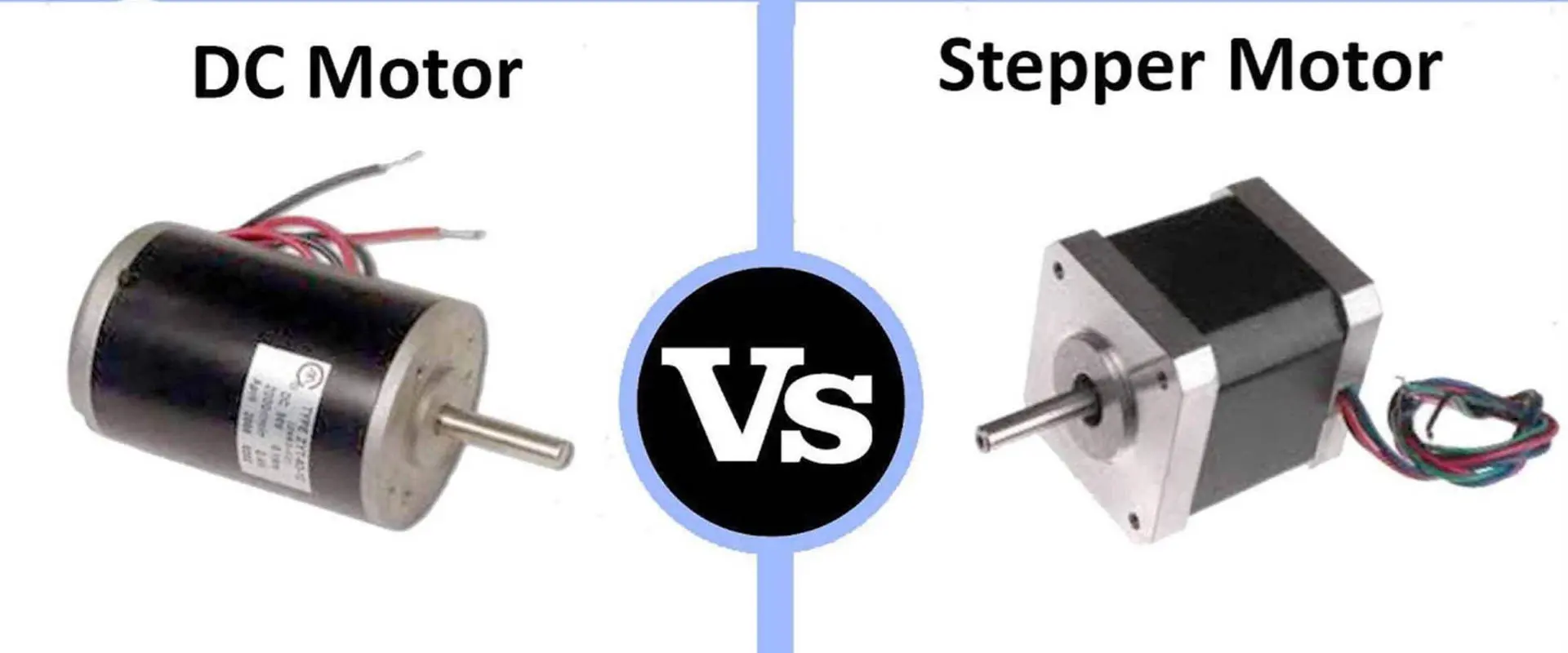
Servo Motors Vs. DC Stepper: What is Difference

DC Stepper VS Servo Motors

Introduction to Motors

Motors are electro-mechanical devices that convert electrical energy into mechanical energy. They come in a variety of types depending on their construction, working principle, and applications. The two most common types of motors used in industrial and automation applications are servo motors and stepper motors.

Both servo and stepper motors provide precise motion control, but they have some key differences in their design and operation. This article will compare servo and stepper motors in detail in terms of their construction, working principle, performance characteristics, applications, advantages and disadvantages.

Overview of Servo Motors

A servo motor is a rotary or linear actuator that allows for precise control of angular or linear position, velocity and acceleration. It consists of a motor coupled to a sensor for position feedback. It also requires a relatively sophisticated controller, often a dedicated module designed specifically for use with servo motors.

Servo Motor

The key components of a servo motor are:

  • Motor – Provides the motive force for the actuator. Common motor types used in servo systems include DC brushed, brushless DC, AC induction, and AC synchronous motors.
  • Gearbox – Used to increase the torque output from the motor. Often equipped with high ratio gears to allow slower motor speeds but higher torque.
  • Encoder – Sensor that provides position and speed feedback to the controller. Resolvers and optical encoders are commonly used.
  • Controller – Compares the actual position to the desired position and calculates the required drive signals for the motor. Uses PID control algorithms.
  • Potentiometer – Measures position of output shaft and provides position feedback to controller.

The controller commands the motor to rotate to the desired position as fast as possible. Once the motor reaches the desired position, it stops. If an external force pushes against the motor, it will hold the position due to the servo control system.

Servo motors provide closed-loop control with high accuracy and fast response times. As a result, they are ideal for applications requiring precise position control such as robotics, CNC machines, pick-and-place equipment, and other factory automation machinery.

Overview of Stepper Motors

A stepper motor is a type of brushless DC electric motor that divides a full rotation into a number of equal steps. Unlike servo motors which rotate continuously, stepper motors move in discrete increments or steps.

Stepper Motor

The key components of a stepper motor are:

  • Stator – The stationary part consisting of stacked steel laminations with winding coils around the poles.
  • Rotor – The output shaft along with a magnetized part that interacts with the magnetic field from the stator coils.
  • Driver – The driver energizes the motor coils in the proper sequence to cause rotation. Open-loop control.

Stepper motors operate on the principle of electromagnetism. The motor coils are energized in a specific sequence, creating magnetic poles that attract and repel the permanent magnets on the rotor. This causes the rotor to turn a precise angle or โ€œstepโ€ each time a coil set is energized.

By controlling the sequence and coils energized, the motor can be turned in precise increments. No closed loop feedback is required, though often an encoder can provide position verification.

Stepper motors provide excellent low speed torque and position control without requiring encoders or servo control. They are commonly used in 3D printers, CNC machines, plotters, and other applications requiring high precision motion.

Construction and Design

Both servo and stepper motors have unique construction characteristics optimized for their particular applications and operating principles.

Servo Motor Construction

The construction and design of a servo motor can vary greatly depending on the motor power, torque, speed, and accuracy requirements. But in general servo motors consist of the following components:

  • Stator – Usually made up of laminated steel with winding coils around the stator poles. The number of pole pairs determines the number of magnetic poles.
  • Rotor – Made of permanent magnets alternating in polarity around a rotor shaft or core. Often high energy rare earth magnets are used.
  • Shaft – Heavy duty output shaft with high stiffness for minimal deflection under load. Supported by precision ball bearings.
  • Housing – Cast iron or steel housing provides structural support and protects internal components. Often thermally conductive to aid cooling.
  • Feedback device – Resolvers, encoders or potentiometers are attached to monitor rotor position.
  • Gearbox – High ratio gearboxes are often integrated to increase torque capacity. Spur, planetary, and harmonic gears are commonly used.

The stator, rotor, bearings, and housing make up the actual motor section. The feedback device and gearbox augment the motor capabilities for high performance servo applications.

Stepper Motor Construction

Stepper motors have a relatively simple electromechanical construction optimized for open-loop positioning control. The basic components include:

  • Stator – Made up of stacked steel laminations with winding coils around the poles. The number of phases determines the number of coil sets.
  • Rotor – A permanent magnet with alternating north and south poles arranged radially around a central shaft.
  • Shaft – Usually an integrated shaft machined as part of the rotor. Supported by bushings or ball bearings.
  • Housing – Lightweight aluminum or thermoplastic housings enclose the stator and rotor. Air or liquid cooling may be integrated.
  • Bearings – High speed sleeve bearings, bushings or ball bearings support the rotor shaft.

Stepper motors do not require an encoder or gearbox for most applications. The simple stator and rotor design allows rapid manufacturing at low cost.

Comparison of Construction

ComparisonServo MotorStepper Motor
Stator designLaminated steel with concentrated windingsStacked laminations with distributed windings
Rotor designSalient pole or permanent magnetPermanent magnet
HousingHeavy cast iron or steelLight aluminum or plastic
BearingsHigh precision ball bearingsBushings, sleeve or basic ball bearings
Feedback deviceEncoder, resolver or potentiometerOften none, sometimes encoder
GearboxOften integral high-ratio gearboxRarely used

In summary, servo motors have a robust stator, rotor and housing designed for high torque, speed and continuous duty operation. Stepper motors use lightweight materials and simple construction aimed at low cost and open-loop control.

Working Principle

DC Stepper VS Servo Motors

While both servo and stepper motors produce rotational motion, their internal operating principle and control methods differ significantly.

Servo Motor Working Principle

Servo motors operate on the basis of a closed-loop control system. A controller provides a drive signal to the servo that is proportional to the difference between the commanded position and actual position.

Servo Motor Working Principle

The working principle involves:

  • An input command to the controller indicating the desired position. This is compared to the position feedback.
  • Error between actual and desired position is calculated. The controller sends a proportional drive signal to the servo amplifier.
  • Motor is driven proportionally faster or slower to minimize position error.
  • Encoder or resolver provides continuous position feedback to complete the control loop.

This closed loop control allows a servo motor to quickly and precisely rotate to a commanded angular position. Servo motors use PID control algorithms to optimize the dynamic response.

Stepper Motor Working Principle

Stepper motors operate on the principle of electromagnetism and discrete stepping of the rotor. Rotation is achieved by energizing coil windings in a specific sequence.

The stepper motor working principle:

  • Applying current to a motor coil creates an electromagnetic pole. Opposite poles attract, similar poles repel.
  • Alternating current to the motor coils moves the rotor. As the rotor teeth align with the energized stator pole, they lock in position.
  • The driver sequentially energizes the motor coils to rotate the rotor in increments or steps. No closed loop control is used.
  • Step angle is determined by rotor construction. Number of steps per revolution depends on step angle.

The open loop stepping operation allows the motor to move in controlled discrete increments without requiring a position sensor.

Comparison of Working Principles

ComparisonServo MotorStepper Motor
Control methodClosed loop PID controlOpen loop stepping
Feedback deviceEncoder or resolverNot required
AccuracyVery high with closed loop controlLimited by step resolution
SpeedWide speed range with rapid accelerationTypically lower speed operation
TorqueHigh and continuous torque capabilityHigh holding torque, lower power torque

In summary, servo motors use closed loop control for high accuracy while stepper motors operate open loop in discrete steps. Servo systems are more complex but offer better dynamic performance.

Performance Characteristics

The design and operating principles of servo and stepper motors impart distinct performance characteristics.

Servo Motor Performance Metrics

Key performance characteristics of servo motors include:

  • Speed – Servo motors can operate over a wide speed range, often exceeding 6000 rpm for brushless servo motors. Rapid acceleration and deceleration is possible.
  • Torque – Servo motors produce high torque, especially at lower speeds. Peak torque ranges from 10 Nm to over 1000 Nm depending on motor size.
  • Power – Motor output power ranges from under 100 Watts to over 15 kW for large industrial servos. Power density is high.
  • Accuracy – Position accuracy is very high, reaching 0.01 degree or better with high resolution encoders. Helped by tuned PID control gains.
  • Repeatability – Positional repeatability is excellent, with consistent positioning under 0.01 degree. Benefits from closed loop control.

High torque density, acceleration, accuracy and repeatability make servo motors well suited for demanding automation applications. Advanced control algorithms allow optimized motion.

Stepper Motor Performance Metrics

The performance characteristics of a stepper motor include:

  • Speed – Maximum speed ranges from 100 to 2000 RPM. Higher speeds require reduced torque and incremental microstepping.
  • Torque – Stepper motors have very high holding torque but weaker power torque at higher speeds. Holding torque can exceed 3 Nm for small motors.
  • Power – Typical motor power output ranges from below 100 Watts up to around 750 Watts. High speed operation results in lower power.
  • Accuracy – Positioning accuracy depends on stepper resolution. Full step resolution is typically 1.8 degrees. Microstepping divides steps further.
  • Repeatability – Excellent repeatability thanks to inherent step resolution. Positional error is limited to less than one step.

Stepper motors excel at slow speed, high precision positioning applications. Their relatively simple construction provides robustness at low cost.

Comparison of Performance Metrics

ComparisonServo MotorStepper Motor
Speed rangeVery wide, thousands of RPMNarrow, typically below 2000 RPM
Torque densityVery highHigh holding torque, lower running torque
Power outputUp to 15 kW+Typically below 750 Watts
Accuracy0.01 degree or better1.8 degrees full step, higher with microstepping
RepeatabilityExcellent, less than 0.01 degreeVery good, limited to step resolution

In summary, servo motors are designed for high speed and power operation with very high accuracy. Steppers trade off speed and power for high precision motion in an open loop control system.

Applications and Uses

The performance characteristics and capabilities of servo and stepper motors make them suitable for different applications.

Servo Motor Applications

Servo motors are designed for high power, high precision motion control applications including:

  • Industrial robotics – Multi-axis articulated robot arms require high torque servo motors to handle dynamic payloads.
  • CNC machines – High precision machining relies on fast, accurate servo motor control of linear and rotary axes.
  • Medical equipment – MRI scanners, CT scanners, and lab automation use servo positioning.
  • Semiconductor manufacturing – Integrated circuit production involves extensive servo-controlled motion.
  • Printing presses – Servo systems position printing plates and control tension.
  • Packaging – High speed coordinated motion is needed for packaging equipment.

Servo motors handle the most demanding motion control applications where speed, accuracy, and flexibility are critical performance requirements.

Stepper Motor Applications

Stepper motors are ideal for applications requiring high precision open loop positioning:

  • 3D printers & CNC machines – Stepper motors precisely position print heads and machine tools.
  • Textile manufacturing – Stepper motors control threading and weaving patterns.
  • Medical syringes – Stepper motors provide metered dispensing of fluids in analyzers.
  • Wafer scanners – Precise positioning of optics for integrated circuit photolithography.
  • Telescopes – Stepper motors orient telescope mounts to track celestial objects.
  • Robotics – Used in cost-sensitive robots requiring modest position control performance.

Stepper motors may not match servos in speed and power, but they provide excellent control in open loop positioning machines.

Comparison of Applications

ComparisonServo MotorStepper Motor
Performance reqsHigh speed, power, torqueModest speed with high precision
Control principleClosed loop feedbackOpen loop stepping
Example appsCNC machines, robotics, packaging3D printers, telescopes, medical dispensing
IndustriesManufacturing, robotics, industrialManufacturing, medical, aerospace

In summary, servo motors meet the demands of high power, high speed automation applications while steppers excel at slower speed open-loop positioning tasks.

Advantages and Disadvantages

Both servo and stepper motors provide excellent motion control capabilities. But they each have certain advantages and disadvantages to consider.

Servo Motor Pros and Cons

Servo motor advantages include:

  • Extremely accurate position, speed and acceleration control
  • High power density and torque-to-inertia ratio
  • Fast dynamic response and tuning through PID gains
  • Advanced control capabilities and flexibility
  • Wide speed range operation
  • High efficiency

Disadvantages of servo motors:

  • More complex requiring closed loop control
  • Higher costs than stepper motors
  • Requires maintenance of brushes and contacts (for brushed DC servos)
  • Encoder or resolver feedback device adds cost
  • Control electronics are complex and expensive

In summary, servo motors provide high performance and flexibility but at higher complexity and costs than alternatives like stepper motors.

Stepper Motor Pros and Cons

Stepper motor advantages:

  • Excellent position control and repeatability without feedback device
  • Low cost and simple construction
  • Open loop control eliminates tuning complexity
  • Extremely reliable with long service life
  • High holding torque prevents loss of steps
  • Available in a wide range of sizes and torque levels

Stepper motor disadvantages:

  • Lower power and torque during running operation
  • Limited high speed capability compared to servo motors
  • Open loop nature limits control accuracy
  • Can lose steps at high speeds or accelerations
  • Torque ripple can cause vibrations in some cases
  • Audible noise during operation

In summary, stepper motors are simple, inexpensive, and reliable, but lack the speed, power, and accuracy of closed loop servo systems.

Comparison of Advantages and Disadvantages

ComparisonServo MotorStepper Motor
AccuracyExtremely high with encoder feedbackLimited by open loop control
ComplexityHigh due to closed loop controlVery simple open loop operation
CostExpensive; electronics, encoderLow component cost
ReliabilityBrush and contact wear over timeVery reliable and long service life
Speed/powerHigh speed, power and accelerationLower speed and power capabilities

In summary, servo motors provide unmatched performance while stepper motors excel at simple, low-cost, open-loop positioning tasks.

Servo Motors vs. Stepper Motors

Servo MotorsStepper Motors
ConstructionRobust mechanical design, precision gears and bearings, encoders for feedbackSimple lightweight construction, open-loop control
PrincipleClosed loop PID control with encoder feedbackOpen loop stepping operation without feedback
PerformanceHigh speed and power output, very high accuracy and repeatabilityHigh precision but lower speed and power, modest accuracy
ApplicationsHigh performance tasks like CNC machines and roboticsSimpler positioning tasks like 3D printers or telescopes
AdvantagesExtreme precision control, fast dynamics, advanced control capabilitiesLow cost, simple operation, excellent repeatability, high reliability
DisadvantagesComplexity, high cost, maintenanceLower power and speed, limited accuracy

Frequently Asked Questions

1. What is the main difference between a servo motor and a stepper motor?

The main difference is that servo motors use closed loop control with position feedback while stepper motors operate open loop without requiring position sensors. This allows servo motors to achieve very precise, high speed control while steppers offer simpler operation at lower speeds and accuracy.

What are the Properties and Typical Applications of the Arlon 51N PCB Material?

Arlon 35n PCB

Manufacturing of printed circuit boards makes use of different materials. However, the PCB laminates are known as the main raw materials that are useful in the fabrication of printed circuit boards

Hereโ€™s another focus on the Arlon PCB Material. This time, we will be focusing on the Arlon 51N PCB Material. In this article, we will be discussing why this material has high reliability and why it is very useful in rigid-flex complex fabrication.

If you wish to gain much knowledge concerning the Arlon 51N PCB Material, please continue reading as we take you through different aspects of the topic.

What is the Arlon 51N PCB Material?

The Arlon 51N PCB Material is a multifunctional non-DICY epoxy prepreg system which came to be to offer high reliability via solder operations that are lead free.

The thermal stability and high decomposition of the Arlon 51N PCB Material is great for use in rigid-flex complex fabrication, as well as assembly operations whereby there is a need for minimum resin flow.

Furthermore, this material possesses great mechanical and electrical properties that meet the IPC-4101/126 prepreg requirements.

What are the Features of the Arlon 51N PCB Material?

The Arlon 51N PCB Material has a decomposition temperature that is higher than 350 degrees Celsius and it is great for solder processing that is lead free. It also provides great improvement over the traditional Epoxy FR-4 systems.

This resin system is multifunctional. Also, it has a temperature for glass transition of 170 degrees Celsius for optimal PTH reliability. Also, the bond adhesion is improved over many thermal excursions. This leads to better reliability via rework and reflow operations.

Furthermore, it is RoHS/WEEE compliant and it is compatible with any solder processing that is free of lead. In addition, the mechanical and electrical properties meets the IPC-4101/126 prepreg requirements, which is modified to become โ€œlow-flowโ€

In addition, for any epoxy system, this material has the best thermal performance. At T260, it os greater than 60 minutes, at T280, it is greater than 30 minutes, and at T300, it is 15 minutes.

Typical Applications of the Arlon 51N PCB Material

These are areas where you can apply the Arlon 51N PCB Material

Dielectric insulators

The Arlon 51N PCB Material is useful in dielectric insulators, because they can serve as insulators. It makes it possible for these dielectric insulators to refuse the flow of electric current.

Completed PCB assemblies that requires great thermal stability

As mentioned earlier, the Arlon 51N PCB Material has great thermal stability. This is why it is very useful in PCB assembly because they offer excellent thermal stability to the finished PCB.

Applications requiring uniform or minimal resin flow

The Arlon 51N PCB Material is also very useful in any application that requires a uniform or minimal resin flow.

Bonding of rigid-flex multilayer boards

The Arlon 51N PCB Material is a multifunctional epoxy resin system. This is why it is very useful for the bonding of rigid-flex multilayer boards.

What are the Properties of the Arlon 51N PCB Material?

The Arlon 51N PCB Material has some reliable properties that ensure its high reliability and performance. Letโ€™s consider them.

Physical Properties

The Arlon 51N PCB Material has the following physical properties. It has a flammability rating of V0 as well as a thermal conductivity of 0.25 W/mk. Furthermore, it has a density of about 1.65 g/cm3, as well as a water absorption value of 0.15%

Thermal Properties

The Arlon 51N PCB Material has the following thermal properties.  Its temperature for glass transition is 170 degrees Celsius.

Also, its decomposition temperature is 354 degrees Celsius at the initial. Then at a weight loss of 5%, the value becomes 368 degrees Celsius. At 50 โ€“ 260 degrees Celsius, the Arlon 51N PCB Materialโ€™s expansion along the Z-axis is 2.6%.

For the X, Y axis it has a coefficient of thermal expansion (CTE) of 15 ppm/C. At T260, it is higher than 60 minutes, while for T288, it takes more than 30 minutes. Then for T300, the value is 15 minutes.

Electrical Properties

The Arlon 51N PCB Material has the following electrical properties. Its dielectric constant is 4.2 at 1 MHz, while at 1 GHz, the dielectric constant is 4.1.

Also, it has a volume resistivity of 2.6 ร— 107 Mฮฉ-cm for C96/35/90, while at E24/125, it has a volume resistivity of 3.3 ร— 107 Mฮฉ-cm. Also, at 1 MHz, it has a dissipation factor of 0.02.

Furthermore, this PCB material has an electrical strength of 39.4 kV/mm and an arc resistance that is greater than 124 seconds. Its surface resistivity at E24/125 and C96/35/90 is 4.0 ร— 106 Mฮฉ and 2.9 ร— 107 Mฮฉ respectively

Mechanical Properties

The Arlon 51N PCB Material has the following mechanical properties. Its Poissonโ€™s Ratio is 6.5 and its youngโ€™s modulus for CD/MD is 2.6 Mpsi or 18 GPa.

In addition, its peel strength with respect to copper is 1.2 N/mm after thermal stress. Then at elevated temperatures, it stands at 1.2 N/mm, while after process solutions, the value is 1.1 N/mm. Also, the tensile strength is 578 Mpa or 84 kpsi.

What are the Recommended Conditions for Processing the Arlon 51N PCB Material?

First make sure that the inner-layers are processed through strip, etch, and develop making use of the normal industry practices. Furthermore, bake the inner layers using a rack at a temperature falling within 225 degrees Fahrenheit and 250 degrees Fahrenheit.

This should be done before lay-up. Also, make sure that you vacuum desiccate your prepreg for about 8 to 12 hours before you laminate.

Lamination Cycle of the Arlon 51N PCB Material

The lamination cycle of this material is as follows

  • Pre-vacuum for about 30 to 45 minutes
  • The rise in heat has to be controlled to about 8 degrees Fahrenheit to 12 degrees Fahrenheit every minutes
  • Lamination pressure has to be between 150 to 300 PSI. Note that thus depends on complexity
  • Also, the temperature of the product at the beginning of the cure should be 360 degrees Fahrenheit.
  • Cure time at the temperature is 90 minutes

Conclusion

This article has explained everything you need to know about Arlon 51N. This PCB material offers a lot of benefits and features.