
RAYPCB · ENGINEERING GUIDE
Arlon 51N: Lead-Free Low-Flow Prepreg Design
Arlon 51N is a non-DICY epoxy low-flow prepreg intended for bonding constructions that must tolerate lead-free processing. It belongs in a bondline review, not a generic list of rigid PCB cores. The key task is to define the required resin movement, local fill and thermal history together.
Use the Arlon material overview for family selection. This page focuses on the exact 51N product and the questions a rigid-flex or bonded assembly needs to answer before release.
Use the current 51N source instead of an old family table
The official version 1.6 sheet describes multifunctional epoxy low-flow prepreg with Tg 170°C and a decomposition-temperature statement above 350°C. It cites IPC-4101/126 prepreg requirements modified for low flow. Some older summary tables use different slash-sheet references; retain the controlled revision rather than combining them.
These material statements do not qualify a particular board or soldering sequence. Define the customer acceptance separately, including the construction, thermal exposures and evidence required for the finished bonded region.
Evidence and construction decision
| Item | Source or model boundary | Action for the design review |
|---|---|---|
| Product | 51N non-DICY epoxy low-flow prepreg | Review facing surfaces and local relief. |
| Tg | 170°C typical | Not a universal assembly schedule. |
| Current reference | IPC-4101/126 modified for low flow, version 1.6 | Do not copy an older slash-sheet reference. |
Put the resin boundary on the drawing
Show cavity edges, flex openings, copper steps and the intended bond area. Identify surfaces on both sides, including any coverlay, metal or treated laminate. The same material can behave differently across a wide copper clearance and a narrow region next to an open cavity.
Low flow is a controlled range, not the absence of movement. Insufficient filling can trap voids while excessive movement can violate a keep-out. The manufacturing review should therefore identify the difficult local regions and the representative evidence needed to verify them.
| Review item | What to establish |
|---|---|
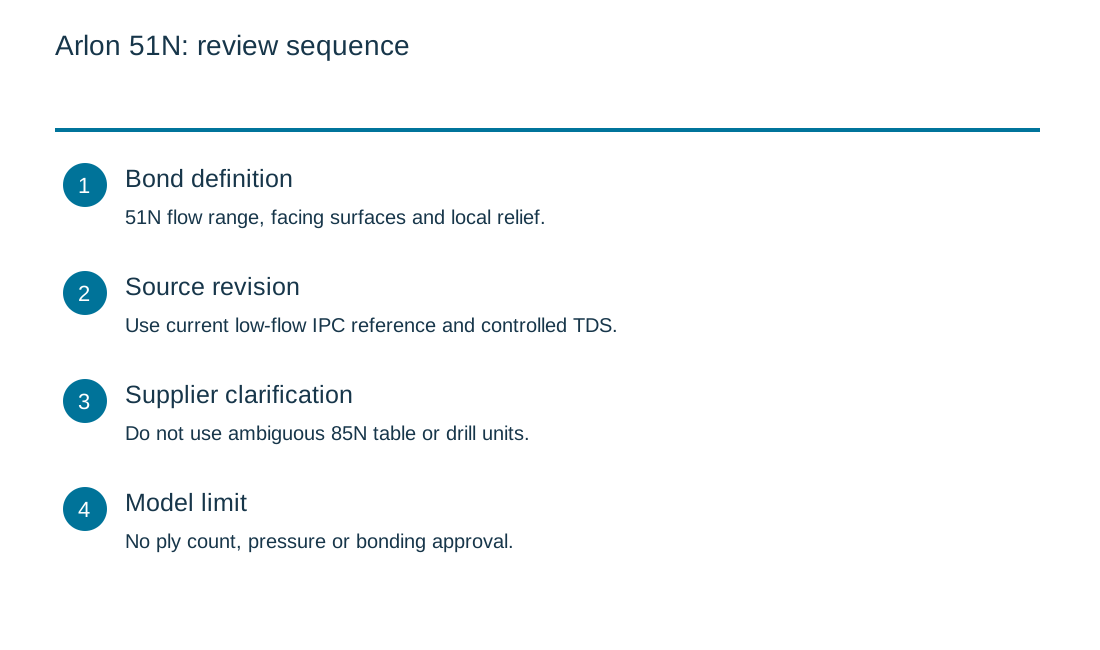
| Bond definition | 51N flow range, facing surfaces and local relief. |
| Source revision | Use current low-flow IPC reference and controlled TDS. |
| Supplier clarification | Do not use ambiguous 85N table or drill units. |
| Model limit | No ply count, pressure or bonding approval. |
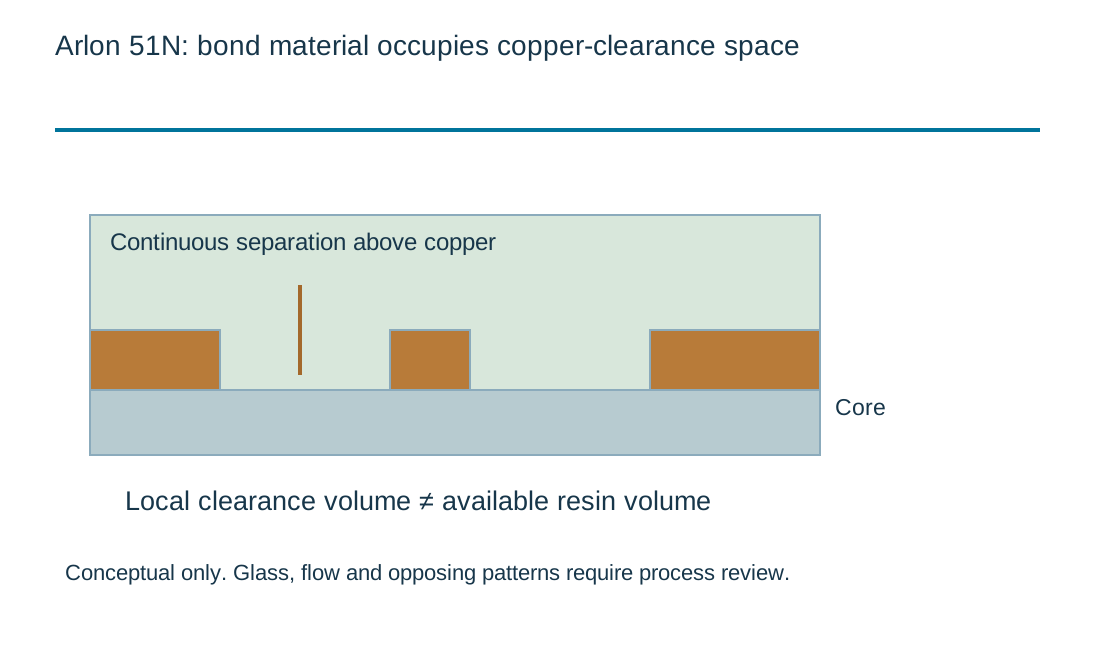
Copper-clearance volume illustration
Copper-clearance volume illustration
Use the current inputs and keep the assumptions
Start with the example only to inspect the units and the calculation boundary. Replace every assumption with a value tied to your own document or measurement. An empty numeric field is not zero. The review-reference field is a local label; avoid entering customer names, confidential part numbers or other private information into a public worksheet.
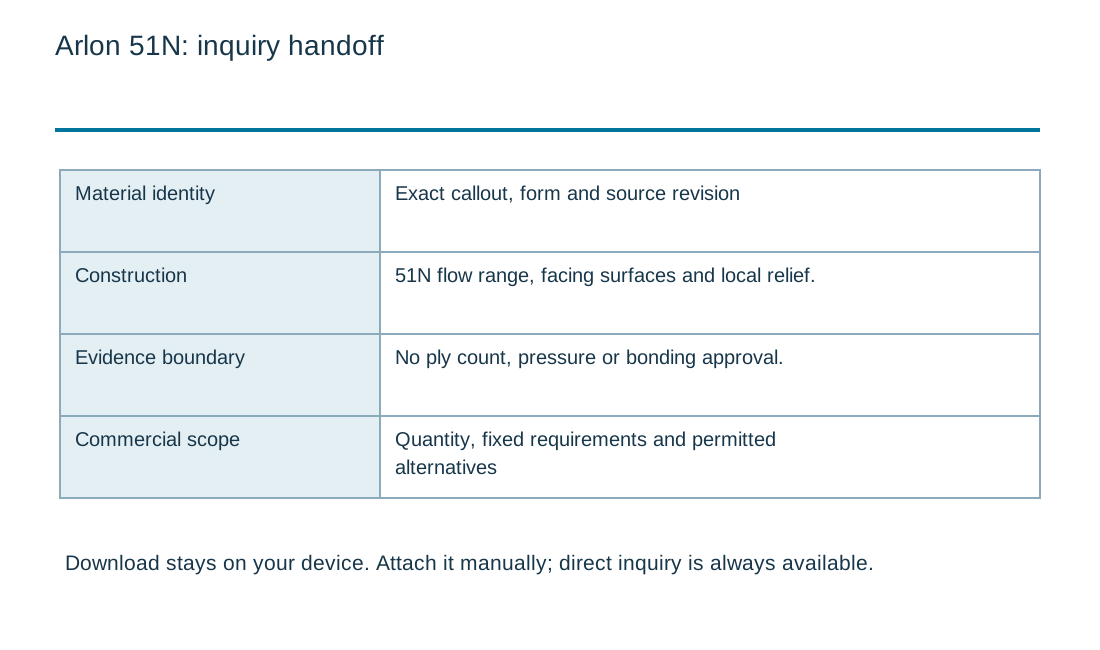
After calculating, read the notes alongside the numerical result. Changing any input invalidates the displayed result and disables its download until you calculate again. For a comparison, keep the units, geometry, material condition and measurement boundary consistent. A long decimal result does not imply equally precise input data. The downloadable record stays on your device and can be attached manually to an inquiry. It is not automatically transferred into the Contact form.
If an input is unknown, identify the person or document needed to resolve it. Do not fill a gap with a favorable generic value simply to obtain a result. You can request a material or fabrication review without using the tool. The arithmetic illustrates a relationship; it does not accept a construction, certify a material, establish current pricing or replace a supplier process specification.
| Input | What to establish before using it |
|---|---|
| Review reference | Nonconfidential revision label. |
| Evaluated bond area · mm² | Panel or coupon area with consistent pattern coverage. |
| Copper feature height · µm | Height of the one patterned surface being evaluated. |
| Retained copper coverage · % | Area fraction occupied by copper on that surface. |
| Final separation above copper · µm | Ideal continuous bondline above the highest copper; excludes roughness and glass. |
Optional cost comparison from your own allowances
Use a quotation or a clearly labeled internal assumption for each input. Keep the quantity, construction and inspection scope the same when comparing alternatives. This uncalibrated planning model adds entered values; it contains no current market rates and does not issue a RAYPCB quotation. You can contact the team without completing it.
Optional project allowance comparison
Calculate occupancy without selecting a press recipe
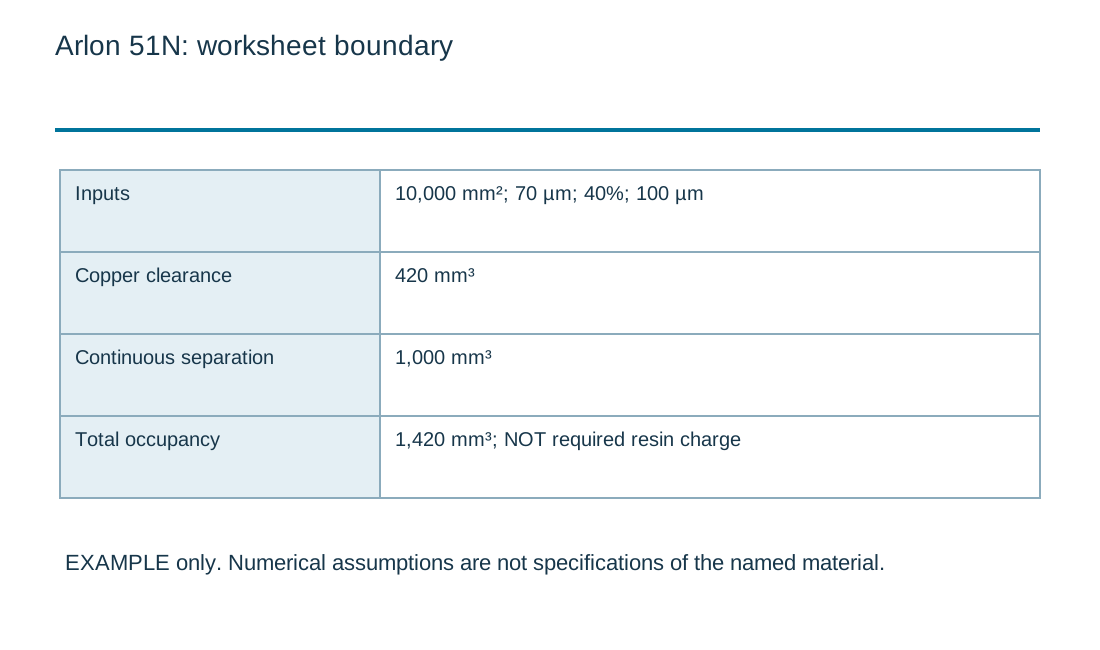
The tool adds copper-clearance volume to the continuous dielectric interval above the pattern. Its hypothetical example gives 1,420 mm³ for 10,000 mm² area, 70 µm copper, 40% coverage and 100 µm separation. It does not determine how much resin a particular prepreg supplies.
Reinforcement, flow, opposing patterns and cure effects are excluded. A result cannot choose a ply count or pressure. Send actual artwork when local copper distribution matters; average coverage alone is not enough to qualify filling.
Compare 49N and 47N by the required process window
Arlon 49N and 47N are distinct low-flow systems. The comparison should preserve bonding surfaces, desired thickness, temperature constraints and assembly history. A shared brand or application category does not make their process schedules interchangeable.
FR406N is another controlled-flow material with its own supplier characterization. If an alternative is allowed, request a written construction and process proposal rather than accepting a generic low-flow equivalent note.
Do not copy ambiguous tables into a production traveler
The public 51N sheet contains an availability table with 85N-prefixed entries and a drill-size unit presentation that should be clarified with the supplier. Those details are not a basis for inventing 51N order codes or machine settings. Use the approved lot and process documents for the actual build.
This is especially important for repeat orders: a familiar PDF can still contain a historical presentation issue. Keep supplier clarification with the controlled drawing so the next buyer does not need to guess what was intended.
Request a bond review with a defined evidence scope
Send the exact grade and revision, facing materials, cavity and copper geometry, target bondline, quantity and thermal exposure sequence. Identify required inspections and the boundary for acceptable resin intrusion, voids or thickness variation.
The allowance worksheet only sums entered cost inputs. It cannot price 51N automatically or approve an alternative. A useful manufacturing response identifies the proposed layup, open constraints and evidence needed before release; the online calculation remains a preparation aid.
Review supplied form, local geometry and process together
A stackup is an agreement about physical construction, not just a vertical list of copper layers. Give each dielectric interval an identity and distinguish cured core thickness from the pressed thickness of bonding material. State whether copper is included in every quoted dimension.
Review the implications of a material change across impedance, lamination, drilling, registration and assembly exposure. A replacement with a similar headline Tg or Dk can still require a different geometry or process. Preserve the approved layer order, copper distribution assumptions and measurement basis with the manufacturing files.
Use the worksheet to organize a review, then obtain the fabricator's proposed construction and tolerances. Close differences before release. The final stackup, drawing and procurement material list should reference the same revision, especially when multiple suppliers or repeat orders are involved.
Bonding materials cannot be selected from a cured-laminate table alone. Establish whether the product is woven-glass prepreg, another reinforced bonding system or resin-coated copper. Each form has a different relationship between its supplied condition and the finished dielectric interval. Preserve the exact product and source revision in the proposed build.
Local copper distribution matters. Average coverage can conceal a large clearance region, a thick copper transition or a difficult target area. Supply the actual artwork and identify the locations that drive filling, registration or opening requirements. A single global thickness or aspect ratio does not characterize every local feature.
Process guidance should be applied by the responsible manufacturing team to the actual construction. A public document does not replace press-load qualification, handling controls or an approved drilling and metallization route. Do not use a generic bake or cure instruction for an unidentified bonding material.
Agree how the critical features will be verified. Representative cross-sections, dimensions and appropriate electrical or reliability evidence answer different questions. Keep the selected locations and acceptance requirements with the drawing so that a successful easy region is not mistaken for evidence about the most demanding feature.
Standards, source context and limits
Use the edition, amendment and material-document revision named in the purchase agreement. A standards title, marketing label or supplier product family does not establish that a particular lot meets a requirement. Public summaries are useful for scope; the controlled specification and applicable test method govern acceptance.
The examples on this page are illustrative engineering scenarios. They are not RAYPCB production records or guaranteed material values. Source links identify the organizations responsible for the referenced information. Confirm applicability to the exact grade, construction and test condition before carrying a number into a drawing or qualification report. Sources were reviewed on 3 October 2026. A public catalog search is not proof that an unlisted product never existed. Where the exact designation or current technical sheet could not be verified, this page provides a clarification workflow rather than an invented material specification. Current supply, construction availability and qualification remain separate questions.
For fabrication scope and the agreed construction requirements, see PCB manufacturing.