How to Choose the Best PCB Assembly Ontario Companies

Consumer Electronics Assembly

The assembly of PCBs is a complex job that has to be done with care and expertise ensuring that the boards function the way they are designed. This is why Companies that don’t have experts to handle this task usually outsource their company’s assembly services to other suppliers of PCB assembly.

However, the many companies providing PCB Assembly Services in the market makes it difficult to choose one for your project. Before we consider those factors you need to look into, let’s review some of the best PCB assembly Ontario companies.

Best PCB Assembly Ontario Companies
through-hole assembly process

Bittele Electronics

This company was founded in 2003, and has been able to establish itself as a provider of PCB assembly for mid-volume and small-volume production runs. They have a great facility that integrates their Head Office, parts procurement team, coupled with their state-of-the-art PCB Assembly line.

With these great features, this company can provide their customers with one-stop low cost PCB assembly services. These include parts procurement, PCB fabrication, etc. Most of the Customers are based in Canada and the United States in different industries.

Candor Industries

This Company was established back in 1999 to meet the needs of the 21st century clients that require innovative solutions to handle their complex technologies. Also, they saw that the standard methods of manufacturing had some limitations to achieve their goals. Through the invention as well as development of some technological advancement, this company is ranked at the top to provide these solutions.

They claim to serve as an environment-friendly company since the elimination of the utilization of dry-film resists, EDTA, formaldehyde, tin-lead resists, ammonia-based etches chemistry as well as their by-products.

For the future, this PCB assembly Ontario Company plans to offer accommodating and supportive services to their clients and customers. They strive to push the PCB manufacturing envelope making use of advanced tech. This is achieved through going back to their streamlined process of manufacturing. Also their research and development assists the customers and industry as a whole to a much brighter future.

Circuit Tech Inc.

This company is a top assembler of high reliability, high density PCBs for the military and defense industry. Producing very reliable products to serve this industry serves as the basis of the future growth of this PCB assembly Ontario Company.

Effective performance and reliability of an electronic assembly plays a significant role in your manufacturing yields and business. When it has to do with quality, you cannot sacrifice anything. Circuit Tech is focused on manufacturing PCBs through the continuous improvement of all production and business processes. Furthermore, this company offers high-quality products that help to meet and even exceed whatever your requirements are regarding durability and reliability.

In order to successfully compete in the global marketplace of today, you have to work with appropriate expertise to all stages of the life cycle of a product. The sustained investment of this Company in people, technology, and process equipment ensures the continuous expansion of our capabilities. This leads to lower costs of production and competitive prices.

Crest Circuit

Crest circuit was established in 1978 and is well-known as a high-quality and reputable assembler of PCBs. Situated in Markham area of Ontario, this PCB Assembly Ontario Company runs its operations inside a facility of 35,000 square feet with materials and processes, which are completely certified to all UL requirements as well as quality system that is certified to the ISO 9001:2008

Crimp Circuit

This company is one of the oldest family-owned PCB manufacturing companies involved in the creation and assembling of high-quality products. It was established in 1980 and their 45,000 state-of-the-art facility is located strategically in Toronto. This allows users to serve all the continents of North America.

Furthermore, the quality produced by this company is unsurpassed and they have been able to earn this reputation as well as work on a daily basis to maintain this.

How to Choose a PCB Assembly Ontario Company

FULL PCB MANUFACTURING Quote

Experience

You must consider this factor before you choose a PCB Assembly Ontario Company. When you work with a partner that is experienced, you will save yourself much trouble. Also, companies with vast experience have an expert team, which helps to ensure high quality assemblies as well as quick turnaround times.

You can reach out to them directly through their website to learn about their project experience as well as assembly capabilities. Also, make enquiries about the assembly service they provide. Ask about the number of years they have been in the industry as well as how they have offered their assembly services during this period.

You can ask for the information below to help in evaluating the quality they offer

Certification

Before a company can obtain certifications, they must pass the 3rd-party audit as well as high-quality standards.

Testing Services

An important step for guaranteeing a PCBA quality is testing. Any problems with the quality can cause problems for your business and affect you largely. Therefore, when choosing your PCB assembly company, ask about what procedures and methods for testing they use. Work with Companies having a reliable and comprehensive procedure for testing as well as strict processes for quality control.

In general, circuit boards have to pass through different inspections which include functional testing, automated optical inspection, as well as visual inspection.

Cost

This factor is really important. Many factors affect the PCB assembly cost, which includes components that have to be utilized, costs of shipping, costs of labor, size of order, etc. However when comparing different prices for different suppliers, don’t just consider the price, pay enough attention to the quality as well as other services. After this, find whichever is most cost-effective for you.

Conclusion

Choosing a PCB Assembly Ontario Company could be a difficult task due to the several options out there. However, we have been able to review some of them. You can make your choice from any of our options or consider the factors we have highlighted above before making your decision.

What are the Best Possible Ways to Prevent Solder Voids in PCBs?

Solder Void

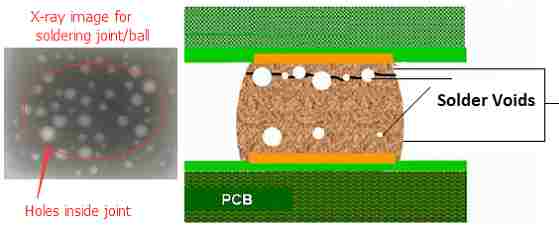
Solder voids are the empty spaces or unplated areas in a PCB. They can happen due to a wide range of reasons, some of which are solder paste oxidation and when the low heat temperature is used.

In this article, we help you understand some of the possible options to explore to get rid of solder voids in a PCB.

YouTube video

How are Solder Voids Formed?

Solder voids typically refer to the โ€œvoidโ€ or absence of solder. It commonly happens when there is an empty space created on the PCB, due to the non-application of solder in that area.

Also called solder joint void, it can be detrimental to the circuitโ€™s performance, due to the general instability and general weakness created in the PCB in the process.

How to Fix Solder Voids in a PCB

Solder Void in a pcb

Once you notice the empty space, the next step to take is fixing it. Here are some suggestions on how to fill the voids in solder joints of a PCB.

1.    Reduce the Solder Paste Quantity

Sometimes, the quantity of solder paste applied is responsible for the voids created in the solder joints. The logical thing to do here is to reduce the amount of solder paste deposited.

Here are some additional considerations:

  • Go for Lower Volatile Content: it is better to go for the solder paste that has a lower volatile content. The reason is that it doesnโ€™t absorb much moisture, which, in turn, reduces the chances of creating void solder.
  • Be Mindful of the Quantity: despite the fact that a low-volatile solder paste content works best, it doesnโ€™t need to be much. So, apply a little quantity.

2.    Extend the Preheat Time

The time spent in preheating the solder is very important. Here are some of the reasons why it matters:

  • The preheat timeโ€™s extension aids the possibility of having the solvent reaching the optimum temperature.
  • Once the optimum temperature is reached, the solvent in the flux will make a complete vaporization.
  • Through this process, it is easier for the residue of flux left behind in the solder joints to be lowered.

3.    Modify the PCBโ€™s Stencil

The stencil of the Printed Circuit Board (PCB) can do with some modifications. This consideration is based on the fact that some PCBs are prone to solder voiding than the others are.

To this end, here are some ideas on how best to modify the boardโ€™s stencil:

  • Go for the โ€œGas Escape Routesโ€: it is better to go for or use the PCB stencils that have, give or provide gas escape routes under the components.
  • The idea is to create clearances around the holes. That way, the solder paste will not be pulled into the PCB during the reflow process.

4.    Modify the Reflow Profile

This refers to the process of extending the soak time. The modification of the reflow profile provides these advantages:

  • It helps to generate less-volatile material.
  • The reflow profileโ€™s modification is also a good way to create more time for the gas to escape.

Here are some ideas on how an increase in the soak time can reduce BGA void formation in PCBs:

  • A soak time extension is tenable in the driving off of more of the low-boiling volatiles.
  • These volatiles evaporate and escape from the solder paste before the reflow (solidification).

What is the Content of Solder Void?

The content of solder void includes air and flux, which have been trapped within the solder joint. It is also possible to have a cured resin content, especially when a solder paste containing resin was used for the soldering process.

Causes of Solder Voiding

FULL PCB MANUFACTURING Quote

The following are some of the notable causes of solder voiding in a PCB:

Limited Outgassing Paths

Outgassing paths are the channels or pathways from where gasses can escape from the circuit board. The absence of or a limited number of these outgassing paths tend to create solder void, as the gasses that ought to have escaped are then trapped inside the board.

Paste-Induced Oxidation

Solder void is also likely to occur when the solder paste oxidizes.

Low Preheat Temperature

There is a possibility of solder void formation when the preheat temperature is lower. The reduction also means that the solvent in the flux will have difficulties without making a complete vaporization.

The Design of the PCB Stencil

The type of stencil the circuit board uses could be a contributing factor to the formation of solder voids.

As a rule of thumb, you should consider changing the current stencil if it is prone to solder voids.

Excessive Flux Application

When excessive amounts of flux are applied to the solder paste, the formation of solder voids is likely.

To this end, it is better to apply a little flux. This way, there wouldnโ€™t be an issue with the flux making an โ€œoutgassingโ€ before the solder is solidified or enters a โ€œsolid-state.โ€

The Solder Pasteโ€™s Quality Matters

What is the quality of the solder paste like? As a rule of thumb, the solder paste tends to shrink. An example is the lead-free solder paste, which shrinks up to 4% when cooled down to a solid-state.

The idea is that solder void becomes likely when large pads are evenly cooled down. This is in addition to the possibility of spacing and shaping in the solder.

Short Soak Zone Time

Solder voids also occur when the soak zone time is short, especially during the reflow process.

What Types of Solder Voids Exist?

Different kinds of solder voids exist and they work differently. Here is a summary of them:

Pinhole Microvoids

This is a type of solder void that is located between the copper land and the IMC layer. It usually measures between 1 and 3 microns in diameter.

Macro Voids

As the name suggests, this is one of the larger types of solder voids. Measuring up to 12 mils in diameter, macro voids are formed when there are trapped gasses and solder paste.

Intermetallic Microvoids

These are the sub-micron sized solder voids that are created due to the exposure of the PCB to elevated temperatures. The voids are created when the boardโ€™s exposure to over 100-degree Celsius of temperature happens for over 48 hours.

Planar Microvoids

These are the BGA voids responsible for failures in the Ball Grid Arrays (BGAs). Planar microvoids measure between 1 and 2 mils in diameter.

Microvia Voids

These are caused by the microvias associated with the Ball Grid Array (BGA) joint.

Shrinkage Voids

In addition to being susceptible to shrinking, these solder voids are peculiar to both the Through-Hole (THT) and Ball Grid Array (BGA) solder joints.

The easiest ways to identify these voids are:

  • Taking note of the elongated and rough voids that run from the surface of the solder joints.
  • Noticing the cracks in the solder joints.

Solder Voids vs. Plating Voids

Voids occur in the Printed Circuit Board (PCB) when certain parts or spaces are left unplated. Both the plating voids and solder voids are the two major types of voids in circuit board design.

Here are some of the differences between the two:

  • Plating voids happen when the electroless copper plating process is being used. In this case, the copper plating doesnโ€™t make a complete covering of the Through-Holeโ€™s inner walls. On the other hand, solder voids occurs when sufficient solder paste is not used.
  • It is almost easier to resolve solder voids than the plating voids and this is due to the simplified processes, such as switching to a solder paste formulation with lower void-forming tendency.

How Do Solder Voids Affect PCBs?

SMT-Through-Hole-Soldering

These are some of the ways that the formation of solder voids in a PCB could be detrimental to the boardโ€™s performance:

  • The reliability of the solder joint wouldnโ€™t be fully assured.
  • The current-carrying capacity of the PCB may be affected.
  • The formation of solder voids also causes solder bridging in the PCB.
  • The formation of solder voids also causes the irregularity of the solder flow. For example, it could cause the solder to flow from one pad to another, especially during the solder reflow process.
  • The thermal-conducting capabilities of the solder joints are also reduced in the process.

How to Prevent Solder Voids with the Industry Standards

Following the industry specifications as they pertain to the control of solder voids in PCBs can help. The IPC had set-out these standards in the IPC-A-610, which spelt-out the following criteria for solder voids:

  • It specified that the solder voids are to be considered โ€œdefectsโ€ if the overall calculated area of voids in any solder joint or solder ball is more than 25% of the total solder ballโ€™s area.
  • The defect is to be monitored using an x-ray image.

Conclusion: Are Solder Voids Problematic for PCBs?

No circuit board is โ€œperfect.โ€ One issue or the other could cause it to be defective and the solder voids are not an exception. However, the voids are not much of a problem, as they could some definite purposes, such as providing stress relief for the solder joints and limiting the chances of cracks within these joints.

Solder voids become a PCB problem when they occur in certain locations. For example, the occurrence of these voids on the circuit boardโ€™s interfacial surfaces could trigger cracking under certain atmospheric stress conditions.

We will help you evaluate the best ways to optimize your PCB so it doesnโ€™t become overly exposed to solder voids.

A Step-by-Step Guide to Mastering MIPI DSI

mipi dsi

MPI DSI refers to a commonly used serial interface between the processor and LCD in modern electronic devices. Other than being affordable, it offers various features which allow it to be used on modern mobile devices. MIPI is the latest yet innovative product of the MIPI alliance. MIPI alliance is one of the leading mobile industries like Samsung and Intel. The company is known for its innovative interfaces, in which DSI is one of those interfaces. This article, however, gives you a detail of how DSI works, its operating models, features, and practical applications.

What Is MIPI DSI and MIPI DSI-2?

MIPI DSI refers to a high-speed interface that creates a connection between the process and the display. Smartphones, tablets, laptops, and automobiles all need a display interface. This interface falls perfectly for these because of its low cost, high performance, low EMI, and low consumption of power. However, the standard of the interface reduces the PINs. This minimizes the design complexity while keeping the compatibility between both devices and the module.

Whereas MIPI DSI-2 creates a high-bandwidth and scalable connection between the processor and display with higher resolution. It transfers video in UHD to provide a rich visual experience of visual. It has an 8K plus resolution with a 120fps refresh rate. Other than that, it also reduces the cost, consumes less power, and minimizes the complexities between different modules and devices. 

However, MIPI DSI-2 refers to the latest version of DSI. The higher rate of bandwidth of MIPI DSI-2 mainly differs from the DSI. Whereas both work on a similar layer of MIPI D-PHY. Moreover, both belong to the MIPI Alliance. The twist we have here is that the MIPI DSI-2 interface also operates on the physical layer of C-PHY.

MIPI Communication Levels

dsi display
dsi display

MIPI contains two levels of communication. The interface and packet level. The first manages the low level of communication, whereas the former manages the high level of communication. However, both work in high and low-speed interface modes. 

ยท       Interface Level

It considers the first level, which illustrates the power configuration and rate of data speed. At the same time, it contains three modes: High speed, Low power, and ultra-low-power mode. Each mode determines the starting and ending of data at the packet level. Moreover, the usage of modes totally determines the manufacturing and capability of the processor and module display.

ยท       Packet Level

This level of communication helps in sending the data in the image form to a display interface in packets. The shorter packet has 4 bytes, while the longest pack contains 6-25.451 bytes. However, each packet type determines the data, error connection, and size. Short packages are considered best for sending no-image command data. At the same time, long packets are considered best for sending commands with multiple bytes of data which also include image data.

Features

This MIPI DSI mobile interface offers various types of features which make it ideal to use on different types of devices. Some of those features include:

ยท       High-Speed Data Transfer

This interface allows a high transmission rate of data at high speed. The rate of transmission of data typically ranges up to many Gbps. This, however, helps in the smooth playback of video with faster display updates. Moreover, data transmission with high speed ensures a seamless and responsive user experience.

ยท       Low Consumption Of Power

MIPI DSI refers to a power-efficient device that consumes less battery and allows the battery to stay longer. This interface uses low-power modes and power-saving options, which helps the device to consume less energy. However, optimal management reduces the generation of heat and enables efficient working.

ยท       Differential Signaling

This interface transmits data with a differential signaling method. However, differential signaling minimizes the electromagnetic interfaces while enhancing signal integrity. Moreover, it allows robust and reliable communication between the processor host and the module display. 

ยท       Multiple Data Lanes

This MIPI DSI interface allows the use of several data lines, which typically range from 1 to 4. Using multiple lines of data altogether enhances the transmission rate of data and the bandwidth overall. Thus the improved bandwidth enables a faster rate of refreshing with a high-resolution display.

ยท       Control And Data Channels

This interface contains various separate data and control channels. The data channels help the device send data packages from the process to the LCD display. However, the control channels help in sending commands to the display, which includes configuration settings and power management.

ยท       Display command Set

It contains a whole standardized command set that manages display operations. This command set offers various types of display functions. However, this includes controlling the brightness, display configuration, and power management. Moreover, the standard allows the interface to create compatible connections and simplifies the integration of the device.

ยท       Flexibility And Scalability

MIPI DSI basically offers greater flexibility in its color depth, resolution, and type of display. Moreover, it supports different technologies for the display; this includes OLED and LCD panels. However, it allows the interface to accommodate the latest advancements of the future in the technology of display.

ยท       Industry Adoption

Because of its amazing features, MIPI DSI became popular in various industries. However, the mobile industry uses them the most. Moreover, it became a standard for attaching displays to smartphones. However, its greater acceptance ensures greater compatibility between components and devices.

MIPI DSI Operating Modes

FULL PCB MANUFACTURING Quote

MIPI contains two types of DSI communication modes. These communication protocols include:

ยท       Command Mode

This type of mode operates by sending commands to the registers of established displays. Moreover, it uses both short and long packages to change their mode of working from high to low speed. As the command mode requires display registers, therefore it only operates on displays in which the frame buffer contains RAM. This usually operates with short package transmission as the memory of the display requires data of at least 2 bytes.

ยท       Video Mode

A display module that contains no internal memory utilizes this mode. It operates at a very high speed and sends data continuously from the host processor to the module display. In this type of video mode, the host processor sends data streaming in real-time pixels to create an interface with the display.

Advantages Of Using MIPI DSI

MIPI DSI offers various types of benefits. Some of them include low cost, low consumption of power, and low EMI. Moreover, it also uses lesser pins, contains a high bandwidth interface, and supports stereoscopic data transmission. 

Typical Applications

MIPI interfaces, as the name suggests, are used in mobile and smartphones. However, it can also be used in smart meters, smartwatches, video game players, tablets, laptops, VR and AR handsets. Other than that, it is also used in the displays of phones and embedded display sets.

MIPI Interface

MIPI refers to a type of mobile interface. It is considered a basic standard for smartphone device processors. MIPI Alliance created this standard. MIPI contains various subinterfaces for different devices. These interfaces include:

MIPI CSI

CSI creates a high-speed serial interface between the processor of the host and the module camera. It operates on a maximum of four lines of data in the physical layer of D-PHY. It provides max 4GB per second output. However, it does use one shared lane of differential time. Moreover, CSI also contains another separate interface of 12C to control the camera. Furthermore, CSI also supports package transmission of data. This helps in detecting errors and managing lines.

MIPI DSI

The serial display interface of MIPI refers to a high-speed connection between the processor host and the module display. Just like CSI, the MIPI DSI operates on four lines of data along with one mutual differential line. But the DSI gives lower output than CSI, which hits 1GB per second max.

Conclusion

MIPI DSI serves as one of the reliable and durable serial interfaces between processor and display. It is used in a type of display that does not need a higher refreshing rate and high resolution over the range of 8K. Therefore, DSI-2 proves best for these applications. Moreover, this fast-growing technology has fast speed and is widely used in various types of modern electronics. 

Understanding the Water Level Indicator Circuit: Working & Applications

Imagine being at ease of getting notified when your tanker is full. You can save up water and contribute to the world with this little effort. In fact, you do not even have to do any of the efforts when you can use a water level indicator circuit.

Yes, such circuits do exist and have vast applications. The role of this circuit is to notify you about the level of water. As you know, we cannot live without storing sufficient water for household needs. Since these tanks are huge, you cannot always check the water level in them.

However, this is not a problem since you can use a water level indicator circuit. You can go for a circuit with a 555 timer. It is more easy to use and also accurately indicates the water level in your tank. Unbelievable how a small device can help you save up water and time simultaneously! You can quickly turn off your pump when the tank is full after the circuit notifies you of this.

Now it’s time to go in-depth with the water level circuits. We are starting with the definition of a water level indicator!

What is a Water Level Indicator Circuit?

The water level indicator circuit is a type of circuit that sensors the water level in tanks, swimming pools, and even dams. Such a circuit is beneficial for saving up water and helps you contribute to saving the world from the possible water crisis in the future.ย 

Working of Water Level Indicator Circuit

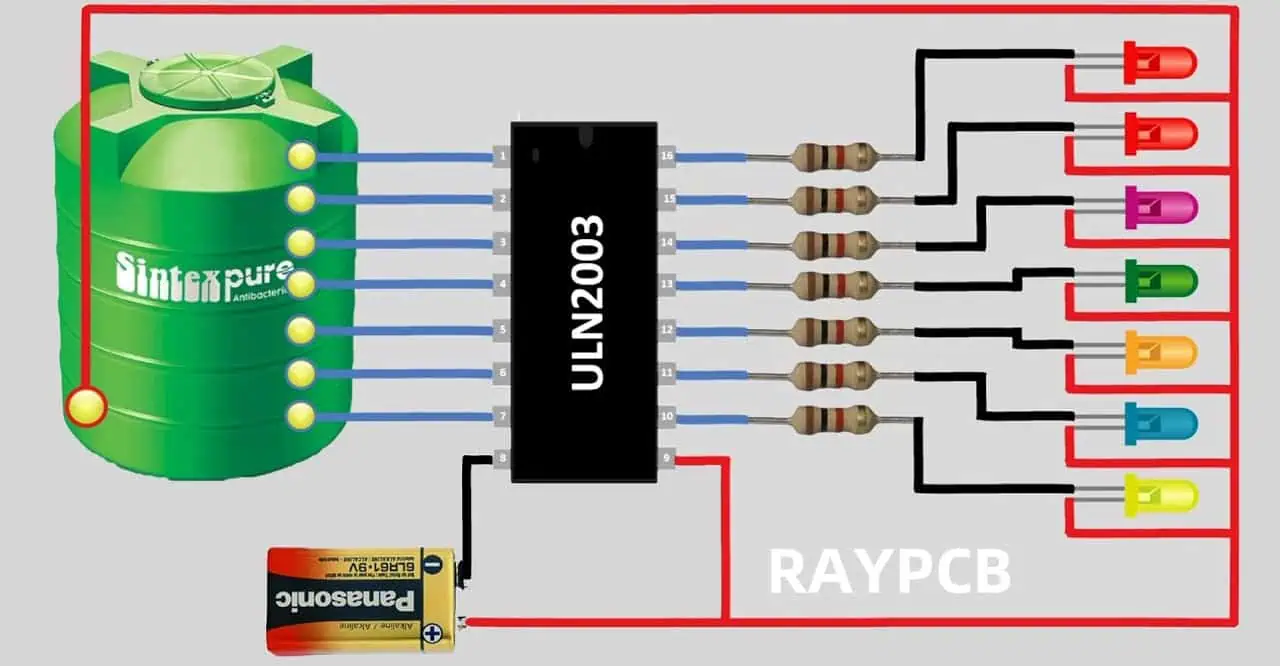
Now, it is important to know that a water level alarm works differently as per the water level. If the level is low, there are some considerations that you need to know. In this section, we are going to talk about how this circuit works in low water levels:

  • There is an NPN-type transistor that plays its role as a switch in the circuit.
  • The circuit has 0 voltages in the beginning because you will keep the transistor turned off, which does not allow any current to pass through the circuit.
  • You also keep the LED off.
  • Now, wait for the water level to approach a marking called A in the tank you are working with. 
  • Join the positive terminal of the battery to the transistor. Now when the transistor will receive the voltage from the battery, it will turn on.
  • When you turn on the transistor, it will allow the current to flow and move toward the emitter from the collector. It will also turn on the LED.
  • The resistors are also working with the transistors in this experiment. Their role is to increase the current that passes through the circuit. 
  • The standard voltage that turns on the transistors is to be 0.7 volts. It is important to regulate this voltage since it can burn the LEDs due to excessive charge. 
  • Now, a similar thing happens when you are experimenting with marking B. The voltage from the battery goes to another transistor. 
  • The current flow after it has been turned on, and it glows the other LED. 
  • The buzzer present in the circuit will slightly make a noise, like a beep, to notify that the water has reached its maximum limit, meaning the tank is now full. 
  • One thing that you need to remember is to keep the wire that brings the voltage from the battery to the transistors bigger in length than the others. 

Circuit Diagram of Water Level Indicator Circuit

If you have a physics background, you know circuit diagrams are highly useful when it comes to understanding the functions of circuits. You learn about all the important components and their roles in the circuits. So, a water level indicator circuit also has a circuit diagram that we are going to discuss below:

  • The job of this circuit is to observe the water levels in a tank or maybe a reservoir. 
  • Now, the circuit will quickly turn on the pump to fill the tank when it detects a low water level in it. How impressive, right?
  • It has 5 LEDs that glow on five different water levels in the tank.
  • When the tank is full, the circuit will beep, indicating this and stopping the water from brimming out and wasting. It will turn off the pump for this.
  • Some circuits also use probes in place of LEDs that you need to position at different distances to avoid any damage and mishap of the circuit.
  • However, the space between these probes should be the same, and you need to align them in the form of a stack. 
  • The probe which is positive will be under the rest of the probes. Similarly, the positive voltage is beneath the tanks, and other probes are on top of it. 
  • You need to connect the second terminals to the transistor, and you can use a resistor for this purpose. 
  • Now hereโ€™s what happens: In case when maximum water is flowing, it will make the current flow toward the probe present at the bottom. 
  • Also, it will reduce the voltage. It will turn off the pump when the water level reaches the maximum.ย 
YouTube video

Water Level Alarm Circuit

These alarm circuits also work similarly to water level indicators. However, we can use a circuit diagram to fully understand their working:

  • You need to combine a water level alarm circuit with a regular alarm. Now position it on to of the electronic water level circuit that will notify a person inside their home about the level of water in their tank.
  • For the electronic alarm circuit, the probes are important because they work efficiently with the microcontrollerโ€™s pins. 
  • The purpose of these pins is to let huge amounts of current pass toward the speaker from the microcontroller. It can also command the LED if you are using a microcontroller which is supportive of that. 
  • The electronic alarm circuit will keep updating the person about the water level. It greatly helps when the tank needs to be filled, or the pump needs to be turned off. 

Water Level Alarm Circuit using Level Sensor

FULL PCB MANUFACTURING Quote

Did you know before that you can use water level alarm circuits with level sensors? Well, this post is going to be ground zero for you to understand how versatile these circuits can be. Hereโ€™s how you can use water-level alarm circuits with sensors:

  • You need to grab a special liquid-level sensor for this purpose.
  • It gives a sound as soon as it detects a change in the water level. Even if it’s a single drop, the sensor will respond.
  • It is a simple circuit, and you just need Physics 101 for its construction.
  • You can rely on the LM1801 IC for this because you can also use it as a comparator, and it gives an impressive amount of current.
  • The sensor will beep when it detects the water level is lesser than the default level in the tank.
  • You can even construct these sensors on your own with PCBs. All you need to focus on is etching to make such a sensor.

Applications of Water Level Indicator Circuit

Some of the major applications of water level indicator circuits are:

  • These are important for inserting in tanks and hotels; factories and house owners completely rely on these circuits for water saving.
  • Different motor types are supported with these circuits. These are single-phase motors, three-phase motors, and submersible motors. 
  • You need different circuits for monitoring the water level in different tanks. One circuit cannot monitor two tanks.
  • Such circuits can also identify the fuel level in industrial machinery and consumer vehicles.

Advantages of Water Level Indicator Circuit

  • These circuits are affordable and easily accessible for the users and producers.
  • The circuit beeps and gives alerts to the user when they need to turn the pump ON and OFF.
  • You can easily store and save water by relying on these circuits.

The Essential Guide to Start-stop Diagram

Start-stop Diagram

If you are a physics nerd, you already would be well aware of the start-stop circuits. These circuits have a huge significance for the fine performance of electrical devices and industrial machines. A slight fault in the start-stop circuit can create a negative impact on the equipment leading it to proper failure.

Hard to believe, right? The role of such a circuit is to start and stop a device. In this post, we are going to decipher the start-stop circuits in detail for you. Consider it a refresher or new information as per your situation. Start-stop circuits, here we go!

YouTube video

What Is A Start-stop Diagram?

You can define a start-stop circuit as one of the types of regular electrical circuits that enable you to start and stop several devices, systems, and machinery. In fact, you can use them in motors as well. These circuits are useful for the standard performance of such equipment that commands it to start and stop at a particular time. Or else it can undergo complete damage due to dysfunctioning.

These circuits consist of several small and large components and wiring networks. The circuit might also act as a relay, contractor, or even an entire motor in some cases. Pretty amazing, no? The ultimate goal is to seamlessly command a device so that it can function properly. Now don’t think that there are no options when it comes to these circuits. These are available in different sizes, types, and features as per your requirements. 

It’s time that we spare no effort to learn about the critical parts of these circuits!

Components of Start-stop diagram

Start-stop Circuit
Start-stop Circuit

ยท       Buttons/Contacts

These buttons are actually โ€œpush buttonsโ€ that pair up with contacts in a start-stop circuit. These components are responsible for powering the circuit and breaking this power as well. These can start and top the switches on the same phenomenon as well. 

ยท       Relay/Contactor

It turns for relays and contactors. It is another duo of important circuit components. Now these components are basically the managers of other parts located on a start-stop circuit. After all, you need something to manage other components and their functioning as well, right? Letโ€™s take the example of a motor. When you start the power, the coil present in the contactor will ultimately charge the motor by producing voltage. 

ยท       Motor

The motor is also a part of the start-stop circuit. The control offered by these circuits is necessary for the industrial conveyor belts and factory machinery that are always moving from one area to another. The motors that use start-stop circuits are efficient in producing kinetic energy by recycling electrical energy in seconds. 

ยท       Overload

Overloads, aka protection devices, are for pricing security to the sensitive wires and components of these circuits. These are the guards of a start-stop circuit that stabilize the system. Also, these prevent all the potential risks of failure and abrasive damage to the circuit. Sometimes the circuit can undergo overvoltage and overcurrent, for which overloads come in handy. 

Requirement of Electricity Supply For Start-stop Diagram

As you know, no circuit can work without an appropriate electrical supply. For start-stop circuits, there is also a special electrical supply system that you need to know. One common system is 24V DC, aka control voltage suitable for the start-stop circuits. You can change the voltage as per your circuit and its components. Now hereโ€™s something important:

  • If you’re going with a 24V supply, then you need to seaport the motorโ€™s own supply and the control voltage.
  • It will help you lower the voltage on all accounts.
  • You need to do this step so that there will be a seamless connection between the motor and the voltage supply.
  • The start-stop circuit will guide the contactor for releasing and stopping the power to the motor as well.

Working on a Start-stop diagram

FULL PCB MANUFACTURING Quote

It’s time to learn about the working of a start-stop circuit system. In this section, we will see how each and every component of this circuit contributes to its performance. You can use the voltage within 24V-400V+. It is recommendable to use 24V on a regular basis. 

ยท       Other Start-stop Circuits

Remember we told you that these circuits are of different types? Letโ€™s see one of them below:

ยท       Start-stop Jog Circuit

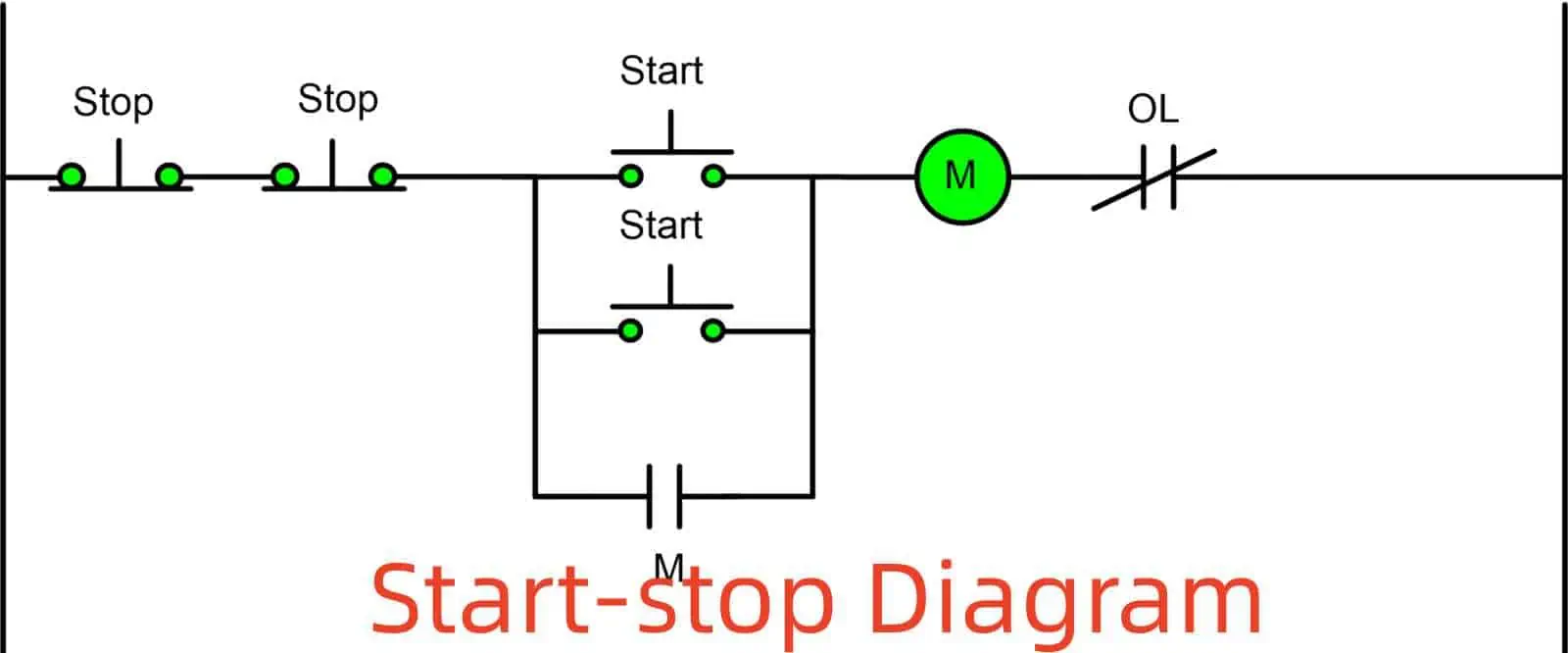
If you press the start button, it will allow the current to make its way through the push button. It will reach the contact where the contactโ€™s copper coil will generate power for the device. After this, you can leave the start button, and the current flow will remain the same as well. Now if you need to stop the motorโ€™s coil from producing energy, you simply need to learn about some common methods.

Yes, there are multiple ways that you can do this step. In case the motor is overlading, it will cause the contacts to open quickly. When you press the stop button, it will automatically stop the power from going toward the contact. It means now you have successfully de-energized the coil. You can also use a jog state for the same purpose. It influences the lock to stop generating power that will cease the power to the contact. 

Summary

Today, several industries are handling rigorous electrical and mechanical operations that need safety and quality control. Not only this, the producers need to ensure the protection of expensive high-end machinery and of the workers.

For this, always rely on a controlled, systematic pipeline of the workflow so that there would be little or no chances of any mishaps. 

A little start-stop circuit can save you from a huge problem later. Since the domain of automation is progressing at a rapid pace, these circuits are also undergoing productive changes.

Therefore using automated circuits for your future projects will not only promise quality performance, but it will also save you precious time as well. So was this post intriguing enough for you to switch to start-stop circuits? If yes, then don’t delay to stun your clients by using start-stop circuits in your next inventions! 

Comparison of Metal Film vs. Carbon Film Resistors

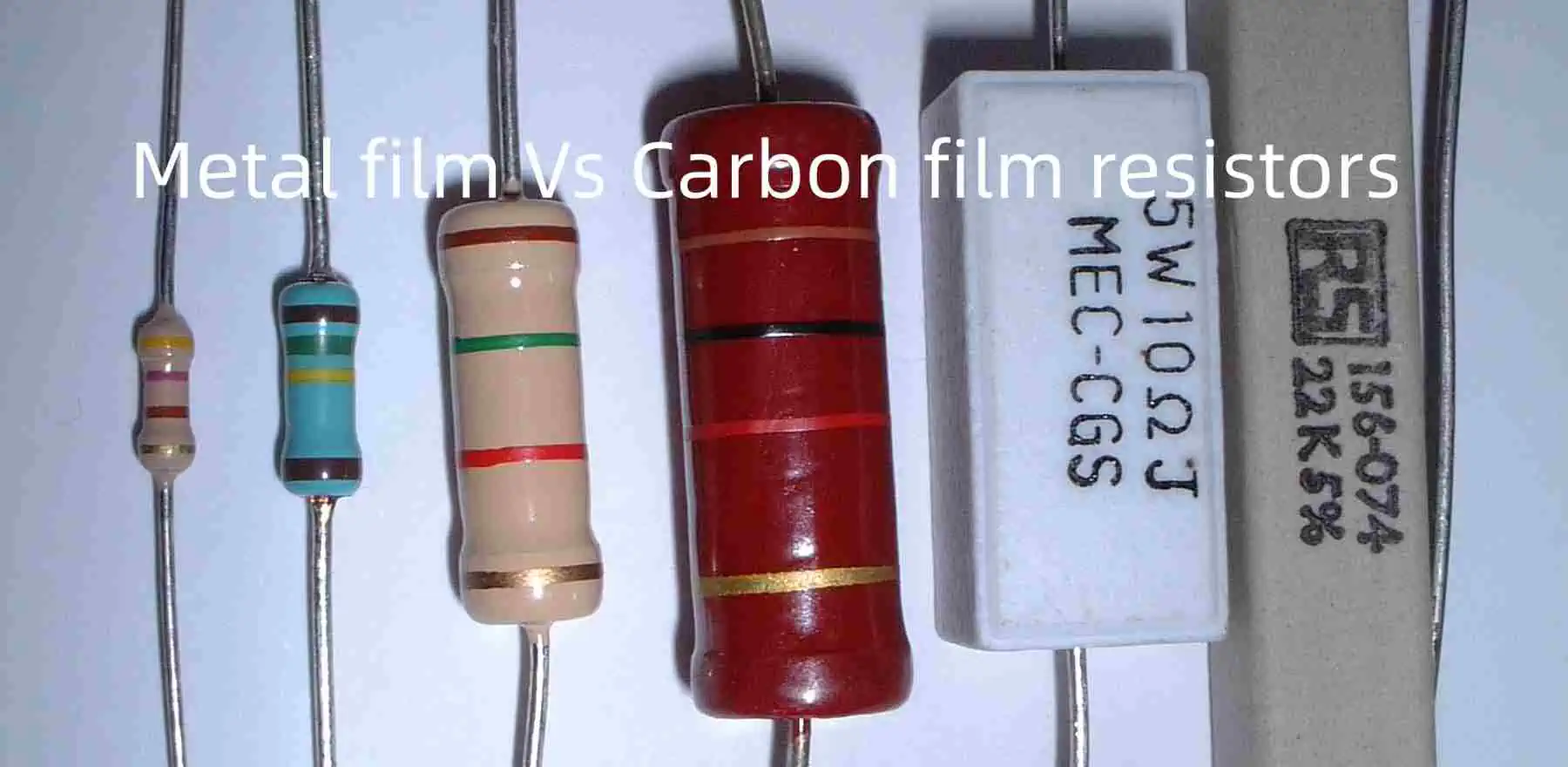
Metal film Vs Carbon film resistors

Your electronics can literally undergo full failure if their resistors are not performing well. What are resistors? These are a deviceโ€™s special parts that resist the current flow. 

Thus named resistors. Well, it’s pretty simple to understand them since their name fits fine with their purpose. When a resistor opposes the current, it means it is regulating it at the same time. You will find different types of resistors in the industry. Different producers are relying on these types as per the nature of their projects. 

It is obvious that you need to determine the type of resistor as per your requirements, or else these can ruin your projects straight up! So what are the types of resistors that we are going to review in this post? 

Hang on a second; there is no hurry! Sit back and relax since we are going to discuss all the important aspects of metal and carbon film resistors with you today! Letโ€™s get going!

Definition of Carbon Film Resistors

The basic function of this resistor is the same. It is responsible for resisting the current. However, a carbon resistor does this job by using a carbon film. These resistors are incredible when it comes to enduring intense pulses and frequent transmissions. Therefore, due to these features, these are useful to be a part of electronics like PCs, testing tools, and more. 

Drawbacks of Carbon Film Resistors

2.5K Resistor
  • These are not affordable at all
  • Produces thermal noise when performing
  • It can be less precise in some cases

Definition of Metal Film Resistors

There is no carbon film in these resistors. Instead, the function of these resistors directly depends on metal films. There are different features of metal film resistors that make them a crucial component of several electronics used in daily life. These are more reliable than the carbon film resistors, and the possible reasons are:

  • These are affordable
  • These have small sizes
  • These have less tolerance
  • These produce no thermal noise
  • These are more versatile than carbon film resistors 

The drawback of Metal Film Resistors

  • The power rating of metal film carbon resistors is extremely less

Brief Introduction to Resistors

Simply put, resistors are for resisting the current in a system. It can also re-route the current path, making it change its original one. Also, resistors are beneficial for the regulation of the current so that you can give sufficient current to your system. 

In the case of higher and lower currents, the system can collapse and fail to function properly. You can take advantage of resistors by aligning them in parallel and series circuits. However, this depends on your project as well. You can even use a resistor for monitoring and stopping voltage. These are completely sourceless, which makes handling them much easier. When the current goes through a resistor, it will dissipate heat. It means there will be a definite loss of power. 

Resistors work on the ohmโ€™s low, and due to this reason, these are behind the efficient performance of devices that you use almost every day in your life. There is a wide range of varieties that you will find in resistors. You can divide them into different factors like their composition, films, and wiring. Now its time to check the factors that greatly influence the working of resistors:

  • Reliability
  • Thermal noise
  • Size
  • Voltage
  • Temperature

In the further sections, we are going to take an extensive look at the carbon film resistors. So that you can understand their function completely through our discussion, you will also get to compare them with metal oxide film resistors. We are affirmative that there will be no confusion left for you regarding carbon film resistors. So letโ€™s crush it!

Carbon Film Resistor

FULL PCB MANUFACTURING Quote

The design of these resistors mainly depends on a carbon film. This special covering is present on an insulative substrate or a ceramic substance. It is a thin layer, and you might even have to use a microscope to see this layer precisely. Now you can compile this entire process under a single word called sputtering to save you time. When the film fully takes over the substrate, it will resist the current. Pretty obvious since this is what a resistor is supposed to do!

Why are we using an insulative ceramic material in this setup? Well, it is because of the heat. The ceramic substance will trap the heat from going out and enables the resistor to endure extremely high temperatures. These temperatures never ruin the resistor because of this little component – a ceramic substance. When you need to observe and work with the tolerance, you can fully rely on carbon film resistors. These have a negative resistance which will reduce as you will enhance the temperature. 

Metal Film Resistor

Some resistors come with a metal oxide film which imparts different properties in them as compared to the carbon film resistors. Similar to carbon resistors, the metal oxide layer will cover the ceramic substance instead of the carbon film. The oxide layer fully adheres to the ceramic substance.

Now if you use antimony oxide for this purpose, it will be just icing on the cake. It has remarkable properties that will enhance the quality of your projects on the whole. Just like carbon film resistors, these offer impressive endurance for high temperatures. It is because we are using a ceramic substance that traps heat, just like carbon film resistors. The trick to using metal oxide for this purpose is that it will stop the current to a large extent. It means the metal layer you are using for this resistor can greatly influence the resistance as well.

Also, you need to determine the width of the metal oxide layer. Insufficient thickness can lead to complications in the devices. A thin layer will allow more heat to pass through, causing the system to overheat and undergo major damage. 

Carbon Film Resistor Vs. Metal Film Resistor

It’s time to compare carbon film resistors and metal oxide film resistors. It will allow you to understand the strong and weak points of both these types. Also, it will help you to choose the most appropriate resistor for private projects and assignments at the same time. Experts believe that metal oxide resistors are always reliable as compared to carbon film resistors. Letโ€™s see why: 

Voltage & Temperature Coefficient:

  • Metal oxide resistors are reliable with the voltage and temperature more than carbon film resistors.
  • These are dependable because of their ability to work efficiently with higher temperatures. Carbon film resistors cannot do it because their resistance is less and causes damage to the device as well. 

Noise Design:

  • You can trust them with the thermal noise, which is impressively low.
  • The less noise is due to the excellent resistance of the current that does not let it produce thermal noise. 
  • Due to less thermal noise, devices like radios, radars, and other telecommunication equipment include metal oxide resistors. 

Tolerance:

  • The tolerance of metal oxide film resistors is extremely lower than that of carbon film resistors, which is 0.1%. 

Size:

  • Carbon film resistors are bigger in size, which makes their assembling and adjustment a little bit problematic. 
  • However, metal oxide film resistors are portable and compact as compared to carbon film resistors.

Availability of Carbon Film Resistor VS Metal Film

Carbon Film Resistor

The carbon film resistor has more power rating than metal oxide film resistors. It can go up to 5 watts. At the same time, metal oxide resistors have a power rating of just 3 watts. 

Factors that make an effect on the resistance:

  • Cross-sectional area and resistance (inverse relation)
  • Length and resistance (direct relation)
  • Carbon and resistance (inverse relation).

Metal Film

The appropriate metal films for a metal oxide resistor are available in the following: 

  • 2%
  • 1%
  • 0.5%
  • 0.25%
  • 0.1%

Factors that impact resistance:

  • Thickness and resistance (inverse relation)
  • Layer and resistance (inverse relation)

Construction of Carbon Film Resistor VS Metal Film

The design and construction of both resistors are different due to the assembly of different components in them. This construction sets them apart from each other, making them application-specific. So carefully read out the constructions of both resistors and choose the best fit for yourself later. 

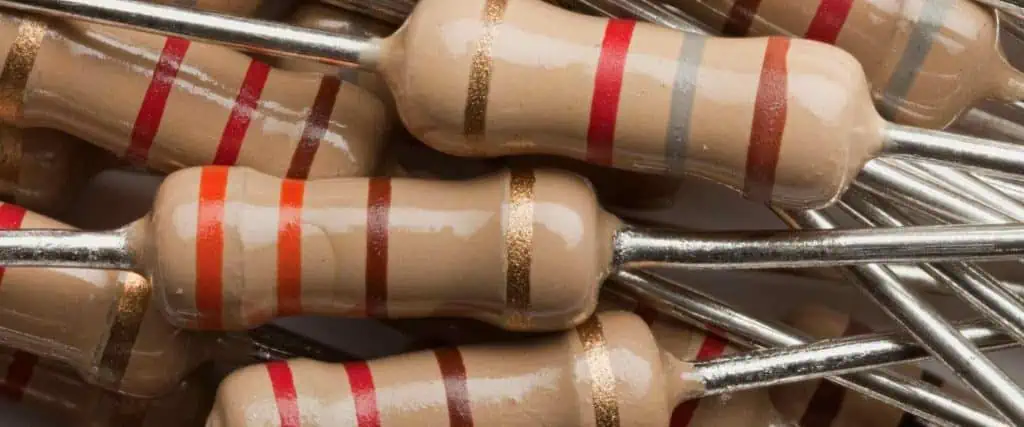
Carbon film resistor Construction

  • A rounded substance is important to make the carbon film resistor.
  • It should be heavy-duty and highly durable.
  • The metallic capping and wiring take place at both ends of this cylinder-shaped material.
  • The resistive materials are basically a combination of graphite and carbon powder that goes with ceramic made of clay.
  • The carbon can conduct the current, and for this reason, it makes a great component of a carbon film resistor.
  • You need to heat the ceramic with methane which will use extremely high temperatures to start the reaction.
  • The graphite has carbon in the form of crystals which has the ability to strongly adhere to the ceramic during the reaction.
  • The plastic shield is important to conceal the resistive materials to not let them interact with heat that can eventually melt them down.
  • Copper wiring proves to serve well in the long run, so make sure you are using copper wiring at the ends of the cylindrical material. 

Metal film resistor construction

  • You need metal oxide for making a metal oxide film resistor.
  • Normally antimony oxide is a recommendable material for this purpose due to its excellent current conducting ability.
  • However, in case of a shortage of antimony, you can use Nickel chromium as well. 
  • Also, when you are constructing a metal oxide resistor, you need to observe the width of the metal oxide film as it influences the resistance. 
  • Keep the width, and it will reduce the resistance making the rodโ€™s ends more dependable. 
  • You can later shape the resistor as per your requirements with the help of leads that will make it much more feasible for you. 

Conclusion

It is hard to choose between carbon film resistors and metal oxide film resistors. We totally understand this. Therefore, we hope this guide was of some use to you to evaluate the features and drawbacks of these resistors to make your future projects shine! Till then, we will catch you in the next post with something amazing from the world of physics!

Whatโ€™s the Difference: IPC 4101 vs IPC 4103?

IPC 4101 Vs IPC 4103

With IPC, you’ll get high-quality and reliable electronics through the development of trusted standards which drive the success of our global electronic industry. Implemented all through the industry, these standards help in clarifying and communicating expectations for virtually everyone present in the industry. With IPC standards, you get better consistency, reliability, and quality in your electronics manufacturing.

Presently, IPC features more than 300 active industry standards that cover almost all stages of the development cycle of our electronics. Also, there are over 3,000 professionals in the electronic industry that participate in developing these standards.

Also, have you heard that almost all the steps in producing and assembling a PCB has an IPC standard linked and associated with them? From the designing and the purchasing and then to the assembly and its acceptance, IPC provides a reliable standard that ensures consistency, reliability, and quality, when handling the assembly of electronics which goes into a product.

What Does IPC Mean?

ipc-6012-class-2

The establishment of IPC, which is linked to our Electronics Industry Association, provides support to different customers, manufacturers, and designers with the same efforts and goals. This trade association for our electronic interconnection industries helps in promoting the world’s electronics sector by setting different standards for authorizing electronic products of high-quality.

Our company provides advanced supply chain and support capabilities which allows companies to buy materials much faster. By 1957, IPC grew to become an association, which features 3,000 companies. The companies offer different services, which includes circuit board design, manufacturing, as well as PCB components to serve customers in all areas of life including medical, consumer electronics, automobiles, etc.

This IPC standard helps in standardizing the installation as well as manufacturing requirements of the electronic components and equipment. Because of these IPC standards, different PCB designers create high-quality IPC circuit board designs for ensuring the quality of a product as well as reducing the time a product gets to the market. Furthermore, IPC helps in collecting the most recent news occurring in the industry and then sets some standards to achieve the best practices possible.

What Does IPC 4101 Offer?

IPC 4101 is described as base materialsโ€™ specification, which is designed for rigid as well as multilayer PCBs. The release of this specification came in December 1997, serving as a replacement for MIL-S-13949 standard. However, it featured most of the wordings found in military standards.

In addition, this standardโ€™s format appendix had to be maintained to standards specifying the resin and fiber systems of different PCB laminates, adding to the testing parameters and properties. Initially, there were 41 slash sheets. However, as this industry worked with lead-free and green processes, the slash sheets rose in number to become 66.

Having all slash sheets, as well as understanding exactly what they are, will provide great advantages to selecting the best properties of a specific laminate to help with the circuit board design.

What are the Laminate Specifications of the IPC 4101?

All the slash sheets usually begin with laminate specifications. This deals with the reinforcement type, resin system, flame retardant mechanism, fillers, and glass transition. This reinforcement type seems like woven E-glass or fiberglass.

Moreover, it might as well as be cellulose paper types and exotic fiberglass such as unidirectional and aramid fiber. It serves as the structural component of the laminate. In addition, resin systems can also combine different epoxies in order to meet the requirements of the type of laminate. At first, the listing of the primary epoxy would be done, and then the secondary comes in. After this, another secondary might even follow.

Using Epoxy Resins

There are different epoxy resin systems such as polyimide and polyphenyl. The resin systems help in binding the structureโ€™s layers together. Usually, the flame retardant is bromine or RoHS compliant bromine, and it could be phosphorus as its other option. In addition, fillers may not be applicable or they may be inorganic with a few laminate types using the kaolin fillers. The fillers aid in lessening resin shrinkage. This helps in reducing crack formation in these filled areas.

Glass Transition Temperature (Tg)

The glass transition temperature helps in describing the temperature range whereby the molecules of the resin transits from the rigid and brittle state into a flexible and pliable state. This value was included in the specification area because some designers based their laminate choices for RoHS compliance on a Tg material.

What Does IPC 4103 Offer?

FULL PCB MANUFACTURING Quote

The IPC 4103 can be described as base material specification for high frequency and high speed applications. This covers requirements for unclad and clad plastic laminates as well as bonding of the layer materials to be utilized for fabricating the circuit boards for stripline, microstrip, as well as high speed electronic and electrical circuits.

With IPC 4103, you can use low dielectric constant (low permittivity) glass reinforcements for bonding and laminating materials. Therefore, this improves the loss tangent, as well as permittivity properties of materials that conform to this specification.

Qualified Products List (QPL) is useful for qualifying the products of the EMS suppliers (these include the PCBS), as well as the sites for manufacturing the products. Companies working with the IPC 413 standard on the Qualified Products List supplies products that are qualified to the IPC standards.

Whatโ€™s the Difference: IPC 4101 vs IPC 4103?

When seeking slash sheets from a laminate manufacturer, there is a high chance that you see both IPC 4103 and IPC 4101 standards. The IPC 4101 standard works with standard laminates coupled with prepreg materials. This encompasses the epoxy resin materials with fiberglass.

Although the initial standard specified about 41 slash sheets in total, there has been an increase in the number to more than 60. RoHS regulations and focus on environmentally-friendly lead-free materials has made this possible. Furthermore, the IPC 4103 extends these slash sheets into a copper unclad and clad laminate materials coupled with bondply materials that are used in high speed and high frequency printed circuit boards.

What Can You Find In A Slash Sheet?

On a specific material system, you will find two data sets on slash sheets. These include material/primary structural properties, as well as some test results as it is determined under the testing standards of the IPC. Furthermore, all the slash sheets begin with structural and material specifications for a particular laminate.

Also, every manufacturer features personal material names utilized in communicating particular laminates to the customer as well as the public. However, these laminates have to be linked to that particular slash sheet that works within either the IPC 4103 or IPC 4101 standards. Below are some of the information you will find in the slash sheet

  • Type of reinforcement (which is usually fiberglass)
  • Resin material systems (usually epoxy mix)
  • Diller materials as well as flame retardants found inside the laminate
  • The temperature of glass transition

This is the main requirement list needed by PCB laminate materials to conform so as to work in line with the standards included in a slash sheet. Also, the remaining slash sheets would list some features that the laminate has to include, which is determined in line with the test methods of the IPC-TM-650. These include:

  • Thermodynamic properties, which includes moisture uptake and thermal resistance rate
  • Dielectric properties such as surface resistivity, breakdown strength of the field, and loss tangent
  • Peel strength, or quantity of stress needed to separate the two layers once bonding is completed (this is either laminate-to-laminate or copper-to-laminate)
  • Specifications for the base material and prepreg

Why IPC Standards Should be Used in Any Manufacturing Process

Parylene Coating on PCB

Helps you gain some control over the e3nd productโ€™s reliability and quality

Reliability and quality can be described as the basis of the marketplace competition and important to the profitability and reputation of your company. When you implement the IPC standards all through the process of manufacturing, this ensures longer life, better performance, as well as compliance with the lead-free regulations.

Helps to improve communication with employees and suppliers

The IPC standards can be described as standards, which your EMS providers, suppliers, and competitors make use of.  When everyone works with established IPC standards, then you will all speak one language, which is the global electronic industry language. Furthermore, making use of IPC standards gets rid of any confusion in employees, because they understand that they have to perform to reach the industry standards.

Improve the reputation of the market

IPC is widely regarded as a globally recognized standard. This is why working with the IPC standards will bring some industry credibility and recognition to you. Also, it could bring additional cooperation opportunities, as well as open markets for you.

Conclusion

Considering the quality standards majorly depends on the industry you are serving. In summary, we can describe the IPC 4101 vs IPC 4103 as industry guidelines for the base laminates of PCBs. When designers understand the content and structure, they will be able to choose the best laminate that provides support to the productโ€™s final requirements.

5 Best PCB Manufacturers in Ottawa

printed circuit board manufacturers

There are many PCB manufacturers scattered across Canada. Ottawa is one of the locations in Canada with a good number of PCB companies.  Here, we will be reviewing some reliable PCB companies in Ottawa. These companies are some of the best companies that can successfully handle your PCB Ottawa projects.

5 Best PCB Manufacturers in Ottawa

HI-Q.A.

HI-Q.A. is a PCB assembly company located in Silicon Valley, Ottawa. As a reliable PCB company, they have been existing for more than 35 years. If you are looking for a PCB company with long standing experience and expertise in Ottawa, HI-Q.A. is the right choice. They have a large customer base which is is across every Canadian province and U.S states.

Hi-Q.A has been able to earn the trust of their customers over time. The company achieved this by working with customers at every phase of PCB manufacturing from development to a marketable product. Furthermore, they offer turnkey procurement solutions and product integration. All of their products always undergo proper testing before final production. As a PCB assembly and manufacturing expert, Hi-Q.A provides repair and build services.

Some of the services rendered by this company include RoHS PCB assembly, PCB assemblies testing, fast turnaround, and mechanical assembly. They have clients within and outside North America. This PCB company is a great choice to consider.

AlteraFlex Circuits

AIteraFlex Circuits is your number one choice for PCB assembly and Fabrication Company in Ottawa. The company has a mission to offer world class solutions via personalized service. The team in this company believes in making a difference by providing best services and establishing lasting relationships with their customers.

Their PCB Ottawa assembly services offer fast delivery time. Furthermore, this company makes use of different mounting technology like THT, SMT, and mixed technology to assemble PCBs. Their assembly services include large PCB production and prototypes. AlteraFlex Circuits is a leader in providing unmatched PCB manufacturing and assembly services.

With high-end technology solutions, this company has continued to offer reliable product and services at very competitive prices. Each of the products manufactured in their facility goes through series of tests. AlteraFlex has more than 10 years of experience in PCB fabrication and assembly. ย Also, they offer a one-stop solution for every PCB needs.

MyRO Electronic Control Devices Inc

High Power PCB Design

MyRO Electronic is one of the top rated PCB manufacturing and assembly companies in Ottawa. Over the years, they have been offering services like PCB design, prototype, PCB layout, and functional testing to OEMs. Customers tend to enjoy a lot of benefits from this company. These include high quality and competitive pricing.

At every stage of the PCB production process, MyRO Electronic Control Devices Inc incorporates strict testing procedures. This company has a dedicated team that helps you customize your own designs. Also, they make use of advanced equipment and procedures during the PCB manufacturing process.

With their end-to-end ERP online software, this company can effectively manage every aspect of your PCB project. Since 2002 this company has completed more than 75,000 projects and has been able to satisfy more than 14,000 customers.  Some of the products manufactured by this company include rigid PCB, flexible PCB, stencil, and more.  Since they offer a wide range of capabilities, they can meet all customersโ€™ demands.

Speedy PCB & Electronics Inc

Speedy PCB is a popular PCB company in Ottawa. It provides PCB fabrication, PCB layout, PCB prototype and assembly services. This company has ISO certification and as such commits to providing high quality circuit boards to customers. As a customer-centric company, their major aim is offering unparalleled services to customers at competitive pricing.

Their team of PCB experts works to provide the best PCB products that meet global standards. Also, this team provides cost-effective solutions throughout the manufacturing process. Speedy PCB & Electronics Inc adheres to PCB industry standards. For over a decade, this company has developed their expertise and expanded their know-how technology in PCB manufacturing.

The capabilities of this company include flexible PCBs, rigid PCBs, multilayer boards, surface-mount components and through-hole technology among others.  Speedy PCB can develop PCB products of complex configurations. They render their services all through the PCB manufacturing process.

Speedy PCB & Electronics Inc has its headquarters located at Greenback Road, Ottawa, Canada.

OverflyPacific Corporation

This UL certified PCB Ottawa Company has more than 15 years experience in PCB manufacturing. Its headquarters is in Ottawa, Ontario, Canada. OverflyPacific Corporation is dedicated to meeting the demands of their clients. They believe in satisfying customer requirements with quality.ย  This PCB Company offers turnkey service which includes wire harness and cables assembly, PCB assembly, PCB fabrication, components sourcing, and more.

Their ISO9001 certified facilities has a lot of sophisticated machines. This company has been existing since 2004. Electronic companies in Canada and the U.S rely on OverflyPacific Corp for their PCB needs. Furthermore, this company has the capability to deliver special requests from customer. Since quality is paramount in this company, it adheres to certain standards in the PCB industry.

Why Choose These PCB Ottawa Companies?

FULL PCB MANUFACTURING Quote

We reviewed the companies above based on some features they offer.

  • The best companies in Ottawa have gained expertise and skills through their years of experience in PCB manufacturing and assembly. In addition, these companies have been able to expand their technical know-how and skills over time.
  • PCB Ottawa companies believe in ultimate customer satisfaction. They are always focusing on meeting the needs of their customers. This makes these companies a number one choice for contract manufacturers and OEMs.
  • Certification is an important factor we considered when choosing the best PCB companies in Ottawa. Some of these companies are have RoHS, ISO, and UL certifications. This indicates the level of quality control these companies adopt. ย The right PCB certification assures customers of quality.

Conclusion

The PCB Ottawa companies listed in this article offer exceptional PCB solutions to their customers. These companies are well known for providing a wide range of capabilities. It is important to know what some reliable PCB Ottawa companies offer. That is why we reviewed these companies.

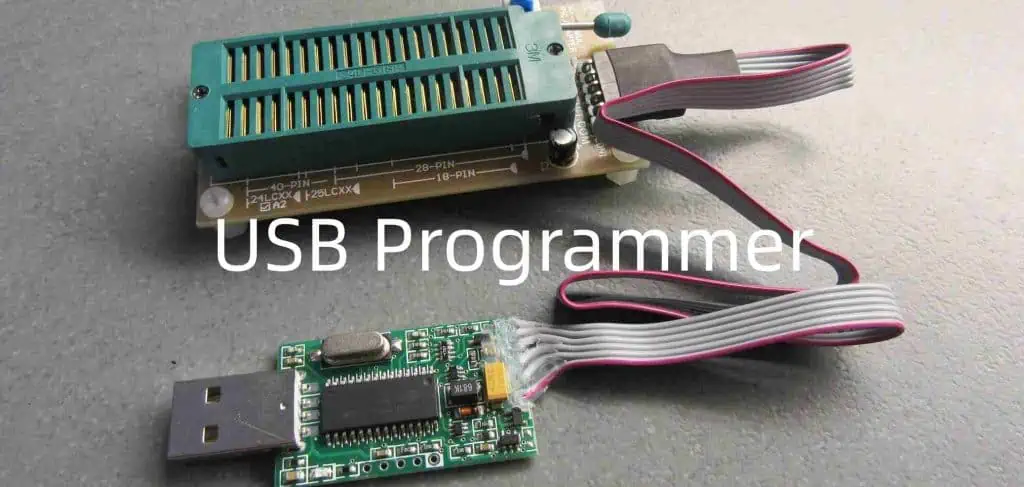
What the USB Programmer is Very Important?

USB Programmer

USB has been very useful in many applications. A programmer can be described as a portable device that works with different memory chips. New users will find its interface very easy to work with as well as carry out several functions.

To ensure this topic is well understood, we have taken some time to do some research. During our research, we were able to gather very useful information concerning how the USB programmer works and how to use one. Before we go into details, let us understand what a USB programmer is.

What Does a USB Programmer Offer?

USB programmers allow users to read and write data in ROM which is read only memory. Furthermore, it allows exchange of data between computers and their circuit boards using its interface. In addition, the USB programmer offers support to different interfaces involved in the exchange of data.

We have said that new users will find this programmer easy to use because it supports different chips. Also, its flexible nature is what makes it a good option for developers and engineers. Also, this programming device offers all power requirements through the USB port. You donโ€™t need batteries or power adapters. This is because a voltage generator internally supplies all programming voltages within the range of 3 and 25 volts.

With a USB programmer, you can easily recover any corrupt EEPROM program. One of the great features of this hardware device is that it comes with a user-friendly interface which has intuitive controls that enables users to manage and correct any issues related to EEPROM. Since the USB programmer is such a powerful device, it is advisable not to alter your USB devices without any compelling reason to do such.

The USB host is responsible for initiating all USB traffic. This host will usually ask for the device-descriptor whenever you plug in a device. The device-descriptor has two sets of data which tells the host what the device is capable of doing. It is possible to program all supported chips when you use the USB programmer.

How Does the USB Work?

USB Programming
USB Programming

You have some terms that pertain to the USB in order to have a good understanding of how the USB works. The universal serial bus (USB) works by separating the host from the device. Usually, we have a host that connects to many devices. This host causes traffic and schedules it on the  bus.

The device passes a configuration descriptor and a device descriptor in order to identify itself to the host. There can be multiple interfaces in a device. For instance, there will be an interface for keys and another interface for playing audio for a USB device with a built-in speaker and a keyboard.

You should note that every interface has several endpoints. These endpoints functions like links whereby a device and its host can communicate. Furthermore, the endpoints can be divided into IN endpoints and OUT endpoints. These IN endpoints have the ability to move data to the hosts, while OUT endpoints will move the data into the device.

The subclass and class can be used in defining devices having generic features.  Devices having a speaker and keyboard are examples of composite devices. There are cases whereby the device will fail to work effectively for a specific class. For this case, such a device class has to be vendor-specific.

What are the Features of the USB Programmer?

A USB programmer has many features. Its simple interface is one of the most important of all. Even first timers and professionals find the interface very easy to use. There are many other features of this programming device aside from its user-friendly interface. These features are explained below:

Fast programming speed

This device uses fast speed during programming. Fast programming speed  is ideal where there is a need for large data processing. Also, users benefit from this feature. 

No need for external power

A USB port can be used in powering this hardware device. You donโ€™t need any external power to make it function as it should.

Compatible with various file formats

One of the greatest features of this device is that it is very compatible with many file formats. Also, it offers supports to many IC packages. Furthermore, IC families like Parallel NOR/NAND flash, EEPROM, FPGA get support from the USB programmer.

Automatic programming

With this feature, the USB programmer can start programming on its own.

What are the Benefits of a USB Programmer?

The USB programmer has lots of benefits. Some of the features already discussed above are also benefits. Other benefits include the following.

  • Users find its interface very easy to understand and use
  • It offers programmable microcircuits which are supplied from the internal source of the programmer.
  • There is a reliable software which works closely with each interface
  • It allows the adaptation of the hardware of the USB programmer
  • Very easy operation

Programming the USB Devices

Designing and developing a programming model that works perfectly for your USB devices is easy. You can easily achieve this if you understand the way USB works.

USB softwares can handle different endpoints. At times, there is only one transaction and you can easily develop a version that has fewer threads. For instance, if users need to use a synchronous protocol whereby data will be transmitted over the OUT endpoint before it is received on the IN endpoint, the protocol only needs to use one thread.

However, make sure you take note of the risks. This is because a single thread for each endpoint can only focus wherever the host program stops and starts. Therefore, one thread could easily work on all the bulk traffic found on the interfaces. What this means is that users must optimize multiple endpoints making use of one thread.

What are Exchange Interfaces of the USB Programmer?

FULL PCB MANUFACTURING Quote

USB programmer provides support for different exchange interfaces. These include the SPI interface. With the SPI interface, users can perform the different functions of an SPI programmer. These include performing the exchange of data on the interface.

Also, 1-wire interfaces have the ability to exchange data records with the memory chips of EEPROM. In addition, 12C interface helps in programming different EEPROM chips and makes use of the interface to perform data exchange. Also, rs-485, RS-232, as well as RS-422 interfaces are for the exchange of data when debugging the electronic processor module.

Controls and Commands in the USB Programmer Interface

The interface of the USB programmer is very simple to use. With the right controls and commands, users will be able to navigate their way through this interface.

Menu commands

There is a menu bar in the interface which comprises the commands below:

File menu: This menu consists of the Exit options and the Unlock Features. The Exit option helps you close the programmer. With the Unlock Features, you can discover some hidden features for your equipment. To do this, you need to enter the correct code in the dialog box that appears.

Help menu: There is only one option in this menu and that is the About USB programmer. This option displays a dialog box which offers details on the already installed version of the program.

Command Buttons

There are several command buttons on the USB programmer interface. Each of these buttons executes different functions.

Save all values: This command button enables users to save any changes made to data in the USB programmerโ€™s right pane to the EEPROM of the device you selected.

Refresh Tree: Sometimes users need to update connected USB deviceโ€™ status and carry out a system scan for new USB device. The Refresh Tree helps you carry out this function. Once you update this status, the USB devices are showcased in the interfaceโ€™s left pane.

Program: The Program button helps to display the EEPROM update file dialog box. It simply commits the changes you made in the interface to EEPROM of the USB device selected.

Get all Values: This button helps you refresh the data displayed in the interfaceโ€™s right pane. Users can easily edit some particular entries for the device selected. Double-click the entry in the right pane.

Frequently Asked Questions

Can I Use the USB Programmer for recovering corrupted EEPROMs?

While programming, your EEPROM could get corrupted. This usually happens whenever the process is interrupted. However, this will not stop your USB devoice from working effectively. Basically, any device having a corrupted EEPROM has an exclamation icon stating โ€œunknown device.โ€You can get your EEPROM back by using the USB programmer.

Can the USB Programmer provide support for the different IC packages?

The USB programmer will provide support for different IC packages such as BGA, PLCC, QFN, BGA, LFQP, and DIP.

Conclusion

By now, you should understand why the USB programmer is important.  They have lots of great functions. These include their capability to customize as well as modify electronic equipment. They can also write and read a userโ€™s information in a computerโ€™s ROM.

Applications and Advantages of Fiberglass Antenna

Fiberglass Antenna

There are many types of antennas used for several applications. While some antennas are ideal for some applications, some are not. It is very important to know about the different types of antennas we have. Antennas are very important in wireless communication systems. However, their properties and benefits differ based on their types.

One of the most commonly used antennas is the fiberglass antenna. This antenna is called fiberglass antenna because it is mainly made of fiberglass. It is a weatherproof and waterproof antenna that can resist different temperatures. We will be studying more about this antenna and their basic characteristics.

What is Fiberglass Antenna?

The main material in fiberglass antenna is fiberglass. This antenna is distinct as it provides network performance in varying weather condition. There are different lengths of fiberglass antenna. This length is within 2 inches to 7 inches. Since fiberglass is the core material in this antenna, it is very durable and efficient.

This antenna comprises of fiberglass rod.The antenna wire is wrapped underneath a plastic wrap.

You will find the antenna coil for this antenna at its top. The mounting location and conditions of the antenna usually determines its transmission and receiving range. We had a rough estimate and we expect these fiberglass antennas to have the following lengths. For a 2โ€™ length antenna, the distance should be about 3 miles while a 3โ€™ length antenna should have about 4 miles.

Glass fiber reinforced plastic is the main material for producing the shell of this antenna. Fiberglass antennas have various sizes. These antennas resist corrosion and they can survive in any weather. They are also waterproof and windproof. The installation procedure and process is a simple and easy one.

Due to the benefits these antennas offer, they are perfect for base station, car radio, gateway, wireless module, outdoor AP, router, wireless terminal device, and more. The dielectric ad mechanical characteristics of this antenna contribute to its high performance. Therefore, it is primarily used in the majority of wireless communication systems.

There are other features offered by this antenna. This includes exceptional signal quality and transmission. A fiberglass antenna can help to reduce absorption and signal reflection. With this antenna, communication systems can function well. Fiberglass antennas are different from traditional antennas like metal antennas. This is because of the excellent properties of fiberglass.

Benefits of Fiberglass Antennas

Off-road drivers consider fiberglass antennas as a great choice. Due to the durability of these antennas, they can be used in off-road applications. Also, they have various types of mounts and as such, you can mount them easily.

Sturdiness

Fiberglass is a strong material with a high level of durability. Also, this antenna has a long lifespan. It lasts longer than most traditional antennas.

Corrosion resistance

Fiberglasscan maintain stability in corrosive environment s like high humidity, acidity, and ultraviolet radiation. Since they can withstand corrosion, they help in reducing cost of maintenance. In coastal environments where antennas can easily corrode use to high salt content in the air, fiberglass antennas are the best choice here.

High strength

Some of the properties of fiberglass antennas is high tensile strength and excellent mechanical strength. These properties enable these antennas to tolerate any external impact forces.  Furthermore, these antennas have the capabilities to operate under extreme conditions for a long time.

Easy installation

Fiberglass tends to be lightweight which contributes to the easy installation of fiberglass antennas. Also, their light density and small weight make them easier to transport. Their lightweight nature makes it easy to achieve their secure mounting at height.

Improved signal transmission

There is an improved signal transmission quality in fiberglass antennas due to their low conductivity and good insulation properties. Also, these properties help to enhance these antennasโ€™ ant-interference.

Design flexibility

Not all antennas offer a good level of design flexibility. Since fiberglass has great molding properties, you can design their antennas in different sizes and shapes. We have wideband antennas, flat antennas, and high-gain antennas that are made of fiberglass.

Cons of Fiberglass Antennas

In as much as the benefits of fiberglass antennas are numerous, they have also got some drawbacks which will be explained here.

High coefficient of thermal expansion

This can result in the deformation of this antenna. Changes in environmental temperature can cause distortion also. In the long run, this will have a negative effect on this antennaโ€™s performance.

Vulnerable to aging

Since these antennas are made of fiberglass, they can easily age in environments with extreme temperatures. This will reduce their lifespan and result in more replacement and maintenance.

Relatively high conductivity

Sometimes, fiberglass materials include carbon fibers. This increases the conductivity of fiberglass which may make the antenna malfunction.

Applications of Fiberglass Antennas

Fiberglass antennas offer several benefits which are crucial for some applications. They are very adaptable and also have good physical properties. So, they are highly preferred by engineers and electronics producers.

Radio

Home radios and car radios have fiberglass antennas installed on them. These antennas are very reliable. Also, their signal receiving performance is very high.

Aerospace

Some of the aerospace sectors that make use of fiberglass antennas are the aircraft communications and satellite navigation systems. In the aerospace field, fiberglass antennas are preferred. Their weight is an important feature for aerospace devices.

Mobile communication

 Another application that depends on fiberglass antennas is mobile phone. This is because these antennas provide excellent signal quality and wide signal coverage in wireless network base stations.

Televisions

Fiberglass antennas are commonly used in cable TV and digital TV. This application enjoys benefits such as high signal reception quality. Also, fiberglass antennas offer anti-interference performance in TV broadcasting systems.

Satellite communication

Looks like fiberglass antennas have found profound use mainly in the communication system. This is because these antennas are greatly preferred in satellite ground antennas and other antennas used in satellite communication.

Military communication

The communication field in the military relies on the use of fiberglass antennas in achieving a lot of things. Also, benefits like anti-corrosion, high strength characteristics, and sturdiness are what military devices need. You will find these benefits in fiberglass antennas. Hence, they perform well in military communications systems.

What to Consider when Choosing Fiberglass Antenna

FULL PCB MANUFACTURING Quote

Height

One of the things you have to look out for is height. There will be a greater range when you mount your antenna higher.

Gain

Gain is of paramount importance when you are choosing a fiberglass antenna. This parameter refers to the transmission pattern of an antenna. With higher gain comes a farther range. Also, the beamwidth becomes narrow with an increase in gain.

Application requirements

Fiberglass antennas are very study and durable. Therefore, these antennas can survive under varying environmental conditions. They have found their use in the aerospace and military sectors.

Size

For fiberglass antennas, one size doesnโ€™t fit all. This is why these antennas are made in variety of sizes. Size is an important consideration when mounting a fiberglass antenna. The application you intend to use this antenna will determine the size to opt for.

Environment

Fiberglass antennas can be very useful in various environments. Since these antennas are weatherproof, they are well-suited for hostile and harsh environments like salty air, harsh sunlight, and high UV rays. You must consider the environment you would be using this antenna.

VSWR

This parameter measures how fiberglass antennas match perfectly with a source. Antennas can offer high VSWR or low VSWR. Depending on your application, choose fiberglass antennas that feature the right VSWR.

Considerations for Mounting Fiberglass Antenna

The location you mount your fiberglass antenna really matter, although you can mount it in different places. Fiberglass antennas are meant to be installed outdoor. You need to position them in locations where you can get the best line of sign of visibility.

These antennas can be mounted in mirror bars, trunks, the roof of a vehicle, and more. Below are some important details that will help you decide on the mounting locations of your antenna.

  • Ensure half of the antenna or more is above the roofline. Optimal performance can be easily achieved when you do this.
  • The coil of the antenna must remain beyond the roofline.
  • Perfect grounding of the fiberglass antenna is also critical.
  • Mount your antenna higher for better performance.
  • Choose a long length for your antenna. This is because longer antennas are more beneficial than shorter antennas.
  • You can use a u-bolt kit to mount your antenna firmly.
  • Consider the antennaโ€™s coil position. The coil position of an antenna describes where you wound the antenna wire in a coil.

Conclusion

Fiberglass antennas have gradually become a more preferred antenna type in some areas, especially in modern wireless communication. Their strong plasticity, high strength, and lightweight nature make them a considerable choice for antennas. Selecting the best fiberglass antenna begins with gaining good knowledge about this antenna. Also, you need to know what to look out for in these antennas. A fiberglass antenna built with quality is what you deserve.