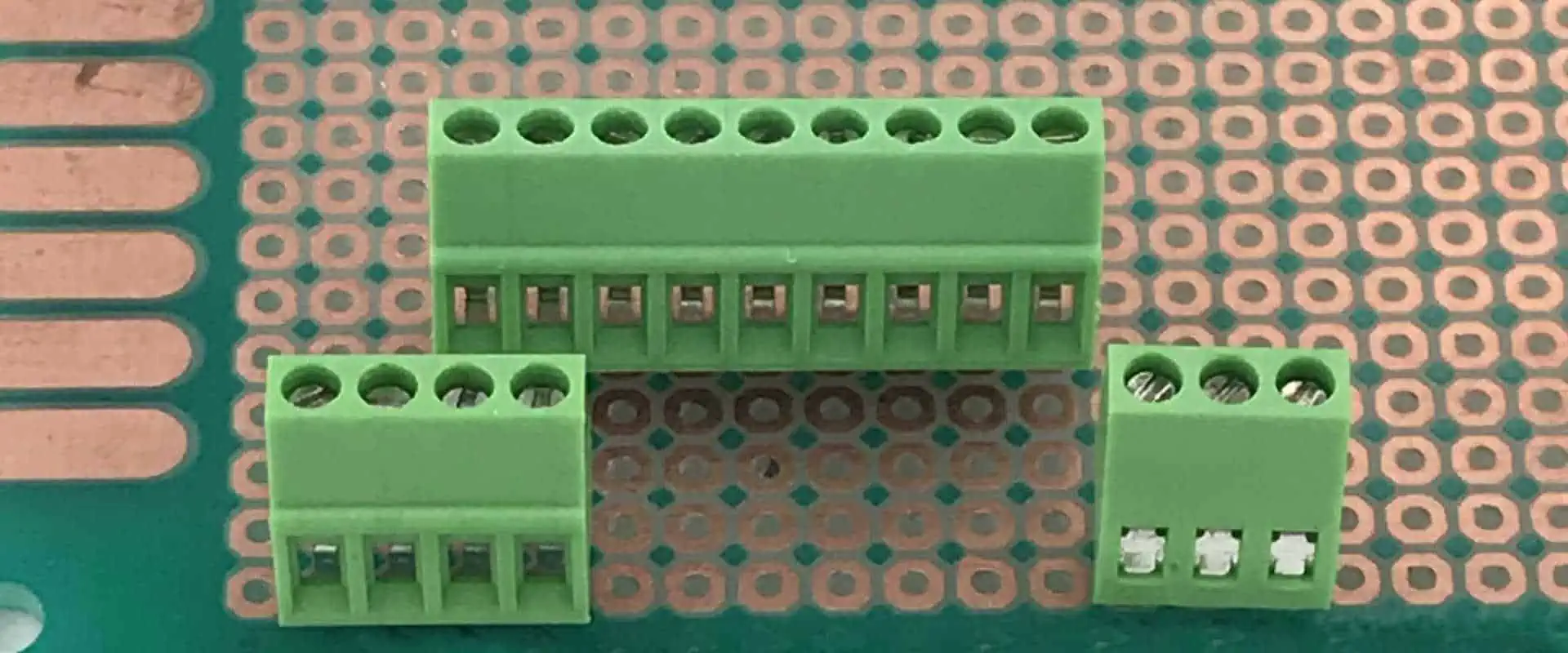
What is a PCB Screw Terminal:Functions,Types and Install Methods

Screw terminals, also known as terminal blocks, provide a convenient method for reliably connecting wires and cables to printed circuit boards (PCBs). Screw terminals simplify field wiring by avoiding the need to solder connections. They also allow securing wires through mechanical screw pressure for robust, vibration resistant connections.

This article will provide an in-depth overview of PCB screw terminal functions, key types, design considerations, installation methods and applications to support electronics engineers in selecting and implementing the optimal screw terminals.

What is a PCB Screw Terminal?

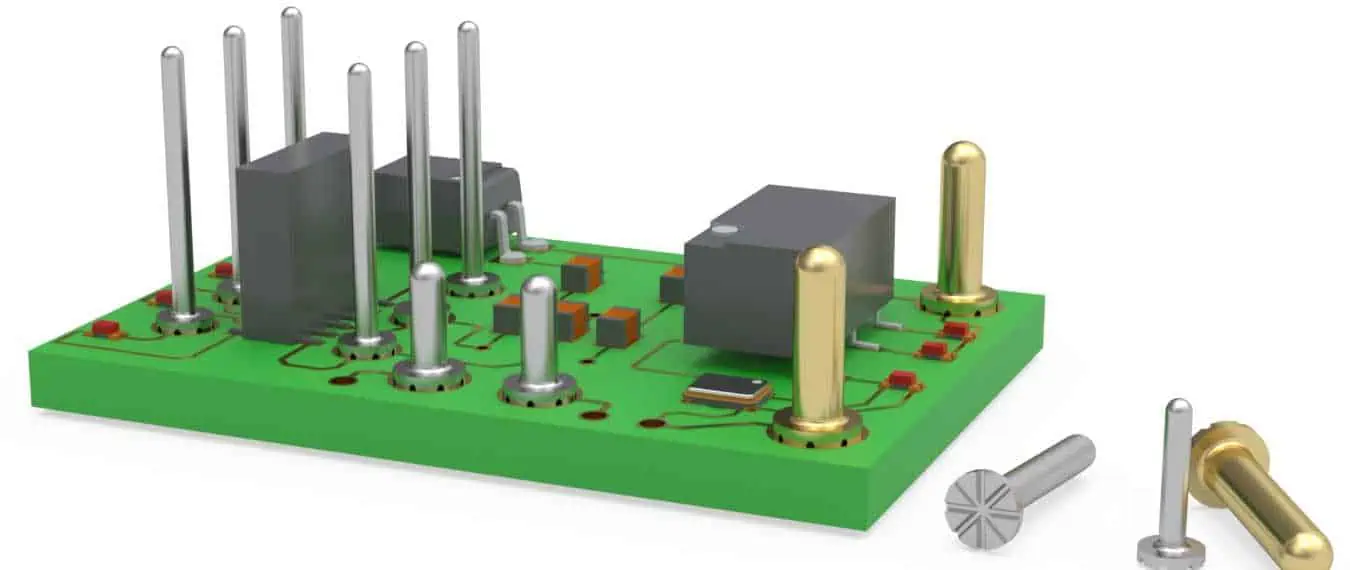
A PCB screw terminal, or terminal block, is an electro-mechanical component that connects external wires or cables to a printed circuit board using screw pressure rather than soldering. It consists of a plastic housing that contains metal alloy screw heads and contact elements.

The key components of a typical screw terminal include:

  • Housing – usually molded plastic that insulates and positions screw and contacts
  • Screw – applies mechanical clamping force to secure wire
  • Contact – metal alloy spring element that bears on wire
  • PCB pin – soldered connection to PCB

By simply stripping wire insulation, inserting into the terminal opening, and tightening the screw, a solid electrical and mechanical connection is created without soldering.

Screw terminals are available in a huge range of configurations and options to accommodate different wire gauges, voltages, currents, pitches, PCB interfaces, and termination needs.

Functions and Benefits of PCB Screw Terminals
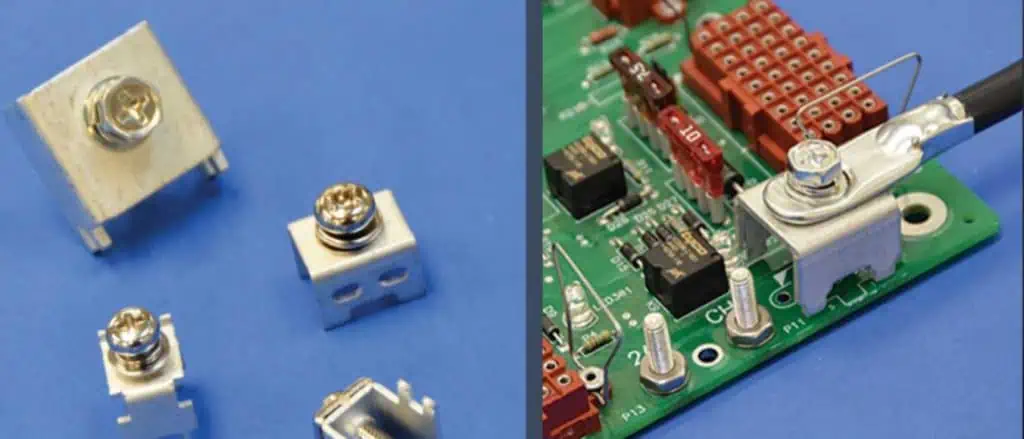
PCB screw terminals provide several important functions and benefits:

Simplified Wiring

  • Eliminates need to solder cable terminations for faster assembly.

Secure Connections

  • Screw pressure prevents wires from loosening due to vibration or thermal cycling.

Field Wiring Capability

  • Allows user installation of wiring harnesses versus factory termination.

Serviceability

  • Individual wires can be unscrewed then re-secured for maintenance and repair.

Reconfigurability

  • Wiring changes are done by unscrewing and re-routing wires rather than desoldering.

Mixed Signals

  • Different voltage or current circuits can be grouped into sections within a common header.

PCB Interface

  • Compatible with through-hole and surface mount PCB assembly processes.

Modularity

  • Separates PCB assembly from harnessing for independent design and build.

Reliability

  • Proven robust technology rated for thousands of insertion cycles.

Screw terminals simplify electrical connections while offering flexibility for field servicing, updates, and reconfiguration.

Types of PCB Screw Terminals

There is tremendous variety in PCB screw terminal designs tailored to different applications. Here are the most common screw terminal types:

Spring Cage

The wire is secured between the screw head and a c-shaped spring metal contact element that bears directly on the conductor. Simple and low cost.

Spring Clamp

A leaf spring contact compressed by the screw provides constant pressure on the inserted wire for a gas-tight connection. No soldering required inside terminal.

Tension Clamp

A compressible clamping yoke assembly tensions and secures the wire when the screw is tightened. Allows some in-and-out wire movement.

Rising Cage

The contact rises up into the inserted wire as the screw is tightened, providing two clamping points for very secure connections.

Insulation Displacement Connector (IDC)

Sharp contact blades slice through wire insulation to make electrical contact to the inner conductor when the screw is torqued down.

PCB Header

Screw terminals are integrated into long housings with an array of contacts designed to mate with a plug-in PCB header.

High Power

Larger screw contacts, wire gauges, and housing designs suit high current connections up to 60 Amps or more.

Sealed

Rubber sealing boots, glandular wire entries, and potting allow screw terminals to be protected in harsh environments.

Low Profile

Compact screw terminal designs with reduced height above the PCB optimize space in tight equipment enclosures.

This wide selection ensures an optimal screw terminal design exists for most wiring interface needs.

Key Specifications
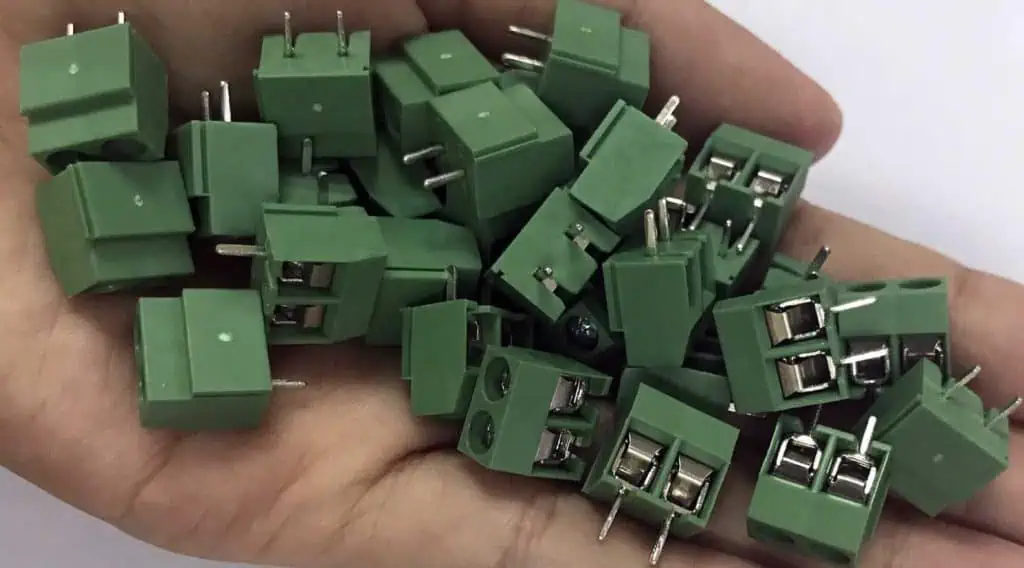
PCB screw terminal parameters that require careful specification include:

Pitch

Center-to-center distance between screw terminal positions, typically ranging from 3 mm to 10 mm.

Contact Material

Brass, copper alloy, or steel contacts support different current ranges and corrosion resistance.

Current Rating

Maximum current each terminal can handle without overheating. Depends on contact size and material.

Wire Gauge

Maximum and minimum conductor size that can be securely terminated, typically 22-12 AWG.

Voltage Rating

Maximum working voltage, often 300V or 600V rating.

Temperature Range

Operating and storage temperature ranges expected in the end application environment.

Screw Torque

Torque specifications for tightening screws to achieve proper clamping force without damage.

Termination Type

Solder pin, PCB header, or other PCB mounting style.

Carefully specifying these parameters ensures the selected screw terminals meet functional needs reliably.

Design Considerations for PCB Implementation

Here are some key design factors when integrating screw terminals on a PCB:

Grouping

Logically group similar voltage or current terminals together, separating types and ratings. Follow any safety spacing requirements between terminal blocks and other components.

Clearances

Leave adequate clearance around terminals for screw access during assembly and any required insulative barriers or potting.

Orientation

Position terminals for easiest access to wiring with minimal obstruction. Allow wire bending space.

PCB Footprint

Use manufacturer recommended PCB footprints and layouts. Verify surface mount pads match terminal solder pins.

Mechanical Stability

Provide structural support and strain relief for heavy wire bundles to avoid stressing solder joints. Allow some movement.

PCB Strengthening

Avoid thin necked regions of PCB underneath terminals. Add thickness for durability.

Marking

Clearly identify terminal block functions, ratings, and circuit connections on PCB silkscreen.

3D Modeling

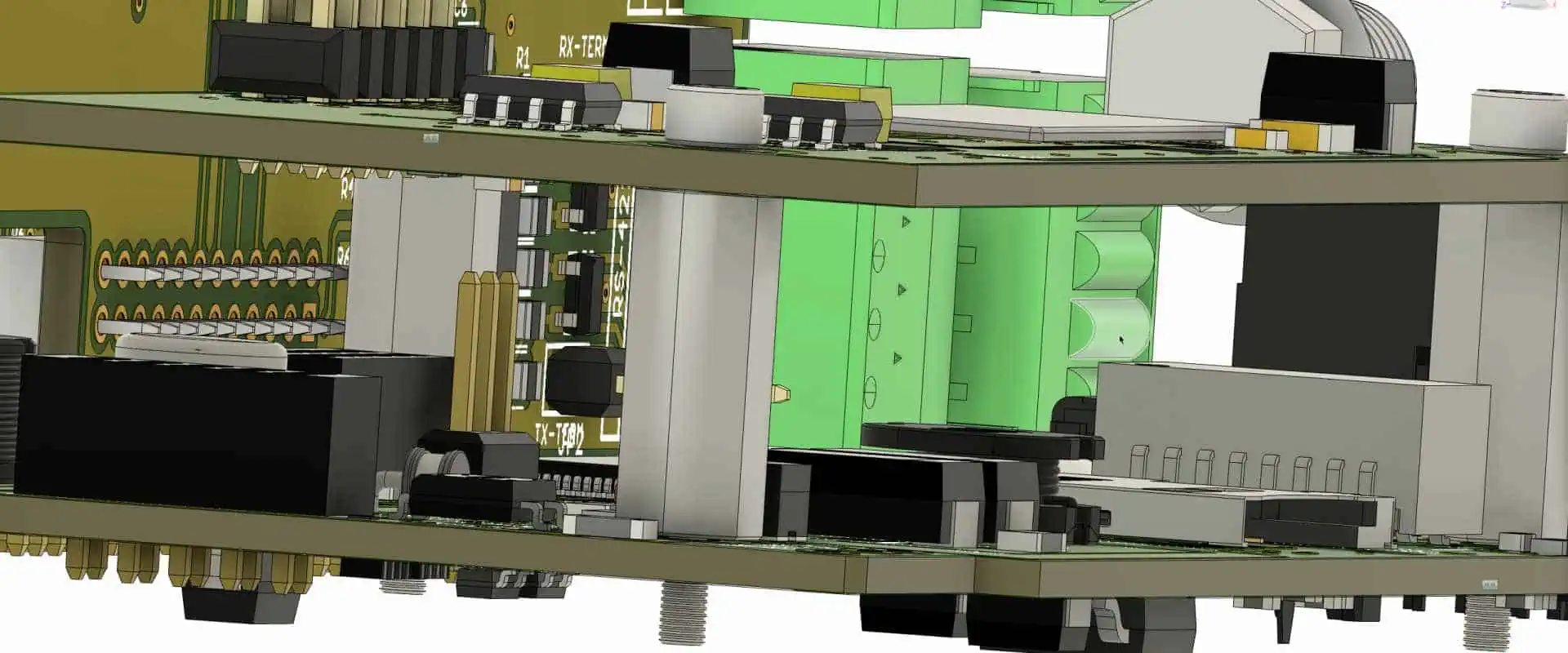
Verify screw terminal height fits within product enclosure constraints and panel cutouts for access.

Careful mechanical and electrical design ensures reliable screw terminal PCB integration.

PCB Screw Terminal Installation and Wiring

YouTube video

Installing and connecting wires to PCB screw terminals involves these key steps:

Layout Verification

Visually check all terminals are in correct positions with proper PCB footprint prior to soldering.

Soldering

Solder terminals to PCB according to manufacturer instructions, checking for proper pin alignment and joint quality.

Structural Support

Provide any required mechanical braces or strain relief to stabilize wire bundles attached to terminals.

Wire Preparation

Strip wire insulation appropriately based on terminal size to expose conductor without nicking strands.

Wire Insertion

Fully insert each wire into the proper terminal opening. Ensure no stray strands or insulation.

Screw Tightening

Torque down screws to specified levels using calibrated electric or manual torque screwdrivers. Do not overtighten.

Inspection

Inspect each wire for proper insertion depth and screw tightness. No loose strands or debris in terminals.

Tagging

Affix wire labels to identify each connected circuit. Verify against wiring diagrams.

Proper PCB screw terminal installation and wiring is key to achieving robust, reliable performance.

Advantages Over Soldering

Screw terminals provide several advantages compared to direct PCB soldering:

No Soldering Skill Required

  • Avoid need for specialized soldering training to terminate thick wires.

Faster Assembly

  • Quickly insert and screw down wires vs. carefully soldering each.

Reduced Errors

  • Eliminate risks of cold solder joints, bridging, pin misalignment.

Serviceability

  • Individual wires can be readily accessed without desoldering.

Reusability

  • Entire terminal blocks with pre-terminated harness can be removed and re-installed.

Vibration Resistance

  • Mechanical screw force maintains reliable contact under vibration.

Mixed Signal Grouping

  • Different voltage or current circuits can share a common block.

For many applications, screw terminals simplify wiring while improving field serviceability and enhancing reliability.

Limitations of Screw Terminals

While very useful in many designs, screw terminals do have some limitations versus soldering:

Larger Size

  • Take up more PCB area than soldered pins for same number of connections.

Additional Cost

  • Screw terminals cost more than bare pins per connection point.

Limited Current

  • Low maximum amperage capacity suitable only for signals, not power.

Complex Assembly

  • Additional assembly steps of wire preparation, insertion, and torqueing.

Open Connections

  • Unlike soldering, screw joints can work loose over extreme vibration or heating.

Visual Inspection

  • Harder to quickly visually inspect each terminal’s wire for proper installation.

Applications and Examples

Some typical applications that benefit from PCB screw terminals include:

  • Connecting panel wiring in industrial control boxes
  • Sensor and actuator cables interfacing to boards
  • Board-level harnessing in automotive electronics
  • Field-installable wiring on telecom or server equipment
  • Quick connection for prototyping during development
  • Fan, motor, solenoid, and other electromechanical drives
  • Field serviceable medical or test instruments

Any application requiring removable wires or field cable installation are ideal candidates for screw terminal connections versus soldering.

Frequently Asked Questions

What is the maximum current capacity for PCB screw terminals?

A: While ratings vary, typical PCB screw terminals support 1 to 5 Amps. High current models can handle up to 60 Amps for power applications.

Is any special tool required to install screw terminals?

A: An electric or calibrated manual torque screwdriver allows setting proper torque specifications for each terminal without overtightening.

Can stranded wires be used with screw terminals?

A: Yes, stranded wire is commonly used. Ensure all strands are contained within the terminal opening. Ferrules can simplify insertion of fine stranded wires.

What is the typical pitch between PCB screw terminals?

A: 5.0 mm is a widely used pitch supporting a good density of connections. For higher density, 3.5 mm or 3.0 mm pitches are available.

How reliable are screw terminal connections versus soldering?

A: Industry standard screw terminals have been proven through extensive testing to provide very reliable gas-tight, vibration resistant connections comparable to soldering.

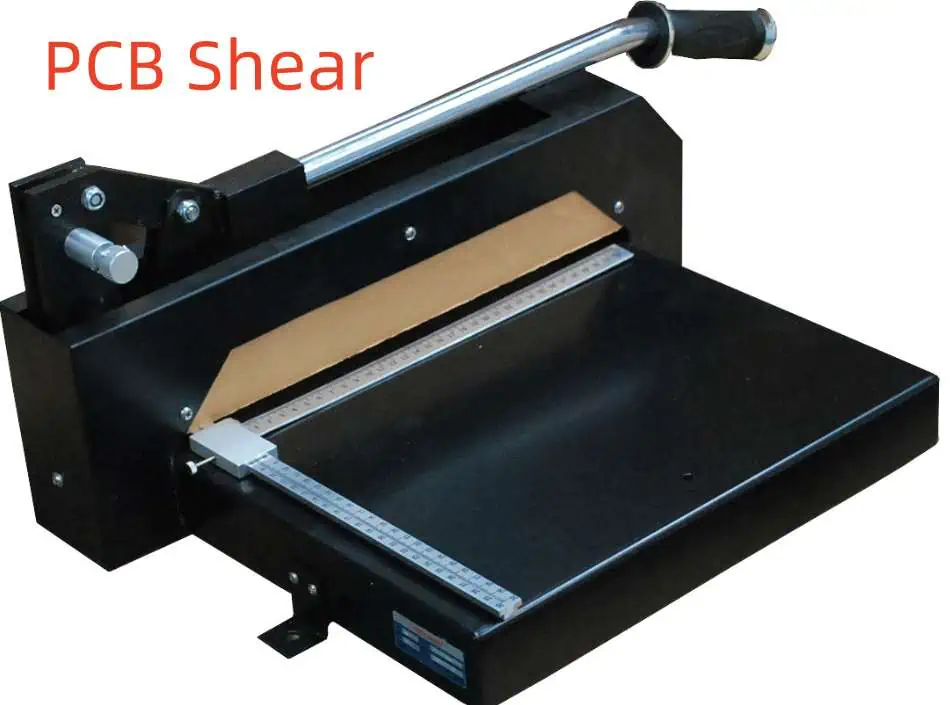
PCB Shears Vs. PCB cutting machine:How to Choose

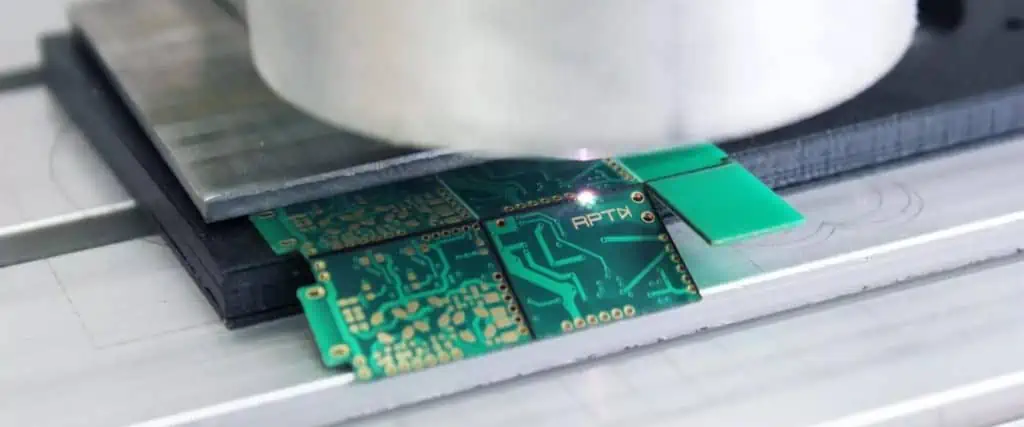
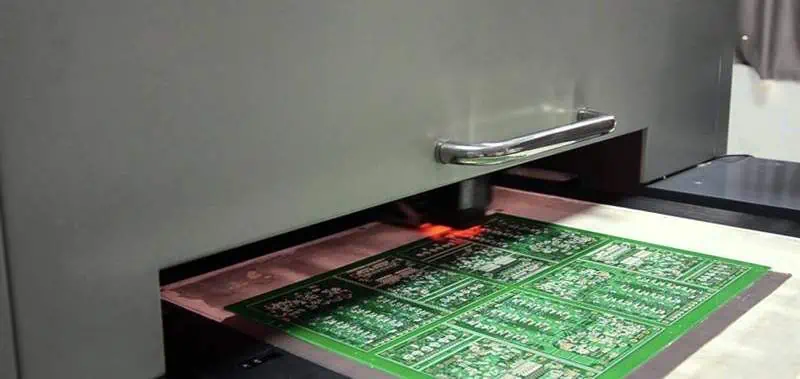
Cutting printed circuit boards (PCBs) from larger panels is an essential step in PCB fabrication and assembly. PCB manufacturers rely on dedicated cutting tools to singulate individual boards or assembly panels from panelized arrays cost-effectively and accurately. The two main options are manual PCB shears and automated PCB cutting machines.

Selecting the right PCB cutting method requires evaluating key factors like cut quality, throughput, cost, complexity, and capabilities for the types of boards and volumes to be processed. This article provides a detailed comparison between manual PCB shears and automated cutting machines to help guide the optimal equipment choice.

Overview of PCB Shears

PCB shears are manually-operated tools used to cut circuit boards by applying mechanical shear force. Key features include:

  • Blade Style – Straight or slant blade options exist. Slant creates scissor-like shearing.
  • Actuation – Spring, air, electric, or hydraulic pressure closes blades.
  • Capacity – Various tool sizes cut boards up to 0.8in (20mm) thick.
  • Accuracy – Depends on operator skill. Fixtures can aid positioning.
  • Speed – Manual process limits speed versus automation.
  • Cost – Lower equipment cost in the $3k to $10k range.

PCB shears are a simple, low cost cutting option but require skilled operators for consistent quality and throughput.

PCB Shearing Process

Using PCB shears for cutting involves the following key steps:

Board Positioning

The PCB panel is positioned in the shear based on measurement marks or fixtures. Proper alignment is critical.

Clamping

Clamps hold the board securely in position during cutting to prevent shifting.

Shear Actuation

The operator manually squeezes the shear handle to close the blades through the board with precise downwards pressure.

Indexing

The board is manually indexed to the next cut location and aligned. Fixtures aid repeated positioning.

Cut Repetition

Cutting strokes are repeated according to panel layout to singulate all required boards. Deburring removes sharp edges.

Shear Cut Quality Factors

Several factors impact the cut quality and consistency using PCB shears:

  • Operator skill and training
  • Tool sharpness and precision
  • Clamping force and stability
  • Blade type (straight, slant, double)
  • Cutting stroke consistency
  • Fixtures and precision measurement
  • Deburring process

Dedicated tools like perforated or scored cut lines aid shear positioning. But ultimately the operator controls key variables influencing cut quality like pressure and alignment.

Benefits of PCB Shears

PCB shears have some compelling benefits that make them a cost-effective cutting solution:

Low Equipment Cost

  • Shears are an inexpensive cutting tool option with prices from a few thousand dollars.

Simple Operation

  • Basic manually actuated operation with no complex mechanics or programming.

Quick Setup

  • Minimal setup time to start cutting different board designs and sizes.

Small Footprint

  • Compact tabletop footprint takes minimal floorspace.

Flexibility

  • Operators can adapt on the fly to handle small volume panel variations.

Low Maintenance

  • No complex machinery to maintain. Just blade sharpening and replacement.

For low to moderate production volumes, PCB shears can offer an economical cutting solution when paired with an experienced operator.

Limitations of Manual PCB Shears

While useful in some scenarios, PCB shears have some distinct limitations:

Inconsistent Quality

  • Cut quality depends heavily on operator skill and fatigue level.

Lower Throughput

  • Manual process limits speed and volume.

Higher Labor Cost

  • Intensive labor cost for skilled operators over long shifts.

Larger Kerf

  • Shear blades produce wider cut channels versus precision machining.

Burr Management

  • Deburring adds additional manual processing step.

Limited Automation

  • Harder to integrate shears into automated material handling flows.

For cutting high volumes or complex board designs, manual shears become less viable both technically and economically.

When to Use PCB Shears

Here are typical production situations where PCB shears may be the preferred option over automated machines:

  • Low to medium volumes (<5,000 boards per week)
  • Lower complexity boards and materials
  • Frequent design changeovers
  • Lower cut quality requirements
  • Tight budget constraints
  • Minimal available floorspace

Overview of Automated PCB Cutting Machines

Automated PCB cutting utilizes computer-controlled machines to cut boards based on programmed tool paths. Common machine architectures include:

Router-Type Machines

  • Use a rotary end mill tool spinning at high RPM to cut boards.

Knife Cutters

  • Cut with an actuated vertical knife blade mounted to X-Y gantries.

Laser Cutters

  • Directed laser beam ablates material to cut complex shapes and profiles.

Waterjet Cutters

  • High pressure waterjet quickly cuts contours in boards.

Automated cutting machines offer much higher throughput, precision, consistency, and capabilities versus manual shears. But the equipment cost is also far higher.

Automated PCB Cutting Process

Here is an overview of the typical automated cutting sequence:

Tool Path Programming

The required cut pattern is defined in software based on board panel sizes, orientations, and finished board dimensions.

Board Loading

Panels are automatically loaded onto the machine bed from a conveyor or stack. Vacuum holds boards in place.

Optical Alignment

Fiducials on the panel are detected by cameras to precisely align boards for accurate cutting.

Cutting

The spinning end mill, knife blade, laser or waterjet traverses the tool paths at high speed to cut boards from the panel.

Unloading

Conveyors remove finished cut boards and scrap from the machine. Optional sorting can separate boards and scrap.

Verification

Automated or manual inspection verifies cut quality. Precision cutting minimizes need for extensive verification in high volume applications.

Technical Attributes of Automated Cutting

PCB Material cutting machine

Automated PCB cutting machines enable significant enhancements across these technical metrics:

Precision

  • Tight tolerances down to +/- 0.10mm achieved from programmed tool paths and precision stages.

Consistency

  • Automated process varies minimally across thousands of boards.

Cut Quality

  • Very smooth edge finish with minimal debris. Controlled cutting parameters optimize edge quality.

Kerf Width

  • Reduced kerf width as low as 0.15mm conserves material.

Productivity

  • Cut rates from 10 to over 100 boards per hour depending on size and complexity.

Reliability

  • Proven machine designs for continuous operation with high uptime.

Automation

  • Seamless integration into automated material flows between processes.

These technical capabilities enable cutting high complexity boards at mass production volumes.

Economic Benefits of Automated Cutting

In addition to technical advantages, automated PCB cutting machines can provide compelling economic benefits:

Labor Savings

  • Dramatically reduce labor by eliminating manual cutting steps.

Improved Yields

  • Consistent precision cutting minimizes panel waste from cut defects.

Higher Throughput

  • Cut more boards per day with faster cycle times.

Scalability

  • Easily scale to higher volumes by running machines longer or adding machines.

Reduced Costs

  • Lower cost per cut board through labor savings and efficiency gains.

Quick Changeovers

  • Switch between different board designs with minimal downtime.

For medium and higher volume production, automated cutting machines improve quality while reducing overall PCB fabrication costs.

Considerations for Automated PCB Cutting

PCB Cutter

Here are some factors to consider when implementing automated board cutting:

Equipment Costs

  • Machines ranging from $50k to over $500k with advanced software, tooling, and accessories.

Programming

  • Requires CAM programming expertise to generate machine-specific cut patterns.

Maintenance

  • Must budget for machine maintenance and occasional repairs.

Floorspace

  • Machines have larger footprint than shears and may require special facilities.

Operators

  • Still need qualified technicians to oversee machines and quality.

Changeover Time

  • Some minor changeover and programming required when switching board designs.

When to Use Automated Cutting Machines

Here are typical high volume production scenarios where automated PCB cutting machines become advantageous:

  • Cutting over 5,000 PCBs per week
  • Complex board shapes or profiling required
  • Advanced materials like flex or rigid-flex
  • Cut tolerances under 0.20mm required
  • High mix of different board designs
  • Integration into automated material handling flows
  • Continuous mass production operation

PCB Shears vs. Automated Cutting Comparison

FactorPCB ShearsAutomated Cutting Machine
Equipment Cost$3k – $10k$50k – $500k+
Cut Speed2 – 10 boards/min10 – 200+ boards/min
Cut Precision+/- 0.25mm+/- 0.10mm or better
Cut QualityGoodExcellent
ConsistencyLow-ModerateVery High
ComplexitySimple shapes onlyComplex contours and profiling
Changeover< 5 min< 15 min
LaborHigh manual laborLow semi-automated
Volume SupportLow-moderateHigh
Automation IntegrationChallengingSeamless

Hybrid Approach

For some manufacturers, a hybrid approach combining both manual shears and automated cutting provides the right balance:

  • Shears for low volume flex or rigid-flex jobs
  • Shears for prototyping and short runs
  • Machines for higher volume production
  • Shears for overflow capacity

This hybrid model allows optimizing the strengths of each technology for different needs.

Recommendations for Selecting PCB Cutting Methods

Based on key parameters and tradeoffs between PCB shears and automated cutting machines, here are some best practice recommendations:

Low Volume Cutting

For low volume PCB cutting under 5000 units per week, with less demanding quality and simple board shapes, manually operated PCB shears provide the most cost-effective solution.

High Volume Cutting

For cutting volumes over 5000 PCBs per week, tighter cut tolerances, and complex board shapes, automated cutting machines will deliver superior quality at lower overall cost.

High Mix Production

In facilities with high mix production across both low and high volume boards, a hybrid approach with both shears and cutting machines allows optimizing the cutting strategy for each job.

Technology Evaluation

Thoroughly evaluate PCB shears vs. machine cutting capabilities against current and future requirements to avoid overbuying or underbuying equipment. Involve staff in assessing impact on labor, quality, and total cost.

Conclusion

Both PCB shears and automated cutting machines have their place in PCB fabrication workflows depending on volumes, design complexity, available labor, floorspace, and budget constraints. Carefully weighing technical capabilities, productivity, and economics will lead to selecting the optimal cutting solutions. A combination of manual and automated options provides maximum manufacturing flexibility. As demands grow, adding automated precision cutting machines supports cost-effectively scaling to higher production levels while maintaining quality.

Frequently Asked Questions

Q: How are perforated or scored lines used in PCB shearing?

A: Perforated or scored lines on the panel help guide the operator during shearing by defining cut locations, improving positioning accuracy.

Q: Can PCB shears effectively cut rigid-flex boards?

A: Shears can cut simple rigid-flex boards but automated machines offer better control of cutting through multiple material zones.

Q: What safety precautions should be used with PCB shears?

A: Safety glasses, cut-resistant gloves, and finger guards should be worn. Avoid loose clothing. Maintain sharp blades.

Q: How are curved or contoured board shapes cut?

A: Automated machines with interpolation capabilities are required for profiling complex board outlines versus simple straight line shearing.

Q: How are PCB shears maintained and adjusted?

A: Follow manufacturer instructions for lubrication, blade inspection, sharpening, and calibration. Replace worn blades for best cut quality.

PCB Screen Printing Vs PCB Inkjet Printing๏ผš What’s Difference

Printed circuit boards (PCBs) serve as the foundation for electronics, providing the mechanical structure and electrical connections between components. PCB fabrication involves many steps, including printing conductive traces, solder mask, legend, and other features onto the bare boards.

Two of the most common PCB printing methods are screen printing and inkjet printing. Both techniques can accurately reproduce fine features on a PCB, but have key differences in their processes, capabilities, and applications.

This article provides a detailed comparison of PCB screen printing versus inkjet printing across various factors:

  • Basic process overview
  • Resolution and feature size
  • Accuracy and repeatability
  • Print speed
  • Substrate compatibility
  • Ink and soldermask compatibility
  • Changeover and setup
  • Volume capability
  • Equipment cost
  • Pros and cons

Understanding these key differences will help PCB designers and fabricators select the optimal printing method for their specific requirements and production environments.

PCB Screen Printing Overview

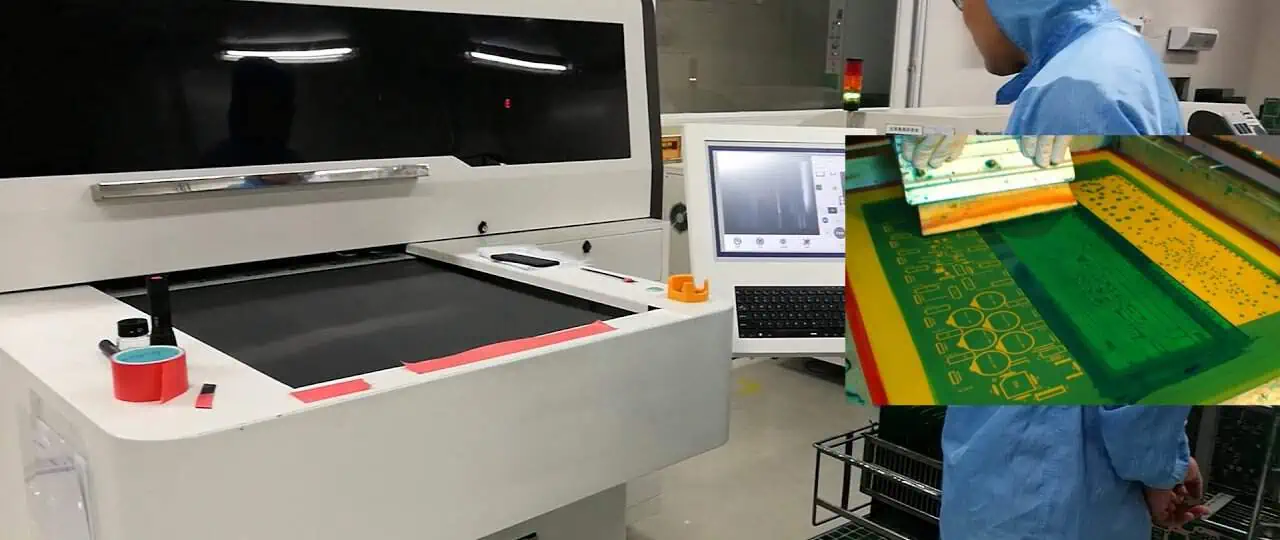
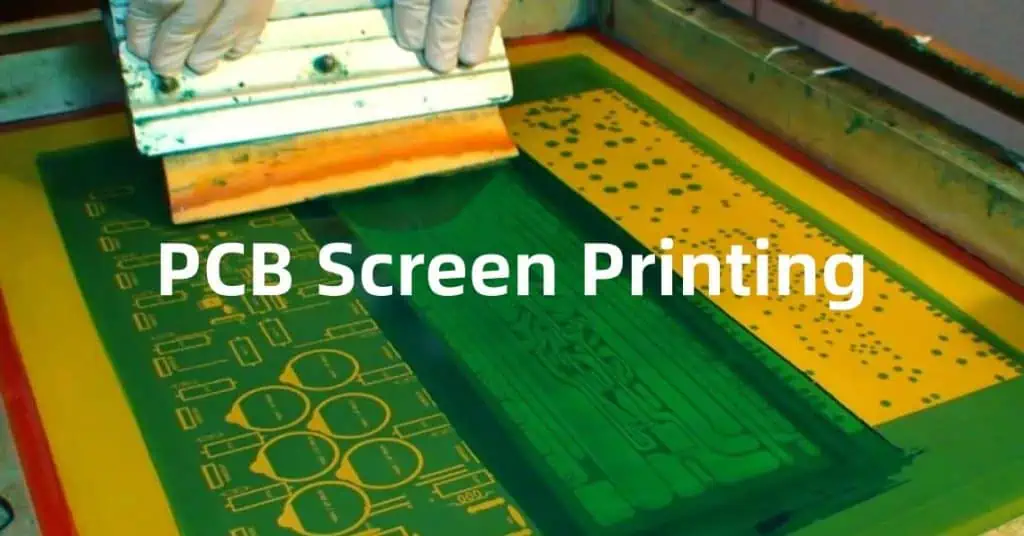
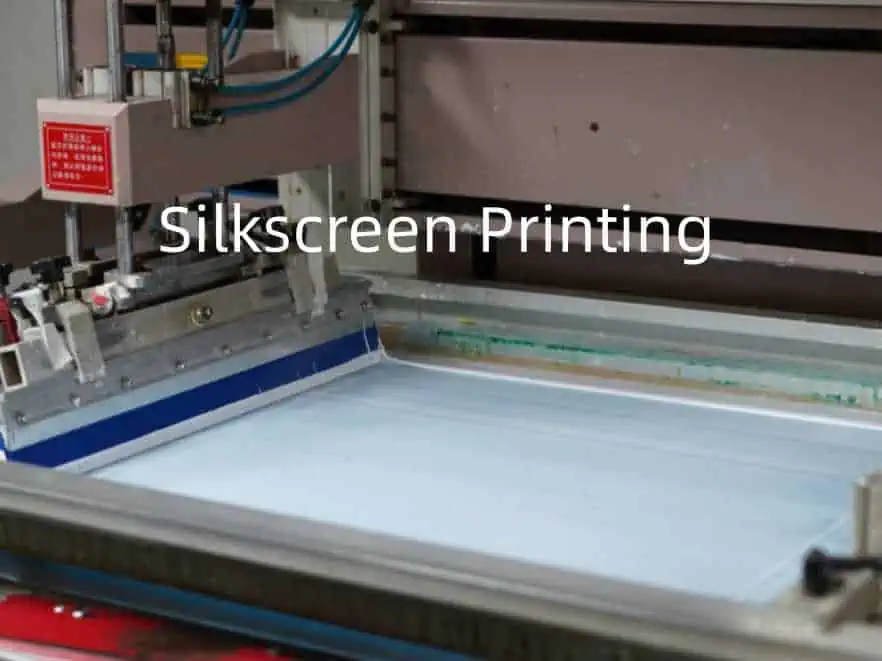
Screen printing, also known as silkscreen printing, is a long-established process for printing legends, markings, solder mask and other features on PCBs. The key characteristics of screen printing include:

Process Overview:

  • A fine mesh screen contains the desired image pattern
  • Ink is flooded onto the screen and a squeegee presses the ink through open areas
  • Ink transfers to the PCB surface, reproducing the screen image

Typical Features:

Key Components:

  • Screens with image patterns
  • Ink for the application (epoxy, solder paste)
  • Printer with squeegee assembly

Screen printing has been the traditional workhorse PCB printing process and provides a straightforward method for high volume solder mask and legend printing.

PCB Inkjet Printing Overview

Inkjet printing is a digital printing technique adapted for PCB production. Its key properties are:

Process Overview:

  • Ink droplets ejected from printhead nozzles
  • Droplets land on desired locations to form image
  • No physical contact between printer and board

Typical Features:

  • Solder mask
  • Silkscreen legends
  • Etch resist
  • Solder paste

Key Components:

  • Printheads with arrays of nozzles
  • UV-curable inks
  • Vision alignment system
  • Digital image data

Inkjet allows on-demand, non-contact digital printing well suited for rapid design iterations, prototyping, and low to moderate volumes.

Resolution and Feature Size

A key specification for any printing process is the resolution and minimum feature size that can be achieved. These determine how fine the details are that can be reproduced.

Screen Printing Resolution

  • Screens have mesh counts from 43 to 355 threads/cm
  • Higher mesh counts offer higher resolution
  • Minimum feature size Around 100ฮผm (0.1mm or 4mil)

Inkjet Printing Resolution

  • Printhead nozzles can be 12-50ฮผm diameter
  • Droplet sizes down to 5 picoliters
  • Minimum feature size 25-50ฮผm (0.025-0.05mm or 1-2mil)

Comparison

  • Inkjet capable of 2-4x higher resolution than screen printing
  • Enables finer traces, spaces, text, and soldermask details

Higher resolution inkjet printing allows PCBs to implement dense, complex designs with ultra-fine features.

Accuracy and Repeatability

Precision and consistency are vital for printing Small errors or variability will degrade performance.

Screen Printing Accuracy

  • Aligned manually or with pins
  • Registration around 50-100ฮผm
  • Screen stretching can distort image
  • Consistency relies on operator skill

Inkjet Printing Accuracy

  • Vision alignment system for 10ฮผm precision
  • Digital process avoids image distortion
  • Automated calibration and controls
  • Registration down to 15ฮผm or better

Comparison

  • Inkjet provides 5-10x tighter registration accuracy
  • Minimal human errors or screen issues
  • Improved consistency across panels and batches

Inkjet’s precision alignment and digitally-driven process offer superior accuracy and repeatability for high density PCBs requiring tight tolerances.

Print Speed

Throughput is an essential productivity and cost consideration.

Screen Printing Speed

  • Typical speed 500-1000mm/second
  • Large batches achieve high throughput
  • Flood and squeegee process limits acceleration

Inkjet Printing Speed

  • Maximum velocity up to 10m/second
  • No physical contact enables faster printing
  • Small batches feasible without speed loss

Comparison

  • Inkjet can print 5-10x faster than screen printing
  • No squeeze delays allow rapid printing
  • High acceleration further boosts speed

With its non-contact method and quick acceleration, inkjet offers significantly faster printing times ideal for rapid prototyping and small batches.

Substrate Compatibility

The ability to print on various board materials is important for supporting different applications.

Screen Printing Compatibility

  • Epoxy, polyimide, flex, metal core PCBs
  • Challenging for non-planar or warped boards
  • Surface must contact screen evenly

Inkjet Printing Compatibility

  • Compatible with all rigid and flex PCB materials
  • Conformal printing for non-planar boards
  • Tolerates warpage better than screens

Comparison

  • Inkjet compatible with more substrates
  • Flexible prints conform to warped/uneven surfaces
  • No contact reduces material restrictions

Inkjet printing places fewer limits on board materials and shapes, allowing unconventional PCBs with flexibility, 3D geometry, and other innovations.

Ink and Soldermask Compatibility

The printing process must work with necessary specialty inks and soldermasks.

Screen Printing Compatibility

  • Wide range of compatible soldermask inks
  • Limited by viscosity and particle size
  • Not suitable for UV-curable inks

Inkjet Printing Compatibility

  • Formulated UV-curable inks required
  • Lower viscosity than screen printing inks
  • Prints soldermask, legend, etch resist, and paste

Comparison

  • Inkjet requires specialized ink development
  • Enables printing fine features in soldermask
  • Compatible with a broader range of inks

With custom ink design, inkjet supports printing finer soldermasks, etch resists, and other specialty fluids.

Changeover and Setup

Fast, easy changeovers between prints allow efficient operation.

Screen Printing Changeover

  • Screens must be cleaned, coated, aligned
  • Significant setup time and labor
  • Low changeover efficiency

Inkjet Printing Changeover

  • Digital process with no screens
  • Quick purge and priming of printheads
  • Automated alignment and calibration

Comparison

  • Inkjet changeovers are near instantaneous
  • Saves time and costs for short runs
  • Enables fast design iterations

Inkjet printing eliminates Screens and provides rapid digital changeovers ideal for prototyping, low volume, or highly variable production.

Volume Capability

The practical volume capacity is a key differentiator between printing technologies.

Screen Printing Volumes

  • Highly suited for long runs >10,000 boards
  • Maximum throughput with minimal changeovers
  • Not practical for small lots

Inkjet Printing Volumes

  • Capable of variable batches from 1-1000 boards
  • Low volume prototyping to moderate production
  • Small lots without compromising speed

Comparison

  • Screen printing for high volume long runs
  • Inkjet printing for short runs and prototyping
  • Combination creates flexibility

Screen printing handles heavy production demands, while inkjet enables low volume prototyping and ramp-up leading into higher volume screen printing.

Equipment Costs

The equipment investment impacts affordability and access to the technology.

Screen Printing System Cost

  • Manual presses ~$10,000
  • Automated presses from ~$50,000
  • Screen coating/processing equipment additional

Inkjet Printing System Cost

  • Manual benchtop systems ~$20,000
  • Automated systems from ~$100,000-$250,000

Comparison

  • Inkjet systems cost 2-4X more than screen printing
  • Justifiable for changing requirements, new capabilities

While inkjet requires greater up-front investment, it can provide value through increased adaptability along with resolution and accuracy improvements.

Pros and Cons Comparison

Printing MethodProsCons
Screen Printing– Proven, well-known process <br> – Compatible with wide range of soldermasks <br> – Capable of high volume production– Lower resolution limits fine features <br> – Limited accuracy and repeatability <br> – Slow changeovers and limited flexibility
Inkjet Printing– Ultra-high resolution <br> – Excellent accuracy and precision <br> – Fast digital changeovers <br> – Low to moderate volume capable– Requires custom inks <br> – Higher equipment cost <br> – Not suited for very high volumes

Table 1. Major pros and cons of screen printing vs. inkjet printing

Both methods have complimentary strengths making them optimal for different applications and volumes.

Conclusion

14-layer-printed-circuit-board
  • Screen printing and inkjet each have unique capabilities to meet different PCB printing requirements.
  • Screen printing delivers proven performance for long runs, while inkjet enables digital flexibility.
  • Resolution, accuracy, and setup time are key differences between the processes.
  • Volume requirements, substrate compatibility, inks, and budget factor into the printing choice.
  • Many shops utilize both techniques to maximize their manufacturing agility.

With in-depth understanding of the trade-offs, PCB designers and fabricators can strategically leverage screen and inkjet printing to achieve their cost, capability, and volume objectives. Utilizing the strengths of each approach provides access to a wide range of affordable, high performance PCB printing options.

Frequently Asked Questions

Is screen printing better than inkjet for PCBs?

Neither process is universally “better” – they each excel in different applications. Screen printing is preferred for high volume production, while inkjet provides superior resolution and flexibility for prototyping and short runs.

What tolerances are achievable with PCB inkjet printing?

Typical inkjet printing registration is ยฑ15ฮผm (0.6mil) or better. Line width and spacing down to 25ฮผm (1mil) are possible. This supports much tighter tolerances than screen printing.

Can solder paste be inkjet printed?

Yes, formulations of solder paste for inkjet printing are available. This allows printing variable solder paste deposits for flexible component attach. Inkjet solder paste is lower viscosity than screen printing pastes.

What PCB volumes make sense for inkjet vs screen printing?

Inkjet printing can support 1-1000 boards economically. Above 1000 boards, screen printing becomes more cost effective due to higher throughput. Inkjet is ideal for low-mid volume production.

What ink is used in PCB inkjet printing?

PCB inkjet printing uses specialized UV-curable inks designed for the process. They contain monomers, oligomers, pigments, and photoinitiators to enable curing upon UV exposure. The inks have lower viscosity than screen printing inks.

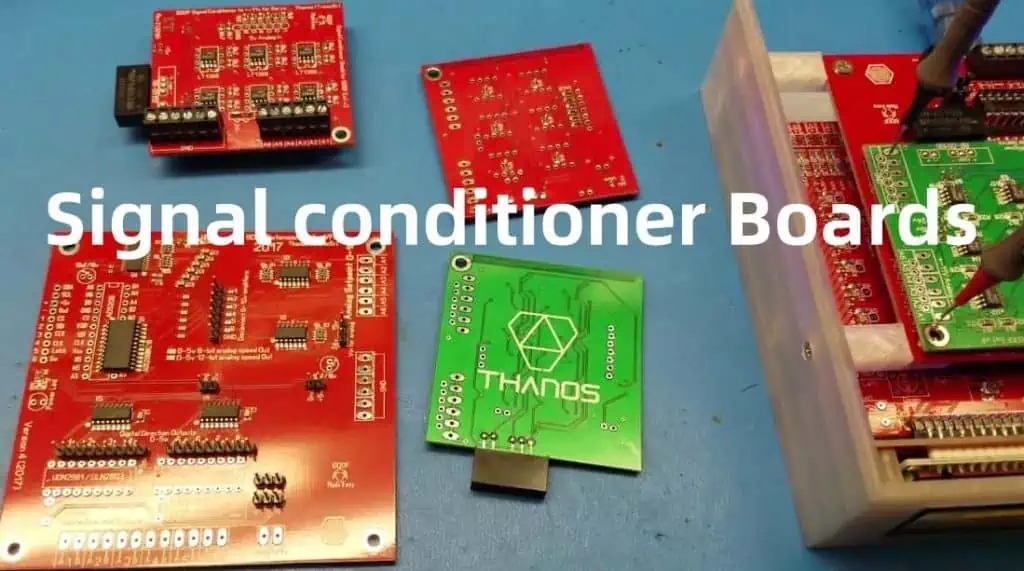
What Is a PCB Signal Conditioner: Types,Process and Uses

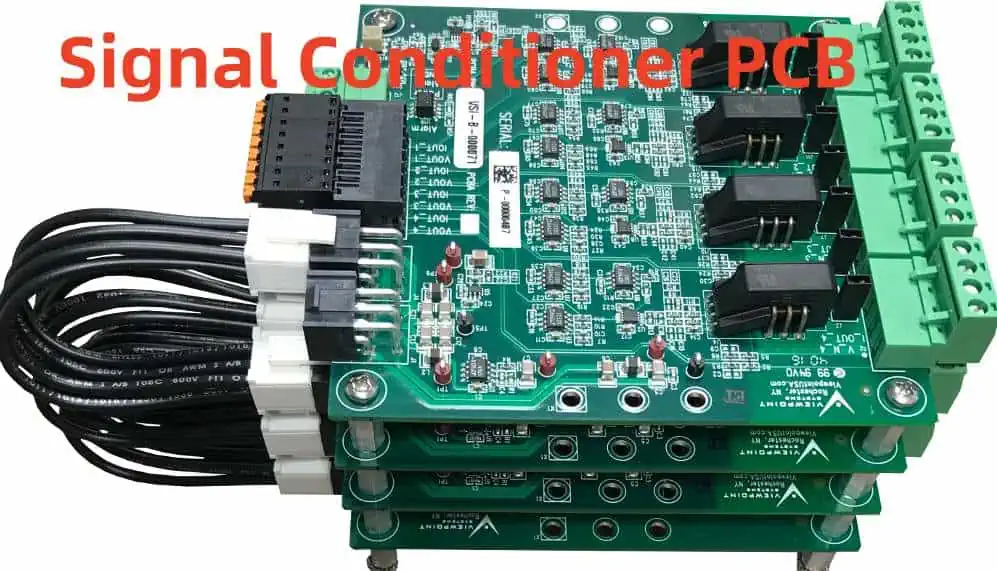
A signal conditioner is an important electronic device used to convert an electrical signal to a standardized format that can be processed by other equipment. Signal conditioning optimizes the signal to ensure accurate transmission, measurement and conversion to desired output.

When designed as a printed circuit board (PCB), signal conditioners provide additional advantages of compact size, rapid prototyping and ease of manufacturing. PCB-based conditioners are ubiquitous in industrial, automotive, aerospace and consumer applications for interfacing sensors, data acquisition devices and controllers.

This article provides a detailed overview of PCB signal conditioners including:

  • Definition and working principle
  • Signal conditioning processes
  • Types of PCB signal conditioners
  • Circuit design and PCB fabrication
  • Applications and uses
  • Advantages of PCB construction
  • Design considerations and challenges

By the end of this article, you will have a comprehensive understanding of what PCB signal conditioners are, their functionality, design, manufacturing and applications across various industries.

What Is a Signal Conditioner?

A signal conditioner is an electronic device used to convert a signal from its original form to a more desirable standardized format. Key elements include:

  • Receives input signal from a source such as sensor, transducer, etc.
  • Conditions the signal using processes like amplification, filtering, conversion, isolation, etc.
  • Converts it into a standardized output signal that is compatible with other equipment
  • Transmits the conditioned output signal for further processing, display or control

Block diagram of a generic signal conditioner.

The purpose of signal conditioning is to:

  • Change the signal into a suitable voltage/current range
  • Filter out noise, interference or unwanted components
  • Amplify low-level signals to measurable magnitudes
  • Provide electrical isolation between components
  • Ensure accurate and repeatable transmission
  • Convert between analog and digital signals
  • Standardize the output format for compatibility

This processing and conversion of the raw input signal enables reliable transmission, measurement and interpretation of the signal.

Why Use a PCB Signal Conditioner?

Printed circuit boards provide the following advantages for implementing signal conditioners:

  • Compact size – PCBs allow construction of small footprint conditioners.
  • Rapid prototyping – PCB fabrication is fast and inexpensive for developing prototypes.
  • Volume manufacturing – PCB assembly can be automated for high volume production.
  • Component density – More components can be accommodated in a small PCB area.
  • Flexibility – PCBs enable design flexibility and circuit modifications.
  • Reliability – Robust performance with quality electronic components and soldering.
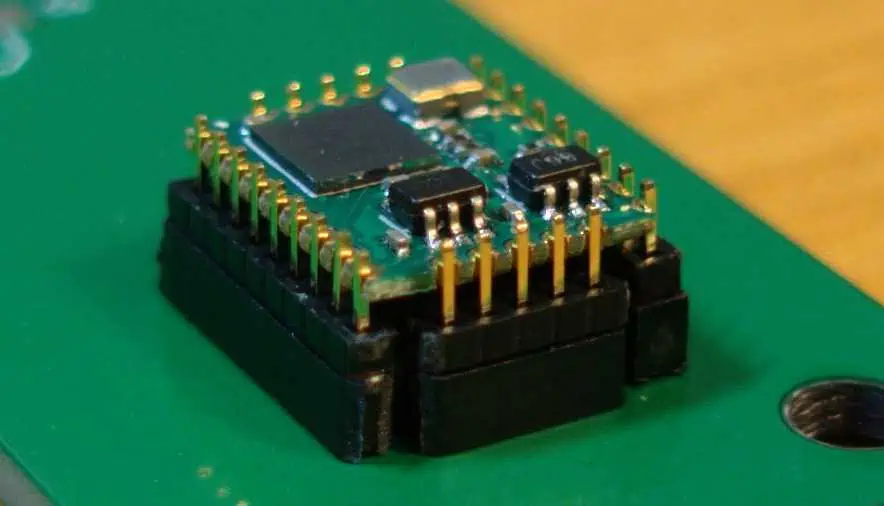
  • Cost-effectiveness – Low per-unit PCB costs at high production volumes.

The use of PCB technology enables creation of miniaturized, reliable and affordable signal conditioners that can be rapidly designed and manufactured.

Signal Conditioning Processes

Signal conditioners employ various techniques to convert the raw input signal into the required output form. Major processes include:

1. Amplification

  • Increases signal amplitude using electronic amplifiers.
  • Boosts weak sensor signals to measurable voltage/current levels.
  • Maintains signal-to-noise ratio (SNR).
  • Uses op-amps and instrumentation amplifiers.

2. Filtering

  • Removes unwanted signal components like noise.
  • Employ low pass, high pass, bandpass filters.
  • Prevents aliasing in analog to digital conversion.

3. Electrical Isolation

  • Provides galvanic isolation between input and output.
  • Uses optical, capacitive or magnetic isolation techniques.
  • Prevents ground loops and protects equipment from transients.

4. Analog to Digital Conversion

  • Converts analog signals to digital format.
  • Required for input to digital systems like computers.
  • Uses analog to digital converter (ADC) ICs.

5. Digital to Analog Conversion

  • Converts digital signals to analog format.
  • Needed for analog outputs like voltage/current.
  • Employs digital to analog converter (DAC) ICs.

6. Linearization and Compensation

  • Improves output signal linearity and accuracy.
  • Compensates for sensor non-linearities.
  • Uses linearization techniques like polynomial calibration.

7. Impedance Conversion

  • Matches differing impedances between source and destination.
  • Uses impedance matching networks.
  • Prevents signal reflections and errors.

8. Limiting and Protection

  • Limits output signals to specified safety levels.
  • Protects against over-voltage and transients.
  • Uses clamping diodes, fuses, suppressors.

Proper selection of signal conditioning steps converts the raw input to the standardized output needed by the application. Multiple techniques can be combined in a single conditioner PCB for complete functionality.

Types of PCB Signal Conditioners

PCB construction allows implementation of several types of signal conditioners. Major categories include:

1. Instrumentation Amplifiers

  • Amplify small differential input signals from sensors like strain gauges and thermocouples.
  • Provide high input impedance, gain stability and common-mode noise rejection.
  • Use precision low-drift op-amps with ultra-low offset voltage.
  • Available as integrated ICs optimised for amplification.

Instrumentation amplifier circuit.

2. Isolation Amplifiers

  • Amplify input signal and provide electrical isolation at the output.
  • Uses transformer, optical, GI, RF or capacitive isolation techniques.
  • Protects sensitive circuits from high voltages and noise.
  • Provides patient safety in medical devices.

Isolation amplifier with input protection.

3. Analog Filters

  • Remove unwanted interference and noise from signals.
  • Types include low-pass, high-pass, band-pass and band-stop filters.
  • Used for bandwidth limiting and anti-aliasing before ADC.
  • Constructed from resistors, capacitors and op-amps.

4. Digital Isolators

  • Isolate digital signals between input and output sides.
  • Use magnetic or optical techniques to transmit digital data across an isolation barrier.
  • Suitable for isolated serial communication in industrial systems.

Digital isolator with integrated DC-DC converter.

5. Analog Isolators

  • Isolate analog signals instead of digital data.
  • Based on giant magnetoresistance (GMR) or Hall Effect sensors.
  • Used to galvanically isolate analog voltage or current signals.

6. Surge Protectors

  • Protect against damaging voltage spikes and transients.
  • Use avalanche diode, gas discharge tube, thyristor or MOV techniques.
  • Commonly included for input protection in signal conditioners.

7. Limiters and Clamps

  • Limit output signal to specified maximum values.
  • Use diodes, zener diodes, transistors to clamp voltages.
  • Prevent damage to connected instruments from excess signal levels.

8. Analog to Digital Converters

  • Convert conditioned analog input signal into digital data.
  • Use high resolution delta-sigma converters for precise digitization.
  • Enable input to microcontrollers, data loggers, etc.

High speed analog to digital converter.

9. Digital to Analog Converters

  • Convert digital input to analog voltage or current output.
  • Generated analog output can drive sensors, valves, meters, chart recorders.
  • High resolution DACs provide precision analog signal recreation.

The right combination of the above techniques can be implemented on a PCB substrate to realize signal conditioners tailored for specific applications.

PCB Design and Manufacturing

Designing and fabricating a PCB-based signal conditioner involves the following main steps:

1. Define Signal Conditioning Requirements

  • Analyze required input and desired output signal parameters.
  • Specify conditioning tasks like amplification, filtering, isolation.
  • Determine analog/digital conversion needs.
  • Set performance metrics like accuracy, response time, temperature stability.

2. Select Electronic Components

  • Choose op-amps, specialized ICs, discrete parts meeting requirements.
  • Consider factors like gain, bandwidth, noise, offsets.
  • Evaluate part electrical characteristics, quality, cost, availability.

3. Design Circuit Schematic

  • Create circuit diagram with amplification, filtering, protection stages.
  • Simulate circuit performance in software like SPICE.
  • Refine design to meet signal specifications.

Signal conditioner circuit schematic example.

4. Layout PCB

  • Arrange components and routing for optimal performance.
  • Ensure quality power and ground distribution.
  • Design for manufacturability and testability.

PCB layout for signal conditioner.

5. Fabricate Prototype PCB

  • Generate Gerber files from PCB design software.
  • Submit to PCB manufacturer for fabrication.
  • May use prototype processes like double-sided FR4.

6. Test Prototype

  • Solder components onto fabricated PCB.
  • Verify conditioning performance meets requirements.
  • Identify any needed design improvements.

7. Manufacture Final Design

  • Produce design documentation for volume PCB manufacturing.
  • Specify PCB materials, layer count, finishes, tolerances.
  • Automated SMT assembly for production efficiency.
  • Perform quality assurance testing.

Following these steps results in an application-specific PCB-based signal conditioner solution optimized for the target requirements.

Applications of PCB Signal Conditioners

Due to their versatility, PCB signal conditioners find use across many fields:

  • Sensors – Interface sensors like load cells, thermocouples, LVDTs, strain gauges to measurement systems.
  • Medical – Process and digitize signals from ECG, EEG, blood pressure sensors. Provide electrical isolation for patient safety.
  • Automotive – Condition sensor signals related to pressure, temperature, speed, torque, etc. in engine control and diagnostics.
  • Process control – Adapt field signals from process monitoring and control loops.
  • Data acquisition – Accept high bandwidth analog signals from experiments for digitization by DAQ systems.
  • Avionics – Acquire flight data like vibration, temperature, pressure for aircraft condition monitoring.
  • Consumer – Used in devices like weighing scales, fitness trackers, thermometers to interface analog sensors.
  • Industrial – Factory automation systems use signal conditioning PCBs to adapt field device signals.
  • HVAC – Condition temperature and pressure sensor inputs for building automation and regulation.

PCB construction allows creation of application-specific and cost optimized signal conditioners.

Benefits of Using PCBs

Key advantages of implementing signal conditioners on printed circuit boards:

  • Compact – Allows construction of small footprint conditioners.
  • Customizability – Can adapt PCB design for specific application needs.
  • Reliability – Robust performance with quality electronic components.
  • Noise reduction – PCB design techniques optimize signal integrity.
  • Cost-effectiveness – Low per-unit costs for high volume production.
  • Fast development – Rapid design iteration and prototyping.
  • Easy manufacturing – Highly automated PCB assembly.
  • Scalability – Simpler to scale production compared to custom designs.
  • Integration – Can incorporate signal conditioning into sensor PCBs.
  • Standardization – Facilitates interoperability between systems.

PCB implementation enables optimization of size, performance, cost and manufacturability for signal conditioning products.

Design Considerations and Challenges

Some key design aspects and challenges for PCB signal conditioners include:

  • Achieving required accuracy and response speed for the application. Careful component selection and circuit design optimization needed.
  • Managing trade-offs between cost, size and performance specifications. Improved performance often increases cost and size.
  • For isolated designs, providing adequate creepage and clearance distances on the PCB to meet isolation voltage ratings.
  • Minimizing introduction of noise and interference through proper PCB layout and grounding techniques.
  • Heat dissipation from components requiring thermal design using heat sinks, thermal pads, and air flow.
  • Reliability factors like component derating, protection from transients, redundancy.
  • Designing for manufacturability – component placement, mounting profiles, test points, etc.
  • Meeting application-specific size constraints. Compact PCB construction allows miniaturization.
  • Conformal coatings may be needed in exposed environments for circuit protection.

A systematic PCB design process and rigorous testing of prototypes is key to overcoming these challenges.

Conclusion

Key takeaways are:

  • A signal conditioner converts the signal from the source into a standardized format compatible with receiving equipment. This enables accurate transmission and measurement.
  • Implementing conditioners as PCBs provides benefits like small size, design flexibility, ease of manufacturing and cost efficiency.
  • Key conditioning techniques include amplification, filtering, isolation, analog/digital conversion, linearization and protection.
  • PCB conditioners are designed using a process involving requirements analysis, component selection, circuit design, board layout, prototyping and testing.
  • There are diverse applications in industrial, medical, automotive, aerospace and consumer products. PCBs facilitate customization to meet application needs.
  • Benefits of PCB implementation includes size, reliability, noise reduction, rapid development, manfuacturability and cost.
  • Careful design is needed to meet accuracy, speed, isolation and environmental requirements while managing trade-offs.

In summary, PCB fabrication enables the creation of high performance yet cost-effective signal conditioning solutions tailored for the target application, making the PCB an highly effective implementation platform for signal conditioners across various industries.

Frequently Asked Questions

Q1. How is a signal conditioner different from an amplifier?

The main difference is that a signal conditioner incorporates additional functions beyond just amplification. These include filtering, electrical isolation, analog/digital conversion, linearization, protection, etc. to convert the raw signal into the desired conditioned output format. An amplifier is just one part of the signal conditioning system.

Q2. What are some common inputs and outputs of signal conditioners?

Typical inputs are directly from sensors like temperature probes, pressure transducers, load cells, etc. that output low level analog voltage or current signals. Outputs are usually standardized analog or digital signals compatible with data loggers, controllers, indicators and recording instruments. Industrial signal levels of 4-20mA, 0-5V, 0-10V are commonly produced.

Q3. What performance characteristics are important in signal conditioners?

Key parameters are accuracy, stability, response time, bandwidth, gain linearity and repeatability, noise and ripple rejection, isolation rating, and environmental withstand capability in terms of temperature, humidity and vibration. Meeting application-specific performance requirements is vital.

Q4. What are some design challenges when developing a PCB signal conditioner?

Major challenges include achieving the required signal conditioning performance within size, cost and manufacturability constraints. Important aspects are minimizing noise through optimal PCB layout, managing trade-offs between competing requirements, component selection, thermal design, and designing for high reliability.

Q5. What types of PCB materials and manufacturing processes are used for signal conditioners?

Most use standard FR-4 PCB material. High frequency designs may utilize RF/microwave substrates for controlled impedance tracks. For robustness in harsh environments, PCB coatings like solder mask, moisture barriers and conformal coatings are applied. Manufacturing is highly automated using SMT assembly for volume production.

What Is Difference Between PCB Slip Ring and Split Ring?

Slip rings and split rings are two important devices used in electrical and mechanical systems for transmitting power and signals across rotating interfaces. Both allow transmission between stationary and rotating components, but have some key differences in their design and applications.

In this article, we will provide a detailed comparison between PCB slip rings and split rings, including:

  • Definitions and working principles
  • Construction and design
  • Materials and manufacturing
  • Performance characteristics
  • Advantages and disadvantages
  • Typical applications
  • Main differences summarized

Understanding the differences between slip rings and split rings enables selecting the right device for different use cases requiring rotary transmission.

Defining Slip Rings and Split Rings

What is a Slip Ring?

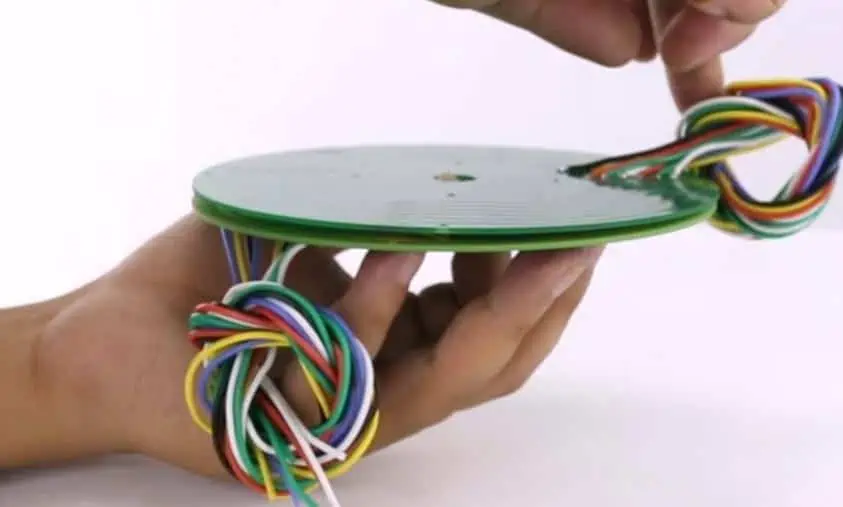
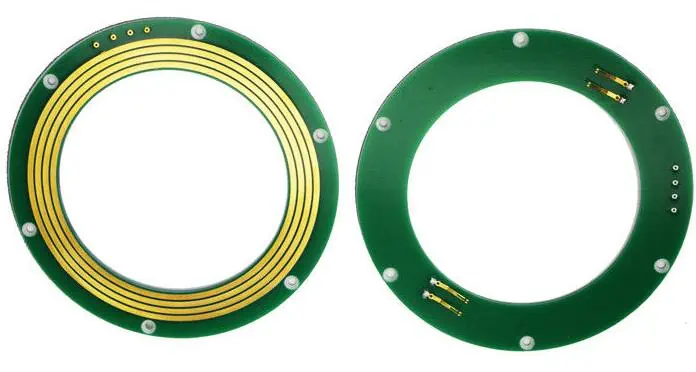
A slip ring is an electromechanical device that allows transmission of power and electrical signals from a stationary source to a rotating structure. It consists of a stationary part called the stator, and a rotating part called the rotor.

The stator contains conductive rings that are electrically insulated from each other. The rotor contains metal brushes that make sliding contact with the rings on the stator. As the rotor turns, the brushes maintain continuous electrical connection by sliding over the rings, allowing transmission of power/signals across the rotating interface.

Diagram showing construction of a slip ring.

Common configurations of slip rings include:

  • Pancake slip ring – Rings are arranged in a flat stack.
  • Cylindrical slip ring – Rings are arranged concentrically on a cylinder.
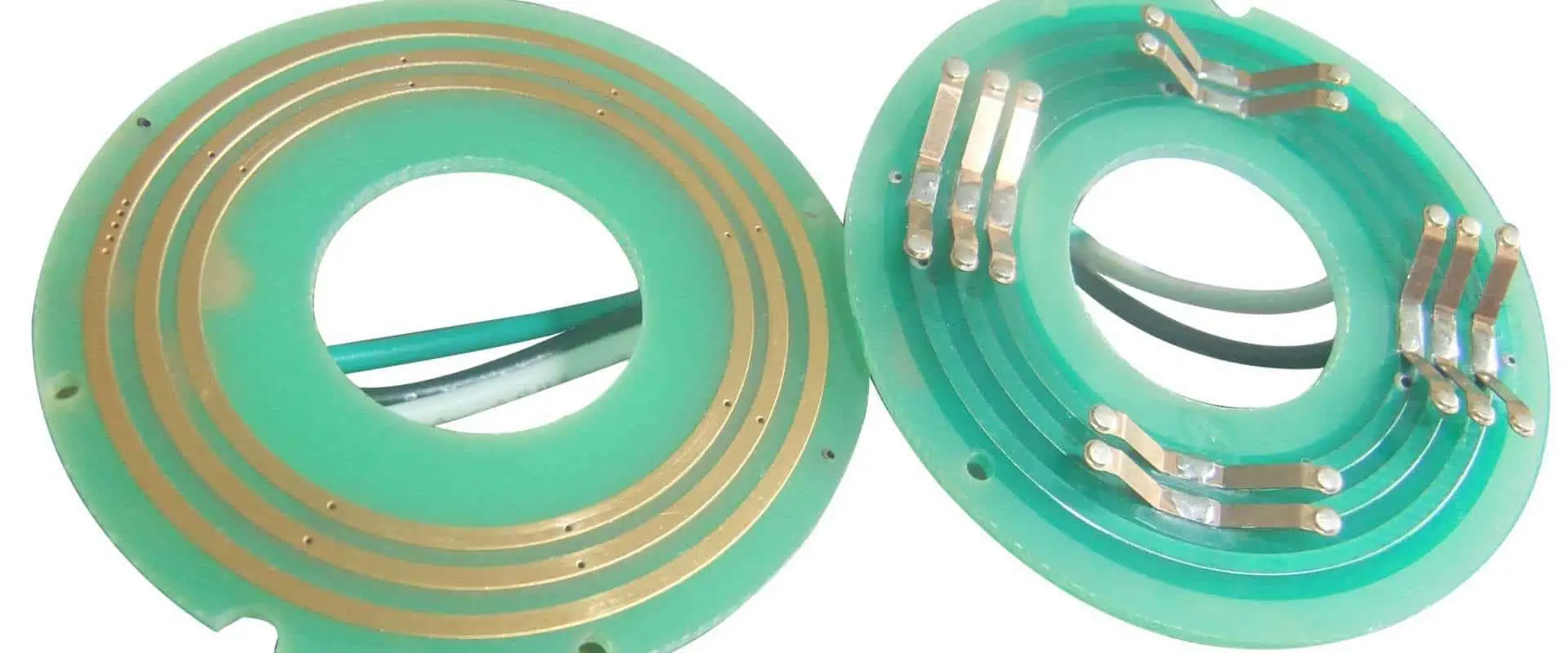
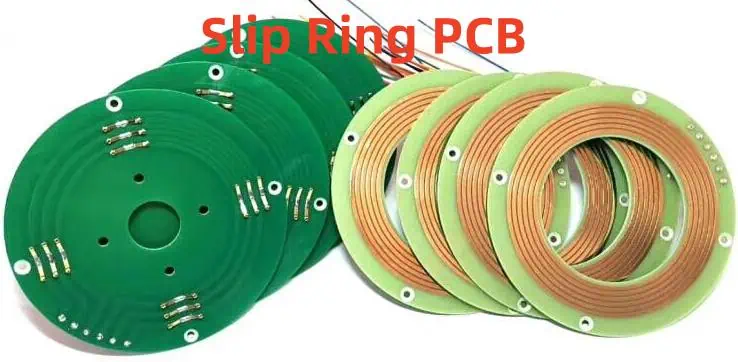
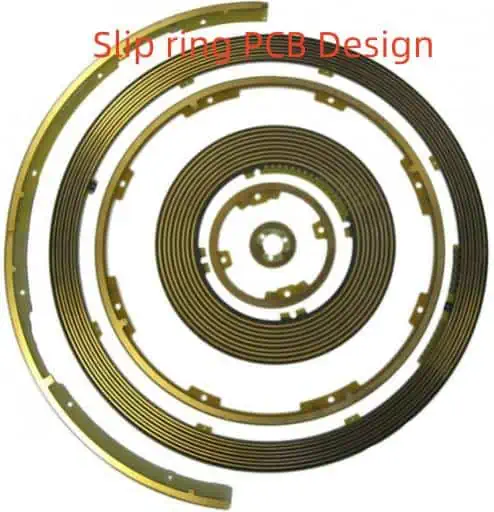
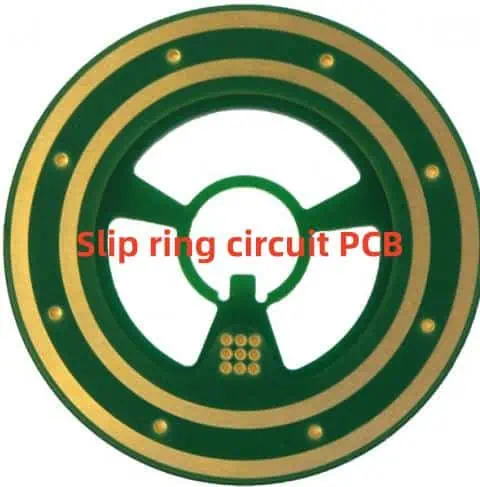
  • PCB slip ring – Rings are etched on a printed circuit board.

Slip rings are bidirectional and can transmit power/signals in both directions across the rotating interface. They allow transmission of low to high power, as well as a wide range of analog and digital signals.

What is a Split Ring?

A split ring, also called a brush block commutator, is a modified slip ring designed to transmit only low power signals or currents in one direction across a rotating interface.

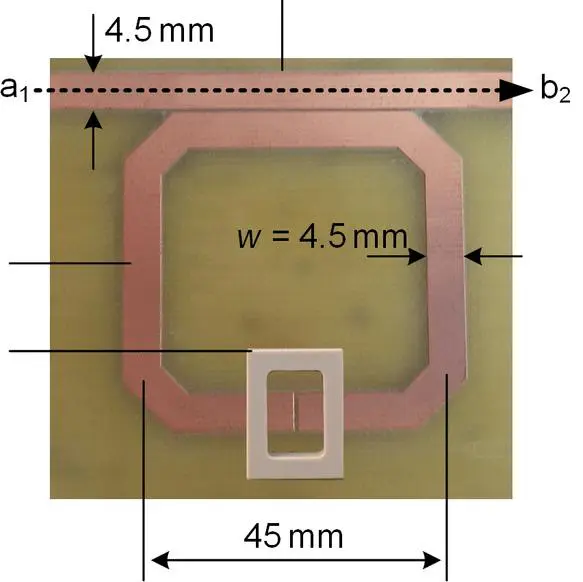
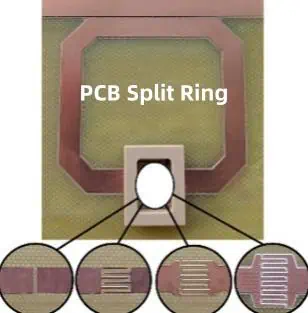
It consists of a rotor assembly containing conductive segments or poles isolated from each other by small gaps. Stationary brushes contact these rotating poles to transmit signals.

As the rotor turns, the brushes make sliding contact with each pole in sequence, allowing transmission in only one direction – from the rotating poles to the fixed brushes. The small gaps between the poles prevent reverse transmission or short circuiting between segments.

Diagram showing construction of a split ring.

Split rings are unidirectional and can only transmit signals in one direction – from rotor to stator. They are suitable for low power signals, and not for high power transfer.

Construction and Design

PCB Slip Ring Construction

PCB slip rings are constructed from rings etched on a printed circuit board, which allows compact construction and precise control of ring placement.

Key components of a PCB slip ring include:

  • Printed circuit board (FR4) that forms the stator, with conductive copper rings etched on one side.
  • Rotor containing metal brushes (copper, bronze, precious metals)
  • Insulating cover/housing enclosing the PCB and rotor assembly
  • Bearings allowing smooth rotation of rotor

The PCB is designed with the required number of concentric copper rings etched at precise intervals needed for circuit contacts. The rotor fits over the PCB and the brushes make sliding contact with the copper rings.

Cross section of a PCB slip ring showing copper rings and rotor brushes.

Advantages of PCB slip rings include compact size, easy manufacturing, precise control of tracks, and fast assembly.

Split Ring Construction

Split ring construction consists of a rotor containing segmented conductive poles separated by small air gaps. Common materials used include copper, brass or steel.

The rotor mounts on a bearing and is enclosed in a housing. Brushes are fixed to the stator housing and make sliding contact with the rotor poles.

As the rotor turns, the brushes consecutively connect with each rotor pole, allowing transmission from rotor to stator. The gaps between the poles prevent reverse transmission through the brushes.

Diagram of a split ring showing segmented rotor poles and fixed brushes.

Split rings provide unidirectional transmission and are suitable for intermittent signal contacts. Their simple construction allows low cost manufacturing.

Materials and Manufacturing

PCB Slip Ring Materials

PCB slip rings are manufactured from the following materials:

  • Printed Circuit Board (FR4) – Forms the stator containing the copper ring tracks. FR4 provides electrical insulation between rings.
  • Copper – Used to etch the conductive rings on the PCB. Provides excellent conductivity.
  • Precious metal brushes (gold, silver, palladium) – Used for contacting the copper rings due to high durability and low contact resistance.
  • Plastics like PTFE, PEEK – Used for casing and flange components. Provide mechanical stability.
  • Bearings – Allow smooth rotation and consist of steel balls/rollers with a plastic retainer.

The PCB fabrication process allows high precision patterning of ring tracks in different configurations. The brushes are designed for stable low-friction contact and minimal wear. High quality materials ensure reliability with prolonged use.

Split Ring Materials

Split rings use the following common materials:

  • Copper, brass or steel for the rotor segments. Copper provides the best conductivity.
  • Precious metal brushes (silver, gold) for low contact resistance and reduced oxidation.
  • Plastic housings like nylon, PTFE to enclose the rotor and provide insulation.
  • Bearings using steel balls/rollers to enable smooth rotor rotation.

Split rings use basic materials that provide stable performance at low cost. The materials offer reasonable durability with low friction contacts between the brushes and rotor segments.

Performance Characteristics

PCB Slip Ring Performance

PCB slip rings provide the following performance characteristics:

  • Number of circuits – Can support 10 to 100+ ring contacts for multiple circuits.
  • Current rating – Handle currents from a few mA to over 100 A. Gold brushes allow up to 500 A on each ring.
  • Voltage rating – Rated up to 1000V AC/DC for standard designs.
  • Speed – Standard rings allow rotational speeds up to 1000 rpm. High speed rings support above 5000 rpm.
  • Temperature range – Operate from -40ยฐC to +80ยฐC. Special designs work upto 250ยฐC.
  • Noise – Low noise of 10-50 mฮฉ allows transmission of sensitive signals.
  • Contact resistance – Brush contact resistance of 1-10 mฮฉ allows high power transfer.
  • Lifetime – Brush lifetime over 100 million rotations with precious metal contacts.
  • Isolation – Up to 1000V isolation between adjacent rings.

PCB manufacturing provides precise ring dimensions and spacing for reliable transmission of multiple power/data circuits.

Split Ring Performance

Split rings have the following typical performance ratings:

  • Current – Maximum current around 15-20A. Only suitable for low power signal transmission.
  • Voltage – Maximum voltage rating up to 60V DC.
  • Speed – Standard split rings rated for speeds up to 3000 rpm.
  • Poles – Typical number of poles is 6 to 20. More poles allow more brush contacts.
  • Temperature – Operating temperature range of -20ยฐC to +80ยฐC.
  • Noise – Prone to electrical noise due to brush arcing.
  • Contact resistance – Brush contact resistance around 50-100 mฮฉ. Higher than slip rings.
  • Wear – Brush wear out faster than slip rings due to arcing and higher contact resistance.
  • Lifetime – Brush lifetime around 25 million rotations. Less than slip rings.

Split rings are designed for unidirectional transmission of intermittent, low power signals. They offer lower performance than slip rings but at a lower cost.

Advantages and Disadvantages

PCB Slip Ring Advantages

PCB slip rings provide the following benefits:

  • Compact size due to PCB manufacturing
  • Precise control and spacing of ring circuits
  • Low and stable brush contact resistance
  • Low electrical noise for reliable signal transmission
  • High current and voltage capacity
  • High rotational speeds capability
  • Long service life with minimal wear
  • Bi-directional transmission through rings
  • Easy integration and installation
  • Suitable for data and power transfer

PCB technology enables fabrication of small, high performance slip rings with multiple circuit capacity.

PCB Slip Ring Disadvantages

Some disadvantages of PCB slip rings include:

  • More complex manufacturing process
  • Higher cost than basic slip rings
  • Larger minimum diameter required for ring spacing
  • Not easy to repair or replace brushes
  • Precious metal brushes can be expensive
  • Requires smooth rotor shaft and precision assembly

While PCB slip rings provide superior performance, they also have higher costs and complexity than basic slip ring types.

Split Ring Advantages

Split rings offer the following benefits:

  • Simple and low cost construction
  • Compact, lightweight design
  • High speed operation easily achievable
  • Low friction provides smooth running
  • Only basic tools needed for manufacturing
  • Easy to repair and replace brushes
  • No need for special materials or complex production

The simple design of split rings allows them to be manufactured cheaply and used easily in applications requiring only low power transmission.

Split Ring Disadvantages

Some limitations of split rings include:

  • Only allow unidirectional transmission
  • Prone to electrical noise and interference
  • Low power and voltage capacity
  • Limited number of brush contacts
  • Short service life due to brush wear
  • Cannot transmit high speed data or multiple signals
  • Contact resistance is higher than slip rings
  • Not suitable for continuous power transfer

Split rings are not capable of the bi-directional, high power and data transmission possible with slip rings. Their design and materials impose limits on performance.

Typical Applications

PCB Slip Ring Applications

Some common applications of PCB slip rings include:

  • Industrial machinery – To transmit control and telemetry data between stationary controls and rotating machinery.
  • Medical equipment – MRI machines, CT scanners, etc. use slip rings to transfer signals/power.
  • Avionics – Used in radar systems, control surfaces, weapon turrets that must rotate continuously.
  • Robots – For transferring signals between robot base and rotating joints or platform.
  • Amusement rides – Used on rotating food trays, lighting rings and ride platforms.
  • Wind turbines – Allow power transfer from rotating turbine hub to stationary conductors.
  • CCTV cameras – Enable continuous video feed transmission from pan-tilt security cameras.

PCB slip rings are used anywhere continuous, bi-directional transmission under rotation is needed. Their compact size and high performance allow integration into complex systems.

Split Ring Applications

Typical applications of split rings include:

  • Low voltage electric motors – For periodic power transmission to rotor coils.
  • Automotive systems – Used in sliding door connectors, seat and mirror controls.
  • Rotating displays – For transmitting display data from stationary controllers to rotating signboards.
  • Assembly machinery – Allow power and control signals to rotating tool heads and positioners.
  • Material handling – Used on continuously rotating conveyors and sorters for sensor signals.

Split rings are suitable for cost-sensitive, unidirectional transmission applications that only require low power or occasional contacts.

Main Differences Between Slip Rings and Split Rings

ParameterPCB Slip RingsSplit Rings
ConstructionCopper rings etched on PCB. Precious metal brushes.Segmented rotor poles separated by gaps. Metal graphite brushes.
TransmissionBi-directional – Signals can pass in either direction.Unidirectional – Transmission only from rotor to stator.
Power ratingUp to 100s of Amps, 1000s of Volts.Less than 20A, under 60V.
SpeedUp to 5000 rpm for standard rings. High speed rings even higher.Around 3000 rpm max speed.
NoiseVery low electrical noise. Suited for sensitive data.Prone to electrical noise due to arcing.
Contacts10 to 100+ separate isolated contacts.Typically 6 to 20 contacts.
Resistance1-10 mฮฉ brush contact resistance.50-100 mฮฉ typical contact resistance.
Service life100 million rotations or more.Around 25 million rotations max.
CostHigher cost due to advanced materials and production.Low cost because of simple construction.
ApplicationsIndustrial, medical, military, robotics. For high speed data, video, power transmission.Low power motors, basic machinery, intermittent signals.

Conclusion

PCB slip rings and split rings both allow transmission across rotating interfaces, but have major differences in their design, capabilities and applications.

Key Points:

  • PCB slip rings use precise etched copper rings to enable bi-directional, low noise transmission of multiple power and data circuits simultaneously.
  • Split rings consist of an insulated rotor with segmented contacts, allowing only unidirectional, intermittent signal transmission.
  • Slip rings handle high speeds, power, voltages and lifetimes. Split rings are limited to low power signals and shorter lifetimes.
  • PCB manufacturing provides slip rings with small sizes but higher cost. Split rings have simple construction but lower performance.
  • Slip rings are used where high speed rotation and reliable transmission are needed. Split rings find use in cost-sensitive applications requiring only simple unidirectional contacts.

In summary, PCB slip rings are the preferred choice wherever continuous, reliable transmission of power and high-speed data in both directions is required – such as in precision industrial machinery, robotics, medical systems and military applications. Split rings are suitable for basic low cost systems involving only simple unidirectional signal contacts, like low voltage motors, basic automated systems and rotating displays.

How To Solder And Desolder Header Pins On PCB ?

Header pins are versatile through-hole components used to make removable connections between printed circuit boards (PCBs) and wires or cables. They allow boards to be interconnected or provide test points for diagnostics. Soldering headers securely is essential for reliability. Desoldering damaged headers then allows replacement. This article provides best practices on hand soldering and desoldering header pins to achieve robust, reproducible connections.

Header Pin Overview

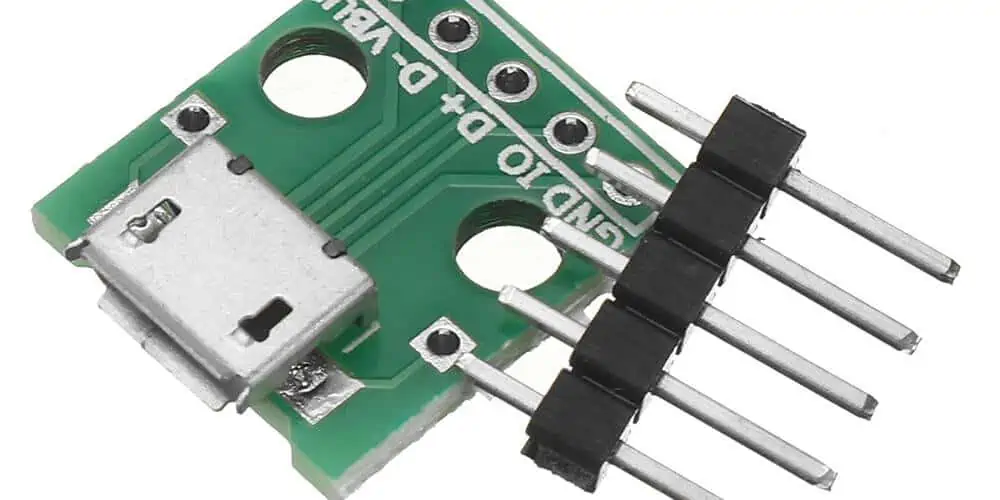
Headers come in single, double, and multi-row configurations up to 50 pins or more. Common header types:

  • Male pin headers
  • Female socket headers
  • Straight and right-angle versions
  • Single and double row
  • Through-hole and surface mount styles
  • Common pins sizes from 0.6mm to 1.27mm diameter

Headers are manufactured from tin-plated copper alloy leads inserted into a supporting plastic body. The plastic provides insulation between pins.

Soldering Header Pins

YouTube video

Follow these steps to hand solder headers to a PCB:

1. Prepare the Header Pins

  • Check the header fits into the PCB holes without forcing. Reject if pins are bent or defective.
  • Pre-tinning the header pins can improve solder flow but is not required if using rosin-core solder.
  • For high temperature solders (over 275ยฐC), pre-tinning may be needed to prevent damaging the plastic.
  • Flux paste can be applied to pins and pads to aid solder flow.

2. Prepare the Board

  • Clean any oils, contamination, or oxides from the header pads using isopropyl alcohol.
  • Inspect pads under magnification to ensure there are no solder mask issues or open circuits.
  • Apply solder paste to pads if not using rosin-core wire solder. Match paste alloy to wire alloy.
  • Place the PCB on an ESD-safe work surface and secure with clamps or vise.

3. Insert the Header

  • Carefully insert the header into the mating PCB holes without bending pins.
  • Position the plastic snugly against the board surface.
  • Ensure the header sits straight and flat against the board.
  • Visual alignment marks aid placement for polarized headers.

4. Tack Solder Each Pin

  • Use a small, clean soldering tip suited to the pin pitch. Conical tips work well.
  • Set iron temperature for the solder alloy used. 300-375ยฐC is typical.
  • Lightly tack one pin on each end first to temporarily hold the header in place.
  • Solder remaining pins on one side with 1-2s heat per joint. Avoid bridging between pins.
  • Flux reduces bridging risks. Clean tip frequently.
  • Inspect each joint under magnification after soldering. Reflow if needed.
5. Finish Soldering

  • Solder remaining pins on the opposite side of the header using the same technique.
  • Recheck all pins for full fillets, no bridges, and straight alignment.
  • If pins shift during soldering, reheat and realign.
  • Clean flux residues if needed with isopropyl alcohol.

6. Post Solder Inspection

  • Use an inspection microscope to carefully check each joint around the entire header.
  • Reflow and resolder any joints with insufficient wetting, voids, or other defects.
  • Confirm there are no solder bridges between adjacent pins.
  • Headers should remain fully aligned without tilting or raising from the board.

Following this systematic soldering process will produce reliable, trouble-free header connections.

Desoldering Header Pins

Desoldering may be needed to replace a damaged header or change the configuration. Use the following process to safely desolder headers:

1. Clean Header Joints

  • Remove any conformal coating from the header area using alcohol or coating stripper.
  • Thoroughly clean solder joints of contaminants with degreaser. Flux remover can also be used.

2. Pre-Heat the Header

  • Set the soldering iron tip temperature to ~350ยฐC.
  • Apply heat simultaneously to the header plastic and a few pin joints.
  • Gradually increase temperature to avoid damaging plastic.
  • Heat both sides of header to evenly pre-heat all joints.

3. Desolder Each Joint

  • Using a narrow conical desoldering tip, apply heat to melt each solder joint.
  • Simultaneously use a desoldering pump or wick to remove the liquefied solder.
  • Take care not to apply excess force that may lift pads or damage plated-through holes.
  • Desolder one side of header completely before moving to the other side.

4. Remove the Header

  • Once both sides are fully desoldered, the header will detach easily from the board.
  • Elevate pins on each end alternately to gradually walk the header free.
  • If a short stub remains in a plated hole, use a desoldering tip to remove it.
  • Do not force or pound on the header which can damage the board.

5. Clean and Inspect

  • With header removed, thoroughly clean solder residue from pads using wick, pump, or cleaning solution.
  • Inspect each pad under magnification to ensure there are no lifted or damaged pads or holes.
  • Alcohol cleaning and mild abrasion can remove stubborn residues.

The board is now ready for a new replacement header to be soldered in place.

Hand Soldering Technique

Follow these techniques to hand solder headers successfully:

  • Use a temperature controlled iron or station for consistency.
  • Match tip size to pin pitch to minimize bridging.
  • Tinned copper tips transfer heat efficiently over untinned alloy tips.
  • Apply the minimum heat needed to reflow the joint to avoid damaging plastic or PCB.
  • Keep the soldering iron clean and tinned. Wipe frequently on a damp sponge.
  • Quality no-clean flux cores promote excellent solder flow and wetting.
  • Inspect every joint thoroughly under magnification after soldering.
  • Adjust process based on results – more heat, flux, or time if needed.

Good hand soldering skills take practice but are essential for quality PCB production.

Troubleshooting Guide

Problem: Solder bridges between pins

Solution: Use smaller tip, lower heat, less solder, and flux to prevent bridges. Inspect closely and clean any bridges with braid.

Problem: Cold solder joints

Solution: Increase heat or time to properly reflow joint. Flux and pre-tinning also helps. Rework unsoldered joints.

Problem: Pins lifting pads or shifting

Solution: Avoid putting lateral stress on pins during soldering. Remove and realign crooked pins.

Problem: Solder not wetting to pin

Solution: The pad or pin may be oxidized. Clean and reapply flux before resoldering.
Problem: Cracked or damaged plastic

Solution: Reduce soldering temperature and pre-heat plastic before soldering to avoid thermal shock.

Problem: Desoldering damage

Solution: Carefully pre-heat before desoldering, and never force or pound on the header which can damage the board.

Process Control

Consistent Quality

  • Use written procedures for hand soldering
  • Train operators on process requirements
  • Audit workmanship frequently under microscope
  • Document all process parameters

Traceability

  • Record solder wire and flux batch used
  • Track oven profiles and iron tip temperatures
  • Link parameters to individual boards and lots

Data-Driven Control

  • Log any defects discovered
  • Analyze defects for root cause
  • Optimize parameters to reduce defects

Controlling the soldering process improves yields, lowers rework, and ensures consistent header connections.

Frequently Asked Questions

What is the most common header pin diameter?

The most widely used diameter is 0.6 mm which offers ease of soldering while supporting a variety of wire gauges. 1.27 mm is also popular for high current applications.

Is it always necessary to pre-tin header pins?

Pre-tinning can help solder flow but is not essential if using a rosin-core solder and proper technique. It may be needed for solder alloys requiring higher temperatures.

What causes header pins to become crooked during soldering?

Applying uneven lateral stress, improper hole clearances, misaligned pins, or poor solder joints can all cause pins to shift out of alignment during soldering.
Can solder flux damage a PCB?

Yes, acidic flux can corrode copper pads and traces if not cleaned after soldering. Use no-clean flux designed for electronics. Clean any pastes or residue after soldering.
What is the benefit of breadboarding a header first?

Breadboarding allows checking the header fits and functions properly before permanent soldering. Doing so avoids potential rework if issues are found.

Conclusion

Soldering header pins onto PCBs requires following good hand soldering practices. Using the proper techniques and controls for heating, wetting, fluxing, and pin alignment minimizes defects like bridges and tombstoning. Similarly, careful desoldering prevents damage to the board. Consistent quality soldering produces durable, reliable header connections able to withstand vibration, shock, and repeated mating cycles over the product lifetime.
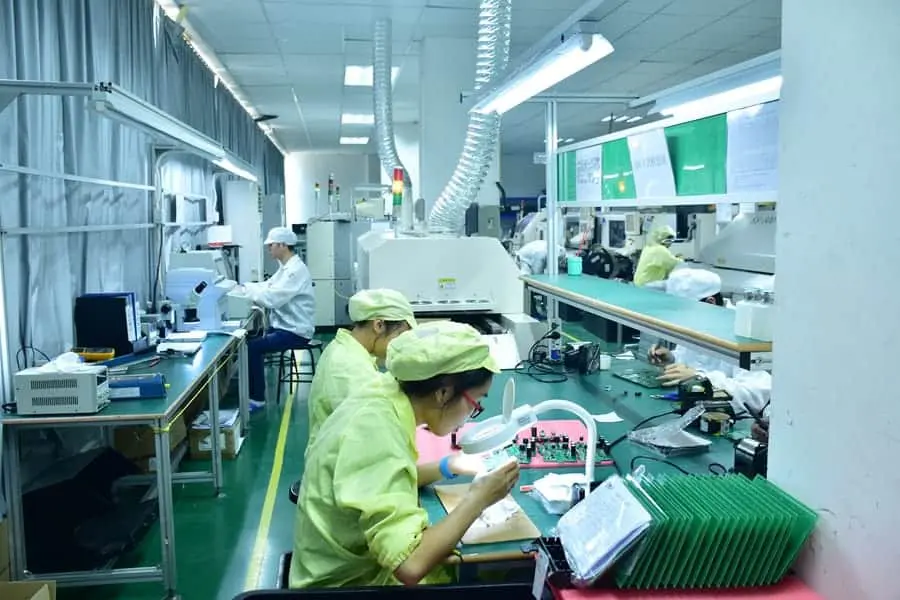
PCB Solutions: Design, Manufacturing, Assembly, Testing

Printed circuit boards (PCBs) are core components in nearly all modern electronic devices. Developing a successful PCB solution requires expertise across the entire process from initial design through volume production. This article provides a comprehensive overview of end-to-end PCB solutions encompassing design, layout, fabrication, assembly, test, and finally deployment into products. It covers key considerations and options at each stage to deliver a robust, high-quality PCB ready for integration.

PCB Design

The design phase transforms electrical requirements into physical board layout and documentation.

Schematic Capture

A schematic editor is used to diagram the circuit connections between components. This schematic drives layout and manufacture.

  • Capture all connections and nets
  • Follow schematic conventions for readability
  • Manage component library

Simulation and Verification

Simulate circuit performance to verify functionality before layout:

  • Analog/digital circuit simulation
  • RF/signal integrity analysis
  • Thermal modeling
  • Mechanical stress simulation

Layout

Transfer the schematic into board geometry within a PCB layout tool:

  • Place components and route connections
  • Ensure design manufacturability
  • Manage board layers and stackup
  • Produce manufacturing Gerber files

Design for Manufacturing (DFM)

Apply DFM practices to ensure the design can be successfully manufactured:

  • Follow fabrication capabilities
  • Allow tolerances for alignment
  • Enable testability
  • Facilitate assembly

Documentation

Generate drawings, models, specs, and notes for fabrication and assembly:

  • Component list (bill of materials)
  • Assembly drawings
  • 2D/3D models
  • Fabrication callouts
  • Impedance requirements
  • Board stackup

Thorough documentation prevents errors and minimizes ambiguity for PCB production.

PCB Fabrication

Fabricating the designed PCB involves complex processes.

Selecting a Fabricator

Choose a fabrication partner able to meet:

  • Technology requirements (layer count, density, line width)
  • Quality and reliability standards
  • Volume capabilities
  • Cost targets
  • Lead time needs

Fabrication Process

Typical PCB manufacturing steps:

  • Laminating – Building up board layer structure
  • Drilling – Creating holes for vias and components
  • Plating – Electroplating copper on hole walls
  • Etching – Removing copper to form traces
  • Solder mask – Applying protective coating
  • Silkscreen – Printing informational labels
  • Finishing – Edge treatments and surface plating
  • Electrical test – Validating continuity
  • Quality inspection – Verifying specifications are met

Testing and Inspection

Ensure fabricated boards are defect-free through:

  • Automated optical inspection (AOI)
  • X-ray inspection
  • Electrical testing
  • Impedance testing
  • Solderability testing

Documentation

  • Generate fabrication drawings
  • Supply bill of materials
  • Provide assembly instructions
  • Include any special notes or handling requirements

PCB Assembly

through-hole assembly process

Populating fabricated boards with components requires advanced manufacturing.

Selecting an Assembler

Determine an assembly partner meeting:

  • Technology capabilities
  • Quality and reliability needs
  • Volume capacity
  • Cost targets
  • Supply chain resource

Assembly Processes

Common assembly steps include:

  • Solder paste printing – Apply solder paste pads
  • Component placement – Mount parts on paste pads
  • Reflow soldering – Heat boards to form solder joints
  • Through-hole insertion – Add through-hole components
  • Wave soldering – Solder bottom-side pads
  • Conformal coating – Protect boards from environmental exposure
  • Cleaning – Remove flux residues

Automated Assembly

Use automated pick-and-place and soldering for:

  • Higher throughput
  • Improved consistency
  • Lower costs at volume
  • Small component handling

Testing and Inspection

Verify assembly quality and component placement:

  • In-circuit test (ICT)
  • Functional test
  • X-ray inspection
  • Optical inspection

Documentation

Supply assembly partner with:

  • Bill of materials
  • Centroid files for pick-and-place
  • Soldering profiles
  • Test requirements
  • Acceptance criteria

Test and Verification

Confirm boards function properly before deployment.

Design Verification Testing

Validate the design meets all electrical performance requirements:

  • Functionality testing
  • Parametric limits testing
  • Margins testing
  • Environmental stress testing

Production Testing

Check each production board for defects and consistency:

  • In-circuit test (ICT)
  • Flying probe
  • Boundary scan
  • Functional test

Debug and Diagnostics

Troubleshoot any faults or issues found:

  • Failure analysis
  • X-ray and thermal imaging
  • Signal probing
  • Optical inspection

Testing at multiple stages catches defects early and ensures quality.

Documentation

Maintain records of:

  • Test procedures
  • Test reports
  • Debug logs
  • Failure analysis reports
  • Corrective actions

Deployment

Deploy boards into final products and maintain through lifetime.

Integration and Installation

Prepare boards for system integration:

  • Program firmware/software
  • Configure settings
  • Burn-in to stabilize components
  • Final inspection

Qualification Testing

Validate performance meets system requirements:

  • Long term reliability testing
  • Thermal cycling
  • Vibration and shock exposure
  • Lifetime testing

Maintenance and Support

Provide continuity of supply and repair:

  • Monitor for emerging defects
  • Component obsolescence mitigation
  • Repair capabilities
  • Replacement part stocking

Documentation

  • As-built configuration documentation
  • Maintenance procedures and repair manuals
  • Lifetime warranties
  • Application notes

Conclusion

Delivering complete PCB solutions requires expertise spanning design, fabrication, assembly, test, and lifetime maintenance. Choosing the right partners and processes at each stage results in a ruggedized PCB ready for integration into products. A holistic approach reduces risk and total cost while accelerating time-to-market.

Frequently Asked Questions

What are the main steps in the PCB development process?

The core PCB development steps are:

  1. Design – schematic capture, layout, documentation
  2. Fabrication – producing bare boards
  3. Assembly – soldering components onto boards
  4. Test – validating board function and quality
  5. Deployment – integrating into products and systems

What are key design for manufacturing guidelines?

Some key DFM guidelines are:

  • Allowing adequate tolerances
  • Following manufacturer design rules
  • Incorporating testability features
  • Facilitating assembly and inspection
  • Standardizing components and footprints

What fabrication steps create the PCB trace layers?

The combination of laminating copper foil, drilling holes, electroplating copper, and chemical etching produces the patterned copper traces comprising the PCB layers.

What are some common PCB assembly process defects?

Typical assembly defects include:

  • Missing or incorrect components
  • Solder shorts
  • Insufficient solder
  • Solder balls
  • Damaged pads/traces
  • Board warp/twist

When is automated optical inspection (AOI) used?

AOI machines quickly scan assembled PCBs to identify defects like missing components, poor solder joints, or misalignments. It provides fast in-line inspection.

What is PCB Standards?

Printed circuit boards (PCBs) are at the heart of electronics, providing the foundation for mounting and interconnecting electronic components using conductive copper traces. PCBs come in an endless combination of materials, sizes, layer counts and complexities to suit diverse applications.

To ensure quality, consistency and compatibility across the electronics hardware ecosystem, PCB fabrication and assembly adheres to a set of well-defined industry standards. PCB standards provide specifications and guidelines governing vital aspects of materials, design, manufacturing and testing.

This article provides an overview of key PCB standards bodies, the purpose of PCB standards, design rule principles, fab and assembly process standards, and testing/inspection norms relevant for PCB production.

PCB Standards Bodies

PCB IPC standards

PCB standards are developed and published by professional organizations who aim to promote best practices and unified norms across the industry. The most notable standards bodies include:

  • IPCย – Association Connecting Electronics Industries
  • IEEE – Institute of Electrical and Electronics Engineers
  • IEC – International Electrotechnical Commission
  • JEDEC – JEDEC Solid State Technology Association
  • ANSI – American National Standards Institute
  • DIN – Deutsche Institut fรผr Normung (German Institute for Standardization)
  • JIS – Japanese Industrial Standards Committee

These entities collaborate with PCB manufacturers, electronics companies and government agencies to evolve standards addressing emerging needs. IPC and IEEE standards dominate the PCB industry.

Some standards are globally adopted, while others are more regional. However, common foundational principles run through most significant PCB standards.

Importance of PCB Standards

Well-defined PCB standards provide a variety of benefits:

  • Quality – Standards ensure consistency in materials and processes. This improves manufacturing quality.
  • Compatibility – Common design norms allow PCBs from different vendors to interoperate.
  • Interchangeability – Standard components and features enable interchangeability.
  • Reliability – Adhering to accepted test procedures improves field reliability.
  • Safety – Standards for insulation resistance minimize electrical hazards.
  • Communication – Standards like documentation symbols facilitate communication.
  • Innovation – Standards free up development resources to focus on innovation rather than basics.
  • Cost savings – Economies of scale lower costs when following standards.
  • Regulations – Standards help the industry conform to environmental regulations.
  • Global trade – Universal standards enable global import/export of PCBs and electronics hardware.

In essence, standards aim to maximize quality, reliability and productivity across the industry.

PCB Design Standards

PCB design standards establish norms for:

  • Materials – Specifications for substrate (fiberglass, ceramic etc.) thickness, copper weight, dielectric constants, etc.
  • Layers – Guidelines for number of conductive layers, copper thickness per layer, clearance between layers, etc.
  • Dimensions – Standard PCB sizes like 160mm x 100mm, 233mm x 160mm, or custom max dimensions.
  • Line Width/Spacing – Minimum trace width and spacing between traces based on voltage.
  • Via Styles – Types of plated through hole vias – thru hole, blind, buried, microvia – and their dimensions.
  • Clearances – Minimum electrical clearance between pads, tracks, holes and board edge.
  • Finishes – Recommended surface finishes like HASL, immersion silver, ENIG (Electroless Nickel Immersion Gold), etc.
  • Coatings – Specifications for solder mask, silkscreen and other protective coatings.
  • Markings – Board identifier nomenclature, date codes, revision numbering and other marking guidelines.
  • Documentation – Recommended formats for schematics, assembly drawings, fabrication drawings.

These fundamental standards allow PCBs to support components, connectors and technologies reliably. They promote manufacturability across different vendors.

Design Rules in PCB Standards

PCB design standards outline constraints known as design rules which specify acceptable limits for parameters like tracks, holes, spaces, masks, laminates, etc.

Design rules aim to ensure:

  • PCBs can be reliably manufactured using available fabrication processes
  • Completed PCBs work properly without faults or performance issues
  • Designs meet safety needs of the end product

Some key PCB design rules cover:

  • Minimum hole size for through hole components
  • Minimum annular ring for holes
  • Minimum spacing between copper elements
  • Minimum track width and clearance
  • Mask expansion margins from pads
  • Silkscreen keepout areas around pads

Tool-specific design rules:

  • Trace impedance requirements
  • High speed length matching constraints
  • Plane connection requirements
  • Specific pad shapes needed
  • Allowed via types

Complex rules help maintain signal integrity, high speed performance and reliability. PCB design tools automatically check rules. Waiving certain rules is possible through review and testing.

PCB Fabrication Standards

standard 4 layer stackup

PCB fabrication standards ensure consistency in materials, quality and reliability across PCB manufacturing processes like:

  • Lamination – Number of high pressure presses, temperature profiles, global vs local lamination.
  • Drilling – Hole position accuracy, hole wall quality, drill bit sizes and wear.
  • Via Formation – Copper plating thickness inside plated through holes and vias.
  • Outer Layers – Copper thickness, foil types, dimensional accuracy, registration.
  • Inner Layers – Alignment between layers, lamination adhesion, bond enhancers.
  • Coatings Application – Photoresist, solder mask, legend ink curing and adhesion.
  • Metallic Finishes – Thickness and properties of ENIG, immersion tin, other platings.
  • Electrical Test – Continuity testing, open/short detection, netlist verification.
  • Impedance Control – Methods for controlled impedance tracks.
  • Hole Wall Quality – Standards for desmear, etchback, hole wall roughness.
  • Panelization – Board depaneling, breakaway tab designs.

These manufacturing standards enable producing the designed PCB reliably in high volumes across vendor facilities.

PCB Assembly Standards

SMT QC
SMT QC

PCB assembly standards cover prototyping, low volume and mass production assembly of components on fabricated boards:

  • Soldering – Methods like wave, reflow, manual; solder types; solder bath maintenance.
  • Component Handling – ESD (electrostatic discharge) protection, moisture sensitivity procedures, baking.
  • Inspection – Automated optical inspection (AOI) capabilities and limitations.
  • Test – In-circuit test coverage; fixture design; diagnostics.
  • Coatings Application – Conformal coating material specs, coverage criteria, process control.
  • Rework – Conditions warranting rework; manual repair techniques; reballing/replating guidelines.
  • Cleaning – Removal of post-solder flux; solvents and methods.
  • Marking – Component orientation indicators; serial numbers; ink durability.
  • Packaging – ESD bags, desiccants, box styles, humidity indicators, drop test requirements.

Assembly standards maximize throughput yields and long term product reliability.

PCB Testing Standards

Rigorous testing to accepted standards ensures PCBs function as designed:

Materials Testing

  • Glass transition temperature
  • Coefficient of thermal expansion
  • Thermal conductivity
  • Flammability rating
  • Water absorption
  • Flexural strength
  • Bond strengths
  • Dielectric breakdown voltage
  • Surface insulation resistance

Electrical Testing

  • Continuity testing
  • Insulation resistance
  • High voltage testing
  • Impedance testing
  • Propagation delay
  • Signal integrity

Mechanical Testing

  • Vibration testing
  • Shock/drop testing
  • Bend testing
  • Solderability testing
  • Coating adhesion testing

Environmental Testing

  • Thermal cycling
  • Temperature/humidity cycling
  • Salt spray exposure
  • Life testing
  • HASS (highly accelerated stress screen)

Testing to these standards verifies the board can survive real-world operating conditions while maintaining electrical performance.

Documentation Standards

Clear documentation is vital for PCB fabrication and assembly. Relevant documentation standards cover:

  • Schematics – Symbol conventions; layout; netlist format; part numbering.
  • PCB Layout Drawings – Dimensioning format; fabrication layer notes; drills table.
  • Bill of Materials – Approved manufacturer names; component grouping; descriptions.
  • Assembly Drawings – Reference designators; allowable substitutions; callouts.
  • Gerber Files – File naming; format; layer assignments; attributes.
  • Netlist – Netlist format; connection ordering; component designators.
  • Fabrication Specification – Material requirements; acceptance criteria; IPC class.
  • Assembly Specification – Approved assembly processes; inspection criteria; test requirements.
  • Impedance Calculations – Supported tools and formats for controlled impedance reporting.

Standardizing documentation facilitates handoff between design, fabrication and assembly firms. Machine readable data speeds production.

Conclusion

PCB Quality control
PCB Quality control

PCB standards empower quality, scale and technological innovation across the electronics hardware industry. They balance practical manufacturing capabilities with optimizing performance, reliability and cost efficiency.

Knowledge of the most commonly applied standards helps engineers architect designs tailored for manufacturability and commercial success. As PCB technology progresses to integrate new materials and fabrication techniques, standards will co-evolve to incorporate emerging best practices.

Careful application of PCB standards, combined with strategic customization when justified, results in electronics products delivering robust functionality within budgetary constraints. This maximizes return on investment in PCB technology for enabling cutting edge products.

Frequently Asked Questions

Q1: Who establishes official PCB standards?

A1: Professional organizations like IPC, IEEE, JEDEC and IEC develop de facto standards widely adopted across the global PCB industry and supply chain. Regional groups like ANSI, DIN also publish standards.

Q2: How are PCB standards enforced?

A2: PCB standards are voluntary technical specifications. Market forces incentivize adhering to standards to enable compatibility, quality and reliability. Some performance and safety related standards are mandated by regulations.

Q3: Can I custom design a PCB violating standards?

A3: Specific standards may be judiciously waived after careful analysis confirms the design works correctly. Deviating from key electrical and physical design rules risks functionality flaws or manufacturing failures.

Q4: How frequently are PCB standards updated?

A4: PCB standards are updated every 2 to 5 years on average to incorporate technology advancements and new best practices. Changes aim to balance innovation with minimizng retooling costs.

Q5: Where can I find resources explaining PCB standards?

A5: IPC and IEEE provide technical PCB standards resources on their websites. Many are available for free download. PCB tool vendor documentation also explains implementing relevant standards.

What are PCB standoffs for๏ผš Standard Size, Uses and Placement

Printed circuit boards (PCBs) form the core foundation of electronics products by electrically interconnecting components using copper traces on an insulating substrate. PCBs need to be physically secured and separated from external surfaces for proper functioning. PCB standoffs play a vital mechanical role in providing secure mounting and spacing for circuit boards in electronic enclosures and assemblies.

This article provides a comprehensive overview of PCB standoffs covering their definition, key sizes, common uses, optimal placement considerations and installation best practices.

What are PCB Standoffs?

PCB standoffs, also called board spacers, are simple mechanical parts used to mount printed circuit boards and space them at a fixed distance from other surfaces.

They consist of a male and female end. The male end has threads that screw into a tapped hole in the enclosure or chassis. The female end has threads to accept a screw and secure the PCB. This creates separation between the PCB underside and the mounting surface.

PCB standoffs are always used in combination with compatible screws to affix the board. They are made from rigid, durable materials like nylon, brass, aluminum etc. Insulating plastic standoffs prevent electrical shorts.

Key properties and functions of PCB standoffs include:

  • Provide secure physical mounting for PCBs
  • Separate PCB from enclosure or other boards
  • Create space for components on back of PCB
  • Promote airflow and cooling under PCB
  • Prevent short circuits to chassis
  • Absorb vibration and shock
  • Allow washers, spacers etc. to adjust height
  • Reusable across multiple designs
  • Customizable length to suit needs

PCB standoffs are inexpensive, readily available and easy to install. They enable quick prototyping and revisions by allowing boards to be detached and remounted quickly. Multiple standoffs distribute mechanical load evenly across the PCB.

Standard Sizes of PCB Standoffs

PCB standoffs are manufactured in a range of standard sizes described by the stud diameter and length. Common imperial and metric sizes include:

Imperial Standoffs

Stud DiameterCommon Lengths
#4-401/4″, 3/8″, 1/2″, 3/4″, 1″
#6-321/4″, 3/8″, 1/2″, 3/4″, 1″
#8-321/4″, 3/8″, 1/2″, 5/8″, 3/4″, 1″, 1-1/4″
1/4″-201/4″, 3/8″, 1/2″, 5/8″, 3/4″, 1″

Metric Standoffs

Stud DiameterCommon Lengths
M35mm, 10mm, 12mm, 15mm, 20mm, 25mm, 30mm
M45mm, 12mm, 15mm, 20mm, 25mm, 30mm
M55mm, 10mm, 12mm, 15mm, 20mm, 25mm

Standoff lengths between 1/4″ to 1″ are typical for most applications. Longer standoffs are used when increased spacing is needed. Metric standoffs follow ISO standards for thread dimensions.

Standoffs often have a combination of male and female threads in imperial or metric sizes. Standard thread sizes ensure compatibility with common screws and maximize sourcing flexibility.

Uses of PCB Standoffs

PCB standoffs serve many important functions across a wide range of electronic equipment:

Electronic Enclosures

  • Mounting PCBs securely inside metal or plastic enclosures
  • Providing insulation and preventing electrical shorts
  • Allowing access to underside components
  • Permitting washers for height adjustment

Stacked PCB Assemblies

  • Separating stacked circuit boards
  • Maintaining spacing between boards
  • Allowing inter-board connectors

Carriers and Frames

  • Mounting PCBs in slide-in racks and carriers
  • Securing boards into chassis frames
  • Absorbing vibration and shock

Development Platforms

  • Prototyping circuits with easy installation
  • Revising PCBs by remounting quickly
  • Customizing height as needed

Thermal Solutions

  • Providing airflow gap below board
  • Improving convection cooling
  • Allowing heat sinks and cold plates

High Frequency Circuits

Test Fixtures

  • Securing PCBs to test jigs
  • Allowing probe access for testing

PCB standoffs are ubiquitous in electronic products thanks to their versatility, simplicity and low cost. They enable quick design iterations, shielding, cooling, stacking, production testing and much more.

PCB Standoff Placement Guidelines

Proper placement of standoffs is key to maximizing their mechanical benefits for the PCB. Here are some best practice guidelines for standoff placement on PCBs:

  • Near board edges – Standoffs should be close to board corners and edges for stability.
  • Distributed evenly – Spread standoffs uniformly to avoid stress concentrations.
  • On stronger layers – Attach standoffs to thicker, inner board layers for sturdiness.
  • Away from components – Keep standoffs clear of tall components on the backside.
  • Along expansion slots – Use standoffs adjacent to board slots for structural support.
  • Around connectors – Standoffs help relieve connector strain on the PCB.
  • On both sides – When possible, add standoffs on both sides for maximum holding strength.
  • Following enclosure mounts – Match PCB standoff locations to existing enclosure mounts.
  • Considering thermal impacts – Ensure standoffs don’t block airflow paths to heat generating components.
  • Facilitating test access – Position standoffs to enable easy probe access during testing.
  • Allowing service access – Don’t cover debug ports, jumpers and other accessed features.
  • Checking manufacturer guidelines – Follow PCB manufacturer’s guidelines for mechanical support.

Careful standoff placement safeguards PCB integrity through the product’s lifecycle. Slight adjustments enable tuning board performance and accessibility.

PCB Standoff Installation Process

Installing PCB standoffs involves simple steps but needs care to avoid damaging boards or components:

Step 1: Mark Holes

  • Mark desired standoff locations on PCB topside.
  • Select points following placement guidelines.
  • Account for nearby components and features.

Step 2: Drill Holes

  • Use small pilot drill for initial hole.
  • Open up hole to suit standoff diameter.
  • Drill slowly through PCB to avoid cracking.

Step 3: Countersink Holes (optional)

  • Countersink larger holes on component side.
  • Provides flat surface for screw heads.
  • Reduces risk of damage to components.

Step 4: Secure Standoffs

  • Screw male threaded end of standoff into mounting surface.
  • Tighten adequately but avoid over torqueing.
  • Use thread locker for permanent installs.

Step 5: Install PCB

  • Align PCB holes with protruding standoffs.
  • Add washers or spacers if needed.
  • Attach board using screws into standoff female ends.

The installation process can be done manually or integrated into an automated PCB assembly line. Proper torque control and dimensional tolerances are vital for reliability.

Assembly Considerations

Some additional considerations for PCB standoff assembly include:

  • Flat washers – Use flat washers under screw heads to prevent damage to traces. Nylon washers minimize shorts.
  • Shoulder washers – Shoulder washers provide a hard stop, preventing overtightening.
  • Spacers – Additional spacers or standoffs stacks allow adjusting board spacing.
  • Access windows – Cutouts in PCBs can allow accessing standoff screws for easier assembly.
  • Thread locker – Apply thread locking fluid for permanent or vibration-resistant installation.
  • Torque control – Controlled torque screwdrivers avoid overtightening damage during automated assembly.
  • Board support – Support the area around the standoff when screwing in or out to prevent board warping.
  • Repeated assembly – Use new or fresh hardware when re-installing boards to avoid wear and loosening.

Proper techniques and compatible hardware keeps PCB standoffs serving reliably over years of use and rework.

PCB Standoff Materials

PCB standoffs are constructed using materials that balance mechanical stability, electrical insulation and cost:

  • Nylon – Most common material. Offers good strength and insulation at low cost. Available in natural and black colors.
  • Polycarbonate – Provides very high strength but costs more than nylon. Translucent material.
  • Aluminum – Anodized aluminum has excellent mechanical rigidity. Must be insulated from PCB.
  • Brass – Brass standoffs have high stability though not as strong as steel. Corrosion resistant nickel plating is applied.
  • Stainless steel – Very robust but typically avoided due to electrical conductivity without insulation.
  • PEEK – Advanced high-temperature thermoplastic with excellent mechanical and electrical properties. Cost is high.

Nylon provides the best combination of cost, strength, stiffness and insulation for most applications. Other materials offer enhanced specific properties where needed.

Standoff Design Elements

Besides the core stud and threads, PCB standoffs can incorporate additional design elements:

  • Flanged head – Flanged end prevents the standoff rotating when tightening the nut or screw. Useful for thin panels.
  • Jam nut – Separate jam nut provides locking of standoff height. Reduces risk of loosening over time.
  • Phillips / hex drive – Drive tool interface on stud end speeds installation in high volume production. Allows controlled torque.
  • Locating pin – Protruding pin helps align PCB without shifting. Useful for assemblies with hidden standoffs.
  • Shoulder – Internal shoulder provides solid stop when tightening screw. Prevents damage to board or components.
  • Flat base – Flat base optimizes load distribution on panel surface. Reduces point stresses.
  • Cap nut – Low profile cap nut reduces need for tool access above board. Streamlines enclosed installs.
  • Mounting accessories – Clips, brackets, adapters etc. facilitate mounting standoffs in specific applications.

These design options customize PCB standoffs for specialized mechanical, assembly and service needs.

Conclusion

PCB standoffs play an indispensable role as simple mechanical parts enabling secure mounting of printed circuit boards across nearly all electronics sectors and applications. Their standardized materials, dimensions and threading deliver reliable, reusable board mounting.

Optimizing PCB standoff selection, placement and installation practices helps product designers extract maximum value from these oft overlooked components. An intimate understanding of their uses empowers engineers to architect elegant electronics solutions.

As increasing miniaturization and complexity demands enhanced support for delicate PCBs, the humble PCB standoff will continue serving a critical function in electronics product design for the foreseeable future.

Frequently Asked Questions

Q1: How are PCB standoffs sized and specified?

A1: PCB standoffs are sized by stud diameter and length. Standard diameters are #4, #6, #8 imperial or M3, M4, M5 metric threads. Length ranges from 1/4″ to 1″ typically.

Q2: How many standoffs should be used for a PCB?

A2: Use at least 4 standoffs – 1 near each corner. Larger boards benefit from additional standoffs distributed along the edges. Follow manufacturer guidelines for the number.

Q3: Can I use brass standoffs without insulation?

A3: Uninsulated brass standoffs may short connections on the PCB underside. Use plastic insulated brass standoffs or nylon / polycarbonate standoffs to avoid shorts.

Q4: Is thread locker fluid necessary for PCB standoffs?

A4: Thread locker improves vibration resistance and prevents loosening over time. It is recommended for permanent installs. For removable boards, thread locker may hinder future access.

Q5: What precision is needed for PCB standoff hole locations?

A5: Standoff holes can tolerate +/- 0.5 mm placement error. Tighter tolerances improve alignment but are not essential in most cases. Use spacers to correct minor mismatches.

What is a PCB Symbol?

A printed circuit board (PCB) is a board made of insulating material like fiberglass with copper tracks printed on it to connect electronic components. PCBs provide the electrical connections between components in an electronic device like computers, mobile phones, appliances etc.

PCB design involves creating schematics and layouts to represent the circuit connections. PCB symbols are graphical symbols used to represent various electronic components and connections in PCB schematic diagrams and layouts. They help engineers visualize the circuit and wiring connections during the design process.

This article will provide an in-depth explanation of what PCB symbols are, the common symbols used, how to read them and use them in PCB design software.

What are PCB Symbols?

Schematic Symbols

PCB symbols are abstract graphical representations of electronic components and connections used in schematic diagrams and PCB layouts.

They allow electrical engineers to visualize complex circuitry and wiring in a simple graphical manner. The symbols depict the function and connections of components without showing the actual physical appearance.

Some key points about PCB symbols:

  • PCB symbols represent components like resistors, capacitors, integrated circuits, transistors, connectors, wires and other parts found on a PCB.
  • Symbols utilize shapes like rectangles, circles and triangles to depict different components. Lines between symbols show electrical connectivity.
  • Symbols are not drawn to scale – they are conceptual abstract representations.
  • Each symbol represents a packaged component with two or more pins or leads to connect it to other parts of the circuit.
  • Symbols have unique representations across different PCB design software to avoid confusion between similar looking parts.
  • Symbols display the component name, value and other information to identify the specific part.
  • Standardized symbols from IEC and IEEE allow for consistency and readability across different schematics and layouts.

Overall, PCB symbols provide a simple way for design engineers to conceptualize complex PCB circuits and layouts. The visual language enables efficient schematic capture and layout routing.

Common PCB Symbols

There are hundreds of standard PCB symbols used to represent various electronic components and connections. Here are some of the most common PCB symbols found in schematic diagrams and layouts:

Passive Components

Passive components like resistors, capacitors and inductors have simple but distinct representations:

  • Resistorย – Zigzag line showing resistance to current flow. Value displayed in ohms (ฮฉ).
  • Capacitorย – Parallel lines indicating capacitor’s plates to store charge. Value in farads (F).
  • Inductorย – Coiled wire showing induction of magnetic field. Value in henrys (H).

Active Components

Active components like transistors and integrated circuits (ICs) have more complex symbols:

  • NPN Transistorย – Arrows show current flow from base to collector. Circle represents base.
  • Integrated Circuit (IC)ย – Rectangle with pins on sides. Label shows IC name/number.

Connectors

Various connectors are used to interface the PCB with other circuits or devices:

  • Male Headerย – Represented by pin protrusions. Number of pins indicated.
  • Female Header – Shows socket holes for male header. Pin count matches male version.
  • USB Portย – Standard USB symbol used. Indicates host/device with arrow direction.

Power Sources

Power symbols show connections to power sources:

  • DC Supply – Indicates DC power source. Positive (+Ve) and negative (-Ve) terminals shown.
  • AC Supplyย – Symbolizes AC power input. May show voltage value.
  • Ground – Common ground point for returns.

Miscellaneous

Other common symbols found in PCB schematics and layouts:

  • Fuse – Fuse element shown between connections. Current rating displayed.
  • Transformer – Two inductive coils coupled by magnetic field.
  • LEDย – Arrow indicates light emission. Longer lead is anode.
  • Batteryย – Voltage rating displayed inside cell symbol.

This covers some of the most prevalent PCB symbols, though there are many more niche representations for specific components and interfaces.

Reading PCB Symbols

schematic symbols currently drawn

Being able to accurately read PCB schematics and layouts requires understanding how to interpret the symbols correctly. Here are some tips on reading PCB symbols:

  • Recognize the basic symbol shape – Each component has a distinctive symbol. Learn the common shapes like zigzags, coils, rectangles etc.
  • Identify component type from symbol – The symbol directly represents what the component does. For example, capacitor symbols represent a device that stores charge.
  • Lookup unfamiliar symbols – Some symbols may be unfamiliar. Refer datasheets or symbol reference charts to identify them.
  • Note symbol directions and polarities – Arrowheads indicate current flow direction. Plus/minus signs show polarity.
  • Read component names/values – Name and values labeled on symbol provide further identification.
  • Follow connecting lines between symbols – Traces between symbols show electrical connectivity in the circuit.
  • Match inputs and outputs – Interface points on symbols show connections to other components.
  • Note special notations – Symbols may have additional letters, numbers and notes marked.
  • Adhere to industry standards – Most symbols follow standards from IEEE and IEC for consistency.

With practice, an engineer proficiently navigates and comprehends PCB schematics and layouts by correctly interpreting all the symbols depicted.

PCB Design Software Symbols

Modern PCB design software provides libraries containing hundreds of standard PCB symbols to use in the tool. Common PCB design software like Altium Designer, Eagle, OrCAD, KiCad etc. include extensive symbol libraries.

Symbols are categorized into components like:

  • Passive devices (Resistors, capacitors, inductors etc.)
  • Active components (Transistors, ICs, diodes etc.)
  • Connectors and interfaces
  • Switches, buttons and relays
  • Sources (Power supplies)
  • Sensors and transducer
  • and more

The software libraries provide symbols in all standard orientations – horizontal, vertical, 45ยฐ rotated etc. This allows flexibility in positioning symbols in the design diagrams. Engineers can also create custom symbols for specialized components.

PCB software features like Design for Manufacturing (DFM) checks ensure symbols follow accepted industry standards. This aids in proper documentation and production of the board.

PCB Symbol Creation Guidelines

When creating new PCB symbols, engineers should follow these guidelines for clear communication:

  • Use distinctive shape for component type
  • Include all connection pins/pads
  • Mark polarity, pin 1 etc.
  • Label part name and values
  • Follow industry standards
  • Provide symbols in all orientations
  • Make symbols clear and easy to recognize
  • Test symbols in designs before finalizing

Properly constructed symbols ensure accurate representation of components across the design workflow – from schematics to layout, assembly and testing.

Applications and Use of PCB Symbols

PCB symbols serve important applications throughout the electronics design and manufacturing process:

Schematic Capture – Symbols are used to create circuit schematics showing connectivity between components. Allows system-level visualization.

Simulation – Circuit simulation software leverages component symbols in schematics for functional verification through SPICE models.

PCB Layout – Symbols are mapped to physical footprints on the board during layout.

Bill of Materials – BOM generation tools extract symbols and values from schematics.

Assembly – Component symbols help identify parts for procurement and production.

Servicing – Symbols in schematics allow technicians to diagnose and troubleshoot issues.

Documentation – Symbols provide clear visualization of circuits in documentation like data sheets, manuals, reports etc.

In essence, PCB symbols enable seamless transition of the design through various stages – from concept to final product. Their universal nature makes them vital for standardized communication in the electronics industry.

Symbol Creation Tips

Here are some tips for creating clear and accurate PCB symbols:

Follow standards – Use existing standards for symbol shapes and conventions. This aids recognition.

Show connections – Include all relevant pins, terminals, pads etc. to depict electrical nodes.

Add polarity/direction – Indicate polarity, pin 1 marker and current flow with standard notations.

Include values – Note resistance, capacitance and other values on the symbol.

Add labels – Use clear, unambiguous labels for part name, pin names etc.

Maintain consistency – Use same symbols across schematics, layouts, BOMs etc for clarity.

Align neatly – Symbols should be aligned properly with neat connecting lines.

Test systematically – Verify symbol names, values and connections through software checks.

Get reviews – Have experienced engineers review new symbols to catch any errors.

Proper symbol creation is key for accurate PCB design communication and manufacturing.

Challenges of PCB Symbols

While PCB symbols provide an easy abstraction of complex electronics, some challenges can arise:

  • Cluttered schematics – Too many symbols can overcrowd schematics and layouts, making them hard to read.
  • Ambiguous representations – Some symbols may not clearly convey the exact component functionality.
  • Mismatched libraries – Symbols across tools may not perfectly match, causing confusion.
  • Custom symbols – Non-standard custom symbols reduce readability and tool compatibility.
  • Updates to standards – Keeping symbol libraries up-to-date with evolving standards is difficult.
  • Variation across disciplines – Symbols may vary slightly between electrical, mechanical and software domains.
  • Lack of symbol documentation – Symbols without documentation make it hard to interpret their meaning.

Engineers should aim to maximize the benefits of PCB symbols while being mindful of these limitations. Following standards, using consistent libraries and maintaining clean diagrams helps overcome the challenges.

The Future of PCB Symbols

PCB symbol conventions will continue evolving to meet the needs of emerging technologies and design practices:

  • New standards – Governing bodies like IEEE/IEC will release updated standards for new components and interfaces. For example, symbols for USB 4.0, DDR5 interfaces etc.
  • Smart symbols – Symbols may incorporate more metadata like simulation parameters, lifecycle data etc. for smarter workflows.
  • 3D symbols – To complement 3D design workflows, PCB tools could integrate 3D graphical symbols.
  • Automated generation – Software solutions to auto-generate symbols from datasheets and 3D models will save effort.
  • Multidisciplinary use – Expanding cross-domain use of symbols in electrical, mechanical, software contexts.
  • Advanced integration – Seamless usage and conversion of symbols across multiple tools in the design chain.
  • Validation checks – Improved automated symbol audits to verify consistency, accuracy and standards conformance.

PCB symbols will adapt to streamline electronics design as technologies continue making exponential advances.

Conclusion

In summary, PCB symbols are the visual language enabling simple and efficient design of complex electronics systems. The concise representations empower rapid schematic creation, hardware-software integration, layout, documentation and manufacturing.

Learning to efficiently leverage PCB symbols is an essential skill for any embedded systems designer and electrical engineer. Their widespread use across the industry underscores their importance at the core of electronics hardware development.

As products advance in complexity and functionality, PCB symbols will continue playing a key role in comprehension and development of sophisticated electronic devices through their simplicity, standardization and universality.

Frequently Asked Questions

Q1: What is the purpose of PCB symbols?

A1: PCB symbols allow engineers to represent components and connections in schematics and layouts visually for simplified design, simulation, production and servicing of electronics hardware. They convey the circuit information efficiently through standardized graphical shapes.

Q2: Should PCB symbols match datasheet symbols?

A2: It is a good practice to match the symbols used in component datasheets to avoid confusion. Many datasheets provide symbols following IEC/IEEE standards that can be reused.

Q3: How are PCB symbols different from schematic symbols?

A3: PCB symbols are a subset of schematic symbols specialized for printed circuit board design. PCB symbols focus on through-hole and SMT components and interconnections on boards.

Q4: Can I use the same PCB symbol in multiple tools?

A4: Yes, you can use PCB symbols across multiple tools like schematic capture, simulation, layout and BOM software. Standard compatible symbols maintain consistency.

Q5: Do symbols change from schematic to PCB layout?

A5: The basic symbol outline usually remains the same. Additional physical details like pad shapes are added in layout. The electrical connections and names stay constant.