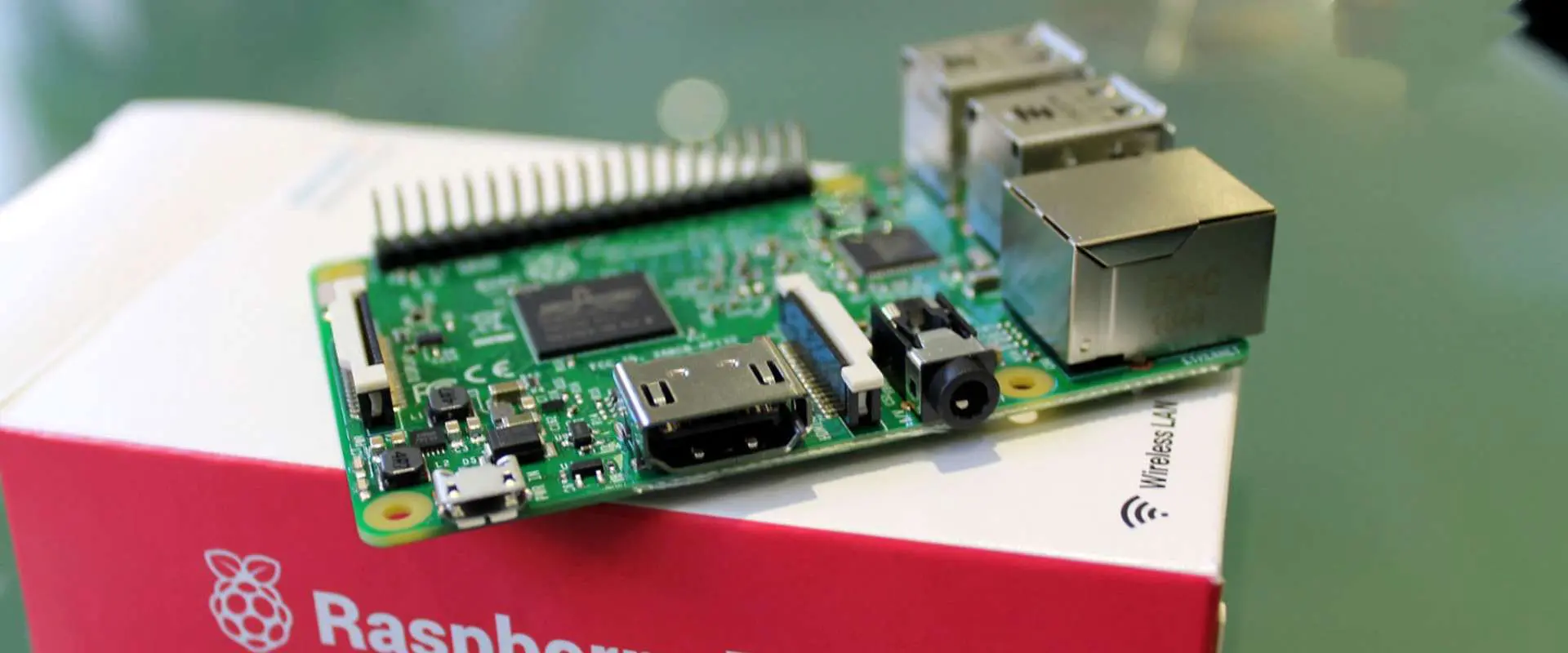
Raspberry Pi 5: What Should We Expect?

Raspberry pi into a Router

Are you prepared to utilize the following Raspberry Pi 5’s capability and potential? It’s time to celebrate since this single-board computer will be one of the best-equipped models yet and the Raspberry foundation targets jam-packing it with capabilities. The Raspberry Pi 5 will unquestionably be king of single-board computers due to its 8GB RAM capacity, enhanced Wi-Fi, and hardware PWM outputs. If you need clarification on what these features do, don’t worry; in this post, we’ll explain the basics and preview what the Raspberry Pi 5 version will include when it launches in 2023. Be ready for a thrilling ride, then!
YouTube video

About Raspberry pi 5

Raspberry Pi 5 is the next iteration of the Raspberry Pi line of single-board computers. Eben Upton, the Raspberry founder and CEO says the company will likely release the Raspberry pi 5 version in early to mid-2023.

Features to Expect from the Raspberry Pi 5

The following are some of the features that are most likely to come with the Raspberry Pi 5 version in 2023:

1. Analog Inputs (ADC):

The Raspberry Pi 5 will likely contain a much-improved analog-to-digital converter (ADC) compared to the previous Raspberry Pi 4. An ADC transforms analog signals into digital signals. This conversion is crucial for applications like audio recording, where the Raspberry Pi needs to convert the microphone’s analog signal to a digital signal before processing it. We also anticipate a 12-bit ADC for the Raspberry Pi 5, an upgrade from the 8-bit ADC included in earlier Raspberry Pi models.

The Raspberry Pi 5’s ADC can more precisely measure the signal it receives due to its greater data rate. This feature will be advantageous in applications like audio recording, where a more significant bit rate enables a more accurate representation of the sound. It will also be able to measure a more excellent dynamic range of signals to accurately capture high and low-volume signals. Moreover, the ADC on the Raspberry Pi 5 will be able to measure signals over a wider bandwidth, providing a more accurate depiction of the movement.

2. Hardware PWM Outputs:

The Raspberry Pi 5 is likely to include hardware PWM outputs, enabling users to precisely control a variety of devices. By altering the duty cycle of a digital signal, pulse-width modulation (PWM) technology can change the power output of a machine. PWM (Power Width Modulation) controls motors, servos, and other devices that need precision control.

The Raspberry Pi 5’s hardware PWM outputs will make it considerably more straightforward for users to develop applications that call for precise control of devices. Users won’t have to purchase and incorporate additional hardware or use external PWM controllers because the Raspberry Pi 5 has built-in PWM outputs. As a result, users will find designing projects that call for precisely timed device control more straightforward.

Four hardware PWM outputs will likely be part of the Raspberry Pi 5, which will be sufficient for most applications. Most applications are possible with the PWM outputs’ frequency range of 0 to 25 MHz, which is more than enough. The 12-bit resolution signals that the PWM outputs will produce will also provide enough accuracy for controlling devices with precise timing.

3. Programmable IO State Machine System:

The Raspberry Pi 5 will come with a programmable IO state machine. This system uses a logic circuit to control the status of multiple IO pins at once. The IO state machine technology can also build complex logic circuits that can simultaneously control the state of several IO pins.

Up to 16 IO pins can be easy to control simultaneously via a programmable IO state machine system found in the Raspberry Pi 5. Thanks to this technology, programmers can create complex logic circuits that can simultaneously control the state of several IO pins.

Additionally, we predict that the Raspberry Pi 5 will come with a dedicated state machine controller chip, allowing programmers to design and manage the IO state machine system quickly. With this chip’s help, developers can easily program the IO state machine system and control the state of the IO pins.

4. Additional Hardware UART Interfaces:

FULL PCB MANUFACTURING Quote

More hardware Universal Asynchronous Receiver/Transmitter (UART) connectors are a possibility for the Raspberry Pi 5. UART is a standard protocol for connecting to serial devices, including sensors, GPS units, and memory chips. UART can also help connect with computers and other microcontrollers. Users of the Raspberry Pi 5 will have more flexibility and control when connecting to and interacting with various devices owing to the additional UART interfaces.

There will be two different UART connections on the Raspberry Pi 5. This feature will make the Raspberry Pi 5’s total number of UART interfaces four. In addition, the two extra UART ports will be hardware-based, making them faster and more dependable than software-based UART implementations. As a result, users will be able to communicate with their devices more quickly and dependably, maximizing their capabilities. Moreover, due to the hardware-based UART interfaces, users will connect and operate numerous serial devices simultaneously.

While connecting to and interacting with other devices, the Raspberry Pi 5’s extra hardware UART interfaces will give users more freedom and control. Users will be able to connect to and control multiple devices quickly and efficiently through these interfaces, enabling them to create more intricate projects.

5. Accelerated On-Chip Floating Point and Integer Libraries:

An accelerated on-chip floating point and integer library is likely for the Raspberry Pi 5. This library will improve the Raspberry Pi 5’s performance in applications that call for integer and floating-point operations.

Many improvements, including vectorization and SIMD (Single Instruction Multiple Data) instructions, are also a possibility in the library. These improvements will allow the Raspberry Pi 5 to conduct calculations more successfully. As a result, applications that call for complex calculations, such as machine learning, image processing, and scientific computations, will run better.

Furthermore, anticipated are a handful of tailored functions for the Raspberry Pi 5 in the library. These functions will make it possible to carry out calculations more effectively, which will speed up performance. As a result, users will benefit from the faster clock speed and increased performance of the Raspberry Pi 5.

6. Hardware Interrupts:

We also expect the Raspberry Pi 5 to incorporate hardware interrupt handling as a new feature. Hardware interrupts are signals transmitted by buttons or switches outside the computer to the processor. Upon receiving a hardware interrupt, the CPU will pause the ongoing operation and run the interrupt-related code.

Adding hardware interrupts will increase the Raspberry Pi 5’s adaptability and enable the creation of more intricate projects using the Raspberry Pi 5. For instance, when the user presses a button, the Raspberry Pi 5 will react using hardware interrupts to detect the event. Using this, interactive projects such as robotic arms or home automation systems might be easier to create.

Thanks to hardware interruptions, the Raspberry Pi 5 can also apply to more time-critical applications, like real-time data processing or embedded systems. This feature will make it possible for the Raspberry Pi 5 to be applicable in various projects, from industrial control systems to home automation.

Raspberry Pi 5โ€™s Improvements from Other Raspberry Versions
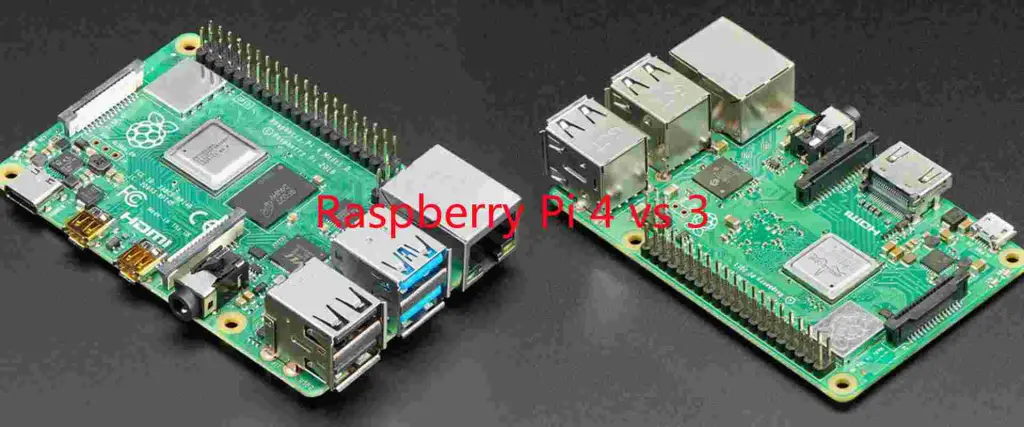
Raspberry Pi 4 vs 3

As an improvement from the standard Raspberry versions, the Pi 5 version will have the following features:

ยท 8GB RAM

The Raspberry Pi 5 will have an astounding 8GB of RAM, twice as much as the Raspberry Pi 4’s RAM capacity. By running more programs, completing more complex jobs, and hosting more memory-intensive procedures, users will achieve more with their Raspberry Pi due to the additional RAM. Moreover, multitasking will be a breeze because of the additional Memory. Users will run many programs simultaneously with 8GB of RAM without lag or performance delay. Because of this, the Raspberry Pi 5 will be the best option for anyone looking for an effective computing solution available at a reasonable price.

ยท Quicker Wi-Fi

Moreover, the Raspberry Pi 5 will have enhanced Wi-Fi capabilities, enabling users to connect to the internet more quickly. Users may easily take advantage of an improved online gaming experience and stream high-definition videos and audio. They will also download huge files rapidly thanks to this upgraded Wi-Fi connection. The Raspberry Pi 5 will allow customers to select the optimum connection method based on their needs by supporting both 2.4 GHz and 5 GHz Wi-Fi.

ยท Improved Interface for the Display

Moreover, the Raspberry Pi 5 will have an enhanced display interface that will give users access to higher-quality images and videos. With this upgraded display interface, customers will experience spectacular graphics on their Raspberry Pi at up to 4K resolution. Users will also enjoy more vibrant and lifelike graphics when playing games or watching movies thanks to the better color accuracy offered by the updated display interface.

ยท Faster processor

The Broadcom BCM2711, which will power the Raspberry Pi 5, is a speedier processor. Its processor will have four ARM Cortex-A72 cores with a maximum clock speed of 1.8GHz. Therefore, the Raspberry Pi 5 will tackle more complicated tasks and operate more quickly than ever, owing to its better processor. The Raspberry Pi 5 will also work swiftly and without lag even while running numerous applications at once thanks to this CPU as well.

ยท A Full-size HDMI Port

Customers will connect their Raspberry Pi to any external display or monitor via the Raspberry Pi 5’s full-size HDMI connection. With this full-size HDMI connector, users will watch high-definition videos and listen to high-quality audio without any resolution or quality degradation. In addition, due to the full-size HDMI port, the Raspberry Pi will be applicable on any panel or monitor, regardless of size or resolution.

ยท 60 Hz refresh rate for video playback

Moreover, the Raspberry Pi 5 will have an improved 60 Hz video playback refresh rate. Due to the enhanced refresh rate, users will experience smoother and more reliable video playing, especially while watching high-definition videos. In addition, regardless of the content they watch, customers will be able to enjoy their Raspberry Pi experience without any latency or stutter owing to this enhanced refresh rate.

ยท More rapid USB connectivity

Users will also connect their Raspberry Pi to any compatible device with the Raspberry Pi 5’s faster USB connectivity. With this enhanced USB connectivity, customers will transfer data across devices without any lag or performance degradation. Moreover, the Raspberry Pi 5’s excellent USB connectivity will guarantee that customers will have a faster and more reliable connection.

ยท Ethernet 2.5 GB

Moreover, the Raspberry Pi 5 will feature a 2.5GB Ethernet port that enables customers to connect their Raspberry Pi to any compatible network. Users will benefit from improved online experiences and quicker file transfers thanks to this upgraded Ethernet connection’s faster and more dependable network speeds. Users will also benefit from a more reliable connection due to this upgraded Ethernet port, irrespective of the network they connect to.

Some Aspects of Raspberry Pi 5
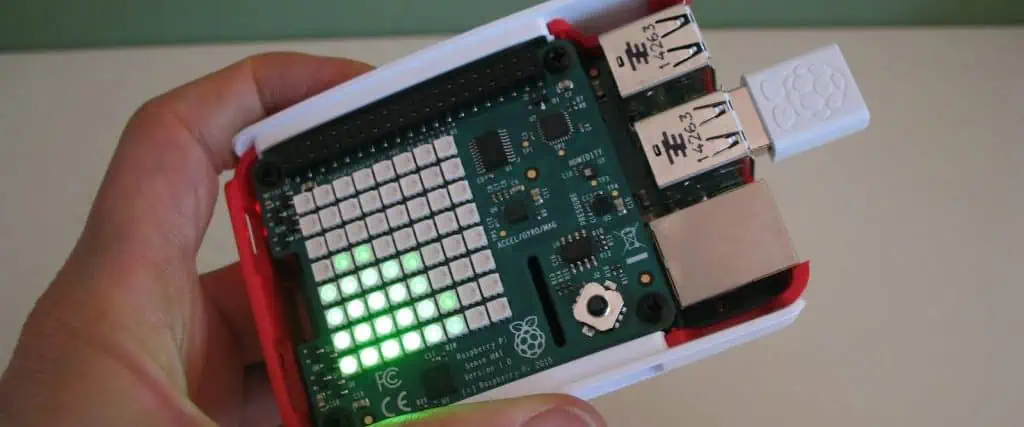
IoT devices raspberry pi

The following are some of the Raspberry Pi 5 that we will enjoy:

1. Ports:

A wide range of ports will be available on the Raspberry Pi 5 for attaching devices and accessories. Users will connect various devices via HDMI, USB, Ethernet, Wi-Fi, Bluetooth, and GPIO connectors. The HDMI connector will continue to deliver the best quality audio and video signals, making it ideal for connecting a monitor or television. Peripherals and external storage devices like hard disks and flash drives will be connectable through USB ports. While Wi-Fi and Bluetooth interfaces will still allow a wireless connection, an Ethernet port will help join a local area network. Finally, using sensors, motor controllers, and other external electronics, the GPIO port will continue to interact.

2. Storage:

The Raspberry Pi 5 will offer various storage options, enabling users to store data and run programs effectively. The board will have a built-in microSD card slot for the operating system and other data storage. Users will also connect external USB storage devices such as hard drives and flash drives to increase capacity. The board will also have the ability to connect to a networked storage device, like a NAS or cloud storage, to add more storage capacity.

3. Cooling:

The Raspberry Pi 5 will include a powerful cooling system to keep the board operating at the ideal temperature. The motherboard will have a fan to help with heat dissipation from the processor and other components. The board will also have a heat sink that will help pull heat away from the board and disperse it into the surrounding air.

4. Performance:

The Raspberry Pi 5 will be a reliable board appropriate for many applications. The board’s quad-core ARM CPU will deliver fast performance for running applications, gaming, and other tasks. The motherboard will also have an in-built strong GPU, providing outstanding graphics performance for entertainment and gaming applications. The board will also work with a wide range of peripherals, which makes it ideal for Internet of Things (IoT) projects.

Likely Issues with the Raspberry Pi 5

The Raspberry Pi 5 will possibly have the following issues:

1. Low Voltage Warning:

If the Raspberry Pi 5’s power supply does not give the board adequate voltage, a low voltage warning may appear. This will result from the Raspberry Pi 5’s USB-C port, which will require more power than its predecessors’ ports. As a result, the Raspberry Pi 5 may not function correctly and abruptly shut down if the power supply does not supply enough voltage. Users must utilize a suitable power source to deliver the necessary voltage to avoid such a scenario.

2. USB-C Power Issue:

The Raspberry Pi 5 draws fuel from a USB-C port prone to power problems. For instance, the Raspberry Pi 5 might not start up or function properly if the power source is not supplying enough voltage. Furthermore, if the USB-C cable does not have a firm attachment to the board, power fluctuations or even a total power failure may occur. Therefore, users should check that the USB-C line has a strong connection and that the power source supplies the necessary voltage to avoid such problems.

3. USB Hub and Ethernet Chip Heating Up:

The Raspberry Pi 5 includes a USB hub and an Ethernet chip, both of which run the risk of getting relatively warm when in use. As a result, the Raspberry Pi 5 may have problems if the USB hub and Ethernet chip overheat. Users should ensure they utilize a heat sink or fan to cool the USB hub and Ethernet chip while they are in use to avoid such a problem. Also, users shouldn’t leave the Raspberry Pi 5 powered on for extended periods since this can result in heat build-up and overheating the Ethernet chip and USB hub.

Potential Future Developments in The Raspberry Pi Ecosystem That May Impact Raspberry Pi 5

The Raspberry Pi ecosystem is constantly evolving, and several potential future developments may impact the use and development of Raspberry Pi 5. Here are some possibilities:

  1. Newer processor: The Raspberry Pi 5 might have a processor more powerful than the ARM-based processor it currently has, enabling even better performance in demanding applications.
  2. More Memory: The Raspberry Pi 5 might have more RAM than its forerunners, making it possible to run resource-intensive programs and multitask more effectively.
  3. Enhanced AI capabilities: The Raspberry Pi 5 may also come with hardware accelerators for machine learning and artificial intelligence, making creating and using AI models simpler.
  4. Support for 5G cellular connectivity: The Raspberry Pi 5 might include 5G cellular connectivity capability, making it possible for mobile or remote apps to connect to the internet more quickly and reliably.
  5. Integration with cloud services: The Raspberry Pi 5 will likely have a closer integration with cloud services, making data processing, analysis, and storage in the cloud more straightforward.
  6. HAT ecosystem expansion: The Raspberry Pi 5 might increase the variety of available HATs (Hardware Attached on Top), providing more possibilities for modifying and extending the device’s capabilities.
  7. Thanks to the Raspberry Pi 5’s potential for increased compatibility with other IoT technologies, more seamless integration with IoT technologies.
  8. Creation of new software and applications: As the Raspberry Pi ecosystem expands, developers may create new programs and tools just for the Raspberry Pi 5, opening the door to a broader range of creative applications.

Likely Use Cases of the Raspberry Pi 5

The Raspberry Pi 5 is the next iteration of the popular single-board computer. Specialists anticipate it coming with new features and upgrades, making it a versatile tool for various use cases. Here are five likely use cases for the Raspberry Pi 5:

1. Home Automation:

Home automation has been one of Raspberry Pi’s most widely used applications. This use case will gain more popularity with the release of the Raspberry Pi 5. The Raspberry Pi 5 will likely feature enhanced networking and processing capabilities and be completely interoperable with home automation systems. Sensors, switches, and other components are widely applicable to home automation systems to control lighting, heating, and other domestic appliances. In addition, the Raspberry Pi 5 can run programs that automate processes and manage various devices.

2. Media Centre:

Another potential usage for the Raspberry Pi 5 is as a media center. A media center is an apparatus used to broadcast music and video content to a TV or other display. Due to the Raspberry Pi 5’s enhanced processing and graphics capabilities, this use case will grow even more in popularity. Media center applications like Kodi, which stream movies, TV episodes, and music, may soon run on the Raspberry Pi 5.

3. Robotics:

The Raspberry Pi 5 is also likely to find application in robotics. Robotics is an exciting field that involves building robots that can perform tasks automatically. The Raspberry Pi 5 can help control robots by providing a platform for programming and controlling the robot’s sensors and actuators. In addition, the anticipated Raspberry Pi 5’s improved processing power and networking capabilities will make it ideal for running robotics software and controlling robots remotely.

4. Education:

Also, Eben Upton, Raspberry’s founder, has anticipated Raspberry Pi 5 to apply to education. The Raspberry Pi Foundation has been promoting the use of Raspberry Pi in education since its launch. With the Raspberry Pi 5, we expect more schools and educational institutions to adopt the Raspberry Pi as a tool for teaching programming, electronics, and other STEM subjects. Based on its anticipated capabilities, the Raspberry Pi 5 will teach coding, robotics, and other subjects that require hands-on experimentation.

5. Gaming

Finally, the Raspberry Pi 5 is also likely to enhance gaming. The Raspberry Pi has already applied to retro gaming in the past. With the Raspberry Pi 5’s improved processing power, it will likely run modern games. In addition, the Raspberry Pi 5 will also run popular gaming platforms such as Steam and RetroPie, allowing users to play various games on the Raspberry Pi.

Conclusion

The single-board computing sector is about to undergo a revolution because of the Raspberry Pi 5’s enhanced functionality, processing capability, and other attributes. You might soon use the Raspberry Pi 5 for all your computing needs. This may include gaming, home automation, media centers, robotics, and even education. It will not just be a computer; it will be a supercomputer. The best partner for your computer requirements will be the Raspberry Pi 5. Why then wait? Get a Raspberry Pi 5 as soon as it’s out, and get ready to explore an entirely new computing universe.
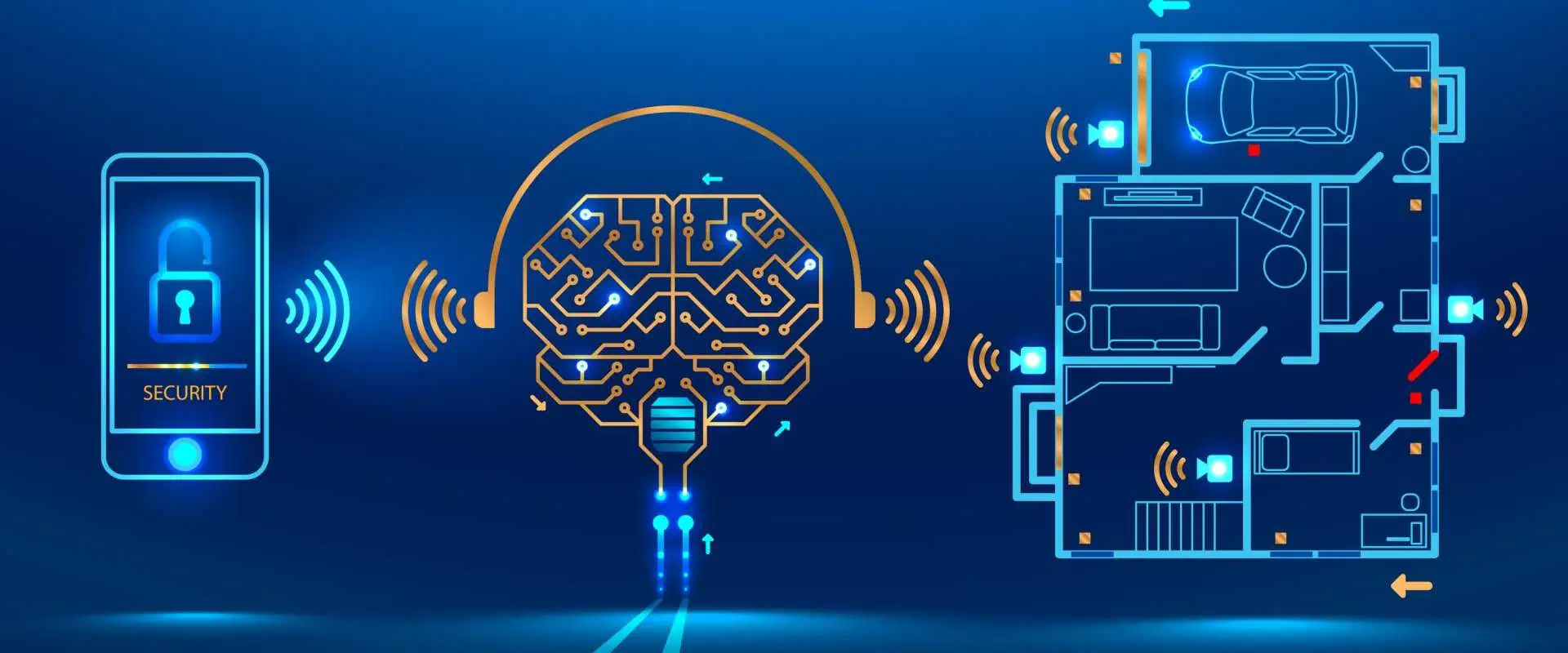
Raising the Bar of Efficiency with AI and IOT

ai iot

Are you ready to tackle the mysteries of AI and IoT? Prepare your thinking caps because we’re diving headfirst into the deep end. First, let us explore the similarities and differences between these two powerful technologies. When combined, AI and IoT have much to offer, from better predictive maintenance to increased operational efficiency. However, it is essential to understand the nuances of each technology so that you can maximize their potential.

The Meaning of AI and IoT

Artificial intelligence (AI) refers to developing computer systems that can perform tasks that generally require human intelligence, such as learning, problem solving, pattern recognition, decision-making, and natural language processing. On the other hand, the Internet of Things (IoT) refers to the network of physical objects, devices, and sensors connected to the internet, allowing them to collect and exchange data with each other and with other digital systems.

YouTube video

AI Vs. IOT comparison

AI iot control
AI iot control

The following are the similarities between AI and IOT:

Similarities between AI and IOT

There are several similarities between AI-enabled IoT systems. Here are a few:

Data collection: Both AI and IoT rely heavily on data collection. IoT gathers and transmits vast volumes of data from numerous sensors and sources, and AI algorithms then process this data to derive insights and generate predictions.

Real-time processing: Both AI and IoT depend on this capability. Although AI algorithms need quick and efficient processing to assess data and make conclusions, IoT devices must process data and react swiftly to events in the real world.

Machine learning: machine learning, a critical technology, supports both AI and IoT. IoT devices may learn from data and adjust their behavior using machine learning algorithms, while AI systems can use machine learning to increase their accuracy and efficacy.

Automation: AI-enabled IoT systems frequently automate processes and operations that would otherwise need human involvement. This category falls under tasks like regulating the thermostat, turning on and off the lights, or maximizing energy efficiency.

Predictive maintenance: Both AI and IoT enable predictive maintenance. IoT sensors can monitor machinery and provide data to AI algorithms, which can then evaluate it to determine when a repair will be necessary.

Differences between AI and IOT

AI and IOT differ in such aspects as:

1. Cloud Computing:

AI and IoT rely on cloud computing to store and process large amounts of data. However, AI requires more computational power and storage capacity to process and analyze large data sets. In contrast, IoT devices usually send small amounts of data to the cloud, requiring less computational power and storage capacity.

2. Costs:

AI requires a lot of investment in computing power, data storage, and skilled personnel. However, IoT devices are becoming increasingly affordable and accessible, with the continuously decreasing cost of sensors and connectivity chips.

3. Success Rates:

AI has proven successful in various applications, such as image and speech recognition, predictive analytics, and natural language processing. However, AI is imperfect, and there are still challenges, such as bias and ethical concerns. On the other hand, IoT has a higher success rate in automation and optimization, as it involves connecting devices and gathering data in real-time.

4. Scalability:

AI applications require more computing power and storage capacity as the data size and complexity increase, making it more challenging to scale. On the other hand, it is easy to scale IOT by adding more devices or sensors to the network, which can handle increasing data without significant increases in processing power or storage.

AI-enabled IoT

FULL PCB MANUFACTURING Quote

AI-enabled IoT creates intelligent machines that simulate innovative behavior and support decision-making without human interference. Combining these two streams benefits the ordinary person and specialists as well. We realize that IoT deals with those devices interacting via internet, while AI helps machines to learn from their experience and data.

Benefits of AI-enabled IoT

Employing AI-enabled IOT comes with the following merits:

1. Increasing Operational Efficiency:

IoT with AI capabilities can help people make wiser decisions and take better actions, increasing operational efficiency. Moreover, businesses can better evaluate data gathered from various sources, spot patterns, and act quickly due to AI-enabled technologies like machine learning, deep learning, and natural language processing. Additionally, businesses can automate complicated operations and processes with AI-enabled IoT, boosting productivity and lowering costs. Improved end-user experiences are also a result of the supply chains and industrial processes optimized by AI-enabled IoT.

2. Better Risk Management:

AI-enabled IoT improves risk management by providing organizations with better insights into the potential risks they face. Businesses can identify and monitor risks through data collected from various sources more effectively. Furthermore, AI-enabled IoT reduces fraud and improves security. AI-enabled IoT help reduces operational costs by monitoring and controlling assets and processes in real-time, reducing manual intervention.

3. Triggering New and Enhanced Products & Services:

AI-enabled IoT enables businesses to create new and innovative products and services that can provide better customer experiences and satisfaction. With AI-enabled IoT, companies can collect data from different sources and analyze it to gain insights into customer preferences and behavior. This action helps organizations develop new products and services to meet customer needs. Additionally, AI-enabled IoT enables businesses to offer personalized services, such as recommendations and customized customer offers.

4. Increase IoT Scalability:

AI-enabled IoT increases scalability by enabling businesses to automate complex tasks and processes. Automating tasks reduces manual intervention, allowing companies to scale up their operations quickly and efficiently. Moreover, AI-enabled IoT minimizes the need for manual labor, resulting in cost savings.

5. Eliminates Costly Unplanned Downtime:

AI-enabled IoT eliminates costly unplanned downtime by monitoring and managing resources and operations in real time. IoT with AI capabilities can also identify issues before they become major, allowing companies to take corrective measures quickly. This feature leads to an increase in productivity and savings by lowering the costs related to unscheduled downtime.

Impact of AI-enabled IOT in industries

Below are the effects of AI-enabled IOT in various industries.

  1. Smart Buildings:

AI-powered IOT increases building efficiency and lower energy usage. To optimize energy use and raise customer satisfaction, AI algorithms can analyze data from IoT sensors that can continuously monitor temperature, humidity, and occupancy.

  • Smart homes:

AI-enabled IOT improves home automation and security. For example, security cameras utilize AI algorithms to detect and warn homes of potential security risks, while smart thermostats can automatically alter temperature settings depending on occupancy patterns.

  • Airlines: 

AI-powered IOT boosts airline safety and productivity. For example, IoT sensors can track engine performance and identify potential faults, while AI algorithms may evaluate flight data to prevent delays and maximize fuel efficiency.

  • Oil Rigs:

AI-powered IoT can potentially increase production and safety in the oil and gas sector. AI algorithms may evaluate data to optimize drilling operations and decrease downtime, for example, while IoT sensors can track equipment performance and identify potential faults.

  • Manufacturing:

AI-enabled IoT increases production efficiency and quality control. IoT sensors, for instance, can track machinery efficiency and product quality in real time. At the same time, AI algorithms may evaluate the information to streamline production procedures and raise product standards.

Examples of AI and IoT in action

The following are examples of AI and IoT in applied real life:

1. Robots in Manufacturing:

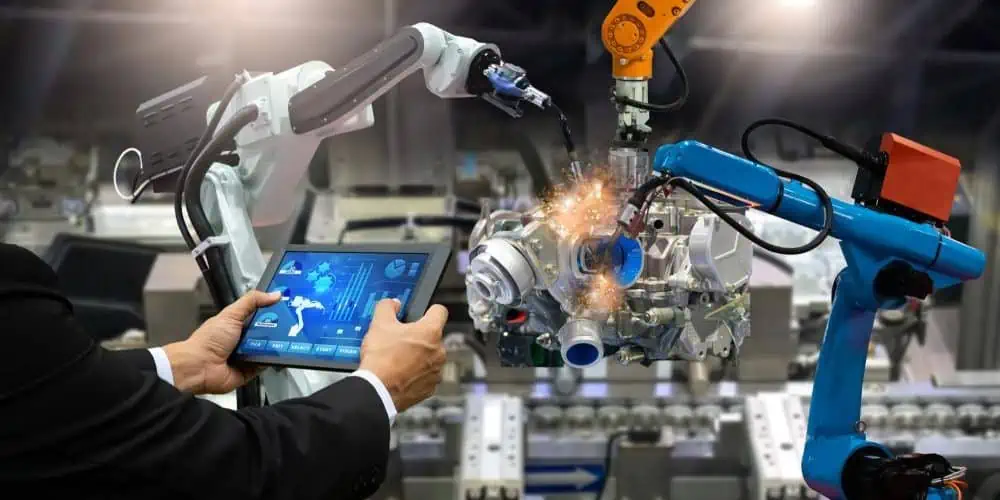
The industrial sector has changed due to artificial intelligence (AI) and the Internet of Things (IoT). AI robots assist with jobs previously completed by humans, such as sorting, cutting, welding, and assembling. While lowering production costs and increasing productivity, they can complete these activities with a high degree of accuracy and efficiency. Additionally, engineers can connect robots to the IoT to give manufacturers real-time information about their manufacturing processes. This connection enables manufacturers to respond to problems as they happen and evaluate data to find areas for improvement thanks to this approach.

2. Retail Analytics

Retail Analytics: Merchants employ AI and IoT in their production process to improve customer satisfaction. IoT sensors aid in gathering data on customer behavior, such as how long they stay in a store, which products they interact with, and which ones they are most likely to buy. Additionally, by comprehending consumer preferences and buying habits, merchants may use the insights from analyzing this data by AI algorithms to enhance their product range and marketing strategies.

3. Smart Thermostat Solution:

To enhance comfort and energy efficiency, smart thermostats learn human behavior and preferences using artificial intelligence (AI). Additionally, a smart thermostat modifies the temperature automatically. Smart thermostats can also provide customized heating and cooling plans that save energy and money by analyzing temperature, humidity, occupancy, and weather information. Moreover, smart thermostat solutions offer users greater convenience and control over their home environment since they can handle it remotely through a smartphone app.

4. Autonomous Cars:

Self-driving cars use a range of sensors and algorithms to understand their environment and determine the best course of action. As a result, self-driving vehicles may reduce traffic accidents, improve accessibility for people who cannot drive, and reduce the impact of transportation on the environment.

Future Prospects of AI

In the future, we expect the following from artificial Intelligence (AI):

  1. Increasing use of AI in personalized medicine and healthcare:

AI-powered technologies and solutions are revolutionizing healthcare by making it possible to diagnose diseases accurately and quickly, create custom treatment plans, and prevent sickness. Additionally, AI developers anticipate that there will be an introduction of AI-driven healthcare advancements, including wearable tech, telemedicine, and virtual nurses, which will enhance patient outcomes and lower healthcare costs.

  • Virtual assistants powered by AI are growing more like people:

Virtual assistants, such as Siri, Alexa, and Google Assistant, are essential to our daily lives. In the future, we can expect these assistants to become more human-like, with the ability to understand and respond to natural language, emotions, and context.

  • Advancements in brain-computer interfaces and neural prosthetics:

Brain-computer interfaces (BCIs) and neural prosthetics have the potential to revolutionize the lives of people with disabilities. With AI-powered neural implants, individuals can control prosthetic limbs or communicate with computers using their thoughts. As technology advances, we expect more sophisticated BCIs and neural prosthetics that provide greater functionality and independence.

  • Enhanced cybersecurity using AI-powered threat detection and prevention:

Traditional security methods are no longer adequate since cybersecurity threats are getting more complex. Data breaches and cyberattacks can be prevented and identified in real-time using AI-powered threat detection and prevention systems.

Future Prospects of IOT

embedded iot

With the current technological advancements, we are likely to witness the following from the internet of things (IoT):

1. Security and privacy concerns will drive legislation and regulatory activity:

Strong security measures are becoming increasingly necessary to safeguard the sensitive data transmitted by IoT devices. IoT developers anticipate that there will be an increase in legislation and regulatory activities related to IoT security and privacy will increase in the future. Global governments and regulatory bodies will pay more attention to how IoT devices are helpful and what safeguards are in place to protect them.

2. IoT-based DDoS attacks will take on more dangerous forms:

IoT device developers state that in the future, cybercriminals will use IoT devices more frequently as they become more widely used to conduct attacks. In addition, these attacks might evolve into more hazardous types, like focusing on vital infrastructure or causing actual device damage.

3. Cars will get even smarter:

With features like GPS, Bluetooth, and Wi-Fi becoming more prevalent, developers connect cars with Wi-Fi and GPS. In addition, future automotive technology will make them even smarter, with features like autonomous driving and predictive maintenance becoming more common. These developments will significantly impact the automotive industry.

4. 5G Networks will continue fuelling IoT growth:

New IoT applications that were previously impossible will be possible to perform with 5G as more devices connect to the internet. As a result, this will accelerate the growth of the IoT industry. In addition, 5G’s faster speeds and lower latency will enable real-time data processing, which is crucial for applications like autonomous vehicles and smart cities.

5. Improved security and intelligence of routers:

IoT network developers are now working on IOT routers which will be more intelligent and secure. In addition to enabling more complex IoT applications, this will be crucial for defending IoT devices against cyberattacks. For instance, routers prioritize traffic from critical IoT devices like emergency or healthcare services.

6. Artificial intelligence will keep growing in importance:

In IoT applications like proactive maintenance and anomaly detection, artificial intelligence (AI) is already in use. Future predictions indicate that IoT devices will use AI more frequently, enabling more complex applications like autonomous vehicles and smart cities. To help businesses make better decisions, AI will help analyze the enormous amounts of data from IoT devices.
7. IoT devices will continue to be used by cybercriminals to launch DDoS attacks:

Cybercriminals are already using IoT devices to launch DDoS attacks. Unfortunately, this trend will persist as more IoT devices connect to the internet in the future. As a result, manufacturers of IoT devices must prioritize security in their designs to combat this threat. Additionally, users must take precautions to secure their devices by altering default passwords and updating software.
8. Increase in IoT devices to approximately over 21 billion by 2025:

The IoT industry is increasing. As a result, IoT device developers anticipate that by 2025 there will be more than 21 billion IoT devices in use worldwideโ€”increased demand from consumers and businesses, as well as technological advancements like 5G networks and AI. The availability of massive data will enable enterprises to analyze and use it to enhance operations due to the growth of IOT devices.

Conclusion 

To sum up, AI and IoT are two tremendous technologies that can completely change our lives. We may anticipate more advanced applications and better security measures shortly as AI and IoT advance. In addition, AI-powered IoT will improve product and service quality, risk management, and operational effectiveness. Hence, to stay on top of things, it’s essential to consider how you can leverage IoT and AI to your benefit.

Why Is the Home Energy Monitor Important?

Smart Energy Meter

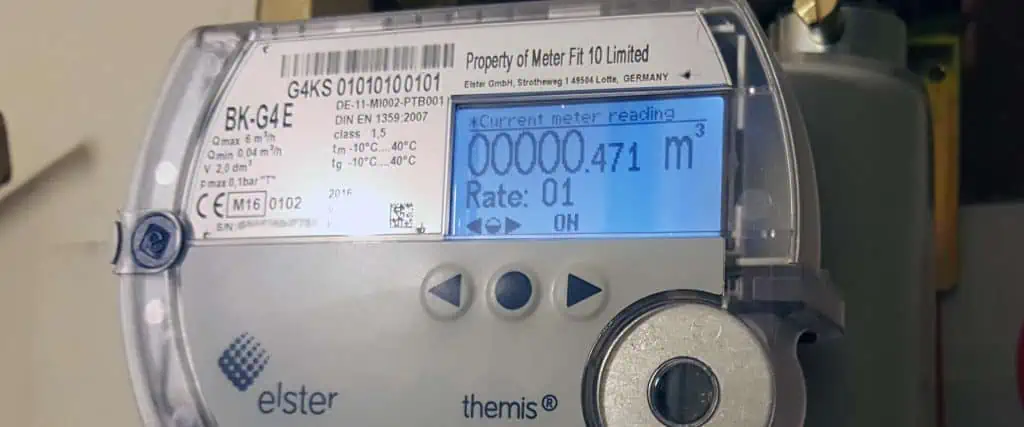
A device called home energy monitor continuously tracks your electricity use and shows you the real – time data, in both kilowatts and dollars. This Home Energy Monitor would also display the daily, monthly, as well as accumulated totals, in addition to the reading of your meter.

The home energy monitor offers comprehensive information regarding your usage of electrical energy. with respect to monitor, there may be a need for you to remotely monitor your consumption from a mobile device at the circuit, device, or entire home level! The monitoring app would frequently offer you additional information as well, such as tips on how to be more energy-efficient and recommendations on when to utilize the greatest electricity in order to maximize the savings with respect to the current electricity prices.

Home energy monitors typically are located in or close to the electrical panel or breaker box).The smart panel, such as Span, will come with monitoring capabilities that provide energy monitoring as well as insights at circuit level. Moreover, if you possess the add-on energy monitor, it probably comes with sensors.

Such sensors could attach to the service mains, which are referred to as the wires which connect the electric meter as well as electrical panelโ€”then “read” the electrical current flowing through your house. Then, they can either give you a general idea of the amount of electricity the entire house uses, or smarter system can utilize machine learning in identifying its “electricity signatures” connected to the gadgets in your house and offer device-level monitoring.

Some sensors can connect right away to particular circuits, offering circuit level tracking, as opposed to trying to connect to the service mains.

YouTube video

Reasons Why the Home Energy Monitor is Necessary

Gadgets and Technology for Home

There is great potential for home energy monitors to assist homeowners in saving money and energy. Continue reading to learn the three advantages of using the HEM.

Understanding your electricity consumption within your household

You may measure the amount of energy being utilized by the gadgets or appliances that you have, like toaster ovens, air conditioners, space heaters, and computers, by utilizing a HEM.

According to a survey by Natural Resources Defense, 23% of the average American household’s power consumptionโ€”or almost one-fourth of all electricity billsโ€”comes from Always On gadgets. The vampire load, also called “Always On,” can be seen by a HEM.

You may even keep track of it for an extended time to monitor your progress when you unplug unnecessary devices and turn off lights that have been left on standby.

Experience the ease of real-time data access on your smartphones

The majority of home energy monitors available include a smartphone app. These notifications can assist you in seeing when your little kids are home, when the door of your refrigerator is open, or when   the sump pump is left on. Easily monitor trends, spikes, and more from your device.

What are the Cons of the Energy Monitor

It is crucial to emphasize that the data usage is not entirely correct because it is obtained indirectly, through the sensor, rather than directly from your electric meter.

But, this continues to give you a respectable way to observe how turning on various appliances affects the amount of power used in the house. It’s also important to note that, generally speaking, you get whatever you spend for; as a result, when you’re ready to spend ยฃ50 on your monitor, it’s going to nearly certainly provide you with more precise measurements compared to the ยฃ15 one.

Moreover, energy monitors don’t talk to your energy supplier. Contrary to popular belief, there isn’t a connection to any other entity and these monitors are purely to be utilized by you. This would change whenever smart meters are implemented towards the conclusion of this decade, and we might then enter an era whereby electricity will be priced every minute.

The home energy monitor serves as an excellent tool for analyzing your power usage, but their true worth comes into play when you act on the data they deliver. The energy monitor may not be your best option when you believe that you will not genuinely adjust your behavior based on the information they present.

Top Home Energy Monitors

FULL PCB MANUFACTURING Quote

Sense Energy Monitor

From its name, Sense Energy Monitor helps in sensing the total usage of electricity in your homes and then updates you. This energy monitor’s unique function allows you to compare solar production and consumption in one display, allowing you to concentrate on producing more electricity rather than purchasing it.

You may monitor the trends of electricity usage using the Sense Energy Monitors. The software notifies users appropriately of a variety of actions that can be used to measure energy usage. Also, you may set up customized notifications to prevent accidents for crucial items like a well pump as well as flat iron.

Schneider Electric Energy monitoring system

The Schneider monitoring system contains everything you could possibly need if you like a small monitoring system or are more inclined to be minimalist. Furthermore, it does all the necessary tasks incredibly well.

To start with, this mobile app allows you to monitor your home’s energy usage from anywhere. Electric appliances which are currently in use can be monitored so you can determine the quantity of electricity that they use overall.

This Schneider monitoring systems alerts you right away if you fail to switch off a certain device, helping you avoid unintended incidents. You can establish a certain budget and view the cost of the electricity you’ve used to determine whether your usage falls within the permitted ranges.

Eyedro Home Energy Monitor

We advise choosing this Home Energy Monitor if you’re searching for a less expensive way to keep track of your electricity consumption. First, both installation and configuration are simple to comprehend and put into practice.

Simply attach the sensors into the gadgets you wish to monitor, then utilize the included Ethernet wire to connect the device into the internet. The readings can be changed to reflect values in watts, dollars, AMPs, as well as numerous other units. You can set up alerts to be informed whenever and which appliances use more energy than they should be each day.

In the event that you break contact with your home energy monitor, you will also be notified. You don’t have to keep creating them manually because this Eyedro Energy Monitor provides you with thorough yearly, monthly, weekly, as well as daily reports that allow you to assess your energy consumption.

Emporia Home Energy Monitor

If you have serious concerns about energy conservation, then Emporia Home energy monitor can help you put those concerns to rest. To begin with, it works with the majority of homes’ circuit panels. To ensure you avoid repairs and cut costs, it offers energy monitoring 24 hours a day, seven days a week.

In order to monitor different electrical appliances, including air conditioners, water heaters, furnaces, dryers, etc, the Emporia package includes 16 50A sensors. By keeping an eye on your expenditure in real-time with a smartphone app, you can lower your monthly energy bill prices.

Generac PWRview Machine-learning Monitor

Taking inspiration from the previous W1 from the Neurio, another industry pioneer that Generac bought in 2019, the PWRview machine-learning monitor from Generac was created.

Generac supplied savings projections that were comparable to what Sense had said during our conversation, highlighting once more the potential for active customers to reduce their costs to as high as 20%. This PWRview is agnostic, just like Sense monitors, so it may be installed in practically all electrical panels. Also, it typically costs less compared to Sense gadgets. The PWRview might offer the largest benefits to consumers who now employ Generac products because it is a part of Generac’s larger green-energy ecosystem that also comprises solar-storage batteries and solar panels.

What to Take Into Account While Selecting the Top Home Energy Monitors

Monitoring IOT Devices

The most useful information is provided by the top home energy monitors for each household. A monitor may provide voice control, energy information about the solar panel for a home, appliance-specific data, easy-to-use app, voice commands, and provide easy installation. Below are some of the significant features to look into when you are considering the top energy monitors.

Smart-Home Connectivity

The home energy monitors are beneficial for smart homes. Fitted into the electrical panel of the house, home energy monitors communicate wirelessly with other appliances. Other smart appliances for home can interact as well as communicate with the Bluetooth and WiFi-enabled home monitor.

When such an energy monitor is connected to its smart plugin or smart thermostat, users may control appliances by pressing a button and receiving data that is more detailed compared to that provided by other monitors.

Solar monitoring

By converting solar energy to alternating current electricity with the solar inverter, solar systems for home can reduce electricity costs. These tools keep track of the amount of energy produced and consumed and can pinpoint periods of maximum solar output.

The solar home energy monitors link to the home’s utility meter of order to find and monitor patterns of energy consumption and production.

Appliance Recognition

Appliance Recognition Systems for monitoring the energy usage throughout the entire house plug into specific electrical panel circuits. Several of the systems provide circuit-specific information, but more intelligent systems are able to identify each appliance’s particular electrical signature and track it separately. Appliance-specific recognition identifies how much energy is used by both large and small appliances, and some of them can even send out notifications concerning specifics like an open refrigerator door.

Also, Appliance recognition helps home energy monitors in giving more targeted recommendations to decrease energy. These can alert users to turn off the blow dryers, change the settings on the programmable thermostat, and suggest which items should be replaced with more energy-efficient models.

Real-Time Cost Monitoring

Weeks after this usage occurs, the power bill serves as a documentation of the amount of energy that a home utilizes. Real-time monitoring of energy usage enables homeowners to take immediate action to reduce energy wastage. Energy monitors can display real-time data in kilowatt-hours as well as dollars, revealing the amount of energy that a family consumes and how much it will cost them.

Notifications and Mobile Apps

Home energy monitors eliminate the necessity to read your meters and visit the electricity panel after they are installed. For real-time updates regarding energy usage, numerous systems link home energy data to smartphones. These apps make it simple to grasp what’s occurring with the home’s energy as well as identify those areas needing improvement because they are user-friendly and visual.

Any dashboard app which may be downloaded for home energy monitors allows users to monitor usage, trends, as well as other information from a computer or smartphone. The software may occasionally allow users to review and start actions from a distance.

Installing Energy Monitors in Homes

Energy Harvesting

Simple plug-in meters that measure each appliance’s energy use are plugged into the wall outlet. Just insert it in a power outlet and connect a device to the monitor.

It is more difficult to install the home energy monitors in an electrical panel and installed on the wall. The monitor often has sensors that attach to certain circuits as well as small machines that analyze all the data. The home energy monitor you buy can depend on how many different circuits will be monitored.

Get an expert to help install it in case you’re unclear how to do it. After installing the hardware, link the appliance to the Wi-Fi in the house, and it ought to become operational within one hour.

Conclusion

It’s important to do some research before choosing the top home energy monitors. Making decisions on the amount of monitoring that you wish to carry out, the amount of money you would like to spend, as well as the amount of money you are interested in saving can help you to focus your possibilities. You’ll probably fall into the middle class of reasonably priced, useful power monitors which connect to the meter as well as show you how much you’re spending.

Challenges faced by any electronic company in Cambodia

Top 10 Consumer Electronics Companies

In recent years, Cambodia’s electronic industry has expanded tremendously. The country’s growing middle class, burgeoning economy, and accessibility to technology may all be held responsible for the industry’s growth. An overview of the growth of electronic commerce in Cambodia is below:

Early Stage (the 1990s – early 2000s): Cambodia’s electronic sector was still developing. As the country was still recovering from the consequences of the Khmer Rouge rule, its infrastructure was constantly expanding. As a result, the country had a small number of indigenous electronic businesses operating there, and the majority of the country’s electronic products came from surrounding countries like Thailand and Vietnam.

Growth Stage: From the middle of the 2000s to the 2010s, Cambodia’s electronic industry experienced rapid growth. The steady economy of the country, the growth of the middle class, and the increased demand for technology all contributed to this expansion. Because of this, numerous domestic and international electronic companies and brands, including Samsung, LG, and Sony, started to invest in Cambodia.

Maturity Stage: The electronic industry in Cambodia has advanced in recent years. The country has transformed into a center for electronics assembly and production due to numerous foreign companies establishing operations there. This has offered Cambodians numerous job opportunities and considerably improved the country’s economy. The government has also passed legislation to support the growth of the sector, such as tax cuts for electronic-related enterprises.

Throughout the past few decades, Cambodia’s electronic industry has evolved tremendously and will continue to grow in the years to come.

Common challenges

With the proliferation of electronic businesses and rising consumer demand for electronic items, Cambodia’s electronics sector has experienced rapid growth in recent years. However, Cambodia’s electronic sector’s expansion and viability face several obstacles.

Lack of Skilled Labor:

The lack of trained workers is one of the biggest issues facing Cambodia’s electrical sector. The sector needs a highly trained workforce to operate, but there aren’t enough education and training programs in the nation to provide sufficient competent workers.

  • Slower Product Development: Electronic enterprises can lack the knowledge to create new goods or enhance current ones without trained employees. This may hinder the business’ capacity for innovation and market competitiveness.
  • Problems with quality: To provide quality control and product testing, skilled staff is necessary. Electronic businesses could find it difficult to uphold quality standards without qualified personnel, resulting in subpar goods and unhappy customers.
  • Higher Costs: Employing new hires or hiring qualified personnel from other businesses may require increased financial investment from electronic enterprises. This can result in higher labor expenses and lower profit margins.
  • Decreasing Efficiency: Skilled workers often do their duties more quickly and efficiently, resulting in higher production. Electronic enterprises may face lower production and efficiency without specialized employees, potentially affecting profit margins.
  • Lost Opportunities: In the competitive electronic market, businesses must be agile and ready to seize fresh chances. Without competent workers, businesses risk missing chances to grow into new markets or create new products.

Poor Infrastructure:

Another difficulty the electronic sector in Cambodia faces is the lack of adequate infrastructure. The flow of products and services can be hampered by inadequate transportation, logistics, and telecommunications networks, making it challenging for businesses to function efficiently.

The nation’s power supply is also a significant issue, as frequent power outages impact the output and standard of electronic manufacturing. As a result, most businesses must rely on expensive, short-lived alternative energy sources like generators. The following are a few ways that inadequate infrastructure might harm electronic companies:

  • Supply Chain Disruptions: For businesses in the electronic industry, inadequate infrastructure can cause supply chain interruptions. For instance, damaged roads and highways might cause a delay in the delivery of completed items and raw materials, delaying production and driving up expenses.
  • Unreliable Power Supply: Electronic businesses need a steady and dependable power source to function effectively. Voltage fluctuations and frequent power outages caused by the inadequate infrastructure can harm equipment and interfere with production schedules.
  • Restricted Access to Telecommunications and the Internet: In the current digital era, electronic enterprises significantly rely on telecommunications and the Internet infrastructure. Inadequate infrastructure can restrict access to high-speed internet in these locations, making it difficult for businesses to connect with clients and suppliers, access vital data, and create innovative technologies.
  • Increased Costs: For electronic enterprises, a lacklustre infrastructure can significantly raise operating expenses. For instance, poor transportation infrastructure can raise transportation costs and make it more expensive to convey commodities and goods.
  • Restricted Market Reach: The market reach of electronic enterprises face inadequate infrastructure. Reaching new clients and entering new markets may be challenging if roads, airports, and ports are in bad shape.

High Cost of Production:

FULL PCB MANUFACTURING Quote

Another issue that Cambodian electronic firms encounter is the high cost of manufacture. In addition, the country’s tax structure is convoluted and cumbersome. As a result, it makes it challenging for businesses to understand and adhere to the rules.

Because of the nation’s import tax regime, raw materials and equipment are also expensive. In addition, the tiny size of the sector and the limited demand for electronic items make it challenging for businesses to reduce their manufacturing costs.

Electronic firms may suffer significantly as a result of the high cost of production in several ways:

  • Decreased Profit Margins: High manufacturing costs might result in lowered profit margins for businesses in the electronics industry. It may be necessary to raise the price of a product as production costs rise to preserve profit margins. If the product’s price increases excessively, buyers can shop at other companies selling comparable goods for less money. 
  • Decreased Competitiveness: Due to high manufacturing costs, electronic enterprises may find competing with other businesses in the sector challenging. Competitors with lower manufacturing costs may sell comparable goods for less. As a result, it makes it difficult for the business to draw in and keep customers.
  • Restricted Innovation: Electronic firms may be unable to invest as much in R&D due to high production costs, which might impede innovation. Businesses must put cost-cutting measures before investing in new technologies and product development. As a result, it might put them at a disadvantage compared to rivals with more money to devote to these endeavors.
  • Supply Chain Disruptions: Electronic enterprises may be particularly susceptible to supply chain disruptions due to high production costs. The firm could need to look for alternative suppliers or scale back production if the price of raw materials or components rises.

Limited Access to Financing:

Cambodia’s electronic sector has significant challenges regarding access to funding. Small and medium-sized businesses (SMEs), who make up most of the electronic industry, frequently struggle to get bank loans because of the institutions’ high-interest rates and strict lending standards.

Moreover, it might be difficult for SMEs in the electronic industry to qualify for loans because most lack a documented financial history. As a result, companies find it challenging to invest in new technology, grow their businesses, and increase efficiency due to the limited availability of finance.

Electronic firms may suffer significantly from restricted access to capital in numerous ways:

  • Scaled-back Research and Development: Electronic businesses would need to reduce their research and development efforts without sufficient funding. It might restrict their capacity to innovate and stay up with technological improvements. This can result in a decline in the competitiveness and quality of the product.
  • Slower Growth: A lack of funding might limit an electronic company’s capacity to grow, expand into new markets, or create new products. Slower growth, a smaller market share, and lesser earnings may follow.
  • Difficulties in fulfilling demand: Electronic firms may be unable to meet the demand for their goods without adequate finance. It might result in missed opportunities and client losses to rivals.
  • Decreased Marketing: A firm may find it more difficult to sell its goods due to limited funding, resulting in less income and sales.
  • Increased Cost of Capital: Restricted funding may cause electronic enterprises to incur higher borrowing costs. As a result, it affects their profitability and capacity to fund new initiatives.

Lack of Intellectual Property Protection:

Another major issue that electronic enterprises in Cambodia confront is the absence of intellectual property protection. In addition, the prevalence of pirated and counterfeit goods in the nation impacts the earnings and revenue of legal electronic enterprises.

The legislative framework of the nation does not adequately safeguard intellectual property rights, making it challenging for businesses to assert their patents and trademarks. In addition, companies find it challenging to invest in R&D because of the absence of protection since they worry that their goods will be taken or imitated.

The absence of intellectual property (IP) protection may negatively affect electronic firms in several ways, including:

  • Increased competition: Without sufficient intellectual property protection, electronic enterprises may see a surge in competition from imitators of their identical or similar goods. This may mean lesser earnings and a smaller market share for the original firm.
  • Lower investment in research and development (R&D): The ability to acquire exclusive rights to their breakthroughs and inventions thanks to IP protection encourages electronic firms to engage in R&D. Without IP protection, businesses could be less likely to spend money on R&D since they run the danger of having their products and ideas stolen by other businesses.
  • Restricted worldwide expansion: Electronic firms may be reluctant to enter regions with poor or nonexistent IP protection due to the potential for product and technology piracy and copying. This may restrict their capacity to expand and penetrate new markets.
  • Difficulty monetizing IP through licensing: Electronic firms that significantly rely on licensing their patents and technologies may find it difficult without proper protection. This may make it harder for them to profit from their technological advancements.

Competition from Regional Players:

Competition for Cambodia’s electronic sector comes from nations in the region, including China, Taiwan, and South Korea. These nations have developed electronic industries with scalability, cutting-edge technology, and affordable manufacture.

Also, because of these nations’ trade agreements with Cambodia, it is challenging for Cambodian electronic enterprises to compete.

Regional competition may significantly impact companies that operate in a particular industry. Regional players can threaten established players in the electronic industry in several ways:

  • Reduced manufacturing costs: Due to variables like cheaper labor, tax breaks, and government subsidies, regional players may have lower production costs. Additionally, they may become more appealing to consumers concerned about their budgets.
  • Localized knowledge: Regional players may better understand local markets and customer tastes. It enables them to create goods more aligned with regional consumers’ requirements. As a result, they may be able to outperform bigger global corporations that may lack the same level of regional expertise.
  • Protectionist laws: Some nations may have laws that give local businesses an advantage over international ones. As a result, foreign electronic firms may find it challenging to compete in specific markets since they may have to overcome obstacles. They include high tariffs, quotas, and regulatory requirements.
  • Brand recognition: Local customers may have high brand awareness and loyalty for regional enterprises. As a result, it makes it challenging for international businesses to enter the market.

Lack of Consumer Awareness:

Another issue that electronic enterprises in Cambodia confront is a lack of customer understanding. Most consumers are unaware of the advantages of electronic devices or the possible dangers of fake goods.

A lack of consumer awareness may significantly impact electronic businesses. It hinders their ability to connect with and engage with potential clients. This might have the following effects on electronic companies:

  • Difficulty in offering new goods: If customers are unaware of the technology’s advantages or unsure how to utilize it, electronic firms may find it challenging to introduce new items. Lower sales and slower adoption rates may result from this.
  • Lessened consumer loyalty: Customers may be more likely to move to a competitor’s product that is better promoted and thought to be of higher value if they lack a solid knowledge of a product’s value proposition.
  • Low market penetration: If there is a lack of customer awareness, electronic enterprises may find it difficult to enter new market categories. Missed sales opportunities and poorer growth may come from this.
  • Increased marketing expenses: Businesses may need to spend more on marketing and advertising. They need to inform customers about their products and create consumer awareness, which might boost their overall marketing expenses.

Strategies used by the company to overcome challenges

Electronics panel board manufacturers

Several tactics can help solve the difficulties Cambodia’s electronic enterprises confront. These tactics consist of the following:

Developing a Skilled Workforce:

Electronic corporations can create training programs and engage with colleges and vocational schools to work with students. It helps to provide them with the essential skills and knowledge to alleviate the scarcity of skilled employees.

The businesses can also provide internships and on-the-job training to help students hone their practical abilities. In addition, the firms may increase their production and competitiveness by building a trained staff.

Investment in Infrastructure:

Electronic enterprises can invest in their infrastructure by establishing storage facilities, transportation networks, and telecommunications networks to solve the lack of infrastructure.

Businesses can also collaborate with the government to enhance the power supply and create laws that encourage the expansion of the electronic sector.

Implementing Cost Reduction Strategies:

Electronic firms can use cost-saving measures, including local raw material procurement, process automation, and improved supply chain management.

The enterprises might also extend their product lines and seek other markets. This helps to boost sales and lessen reliance on the local market.

Securing Financing:

Electronic enterprises can work with financial institutions to create financing choices tailored to the needs of SMEs to solve the issue of limited access to funding.

Moreover, businesses may engage with the government to create regulations. They help to expand SMEs and offer tax breaks to entice investment in the electronic sector.

Protecting Intellectual Property:

Electronic corporations can collaborate with the government to create laws safeguarding intellectual property rights. They intend to remedy the lack of such protection.

Moreover, businesses might spend money on R&D to produce original goods and patents that set them apart from knockoffs.

Developing Regional Partnerships:

Electronic corporations can form alliances with regional players and use their resources and experience. It helps to increase their competitiveness to combat the competition from regional players.

The businesses might also enter new markets and create specialized items that address particular market segments’ demands.

Educating Consumers:

Electronic firms can spend money teaching customers about the advantages of electronic devices and the possible threats of counterfeit goods. This helps to solve the lack of consumer knowledge.

To draw customers, businesses might raise the calibre of their goods and provide affordable rates.

What are the Best Poland Electronics Companies?

Industrial electronics manufacturers

Poland electronics companies are flourishing immensely because of rising demand from the emerging market countries. Due to this, Poland’s production from the electronic manufacturing process continues expanding, and investment in this industry has increased dramatically.

A Quick Overview into Poland Electronics Companies

Poland’s central European location makes it an ideal investment destination for businesses looking to export its goods to both the west and the east. Additionally, it is regarded as being among the most economically stable as well as rapidly developing nations in the world.

Organizations engaged in the production, development, assembling, and maintenance of electronic devices and parts make up this electronics industry.

Together, these businesses provide a vast range of goods that has just one feature in common: that is they are all powered by electrical technology. In Poland, this electronics sector is among the most intense and rapidly evolving. In the electronics industry, where businesses frequently engage in severe competition to introduce the most recent technology first, ongoing development and research of novel, superior products is of utmost importance.

The application, study, and management of electricity conduction in gases, a vacuum, in different liquids, in superconducting and conducting materials are the focus of the scientific and technology field of electronics. There are innumerable uses for the electronic gadgets available.

These goods are made up of parts, materials, components, equipment, and subassemblies that utilize electronic principles to carry out their main operations.

The overall objective of Polish electronic enterprises is to satisfy customer demands. T o create better goods and parts and to enhance the manufacturing process, a great deal of time and resources is invested in research & development.

Best Poland Electronics Companies

FULL PCB MANUFACTURING Quote

TELE-FONIKA Kable

This company is among the top manufacturers of wires and cables in Europe, with a Polish capital of 100%, and features a promising future. Customers in over 80 countries recognize the items made in our facilities. Perhaps more than 25 thousand different types of wires and cables are included in their product line.

The business combines the magnificent heritage of Poland’s cable industry with cutting-edge technology innovations. TELE-FONIKA  Kable today comprises of a number of trade firms, a sizable number of manufacturing facilities spread around Europe, as well as a Cable Trash Recycling Department within Poland.

 The TFKable Group recently solidified its status as an international leader inside the cable industry with great room for future growth through a steady growth strategy focused on the diversification of the client portfolio. In 1992, Krakowska Fabryka, Myslenice Kable, and Bydgoska Fabryka, along with two foreign facilities, were established in Poland.

The creations of new plants in Krakรณw-Bieanรณw, as well as the modernization of plants in Bydgoszcz, are just two of the active investment and development projects that led to this current entity. The company satisfies high technological requirements, which are supported by quality certificates issued by 42 prominent certification centers across the world, thanks to its skilled and qualified workforce.

Top power, electronic, telecommunications, shipbuilding, as well as mining firms in the world employ cables and related goods composed of copper, aluminum, and fiber optics from TF Kable

Elektromonta Pozna S.A.

This Company has been in business for more than 60 years, providing services related to electrical installation and producing electrical gadgets. They are a market leader in electrical installation, a provider of HVAC and sanitary systems, as well as a producer of electrical energy equipment.

We provide substantial knowledge gained from carrying out thousands of contracts both domestically and internationally. No matter where you need them, their Regional Directors will be available to assist you and will always guide you toward the best options.

All tasks are completed to the highest standard and on schedule thanks to our own teams of electricians, who work across the nation under the direction of knowledgeable Contractor’s Site Managers. A professional standard of collaboration is ensured by knowledgeable contract managers.

Telcon

Electronics panel board manufacturers

Telcon is a leading producer and importer of phone accessories situated in Poland. They provide a wide selection of top-notch goods at the best competitive prices in the marketplace. They only work with wholesale distributors to whom they extend favorable terms for any and all accessories offered.

Since 2000, they have been active in the data communications industry. 50 members of their team are enthusiastic, innovative, and willing to work with clients. Telcon is the market leader thanks to the company’s pricey development. Our goal is to produce appealing and distinctive items with exceptional functionality and distinctive design. Unmatched elegance and comfort are provided by these cases. They provide universal sizing that fit the large variety of mobile devices on the marketplace. Being a producer, they can immediately prepare each special request.

Their Be-cool cases offer portable protection for all mobile devices, such as PDAs, digital cameras, MP3 players, and iPods. Ideal for women’s bags or teenagers. They offer quick and dependable international delivery owing to their courier services.

Since each item in their offer has been manufactured with meticulous attention to detail, they can suggest it without reservation. Their knowledgeable and experienced staff is always available to help and provide guidance.

Solarnet Telecom Sp.

With its headquarters in Warsaw, Solarnet Telecom is a Polish company. The company now works in Wired Telecommunications Carrier industry. The business was founded on 29th January, 2003.

We are a privately held Polish limited corporation. We currently provide a-z termination as well as VOIP services utilizing IP phones across the globe. Along with other VOIP equipment, they also supply digital cameras, MP3 players, mobile phones, as well as digital entertainment including IP phones, and consoles.

Also, the business offers metallurgical coke as well as copper cathode plate. They are brokers who occasionally holds their own stock but primarily functions as a broker. Please let them know what you’re looking for, and they’ll find it for you at a reasonable price.

Goodram

Since 2003, they have provided storage and memory products for different consumers, gamers, businesses, and embedded industrial applications. As a Wilk Elektronik SA brand, which is known as a renowned Polish distributor as well as RAM module manufacturer, GOODRAM has more than 25 years professional experience.

From the early 1990s, they have witnessed the growth of every significant storage technology and participated in SSD revolution.

The company stands for quality due to their access to all production resource available in the European Union. These include modern machinery, extensive knowledge and experience, tight quality control throughout every stage of production, and premium materials and components.

GOODRAM refers to people because a product cannot exist without its manufacturer. In order to create as well as deliver the finest goods they can, they can rely on the expertise of their experienced product designers, engineers, product and production, sales, as well as back office teams in covering all the bases. Check out their current positions or get in touch with them personally if you’re keen on joining the continuously expanding team of technology enthusiasts.

Anyone who shares their faith in the potential of storage is welcome to get in touch with them.

Semicon Sp

OEM Electronic Manufacturer

For thirty years, Semicon Sp. has been a player in the electronics industry. Their team, which consists of more than 100 individuals who work across five divisions, can provide you with the distribution of electronic and electromechanical components.

Also, chemical materials authorized for the aerospace, food, and military industries are among the materials used in electronics as well as other industries. They also provide accessories and instruments for testing and measuring.

SEMICON Ltd. was founded in 1987; ever since it’s been active in the electronic sector. We are a recognized distributor for well-known producers of electronic materials and components. They are actively expanding our service offerings in the areas of through-hole and SMT PCB assembly.

SMT stencils with laser cutting are what we produce. Production of laser modules as well as laser line producers is another area of expertise for Semicon.

Power Engineering

This Polish company called Power Engineering has about 65 years of experience in manufacturing and repairing power equipment. They produce distribution transformers, power transformers, transformer radiators, and equipment parts including valves, tanks, as well as oil conserving devices.

Also, we are highly skilled in the production of reduced NOx burners, turbines and boiler components for industry and energy, in addition to pipes for the hydropower. They possess the practical knowledge required for the upkeep and repair of rotating devices, such as engines and generators, as well as power equipment like transformers.

NIVISS

NIVISS is a business with extensive experience in electronics industry that operates on a global scale. Since its inception, the business has succeeded in designing and producing LED-based goods, paying particular attention to the quality of any and all solutions provided. Designing, implementing, and producing LED Engines as well as LED lighting are NIVISS’s core competencies. All LED-based items are of the best standard and have the necessary certifications.

The origins of NIVISS may be traced back to Maritex, which is among the biggest wholesalers of the electronic parts and devices, and was founded in 1987. Nowadays, NIVISS is a self-sufficient, very specialized engineering as well as production firm that concentrate on creating cutting-edge lighting solutions.

Also, NIVISS actively pursues the manufacturing while concurrently providing technical guidance (choosing the LEDs, power source, optics, as well as driving circuit), designing LED modules, as well as modifying them to meet application requirements. From big series orders to smaller quantity of odd modules, the company produces LED modules. NIVISS collaborates closely with CREE, a leader in the LED technology & American firm, and is recognized as a provider of CREE LED solutions.

SVANTEK

Vietnam Electronic Manufacturing

Polish firm SVANTEK was founded in 1990. They create and provide expert instrumentation for analyzing and measuring vibration and sound.

Their instruments are renowned for their precision and dependability all over the world. Yet it is the ongoing use of the most cutting-edge technology developments that distinguishes us as the top creative sound and vibration manufacturer.

The most recent devices from Svantek, like the SV 104 sound dosimeter and the 8-channel vibration meters, radically revolutionized the sound and vibration market. Any instrument for vibration or sound that Svantek offers can be given with the calibration certificate compliant with ISO / IEC 17025. Its authorized laboratory provides the finest levels of expertise and experience with all of their services and makes use of cutting-edge calibration equipment and technology.

APS Energia

A well-known producer of a broad range of power applications utilized in manufacturing, heating, industrial, medicine, telecommunications, as well as other economy sectors.

The company’s principal objective is to ensure the stability and dependability of energy sources. Emergency power devices, DC and AC receivers, rectifiers, backup power supplies, frequency converters, inverter, active filters, fuel cells, and power surveillance systems are all available from APS Energia.

The majority of their clients prioritize high technical standards and dependable operation for their equipment. Whenever thereโ€™s a failure in the main power supply, emergency power system they provide ensure that manufacturing processes can continue and be used. In this approach, they assist our clients in reducing the possibility of suffering losses whenever there’s a power outage.

The greatest technical specifications, cutting-edge technology, and creative solutions are found in APS Energia products. This allows them to remain one step ahead of competitors and produce superior results in situations where serial items are unable to meet the unique needs of clients. Emergency power solutions are offered by APS Energia in designs and specifications which are particular to the demands and goals of the customer.

Moreover, APS Energia offers full service support for power supply equipment that it manufactures, including design, assembly, the installation, licensing, warranty, including post-warranty servicing. Due to our experience, we are also able to offer training and consulting services in the area of the power systems to businesses and academic institutions.

Conclusion

Poland’s central European location makes it an ideal investment destination for businesses looking to export its goods to both the west and the east. Additionally, it is regarded as being among the most economically stable as well as rapidly developing nations in the world.

How to Choose the Best Korea Electronics Company

Korea Electronics Company

Throughout the last few decades, South Korea’s electronics manufacturing sector has experienced fast growth and has become a significant global location for any related electronics manufacturing service. The government of the nation has made significant investments and provided strong support for infrastructure development and research.

The nation is well recognized for manufacturing high-quality electronics, including semiconductors, electronic components, Smartphones, as well as tablets. Because of the country’s skilled workforce, cutting-edge technology, and welcoming business environment, many multinational corporations have chosen to collaborate with the EMS providers in Korea.

The best 8 Korea electronics Company will be covered in this blog, along with information on their services, backgrounds, accomplishments, and more. Furthermore, this article can help you choose a reputable Korea electronics Company.

The Development of Korea’s Electronics Sector

korean consumer electronic company

Within 20 years, Korea has become a significant global manufacturer of electronics thanks to two key takeoffs in the sector’s growth. Rapid technological changes that prioritized production in several electronics areas and made use of Korea’s major international benefit, low-cost labor, were involved in their export-driven takeoffs.

Korea’s labor division has been crucial in this process, encouraging highest concentrations in primate metropolitan areas during every takeoff during a procedure of dispersal takes place during the times between takeoffs.

Statistical experiments on some electronics plants demonstrate that the territorial location constitutes an even more significant factor of local and interregional integration compared to a temporal parameter.

So, a simple focus on the takeoff dynamics which ignores a territorial dimension will be insufficient to explain Korea’s rise in electronics manufacturing and the local integration of that sector.

Top 10 Korea Electronics Companies

Hanwha Techwin

A Korea Electronics Company called Hanwha Techwin specializes in creating security equipment including surveillance cameras and video surveillance systems. It is regarded as one of South Korea’s best electronics producers.

The company was established in 1977, has its headquarters in Seoul area of South Korea. In addition, it has support and sales personnel spread across more than 50 nations. Hanwha Techwin provides a variety of products to serve a variety of applications, such as cameras, digital video recorder, network video recorder, and more.

Hanwha Techwin’s emphasis on technological advancement and innovation is one of its main advantages. The business makes significant investments in R&D to create innovative goods and technology that can assist its clients in enhancing its security systems.

Hanwha Techwin also places a high priority on quality, and thus its products and deliveries are well known for their dependability and toughness.

IRIVER

IRIVER, a South Korea electronics Company manufacturer, was established in 1999. The company focuses on the creation of compact digital video and audio players as well as other digital gadgets like Cellphone, small storage devices, and digital cameras. These portable music players were their debut offering, and since then, numerous other digital products have been created.

This company does have a solid track record of creativity, and several honors, including many Innovation Awards, which has been given to its products. IRIVER still manufactures a variety of excellent digital products that are well-liked by technology and music fans throughout.

LG Electronics

FULL PCB MANUFACTURING Quote

Since its establishment in 1958, LG Electronics has grown to be one of Korea’s biggest manufacturers of electronics. After purchasing Zenith back in 1995, LG Electronics rose to the position of becoming LG Display’s largest shareholder. It is currently the 2nd-largest TV maker internationally and one among the best manufacturers of different consumer electronics as well as home appliances worldwide.

LG Electronics, a division of LG Corporation with its headquarters in the Seoul area of South Korea, is one of the LG Group’s primary revenue generators.

With 128 locations and 83,000 workers worldwide, this corporation conducts business in a number of industries, including air solutions, mobile communications, home entertainment, home appliances, and automotive components.

MagnaChip Semiconductor Company

A Korea electronics Company called MagnaChip Semiconductor Company, with offices in South Korea as well as the U.S., focuses on developing and producing mixed and analog-signal semiconductor solutions. It was founded in 2004 to serve as a Hynix Semiconductor spin-off, and it has offices and facilities across Asia, Europe, as well as North America in addition to its South Korea headquarters. MagnaChip has developed into one of South Korea’s top producers of electronics over time.

This company has a wide selection of goods for a variety of uses, including display drivers meant for OLED and LCD panels, video and audio processing chips, power management ICs, as well as sensors for the industrial, consumer, automotive, and mobile industries. MagnaChip is committed to giving its consumers top-notch goods and services, and it is renowned for offering creative solutions that meet their requirements.

Partron Corporation

Partron, which was created in 2003 like a spin-off of Samsung Electro-Mechanics, is currently the leading global provider of complete components. The founding premise of the company is to expand with its clients by offering competitive and prompt product delivery. Partron became the main provider of camera modules, antennas, as well as different sensors for the top smartphone models from Samsung Electronics by developing the Company’s technological capabilities and abilities.

Outside the smartphone industry, the product line of Patron also supplies electronic parts to local and foreign electronics and automakers. The business has plants in Vietnam and China as well as sales offices in those countries and in the USA.

Smart Bands, Smart Thermometers, Bluetooth Headsets, Medical Devices, as well as Wireless Chargers are just a few of the technological gadgets available at Partron. In addition, the business offers a wide range of electronic components, including isolators, RF modules, antennas, sensors, and camera modules. Customers all over the world agree that Partron excels in engineering, production, quality control, cost effectiveness, and customer service.

Samsung Electronics

Samsung Electronics started back in 1969 which has its headquarters in Yeongtong-gu area of Suwon in South Korea. It has since developed into an international electronics firm with production facilities and a staff of more than 300,000 in all the 74 countries where it has a presence.

According to reports, Samsung Electronics generated approximately 244.4 billion USD in revenue back in 2021, making it one of Samsung Group’s economic foundations.

Samsung Electronics is renowned for its creativity as well as cutting-edge technology, especially within the semiconductor sector where it dominates the memory chip as well as logic chip markets. They collaborate with popular brands like Apple, HTC, Sony, and Nokia and specialize in producing electronic components like camera modules, sensors, lithium-ion batteries, display semiconductors, and displays.

SK Hynix

Industrial electronics manufacturers

South Korea is home to SK Hynix, one of the world’s top manufacturers of semiconductors. Hyundai Electronics was the company’s original name when it was founded in 1983. It was then purchased by SK Group in 2012, which was now renamed to SK Hynix.

Solid-state drives, NAND flash, DRAM, as well as other memory products are all produced by SK Hynix. Many applications, including those for cell phones, personal computers, data centers, and servers, utilize these items.

The company maintains manufacturing facilities in Korea, China, the U.S in addition to having sales offices as well as R&D facilities across the world. The company has been able to expand consistently and establish itself as a pioneer in the sector, known for creating memory products of the highest caliber and dependability, thanks to its powerful and adaptable production capacities and cutting-edge technology.

Simmtech Company, Ltd.

Since its founding in 1987, this Korea electronics Company has concentrated on the design and manufacture of the high-layer circuit boards for semiconductors.

For the world’s top semiconductor companies, SIMMTECH uses its recognized manufacturing competitiveness for developing innovative PCBs. Module Boards for the expansion of semiconductor memory as well as substrates enabling semiconductor chip assemblies are the company’s two main product lines.

The Korean Government has recognized SIMMTECH’s memory module Circuit boards, BOC board for the DRAM packaging, as well as embedded trace substrate as “Top Class Products,” and this Company now has the biggest share of the market worldwide. In terms of packaging substrates, SIMMTECH is a leader in the industry as a primary supplier to first tier semiconductor clients.

How to Choose the Best Korea Electronics Company

Consumer Electronics Assembly

You must choose the best electronics provider early on if you plan to launch an electronics business. The electronics supplier, whom you must rely on for consistent supply of gadgets in large quantities, will surely have a large and huge impact or effect on the amount that your firm grows. Unsure about how to choose a reliable supplier? These are some crucial things to take into account when choosing electronics providers for your company.

Can you trust this electronic supplier?

You must ascertain the reputation of such electronics suppliers. It’s an essential stage in figuring out whether this supplier is ideal for your company. Any supplier of electronics having a bad reputation could provide low-quality products and might not fulfill their supply commitments.

Your company can become exposed, and your clients might become dissatisfied.

A seller of electronic goods should also operate an online store to promote transparency. Think about the vendors’ experience in the industry and look for reviews as you investigate them. Don’t limit yourself to reading the favorable testimonials on their website; look online for evaluations from other reliable sites for more convincing viewpoints.

Create your distributor list, which is a selection of trustworthy and seasoned providers, after that. Each electronics distributor on your distribution list should receive a message. The supplier might not be the greatest choice for your company if they answer slowly or come across as uninterested.

What is the grading system of the supplier?

Next, you must comprehend the grading system of electronic devices of your supplier. Every provider grades its electronic products, especially worn ones, using a different system. The trick is choosing the ideal electronics provider that can help your company grow.

A trustworthy and open grading system should be provided by the ideal electronics supplier. Also, this grading system needs to be precise and reliable ensuring you can always count on receiving electronic products of that same quality.

A reputable electronics supplier must also properly inspect and data-wipe each and every used electronic item as part of its grading system. Also, every electrical component needs to be examined and marked as either new or reconditioned.

Profitable companies, particularly those in the electronics industry, manage the quality of their goods and services.

Is there Availability of effective shipment from this Electronics Supplier?

Many business models exist, particularly for those who sell gadgets. Buy-on-demand is the model that most retailers and wholesalers employ. If so, you must choose any electronics supplier that can offer you prompt, dependable, and effective shipping anytime your company needs it.

A reliable vendor should provide numerous shipping options. There might be a less expensive option which delivers the package more slowly or a more expensive alternative that delivers the package more quickly. Choices like this enable you to obtain the shipment immediately or in accordance with your budget.

You may sell things to your consumers without bothering about being out of stock if the shipping of the Korea electronics Company is effective. You must discover electronics suppliers that offer shipping choices that are appropriate for your needs if you want to develop a reputable brand.

Does the vendor provide reasonable prices?

Regardless of how reliable or effective any electronics supplier might claim to be, if their items are costly, you’ll find it difficult to turn a profit. Be cautious if any electronics seller quotes costs that appear fraudulent; the goods might not be top notch.

You ought to strike an equilibrium between the cost and the product’s quality. Doing market research itself is a technique to find out if your electronics supplier is charging a fair price. To ascertain market pricing, compare several electronics providers. Check to see if the features or quality that the electronics company offers is worth the price.

That specific electronics supplier generally won’t be helpful to your company if you can’t readily determine the prices of their items or whether there’s many hidden fees. Keep in mind that transparent and fair pricing is essential for the expansion of your company.

Do You Allow Sample Orders?

Appropriate electronics vendors let you arrange a trial order or provide free returns on your initial purchase. A reliable electronics supplier is aware of the value of resellers inspecting, handling, and using their products before deciding to buy them in large quantities.

Your electronics supplier shows their confidence in the products by offering a guarantee of a sample order.

Is their process for payment reliable and fast?

Vietnam Electronic Manufacturing

Every electronics supplier needs to be taken into account in terms of the payment procedure. This method of payment is crucial, especially if there are other payment options that work in different areas. Some may even take bank transfers and instantly validated online payments or offer a digital wallet.

Although receiving payments in advance is customary for suppliers, they could also have other options. Some even provide financial assistance. You could purchase the devices that day and pay for them within 120 days from that day if certain vendors permit net terms for every one of your transactions.

It’s useful to be aware that such an option would serve the future even though the majority of electronics suppliers will prefer to develop longer track records with your company before giving such methods of payment.

Also, you must determine whether the electronics supplier’s payment procedure is simple, effective, and reliable. You’ll make your purchases swiftly and with confidence once you’ve confirmed that the provider has a dependable website and method of payment. On the other hand, a subpar electronics supplier can have a convoluted or sluggish payment process which will annoy you and expose the supplier’s shortcomings.

You have identified a number of greatest electronics providers if the supplier checks your list.

What are the Difficulties Encountered by any Korea Electronics Company in the Production of Electronics?

Among the most dynamic and cutthroat businesses in the world is the manufacturing of consumer electronics. In order to succeed, businesses must consistently innovate as well as adjust to the always changing environment, in order to stay on top even during competitions.

The industry does, however, confront certain difficulties. The largest are listed below:

Quickly evolving technology

The quick rate of change is among the major problems facing our electronics manufacturing industry. A constant rate of advancement is being made in technology. n order to stay ahead of competitors and prevent perishable inventory, like cosmetics products or goods, from getting stranded in your inventory, businesses must constantly update its products.

This approach can be time-consuming and costly.

Reduced product lifecycles

Short lifespan for products cycles are another issue that the process of electronics manufacturing must deal with. Newer products must replace these po because of the speed at which change occurs. Elevated concentrations of garbage and e-waste may arise from this.

Rising level of competition

There is high competition in the sector producing consumer electronics. Market share is a fiercely contested issue for many businesses, and there are always new players joining the fray. Because of this, it is challenging for businesses to distinguish their goods from the competition.

Price escalation

Our electronics industry is under much pressure to set selling prices because of the intense competition. Businesses are under constant pressure to lower prices, which has an effect on profitability as well as margins.

Availability of raw materials

Earth metals as well as other hard to come by materials are used to make a lot of consumer gadgets. This can cause a shortage thus raise prices. For instance, a serious global shortage of chip that began in 2020 has impacted numerous firms, including Toyota and Sony.

Adapting customer preferences

Customer preferences are continuously changing, making it challenging for businesses to meet demand. For instance, the need for conventional phones as well as other gadgets has decreased as a result of the rise in popularity of the smartphones.

Economic circumstances

Economic changes can affect the manufacturing of consumer electronics. For instance, consumer electronics were significantly impacted by the worldwide recession during 2008โ€“2009.

Internet pressure

Consumer electronics can be significantly impacted by social networking. For instance, unfavorable product reviews or remarks may spread quickly & harm the reputation of a company.

Theft of intellectual property

Particularly when outsourcing, consumer electronics sector is vulnerable to intellectual property theft. Whenever products are duplicated or sold as counterfeits, this can happen. That may result in lost revenue and sales for the companies involved.

Disruptions in the supply chain

The production of electronics is dependent on a complicated, international supply chain. As a result, it may be more susceptible to disturbances like natural disasters and unstable political conditions. Each of these factors will significantly impact the lead time for your manufacture.

Sustainability

There is demand to make the process of electronics manufacturing more environmentally friendly. For instance, the market for goods produced of recycled materials is expanding.

Warranty and Customer Support

Consumers frequently demand extensive warranties and support on their purchases. For electronics manufacturers, this might be expensive, especially when faulty items malfunction immediately after purchase.

Fake Products

In consumer electronics, the selling of fake goods is a serious issue. Losses in sales and reputational harm to a business may result from this.

Product Recalls

Recalls of products can be expensive and bad for the reputation of a company. In the event that clients are hurt or products appear to be flawed, they may also result in legal issues. To prepare for this sort of situation, it is crucial to adopt traceability software immediately.

Conclusion

To put it briefly, these leading Korea electronics Company have a wealth of experience, cutting-edge technology, and in-depth knowledge to deliver high-quality goods to clients from around the globe, constantly pushing the electronics industry’s boundaries and inspiring other suppliers in innovation to support the growth and progress regarding this electronics manufacturing sector.

These Korean electronics companies are capable of handling both straightforward and sophisticated electronics manufacturing projects. If you’re curious about each Korea Electronics Company, please reach out to us. We will respond very quickly.

The Essential Guide to Crafting a Motherboard PCB Design

motherboard pcb design

In the majority of modern electrical gadgets, a Printed Circuit Board Motherboard is helpful. This is a solid factor why you must know the basics of them. This will enable you to select the best possible option for your application.

For your understanding, we have included all the information you need to know about PCB motherboards in this article. We suggest you carefully study this post so that you have the knowledge you require regarding the Circuit motherboard and the answers to all of your inquiries.

YouTube video

What Is A Motherboard PCB Design?

A Printed circuit motherboard consists of many layers. Its traces mostly run in at minimum four layers, which signifies this. They also have a wide variety of passives, processors, and connections.

The primary PCB found in computers and other extensible systems is termed PCB motherboards. These are often referred to as planar circuits, system boards, main boards, or logic boards.

The Printed circuit motherboard does an excellent job of holding and enabling communication. The communication between several crucial electrical parts that are present in a device, such as the memory and the CPU. It also provides communicators for several other peripheral devices.

The motherboard, as opposed to a back-plane, consists of a sizable sub-system, such as the CPU, in addition to other parts.

Motherboard PCB Design

motherboard pcb
motherboard pcb

A Printed circuit motherboard provides the proper electronic connections that let the components of systems communicate. The motherboard, as opposed to a back-plane, furthermore adds the CPU in addition to other components and subsystems.

The Printed circuit motherboard in desktop computers often links to the primary memory, the microprocessor, and other significant parts.

Further parts can be connected to the Printed circuit motherboard through plug-in cards or cables. This includes external storage, video and audio display controllers, and peripheral devices. A lot of the accessories also include the Printed circuit motherboard of modern computers.

The assisting chipset of a CPU is an important part of Printed circuit motherboards. It basically provides support for both external components and interfaces between the CPU and other buses. The chipset assists with identifying the abilities and characteristics of the Circuit board motherboard.

What Does Motherboard PCB Design Include?

Slots or sockets that can accommodate more than one microprocessor on a Board. CPUs that come in BGA packaging, like the VIA C3, solder directly to a motherboard.

Slots that will contain the system’s primary memory mainly in the format of a Circuit board of DIMM devices comprising DRAM chips.

A chipset that serves as an interface for the main memory, front-side bus of the CPU, and peripheral buses. Non-volatile storage chips that contain the system’s software or BIOS often Flash ROM Circuit on newer motherboards. To sync the different components, a timing generator creates the clock signal of the system. Expansion Printed circuit card slots that connect to the computer using the buses that the chipset supports.

The CPU, primary memory, expansion cards, and chipset all receive power from the PCB and computer power source through power connections. Since 2007, special connections have been developed to connect specific graphics cards. This includes the Radeon R600 and GeForce 8 directly to the source of power Printed circuit supply. Since they need additional power as compared to what the motherboard would deliver. The majority of disk drives also need specialized PCB connections to interface with the source of power.

Moreover, almost all motherboards have connectors and circuitry to enable PCBs for frequently used input devices, like PS/2 ports for keyboard and mouse. The motherboard of early desktop computers like the Apple II and IBM PC only had this basic PCB peripheral capability. On rare occasions, video connectivity hardware also was built onto the motherboard of PCB-compatible devices like the IBM PC Jr. and the Apple II. Other peripherals, including disk drives and serial interfaces, are also offered as part of expansion card Printed circuits.

Modern motherboards almost usually have mounting places, and heat sinks for fans to evacuate extra heat Circuit board. This is due to the excessive thermal layout power of high-efficient PC Processors and components.

Motherboard PCB Design Components

FULL PCB MANUFACTURING Quote

Every motherboard accommodates a certain set of hardware, such as Processors and memory. The majority of hard disk and peripheral types can fit in them.

The following are the main parts of motherboards:

  • A computer’s CPU, which has logic circuitry for processing commands from algorithms, the OS, and other parts of the system;
  • a temporary storage and execution location for data and instructions;
  • for storing permanent information and application files, a storage port for hard disk drives or solid-state;
  • ROM BIOS offers non-volatile storage that keeps safe firmware, including the BIOS or basic output or input system;
  • Northbridge chipset which links the processor, storage, memory, and other parts;
  • Southbridge chipset, which thus helps connect peripheral parts to the computer’s motherboard as well as links it with Northbridge;
  • Cooling fan blowers that keep their internal temperatures at a tolerable level;
  • Ports for plugin auxiliary cards which include communications and graphics adapters in the peripheral connectors,
  • USB ports, as well as other connections for portable drives, are examples of connectors for auxiliary devices,
  • While primary power is not available, therefore the standby battery guarantees that crucial operating system data keep safe; and
  • The power connection connects to an outside power supply.

A normal motherboard also includes a lot of additional components. Consider the motherboard of a computer as a vast mosaic of connections electrically that connects its numerous components.

Difference Between Motherboard PCB Design And Circuit Board

PCB Motherboard

The majority of motherboards comprise two three-layer boards. The prepreg layer sits between the copper sheets. There must be two sheets of copper between this layer. The prepreg is left between two copper sheets after the epoxy glue has dried on it. The extra copper dissolves subsequently, and the three-layer hardened film is then imprinted to show the copper routes.

1. Integrated Circuit

A motherboard is where integrated circuits are joined to one another and constructed in a computer. A single integrated circuit board can hold 1 MB, but if it’s mounted straight on a motherboard, it can hold a maximum of 128 MB. There must be 128 basic integrated circuits on the motherboard that contain an image processor. A big footprint would result from this. He medium board uses this as this is not practicable.

A voltage-controlled circuit-114 and an embedded circuit -112 on a motherboard from the state-of-the-art 110 provide other components with the necessary current and voltage. The motherboard’s voltage regulator has to be changed to make room for another integrated circuit. Since it is built to sustain integrated circuit 112 on the motherboard, moreover, flexible motherboards could be able to accommodate various voltage and frequency specifications. A configurable motherboard may accommodate any of these variations.

2. Printed Circuit Board

These are some ways a PCB and a motherboard are different. PCB consists of copper and fiberglass sheets and traces that act as a base for the real motherboard. Once the board is ready, the PCB shall function similarly to a breadboard in showing the circuit lines. There are several uses for a motherboard. A motherboard’s primary function is to link all components properly.

A Circuit board is the foundation of almost all electronic components. Most electronics have it as their foundation. The most usable material to make PCBs are Fiberglass, composite epoxy, or other materials. Basic PCBs could just have one layer. However, more complex circuits will likely have several layers. The comparison of the two shows the clear distinction between a PCB and a motherboard. This is a brief breakdown of the distinctions.

3. Process OF Installing A PCB

Preparing the PCB is the first stage in the installation procedure. After that, the sheets adhere to one another. The outside layer of the PCB is then covered with photoresist. The photoresist must then be imaged on an outer layer. Then, exactly like the inside layers, the outside layers are tin-plated to preserve the copper on the outermost layer. 

The board is in the solder paste. It is comparable to shirt screen printing. A thin stainless steel stencil is on the Circuit Board to allow compilers to put paste just to the components that needs installation. The circuit puts all together and attaches to all its parts. The circuit board currently goes through testing. A number of tests will be performed on it to make sure it is high-functioning and of good quality.

Does Motherboard PCB Design & PCB Are Same Things?

PCBs offer to serve comparable purposes in computers as they do in any other electrical equipment.

Laptop and computer manufacturing can benefit from PCB. They also make sure to use that certain internal computer components, such as video cards, controller cards, and expansion cards.

The motherboard links to all the electrical components and refers to a PCB. Besides computers, other electrical devices also benefit from motherboard computers, despite their connection to computers.

Tablets, digital cameras, smartphones, televisions, and radios typically have one Printed Circuit motherboard. Any motherboards for PCBs can function as PCBs. Moreover, not every PCB can function as a motherboard.

Purpose of Motherboard PCB Design

Electronic blue Circuit Board. Focus on main large chip.

Typically, there is a separate electrical circuit available on top of a circuit motherboard. It is really important to provide all the circuit traces that have previously been established between such electronic components following a specific construction.

For mounting a component on the surface of a PCB motherboard, copper or through-hole plates that are conductive electrically are useful.

Copper traces or lines link the holes and pads. It imprints on the front or back sides of the board or may be between the layers of fiberglass. The PCB design of the motherboard will determine this. These copper traces employs the electrical connections between these parts.

Applications Of The Motherboard PCB Design

PCB or Printed circuit Motherboard proves helpful in the following applications.

ยท Electronic Television

The PCB motherboard is crucial to maintaining the connection between the electrical components and parts of your television. This guarantees a consistent performance for your television.

ยท Projector

In order for projectors to function correctly, new innovations called LED projectors and Printed circuit motherboards have special qualities. Also, it performs differently from currently in use electrical equipment of other types.

As a result, LED projector Printed circuit motherboards are distinctive in their uses and features.

ยท Smartphones

While they look to be smaller and feature finer circuitry than other motherboards, Circuit Motherboards are beneficial in smartphones that resemble computers in appearance and in heavy electronics.

ยท Keyboard

Motherboards for keyboards typically include platinum. It seems to be more sensitive in comparison to certain other applications. Make sure to protect it against contact with water and weight.

Choosing A Reliable Factory For Your Motherboard PCB Design

Xilinx Virtex-5 fpga

It’s highly important to do thorough research regarding the Printed circuit motherboard processing facility users would like to patronize. Be sure to read several manufacturer reviews before working with those that have positive ratings.

After that, you may decide between any of the manufacturers who satisfy these specifications.

ยท Rate Of Production

If you want to process a Printed circuit motherboard, partner with a business that has all the tools needed and can produce at the right volume. Once you have evaluated this manufacturing company’s production rate and equipment quality, you will be able to determine whether or not they are powerful enough.

ยท Quality control And Assurance

A trustworthy PCB manufacturer won’t ever permit faulty PCB motherboards to hit the market. Manufacturing companies give top priority to the preservation of quality assurance throughout the production and processing phases.

ยท Quality Of Customer services

Leading manufacturing companies are for more than simply having excellent production standards; their standing also relies on how well they treat their customers.

This organization must have a fantastic crew made up of industry experts with extensive knowledge who can react rapidly to various problems.

Conclusion

We really hope that this post addresses all of your inquiries about PCB motherboards. You may get in touch with us here if you have any more queries.

The Essential Guide to an Embedded Electronics Engineer –ย Top companies

Embedded Hardware Engineer

The embedded electronics engineer’s job entails working in diverse fields as intelligent systems are increasingly utilized in various industries such as aeronautics, defense, automotive, energy, railways, multimedia, health, IoT, space, semiconductors & telecoms. To gain a deeper understanding of their responsibilities, educational qualifications, required skills, and salary, further exploration of their profession is necessary.

It’s worth noting that an “embedded system” encompasses both hardware and software components. However, in this description, we’ll exclusively focus on an aspect of ” hardware” with the software component addressed in an article.

YouTube video

Who is Embedded Electronics Engineer?

An embedded (integrated )system is a combination of hardware & software that is created to perform a specific predetermined task. These systems are typically autonomous and operate in real time with limited resources. Besides, this limitation necessitates optimization at software & hardware levels to ensure efficient performance.

Difference between job of an embedded electronics engineer and electronics engineer

embedded iot

As the name implies, the former focuses on embedded(integrated) systems. For instance, an electronic engineer tasked with creating a board for a hydroelectric power(energy) station, which is stationary and has no significant space constraints, does not face the same limitations as an embedded(integrated) engineer who designs components for 5G smartphones.

Responsibilities of Embedded Electronics Engineer

Consider an embedded (integrated) electronics engineer specializing in electronic board design. Initially, they examine the specifications that may have been provided by the customer or prepared by the engineer.

Besides, The engineer defines the hardware architecture, outlining the names and characteristics of the key electronic components. After validating the architecture, they move to an electronic design(layout) phase. Utilizing the specifications and considering the limitations, they make a schematic.

Afterward, the circuit board placement and layout stage commences, which can either be executed by himself or outsourced to the service giver. He ensures that a router meets the specification’s criteria. Simultaneously, simulations are conducted.

Once testing & validation are complete, the product is ready for industrialization.

This task demands a substantial amount of vigilance in tracking information to identify the most suitable technological methods and protocols. Since technologies undergo constant evolution, it is also crucial to stay up-to-date with the latest advancements.

In a broader sense, the embedded (integrated) electronics engineer offers technical resolutions to his challenges. Besides, He may be requested to guide clients and assist them in fulfilling the unique requirements of their innovative industries.

What are embedded systems?

Embedded(integrated) systems are specialized computer systems that perform specific functions. They are called “embedded” because they are integrated within the larger electronic or mechanical system. There exist four categories of embedded (integrated) systems:

  1. Standalone embedded systems

While working within the larger system is a significant feature of embedded systems, some can operate independently as standalone units. Besides, Standalone embedded (integrated) systems can generate outputs without relying on the host computer.

2. Network embedded systems.

The Networked embedded (integrated )systems, also known as network integrated systems, depend on wired or wireless network communication with website servers.

3. Mobile embedded systems.

Mobile integrated systems are compact and portable devices. While all mobile embedded (integrated) systems are standalone systems, the converse is not always true – not all standalone integrated systems are mobile integrated ( embedded )systems.

4. Real-time embedded systems. 

The real-time integrated (embedded) systems prioritize output generation speed as their critical component. In simpler terms, their main work is to give instantaneous results.

Characteristics of embedded systems

FULL PCB MANUFACTURING Quote

Embedded systems exhibit a wide range of complexity levels, but they all share the attribute of being designed for specific tasks. The following list outlines some additional common features of embedded (integrated) systems:

ยท        Microprocessor based

Integrated circuits, both microprocessors & microcontrollers, are utilized to give embedded(integrated) systems some computational power.

ยท        Internet of things (IoT) devices.

IoT (Internet of Things) denotes a group of equipment capable of communication without human intervention, such as a house security system. Besides, These systems facilitate real-time computing & IoT sensing.

ยท        Time-sensitive function execution

To maintain the proper functioning of the large system, embedded systems frequently need to perform their designated tasks within a special timeframe.

3 components of embedded systems

The three main components of embedded systems are:

1. Application-specific software

2. Hardware

3. RTOS

Working with embedded systems

If your interest lies in pursuing a profession in the development of embedded architecture & engineering systems, you can opt for a career as an embedded systems engineer. The field of engineering professions falls under the larger umbrella. Besides, The US BLS forecasts a 4 percent increase in employment opportunities in this sector from 2021-2031, creating around 91,300 fresh positions.

Embedded systems engineer job description

The role of an embedded(integrated) systems engineer involves designing, developing, and overseeing embedded systems within products. They work in conjunction with developers & offer technical support to clients & other departments. Additionally, embedded (integrated) systems engineers are responsible for producing and maintaining documentation of procedures and projects.

Embedded hardware engineering

Embedded (integrated) hardware engineers oversee all aspects of electrical engineering design, encompassing high-speed circuits, PCB layouts, power management & thermal management. They collaborate with software & algorithm teams to create and construct high-performance platforms. Testing the hardware is also a crucial component of embedded(integrated) hardware development.

Hardware test engineers are responsible for designing, implementing, and regularly testing embedded (integrated)hardware systems. They utilize various testing techniques and monitor hardware modifications and issues. Besides, Their regular testing activities aim to eliminate potential faults, and they work with cross-functional groups, including mechanical, hardware, and software, to provide system-level support.

Embedded software engineering

embedded-components-in-pcb

Distinguishing between an integrated software engineer & firmware engineer can be challenging due to the ambiguity and uncertainty surrounding their roles. With the emergence of new kinds of integrated devices in recent years, which are more complex than traditional embedded systems yet less complicated than our personal computers, the distinction has become blurred. These devices leverage systems on the flash memory to load programs for execution and operate on large operating systems such as Linux & UNIX.

Occasionally, programmers working on embedded software also work on old-style firmware. Their work involves products such as tablets, smartphones, smart TVs, and routers. Embedded (integrated) software is designed for a particular purpose and has a restricted user interface. Despite its high complexity, it is rarely general-purpose. 

Top Embedded Electronics Engineer companies

Creating high-quality embedded systems is a complicated task that demands expertise in the relevant domain and sturdy development methods. Besides, To ensure your project’s triumph, it’s essential to collaborate with a dependable embedded development firm capable of satisfying your distinct business requirements.

Selecting a trustworthy technology partner from the multitude of available companies can be a daunting undertaking. To identify an embedded (integrated) development firm that can guide your task from the discovery phase to market release, it’s necessary to employ various search criteria to reduce the potential vendors:

  • Ten years on the market or more
  •  4.7 score or greater on Clutch
  • At least ten licensed client reviews
  • a talent pool of two hundred and fifty people & more

In a highly saturated market where everyone pledges exceptional services, it’s essential to scrutinize your options and make a well-informed decision. We’ve assembled a roster of embedded (integrated) development givers that meet these criteria. So these firms have cut by delivering consistent, superior services, exhibiting verified expertise in the industry, and possessing extensive talent resources.

1. N-iX

For more than 20 years, N-iX has been a European-based firm specializing in embedded development. It develops and designs software for embedded systems, as well as provides hardware manufacturing & validation support. N-iX extends full-cycle production services to customers across diverse industries such as healthcare, logistics, manufacturing & supply chain, automotive, and others.

The N-iX team of dedicated embedded systems developers can offer an array of services, including firmware development, product SDK production, product maintenance, software & hardware testing, and also integration with other technologies. The company serves as the one-stop destination for any project, and it has already produced successful embedded products for renowned companies such as Cardo Systems, Anoto, Weinmann, and others.

2. Softeq

Softeq is a software production company based in the US which provides services in embedded and IoT systems development. Their primary emphasis in this area is developing wearable devices. However, they also specialize in creating smart home and healthcare apps, along with industrial solutions. The group caters to several industries, including media, e-learning, consumer electronics & entertainment, healthcare, and retail.

3. Yalantis

Yalantis is a software production firm with development centers in Ukraine & Cyprus that serves businesses globally. It provides services in Cloud, DevOps, IoT, Cybersecurity & embedded domains. This firm is among the embedded production organizations that have witnessed rapid expansion over the past few years and have been recognized multiple times by the industry. Yalantis prioritizes business value & sustainable growth while operating in sectors such as fintech, real estate, telecom, healthcare & logistics.

4. ITRex Group 

ITRex Group specializes in developing embedded ( integrated) IoT solutions, such as middleware, firmware, embedded machine interfaces & other related services. Its team of embedded software engineers devises tailored operating systems. These systems are based on the Android Open Source Project and Linux kernel to integrate embedded systems with clients’ IT infrastructure. Additionally, the company utilizes several technologies such as machine learning & AI, Cloud & DevOps.

5. Solw’IT SA

It is a software & embedded production company based in Poland that gives full-cycle software production services to customers across various industry verticals. Their embedded (integrated ) systems developers can manage clients’ products from product design to market launch with their comprehensive approach to projects. This approach has earned them many industry accolades and a high rating on Clutch.

6. DataArt 

DataArt is a worldwide software engineering firm that provides services in various domains, including integrated systems engineering and IoT. The embedded development company in the market, DataArt, concentrates on delivering prototypes for home and industrial gateway software & hardware products. 

7. iTechArt 

iTechArt is among the integrated development companies based in New York on our list, working with emerging & innovative technologies such as mobiles, cloud, web, DevOps, and IoT. The company boasts a robust talent pool of professionals and has displayed consistent growth rates over the years. Like other integrated development companies, this group of skilled engineers provides diverse services encompassing the entire development lifecycle.

8. Kellton Tech Solutions

Kellton Tech Solutions is a consulting & development firm that offers a broad spectrum of tech stacks & services. The company strongly emphasizes technology as a major catalyst for success in the contemporary business landscape. Drawing on extensive expertise in fintech, insurance, non-profit, and real estate, the integrated development company strives to deliver tangible outcomes for its customers.

9. CHI Software

This company serves clients across various industries by providing various services. As an embedded development and IoT company, CHI focuses on improving business operations by leveraging automation, enhancing interconnectivity between devices, & simplifying access to information. The company’s team of experts uses relevant embedded & IoT stacks to make solutions for smart houses, industrial facilities, & smart cities.

10. Vates 

With three decades of experience providing software solutions to clients across multiple industries, Vates is one of the best development providers. They offer dedicated groups of experts proficient in a wide range of tech stacks, including embedded software engineering for IoT solutions. Vates prioritizes long relationships with its clients, and its client satisfaction rates reflect its success.

Tinkercad PCB: A Step-by-Step Guide

tinkercad pcb

PCBs are a crucial component of electronic gadgets. A PCB enables the permanent interconnection of electrical components, such as LEDs, switches, and resistors, to create an electronic application. Insulators and conductors are the two materials that make up PCBs. Between components, the conductor serves as a conduit for electrical current. Insulators prevent electricity from moving across pathways and in undesirable directions.

What Is Tinkercad PCB?

An online tool called Tinkercad PCB enables users to create and test PCBs for electrical gadgets. It’s an essential component of this Tinkercad collection of layout tools, which also includes code blocks, 3D design, and circuit design.

Using Tinkercad Circuit boards, users can add and arrange electronic parts like resistors, transistors, capacitors, and LEDs to build their own unique PCB designs. Furthermore, they may alter the board’s size and design and add connections and holes as necessary.

Users may easily develop their ideas on the site because of its user-friendly drag-and-drop user Interface. It also comes with a simulator. This enables users to check the functionality of their circuit layout.

Users may export design files of PCB in a variety of formats when a design is finished. This includes Gerber files. Most manufacturers use Gerber files to create real PCBs. Tinkercad PCB is a fantastic tool for professionals, students, and hobbyists who wish to prototype and create electronic applications without having a deep understanding of PCB layout software.

YouTube video

How Does Tinkercad PCB Operate?

Hardware Layout
Hardware Layout

It starts with a 3D model. You have the option of creating one from scratch or downloading it from the library of 3D.

3D Software

Software instruments exist in a vast variety ranging from free source to premium quality.

Tinkercad is something we commonly suggest to new users. Because Tinkercad works free in your browser, you don’t have to install anything on your computer. Tinkercad offers guides for newbies and contains a toolset to transfer the prototype in printable file format, like.STL or.OBJ.

The subsequent stage includes getting the print-ready file format ready to go under the 3D printer. Slicing is how we describe this. With slicing, a printable file is sent to a 3D printer. Slicing refers to a method for breaking down a 3D object into hundreds or thousands of layers using software.

After being separated, the file is then ready for 3D printing. To transfer the file to your printer, use Wi-Fi, USB, or SD. The sliced format file is now ready for 3D printing in layers.

Benefits Of Tinkercad PCB or 3D Custom Printing

The benefits of building things layer over layer open up design options that weren’t previously available with more traditional procedures like casting, machining, or injection molding.

  • complex and organic geometries with no impact on part pricing
  • single item production from various component assemblies with no upfront tooling costs
  • Fast part production in a day or in 24 hours
  • Internal characteristics with state-of-the-art heat transfer and flow applications.

Examples Of Tinkercad PCB or 3D Custom Printing

FULL PCB MANUFACTURING Quote

It uses a wide variety of materials and technology and is used in almost every industrial sector you can think of. It’s important to conceive of it as a conglomeration of many sectors with numerous possible uses.

The following examples are highlighted:

  • dental supplies
  • consumer goods, including clothing, footwear, furniture, and prostheses for the eyes
  • industrial goods like prototypes and production equipment.
  • fossil reconstruction
  • the scale of an architecture Model & maquettes
  • film props
  • forensic pathology evidence reconstruction
  • recreating the historical objects

1. Prototyping Circuit

It’s typically an excellent plan to prototype the circuit through a breadboard and electric components before building a PCB. Resistors, batteries, LEDs, and other parts may be assembled with Tinkercad Circuits. It is the same as they were placing on the workbench right next to you. Before investing time and resources into creating your PCB, you can be certain that your components shall perform as you expect them to also that any faults or wiring difficulties have been resolved.

2. Planning PCB

Once you complete your PCB prototype, this, however time to figure out the design of your PCB. This is distinctive from that of the breadboard PCB prototype we discussed in step 1. Because we are going to plan the pads and tracks that permit the components to integrate together. Pads on which components are installed are linked with each other by tracks.

In severe complex circuits, this might be difficult to design by hand. Because it is necessary to make sure all electric components connect perfectly without crossing the negative or positive tracks and give enough space for the electric components to install with others.

It’s crucial to consider the size of the components as well as where the pads and tracks should go. The pads will be modeled in the following stage. If they are placed incorrectly, the components probably don’t fit within the finished board.

3. Modeling Tracks & Packs

So now weโ€™ve plotted out the layout of PCB; this is the time to design it! The pads and rails are the first components we are going to model. Then, print it through the conductive filament. By combining simple forms like boxes and cylinders, these components may be drawn. There are countless design options with 3D printing Printed Circuit Boards. Here are a few common dimensions that help you to start:

  • The Diameter of the Pads must be 4mm
  • The Through-hole Pad must be 1mm
  • The Width of the Track must be 2mm
  • The Height of the Track or Pad must be 2mm
  • The thickness of the PCB must be 2mm

We will cover techniques to improve the conductive filament’s performance with respect to pad height and width in a subsequent phase. Also, creating your PCB will prove to be incredibly repetitious. Once only one pad is created, make as many copies of it as necessary, spacing them out using the work plane grid or ruler tool as desired. Then use stretchable boxes to make tracks or paths between every pad.

4. Finishing Model

We must design the remainder of the PCB, which will serve as insulation between the electrical tracks after the pads and tracks have been modeled. The ability to create your circuit in any form using 3D printing is one of this sort of production method’s greatest features. Create the overall board first, then center it around the tracks.

In order for the pads and tracks to fit into the insulation material once the exterior board has been drawn, a hollow needs to be removed. Making a copy of the rail forms and setting these in a hole is the simplest method to accomplish this. Arrange the two forms together after placing the hole on the panel. The tracks or pads should be cut out in the cavity created by this. Then, place the cut-out panel on top of the original pad or track model. It’s not necessary for this hole to be completely through.

Neat Design Tip: The track holes don’t have to go through the entirety of the board. The conductive traces on the bottom and top of the board will be visible if the hole does go all the clear through. However, If it does not go all the way through, insulation will be present at the bottom or maybe the top, depending on orientation. Neither approach is necessarily superior to the other, although they could be used for different things.

After finishing, we must export the model in separate forms. Pick one model each time, then click Export. The box labeled “selected shape” at the top right of the window has to be ticked. Choose the 3D file format you want, then export the chosen model to the PC.

5. Tinkercad PCB

We will be making our PCBs utilizing two distinct filaments. Any regular PETG, PLA, or another filament will work for the insulation material.

We will require a conductive electric filament for the conductive substance. There are quite a few conductive filaments available, but the Conductive PLA of Proto Pasta gives the best results. Using the same conditions as standard PLA filaments, this wonderful filament prints effortlessly.

Are multiple-head 3D printers required to produce 3D printed Circuit boards? No. To enable changing filament mid-print, you might build your model so that the conductive substance and insulating material may reach different possibilities. The conductive substance and the insulating material might potentially be printed in independent 3D models, then assembled and adhered to one another afterward. Yet, compared to twin-head printing, these techniques provide a unique set of difficulties. If you have exposure to a twin-head 3-Dimensional printer, you would be capable of using the slicer software to combine and allocate each produced form to the proper filament.

In order to maximize the surface contact among layers and promote conductivity, you also must maintain a high filling concentration for the conductor areas. 

6. Assembly

It’s time for us to set up the components after printing! It’s quite likely that the holes will close up while printing because the TH holes are just 1mm in diameter. You might use a little drill bit or a pin to open them wide. The CNC mill has an easy-to-use 1/32โ€ฒโ€ฒ up-cut bit for drilling the holes.

Insert the components that must comfortably fit into the circuit board once you’ve drilled them. Prefer to heat it up and then melt the electrical filament all around the component bases using a soldering iron. This also holds them firmly in place. We advise using a tip designed for dealing with plastic because doing otherwise can damage the soldering iron tip. As an alternative, you might use an electrically conductive glue/adhesive or electrical ink pen to “cold solder” the remaining components into position.

Make sure the insulating material is useful to keep each component apart. 

7. Performance

pcb layout design
pcb layout design

You must be curious about how effectively these PCBs function at this point, don’t you? Overall, it’s effective. However, is it as effective as a traditional copper PCB? Perhaps some wire and breadboards? Simply put, no. Let’s examine the resistivity volume of a few typical materials to help illustrate why. The current leakage resistance or loss through a material’s mass is volume resistivity. Small values are better in this analysis since; in essence, larger volume resistivity Equals lower conductivity which means poor performance.

  •  The resistivity volume of copper, which is a high-conductivity substance, is 0.00000168 cm2.
  • Moreover, the resistivity volume of Aluminum Foil which is a household conductive metal is 2.65 ฮฉโ‹…cm.
  • The resistivity volume of Proto-pasta Conductive PLA parallel to the layer is 30cm.
  • Besides, the resistivity volume of Proto-Pasta Conductive PLA across all layers is 115 cm.

Hence, conductive PLA seems to be conductive and effective for low-power analog circuits. The contrast in resistivity volume between layers that are perpendicular to one another and those that are not is significant. This indicates that one 3D printed sheet is easier for electricity to pass through than the vertical sheets that make up a model.

Conclusion

A web-based computer software called Tinkercad PCB enables users to create and model electronic circuits on PCB. Users using Tinkercad PCB may make schematic designs and arrange parts on a digital breadboard. Then route all connections over a digital circuit board. Tinkercad Printed Circuit Board is simple to use and doesn’t require any previous experience with electronic devices or the design of PCB. Before creating the actual Circuit board, users may test the designs of the circuit using the software’s simulation capability. Electronics enthusiasts, students, and newcomers frequently utilize Tinkercad PCB to study and practice circuit design.

How to use a conformal coating machine

PCBA Conformal coating

Electronic components and assemblies are coated with a protective layer of conformal coating using a conformal coating machine. Electronic components have a protective coating called a conformal coating to shield them from elements like moisture, dust, and other pollutants that might harm the components. The procedures for utilizing a conformal coating machine include the following:

Step 1: Preparing the Conformal Coating Machine

Setting up a conformal coating machine is the initial step in utilizing it. This entails ensuring the equipment is spotless and clear of any pollutants that might degrade the coating’s quality. We must also calibrate the machine to ensure it dispenses the right amount of coating.

Step 2: Preparing the Components to be Coated

The coating components must be ready before the conformal coating is applied. This entails cleaning the parts to remove impurities like dust, grease, or oil. Several techniques, such as solvent or ultrasonic cleaning, can clean the components. Before applying the conformal coating, it is crucial to ensure the components are dry.

YouTube video

Step 3: Setting up the Coating Process

The coating procedure may be ready when the machine and its components have been ready. However, setting the parameters for the coating process and choosing the proper coating material is also necessary. The coating thickness, machine speed, and ambient temperature and humidity levels are among the essential characteristics.

Step 4: Applying the Conformal Coating

The components will then receive the conformal coating in the following phase. The coating substance will be applied to the components by the machine consistently and uniformly. Using the coating substance in several ways, including brushing, dipping, and spraying. The coating should be thin and uniform to protect the components adequately.

Step 5: Curing the Conformal Coating

To guarantee that the coating offers the components the best protection, we must cure it after application. The coated components are subjected to a regulated atmosphere during the curing process to hasten the curing process. The surroundings may be a UV light, a low-temperature oven, or both. The type of coating substance utilized will affect the cure time.

Step 6: Inspection

We must examine the components once the curing process is complete. This ensures the coating is correct and there are no flaws or missed spots. The inspection procedure could entail utilising a microscope or other inspection tools to look for flaws or consistency issues in the coating.

Step 7: Post-Coating Processing

Once the inspection is complete, the coated components may require further processing, such as rework or repair. In addition, before the components may be helpful in an electronic device, you must fix any flaws discovered during the inspection procedure.

YouTube video

Machine parts

Conformal Coating
Conformal Coating

Many essential parts work in tandem in a typical conformal coating process to apply the coating material on printed circuit boards (PCBs) and other electronic devices. Some of these parts include the conveyor system, sprayers, and drying and curing ovens.

Conveyor System:

The conveyor system guides the PCBs through the apparatus and places them where they need to be for coating. The conveyor system may be continuous or intermittent, depending on the kind of equipment. The PCBs go into the machine on one end, go through the different coating steps, and then exit the machine on the other end in a continuous system. With an intermittent method, the PCBs are fed in batches onto the conveyor and proceed through the machine one at a time.

Spray Guns:

We must apply the coating substance on the PCBs’ surface using spray guns. Sprayers come in various varieties, such as airless, air-assisted, and electrostatic sprayers. Whereas air-assisted spray guns employ a mix of high pressure and air to atomize the coating substance, airless spray guns use high pressure alone. Electrostatic sprayers use an electric charge to draw the coating material to the PCBs’ surface.

Drying Oven:

The coating must be dried after being applied to the PCBs to remove any solvent or carrier material. We vaporize the solvent, and the coating is cured in the drying oven using heat. The kind of coating material and the thickness of the coating determine the drying process’ temperature and length.

Curing Oven:

After drying, the coating material must cure to obtain the appropriate physical and electrical qualities. Therefore, the coating substance is cured in the oven using heat and occasionally UV light. The kind of coating material and the required qualities of the finished product determine the temperature and length of the curing process.

Specific conformal coating machines may incorporate pre-treatment systems, such as cleaning and etching systems, to prepare the surface of the PCBs for coating in addition to these essential components. To evaluate the coating’s quality and make sure there are no flaws or irregularities, some machines may additionally have inspection systems installed, such as optical or X-ray inspection. Overall, the different parts of a conformal coating process work together to coat PCBs and other electronic devices with a consistent and protective coating, increasing their dependability and lifetime.

Types of conformal coating machines

FULL PCB MANUFACTURING Quote

Using specialized conformal coating machines, we can coat printed circuit boards (PCBs) and other electronic devices with conformal coatings. These machines belong to several categories depending on how they operate and what coating they apply.

Ultrasonic Spray Coating Machines:

We optimize Little droplets of the coating material by ultrasonic waves and then aim toward the PCB surface using ultrasonic spray coating equipment. One may achieve a highly uniform coating thickness by using ultrasonic waves to generate a very thin mist of coating material. Ultrasonic spray coating equipment is extremely accurate and can produce small coating patterns. They are also very effective and can quickly process many PCBs. Unfortunately, ultrasonic spray coating equipment is typically costly and difficult to operate.

Vacuum Coating Machines:

The PCB’s surface is coated with a fine layer of coating material using hoover coating equipment. Then, the coating material is vaporised and applied to the PCB’s surface in a hoover atmosphere. Machines for hoover coating are extremely accurate and can produce uniformly thin coatings. They are also very effective and can quickly process many PCBs. Vacuum coating devices, nonetheless, are sometimes pricy and need a regulated setting to guarantee consistent outcomes.

Curtain Coating Machines:

A consistent layer of coating material is applied to the surface of the PCB by curtain coating equipment using a curtain of coating material. The coating material disperse uniformly over the PCB’s surface as it passes through the coating material curtain. Machines for curtain coating are very effective and can quickly process a lot of PCBs. They can create a very uniform coating thickness and are also entirely accurate. However, curtain coating machines need a regulated atmosphere for reliable results and are frequently costly.

Selective Coating Machines:

Thanks to selective coating equipment, just selected portions of the PCB can receive the conformal coating. Then, the coating substance is applied to the required PCB locations using a spray nozzle or a dispensing tip. Selective coating equipment is extremely accurate and can produce very small coating patterns. They are also very effective and can quickly process many PCBs. Yet, special coating equipment is sometimes pricey and complicated to use.

Spray Coating Machines:

A thin, even coating material layer is applied to the PCB surface by spray coating machinery using a spray gun. The spray cannon atomizes the coating substance into tiny droplets, then aimed at the PCB. Spray coating equipment is very effective and can quickly cover a lot of PCBs. They are also adaptable and capable of working with various coating materials. Nevertheless, spray coating equipment loses a lot of coating material and needs a regulated atmosphere for consistent results.

Dip Coating Machines:

The most basic kind of conformal coating equipment is the dip coating machine. They comprise a coating material container and a device for submerging the PCB in the coating substance. Then, we apply the coating substance to the PCB, which we remove and leave to dry. Dip coating machines are reasonably priced and efficient at handling a lot of PCBs. Nevertheless, they frequently use thick coatings, which can cause problems with electrical performance and component fit.

Importance of conformal coating for electronic devices

Automated Dip Coating

The coating usually goes to the device’s surface in a thin, even layer. Since it adapts to the geometry of the components, we refer to it as a conformal coating.

Conforming coating is crucial for electrical equipment for several reasons:

Protection against Moisture and Contaminants: Moisture and other pollutants can harm electronic devices. Electronic components can suffer from short circuits, corrosion, and other damage due to moisture. The components are shielded from these factors by conformal coating, preventing damage.

Cost savings: Conformal coating can assist in lowering the price of repairs and replacements by shielding electronic equipment from harm. This is especially crucial in industrial and commercial environments where electrical equipment is widely helpful, and failure can be expensive.

Improved Performance: Conformal coating can also improve an electrical device’s performance. The coating can help to guarantee that the gadget performs at its best by shielding the components from environmental elements that can cause harm.

Improved Resistance to Temperature Changes: Electronic components may expand and shrink due to their sensitivity to temperature fluctuations. The effect of temperature variations on components’ durability and dependability can reduce via conformal coating.

Increased Reliability: By lowering the chance of failure due to environmental variables, the conformal coating can increase the dependability of electronic equipment. The coating can increase the device’s lifespan and lessen the need for repairs and replacements by shielding the components from moisture and other impurities.

Types of conformal coatings

Electronic components have conformal coatings to shield them from pollutants like moisture and dust. Conforming coatings come in various varieties, each having special qualities and attributes. The most popular kinds of conformal coatings include the following.

Parylene Conformal Coating:

We apply a special kind of conformal coating called parylene as a vapor to the surface of the electronic component. It offers outstanding defense against humidity, pollutants, and other environmental irritants. It can also survive thermal cycling and is resistant to temperature fluctuations. In industries like aerospace and medical equipment, where excellent performance and durability are essential, parylene conformal coating is frequently helpful.

Epoxy Conformal Coating:

A high-performance coating that offers exceptional defense against moisture, chemicals, and other environmental pollutants is epoxy conformal coating. It can also survive thermal cycling and is resistant to temperature fluctuations. Therefore, epoxy conformal coating is frequently helpful when durability and good performance are necessary.

Polyurethane Conformal Coating:

A tough coating that offers excellent defense against moisture, chemicals, and other environmental pollutants is polyurethane conformal coating. It can also survive thermal cycling and is resistant to temperature fluctuations. As a result, polyurethane conformal coating is frequently helpful when great performance and durability are necessary.

Silicone Conformal Coating:

Another well-liked kind of conformal coating is silicone. It is a flexible coating that protects against moisture, chemicals, and other environmental impurities. Moreover, it can tolerate thermal cycling and is resistant to high temperatures. Therefore, the most common applications for silicone conformal coating are those with high temperatures and humidity.

Acrylic Conformal Coating:

One of the most often used forms of conformal coatings is acrylic coating. Its reasonably priced coating offers a strong defense against moisture and outside pollutants. In addition, it adheres well to various substrates and is simple to apply. The most common applications for acrylic conformal coating are those where we do not anticipate significant humidity and unpredictable temperature changes.

Application methods for conformal coatings

Printed circuit boards (PCBs) and other electronic devices have a thin protective coating called conformal coatings to shield them from elements, including moisture, dust, and corrosion. These coatings offer a protective barrier and adapt to the substrate’s contour without changing the components’ electrical characteristics. We can apply conforming coatings using various techniques, each with benefits and drawbacks.

Electrostatic Coating:

Using a spray gun to provide an electrical charge to the coating substance is electrostatic coating. One can produce an even coating due to the charged particles’ attraction to the grounded PCB. This technique offers a uniform and consistent coating and works best for Boards with complicated geometries. However, electrostatic coating needs specialized tools and a regulated setting to guarantee consistent results.

Vacuum Deposition:

Using a hoover chamber, hoover deposition is a technique for depositing conformal coatings. The coating material is vaporized and applied on the PCB in a hoover atmosphere. This technique can provide thin and homogenous coatings and works best for tiny and complicated PCBs. Vacuum deposition, however, is expensive and time-consuming since it needs specialized gear and a regulated atmosphere.

Curtain Coating:

By putting the PCB through a thin coating sheet suspended from a rod, curtain coating is a technique for applying conformal coatings. As the PCB travels through the curtain, the coating substance uniformly spreads over the board. Large Boards with consistent geometries work best for curtain coating since it allows for even coating material coverage.

Selective Coating:

By selective coating, conformal coatings are only necessary for certain PCB regions. This technique uses a device with a nozzle that applies the coating exclusively to the PCB’s chosen locations while leaving the remainder uncovered. Selective coating enables accurate coating application and is ideal for complicated PCBs with components that cannot be the mask.

Spray Coating:

The conformal coating is applied to the PCB using a spray gun during spray coating. This process is quick and effective, and it may create even coatings with high coverage. Large Boards with complicated geometries and high-volume production runs are ideal for spray coating. However, it needs specialized tools and a regulated setting to guarantee repeatable outcomes.

Dipping:

Applying conformal coatings by dipping the PCB into a coating material container is a technique. After that, we remove the PCB from the container and left it to dry. Coating a lot of PCBs quickly and affordably we may do it via dipping. Nevertheless, it could lead to thick coatings, which might affect how well components fit together and result in electrical problems.

Brushing:

The simplest way to apply conformal coatings is with a brush. We apply the coating to the PCB using a brush. Although this approach is quick and affordable, it takes a lot of time and may lead to unequal coverage. Small-volume manufacturing runs and touch-up applications are where brushing works best.