Basics About Wire Harness Design: A Primer on Fundamentals and Best Practices

wire harness design

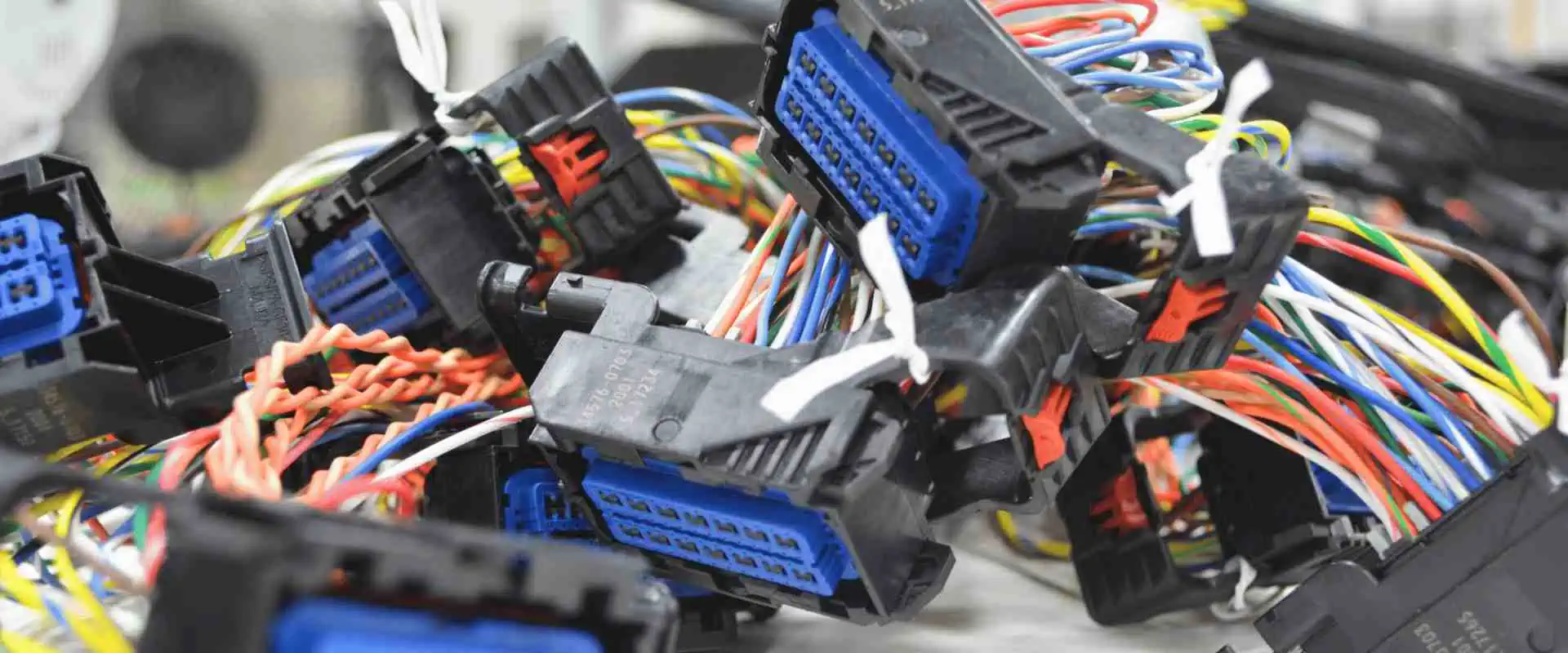
Electrical wire harnessing is an important process that comprises many steps. It is not wrong to say that these steps come together to bring out precision in electronics and electrical devices. 

Without this process, these electronics might fail to perform efficiently. 

The involvement of the current in this process is also a crucial factor that promises great results later. The purpose of a wire harness is to seamlessly execute the electrical transmission. 

Nylon is a helpful material to bind these wires together. The role of the wire harness is to conduct energy regulation and electrical transmission within an electrical device. 

Basics about Wire Harness Design

wire harness
wire harness

The wire harness is mainly for increasing the reliability and performance of electronics. However, it is better to learn about the basics of wire-harness design to have in-depth knowledge about it completely. In this section, we are going to take a look at some important factors that are helpful for the efficient performance of electronics in the long run. 

1.   Purpose

It is important to know that different wire harnesses have specific roles in electronics. Some are important for thermal resistance, while others serve for thermal regulation and current flow. Due to this reason, these are application and purpose-specific. Before using a wire harness, it is important to determine its purpose so that it will better perform for a particular electronic as well. 

2.   Wire selection

You need to rely on a wire which is suitable for your application. There are tons of wires available out there, and each of them serves a different purpose. So the type of wire you need eventually depends on the applications. Below are some helpful tips that will let you decide among the wire harnesses easily. 

ยท       Specifications of Wire Harness Design

You need to aim for considering wire specifications. Does it conduct a good amount of current? Is it good for thermal regulation? Can it work on a heat-sensitive electronic device? What is the impact of voltage on this wire? The better you will be able to study the wire specifications, it will be easier for you to choose the right wire for your application. 

ยท       Environmental conditions

The next thing is to select a wire harness that proves to be effective to withstand environmental damage. If your electronic device needs something like this, then it is better to choose from such wire harness designs that prevent weather and environmental damage to the electronic easily. 

ยท       Mechanical properties

You also need to rely on a wire type that has good mechanical properties. So that later it can prove to be useful for the efficiency of the electronic device you are using it for. Similarly, the electrical properties of these wires also play a crucial role in the optimum performance of the electronics on the whole.

3.   Wire connection 

Connectors are important for protecting the wires from environmental damage and providing them sustainability to work efficiently in the long run. However, the connectors should match the electrical and mechanical properties of the wire harnessing. Due to this reason, relying on suitable connectors is important, which proves to be healthy for electronics. 

ยท       Termination End Type

It is important to pay close attention to the termination and en-type. Be it wire-to-wire or board-to-wire, you need to aim for effective approaches for this purpose. This will help reduce the chances of failure and potential damage to the system on all counts. The termination depends on the nature and type of the electronics, and it implies the wiring too. 

ยท       Significance of Standardization 

Experts always recommend relying on standard components and wiring to prevent confusion and mishandling. Problems can occur when you are using an unfamiliar component for which you have no experience at all. The standard components will help you not only enhance the quality of the device, but their assembly and incorporation will also be much easier. 

4.   Routing 

You can never neglect the importance of routing for wire harnessing. Without accurate routing, these can fail to perform effectively. You need to aim for the correct position of the wires so that these can work effectively for the electronic device. Also, EMI regulation is important for routing. The purpose of routing is to reduce the chances of interference and signal disturbances. 

ยท       Segregating the wires

This step depends on the type of wires you are using. Also, first, determine the voltage and its purpose before segregating them. This leads to less interference and better connections of the wires at the same time. Due to this reason, with proper segregation, we can ensure the strong bonding of the wires to their electronics on the whole. 

5.   Strain relief 

When using wire harnessing, it is important to reduce the strain. The reason is that with this step, we can ensure better wire protection. In case when there is too much strain on the wires, these can loosen ad breakout as well. When this happens, the risk of short circuits and electrical fires increases. Therefore, reducing strain will prevent damage to a great extent. 

ยท       Strain-relief segments 

It is crucial to determine the components that can undergo serious damage due to strain. Also, replacing suitable strain-relief components is crucial sot hat we can prevent electronics from undergoing severe damage later. Strain-relief components are important since these not only mimic the functions of the crucial parts but also make the electronics work in a strain-free manner. Therefore relying on such special components is necessary to avoid damage as much as possible. 

ยท       Material Importance 

The materials of the wires are important to enhance their performance and efficiency. The reason is that good quality materials make them durable to work with highly sensitive and critical electronics. Due to this reason, the materials are of great importance to avoid complications in the performance and quality later.  

6.    Diagram of Wire Harness Design

The wire harness diagrams prove to be effective for a better understanding of the system. The reason is that through this approach, we can learn about the system in a much more comprehensible way as well. We can do this by using computer-based software like ECAD. Such software proves to be handy for the efficient development of these challenging diagrams. Another solution for this can be the Arcadia suite. It is a special supportive tool for the development of designs and seamless electrical simulation. With the help of these designs, it becomes easier to check the design quality and voltage changes on the whole. 

ยท       Recognize potential issues 

Arcadia Suite is a special tool for the development of such intricate diagrams. You can easily rely on this tool for the detection of potential flaws like voltage changes, current problems, and much more. This helps in the real-time detection of risks so that you can later fix these issues before the development of prototypes and practical assembly of the wire harnessing as well. In this way, we can ensure better quality and performance in electronics.ย 

ยท       Running up the design process 

When it comes to such diagrams, it is important to use your time efficiently. You cannot waste time on redundant steps and invest your time in what is necessary. Therefore, to speed up the process of diagram development, you can rely on Arcadia Suite. With effective options and quick tools, you can rely on this tool to cope with bulk diagram development easily. 

ยท       Ensure flexibility 

With the help of this tool, it is easier to ensure flexibility. Also, when it comes to the assembly of wire harnessing, you need effective and flexible options. This is possible with Arcadia Suite, which gives you much freedom for diagram development. Also, with an accurate diagram, it gets much more feasible to practically assemble the wire harnessing on all counts. 

7.    Protective covering 

The wire harnesses that come with covering are also considerable. These prove to be more durable as compared to uncovered wiring. The covering of these wires also proves to be effective when it comes to insulation from damage and abrasive environmental conditions. 

ยท       Material properties

For instance, if you are working on the design of an engine wiring harness, then it is important to take a look at the fluids, vibration, and rattles. Due to this reason, such factors can create problems if not treated in time. Therefore, the covering of these wires, which provides insulation, has to be made from effective materials on the whole. Heat shrink sleeves, spiral wrap, and pulled-on braided tubing are some common types. 

8.    Testing 

It is important to follow stringent quality control and inspection methods to completely check the wire harnessing. In this way, you can ensure better quality of the wire harnessing, and ultimately, the performance of the electronics also increases with this approach. 

The procedure of Wire Harness Design

Make sure to follow the process of wiring harness design below since we are going to discuss it in the following steps for better understanding!

  1. You can start by cutting the wires as per your diagram. There is a need for a special machine that helps in precise wire cutting. But in case you don’t have a machine for this purpose, you can rely on a wire cutter as well. Now it’s time to strip the wires and reach out to the material beneath the wires. The core is always metallic, and you will be able to find it between the crimping, aka connector housings. 
  2. At this point, we need to clamp the wires as per our diagram instructions. We can rely on crimpers to make this happen. Also, we need to use a workbench and a pinboard to do this step seamlessly. Once you have clamped the wires successfully, it’s time to tighten the connections using zip and cable ties. After this, it will be much easier to fit the cable parts according to the diagram.
  3. To wind up the process, it is important to check the efficiency and functionality of the wire harnessing through stringent testing methods. We will use a test board for this. You can either test single wires or check them collectively as well. If you don’t get the desired output, then it means there is a problem with the assembly. You need to make some adjustments in this case and find out the issues to ensure the accuracy of the setup. 

Mistakes to Avoid in Electrical Harness Design

Wire Harness Manufacturers

It is possible that wire harnessing might not work, which is due to the inaccurate diagram. Due to this reason, it is important to carefully read the tips below and try to consider them to increase accuracy on all counts. These tips are important to give you a vivid idea about successfully executing wire harness assembly without struggling with complications as well. 

  • Make sure you are cutting the wires in appropriate sizes to avoid problems with the connections. 
  • It is important to work with accurate signals and workflows so that functional and analytical needs can be fulfilled easily. 
  • There is no need to change the diagram instructions, and try to stick to the diagram as much as possible. 
  • Not using standard components can complicate the procedure, and due to this reason, problems with the setup can occur, leading to potential damage as well. 

Finding the Right Wire Harness Design Assembly Partner

There is no doubt that you can ensure better quality wire harness assembly by relying on ont he professional help for it. 

From nitty-gritty to exceptional performance, these partners provide you with much freedom of the wire harness assembly on the whole. 

You can also leave the technical work to them and easily avail of their professional services on the whole! Contact RayPCB for further guidance and details. 
Best 10 PCB Fab and Assembly Suppliers in 2023

through-hole assembly process

Introduction

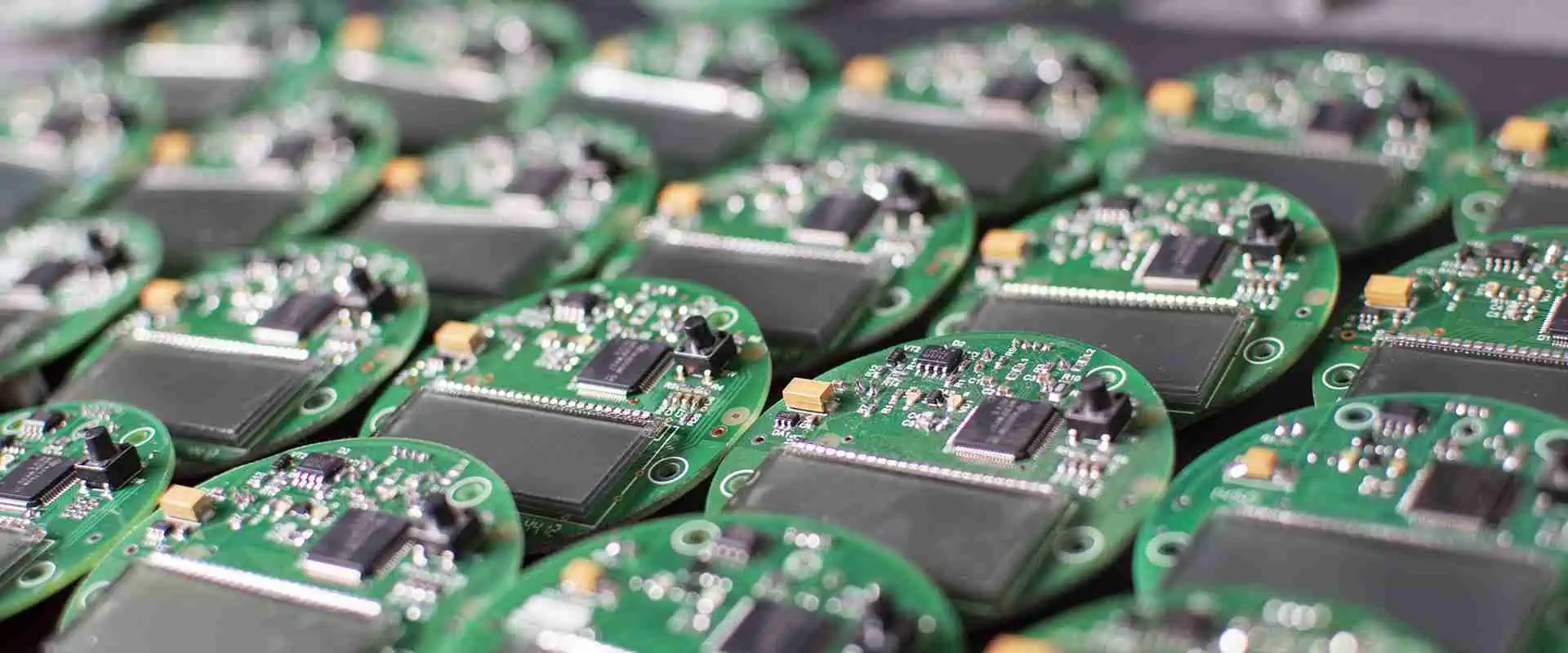
Printed circuit boards (PCBs) form the foundation of electronics products and systems. From consumer devices to industrial equipment, PCBs provide the interconnect platform to mount and connect components and Integrated Circuits (ICs). For any new hardware product development, identifying a capable PCB fabrication and assembly partner is crucial.

This article highlights the top 10 PCB fabrication and assembly suppliers that offer high-quality, cost-effective and fast turnaround solutions catered to prototyping and production needs. We evaluate their capabilities across parameters like technology expertise, quality certifications, production capacity, turnaround time, and ease of doing business.

Overview of PCB Fabrication and Assembly Process

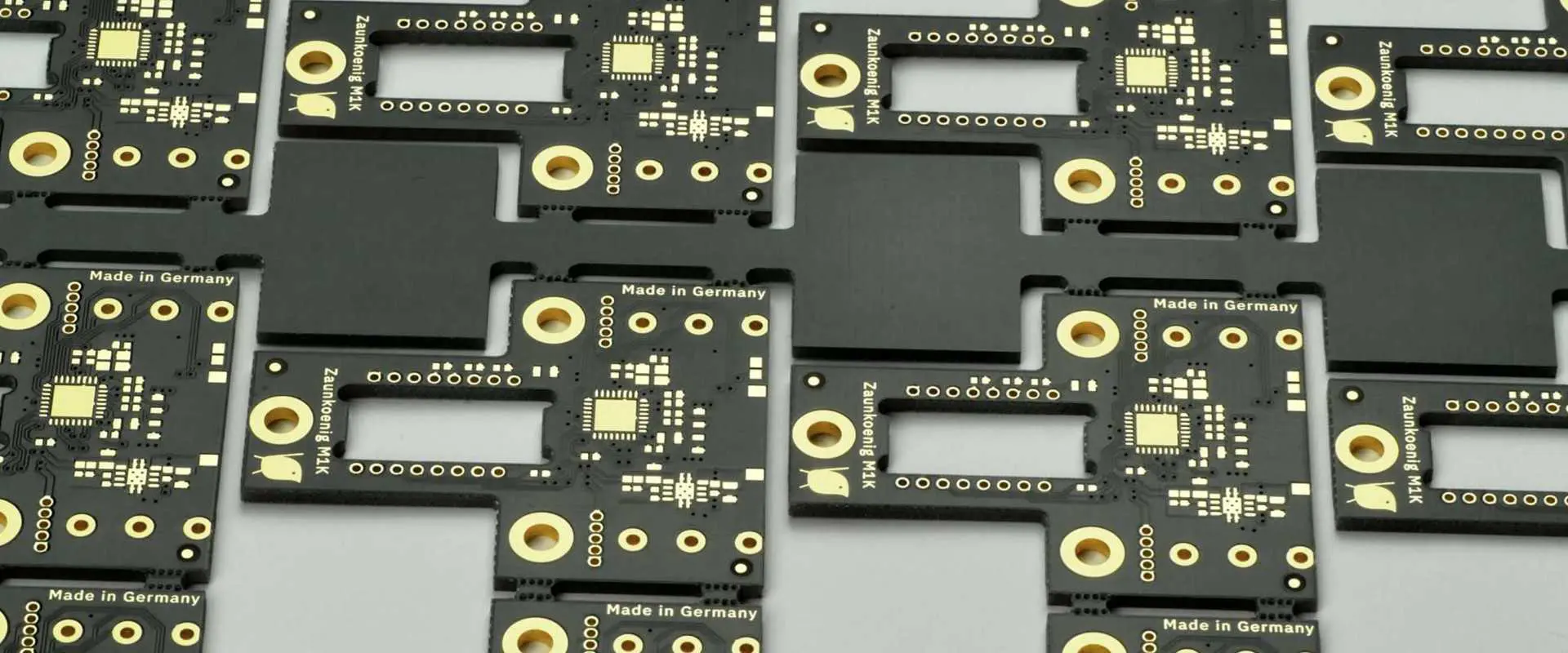
PCB fabrication refers to sequentially building up the copper layers and drilling holes within a laminated board substrate. Multilayer boards can consist of more than 12 layers of circuitry. The overall fabrication process involves activities such as:

  • Design – Creating schematics and PCB layout using CAD software
  • Prototyping – Producing initial test boards in low volumes
  • Fabrication – Sequentially processing raw PCB panels by adding layers of copper and etching circuitry
  • Drilling – Machining holes for vias and component pins
  • Plating – Electroplating copper surfaces and plating hole walls
  • Solder mask – Applying epoxy layers to protect copper traces
  • Silkscreen – Printing reference designators, legends, solder pads
  • Testing – Electrically testing boards for defects
  • Panelization – Integrating multiple PCB designs into a panel for efficiency

PCB assembly involves mounting and soldering components onto the fabricated boards using surface-mount (SMT) and/or through-hole technologies. Key assembly steps include:

  • SMT Pick-and-Place – High-speed machine population of SMT components on pads
  • SMT Reflow – Heating boards in an oven to fuse solder paste and attach SMT parts
  • Through-hole insertion – Manual or automated pushing of leaded components into plated holes
  • Wave soldering – Passing boards over flowing solder to fuse leads
  • Testing – Validating assembled boards for correct placement and electrical connectivity
  • Conformal coating – Applying protective finishes on assembled boards

By leveraging fabrication and assembly providers offering the complete end-to-end manufacturing capabilities, product teams can accelerate time-to-market and achieve volume production.

Benefits of Using Full-Service PCB Manufacturing Suppliers

Here are some of the key advantages of partnering with an expert PCB manufacturing supplier providing fabrication through final assembly services:

  • Faster time-to-market – Integration saves time versus separate fabrication and assembly vendors
  • Streamlined logistics – Smoother transfer of bare boards from fabrication to assembly lines
  • Quality – Unified process control results in higher reliability
  • Cost optimization – Eliminates duplicated setup costs and overheads
  • One-stop shop – Simpler to procure all services from a single vendor
  • Design assistance – Early DFM feedback to avoid manufacturability issues
  • Ramp to production – Consistent quality from low-to-high volume output
  • Supplier relationship – Working with fewer, trusted partners reduces risks

Combining PCB fabrication and assembly under one roof enables build optimization, standardization and responsiveness not possible with disjoint suppliers.

Top 10 PCB Fabrication and Assembly Suppliers

through-hole assembly process

Here are the top 10 premier PCB manufacturing service providers offering integrated fabrication through assembly capabilities globally:

1. RayMing Technology

Founded in 2000, RayMing is a technologically advanced PCB and EMS solutions provider catering to a broad spectrum of industries with over 500 employees globally.

Key capabilities:

  • Seamless PCB fabrication through complete turnkey assembly
  • Wide technology expertise – multilayer, HDI, flex, rigid-flex
  • High density PCB fabrication with 6L/6H line width/spacing
  • SMT assembly with component size down to 01005 (0.4mm x 0.2mm)
  • 0.2 mm microvia, LASER via forming
  • Complete testing – flying probe, boundary scan, x-ray
  • Wide certification – ISO-9001, ISO-13485, AS9100, UL, TS 16949

RayMing provides dedicated engineering resources across geographies to support customers through the entire product development cycle – from prototyping to design, fabrication, assembly, inspection, testing and logistics.

With robust quality systems certifications, automated manufacturing processes, capacity scalability, and optimized global supply chain, RayMing enables customers to achieve accelerated time-to-market at the right cost points.

2. Advanced Circuits

Headquartered in Colorado, USA, Advanced Circuits is a leading PCB solutions company catering to over 100,000 customers globally. They offer a complete suite of fabrication capabilities from prototype assembly through volume production.

Key capabilities:

  • Seamless 24/7 online quoting and ordering process
  • Multilayer PCBs with 16-layer stacking capabilities
  • Flex and rigid-flex PCB manufacturing
  • Volume production – up to 60,000 sq. ft. weekly output
  • SMT assembly with lead-free and RoHS compliance
  • Design – schematic capture, layout, DFM analysis
  • Testing – bare board electrical, flying probe, functional
  • Controlled impedance traces, 1 oz copper available

Advanced Circuits provides free PCB design software plus design analysis services to optimize manufacturability. Their online tools enable transparent quoting and order tracking.

3. Sierra Circuits

Sierra Circuits is an award-winning full-capability PCB solutions provider located in California, USA. They are heavily focused on new product introduction services tailored for prototyping and low-to-medium volume production.

Key capabilities:

  • Fast quoting within hours and instant online ordering
  • High-mix/low-volume and quick-turn fabrication expertise
  • SMT assembly with lead times as low as 5 days
  • Packaging assembly and box build services
  • In-house PCB design, fabrication and assembly engineering support
  • PCB sizes up to 60″ x 80″, panelization offered
  • Testing services include flying probe, ICT and functional testing

Sierra Circuits provides user-friendly online tools for design data transfer, DFM analysis, transparent quoting and order status updates. They are certified to ISO 9001:2015 quality standards.

4. PCBWay

Established in 2006, PCBWay is a leading prototype and production PCB fabrication and assembly manufacturer based out of China. They have extensive global presence across North America, Europe and Asia.

Key capabilities:

  • One-stop fabrication through complete assembly services
  • Optimized for low-to-medium volume production
  • SMT assembly with component density up to 0.4 mm pitch
  • 6-layer PCB manufacturing at minimum line/space 2/2 mil
  • Assembly testing – flying probe, AOI, X-ray, Vision Inspection
  • Seamless order management through web-based platform
  • UL, TS16949, ISO9001, and RoHS compliance

PCBWay offers dedicated engineering support for DFM analysis, resolving technical issues and providing cost optimization inputs throughout the fabrication and assembly process.

5. JLHPCB

JLHPCB provides advanced one-stop PCB fabrication and assembly solutions catering to a global customer base. They are headquartered in China with manufacturing facilities in the United States and South America.

Key capabilities:

  • Streamlined PCB fabrication through turnkey component assembly
  • Monthly capacity of 500,000 square feet of PCBs
  • SMT assembly with 01005 components, 0.3mm pitch BGAs
  • Flex PCB manufacturing support
  • Testing services – flying probe, AOI, X-ray, ICT
  • Seamless data transfer and order tracking through web interface
  • UL, TS16949, AS9100, ISO9001 certifications

JLHPCB offers dedicated engineering resources to review designs for DFM and resolve assembly issues during new product introduction. They also assist with component sourcing and procurement.

6. ALLPCB

ALLPCB provides advanced one-stop PCB fabrication and assembly services enabling customers to seamlessly transition ideas from design to high-volume production. They are based out of China.

Key capabilities:

  • High mix PCB prototyping through mid-volume production
  • SMT assembly with component sizes down to 0201 (0.6mm x 0.3mm)
  • 0.15mm microvias, 6 layer PCBs, 2 mil line/space
  • Testing offerings include flying probe, boundary scan, x-ray
  • Seamless interchange of data using online customer account
  • IATF 16949, ISO 9001, UL, RoHS certified
  • Design reviews, DFM, sourcing and supply chain support

ALLPCB offers online DRC checks, quotation generator, and transparent order tracking capabilities. Their focus is on providing the highest quality using automated manufacturing technologies.

7. WellPCB

Founded in 2006, WellPCB provides advanced one-stop PCB fabrication and complete assembly solutions catering to over 50,000 customers globally. They are headquartered in China.

Key capabilities:

  • High-mix, quick-turn fabrication and new product introduction
  • SMT assembly with 0201 components, 0.3mm pitch BGAs
  • HDI PCB manufacturing with 6 layers/0.15mm microvias
  • Testing offerings include flying probe, AOI, boundary scan
  • Engineering assistance for DFM, component sourcing
  • UL, TS16949, ISO 9001, RoHS certifications
  • Online order tracking at each stage

WellPCB focuses on optimizing quality while reducing cost and manufacturing cycles for PCB fabrication through final assembly.

8. Seeed Studio

Seeed Studio is an open hardware facilitator providing mini-batch PCB fabrication and assembly catered to makers, educators, and engineers. They are based out of Shenzhen, China.

Key capabilities:

  • Low volume PCB fabrication and assembly services
  • SMT assembly with 0201 components (0.6mm x 0.3mm)
  • Testing includes flying probe, automated optical inspection
  • Engineering support for design review and assembly issue resolution
  • Integrated order tracking and project management
  • Open hardware community engagement via Seeed Fusion
  • Eco-friendly manufacturing processes

Seeed Studio enables educators, makers, and engineers to transform ideas into tested open hardware solutions using their fabrication and assembly services combined with modular components available in the Seeed Fusion marketplace.

9. MacroFab

MacroFab is a leading provider of prototype and low-to-medium volume PCB fabrication and assembly services for engineers and contract manufacturers across North America.

Key capabilities:

  • 24 hour rapid turnaround quotation and ordering
  • Optimized services for NPI engineering teams
  • SMT assembly with 01005 components and 0.4mm pitch BGAs
  • Functional testing, flying probe, and X-ray inspection
  • Seamless order upload and transparency through web tools
  • Design for manufacturing review and optimization
  • Supply chain assistance with component sourcing
  • IPC, ISO 9001, ITAR, and MIL-PRF certifications

MacroFab specializes in efficiently fabricating and assembling low quantities within days to help accelerate product development cycles. Their focus is catering to engineers needing fast turn functional boards.

10. Epec

Epec is a full-capability PCB solutions provider with fabrication and assembly facilities across North America. For over 50 years, they have delivered boards for mission-critical defense, aerospace, medical, and industrial applications.

Key capabilities:

  • Defense, aerospace, medical, industrial electronics focus
  • Quick turn fabrication and new product introduction
  • SMT and through-hole component assembly
  • Conformal coating, potting, and overmolding
  • Testing services include X-ray, CT scan, functional
  • Counterfeit component avoidance processes
  • Cybersecurity management: NIST 800-171 compliant
  • ITAR and ISO certified manufacturing facilities

Epec provides end-to-end optimized and secure PCB production solutions, tailored for regulated industries requiring high reliability and stringent quality.

Key Factors in Selecting a PCB Production Partner

Here are some of the key factors to evaluate when selecting the right PCB fabrication and assembly partner:

Technical Expertise

  • Evaluating capabilities in latest PCB technologies (HDI, flex, high layer count, controlled impedance)
  • DFM analysis and guidance during design stage
  • Skills in assembling high density BGAs, uBGAs and other complex component packages
  • Availability of testing services like environmental stress screening (ESS)

Quality

  • Certifications – ISO, IATF 16949, AS9100, ITAR, UL
  • Process controls and procedures – design, manufacturing, change management
  • Upfront validation – design reviews, first article inspection, qualifications
  • Supply chain management – approved vendor lists, anti-counterfeiting

Cost

  • Pricing model – setup charges, tooling charges, unit price discounts
  • Standard vs. custom services provided to control costs
  • Geographic location – local vs. offshore pricing differences
  • Value engineering – component substitution, design changes

Lead Time

  • Cycle times for prototyping, low-volume and higher production
  • Assembly – spacing between fabrication, procurement and assembly stages
  • On-time delivery history and capacity bandwidth

Customer Experience

  • Responsiveness to quoting & engineering requests
  • Ordering process ease – documentation, file transfers, tracking
  • Overall communication thoroughness
  • Packaging and logistics services offered

Carefully evaluating PCB partners against the above criteria will help identify the right fit for your specific project needs in terms of capability mix, quality, affordability, responsiveness and ease of doing business.

Frequently Asked Questions

Q: What benefits does having both fabrication and assembly under one roof provide?

Having unified PCB fabrication and assembly enables greater quality process control and standardization. Materials and workmanship consistency from bare board manufacturing through final assembly avoids many defects. Engineering change coordination is smoother with a single partner managing the entire value chain.

Q: What testing is recommended for assembled PCBs?

Functional testing provides the highest level of validation by verifying assembled boards against electrical performance requirements. Other common testing includes in-circuit testing (ICT) for shorts/opens, flying probe testing for node/net connectivity, and automated optical inspection (AOI) of solder joints.

Q: How can new PCB suppliers be qualified for use in medical and automotive sectors?

Stringent qualification is required before approving new PCB suppliers for regulated industries like medical and automotive. It involves process audits, quality systems reviews, testing standards compliance, reliability studies, customer-specific qualifications, and site visits to analyze capabilities first-hand.

Q: What support do PCB suppliers offer if prototypes have issues?

If issues are identified during prototyping testing and validation, suppliers provide failure analysis support to diagnose root causes. Design modifications can be implemented through engineering change orders (ECOs). Components may be swapped based on learnings. Suppliers also leverage lessons learned to improve process controls.

Q: What are some key factors in maximizing PCB assembly yield?

Critical factors that enhance assembly yield include robust component sourcing processes, handling QFNs/BGA using no-clean flux, maintaining process consistency between runs, implementing inspection points, optimizing placement for difficult assemblies, matching reflow profile to paste, and having test points to verify soldering.

Conclusion

Selecting the right PCB fabrication and assembly partner is a crucial step in turning electrical designs into functioning boards ready for integration and testing. A streamlined, high-quality supplier with expertise spanning prototype to volume production enables product teams to accelerate time-to-market and achieve cost targets.

This article highlighted premier suppliers that offer integrated fabrication through assembly services under one roof. Leveraging their technical capabilities, stringent quality controls, responsiveness and seamless support ultimately results in higher reliability of delivering industry-leading electronics solutions.

What is Alumina Substrate?

Alumina Substrate

Given the rise in variations to PCB designs and the need to introduce new materials to the fold; it becomes imperative to use the right substrates. Also called PCB materials, these substrates help one to optimize the circuit board accordingly. Alumina substrate is one of the most-popular.

In this article, you will learn what an alumina substrate PCB is.

The Meaning of Alumina Substrate?

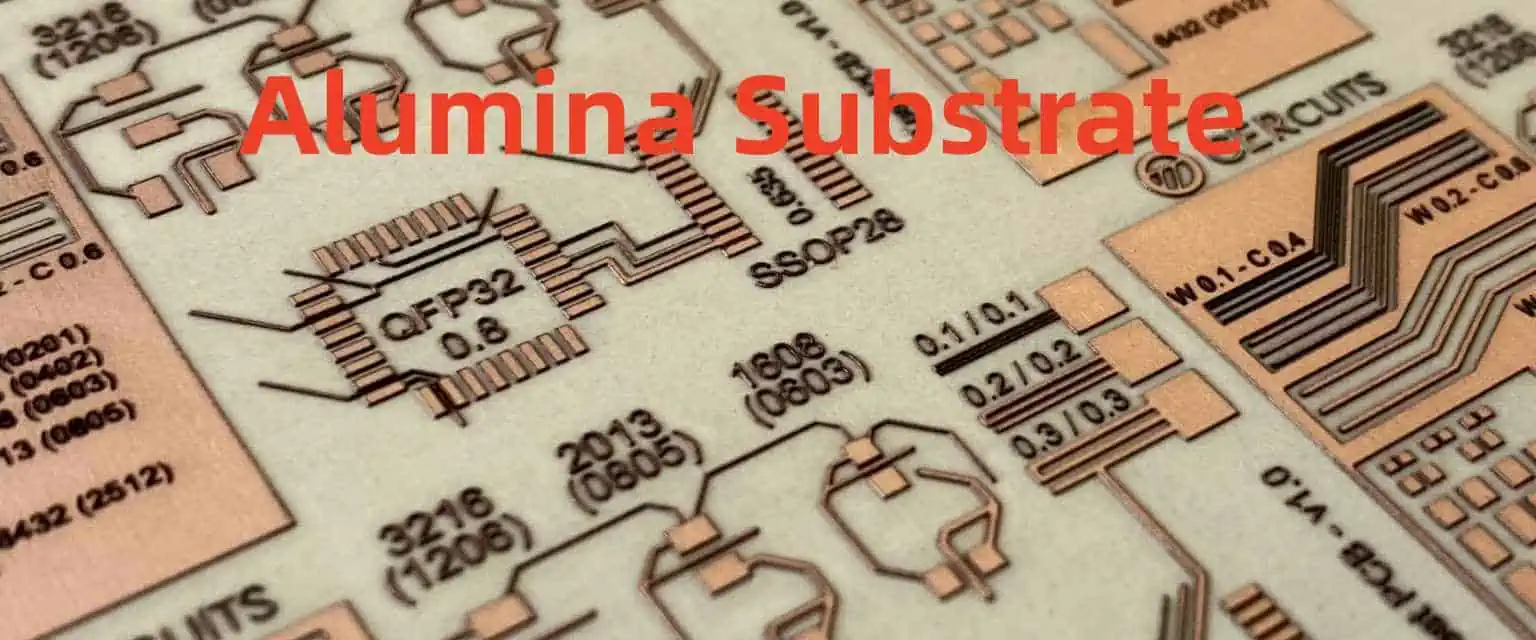
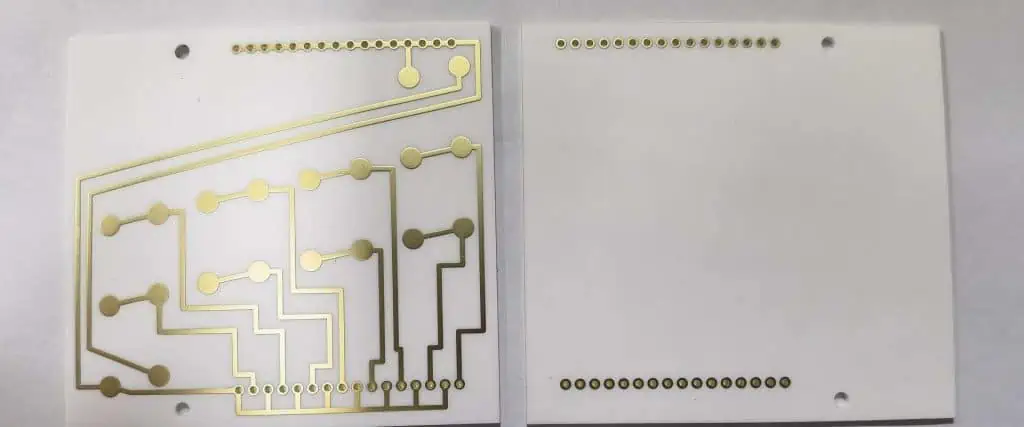
Alumina is one of the different substrates used in Printed Circuit Board (PCB) production. It is also a type of ceramic substrate, hence, the naming as alumina ceramic substrate.

Alumina (AI203) substrate has become one of the most-used circuit board materials because of the excellent breaking strength, the improved heat and insulation properties and the thermal conductivity.

It is also worth noting that this substrate is the favorite for manufacturing circuit boards that have a need for good mechanical and chemical resistances.

The Properties of Alumina Ceramic Substrates

0.635mm Alumina Ceramic PCB

The properties cut across the principal requirements for making reliable circuit boards. These include thermal conductivity and heat insulation.

Here is a list of some of the most-important properties of the alumina material:

1.    Excellent Mechanical Strength

The mechanical strength is based on the substrates ability to provide resistance and durability to the shocks, mechanical stress and vibrations.

2.    Improved Thermal Conductivity

The ability of a PCB substrate to conduct heat effectively is also one of the major factors worth considering when deciding on the one to go for. In this regard, the alumina substrate has an improved thermal conductivity, which aids in an excellent dissipation of heat in electronic device.

The good thermal conductivity also reduces the chances of overheating in these devices. This way, it helps to prolong the electronic componentsโ€™ lifespan, while maintaining the optimal performance of the same.

3.    Good Electric Insulation

Just as the substrate helps to dissipate heat, it also helps to insulate the devices. As such, the good electric insulation properties help in isolating or creation a division between the several circuit board elements.

By this, the electric insulation capabilities help in the provision of safe and reliable operation, as well as the prevention of short-circuiting.

4.    Good Smoothness

The material provides a combination of good smoothness and less porosity โ€“ a feature that supports an excellent adhesion with both thick film and thin film materials.

5.    Stable Breaking Strength

Alumina ceramic substrate has a very stable breaking strength, as well as less variances in the dimensions and shapes.

The following are some of the additional properties of an alumina substrate:

  • Smooth surface and small warpage
  • Corrosion resistance
  • Excellent fire resistance properties
  • High-light reflection
  • Small dielectric loss and;
  • Stable physical and chemical properties.
  • Very low adherence
  • Excellent dimensional stability, even in higher temperatures.
  • Resistance to oil and chemical products.
  • Higher resistance to wear and corrosion.
  • Lesser variances in the slit pitch, outline and plate thickness.

Types of Alumina Substrates

You will find two (2) different types of alumina substrates in use. These are the Sintered High-Density Alumina and the Sintered Porous Alumina.

Before we go into the differences, let us quickly point out that alumina is the main composition of the alumina substrate.

1.    Sintered High-Density Alumina

This type of alumina ceramic substrate has the alumina content ranging between 96% and 99.6%. It also has the substrate readily available in two (2) products.

For this type of alumina substrate, you will find it available in different thicknesses, such as:

  • 0.15 to 0.25
  • 0.38 โ€“ 0.5
  • 0.75 to 1
  • 1.27 to 1.52 and;
  • 2 mm.

For the dimension, you will have the Sintered High-Density Alumina Substrate can be found in different options, including:

  • 50.8 x 50.8 mm and;
  • 168 x 168 mm.

The features include:

  • Good thermal conduction.
  • Usable as electrical insulators.
  • Higher resistances to abrasion and corrosion.
  • Exceptional flatness and;
  • Low adherence.

2.    Sintered Porous Alumina Substrate

This is the second type of alumina substrate. The Sintered Porous Alumina Substrate is lighter than the former (Sintered High-Density Alumina Substrate); even though it shares similar properties โ€“ chemical, mechanical and electrical.

The Sintered Porous Alumina Substrate thickness includes:

  • 1 to 1.5 mm and;
  • 2 mm

You will also find this material available in different dimensions, such as 100 by 100 mm and 168 by 168 mm.

The major attribute of this substrate is the porosity, which supports the following:

  • Homogenous diffusion of a fluid.
  • Filtration of liquids and gases.

Benefits of Alumina Substrate PCBs

Several advantages can be derived from using this type of substrate in your PCB. From improving heat conduction and making the electronic components less susceptible to fire; alumina substrate can be very beneficial.

We have explained in details below, some of the benefits of using alumina substrate in your circuit board.

a.    Extended Lifespan

The heat conduction properties readily come in handy for the extension of the electronic applicationsโ€™ lifespan. By reducing the heat trapped within the devices and components; it makes it possible for these to be used for a long time to come.

b.    Efficient Thermal Management

Thermal energy or heat can be a militating factor to the performance of an electronic device. For context, excessive heat is generated by the electronic components, as the device or application operates. By doing so, the heat continues to accumulate and might go beyond the recommended temperature.

Hence, the thermal management in the alumina substrate, which is up to 30 W/m.K, makes it possible for the substrate to facilitate faster heat dissipation from the system.

c.    Reliable Performance

Alumina ceramic substrateโ€™s good electrical insulation properties makes the performance reliable. The durability that this offer is the reason why the material is highly-recommended for the applications that require stability.

d.    Higher Temperature Resistance

With a higher resistance to temperatures, alumina substrate makes a good fit for the electronic devices that are used in high-temperature environments. Also, this makes the material ideal for the environments where the performance of electronic devices does not need to be compromised.

Applications of Alumina Substrates

You can use these materials in both electronic devices and applications that require optimum performance and reliability. The following are some of the typical applications:

a.    LED Devices

Alumina materials are used in the Light Emitting Diode (LED) market, where they are used to improve the reliability and heat conduction of these applications.

Besides, these substrates are effective in the faster dissipation of heat and excess thermal energy generated by the LEDs. This results in improved performances and lifespan.

b.    Printed Circuit Boards (PCBs)

Circuit boards are one of the use cases for the alumina substrate. The usages here range from providing stability and reliability to the electronic components, and the provision of a reliable platform for the creation of complex PCBs and mounting of the electronic components.

c.    Power Electronic Devices

The alumina substrates can also be used for the power-related electronic devices. Examples are:

  • Inverters
  • Power modules

These materials are useful in these regards because of the excellent electrical insulation and thermal conductivity properties.

Besides these three, the alumina substrates can also be used in the following applications:

  • Filtration of liquids
  • Sintering equipment
  • Catalyser
  • Chip resistors
  • FAX substrates are used for the thermal printer heads.
  • Oven construction elements
  • Electronic sensors and;
  • Medical technology/devices.

Stages of Manufacturing Alumina Substrates

Different steps are used when producing alumina substrate. The robust and high-quality manufacturing processes include:

a.    Raw Material Selection

The raw material will be selected first and the major concentrations are on the particle size distribution of the powder and the purity. By choosing a high-quality alumina powder, you are sure of getting a high-quality substrate in return.

The best raw materials to use are aluminum oxide powder, and aluminum hydroxide. Any of the two can provide you with the desired consistency and composition, provided the mixing and blending process is accurate.

b.    Powder Preparation

You can also prepare the powder, by using any of the following options:

  • Washing
  • Grinding
  • Filtering and;
  • Mixing.

Note that this preparation method is utilized to control the purity, size and shape of the powder.

c.    Forming Methods

These processes include the mixture of the powder to form a green sheet. Extrusion and tape casting are some of the techniques used for this purpose. Following the mixture, the green sheets would then be cut into the desired size and shape.

This method is also called molding and has to do with the shaping of the powder into the desired substrates. The techniques or processes used in the molding stage include but are not limited to:

  • Compression molding
  • Injection molding
  • Extrusion molding

d.    Sintering Process

This is also called the firing process. At this stage of alumina substrate production, we are looking at the sintering and densifying of the material.

Have in mind that the sintering process is used because the molded substrate doesnโ€™t have the desired reliability. Hence, it is subjected to a high-temperature sintering process during which the particles are fused together and made to have the desired reliability.

The outcome is usually a molded substrate with a dense footprint, crystal structure, having the required mechanical strength, possessing the best electrical properties and having an optimal density.

Final Thoughts

Alumina ceramic substrates make PCBs and other applications, such as LEDs highly-reliable, usable across different applications and having a prolonged usage.

Why is the Constant Current Circuit Important?

Constant Current Circuit

During analog circuit design engineers often encounter current source and voltage source. Voltage sources like a 12V adapter or USB standard 5V output usually have a constant voltage. However, there is more to say about current sources. Some circuit designs require engineers to make use of a constant current source, particularly those involving switching circuits and Op-Amps.

These designs require a supply of constant current with fewer or no interruptions. So, what is the function of a constant current circuit and what are its uses?

What is a Constant Current Circuit?

A constant current circuit ensures a constant current gets to a load regardless of the variances and changes in a load resistance. This means that a constant current source provides a consistent output current everytime.

Irrespective of the variations in resistance, this source must supply a constant current. A constant current source is a requirement for circuits with regular current.

A constant current source is a very valuable component in a constant current circuit because it offers steady current even if the resistance changes. Also, a constant current circuit requires a steady supply of current without any form of fluctuations.

What is the Function of a Constant Current Source?

A constant current source functions as a power generator with higher internal resistance than the load resistance it supplies power to. Due to its high internal resistance, it ensures a steady current to a load which has a varying resistance value, even above a high range.

A constant current source works based on the principle of current division. Since it has a high internal resistance and low load resistance, the current passes through the path with least resistance, comes out of the current source and goes into the load resistance. Power generators with constant current sources can keep supplying a steady current for a fluctuating load resistance since it has a high internal resistance.

A constant current source is one of the best ways to ensure constant power driving especially for a number of devices where there can be variation of load like LED strings. These circuits generate an I-V characteristics which is denoted by a straight line.

What is the Difference Between a Constant Current Source and Constant Voltage Source?

Current Circuit
Current Circuit

Constant current source is different fromย  constant voltage source, although they sound similar. Each of these power supplies differs in terms of their functions and applications. Therefore, it is important you choose the suitable power supply.

A constant current is a type of direct current which maintains its intensity regardless of the resistance value. If an electrical load varies, a constant current source will help in regulating the load to a constant current. Furthermore, a constant current source keeps a current at a constant level, no matter the changes in voltage supply.

A constant current power supply is applicable in LED lighting systems. The brightness of the LED changes in response to the current value.

On the other hand, a constant voltage regulates the output voltage to a constant level. This type of power supply offers constant voltage irrespective of the electrical load. Constant voltage is commonly used in most DC benchtop power supplies and power supplies in electronic circuits.

Good examples of constant voltage sources include regulated power supplies and batteries, although batteries need charging or replacement.

What is the Constant Current Source Circuit of LM334, TL431, and LM317?

The constant current source circuit is a source connected to the load it is powering. The LM344 is a very stable constant current source that comes with three terminals. This current source can function at current levels ranging from 1uA to 10mA. The operation level of this current source depends on an external resistor Reset.

With LM317, it is possible to use three pins to create a current of 1 amp. Also, there are TO-92 packages that feature TL431 part. You can consider a TL431A as a temperature-compensated variable that can serve as a voltage source and a constant current source. Always ensure the input voltage, output voltage, and switch nodes are measured properly.

Electronic Circuits that work on Constant Currents

Simple resistor current source circuit

There is only one resistor in a simple current source circuit.  The output current is independent of the load when the voltage that needs current is lower compared to the source voltage. Furthermore, the voltage source has an infinite voltage and the resistors have limitless resistance.

Constant current source circuit using transistor

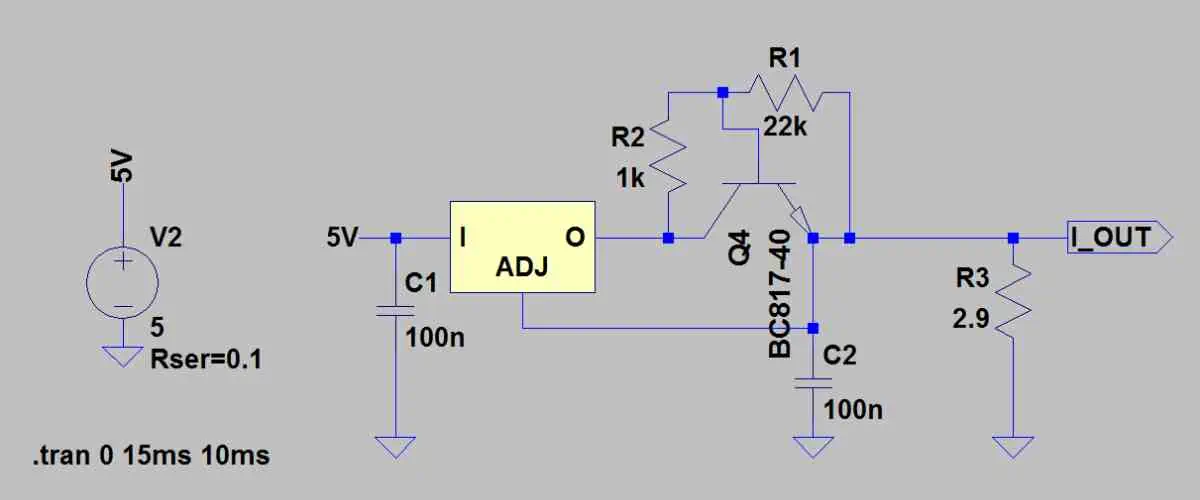
It is possible to get a constant current source when you use a transistor with other components such as resistors.

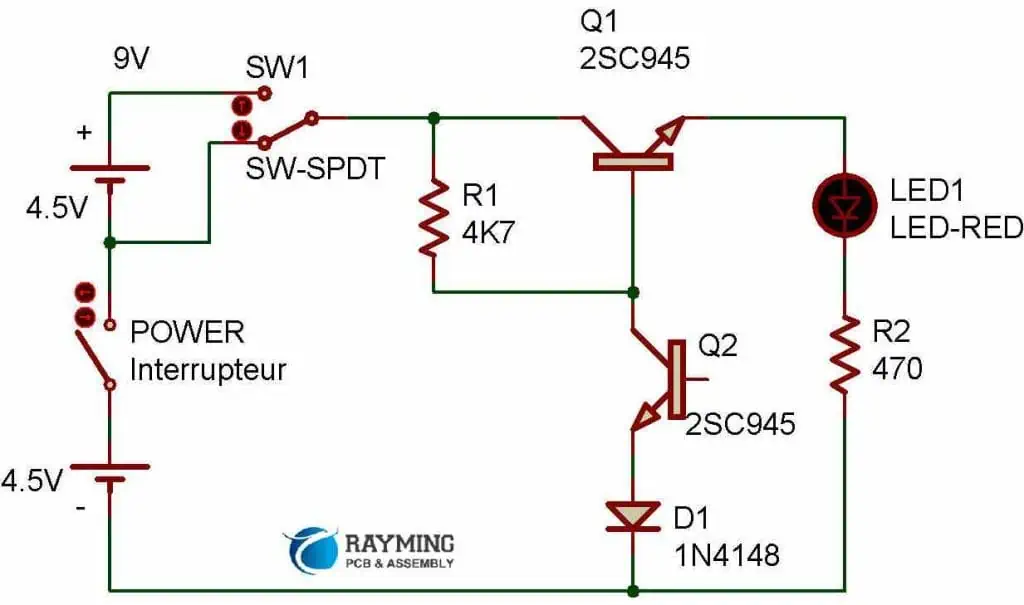
Simple stabilized active current source circuit

Also, you can change some electronic components in a circuit to add some regulations. Therefore, it is possible to get rid of current fluctuations as a result of changes in voltage supply.

What are the Applications of Constant Current Circuit?

Constant current circuits are widely used in many applications since they ensure steady constant current source. For example, LED lighting systems and battery charging circuits require a steady constant source. Also, constant current source is an important consideration for portable devices need There are other applications which use a constant current source include:

  • Solar energy system
  • Electromagnetic fields
  • Hall Effect sensors
  • Amplifying audio system
  • Zener diode biasing regulator circuit

What are Variable Power Supplies?

Variable power supplies are components or devices that feature a means to adjust the output voltage and as well as the output current. It is possible perform this adjustment via a control panel and a switch. For instance, you can use the control panel to adjust some settings and also make some changes between CV and CC modes.

The voltage of the original power source transferred to the circuit can be regulated by a variable power. For example, a model train requires you to use a switch to increase its speed and minimize the voltage supply.

Conclusion

Constant current circuit relies on a constant current source which connects to a load that it is running. This source ensures there is a continuous flow of current regardless of the voltage or resistance.

The Significance of Circuit Board Testers and Methods for PCB Repair

Board Tester

PCBs that are newly manufactured arenโ€™t usually apt. This means that manufacturers could weld some of the parts poorly and the components would fail. This is why it is important that you understand how the circuit board tester works. This allows you to understand when there is a fault beforehand. This is why it is important to know the tests to conduct and the instruments to make use of.

Advantages of the Circuit Board Tester

  • Reduces repair costs: Any faults can be reduced before you start enjoying the use of your PCB.
  • You can make bulk purchase of PCB products knowing well that you can reduce the quantity of returned products
  • PCB components that are poorly assembled can result in much risk when handled. When you check beforehand, it could serve as a lifesaver to you as well as everyone around you
  • Manufacturers know that they could lose their businesses as well as their customers. Therefore proper testing and care strategies are very important to them.
  • Reduces wastage: Testers make use of small-scale prototypes and assemblies rather than complete products. After full testing, you can throw the prototype away without having to lose the full-scale crowd.

Categories of Circuit Board Testers

Circuit Board Tester

Circuit Board Tester for Visual Inspection

This is the easiest and simplest type of inspection because it deals with a visual check. What this means is that the PCB distributor or buyer only needs to check the board of the product with his or her bare eyes or utilize a magnification tester or equipment.

Note that this inspection method is the cheapest, so far you donโ€™t use magnification equipment. Things are done easily and the shortest time is taken. Considering the downside, you may miss out on important components like hidden solder joints.

Check for open circuits and short circuits

Handling open and short circuits could be frustrating. This holds true most especially when they disturb the average PCB current flow. Therefore, with early detection, future disturbances are prevented. Circuits can be quickly inspected virtually. All you need to do is have an accurate view of the OCBโ€™s entire surface

V/I Test Signature Analysis

This is a troubleshooting non-powered inspection technique for a complete faultiness in a PCB. To do this, you can make use of a current/voltage tester. Here, you will be measuring the current and voltage response of the network. On a waveform, there would be a vertical deflection for the current, while horizontal deflection is seen for voltage.

Methods for Circuit Board Testers

PCB distributors or buyers have to know the different test methods. These testing methods are very important to the electronic contract manufacturers. They provide different testing methods to customers because they know the consequences that come with failed printed circuit boards. Here are some of the reliable circuit board tests.

Circuit Board Tester for In-Circuit Test

This is also called bed-of-nails test and it is utilized by the PCB operators and ECMs for powering up and stimulating any discrete circuitry present on the circuit board. The most recommended PCB testers type is the in-circuit testing. It is expensive; however the prices might vary from one of the PCB fixture size and board to the other.

Also, in-circuit test checks for capacitors, resistors, open circuits, as well as other components. The circuit board users would understand if your assembly is right.

Circuit Tester Board for Flying probe test

This is also called fixtureless in-circuit test. It is a cheaper testing method in contrast to the in-circuit test. This reduced cost could be due to the fact that they donโ€™t have fixtures. These fixtures are referred to as the costliest equipment used. The fixtureless testers feature scarce limitations on the board contact.

These boards could be tested with different nets. In addition, they could let test developers finish programs quickly.

Automated Optical Inspection

This is another important technique applied by the ECMs during the process of manufacturing and then testing of the equipment with the printed circuit boards. This allows for precise and quick inspection of the PCB products. This leads to an overall improvement of the overall quality of the board. However, it does not power the board up, let alone all the parts that donโ€™t have full coverage.

Aging Test

The manufacturers usually carry out this test in determining a PCB boardโ€™s operational life. The thermal aging testing is the best-known aging test type. The TAT tests a board componentsโ€™ aptitude to hold back harsh environmental conditions even for long periods.

TAT could help in stimulating high temperature as well as a full PCB assembly analysis chamber. Due to the placement of the components under harsh temperature conditions, the method helps in the acceleration of the process of aging.

X-ray Inspection

The technological steps used in PCB creation have resulted in the sophisticated products that are sold in the marketplace. With respect to these circumstances, you wonโ€™t miss out on densely populated products. Therefore it is impossible to see some solder connections that are hidden. Therefore, for this case, the X-ray inspection equipment can be utilized. It comes with benefits that other methods of testing donโ€™t provide like the detailed inspection of the solder joints.

PCB components are known to absorb x-rays with respect to its atomic weight. What we mean is that heavier elements usually absorb more, while lighter ones usually drink less.

Circuit board tester for functional tests

From the name, functional testers help in testing the circuitโ€™s functions. The staff handling the testing will make use of the test in confirming that the product will work. This is usually conducted at the concluding stages of manufacturing. This ensures the parts manufactured wonโ€™t fail instantly or soon after testing.

Conclusion

We hope the information provided on the circuit tester board has allowed you to choose the different testers and carry out your inspection. Some of the circuit board testers are higher than others. After going through, you should have your own experience to enable you to verify the article.

As regards clarifications, queries, or comments, you can contact us. As usual, we are always happy to share our knowledge and discuss with you.

What is the Standard PCB Panel Size?

PCB panelization

The size of a Printed Circuit Board (PCB)โ€™s panel can impact the outcome of the design. It is all a part of the broader panelization method. In this article, you will find out what the ideal size of a circuit board panel is.

What is PCB Panel?

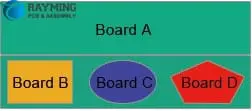
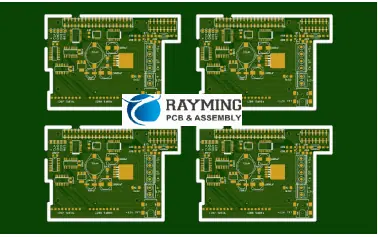
The panel refers to the platform where the circuit board is fixed for full production. In another perspective, it has to do with panelization โ€“ the process of fixing several circuit boards on the same panel.

How Important is PCB Panelization?

The panelization of a circuit board is important for these reasons:

  • It helps the circuit board designer to determine the number of panels that are required for the board.
  • With panelization, multiple circuit boards can be fixed to form a single array.
  • You can also use panelization to determine the amount of waste to be realized per panel.
  • PCB panelization could aid in streamlining the production process, especially with the formation of a larger panel and the placement of individual, smaller circuit boards on the top.

Common PCB Panel Sizes

Combination Panelization

You will find an array of options when measuring the size of a circuit board panel. The common measurements include:

  • 18 by 24 inches
  • 18 by 12 inches
  • 9 by 12 inches and;
  • 9 by 24 inches

There is also a need to have a space between the boards on the panel. This is essential for automated routing and allowing for manual removal. The space given often differs by the PCB manufacturer โ€“ while some go with the standard 0.5-inch or ยฝ, others would prefer 1-inch.

Nevertheless, the 0.5-inch spacing is prioritized for the double-sided circuit boards. If it is a single-sided circuit board, then using the 1-inch clearance around the panel border is recommended.

The space between the boards and which is positioned near the panel border is not the only one given. You can also use a routing space of 0.1-inches, which would be given between individual circuit boards on the panel and not used for any other purpose.

Balancing the Space Constraints in PCBs

The spaces left in a circuit board might be limited or multiple, depending on the PCB panel size standard used. While the aforementioned are the common sizes, you can also make modifications if the panel is meant to occupy more boards.

Here are some of the important points to note:

1.    Take Cognizance of the Size from the Onset

By recognizing the size availabilities at the onset, you can determine if the panel has enough spaces to hold the circuit boards. Look over the horizontal length and width to see if these would provide enough surface area for matching the clearance requirements, the numbers of circuit board components, and the traces and connections.

2.    Be Selective with the Board Sizes

You also need to be choosy with the size of the panel. As a rule of thumb, do not use board sizes below 75 mil by 75 mil. This will give enough space to fit the components and make other modifications to the panel.

3.    Using the Panel Sizes is Recommended

Your Contract Manufacturer (CM) can also determine whatโ€™s best for the device, make the necessary variations and determining the best panel size to use.

However, sticking to any of the standard PCB panel sizes is ideal because it will help you maximize the yield (the number of circuit boards) placed on the panel. The manufacturer can also make additional changes that reflect on reducing the overall costs and producing a few extra boards per panel.

4.    PCB Dimensional Adjustment

Looking to get more circuit boards produced per panel? Besides relying on a manufacturer, you can also rotate the boards or make a slight modification to the boardโ€™s dimensions.

5.    Consider Combining Different Circuit Boards

It is also possible to place several circuit boards of different sizes, but with the same thickness, on a PCB panel.

There is also a possibility of placing a series of PCBs with different arrangements on the same panel.

With any of those two options, you can be sure of getting more circuit boards produced on the same platform, just by reordering the placements and using different PCB panel sizes.

What You Need to Know About a PCBโ€™s โ€œUsable Areaโ€

Order Panelization

A usable area in a PCB panel refers to the part or section where most of the panelization processes can be fully-implemented. Hence, any actions taken out of this space might result in a lower yield.

On this ground, the following facts are worth noting:

a.    Larger Process Area is Ideal

A large process area or more space is recommended, because it helps you to fit more boards into the panel. Besides, a larger process area is cost-effective, as it drastically reduces the efforts and numbers of boards to be produced with difficulties.

b.    Use Tabs on the Panel

There may be a need to use tabs on the circuit board panel. This is the case when the space is limited. With the tabs, you can have Through-Hole (THT) parts passing through.

This is highly-recommended when the client asks the Contract Manufacturer (CM) to deliver a complete panel.

Hence, by using tabs or holes for locating, the easy breakaway for the insertion of THT parts will be realized. This can as well, be extended beyond the usable area of the PCB panel.

Optimizing the Standard PCB Panel Size via Panelization Methods

Several panelization methods can be used to further optimize the numbers of circuit boards that can be fitted onto a panel. Find out more in the next paragraphs.

a.    V-Score

The V-scoring method of panelization has to do with the use of V-shaped grooves to differentiate the circuit boards. By using a machine to complete the breakout process, the depanelization process is simpler and reducing the thickness of the board is realized by using an angled blade.

b.    Solid Tab

The solid tab panelization method deals with the use of solid tabs to design arrays between the circuit boards. This process also boosts the overall strength of the boards.

A wide range of options can be explored for depanelization. Examples are:

  • Depaneling Router: this is not always used because of the dust and vibration it causes.
  • Laser-Cutting Machine and;
  • Hook-Shaped Blade: although this depanelization method is affordable, it is not efficient.

c.    Tab Routing

This is recommended as an option when the V-scoring panelization method doesnโ€™t work. Tab routing a PCB means pre-cutting the board at the array and using perforated tabs to hold it.

Out of those three options, the V-scoring panelization method is recommended for these reasons:

  • It reduces surface stress.
  • In addition to being affordable, the method is also easy to depanel.
  • It increases material utilization.
  • The V-scoring panelization method enables an easy removal of the circuit boards from a single panel. As such, spaces can be created for placing more boards, in place of the open space, initially designed for creating a route path.

The Correlation between PCB Panel Size and Board Thickness

pcb panel & pcb panelization

The standard PCB panel size can, sometimes, not make do without the thickness. The standardization of the circuit boardโ€™s thickness can be dated back to the days of commercialized Integrated Circuits (ICs), but that is a story for another day.

Currently, there is a relationship or synergy between the size and thickness of a PCB. On one hand, using the right thickness and combining it with the ideal PCB panel size aids the realization of a perfect circuit board.

The question then is, โ€œwhat is the ideal PCB thickness?โ€ While there are ranges to this, the standard PCB thickness is 0.06-inch or 1.57mm. This is recognized as the standard, because it can fit into different applications and meet your needs.

However, this is not ruling out the possibility of โ€œstepping downโ€ to smaller options, especially if your applications require so. In that case, you can explore from any of the following:

  • 0.031-inch or 0.78mm: for smaller applications and;
  • 0.093-inch or 2.36mm: for larger applications.

The PCB thickness is important for these reasons:

  • It plays a crucial role in the upgrade of a circuit boardโ€™s core. For example, the 2.36mm or 0.093-inch or thickness can be used to extend a four-layered circuit board stackup, up to 6 layers.
  • If you are extending the four-layer stackup to 8 layers, you would need to use the PCB thickness of 3.18mm. In addition, you will add new core/prepreg layers to the original stackup.

Although the thickness is important and can help the PCB designer make an excellent design, it should be used with moderation. Here are some precautions to take:

  • The focus should not only be based on the circuit boardโ€™s thickness, but also on the standard panel sizes.
  • Use a thickness value of 0.063-inches for an average PCB.
  • Avoid using a prepreg dielectric layer thickness that is below 3 mil.

Conclusion

Using the ideal PCB standard panel size can save you the headaches of not placing more boards on a panel and optimizing the same for the best performance. As a general rule, the panel size and the PCB thickness should match for optimum performance.

What are the Materials and Components of Rapid Injection Molding?

rapid injection molding

Rapid injection molding, denoted as RIM can be described as a process of injection molding that is designed for manufacturing small batches or groups of plastic components with lead times that are much shorter.

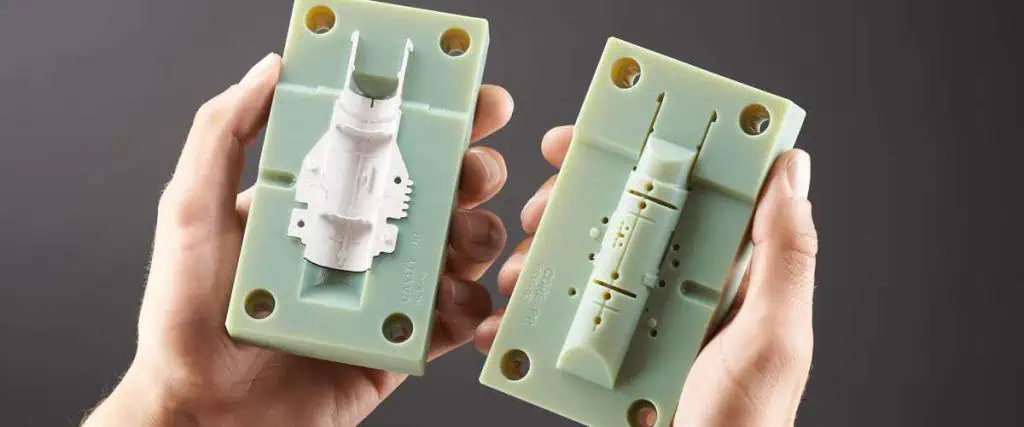
Generally, this equipment utilized for rapid injection molding is similar to that utilized for normal injection molding rather than the rapid injection molding molds which are designed for the fast turnaround rather than for production durability for long series.

The gain in the idea to manufacturing lead time is seen mainly from utilizing mold materials such as aluminum that can be machined easier and less expensive compared to the standard materials for injection molds. These molds will lack the needed durability for long production runs; however they work well for runs that are smaller, with a minimum of 500 parts.

In this article, we will be describing the process involved in rapid molding. We will explain the way it works, and we will discuss the type of equipment utilized. Also, we will provide you with some tips on how to select the best part materials.

What Does Rapid Injection Molding Mean?

Rapid injection molding utilizes standard injection molding techniques and equipment. However, they achieve this within a very short lead time and at a lesser cost. The short lead time is great for the custom prototypes as well as producing the limited volume runs to straighten out all potential issues elating to the design before going into full-scale rapid molding.

The speed is majorly as a result of using less expensive molds as well as materials that are easy to machine such as aluminum which could be produced within few weeks. Also, rapid injection molding should not be mixed up with the reaction injection.

Where Can Rapid Injection Molding be Used?

 injection molding
injection molding

The process of rapid injection molding is mainly utilized for research, rapid injection molding prototyping as well as developmental applications, which donโ€™t need millions, thousands, or as few as hundreds of parts. Rapid injection mold is well suited to production runs having volumes of a minimum of 500. With this, engineers will be able to test all their designs even with less capital investment rather than committing to the expensive, lengthy lead-time tolling required for the series production of high volume.

Usually, producing injection molds can cost very much in part due to the fact that they have to be manufactured from very wear-resistant materials. This is to make sure that they will be able to withstand the stress involved in production use for long use.

This is why rapid injection molding is usually utilized in bridging the gap formed between the initial design as well as the full-scale production. This is a less expensive option for testing the new materials, products, as well as design tools. Also, RIM may be utilized in managing the sharp increases in the volume of product demand.

How Rapid Injection Molding Works

The parts for rapid injection molding have to be designed using DFM principles. RIM mold are specifically created cheap and quickly manufactured making use of off-the-shelf and standard materials. Also, aluminum molds are utilized because they can be machines quickly and easily, but wonโ€™t be able to deal with high-volume manufacturing.

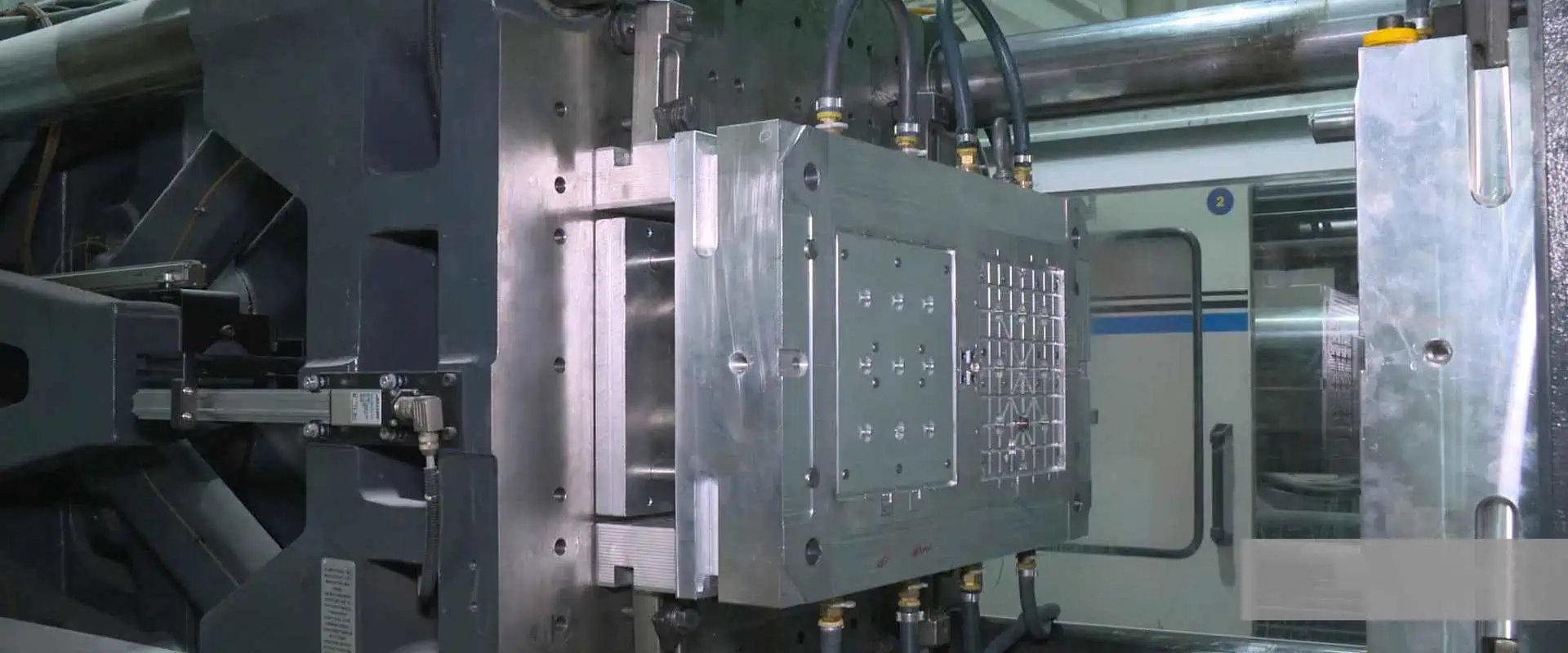
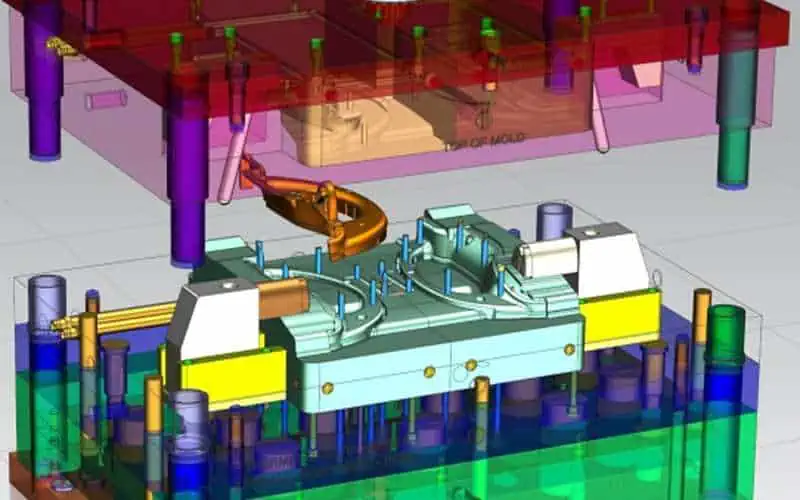
Immediately the manufacturing of the RIM mold is done, these two halves (cavity and core) may be mounted n the moving and stationary plates of thee normal setup of the injection molding machines. This is due to the fact that the remaining process of molding is similar or both the standard and RIM injection molding. The moldโ€™s halves are brought closely together and then held tightly in place with the use of hydraulic rams.

More Information on How Rapid Injection Molding Works

In order to make the part making use of the rapid injection molding process, raw materials used typically thermoset and thermoplastics silicones) is fed in a screw, which is housed inside a cylinder referred to as a barrel.

 Combining the heat offered by the external heaters, which are mounted on a barrel, which shear producing the heat between plastic pellets as well as the screwโ€™s action inside the barrel, helps in melting the plastic pellet. Immediately enough plastic is melted, this screw will push the plastic in the mold via a nozzle, as well as a valve that stops the receding of pressure back inside the screw.

Furthermore, high-pressure plastic will then fill the mold, and then hydraulic rams make sure that the plastic doesnโ€™t ooze out between its old halves.

After some seconds, this plastic will solidify causing the mold to open. This part will then be ejected making use of ejector pins, and screw retracts, and then the process will repeat again. You must note that the process of rapid injection molding will not produce any individual parts faster compared to the standard injection types.

Places Where Rapid Injection Molding Equipment are Made

Rapid injection molding equipment is manufactured by manufacturers of injection molding machines. These manufacturers are typically located in the United States, Europe, and China.

Take note that the major difference with respect to equipment between the standard and rapid injection molding types has to do with mold. Molds are usually manufactured with the use of the injection molding tool maker.

Components of the Rapid Injection Molding Press

Rapid injection molding press works with some components. The major components are parts utilized in the standard molding press.

Hopper

This is where you find the resin thermoplastic pellets placed for proper dispensing. This hopper is usually fed from a silo or bulk bags, which depends on the needed volume of production as well as the part size. The hopper offers a continual material supply onto the screw.

For some cases, this also aids in preheating the resin ensuring the rapid melting in the barrel and screw. With this, the per-part manufacturing cycle time is reduced. Also, the hopper might have some level sensors. This is to warn the operator that the material needs to be topped up inside the hopper.

Screw

This reciprocating screw comes with many functions. The first is that, it meters as well as transports the right material amount out of the hopper and in the mold. During the raw material transport, it rotates, which forces the pellets in the ever-decreasing volume that is created with the help of the screw shaft which is experiencing an increase in diameter. It creates much heat for melting the pellets through the shear force that the plastic pellets create shearing against the barrel and screw.

Also, there is a screw which mixes the material in order to create a melt that is more homogeneous and for some cases, makes sure that the additives are evenly mixed. Once the melting of enough materials has been done, this screw then rams forward and the one-way valve present on the screwโ€™s end keeps the material from moving back downwards the screw. Rather it is forced in the mold. After, this screw will then retract, them the process will be repeated.

Barrel

This houses the screw and it helps to guide the passage of the raw materials in the mold. Typically, this barrel will have heated elements that are wrapped round it so as to help melt the pellet. This screw will force the plastic pellet against its barrel. This leads to increased friction which then melts this plastic. You can find injection nozzles at the barrelโ€™s end.

Heaters

Barrels have some electrical heaters that are wrapped round it. This helps in heating the plastic pellet up. Note that the heating elements rent the main heat source for the melting of the plastic. Also, the screwโ€™s induced pressure forces these pellets against the barrelโ€™s inner part. This creates shear heating which also helps in melting the plastic.

Materials

Materials utilized in the process of rapid injection molding are referred to as thermoplastics. The materials could either be a specialty or a commodity. This is dependent on the end-use desired.

Nozzle

Nozzles help in directing injected plastic in the mold. Its diameter may fall between 2.5 and 10 mm. This depends on the injection molding machineโ€™s capacity. This nozzle is directly screwed to the barrel. Also, Nozzles might have filters for preventing any unwanted particles from gaining entrance into the mold. Two filter styles exist: the gap filters and the screen pack filters.

The screen pack filters arenโ€™t popular. This is because they impede flow via the nozzle, thereby creating a loss in pressure whereas the gap filters offer a greater filter area and doesnโ€™t impede flow too much. Also, nozzles could have the mixing function which helps in creating the homogenous melt as well as aid in the dispersion of additives such as colorants evenly all through the melt.

Mold

Typically, the mold is made from two main parts: the cavity and the core. These parts and sections of the mold are mounted to plates referred to as a platen. One of the moldโ€™s half is held in a stationary way while the second half will be pressed against it using the hydraulic arm.

The ram will apply proper pressure to make sure the plastic doesnโ€™t exit that mold at a partying line. Often molds have some cooling channels that are machined in them that allows for the heat transfer fluid to get rid of heat out of the mold.

The cooling channels aid the part to solidify faster as well as reduce the cycle time overall. Immediately that part solidifies them the molds will open and some ejector pins would push that part out of the mold. This mold would close and then the cycle will repeat.

Rapid injection molding molds are created utilizing easier to machine and less expensive materials. They are also designed to last just for some hundred parts. Also, another method that can be used reducing cost as well as increase the speed of production is to utilize mater unit dies that permits modular mode, which ensures quick design implementation of the changes in deign without manufacturing the whole mold right from the scratch.

Part

Part has to do with the eventual result from the process of injection molding. Injection molded parts has to be designed in line with the injection molding DFM principles. This is to achieve parts with high quality. These rules will help in determining the most appropriate wall thickness, hole sizes, here the ribs should be reinforced, etc.

Wall Thickness of the Rapid Injection Molded Part

Rapid Injection Mold

The rapid injection molding partโ€™s wall thickness usually falls within 1.5 to 2.5 mm. Moreover, the thickness will also depend on that material used as the different materials usually have several ranges for the best wall thickness.

No difference is found between wall thicknesses that are common with the standard injection molding as well as what can be possible with rapid injection molding.

Choosing the Best Possible Materials for Your Rapid Injection Molding

Selecting the most appropriate material for rapid injection molding is dependent on the desired use of that product. Rapid injection molding is utilized for pilot, prototype, as well as short-run volumes. This bridges the gap present between the full-scale production and design. One major benefit of the RIM is, many materials could be tested in order to know which of them is optimal. Some major considerations whenever you are deciding on the most appropriate material are UV resistance, mechanical strength, cost, thermal resistance, and electrical properties.

You can enhance these properties by including additives like carbon or glass filters. Also, you must note that these fibers are highly abrasive and could reduce the moldโ€™s overall life which holds true for the aluminum molds.

Conclusion

In this article, we have explained what rapid injection molding is, as well as discussed the several parts if the rapid injection molding press. To know more on rapid molding, please reach out to any of our representatives. Our Company offers different manufacturing capabilities, which includes injection molding as well as other value services to meet all your manufacturing and rapid injection molding prototyping needs.

What is Substrate in a PCB?

aluminum substrate pcb

Every building needs a โ€œfoundationโ€ or a โ€œplatformโ€ upon which the structure will stand. The absence of such makes it impossible for such a building to stand โ€œthe test of time,โ€ as it is susceptible to collapsing after some time. The same applies to the production of Printed Circuit Boards (PCBs). There is a need to have a substrate in the PCB and that is what we will discuss in this article.

Why a Substrate is the โ€œFoundationโ€ of a PCB

A Printed Circuit Board (PCB) is merely a โ€œflat or bare board,โ€ which wouldnโ€™t stand on its own and perform excellently, except if it has some properties. This is why the board is โ€œequippedโ€ with a non-conductive substrate material that has both conductive pathways and electronic components attached to it.

The substrate is aptly described as the โ€œfoundationโ€ or โ€œbase materialโ€ of the circuit board, because it is both a non-conductive material and a dielectric composite structure made from epoxy resin and either paper or glass fabric.

As such, the substrate provides the foundation or platform that โ€œholdsโ€ the electronic components and traces in place. Therefore, you can leverage the substrate used in PCB to securely hold the foundational parts and electronic components on the circuit board.

The Types of PCB Substrates

You will find different kinds of base materials used in the production of Printed Circuit Boards (PCBs). Of course, the properties and or functionalities of these materials differ.

Here is a list of some of the popular/common PCB substrate materials:

1.    FR-4

This is not just the most popular PCB substrate material, but also the one that offers the best performance.

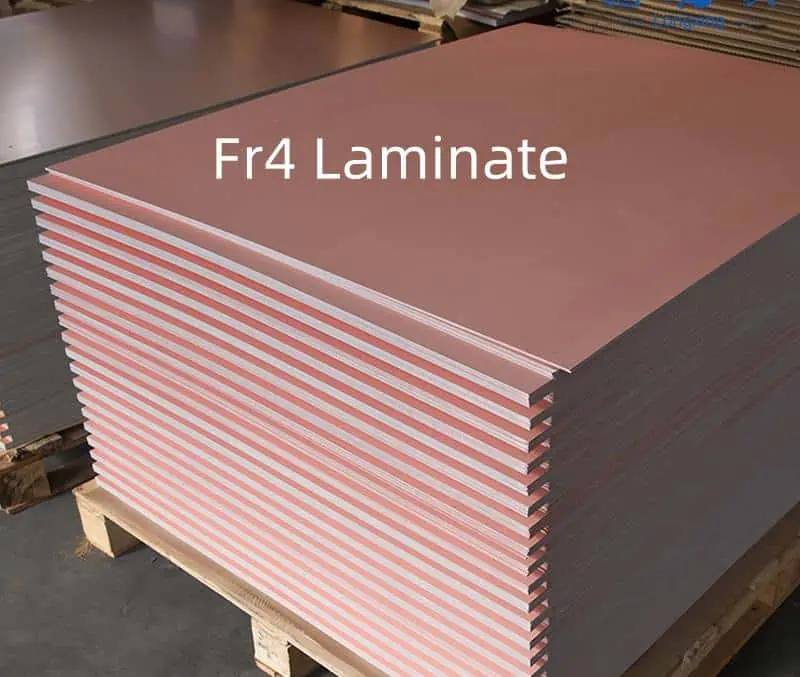
The Flame-Retardant 4 (FR-4) circuit board substrate is commonly made out of a woven glass reinforced by epoxy resin. It is also said to be fire-resistant, because of the properties of the epoxy resin used:

  • The epoxy resin is always Flame-Retardant Level 4.
  • The epoxy resin doesnโ€™t absorb moisture and;
  • It is water-resistant.

a.    Features of FR-4 PCB Substrates

Besides offering the best performance and being used in a vast majority of circuit boards, the FR-4 substrate has these characteristics:

  • High electrical insulation, hence, the fireproof.
  • Lightweight design
  • Higher moisture resistance
  • Lower cost
  • Excellent performance
  • Higher electric strength

b.    Applications

The use cases of the FR-4 substrate are often prioritized for the low-speed digital circuits. You can also use this substrate with the circuit boards that have a complex structure, as well as the PCBs requiring several layers.

It is true that this substrate can be used for a wide range of circuit boards and consumer electronics, it does have a higher dielectric loss. This is the reason why FR-4 substrates are not always ideal for either the high-frequency or high-speed applications.

c.     Different Variants

You will find different variations and or versions of the FR-4 PCB substrates. Of course, they differ in terms of the properties and performances.

These are some of the variants:

  • Halogen-Free FR-4: this variant contains less halogens and these are one of the fireproof elements.
  • Standard FR-4 Substrate: this type of substrate is considered to be the โ€œstandardโ€ or the format for others, because of the economic undertone. It also has a higher heat resistance, of up to 150-degree Celsius.
  • High Tg FR-4 Substrate: this type of PCB substrate is prioritized for the higher temperatures. It is noted for the higher value of Glass Transition Temperature (Tg) โ€“ an attribute that supports the substrateโ€™s clocking of higher temperatures, of up to 1180หšC.

2.    Teflon

Teflon is a brand name for Polytetrafluoroethylene (PTFE), which has a Glass Transition Temperature (Tg) of 160. It is a type of plastic that doesnโ€™t offer resistance, which is why it is always used with high-frequency and high-speed signals.

PTFE is highly-recommended for the high-frequency, microwave and high-power PCBs.

Properties

The features include:

  • Excellent high-frequency properties that make it ideal for electronic devices that handle higher signals, ranging from a few hundred MHZs to tens of GHZs.
  • The flame-resistance, flexible and lightweight design makes it ideal for different kinds applications.
  • The low dissipation and excellent temperature stability makes it usable in aerospace telemetry, cruise control, antennas and power amplifiers.

3.    FR-2

This is the Flame-Retardant Level 2 (FR-2) substrate. Although it has fireproof properties, it offers a lower performance, when compared to the FR-4 substrate.

It is made of a phenolic material and is commonly used in economical and low-cost consumer electronics, an example being low-cost transistor radios.

4.    Flexible Substrates

These substrates are not only flexible, but also offering the best performances, without compromising the circuit boardโ€™s electrical continuity.

The major attributes are wrapping, bendability and folding โ€“ making it easier to optimize the boards for different applications. Circuit board designers also leverage this to fit the substrate into the tiniest of spaces in the PCB.

5.    CEM-1

This is the type of substrate used in producing the single-sided circuit boards. The CEM-1 substrate has a Dielectric Constant (Dk) of up to 5.4 and is recommended for use with the high-density PCB.

If you cannot afford the FR-4 substrate, then using the Composite Epoxy Material 1 (CEM-1) is an ideal alternative.

6.    Polyimide

flexible printed circuit

This type of PCB substrate is higher Tg of up to 250-degree Celsius, which makes it ideal for use with the high-temperature applications.

Unlike the CEM-1, which is a cost-effective variant to the FR-4 substrate; the Polyimide substrate is costlier than the FR-4.

The attributes include:

  • Solid conductive properties
  • Flexible use to develop both Rigid-Flex and Flexible PCBs.
  • Good temperature range and;
  • Higher chemical resistance.

7.    Rigid PCB Substrates

These are the opposites of the flexible substrates. The rigid PCB substrates are rigid or โ€œimmobile,โ€ hence, they cannot be relied on to offer a similar bendability and or folding, as the flexible PCB substrates offer.

Conclusion

The different PCB substrate types offer you a plethora of options to choose from. Rest assured that by using the FR-4 substrate, you will be able to make different kinds of circuit boards.

If you are not cool with any of the options on this list, you can always contact your substrate PCB manufacturer for recommendations.

What is a Copper Trace PCB and Why Is It Important?

copper trace pcb

When talking of PCBs, trace typically deals with a boardโ€™s network of fuses, copper, wiring, and insulation. Whenever any electronic equipment malfunctions, then the PCB tracing will most likely be inconsistent. Also, engineers in the PCB field always make use of this phrase โ€œtrace resistanceโ€ very frequently.

In addition, the trace resistance deals with a boardโ€™s components which serve as a barrier to free electricity flow.

What Does Copper Trace PCB Mean?

Every PCB is dependent on the trace. This is similar to the pcb trace current, which is for effective operation. Also, any errors in calculating and detecting the trace would require more effort and time utilized during fitting. In addition, this can make devices or any gadget to have errors, which could be bad for the user.

During the repair or assembling o a printed circuit board, you should be very familiar with the components contained in it coupled with the functions and formulas that will suit your requirements and needs.

Why You Should Use the Copper Trace PCB

Diagrammatic Representation of Copper Trace

One great quality of copper is its great conductivity. This makes sure of the minimal loss of energy during the transmission. Also, manufacturers have what it takes to save much copper when it doesnโ€™t use too much. Standard PCB layouts could use just an ounce of metal to cover one square meter of the substrate with a copper layer with thickness 35 micrometers thick. Also, you can easily get access to copper and it is extremely affordable.

Many capabilities as well as features of PCB s are possible. This is happening due to electricity. These boardsโ€™ circuits are just conduits for the proper electric current transport between two different points. This is why their performance is very important. The material of choice is copper due to its high conductivity, although a dozen other materials can transfer electricity as well.

Due to the fact that just one electron is contained in its valence shell or free electron, this copper is known to have a great electron mobility, thereby making it a great conductor. In addition, these electrons feature low barriers to crossing between two atoms. Since the electrons form the basically-charged particles, the free electrons are those responsible for the transmission of electricity. This copper helps in preventing the loss of energy during the impulse transmission.

With all these reasons stated above, the most appropriate material for your PCB traces or traces in PCB is copper.

What is Copper Trace PCB Resistance?

One important aspect you should look into during the PCB design is the tracesโ€™ resistance. Resistance is one out of the many qualities that is shared by all the materials in the cosmos. Usually, PCBs make use of copper; however copper comes in different forms, with each form coming with its own drawbacks and benefits. The designing as well as the execution of problems can arise out of the resistance of the PCB tracing. Circuits that are more complicated would definitely experience more problems.

Copper Trace PCB Resistance Calculation

When you apply ohmโ€™s law to a known data, then you can easily determine the tracing resistance. The estimator for the PCB tracing resistance is an in-built feature of the majority of design applications and suite frameworks, which can aid the prediction of the resistance of the copper trace on the board.

Furthermore, this calculator works with an algorithm that is universally applicable in determining the challenge level, thereby guaranteeing that this result would always be the same, regardless of where it is utilized.

The height, width, and length stand in for the traceโ€™s actual dimensions. This word PCB stands for the resistivity of the materials, whereas this symbol stands for the temperature coefficient of copper. Moreover, these calculationsโ€™ results are just approximations. The eventual cost of the material would alter by a minimal amount after the manufacture.

Resistance Calculator for the Copper Trace PCB

Printed circuit boards all make use of some standard formulas. All the tracking resistance would be nowhere to be found if this was an incorrect formula. Not understanding the way the PCB tracing resistance is computed is a well-known error usually made.

Using the Equation for the Copper Trace PCB Resistance

This phenomenon could happen in pcb trace current sensing systems which rely on resistance. This system would read a resistance of 1100 ohms rather than the standard 1000 ohms when one ohm sensing resistor is utilized with a trace of 0.025 mm.

This disparity is a huge one, and it could cause a drop in the currencyโ€™s value more than required or even needed. Also, manipulating the PCB trace thickness and width without working with some complex math is possible. Rather than calculate the PCB trace width, you may need to consider the alternatives.

If you wish to know the circuitsโ€™ properly associated with them, you can handle the first just by observing what the width is as well as raise or decrease it. This would accomplish different things. The first being that it would help in expanding the area of copper, offering additional wiggle room so as to try different resistance values out. Secondly, it would reduce the resistance of copper on the board. In addition, it would give more room for the testing to be able to establish the right trace width.

Why You Should Calculate the Copper Trace PCB Thickness

Simple procedures or calculations might not detect trace resistance accurately. Also, calculating the PCB trace might not be accurate or enough. Moreover, with an accurate calculation of the copper trace PCB thickness as well as the trace, is necessary to ensure the PCB tracesโ€™ proper activation. Any given resistance of the PCB trace could be reduced through the calculation as well as increasing the traceโ€™s width considerably.

Conclusion

Printed circuit boards are known to form the base and skeleton of many electronic devices and gadgets. When planning your printed circuit board, these are the things you must put in place. Every PCB is dependent on the trace. This is similar to the pcb trace current, which is for effective operation. Also, any errors in calculating and detecting the trace would require more effort and time utilized during fitting.

How You Can Use RF Signal Detectors to Protect Your Security

RF Hardware Engineer

Radio frequency signals or RF signal float through humans day to day activities. This allows us to learn, share, as well as communicate using devices such as phones, which are highly relied upon. Moreover, as technology keeps becoming prevalent and important in our daily lives, there are concerns regarding security and privacy. Although these waves could be important, they could also be used as a weapon for spying ion companies and different individuals.

In order to fight this issue, RF signal detectors, which are usually referred to as RF finders, could serve as a countermeasure technique for protecting very important information and assets. This could be in a home or large and secure facilities such as SCIFs.

What Does an RF Signal Detector Mean?

RF detectors can be described as electronic devices that are designed specifically for detecting RF signals like GPS trackers and other hidden devices for audio recording in vehicles, homes, as well as other spaces. Many people utilize them for their personal uses. These include AirBnB and finding spyware utilized in hotels. Also, they are used by government agencies, law enforcement agencies, as well as private companies for preventing the leakage of information from unwanted devices.

In the wireless world of today, the RF signal spectrum has started exploding when it comes to complexity. This poses new malicious threat levels to our national security. Some national laboratories are developing solutions for defense against any RF-enabled cyber attacks and espionage on governmentโ€™s critical infrastructure, facilities, telecommunications systems, aviation, as well as other important RF-enable environments.

Furthermore, the blending of multidisciplinary expertise in radio frequency, data science, computing, and cybersecurity โ€“ with the major strengths in machine learning and artificial intelligence, different engineers and scientists are creating novel capabilities which will increase the ability to properly understand, control, as well as protect our RF signal environments.

What is Real-time detection of RF Signals?

RF signal interference could threaten different wireless technologies that are commonly used on which so many areas of national security are dependent on like Wi-Fi, bluetooth, mobile radio, as well as GPS (Global Positioning System).

Furthermore, protecting the RF environments of our nation requires a better technical surveillance as well as countermeasure tools for different real-time analysis as well as response of the radio frequencies as well as other signals that are suspicious.

Some companyโ€™s researchers are working with some government sponsors to develop in-place and next-generation RF monitoring systems to help offer better protection for the government facilities against any RF-enable threats.

When you bring together any sophisticated logarithms for machine learning and high-performance sensors, the monitoring technology could detect as well as assess any signal anomalies around and in secure environments very quickly. This will enable more effective as well as faster responses to any RF signal interference.

Detecting RF Signals, Direction Finding, and Spectrum Analysis Equipment

Recently, radio frequency jammers have now become very accessible for public use. While the majority of RF jamming is intended simply to offer additional privacy, the first responder operations have been targeted specifically by the interference and jamming attacks.

The way a radio interference function works is that it targets receivers. The RF jammer would transmit signals on one frequency just like the signal desired. Although radio communications might be a very obvious target of the RF jammers, the sources of this interference could as well disrupt the other devices’ operations which communicate in a wireless manner. This can be seen in using the GPS (Global Positioning System) jammer by truck drivers so as to prevent the payment of highway tolls, as well as avoid an employer tracking him or her.

Alternatively, RF jammers targeting the first responder operations can be described as interference sources that prevent control centers from receiving any video uploaded by the traffic cameras.

Applications

RF jamming as well as interference could disrupt any first responder communications when emergency response situations and operations arise. Devices for detecting RF signals could be useful in identifying RF interference which may impact communications. Devices for spectrum analysis could also prove useful in identifying any interference-free frequencies should responders make use of channel switching as one of the tactics or RF jamming mitigation. The RF direction finders may help in finding RF jamming devices. Once you locate the source of interference, responders may apply direct tactics for mitigation to be able to overcome RF jamming impacts.

How Does an RF Signal Detector Work?

Different ways exist in which detectors can locate RF Signals. This depends on the detector type in use and the purpose it is intended for. The basics of the way RF signal detector works is, it captures the RF signal, analyzes it, as well as interprets the signals. Moreover, there are other sophisticated ways. These include:

Detection of Field strength

There are RF signal finders that have the ability of measuring an RF fieldโ€™s strength in a p[particular area. This is possible by making use of a sensor in detecting these RF signals. Immediately it is detected, they are turned into electrical signals that are amplified by the detector and then help in determining the wavesโ€™ strength.

Detection of Frequency

The RF devices that are most common are those having the ability and capability to identify RF signalsโ€™ frequencies though scanning as well as finding the accuracy. Immediately there is a frequency, this value is compared with others and then the range can be identified.

Detecting RF interference

A good number of RF signal detectors will find some unwanted or RF interference signals. These could disrupt the signals as well as communication. These RF detectors help in monitoring RF spectrums for any unexpected signals, which then notifies you whenever they discover one.

How to Choose the Right RF Detectors for Security

Selecting the appropriate RF detectors for security measures is dependent on the purpose and budget. For professional settings like those used in corporate buildings or in secured rooms, you would have to choose RF signal detectors that can detect different signal types like one that makes use of RF interference detection.

Also, for those seeking RF detectors for individual or personal use, portable detectors are many and small and you can get them online to serve simple purposes. Also, some RF signal detector applications are available which can give you a head start.

Tips to Work with when Choosing a Device for Detecting RF Signals

When searching for the best device for detecting RF signals, take note of these tips.

Detection range: Do you wish to secure an entire building or small space? Some come with a limited range; others could cover much larger spaces.

Range of frequency: most of the time, users desire one having a wide frequency range. This ensures that it covers a wide and broad spectrum. Moreover, this might be determined through the budget coupled with the area type that the frequencies need to be detected in.

Strength of the signal: It is preferable to use detectors having an adjustable sensitivity. The device can be fine-tuned to detect any stronger or weaker signals and assist you with detecting the RF signal through the showing of the signalโ€™s strength.

Alert Mechanism: Take a look at the way the device notifies you that a signal exists in that area. There are models that make use of lights or beeps while others usually vibrate. Although beeps might sound great initially, if you will be utilizing it to discover signals in a covert way, then it is advisable to work with silent light flashes.

Additional Features: Though a very significant aspect of RV detectors are signal detection, there are different models which come with more features in order to assist you with locating signals with cameras and signalsโ€™ log data.

Regulations: While our government and military can make use of sophisticated RF detectors to sole security measures, the usual RF signal detectors might come with laws and regulations on them. Therefore, before you buy one, ensure that your country or state permits the utilization of detectors. Also, if they permit it, be sure of the type to be used.

What is the Significance of RF Signal Detectors for Privacy?

The significance of RF signal detectors cannot be overemphasized. They are very important in different electronic countermeasures through offering assistance to the identification of possible threats from hidden cameras, listening devices, as well as other surveillance equipment that are wireless in nature.

Also, they have the ability to pick concealed and small devices that could be easily utilized for spying on institutions and individuals. When these signals are detected, security personnel and individuals will be able to take the right steps in protecting any sensitive area from any monitoring that is not authorized.

The utilization of RF signal detectors is also necessary for the prevention of information leaks or cyber attacks in any secured area. Furthermore, any wireless information could transmit data easily as well as gain access into the networks.

However, with the utilization of RF detectors, security personnel would be able to identify as well as locate unknown wireless devices which might be making efforts to content as well as compromise a particular network. Working with the appropriate device, the RF signal detector could play an important role in the protection of valuable data as well as prevent all cyber threats.

Furthermore, they are important tools for countering wrong and illegal surveillance using proactive approaches. By utilizing RF detectors, individuals and organizations have what it takes to enhance their countermeasure electronic techniques as well as aid in the maintenance of their privacy as well as other important information.

What are the Pros and Cons of RF Signals?

RFT Testing

Just the way RF signals has some benefits, it also has some drawbacks. Let us consider both

Pros of RF Signals

  • Their range is relatively long; it could take about 20 miles whenever there is a possible line of sight
  • It operates great in foggy and haze conditions, asides from heavy rain that results in poor performance
  • Operation is license-free and only for the 802.11 based systems

Cons of RF Signals

  • The throughput is lower and about the Mbps range
  • Great potential for radio frequency interference e from different RF-based external systems
  • Security is limited, which is due to the radio propagation beyond facilities

The benefits above utilize RF signals for many wireless applications. Majority of wireless networks like bluetooth and 802.11 specify the utilization of the RF signals.

Impairments of the RF Signal

The RF signal usually comes in contact with impairments like multipath propagation and interference. It has an impact on the communications between the receiver and the sender. This usually causes lower performance, leading to many unhappy consumers.

Interference

This occurs whenever there are two signals at a receiving station. This assumes they have one phase and frequency. For situations like this, the wireless NIC receiver encounters errors during the decoding of the informationโ€™s meaning being sent.

FCC regulates using the majority of frequency bands as well as modulation types. This is to prevent the occurrence of signal interference occurring between the systems.

Multipath

This happens whenever some areas of the RF signals take on different paths during the propagation from a particular source. A part of the signal may go into the destination directly, while the other part may bounce into the ceiling from the desk. From here, it reaches the destination. Due to this, some signal encounters lead to delay and then travel longer paths before reaching the receiver.

Conclusion

In summary, the significance of RF signals cannot be overemphasized. RF detectors can be described as electronic devices that are designed specifically for detecting RF signals like GPS trackers and other hidden devices for audio recording in vehicles, homes, as well as other spaces. Radio frequency signals or RF signal float through humans day to day activities. This allows us to learn, share, as well as communicate using devices such as phones, which are highly relied upon.