A Comprehensive Guide to Filter Circuits: Essential Knowledge for Electronics Engineers

In the realm of electronic circuit design, one of the most fundamental challenges engineers face is converting the raw output of rectifier circuits into usable power for electronic devices. The output voltage from a typical rectifier circuit presents as a unidirectional pulsating DC voltageโ€”a form that, while maintaining consistent polarity, exhibits significant amplitude fluctuations that render it unsuitable for direct use in sensitive electronic circuits. This comprehensive guide explores the critical role of filter circuits in transforming this pulsating voltage into the smooth, stable DC power that modern electronics demand.

Filter circuits represent a cornerstone technology in power supply design, employing components with specific impedance characteristics to selectively remove unwanted AC components while preserving the essential DC voltage. Through careful analysis of capacitors, inductors, and active components, engineers can design filtering solutions that meet the stringent requirements of today’s electronic systems.

Understanding the Need for Filtering

The Nature of Pulsating DC Voltage

The output from rectifier circuits, while unidirectional, carries inherent limitations that make it incompatible with most electronic applications. This pulsating DC voltage maintains a consistent polarity throughout its cycle but experiences significant amplitude variations over time, creating a waveform characterized by periodic fluctuations. These variations, if left unfiltered, can cause erratic behavior in electronic circuits, leading to noise, instability, and potential component damage.

From a theoretical perspective, this pulsating waveform can be understood through waveform decomposition principles. The complex pulsating signal can be mathematically broken down into two distinct components: a stable DC component representing the average voltage level, and a series of AC components with varying frequencies that correspond to the unwanted ripple. The DC component carries the useful power that electronic circuits require, while the AC components represent noise that must be eliminated through effective filtering.

Fundamental Filtering Principles

The success of any filter circuit relies on exploiting the distinct impedance characteristics that different components exhibit when faced with AC versus DC signals. This selective impedance behavior forms the foundation of all filtering techniques, allowing engineers to create circuits that preferentially pass desired signals while attenuating unwanted components.

Capacitors demonstrate this principle through their fundamental electrical property often described as “block DC, pass AC.” When subjected to DC voltage, a capacitor charges to the applied voltage and then acts as an open circuit, preventing further current flow. Conversely, AC signals encounter a reactance that decreases with increasing frequency, allowing high-frequency noise components to pass through with minimal impedance. This dual behavior, combined with the capacitor’s energy storage capability, makes it an ideal component for filtering applications.

Inductors exhibit the complementary behavior, often characterized as “block AC, pass DC.” For DC applications, an ideal inductor presents zero resistance, allowing steady current to flow unimpeded. However, when faced with AC signals, inductors generate an inductive reactance that increases with frequency, effectively blocking high-frequency components while allowing the DC component to pass through unchanged.

Basic Filter Circuit Configurations

Capacitor Filter Circuits

The most fundamental filtering approach employs a single capacitor connected in parallel with the load circuit. This simple yet effective configuration takes advantage of the capacitor’s ability to store energy during peak voltage periods and release it during voltage dips, thereby smoothing the overall output waveform.

In practical implementation, the capacitor charges rapidly during the peak portions of the pulsating input voltage. As the input voltage begins to decrease, the charged capacitor maintains the load voltage by discharging through the circuit. This charge-discharge cycle continues throughout the operation, with the capacitor acting as a reservoir that supplies current to the load when the input voltage is insufficient.

The effectiveness of capacitor filtering directly correlates with the capacitance value employed. Larger capacitance values store more energy, allowing them to maintain load voltage for longer periods between input peaks. This extended energy storage capability results in reduced voltage ripple and improved filtering performance. However, engineers must balance filtering effectiveness against practical considerations such as component size, cost, and initial charging current requirements.

Inductor Filter Circuits

Inductor-based filtering approaches the problem from a different perspective, utilizing the inductor’s high impedance to AC signals while maintaining minimal resistance to DC current. When positioned in series with the load circuit, an inductor acts as a frequency-selective impedance element that preferentially blocks AC components while allowing DC to pass with minimal voltage drop.

The filtering effectiveness of an inductor increases with inductance value, as higher inductance creates greater opposition to AC signals. However, this increased filtering capability comes with trade-offs, particularly in terms of DC resistance and physical size. Real inductors possess inherent resistance that causes voltage drops across the component, reducing the available output voltage. Additionally, larger inductance values typically require physically larger components, impacting circuit design constraints.

Advanced Filter Configurations

ฯ€-Type RC Filter Circuits

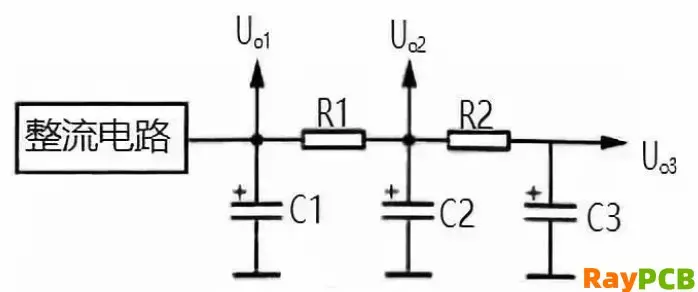
The ฯ€-type RC filter represents a significant advancement in filtering technology, combining multiple capacitors and resistors in a configuration that resembles the Greek letter ฯ€. This sophisticated approach provides superior filtering performance through a multi-stage attenuation process that systematically removes AC components while preserving DC voltage.

The circuit typically begins with a large input capacitor that provides initial filtering of the rectified voltage, removing the majority of low-frequency ripple components. The filtered signal then encounters a series resistance that works in conjunction with a second capacitor to create an additional filtering stage. This RC combination acts as a low-pass filter, further attenuating any remaining AC components that survived the initial filtering stage.

The design of ฯ€-type RC filters requires careful consideration of component values to achieve optimal performance. The input capacitor must be sized appropriately to provide adequate initial filtering without creating excessive inrush current that could damage rectifier diodes. The series resistance value represents a critical design parameterโ€”insufficient resistance provides inadequate filtering, while excessive resistance causes significant DC voltage drops that reduce output voltage.

Multiple output taps can be implemented along the filter chain, providing various voltage levels with different degrees of filtering. Early taps in the circuit provide higher voltage levels with moderate filtering, while later stages offer lower voltages with superior ripple rejection. This flexibility allows a single filter circuit to serve multiple circuit requirements with varying noise tolerance levels.

ฯ€-Type LC Filter Circuits

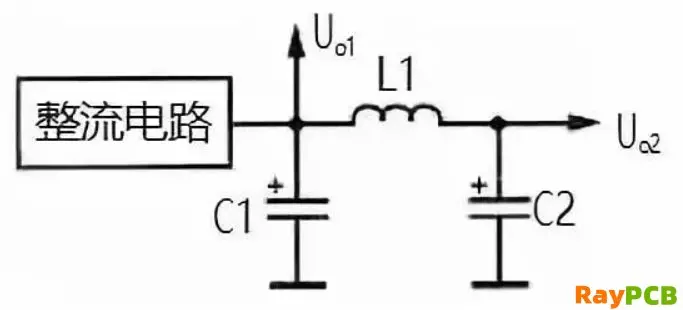
The ฯ€-type LC filter configuration replaces the series resistor with an inductor, creating a more efficient filtering system that maintains excellent AC rejection while minimizing DC voltage losses. This substitution leverages the inductor’s ability to present high impedance to AC signals while maintaining minimal resistance to DC current.

The advantages of LC filtering become particularly apparent in high-current applications where resistive voltage drops would be prohibitive. Unlike resistors, which dissipate power as heat regardless of current type, inductors provide frequency-selective impedance that targets only the unwanted AC components. This selective behavior allows LC filters to achieve superior filtering performance while maintaining higher efficiency and better voltage regulation.

The implementation of ฯ€-type LC filters requires attention to inductor specifications and behavior. Real inductors possess both inductance and resistance characteristics, with the resistive component contributing to voltage drops and power losses. High-quality filter inductors minimize this resistance while maximizing inductance, though such components typically involve higher costs and larger physical dimensions.

Active Electronic Filter Circuits

Basic Electronic Filter Implementation

Electronic filter circuits represent an evolution in filtering technology, incorporating active components such as transistors to enhance traditional passive filtering approaches. The basic electronic filter employs a transistor as an active filtering element, with its base circuit connected to an RC filter network that provides the filtering reference.

The transistor in this configuration functions as a voltage follower with current amplification capabilities. The RC network at the transistor’s base provides a filtered reference voltage, while the transistor’s emitter follows this voltage with the ability to supply significantly higher current to the load. This arrangement creates an equivalent capacitance effect that far exceeds the physical capacitor value, as the effective filtering capacitance becomes the product of the physical capacitor and the transistor’s current gain.

This amplification effect allows electronic filters to achieve superior filtering performance with smaller physical capacitors, addressing space and cost constraints common in modern electronic design. The transistor’s current gain effectively multiplies the filtering capacitor’s value, creating the electrical equivalent of a much larger capacitor without the associated physical bulk.

Electronic Regulator Filter Circuits

Advanced electronic filter designs incorporate voltage regulation components such as Zener diodes to provide both filtering and voltage stabilization in a single circuit. This combined approach addresses two critical power supply requirements simultaneously, creating systems that provide both clean and stable output voltage.

The Zener diode in these circuits establishes a stable reference voltage at the transistor’s base, ensuring consistent output voltage regardless of input variations or load changes. The series resistance limits current through the Zener diode while maintaining proper bias conditions for both regulation and filtering operations.

Compound transistor configurations can further enhance electronic filter performance, using multiple transistors in Darlington or similar arrangements to achieve even higher current gains. These advanced configurations multiply the effective filtering capacitance by the product of individual transistor gains, creating extremely effective filtering with minimal component requirements.

Design Considerations and Optimization

Component Selection Strategies

Successful filter circuit design requires careful attention to component specifications and their interaction within the complete system. Capacitor selection must consider not only capacitance value but also voltage rating, temperature coefficient, and ESR characteristics. Low ESR capacitors provide superior high-frequency filtering performance, while adequate voltage ratings ensure reliable operation under all circuit conditions.

Inductor selection involves balancing inductance value, DC resistance, current handling capability, and physical constraints. High-quality filter inductors feature low DC resistance to minimize voltage drops while providing adequate inductance for effective filtering. Core material selection affects both performance and cost, with ferrite cores offering good performance for most applications while more exotic materials may be required for demanding specifications.

Performance Optimization Techniques

Filter circuit optimization involves systematic analysis of ripple reduction requirements, voltage regulation needs, and efficiency considerations. Mathematical modeling can predict filter performance and guide component selection, while simulation tools allow verification of design approaches before physical implementation.

Load regulation characteristics must be considered throughout the design process, as filter circuit behavior can vary significantly with changing load conditions. Some filter configurations maintain consistent performance across wide load ranges, while others may require additional regulation circuitry for optimal performance.

Conclusion

Filter circuits represent an essential technology in modern electronics, enabling the conversion of raw rectified power into the clean, stable DC voltage that electronic systems require. Through understanding of fundamental filtering principles and careful application of various circuit configurations, engineers can design power supply systems that meet the demanding requirements of contemporary electronic applications.

The evolution from simple capacitor filters through advanced electronic filtering techniques demonstrates the continuous advancement in power supply technology. Each configuration offers distinct advantages and limitations, requiring engineers to carefully match filtering approaches to specific application requirements.

As electronic systems continue to demand higher performance and greater efficiency, filter circuit design remains a critical skill for electronics engineers. Mastery of these fundamental principles provides the foundation for tackling increasingly sophisticated power supply challenges in next-generation electronic systems.

Comprehensive Guide to PCBA Cost Calculation and Optimization

pcb assembly cost down

Component costs account for 40%-60% of total PCBA expenses, where even a 0.1% error can lead to tens of thousands in losses. In electronics design, accurate PCBA cost estimation is critical for project feasibility assessment and profit margin control. Whether you’re a hardware engineer, procurement specialist, or startup founder, mastering these calculation methods enables data-driven decisions and strict budget management. Below is a systematic breakdown of PCBA cost structures and calculation methodologies.

I. The Multidimensional Framework of PCBA Costs

PCBA (Printed Circuit Board Assembly) costs comprise these key modules:

  1. PCB Fabrication Costs
    • Substrate materials + processing fees, influenced by:
      • PCB type (FR4, HDI, etc.)
      • Layers (4-layer boards cost ~2ร— double-layer)
      • Dimensions and design complexity
      • Special processes (e.g., ENIG plating adds 20-30%)
  2. Component Procurement Costs
    • Passive components (resistors/capacitors): Stable pricing
    • Advanced ICs (BGAs, processors): Volatile pricing due to export controls or supply chain disruptions
  3. SMT Assembly Costs
    • Calculated by “placement points”:
      • Standard SMDs (0402/0603): 2 points/part
      • QFP/QFN: Actual pin count
      • BGAs: 4-6 points/unit
  4. DIP Through-Hole Costs
    • Wave soldering/hand soldering, priced per pin
  5. Testing & QA Costs
    • AOI, flying probe, functional testing (cost scales with test points)
  6. Ancillary & Operational Costs
    • Solder paste, stencils, packaging + overhead (equipment depreciation, utilities)

II. PCB Cost Calculation & Design Optimization

1. PCB Cost Formula

Total PCB Cost = Substrate Cost + Process Cost + Special Treatments

  • Substrate Cost:
    Cost per panel = (Price per mยฒ) รท (PCBs producible per mยฒ)
  • Process Variables:
    • Drilling: Hole count ร— diameter coefficient
    • Trace width/spacing: <0.2mm increases cost by 30-50%
    • Layers: Each added layer raises cost by 40-60%
    • Surface finish: ENIG (+20-30% vs HASL)
  • Special Processes:
    • Impedance control: +10-15%
    • Blind/buried vias: +25-40%

2. PCB Design Optimization

  • Panel Utilization: Increase from 70% โ†’ 85% reduces cost by 10-15% (Use tools likeย HQDFMย for automated panelization)
  • Process Simplification:
    • Avoid unnecessary <0.3mm vias
    • Maintain trace width/spacing โ‰ฅ0.15mm

III. BOM Standardization Workflow

  1. Export BOM from schematic
  2. Consolidate identical components
  3. Standardize naming (e.g., “100nF” vs “0.1uF”)
  4. Annotate critical params: Tolerance, voltage rating, footprint
  5. Flag alternate/sole-source parts

IV. SMT Cost Calculation

1. Placement Point Rules

  • SMD resistors/caps: 2 points
  • SOT-23: 3 points
  • QFP: Actual pin count
  • BGA: 4-6 points

SMT Cost = (Points ร— Unit Price) + Stencil Fee + Setup Fee

  • Stencil: ยฅ100-800 (size-dependent)
  • Setup: ยฅ500-2000/batch

2. Pricing Variables

  • Volume Discounts:
    • <5k pcs: Base price
    • 5k-20k: 8-12% discount
    • 20k: 15-25% discount

V. DIP & Testing Cost Analysis

1. DIP Cost

DIP Cost = (Pin Count ร— Rate) + Wave Solder Fixture Fee

  • Hand soldering: ยฅ0.08-0.15/pin
  • Wave soldering: ยฅ0.03-0.08/pin

2. Testing Cost

Testing Cost = (Flying Probe Points ร— Rate) + Functional Test Development + Fixture Cost

  • Flying probe: ยฅ0.02-0.05/point
  • Functional test dev: ยฅ2k-10k

VI. PCBA Total Cost Formula

Total PCBA Cost =
PCB Cost + (Components Cost ร— 1.x [scrap factor]) + SMT + DIP + Testing + Packaging/Logistics + (10-30% Margin)

Quick Estimates:

  • Standard 2-layer + basic components: ยฅ8-15/100 points
  • 4-layer + advanced components: ยฅ15-28/100 points

VII. Top 5 Cost Optimization Strategies

PCB assembly cost breakdown
  1. DFM Optimization
    • Rationalize trace widths (โ‰ฅ0.15mm) to reduce defects
  2. Component Sourcing
    • Bulk purchasing discounts
    • Domestic alternatives for imported ICs
  3. Batch Production
    • Combine small orders to minimize changeovers
    • Avoid rush fees (15-25% premium)
  4. Process Selection
    • Lead-free solder for simple boards
    • Epoxy+wave solder for large components
  5. Testing Optimization
    • Flying probe for prototypes โ†’ Test fixtures in mass production (60% cost reduction)

VIII. Quotation Timeline Management

PhaseDurationAcceleration Tips
PCB Quote1 dayProvide complete Gerber + specs
Components1-4 daysFlag long-lead items (FPGAs, etc.)
Assembly1-2 daysShare approved vendor lists

Key Insight: PCBA cost control isn’t about price squeezingโ€”it’s value engineering through design innovation, process efficiency, and supply chain synergy.

Complete Guide to Building a DC to AC Inverter Circuit: 12V to 220V Step-by-Step

Converting direct current (DC) from batteries or solar panels into alternating current (AC) for household appliances is a fundamental requirement in many electrical projects. A DC to AC inverter circuit transforms 12V DC input into 220V AC output, enabling you to power standard household devices from battery sources. This comprehensive guide will walk you through the theory, components, design considerations, and step-by-step construction of a reliable 12V to 220V inverter circuit.

YouTube video

Understanding Inverter Fundamentals

An inverter circuit performs the essential function of converting DC voltage into AC voltage through electronic switching. The basic principle involves rapidly switching the DC input on and off to create a square wave output, which can then be filtered and transformed to approximate a sine wave. The switching frequency typically ranges from 50Hz to 60Hz to match standard AC power frequencies.

The conversion process requires several key stages: oscillation generation, power switching, voltage transformation, and output filtering. Modern inverter designs often incorporate pulse width modulation (PWM) techniques to improve output waveform quality and reduce harmonic distortion. Understanding these fundamentals helps in selecting appropriate components and designing efficient circuits.

Essential Components and Their Functions

The heart of any inverter circuit lies in its carefully selected components. The primary oscillator can be built using the popular CD4047 CMOS integrated circuit, which generates stable square wave signals at the required frequency. This IC provides complementary outputs that drive the power switching stage with precise timing control.

Power MOSFETs serve as the main switching elements, handling the heavy current loads while maintaining high efficiency. IRF540 or similar N-channel MOSFETs are commonly used due to their low on-resistance and high current handling capability. These transistors must be mounted on adequate heat sinks to dissipate the generated heat during switching operations.

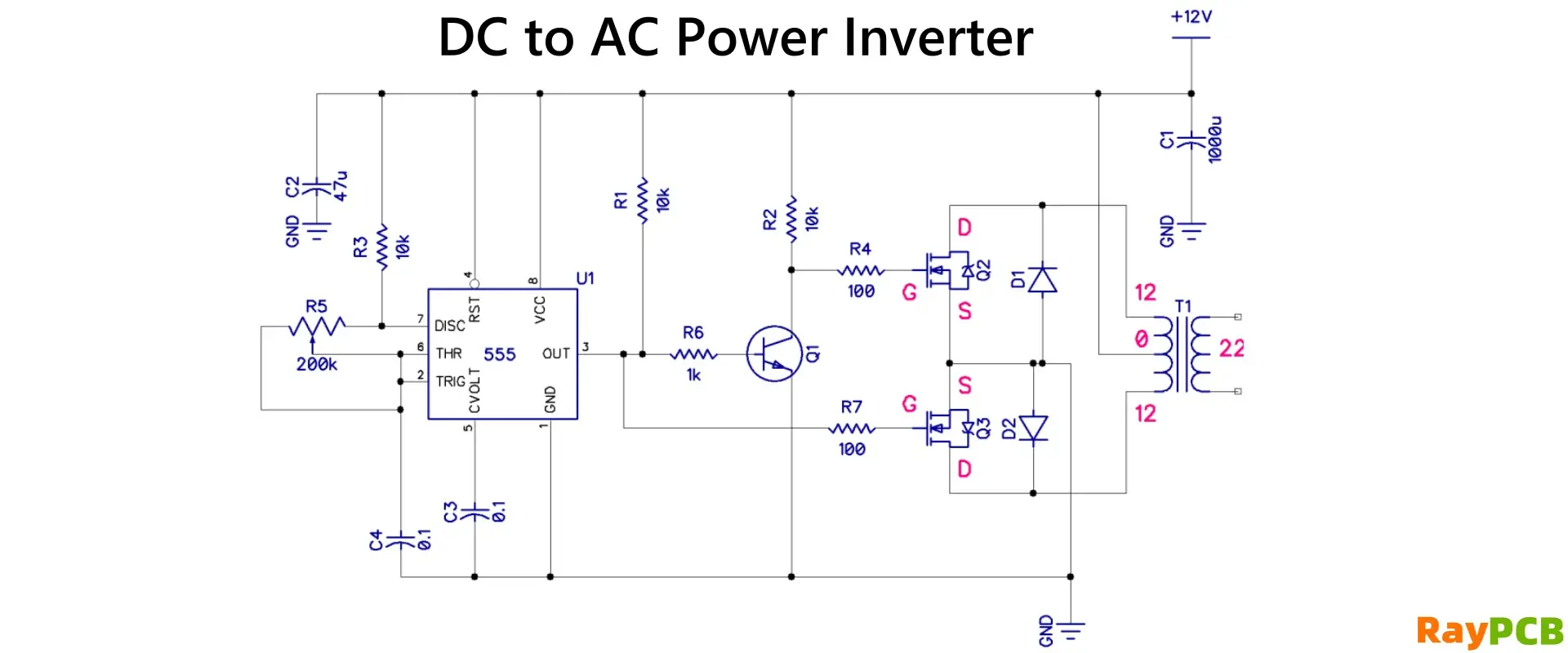
The step-up transformer represents a critical component that boosts the 12V DC (converted to AC) up to 220V AC output. A center-tapped transformer with appropriate turns ratio is essential, typically requiring a 12-0-12V primary winding and a 220V secondary winding. The transformer rating should match or exceed the intended output power requirements.

Supporting components include gate driver circuits for proper MOSFET switching, protection diodes, filtering capacitors, and current limiting resistors. Each component plays a vital role in ensuring stable operation and protecting the circuit from damage due to overcurrent or voltage spikes.

Circuit Design and Topology

The most common topology for simple inverter circuits is the push-pull configuration using a center-tapped transformer. This design alternately switches current through each half of the primary winding, creating an alternating magnetic field that induces AC voltage in the secondary winding.

The CD4047 oscillator generates two complementary square wave signals, each driving one MOSFET in the push-pull arrangement. The frequency is determined by external timing components, typically a resistor and capacitor combination. Careful calculation of these values ensures accurate 50Hz or 60Hz output frequency.

Gate drive circuits may be necessary to provide sufficient current to rapidly switch the power MOSFETs. Simple resistor networks can work for low-power applications, but dedicated gate driver ICs like IR2110 provide better performance for higher power inverters. Proper gate driving reduces switching losses and improves overall efficiency.

Output filtering helps smooth the square wave output into a more sinusoidal waveform. Simple LC filters consisting of inductors and capacitors can significantly improve the output waveform quality, reducing harmonic content that might interfere with sensitive electronic devices.

Step-by-Step Construction Process

Begin construction by preparing a suitable PCB or stripboard layout that accommodates all components with proper spacing for heat dissipation. The layout should minimize trace resistance for high-current paths while maintaining adequate isolation between high and low voltage sections.

Start by installing and testing the oscillator section using the CD4047 IC along with its timing components. Verify that the IC produces complementary square wave outputs at the desired frequency using an oscilloscope or frequency meter. Adjust timing components if necessary to achieve precise frequency control.

Next, install the power MOSFET switches along with their heat sinks and gate drive circuits. Use appropriate wire gauges for high-current connections, typically 12 AWG or larger for the primary circuit. Ensure all connections are secure and properly insulated to prevent short circuits.

Mount the step-up transformer securely and connect the center-tapped primary to the MOSFET switches. The secondary winding connects to the output terminals through appropriate filtering components. Double-check all wiring against the schematic before applying power to prevent component damage.

Testing and Troubleshooting

Initial testing should begin with reduced input voltage and no load connected. Use a digital multimeter to verify proper DC voltages at various test points throughout the circuit. Check that the oscillator produces stable square wave outputs and that MOSFETs switch properly.

Gradually increase input voltage while monitoring component temperatures, particularly the MOSFETs and transformer. Any excessive heating indicates problems that must be resolved before proceeding. Common issues include improper gate drive signals, inadequate heat sinking, or transformer saturation.

Connect a small resistive load such as an incandescent bulb to test output performance. Measure output voltage and frequency under load conditions, adjusting timing components if necessary. The output should remain stable across reasonable load variations.

Advanced testing involves examining output waveform quality using an oscilloscope. Pure square wave outputs will show significant harmonic content, while filtered outputs should approximate sine waves with reduced distortion. Frequency spectrum analysis can reveal harmonic levels for compliance with power quality standards.

Safety Considerations and Precautions

Working with inverter circuits involves potentially dangerous voltages and currents that demand strict safety protocols. Always disconnect input power before making circuit modifications and use appropriate personal protective equipment when testing high voltage outputs.

Proper grounding and isolation are essential for safe operation. The output AC voltage should be properly grounded through appropriate earth connections, and the circuit enclosure must provide adequate protection against accidental contact with live components.

Overcurrent protection through fuses or circuit breakers prevents damage from short circuits or overload conditions. These protective devices should be rated appropriately for the expected operating currents with sufficient margin for safety.

Heat dissipation requires careful attention to prevent component failure and fire hazards. Adequate ventilation, proper heat sink sizing, and temperature monitoring help ensure safe operation under all load conditions.

Performance Optimization and Efficiency

Inverter efficiency depends heavily on component selection and circuit design. Using MOSFETs with low on-resistance reduces conduction losses, while minimizing switching times reduces switching losses. Proper gate drive circuits ensure fast, clean switching transitions.

Transformer selection significantly impacts overall efficiency and regulation. High-quality transformers with low core losses and appropriate wire gauges minimize power dissipation. Core materials and construction techniques affect both efficiency and electromagnetic interference generation.

Output filtering improves waveform quality but adds some power loss. Balancing filter effectiveness against efficiency requires careful component selection and circuit optimization. Active filtering techniques can provide better performance than passive approaches in some applications.

Applications and Practical Uses

Simple 12V to 220V inverters find widespread use in automotive applications, solar power systems, emergency backup power, and portable power solutions. Understanding load characteristics helps determine appropriate inverter specifications and ensures reliable operation.

Resistive loads such as incandescent bulbs and heating elements are easiest to handle, requiring only appropriate power ratings. Inductive loads like motors and transformers present greater challenges due to startup currents and reactive power requirements.

Electronic loads including computers and sensitive equipment may require high-quality sine wave outputs with low harmonic distortion. Modified sine wave inverters work with many devices but can cause problems with some electronic equipment.

This fundamental inverter design provides an excellent foundation for understanding power conversion principles while delivering practical utility for numerous applications. Proper construction, testing, and safety practices ensure reliable performance and safe operation in demanding environments.

How IPC-1752 Simplifies Material Declarations in Electronics Manufacturing

PCB IPC standards

The electronics manufacturing industry faces unprecedented challenges in managing material compliance and supply chain transparency. With ever-increasing regulatory requirements, environmental concerns, and customer demands for detailed product information, manufacturers must track thousands of materials and components across complex global supply chains. The IPC-1752 standard has emerged as a critical solution to streamline and standardize material declarations, transforming how the electronics industry approaches compliance management.

Powered By EmbedPress

Understanding IPC-1752: The Foundation of Material Declaration Standards

IPC-1752, formally known as “Materials Declaration Management,” represents a comprehensive framework developed by IPC (Association Connecting Electronics Industries) to standardize how material composition data is collected, processed, and communicated throughout the electronics supply chain. This standard provides a structured approach to material declarations that eliminates much of the confusion and inefficiency that previously plagued the industry.

The standard establishes standardized data formats, reporting templates, and communication protocols that enable seamless information exchange between suppliers, manufacturers, and customers. Rather than dealing with hundreds of different material declaration formats from various suppliers, manufacturers can now work with a unified system that speaks the same language across the entire supply chain.

At its core, IPC-1752 defines specific data elements that must be included in material declarations, such as material composition percentages, substance identifications using standardized naming conventions, and compliance status indicators. This standardization eliminates ambiguity and ensures that all stakeholders are working with consistent, comparable data.

Streamlining Supplier Communication and Data Collection

One of the most significant ways IPC-1752 simplifies material declarations is by establishing a common framework for supplier communication. Before this standard, manufacturers often had to create custom material declaration forms for each supplier, leading to inconsistent data quality and formats that were difficult to process systematically.

The standard provides pre-defined templates and data structures that suppliers can use to report material information. These templates include specific fields for material identification, composition data, compliance statements, and supporting documentation. Suppliers benefit from having a clear, standardized format to follow, while manufacturers receive data in a consistent format that can be easily processed and analyzed.

The communication protocols defined in IPC-1752 also establish clear expectations for data accuracy, completeness, and update frequencies. This reduces the back-and-forth communication typically required to clarify material information and ensures that manufacturers receive the quality of data they need for compliance activities.

Furthermore, the standard supports both manual and automated data exchange methods, allowing organizations to choose the approach that best fits their technical capabilities and business processes. This flexibility makes the standard accessible to suppliers of all sizes, from small component manufacturers to large multinational corporations.

Enhancing Data Quality and Consistency

Data quality has long been a critical challenge in material declaration management. Inconsistent naming conventions, varying levels of detail, and different interpretation of requirements often resulted in material declarations that were difficult to compare or analyze effectively. IPC-1752 addresses these challenges through several key mechanisms.

The standard establishes controlled vocabularies and standardized substance identification methods, ensuring that the same materials are identified consistently across all declarations. This eliminates confusion caused by different suppliers using different names or codes for the same substances.

Validation rules built into the standard help identify potential data quality issues before they become problems. These rules check for completeness, logical consistency, and format compliance, flagging declarations that may require additional review or clarification.

The standard also defines minimum data requirements for different types of declarations, ensuring that manufacturers receive the level of detail they need for their specific compliance requirements. This prevents situations where critical information is missing or insufficient for regulatory compliance purposes.

Facilitating Regulatory Compliance

Electronics manufacturers must comply with numerous regulations worldwide, including RoHS (Restriction of Hazardous Substances), REACH (Registration, Evaluation, Authorization, and Restriction of Chemicals), and conflict minerals regulations. Each of these regulations has specific reporting requirements and substance lists that must be monitored.

IPC-1752 simplifies compliance by providing mapping capabilities between the standard’s data structure and various regulatory requirements. This means that a single material declaration can support multiple compliance programs without requiring separate data collection efforts for each regulation.

The standard includes built-in support for key regulatory substance lists, automatically flagging materials that may be subject to restrictions or reporting requirements. This proactive approach helps manufacturers identify potential compliance issues early in the design process, when changes are less costly and disruptive.

Additionally, the standard’s structured data format makes it easier to generate the reports and documentation required by various regulatory agencies. Rather than manually extracting information from numerous different formats, manufacturers can use automated tools to compile compliance reports directly from their standardized material declaration database.

Supporting Automated Processing and Analysis

The structured nature of IPC-1752 data makes it ideal for automated processing and analysis. Organizations can implement software systems that automatically ingest material declarations, validate data quality, perform compliance checks, and generate reports without manual intervention.

This automation capability is particularly valuable for large manufacturers who may process thousands of material declarations annually. Automated systems can quickly identify declarations that require attention, flag potential compliance issues, and maintain up-to-date compliance status across entire product portfolios.

The standard’s data structure also supports advanced analytics capabilities, allowing manufacturers to identify trends, assess supplier performance, and make data-driven decisions about material selection and supplier relationships. This level of analysis was difficult or impossible with the inconsistent data formats that existed before standardization.

Reducing Administrative Burden and Costs

Perhaps one of the most immediate benefits of IPC-1752 is the significant reduction in administrative burden associated with material declaration management. The standardized approach eliminates much of the manual processing that was previously required to handle diverse declaration formats.

Manufacturers no longer need to create and maintain custom forms for each supplier, train staff on multiple different formats, or spend time reformatting data for analysis and reporting. The standard’s consistent structure allows organizations to develop standardized processes and tools that work across their entire supply base.

The reduced need for clarification and follow-up communication with suppliers also translates to significant time savings. When suppliers provide information in the standardized format with clear requirements, there are fewer opportunities for misunderstanding or incomplete submissions.

Enabling Supply Chain Transparency and Traceability

IPC-1752 enhances supply chain transparency by providing a clear, standardized method for tracking material information through multiple tiers of suppliers. The standard’s hierarchical data structure allows manufacturers to understand not just what materials are in their products, but where those materials originated and how they flow through the supply chain.

This enhanced traceability is increasingly important as customers and regulators demand greater visibility into product composition and supply chain practices. The standard provides the data infrastructure needed to support these transparency initiatives without requiring massive custom development efforts.

The standardized format also makes it easier to share material information with customers who have their own compliance requirements. Rather than creating custom reports for each customer, manufacturers can provide standardized IPC-1752 data that can be easily processed by the recipient’s systems.

Looking Forward: Continuous Evolution and Industry Adoption

As the electronics industry continues to evolve, IPC-1752 provides a foundation that can adapt to new requirements and challenges. The standard’s governance structure ensures that it remains relevant and useful as new regulations emerge and industry needs change.

Increasing adoption of the standard across the electronics supply chain creates network effects that benefit all participants. As more suppliers and manufacturers implement IPC-1752, the value of the standard increases for everyone involved, creating a positive feedback loop that drives further adoption.

The integration of IPC-1752 with emerging technologies such as blockchain and artificial intelligence holds promise for even greater improvements in material declaration management. These technologies could further enhance data integrity, automate compliance monitoring, and provide new insights into supply chain performance.

Conclusion

IPC-1752 represents a transformative approach to material declarations in electronics manufacturing, addressing long-standing challenges related to data consistency, compliance management, and supply chain transparency. By providing a standardized framework for material information exchange, the standard simplifies complex processes, reduces costs, and enables new capabilities that were previously difficult or impossible to achieve.

The benefits of IPC-1752 extend beyond individual organizations to create value for the entire electronics ecosystem. Suppliers benefit from having clear, consistent requirements, manufacturers gain better data and simplified processes, and customers receive improved transparency and compliance assurance. As adoption continues to grow, IPC-1752 is positioned to become the universal language for material declarations in electronics manufacturing, driving efficiency and innovation throughout the industry.

For organizations that have not yet adopted IPC-1752, the compelling benefits and growing industry momentum make implementation an increasingly important strategic priority. Those who embrace the standard early will be best positioned to take advantage of its benefits and contribute to shaping the future of material declaration management in electronics manufacturing.

Understanding IPC 5704: Cleanliness Requirements for Unpopulated Printed Boards

The electronics manufacturing industry operates under strict quality standards to ensure product reliability, performance, and longevity. Among these standards, IPC 5704 stands as a critical specification that governs the cleanliness requirements for unpopulated printed circuit boards (PCBs). This standard addresses the essential need for contamination-free substrates before component assembly, establishing clear guidelines that manufacturers must follow to achieve optimal product quality.

Powered By EmbedPress

Overview of IPC 5704

IPC 5704, officially titled “Requirements for Cleanliness of Unpopulated Printed Boards,” is a comprehensive standard developed by the IPC (Association Connecting Electronics Industries) that defines acceptable cleanliness levels for bare printed circuit boards prior to component placement and soldering. The standard recognizes that even microscopic contamination on PCB surfaces can lead to assembly defects, reliability issues, and premature product failure.

The standard encompasses various types of contamination, including ionic residues, organic compounds, particulate matter, and other foreign substances that can adversely affect the assembly process or long-term reliability of electronic products. By establishing quantitative limits and testing methodologies, IPC 5704 provides manufacturers with objective criteria for evaluating PCB cleanliness.

Historical Context and Development

The development of IPC 5704 emerged from the industry’s recognition that traditional cleaning methods and subjective cleanliness assessments were insufficient for modern electronic applications. As electronic devices became more sophisticated and miniaturized, the tolerance for contamination decreased significantly. Surface-mount technology, fine-pitch components, and high-density interconnects demanded cleaner substrates to ensure proper solder joint formation and long-term reliability.

The standard evolved through collaborative efforts between PCB manufacturers, assembly houses, and end-users who recognized the need for standardized cleanliness criteria. Previous approaches often relied on visual inspection or rudimentary testing methods that failed to detect critical contamination levels that could impact product performance.

Key Contamination Types Addressed

IPC 5704 identifies several categories of contamination that must be controlled on unpopulated printed boards. Ionic contamination represents one of the most significant concerns, as ionic residues can cause electrochemical migration, corrosion, and electrical leakage. These contaminants typically originate from manufacturing processes, handling, or environmental exposure and can be particularly problematic in high-reliability applications.

Organic contamination includes oils, fingerprints, flux residues, and other carbon-based compounds that can interfere with solder wetting, adhesion, and component placement. These contaminants often result from manufacturing processes, storage conditions, or improper handling procedures during transportation and storage.

Particulate contamination encompasses dust, fibers, metallic particles, and other foreign matter that can cause electrical shorts, mechanical interference, or aesthetic defects. The standard addresses both visible and microscopic particles that could impact assembly processes or final product quality.

Testing Methodologies and Procedures

The standard specifies rigorous testing methodologies to quantify contamination levels objectively. The ionic contamination test, often referred to as the ionic cleanliness test, measures the total ionic content on the PCB surface using conductivity measurements. This test involves extracting ionic residues using a specified solvent system and measuring the conductivity of the resulting solution.

Surface insulation resistance testing evaluates the PCB’s ability to maintain electrical isolation between conductors under controlled environmental conditions. This test is particularly important for high-voltage applications or products that will operate in humid environments where ionic contamination could cause electrical leakage.

Visual inspection procedures are defined to detect particulate contamination, staining, and other visible defects that could impact assembly quality. The standard specifies lighting conditions, magnification requirements, and acceptance criteria for various types of visual defects.

Cleanliness Levels and Classification

IPC 5704 establishes multiple cleanliness levels to accommodate different application requirements and reliability expectations. These levels range from commercial-grade products with relaxed cleanliness requirements to high-reliability applications demanding extremely clean substrates. The classification system allows manufacturers to specify appropriate cleanliness levels based on their specific application needs and cost considerations.

The standard defines numerical limits for ionic contamination, typically expressed in terms of sodium chloride equivalent per unit area. These limits vary depending on the specified cleanliness level and the intended application environment. Higher-reliability applications, such as aerospace, medical devices, or military electronics, typically require more stringent cleanliness levels.

Implementation Challenges and Solutions

Implementing IPC 5704 requirements presents several challenges for manufacturers. Achieving consistent cleanliness levels requires careful control of manufacturing processes, storage conditions, and handling procedures. Many manufacturers must invest in specialized cleaning equipment, environmental controls, and testing instruments to meet the standard’s requirements.

Process control becomes critical when implementing cleanliness requirements. Manufacturers must establish procedures for incoming inspection, in-process monitoring, and final verification to ensure compliance throughout the production cycle. This often requires training personnel, developing new procedures, and implementing quality management systems that can track and document cleanliness performance.

Environmental factors also play a significant role in maintaining PCB cleanliness. Temperature, humidity, and airborne contamination can all impact cleanliness levels during manufacturing, storage, and transportation. Manufacturers must implement appropriate environmental controls and packaging systems to maintain cleanliness from production through final delivery.

Economic and Quality Benefits

While implementing IPC 5704 requirements may require initial investment in equipment and procedures, the long-term benefits typically justify these costs. Cleaner PCBs generally exhibit improved solderability, reduced assembly defects, and enhanced long-term reliability. This translates to lower manufacturing costs, reduced warranty returns, and improved customer satisfaction.

The standard also facilitates better communication between PCB suppliers and assembly houses by providing objective criteria for cleanliness specifications. This clarity reduces disputes, improves supplier relationships, and enables more efficient quality management processes throughout the supply chain.

Future Considerations and Industry Trends

As electronic devices continue to evolve toward higher densities, smaller feature sizes, and more demanding applications, cleanliness requirements are likely to become even more stringent. Emerging technologies such as embedded components, flexible circuits, and advanced packaging techniques may require modifications to existing cleanliness standards.

The industry is also exploring new cleaning technologies and testing methods that could improve efficiency while maintaining or enhancing cleanliness levels. Advanced analytical techniques, automated cleaning systems, and real-time monitoring capabilities may reshape how manufacturers approach PCB cleanliness in the future.

Conclusion

IPC 5704 represents a fundamental standard for ensuring the quality and reliability of electronic products through proper PCB cleanliness management. By establishing clear requirements and testing methodologies, the standard enables manufacturers to produce consistent, high-quality products that meet increasingly demanding performance expectations. Successful implementation requires careful attention to process control, environmental management, and quality systems, but the resulting benefits in terms of product quality, reliability, and customer satisfaction make this investment worthwhile for manufacturers committed to excellence in electronics manufacturing.

Understanding and implementing IPC 5704 is essential for any organization involved in PCB manufacturing or electronic assembly, as it provides the foundation for achieving the cleanliness levels necessary for modern electronic applications. As the industry continues to evolve, this standard will likely remain a cornerstone of quality management in electronics manufacturing.

Ensuring Reliability in PCB Manufacturing: A Deep Dive into IPC-4554 for Immersion Tin Plating

The printed circuit board (PCB) manufacturing industry operates under stringent quality standards, where even microscopic defects can lead to catastrophic failures in end products. Among the various surface finish options available to PCB manufacturers, immersion tin plating has emerged as a critical technology for achieving reliable solder joints and protecting copper traces from oxidation. The IPC-4554 standard serves as the definitive guide for implementing immersion tin plating processes, establishing the benchmarks that separate professional-grade manufacturing from substandard production.

Powered By EmbedPress

Understanding Immersion Tin Plating Fundamentals

Immersion tin plating represents a sophisticated electroless plating process where tin ions in solution are reduced and deposited onto copper surfaces through a displacement reaction. Unlike electroplating, which requires external current, immersion tin plating relies on the natural galvanic potential difference between copper and tin to drive the deposition process. This fundamental mechanism creates a self-limiting reaction that typically produces tin layers ranging from 0.5 to 1.5 micrometers in thickness.

The process begins with meticulous surface preparation, where copper surfaces undergo cleaning and micro-etching to remove oxides and create an optimal surface energy for tin adhesion. The immersion tin solution, typically containing stannous chloride, hydrochloric acid, and various organic additives, maintains precise chemical balance to ensure uniform deposition rates across the entire PCB surface. Temperature control becomes paramount, as deviations of even a few degrees can significantly impact plating uniformity and deposit quality.

The Strategic Importance of IPC-4554

IPC-4554 emerged from the electronics industry’s need for standardized immersion tin plating processes that could deliver consistent, reliable results across different manufacturing facilities. The standard addresses the complex interplay between chemical composition, process parameters, and quality control measures that determine the success of immersion tin plating operations. By establishing clear guidelines for solution management, temperature control, and quality assessment, IPC-4554 enables manufacturers to achieve reproducible results regardless of their geographic location or specific equipment configurations.

The standard’s development involved extensive collaboration between leading PCB manufacturers, chemical suppliers, and end-users to capture best practices and identify common failure modes. This collaborative approach ensured that IPC-4554 reflects real-world manufacturing challenges while providing practical solutions that can be implemented across diverse production environments. The standard’s emphasis on process control and continuous monitoring addresses the dynamic nature of immersion tin plating chemistry, where solution aging and contamination can gradually degrade plating quality.

Critical Process Parameters and Control Measures

Temperature management represents one of the most critical aspects of immersion tin plating addressed by IPC-4554. The standard specifies optimal temperature ranges and mandates the use of calibrated temperature monitoring systems to maintain process stability. Typical immersion tin plating operates within a narrow temperature window of 65-75ยฐC, where lower temperatures result in incomplete coverage and higher temperatures can lead to excessive tin consumption and rough deposits.

Solution composition control requires sophisticated analytical methods to monitor key parameters including tin concentration, acidity levels, and organic additive concentrations. IPC-4554 establishes specific testing protocols for each parameter, defining acceptable ranges and corrective actions when values drift outside specified limits. The standard recognizes that immersion tin solutions are dynamic systems where continuous tin consumption and gradual contamination necessitate regular analytical monitoring and chemical additions.

pH control emerges as another crucial parameter, as the acidic nature of immersion tin solutions makes them susceptible to pH drift that can dramatically impact plating performance. The standard requires continuous pH monitoring and establishes protocols for pH adjustment using appropriate buffer systems. Contamination control addresses the inevitable introduction of foreign metals and organic compounds that can disrupt the delicate chemical balance required for uniform tin deposition.

Quality Assessment and Testing Protocols

IPC-4554 establishes comprehensive quality assessment protocols that go beyond simple visual inspection to include quantitative measurements of tin thickness, adhesion strength, and surface morphology. Thickness measurement protocols specify the use of X-ray fluorescence (XRF) spectroscopy or other non-destructive testing methods to verify that tin deposits meet specified thickness requirements across the entire PCB surface. The standard recognizes that thickness uniformity is as important as absolute thickness, establishing statistical methods for evaluating thickness distribution.

Adhesion testing protocols address the critical interface between tin deposits and underlying copper surfaces, as poor adhesion can lead to delamination during subsequent processing or service conditions. The standard specifies thermal cycling tests that simulate the thermal stresses encountered during solder reflow processes, ensuring that tin deposits maintain adequate adhesion under realistic operating conditions. These tests involve multiple thermal cycles between room temperature and typical reflow temperatures, followed by microscopic examination for signs of delamination or cracking.

Surface morphology assessment uses scanning electron microscopy (SEM) and other advanced imaging techniques to evaluate the microstructure of tin deposits. The standard establishes criteria for acceptable surface roughness, grain structure, and the absence of defects such as voids, nodules, or whisker formation. These microscopic characteristics directly influence solderability and long-term reliability, making their assessment essential for process validation.

Addressing Common Failure Modes

IPC-4554 addresses the most common failure modes encountered in immersion tin plating, providing diagnostic guidelines and corrective actions for each scenario. Uneven tin distribution represents one of the most frequent challenges, typically resulting from inadequate solution agitation, temperature variations, or contamination issues. The standard provides systematic troubleshooting procedures that guide operators through identifying root causes and implementing appropriate corrective measures.

Tin whisker formation poses a significant long-term reliability concern, as these microscopic metallic growths can create short circuits in densely packed electronic assemblies. The standard addresses whisker mitigation through careful control of deposit stress, grain structure, and the use of appropriate organic additives that influence tin crystallization patterns. Understanding the relationship between plating parameters and whisker formation enables manufacturers to optimize their processes for long-term reliability.

Solderability degradation over time represents another critical failure mode addressed by the standard. Immersion tin surfaces are susceptible to oxidation and contamination that can impair solder wetting during assembly operations. IPC-4554 establishes accelerated aging tests that simulate storage conditions and evaluate solderability retention over extended periods. These tests provide crucial data for establishing appropriate shelf life limitations and storage conditions for tin-plated PCBs.

Implementation Strategies and Best Practices

Successful implementation of IPC-4554 requires a systematic approach that begins with comprehensive process documentation and operator training. The standard emphasizes the importance of establishing clear procedures for solution preparation, maintenance, and troubleshooting, ensuring that all personnel understand their roles in maintaining process quality. Regular training programs help operators recognize early warning signs of process drift and implement corrective actions before quality issues develop.

Statistical process control (SPC) implementation becomes essential for maintaining long-term process stability. The standard provides guidance for establishing control charts that track key process parameters over time, enabling early detection of trends that could impact product quality. These statistical tools help manufacturers transition from reactive quality control to proactive process management, reducing defect rates and improving overall manufacturing efficiency.

Equipment calibration and maintenance programs ensure that critical process control systems maintain their accuracy over time. The standard establishes calibration frequencies and procedures for temperature controllers, analytical instruments, and other critical equipment. Regular maintenance schedules prevent equipment failures that could disrupt production or compromise product quality, while calibration programs ensure that process measurements remain accurate and traceable to national standards.

Future Developments and Industry Trends

The evolution of IPC-4554 continues to reflect advancing technology and changing industry requirements. Emerging trends in miniaturization and high-density interconnect (HDI) PCBs place increasing demands on immersion tin plating processes, requiring enhanced uniformity and reduced thickness variations. The standard’s periodic updates incorporate new testing methods and quality criteria that address these evolving requirements while maintaining backward compatibility with existing processes.

Environmental considerations increasingly influence immersion tin plating technology, with growing emphasis on reducing chemical consumption and waste generation. Future revisions of IPC-4554 are expected to incorporate sustainability metrics and guidance for implementing more environmentally friendly plating chemistries. These developments reflect the industry’s commitment to reducing its environmental footprint while maintaining the high quality standards required for reliable electronic products.

Advanced analytical techniques continue to enhance process monitoring and quality assessment capabilities. The integration of real-time monitoring systems with automated process control enables more precise parameter control and faster response to process variations. These technological advances support the industry’s movement toward Industry 4.0 manufacturing concepts, where intelligent systems optimize process performance and predict maintenance requirements.

Conclusion

IPC-4554 represents more than a technical standard; it embodies the electronics industry’s commitment to manufacturing excellence and product reliability. By establishing clear guidelines for immersion tin plating processes, the standard enables manufacturers to achieve consistent, high-quality results while providing a framework for continuous improvement. The standard’s comprehensive approach to process control, quality assessment, and failure mode analysis ensures that PCB manufacturers can meet the demanding requirements of modern electronic applications.

The successful implementation of IPC-4554 requires dedication to process discipline, continuous monitoring, and ongoing operator training. Manufacturers who embrace these requirements find themselves better positioned to compete in an increasingly demanding marketplace where quality and reliability are paramount. As the electronics industry continues to evolve, IPC-4554 will undoubtedly continue to adapt, incorporating new technologies and methodologies while maintaining its core mission of ensuring reliable immersion tin plating processes.

The investment in IPC-4554 compliance ultimately pays dividends through reduced defect rates, improved customer satisfaction, and enhanced competitive positioning. In an industry where failure is not an option, the standard provides the roadmap for achieving the level of quality and reliability that modern electronics demand.

IPC-4562 Explained: Key Requirements for PCB Laminate Specifications

PCB IPC standards

The electronics industry relies heavily on standardized specifications to ensure consistent quality, reliability, and performance across manufactured components. Among these critical standards, IPC-4562 stands out as a fundamental specification that governs the requirements for metal-clad laminates used in printed circuit board (PCB) manufacturing. This comprehensive standard provides essential guidelines that manufacturers, designers, and quality control professionals must understand to produce reliable electronic assemblies.

Powered By EmbedPress

Understanding IPC-4562: Foundation and Scope

IPC-4562, officially titled “Metal Clad Laminates for Printed Boards,” represents a cornerstone specification developed by the IPC (Association Connecting Electronics Industries). This standard establishes the minimum requirements for metal-clad laminates, which serve as the fundamental building blocks for printed circuit boards across countless electronic applications.

The standard addresses various aspects of laminate construction, including base materials, copper foil specifications, adhesion requirements, and performance characteristics. By defining these parameters, IPC-4562 ensures that laminates meet the demanding requirements of modern electronics while maintaining consistency across different manufacturers and suppliers.

The scope of IPC-4562 encompasses both rigid and flexible metal-clad laminates, covering single-sided and double-sided configurations. This broad coverage makes it applicable to a wide range of electronic applications, from simple consumer devices to complex aerospace and military systems where reliability is paramount.

Material Classification and Construction Requirements

One of the most critical aspects of IPC-4562 involves the classification and construction requirements for laminate materials. The standard categorizes laminates based on their base material composition, thermal properties, and intended applications. Common base materials include FR-4 (flame-retardant fiberglass), polyimide, and various high-frequency materials designed for specialized applications.

The construction requirements specify the relationship between the base material and the copper foil, including adhesion mechanisms and interface characteristics. Traditional laminates utilize adhesive systems to bond copper foil to the base material, while newer technologies may employ direct bonding techniques that eliminate the need for separate adhesive layers.

Copper foil specifications within IPC-4562 address thickness tolerances, surface treatments, and electrical properties. Standard copper weights range from 0.5 ounces per square foot (oz/ftยฒ) to 4 oz/ftยฒ or higher for power applications. The standard also defines requirements for copper foil surface treatments that enhance adhesion and improve manufacturability during PCB fabrication processes.

Electrical Performance Specifications

Fr4 Laminate
Fr4 Laminate

IPC-4562 establishes comprehensive electrical performance requirements that ensure laminates meet the demanding needs of modern electronic circuits. These specifications cover dielectric properties, insulation resistance, and electrical strength parameters that directly impact circuit performance and reliability.

Dielectric constant (Dk) and dissipation factor (Df) represent critical electrical properties addressed by the standard. These parameters affect signal integrity, especially in high-frequency applications where impedance control and signal loss minimization are essential. The standard specifies measurement methods, test conditions, and acceptable ranges for these properties across different frequency ranges.

Insulation resistance requirements ensure that laminates provide adequate electrical isolation between circuit layers and prevent unwanted current leakage. The standard defines minimum resistance values under various environmental conditions, including elevated temperatures and humidity levels that electronic assemblies may encounter during operation.

Volume resistivity and surface resistivity specifications complement the insulation resistance requirements by addressing the bulk and surface electrical properties of the laminate materials. These parameters are particularly important for high-voltage applications and circuits operating in harsh environmental conditions.

Thermal and Mechanical Properties

The thermal performance requirements in IPC-4562 address the challenges posed by modern electronic applications, where components generate significant heat and assemblies must withstand various thermal cycling conditions. Glass transition temperature (Tg) represents a fundamental thermal property that defines the temperature range over which the laminate material maintains its mechanical and electrical properties.

Thermal expansion characteristics, measured as coefficient of thermal expansion (CTE), are crucial for maintaining reliable solder joint integrity and preventing mechanical stress in assembled circuits. The standard specifies CTE values in different directions (X, Y, and Z axes) and at different temperature ranges, recognizing that laminate materials exhibit anisotropic thermal expansion behavior.

Decomposition temperature (Td) requirements ensure that laminates can withstand the thermal stresses encountered during PCB assembly processes, including soldering operations and component attachment procedures. The standard defines minimum decomposition temperatures that provide adequate safety margins for typical manufacturing processes.

Mechanical property specifications include flexural strength, tensile strength, and peel strength requirements that ensure laminates can withstand the physical stresses encountered during manufacturing and service life. These properties are particularly important for applications involving mechanical vibration, shock, or flexural loading.

Dimensional Stability and Tolerance Requirements

IPC-4562 addresses dimensional stability and tolerance requirements that are essential for maintaining precise circuit geometries and ensuring proper fit and function in electronic assemblies. These specifications become increasingly important as circuit densities increase and feature sizes decrease in modern electronic designs.

Thickness tolerance requirements specify the acceptable variation in laminate thickness, which directly impacts impedance control and layer-to-layer registration in multilayer PCB constructions. The standard defines different tolerance classes based on the intended application and precision requirements.

Dimensional stability specifications address the tendency of laminate materials to expand or contract under various environmental conditions, including temperature changes and moisture absorption. The standard establishes maximum allowable dimensional changes that prevent circuit distortion and maintain proper component alignment.

Flatness and bow/twist requirements ensure that laminates maintain proper planarity for effective processing through automated manufacturing equipment. These specifications are particularly important for high-density designs where component placement accuracy is critical.

Environmental and Chemical Resistance

Modern electronic applications often require operation in challenging environmental conditions, making chemical resistance and environmental stability crucial performance parameters. IPC-4562 addresses these requirements through comprehensive testing protocols and acceptance criteria.

Moisture absorption specifications define the maximum allowable water uptake under standardized test conditions. Excessive moisture absorption can lead to delamination, dimensional instability, and degraded electrical properties, particularly during thermal cycling or high-temperature operations.

Chemical resistance requirements ensure that laminates can withstand exposure to various chemicals encountered during PCB manufacturing processes, including etchants, solvents, and cleaning agents. The standard specifies test methods and acceptance criteria for different chemical exposures.

Flammability requirements, typically based on UL 94 testing protocols, ensure that laminates exhibit appropriate flame-retardant properties for safety-critical applications. These specifications are particularly important for consumer electronics and applications where fire safety is a primary concern.

Testing and Quality Assurance Protocols

IPC-4562 establishes comprehensive testing protocols that ensure consistent evaluation of laminate properties across different manufacturers and facilities. These protocols specify test specimen preparation, testing conditions, and measurement procedures that must be followed to demonstrate compliance with the standard.

Statistical sampling requirements define the number of test specimens and the frequency of testing needed to provide confidence in the measured properties. The standard recognizes that material properties can vary within acceptable ranges and establishes statistical methods for evaluating compliance.

Quality management system requirements ensure that manufacturers implement appropriate controls and documentation procedures to maintain consistent product quality. These requirements complement the technical specifications by addressing the manufacturing processes and quality assurance practices necessary for reliable production.

Applications and Implementation Considerations

Understanding the practical applications of IPC-4562 requirements helps manufacturers and designers make informed decisions about laminate selection and specification. Different applications may emphasize different aspects of the standard based on their specific performance requirements and operating conditions.

High-frequency applications typically prioritize electrical properties such as dielectric constant stability and low loss characteristics. These applications may require specialized laminate materials that exceed the minimum requirements established by IPC-4562.

Power electronics applications often emphasize thermal management properties and mechanical strength, requiring laminates with enhanced thermal conductivity and robust mechanical properties. The standard provides a foundation for these applications while allowing for additional requirements as needed.

Automotive and aerospace applications may require additional environmental testing and qualification procedures beyond the basic IPC-4562 requirements, reflecting the demanding operating conditions and reliability requirements of these industries.

Conclusion

IPC-4562 serves as a fundamental specification that enables the consistent production of high-quality metal-clad laminates for PCB manufacturing. By establishing comprehensive requirements for electrical, thermal, mechanical, and environmental properties, the standard ensures that laminates meet the demanding requirements of modern electronic applications while maintaining compatibility across different manufacturers and suppliers.

The continued evolution of electronic technology drives ongoing updates to IPC-4562, ensuring that the standard remains relevant and effective in addressing new challenges and applications. Understanding these requirements and their practical implications enables manufacturers, designers, and quality professionals to make informed decisions that result in reliable, high-performance electronic assemblies.

Success in implementing IPC-4562 requirements depends on understanding both the technical specifications and their practical applications, ensuring that laminate selection and qualification processes align with the specific needs of each electronic application while maintaining compliance with industry standards.

Understanding IEC 60601: The Essential Standard for Medical Electrical Equipment Safety

The International Electrotechnical Commission (IEC) 60601 series represents one of the most critical and comprehensive standards governing medical electrical equipment safety worldwide. As healthcare technology continues to advance at an unprecedented pace, understanding this standard becomes essential for manufacturers, healthcare providers, regulatory bodies, and anyone involved in the medical device ecosystem. This foundational framework ensures that medical electrical equipment operates safely and effectively while protecting both patients and healthcare personnel from potential hazards.

Powered By EmbedPress

The Foundation and Evolution of IEC 60601

IEC 60601 emerged from the pressing need to establish unified safety requirements for medical electrical equipment across international borders. First published in 1977, this standard has undergone continuous evolution to address emerging technologies and evolving safety concerns. The standard’s development reflects decades of collaborative effort between international experts, regulatory authorities, and industry stakeholders who recognized that patient safety could not be compromised by inconsistent or inadequate safety requirements.

The standard’s structure follows a three-tiered approach that provides both comprehensive coverage and practical implementation guidance. This hierarchical framework allows for broad applicability while accommodating the specific requirements of different medical device categories. The continuous updates and revisions to IEC 60601 demonstrate its dynamic nature, adapting to technological advancements such as wireless connectivity, artificial intelligence integration, and increasingly sophisticated monitoring systems.

Comprehensive Scope and Applications

IEC 60601 applies to a vast array of medical electrical equipment, encompassing everything from simple diagnostic devices to complex life-support systems. The standard covers equipment used in hospitals, clinics, home healthcare settings, and emergency medical services. This broad scope includes patient monitoring systems, surgical equipment, diagnostic imaging devices, therapeutic equipment, and laboratory analyzers.

The standard’s applicability extends beyond individual devices to include medical electrical systems, which are combinations of equipment and accessories connected by functional connections or use of a multiple socket outlet. This systems approach recognizes that modern healthcare increasingly relies on interconnected devices that must work together safely and reliably. The standard also addresses accessories and components that may not be medical devices themselves but play crucial roles in overall system safety.

Core Safety Principles and Requirements

Medical Electronics

The fundamental principle underlying IEC 60601 is risk management, requiring manufacturers to identify, analyze, and control risks throughout the device lifecycle. This approach goes beyond simple compliance checking to ensure comprehensive safety consideration. The standard establishes essential performance requirements that devices must maintain even under fault conditions, ensuring that safety-related functions continue to operate when patients depend on them most.

Electrical safety forms a cornerstone of the standard, addressing insulation requirements, leakage currents, and protection against electric shock. These requirements are particularly stringent for equipment in direct patient contact, where even minor electrical anomalies could pose serious risks. The standard specifies different levels of protection based on the degree of patient contact and the clinical environment where the equipment will be used.

Mechanical safety requirements address structural integrity, stability, and protection against mechanical hazards. These provisions ensure that equipment can withstand normal use conditions, reasonable foreseeable misuse, and various environmental stresses without compromising patient or operator safety. The standard also addresses ergonomic considerations, recognizing that poorly designed equipment can lead to user errors that compromise safety.

Essential Performance and Risk Management

One of the most significant aspects of IEC 60601 is its emphasis on essential performance, which refers to the clinical function necessary to achieve the intended use of medical electrical equipment. This concept ensures that safety measures do not compromise the clinical effectiveness of medical devices. Essential performance must be maintained not only during normal operation but also under single fault conditions and during environmental stress testing.

The risk management process required by IEC 60601 follows ISO 14971, establishing a systematic approach to identifying and controlling risks throughout the product lifecycle. This process requires manufacturers to consider all reasonably foreseeable hazards, estimate the associated risks, and implement appropriate risk control measures. The standard recognizes that absolute safety is impossible but requires that residual risks be acceptable when weighed against the medical benefits of the device.

Risk control measures follow a hierarchical approach, prioritizing inherent safety by design, followed by protective measures and information for safety. This hierarchy ensures that the most effective risk control methods are employed first, with warnings and instructions serving as supplements rather than primary safety measures. The standard also requires ongoing risk management activities, including post-market surveillance and periodic risk management reviews.

Environmental and Electromagnetic Considerations

IEC 60601 addresses the various environmental conditions that medical electrical equipment may encounter throughout its operational life. These considerations include temperature ranges, humidity levels, atmospheric pressure variations, and mechanical vibrations. The standard recognizes that medical equipment must function reliably across diverse global environments, from tropical hospitals to high-altitude clinics.

Electromagnetic compatibility represents a critical aspect of modern medical device safety, addressed through specific requirements for electromagnetic emissions and immunity. As healthcare environments become increasingly crowded with electronic devices, ensuring electromagnetic compatibility becomes essential for preventing interference that could compromise device performance or patient safety. The standard requires testing under various electromagnetic conditions that devices may encounter in clinical settings.

Testing and Verification Procedures

The verification of compliance with IEC 60601 requires comprehensive testing protocols that simulate real-world conditions and potential failure scenarios. These tests include electrical safety measurements, mechanical stress testing, environmental conditioning, and electromagnetic compatibility assessments. Testing must be performed by qualified personnel using calibrated equipment to ensure accurate and reproducible results.

Type testing involves testing representative samples of production units to verify compliance with all applicable requirements. This testing must be performed before market introduction and whenever design changes could affect safety or essential performance. The standard also requires routine testing during manufacturing to ensure continued compliance throughout production.

Clinical evaluation may be required to demonstrate that devices meet their intended use requirements under actual clinical conditions. This evaluation helps bridge the gap between laboratory testing and real-world performance, ensuring that theoretical safety measures translate into practical patient protection.

Global Harmonization and Regulatory Recognition

IEC 60601 serves as the foundation for medical device regulations worldwide, with numerous countries adopting the standard either directly or as the basis for national requirements. This harmonization facilitates international trade while ensuring consistent safety levels across different markets. Regulatory bodies such as the FDA, European Union authorities, and other national agencies recognize IEC 60601 compliance as evidence of safety and performance.

The harmonization process involves ongoing collaboration between international standards organizations, regulatory authorities, and industry stakeholders. This cooperation ensures that standards remain current with technological developments while maintaining practical implementability across diverse regulatory frameworks.

Future Developments and Emerging Challenges

The continued evolution of medical technology presents new challenges for IEC 60601, particularly in areas such as cybersecurity, artificial intelligence, and remote monitoring capabilities. Future standard revisions will need to address these emerging technologies while maintaining the fundamental safety principles that have made IEC 60601 so successful.

Cybersecurity considerations are becoming increasingly important as medical devices become more connected and integrated into hospital networks. The standard will need to evolve to address cybersecurity risks while maintaining usability and clinical effectiveness. Similarly, the integration of artificial intelligence and machine learning technologies requires new approaches to validation and risk management.

Conclusion

IEC 60601 represents a cornerstone of medical device safety, providing a comprehensive framework that has protected countless patients and healthcare workers worldwide. Its emphasis on risk management, essential performance, and systematic safety verification has established a model that continues to evolve with advancing technology. For manufacturers, healthcare providers, and regulators, understanding and properly implementing IEC 60601 requirements remains essential for ensuring that medical electrical equipment serves its healing purpose safely and effectively.

The standard’s success lies not only in its technical rigor but also in its practical applicability across diverse medical technologies and global markets. As healthcare technology continues to advance, IEC 60601 will undoubtedly continue evolving to meet new challenges while maintaining its fundamental commitment to patient safety and clinical effectiveness.

AEC-Q100 Standard: Stress Testing and Qualification for Automotive-Grade Integrated Circuits

The automotive industry’s relentless pursuit of safety, reliability, and performance has driven the development of stringent qualification standards for electronic components. Among these, the AEC-Q100 standard stands as the cornerstone for qualifying integrated circuits (ICs) intended for automotive applications. This comprehensive qualification framework ensures that semiconductor devices can withstand the harsh operating conditions encountered in modern vehicles, from extreme temperatures and vibrations to electromagnetic interference and chemical exposure.

Powered By EmbedPress

Origins and Development

The Automotive Electronics Council (AEC), established in 1994, developed the AEC-Q100 standard in collaboration with major automotive manufacturers and semiconductor suppliers. The council recognized the critical need for standardized qualification procedures as vehicles increasingly relied on electronic systems for essential functions including engine management, safety systems, and advanced driver assistance systems (ADAS). The standard emerged from the understanding that commercial-grade or even industrial-grade components were insufficient for the demanding automotive environment.

The development of AEC-Q100 was driven by several factors. First, the automotive industry’s zero-defect mentality required components with failure rates measured in parts per million rather than percentages. Second, vehicles operate in extreme environments that span temperature ranges from arctic cold to desert heat, often with rapid transitions between extremes. Third, the typical automotive product lifecycle of 15-20 years, with expected component lifespans exceeding 15 years, demanded unprecedented reliability standards. Finally, safety-critical applications meant that component failures could potentially result in accidents, injuries, or fatalities.

Core Philosophy and Approach

AEC-Q100 embodies a philosophy of qualification through stress testing that goes far beyond typical component validation. The standard operates on the principle that components must not only function correctly under normal operating conditions but must also survive extreme stress conditions that exceed normal operational parameters. This approach, known as “stress testing to failure,” provides confidence that components will perform reliably throughout their intended service life.

The qualification process is built around accelerated testing methodologies that compress years of real-world exposure into weeks or months of laboratory testing. By subjecting components to elevated stresses including temperature, humidity, voltage, and mechanical forces, engineers can identify potential failure mechanisms and predict long-term reliability. The standard employs statistical models, particularly the Arrhenius equation for temperature acceleration and other physics-based acceleration factors, to extrapolate laboratory results to real-world performance predictions.

Temperature Grade Classifications

One of the most fundamental aspects of AEC-Q100 is its temperature grade classification system, which defines four distinct operating temperature ranges based on typical automotive applications and mounting locations within vehicles.

Grade 0 components are qualified for operation from -40ยฐC to +150ยฐC, representing the most demanding thermal environment typically found in engine compartments and exhaust systems. These components must maintain functionality when exposed to direct engine heat, exhaust gas recirculation systems, and turbocharger applications. The extended upper temperature limit of 150ยฐC pushes the boundaries of silicon technology and often requires specialized packaging and die attach materials.

Grade 1 components operate from -40ยฐC to +125ยฐC and are suitable for under-hood applications with moderate thermal exposure. This includes locations near the engine but not in direct contact with extreme heat sources, such as transmission control modules, anti-lock braking system controllers, and power steering electronics. Grade 1 represents the most common automotive qualification level for powertrain and chassis control applications.

Grade 2 components function from -40ยฐC to +105ยฐC and are typically used in passenger compartment applications with some thermal exposure. Examples include instrument cluster electronics, infotainment systems with moderate power dissipation, and climate control modules. While less thermally demanding than under-hood applications, these components still face temperature extremes from direct sunlight exposure and heating system proximity.

Grade 3 components operate from -40ยฐC to +85ยฐC and are intended for passenger compartment applications with minimal thermal stress. This category includes entertainment systems, comfort electronics, and low-power control modules. Although Grade 3 represents the least demanding thermal environment, components must still withstand the full automotive temperature range including cold-start conditions and solar loading effects.

Comprehensive Stress Testing Protocol

The AEC-Q100 qualification process encompasses an extensive battery of stress tests designed to evaluate component reliability under various failure mechanisms. Each test targets specific potential failure modes and provides quantitative data on component robustness.

High Temperature Operating Life (HTOL) testing subjects components to their maximum rated temperature while operating under electrical stress for 1000 hours. This test accelerates thermal-related failure mechanisms including electromigration, thermal cycling fatigue, and intermetallic growth. Components must continue to meet all electrical specifications throughout the test duration with minimal parameter drift.

Temperature Cycling testing exposes components to repeated thermal excursions between temperature extremes, typically with cycle times ranging from 15 minutes to several hours. This test evaluates the component’s ability to withstand thermal expansion and contraction stresses that can cause bond wire fatigue, die attach failures, and package cracking. The standard specifies multiple temperature cycling profiles depending on the intended application and mounting method.

Highly Accelerated Stress Testing (HAST) combines elevated temperature and humidity with electrical bias to accelerate corrosion and moisture-related failure mechanisms. Components are subjected to 130ยฐC and 85% relative humidity for 96 hours while powered, simulating years of exposure to automotive environmental conditions. This test is particularly important for detecting metallization corrosion, die passivation defects, and moisture ingress issues.

Power Temperature Cycling extends traditional temperature cycling by including electrical power dissipation during temperature transitions. This more closely simulates real-world automotive conditions where components experience thermal cycling while operational, such as engine start-stop cycles and varying load conditions.

Autoclave testing exposes unpowered components to 121ยฐC and 100% relative humidity for 96 hours to evaluate moisture sensitivity and package integrity. This test identifies potential seal failures, moisture absorption issues, and material compatibility problems that could lead to long-term reliability degradation.

Mechanical and Environmental Stress Testing

Beyond thermal and electrical stresses, AEC-Q100 recognizes that automotive components face significant mechanical and environmental challenges. The mechanical stress testing protocol includes multiple vibration and shock tests that simulate the automotive mounting environment.

Vibration testing subjects components to sinusoidal and random vibration profiles that represent various vehicle operating conditions. The tests cover frequency ranges from 20 Hz to 2000 Hz with acceleration levels up to 20G, simulating everything from engine vibration to road-induced chassis motion. Components must maintain electrical functionality throughout vibration exposure and show no physical damage upon inspection.

Mechanical shock testing applies high-acceleration impulses to evaluate component resistance to impact loading. This simulates conditions such as pothole impacts, door slamming, and assembly handling stresses. The standard specifies multiple shock profiles with peak accelerations ranging from 1500G to 3000G depending on the mounting method and application.

Constant acceleration testing subjects components to sustained centrifugal forces to evaluate structural integrity under steady-state mechanical loading. This test is particularly relevant for components mounted in rotating assemblies or subjected to vehicle acceleration forces.

Chemical Compatibility and Corrosion Resistance

The automotive environment exposes components to various chemical contaminants including fuel vapors, cleaning solvents, hydraulic fluids, and road salt. AEC-Q100 includes chemical compatibility testing to ensure that component materials and finishes can withstand exposure to these substances without degradation.

Salt spray testing evaluates corrosion resistance by exposing components to a controlled salt fog environment for extended periods. This test is crucial for components that may be exposed to road salt through splash or airborne contamination. The test identifies potential corrosion issues with lead finishes, package materials, and marking inks.

Fluid compatibility testing exposes components to automotive fluids including gasoline, diesel fuel, brake fluid, and coolant to verify material compatibility. Components must show no swelling, cracking, or performance degradation after specified exposure periods and concentrations.

Electrical Overstress and Latch-up Testing

Automotive electrical systems are prone to various transient conditions including load dump events, inductive switching spikes, and electromagnetic interference. AEC-Q100 includes comprehensive electrical stress testing to ensure components can survive these conditions without permanent damage.

Electrical Overstress (EOS) testing subjects components to voltage and current levels beyond normal operating conditions to verify protection circuit effectiveness and determine destruction thresholds. This testing helps define safe operating areas and establishes design margins for system-level protection.

Latch-up testing evaluates CMOS components’ susceptibility to parasitic thyristor activation that can cause destructive current flow. This test is critical for automotive applications where supply voltage variations and noise can trigger latch-up conditions in susceptible devices.

Statistical Validation and Reliability Modeling

AEC-Q100 requires statistically valid sample sizes and failure analysis procedures to ensure qualification results are meaningful and reproducible. The standard specifies minimum sample sizes based on confidence levels and acceptable failure rates, typically requiring zero failures across all test conditions for lot acceptance.

Reliability modeling using accelerated test data provides quantitative predictions of field failure rates and warranty costs. The standard employs established acceleration models including Arrhenius for temperature, Peck for temperature-humidity, and Eyring for multi-stress conditions. These models enable extrapolation of laboratory test results to predict 15-year field performance with appropriate confidence intervals.

Modern Challenges and Evolution

As automotive technology evolves toward electrification, autonomous driving, and connectivity, AEC-Q100 continues to adapt to address new challenges. Electric vehicles introduce high-voltage systems with unique stress conditions, while autonomous driving systems require unprecedented reliability levels for safety-critical functions.

Advanced packaging technologies including system-in-package (SiP) and 3D integration present new qualification challenges that push the boundaries of traditional stress testing methods. The standard continues to evolve through working group activities that address emerging technologies and failure mechanisms.

The integration of wide bandgap semiconductors like silicon carbide and gallium nitride for high-efficiency power conversion requires extensions to traditional qualification approaches. These materials operate at higher temperatures and voltages while exhibiting different failure mechanisms compared to silicon devices.

Industry Impact and Future Directions

AEC-Q100 has fundamentally transformed the automotive semiconductor industry by establishing a common qualification framework that enables supplier interchangeability and design confidence. The standard has facilitated the rapid adoption of electronic systems in vehicles while maintaining the industry’s exceptional reliability requirements.

Looking forward, the standard must address the convergence of automotive and consumer electronics as vehicles become increasingly connected and software-defined. This includes qualification approaches for complex system-on-chip devices, automotive Ethernet components, and over-the-air update capabilities.

The ongoing evolution of AEC-Q100 reflects the automotive industry’s commitment to reliability and safety while embracing technological innovation. As vehicles become more electronic and autonomous, the standard will continue to serve as the foundation for ensuring that semiconductor components meet the demanding requirements of automotive applications, ultimately contributing to safer, more reliable, and more capable vehicles for consumers worldwide.

IPC-4204A Standard: Flexible Metal-Clad Dielectrics for Fabrication of Flexible Printed Circuitry

PCB IPC standards

The IPC-4204A standard represents a cornerstone specification in the flexible printed circuit board (PCB) industry, providing comprehensive guidelines for flexible metal-clad dielectrics used in the fabrication of flexible printed circuitry. As electronic devices continue to evolve toward more compact, lightweight, and versatile designs, the demand for flexible circuit boards has grown exponentially, making this standard increasingly critical for manufacturers, designers, and quality assurance professionals worldwide.

Introduction and Scope

IPC-4204A, officially titled “Flexible Metal-Clad Dielectrics for Fabrication of Flexible Printed Circuitry,” establishes the requirements for flexible metal-clad dielectric materials used as the foundation for flexible printed circuits. This standard covers the material properties, performance characteristics, test methods, and quality requirements that these substrate materials must meet to ensure reliable performance in various applications.

The standard applies to flexible dielectric materials that are clad with conductive metal layers, typically copper, which serve as the base material for creating flexible circuit patterns. These materials form the backbone of flexible PCBs used in applications ranging from consumer electronics and automotive systems to aerospace and medical devices, where flexibility, durability, and electrical performance are paramount.

Powered By EmbedPress

Historical Context and Development

The development of IPC-4204A emerged from the growing need for standardized specifications in the flexible electronics industry. As flexible circuits became more prevalent in the 1980s and 1990s, manufacturers faced challenges in ensuring consistent quality and performance across different suppliers and applications. The Institute for Printed Circuits (IPC), now known as IPC – Association Connecting Electronics Industries, recognized this need and developed the standard to provide a unified framework for material specifications.

The standard has undergone several revisions since its initial publication, with each iteration incorporating advances in materials science, manufacturing processes, and application requirements. The “A” revision represents the most current version, reflecting updated test methods, expanded material classifications, and enhanced performance criteria that align with modern flexible circuit applications.

Material Classifications and Types

IPC-4204A categorizes flexible metal-clad dielectrics into several distinct types based on their construction, materials, and intended applications. The primary classifications include single-sided and double-sided constructions, with various dielectric materials serving as the substrate base.

Polyimide-based materials represent the most common category covered by the standard. These materials offer excellent thermal stability, chemical resistance, and mechanical flexibility, making them ideal for demanding applications. The standard specifies different grades of polyimide films, each with specific thickness tolerances, thermal properties, and electrical characteristics.

Polyester-based substrates constitute another significant category, typically used in cost-sensitive applications where extreme temperature performance is not required. These materials provide adequate flexibility and electrical properties for many consumer electronics applications while offering economic advantages over polyimide alternatives.

Adhesive systems used to bond the metal cladding to the dielectric substrate are also extensively covered in the standard. The specification addresses both adhesive and adhesiveless constructions, with detailed requirements for bond strength, thermal cycling performance, and chemical resistance.

Key Performance Requirements

The standard establishes comprehensive performance criteria that flexible metal-clad dielectrics must meet to ensure reliable operation in finished circuits. These requirements encompass electrical, mechanical, thermal, and environmental characteristics.

Electrical properties form a critical aspect of the specification, with detailed requirements for dielectric constant, dissipation factor, insulation resistance, and dielectric breakdown voltage. These parameters directly impact signal integrity, power consumption, and overall circuit performance, particularly in high-frequency applications where precise electrical characteristics are essential.

Mechanical properties receive extensive coverage, reflecting the unique demands placed on flexible circuits during installation and operation. The standard specifies requirements for tensile strength, elongation, tear resistance, and fold endurance. These properties ensure that the material can withstand the mechanical stresses encountered during circuit fabrication, assembly, and use, including repeated flexing, bending, and twisting.

Thermal characteristics are thoroughly addressed, given the importance of temperature stability in electronic applications. The standard establishes requirements for glass transition temperature, thermal expansion coefficients, and dimensional stability over specified temperature ranges. These parameters are crucial for maintaining circuit integrity during temperature cycling and ensuring reliable performance across operating temperature ranges.

Test Methods and Procedures

IPC-4204A incorporates a comprehensive suite of test methods designed to evaluate material performance against the established requirements. These test procedures ensure consistency and repeatability in material evaluation across different laboratories and manufacturers.

Electrical testing procedures include methods for measuring dielectric properties using standardized test fixtures and measurement frequencies. The standard specifies sample preparation techniques, environmental conditions, and measurement protocols to ensure accurate and reproducible results.

Mechanical testing encompasses various methods for evaluating material strength, flexibility, and durability. Tensile testing procedures evaluate material strength and elongation characteristics, while specialized flex testing methods assess the material’s ability to withstand repeated bending cycles without degradation.

Thermal analysis methods prescribed by the standard include differential scanning calorimetry (DSC) for glass transition temperature determination, thermomechanical analysis (TMA) for dimensional stability evaluation, and thermal cycling tests for assessing material behavior under temperature extremes.

Environmental testing procedures evaluate material performance under various environmental conditions, including humidity exposure, chemical resistance, and accelerated aging tests. These methods help predict long-term material performance and reliability in real-world applications.

Quality Assurance and Certification

The standard establishes comprehensive quality assurance requirements that manufacturers must implement to ensure consistent material quality. These requirements include incoming material inspection procedures, process control measures, and final product testing protocols.

Certification processes outlined in the standard provide a framework for material qualification and ongoing quality monitoring. Manufacturers must demonstrate compliance with all specified requirements through comprehensive testing and documentation, with periodic re-certification required to maintain approved status.

Statistical process control methods are emphasized throughout the standard, requiring manufacturers to implement systematic monitoring and control of critical material properties. This approach helps ensure consistent quality while enabling early detection of potential quality issues.

Applications and Industry Impact

The impact of IPC-4204A extends across numerous industries and applications where flexible circuits play critical roles. In the automotive industry, these materials enable the complex wiring harnesses and control systems required in modern vehicles, where space constraints and vibration resistance are paramount concerns.

Consumer electronics applications represent perhaps the largest market for materials meeting IPC-4204A requirements. Smartphones, tablets, laptops, and wearable devices all rely on flexible circuits fabricated from compliant materials to achieve their compact form factors and reliable operation.

Aerospace and defense applications demand the highest levels of performance and reliability, making compliance with IPC-4204A essential for materials used in these critical applications. The standard’s rigorous requirements help ensure that flexible circuits can withstand the extreme environmental conditions and reliability demands of these applications.

Medical device applications increasingly rely on flexible circuits for implantable devices, diagnostic equipment, and patient monitoring systems. The biocompatibility and long-term reliability requirements of these applications make adherence to established standards like IPC-4204A crucial for patient safety and device efficacy.

Future Developments and Trends

As technology continues to advance, IPC-4204A faces ongoing evolution to address emerging requirements and applications. The growing demand for higher frequency applications, increased miniaturization, and enhanced environmental performance drives continuous updates to the standard’s requirements and test methods.

Emerging applications in Internet of Things (IoT) devices, flexible displays, and wearable electronics present new challenges that may require future revisions to address novel performance requirements and test methodologies. The standard’s framework provides a solid foundation for incorporating these evolving needs while maintaining backward compatibility and industry consensus.

The IPC-4204A standard continues to serve as an essential specification for the flexible electronics industry, providing the technical foundation necessary for reliable, high-performance flexible circuit fabrication. Its comprehensive approach to material specification, testing, and quality assurance ensures that flexible metal-clad dielectrics meet the demanding requirements of modern electronic applications while enabling continued innovation in flexible circuit technology.