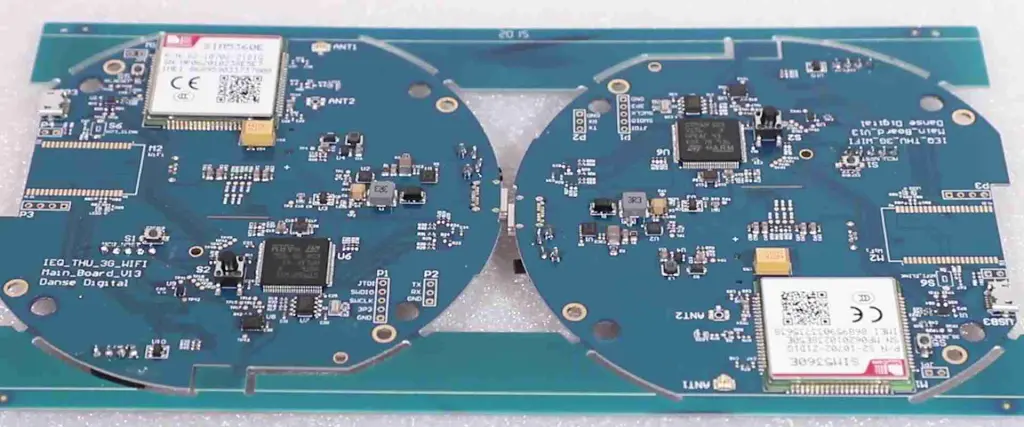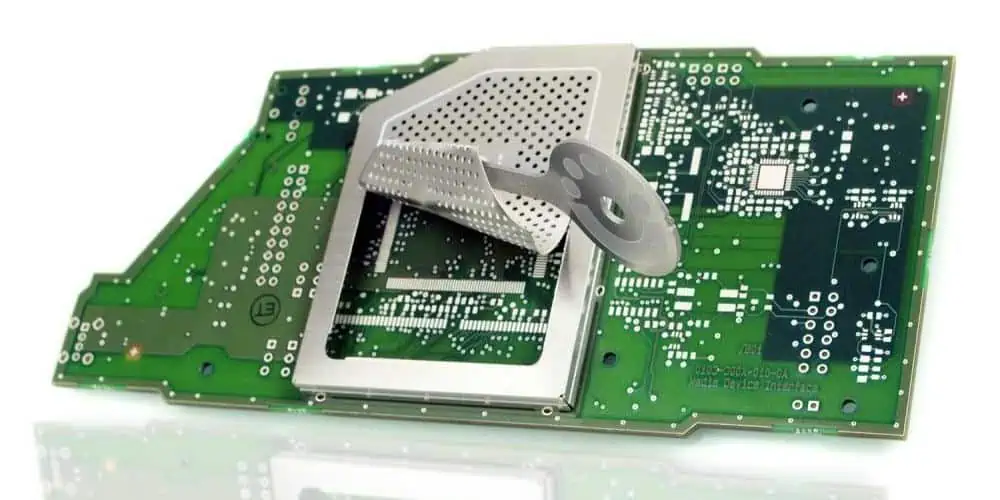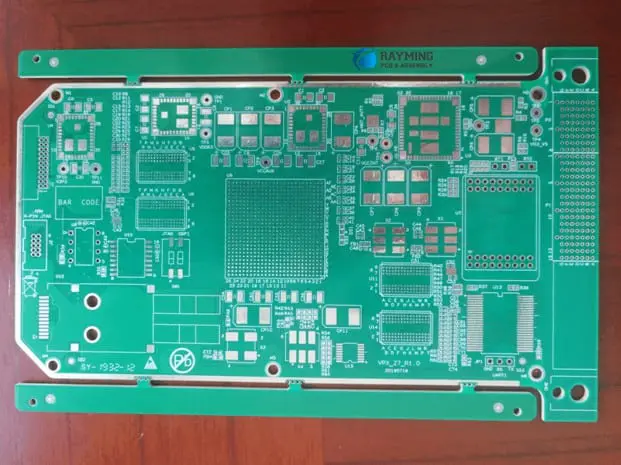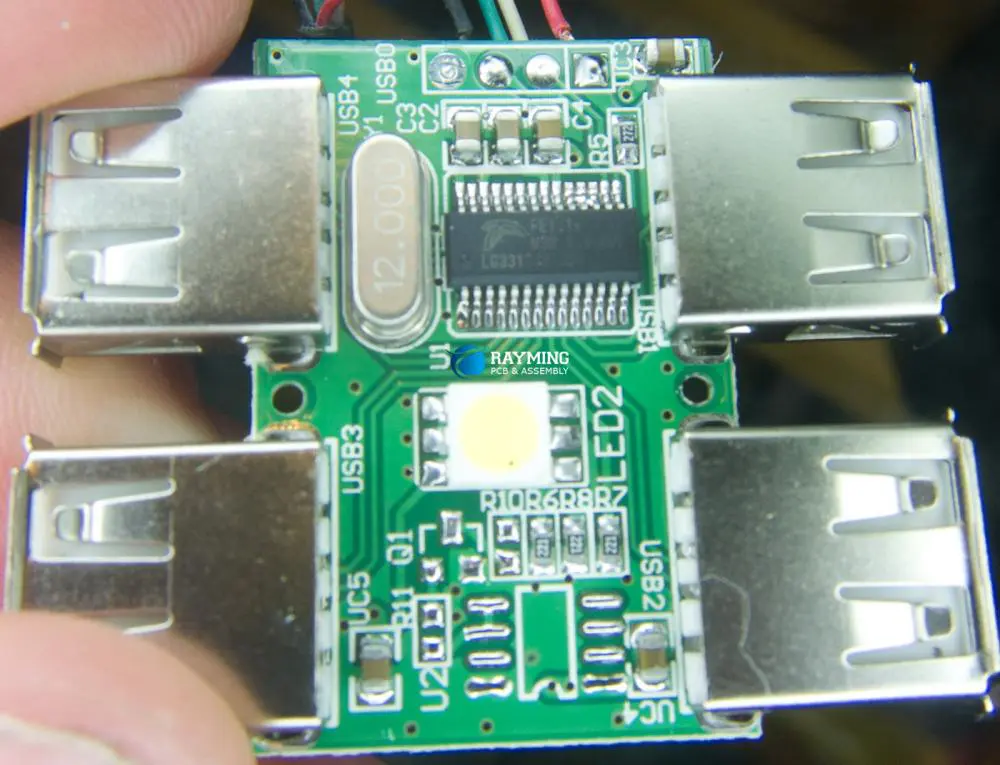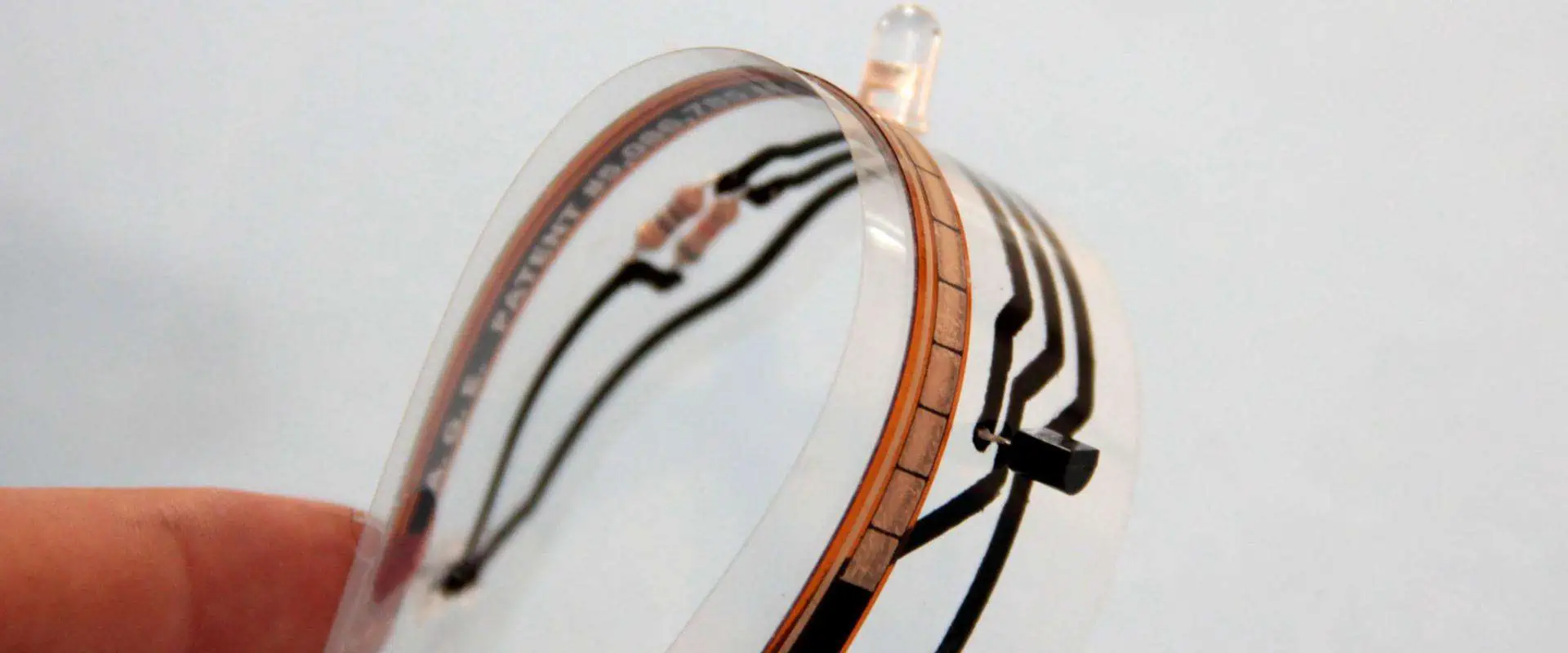
Look for New Technology Now and Have Stretchable Circuit Board

stretchable circuit board

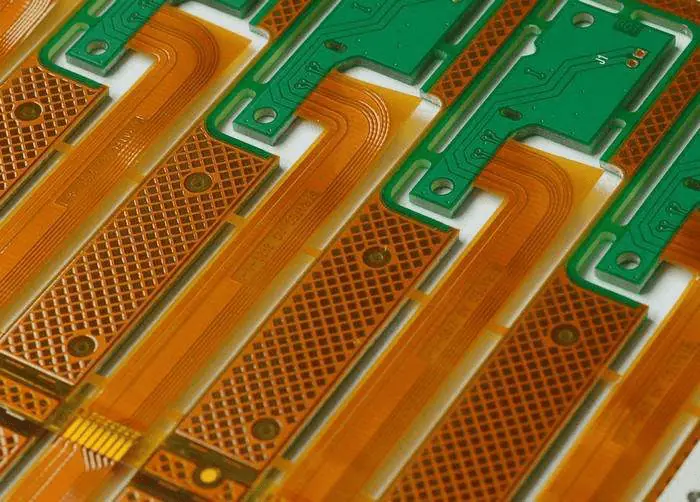
Most conventional or traditional PCBs are rigid, which means that when in operation, they shouldn’t bend. Stretchable and flexible PCBs are required because many applications require a board to repeatedly bend or flex, which is a requirement for many applications. On closer inspection, a wide variety of newly developed parts, gadgets, and electronic components strongly demonstrate mechanical stretch ability.

Some of these include uses for curved surfaces, like those in the automobile industry, or flexible connections, like those in mobile phones. This page provides examples of a variety of stretchable PCB-related topics, including their composition, characteristics, mechanism, benefits, applications, and expected future developments.

Design/Construction Of Stretchable Circuit Board

The substrate is Polyimide or Polyurethane, even though flexible PCB technology uses standard manufacture and subsequent assembly methods. Stretchable PCBs may be made with polyurethane or polyimide at a substantially lower cost than other materials. A large number of manufacturers use the following techniques to swiftly construct the substrate’s component parts.

Locally applied special coatings or interposers are the major methods used by manufacturers to strengthen the laminate. The most effective strategy, however, makes use of a technique called Stretch-Rigid. Stretch-Rigid connects two stiff boards without the need for a flexible PCB, as opposed to Rigid-Flex architecture, which performs less well.

The technology of Stretch-Rigid connects various rigid boards utilizing substrates that can be stretched and include integrated copper connectivity traces. Afterward, the electronic components are only soldered on such sturdy sections.

Advantages Of Stretchable Circuit Board
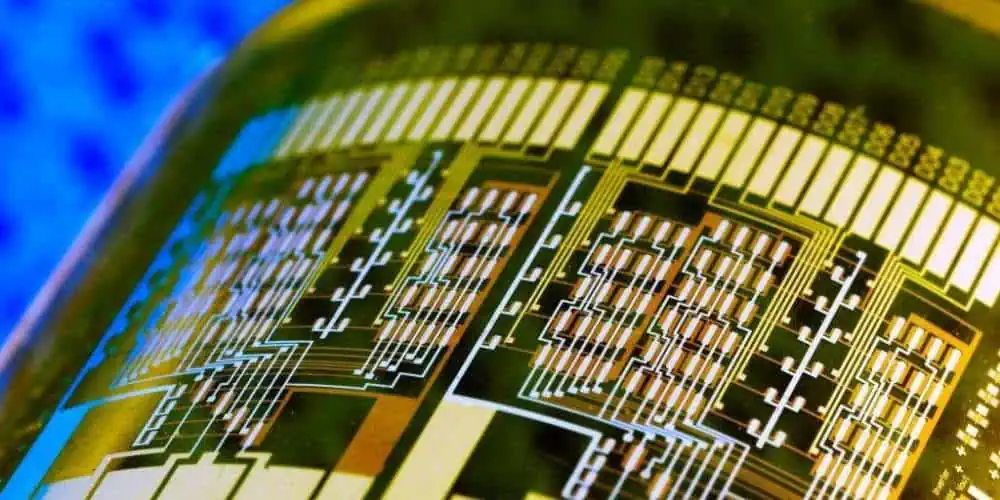
stretchable PCB board

Stretchable Printed Circuit Boards are specifically made to be more flexible and save space in order to accommodate mounting designs with high density and lower footprints. Moreover, it aids in simplifying the assembling process while also boosting dependability. In short, the only approach that guarantees electrical device mobility and downsizing is flexible PCBs.

Stretchable circuit boards provide a number of benefits that are worth highlighting. Stretchable PCBs, for instance, may be pushed, stretched, and twisted without putting the conductor in danger. Moreover, flexible PCBs allow for a variety of shapes and custom-packed sizes.

Not just that. Excellent electrical conductivity is offered by flexible PCBs. They have a low dielectric constant which allows for electrical signal transmission, and outstanding thermal characteristics, which facilitate cooling. Furthermore, unlike hard PCBs, stretchy PCBs can function effectively in high temperatures.

Due to fewer internal connections, stretchable PCBs offer better assembly output and dependability. Additionally, as this PCB was created or built for one-way assembly, there was a little mistake during construction. Stretchable boards may easily change locations while being permanently electrically connected to one another.

Some other effective benefits of using flexible PCBs rather than rigid PCBs are as follows:

  1. Outstanding Thermal conductivity
  2. It lets Weight and occupies less space
  3. Meet all the requirements of transformation due to flexibility.
  4. Enhanced reliability and repeatability
  5. Reduce the prices of the overall assembly.
  6. Goes with connectors
  7. Excellent electrical conductivity and high speed

Mechanism Of Stretchable Printed Circuit Board

FULL PCB MANUFACTURING Quote

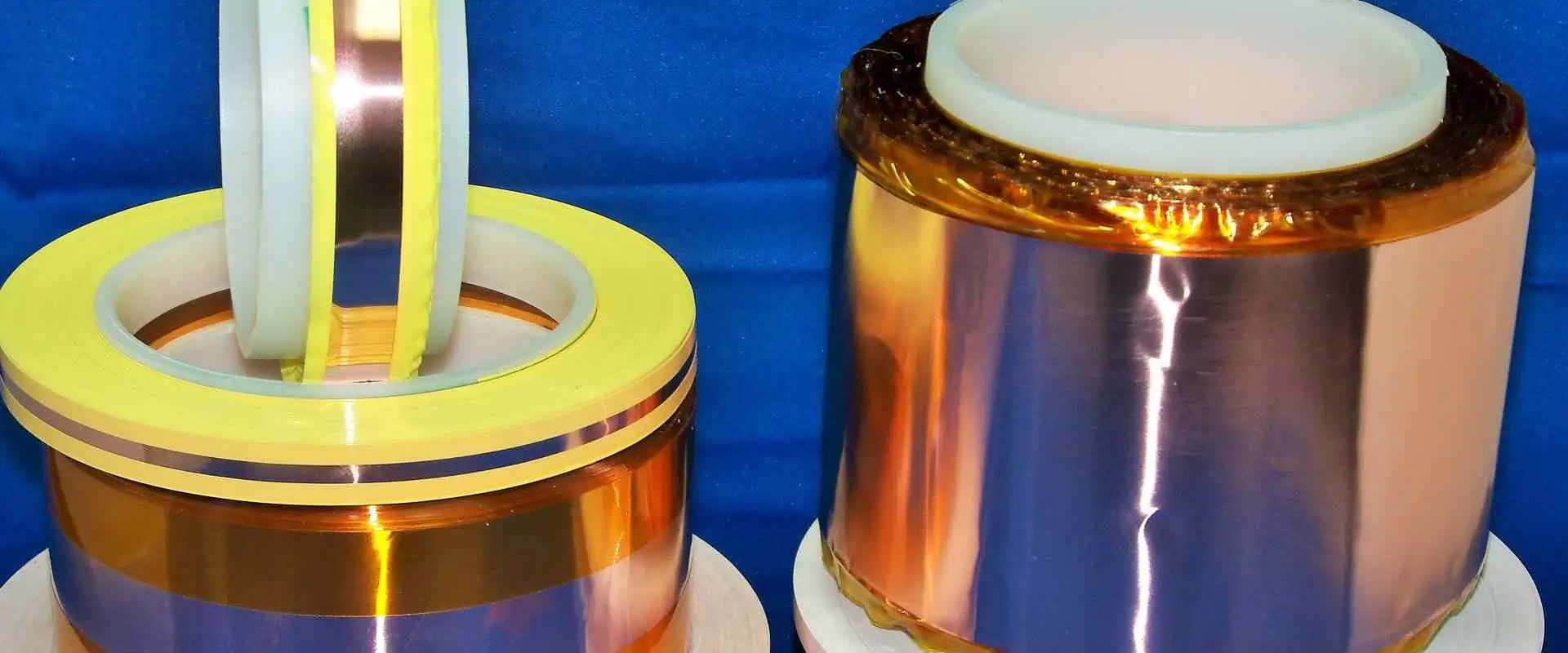
Copper traces prevent the stretchy PCB substrate made of the thermoplastic polyurethane that manufacturers employ from spreading. This is due to the fact that copper isn’t really sufficiently bendable for these uses.

Producers bind RA copper foil or conventional ED on the polyurethane base using their own lay-up methods and specialized presses. After finishing this stage, they build the stretchy circuits using customary subtractive wet-etching PCB procedures.

Stretchability is reduced when polyurethane base and adhesive are added in many layers. Hence most stretchy Printed Circuit Boards are double-layered or have a maximum of four layers. To ensure a consistent elastomer design, manufacturers add polyurethane solder covers on completed Boards.

Stretchable PCBs are put together using standard, surface mounting parts that are soldered to the copper rails. The locations where the elements are positioned cannot be stretched since the pieces are stiff. Stretchable PCBs are essentially some tiny, rugged islands that house sparse SMD components. On stretchy substrates, some conductive paper foil is used to link these SMD components.

Designers gave the copper traces on the substrate a funnel form to guarantee that they may flex or twist without being damaged. The horseshoe forms are then alternately positioned at 180โ—ฆ c to enable them to wander along a route that straight markings would have followed. While alternative methods, including triangular forms, can stretch, they do so with high amounts of stress and with reduced dependability.

Due to the aforementioned, many manufacturers like the horseshoe form, leading most of them to standardize it.

Top Uses Of Stretchable Circuit Board

Flex-PCB-Antenna

Stretched PCBs are typically used in bending or irregularly shaped surfaces. These are some of the major applications for stretchy PCBs. It is clear that stretchy PCBs and such applications are both growing. On incorporated surfaces, such as implantable or wearables devices, a standard rigid PCB cannot be conveniently positioned or used.

Equipment and parts utilized in biological applications, safety, sports, and leisure frequently have asymmetrical shapes. A PCB must adhere to the form necessary for effective integration, even with such erratic forms. Stretchable circuits may readily adapt to any area, whilst flexible circuit shapes like a cone or cylinder can be created.

Having stated that, stretchy PCBs are utilized in a wide range of applications, including consumer garments, precise positioning, and medical devices. For instance, integrated sensors on stretchy PCBs can be used to monitor pressure inside the sole of a shoe. By gathering user information based on unrestricted mobility, they do this.

Moreover, since they have pressure sensors placed in them that can accurately assess the contact pressure, stretchable PCBs are inserted within bandages. It is extremely useful to be able to monitor contact pressure, particularly when treating open wounds.

Conclusion

Stretchable PCBs are used extensively in a wide variety of electronic gadgets to give comfort as one of their distinctive features. There are several benefits that flexible PCBs may provide that rigid PCBs cannot. Stretchable PCBs is expected to see unprecedented levels of utilization based on predicted future trends. 
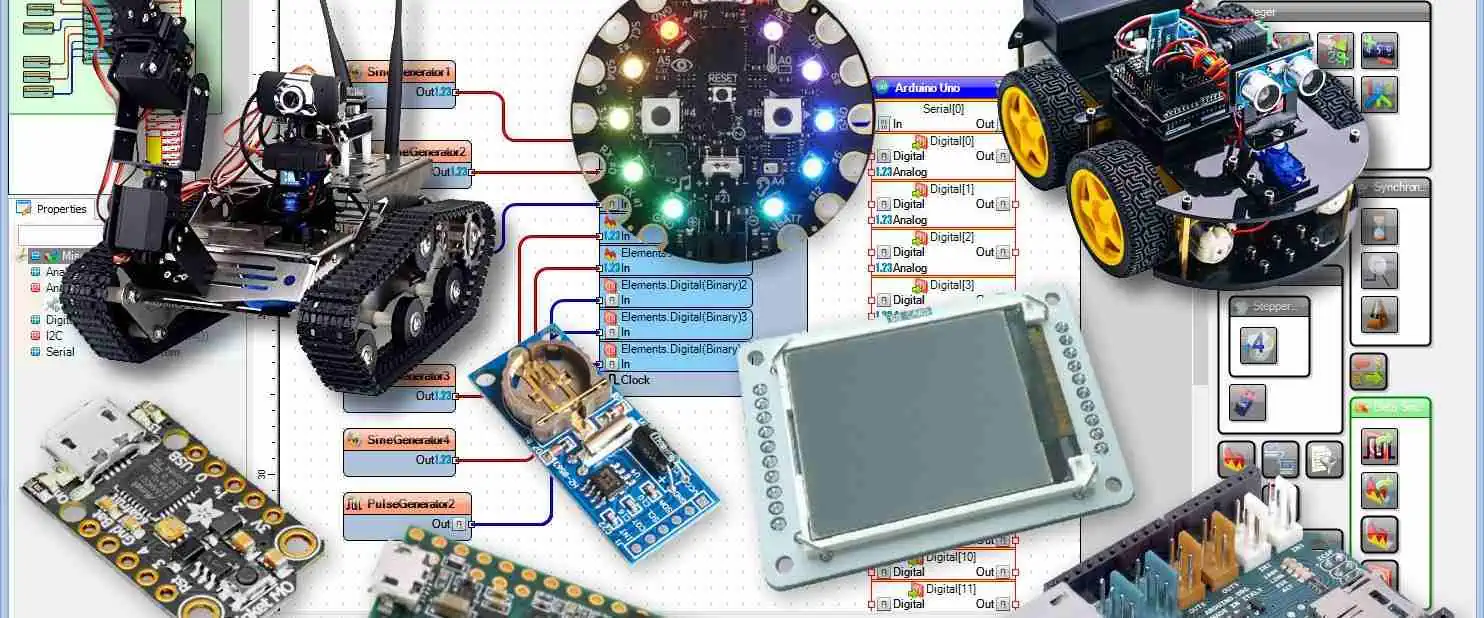
Understanding the Arduino Integrated Development Environment

Arduino Integrated Development Environment

The advent of the Arduino software as well as Arduino boards (the hardware) has made electronics development simpler. With the aid of additional parts, this set facilitates the construction of interactive and digital gadgets.  

Previously, we discussed Arduino boards. However, in this tutorial, we’ll define Arduino software and explain how to utilize it.

What Does Arduino Integrated Development Environment?

In order to write a code, the text/code editor is required. A compiler is then required to translate the written code into binary files or machine code, which the microcontroller then can understand. Programming software is also required in order to load the firmware files to the microcontroller.

An Integrated Development Environment, which can be described simply as Arduino Software, is what we refer to when we are combining all of these functionalities with some extras like console support, debugging support, etc.

The development IDE that is suited for Arduino boards is known by the moniker Arduino IDE. It has a compiler, code editor, serial console, programmer, serial plotter, as well as many other capabilities that are fully featured. Also, it is straightforward and simple to use.

The Arduino IDE can be described as a cross-platform and can function on Microsoft, Linux, and Windows operating systems. Additionally, you may program these boards utilizing the C/C++-derived Arduino Language and Arduino IDE.

Writing code and uploading it onto the circuit board while offline is simple with Arduino Software. Every Arduino board is compatible with this software.

Arduino IDE is now available in two different versions: 1.x.x and 2.x. IDE 2.x is a brand-new major update that outperforms IDE 1.x.x in terms of speed and power. It also has more sophisticated capabilities to aid users in their debugging and coding in addition to more contemporary editor and a responsive user interface.

More Information About the Arduino IDE

Arduino IOT

Write, compile, and upload code to practically all types of Arduino Modules using the Arduino IDE, an open-source program created by Arduino.cc.

Due to the official Arduino software’s ease of use, even a layperson with no previous technical training can get started with it.

It operates on Java Platform, which has built-in functions as well as commands that are essential for debugging, modifying, and generating the code, and is compatible with all forms of operating systems, including MAC, Linux, and Windows.

Several Arduino modules are available, including the Mega, Uno, Leonardo, Micro, and many others. On the boards of each, there is a microcontroller which is properly programmed as well as takes data in form of a code.

The primary code, often referred as the sketch, written on a IDE platform would eventually produce a unique Hex File, that is transported to and uploaded into the board’s controller.

The Compiler and Editor are the two primary components of the Arduino Integrated Development Environment. The Editor is responsible for the compilation and the uploads of the code to that Arduino Module, while the Compiler is necessary for the writing of the necessary code.

Both C++ and C are supported in this environment.

Installing the Arduino IDE

The installation of the Arduino IDE is rather simple. To obtain the most recent edition of the Arduino IDE, visit Arduino IDE. For several operating systems, including Windows, Linux, and Mac, there are numerous versions available.

Additionally, there are now two versions of the IDE: 1.x as well as 2.x. In this tutorial, we’ll focus on Classic 1.X version. In essence, both offer nearly identical functionality having its different GUI and a few extra capabilities, including automatic code completion.

  • Click the aforementioned link to download any installer for the OS system.
  • Open that .exe file after the download is complete.
  • Click “Next” to proceed after accepting the license agreement and deciding whether or not to install the IDE for all users.
  • Click “Install” after deciding whether you wish to alter the default installation location for the IDE or leave it alone.
  • After the installer has completed installing, click “Close.”

Arduino IDE Basics

Double-clicking of the shortcut of the Arduino on your desktop or Start Menu will start your Arduino IDE after it has been installed. This Arduino IDE would now be launched. The interface of your Arduino IDE is displayed below.

Choosing the appropriate Board on the Arduino

Let’s choose the appropriate board now. Before compilation, it is crucial to choose the correct board since this compiler will utilize it during the compile instructions. To accomplish that, choose your board out from list by clicking on “Tools” then “Board” -then on “AVR Boards”.

Choose Arduino Serial Ports

It’s crucial to choose the correct serial port for the Arduino board’s connection. You will not have the ability to upload this code to your board if you don’t do this. To achieve that, pick the appropriate COM port by clicking on “Tools” and then “Port.”

Disconnect your Arduino board out from USB port then revisit the menu if you have several COM ports available and you’re unsure of the one to use. This COM port which vanished will really be the right COM port. Select this USB port by reconnecting the Board onto it.

Different Sections of the Arduino IDE

There are three basic divisions of the IDE environment. These include menu bar, the text editor, and the output pane.

The Menu Bar: This top bar is referred to as the Menu Bar and offers the following five options.

File: With this, you can create a brand new window or reopen an already existing one to write the code. The additional categories into which the option of the file is divided are displayed.

Edit: Used to copy and paste the code plus additional font modifications.

Sketch: Is used for programming and compiling.

Tools are primarily employed in testing projects. A bootloader is burned to the fresh microcontroller using the Programmer part of this panel.

Help – If you are unsure about the software, full assistance is offered, from starting up to troubleshooting.

The Text Editor: This same primary screen, which is located underneath the menu bar, serves as a straightforward text editor for entering the necessary code.

Output window: The output pane at the bottom of the main screen, which mostly displays the memory usage and programming mistakes, is referred to as the compilation state of a running code. Before uploading this hex file to the Arduino Module, you must correct those problems.

Arduino Board Types

Arduino Uno

Compared to earlier Arduino boards, the creation of the Arduino UNO boards is said to be new. This board offers a variety of helpful features, which assists the user in utilizing this in projects.

Atmega16U2 microprocessor used by Arduino UNO helps to speed up data transfers and has more memory than other board types.

LilyPad Arduino

This LilyPad Arduino can be regarded as another sort of Arduino board which is made to work with e-textile and wearable project integration. This board’s spherical form reduces snagging and makes it simple to connect it to other gadgets.

The Atmega328 microcontroller and Arduino bootloader are both used in this device. The design of this board is simple and compatible because it incorporates relatively few external components.

Arduino Mega

Arduino Mega is regarded as a microcontroller because it contains an Atmega2560. It has a total of 54 output and input pins, of which 14 of the pins are used for PWM output, while 4 are for hardware ports, and 16 for analog inputs. One USB port, an ICSP header, a power jack, and a REST pin are also present on the board.

Arduino Leonardo

The board is regarded as a microcontroller because it contains an Atmega32u4. It has a total of 20 digital output and input pins, of which 7 are used for PWM while 12 of them are ffor analog inputs. In addition, the board has a power jack, a micro USB port, and a RESET button. There are extra pins that function as a 16 MHz crystal oscillator.

Arduino Red board

Another variety of an Arduino board which can be programmed using Arduino IDE and a small USB connection is Arduino Red board. You don’t have to modify its security settings in order for this board to function with the operating system of Windows 8. This Red board connects to other devices using the FTDI and USB chips.

Arduino Shields

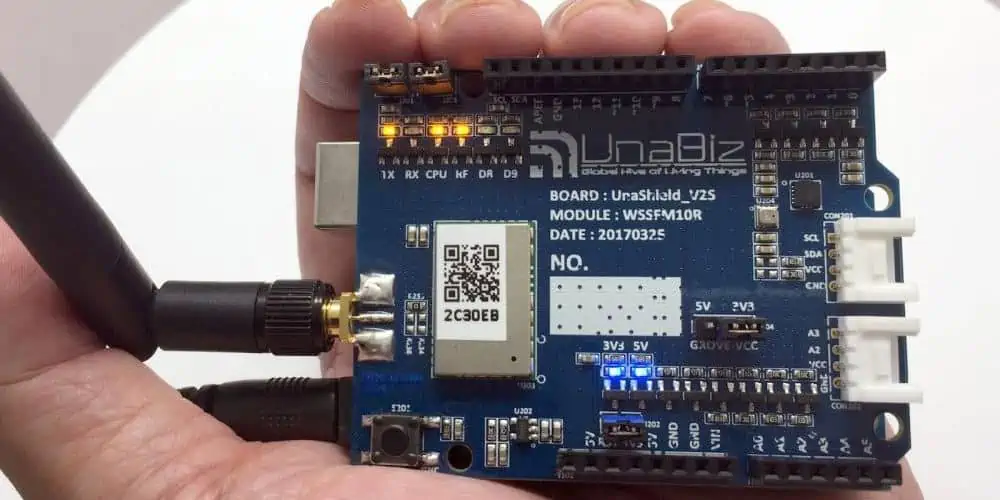
Considered to be pre-built circuit boards, Arduino shields are utilized for connecting to other types of Arduino boards. Arduino shields are mounted on the top of the Arduino boards as well as improve their connectivity to the internet, their capacity to control a motor or an LCD, and their ability to establish any wireless connection.

Conclusion

By now, you understand what the Arduino Integrated Development Environment is all about. Beginners and more experienced users can both easily utilize this Arduino software. It is used to create interactive prototypes and begin with robotics and electronics programming.

The C/C++ programming languages are supported by the Arduino software (denoted as IDE), which works with multiple operating systems like Mac OS, Linux, and Windows.

How Arduino Python Projects are Impacting Electronic Circuit Design

Arduino Python Projects

The utilization of microcontrollers keeps increasing. These components have been around and their use range from common household appliances to complex machines. Electrical engineers and technicians are familiar with these components.

The advent of Arduino has made it easy for developers to gain more access to electronic application design. Our focus here is on Arduino Python projects.

What is Arduino Platform?

Arduino comprises hardware and software that enables the development of interactive electronics projects. The emergence of this open-source platform got the attention of many professionals across several fields, thereby contributing to the Maker Movement.

Arduino is now one of the primary platforms for MVPs development and electronic prototyping with the growing popularity of the concept of IoT and Maker Movement. Also, the Arduino platform features its own programming language. This language is quite similar to C++. However, Arduino can be used with high-level programming language like Python.

Using Arduino with Python

In fact, Arduino as an open source platform functions very well with Python, particularly for applications need to be integrated with sensors. The combination of Arduino and Python offers an effective learning environment which helps developers to achieve great electronics design.  Python is a high-level programming language designed for applications like data analysis, scientific computing, web development and more.

This programming language is simple, readable and very flexible. Due to its features, Python gained popularity among experienced programmers and beginners. The integration of Python with Arduino enables engineers and developers to optimize the easy-to-use and powerful libraries offered by the Python ecosystem.

Another benefit of integrating Python with Arduino is that it enables developers to prototype and test their ideas easily. With this, you donโ€™t need to compile and upload code to the Arduino every time there is a change. Python features an active community of developers and users. Therefore, there is a wide range of resources and documentations. You can as well get support online.

If you are quite familiar with basics of Python, then you can use Python to control Arduino. The Arduino platform comprises software and hardware products. Here, we will integrate Arduino hardware and Python software to learn about basic circuits.

Arduino Hardware

Users need to hook up electronic components to assemble the circuits. You will need the following components

  • A breadboard
  • A push button
  • An Arduino Uno
  • A 470 Ohm resistor
  • Different sizes and colors of jumper wires
  • A standard LED
  • A 10 KOhm potentiometer

Arduino as a project comprises several modules and boards for various purposes. The Arduino Uno is the most commonly used board in the Arduino family. Furthermore, the 470 Ohm resistor and 10 KOhm resistor are crucial. You will identify resistors by their colored stripes.

The breadboard in the list above is crucial for assembling the circuits. You need to get a breadboard when working with Arduino.

Arduino Software

FULL PCB MANUFACTURING Quote

Some software applications need to be installed. Arduino was specially designed to enable the programming of boards. Connect the board to your computer, install Arduino IDE, configure the settings of the board, write code, and press a button on the Integrated Development Environment (IDE).

You need to download the right version for your OS in order to install the IDE on your computer. Follow these instructions for installation:

  • If your device is macOs, you can check the Arduino install guide for OSX to learn how to install Arduino IDE.
  • If your device is Linux, you will need to include your user to groups. This will help you to integrate the serial port for programming Arduino.
  • If your device is Windows, download the important drivers by using the Windows installer. To get more information, you can follow the guidelines in the Arduino Documentation.

How to Use Arduino with Python

Arduino makes use of a programming language that is quite similar to C++. You can take some approaches to Integrate Arduino with Python. A great idea to use is to run the main program on your personal computer and make use of the serial connection to interact with Arduino via the USB cable.

You need to design a protocol to enable interaction between Arduino and PC. For instance, consider a protocol that has messages like SET PIN 11 Low or VALUE OF PIN 13 is HIGH. The SET PIN 11 LOW instructs Arduino to set the output pinsโ€™ states. Also, the VALUE OF PIN 13 IS HIGH informs the personal computer about the digital input pinsโ€™ status.

You can design an Arduino sketch to send some messages to the personal computer with a defined protocol. Also, you can update the pinsโ€™ states. You could write a program on the PC to control the Arduino via a serial connection. This will be done according to the protocol youโ€™ve designed.  You can integrate any language and libraries of your choice, this includes the PySerial library and Python.

Well, you can do all of this with standard protocols. One of such protocols is Firmata. With this protocol, you can create a serial communication format with which you can read analog and digital inputs. Also, you can send data to analog and digital outputs.

The Arduino Integrated development environment (IDE) features existing sketches that will helps Arduino via Python. On your personal computer, the adoption of the protocol is in several languages, this includes Python.

How to Upload the Firmata Sketch

It is important you upload a Firmata sketch before writing Python to drive Arduino. This will help you have a control over the board. You can find the sketch in the built-in example of Arduino IDE. Go to the โ€œFile menuโ€, click โ€œExamplesโ€, and choose โ€œFirmataโ€, and then click on โ€œStandardFirmata.โ€

The sketch will be available in a new IDE window. You can upload the sketch by following these steps:

  • Plug the USB cable
  • Choose the right port and board on the IDE
  • Click on Upload

After you have completed the upload, you will realize there is no activity on the Arduino. A program that can interact with the board via the serial connection will help you have control over the upload. Also, the pyFirmata package if you will be working with the Firmata protocol.

Asides from Arduino and Firmata, there are several ways you can use Python in microcontrollers. These includes MicroPython, SBCs, and pySerial.

How to Use a Sensor to Create a Notification

One way to effectively use Arduino with Python is Firmata. However, it can be costly to get a PC to run the application. In some cases, this approach may seem impractical. Arduino and Firmata are perfect for collecting and sending data to a PC with external sensors.

Here, you will need a push button linked to your Arduino. This will work like a digital sensor and cause a notification to appear. The push button can function as a door sensor that causes an alarm notification. For instance, you will use Tkinter to showcase the notification on your personal computer. A message box will appear when you press the button.

Step by Step Guide on How to Program Arduino with Python

Install Python IDLE

You will need to visit the Python website to download Python IDLE. If you have it already installed, you can skip this step.

Install PySerial

PySerial reads and writes serial data to Arduino. It is a Python API module. You will need to download PySerial and install on your PC.

Python Code

The python code is very important since you will be needing a simple program to enable Python send data to the serial port.

Arduino code

To enable Arduino to connect with Python, you need to know which COM port the Arduino is on. The Arduino programming environment carries out this task.

Some Arduino Python Projects

There are some projects you can carry out on Arduino with Python. Some of the Arduino Python projects are mentioned below

Face tracking

This is one of the most impressive Arduino Python projects. Here, you will learn how to use your face to control a pan-tilt servo mechanism. You will make use of OpenCV to enable facial recognition and then Python will be able to send position data to Arduino. Serial connects the Arduino and  maps the location data to have control over the pan-tilt servos. This Arduino Python project will surely impress you.

Control Arduino with Python

This particular project makes Arduino a Serial device. You will make use of Python script to write on the Arduino instead of integrating the Serial monitor to transmit a bit of data. Arduino will switch on and off the LED. This is a great starting point for advanced and complex Python projects for controlling Arduino hardware.

Conclusion

The combination of Arduino and Python offers an effective learning environment which helps developers to achieve great electronics design.  If you are quite familiar with basics of Python, then you can use Python to control Arduino.  Arduino platform comprises software and hardware products. The integration of Python with Arduino enables engineers and developers to optimize the easy-to-use and powerful libraries offered by the Python ecosystem.

What are the Requirements for Blockchain Hardware?

Blockchain Hardware

All complex systems require the appropriate tools, architecture, as well as infrastructure to operate correctly. Infrastructure for enterprise blockchains is also common. Therefore, in order for a blockchain proof-of-stake network to function, software implementations, nodes, as well as hardware or cloud-based systems are required.

PaaS (platform-as-a-service) providers of blockchain infrastructure oversee and regulate access to this fundamental infrastructure needed to run such systems, including data security and cloud storage, coupled with the infrastructure which enables blockchains, like nodes and dev tools. Let’s examine the blockchain’s technical foundation and security features.

How Does Blockchain Technology Work?

Blockchain technology is a platform for storing operational data across numerous databases present in connected networks with the help of peer-to-peer nodes. The term “digital ledger” is widely used to describe this kind of storage.

A decentralized ledger known as a blockchain copies and spreads transactions among different computers’ network participating. Blockchain is a data storage technique which makes it very hard or unfeasible to alter the network, hijack it, or otherwise compromised.

What Does Blockchain Infrastructure Mean?

QUICK TURN PCB ASSEMBLY

The infrastructure of the blockchain hardware serves as its base. The equipment or facilities which make blockchain technology operate efficiently are known as blockchain infrastructure. Blockchain is a hybrid of blockchain software and blockchain hardware. It encompasses more than just computer code.

The systems and components that support as well as enable the use of the blockchain technology are known as blockchain infrastructures. Running a node continuously is more crucial for blockchain compared to the blockchain development’s system requirements.

You need to have plans regarding the infrastructure resources in order to support the initial pilots and lay the basis for the scaling up when and if those pilots would go live in order to pilot the blockchain efforts effectively. Due to this, you need to think about how blockchain would impact the data center architecture and the effects it will have on your organization.

Requirements for Blockchain Infrastructure

Blockchain technology encompasses more than just novel types of software or databases. Therefore, a sophisticated and extensive infrastructure is required. The needed hardware and software for the blockchain infrastructure are listed below.

Blockchain Software Requirements

The following is a list of the program prerequisites:

Solidity

One language frequently utilized by the blockchain developers is solidity. To support the Virtual Machine of Ethereum, it was developed. In addition, JavaScript, Python, and C++ shape it.

The most widely used OOP and CIS framework for developing smart contracts is Solidarity. Using Solidity, blockchain developers may create applications that execute self-enforcing logic within smart contracts and keep a trustworthy and accurate log of any transaction. When creating contracts for crowdsourcing, voting, blind auctions, as well as multi-signature wallets, this is advantageous.

Geth

Geth can be accessed using the command line, an engaging console, or JSON-RPC server. Geth is employed for a variety of tasks, such as ether mining, token transfers, the development of different smart contracts, including looking up block histories. You can join any existing Blockchain and create your own after the installation of Geth. The nicest part is Geth’s ability to ensure things are done easier through the establishment of a connection onto the main net of Ethereum instantly.

Mist

FULL PCB MANUFACTURING Quote

The official wallet for Ethereum created by the Ethereum developers is called Mist. It is compatible with Linux (64-bit and 32-bit), Mac, and Windows (64-bit and 32-bit).  Although Mist is particularly well suited for creating smart contracts, you must download the entire Ethereum blockchain, that takes up over 1TB, since it is known as the complete node wallet. Because this is known as a one-time installation requirement as well as cannot be altered, it is also crucial to remember the Mist password. Solc

A command-line compiler for Solidity built on C++ is called Solc or Solidity Compiler. The primary goal is to convert Solidity scripts to a more comprehensible form for the Virtual Machine of Ethereum. Despite having syntax similar to JavaScript and being a condensed programming language that is loosely typed, Solidity’s smart contracts must be converted into any format that this virtual machine will be able to comprehend and interpret readily. This is one good reason why the solidity compiler is very useful.

There exists two different versions of Solc: the most recent Solc-js, that utilizes Emscripten in cross-compiling the initial source code of Solc from the C++ onto the JavaScript, as well as the initial Solc, which was developed in C++. Another application for Solc is offline compilation.

Remix

A Blockchain tool in developing and implementing smart contracts is called Remix IDE. A remix can be described as a Javascript tool that can be used by any current web browser in developing, testing, debugging, and deploying smart contracts that are solidity-based. Remix is well-documented and offers a simple Metamask connection process for connecting to Ethereum blockchain. Blockchain ganache, test net, BaaS (Blockchain-as-a-Service), MetaMask (wallet), as well as Truffle are among the additional software needs for the blockchain infrastructure.

Hardware Requirements for Blockchain

PCBA Conformal coating

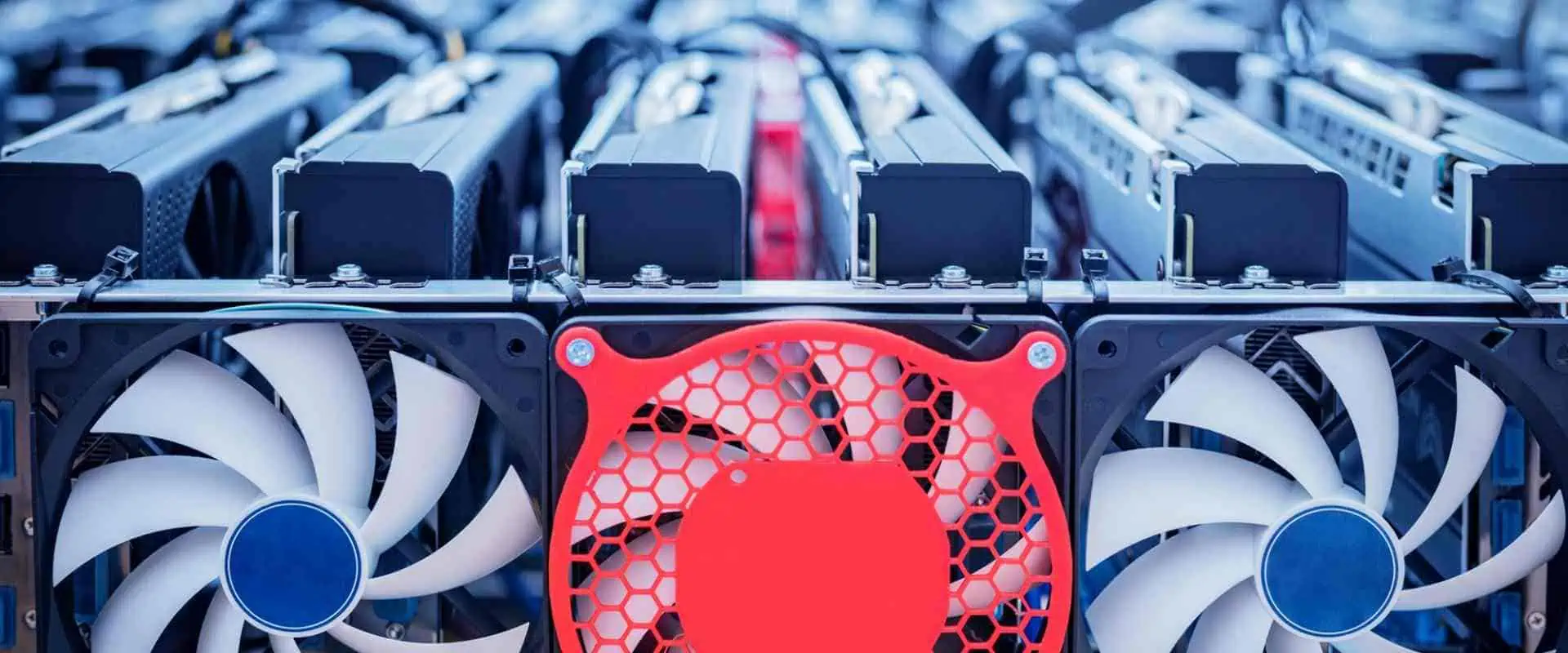
High-performance PCs are the standard term used to describe blockchain hardware. Businesses need these sophisticated computers because they make it possible to execute jobs quickly and accurately.

Processor speed, memory capacity, storage capacity, plug-ins, as well as environmental restrictions including vibration, shock, temperature swings, as well as humidity levels are just a few examples of these specs and needs.

CPU – Center Processing Unit

A central element of any system is the processor or CPU. It serves as a computer system’s brain. It performs intricate processes that manage the whole computer. As the performance of the CPU rises, tasks can be completed more quickly. But the way we think about processing power is changing, particularly in terms of real-time transactions and latency.

GPUs

Graphics processing unit or GPU is another name for graphics cards. The display tasks of the computer, like video rendering, are handled by a GPU. The calculations shouldn’t be overly complex as the GPU is designed to conduct several calculations every second. Because of this, a CPU utilizes the GPU in handling some tasks, freeing it up to focus on other crucial tasks which a GPU will not be able to perform.

Clients and Nodes

A node can be described as a machine that carries out the fundamental functions of a network, including transaction authentication, upkeep of blockchain logs, storage of blockchain data, and voting for the network governance. Any computer program which describes how these crucial duties should be completed is referred to as a client.

The network may be able to accommodate numerous software clients or implementations, depending on the way it is set up. To develop clients, a variety of computer languages could be employed, each with a variety of implementation options.

Participation nodes, replay nodes, sentry nodes, as well as read and write nodes are some of the different types of the network nodes for proof-of-stake.

Clusters

A group of nodes that are network-specific as well as the infrastructure that supports them make up a cluster. Load balancers, failover protection, container services, as well as alerting and monitoring services are all parts of a cluster. Maintaining many clusters as well as enabling Blockchain client API are the two key use cases.

Security Infrastructure for Blockchain

Xilinx Virtex-5 fpga

The infrastructure for the underlying blockchain also involves vitals management, audits, networking firewalls, as well as other considerations for technical security in addition to the software and hardware needs.

By sending patches and upgrades to the implementations of the code supporting the blockchain infrastructure of the user, security maintenance can be carried out. By staying updated with the newest recent releases and patches, users could be shielded from any hazards when they are discovered.

Networks for proof-of-stake blockchain demand extensive technical expertise, time, money, and solid underlying technology in order to participate. Blockchain networks’ security frameworks include:

Infrastructure-as-a-Service

Blockchain infrastructure service providers (IaaS) offer their clients direct access to their infrastructure, which includes managing servers, building security features, and operating data centers.

Platform-as-a-service

When creating the code, the framework for accessing them, the development tools, analytics and metrics, container services, as well as community support, a platform-as-a-service provider administers and retains the access to all those features. It offers a simple way to build and manage the underpinning infrastructure needed to run the blockchain hardware systems as well as the technology that drives blockchains themselves.

Enterprise-Grade Technical Support and Security

The nodes as well as the operation of their underlying infrastructure are maintained and monitored by the blockchain infrastructure provider. Clusters for clients are regularly monitored by a swarm of readily available engineers as well as devoted customer service staff. The implementations of the code supporting the infrastructure of a user’s blockchain are also sent updates as well as fixes by the PaaS blockchain hardware infrastructure.

Updates and patches are swiftly applied to ensure that clusters always run on the most recent version. Also, the updates get executed in a manner that ensures that the node seems to have the least downtime possible.

Conclusion

The systems and components that enable and support the use of the blockchain technology are known as blockchain hardware infrastructures. However, organizations that employ enterprise blockchain tech depend on the software and blockchain hardware that make up blockchain infrastructures.

Perfection Made Easy with a Custom Stencil Maker

pcb laser stencil

Are you an artist or craftsman seeking to improve the quality of your work? Then, a custom stencil maker is the only place to turn! It is an ideal tool or program for making wall art, fabric painting, stencilled woodwork, logos, and signage since it allows users to make one-of-a-kind stencils from images or forms. In addition, a custom stencil maker delivers varied and accurate results, making it a practical and affordable alternative for any project, from its cutting head to its computer interface. Start making original patterns right now by learning about the capabilities and advantages of a custom stencil maker. This article will give you an insight into the custom stencil maker.

What is a custom stencil maker?

A custom stencil maker is a specialized tool or program that enables users to create one-of-a-kind stencils from photos or forms. Typically, the program makes a simple stencil to cut out, print, or use in other ways once the user uploads a photo or a shape. Customers can alter the size and shape of some custom stencils, and others even let users make several versions of the same picture or design.

Components of a Custom Stencil Maker

The components of a custom stencil maker include the following:

  1. A stencil maker is a tool used to make stencils for many purposes, such as painting, etching, and other art forms. Some frequently featured items are a bed, a cutting head, and a user interface. The cutting head helps cut the desired shape or image from the stencil material once you have laid it out on the bed. The computer interface controls and modifies the cutting process.
  2. Stencil Material: Stencil material is the base on which you create your stencils. It may comprise a variety of substances, such as paper, plastic, metal, and others. The selection of material depends on the intended result since some materials are more suitable for specific uses than others.
  3. Cutting Head: The stencil maker’s cutting head is the component utilized to cut out the desired form or image. Typically, it consists of a cutting bed, a motor, and a blade. The cutting bed supports the cut material while the motor rotates the blade.
  4. Computer Interface: A computer interface helps control the cutting process. It usually includes a keyboard, a mouse, and a monitor. The monitor displays the cutting process, whereas the keyboard and mouse make commands and configuration changes.
  5. Control Software: The control software controls the computer interface and cutting head. Typically, it designates cutting paths, modifies parameters, and keep tabs on the cutting process.
  6. Safety Features: Any form of the cutting tool should have safety features. A good stencil maker must have blade guards, emergency shut-off buttons, and other safety precautions.
  7. Accessories are add-on parts that are optional and increase the usefulness of a stencil maker. Dust collection systems, stencil material holders, and template libraries are typical accessories.

Types of Projects that a Custom Stencil Maker can Perform

FULL PCB MANUFACTURING Quote
  • Wall Art: A professional custom stencil maker can produce striking artwork on walls and other interior surfaces. The painting can express a message or improve the interior design of a space. One can draw complicated patterns and designs to make the wall appear like a piece of art. It is a fantastic way to give any room a very personal touch.
  • Fabric Painting: Beautiful fabric painting can be easy to achieve using unique stencils. The fabric artist can utilize stencils to produce recurring designs on fabric that can fit into quilts, clothing, and home decor. The fabric artist can combine or employ a variety of colors to create various effects.
  • Stenciled Woodwork: Custom stencils can help give wooden furniture and other woodwork a distinctive appearance. Stencils can easily create patterns or logos for decoration on furniture or other woodwork. This action may give any area a special touch.
  • Logos: Businesses and groups can design their logos using custom stencils. Using the stencils, you can create a polished logo that you can use on business cards, signs, and other marketing materials.
  • Signage: Personalized stencils can design signs for establishments such as shops, churches, and educational institutions. Utilizing the stencils, you may make distinctive, attention-grabbing signs for your company or organization.
  • Home decor: You may create unique and lovely home decor using customized stencils. The stencils may impart decorative designs to various surfaces, including floors, walls, and furniture. This feature might add a very personal touch to any home.
  • Shirts/Apparel: Stencils can easily create unique and eye-catching designs on shirts and other clothing. The stencils can help a business or group create logos, slogans, and designs that can serve as advertisements. This action is a fantastic way to add a highly unique touch to any outfit.

Features and Benefits of a Custom Stencil Maker

Custom stencil makers offer several features and benefits that make them a valuable tool for any crafter or artist. Some of the features and benefits of custom stencil makers include the following:

  1. Versatility: A custom stencil maker provides flexibility by letting consumers develop their unique patterns or alter pre-existing ones. This aspect gives any project a wide range of creative alternatives. Additionally, customers have a selection of substrates, including plastic, mylar, vinyl, and others. This versatility indicates that the stencils apply to many tasks, including signage, wall art, and crafts.
  2. Precision: A bespoke stencil manufacturer provides stencils precisely cut to the required dimensions. This action implies that the clients’ stencils will adhere to the surface in precise alignment. The precision of the personalized stencils contributes to the end project’s polished and professional appearance.
  3. Convenience: A custom stencil maker makes it simple to quickly and easily produce a personalized design. Customers can submit their preferred method, which will be completed in a few days. Compared to more time-consuming traditional stenciling techniques, this makes it considerably more practical.
  4. Cost-Effectiveness: Compared to buying pre-made stencils, custom stencils are frequently more affordable. Customers can select the materials and designs suitable for their project and budget. Furthermore, custom stencils are reusable several times, which further lowers costs.
  5. Durability: Custom stencils are frequently comprised of premium materials to survive repeated use. This aspect guarantees that clients’ stencil purchases will survive for many years, making them a significant investment.
  6. Speedy Turnaround Time: Typically, custom stencils are made and delivered within a few days. Due to this, consumers that need to finish their assignments fast should choose them. The rapid turnaround time also ensures that consumers get their stencils and start working on their projects quickly.

Market Trends of the Custom Stencil Maker

laser stencil pcb

Over the past few years, demand for the custom stencil maker sector has steadily increased. We can ascribe this to several things, such as the rising popularity of do-it-yourself projects, the expanding demand for personalization and customization in many facets of life, and the expanding accessibility of online services that make it simpler to locate bespoke stencils.

With more people looking to be creative and add their unique touches to projects, DIY projects are growing in popularity. This growth has increased demand for custom stencils since they make it simple to produce distinctive patterns and designs that can apply to several surfaces. Additionally, such projects have increased demand for customized stencils for specific tasks. For instance, someone working on a craft project would require a particular stencil to achieve the appropriate design, or those wishing to decorate a wall might need a specific plan for the job.

The demand for customization and personalization in many spheres of life is also responsible for expanding the custom stencil maker sector. Customers seek out distinctive goods and services, and using custom stencils is an efficient technique to develop an original pattern or design. Additionally, custom stencils are gaining popularity among companies and groups who want to design branded goods or logos.

The expanding availability of internet services is another factor. With the help of these services, customers can explore different stencils, assess prices, and buy them online.

Finally, improvements in technology and manufacturing techniques are driving the custom stencil maker sector. For example, custom stencil producers can now develop more complex designs and patterns that can be applied to various materials due to 3D printing technology. At the same time, CNC machines and laser cutters have made it feasible to produce custom stencils in more significant quantities and with higher precision.

Conclusion

Making unique stencils can be a great experience. Anyone can produce lovely and detailed designs for various crafts with the right equipment and materials. Custom stencils can complete any project and seem distinctive and expert, from walls to signs, windows to furniture. A custom stencil maker is a valuable tool for any crafter or artist who wants to produce distinctive designs. Anyone may quickly produce their unique stencils with the correct information and equipment. We expect the custom stencil maker market to experience significant growth in the coming years, driven by increasing demand for creative and unique designs and the development of new technologies. This growth will allow new entrants to enter and gain a larger market share.

5G EMI Shielding Technology and It Advantages to the World

Technology keeps on advancing in a consistent manner. In the communication sector, strides in communication infrastructure have moved on to a new version known as 5G or fifth-generation communication infrastructure. 5G is pretty efficient, enabling fast transmission of information with minimal lag. Moreover, 5G is generally a more comprehensive, functional technology that everybody can access using various gadgets. 5G can be utilized with MC (mission critical) communications, mobile broadband telecommunication, and the Internet of things.

However, though 5G is pretty efficient, it still faces one major issue, EMI or electromagnetic interference. But what exactly is electromagnetic interference? And how can you shield 5G from electromagnetic interference?

5G wavelengths and Frequencies

Just recently, the FCC granted 280 megahertz from 3.70 gigahertz to 3.98 gigahertz, for now, the popular MF (mid-frequency) fifth-gen band. This mid-frequency fifth gen band is famous for two main reasons which are:

–          Increased speed as per data deliverability when compared to 4G

–          Increased levels of connectivity in various building

4G or fourth-generation technology relies on low-frequency bands or at least lower FB when compared to 5G. However, these low-frequency bands are crowded with communication, and radio uses, to the point that now technicians are thinking about sharing or reframing. But this option of sharing or reframing tends to be pretty expensive and difficult to achieve. On the other hand, fifth-generation technology functions at high frequencies, which are mmWaves or millimeter waves.

Millimeter waves have short frequency wavelengths. Therefore, engineers must consider this factor when generating 5G networks, particularly in EMF attenuation areas. For EM shielding purposes, 3.98 gigahertz frequencies have a wavelength of about 2.97 inches. Therefore, for common commercial EM shielding levels of approximately 40 db, the max aperture at this particular frequency level will have to be more than 1.49 x 0.02 inches. Due to this, attenuation efforts surrounding 5G are pretty different as per exterior EMI and internal interference.

5G Electromagnetic Interference EMI Shielding in a Nutshell

The fifth-generation tech allows you to carry out complex tasks faster and with ease compared to 4G. Take, for instance, a pretty simple tasks such as the following:

–          A mother wants to access her house remotely to check on her refrigerator, which is connected with sensors for autonomous operation. She then orders groceries remotely while receiving manufactured nut allergy alerts in real time.

So is this a simple task? The fifth-gen tech allows this task to occur in a manner that is more complex and efficient. Every single thing must function flawlessly and in a connected manner, from the mother’s smartphone to her refrigerator bearing IoT sensors and so on. One tiny glitch or shielding oversight and the entire task comes crumbling down.

Non-conductive or open aperture areas significantly reduce the EMI shielding ability of various electronic enclosures by letting RFI and EMI either enter or escape an electronic system or product. If such a case occurs, then this might lead to your electronic product malfunctioning or ultimately failing.

Examples of EMI-shielded electronic enclosures which are open apertures, non-conductive areas, or susceptible are:

–          Airflow vents meant for air-conditioning and heating

–          Signal and power access panels

–          Cable entry

You can also choose to utilize conductive fabric gaskets for 5G EMI shielding.

Military 5G Attenuation and Use cases

FULL PCB MANUFACTURING Quote

The United States military is using fifth gen tech by separating control and command into segments which ultimately makes networking aspects:

–          Faster

–          Transportable

–          And more flexible

5G can make all this possible via connecting everything to everyone (which includes soldiers and command operation personnel). Another excellent example of the fifth-gen is the enhanced VR (virtual reality) training for soldiers. The military is utilizing 5G technology for VR training due to a couple of reasons which include:

–          Its impeccable data speeds

–          Lower Latency

–          Improved system connectivity

Moreover, for the military-grade enclosure that has to pass 80db, 60db, Mil-STD-461, or higher, you must apply certain attenuation levels to achieve compliance as per electromagnetic compatibility. At these EM shielding attenuation levels, non-conductive or open aperture areas can’t be large to meet EMI shielding standards.

5G Application in the Medical Industry

High Profile 5G PCB developed

The medical sector is integrating fifth gen infrastructure and electronic devices for a couple of reasons which include:

–          Gadget profile priority

–          Low latency

–          Fast download/upload speeds

–          Security

Using 5G, for example, helps surgeons safely operate on a patient remotely using comp-controlled robotic gadgets to undertake surgical operations.

5G EMI Shielding materials

Two main properties are pretty essential when building EMI wave absorbing devices:

–          Magnetic permeability

–          Electrical conductivity

Here are some common materials that encompass these properties:

Metals

Metals should be your first option if you are looking to generate an electromagnetic protection shield since they are simple and cheap. Moreover, these components contain impeccable properties such as:

–          Ductility

–          Strength

–          Magnetic permeability

–          Electrical conductivity

These properties make metal shielding devices great for generating EMI shields.

The most utilized metal to generate EMI shields is silver since it has impeccable corrosion resistance and excellent electrical conductivity. All these features make this metal an efficient attenuator of electric fields. However, silver has one downside: it is pretty expensive compared to other options. Due to this downside, most technicians utilize this component as a surface coating or an alloy component.

Carbon Allotropes

5g printed circuit board

The second EMI shielding materials are carbon allotropes which encompass all types of carbon, which include:

–          Carbon nanotubes

–          Carbon fibers

–          Grapheme

–          Graphite

These components are utilized as filler components for electromagnetic interference composites. Carbon allotropes make impeccable filler components because of their excellent conductivity and intrinsic strength. Additionally, carbon allotropes mainly function via the multiple reflection shielding mechanism.

The most popular carbon allotrope utilized for External electromagnetic waves shielding is exfoliated graphite because of its flowing ability and flexibility. Moreover, this component has a pretty high porous structure which promotes electromagnetic interference absorption. On the other hand, carbon nanotubes, carbon fibers, and grapheme are utilized as filler components because of their impeccable aspect ratio.

Intrinsically Conducting Polymers

Intrinsically conducting polymers or ICPs are unique polymers that have the ability to effectively conduct their own radiated electromagnetic waves tructure without needing additional conducting components. Moreover, these components are mostly desired because of their processability and because they are lightweight.

ICPs can effectively conduct electricity between atoms because of their conjugated bonds, which allow the delocalization of loose electrons, which now become mobile charges. The electronic conductivity of ICPs can be altered via de-doping and doping. The most popular ICP utilized for EMI shielding include:

–          Polypyrrole

–          Polyaniline

Conclusion

Fifth-generation technology has, without a doubt, shaken up the tech industry. However, it faces one issue which lowers its performance, electromagnetic interference. However, to handle this issue efficiently, you can utilize EMI shielding or conductive fabric gaskets which shields 5G from electromagnetic interference. We hope that this article has given you all the answers that you were looking for regarding 5G Electromagnetic interference shielding.

What Does PLC IoT Mean?

PLC IoT

PLC IoT, a mid-band PLC technology designed for different industrial IoT situations to transport data across power lines over low-voltage networks complies with the HPLC/IEEE 1901.1 standard.

By delivering dependable, secure, and effective communication inside the “final mile” of IoT, PLC IoT removes the requirement to install extra communication lines.

Why Is PLC IoT Necessary?

Internet of Things Communications

The rapid growth of the Internet of Things is driven by ongoing advancements in the communication technologies. People’s demands for data collection from IoT terminals are expanding quickly. Different IoT access solutions are urgently required in order to link everything and provide dependable, secure, and effective communication inside this “final mile” of Internet of Things.

Wireless IoT communication technologies (including WiFi, Bluetooth, and ZigBee) and wired IoT communication technologies are the two main groups (for example, PLC and the industrial field bus). PLC connects to the IoT devices even without the requirement for dedicated lines by reusing power lines for transporting data. It doesn’t have the issues that industrial field buses technologies and wireless communication technology do with regard to line characteristics, severe effect from the environment, and inadequate interoperability and openness (such as weak signals).

PLC avoids the need for additional investments as well as solves the problem of using various communication technologies to share one network. Data transmission across electrical lines will bring interconnectedness of everything closer to a reality.

PLC is even further broken down into three categories: mid-band PLC, narrowband PLC, and the broadband PLC based on the transmission rate and frequency band.

How PLC-IoT Came to Be

IoT Computer
IoT Computer

PLC-IoT is a cutting-edge method of using PLC in different IoT settings. PLC-IoT can be described as the mid-band PLC technology focused on IoT scenarios that is based on the HPLC/IEEE 1901.1. It fixes issues like power line interference and signal attenuation. For now, I t uses IP-based communication.  Furthermore, PLC IoT runs in the frequency spectrum with low and consistent noise and strong channel quality, spanning between 0.7 MHz and 12 MHz.

OFDM technology that utilizes high frequency bands and good anti-interference capacity, is the technology used by PLC-IoT. PLC-IoT transfers data at high speeds and across a large distance over the power lines through the modulation of digital signals present in carriers or high-frequency.

PLC-IoT offers the rate of the application-layer communication between 100 kbits per second and 2 megabits per second, and via multi-level networking, it may increase the distance of transmission to a few kilometers. Numerous IoT protocols may now run over the power lines thanks to IPv6, enabling intelligent endpoints and enabling complete device connectivity.

Related to the physical properties of power lines, PLC-IoT builds an efficient power line channel transmission communication model and chooses the best frequency for signal transmission. PLC IoT evaluates the channel parameters of the power lines, which includes the impedance, attenuation, as well as noise parameters of signals, depending on a significant amount of the measured data.

Depending on these features, PLC-IoT efficiently reduces attenuation and noise, enhancing power lines’ communication capabilities and enabling high-speed, dependable, as well as long-distance real-time communications.

How Does the PLC IoT Function?

FULL PCB MANUFACTURING Quote

PLC IoT is easy to implement and is explained as follows:

The module for PLC modulation links the signals of high-frequency to the power lines using coupling circuits at the side of its signal source after modulating these data signals that will be conveyed to high-frequency signals using various techniques like modulation and encoding.

he module for PLC demodulation performs demodulation so as to recover the initial data signals at the receiving end after separating data signals out of high-frequency signals carried over the power lines.

Simply explained, this PLC module converts communication data transmitted by the source of signal to the electromagnetic waves of high frequency and sends them across power lines into the data receiving end. These electromagnetic waves of high frequency are then separated from this current by that PLC module found at the receiving end.

The Communication Model for PLC IoT

Let’s first examine the communication models of the conventional PLC and the enhancements PLC-IoT brings to it in order to comprehend how PLC-IoT functions.

Its physical layer, the data link and application layers make up the conventional PLC communication models. This application layer receives service data directly from its data link layers. The transport layer as well as the network layer are integrated into the architecture of the PLC-IoT network centered on the OSI model. The TCP/IP is used to implement typical IP network communications at the network layer that is IPv6-capable. Applications can now execute on its IP layer or network layer rather than the data connection layer as a result.

PLC IoT Networking

This PLC-IoT network will adopt a tree or star topology based on the terminal connection and cabling environment method in real industry applications. The distance of carrier transmission is further increased by its tree architecture, which permits networking up to eight levels deep.

PLC IoT Industry Application

PLC-IoT allows for high-speed, dependable IoT communication via power lines having essentially no significant roadwork, cutting deployment time and costs by more than 50%. PLC-IoT therefore is perfect for a variety of scenarios relating to IoT, including smart street lights as well as traffic lights.

Smart Traffic Lights

This smart traffic light technology uses PLC-IoT to relay data over existing power lines. This solution incorporates centralization of devices for traffic control like traffic lights, guidance screens for traffic, as well as countdown timers. It does this by reusing existing facilities as well as adding devices that are PLC IoT capable.

This solution also implements intelligent linkage between traffic conditions, Take for instance, signal light’s intelligent detection defects as well as online queries of the information of signal light, breaking information silos in-between the systems and exchanging and sharing intersection data. This system creates smart intersections therefore makes the transition to intelligent traffic control possible.

Street Lamps (Smart)

Unprecedented intelligence is what makes a city “smart,” and this intelligence is what is causing conventional street lighting to become intelligent. The finest IoT option now is smart lampposts. This street lamp system uses PLC IoT as well as edge computing technology to automatically alter the street lamps brightness depending on the environment, time, latitude and longitude, hence consuming less energy.

Conclusion

In summary, PLC IoT is designed for different industrial IoT situations to transport data across power lines over low-voltage networks.

RF Shielding Material, and why you should greatly consider this Tech

RF Shielding Material

Most, if not all, electrical gadgets rely on electrical circuits to transfer electrical currents from one electrical component to another. However, this current transfer can be disrupted by radio frequency interference or RFI. Generally, RFI disrupts electrical circuits and makes them work abnormally, which ultimately disrupts the current flow. When such as case occurs, the affected device might start acting abnormally or eventually fail to function. However, using FR shielding, you can get around this issue quickly. But what exactly is RF shielding? How does RF shielding work? Which RF shielding materials do manufacturers utilize? And why is RF shielding crucial?

RF Shielding in a Nutshell

RF (Radio Frequency) shielding is simply the act of effectively blocking off RF electromagnetic signals which cause RFI (Radio Frequency Interference). Generally, RFI disrupts the electrical circuits of a gadget, causing them to function abnormally. To achieve RF shielding, you must install barriers that encompass magnetic and conductive materials around the following:

–          Cable lines

–          The deviceโ€™s electronic circuitry

–          Potential victims and sources of electromagnetic fields

Adding this barrier isolates the specific points from the external environment, preventing RFI.

Even though RF shielding is pretty efficient, its effectiveness in terms of reducing interference usually depends upon the following:

–          The shielding materialโ€™s properties,

–          The shieldโ€™s thickness and design

–          And lastly, the electromagnetic field and size of various discontinuities on the RF shield.

RFI is an issue that can quickly reduce the effectiveness and performance of various communication and electronic devices. However, different types of gadgets have varying responses to radiofrequency interference. RFI can lead to the following:

–          Information and system losses

–          Security and data breaches

–          And even absolute failure on some gadgets

However, even though RFI has been around for some time, there is no way to eliminate it from electronic gadgets. That is because electronic circuits tend to emit RF electromagnetic signals, which affect them negatively.

The utilization of Radiofrequency shielding is an excellent measure that can help you effectively safeguard your equipment and devices from the harmful effects that come from RFI.

The Nature of RFI

FULL PCB MANUFACTURING Quote

Generally, electromagnetic waves tend to carry energy. Moreover, this consists of magnetic and electric waves oscillating at a ninety-degree angle from each other. Additionally, electromagnetic waves tend to have the following characteristics:

–          Frequency

–          Wavelength

RFI and Electromagnetic Interference (EMI)

EMI occurs whenever EM (electromagnetic) signals or waves disturb how electronic devices function normally. Most people refer to this condition as noise or electromagnetic noise. But how is RFI different from EMI?

Generally, EM radiation at any given frequency tends to cause interference. On the other hand, RFI is a type of electromagnetic interference when the EM signals involved in the process are in the RF band of an electromagnetic spectrum.

Typically, frequencies in radio signals range between 300 gigahertz and 3 kilohertz. However, though different on some level, most people use the terms RFI and EMI interchangeably.

Different Kinds of RFI

RFIs fall into various categories according to the following characteristics:

–          Bandwidth

–          Duration

–ย ย ย ย ย ย ย ย ย  Source

Sources

Man Made

Electrical and electronic gadgets sometimes emit EM radiations which ultimately affect other equipment and devices that are close to them. RFI artificial sources fall into two categories:

–          Intentional sources

–          Unintentional sources

Natural Sources

The naturally occurring radio frequency interference is generated because of astronomical phenomena, for example:

–          Snowstorms

–          Dust storms

–          Cosmic noise

–          Static electricity

–          Solar flares

–          Lighting strikes

Electronic gadgets that utilize wireless signals, for example, remote controls, wireless routers, Bluetooth speakers and mice, laptops, and cellphones, are abundant sources of radio frequency interference. Moreover, as these gadgets become faster, RF increases, and more EM radiation is ejected into the surrounding. The EM radiations that leak into the surrounding cause RFI to surrounding devices.

Intentional Sources

The intentional radiofrequency sources are various gadgets that are designed to efficiently emit EM energy into the surrounding. These RFI sources include:

–          Radio transmitters

–          Jamming devices radars

Duration

Continuous RFI is the radio frequency interference continuously emitted by various RFI sources through radiation or conduction. On the other hand, the impulse RFI occurs within a short time or intermittently. Lighting and switches are common sources of impulse RFIs that disrupt nearby gadgets’ current and voltage equilibrium.

Bandwidth

Bandwidth simply refers to the frequency range at which various devices experience RFI.

Narrowband

When RFIs emitted are narrow band frequencies or single frequency RFIs, you can refer to these RFIs as narrowband RFIs. These RFIs are created mainly by various types of oscillators. Moreover, they also occur due to spurious signals from multiple types of distortions in transmitters.

Narrowband RFIs tend to have less impact on electrical gadgets compared to other RFIs. However, it would help if you kept them in check to avoid any surprises. Moreover, these RFI are usually emitted by various devices, for example:

–          Wi-Fi routers

–          Mobile phones

Broadband

Broadband radiofrequency interference occurs in various frequencies, which can easily compromise a large section of the EM spectrum. Moreover, this interference doesn’t happen in a discrete or single signal. Instead, broadband radio frequencies exist in various forms and can occur due to artificial and natural sources.

An example of a natural source that causes this RFI is the sun, which is because the sun tends to block specific satellite signals, which causes a disruption in the communication system.

Additionally, more sources of this RFI include:

–          Defective power lines

–          Arc welding

–ย ย ย ย ย ย ย ย ย  Faulty brushes found in generator and motors, et cetera

RF Shielding Materials

EMI shielding materials

Typically, the effectiveness of an RF shield solely depends on the following factors:

–          The electrical conductivity of the RF shield material

–          The magnetic shielding properties

–          The EM waveโ€™s frequency

–          The shieldโ€™s geometry

Moreover, high conductivity tends to help the shielding material reflect or block electronic components of EM waves. On the other hand, higher magnetic permeability allows the shielding material to provide low reluctance paths for the MF (magnetic flux), which is beneficial in terms of drawing and absorbing magnetic fluxes on the shielding sectors.

However, the selection of RF materials is usually based on one main point:

–          The strength of the magnetic and electric components of EM fields.

The most common radiofrequency shielding components include the following:

Copper

Out of the many radio frequency shielding materials in the market today, copper is the most reliable as per shielding performance. That is because copper is effective in terms of attenuating and absorbing the magnetic and electric components of EM waves hence it has the highest rf shielding performance. Moreover, it has impeccable electrical conductivity, which makes it perfect for this application.

Copper or CU is easy to produce. Moreover, you can easily manipulate it to form various shapes. Due to these reasons, shields made using copper tend to be pretty easy to install on various gadgets.

Additionally, copper is corrosive resistant, plus it can resist oxidation which occurs due to the environment.

Common copper alloy varieties that manufacturers utilize to build RF Interference shields include:

–          Bronze

–          Brass

–          Beryllium copper

–          Phosphorus bronze

Beryllium copper and phosphorus bronze have a unique elasticity feature, making them great for contact applications in springs and batteries.

However, even though copper has impeccable features that make it stand out, it is pretty expensive compared to other materials.

Nickel Silver

Nickel silver which also goes by the name copper alloy 770, is a widely utilized RF shielding material that contains the following components:

–          Zinc

–          Copper

–          Nickel

Nickel silver is primarily utilized in environments that are highly corrosive. Moreover, this material is pretty effective in terms of radiofrequency from mid-kilohertz to the gigahertz frequency range. Additionally, this component’s permeability stands at 1, which makes this material great for constructing radio frequency shields for MRI equipment.

Copper alloy 770 doesn’t need post-plating to become solderable and corrosion-resistant, making it great for RF shielding. Moreover, this component is highly aesthetic even though it doesn’t contain silver.

Aluminum

ESD shielding is required for FPC Design

Aluminum (Al) is a metal component that has a weight-to-strength ratio and impeccable electrical conductivity. Moreover, this material is pretty versatile.

Thin Al sheets are pretty efficient in terms of blocking low-RF waves. Due to this reason, aluminum tends to be utilized to generate RF shields for various electrical devices. However, the conductivity of aluminum tends to be 50 โ€“ 60% less than that of copper. Therefore, to achieve the shielding effectiveness of copper when utilizing aluminum, you have to make the shield thicker.

Moreover, aluminum tends to be pretty prone to oxidation and galvanic corrosion. Therefore, extensive exposure of Al RF shields to the environment might lead to oxidation on its surface. Moreover, the solderability of aluminum RF is also pretty poor.

Steel

Steel is produced in varying production processes, and it bears assorted alloy content. Moreover, steel and various ferromagnetic components offer low-frequency MF (magnetic field) shielding that lacks in both aluminum and copper alloy. Furthermore, these components possess multiple mechanical and RF shielding properties. However, this feature depends on the steel variety that you are using.

Low Carbon Steel

When compared with steel components that have high carbon levels, these steel variety has higher saturation and permeability. These properties tend to be crucial when drawing magnetic components of EM waves in radiofrequency shielding.

Annealed Steel

These steel variety has enhanced magnetic features when compared with other steel varieties. Generally, Annealing relieves the steel’s internal stress and enlarges the component’s grain structure.

Conclusion

For an electronic gadget to be regarded as functioning in an optimal manner, it has to be working correctly. However, RFI tends to decrease the device’s performance by making the device’s electrical circuit perform abnormally. However, using various RF shielding materials, you can quickly curb this issue before it drags down your device’s performance or makes it fail.

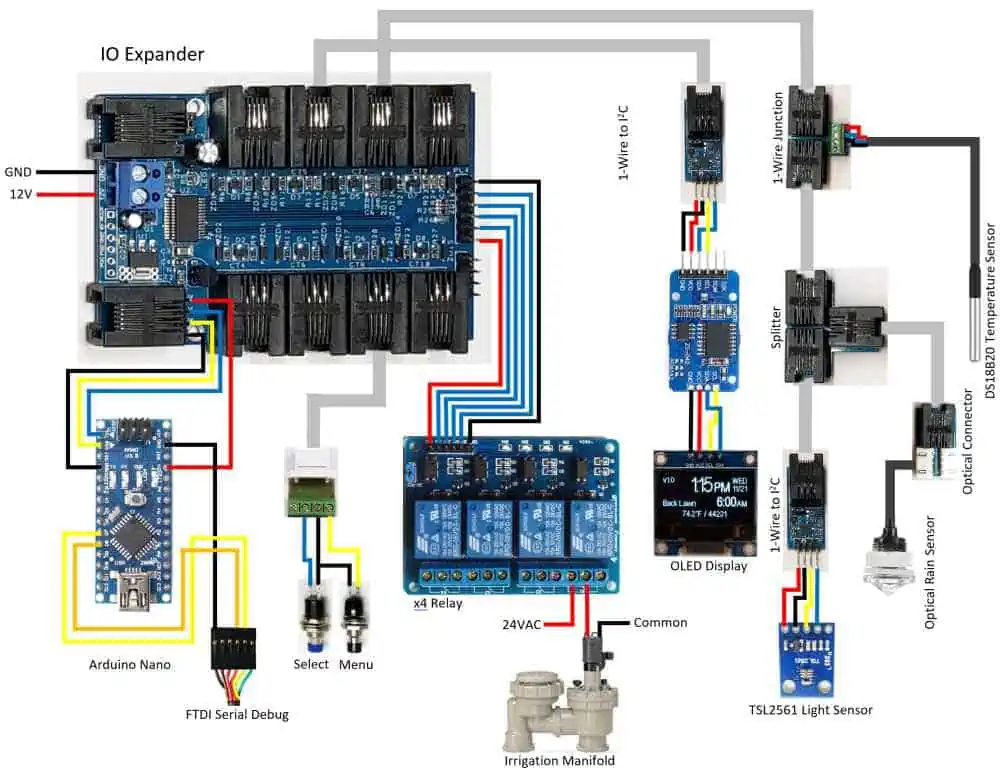
How to Create Smart Irrigation System Using Arduino

Smart Irrigation system using Arduino

The world keeps evolving and so are many things around it. Traditional irrigation was the irrigation system employed in those days. This irrigation system is overdue for a change in our world. The manual process of watering gardens and crops is a waste of time. This method of irrigation canโ€™t amount for any changes in soil or water that can affect the levels of moisture.

Also, several countries are experiencing water shortage. Irrigation water is as important as drinking water. Irrigation can result in water waste as this process requires a lot of water. Therefore, there is a need to find a lasting solution to this method of irrigation.  There is a need to bring irrigation to the next level. The lasting solution is the smart irrigation system.

Smart irrigation is a type of irrigation that accounts for the soil or weather conditions to define watering processes. This system optimizes irrigation for the particular area you are watering. This helps to save enough water and as well optimize the growth of the plants. In this article, we will be looking into smart irrigation system using Arduino.

What is Smart Irrigation System?

The smart irrigation system involves the use of technology and science to save water during irrigation. Also, smart irrigation involves the use of smart irrigation controller, weather sensors, and soil sensors. According to research, smart irrigation technology can minimize water waste by a whooping 40%. This irrigation system decides when to water plants and the amount of water needed based on the conditions of soil moisture.

The sensors integrated in this irrigation system monitors the actual ground humidity and weather conditions at present, while the controller regulates the water valve. The smart irrigation system can also be called automatic irrigation. This system judges when to water a plant and how much water is required. Therefore, it is ideal for water-saving management in landscape, farmland, lawn, and other areas.

Furthermore, smart irrigation system adopts technologies like remote sensing monitoring, the Internet of Things IoT, mobile Internet, and LORA. This irrigation system supplies the appropriate amount of water to plants based on weather conditions and soil type in order to save irrigation water. The smart irrigation system mainly incorporates different technologies like computer technology sensor technology, and automatic control technology. Also, it incorporates garden irrigation methods like drip irrigation and sprinkler irrigation.

Smart irrigation system waters plants without your help. This system offers a high level of precision. The software application behind the functioning of this system is Arduino. Arduino irrigation system is widely integrated in farms and gardens.

How the Smart Irrigation System Works

FULL PCB MANUFACTURING Quote

As it was earlier mentioned, the smart irrigation controller is one of the crucial components in this system. This controller is an advanced sensors that decides the frequency and amount of water for the system  based on either soil moisture or temperature  levels. Therefore, it is often regarded as the brain behind the entire irrigation system.

Due to the way weather-based controllers work, they are also called evapotranspiration. These controllers account for the expected transpiration and evaporation in a system to get weather information. This information helps them decide how often the the garden or lawn should be watered.

The three primary types of weather controllers are signal-based controllers, on-site controllers, and historic controllers. Also, these weather controller types are usually categorized according to the method used in obtaining their information:

  • Signal-based controllers: These controllers get their information from a public source and transfers it wirelessly to the controller.
  • On-site controllers: They use their own sensors to calculate the temperature, therefore, they respond to the particular temperature in the area.
  • Historic controllers: These controllers account for the historical water use in a particular region and function according to these averages.

Rather soil-based controllers depend on soil moisture. The smart irrigation system makes use of home Wifi or Lora for signal transmission. Also, this system can be controlled via a mobile phone or computer regardless of the location. The irrigator doesnโ€™t need to open or close the water valve manually. The operator places a sensor on the garden at a low level and determines the amount of water. This reveals how much water the soil contains.

What Does the Smart Irrigation System Comprise?

The composition of a smart irrigation system can  be complex since it features some powerful functions. This helps it to realize automatic water-saving irrigation. The smart irrigation system comprises terminal platform, monitoring part, transmission part, and control part. Each of these accessories works together to create a unit. These accessories have the following composition:

Monitoring part

The monitoring units for the smart irrigation system comprise different sensors. These sensors include leaf wetness sensor, soil moisture sensor, snow sensor, wind speed sensor, evaporation sensor, and data collector.

Control part

The basis for this irrigation system lies in different control valves. These valves offer support to remote switching which include ball valves, pulse valves, butterfly valves, etc. Therefore, it is crucial to various water pipes and valves based on different irrigation areas.

Transmission part

In the smart irrigation system, the control terminal and monitored terminal transmits the command signal and monitored data signal. If lora wireless transmission is being used in this process, the transmission part is the data concentrator. However, the transmission part is the monitoring host and the router if you are utilizing home WiFi.

Terminal platform

This is a software system for sorting and analyzing data. The terminal platform is capable of analyzing data, storing data and giving out control instructions. Also, this platform software offers support to the operations of a computer and mobile phone.

Different sensors send meteorological and soil moisture data to the platform. Then, this platform analyzes the data and studies it. Also, it analyzes the area and volume of water that requires irrigation, and then transmits wireless commands at every point. The controller regulates the opening and closing of the water valve. Also, it offers proper irrigation.

How Can you Make Smart Irrigation System Using Arduino?

Arduino is a popular and reliable development board for making smart irrigation system.  In this type of project, we will be using Arduino board, water pump, relay module, and moisture sensor. When you are planning to make a smart irrigation using Arduino, you need to ensure all the components you need are available. You will need to dip the soil moisture sensor inside the soil. Ensure you connect the water pump to a source of water supply.

The relay module will help you connect the water pump to the Arduino board. Arduino will use the soil moisture sensor to measure the moisture of the soil to determine if the soil is wet or not. The Arduino board will switch on the relay module if the soil is dry, the water pump will then turn on.

The water pump will be on until the soilโ€™s moisture level gets to a particular level. After it has achieved a certain level, the pump will go off.

Below are the components needed for smart irrigation system using Arduino

  • Arduino Uno
  • A soil moisture sensor
  • 9V battery
  • A breadboard
  • 30 Jumper wires
  • 5V DC water pump
  • Servo motor
  • Relay module

The Arduino UNO plays a crucial role. It regulates the motor pump based on soil moisture. You will need an external battery to power the circuit. Also, you can make use of 9v or 12v battery. You will connect the battery to the ground pins and Vin of Arduino. The motor can be connected to the battery through a relay. Connect the moisture sensor output to the Arduinoโ€™s analog pin.

Creating smart irrigation system using Arduino is very easy if you carry out the necessary steps.

Benefits of Smart Irrigation System with Arduino

Saves water

The smart irrigation system offers more accuracy and reduces water wastage. According to experts, this system conserves water across various scenarios. Research studies have revealed the substantial water saved by this system is around 30 to 50%. Smart irrigation systems save about 20% more water compared to traditional irrigation systems.

Presently, smart irrigation system using Arduino are reducing water wastage in agricultural production. Most farmers are interested in these systems because of the amount of water it saves.

Saves manpower

Smart irrigation system helps in saving manpower. This system uses automation to water plants. Therefore, there is no need to hire an irrigator to water the plant. Also, you donโ€™t need to open and close a water valve manually. You can carry out the irrigation task from your mobile phone. Also, it saves you the stress of worrying about your garden while you away.

Intelligent control

This system gives you an intelligent control over irrigation. It offers remote irrigation, time irrigation, and switching between the irrigation modes.

Conclusion

Smart irrigation system monitors soil moisture, weather, plant species and evaporation to adjust watering schedules. Also, this system reduces water wastage which occurs in traditional preset irrigation. Smart irrigation system using Arduino accounts for certain variables like sprinkler rates as rainfall changes or outdoor temperatures rise.  Also, they adjust the watering time constantly.

What are the Types of USB Ports Available?

types of USB ports

In the past it was difficult to connect devices to computers. Printers could only connect to parallel printer ports. Also, in those days, the computer featured one parallel printer port. This port offers limited success and less speed. However, the introduction of USB ports offered a long lasting solution to these problems

What are USB Ports?

USB ports are a cable connection interface designed for consumer electronic devices like computers. The full meaning of USB is Universal Serial Bus. USB ports enable connection between USB devices. They allow devices to connect and transmit digital data over USB cables. Also, the USB port is capable of supplying electric power through the cable to devices. This port allows you to charge a device.

The USB enables computers to interact with its peripheral and some devices. Devices connected to USB ย cover a very ย broad range. As technology advanced, USB ports are now more functional. Therefore, these ports paved way for lighter and smaller devices. There are three major things that matter in USB. These things are form factors, data transfer speed, video delivery, and power delivery.

Types of USB Ports

As regards form factors, there are different types of USB ports. Each of these USB ports has a unique use case and design. Micro-USB, USB-A, USB-C, and mini-USB are the commonest types of USB.

USB-A

If you are using the USB-A for the first time, you might find it difficult to plug it in correctly.  The USB- A is a rectangular and flat connector. These cables feature USB-A on one end having another type of port on the other. Also, this USB-A is specially designed for charging and transferring data between devices. You can still find USB-A in devices such as TVs, computers, gaming consoles, and different types of peripherals.

USB-B

These types of USB ports are widely integrated on large devices such as printers or scanners. This connector looks like square. Most connectors are USB-B to USB-A cables. However, some newer devices are now using smaller options such as Mini-USB or Micro-USB.

Micro-USB

These types of USB  ports were the major standard for some particular portable devices sometimes ago. They were  ideal for devices such as smartphones since this USB is capable of transferring data and offering charge. The Micro USB is available in Type-A Micro and Type-B Micro. Also, it is smaller when compared to USB-A. The micro-USB parts are still being used by some manufacturers for their devices since they are less expensive than the parts for USB-C.

Mini-USB

The mini-USB is similar to the USB-B, it is a smaller version. Before the introduction of Micro-USB, the mini-USB was the standard for data transfer from devices or charging. Also, this connector has its Type-B and Type-A versions. Today, you will hardly find products that integrate Mini-USB, although these types of USB ports are available in older electronics such as PlayStation3 controller or MP3 players.

USB-C

These types of USB ports  combine both power and data delivery alongside display connectivity. These types of USB ports are the current standard. They are widely integrated in most recent devices such as earbud cases, laptops,  smartphones, microphones, and game controllers. The form factor of this USB is reversible, small, and oblong, and as such, you can plug it in either way. This port features 100-watt connection which makes it suitable for data transfers and fast charging. It enables fast data transfer between larger devices.

USB-C ports offer more functionalities and benefits than other types of USB ports. Due to their unique multi-tasking abilities, these types of USB ports can replace all other cables. Also, they can power the most power-hungry devices such as TVs and computers. ย Also, they can transfer 40 gigabits of data at every second (Gbps). You can use these ports to deliver 4K video to external monitors.

Power Delivery of USB Ports

FULL PCB MANUFACTURING Quote

Some USB cables can supply power or transmit data, although the majority of USB cables can do both. When it comes to power delivery in USB ports, there are three main categories which are fast charge, fast charge, and power only.

The USB 3.0 enables 4.5W charging and USB 2.0 enables 2.5W charging. 10W can charge your phone slowly while 18W can charge your smartphone fast. The power delivery of USB is capable of handling about 100W. This can power devices such as dock stations, MacBook Pro, Tv, and monitors. Also, it is capable of charging compatible devices such as Nintendo Switch or phone.

Also, power delivery supplies the available charge to your device. However, it wonโ€™t overcharge it. More recent battery banks can now support USB PD. These battery banks can charge your power-hungry devices full.

USB Data Transfer Speed

USB are available in various size and shapes. Also, USB types feature multiple speed standards. It is important to know that some USB cables are only designed for data transfer while some can only deliver power. However, there are USB cables that serve the two purposes. Therefore, it is necessary to verify the abilities of a cable before you buy it.

USB 1.x was the first USB. This USB is extremely slow, and can only handle 1.5 Mbps. USB 2.0 is slightly old and charges slowly. However, it is still common. It is mostly available in older electronics. Also, USB 2.0 features a full-speed option that is capable of handling 12 Mbps, and a high-speed version is capable of handling 480 Mbps.

The USB 3.0 which is often regarded as SuperSpeed USB is an improved version of the USB 2.0. USB 3.0 offers increased performance and speed, better bandwidth capability, and better power management. This USB offers two unidirectional data paths for sending and receiving data. Also, it supports about 5.0 gigabits transfer rates per second.

USB 4.0, Thunderbolt 4, and Thunderbolt 3 are the most recent entries. In these entries, youโ€™ll  get the highest data transfer speeds. Also, these entries offer a maximum capable throughput of 40 Gbps. Another type of data transfer speed in standard in USB-C cables is Thunderbolt. All Thunderbolt 4 and Thunderbolt 3 cables are USB-C. However, some USB-C cables are not Thunderbolt. Therefore, you have to ensure the cable you are purchasing has Thunderbolt if that is what you need.

USB Video Delivery

The ability of a USB port to power a device and transmit data between devices is impressive enough. However, you can decide to integrate USB-C to link to monitors in place of a VGA cable or HDMI. Also, USB-C also offers support to 4K video delivery.

Thunderbolt 4 cables can display 4K content on two different monitors at a time. However, this may not be the use case for a vast number of people. You will need a cable that is capable if 8K and 4K video become more commonplace.

How Do USB Ports Work?

Computers usually feature one or more USB connectors. These USB connectors allow you to connect printers, mouse, keyboards, and other accessories to your computer. Also, the operating system of the computer supports USB. Therefore, the installation of the device drivers is very fast.

USB devices are very simple to connect compared to other connected devices like special cards and parallel ports that you install inside the case of a computer.

Also, modems made use of serial port. However, the majority of computers featured two serial ports at most. These serial ports were extremely slow. Some devices featured their own cards since they needed faster connections. These cards needed to fit inside a card slot in the case of computer. However, it is difficult to install some of these cards.  

USB was specially designed to put an end to all these headaches as it offers you a standardized and easy way to link about 127 devices to a computer. It is very easy and straightforward to connect a USB device. The USB connector is usually beside or at the back of your machine.

The operating system of a new device will detect the USB and request for the driver disk. If you have already installed the device, the computer will activate it and begins to interact with it. You can connect and disconnect USB devices at any time.

Most USB devices feature a built-in cable. This cable usually has an โ€œAโ€ connection. Otherwise, the device features a socket which accepts the USB โ€œBโ€ connector. Furthermore, the USB standard makes use of the โ€œA and โ€œBโ€ connectors to prevent any form of confusion.

What are USB Hubs?

The majority of computers available today feature at least two USB sockets. However, the availability of many USB devices today can make you run out of USB sockets. For instance, you could need to connect your mouse, printer, webcam, and keyboard to your computer. All of these devices are running on the USB technology. So, how do you connect all these devices?

The solution to this problem is to get an inexpensive USB hub. The USB standard supports about 127 devices. A hub features at least four new ports. All you need to do is to connect the hub to your computer and plug these devices. Also, you can plug in other hubs in this hub. You can create several USB ports on a computer by linking hubs.

You can power or unpower hubs. The USB standard enables devices to generate power from USB connection. Also, a high-power device such as scanner or printer will have its source of power supply. However, low-power devices such as digital cameras and mice can generate their power from the bus.

You donโ€™t need to power your hub if you have many self-powered devices. None of these devices require extra power, therefore, the computer is capable of handling it.

What are the Features of USB?

The USB comes with some features:

  • The computer is the host.
  • About 127 devices can be connected to the host, directly or by using many USB hubs.
  • The host computer can put several USB devices to sleep when it goes into a power-saving mode
  • Low power devices get power from the bus while high-power devices like printers feature their power supplies. Therefore, they get minimal power directly from the bus. Also, hubs can feature their power supplies to power devices attached to the hub.
  • USB devices can plugged into the bus and unplugged at any time.

Why USB Ports are now Replacing Serial Ports

USB provides three major benefits. It is better than serial ports in several ways.

Speed

USB ports enable the transmission of data at a much faster speed. They work ten times faster than the normal parallel port. Also, they are much faster than serial ports. On the average, a serial port offers a data transfer rate of 150kbps. On the other hand, the USB port offers about 12 Mbps. The data transmission rate depends on the types of USB ports. For instance, the maximum data transfer rate of USB 2.0 is 480 Mbps.

Compatibility

In the past few years, USB ports replaced serial ports. A wide range of industrial devices feature serial ports. This replacement is causing problems. USB ports are usually compatible with most USB devices.

Durability

USB ports are more durable than serial ports. The tiny little pins on serial ports can easily break or bend. USB ports, on the other hand, are very rugged. ย 

Frequently Asked Questions

How do you know if your USB cable is safe?

Ensure you make use of the USB cable featured by your device. Also, if you will be replacing your USB cable, always get it from the manufacturer of the device. However, if you need to buy from a third party, stick with a reliable brand.

What makes a USB port malfunction?

There are several reason your USB port may malfunction. This could be a result of a broken connection or an issue related with a software. Also, dirt in your USB ports could interfere with performance.

What can be plugged in a USB port?

You can plug several consumer electronics in a USB port. Most consumer electronics like TVs, smartphones, and radios support USB interfaces.

Conclusion

There are different types of USB ports and connectors. It is important to know these types of USB ports,  especially in these modern times when different devices feature various types of USB port. You will prevent any damage to your device by choosing the appropriate USB connector.