The Truth About PCB assembly Bay Area

PCB assembly Bay Area

Have you ever heard about Bay Area? Have you ever visited Bay Area? If any of these questions baffle you, and you love tech especially PCBs, then this article is meant for you. See, the San Francisco Bay Area is the area that is commonly known as the “Bay Area.” So what makes this place extra special, you might wonder? The Bay Area is famous for its:

  • Picturesque beaches,
  • Waterfront towns, and
  • Tech-savvy found on its southern end, commonly known as the silicon valley.

The tech-savvy brings a lot of innovation to the world, which brings us to today’s question. Is PCB assembly Bay Area necessary, and is it beneficial?

However, before answering this question, let us have an overview of the Bay Area.

Bay Area

This region is densely populated, having a population estimate of around 7.753 million people. It surrounds the following bay estuaries found in northern California:

Even though the region’s boundaries are defined variously, the Bay Area is pretty much defined by the ABAG (Association of Bay Area Government). The association defines the area according to the nine different counties that border the estuaries we named above:

  • Alameda
  • Marin
  • Contra costa
  • San Francisco
  • Sonoma
  • Solano
  • Santa Clara
  • San Mateo
  • Napa

According to the Association of Bay Area Government, the counties mentioned above make up the Bay Area.

So what makes the Bay Area great for PCB assembly? To answer this, we should look back a couple of years.

PCB Assembly Bay Area, Why is it necessary

Back in 1933, Naval Air Base found in Sunnyvale Was home to the USS Macon airship, now known as the Moffett Field. The Naval Air Base has grown over time to become one of the greatest research centers in the world, majoring in Aeronautic research. Other establishments have also grown alongside this Base. All trying to have a piece of this aeronautic technology development pie.

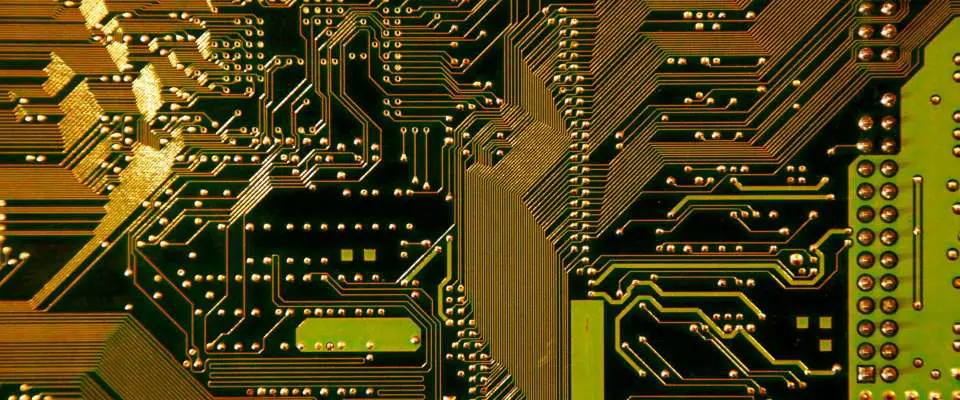
However, as these companies grew, so did the need for raw material they used to create prototypes and finished products. Remember we said that these companies were dealing with aeronautics mostly? So what do you think would be one of their most privileged raw material? Well, PCBs (Print circuit boards), of course. If you do not know what a PCB is, then here is a slight breakdown for you. A PCB is a sheet made of insulating materials with metallic circuits in printed form to conduct electricity in specific pathways.

The designing, developing, and manufacturing of PCBs is a never-ending cycle in the Bay Area due to their high demand. Almost every idea that comes out of Silicone valley found along the Bay Area comes the need to use a new PCB. With almost every research that companies around the Bay Area feature in, PCBs are needed. With this need for PCBs also came other requirements along with it, which include:

  1. Changes in circuit board prototypes
  2. Need for flexibility
  3. Repeatable Quality which is pretty essential for the assembly of long term production

While many pcb manufacturers worldwide can satisfy some of these needs. Providing quality response services to electronic designers need locally operating manufacturers. So now you can see why PCB assembly Bay Area is pretty necessary.

Flexibility

Many print circuit board manufacturers found in the Bay area are well known for their great agility when it comes to servicing:

  • Technologies
  • Customers, and
  • Orders.

These different shops specialize in medium volume, high-mix production. In doing so they get to regard and respond to their customer needs quickly and efficiently.

Customer needs might include:

  • Design change โ€“ to fit their desired prototype
  • Board enhancements โ€“ for new products

Flexibility is one major reason why PCB assembly Bay Area is pretty necessary as, without it, many companies would probably suffer.

Engineering Resources

One major reason for abrupt changes in print circuit board manufacturing is to accommodate changes in design due to:

  •  Component or
  • Performance issues.

Designers go through great stress thinking about the right:

  1. Price
  2. Product availability
  3. Lead time

In some cases, PCB circuitry require a lot of modifications. Having onsite PCB engineers who are ready and willing to help out in:

  • Providing pricing options
  • Providing best quality options

While at the same time ensuring accuracy comes in handy. What’s more, if any designer decides that they need some circuitry changes, they can access engineering resources. All this saves the customer plenty of time and travel money, which boosts efficiency.

What’s more, PCB engineers have great experience in PCBs. As a result, they can offer design assistance to help minimize cost and time usage.

Local Services

Above all benefits of having PCB assembly in the bay area, designers have the privilege of working with local manufacturers. Here are some benefits of local services:

  1. Designing teams in Bay Area have the advantage of working with PCB manufacturers. For optimal output, manufacturers allow onsite visits during the assembly process. The designers, onsite, help manufacturers complete their orders. They also help them make modifications, if necessary, to generate a perfect PCB for the designer projects.
  2. Local services eliminate time differences and language barriers which in turn boost productivity.
  3. PCB assembly in Bay Area leads to a great exchange of knowledge and information between manufacturers and design teams.
  4.  And lastly, the delivery of complete products is faster, less expensive, and overall easier.

Trust

How much do you trust a person that you only meet online “exclusively”? And how much do you trust someone that you meet with face-to-face? You are most likely to trust a person you meet face to face more than you trust a person you only meet online. The same case applies to having PCB assembly in Bay Area.

Designers get to meet with manufacturers face to face, which boosts the trust between these two parties. A designer can hence trust that manufacturers will deliver on their said product. The manufacturers on the other hand can trust that they will get paid; this creates a great working environment.

Conclusion

PCB assembly Bay Area has proven to be one essential asset in the growth of tech and innovation in the Bay Area. Without PCB assembly in the Bay Area, profits would spiral downwards for many companies in the region. We hope that this article has enlightened you on the benefits of PCB assembly Bay Area and why it is necessary.
Nelcote E-766B PCB Epoxy Prepreg, 120 E-Glass Reinforced

Nelcote E-766B pcb

Nelcote E-766B Epoxy Prepreg is a quick-setting epoxy resin based on DGEBA and therefore does not require high-temperature curing, making it an ideal choice for marine work. It meets the American Boat and Yacht Council’s Type V Coverage Finish standard. This resin offers a convenient, low-cost method for creating lightweight, high-strength repair kits.

E-766B is a quick-setting epoxy resin with many compatible resins and hardeners for superior structural performance. As a result, it provides superior performance in producing structural repair systems and kits, including laminate type I/II/III ACS laminates at elevated temperatures or Type V fiberglass system repair kits.

This resin offers a convenient, low-cost method for creating lightweight, high-strength repair kits. In addition, it has good resistance to water, making it suitable for use in marine environments.

Nelcote E-766B conforms to ASTM D3573, and Rayming PCB & Assembly manufacture it following AMS 2750.

Material Notes

Nelcote E-766B Epoxy Prepreg is a quick-setting epoxy resin that allows easy handling and an extended working time. Additionally, this resin is ideal for general structural repair and kit building applications.

This polymer has high tensile strength and good resistance to water and corrosion, making it suitable for use in marine environments.

Customers have used this resin to repair fiberglass boats, offshore drilling platforms, and watercraft.

Installation Info:

Submersion in Nelcote E-766B Epoxy Prepreg is prohibited.

Do not let the resin get above 120 ยฐF/50 ยฐC. The curing time will vary depending on the temperature of curing components (resin and hardener). For best results, mix resin with other parts at the same temperature. Then, two hours after mixing, apply to Urethane and cure for 4 hours at 140 ยฐF/60 ยฐC. Curing time is approximately 6-7 hours at room temperature.

For marine repair kits application, follow these steps:

1. Mix resin and hardener in a small volume measuring cup. Approximate weight of equal parts resin and hardener is 1.5 ounces (45 grams) by weight by volume.

2. Apply to Urethane and cure for an additional four hours at 140 ยฐF/60 ยฐC. Curing time is approximately 4-6 hours at room temperature (72 ยฐF/22 ยฐC).

3. After cured, cut Urethane pieces to the correct size for the application.

4. Mix resin and hardener in a small volume measuring cup. Approximate weight of equal parts resin and hardener is 1/2 ounce (15 grams) by weight by volume.

5. Apply to Urethane and cure for an additional two hours at 140 ยฐF/60 ยฐC. Curing time is approximately 4 hours at room temperature (72 ยฐF/22 ยฐC)

6. Using a laminating iron, laminate resin, and Urethane pieces together.

7. Allow the laminate to cure at room temperature for approximately 24 hours.

8. Remove from tray, paint surface with primer coat as needed, and protect with topcoat.

9. To prevent warpage, allow to cool before using.

Technical Data:

Nelcote E-766B Epoxy Prepreg is a resin material. It has moderate heat resistance, good water resistance, and good chemical resistance. As a result, it contains E-glass fiber and is easy to handle with good mechanical properties and high tensile strength in wet and dry states. The modifier used is DGEBA; adding a thermal or photoinitiator will allow for a faster cure time.

Descriptive Properties

1. Resin Flow (%): the property ranges from 20 to 30, with 25 being the best. Resin flow depends on the amount of material and the mixing efficiency. It also varies with temperature; there is very little flow at low temperatures.

2. Prepreg Resin Content (%): The resin content can vary from 50 to 60%, with 55% recommended. The resin content should be reproducible with good consistency and flow.

3. Fabric Area Weight (g/mยฒ): The ideal fabric area weight will depend on the required end-product, but 107 g/mยฒ.

Processing Properties

Shelf Life: Nelcote E-766B Epoxy Prepreg’s shelf life is approximately one year. The resin content will not degrade during this time. However, the mechanical properties will disappear. Customers have used this resin to repair fiberglass boats and offshore drilling platforms. Marine applications use Nelcote E-766B Epoxy Prepreg with other adhesives, epoxies, glass cloths, and fiberglass.

Final Properties: A low-viscosity amorphous structure that is clear to slightly amber. It has a thick, oily appearance and will change to yellow when exposed to light.

Other Properties: Nelcote E-766B Epoxy Prepreg forms a hard, porous mass and has a high tensile strength between 40 and 60% elongation at break (E-glass reinforced). It has good resistance to moisture and acids.

Thermal Properties

Glass Transition Temp, Tg: This is the temperature at which the resin is completely liquid.

Low Temp: This is the minimum glass transition temperature.

High Temp: This is the maximum glass transition temperature.

Oleic Acid Value: The oleic acid value measures heat resistance or processing stability. A low oleic acid value means that this resin has fewer fatty acid groups and therefore resists degradation through high heat and chemical exposure and anionic etching with acids.

Mechanical Properties

Tensile Strength, SR: The tensile strength is the minimum stress needed to remove one second of a cross-section from a specimen.

Tensile Modulus, E: Tensile modulus measures the ultimate tensile strength and is defined as the force required to break a specimen when it has not been subject to any deformation.

Flexural Strength: Flexural strength is the minimum stress needed to cause a specimen to bend. It measures flexibility.

Compressive Strength: We can measure the compressive strength on an instant or steady-state basis. The measured compressive strength will vary concerning time, temperature, and humidity but generally decreases with time and increases at high temperatures.

Compressive Modulus: The compressive modulus measures the strength concerning time. It is the stress required to break a specimen when it has been in a state of compression.

Shear Strength: The shear strength is the minimum stress required to cause a specimen to slip over an axis.

Applications

Nelcote E-766B Epoxy Prepreg is helpful for long and short fiberglass layups for structural and marine repair applications. When combined with Nelcote E-743 or E-753 Curatives, We can use it in a two-layer system. Epoxies are typically essential when high strength and durability are essential, while Polyester is a good choice when we desire ease of handling.

1. Mass Transit Interiors: Nelcote E-766B Epoxy Prepreg can be helpful on high-strength marine interior applications with a potential for impact and wear.

2. Aircraft Interiors: Nelcote E-766B Epoxy Prepreg is used on aircraft interiors where impact resistance is essential.

3. Sandwich panels/structures: Nelcote E-766B Epoxy Prepreg is helpful in sandwich panels and structures because of its high strength and durability.

Conclusion

In conclusion, Nelcote E-766B Epoxy Prepreg is a medium curing epoxy. It has excellent strength and good physical, mechanical, and chemical properties, making it a good choice for structural repairs and marine applications. For the most part, it is a high-performance resin. The only downfall to this epoxy is that it requires a slow cure time to be strong enough. Typically, a two-part epoxy will have higher strength than this product and will not need as long a cure time. When choosing epoxy for your project, consider the other properties of the epoxy and the benefits each has to offer so that you can choose an epoxy-based on the needs and budget of your project.

In summary, Nelcote E-766B Epoxy Prepreg is a clear epoxy resin that is amorphous in structure. It is a medium-curing epoxy with a slow cure rate. Therefore, we also refer to it as E-766B or Na-766B. In addition, Nelcote E-767 Epoxy Prepreg and Nelcote E-767A Acrylic Resin are similar products used for the same applications as E-766B.

What are the Main Features, Benefits, and Treatment Options of the Isola FR402 PCB Material?

Isola FR402 PCB

There are several materials for printed circuit boards. One of these materials or laminates are Isola laminates. These laminates are known for their high performance and usually feature in resin formulations. These laminatesโ€™ designs meet the needs of even very demanding requirements for complex printed circuit boards.

In this article, we will be answering whatever questions you have on your mind regarding the Isola FR402 PCB material. If you desire learning about the options necessary for treatment, the quality, features, benefits of this PCB material, we have everything covered in here.

Please join us as we explain further

What does the Isola FR402 PCB Material Mean?

The Isola FR402 PCB Material is a prepreg system and a laminate from Isola, which is made up of a well-developed epoxy-resin system with tetra functions.

This pcb material is best for any multi-layer PCB application, which require the performance properties that surpass those of epoxy-resin systems having di-functions.

Furthermore, the design of the Isola FR402 PCB Material construction helps in the enhancement of the precision and throughput of the AOI equipment.

However, the Isola FR402 PCB Material offers a great resistance to chemical and thermal degradation.

Main Features of the Isola FR402 PCB Material

The following are the main features of the Isola FR402 PCB Material

  • It is available in some thicknesses, ranging from 0.05 mm to 3.2mm
  • The prepreg of the Isola FR402 PCB Material is present as roll or panel
  • Its flammability rating is UL94 V-0
  • Furthermore, it makes use of glass styles, which includes 7629, 7628, 2313, 2116, 2113, 1652, 1080, 106.
  • The Isola FR402 laminate is available in sheet or panel form
  • The cladding of the copper foil includes double treat, reverse treat, and HTE

What Treatments are Available for the Isola FR402 PCB Material?

There are some treatments that are allowable for the effective bonding of the Isola FR402 epoxies. These include black oxide, brown oxide, red oxide, and double treat copper.

However, whenever you are making use of black oxide, make sure that the oxide is self-limiting. This prevents any excess oxide crystal.

However, it is possible to achieve efficient and enough bond strength making use of the different reduced and alternative oxides present.

Meet with the chemical supplier regarding the post baking aspects of the oxide whenever you are employing reduced or alternative oxides.

Why this is so is that extreme baking could cause reduced resistance of the pink ring. In addition, the inner layers have to pass through thorough drying. This is done in an oven even before lay-up.

In addition, the bake cycles usually range from 200 โ€“ 250 degrees Fahrenheit. Also, you can only use about 30 โ€“ 60 minutes.

Another important advice here is that the baking should be done in an upright rack that has panels held up vertically.

Benefits of the Isola FR402 PCB Material

Below are the major benefits of making use of the Isola FR402 PCB Material

  • It is resistant to measling
  • Also, it processes just like the conventional FR-4
  • It has a great performance via different thermal excursions
  • Extended abilities
  • Processes just like the conventional FR-4
  • Its glass transition temperature is high with a value of 140 degrees Celsius
  • UV blocking, which work well with all AOI devices

Important Quality Tests for the Isola FR402 PCB Material

Below are ways for you to test for the quality of the Isola FR402 PCB Material

Peel strength Test

Normally, the lamination tests will check the Isola FR402 PCB Materialโ€™s resistance to peeling by force application or heat. This is significant since the laminationโ€™s quality is very important to the lifespan of the printed circuit board.

Test for Thermal Performance

Often, manufacturers of printed circuit boards determine a boardโ€™s thermal performance via the temperature for glass transition (Tg).

Measuring the glass transition temperature is effective via

  • DSC – Differential Scanning Calorimetry
  • DMA โ€“ Dynamic Mechanical Analysis
  • TMA โ€“ Thermomechanical Analysis

Contamination Testing

Also, this test helps in sensing bulk Ionics. This is because these Ionics can contaminate the circuit boards, thereby causing abrasion, as well as other problems.

Test for Water Absorption

Moisture absorption can cause delamination, as well as other problems in the board of the Isola FR402, with exposure to any soldering heat. This test also helps in the examination of the rate of moisture absorption, as well as the bulk content of moisture of the FR402 printed circuit boards.

What Causes Outgassing in the Isola FR402 PCB Material?

The circumstances behind the occurrence of outgassing may be different. However, they have similar causes irrespective of the place it occurs.

Below are two major reasons why outgassing could happen in the Isola FR402 PCB Material.

Use of Incorrect Materials

When choosing an Isola PCB material, thereโ€™s a need for you to look into each stage of the life of the board. This includes the application and manufacturing.

Furthermore, plating that is formed from gold, silver, or tin can be made of salts or organics, which produces gas anytime heating during deposition.

Also, there is an increase in outgassing risk when a FR402 board is used in environments of high vacuum, which are made of material having higher outgassing chances.

Manufacturing Faults

The manufacturing process tells the quality of the Isola FR402 just like its materials. Any outgassing occurring during soldering occurs frequently when performing the process of pre-heating improperly or you apply an electroless copper plating that is very thin.

Furthermore, when you fail to get rid of the moisture when manufacturing of the Isola FR402 is on, it could cause the production of vapors, which are linked to off-gassing that usually occur in applications requiring high-vacuum.

Conclusion

We hope we have been able to properly explain what the Isola FR402 PCB Material offers to your understanding. From this article, this PCB material has excellent features and offers great benefits. This is why it is very suitable for different applications and will meet various pcb needs.

The Advanced Technology of Xilinx XC5VSX95T-1FFG1136I

Xilinx Spartan-6 FPGA

Are you looking for the best way to buy Xilinx XC5VSX95T-1FFG1136I? Are you looking for a company that offers the newest and most unique technology in FPGAs? Well, we have what you’re looking for. First, we’ll walk you through the Xilinx XC5VSX95T-1FFG1136I details.

The ‘XC5VSX95T-1FFD1136I’ is a 32-bit microcontroller with an FCBGA footprint and a 3D STEP model. This part is available in various sizes and is good for many design projects. Its specifications are similar to those of other comparable parts.

The Xilinx FPGA Virtex-5 SXT Family (XC5VSX95T-1FFG36I) offers a complete Xilinx design starter kit. It is built on the most advanced technologies and supported by the most sophisticated tools. It contains all hardware, software, and reference designs for prototyping complex digital systems into working systems. What’s more, it comes preconfigured to run on Xilinx new Spartan-6 FPGA hardware.

XC5VSX95T-1FDG1136I FPGAs Overview

An introductory FPGA tutorial can help you understand the fundamentals of the technology. There are two basic approaches to FPGA design: schematic design and hardware description language (HDL). The former is more efficient in developing large-scale systems. On the other hand, the latter allows you to create a more detailed design representation.

The flexibility of the FPGA reduces the risk of malicious fabrication. On the other hand, there is exposure of the design bitstream once it loads from external memory. Because of this, the major FPGA vendors offer a range of security solutions. For example, Altera and Xilinx offer up to 256 bits of AES encryption.

The more advanced FPGAs can support higher-level physical layer functions. They also contain high-speed serializers as part of their structure. High-speed serializers are difficult to implement using LUTs and may require special logic. As a result, FPGAs can provide a high-speed solution without a dedicated processor.

The use of FPGAs in medical imaging has grown significantly in recent years. This technology is ideal for complex algorithms. For example, you can optimize a 3D MRI image segmentation algorithm using an FPGA. PET/MRI systems can also benefit from FPGA acceleration. Microsoft also has Project Catapult to develop an artificial neural network accelerator.

The XC5VSX95T-1FFG1136I FPGAs are available in a variety of configurations. We can manufacture the device using various materials, including silicon and ceramic. Unlike many other semiconductor devices, an FPGA is a highly customizable and flexible system. As a result, we can adapt its hardware implementation to the demands of the medical imaging industry.

The XC5VSX95T-1FDG1136I FPGAs contain a hierarchy of programmable logic blocks with reconfigurable interconnects. We can configure the logic blocks to perform simple arithmetic, multi-dimensional, or hybrid-digital tasks. The stacked-die design has a lower cost and is more efficient.

Xilinx XC5VSX95T-1FFG1136I Features and Technical Attributes

The programmable logic device XC5VSX95T-1FGG1136I is a low-power microcontroller. It is applicable in various industrial applications. The chips have an FCBGA footprint and are compatible with 3D STEP models.

The XC5VSX95T-1FGG1136I is part of the Virtex-5 family. As a result, you will enjoy some of the most advanced features in the FPGA market. In addition, it offers advanced features for logic and DSP designers. The Virtex-5 platforms have integrated DSP capabilities and a second-generation ASMBL column-based architecture. Among the features, the Virtex-5 V-Series enables high-performance simulation and high-volume production.

It is compatible with several design software tools, including Altium Designer and EAGLE. In addition, the Vivado Design Suite is easy to use and offers excellent synthesis capabilities.

It has 7360 CLBs of FC-BGA, 640 I/O, and 94208 logic elements. It is compatible with EAGLE, KiCad and OrCAD, which helps designers create innovative applications. The system is a surface mount type with a voltage supply of between 0.95V and 1.05V.

Applications

The Virtex-5 FPGA family is the most powerful solution for logic and DSP designers. Its advanced architecture features unprecedented hard/soft microprocessor, logic, and connectivity capabilities. The Virtex-5 platform supports advanced high-speed serial and link/transaction layer connectivity. Unlike earlier generations, the Virtex-5 platform is highly reliable, reducing failure rates.

Some of the application fields include:

Benefits of the Xilinx XC5VSX95T-1FPG1136I

Performance and Efficiency

The Virtex-5 processor is a flexible chip that offers the highest performance and efficiency. Additionally, there is low power consumption. It features a clock tree with an optimized balance of skew and power savings. Using a Virtex-5 device, you can achieve high performance at a lower cost. The XC5VSX95T-1FFG1136I provides an ideal solution for demanding applications.

The Virtex 5 features configurable logic blocks, look-up tables, and function generators, etc. Its architecture enables designers to implement complex algorithms with minimum effort. Using the Virtex 5 processor, you can realize your vision faster and less risk. Here are some of its advantages: a programmable logic device, an embedded system, and a 3D STEP model.

The XC5VSX95T-1FFG1136I has a DCM reset and lock capability. This chip has four DIPs for reconfiguration data and three for write-enable. It is compatible with various SPI protocols. The XC5VSX95T is good for high-volume production. Additionally, the XC5VSX95T-1FFG1136I comes with an extended warranty.

The Virtex-5 family offers advanced multi-core performance. Its wide range of frequency and CMOS capabilities allow designers to develop more complex designs. In addition, the XC5VSX95T-1FFFG1136I has a DCM and PLL pin layout. These two pins are commonly used to control the operation of the Virtex-5 hardware.

Versatile

The Virtex 5 is a versatile solution for your embedded systems. It features a high-speed interface, a programmable logic block, and digital Clock Managers. You can program it with any application involving a Virtex-5 device. These features give you a complete range of design options. The Virtex 5 is also easy to use in mixed-signal environments.

Flexible

Virtex 5 is a flexible and powerful processor with an FCBGA footprint and three-dimensional STEP models. The device supports both FCBGA and SSR-compatible logic. As a result, you can easily develop and test your designs. In addition, its flexible architecture allows you to implement a multitude of tasks and functions. This processor has an integrated DSP and a 32-bit DIP chip.

XC5VSX95T-1FPG1136I has an FCBGA footprint, making it ideal for designing multi-core boards. This device supports Virtex 5 and Virtex-5GX models and is compatible with both. In addition, the XC5VSX95T-1FRG1136I enables you to design a wide range of applications. Therefore, you can easily create a more complex architecture.

XC5VSX95T-1FFG1136I has a full set of DIP/DOP buses and memory. It supports both DIP and DOP interfaces. You can design your custom software, and create hardware and software using a virtex-7-compatible microprocessor. Its programmability and ease of implementation are two of its most appealing benefits.

Scalable

XC5VSX95T-1FPG1136I is a scalable FPGA. It provides flexibility and reliability to users. Its unique features make it an ideal choice for a variety of applications. Its wide feature set offers flexibility and ease of use to a developer. As a result, this FPGA is the best choice for many applications.

Conclusion

The XC5VSX95T-1FFG1136I offers a complete set of advanced features to satisfy the most advanced users. It consumes less power than previous generations of FPGA. Has more logic resources and I/O pins, and provides faster system development cycles. In addition, it contains hardware, software, and reference designs. These are good for prototyping complex digital systems into working systems.

What is Xilinx XC7VX690T-2FFG1761I FPGA ?

xilinx Spartan-3A AN

Introduction

The Xilinx XC7VX690T-2FFG1761I is a high-performance FPGA (Field Programmable Gate Array) belonging to the Virtex-7 family. FPGAs are semiconductor devices that can be programmed to implement custom digital logic as needed by the designer. The XC7VX690T provides abundant resources, high speed, and advanced capabilities for tackling complex algorithms in data center, wired networking, wireless, and industrial applications.

In this article, we will take a deep dive into the architecture, features, applications, and key specifications of the Xilinx XC7VX690T-2FFG1761I FPGA.

FPGA Overview

An FPGA is an integrated circuit chip containing programmable logic blocks and interconnects. Unlike an ASIC (Application Specific Integrated Circuit) which is fixed at manufacturing, an FPGA can be programmed anytime after manufacturing to create almost any type of digital circuit or system.

Key FPGA capabilities:

  • Programmable Logic Blocks – Provide logical functions and storage
  • Reconfigurable Interconnects – Connect logic blocks as needed
  • I/O Blocks – Interface with external signals
  • Embedded IP blocks – Extra functions like RAM, DSP slices
  • Configuration Memory – Stores logic programming

FPGAs provide high performance, flexibility, fast time-to-market and lower non-recurring engineering costs compared to ASICs for many applications.

Xilinx Virtex-7 FPGA Family

The Virtex-7 family provides Xilinxโ€™s highest capacity and performance FPGAs built on a cutting-edge 28nm manufacturing process. Key highlights:

  • Advanced 28nm process for 2 million logic cells
  • System gate capacity up to 6.8 million
  • State-of-the-art power reduction techniques
  • Up to 4.4 million flip-flops, 2160 DSP slices
  • Multi-mode 28Gbps transceivers
  • Integrated PCIe Gen3 endpoint block
  • Advanced SEU mitigation, ECC, redundancy

The Virtex-7 enables creation of highly complex digital systems in a single device for a wide array of applications.

XC7VX690T-2FFG1761I Overview

The XC7VX690T-2FFG1761I FPGA belongs to the high-end Virtex-7 XT family. It provides a rich mix of programmable logic, DSP, block RAM, high-speed serial connectivity with power reduction enhancements.

Key features include:

  • 1761K logic cells, 693K flip-flops
  • 1968 Kb block RAM
  • 3600 DSP48E1 slices with 25×18 multipliers
  • On-chip memory ECC, SEU detection/correction
  • High-performance parallel I/O
  • Integrated PCIe Gen3 x8 endpoint block
  • Twelve 28Gbps multi-mode transceivers
  • Advanced power management architecture
  • Enhanced configuration security

This blend of resources makes the XC7VX690T ideal for accelerated algorithms, inline processing, video imaging, test and measurement.

Internal Architecture

The XC7VX690T has a very high density 2D FPGA fabric with rows and columns of configurable logic blocks (CLBs) interconnected by routing channels.

XC7VX690T Internal Architecture

Key logic resources include:

Configurable Logic Blocks (CLBs) โ€“ Basic logic elements for implementing combinatorial and sequential functions

Slice M and Slice L – Slices with wide 6-input LUTs, memory, registers

DSP Slices – High speed arithmetic processing; multiply, accumulate

Block RAM – Large 36Kb dual-port memories with ECC protection

Clock Management Tiles (CMTs) – Digital clocks, PLLs, low jitter

PCIe Block – Integrated PCI Express endpoint; x8 Gen3 interface

Transceivers – Multi-mode serializer/deserializers; up to 28Gbps

I/O Blocks – Support wide range of I/O standards; memory interfaces

Features and Performance

The XC7VX690T incorporates many advanced features that enhance capability, reliability and speed:

28nm Process โ€“ Enables 2x density versus previous 40nm, lower power

1566MHz speed grade โ€“ Delivers very high performance; fast logic, memory and DSP

ECC Protection โ€“ On-chip ECC corrects single and multi-bit errors; enhances reliability

SEU Mitigation โ€“ Configuration scrubbing, redundancy eliminates sensitivity to radiation induced errors

Power Reduction โ€“ Multiple low power modes; clock gating, region gating, block RAM sleep

PCIe Hard Block โ€“ Integrated PCIe Gen3 endpoint; lower cost, power versus soft core

28Gbps Transceivers โ€“ Support protocols like 28G Ethernet, OTU4; reduce power versus parallel I/O

Enhanced Security โ€“ AES bitstream encryption; anti-tamper detection; configuration locking

Applications

The advanced capabilities of the XC7VX690T make it suitable for a wide range of applications including:

  • Data center networking โ€“ Network acceleration, inline processing, algorithm offload
  • Wired communications โ€“ 100G Ethernet switches, network interface cards, optical transport
  • Wireless infrastructure โ€“ 4G/5G base stations, radio heads, 40G backhaul
  • Test and measurement โ€“ High-speed ATE, functional test
  • Medical imaging โ€“ Real-time image processing, beamforming, PET, MRI
  • Video analytics โ€“ Multi-channel HD encoding, decoding, transcoding
  • Industrial automation โ€“ Multi-axis motor synchronization and control
  • Scientific computing โ€“ Real-time data acquisition, signal processing, vector math

Ordering Information

Xilinx FPGA distributor

Full Part Number โ€“ XC7VX690T-2FFG1761I

Temperature Range โ€“ C = Commercial (0ยฐC to +85ยฐC ambient)

Package Type โ€“ FF = Flip-chip BGA; 1788 pins, 35x35mm, 1.0mm pitch

Speed Grade โ€“ -2 = Maximum frequency of 1566MHz

This part can be ordered directly from Xilinx or its authorized distributors. Refer to the Xilinx data sheet for complete specifications and ordering options.

Conclusion

The Xilinx Virtex-7 XC7VX690T-2FFG1761I FPGA provides a massive amount of logic, block RAM, DSP slices and high-speed I/O to tackle complex algorithms. Advanced features like ECC, encryption, and SEU resistance make it suitable for high-reliability applications. The 28nm process enables significant power reduction to allow increased integration. With its high capacity and performance, the XC7VX690T is an ideal FPGA for accelerating compute-intensive tasks.

FQA

What type of programmable logic does the XC7VX690T FPGA provide?

The XC7VX690T provides 1761K 6-input LUT-based logic cells along with 693K flip-flops for implementing sequential as well as combinatorial logic.

How much on-chip memory is available in the XC7VX690T?

This FPGA provides 1968 Kb of 36Kb block RAM along with 12,288 distributed LUT RAM for implementing local data storage and buffers.

What high-speed I/O interfaces are included in the device?

Key I/O interfaces are twelve 28Gbps transceivers supporting protocols like 100GbE, OTU4; PCIe Gen3 x8; and high-speed parallel interfaces like DDR3.

What types of arithmetic processing does the XC7VX690T support?

For arithmetic processing, it includes 3600 DSP48E1 slices each with a 25×18 multiplier and 48-bit accumulator running up to 1566MHz.

How suitable is this FPGA for high reliability applications?

Features like on-chip ECC, SEU mitigation, configuration scrubbing, and encryption make the XC7VX690T very robust for high reliability applications.

Why should you Subcontract PCB Assembly?

Subcontract PCB Assembly

Most companies that manufacture electronic devices outsource PCB production to larger external companies. The companies that get these contracts have special tech and an adequate workforce to handle mass PCB production. However, not all companies offer full-on comprehensive PCB Assembly. Some just handle parts of the manufacturing process. If such a case occurs, the electronics manufacturing company must work with more than one Subcontractor to get the job done. But is working with a Subcontractor necessary? Is it beneficial to the electronics manufacturing company? And does it slow down or speed up the manufacturing process? To gain answers to this question, follow along as we immerse ourselves into the world of PCBs.

What does Subcontract PCB Assembly entail?

Before diving into what subcontract PCB assembly entails, let us first understand the term subcontracting to get us on track.

Subcontracting: It is the act of outsourcing or assigning a task and part of its obligations under a set contract to another firm/party.

Therefore, to subcontract PCB assembly involves the act of outsourcing PCB production to external firms.

What does the Subcontractor do?

The Subcontractor employs specialists who have great PCB manufacturing knowledge. They also have high-tech equipment they utilize to manufacture PCBs in bulk using little time.

Subcontractors offer their clients adequate support at:

  1. The designing stage
  2. Through-hole and surface assembly
  3. Tests
  4. Conformal coating
  5.  Potting
  6. Detailed quality control

What’s more, subcontractors might provide their clients with detailed documentation. The documentation is pretty useful as it provides details on the processes that occurred during production.

Once the manufacturing process is over, the Subcontractor moves on to the next stage, or shall we call it the inspection stage. In this stage, the Subcontractor utilizes a specialist to test and ensure that the PCBs are working properly before shipment. Reliable subcontractors carry out their testing based on international standards. They also check product quality, which is essential for companies looking to keep their clients. Remember, it only takes one bad shipment for things to go sideways, and manufacturers cannot take that chance. That is why this stage is pretty special.

Thanks to the inspection stage, clients can be sure that they will receive quality PCBs with little to no defects in their order. The result of this stage is durability and reliability, and an added bonus of limited complaints. In addition, subcontractors have reduced operating costs and gain maximum profits when this line holds.

When is it convenient to work with more than one contractor?

Working with multiple subcontractors affects the PCBs quality drastically. That is because, in this scenario, it becomes difficult for clients to verify every production stage. It especially gets harder when these subcontractors are working on one device. We hence recommend that you opt for multiple contractors only when the contract size gets too big for one contractor to handle.

Large subcontractors who can handle full-on PCB manufacturing always consider order profitability. Therefore smaller companies that order PCBs in lower quantities might sometimes face neglection. Hence even when working with one Subcontractor, always check on their reputation first. Fortunately, reputable subcontractors rarely look down on small or upcoming companies.

Another reason that would make a company deal with more than one Subcontractor is the need to generate a pretty specific product. For example, PCBs having THT assembly (through-hole) require special attention and manual intervention. Therefore, companies might opt to work with specialists who deal with manual assembly.

Why should you consider Subcontract PCB Assembly?

Are you looking to work with a subcontractor or subcontractors on your PCB project? Here are some reasons as to why this is a good idea:

Production speed and Accuracy

One great advantage of using Subcontractors instead of in-house manufacturing is that production speed goes up.

Subcontractors take months building and optimizing their machines to boost production speeds. On achieving this feat, their machines turn into PCB manufacturing beasts. They replicate PCBs in minutes, making mass production easy to achieve. High production rates also bring in high profits to the Subcontractor in terms of many units sold at once. Hence the price of one PCB becomes relatively less expensive.

Minimum time spent in the designing stage

The designing stage of a PCB is crucial as it dictates how the PCB will work. Messing up with the design renders the PCB useless.

The design procedure is labor-intensive for Subcontractors. You might be wondering how this even relates. They must ensure that the design is compatible with the components required. By letting the subcontractors work on the PCB design, you can save them a lot of production time.

Expansion

If you want to expand your company, subcontractors can help you out. If you are wondering how, then follow along to gain the answer.

Do you know how companies like to produce product lines consisting of different models? If you work with subcontractors, they can mass produce your PCBs in a custom manner. Once you get the PCBs, you can make slight modifications to create a custom product line.

In doing so, you can develop many products using less time, boosting your company’s expansion.

Access to the high-quality material

Most PCBs found in the market are built out of low-quality materials to reduce production costs. However, working with subcontractors can help you find the best material to produce your PCB. What’s more, they can attain this material at a really low price as they purchase the material in bulk.

Disadvantages of working with subcontractors

The initial investment is relatively higher

Outsourcing comes at a cost. Hence if you are looking to work with a subcontract PCB assembly company, you had better be ready to invest heavily in the project.

Lack of total control

When you are producing PCBs “in-house,” your company is fully controlling the manufacturing procedure. But once you outsource the production of PCBs to subcontractors, they take over control of this process. So you might be involved in the production process, but you will not have total control.

Conclusion

Subcontract PCB assembly is essential for companies looking to mass produce electronics at low costs. In doing so, these companies have a higher profit margin while at the same time producing quality products. Of course, it has its cons and pros, but overall the pros outweigh the cons. We hope that this article has provided you with all the answers you might have had regarding how to subcontract PCB assembly and why it is necessary. And as per the question, should you work with a subcontractor to develop your PCB? We recommend that you do, as far as the terms meet your requirements and needs.

Nelcote E-718 Epoxy Prepreg, 7781 E-Glass Reinforced

Nelcote E-718 Epoxy Prepreg PCB

Have you ever heard of this product used in the construction industry? It is a new type of e-glass whose strength and weight have made it essential in leading industries. Yet, today, many companies still struggle to find ways to protect their money-making infrastructure due to its high demand. Here, we’ll get into all the details about this product, including what makes it stand out from other products on the market.

What is the Nelcote E-718 Epoxy Prepreg, 7781 E-Glass Reinforced?

The product is basically what its name suggests โ€“ an e-glass that has been formulated with epoxy. This means it’s an e-glass with epoxy infused within it. Ever wonder why this product is so important? It encompasses everything that makes the traditional, unformulated type of e-glass hard to use.

Nelcote E-718 Epoxy Prepreg, 7781 E-Glass Reinforced is a polyester fabric or fabric made from polyester. When infused with epoxies, this fabric becomes so flexible that we can easily mold it into any shape or form. This is the main reason why this product has been helpful in construction.

The traditional e-glass products don’t have this flexibility and can be flimsy, making them more challenging. Therefore, Nelcote E-718 Epoxy Prepreg, 7781 E-Glass Reinforced, has been such a welcome addition to the construction industry. It’s perfect for making different types of patterns and designs, making it possible to build more complex shapes and create simply stunning architectural fashion.

E-Glass: The Word Explained

Ever heard of e-glass? Indeed, you may have; after all, there are many kinds of glass. The most common kind of glass is common, or crystalline, which has different forms such as crystal, flake, etc. There are other kinds of glass too.

However, one type stands above the rest in terms of strength โ€“ e-glass. The e-glass is a special kind of glass that doesn’t have any natural minerals such as mineral oil. This means that there are no impurities in e-glass, meaning that it’s not easily scratched or damaged. As a result, it doesn’t break easily, and it won’t ever shatter in your hands โ€“ a trait that is perfect when dealing with glass in the construction industry.

What makes e-glass so special? It consists of pure silica fibers. These silica fibers mix with binders and then poured into molds to make specific forms. The different shapes that the e-glass can produce include plates, rods, tubes, rounds, and similar items. There are many variants of e-glass that have different properties or colorations.

E-Glass: What You Can Do With It in the Construction Industry

Why is it so necessary to use e-glass? First, it was to help improve the strength and durability of buildings, especially in construction. Many of these buildings consist of concrete, which can easily break if we expose the concrete to sunlight. Therefore, e-glass is essential because we can use it as a lightweight alternative to solid concrete.

What made it so groundbreaking?

It’s much cheaper to use e-glass in construction than other materials, primarily because of its lightweight. In addition, it doesn’t have the same maintenance requirements as concrete does, which makes keeping the infrastructure strong and stable a breeze.

This product has also been used in automotive engineering to make fiberglass boats and yachts. It’s even been helpful to make air cushions for cars and boats; it makes them as strong as concrete. It’s also beneficial in making lampshades and ballasts for electronics.

E-Glass: What Makes It Different from Other Glasses

E-glass has become so popular because of its cost-saving factors. In addition, it doesn’t require a lot of maintenance, which means that the infrastructure can stay intact without the need to repaint all the time while we can easily repair it if there are any chips or scratches.

It’s also very versatile. We can use it anywhere and easily shape it into any form, which has become so popular in the construction industry. In addition, it’s much easier to mold than cinderblock, which is why it has been helpful as an alternative. It can even create walls and roofs that resemble concrete. Therefore, e-glass still has a long way to go before it completely replaces concrete in the construction industry.

The benefits of using e-glass in the construction industry are endless. With both its strength and flexibility, it’s easy to mold into any shape and form it needs to be. However, it still needs a lot of research to become even more cost-effective, so people must continue investing in this product if they want to see their infrastructure last for much longer than needed.

Properties

Physical Properties

1. Volatiles: The glass is not volatile. Therefore, it does not burn or melt. We can measure the physical properties of the glass by calorimeter (temperature, conductivity, and density). It is <= 1.0 % at Temperature 135 ยฐC.

2. Thickness: The glass can be formed in different thicknesses, 0.3mm to 20mm, depending on the customer’s request. The ideal thickness is 229 microns.

Mechanical Properties

1. Tensile Strength, Yield: The tensile strength of the glass is 738 MPa at a Temperature of 82.2 ยฐC

2. Tensile Modulus: The tensile modulus is 417 MPa at a Temperature of 82.2 ยฐC

3. Flexural Strength: The flexural strength is 1170 MPa at a Temperature of 23.9 ยฐC

4. Flexural Modulus: The modulus of elasticity is 44.8 GPa at a Temperature of 23.9 ยฐC

5. Compressive Strength: The compressive strength is 820 MPa at a Temperature of 82.2 ยฐC

6. Compressive Modulus: The modulus of elasticity is 43.4 GPa at a Temperature of 23.9 ยฐC

7. Shear Strength: The shear strength is 93.8 MPa at a Temperature of 23.9 ยฐC

Thermal Properties

The Glass Transition Temp, Tg is -165 ยฐC. We obtain this value by Differential Scanning calorimetry (DSC).

Key Features and Benefits

1. Good mechanical properties at high service temperatures: The glass has good strength and Young’s modulus of elasticity. So, we can use it at service temperatures from -40 ยฐC to 150 ยฐC in applications such as hot plates, heaters, and conductive glazing.

2. 250ยฐF cure epoxy system: The glass can be cured at a specified temperature (200ยฐF) using a 250ยฐF epoxy system.

3. Excellent thermal and mechanical properties: The glass has excellent thermal and mechanical properties as a heat retaining material. It has better strength than 6061-T6 aluminum alloy and 3/8-inch mild steel sheets, with similar thermal conductivity to B70 acrylic resin.

4. High tack, high flow prepreg: Low resin content, up to 12 plies. Low shrinkage. So, we can easily handle it in the fabrication process.

5. Excellent handling characteristics and out-time: Low resin content, up to 12 plies. Low shrinkage.

6. Good low-pressure consolidation: We can easily cut the glass with low-pressure consolidation by using a microwave dryer. The result is a very strong economic sheet with good mechanical properties and high tensile strength.

Applications/Qualifications

Recreational Applications

 A wide range of applications where e-glass can be essential includes recreational boats, sporting goods, helmets, and protective gear. In addition, E-glass is helpful as thermal insulation and acoustic padding in vehicles. Finally, it is helpful as a substrate for large LCDs, such as some used in airplanes and automobiles. Additionally, we use it for ski helmets, surfboard blanks, and recreational vehicles.

Industrial Applications:

 E-glass helps make pressure vessels and tanks used for storing liquid, power plants, and nuclear power plants. It’s also helpful to make boats and yachts, watercraft, and even anti-lock braking systems. E-glass is also essential in making fiberglass tanks and bins; they’re often transparent to help as bins or display cases. The material is also necessary for making ballasts for electronics and lampshades.

Optical Fiber:

The material is also helpful in optical fiber cables used for communication, computer networks, and the internet. It’s even helpful in making the protective outer casing for satellites placed in space; the material is resistant to ultraviolet radiation from the sun and temperature fluctuations.

Conclusion

E-glass is a type of glass that’s a lot more durable and flexible than normal glass, making it ideal for those who need better quality tools for their businesses. In addition, it saves the business owner money. We can mold the material into different shapes and sizes to last longer than needed.

Rayming PCB & Assembly use e-glass because of its cost-saving features. It doesn’t require much maintenance, which means they can use the same infrastructure for much longer than needed.

Nelco N4000-2 Multifunctional Epoxy Laminate and Prepreg

Nelco N4000-2

We are living in a technological era. An era in which technology has taken over every sector because of its:

  • Efficiency
  • Speeds
  • Flexibility
  • Portability

Most of these features are present in modern-day technology courtesy of Print Circuit Boards (PCBs). See, PCB helps manufacturers produce compact and efficient gadgets like smartphones. However, to make efficient PCBs, they require efficient materials. Therefore, we will look at the Nelco N4000-2 Multifunctional Epoxy Laminate and Prepreg. These laminates are not just efficient at what they do; they are also durable and user-friendly.

About the Nelco N4000-2 Multifunctional Epoxy Laminate and Prepreg

The Nelco N4000-2 is one of the most established components among the nelco product line. These multifunctional prepregs and epoxy laminate systems have become pretty popular. They have also been in use for a pretty long time making them prominent in the tech market to-date.

Key Features of the Nelco N4000-2

The Nelco N4000-2 design is suitable for utilization in:

Whatโ€™s more, the Nelco N4000-2 bears some characteristics which make it beneficial in:

  • PCMCIA operations
  • Fine line multilayer operations
  • High volume operation

The consistency and predictability of the Nelco N4000-2 eases processing at the PCB fabrication site. On the other hand, the mechanical and electrical characteristics of the Nelco N4000-2 makess it pretty user-friendly. Hence, the Nelco N4000-2 is a combination of consistent performance, superior quality, and managed cost. These features make it reliable for many high-volume applications.

The Nelco N4000-2 is also:

  1. Vacuum laminated, just like any other nelco material
  2. It also comes in many different construction variations, glass styles, and copper weights. You can hence develop a custom laminate for your print circuit board.

The Nelco N4000-2 comes in RTFOIL, double-treat copper, and standard copper laminate.

Every Nelco N4000-2 component meets IPC-4101/21 and UL 94V specifications. They are also RoHS compliant.

Applications of the Nelco N4000-2

The Nelco N4000-2 has a lot of applications in the tech industry. However, some of the most popular applications are:

Nelco N4000-2 vacuum lamination parameters

The full cure in press of the Nelco N4000-2 is 45 minutes at 1700C. Its heat up rate comes in at a range of 4 to 7, and the critical range of the same stands at 70 to 130.

The Nelco N4000-2 has a cooldown rate of less than 3 and pressure of 15 to 20 or 200 to 300.

Physical properties of the Nelco N4000-2

Physical properties are the characteristics that do not associate with chemical composition changes. Some examples of physical properties include:

  • Boiling points
  • Melting
  • Hardness
  • Color

The physical properties of the Nelco N4000-2 are hence as follows:

Density – their density stands at 1.9g/cc (having 50% resin content)

Water absorption – Nelco N4000-2โ€™s have a water absorption rate of 0.10%

Mechanical Properties

The mechanical properties of the Nelco N4000-2 are simply the properties that this material exhibits when you apply force upon it.

The Nelco N4000-2 has the following mechanical properties:

Modulus of elasticity โ€“ the Nelco N4000-2 has the following modulus of elasticity:

  1. 24.1 GPa (Y)
  2. 28.3 GPa (X)

Poissons ratio โ€“ Nelco N4000-2โ€™s have the following poissons ratio:

  1. 0.14 (Y)
  2. 0.16 (X)

Peel Strength โ€“ In terms of peel strength, the Nelco N4000-2 takes on the following values:

  1. At high temperatures, it has a peel strength of 1.23kN/m
  2. After passing through the process solutions, the Nelco N4000-2 has a peeling strength of 1.58 kN/m
  3. After the solder float process, these laminates have a peel strength of 1.58kN/m

Thermal Properties

The thermal properties of the Nelco N4000-2 are those properties we derive from the component’s heat conductivity. To derive these properties, we have to look at the:

  • Amount of mass or matter of the Nelco N4000-2
  • Temperature properties of the Nelco N4000-2

Hence, the Nelco N4000-2 has the following thermal properties:

CTE, linear โ€“ the Nelco N4000-2 has the following CTE linear values:

  • 12.0 to 16.0 ยตm/m-ยฐC at a temperature range of -40.0 to 1250C

Specific heat capacity โ€“ the specific heat capacity of the Nelco N4000-2 stands at:

  • 1.21 to 1.38 J/g-0C

Thermal conductivity โ€“ the Nelco N4000-2 has the following thermal conductivity:

  • 0.300 to 0.401 W/m-k

Glass Transitioning temperature or Tg โ€“ A standard Nelco N4000-2 has the following tg.

  • 130 ยฐC (TMA) and
  • 140 ยฐC (DSC)

Temperature Decomposition โ€“ the temperature decomposition of the Nelco N4000-2 stands at:

  • 300 0C

Flammability, UL94 โ€“ Lastly, the Nelco N4000-2 has a flammability value of:

  • V-0

Electrical Properties of the Nelco N4000-2

Electrical properties are the properties that relate to electrical current conductivity.

The Nelco N4000-2 has the following electrical properties:

Volume resistivity โ€“ the Nelco N4000-2 has the following volume resistivity:

  1. 1.00e + 13 ohms-cm (E- 24/125) and
  2. 1.00e + 14 ohms-cm (C โ€“ 96/35/90)

Surface resistance โ€“ As per surface resistance, the Nelco N4000-2 takes on the following values:

  1. 1.00e + 12 ohms (E-24/125)
  2. 1.00e + 13 ohms (C โ€“ 96/35/90)

Dielectric constant โ€“ The dielectric constant values of the Nelco N4000-2 are as follows:

  1. 4.1 at a frequency of 1.00e + 9Hz (RF impedance)
  2. At a frequency of 1.00e + 6 Hz, the dielectric constant of the Nelco N4000-2 goes up to 4.3

Dielectric strength โ€“ Nelco N4000-2 components have a dielectric strength of:

  • 49.2 kV/mm

Dissipation Factor โ€“ The dissipation factor of the Nelco N4000-2 stand at:

  • 0.023 at a frequency of 1.00e + 6Hz

Arc Resistance โ€“ The arc resistance of a Nelco N4000-2 is:

  • 65 seconds

Descriptive properties

The Nelco N4000-2 has the following descriptive properties:

Methylene chloride resistance โ€“ The Nelco N4000-2 has a methylene chloride resistance of 0.7.

Z-axis expansion (in %) โ€“ The z-axis expansion value of a Nelco N4000-2 is:

  • 4.5 (500C to 2600C)

T260 (minutes) โ€“ These laminates have a T260 of:

  • 8 โ€“ 12

Conclusion

The Nelco N4000-2 Multifunctional Epoxy Laminate and Prepreg is game-changing. It brings in quality, durability, and efficiency all in one. Moreover, the prepreg and laminate system is user-friendly, which means that you get to utilize it with little to no hassle. What’s more, because of the feature that it bears, you can use it in so many application areas. There are no boundaries when working with the Nelco N4000-2. You can do much more than you can even imagine. Hence try it out and note the difference.

Isola IS420 PCB Material: A High Performance Prepreg Material and Laminate for Your Printed Wiring Board

Isola IS420 PCB

The Isola IS420 PCB material is a type of laminate that one can use for multilayer PWB. However, there are many areas where this prepreg product can become applicable for use. It is a high performance laminate material that is highly durable and can resist some environmental conditions.

This article aims at providing readers with vital information about this prepreg material and laminate. After reading through this interesting article, you find out that you have learnt new things about Isola IS420. Are you ready to dive in without much ado? Let us do this together!

What is Isola IS420 PCB Material?

First, we mentioned earlier that it is a high performance prepreg material and laminate for your printed wiring board. In production, it uses epoxy resin which makes this prepreg material multifunctional. Note that this epoxy laminate is lead free and is compatible with lead free assembly.

Isola IS420 has maximal thermal reliability and its manufacturing process must comply with industrial approvals. This prepreg material is built up with E-glass fabric which makes it strong and long lasting.

 Hence, this laminate material has a lot of processing benefits. One of these processing benefits is compatibility with FR-4 process. Thus, it also has the capacity for ultraviolet blocking.

Interestingly, Isola IS420 is available in some panel form. Also, it comes in a completeย size sheet. This laminate uses an RTFย kind of copper foil. In addition, it also uses HTE (grade 3) copper foil duringย manufacturing.

This AOI fluorescence material is available in roll form as a prepreg. This laminate material could be between 2- 93 mil. Its glass fabric could also be a square weave.

What Are the Applications of the Isola IS420?

Each laminate material has its applicable areas. However, this prepreg product is applicable in numerous fields ranging from aerospace to communication services and automobiles. Let us consider its applications in some areas.

RF Microwave

This laminate material is useful for microwave communication because of the frequencies it takes place. It is helpful for the processing of wireless transmitters for communication services.

Satellite and Broadcasting

This prepreg is useful for frequencies in broadcasting because of how it helps to transmit signals to wide coverage locally. Thus, Isola IS420 helps both receiver and transmitter communicate effectively. Also, for satellites this is important for the circuit board.

Aerospace

In aerospace engineering, this laminate material is applicable. It helps to connect multiple layers of printed wiring board.

What Can Affect the Dimensional Stability of Isola IS420 Laminate?

Sometimes, there are some considerable factors that can affect dimensional stability of this laminate material. It is important to note these factors during the production design.

Shrinkage is one thing that influences the general dimensional stability of this laminate. The dimensional movement after the lamination procedure is shrinkage. However, one factor responsible for shrinkage is due to the discharge of stress from it.

Many factors lead to the shrinkage. Apart from release of stress, the resin system leads to shrinkage too. Note that, this is because of its high performance.

However for the Isola IS420 PCB material, there are modifications that affect shrinkage proportion in its grain.

What Must You Consider During Baking of Isola IS420 PCB Laminate?

For laminate materials, there are different procedures involved in baking them. However, baking requires that one considers the degrees of temperature before doing so.

Therefore, one needs to carefully select the period for the baking. Maximal operating temperature is higher than the oven temperature one uses for baking. However, one needs to ensure that the temperature is not below 100 degrees. The temperature is always in degrees Celsius.

Ensure your oven is similar to a recycling oven. This kind of oven needs forced air. For efficiency, one can maximize the vacuum atmosphere. Hence, you must ensure that there is suitable venting and the oven is neat for use.

What Makes Isola IS420 Durable?

Durability is key when it comes to laminate and prepreg systems. When the laminate is strong, there is room for longevity of any applications you use it for.

Therefore, for the Isola IS420 PCB material, it is durable because of its ability to resist unfriendly weather conditions. A weather resistant laminate doesn’t get affected by moisture absorption, UV radiation, and toxins in the environment. Note that too much exposure to harsh weather conditions is not favorable to this laminate. As such, you need to always check the degrees of temperature of the environment you are using.

Note that during baking, one must avoid stacking up the laminate. Some do so while using their baking oven. There are some factors that affect the durability of this laminate material. So, baking the Isola IS420 requires one to figure out the baking profile. It affects durability when there is contamination during baking.

What Precautions Should Be Involved While Handling Isola IS420 PCB Material?

There is a need for every designer to be cautious when handling this laminate material. Therefore, this involves safety precautions. Moreover, these precautions help to avoid any form of contamination. Contamination often takes place during baking. As a result, always ensure the oven is clean.

First, let us talk about ventilation when you are fabricating this laminate. During this period of machining, enough air needs to circulate through your environment. You need to be careful of what you inhale too.

Moreover, there is the need to get the right clothes on. One needs to get protective masks. Different particles fill the air and inhaling such particles would be harmful to the health. Failure to comply with these precautions mostly affect your production.

What Approvals are Necessary for Isola IS420?

Each laminate must be in tune with the industrial approvals. This ensures that you comply with standard approvals for manufacturing. For this laminate, RoHS and ISO approvals are important. No flame retardant such as polybromide biphenyls is contained in this laminate.

Conclusion

We believe that you learnt so much about Isola IS420 PCB material. This prepreg is durable and requires the right steps during baking. Also, one needs to wear some gloves during machining. Getting safety glasses could serve as safety precautions for you. This laminate is also applicable in many areas such as aerospace and broadcasting services.

What Properties of Shengyi SG7350D2 Can You Test?

Shengyi SG7350D2 PCB

When it comes to laminates, it is crucial to test their density, temperature regulation, performance rate, and level of moisture absorption. For different laminates, there are various properties to test. Also, we can test the Shengyi SG7350D2 PCB properties.

In this article, our concentration shall be on properties of Shengyi SG7350D2 we can test. Some of these properties are testable in other PCB laminates too.

What Properties Need To Be Tested for Shengyi SG7350D2 PCB Material?

The following are factors to consider when you are selecting this laminate material. Moreover, these are the various properties of Shengyi SG7350D2.

Dissipation Level

It is crucial you test the dissipation level of the Shengyi SG7350D2. In this sense, it has to do with how this laminate can drop electrical current. This has to do with the rate or degrees at which it drops current in correspondence to this PCB laminate material.

Furthermore, it measures the capacity to which the laminate can resist certain degrees of current regarding some certain frequency. Therefore, the dissipation factor is the capacity at which the laminate can lose energy in specified frequency.

Flammability

This is another important factor to consider when choosing Shengyi SG7350D2 PCB laminate material. It is in relation to the thermal property of this laminate.

When designing the circuit board, if you choose to use Shengyi SG7350D2, you need to test how flammable it is. There are some laminate materials that can easily catch fire or react to flame in negative ways.

To simply put, the flammability volume of the laminate material is crucial. That is why it is advisable to know how best the Shengyi SG7350D2 can react to heat, flame, or its resistance to fire. Also, this involves the measurement of how hard this laminate catches fire.

Degradation Temperature

How well does this laminate react to heat application? There are notable chemical reactions that occur after exposure to heat. As such, the Shengyi SG7350D2 needs to be tested for how there are damaging effects of heat in relation to chemical changes.

Accordingly, there are properties such as thermal properties that change after reaction to increased temperature. Although this kind of laminate reacts well and no negative chemical changes often occur after exposure to heat.

Volume Resistivity

For the Shengyi SG7350D2, it is important you test the volume resistivity of this laminate material. This has to do with the measurement of how this laminate can resist the passage of current through the circuit board.

Hence, this laminate can withstand the leakage of current flowing through its insulating laminate material. Therefore, for high volume resistance, one uses laminate that possesses little electric conductivity.

Glass Transition Temperature

In testing Shengyi SG7350D2, the glass transition temperature is important for testing. This implies, you begin to observe where its first state starts to modify based on heat application.

Also, at this point, you carefully look at the DMA which is a factor that influences the modification on heat application. The measurement of the tg is crucial when testing this laminate.

This glass transition temperature enables you to know where and when changes begin to occur in the first state of this laminate material. One tests the degrees of temperature that can modify this laminate from one state to another.

Surface Resistivity

This is also a property to test on the Shengyi SG7350D2 PCB. After you test the volume resistivity, the surface resistivity is not to be left out.

For the volume resistivity, it is the resistance to current leakage passing through the laminate. Then, the surface resistivity testing has to do with the minimal current this PCB laminate material can withstand without any leakage. Thus, if there’s a rise in surface resistivity, then there is leakage of increased current. At the end, it shows how bad a conductor the laminate is.

Dielectric Breakdown

You need to test the dielectric breakdown of the Shengyi SG7350D2. This implies, you study how this laminate may not be able to block passage of current. Hence, this results from indication that there is electric stress. When one applies too much of an electric stress, the laminate ceases to block current. Therefore, there is a specified voltage at which dielectric breakdown may occur.

Elasticity Modulus

In testing the Shengyi SG730D2, you need to check for any deformation that may possibly take place. This is due to heat application on the laminate. It should be able to withstand heat application without any deformity.

Which Application Areas Can You Use Shengyi SG730D2 Laminate?

There are many areas one can use this PCB laminate material. However, let us consider a few of these application areas.

Microwave Combiner

This kind of laminate is applicable in microwave combiner because of how it enhances its performance. After you are done testing it, its application can make the microwave combiner work effectively.

Power Divider

Also, the Shengyi SG730D2 works as a power divider. Thus, it helps with signal transmission. This laminate facilitates high performance and speed in the power divider.

Power Amplifier

In a powerย amplifier, this kind of laminate is really applicable. This laminate enhances performance thereby increasing the magnitude you can have on the power amplifier. This is one of the best type of laminate that fits perfectly into the power amplifiers.

Passive Components

This laminate is applicable in passive components. Although these components may not necessarily require much energy, this laminate influences how these components work.

Are Shengyi SG730D2 PCB Laminates Durable?

When we talk about laminates that last long, the Shengyi SG730D2 is one. It withstands heat application and throughout testing, most of its properties retain shape.

Therefore, it is long lasting and gives value every engineer or designer wants. It can bond layers and doesn’t become weak after a long use.

Conclusion

Shengyi SG730D2 needs the proper testing. Above, we mentioned properties that should be tested. This implies, these are considerable factors that determine how best it can work.

So, ensure you test this laminate very well. It is also applicable in several areas but mostly in use for power amplifiers and power dividers.