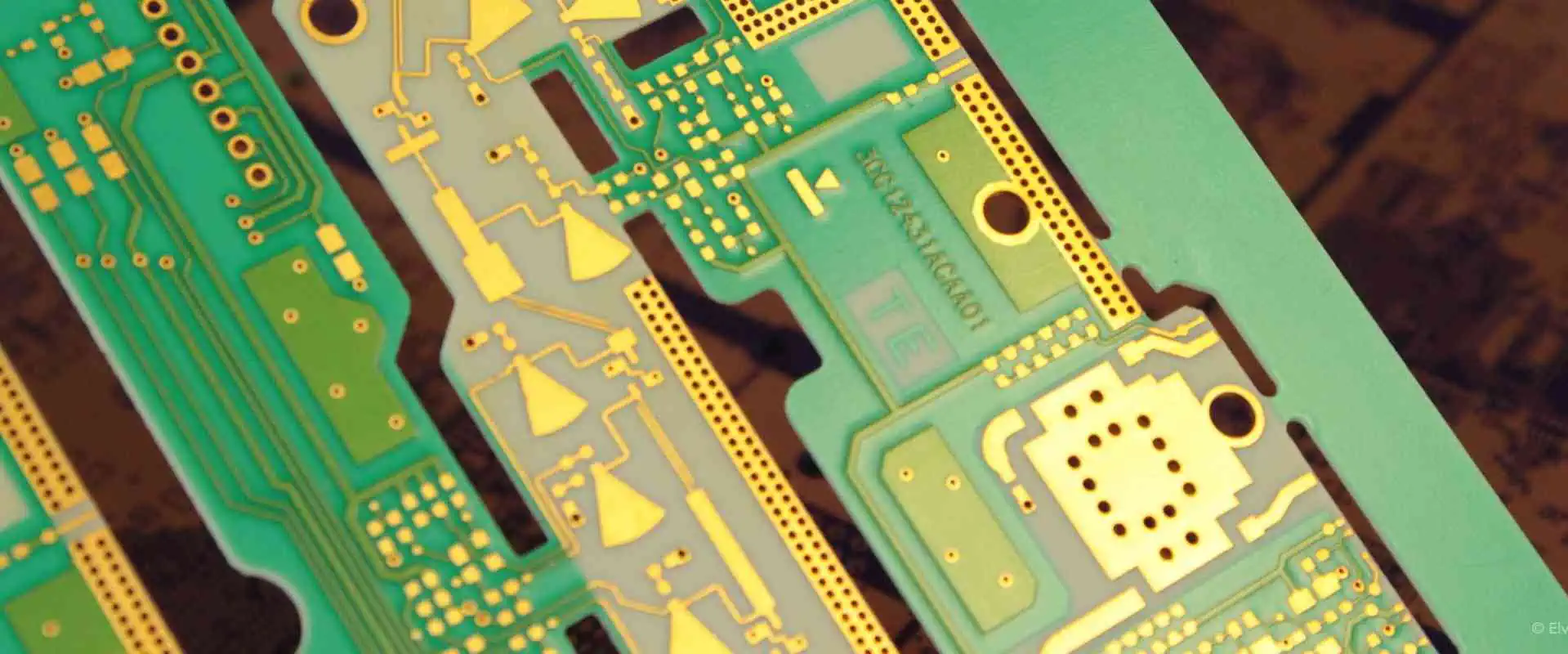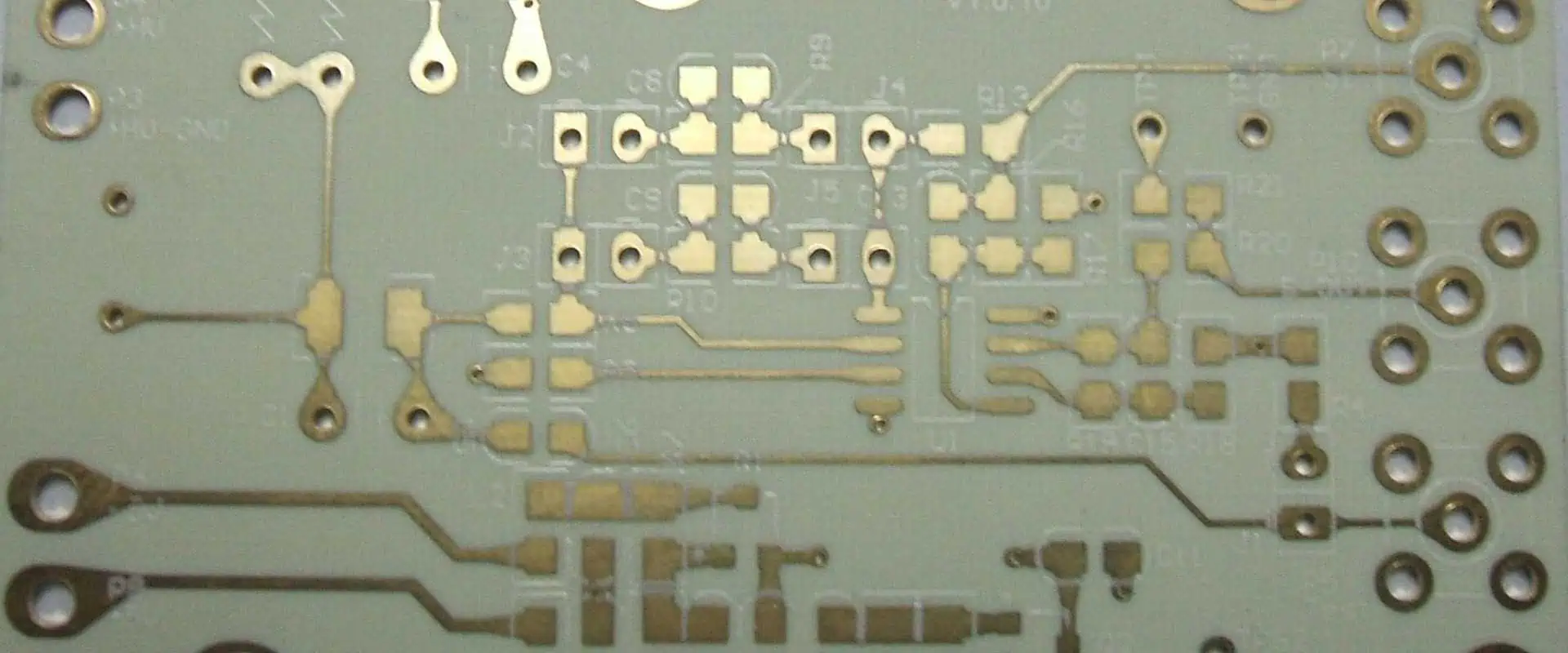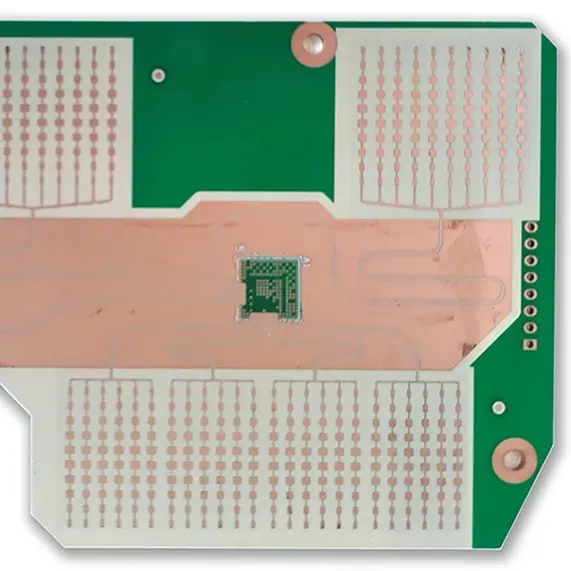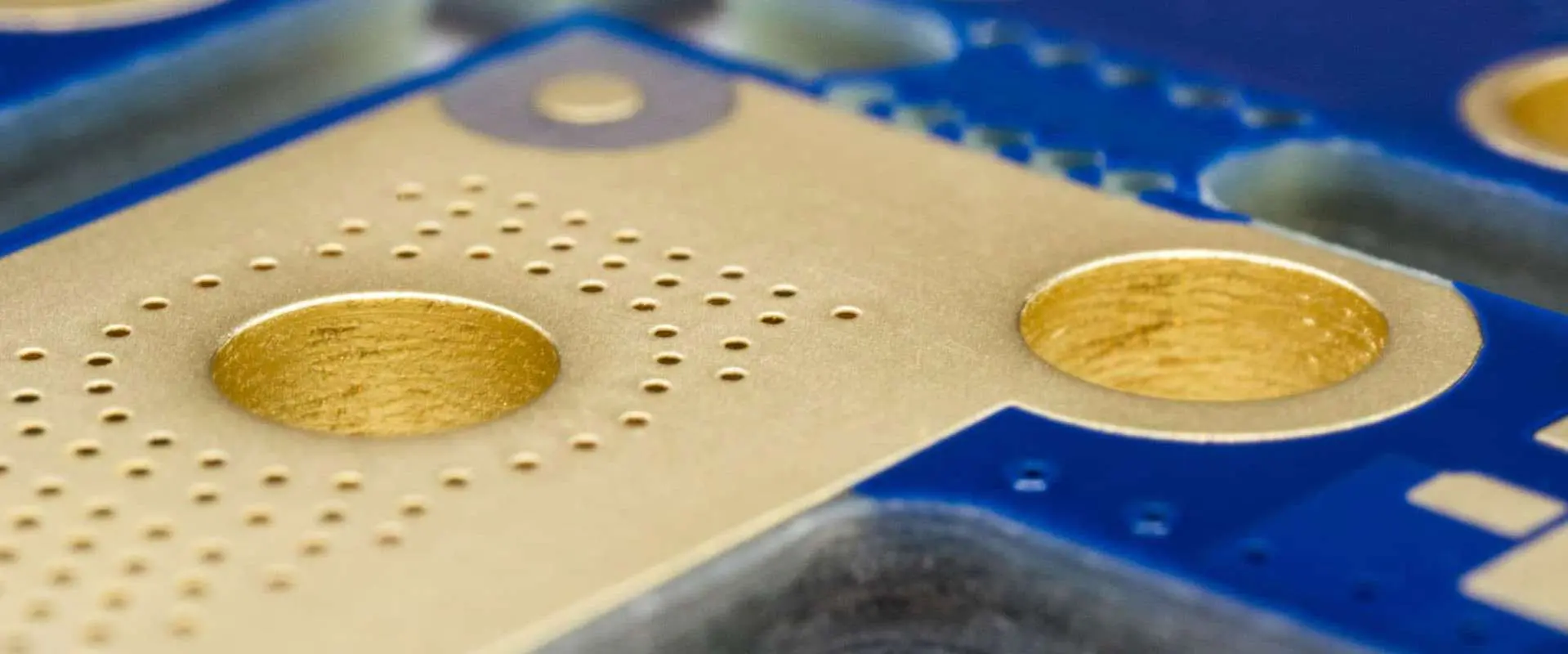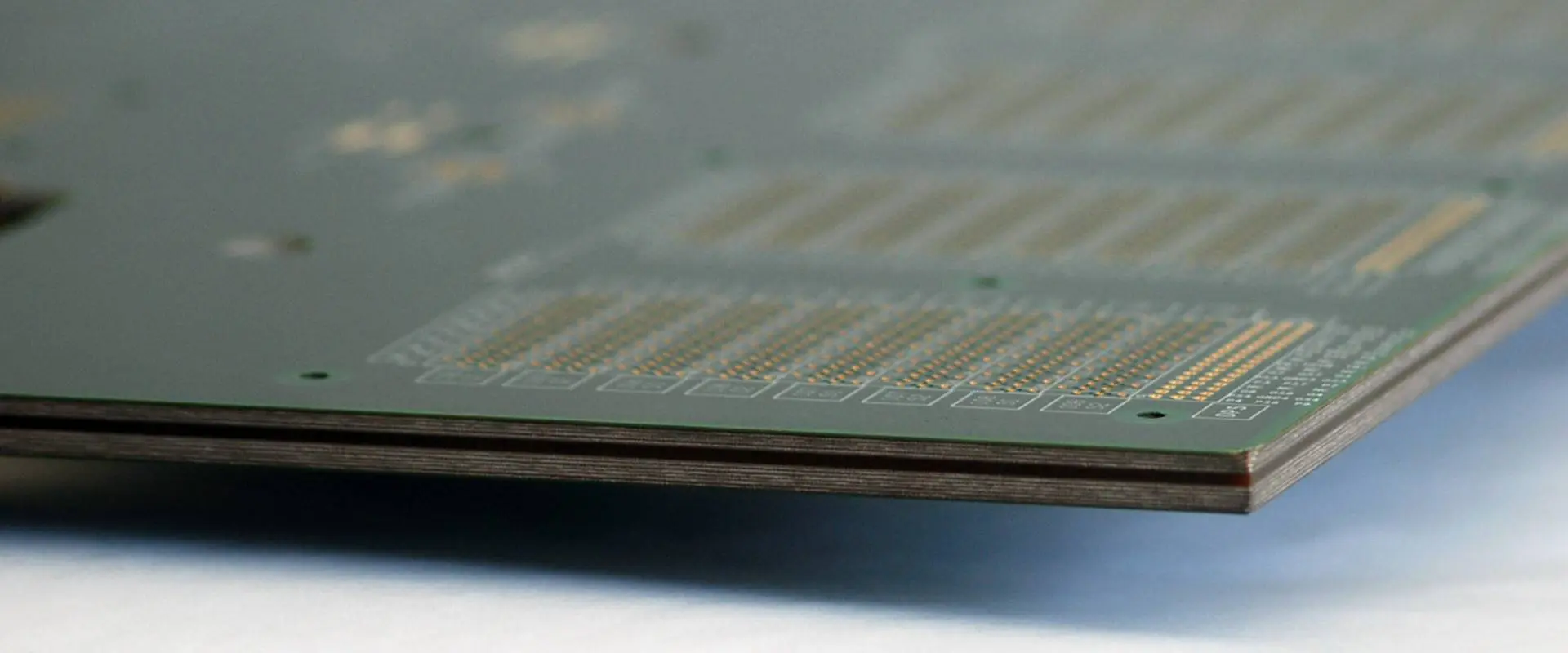
Thermally conductive low loss laminate Taconic RF-35TC PCB

Taconic EZ- IO-F PCB

You no longer must worry about the complexity of electronics circuit boards. With the Taconic RF-35TC PCB, installations become a breeze, and you can focus on the things that matter. This boardโ€™s design can handle high-voltage and high-frequency output requirements at a low noise level. It is also compatible with any standard or custom application, making it simple to connect to whatever else you need in your project.

The Taconic RF-35TC PCB delivers all you need for an installation. Its high-quality, robust design is ideal for use in various applications. The manufacturers such as RayMing PCB and Assembly design it specifically for outdoor use and under extreme conditions. The Taconic RF-35TC PCB can withstand temperatures as high as 70 degrees Celsius. Moreover, it has a unique, tempered glass fiber insulation that is resistant to moisture and corrosion. The result is always better performance and with minimal maintenance.

In addition to this, the Taconic RF-35TC PCB uses a copper ground plane. Therefore, it has an excellent optimization for electricity. With its ability to improve overall performance, this is an ideal replacement for other boards in your system.

Taconic RF-35TC PCB features

1. PCB Materials

The Taconic RF-35TC PCB consists of high-quality materials and can endure a wide range of temperatures. It is suitable for outdoor or indoor use and its design is suitable for tough conditions. It makes it an ideal part of your projects. Its primary material is epoxy glass with high thermal shock resistance and great flexibility. Thanks to this, the Taconic RF-35TC PCB can withstand excessive heat and cold at the same time. It will still maintain excellent performance over time.

The second material used in the Taconic RF-35TC PCB is copper foil. It is a highly conductive material that can withstand high voltages and frequencies. Beyond this, the copper foil also has excellent electrical conductivity. As a result, it makes this board an ideal replacement for other boards in your system.

Specifications:

The Taconic RF-35TC PCB has a variety of specifications depending on how you want to use it. Its high-quality brass connection blocks make it suitable for use in a wide range of applications. At the same time, its copper ground plane can help improve the overall performance of your installation.

Compatibility:

The Taconic RF-35TC PCB is compatible with any standard or custom application. We can use it with most other components you might have in your system. This means that it is easy to use with many other components simultaneously. It also has a low noise level, which we can connect to many other components without causing interference.

Operating Temperature:

The Taconic RF-35TC PCB can withstand a wide range of temperatures, including temperatures as high as 70 degrees Celsius. Without problems, it can handle conditions that maintain high-voltage and high-frequency output simultaneously. Moreover, this makes the board suitable for use in any situation.

Terminations:

The Taconic RF-35TC PCB uses various types of terminations depending on your needs. Its high-quality connections are weatherproof, and we can use them in a wide range of conditions without problems. From its ground block connectors to its phone port, the Taconic RF-35TC PCB is ideal for any other board you might have.

2. Layer count

The Taconic RF-35TC PCB is a two-layer board. This means it is very simple to use, especially as you do not need to make extensive modifications to work with the Taconic RF-35TC PCB. This makes the board very easy to install and enables smooth connections between various components.

The first layer of the Taconic RF-35TC PCB contains all of the components on the board, including resistors, capacitors, relays, and more. Each of these components has a connection to the next layer through copper tracks. The second layer contains all the boardโ€™s connections, such as its ports and phone connectors.

3. Connectors

The Taconic RF-35TC PCB features various connectors to make it compatible with almost any type of application. Its high-quality brass connection blocks are suitable for use in any situation and are very easy to work with. In addition, each connector has a low-key connection that can withstand the use of high-voltage and high-frequency signals. This ensures good performance through your system.

The Taconic RF-35TC PCB uses various types of connectors depending on your needs. Its phone connector is weatherproof and is suitable for use in any situation. So, we can use its ports for any other applications you might have in mind.

4. Thickness

The Taconic RF-35TC PCB has a thickness of 0.8 millimeters, making it an ideal component for use in any project. Furthermore, as it is so thin, the board takes up little space. Therefore, we can easily connect it to other components without taking up much room. This also makes the Taconic RF-35TC PCB suitable for use in tight areas.

5. Size

The Taconic RF-35TC PCB measures 2.2 by 2.2 by 3.2 inches and weighs 1 pound, making it an ideal component for use in any of your projects. It is also very easy to install and install in areas with a wide range of sizes and shapes. Its thin design means we can install it in tight spaces without problems.

6. PCB Usage

The Taconic RF-35TC PCB is compatible with most applications thanks to its versatile and ergonomic design. We can use it with a wide range of projects. It includes component upgrades and network designs. Its excellent performance makes it ideal for use in any installation.

7. Surface finish

The Taconic RF-35TC PCB has a matte blue finish that makes it suitable for use in any installation. This finish helps prevent oxidation and other damage to the board. At the same time, it will still providing excellent performance in your system.

8. Soldering pads and holes

The Taconic RF-35TC PCB has a range of different soldering pads to make it compatible with most applications. It is suitable for use in any installation and can withstand a wide range of temperatures. At the same time, its soldering pads are very free from oxidation and other problems, making it an ideal component for use in your projects.

Benefits of using Taconic RF-35TC PCB

The Taconic RF-35TC PCB has an excellent design for many applications, so it is good for most projects. Here are some benefits that you can get from using the Taconic RF-35TC PCB.

1. Quality design:

The Taconic RF-35TC PCB has a good design that makes it user-friendly and straightforward as possible. This makes ii maintain high performance. This means it is easy to use and install while still providing excellent performance in your system over time.

2. Connectivity:

The Taconic RF-35TC PCB is easy to use and install while maintaining high performance throughout your installation. Due to this, the Taconic RF-35TC PCB is a good choice for almost any type of project. It also has a low noise level. This means we can connect it to other components without causing interference.

3. Excellent adhesion to Very Low Profile Copper:

The Taconic RF-35TC PCB has a low profile that can work with very low hole patterns. This means it is compatible with almost all applications while still maintaining high performance.

4. Enhanced antenna gains/efficiencies:

The Taconic RF-35TC PCB has a wide range of high-quality terminations designed to be weatherproof. This means we an use them in any environment. Furthermore, it makes them an ideal component for use in any installation.

5. DK Stability across a broad temperature range:

Thanks to its low noise levels and excellent performance, we can use the Taconic RF-35TC PCB in almost any application. This also ensures that you will get the best performance out of the board without experiencing any problems with your system.

6. Exceptional thermal management:

The Taconic RF-35TC PCB is compatible with a wide range of applications. This means it is suitable for use in any situation while still maintaining high-performance thanks to its excellent thermal management abilities.

7. โ€œBest in Classโ€ loss tangent:

The Taconic RF-35TC PCB can maintain a low noise level at low frequencies. This helps it maintain excellent performance in any installation, while its loss tangent is one of the best in the industry.

Common applications for Taconic RF-35TC PCB

Taconic RF-35TC PCB is suitable for use in many applications, including network and system upgrades. Here are some common applications that you can use the component with.

1. Encryption/Decryption:

The Taconic RF-35TC PCB designed can provide excellent performance in any system. Moreover, it does not cause problems for any other components. This means it is a good choice for use in any situation, such as installing new telecommunications equipment.

2. Wireless LAN:

The Taconic RF-35TC PCB has an excellent design that we can use in any wireless LAN system. It has a low noise level. As a result, we can easily connect it to other components without causing interference. This offers a wide range of benefits for your installation.

3. Computer peripherals:

The Taconic RF-35TC PCB is a good choice for use in almost any system, making it an ideal component for use in your computer accessories. In addition, its design is compatible with a wide range of applications, making it suitable for most projects.

4. Radiofrequency equipment:

The Taconic RF-35TC PCB is an excellent choice for use in many types of radiofrequency equipment. It includes microwave equipment and other similar devices. Its design can maintain a low noise level while still providing excellent performance over time.

Conclusion

If you have a keen interest in the Taconic RF-35TC PCB, we strongly recommend buying it from Amazon. It is a high-quality board that has everything you need for your project in one place. Moreover, the board is compatible with many other components, and we can use it with almost any application.

The next time you have an idea for a project in mind, look at the Taconic RF35TC PCB to get started on your next project. It is a high-quality component that has everything you need in one convenient package. It makes it an ideal component for use in almost any situation.
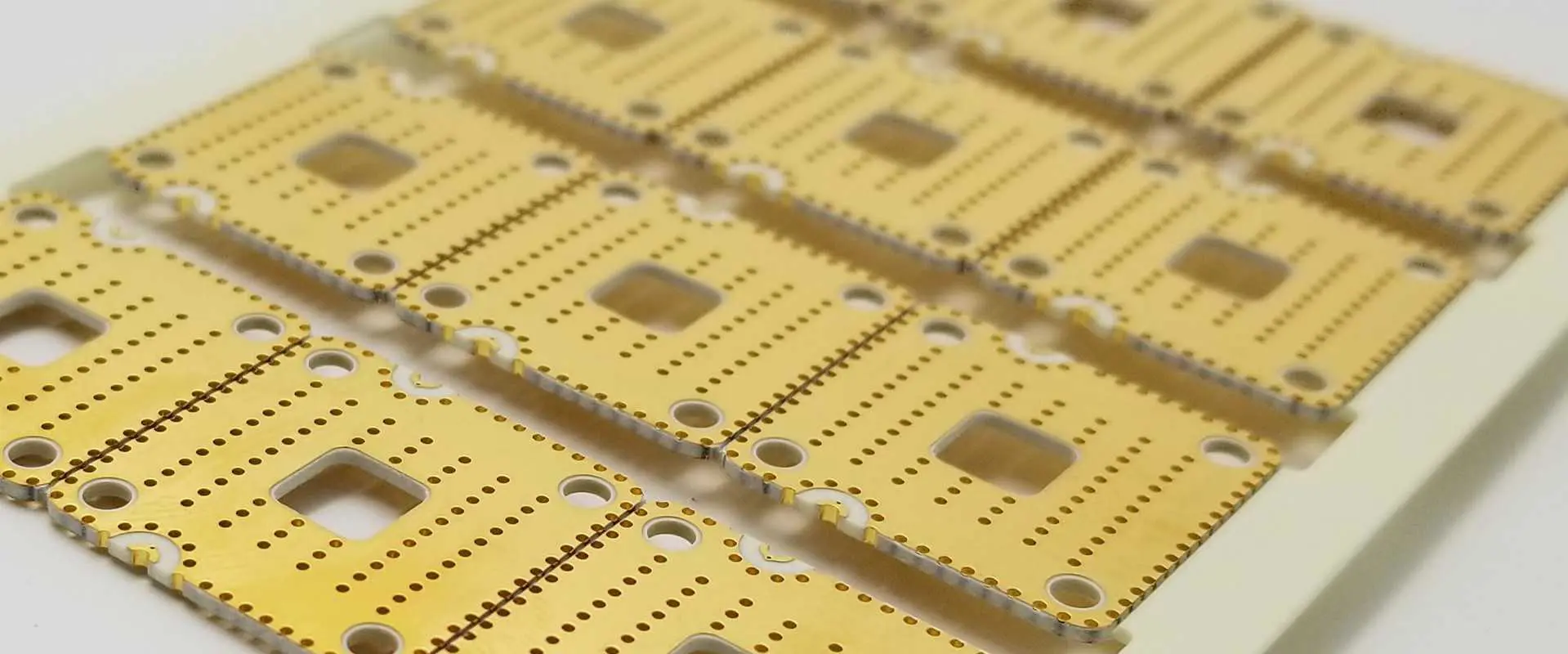
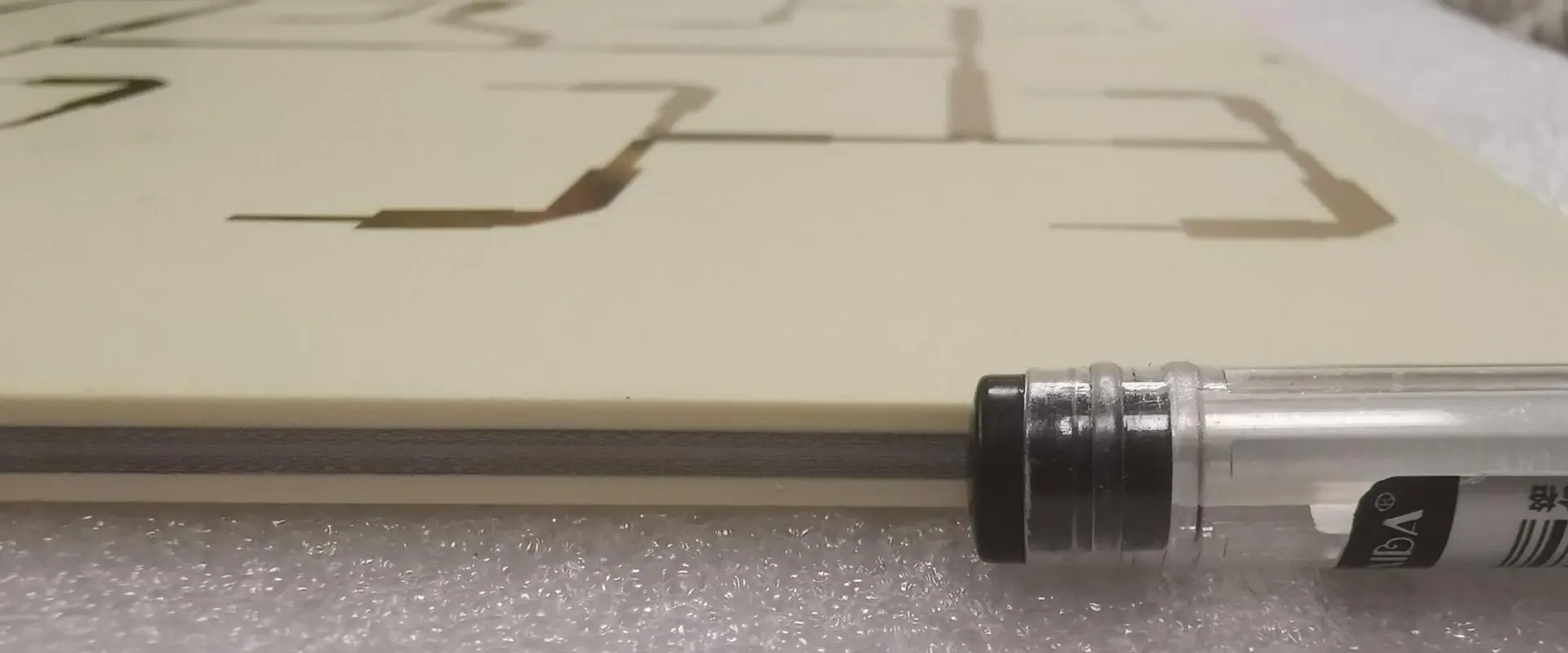
What is Rogers DiClad 527 PCB ?

Nelcote PeelCote Epoxy Preimpregnated Peel Ply

The Rogers DiClad Series are a family of PTFE-based and fiberglass-reinforced composites used as substrates for printed circuit boards in applications that require high frequency. The DiClad 527 laminate series features controlled ratios of PTFE and fiberglass content, resulting in low dielectric constant ranges. Higher PTFE composition yields improved dimensional stability, lower loss tangent, and better registration. The DiClad 527 series is available in a wide range of thicknesses and PTFE content, and a cross-plied construction is not available for the Rogers DiClad 527.

Features of Rogers DiClad 527

This article covers the features of Rogers DiClad 527, including its high fiberglass reinforcement content, Lead-free process compatibility, and High Coefficient of Thermal Expansion. You may also be interested in reading about the Stability of Dielectric Constant across Frequency. However, it is worth remembering that these are just some of the many benefits this cable offers. This article also looks at its cost, making it an affordable option for Rayming PCB & Assembly.

Stability of Dielectric Constant across Frequency

The high-frequency laminates from Rogers consist of PTFE, a relatively soft dielectric material with a low bulk modulus. As a result, they are lead-free, conform to IEC 61249-2-21, and are highly process-compatible. As a result, Rogers DiClad 527 is an excellent choice for high-frequency applications because it offers both low bulk modulus and stability of the dielectric constant across frequencies.

High ratio of fiberglass reinforcement to PTFE content

One of the advantages of Rogers DiClad 527 laminates is the high ratio of fiberglass reinforcement to PTFE content. This carefully controlled ratio results in better dielectric constant range, improved dimensional stability, and better registration. This combination of properties makes DiClad 527 an excellent choice for low-noise amplifiers, filters, and couplers.

Lead-free process compatibility

If you’re in the market for a lead-free high-frequency laminate, Rogers DiClad 527 may be the material you’re looking for. This high-frequency laminate consists of PTFE, a relatively soft dielectric with low bulk modulus. As a result, it offers a higher dielectric constant and better dimensional stability. Moreover, DiClad 527 has a low-resistance insulating capability, which helps you reduce costs and improve manufacturing efficiency.

Coefficient of Thermal Expansion

A common question relates to the thermal properties of the Rogers DiClad 527 laminate, such as its Coefficient of Thermal Expansion (CTE). As the name suggests, this type of laminate consists of a polymer core made of a glass-ceramic filled PTFE material with a low dissipation factor. These laminates are helpfulย in thin multilayer PCBs and have the highest embedded resistor constancy in the PCB semiconductor industry.

The PTFE and fiberglass-reinforced PTFE composites in Rogers DiClad Series laminates have controlled PTFE and fiberglass content levels. The increased PTFE content leads to a lower loss tangent. This material also features improved dimensional stability. It is available in various thicknesses from 40 mils to 260 mils and with or without copper cladding.

The Advantages and Disadvantages of Rogers DiClad 527

A thermoset material, Rogers DiClad 527 is ideal for high-frequency PCBs since the 1980s. Its PTFE and fiberglass reinforcement ratios we precisely control, resulting in a broad range of dielectric constants. This provides superior dimensional stability and registration. In addition, the material is very resistant to oxidation, a critical factor in ensuring the reliability and stability of your circuit.

Rogers DiClad 527 is a thermoset material

Rogers DiClad 527 is one of the most popular thermoset materials in the electronics industry. This material has a high dielectric constant and is a common thermoset used to fabricate circuit boards and other electronic parts. It is available in various shapes, sizes, and strengths, making it a good choice for various applications. However, these products may not be suitable for all applications.

Thermoset materials can have different materials, including hydrocarbon ceramic. Hydrocarbon ceramic is a good choice for applications involving microwaves or millimeter-wave frequencies. Rogers RO4000 laminates feature streamlined properties that allow for easier PCB fabrication. Similarly, RO4000 thermoset materials feature a combination of copper matched CTE and ceramic/random glass and are ideal for use in high-reliability applications. Rogers RO4000 and RT/duroid laminates have excellent thermal, mechanical, and electrical performance characteristics.

It is a high-frequency PCB material

There are many benefits to using high-frequency PCB materials like Rogers DiClad 527, a high-frequency variant of FR-4. The main advantage is that the material is inexpensive, and the process is easier than with FR-4. However, the disadvantages of Rogers DiClad 527 outweigh its benefits. Here are three things you should know about this high-frequency PCB material.

Embedded capacitance material: This is a conductive layer used to increase the frequency of a circuit. It helps to improve the sensitivity of an electrical circuit. We use it in a variety of high-frequency applications. For example, a radio receiver uses this material to improve its sensitivity. The other important factor is the price. DiClad 527 is inexpensive but may not be the right choice for all applications.

It has a thick metal cladding

The thickness of a Rogers cladding system varies depending on the cladding material. Thicker claddings are more expensive than thinner ones, but this is usually not an issue in most applications. The difference is the thickness of the dielectric layer. For example, the DiClad 527 has a metal cladding that is half the thickness of the copper itself. This means that the laminates are not as susceptible to damage from impact and will last longer.

The thick metal cloading from Rogers is a good choice for applications where electrical and thermal performance is paramount. Unlike claddings with less metal content, this material is easy to cut and form. We bond the cladding to the substrate with a PTFE-based bonding film. Several other claddings are available, including CuClad 6700, Arlon CuClad 217LX, and the CLTE series.

Applications of Rogers DiClad 527

The Rogers Corporation, founded in 1832, is a leading global supplier of high-performance RF materials. Their extensive product portfolio includes various products that are ideal for a wide range of applications. The search tool offers multiple filters, including location, certification, keyword, etc. To help you narrow down your options, Rogers Corporation offers several search tools.

Edge encapsulation

In PCB fabrication, edge encapsulation can increase the radiation shielding of a PCB design. Edge plating is usually necessary for multiple axis PCB margins, as well as for single-axis margins. The rout path must be properly designed and optimized for the material used in the PCB. Also, we can use it for non-standard Rogers laminates without any glass reinforcement.

Controlled impedance

The controlled impedance of Rogers DiClaD 527 is a good choice for various electronic applications. Its superior impedance properties are critical for achieving a desired level of performance. This material is available in various color and size options. For further details, read the full description below. CuClad 250 is the same material as the Rogers DiClad 527 but with different properties.

Dimensions

If you’re considering purchasing a new router for your next project, consider these dimensions of the Rogers DiClad 527. Its cutting bed holds the material while a routing tool shapes the part. These three dimensions help you determine which router to buy. The average size of this router is 10 mm x 10 mm. The biggest slab on this model is 15 mm in size.

Rogers CuClad 6700 Bonding Film

Rogers RO4700 PCB

The Rogers CuClad 6700 is a CTE thermoplastic bonding film with a melting point that is pretty low. These features make this bonding film great to utilize in the lamination of various strip lines and other PCBs that have multiple layers. However, this is just the tip of the iceberg as to what the Rogers CuClad 6700 Bonding Film entails. Therefore, we shall look at the different features that make the Rogers CuClad 6700 Bonding Film stand out. The benefits of utilizing this fantastic bonding film. And the properties that make this bonding film one of a kind.

About the Rogers CuClad 6700 Bonding Film, and why it is special

The Rogers CuClad 6700 is a CTFE (chlorotrifluoroethylene) thermoplastic co-polymer bonding film. Due to these features, you can utilize this bonding film to bond PTFE-based substrates found in multiple-layer circuits. They also make this bonding film a good choice for the lamination of different strip-line packages found in microwaves.

These bonding films have unique properties that make them stand out. These properties make them great to use in the bonding of electrical and structural components onto their dielectric.

Whatโ€™s more, the Rogers CuClad 6700 Bonding Film has an impeccable dielectric constant. Due to this constant, this bonding film is able to offer uniform electrical performance.

Rogers CuClad 6700 Bonding Films are available in a sheeted form and in roll form, both of which are 24″ (that is 610mm). You can hence choose the one that suits your Print Circuit Board.

Lastly, these Bonding Films are compliant with the ESA/NASA guidelines for space and satellite applications.

Rogers CuClad 6700 Bonding Film storage and shelf life

When you store the Rogers CuClad 6700 Bonding Film in good conditions, it does not have a limited lifespan. However, if you store it in bad conditions, then you risk causing damage to the bonding film.

To store your Rogers CuClad 6700 Bonding Film perfectly, follow the following instructions. Firstly, try to store your bonding film away from any direct sunlight. Exposing the film to direct sunlight could cause a lot of damage to the Rogers CuClad 6700 Bonding Film. Secondly, store the boding film in its original package (sealed) and under temperatures that do not surpass 250C. Thirdly, make sure that you keep the Rogers CuClad 6700 Bonding Film in an environment with a relative humidity of 70%.

Positioning the Rogers CuClad 6700 Bonding Film

As per positioning this bonding film, try to suspend it using roll cores or simply store it standing upright. In doing so, you avoid the risk of creating flat spots and creased areas on the film due to the weight of the roll.

Features of the Rogers CuClad 6700 Bonding Film

The Rogers CuClad 6700 Bonding Film bears the following feature that makes it stand out:

  • A thickness of .003โ€ and .0015โ€- Rogers CuClad 6700 Bonding Films have two different thickness variations. They have the .003โ€ (that is 0.76mm) and the .0015โ€ (that is 0.038mm) thickness variations. You can hence choose the thickness variation that suits your projectโ€™s needs.
  • An impeccable dielectric constant โ€“ Rogers CuClad 6700 Bonding Films have a dielectric constant of 2.35. With this impeccable Dk, this bonding film can easily undertake varying applications.
  • A low loss tangent – Rogers CuClad 6700 Bonding Films have a pretty low loss tangent. Their loss tangent is as low as 0.0025 under a bandwidth of 10 GHz.
  • Melting temperature – These Bonding Films have an impeccable melting temperature. Their thermoplastic film melting temperature hits a whooping 3970F. Due to this feature, you can efficiently apply these bonding films over a pretty wide temperature range.
  • Low outgassing โ€“ Rogers CuClad 6700 Bonding Films have pretty low outgassing value, making them more efficient in their job.

Benefits of utilizing the Rogers CuClad 6700 Bonding Film

If you are looking to utilize the Rogers CuClad 6700 Bonding Film, then here are some benefits that you are likely to encounter:

  1. A flame resistance that is intrinsic
  2. Dielectric properties that are a close match to those of a low dielectric constant laminate systems
  3. A short press cycle time

Properties of the Rogers CuClad 6700 Bonding Film

Various properties, whether thermal, mechanical, or physical, define the competence of a component. They describe how good a component is at thermal conductivity, flammability, et cetera. If you are looking to utilize a bonding film, then these are features that you should significantly consider.

The Rogers CuClad 6700 Bonding Film has impeccable properties. These properties include:

Physical properties

These are the properties that a component exhibits with no alternations made onto its chemical components. The Rogers CuClad 6700 Bonding Film bears the following physical properties:

Density

Under normal circumstances, the Rogers CuClad 6700 Bonding Film bears the following density:

  • 2.10 g/cc

Water absorption

Rogers CuClad 6700 Bonding Films have a pretty lot water absorption rate. Their absorption rate goes as low as:

  • 0.005%

With this water absorption rate, you can utilize this bonding film in varying environments, humid ones and otherwise.

Thickness

Thickness is another factor that makes the Rogers CuClad 6700 Bonding Film stand out. Under normal circumstances, this bonding film comes in two different thickness variations:

  • 0.0381 microns variations
  • 0.0762 microns variations

Electrical properties of the Rogers CuClad 6700 Bonding Film

Electric current conductivity is essential to consider, especially when dealing with PCB components. Print Circuit Board encounters electric currents almost every single second. Therefore impeccable electrical properties are crucial.

The Rogers CuClad 6700 Bonding Film bears the following electrical properties:

Volume resistivity

The Rogers CuClad 6700 Bonding Film bears the following volume resistivity.

  • 1.00e + 18 ohm-cm

Surface resistance

The surface resistance of the Rogers CuClad 6700 Bonding Film under normal conditions stands at:

  • 1.00e + 16 ohm

Dielectric constant

When you place the Rogers CuClad 6700 Bonding Film under a frequency of 1.00e + 10 Hz, its dielectric constant hits:

  • 2.35

Dielectric strength

The dielectric strength of the Rogers CuClad 6700 Bonding Film under ASTM D149 test condition stands at:

  • 98.4 kV/mm

Dissipation factor

At a frequency of 1.00e + 10Hz, the dissipation factor of the Rogers CuClad 6700 Bonding Film hits:

  • 0.0025

Thermal properties of the Rogers CuClad 6700 Bonding Film

Thermal properties are crucial to the success of a PCB component. That is because PCBs encounter high temperatures a lot. Hence components with bad thermal properties might melt off the PCB.

The Rogers CuClad 6700 Bonding Film, on the other hand, has remarkable thermal properties, which include:

Thermal conductivity

Under normal conditions, the thermal conductivity of the Rogers CuClad 6700 Bonding Film stands at:

  • 0.170 W/m-K

Melting point

Rogers CuClad 6700 Bonding Film has a pretty high melting point. Its melting point goes up to:

  • 184 0C

When working with this bonding film, melting off a PCB is definitely off the table.

Maximum service temp (air)

Under continuous use, the Rogers CuClad 6700 Bonding Film has a maximum service temperature that is:

  • <= 1760C

Conclusion

The Rogers CuClad 6700 Bonding Film has incredible features and properties. These features and properties make them one of a kind among the many different bonding films that exist. Therefore, if you are looking to up your boding film game, then this is the bonding film to use.

Is Rogers CuClad 6250 Worth it?

Rogers TC600 PCB

The Rogers CuClad 6250 is polyethylene film with a pretty low melting point. Manufacturers hence use this bonding film to laminate strip lines and other multiple layer circuits. The Rogers CuClad 6250 boding film is not just handy as per its applications. It is also efficient and effective, which has led to its popularity in the tech market to date. But what properties make this bonding film unique? Which features make this bonding film stand out? And most importantly, is this bonding film worthwhile?

About the Rogers CuClad 6250 bonding film and why it is worth your while

Rogers CuClad 6250 bonding films are thermoplastic ethylene acrylic acid co-polymers. These bonding films bear features that make them great for bonding different dielectric structures such as glass and PTFE.

Using these bonding films, you can easily limit the amount of heat and pressure that strikes a specific component. So, pressure and heat-sensitive components maintain their stable form even under high heat or pressure.

Rogers CuClad 6250 bonding films come in two different variations. The sheeted form and the roll format, both of which are 21โ€ (610 mm)

Rogers CuClad 6250 bonding film storage and shelf life

When you store the Rogers CuClad 6250 bonding film under perfect conditions, they do not have a limited life span. These ideal conditions include storage away from any direct sunlight, which could cause harm to the bonding films. In addition, storage in its original package, sealed, and at a temperature that is within 250C (that is 770F). And lastly also ensure that its storage environment does not surpass a relative humidity of 70%.

As per positioning, you should store the bonding film rolls suspended by roll cores or standing upright (on edge). In doing so, you avoid creating flat spots or creased areas due to the rollโ€™s weight.

Features of the Rogers CuClad 6250 bonding films

The Rogers CuClad 6250 bonding film bears some features that make it stand out once you compare it with other bonding films. These features include:

  1. A Dielectric constant (Dk) of 2.32 – Rogers CuClad 6250 bonding films have a pretty low Dk, which hit only 2.32.
  2. A thickness of 0.0015โ€ โ€“ Rogers CuClad 6250 bonding films have a thickness of 0.0015″, that is 0.038 mm. With this thickness, the Rogers CuClad 6250 bonding film is able to create a thick bond between different components. Combining this thickness with this bonding film’s low melting point feature, you get fascinating outputs as the net result.
  3. Impeccable tangent loss – Rogers CuClad 6250 bonding films have an impeccable tangent loss that stands at 0.0015 at a bandwidth of 10GHz.
  4. Impeccable melting temperature – Rogers CuClad 6250 bonding films have a resin melting temperature of 2130F. With this resin temperature melting point, this boding film is able to function even under extreme temperatures.

Benefits of utilizing the Rogers CuClad 6250 bonding films

If you are looking to use the Rogers CuClad 6250 bonding film on your Print Circuit board. Then here are some benefits that you are likely to reap:

  1. Low pressure and temp lamination โ€“ The Rogers CuClad 6250 bonding film provides pretty low temperature and pressure lamination. Their pressure and temp lamination is actually lower than that of a conventional thermoplastic RF film.
  2. Impeccable dielectric properties โ€“ These bonding films have dielectric properties that are incredible. Their dielectric properties are almost similar to those of a laminate system. They are hence mostly chosen for the bonding of multi-layer print circuit boards.
  3. Pressure-sensitive layers โ€“ These bonding film lets you attach layers that are pressure sensitive. You can hence include layers such as a dielectric foam layer.
  4. Impeccable electrical properties โ€“ Rogers CuClad 6250 bonding film has impeccable electrical properties. These properties help your PCB produce optimal outputs even with the bonding film in place.
  5. Reflow and remelting the bonding film โ€“ To reflow or remelt this bonding film, simply reheat it, and you are done.

Properties of the Rogers CuClad 6250 bonding films

Properties dictate the efficiency of a component. Hence, they are crucial to your choice of a bonding film or any other component.

Properties come in many different formats. For example, we have physical properties, mechanical properties, electrical properties, and so on.

The Rogers CuClad 6250 bonding film bears the following properties which make it stand out:

Physical properties

These are the properties that we measure without altering the bonding film’s chemical composition. These properties include:

Density

Under normal conditions, the density of the Rogers CuClad 6250 bonding films stands at:

  • 0.930 g/cc

Thickness

The thickness property of the Rogers CuClad 6250 bonding film makes it stand out amongst other bonding films. Its thickness stands at a whooping:

  • 0.0381 microns

Electrical properties of the Rogers CuClad 6250 bonding films

The Rogers CuClad 6250 bonding film has impressive electrical properties. These properties come in handy when utilizing this bonding film on Print Circuit boards.

Here are some electrical properties that make the Rogers CuClad 6250 bonding film stand out:

Volume resistivity

The Rogers CuClad 6250 bonding film bears the following volume resistivity:

  • 1.00e + 16 ohm-cm

Dielectric constant

When you place the Rogers CuClad 6250 bonding film under a 1.00e + 10 Hz frequency. Its dielectric constant hits:

  • 2.32

Dielectric strength

Under normal circumstances, the dielectric strength of the Rogers CuClad 6250 bonding film is:

  • >= 39.4 kV/mm

Dissipation factor

When you place the Rogers CuClad 6250 bonding film under a temperature of 1.00e + 10 Hz. Its dissipation factor stands at:

  • 0.0013

Arc resistance

The arc resistance of the Rogers CuClad 6250 bonding film under normal conditions stands within the range of:

  • 130 to 140 sec

Thermal properties of the Rogers CuClad 6250 bonding film

During PCB assembly, the print circuit board and its components mostly undergo a lot of heating. Therefore attaching components with bad thermal properties could cause damage to the component or even the PCB.

However, this is not the case with the Rogers CuClad 6250 bonding film. These bonding films bear some remarkable thermal properties, which include:

Thermal conductivity

The Rogers CuClad 6250 bonding film has a thermal conductivity of:

  • 0.170 W/m-K (under standard conditions)

Maximum service temperature

Under continuous use, the Rogers CuClad 6250 bonding film bears a maximum service temperature that is:

  • <=75.0 0C

Brittleness temperature

The Rogers CuClad 6250 bonding film has a brittleness temperature that hits:

  • -600C

Conclusion

The Rogers CuClad 6250 bonding films ensure efficiency and quality each time you utilize them. In addition, they boost your PCB’s performance and make PCB assembly easy to handle. Hence, if you are looking for a bonding film to use, you might want to try this one. The results might just surprise you.

Rogers CuClad 250 Laminates and their importance

Rogers RO4534

The Rogers CuClad 250 is a cross-plied laminate reinforced using PTFE and woven fiberglass to provide great stability. Due to these composites, this laminate can provide a dielectric constant that is pretty lowโ€”one that ranges between 2.40 -and 2.60. The laminate is super durable, and its efficiency is impeccable. However, are these the only features that this laminate great? Is there more to this laminate than meets the eyes? And if so, is it an excellent option to utilize this laminate on your PCB?

About the Rogers CuClad 250 laminate and why you should totally consider using it

The Rogers CuClad 250 laminate utilizes a pretty high PTFE/fiberglass ratio. In doing so, it is able to provide fascinating mechanical properties that almost match those of a conventional substrate.

The high PTFE/fiberglass ratio also helps immensely lower the laminate’s dielectric constant. And what’s even more fascinating is that it does so with little to no effect on the laminate’s mechanical properties.

By utilizing precision control on the PTFE/fiberglass ratio. The Rogers CuClad 250 laminate provides the aspect of variety. Hence, you can choose your laminate from a range of laminates with the lowest tangent loss and dielectric constant. Or you can opt for the laminates that have impeccable thermal expansion and better dimensional stability.

Rogers CuClad 250 laminates offer impeccable dimensional stability plus low thermal expansion. Hence, you can utilize this laminate in a wide temperature range with little to no damage to the laminate’s properties.

The Rogers CuClad 250 laminate is cross-plied. What this means is that the alternating perfect layers of fiberglass plies (coated) are oriented at a 900 angle to each other. Due to this feature, the laminate can offer true mechanical and electrical isotropy onto the YX plane.

Features of the Rogers CuClad 250 laminate

The Rogers CuClad 250 laminate bears the following features that make it efficient and worth utilizing.

  1. It is cross plied โ€“ The Rogers CuClad 250 laminate contains woven fiberglass that is cross plied. The orientation between different alternating plies is basically 900C.
  2. A high Glass to PTFE ratio โ€“ The Rogers CuClad 250 laminate bears a high glass to PTFE ratio. Due to this ratio, the laminate can offer special features, which include a pretty low Dk (dielectric constant)
  3. Impeccable Dk uniformityโ€“ These laminates have remarkable uniformity in their Dk. Their Dk uniformity surpasses that of other comparable laminates that are reinforced using non-woven fiberglass.

Benefits of the Rogers CuClad 250 laminate

If you are looking to utilize the Rogers CuClad 250 laminate, then here are some benefits that you are likely to reap:

  1. low losses, which are essential for an efficient Print circuit board
  2. Mechanical and electrical isotropy ( on the Y โ€“ X plane) which makes this laminate great for antennas that have a phased array
  3. Better result on the application of these laminates on circuits that are Er sensitive

Typical applications of the Rogers CuClad 250 laminate

The Rogers CuClad 250 laminate has a lot of applications which include:

  • Applications in Microwave components – These laminates are applicable in microwave components. These components include couplers, filters, and LNAs
  • Application in military electronics โ€“ These laminates are applicable in military electronics. These electronics include ESMs, ECMs, and Radars

Typical properties of the Rogers CuClad 250 laminate

The Rogers CuClad 250 laminate has the following properties:

Physical properties

Physical properties are essential as they are the properties that we can only observe and measure. When observing or measuring this property, we cannot alter the laminate’s chemical composition.

The Rogers CuClad 250 laminate entails the following physical properties:

Density

Under normal conditions, the Rogers CuClad 250 laminate bears the following density:

  • 2.31 g/cc

Water absorption rate

The Rogers CuClad 250 laminate features a pretty low water absorption rate of:

  • 0.030%

With such a low water absorption rate value, this laminate can function well in multiple environments, humid or otherwise.

Outgassing

When you place the Rogers CuClad 250 laminate under 1.33e-10MPa of pressure. And then add on a temperature of 1250C, the laminateโ€™s outgassing values hit:

  • 0.00% ( as per water vapor recovered)
  • 0.010 % (as per NASA)

Volatile condensable collectible material

When you place the Rogers CuClad 250 laminate under 1.33e-10MPa of pressure. And then add on a temperature of 1250C. The laminateโ€™s volatile condensable collectible material becomes:

  • 0.00%

Mechanical properties of the Rogers CuClad 250 laminate

The Rogers CuClad 250 laminate exhibits the following mechanical properties:

Tensile strength

The Rogers CuClad 250 laminate bears the following tensile strength values:

  • 141 MPa (cross)
  • 179 MPa (machine)

Modulus of elasticity

The Rogers CuClad 250 laminate bears the following elasticity modulus under varying conditions:

  • 3.94 GPa (cross)
  • 5.00 GPa (machine)

Flexure modulus

Under standard conditions, the Rogers CuClad 250 laminate bears the following flexure modulus:

  • >= 3.14 GPA

Compressive modulus

When you place the Rogers CuClad 250 laminate under a temperature of 230C. And then utilize ASTM D-695 test conditions. The compressive modulus of the Rogers CuClad 250 laminate will hit:

  • 2.36 GPA

Peel strength

After exposing the Rogers CuClad 250 laminate to thermal stress, its peel strength hits:

  • 2.45 kN/m

Electrical properties of the Rogers CuClad 250 laminate

Electrical properties have to be impeccable for a laminate to perform well in its job. The Rogers CuClad 250 laminate offers impeccable and more.

Here are the electrical properties of the Rogers CuClad 250 laminate:

Volume resistivity

When you place the Rogers CuClad 250 laminate under C96/35/90 test conditions, its volume resistivity hits:

  • 8.00e + 15 ohm-cm

Surface resistivity

The laminateโ€™s surface resistivity under C96/35/90 test conditions stands at:

  • 1.50e + 14 ohms

Dielectric constant

The Rogers CuClad 250 laminate bears the following dielectric constant under a frequency of 1.00e + 6 Hz:

  • 2.4 โ€“ 2.6

When you up the frequency to hit 1.00 + 10 Hz, the dielectric constant remains stable and stagnant at a range of:

  • 2.4 โ€“ 2.6

Thermal properties of the Rogers CuClad 250 laminate

The Rogers CuClad 250 laminate exhibits the following thermal properties:

CTE, linear

At a temperature range of 0.000 โ€“ 100 0C, the x-direction CTE linear of the laminate stands at:

  • 18.0 ยตm/m-ยฐC

The y-direction CTE linear of the laminate, on the other hand, under the same test conditions, hits:

  • 19.0 ยตm/m-ยฐC

Thermal conductivity

When you place the Rogers CuClad 250 laminate under a temperature of 1000C, its thermal conductivity value hits:

  • 0.254 W/m-K

Flammability

Under standard conditions, the flammability rating of the Rogers CuClad 250 laminate is:

  • V-0

Conclusion

The Rogers CuClad 250 laminate is a durable, stable, and efficient laminate. Its unique features and properties make it one of a kind. Due to its efficiency, the Rogers CuClad 250 laminate has become pretty popular in the market today. Hence if you are looking for a laminate that ensures quality results, you should try out the Rogers CuClad 250 laminate. It will not disappoint you.

What is Rogers CuClad 233 PCB ?

Rogers PCB

The Rogers CuClad 233 is a pretty popular cross-plied laminate that is reinforced using PTFE and woven fiberglass. Due to these features, this laminate can offer a dielectric constant that is pretty low, as low as 2.33. In addition, the reinforcements on this laminate boost its stability and efficiency. You hence get quality as a net result each time you opt to utilize this laminate on your PCB. However, is there more to the Rogers CuClad 233 laminate that makes it stand out? Which benefits do you get when you utilize this laminate? And what properties make up this incredible laminate?

About the Rogers CuClad 233 laminate

The Rogers CuClad 233 laminate utilizes a medium PTFE/fiberglass ratio which balances off the lower Dk. Due to this feature, the Rogers CuClad 233 laminate can boost its dissipation factor with no effect on the mechanical properties. In addition, the laminate is also reinforced using woven glass, which in turn increases the laminate’s dimensional stability. These two features make the Rogers CuClad 233 an excellent choice for low-noise amplifiers, couplers, and filters.

The Rogers CuClad 233 laminate has a construction that is cross plied. Due to this construction, the laminate can maintain impeccable dimensional stability. It can also balance mechanical and electrical properties, which in turn boost its efficiency immensely.

Features of the Rogers CuClad 233 laminate

The Rogers CuClad 233 laminate bears the following features that make it stand out when you compare it with other laminates:

  1. A low Dk (dielectric constant) โ€“ The Rogers CuClad 233 laminate has a pretty low Dk. Due to this Dk, the laminate can handle signal propagation impeccably. It also boosts the laminates dissipation factor making the laminate more efficient.
  2. A dissipation factor (Df) of 0.0013 at a bandwidth of 10GHz โ€“ The Rogers CuClad 233 laminate has great Df. With this dissipation factor, the laminate can dissipate heat aggressively, which is suitable for PCBs.
  3. Out-gassing and a low rate of moisture absorption โ€“ The Rogers CuClad 233 laminate has a low rate of moisture absorption. The laminate absorbs water at a rate of 0.02%. Due to this absorption rate, the Rogers CuClad 233 laminate can function well in different environments.
  4. A stable dielectric constant โ€“ The Rogers CuClad 233 laminate has a stable dielectric constant. Hence, you can utilize it over a more comprehensive frequency range with little to no effect on the laminate’s dielectric constant.

Benefits of utilizing the Rogers CuClad 233 laminate

If you are looking to utilize the Rogers CuClad 233 laminate, here are some benefits that you are going to get:

  1. Support for Large antennas and PCB formats
  2. A lower dielectric constant that supports a broad line width which ultimately lowers insertion loss
  3. Lower circuit losses even in higher frequencies
  4. An in-plane value that matches that of aluminum utilized in aircraft structures/ skins

Typical applications of the Rogers CuClad 233 laminate

The Rogers CuClad 233 has a couple of applications which include:

  1. Applications in military electronics (ESM, ECM, Radar)
  2. Application in microwave components (LNAs, couplers, filters, et cetera)

Properties of the Rogers CuClad 233 laminate

The Rogers CuClad 233 laminate features the following properties. Each one curves the laminate into one of the best laminates in the world today.

Physical properties

Physical properties are the properties that we can observe and measure without affecting a component’s chemical composition.

The Rogers CuClad 233 laminate bears the following physical properties:

Density

The Rogers CuClad 233 laminate has a density of:

  • 2.26 g/cc

Water Absorption

Water absorption is one feature that stands out in the Rogers CuClad 233 laminate. The laminate bears a pretty low water absorption rate that hits:

  • 0.02% under normal conditions

Outgassing (total mass loss)

The Rogers CuClad 233 laminate has an outgassing value of 0.00% (and 0.010 via NASA) under the following conditions:

  • The pressure that is less than or equal to 1.33e-10MPa
  • And a temperature of 1250C

Volatile condensable components (collected)

The laminate has 0.010% volatile condensable components under the following test conditions:

  • Pressure that is less than or equal to 1.33e-10MPa
  • And temperatures hitting up to 1250C

Mechanical properties of the Rogers CuClad 233 laminate

When you apply a force upon a Rogers CuClad 233 laminate, it is bound to exhibit the following mechanical properties:

Tensile strength

Under normal conditions, the Rogers CuClad 233 laminate has a tensile strength of:

  • 67.6 MPa

Modulus of elasticity

The Rogers CuClad 233 laminate has the following modulus of elasticity:

  • 2.85 GPA

Flexure modulus

The flexure modulus of the Rogers CuClad 233 laminate under a temperature of 230C is:

  • >=2.56 GPA

Compressive modulus

The compressive modulus of this laminate under 230C stands at:

  • 1.90 GPA

Peel strength

After applying thermal stress to the Rogers CuClad 233 laminate, its peel strength hits a whooping:

  • 2.45 kN/m

Electrical properties of the Rogers CuClad 233 laminate

Electrical properties bring out a component’s ability to conduct electricity efficiently. These properties are crucial when dealing with Print Circuit Board laminates.

The Rogers CuClad 233 laminate features the following electrical properties:

Volume resistivity

Under normal conditions, the Rogers CuClad 233 laminate bears the following volume resistivity:

  • 8.00e + 14 ohms- cm

Surface resistance

The surface resistance of the Rogers CuClad 233 laminate is:

  • 2.40e + 12 ohm

Under C96/35/90 test conditions.

Dielectric constant (Dk)

The Rogers CuClad 233 laminate has a dielectric constant of 2.33 under the following test conditions:

  • A frequency of 1.00e + 6 Hz

When you up the frequency to 1.00e + 10 Hz, the Dk of the Rogers CuClad 233 laminate remains stagnant at:

  • 2.33

Dielectric Breakdown

The Rogers CuClad 233 laminate has the following dielectric breakdown:

  • >= 45000V

To attain these values, you have to utilize D48/50 test conditions:

Dissipation factor

The Rogers CuClad 233 laminate has a dissipation factor of 0.0013 under the following conditions:

  • A frequency of 1.00e + 10Hz

Arc resistance

The Rogers CuClad 233 laminate has an arc resistance that is:

  • >= 180 sec

Thermal properties of the Rogers CuClad 233 laminate

Thermal properties are a significant factor to consider as PCBs are almost always under constant heat. Hence having a laminate with impeccable thermal properties is essential.

The Rogers CuClad 233 laminate has the following thermal properties:

CTE linear

The Rogers CuClad 233 laminate has an X CTE linear of 23.0 ยตm/m-ยฐC under the following conditions:

  • A temperature range of 0.000 โ€“ 100 0C

Under the same test conditions, the y-direction CTE linear value hits 24.0 ยตm/m-ยฐC under the same test conditions.

Thermal conductivity

The Rogers CuClad 233 laminate has the following thermal conductivity:

  • 0.258 W/m-K

Under the following test conditions:

  • A temperature that hits up to 1000C

Flammability

The Rogers CuClad 233 laminate has a flammability rating of:

  • V-0

Conclusion

The Rogers CuClad 233 laminate is a durable, efficient and effective laminate. Its feature and benefits make it one of a kind in the tech market. Hence if you are looking for a laminate to utilize on your PCB, look no further.

Everything You Wanted to Know About Rogers RO3003 Laminates

Rogers RO3203

Have you shopped for laminates? If the answer is “yes,” you know that there are plenty of options, including Rogers. With a wide range of colors, finishes, and thicknesses, Rogers offers high-quality products to give your home or office a new look while protecting them from scratches, fading, and dents.

However, shopping for laminates can be overwhelming with all the choices and information to digest. So, if you’re looking for a quick reference to the main information you need, here’s your guide:

Rogers RO3003 comes with a premium-quality, high-pressure laminate that is scratch and stain-resistant. This economical option is available in a variety of finishes and colors. In addition, the products are covered by a 15-year manufacturer’s warranty against fading, peeling, or denting.

All of the Rogers laminates operate in a zero-landfill facility. As a result, the manufacturing process generates no waste, and all offcuts are recycled.

Rogers RO3003 single-sided laminates come in 11 colors and a wide range of finishes, including satin, matte, metallic and high gloss. RO3003 is available in 7 color options for printable laminates with white on one side. Additionally, this product comes in 6 colors with winter wood finish and three colors with summer wood finish.

Fabrication guidelines

Rogers has laminates available in two finishes: metalized and matte.

a) Metalized finish is essential for metallic colors, satin, and high gloss finishes.

b) Matte finish is necessary for silvery, snowflake, and summerwood finishes.

In addition to the metalized and matte finishes, there are also five laminate colors (none of which contain metal) made from Rogers’ proprietary blend of 40% recycled plastic material (with a minimum of 6% post-consumer content).

RayMing Rogers Ro3003 PCB Board 0.8 Thickness

RayMing Rogers Ro3003 PCB Board 0.8 Thickness

Original price was: $540.00.Current price is: $520.00.

Rogers Ro3003 PCB Board 0.8 Thickness 2 Layer PCB Dielectric Constant: 3.0 Size: 220 x 80mm Rogers Ro3003 Laminates Datasheet RO3000 Laminate Data Sheet RO3003 – RO3006RO3010RO3035 What is Rogers Ro3003 ? The Rogers Ro3003 is a high-frequency laminate material widely used for printed circuit boards (PCBs) in various applications, such…

Category:
Tags: ,

Inner Layer Preparation

Rogers’ laminates use top-quality material precisely cut and adhered to a base layer of high-tensile, 1.5-mil polyethylene plastic. The material consists of recycled plastic bottles designed to withstand extreme heat and cold temperatures.

The first step in using your laminates is prepping the inner layer.

Tooling:

Before you use your laminates, you’ll need to set up your machine.

Rogers recommends using a tooling roller. If you’re using a GBC SDS-plus machine or an indigo press, the tooling roller should ideally be 1/16 inch or a sharp utility knife with a less than 24 inches long blade. You must also replace the blade frequently due to the wear and tear on it from the laminate’s material.

Surface Preparation for Photoresist Applications:

This is the only time you need to set up your machine for an adhesive-based lamination application.

To prepare for a photoresist lamination, remove decal/trim from your laminate. Next, put the laminate in your press and activate the heating element until it reaches room temperature.

After removing the laminate from the press, you should now have a rippled effect along its edge. This results from the top layer rolling down over itself during heating.

Photoresist Applications:

After prepping the laminate for lamination, you’re ready to begin applying the photoresist.

The recommended method is with a dropper bottle, typically delivering about 32 drops per bottle. We apply the resist supplied by Rayming PCB & Assembly with a spray gun with a built-in pump system. You should also ensure that you have protective gear on because some resists can be harmful if inhaled or ingested.

DES Processing:

Rogers recommends using a press with a temperature control system on the heat plates and rollers that can reach 150 degrees F or above.

The recommended solvent for desorption is methyl ethyl ketone (MEK) or a MEK-based product. Other options include xylene and toluene.

Your desorption time will depend on the type of resistance. Unlike traditional solvent-based laminates, desorption can take between ten to 20 minutes to complete.

Oxide Treatment:

Rogers recommends using methyl ethyl ketone (MEK) without any additives.

After the MEK process is complete, you can lay your laminate onto your substrate.

Bonding

Rogers recommends heating the adhesive bonder to at least 170 degrees F and applying it between the laminate and substrate.

Rogers laminates use a high-pressure laminate system that allows for a proprietary process known as a high-vacuum state (HV). This allows for a water-based adhesive bond to be applied, eliminating the need for aggressive adhesives.

Rogers also makes a custom-size bonding tool that is available for purchase.

After applying the HV adhesive, you should allow your laminate to cure for 24 hours.

Rogers recommends testing your laminate before using it in your end-use application. This is an essential step to make sure the laminate will withstand a commercial environment’s day-to-day usage and stresses.

Pth And Outer Layer/Double-Sided Circuit Processing

Rogers offers the PTH (press-thru hole) or PTO (press-thru option) and outer layer stencil processes. However, they only offer standard non-printable materials for these processes.

Rogers RO3003 is compatible with inkjet, laser, and digital printing technologies. However, for optimal results when printing on laminate, make sure to follow the guidelines below:

Check that your printer has a “smear guard” installed. With a smear guard, the layer of ink will be printed on the outer surface first and then the laminate layer. If you have not set your printer for a smear guard, adjust your print settings accordingly.

Rogers recommends printing on a flatbed or roll-to-roll system, which can withstand large print runs without stretching or distortion.

If possible, go for the higher humidity version of your printer.

You’ll need to set the print speed for 4 mm/sec for most printers.

Use a white or clear laminate if you aren’t printing directly on top of a color laminate.

If you plan to print images from a design file, download the .84mm version. This will give you a sharp image less affected by how close your laminate is to your substrate surface area.

Pth Plating And Outer Layer Imaging

Rogers uses a proprietary chemical bonding process to bond laminate to steel, aluminum, brass, and other metals. The PTH process requires a special curing system that allows the laminate to adhere just like standard adhesives but withstand standard chemical attacks.

Rogers recommends using their SP5005 optically clear PTH laminate and the outer layer of the SP5002 (silver) or SP5003 (gold).

The RO3003 Laminates use a very thin (0.008″) inner surface layer typically plated with metal within 24 hours of the PTH process.

Rogers’ recommended metal is gold, which you should specify in your quote.

Before lamination, the plating should be done in a Class 100 clean room environment.

Applications

Rogers has a wide range of lamination applications. For example, you can use it to create a variety of packaging, vehicle displays, signage, point-of-purchase display, or as an on-shelf label.

You can also use it for easy-to-remove items such as food containers, musical instrument covers, trophies, and even as a protective layer for products that might be damaged.

Lastly, you can use it to create 2D or 3D inlays, which typically help

Once the laminate is applied to your substrate and cured, you could use Rogers RO3003 as a stand-alone product.

Rogers also offers laminates for lamination, which we can use to extend the life of products in their current form. It has three main lamination processes: HC (hot-crank), cold roll, and thermo roll.

Conclusion

Rogers has been around since 1955, and they are currently one of the leading manufacturers of laminates, lamination materials, and adhesive products.

The RO3003 Laminates offers a wide range of laminate products compatible with the three most popular lamination processes.

Rogers provides an array of high-quality laminates, which we can use for various applications.

The testing process is an essential step to ensure your laminate will withstand the day-to-day usage and stresses of a commercial environment.

What Everyone Ought to Know About Rogers RT/DUROID 6202PR

Rogers RO4533

Youโ€™ve come to the right place if youโ€™ve been looking for information on the high-frequency laminate, Rogers RT/DUROID(r) 6202PR. This article covers everything you need to know about this laminate and what it can do for your electronics.

Rogers RT/duroid(r) 6202PR high-frequency laminate

RT/duroid(r) 6202PR high-frequency laminate is a ceramic-filled PTFE composite material specifically designed for RF and high-power applications. Its thermal conductivity (CTE) is 2.4 times higher than standard RT/duroid 6000 products. It makes it an exceptional choice for high-power applications. Rayming PCB & Assembly provides RT/duroid6202PR laminates available in ENIG, HASL, and bare copper versions.

RT/duroid 6202PR laminate is ideal for high-frequency and ultrahigh-frequency applications. This material combines good electrical, mechanical, and thermal properties with low dielectric loss. Its low dimensional stability reduces the risk of circuit degradation, and it enables high-frequency circuitry reliability. In addition, its limited woven glass reinforcement eliminates double etching and minimizes tool wear.

RT/duroid 6202PR high-frequency laminate has similar TCDk characteristics to LNAs and PAs, and it maintains consistent Dk behavior in the same way as copper. As a result, it is suitable for high-frequency applications and guarantees reliable plated through holes. Furthermore, this material is compatible with most circuit materials. Therefore, in addition to high-frequency applications, it is also ideal for use in radar and automotive systems.

RF/microwave applications require accurate modeling of a materialโ€™s dielectric constant (Dk). We can calculate the Dk value of a material from its design Dk. The design Dk is a more accurate estimate of the dielectric constant. The MWI-2010 Microwave Impedance Calculator and the Product Selector Guide include Dk values for high-frequency applications.

RT/duroid(r) 6202PR materials

The Rogers RT/DUROID 6202PR high-frequency laminate offers excellent dimensional stability, a low thermal conductivity, and a dielectric constant in the z-axis (Tgof) of 3.5 when at 10 GHz. Its properties make it ideal for high-frequency multilayer circuits. The material is also available with electrodeposited copper foil that is reverse-treated.

The RT/DUROID 6202PR high-frequency circuit material features ceramic-filled PTFE laminates designed for use in RF and microwave applications. They have exceptional thermal conductivity, with a Dk value of 2.94, almost twice that of standard RT/DUROID 6000 products. These laminates also have good drill-ability, thanks to a sophisticated filler system.

The RT/DUROID 6202PR incorporates the latest advancements in technology. Its ultra-thin, airborne design allows for use in various environments, including airports. Its low weight makes it ideal for airborne satellite applications. Moreover, its high-quality coatings can withstand temperatures up to -40ยฐC. These features make it an excellent choice for any commercial or domestic application.

RT/duroid(r) 6202PR high-frequency laminate features

The high-frequency laminate provides superior electrical and mechanical properties that enable engineers to construct substrates efficiently. The Rogers RT DUROID 6202PR features an extremely low dielectric constant and is well-suited for high-frequency applications. Its low dielectric constant allows for repeatability in manufacturing and processing, making it an excellent choice for high-frequency RF circuitry.

At the European Microwave Week, there were highlights on a range of materials solutions, including RT/duroid 6202PR high-frequency laminate, RO4003C, and RO4350B. These laminates are available with enhanced copper bond technology, allowing cost-effective circuit solutions and reduced passive intermodulation distortion. In addition to high-frequency materials, Rogers will also exhibit its thin RT/duroid 8000 circuit laminates and TMM laminates.

Another important application for the Rogers RT DUROID 6202PR is in radar systems. This system is essential in aircraft to detect targets at long range. A high-frequency laminate offers excellent sensitivity, low loss, and outstanding dimensional stability. Its high-frequency performance allows for the design of complex microwave structures. In addition to high-frequency performance, it is durable, reliable, and offers excellent dimensional stability.

Besides the RT DUROID 6202PR, Rogers will showcase its complete range of high-frequency laminate materials at DMC 2010. They will showcase the latest high-frequency XT/duroid 8000 and RT/duroid 8100 laminate materials. Both high-frequency laminate materials are compatible with ULTRALAM 3908 bondply and many other material systems.

Rogers RT/duroid 6202PR has outstanding dimensional stability and a low dissipation factor. As a result, this laminate is ideal for antennas and multilayer circuits that require a high-frequency frequency. For example, a TGOF of 1.96 at 10 GHz offers unmatched stability with low losses and a dissipation factor of 30 ppm/degC in the z-direction.

Application

The RT/Duroid 6202PR high-frequency laminate is helpful in high-frequency applications such as active and passive electronic circuits, multilayer circuit structures, filters, and RF structures.

Because it has low Tg, the 6202PR provides a cost-effective solution for microwave applications. It is suitable for high-frequency applications that require thin laminates and excellent thermal stability. When paired with a glass cloth dielectric, it is ideal for power divider circuits used in radar systems.

Advantages

The RT/Duroid 6202PR high-frequency laminate is easy to fabricate by conventional microwave technology and has good mechanical properties, making it a good choice for high-frequency applications. In addition, the thermal conductivity (approximately 0.9 W/mK) is higher than that of most other available materials.

The RT/Duroid 6202PR has a high dielectric constant and low dissipation factor, suitable for high-frequency applications such as multilayer circuit structures and filter designs.

The RT/duroid 6202PR is a flexible, thin (less than 1 mm), multilayer, high-frequency laminate thatโ€™s easy to fabricate. As a result, a circuit designer can use it for prototype building. In addition, it is available in the form of standard off-the-shelf sizes, which further simplify its use.

The material is well-suited for designs requiring high dielectric constant and low dissipation factor. We also use it in narrowband filters and multilayer circuit structures.

The RT/Duroid 6202PR is a high-frequency laminate (1โ€“8 GHz) composed of ceramic-filled PTFE with a Tgof of 3.5 and a loss tangent of 0.0048.

The Rogers Duroid 6202PR is available in 1 mm thickness and with either film or foil adhesive. A standard circuit thickness is 1 ยตm (0.001 in). The standard finished size is 1016mm x 2025mm. However, we can make it in other sizes.

Disadvantages

The RT/Duroid 6202PR has a high dielectric constant and good thermal conductivity but a low dissipation factor. As a result, it is not well-suited for passive infrared applications because of its relatively high Tgof.

IEEE 802.11n PIF was the first IEEE 802 committee to focus on wireless local area networks (WLANs). The IEEE 802.11n standard had significant enhancements over the previous IEEE 802.11 standards in throughput, range, and security. The IEEE approved the IEEE 802.11n standard in June 2008.

The RT/Duroid 6202PR high-frequency laminate is well-suited for RF designs in RF vacuum tube radio amplifier circuits due to its low dissipation and dielectric constant. Furthermore, its high-frequency performance allows for complex microwave structures. In addition to high-frequency performance, it is durable, reliable, and has excellent dimensional stability.

Rogers RT/Duroid 6202PR high-frequency laminate is a reliable material that offers good performance at frequencies 1 GHz to 10 GHz. In addition, the copper bond technology and film or foil adhesive provide flexibility and aesthetics.

The RT/Duroid 8100 laminateโ€™s close TGOF of 1.9X allows the design of complex microwave structures, such as mobile phone base stations, scanners, and waveguide elements, with a significant gain.

Conclusion

Rogers RT/Duroid 6202PR high-frequency laminate is a reliable, cost-effective laminate material that works well at frequencies 1 GHz to 10 GHz. It is easy to fabricate by conventional microwave technology. It has good mechanical properties allowing it to help in high-frequency applications such as RF vacuum tube radio amplifier circuits. In addition, a circuit designer can use it for prototype building and other functions.

Fabrication Guidelines Rogers RO4830 High-Frequency Laminates

Rogers 7000

It is often necessary to fabricate the semiconductor layers of HFC Laminates and high-frequency substrates in a laboratory. Especially those made of PEDOT: PSS, TPT, or PEDOT: PSS/TPT (if you want to fabricate at a lower frequency), as well as quite different materials used for the device and substrate layers. This blog post gives an overview of fabrication guidelines from the RO4830 standard for these laminates.

First, it is good to study the fabrication training manual for the Semiconductor Processes and Laminates, which is available on the Rayming PCB & Assembly website. This training manual includes information that applies to many of these laminates even though people are not using them yet. It is also good to study the HFC design notes in RO4830. These notes are on memory frequency, leakage current, maximum bias voltage, and other issues that affect device performance.

When you have made all the design decisions and fabricated a few samples, you are ready to know more about fabrication guidelines. RO4830 has several chapters that define fabrication guidelines and process procedures, but an introductory list is above.

Overview

The RO4830 standard defines fabrication guidelines for most laminate types used in high-frequency printed circuit boards. The standard also requires a laminate sample sent to Rohm and Haas for fabrication qualification testing. This is to verify that the properties of the laminate fabricator’s production parts meet specified values as closely as possible. Rohm and Haas have developed a qualification procedure. This procedure helps verify that a laminate fabricator’s laminate meets RO4830 standard values. We use it as the basis for the acceptance of a supplier.

Intended Use

We identify the intended use of the laminate in RO4830. It helps to clarify the requirements for each type of laminate. For example, suppose you deposit solid conducting material on both sides. It must have a specified thickness and surface finishing so as not to touch the sides of other layers and shorts out electrical contacts. If we use a conductive surface for high-frequency chip carriers, there may be some limitations on patterns allowed on this surface.

Storage:

How is the laminate stored influence its performance? First, it is necessary to store. You should keep the samples in a desiccator until they are ready to send for fabrication qualification testing. If you do not keep the laminates appropriately, some may fail the qualification process.

Manipulation:

The laminates are typically quite thin. In some cases, they are usually less than 1 mil and less than 250 nm. Therefore, the material handling requirements to handle them without damage are greater than for thicker laminates. It may be necessary to use a vacuum pick-up tool, a clean room with proper glove boxes, or another similar method for transporting the samples from place to place during the fabrication process.

Inner Layer Preparation

We remove the two substrates into an alignment fixture. Then we glue together the substrates on the insulator material, with PEDOT: PSS on the dielectric side and PEDOT: PSS/TPT on the conductive side. Finally, we place the laminates in a vacuum oven at 200ยฐC to cure the epoxy.

1. Tooling:

The tooling consists of stainless steel or aluminum. As a result, the tooling materials are most susceptible to metal contamination and internal oxidation during laminating. Therefore, verify that the material meets RO4830 requirements when ordering tooling from a fabricator.

2. Surface Preparation for Photoresist Processing and Copper Etching:

We clean the surfaces by wiping them with a detergent wipe. Then the silicon photoresist is spun on the substrate by an air knife. It is contact printed to produce a 0.5-0.8ยตm thick cross-section of the dielectric used in the laminate. The thickness of this section must be within 0.2% of the laminate’s thickness specification for that type of laminate.

3. Oxide Treatment:

The oxide layer of each substrate is wet etched with a solution of 1:1 HF and H2O2. Select a wet to etch chemistry that will remove the copper but not attack the PEDOT: PSS/TPT.

4. Multi-Layer Bonding:

We realign the photoresist surface, and a new copper surface layer is etched. Then we immerse the copper surfaces in an HF-H2O2 solution to remove oxides from the dielectric. There are two types of bonding between two laminates – through layer, used for chip carriers, and through- via, used for other circuit patterns on high-frequency laminates.

Drilling

We do the drilling to provide access to adjacent layers. The drill must first penetrate one surface and then exit through the other using an end mill to access the adjacent layer. Normally, we lay out a correctly orientated photoresist pad pattern on the substrate surface that provides alignment for drilling. The drill bit usually consists of cobalt-tungsten carbide (CoWC) material. This material must be free of any oxide contamination when using a 0.

Calculating Spindle Speed And Infeed

We calculate the spindle speed by dividing the end mill’s diameter by the depth of the cut. So, the end mill does not meet any plated through-holes since we make partial cuts in some cases. Therefore, the laminate thickness must be greater than the end mill’s diameter. For example, a 6- and 0.5-layers thick laminate with an end mill diameter of .025 inches would require a spindle speed to cut off about 8,000 RPM. An alternative is to use a smaller diameter and higher spindle speed. For example, a 7- and 0.35-layers thick laminate with an end mill diameter of .020 inches would require a spindle speed to cut about 27,000 RPM.

We feed the cut end mill along the length of the through-hole to produce the laminate’s thickness requirement.

PTH Processing

Three major PTH process steps affect the strength of materials used in biomedical applications.

1. Surface Preparation: The PTH process helps clean and remove oxides from the surfaces of the materials. You should perform the process in a cleanroom. The first step is a wet etch to remove any oxides and phosphorous from the material surface, thus exposing bare metal. Next, an HF-H2O2 solution must be applied and annealed to remove any phosphorous that may taint the PTH exposure. Since barium sulfate will float during this step, you must remove it during washing afterward.

2. Metal Deposition: The metal is deposited by first depositing a barrier layer and then a metal layer.

Copper Plating & Outer-Layer Processing

There are two ways to deposit the outer layers of the laminates. We can apply the outer layers to both laminate surfaces or use them only on one surface. A double-sided copper process is helpful when applied to both surfaces. A single-sided copper process is useful when applied only to one surface.

“Double-Sided Copper” Process: (A) we tin-plate the PTH hole using an additive-free mix of tin/lead. We can do this in a dip tank or continuous plating line. Then we clean the substrate surface by a bright dip, and then the dielectric layer is deposited by electroless plating. Next, we deposit the conductive layer by electrolytic copper plating.

Final Circuitization

We solder the electrical leads to each substrate. The final is to inspect and test circuit design for functionality.

Conclusion

The process of lamination is ideal for a variety of biomedical applications. To produce alternating laminate patterns, we only coat one surface needs with copper. After placing the laminate in a vacuum furnace, we remove the excess copper by striping through a PTH plating process or via electropolishing.

How Arlon 44N PCB Material Impacts PCBโ€™s Performance

Arlon 85NT PCB

Arlon has continued to deliver high-performance laminates for various PCB applications. Laminate and prepreg are core materials for PCB fabrication. However, it is crucial to use high-quality materials for PCB fabrication. Therefore, the Arlon 44N was specially formulated to deliver great quality and performance. In this article, we will look into one of Arlonโ€™s best quality materials, Arlon 44N.

What is Arlon 44N PCB Material?

Arlon 44N PCB material is a multifunctional micro dispersed epoxy prepreg system. This material is filled with epoxy fiberglass. Also, this PCB material features high resin content. Arlon 44N PCB material was specially designed for filling up clearance holes in thin metal PCBs. For example, it can fill clearance holes in 0.006 inches Copper-invar-Copper.  Also, it is ideal for via holes in sequentially laminated multilayer board designs.

This prepreg system is very compatible with conventional epoxy fabrication. Arlon 44N PCB material reduces cracking and resin shrinkage in filled clearance holes. Also, the prepreg format removes any need for messy paste fill material. This material features a high Tg value that is very compatible with multifunctional epoxy processing.

Furthermore, Arlon 44N PCB material is available in high resin content prepreg. This material meets the specifications and requirements for IPC 4101/98. Therefore, it is a very reliable prepreg system. Also, Arlon 44N features great mechanical, electrical, and thermal properties.

Properties of Arlon 44N PCB Material

Thermal properties

  • The glass transition temperature of Arlon 44N is 175 degrees Celsius. This is a high Tg value. Therefore, this material offers thermal stability. The Tg value is the same at DSC and TMA.
  • The thermal conductivity of Arlon 44N is 0.300 W/m-K.
  • The Z-axis CTE value of Arlon 44N is 55 ppmo/C before glass transition temperature. After Tg, the CTE is 200 ppmo/C. However, the CTE at X and Y-axis is within the range of 14 โ€“ 16 ppmo/C. These values are ideal for PCB materials.

Mechanical properties

  • The peel strength is 8 Ib/in (N/mm) at elevated temperature and after thermal stress. Also, this value is the same after process solutions.
  • The water absorption rate of Arlon 44N is very low. This material features a 0.1% water absorption rate. Therefore, this material is ideal for use in a very humid environment.
  • The youngโ€™s modulus is 2.8 Mpsi (GPa). Also, this mechanical property determines the functionality of this material. Therefore, it is very important.

Electrical properties

  • The dielectric constant of this material is 4.2 to 4.6 at 1 MHz.
  • The dissipation factor of Arlon 44N is 0.025 at 1 MHz. Also, this is a very low dissipation factor. This indicates that it has a good insulator system.
  • The volume resistivity of Arlon 44N at C96/35/90 is 2.6 x 10⁷ ohm-cm. This value of this property becomes 3.3 x10⁷ ohm-cm at E24/125.

Advantages of Arlon 44N

Ideal for lead-free applications

Arlon 44N is a PCB material that features no lead components. Therefore, this material is ideal for use in lead-free applications.

Multifunctional epoxy processing compatibility

This material is very compatible with the processing of conventional multifunctional epoxy. This is due to its high Tg value.  

Industry approvals

Arlon 44N PCB material is recognized and approved by some standards. For instance, this material complies with RoHS/WEEE standards. Also it meets the requirements and specifications of UL 94 V-0. In addition, it meets the specifications of IPC 4101/98.

Reduction of resin shrinkage

Arlon 44N is filled with micro-disperse ceramic. This helps to reduce cracking in filled clearance holes. Also, it reduces resin shrinkage.

Processing Conditions for Arlon 44N PCB Material

Experts recommend using vacuum assist lamination or vacuum for processing this material. Time, pressure, and temperature will depend on the panel size and other factors. Regulating the rate of heat-up is very important. The temperature of the multilayer package should be about 4-7 degrees per Celsius.

You should use a 90 minute cure temperature of 185 degrees Celsius to achieve a glass transition temperature below 170 degrees Celsius. You may need to extend the cure time to offset the metalโ€™s heat lagging effects.  

Use 1 hour for the first lamination in a sequential lamination. Then, you can now use 90 minutes for the final lamination. The cool down under pressure should be less than 5.5 degrees Celsius per minute. You can increase reliability cracking resistance by cooling down at less than 3 degrees Celsius per minute.

You should drill at 350 square feet meters. Experts recommend an undercut bit for vias that are 0.45cm and smaller. Utilize alkaline permanganate to desmear. Also, you can use plasma desmear with settings ideal for FR-4. For HASL or solder reflow, bake PCB for 1-2 hours at 121 degrees Celsius.

Applications of Arlon 44N PCB Material

Arlon 44N PCB material is ideal for use in some applications. This PCB material features some properties that make it suitable for these applications.

Filling thick metal copper ground planes

Arlon 44N PCB material is specifically designed to fill up clearance holes. This prepreg system is ideal for filling up thick metal copper ground planes.

Ball Grid Array Packaging

This PCB material is widely used for BGA packaging. BGA packages help to mount devices like microprocessors. Also, these packages can offer more interconnection pins than you can put on a flat package.

Automotive Under-hood applications

Arlon 44N is a core material in automotive under-hoods. Also, this material meets the increasing need for fuel efficiency and high performance.  Wire toughs and battery boxes are examples of under-hood applications.

High Layer count multilayer boards

This is another application that relies on Arlon 44N PCB material. Also, this material meets the requirements of high layer count multilayer boards. It is thermally stable and reliable.

Backplanes and mother boards

Arlon 44N plays a crucial role in designing backplanes and motherboards. Backplanes function almost the same way as motherboards. Backplanes and motherboards are printed circuit board that feature connection slots for boardsโ€™ expansion. Also, this PCB enables communication between connected boards.

Conclusion

Arlon 44N PCB material is a core material for fabricating PCBs. Also, this material meets PCB industry standards. Therefore, it is highly reliable and safe for PCB fabrication.