Bluetooth 5.0 – Why is it a Force to Reckon?

Bluetooth 5

Over the years, the demand for wireless gadgets, such as wearable devices, systems, speakers, and headphones, has increased drastically. As per the 21st century, every individual, from the Millenials to Gen Z, wants a piece of wireless tech. According to specialists, upwards of 374 million BT speakers will ship in the USA in 2022 alone. Moreover, they also estimate that upwards of 675 million BT headphones will ship in the same country and the same year. And considering that the USA population is only 331,002,651 as of 2022, this wireless technology consumption is a phenomenon.

Bluetooth technology has been around for over 24 years. Its introduction into the industry was meant to help manufacturers remove the large RS-232 ports you could find on various gadgets. However, after hitting the sector, Bluetooth has become something that every consumer wants. So now you can find BT on almost every stationery or mobile tech you purchase.

But with the significant technological improvements, is Bluetooth the same tech that it was 24 years ago? That is because BT specialists have gradually improved this technology over the years. Currently, we have Bluetooth 5.0, an updated version of BT 4.2. However, this technology is pretty advanced, so finding a manufacturer producing PCBs to cater to BT 5.0 can take time and effort. Due to this spiral in the industry, if you seek to generate a project that uses BT 5.0, you might struggle to find a PCB manufacturer to help you out. But are there manufacturers who can produce PCBs that cater to BT 5.0? And are these the only cons and pros of BT 5.0?

What is Bluetooth?

Bluetooth 5 PCB

If you deal with technology or are just a tech enthusiast, you probably commonly hear the term Bluetooth. In a nutshell, Bluetooth or BT is a wireless communications standard that manufacturers utilize on various gadgets. The most common devices that have BT installed include:

  • Wireless headphones
  • Mobile phone
  • Wireless mice
  • Wireless keyboard
  • Some speakers
  • Wireless trackers
  • 21st-century game controllers

Moreover, manufacturers have also found a way to integrate BT into home gadgets to create a smart home. Bluetooth 5.0 is also a key element in IoT (internet of things) devices. Therefore you can expect to hear much more about BT in the coming years.
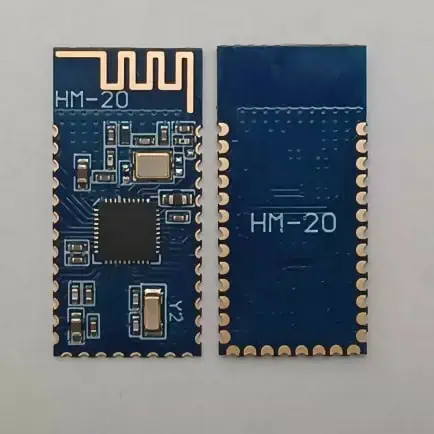
RayMing PCB HM-20 cc2340 BLE5.3 Bluetooth Module Transmission Compatible with Multi-point Links

RayMing PCB HM-20 cc2340 BLE5.3 Bluetooth Module Transmission Compatible with Multi-point Links

Original price was: $4.50.Current price is: $4.20.

Master-Slave Integration Remote Control Firmware Upgrade Command Rich

Category:
Tags:

Bluetooth Updates

The generation of a new or updated version of Bluetooth means that there was a previous version, which is an improved one. However, the updated version has to be compatible with various peripheral gadgets and be more efficient for it to earn the name “updated version.” BT 5.0 provides all this and more.

However, after upgrading to a gadget that supports BT 5.0, you might not notice the difference if all your BT accessories only support older BT versions. That is because BT tends to be backward compatible. Therefore, it will sync with older BT versions and still function but not to its full power. This is beneficial since you can continue utilizing your accessories even if they only support BT 4.0 until you purchase an updated version. However, when you connect accessories that function with BT 5.0 with your device (that also supports BT 5.0), you will feel the difference immediately.  

How much power does BT 5.0 have to offer?

FULL PCB MANUFACTURING Quote

Compared to the previous version (BT 4.2), Bluetooth 5.0 is more powerful, and it offers improved features such as:

  • Lower energy consumption
  • It is faster (doubles the speed of 4.2)
  • Its range is four times that of its predecessor
  • And finally, it can efficiently transfer up to 8 times more data

To put that in hard statistics, BT 5.0 offers a bandwidth of about 2 Mbps. With this bandwidth, BT 5.0 can offer reliable and fast wireless connections, leading to faster data uploading and firmware updates.

Moreover, due to the new range now hits about 800 feet (240 meters), which is a significant improvement from the previous range, which was only 200 feet. As a result, you can utilize your wireless headphones and speakers from a further distance from the source. However, barriers tend to affect BT signals slightly, but this is an excellent leap in BT technology. Due to this upgrade, you can now connect all intelligent home gadgets, for example, thermostats, smart fridges, and cameras, with much ease.

Moreover, due to how Bluetooth 5.0 is efficient in terms of utilizing channels of broadcasting on the famous 2.0 GHz band, this tech has paved the way for beacon-based, richer connectionless Bluetooth solutions. This means that you should expect more efficient wireless connectivity wherever you go, whether in a shopping center or a sports stadium.

Advanced Features of Bluetooth 5.0

Using Bluetooth 5.0, you can connect multiple headphones or speakers to a single source due to the Dual model update that came with this version. Moreover, if your gadgets bear all the proper functions, you can independently reduce or increase the volume of every headphone or speaker.

Moreover, using Bluetooth 5.0, you can stereo pair two speakers to play music seamlessly, with dedicated right and left channels. Using these features, you experience music like you are in another dimension.

Another feature that sets BT 5.0 apart from other BT versions is that it can detect and prevent interferences from close-by LTE bands. Due to this feature, you get to listen to music clearly with minimal interruptions.

When can you get BT 5.0?

Bluetooth 5.0 is already on the market today. Multiple gadgets, for example, most android smartphones, support Bluetooth 5.0. However, even after purchasing Bluetooth 5.0-enabled smartphones, you will still need BT 5.0-enabled peripheral gadgets. However, these gadgets are not widespread as of 2022, but multiple manufacturers are working on producing these gadgets tirelessly.

For iPhone users, you can gain a better experience through the AirPods, which are Apple’s gadgets. Moreover, you can also choose to go with the beast headphones because they also work seamlessly with BT 5.0 due to the new W1 chip. Additionally, if you decide to go with third-party BT headphones rather than purchase Apple’s own BT gadgets, you can still gain a great experience with your iPhone.

Upgrading Tips

As far as upgrading is concerned, you might find it hard to upgrade all your gadget at once, it is not advisable. However, having Bluetooth 5.0-enabled gadgets, such as a laptop or smartphone, will help you a lot in the long run. That is because after attaining this device, you can purchase other peripherals, for example, a BT-5.0 enabled mouse or keyboard, one by one. Moreover, since Bluetooth is getting more powerful and reliable each day, consistently making your purchases will ensure you get the best out of BT 5.0.

Bluetooth 5.0 Programs

The Bluetooth 5.0 standard is to be implemented in the following programs:

Peripherals

Technicians have found means to integrate BT 5.0 into various peripherals that include:

  • Printer
  • Headsets
  • Mouse
  • Keyboards (wireless)

Wireless speakers

Moreover, specialists have found a way to integrate Bluetooth capabilities into car sound programs and wireless speakers. Doing so has aided the advancements of hands-free pairing with mobile phones.

VR and AR

As of the 21st century, VR (Virtual Reality) and AR (Augmented Reality) have become a hit. As a result, most people now want to be immersed in the 3D world. And to make this experience even better, technicians have made BT 5.0 compatible with these two trending technologies.

Health Monitory Gadgets

Health is an essential aspect of the world that we live in, and hence companies are trying to find ways to synchronize tech into health to improve our livelihood. One way that manufacturers have made use of this concept is by the introduction of physical and sports fitness monitoring software and gadgets. Moreover, BT-5.0 tends to be a crucial element in this area. Hence it will be heavily utilized to manufacture these gadgets.

Health Care

Bluetooth 5.0 will also be integrated into the healthcare system. Doing so is predicted to make operations more seamless in many medical facilities.

IoT gadgets

Bluetooth 5.0 is also integrated into IoT gadgets. Due to this integration, and the bandwidth BT 5.0, you can easily monitor and control various smart home gadgets with ease. Moreover, you can also synchronize them.

Advantages of Bluetooth 5.0
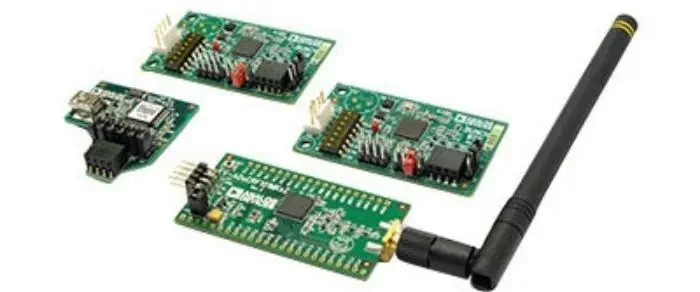
Bluetooth 5 PCBa

Improved Internet of things platforms

Improved connectivity, speed, and other positive features of Bluetooth 5.0 have significantly boosted the IoT industry. In addition, the range factor, to be specific, has taken IoT gadgets to another level.

Omnipresent Connectivity

Bluetooth 5.0 allows for omnipresent connectivity where multiple wireless gadgets can function in a single area. This could have been an issue when using earlier versions due to disruptions from colliding signals, destabilizing connectivity, and subsequently furnishing poor connection.

Improvements in Location-awareness

Every Bluetooth cell tower has a fixed location with known sets of accurate coordinates. Manufacturers take advantage of this BT 5 feature to gain a user’s specific location. They can then utilize this information to offer clients a personalized experience. Moreover, since most people place their BT gadgets close to their phones, they can easily track down their devices using this feature.

The Surge in Advert Packets

The BT pairing action that occurs before you connect two or more gadgets has become more reliable, stable, faster, and stronger with BT 5.0 due to a boost in the number of advert packets. When connecting to a new device, the advert packets ask for the device’s name before connecting to it, and therefore it boosts the tech’s reliability quotient.

Disadvantages of Bluetooth 5.0

 Even though BT 5.0 is pretty efficient in terms of operations, it still has some cons that you should consider before integrating it into your system.

Power Consumption

Though, on average, BT 5.0 consume less power than its predecessor, that does not eliminate the fact that it still drains your battery. When you enable Bluetooth on your gadget, it scans for BT signals continually, looking for devices to connect. During this scanning period, Bluetooth uses up a lot of energy, automatically draining your smartphone battery.

Weak Security

Compared to Wireless Fidelity (Wi-Fi) and other more advanced wireless data transmission standards, Bluetooth has weak security. And considering that Bluetooth is used in IoT gadgets such as security cameras and hospital management systems, this is a crucial disadvantage.

BT 5.0 Control Board

Though BT 5.0 is efficient, it must come with a corresponding BT 5.0-enabled PCB to function.

What is a Control Board?

A control board or a Printed Circuit Board is an electronic gadget that utilizes copper conductors or tracks to generate electrical connections between various electrical components. PCBs provide sufficient mechanical and electrical support to various electrical components, which helps technicians mount devices in enclosed tiny areas.

A PCB board design must align with specific manufacturing guidelines to produce a functional PCB. Moreover, the design has to integrate circuit packaging and the bared board’s structure.

Conductive features that you can find on a PCB include:

  • Conductive planes
  • Pads
  • Copper traces

Moreover, the board’s mechanical structure tends to encompass insulating elements laminated between conductor layers. At the end stages of the manufacturing process of a PCB, the board’s structure is platted and then it is covered using solder mask (non-conductive). To top off the board’s design and create a place to write content onto the board, the manufacturer then adds a silk screen as the top layer of the board.

To generate a PCB, manufacturers pass a copper plate through a process known as fabrication. During this process, technicians undertake the following steps to create a PCB:

Laser imaging

Before technicians work on the PCB, they have to mark the areas that will eventually become the metal ground, pads, and traces of the board on the copper plate. To do so, they utilize a mechanism known as laser imaging.

Etching

Etching involves removing excess or unwanted copper from the inner layer of the copper plate. Doing so reveals pads and traces on the copper plate, and now the board starts to look like a Printed Circuit Board.

Layer Stacking

The following fabrication process involves stacking various PCB layers according to the design and then laminating them via pressing and heating. At this point, manufacturers separate the PCB fabrication process for PCB according to how many layers they have since a board with more layers requires more attention.

Drilling

At this stage, technicians utilize specialized equipment and computer programs to drill tiny holes (VIAs) onto the board. These holes are crucial since they are the holes that technicians use to mount various components onto the board.

Plating

Bluetooth 5 audio PCBa

The next phase of the fabrication process involves platting the vias and pin holes of the PCB. Doing so makes the PCB more efficient.

Protective Coating

The technicians add a protective coating to the solder masking or surface finish at this stage. Doing so protects the PCB against external contaminants. Moreover, it makes the board more durable.

Silkscreen Printing

Silkscreen Printing involves adding a silkscreen layer onto the control board and then using this layer to add writing to the board. Inscriptions that you can find on this layer include:

  • Logos
  • Polarity indicators
  • The board serial number
  • Manufacturing Company

Surface Finish (optional)

In some cases, technicians might decide to add a finish to the copper areas. Doing so will boost the durability of the control board but at a cost.

And that is the control board manufacturing process.

However, although this process seems simple, it gets complex when you add new variables, such as the Bluetooth 5.0 variable. Therefore, most manufacturers are struggling to adjust to this new technology. However, some companies are already there, ready to make your project a reality. These companies include Rayming, a PCB manufacturing company that has been in the industry for a couple of years.

Rayming Support to the Bluetooth 5.0 PCB industry

Rayming is a Chinese PCB manufacturing company that provides complete Printed Circuit Board assembly services. Moreover, the company has been in the industry for over 15 years. Therefore, it has a lot of experience when it comes to PCB assembly.

Rayming provides the latest control board manufacturing technologies, which helps them major in complex areas such as the production of BT 5.0-enabled circuit boards. Moreover, their cutting-edge technology helps them develop high-quality PCBs at affordable prices.

Rayming BT PCBs

BT PCBs produced by Rayming provide highly economical, low-power consumption BT radio that you can utilize to add wireless capabilities to your gadget. Moreover, the on-BT Printed Circuit Board module supports multi-interface protocols; hence it is pretty easy to use.

Through years of experience, Rayming has developed a way to carefully design BT PCBs to cater to your needs. Moreover, they have found means to add a new feature that allows you to connect a USB-UART board to your PCB and control it via your personal computer as a standalone BT device without having to utilize a microcontroller.

Through these advances, Rayming has supported the BT industry tremendously. But moreover, their support does not end at that point.

How to generate Bluetooth Control Boards Rayming Style

Generating a new BT product or any wireless gadget can be a great hassle to many people, especially the inexperienced. The reason behind this is mainly because of the effort that has to go into developing a Printed Circuit Board layout that can support radio frequency transmission. Therefore, if you nail this section, you are probably good at generating a BT 5.0-enabled PCB. Fortunately, when working with a BLE microchip, you will find that most circuitry related to RF is internal. Therefore, when working with this microchip, all you have to worry about is the antenna layout.

Using this tactic, you can quickly produce your BT-enabled PCB board at home. However, for optimum results, you can still create the board using Rayming.

Control Board Manufacturing Services that you can find in Rayming

If you seek to produce your Bluetooth PCB via Rayming, then here are the services that you will enjoy:

For Turnkey PCB assembly, Rayming handles the entire PCB assembly process, which includes manufacturing the circuit board, procuring materials and components, PCB assembly testing, final assembly, and continuous board monitoring for quality assessment purposes.

On the other hand, for the partial turnkey assembly service, the customer provides specific components to the company, and then Raymond handles the remaining production process.

Certifications and Qualifications

Other than being pretty versed in the control board manufacturing industry and having the ability to produce BT-enabled PCBs, Rayming has the following certifications:

  • The company is ISO9001 โ€“ certified
  • Moreover, it is also IPC-A-610 and IPC-A-600 compliant

Therefore, they make quality products each time.

Moreover, the organization has a well-developed printed circuit board manufacturing facility; hence it can process orders pretty fast. Moreover, Rayming has an entire team dedicated to procurements. Therefore, you can be sure that they will utilize the highest quality products in the market to produce your PCB.

Rayming has its headquarters in Shenzhen, China. However, it caters to orders from various countries, which include Canada, the USA, and so much more.

Therefore, if you have a project that requires a BT-5.0-enabled PCB, then Rayming PCB might help you out.

Conclusion

The Bluetooth standard has become a crucial element in the electronics industry. Almost every gadget you come into contact with bears Bluetooth functionalities ranging from fridges, cameras, smartphones, etc. Moreover, over time people have become fond of the wireless world, where you do not need earphones or headphones with cables. Most smartphone companies have eliminated the jack port people use to connect earphones to smartphones and left users to use Bluetooth as the only audio-out option. With this trend in the industry, you can predict that BTs will grow even more in popularity over time. Hence learning how to incorporate them into your project should help you take your device to another level. Moreover, learning about the manufacturer that can help you produce BT 5.0-enabled PCBs should save you a lot of
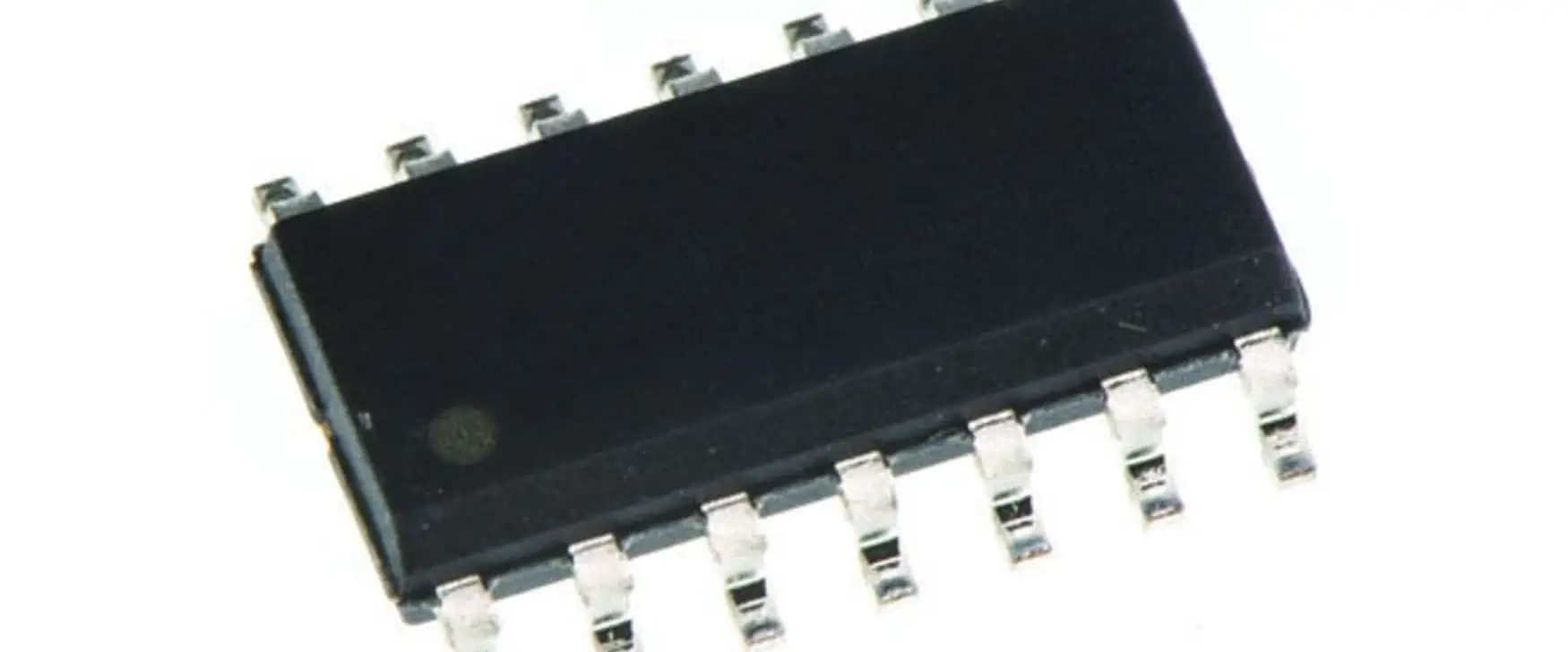
INA163UAE4: A Low-Noise Instrumentation Amplifier

INA163UAE4

Amplifiers can make a lot of noise depending on how they are optimized for the target applications. For the best user-experience, it is best to go for the optimization format that limits the extent of the noise it makes.

Using a low-noise amplifier like the INA163UAE4 is a starting point. It is a low-noise, low-distortion, instrumentation amplifier, designed to be used with the applications that require lower noise dissipations.

If you are looking to manufacture medical instruments, industrial or instrumental applications, using the INA163UAE4 will go a long way to reduce the noise dissipation from those devices.

What is a Low-Noise Instrumentation Amplifier?

The two keywords here are low-noise and instrumentation amplifier. An Instrumentation Amplifier or INA for short is a type of amplifier that makes the amplifier to be suitable for use with the applications in the test equipment and measurement markets.

The optimization for those applications is derived from the INAโ€™s outfitting with input buffer amplifiers. This outfitting allows the amplifier to function independently and not rely on the input impedance matching.

For the low-noise operation, the INA163UAE4 derives that from the extreme sensitive design that aids it to measure even the smallest of noise signals in noisy environments.

To even-out or balance the noise, the INA163UAE4 has to rejecting the voltages common to the two inputs, while highlighting the differences between the two as well.

Important Points about the Noise Impedance

FULL PCB MANUFACTURING Quote

Although INA163UAE4 is an Instrumentation Amplifier (INA) and as such, can reduce noise dissipation; there are also some clauses attached to how this works.

First, it provides low-source impedance for lower noise operations, especially via the delivery of a near-theoretical noise impedance with a source impedance of 200โ„ฆ.

The clause, however, is that the INA163UAE4 may be unable to deliver the highest levels of noise reduction because of the inability to functionally offer a greater noise performance above a 10kโ„ฆ source impedance.

Typical Applications

The typically-supported applications of the Instrumentation Application (INA) include but are not limited to medical, instrumentation and industrial applications.

When it comes to the INA163UAE4, the applications or use cases are even higher. For example, it can be used for the aforementioned applications, as well as for the professional microphone amplifier applications.

In this case, INA163UAE4 is optimized for the low-noise requirements of the applications by offering a combination of the differential input, the low-noise and the low-distortion. These three (3) factors contribute in making INA163UAE4 to be one of the superior-performing Instrumentation Amplifiers (INAs).

In addition to supporting the use in professional microphone applications, INA163UAE4 can also be used with some other audio applications. An example of this is the use in the high-level audio stages. To this end, INA163UAE4 is able to fit into the audio stage applications because of the combined functions of the following:

  • High output current drive
  • Wide supply voltage
  • Excellent output voltage swing

INA163UAE4 can also be used with the following applications:

  • Bridge transducer amplifiers
  • Moving-coil transducer amplifiers
  • Differential receivers

Choosing a Low-Noise Instrumentation Amplifier the Right Way

When we talk about a low-noise Instrumentation Amplifier (INA), we refer to the amplifiers that โ€œdonโ€™t make a lot of noiseโ€ but yet, they perform optimally.

If you are to choose an INA today, it would be worthwhile to consider some important factors. Here are the major things you want to check before making that buying decision:

1. What is the INAโ€™s Cost?

If an amplifier is to greatly reduce the noise dissipation, the chance is that it would cost more. However, you may be able to save up on costs if you are going for the Instrumentation Amplifier (INA) built with two Operational Amplifiers (Op-Amps).

However, the clause is that the gain for the INA must be greater (up to +6 dB) than the Op-Amps used in the amplifier.

2. The Target Applications

What type of device or application is the INA meant for? Ideally, as it is a low-noise amplifier, it also makes sense that it should be used with the low-noise applications.

The examples of noise-sensitive applications include but are not limited to:

  • Industrial applications
  • Medical applications
  • Instrumentation applications

You can also use the INA like the INA163UAE4 with the professional microphone preamplifiers, ECG (cardiac monitors), data logging systems, power monitoring applications and acoustic transducers.

The other supported applications are sensor conditioning, blood pressure monitors, modal vibration analysis tools and magnetic sensor conditioning tools.

3. The Source Resistance

The source resistance can help you choose an INA, because of the correlation to the noise coming from the amplifier.

For example, if the source resistance is greater than RH, and the current noise dominates, it would be worth it to use an Instrumentation Amplifier (INA) that has a lower current noise.

On the other hand, if the source resistance is less than RL, it is better to use an Instrumentation Amplifier (INA) that has a lower voltage noise, provided, of course, that the voltage noise dominates.

4. Consider the INAโ€™s Building Format

The process of building the Instrumentation Amplifier (INA) is also important. Commonly, the amplifier is built with either the precision resistors or the Operational Amplifiers (Op-Amps).

However, you can also find a couple of INAs built some other way. Companies like Texas Instruments, Maxim Integrated and Analog Devices take a lead in this area. They typically build the INAs in the form of an Integrated Circuit (IC).

The IC design allows for the real-time integration or addition of the INA to the target applications. Besides, it is also a great way to save up on space, especially when the target applications have a smaller circuit board footprint.

5. Be Certain of the Need

We already reeled out a list of the top applications that can be configured with an Instrumentation Amplifier (INA).

The next thing you want to do here is to be certain of the need of an INA in those applications. You want to start by confirming that the circuits of those applications or devices require both the short and the long-term stability and accuracy.

Another consideration to make here is the noise requirements, whereby those applications or systems often need to maintain the highest performance levels, even when they are operating in noisy environments.

Conclusion

Use the INA163UAE4 to highlight the performances of different high-end applications, especially where these applications need to keep up with these performance levels, despite being in between large common-mode voltages and noisy environments.

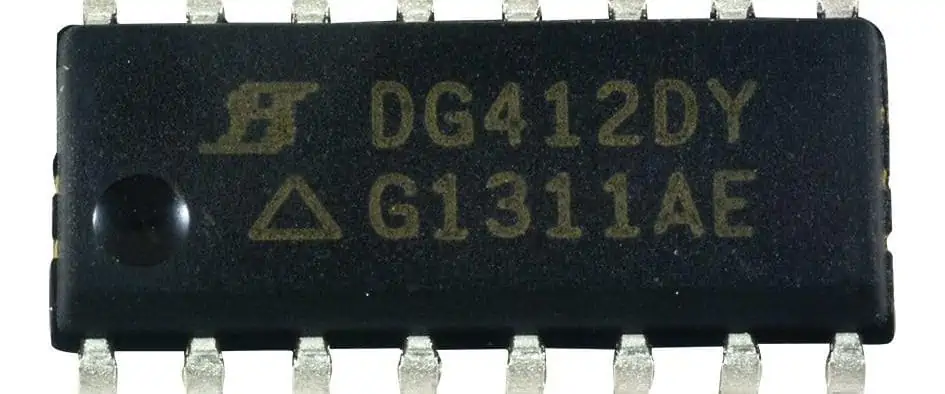
How to Use the DG412DY-E3 Analog Switch to Improve the Switching of Analog Signals

DG412DY-E3

The components, peripherals and other supported tools we use when working with an interface can make all the difference. When it comes to an analog switch, you have to be specific about what you are working with.

In this case, we have the DG412DY-E3 as one of the best analog switches you can work with. Not sure what an analog switch is? Continue reading this article to find out everything you need to know.

What is an Analog Switch?

Digi-Key defines an analog switch as a product used for โ€œinterconnecting or routing analog signals between multiple available signal paths.โ€

Texas Instruments adds that an analog switch is โ€œextensively used for switching audio signals in battery-powered applications.โ€

From the above definitions, we can take out the main keywords to be โ€œswitchingโ€ and โ€œanalog signals.โ€ The analog signals are also called the audio signals and if they are to be switched, it means that the path they are currently on might not be fully extensively. Therefore, the switching to other โ€œsignal pathsโ€ paves the way for these audio or analog signals to be extended to other places they are needed.

As Texas Instruments rightly pointed out, the signals are commonly spread or distributed to the battery-powered applications, such as mobile phones.

DG412DY-E3โ€™s Analog Switching Series

Different analog switches belong to specific families or series and they tend to inherit some of the attributes peculiar to those series.

DG412DY-E3 belongs to the DG411 monolithic quad series of analog switches. These series are designed to offer a combination of low-error-switching and high-speed signal switching for the precision analog signals.

When we talk about monolithic quad analog switches, we are also referring to the series of analog switches that have the different power switches added or integrated into the same microchip.

Besides, a monolithic analog switch is bidirectional, meaning that it can โ€œblock the voltages of both polarities and still activate the on and the off currents for either of the directions/polarities.โ€

The DG411 Series of Monolithic Quad Analog Switches Support Combined Functions

This series supports a combined functionality of most important metrics, such as the high-speed and low-power applications.

When combined with the bidirectional capabilities, the DG411 monolithic quad analog switch series helps to facilitate the optimization of these applications, even when they require the least power.

Fast-Switching Conduction

In addition to supporting fast-switching of tON: 110 nanoseconds (ns), DG412DY-E3 also supports excellent conduction. The conduction in this case refers to the individual switchโ€™s capability to conduct or work perfectly in each of the bi-directions.

Just like the switches can work well in both directions when they are turned on, that is also the same way they tend to block the input voltages when they are turned off. The blockage typically covers both the input voltages and the suppl levels of the switches.

Features of the DG412DY-E3 Analog Switch

Here are some of the core attributes we find impressive about this analog switch:

1. Error Signals

It makes sense that DG412DY-E3 has a feature in place to notify when the operations or functions are no longer moving on as they ought to.

The low signal errors and distortion feature helps to keep the digital circuit designers abreast of when the signals are low and when they are also distorted.

2. Wide Dynamic Range

The extent or range to which the DG412DY-E3 can be extended for the analog switching capabilities to be applied is wide enough.

3. Simple Interfacing

DG412DY-E3 is not like some other analog switch that tends to have a distorted or an unidealistic mapping. With the simple interfacing, it is easy to place the components where they are needed โ€“ and to make the relevant connections.

Product Attributes

Here are some of the attributes of the DG412DY-E3 analog switch:

AttributesDescriptions
Operating TemperatureBetween -40หšC and 85หšC
Multiplexer/Demultiplexer Circuit1:1
Voltage โ€“ Supply, Single (V+)5V to 44V
Charge Injection5pC
Switch CircuitSPST โ€“ NO
Current โ€“ Leakage (IS(off)) (Maximum)250pA
Maximum On-State Resistance350hm
Number of Circuits4
Switch Time (Ton, Toff) (Maximum)175ns and 145ns

DG412DY-E3โ€™s Monolithic Quad Analog Switching Capabilities

We want to talk about some of the common attributes or benefits of using the monolithic quad analog switching design offered by DG412DY-E3.

Here are the things you need to know:

4. It Helps Put Everything in a Chip

By default, a switching regulator, of which an analog switch is one of it, can be configured in two major ways โ€“ monolithically and through a controller. While both switching methods work excellently, consumers now prefer the former for some reasons.

With the monolithic form of switching an analog switch, it makes it possible for on-chip integration of the different supported power switches, such as the MOSFETs.

5. Monolithic Analog Switches Save Spaces

One of the design downsides to working with a controller for analog switching is that it wouldnโ€™t always be possible to integrate everything inside a single silicon chip. For example, the MOSFETs are typically manually-selected and that can take a lot of time.

Besides, the controller-based analog switching design doesnโ€™t save spaces as much as the monolithic design does.

With the former (controller-based process), the power semiconductors and other important interfaces are to be positioned separately. The reverse is the case with the monolithic design that saves spaces via the positioning of the monolithic analog switching regulator at the top of the board; leaving the ground floor for the controller.

6. The Target Applications are Huge

Generally, the DG412DY-E3 monolithic analog switching regulator is primarily used with the communication devices, wearable devices, sensors and a wide range of consumer electronics.

To buoy the operations of these applications, the regulator has through the monolithic design, allowed for the offering of the highest precision levels possible. This is offered by a combination of leakage current, parasitic capacitance and charge injection.

Conclusion

You can count on DG412DY-E3 as one of the reliable analog switching regulators to boost the transmission of analog/audio signals in the consumer electronics, communication devices and selected sensors.

How LT4363IMS-2#PBF Surge Suppression IC Protects Loads from Overvoltage

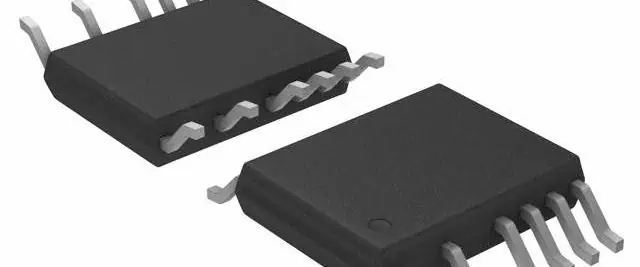
LT4363IMS-2#PBF

If you use an electronic device, one of things you want to look out for is the voltage rating. Depending on a number of factors, the device might go beyond the recommended voltage and that could pose a serious threat to the functionality.

However, you may be able to stop the damage from even happening if you are intentional with the device selection. Today, consumer electronics are equipped with surge suppression ICs. These are dedicated Integrated Circuits (ICs) or chops integrated or embedded into the electronic devices to help regulate the voltage.

If you are looking for one of the best out of the rest, we recommend LT4363IMS-2#PBF. It is a surge suppression IC with a current limit. It would be able to withstand higher voltages, thereby, protecting your consumer electronics the more.

How Surge Suppression ICs Work

These are dedicated ICs or electrical devices attached inside consumer electronics to aid the voltage regulation process. The integration of a surge suppression IC is a critical element that aids the fight against damaging devices when the current or power supply surges or increases astronomically.

Surge suppression ICs also belong to circuit protection ICs; a broader category of Integrated Circuits (ICs) designed to offer additional protection to electrical circuits, which are susceptible to hazards, such as static discharges.

What Makes LT4363IMS-2#PBF Unique?

FULL PCB MANUFACTURING Quote

No doubt, LT4363IMS-2#PBF is not the only surge suppression IC out there. However, it possesses some remarkable features, which come together to make it one of the most sought-after.

Below are some of the unique features of this surge protector:

1. Load protection from Higher Voltage Transients

One of the banes of consumer electronicsโ€™ voltage regulation is the inability to regulate even the highest of voltages. In that essence, it might be impossible to keep the surge suppressor active for the higher voltage surges.

LT4363IMS-2#PBF offers a higher voltage transient, in the sense that it keeps the loads safe. For example, the protector monitors the significant drop in voltage between the OUT and SNS pins. This regulation goes a long way to helping LT4363IMS-2#PBF figure out when the loads are dwindling, voltage-wise.

When the consumer electronics is overloaded, it is also in the place of LT4363IMS-2#PBF to keep the device functional. To do this, it first regulates or controls the gates of the external, N-Channel MOSFET. This regulation paves the way for the surge protector to regulate the output when the device is in overvoltage operation.

2. Reverse Input Protection

Although LT4363IMS-2#PBFโ€™s primary function is to work as a surge suppression IC; it can also perform other functions. Note that in terms of voltage regulation, it can be both ways. For example, the voltage might surge, leading to overvoltage. It might also drop significantly, thereby, leading to undervoltage.

Either way, the idea is that the voltage might not be favorable for the deviceโ€™s continual operations. Therefore, it makes sense to see that LT4363IMS-2#PBF uses a reverse input protection.

It is a protective mechanism in place to protect the target device or consumer electronic from undervoltage and overvoltage. For example, when the deviceโ€™s voltage is below the UV threshold, the external MOSFET wouldnโ€™t be allowed to turn on. Likewise, the MOSFET wouldnโ€™t be allowed to turn on if the input supply voltage exceeds the OV threshold.

For that to work perfectly, LT4363IMS-2#PBFโ€™s regulator mechanism, the use of two (2) precision comparators is required. These comparators help to monitor and keep an eye on the potentials or supply voltage values of the Undervoltage (UV) and the Overvoltage (OV) conditions.

3. Excellent Fault Detection and Management

LT4363IMS-2#PBF detects faults in the voltage process and manages the same effectively. For example, when the consumer electronic is subjected to overvoltage, the IC tends to limit the output to a safe value, until the loads become functional.

The voltage regulation is also added by a timer, which is inversely proportional to the MOSFET stress. The idea is to turn off the MOSFET, only after it has been confirmed that the FLT pins โ€œpulled lowโ€; a form of confirmation that the Overvoltage (OV) condition persists.

4. Higher Overvoltage Resistance

LT4363IMS-2#PBFโ€™s surge suppression IC withstands the consumer electronics from suffering much damage due to overvoltage. To make this work perfectly, it uses a higher overvoltage resistance; capable of resisting up to 100 volts with the VCCย Clamp.

LT4363IMS-2#PBF Attributes

Here are some of the attributes of this surge suppression IC:

AttributesDescription
Voltage โ€“ WorkingBetween 4 volts and 80 volts
Voltage โ€“ Clamping272V Adj
Mounting TypeSurface-mount
Type of Technology UsedExternal Switch
Case/Package12-TSSOP
Number of Circuits1

LT4363IMS-2#PBFโ€™s Pins

LT4363IMS-2#PBF supports up to ten (10) pins, with each of these contributing to the ICโ€™s functionalities. These are some of the pins and how they function:

5. TMR

The full name is Fault Timer Input. It helps to detect or find out the faults on time. For excellent performance, the TMR pin has to be connected to the via a capacitor to establish a connection between the ground and the pin.

The core functions include setting the times for:

  • Cool down periods
  • Early fault warning
  • Fault turn-off

6. SHDN

This is the Shutdown Control Input. It is a dedicated pin for shutting down the device and putting it in a low-current mode.

Upon activation, the SHDN pin keeps the device function, rather than exposing it to overcurrent. It needs to be enabled to a threshold of 0.4V to function optimally.

Note that the part or device can be turned back on from the low-current mode if the SHDN pin is pulled above 2.1 volts. Doing that allows the internal current source to turn the part on.

7. FB

It is called the Voltage Regulator Feedback Input. It is a critical pin that helps the device to underscore the current voltage supply.

The FB is to be connected to the center tap of the resistive divider, which is further connected between the Ground (GND) and the OUT pin.

The other supported pins are:

  • Open Collector Fault Output (FLT)
  • Current Sense Output (SNS)
  • Undervoltage Comparator Input (UV)
  • N-Channel MOSFET Gate Drive Output (GATE)
  • Overvoltage Comparator Input (OV)
  • Positive Supply Voltage Input (VCC)
  • Output Voltage Sense Input (OUT)
  • Device Ground (GND)

Conclusion

You need a consumer electronics assuring of the highest performances? Think of the one that integrates the LT4363IMS-2#PBF; a robust surge suppression IC capable of withstanding up to 100 volts of current surges.

CYUSB3014-BZXC: A SuperSpeed USB Controller

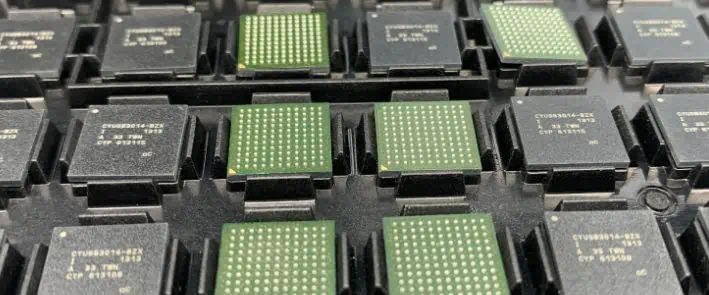
CYUSB3014-BZXC

Do you know that USBs can be used to optimize how a controller or semiconductor device works? Thatโ€™s right and we have an example with the CYUSB3014-BZXC. It is a SuperSpeed USB Controller, designed to help accelerate the integration of USBs in different applications.

Read this article from start to finish to find out how it all works.

The Function of a USB Host Controller?

Infineon Technologies manufacture CYUSB3014-BZXC. It is a Universal Serial Bus (USB) Host Controller. Like the other USB Host Controllers, it works by coordinating how the different peripheral devices connect to the main system or a circuit.

The function of a USB Host Controller also includes helping a computer system to โ€œrecognizeโ€ or discover a Universal Serial Bus (USB) that has been attached to the system.

The controller also helps in the establishing of communication or connection (especially as it relates to data transfer) between the USB device and the computerโ€™s operating system.

CYUSB3014-BZXC is Based on the EZ-USB FX3

FULL PCB MANUFACTURING Quote

At the core of CYUSB3014-BZXCโ€™s functionality is the basis on the EZ-USB FX3, a family of Universal Serial Buses (USBs) designed for use with the SuperSpeed design. Worthy of mentioning is that the SuperSpeed is in line with the upgraded USB 3.0. specifications that provide for up to 5 Gigabytes per second (Gbps) signaling rate.

Released in 2008, the USB 3.0. specifications paved the way for the introduction of faster speed technologies, such as the SuperSpeed into how USBs are to be configured for mainstream use.

The SuperSpeed Peripheral Controller

CYUSB3014-BZXC leverages the basis of the SuperSpeed architecture as a peripheral controller to bolster the connection to other peripherals and devices.

In this regard, it provides a wide range of peripherals and โ€œcommunication devicesโ€ for this connection to work.

It is pertinent to point out here that the basis on the SuperSpeed Peripheral Controller is also a medium for CYUSB3014-BZXC to provide a combination of flexible and integrated features to the devices that would be connected via a Universal Serial Bus (USB).

Creating USB Connections via the GPIF II

For the connections via USB to made successfully, there has to be an element to fast-track it. The SuperSpeed model does a great job but a bulk of the function is left to the GPIF II.

The full name is General Programmable Interface. As the name signifies, it is to be used for a wide range of functions, including device connections and the support for up to 16 control signals.

The General Programmable Interface (GPIF II) works best with a dedicated software called the GPIF II Designer. The software first allows for the configuration of the GPIF II to align with the workings of the USB 3.0. Device Controller and the EZ-USB FX3.

The following are the additional benefits of CYUSB3014-BZXCโ€™s GPIF II Designer:

1. It Supports the GPIF II Interface Development Process

The process of configuring the GPIF II for maximum productivity typically requires optimizing it with the GPIF II Designer. To this end, the designer has been optimized to allow for the GPIF IIโ€™s interface development process to be seamless.

It involves a three-step process, starting with the user-selecting of the standard parameters and the pin configurations. The next step would be the use of set of configurable actions to make a virtual state machine. Finally, the users have to go through the view output timing to confirm that they match the expected timing before compiling and integrating the GPIF II interface with the EZ-USB FX3.

2. CYUSB3014-BZXC Supports USB 2.0. Integration

Although it is a USB 3.0. architecture, the EZ-USB FX3 also supports the integration of the USB 2.0. OTG. This integration comes in handy when there is a need for the USB 3.0. is to be used for dual functions.

For example, the USB 2.0. OTG can be used when the EZ-USB FX3 is to function either as an OTG Host to the HID-class or to the MSC devices.

CYUSB3014-BZXC Supports Glueless Connectivity

CYUSB3014-BZXC, through the EZ-USB FX3 architecture, provides a โ€œglueless connectivityโ€ option that allows for its integration with several devices. For example, it can be connected to the following interfaces:

  • Parallel ATA
  • Asynchronous SRAM
  • Asynchronous and Synchronous address data multiplexed interfaces

Overvoltage Protection

Scaling the USB connection to other interfaces is one part of how CYUSB3014-BZXC functions. The other part, which is derived from the EZ-USB FX3, involves the protection of the device from overvoltage situations.

In this case, it activates the overvoltage protection when the input voltage goes up to 9 Volts. For emphasis, the maximum input voltage for the EZ-USB FX3 is 6 Volts but the voltage on the VBUS pin can be extended to 9 Volts if a charger is used.

In this regard, the EZ-USB FX3 promptly activates the external Overvoltage Protection (OVP) to protect the CYUSB3014-BZXC from possible damages caused by the higher input voltage on the VBUS pin.

CYUSB3014-BZXCโ€™s Product Attributes

Represented in the table below, are some of the product attributes for the CYUSB3014-BZXC USB 3.0. Host Controller:

AttributesDescriptions
Mounting StyleSurface Mount Technology (SMT)
Typical ApplicationsSuperSpeed USB Peripheral Controller
Operating TemperatureBetween 0หšC and 70หšC
Type of Program MemoryExternal Program Memory
Voltage โ€“ SupplyBetween 1.15 volts and 1.25 volts
Supported InterfacesUSB, GPIF, I2C, UART, I2S and SPI
Number of I/O Pins60
Series of the Host ControllerCYUSB
RAM Size512K x 8

CYUSB3014-BZXC Supports Several Layers

Based on the specifications of the EZ-USB FX3, the CYUSB3014-BZXC supports up to three (3) layers on the USB 3.0. architecture. The supported layers include Protocol, Physical and Link.

The Link Layer helps to maintain a reliable communication or interfacing between the CYUSB3014-BZXC (the Host Controller) and the target device.

The Physical Layer is the โ€œPHYโ€ part of CYUSB3014-BZXCโ€™s port and the cable. It helps to connect the downstream and the upstream ports on the Host Controller.

The last layer, the Protocol Layer, is used to manage the communication rules between the CYUSB3014-BZXC (Host Controller) and the target device.

Final Words

CYUSB3014-BZXC is a unique USB 3.0. architecture that does not only support a full integration of the USB to multiple peripherals, but also offers several USB configuration solutions.

ATMEGA2560-16AU: An 8-Bit Microcontroller with In-System Programmable Flash

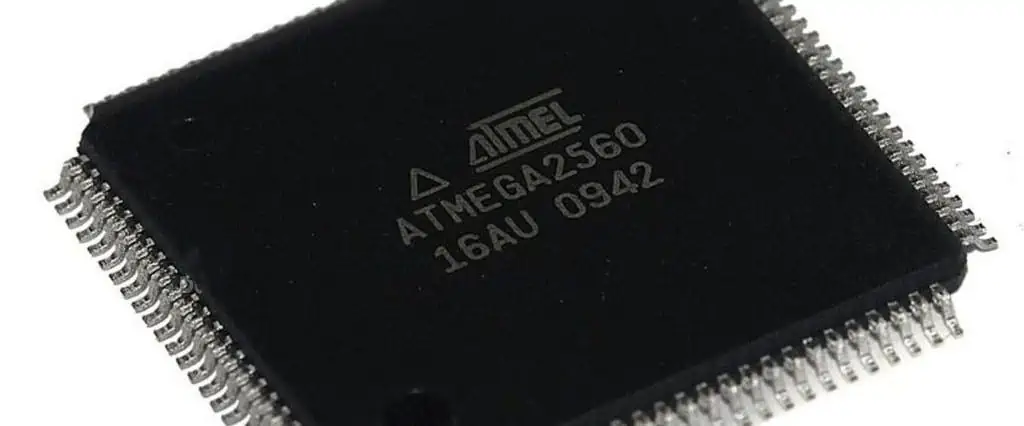
ATMEGA2560-16AU

ATMEGA2560-16AU isa low-power, yet high-performance Microcontroller (MCU). There is a notion that โ€œany MCU with low-power usage might not perform so well.โ€ It is the breaking of this stereotype and the provision of many unique features that sets ATMEGA2560-16AU apart from your โ€œeveryday Microcontroller.โ€

If you are interested in a Microcontroller (MCU) that offers the higher performances possible even though it consumes lower power, we will be pleased to refer you to the ATMEGA2560-16AU.

ATMEGA2560-16AU Depends on the Execution Process

Microcontrollers (MCUs) are used in consumer electronics with the intent of enabling the repetition of predefined series of tasks. That is also what the ATMEGA2560-16AU offers but with a clause โ€“ it has to be thorough with the execution.

The โ€œexecutionโ€ here refers to the deployment or application process of how ATMEGA2560-16AU functions. Typically, it involves the execution of โ€œpowerful instructions in a single clock cycle.โ€

Through this medium, ATMEGA2560-16AU achieves a higher throughput that can potentially attain 1 MIPS per Megahertz (MHz). This throughput also enables to achieve other important performance-centric processes, including a higher processing speed and a balanced power consumption.

ATMEGA2560-16AUโ€™s Memory Technology

FULL PCB MANUFACTURING Quote

A Microcontroller (MCU)โ€™s memory can either facilitate data transfer or inhibit the same. When you are working with the ATMEGA2560-16AU, the chances are that the memory processing process would be better.

The excellent memory technology used here is the high-density, non-volatile memory technology that seeks to offer a combination of excellent data transfer and data erasing.

The non-volatile memory technology is processed via the On-Chip ISP Flash. The Flash allows for the in-system programmability of ATMEGA2560-16AU by leveraging on the SPI Serial Interface. It is also the medium through which the MCU supports other memory configuration options, including the:

  • The memory optimization via an On-Chip Boot program that runs on the AVR core.
  • Support for the memory programming by the traditional method of using a conventional non-volatile memory programmer.

ATMEGA2560-16AU is not Short of Programming Tools

A Microcontroller (MCU) needs to be fine-tuned for the best results and for that purpose, it needs to have a suite of tools.

ATMEGA2560-16AU is not short of such tools. The AVR offered on most of the variants is supported with a full suite of system development and programming tools. Examples of these tools are:

  • Evaluation kits
  • C compilers
  • In-circuit emulators
  • Program simulators and debuggers
  • Macro assemblers

External Memory Interface Support

ATMEGA2560-16AU also has an external memory interface, which is the medium for โ€œcommunicating with the outside world.โ€

The external memory interface serves as the primary between the ATMEGA2560-16AU MCU and the selected peripherals and devices. The supported peripherals and devices are D/A, External SRAM, A/D, Flash, and LCD-display.

Besides the external connections established here, the external memory interface can also be used to minimize power consumption by enabling the bus keepers on the data lines. It also supports four (4) different wait-state settings, selectable number of bits dedicated to the address high byte and independent wait-state settings, which are used to configure the External Memory sectors.

The System Clock Settings

ATMEGA2560-16AU uses a set of principal clock systems, which are enabled on the AVR Microcontroller.

However, these clocks neednโ€™t function uniformly, as they do not necessarily need to be activated at the same time.

Instead, these clocks are to be effectively managed so they can offer the best clocking performances, albeit at the respective active times.

It is for this purpose that the ATMEGA2560-16AU has enabled different modules on the clocks to reduce current consumption by turning on the respective sleep modes when not in use.

The following are some of the supported clock modules:

1. I/O Clock

This is a clock dedicated to the Input and Output (I/O) modules, ranging from the USART, Timers, SPIs and Counters.

The I/O Clock is versatile and can therefore, be used by other devices. For example, the External Interrupt Module can use the I/O Clock to facilitate the interruption or halting of the different clock modules when necessary.

Despite the versatility with the aforementioned modules, the I/O Clock might not be used all the time. For example, it might be halted and yet, the start condition detection in the USI Module can still be asynchronously carried out.

2. ADC Clock

Noise is generated via the digital circuitry and that is not a cool feature for a working Microcontroller.

The noise can be tackled by the ADC Clock module, which oversees the halting of both the I/O and the CPU Clock.

Halting those clocks helps the ADC Clock to effectively reduce the noise generated via the digital circuitry. This in turn, translates to more accurate ADC conversion results.

3. CPU Clock

It is the primary clock on the ATMEGA2560-16AU. The CPU Clock, also called the clkCPU is designated to the core parts of the Microcontroller (MCU).

These core parts include but are not limited to the data memory holding the Stack Pointer, the General-Purpose Register File, and Status Register.

As the primary clock, the CPU Clock works hand-in-hand with the AVR core and a disconnection from that end could prevent the aforementioned core components from performing both the general calculations and the general operations.

4. Asynchronous Timer Clock

This is also called the clkASY clock. It is used for allowing a direct clocking of the Asynchronous Timer and Counter from an external 32kHz clock crystal or an external clock.

Noteworthy is that the Asynchronous Timer Clock has a dedicated clock domain, which allows for the Timer and Counter to be used as a real-time counter even when the target device is already on the sleep mode.

5. Flash Clock

The Flash Clock is also called the clkFLASH. It is the dedicated clock domain that controls the operations of ATMEGA2560-16AUโ€™s Flash.

For the best performance, the Flash Clock is often synchronized for an active working relationship with the CPU Clock.

Conclusion

ATMEGA2560-16AU supports a wide range of peripherals, including the Brown-Out Detect (BOD), which helps in highlighting the drop or dip in the ATMEGA2560-16AU Microcontroller (MCU)โ€™s voltage supply.

ATMEGA2560-16AU is one of the best MCUs you can use for multiple applications and for the best results, consider reoptimizing the clocks and programming tools to fit into the device requirements.

What Are SMT Contract Manufacturing And Its Benefits?

Surface Mounted Components

Some of the companies don’t have enough assets to manage their entire operations and different services. Due to this fact, these companies need external help to manage important operations, which are crucial for their survival in the market. The process of fabrication of the materials and gear used in the industry is important in this regard. These companies can be food processing agencies, regular breweries, and others that need facilities like contract manufacturing to pursue their operations which include the fabrication of the materials or requisite equipment. 

What Is Surface Mount Technology SMT Contract Manufacturing?

The companies that provide services of contract manufacturing to other brands and enterprises like those mentioned above produce the necessary equipment for them. The contract manufacturing process helps both parties with different factors. Those companies that need this service get a fully prepared invoice or quotation from the service providers to help clients make wise and suitable decisions.

These companies have to guide the contract producers for all of the details and requirements of the products they need. Then, the contract manufacturers will produce the exact equipment for the clients. The products can be anything from raw materials to the gear needed for the smooth flow of operations.ย 

What Is SMT Manufacturing?

Surface Mount Technology is a process that attaches the circuit counterparts on the printed circuit boards. These parts need to be attached to the top surface of the printed circuit boards. There are many phases of this process. The first step is to apply the solder paste to these counterparts. Then these parts are fixed on the circuit boards.

This is called mounting. After this step, the solder joints is melted with a hot iron rod or an iron bar. There is also a step of inspection included in the process that ensures the quality of these counterparts and their functioning. There are different companies that specialize in surface mount technology and its implementation in different domains and fields related to electronic appliances. The factor of prototyping is also important for this process which expedites the process and also rules out the faulty aspects in the designs. 

How Does SMT Contract Manufacturing Work in electronics industry?

Surface mount technology is important for the domain of electronics and pertinent fields. It includes positioning the circuit parts on the upper surface of the circuits. It is a completely automated process and permits adjustments when needed in some cases as well.

Through this process, there are always more chances to produce the desired circuitry as per the needs of the clients. There are major benefits of this method that give it a fine edge over other techniques. Number one is that it only works with minor circuit parts.

These are easy to handle and do not need a large space. These are good in terms of connection densities. This method is important for managing intense circuit parts into smaller circuit boards. Due to this reason, those electronics that are smaller in size have become a major part of a layman’s life. The circuit boards that function on the surface mount technology are feasible when it comes to assembling them. These are also much cheaper than others. Compared to the through-hole technique, this is much more reliable and serves longer to clients.ย 

Example of Surface mount boards or electrical components manufacturing

The process of contract-based manufacturing is a hectic one, and a good example is enough to make it simpler and more perceivable to understand. 

For example, there is a company that now has a higher demand in the market than before. Its time for the company to escalate its production to meet the demand of the consumers. In this case, a viable conveyer mechanism is important for their survival. This will help the company to manage the increased demand for its products.

The team that handles the operations offers different proposals for this essential mechanism. They put forward a rough estimate in the form of an idea for an ideal system. The company brings this idea to a contract manufacturer to produce the exact conveyor system they want.

They sign a contract, in this case, for the production of a conveyer mechanism. The manufacturer starts working on the project, and it takes a few months for the delivery. It produces the conveyer mechanism with the help of steel and other raw materials and produces the project. After testing and inspection, it delivers the conveyer to the client. Now the manufacturer offers additional services like installation of the conveyer and inspects it for the last time before the client as well. 

Benefits of SMT CONTRACT MANUFACTURING and complete assembly processes

FULL PCB MANUFACTURING Quote

Below are some major benefits of the service, like contract management for clients in various domains.

1.     Skilled Fabrication and component placement

The only job of contract manufacturers is that they deliver the products to their clients. Production is the one factor that is of prime importance in this game. These producers not only gain experience in manufacturing but also train and hire workers to meet the expectations of the clients. In this way, they procure different benefits for their own good as well. The production needs to be of premium quality which is the sole asset for their survival and adulation in the market and among their clients. This is how fabrication is the most important benefit of contract manufacturing for both parties. 

2.     Save cost

Another benefit is that the process is cost-effective. These manufacturers offer affordable services to their clients, which are useful for them. The charges are much more reasonable as compared to other service providers. It also helps in the sustenance of the economy of a country.

These are also efficient in bulk production while maintaining the service charges as well. The clients also do not have to worry about the fabrication materials. The manufacturers handle everything on their own, which makes it a cost-oriented service for different clients.ย 

3.     Industrial Focus and SMT assembly process

The contract manufacturers offer more industrial focus in different ways. These companies only emphasize production as per the contract. They execute their raw materials and contacts onto the product, which needs to be delivered before the deadline. These services help clients not deviate from their business goals and other operations. 

4.     Quality Control

The quality control given by these manufacturers has no parallel. From the slightest to the biggest details, the manufacturers ensure that the quality of the products being manufactured is above the benchmark. The machinery that inspects these products for quality and analyzes them is crucial. Quality control also evaluates these products on the basis of their durability, safety, and efficiency performance.

Why does a company do SMT Printed Circuit Board Contract manufacturing? 

There are different factors due to which a company has to consider outsourcing. This is where contract manufacturers come into action. These factors can be time deficiency, lack of resources, and investment that influence the companies and make them take the help of outsourcing to contract manufacturers. Outsourcing always has huge advantages for a big company and helps in the smooth cash flow of the economy as well. 

Top Benefits Of Automated PCB Manufacturing And Assembly

Automated PCB Manufacturing

In most cases, the development of electronic devices is not possible without PCBs. As machinery and automation have improved, it has become simpler to create and build PCBs. When it came to assembling circuitry, the old method of manual assembly meant slow manufacturing. Besides this, the method provides less reliability. There are many sectors that could benefit from automating their PCB production processes. Some of the advantages of the assembly of PCB are below.

Components Of An Automated Printed Circuit Board Production Line

1.    Drill Through and Via Holes

Drilling for interconnects and through-hole elements is often the first stage in the circuit board manufacturing process. The step occurs after deburring and cleaning processes. A drilling machine is useful for this process. Because it can create holes as tiny as a hundred microns, or ten thousand times thinner than human hairs (which are approximately hundred and fifty microns in diameter). In order to switch between different dimension bits, this system does so mechanically.

2.    Photographic Mapping and Resistant Layering

Printed circuit board traces and copper fill sections form by printing a negative picture of the final copper onto a glass sheet. This is possible using the provided Gerber data. Both sides of the panel have a photoresist. The photoresist is a material that changes color in the light. The printed layer aligns with the bottom and top of the panel. It allows UV lights to be hard the photosensitive in empty spaces. To expose the copper beneath the uncured photoresist, subsequent processing involves washing away the former.

The electronic board is still a piece of a larger panel that may feature multiple layouts. Many stages of cleaning and inspection, including optical procedures, spread out during the course of printed circuit board production. It makes sure to catch and correct problems at the earliest feasible stages.

3.    Surface Treatments and Chemical Operations

FULL PCB MANUFACTURING Quote

The original foil strengthens and forms a conducting path. Conducting path is formed through hole connections and vias electroformed on PCBs. Copper-plated thicknesses are customizable per customer request. The entire process for consistent quality.

4.    HASL, Silk Screen, and Solder Mask for electronics manufacturing

To shield the copper lines on a printed circuit board, a liquid solder mask gets applied on both sides of the board. A translucent printed layer is then put on both sides of the boards before they get heated to a full state. Following the removal of the uncovered solder mask, a UV procedure becomes applicable. It hardens the uncovered solder mask, mimicking the prior photoresist procedure.

The silkscreen is a visible layer applied by a printing technique. It finds use for component labeling and identification. Finally, a method like HASL is used to prevent oxidation of the uncovered solder pads. The PCB’s ability to resist and conduct current flow must be verified. This is possible using flying leads probing inspection to verify proper functionality.

5.    Systematic Methods for Routing and Profile Creation

When all the PCBs on a screen get processed and validated. The internal characteristics of the boards get routed using a computer-controlled router. For example, the board’s profile and any features that aren’t via holes. It is not necessary for these to have a perfect right angle. Before this procedure, boards can alternatively be v-scored (sliced in a “v”). Although after delivery, consumers can disassemble modules.

6.    Wrap Up, Box Up, and Send

PCBs are ready to pack and dispatch to clients. After they have undergone final cleaning, testing to remove inspection and routing artifacts. The journey to this point is nothing short of miraculous.

Benefits of Automated PCB Assembly process and Manufacturing 

1.     Reduced Price

Saving money is a side benefit of using automated PCB fabrication. When it comes to assembling the electronic circuit before manufacturing. Many Surface Mount Technology manufacturers rely on proprietary technology. Carry out this to lessen the likelihood of glitches and lags. Developers of printed circuit boards (PCBs) can fix any design defects at this stage. This prevents problems in the final product. Mistakes like missing polarity markers and the wrong footprints can delay a project. Fewer workers require to complete the production because of the automated machinery. The cost of making PCBs for the manufacturer can go down as a result of these reductions.

2.     Human error is less likely to occur.

In order to assemble circuitry, one must pay close attention to every detail. This is becoming even more true as products become smaller and their parts decrease in size. This, in fact, can lead to higher mistake rates whenever human involvement is required. Inaccuracy is less likely now because the procedure is automatic. Automation not only speeds up fabrication but also saves money. It also decreases the potential for mistakes.

Assembly of printed circuit boards (PCBs) can be a finicky and challenging procedure. Assembly of circuit boards requires extreme precision. Components and circuit boards are getting smaller. It means more care is essential while soldering them together to avoid mistakes. Both humans and machines make mistakes. But, machines are significantly less prone to make mistakes when doing routine or delicate activities. In these conditions, automatic systems are more efficient and reliable than human workers. In conclusion, machines used in precise settings can help lessen the possibility of inaccuracy.

3.     Quick Product Production

The greater amount of time needed for hand assembly has a major effect on product creation times. Automation, on the other hand, allows for faster software development. This is because of the fact that you can finish other operations in parallel. Also, you are certain of the board’s delivery dates.

Because an automatic machine is there to perform a given operation consistently, electronic circuit precision and reliability can be consistently greater than human assembly. Since automation makes it possible to maintain the similarity of each board manufactured, you may anticipate superior products when working with an assembling service.

4.     Consistency

Due to the inherent error margins in hand-made circuit boards, consistency is problematic. But automation guarantees reliability and uniform quality every time.

5.     It’s ideal for mass production.

Automation facilitates mass manufacturing because it shortens production times and lowers production costs. And because reliability is already in, you know that even in bulk, quality standards will be met.

6.     Shortened Time to Market for New Products

There is no standard timeframe for a hand-assembled product because it depends on the circuit board. When there are other tasks in parallel, the time it takes to hand-make PCBs may not be worth it. By outsourcing to a PCB assembly firm that uses automated equipment, you can rest assured that your boards will arrive in perfect shape and get through multiple steps quickly and easily. Therefore, you will avoid wasting time and resources.

7.     Higher Degrees of Customization

Customization of products to meet individual needs is a side effect of the increased production flexibility made possible by automation. Electronic goods have typically been mass-produced to the same standard. Smart industries are expected to alter this.

The speed with which manufacturers of original equipment may create prototypes and, by extension, new products will also increase as a result of this increased adaptability.

Factors Influencing Commercial Custom Circuit Board Assembly

components manufacturers

Whether you are new to the PCB industry or are looking to improve your PCB manufacturing process, there are certain factors you should consider. These include surface-mount technology vs. through-hole technology, the dielectric constant, and loss tangent. These factors can significantly impact the production of commercial PCB assembly services.

Surface-mount technology vs. through-hole technology

A better understanding of surface mount technology vs. through-hole technology will help you optimize your PCB assembly capabilities. Instead, the process involves applying solder paste to a PCB stencil and placing components on the surface.

Although surface mount technology has several advantages, it can also have disadvantages. One disadvantage is that surface mount components are not as large as their through-hole counterparts. In addition, the process of mounting components is also time-consuming and requires more advanced equipment.

Through-hole technology helps to mount electronic components, but it can limit routing space on multilayer PCBs. Despite this disadvantage, it has been helpful for years in electronics manufacturing. It is also helpful for some products, such as connectors, which require strong mechanical bonds.

Although it is not as efficient as surface mount technology, it is still more efficient in certain situations. It is the best type of board assembly for high-volume productions. It can also be essential for prototypes and small-scale projects.

Composition

Through-hole components are made of metal and contain leads that go through drilled holes in the board. We solder the lead wires to a solder joint on the other side of the board. However, these leads take up much more space than surface-mount components.

Efficiency

Surface-mount components do not need drilled holes, which results in smaller and more efficient PCB assemblies. These components are also more compact, and we can apply them to both sides of a board. In addition, they have small lead diameters, which increases the amount of component density.

Speed

Surface-mount technology is also faster than through-hole technology. As a result, assembling components is faster, resulting in lower production costs. It also allows for the use of a higher pin count. Although each type of PCB assembly solutions has several advantages and disadvantages, the mixed assembly is considered the better choice.

Application

Surface-mount technology is more widely helpful in the electronics industry than through-hole technology. It is easier to mount electronic components and can save time and money.

Loss tangent

FULL PCB MANUFACTURING Quote

Besides the requisite copper and epoxy layers, a handful of other factors go into making a commercial custom circuit board. A savvy manufacturer knows that choosing the right material for the job requires carefully selecting the appropriate components and a bit of forethought on PCB assembly requirements. The dielectric insulator is no exception.

The best way to go about it is by choosing a material rated for a particular application based on cost, functionality, and performance. The result is an aesthetically pleasing product that translates to increased productivity and a reduction in overall cycle times. Of course, with the advent of the internet, there are many options for choosing the best component suppliers, but the adage is still true.

Shopping around for the best rates and service is a good idea. An excellent place to start is with your local distributor’s literature or online product catalog. In addition, a knowledgeable sales representative can be a valuable asset to your company’s bottom line.

A good design guide will also help select the right component for the job. One thing to remember is that a high-quality component will require the proper tooling and some elbow grease. This is a particularly critical consideration for high-frequency applications. An excellent place to start is with the most common materials in the PCB market, such as lead-free solder, nickel, and aluminum. Besides the common materials, we can engineer many advanced materials, such as dielectric composites and glass-filled materials, to produce designer dielectrics.

Dielectric constant

Printed circuit boards are the building blocks of industrial and consumer electronics. They consist of a non-conductive substrate layer between copper layers. Various materials help in PCB assemblies, which have numerous desirable properties. Among these properties, one of the most important is the dielectric constant.

This property is essential in high-frequency applications. If the dielectric constant is high, the signal propagation speed will be slower. Therefore, it is preferable to use a material with a stable dielectric constant for safe and effective operation.

Generally, a PCB’s dielectric constant depends on its embedded system’s frequency and the material’s properties. A dielectric material suitable for a high-frequency application must have high thermal and electrical conductivity and chemical resistance.

Material

For high-frequency applications, the best material to use is polyimide. It has excellent chemical and thermal properties and is flexible at high temperatures. However, it is expensive.

Polytetrafluoroethylene (PTFE) is another popular material for high-frequency boards. It is a synthetic polymer. PTFE has excellent properties for high-frequency circuit boards, but it is expensive. It is also challenging to etch in ferric chloride. It has a low dielectric loss and dissipation factor.

Another material to consider is polyethylene, which has excellent physical and electrical properties. However, it is mechanically soft and has poor solvent resistance. It is also challenging to clad.

Polyester is also a good material for high-frequency applications but is not ideal for microwave devices. It has a dielectric constant of 3.5 to 4.0 and a dissipation factor of 0.004 to 0.014 at megacycles. It is a good choice for high-speed circuit boards.

A third material, polyphenylene oxide, has a dielectric constant of 2.55. It is also challenging to etch in ferric chloride. In addition, it has a dissipation factor of 0.0009. It is also expensive and challenging to laminate. Nevertheless, it is usually helpful in single-sided consumer electronics. Its electrical properties are similar to those of Teflon fiberglass.

FR-4 is the most widely used material in PCB assemblies. It is an epoxy-compound material woven from glass fibers. It is considered the universal standard for PCBs.

PCB design

Several factors influence the cost of PCB assembly services. Among these are the type of components used, the materials used, and PCB assembly services.

An essential component of any PCB is the copper traces. Copper traces are necessary to establish connections between components. We form Copper traces by cutting copper from a solid metal sheet.

Another essential element of a PCB is the vias. Vias are conductive, copper-colored bands insulated from the board substrate material. The shape and location of traces affect the layout of a PCB. Vias can be single or multiple layers.

We should consider traces early in the design process. Traces that are too close together can cause problems with crosstalk. Too wide traces can increase the number of layers needed and the printed circuit board assembly size. Traces that are too thin can also cause problems.

We should place traces at right angles to avoid capacitance problems. This is especially true for high-speed signals. Traces that are too close together can result in shorts. Traces should also be in a way that reduces the risk of crosstalk.

Multilayer PCBs are also becoming more common. This design type allows for more routing options. They also can help to decrease printed circuit board length and increase component density. The design also allows for the separation of power and ground planes. This helps to manage power efficiently.

Cost

Another important factor influencing the cost of a commercial custom circuit board is the number of layers. Multilayer PCBs can also help to reduce EMI and improve signal frequencies.

Size

Other important factors influencing the cost of a commercial custom PCB are the size of the board, the type of components used, and the number of parts. In addition, component type and technology can influence the cost of a PCB.

PCB Manufacturing process

Lastly, the type of PCB board fabrication process is essential. For example, semi-additive processing is commonly helpful for multilayer printed circuit boards. This process is a good choice for components that are small in size because it allows for maximum component packing density.

Why Choose Prototype and Quickturn custom PCB assembly services

SMD Components

Choosing a PCB prototype and Quickturn PCB Assembly service can help reduce your costs while ensuring your product goes to market quickly. These services will also help you identify design and manufacturing problems before a full-production run. If you decide to hire a service provider, make sure that you choose a company that can deliver high-quality printed circuit boards in the shortest time possible. You should also ask about certifications and quality control.

Technology

Prototype PCB Assembly consists of state-of-the-art technology and materials. They are fireproof, waterproof, and anti-static. They are ideal for testing individual components and the function of a complete PCB design. This helps you catch design flaws, errors, and inefficiencies early in the PCB manufacturing process. Using a prototype can also reduce the time and money spent on redesigns and rework.

Affordability

Prototypes are also more affordable than standard production PCB assembly. The price of PCBs varies according to the PCB design, materials used, and production techniques. Also, the PCB’s packaging type can affect the final cost. For example, some printed circuit boards require double-sided plating, and other PCBs can have single or multiple layers. Different PCB assembly requirements vary with surface finishes. Some designs may need a model to illustrate how the product works. A visual model can also be used to check for visual mistakes.

Compatibility

Quick-turn PCB assembly services are perfect for a range of different PCB designs. These services provide quick turnaround time and high-quality circuit boards. They can deliver them within 48 to 72 hours, which is perfect for urgent projects. However, other quick-turn PCB assembly services on the market aren’t as reliable. So make sure to choose a PCB manufacturer that can deliver high-quality circuit boards in the fastest time possible. You should also ask about certifications, quality control, and certification processes.

Quality of commercial PCB assembly services

Getting a product to market is essential for generating revenue and staying ahead of the competition. However, having a design that has design problems can cost you a fortune. This is why choosing a PCB manufacturer that can provide high-quality prototypes and Quickturn PCB Assembly services is essential. This will help you to ensure that your project is successful.

Reduce errors

Prototypes are used throughout the design process, as they help to eliminate guesswork and help engineers and technicians test the functionality of a product. This allows them to catch errors early on and prevent costly rework later in production. Prototypes also enable quick variations of a design before a full production run. These changes can be costly and time-consuming, so having a prototype allows you to test multiple designs before making a final decision.

In addition to using prototypes to test the functionality of a product, manufacturers can also use them to identify defects and inefficiencies in their design. Prototypes can also be ideal for testing individual components and troubleshooting. They can also help to show a client how their product works, which reduces time spent explaining to customers how to use it.

MCP9808T-E/MS: A Digital Temperature Sensor for Consumer Electronics

MCP9808T-E MS

Have you ever passed by a car and its horn started blaring? It can be scary and you may have wondered why that happened. More often than not, the carโ€™s horn blares when it โ€œsensesโ€ that someone or an object is coming closer to it. The same scenario plays out when a vehicle is in motion and depending on the customization, it swerves a little to avoid a collision.

All those and many other examples go to prove how sensitive consumer electronics have become. Sensors are now a part and parcel of these products and you have to take note of how each of these sensors work. The temperature sensor is one of the most outstanding but that doesnโ€™t mean that there are no other options out there. We also have variants like the:

  • Position sensors
  • Force sensors
  • Strain gauges
  • Pressure sensors
  • Motion sensors
  • Radio Frequency (RF) sensors
  • Optical sensors
  • Ultrasonic sensors

What is a Temperature Sensor?

FULL PCB MANUFACTURING Quote

Generally, it is a type of sensor that โ€œsensesโ€ or takes note of the change in a consumer electronicsโ€™ device. However, there are more meaning to that and we will break those down.

A temperature sensor is a dedicated sensor that detects and measures the amount of coldness and heat that is generated in a consumer electronics. The idea of detecting these is to correlate the outcome to the predefined values to ensure that the current temperature is not below or above those values.

Once the detection is made, the temperature sensor typically releases the value in the form of a digital or analog output.

In addition, the digital temperature sensor is one of the most-used, because of the simplicity. According to Analog Devices Incorporated, a digital temperature sensor like MCP9808T-E/MS tends to have a feasible interface, which could be either the I2C interface or the Serial Peripheral Interface (SPI).

MCP9808T-E/MSโ€™s Maximum Accuracy

If there is one feature to look for in a digital temperature sensor, it has to be the accuracy of the signal. MCP9808T-E/MSโ€™s accuracy is maximum and can be typically projected up to ยฑ0.5หšC.

Although temperature sensors are noted for the limited range, that of MCP9808T-E/MS can go a long way to transmit the converted signals in good time. As per the information in the datasheet, it can convert temperatures between -20หšC and +100หšC to a digital word of ยฑ0.5หšC.

MCP9808T-E/MS Supports Multiple Interfaces

It is better for a digital temperature sensor to work in unison with other supported peripherals and interfaces, as that could facilitate the speed of temperature sensor. Therefore, we are delighted to see that MCP9808T-E/MS supports multiple interfaces.

This support is rendered via the industry-standard, 400 kHz, 2-wire, SMBus/I2C-compatible serial interface. This interface standard allows the sensor to establish connections of up to sixteen (16) sensors โ€“ and all these would be controlled with the same serial bus.

MCP9808T-E/MS is User-Programmable

Given the many options in the market today, most consumers prefer going for the electronics and related products that can be easily fixed. In that regard, we are looking at electronics that are flexible enough for these users.

In the same light, MCP9808T-E/MS has been configured along those lines. It has a wide range of user-programmable registers, which provide the much-needed flexibility for temperature sensing and conversion.

Here are some of the techniques involved:

1. User-Selectable Settings

The users are allowed to program and reprogram the MCP9808T-E/MS digital temperature sensor as per the specifications of each application. The user-programmable settings include the specifications of the temperature critical output limits and the temperature alert window.

The users, or the digital circuit designer, can also program the power options/settings, such as the low-power and the shutdown modes.

2. User-Programmable Temperature Limits

The temperature at which the MCP9808T-E/MS functions or operates is also another programmable setting offered. Here, the users get to program the sensor with the critical temperature and the temperature window limits.

How this plays out is that the MCP9808T-E/MS gives out an alert signal anytime the temperature changes beyond or goes above the specified boundary limits.

When that happens, the users have the option to reprogram or reset these limits, especially the alert output signal polarity. It is up to the users to either set the polarity as an active-high or an active-low comparator output if it were to be used for the thermostatโ€™s operation.

Otherwise, it would be a great idea to reset the polarity to temperature alert interrupt inputย if it is for the microprocessor-based systems.

MCP9808T-E/MSโ€™s Pins

MCP9808T-E/MS supports up to five (5) pin configurations and each of those pins are optimized to work in a certain way.

Here are some of them:

  • Power Pin: Also known as the VDD pin, the power pin is the primary pin that powers the MCP9808T-E/MS digital temperature sensor. For accurate performance, it is to be connected in line with the operating voltage range specified in the DC.
  • Serial Data Line: It is also known as the SDA. The Serial Data Line is the pin configuration that serves as a bidirectional input and output pin. It works best with a pull-up resistor and is primarily used to make a serial transmission/transfer of data to and from the host controller.
  • Temperature Alert, Open-Drain Output: This is MCP9808T-E/MSโ€™s Alert pin. It works by giving out a signal (alert) when the predefined temperature value or ambient range of the MCP9808T-E/MS goes beyond the original value.
  • Serial Clock Line: Clock performance is also required for a digital temperature sensor to work accurately. MCP9808T-E/MSโ€™s clocking is regulated by the Serial Clock Line (SCL). Either of the master controller or the host controller located in the serial bus generate the clock. The Serial Clock Line (SCL)โ€™s primary function is to make the timing and communication of the digital temperature sensor to be relative to the signal in the pin/line.

Final Words

MCP9808T-E/MS doubles as a local and digital temperature sensor type with a local sensing temperature of 125หšC, maximum. It has a 10-b resolution, supports up to 5.5 volts of supply voltage and includes a wide range of features, including shutdown mode, output switch, programmable resolution and programmable limit.