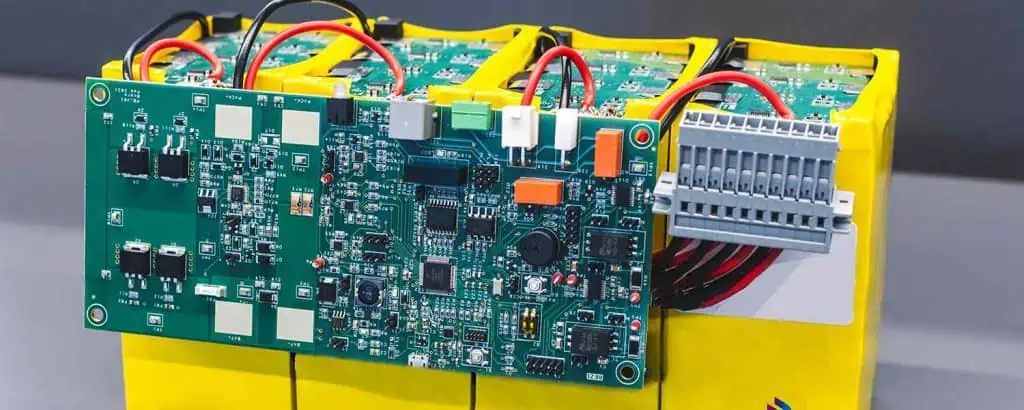
13 Best Electronic Design Company for You

motherboard pcb design

The designs of electronics are important if we are aiming for industrial-grade consumer electronics. Therefore, for this reason, you need to rely on an efficient electronic design service/company for your own good. There have been cases when buyers faced different problems regarding electronic designs due to bad choices of services.

There is no doubt that if you hire a reliable electronic design service/company, you will be able to procure different benefits in the long run. The production of electronics, prototyping, assembling, and maintenance becomes easier with accurate designs.

The role of an electronic design service/company proves to be crucial here since it can help producers meet the market trends and the latest electronic designs as well. 

What is an Electronic Design Company?

The sole purpose of an electronic design service/company is to leverage new technologies to develop the latest designs for consumer and industrial electronics. The electronic designs are critical because they have a seamless path for bulk electronics production and efficient and fast prototyping for the electronics as well.

An electronic design service/company relies on designing software for this purpose so that the design completion and testing can be done in an effortless way on all counts. A brand like this is able to communicate professionally with its clients to develop desired designs for electronics. These companies are able to develop designs of electronics that are used in technical domains like robotics, artificial intelligence, and automotive industries. 

Why consider an Electronic Design Company?
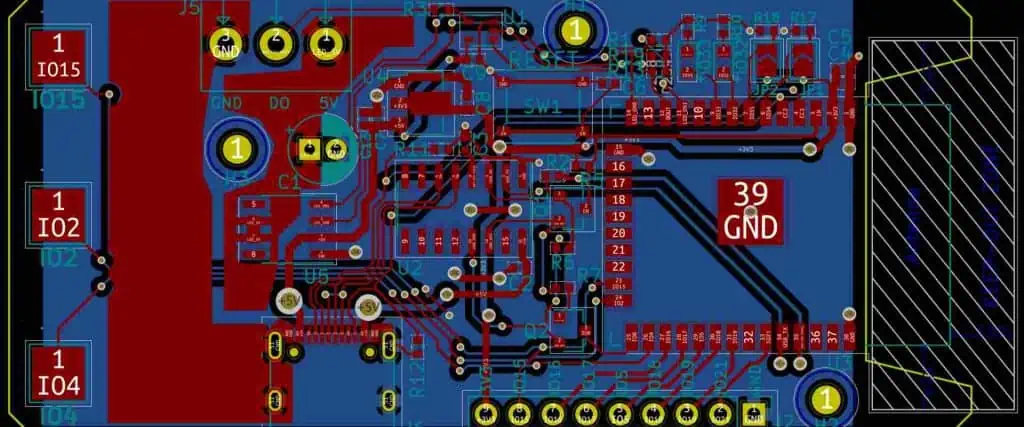
You might be thinking, why do you need to hire or consider an electronic design service/ company? Well, there can be many reasons for it. However, not every situation is the same for every customer. Some people want to rely on personal and customized electronic designs instead of hiring a company for them.

Experts believe that you need to see what you are looking for. After you have determined this, you can choose from both options easily. But hiring an electronic design service/company can help you with your problems in different ways. Letโ€™s see them below:

  • If you donโ€™t have many resources, you can consult a company like this.
  • In case your designs require rare and less accessible resources and materials, only an electronic design service/company can help you with this
  • You might not be able to tackle risks and concerns that might occur during the process.
  • You also might not have the proper knowledge and experience to handle electronic design development, which can complicate the process for you.

Top Electronic Design Companies 

1.    Green Circuits, USA.

Your first option to explore must be Green Circuits, USA. It is because they are one of the most appreciated and cherished electronic design developers in the region. They know all about the nitty-gritty of this field, so their experts can help you with your design requirements on all counts. Not just design development, they can easily provide you with other services like prototyping, production, and after-services like maintenance as well. Their designs prove to be handy for fields like healthcare, the automotive industry, and many others. 

2.    Integra Sources, Kazakhstan.

Next, we have Integra Sources, Kazakhstan. They are experts in design development by relying on the latest and highly advanced design software for this purpose. They have recruited highly skilled professionals in this regard. From turnkey designs to simple ones, they can do it all for you. You can easily rely on their designs if you are coming from the domains like IoTs, education, healthcare, media/entertainment, and automation. The customers of Integra Sources also get after-market services to ensure you are not having trouble with your electronics and designs. Plus, their associates will reach out as soon as possible to address your queries in time. 

3. eInfochips, USA, India.

Another good contender on this list is eInfochips, and currently, they are operating in the USA and India. They have been the most established electronic design service/company in these regions that are providing their customers with different types of electronic designs and engineering services. You can explore them based on their huge range of products listed on their website. From healthcare to the automotive industries, they have been successful in productive collaborations. 

1.    Corintech, UK.

The multitude of Cointech is not much impressive as compared to other companies, but still, we cannot further continue without mentioning their role as an electronic design service/company here. They have been able to form strong working relationships with their partners over the years through the successful delivery of electronic designs and providing other services. Their prototype is also useful for the development of electronics. They have contributed to the market by relying on their products and have also reeled in great sales in the last couple of years as well. 

5. Newmatik, Germany, Romania.

Newmatic is functional in Germany and Romania. It is a branch of ESO electronics. Basically, ESO is a contract electronics manufacturer that has been functional for many years. However, the company operates in Germany at its core. They are offering services like prototyping, development of PCBs, electronic design development, and also PCBS production, which is a piece of cake. They have a stellar portfolio, and their website houses different products offered by them. You can further check them out through their website, where they have mentioned all about them for your convenience. 

6. Softeq

We are going to discuss Softeq, which is functioning in different regions of the world, including Lithuania, Belarus, the UK, Germany, and the USA. They are experts in full-stack development, which means you can hire them for your software and hardware needs both. Being an electronic design service/company, their designs are applicable to different electronics used in multiple domains. They are solely into software and design development which makes it easier to hire them for their clients. 

7. Sierra Circuits

Sierra Circuits, which is operational in the USA, is a contributor to Silicon Valley. The services offered by them include quick-turn PCB development and medium production. Besides, you can also avail benefits from their impeccable electronic designs. Different industries are relying on the designs offered by Sierra Circuits today. 

8. Axonim

The next one is Axonim which has no parallel being an electronic design service/company in Lithuania. It is a full-range software and electronic design development company. Besides, you can hire them for optical device production, automated systems, and manufacturing drone equipment, including hardware and software for operating drones. Their products and services are also reliable for the sustenance of different fields like oil and gas and telecommunication. They have a huge partner base that they have successfully contributed over the years. 

9. Inelmatic Electronics

Inelmatic Electronics is a Chinese electronic design service/company. Their products and services are reliable for clients coming from the automotive, transportation, healthcare, and defense industries. They are also collaborating with established European companies to offer their services. They are experts in turnkey solutions and also offer flawless electronic designs to their clients. Their expertise further includes HMIs, touchscreen development, optical device production, and the development of the latest type of displays for electronics. 

10. AVL

We now have AVL, which is an Austrian electronic design service/company. You can avail of their services in terms of prototyping and design development for electronics. Their solutions for reducing carbon dioxide production are not only viable but also effective for application. The field of aviation and construction are both relying on AVL for their expertise and remarkable products. 

11. Mako Design

They are also a good option to look for in terms of electronic design development. They are supporting and collaborating with budding marketers and small-range companies to offer their services. You can even rely on their product engineering services to bring your ideas into reality. Another good thing about this company is that they always rely on the latest software and tech to improve their designs and services for the customers. 

12. Consonance

Consonance is a Polish company that is contributing to the progress of multiple fields through its services and products. They can be your number one medical equipment developer, and you can rely on their industrial-grade medical components for the improvement of medical equipment used in hospitals and clinics. They are also good with prototypes, so if you are looking for a multipurpose company, then Consonance can help you in this regard. 

13. Voler Systems

Voler Systems have attracted different clients and customers over the years by providing them with exceptional services and products. They are reliable in terms of electronics engineering so that you can bring your ideas regarding IoTs, and medical equipment development to reality. Their workers rely on the latest and tech-based sensors and wireless interfaces to give an edge to their products for their customers. Analog and catalog designing is also an area of expertise of Voler Systems. If you are looking for manufacturing preparation services, Filed programmable gate array development, then this company can be a good option for you. 

Benefits of Electronic Design Company

Many people out there feel dubious if they should hire an electronic design service/company or not. Sometimes you get stuck with such problems with the design development that only a professional service can provide you with its solution. So below, we will see how these companies can benefit you:

  • You can have your products manufactured and delivered in no time.
  • You can ensure flawless and industrial-grade quality electronic designs.
  • No matter where you are located, you can have your products delivered to your doorstep. 
  • These companies rely on the latest tech equipment that you personally cannot afford on your own
  • Advanced design software used by these companies provides you with exceptional electronic designs.
  • Sometimes you need to give an edge to your designs, and for this, you can hire an electronic design service/company for other services as well. 

Factors to Ponder while Choosing an Electronic Design Company

There is no doubt that some factors greatly help you with choosing a good and reliable electronic design service/company. So that you can save yourself from scammers and low-quality products plus, you can even save time with cheap services by completely evaluating your options. 

ยท       History & reputation

The first thing you need to look for is the service history and reputation. There are different ways that you can do it. You can even look up the internet to research your options. Plus, make sure to investigate more about these companies through expert opinions, and if you can, you can even meet these experts to have their honest review of your options. 

ยท       Collaborative approach 

The next factor that helps you rely on a good electronic design service/company is the collaborative approach. Are they available for you 24/7? Are they taking you and your requirements seriously? Can they meet your deadlines and provide quality products and services in emergency situations? How much of a collaborative approach they are aiming for matters a lot that sets a bad and a good electronic design service/company for you. 

ยท       Communication 

The third factor that you must pay attention to is communication and project management. Communication is all that you want to look for in an electronic design service/company. So that you can see if they are able to tackle your ideas and meet your requirements or not. Plus, how they can handle emergency situations through balanced professional client communication is also a distinguishing factor. Other than this, the project management of a company also shows how much they are into professionalism. There is no doubt that there are some companies that cannot handle the pressure and mess the projects up. Therefore if you are a buyer who always throws bulk projects to the company, then make sure to check them first or at least inquire about this from them to avoid future complications. 

ยท       Payment 

The last thing is the payment and service charges. For this, you can discuss their service charges and fee individually. How much you are going to pay depends on your requirements and needs. Some companies charge you differently for the same service. Therefore, in this case, you must go for the affordable option. But in case you have some expensive demands, then it is obvious that you would have to invest a big chunk of money in the company as well. 

Wrap Up!

RayPCB hopes that now you can easily choose from the above-mentioned companies to fulfill your electronic design development needs. The best part about these companies is that they are multirange, meaning you can hire them for other services as well other than electronic design development. A good electronic design service/company is one that does not abandon you at every step and unconditionally meets your requirements, and helps you with your ideas on all counts. Therefore, we have explained some of the contributing factors that can help you with choosing the right choice of company for yourself. 
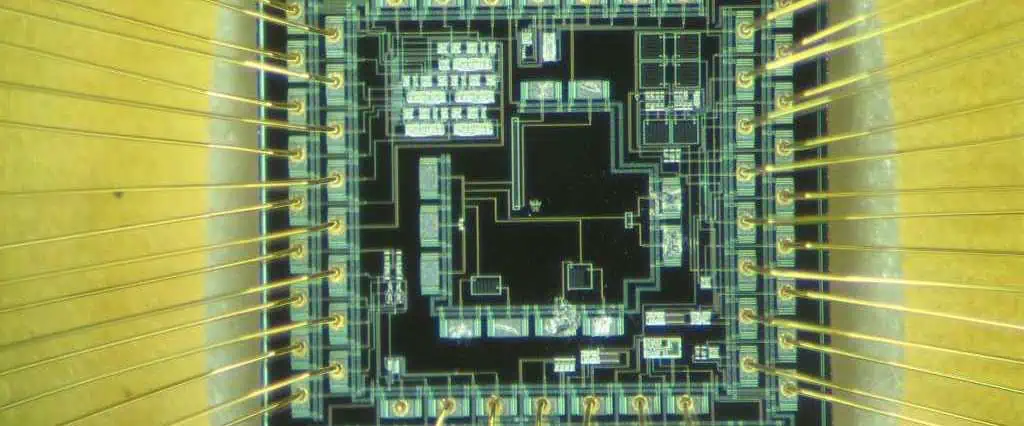
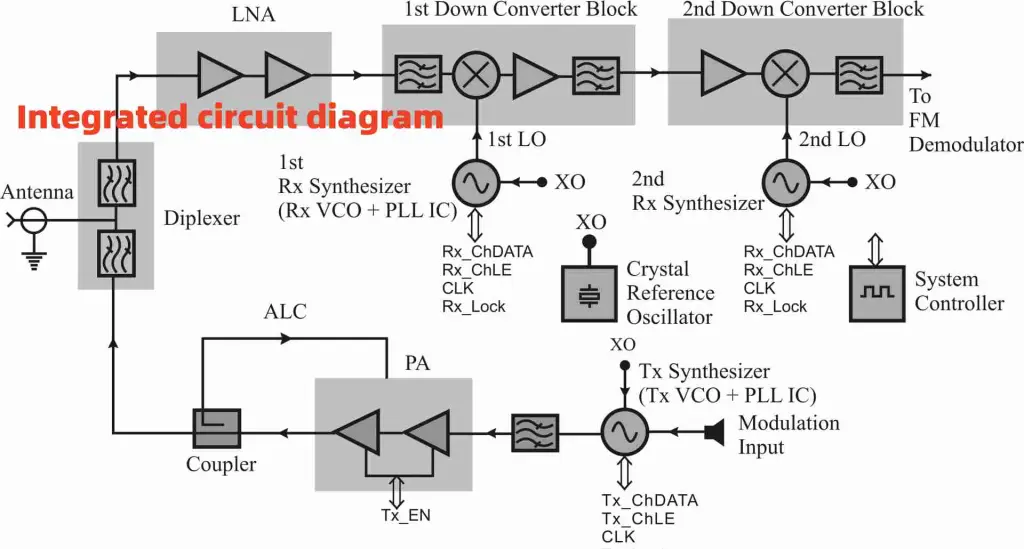
Is the Integrated Circuit Diagram Important?

integrated circuit diagram

Though there are lots of circuit diagrams out there, integral circuit diagrams are usually represented using symbols such as triangles, rectangles, and more. These circuit connections are conveniently placed all over the rectangle without any regard for the pinsโ€™ physical positioning. In the digital world of today, integrated circuits form the brain and heart of the majority of circuits.

The integrated circuit diagram is important. In each electronics project that you create, you will most probably find at least one integrated circuit. Therefore it is important that you have a deep understanding of them. With an integrated circuit diagram, you will have a detailed understanding of the way they work as well as their applications.

Continue reading this article to understanding ways for creating the integrated circuit diagram with free design features and templates

What Do Integrated Circuits Mean?

Majority of todayโ€™s entertainment tools, equipment, and gadgets integrate the integrated circuits which perform some functions, which makes users enjoy a fascinating experience. From the toddlersโ€™ toys to complex game studios present in the casinos, the hardware serves as the main component of our entertainment technology.

In addition, the integrated circuits can be described as circuits which could have many transistors as well as other circuit elements that are present on one die (this is a silicon piece which contains output and input devices and active devices. They are composed of some special materials referred to as semiconductors with gallium arsenide and silicon as the most common.

Also, its evolution is a huge milestone when talking about the history of todayโ€™s industry as it resulted in a revolution in the capability of computation as a result of the long trend in the density gains, performance, as well as cost with scaling. Fortunately, these circuits can be created making use of different technologies.

However, overtime, the CMOS technology is now the most prevalent and industry de-facto method chosen in the industry. Its main benefits over the remaining technologies include its easy integration of the circuit components as well as the low static consumption of power. This is the major technology utilized in the manufacturing of microcontrollers, analog-to-digital converters, microprocessors FPGAs (this is the integrated circuit which has different identical cells as well as programmable interconnections), and others utilized during the development of the entertainment hardware.

Also, its continual improvement has led to a reduction in the dame gadgets size, better performance, better battery management for devices that are battery-operated, cost and the hardware ergonomics.

Understanding the Integrated Circuit Diagram

integrated circuit Schematic

An integrated circuit diagram has to do with the operational amplifier, envelope detector, rheostat, capacitor, differential, amplifier, and other components. There are integrated circuits having at least two independent circuits, which share a power supply. IC features a complex layer of copper, semiconductor wagers, as well as other materials, which interconnects to create resistors, transistor, and other components inside a circuit.

Envelope detectors can be described as the one of the most important components of the inputs. This detector takes high-frequency signals as an input and then offers an output, which is the envelope of the original signal.

Op-amps

Op-amps work well for the amplification of direct current. Most times, they are utilized in filtering, signal conditioning, as well as other mathematical operations. In addition, it is a very important single device used in the analog electronic circuitries.

Differential amplifier

Amplifiers utilized in an integrated circuit diagram are of two types. These are differential amplifiers and operational amplifiers. Differential amplifiers help in the amplification of the difference in-between both input signals.

What are the Important Tips to look into during the Creation of the Integrated Circuit Diagram?

Creating an integrated circuit diagram should be easy if you have a deep and thorough understanding of the steps involved. Furthermore, there are some connections you must correct so as to prevent any possible breakage inside the circuit. You can consider the following tips during the integrated circuit diagram creation.

  • You should feed the RF input at the circuit or systemโ€™s input
  • The resistorsโ€™ value utilized inside the circuit has to be thoroughly marked
  • You must mark the diodesโ€™ negative and positive sides
  • The connections gotten from the diodesโ€™ negative and positive sides must be marked rightly inside your integrated circuit diagram

Tools for Integrated Circuit Diagram Creation

The creation of the integrated circuit diagram needs specially designed tools that can handle this workโ€™s unique requirements. There are different software packages that offer the required tools for creating detailed and accurate integrated circuit diagrams. Letโ€™s consider them

EDA Software

EDA (Electronic Design Automation) Software is designed specifically for the creation of a n integrated circuit diagram. The software offers different tools which permit a designer to crate, stimulate, as well as test an integrated circuit. The EDA software is usually utilized by expert designers that need to create their complex circuits with many components and layers.

CAD (Computer-Aided Design) Software

The CAD software is another alternative for creating the integrated circuit diagram. The software is more of a general purpose compared to the EDA software. Also, they are utilized in different design tasks, which include engineering, architecture, product design, and design tasks. The CAD software offers different tools for the creation and editing of the diagrams, which includes their ability to create the 3D models.

Creating the Integrated Circuit Diagram with EdrawMax Online

Creating your integrated circuit diagram with EdrawMax online is easy. You can import icons or images from your systems, DropBox, or Google Drive in the electrical circuit makers. Extra media content would be needed for electrical circuit diagrams, which makes it much more creative.

Log into EdrawMax Online

Register with your email address and then to log in to the EdrawMax Online, if this is your first time utilizing the tool, you may create an account that is personalized making use of your professional or personal email address.

Select a Template

Different free diagram templates are usually added using EdrawMax Online. Using the search section, type in the keyword to locate your pre-designed template. You may also explore several diagram sets. For cases like this, you can find different electrical circuit diagrams under the โ€œEngineeringโ€ and โ€œElectrical Engineeringโ€ sections.

Different diagram sets are available as well. These include Circuits and Logic, Basic Electrical, Systems Diagrams, and Industrial Control System. Alternatively, you may create any diagram of choice just by clicking the โ€œ+โ€ present in the softwareโ€™s online canvas.

Do some work on research

Integrated circuits are usually represented in electronic schematic diagrams as rectangles having circuit connections that are placed conveniently around the rectangle and without any regard for the pinsโ€™ physical positioning.

Customize your Diagram

Change the integrated circuit diagramโ€™s color or add some relevant data. With respect to your research, you may remove or add electrical content or symbols. Due to the fact that it is related to electrical engineering research, you may include additional relevant data regarding different circuit diagrams.

Export it and Share it

After completing the required diagram, exporting it and sharing it with clients or colleagues becomes easy. The diagram can also be exported into different formats. These include JPEG, Graphics, HTML, and PDF. Also, the designs can be shared on different social media platforms. Putting this simply, your integrated circuit diagram can be exported to those files you want within seconds.

Why the Integrated Circuit Diagram is Important

integrated circuit picture

This integrated circuit diagram serves as a circuit designโ€™s visual representation. It reveals the connection present between the different components as well as the circuitโ€™s layout present on the chip. Engineers use this diagram to make sure that a circuit would function effectively and that it will be efficiently manufactured.

The integrated circuit diagram is an important part of electronic circuits design. The diagrams are utilized in communicating the circuit componentsโ€™ layers to the producer, who will then create your physical circuit. Also, the integrated circuit diagram comes with many applications.

The importance of the integrated circuit diagram cannot be overemphasized. First, they permit engineers to be able to visualize their circuit design as well as identify any potential issues before manufacturing the circuit. This will save you money and time by avoiding any costly errors during the manufacturing process.

In addition, the integrated circuit diagram is useful in documenting the design to serve future purposes. This is necessary to maintain the productโ€™s reliability and quality over time. Also, this drawing also serves as reference for changes that are made to your design and can be utilized for troubleshooting any issues that may arise in the near future.

Conclusion

For integrated circuits, lots of electronic components will be interconnected on one semiconductor material chip. We hope that the circuit diagram would allow you to have a thorough understanding of its functionality.

Generally, the integrated circuit diagram plays an important role in the designing, developing, manufacturing, as well as maintenance of the electronic circuits. Also, they offer an important visual representation of a circuit layout as well as facilitate string communication between the manufacturers and the designers.

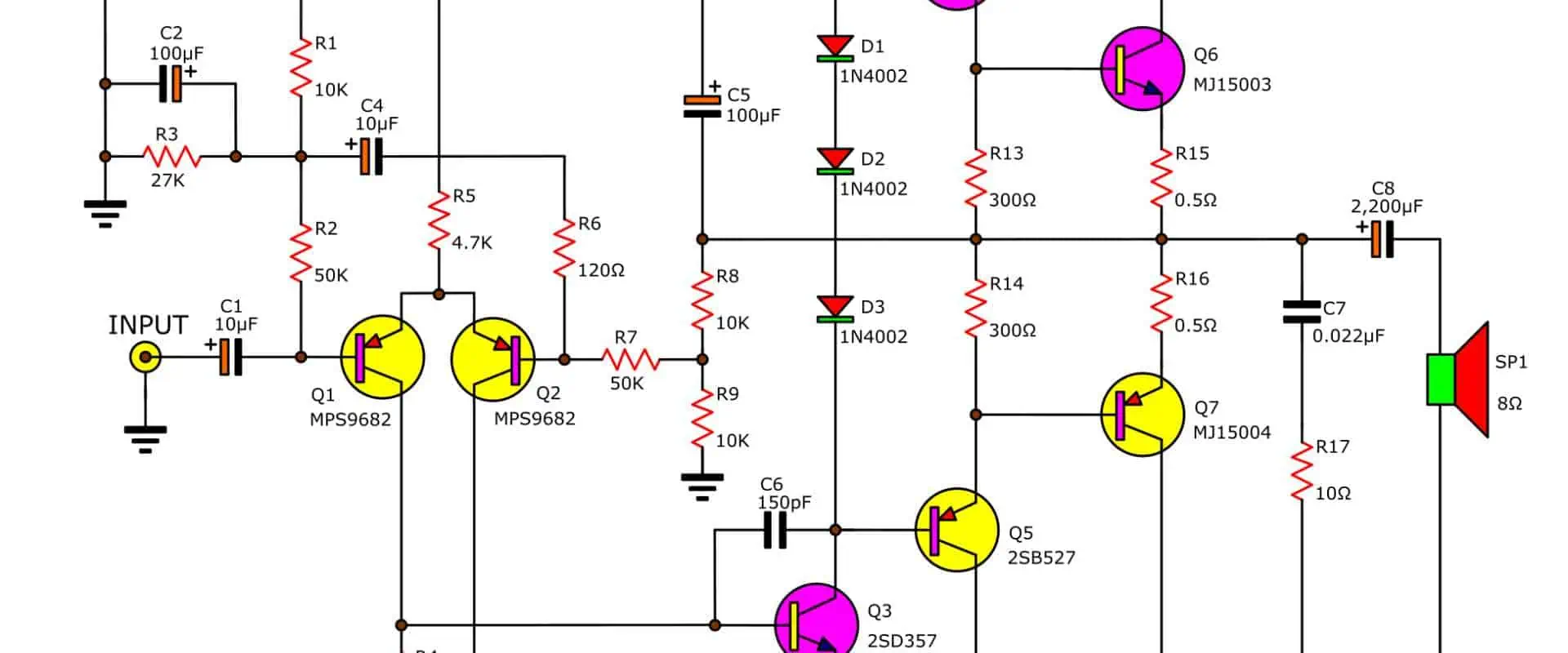
Understanding the Amplifier Circuit Diagram

Amplifier circuit diagram

Electronic or electrical amplifiers can be described as circuits which make use of external power supply or generating output signals which are a bigger replica of the input.

Audio amplifiers, which can be described as a recognizable application, are useful for increasing a speakerโ€™s volume to allow the sound to be heard easily in any large area. Though voltage can be described as the most common of all amplified input signals, these amplifiers may also be designed so as to increase the current. Any amplifier which increases the current drive of an output is referred to as the power amplifier.

Majority of amplifiers perform linear amplification. However, some are naturally logarithmic. In circuit diagrams, amplifiers are represented with a triangle. First, let us consider what an amplifier circuit diagram means as well as its types.

What Does Amplifier Circuit Diagrams Mean?

Amplifier PCB

Amplifier circuit diagrams are made up of one signal pick-up transducer, which is followed by any small signal amplifier, output transducer, as well as one large signal amplifier. Initially, the amplifier circuit diagram comes in two types i.e. power amplifier circuits and voltage amplifier circuits.

Voltage amplifier circuit

The main function of this type of amplifier circuit diagram is to help in raising the signalโ€™s voltage level. It is specially designed for achieving the largest gain possible. You can draw extremely little power out of the output. In order to achieve any high amplification of voltage, then the requirements below has to be met by your voltage amplifier circuits.

  • The transducer features a thin base i.e. beta/high transistors (higher than 100) is utilized.
  • Fairly low impedance compared to the output impedance.
  • The voltage amplifier will always function at a low current of around 1mA, in order to allow high collector loads that are required for a high gain in voltage.
  • Most of the time, the R-C couple is necessary for coupling the different voltage amplifier circuit stages due to the fact that it is cheaper when it comes to portability and cost.

Power amplifier circuit

The main function of this type of amplifier circuit diagram is to raise the input signalโ€™s power level. In order to get a large power for the output, then there must be a large input-signal voltage. This is why for electronic systems, voltage amplifier circuits usually precedes the power amplifier circuits. Also, this is the reason behind power amplifier circuits called the large-signal amplifier circuits.

The regions found behind power amplifier circuits is referred to as large-signal amplifier circuits because it has the ability to draw power out of the DC source, which is connected in the output and then converts it in an appropriate AC signal or sine wave. Power amplification cannot occur here because it doesnโ€™t work in line with the physicsโ€™ rule. In order to achieve greater power amplification, then the circuit has to work with the requirements below

  • For power amplification, there is heat produced in a transistor during an operation, to ensure large-sized power transistors are used
  • Collector resistance is made low
  • Transistors with thick bases not voltage amplifier (beta/smaller) is useful in handling large currents
  • Most times the transformer-couple is useful in impedance matching.

What are the Important Features of Amplifier Circuits?

An amplifierโ€™s quality may be measured through some specifications referred to as the figures of merit. Letโ€™s consider them

  • Noise: This refers to the additional information that is unwanted, but included inside the output
  • Bandwidth: This is the range of frequency where the amplifier will be able to function
  • Skew rate: This is highest rate of output change
  • Linearity: degree of proportionality found in-between the output and input signals
  • Gain: This is the most significant. It is the ratio between the output and input signals magnitudes
  • Stability: Ability to provide reliable and constant output.
  • Output dynamic range: This describes the ratio between the smallest and largest useful levels of output

What Amplifier Types are There?

Aside from the main or basic types, amplifiers come in several types. This is grouped by their characteristics, application or operation. Some of them include

Power Amplifiers

Though not a type from the technical point of view, the power amplifiers form a general term which has to do with the quantity of power provided by your power supply circuits as well as the power that is delivered onto the load. This is usually utilized in a circuitโ€™s final output stages.

Some examples are push-pull amplifiers, servo motor amplifiers, audio power amplifiers, as well as the RF power amplifier.  Once again, we will be considering how power amplifiers are classified, because they play a very significant role.

Operational Amplifiers

This is another important type, also known as op-amps. This is an IC which functions as voltage amplifiers. It also has a differential input. Furthermore, it features a negative and positive input, as well as one output with extremely high gain. Initially, the creation of op-amps was done using valves.

Transistor Amplifiers

This is a popular type of amplifier that is especially designed for engineering students. It is a well-known amplifier. It is a high output multi-configuration amplifier which makes use of transistors as its working base.

Vacuum (or) Valve tube amplifiers

This type of amplifier makes use of vacuum tubes for providing increased voltage or power output. As mentioned earlier, op-amps were initially the valve type; however, the ICs replaced them as soon as they became less expensive, at least, in the smaller applications. However, for high-power applications, they are still useful due to their output quality and cost effectiveness. Also, they are useful in military, radar, high power UHF and radio transmitter applications.

Klystron

This is a special linear vacuum tube utilized as amplifiers in the high-radio frequencies. Also, it is very precise and is useful in large-scale operations, and usually categorized microwave amplifiers.

Distributed Amplifiers

These are amplifiers, which makes use of transmission lines for splitting the input temporarily as well as amplifying each segment. You can find them in oscilloscopes.

Instrument Amplifiers

These amplifiers are specially designed for amplifying music, voice, or sound. It is mainly used in applications for musical instruments.

Different Circuit Currents

Letโ€™s consider the different circuit currents present in a full amplifier circuit board diagram.

Base Current

Whenever there is no applied signal on a base circuit, the DC base current will flow as a result of the biasing current. Whenever the AC signal has been removed, the AC base current will also flow.

Emitter current

The DC emitter current will flow whenever there is no signal applied.

Collector current

Whenever there is no signal applied, the DC collector IC will flow because of the biasing current. Whenever an AC signal has been applied, then the AC collector current flows as well.

Practical Circuit of the Transistor Amplifier

Antenna Amplifier PCBA BOARD

The practical circuit of the transistor amplifier represents a specific voltage divider biasing circuit. The different prominent elements of a circuit as well as their function can be described below.

Input Capacitor

The capacitor helps in the coupling of an input signal to the transistorโ€™s base. Input capacitor permits an AC signal, but helps in isolating a source of signal. When the capacitor isnโ€™t present, then the input signal will become applied directly, thereby changing the bias.

Biasing Circuit

Resistors RE, R2, and R1 form the stabilization and biasing circuit. This aids in establishing the right point of operation.

Emitter by-pass capacitors

You can employ the capacitor in the parallel form into your emitter resistor. Thee

Coupling Capacitor

This capacitor is usually seen at the final periods of one stage and then connects it onto the second stage. Because it helps in the coupling of two stages, you can call it a coupling capacitor. The capacitor will block the DC of one of the stages and make it enter the second but permits the passing of the AC. This is why it is referred to as the blocking capacitor.

Because of the coupling capacitor, the output that forms across the resistor is completely free from the DC voltage of the collector. When you donโ€™t find this, the next phaseโ€™ bias conditions would be changed drastically as a result of the RCโ€™s shunting effect because it would come in a parallel form to the following stage.

Load Resistor

The resistance that is connected at its output is referred to as the load resistor. Whenever a number of phases are utilized, then the RL represents the next stageโ€™s input resistance.

Conclusion

By now, you should understand what the amplifier circuit board diagram is and how it works. Almost all the electronic equipment out there has to include some amplifying means for the signals. The application of the amplifier circuit board diagram can be seen in scientific equipment, medical devices, military tools, automation, communication devices, as well as household equipment. Aside from the main or basic types, amplifiers come in several types. This is grouped by their characteristics, application or operation.

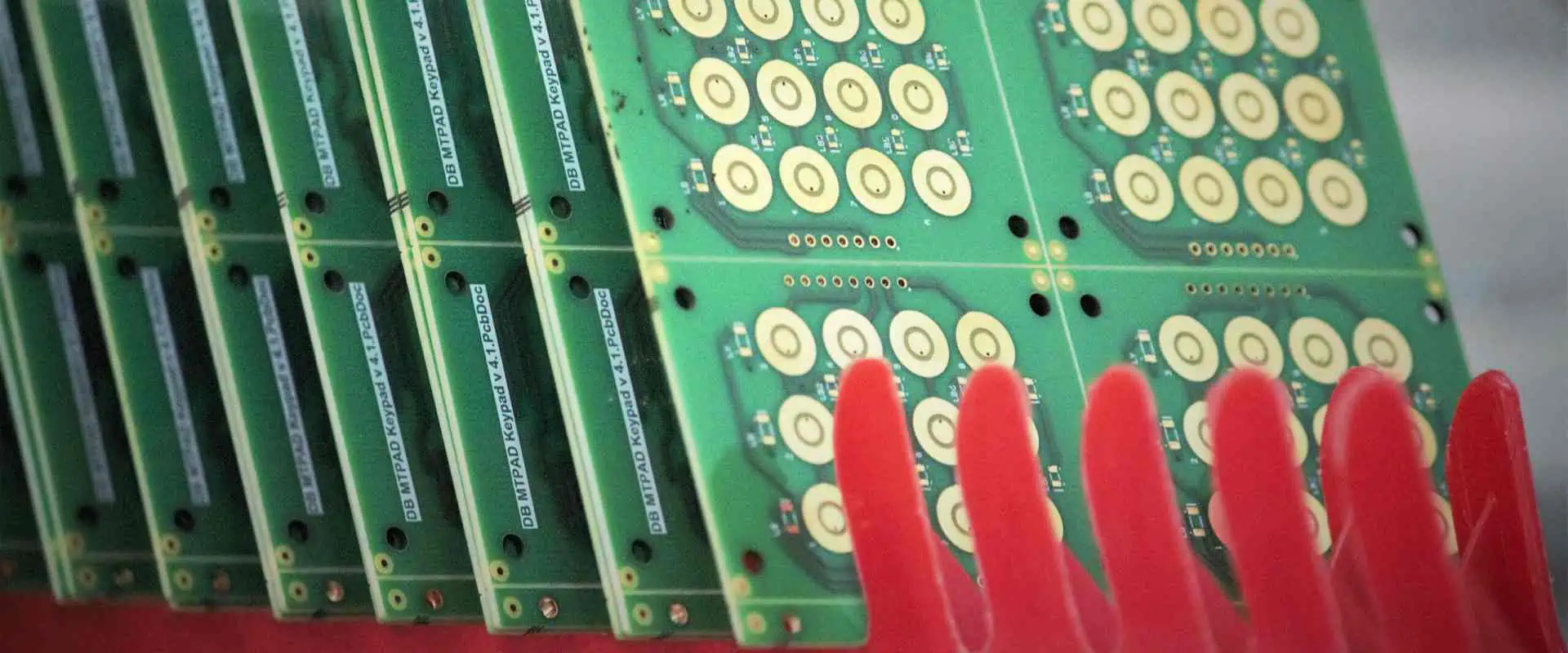
PCB Storage: What Options Do You have to Protect Your Circuit Board?

PCB Storage

Printed Circuit Boards (PCBs) must be protected to bolster the integrity. If you are looking for the PCB storage options, this article teaches you what you need to know.

What is PCB Storage?

It refers to the method of protecting a Printed Circuit Board (PCB) and preventing the same from damages.

When it comes to the storage, it is done for different reasons. While the major reason is to protect the boards from the temperature, it can also be done to keep the boards safe when transported.

What are the Stages of PCB Storage?

PCB Storage warehouse

You may not need to store or protect the boards if there is no need for that. Hence, being sure of when the storage is required is very important.

Here are some of the important moments or stages when you need to store and protect PCBs:

1.    Store PCBs during the Fabrication Stage

Already fabricating the boards? Congratulations, but you need to beef-up on the protection. The fabrication stage is when the boardsโ€™ development commences in earnest. As such, you need to keep the boards safe from contaminants that would impede the performance once production is completed.

2.    Store the PCB Post the Fabrication

Fabricating a board is one of the important steps to the production. But after that, the board has a post-fabrication stage and this is one of the crucial moments for the protection.

During the post-fabrication stage, especially when solder mask is applied, the board is susceptible to damages that affect the solder mask.

Here are some of the reasons why the board needs to be stored before the fabrication:

  • Depending on the arrangement, the PCB manufacturer might collaborate with other companies to fabricate the board. Therefore, the transportation to and from these factories opens up the boards to excess moisture that eventually contaminate the boards.
  • Storing the PCBs during the post-fabrication stage is also a good way to protect the solder mask. This way, the mask would be protected against oxidation and other contaminants prior to the boardsโ€™ assembly.

3.    Store the Boards during the PCBA Stage

The moment you start the Printed Circuit Board Assembly (PCBA), endeavor to store it. This stage is when the PCB components or parts would be soldered to the boards.

The soldering process often leaves behind contaminants, such as flux residue. Leaving such behind often leads to impeded performances of the PCBs.

This is the reason why some PCB manufacturers have used different kinds of surface finishings to protect the copper traces.

4.    Post-Assembly Storage is Recommended

The next step after assembling a PCB is to ship it to the clients or customers. Before then, final assembly measures, such as depanelization are in place. For this reason, ensuring the proper storage of the boards is required.

Besides, the boards will be transported either by road or air. Whether they are being shipped from you to the customers or from the Contract Manufacturer (CM) to you; the goal is to protect the boards.

To do that, do any of the following:

  • Keep the boards in a PCB storage rack, which keeps them in position when in transport.
  • Use encapsulation storage methods, such as conformal coating to keep the boards safe from unstable temperatures that often impact the componentsโ€™ shelf life.

5.    Keep the Boards during the Pre-Deployment Stage

Some Printed Circuit Boards (PCBs) are not used as soon as they are assembled and shipped. Some may take several months before they are put to use. That is a bit of a lengthy time and within this period, the boards could be damaged.

Hence, when the boards are stored over a long period of time, keeping them safe becomes a priority.

Following the recommended PCB storage guidelines will come in handy at this moment. The storage stage comes under any of the following:

  • Post-assembly or after the board has been shipped and is then warehoused.
  • Between the fabrication and Printed Circuit Board Assembly (PCBA) stage.

In case you donโ€™t know what these guidelines are, we will talk about them in the next paragraphs.

The Best Printed Circuit Board Handling and Storage Guidelines

FULL PCB MANUFACTURING Quote

In this section, we introduce you to the PCB storage requirements to keep in mind, especially after the board has been assembled.

a.    PCB Handling Measures

Let us start by talking about some of the best ways to handle and keep the PCBs safe.

b.    Minimize Direct Handling

The first thought that comes to your mind is to use your hands to lift the PCBs. However, it is a bad idea. The rule is to avoid or minimize a direct contact and or handling of the PCB.

The best methods to minimize or reduce direct handling (hands-on contact) of the boards are:

  • Transport the boards on ESD PCB storage racks.
  • Place the boards in tray carts when transporting.

c.    You Should Do the Direct Handling with Care

If there is a need to use hands-on contact or direct handling, then it must be done with care. For this purpose, wear clean gloves and hold the PCBs only by the edges. Never hold at the center or place your hands at the middle.

d.    Avoid Statically-Electric Areas

If you are handling the PCBs, they must be kept away from the areas that tend to create static electricity. Examples of such areas or surfaces are:

  • Rugs and;
  • Carpets

e.    Lotion Use is a No-No

You must not use products that compromise the boardsโ€™ quality. An example is hand lotion.

f.     Prevent PCB Contamination when Transporting

Looking to transfer or transport the PCBs from one station to the other? You should do these:

  • Keep all the stations clean, as that greatly helps in reducing the risks of Foreign Object Debris (FOD) contamination.
  • Always use protective bags to package and transport the PCBs from one station to the other.

PCBA Storage Guidelines

We will now look at some of the industry-leading recommendations on how to safely store Printed Circuit Boards (PCBs).

a.    Apply Surface Finishing

Do not miss out on applying surface finishing during the PCB fabrication process. This is important because the board might require a temporal storage after the fabrication, pending when it would be assembled.

The application of an appropriate finishing at this time helps to protect the board against contamination and oxidation.

b.    Maintain a Controlled Environment

By a controlled environment, we mean that the PCB should be stored or kept where there arenโ€™t excessive temperature changes. Understanding the PCB storage temperature and humidity is also a key to getting this right.

The ideal storage temperature and humidity recommendations are:

  • 85% RH and;
  • 86หšF or below โ‰ค30หšC.

c.    Be Selective with the Components

This is where you need to pay attention to the PCB components. The rule of thumb is never to use moisture-sensitive components.

Moisture-Sensitive vs. Non-Sensitive Components

These are components that are susceptible to moisture and are not. On the one hand, the moisture-sensitive components have a limited shelf life, which ranges from a day to one year, after the assembly. On the other hand, the non-moisture-sensitive components have a longer (and sometimes unlimited) storage lifetime, which could be up to 10 years after the assembly.

Getting it Right

Choosing Surface Mount Device (SMD) components that are not moisture-centric is one side of the coin. The other side is to store these parts in a controlled environment. An environment that matches these requirements is ideal:

  • Relative Humidity (RH) of 85% and;
  • A temperature of โ‰ค30หšC or 86หšF.

d.    Utilize the Older PCBs

Sometimes, circuit boards are no longer ideal for use due to the duration they have been stored. This is why it is recommended to ship out or use the older boards first before the newer ones.

This way, the older boards will be put to good use before their periods of shelf life is elapsed.

e.    Store Circuit Boards in MBBs

Always use Moisture Barrier Bags (MBBs) to protect the PCBs. Here are some advantages of doing so:

  • MBBs have either a plastic or metallic shield that keep the PCBs safe.
  • These bags also protect the boards from contact with static electricity, especially, if you are using the boards around rugs or carpets.
  • The ideal moisture-repelling feature of the MBBs is the use of film layers to control the absorption rate of moisture.

How to Maximize MBBs

Here is how to get the most out of storing PCBs in Moisture Barrier Bags (MBBs):

  • Vacuum-seal and dry the Moisture Barrier Bags (MBBs), as that protects the bags from ESD.
  • The best MBBs to use are the ones that have desiccant pouches, as these help to keep both humidity and moisture out of the bags. The desiccant also helps to absorb any moisture that enters or is trapped inside the MBBs.

Final Thoughts: Use the PCB Storage Solutions to Your Advantage

In addition to keeping to the PCB storage guidelines, it is also important to follow the IPC standard for PCB storage. You can refer to the IPC-1601 (Printed Board Handling and Storage Guidelines) and the IPC/JEDEC J-STD-033D (Handling, Packaging, Shipping and Use of Moisture, Reflow and Process Sensitive Devices) for an idea on what it takes to effectively protect a Printed Circuit Board (PCB) within and outside the production plant/factory.

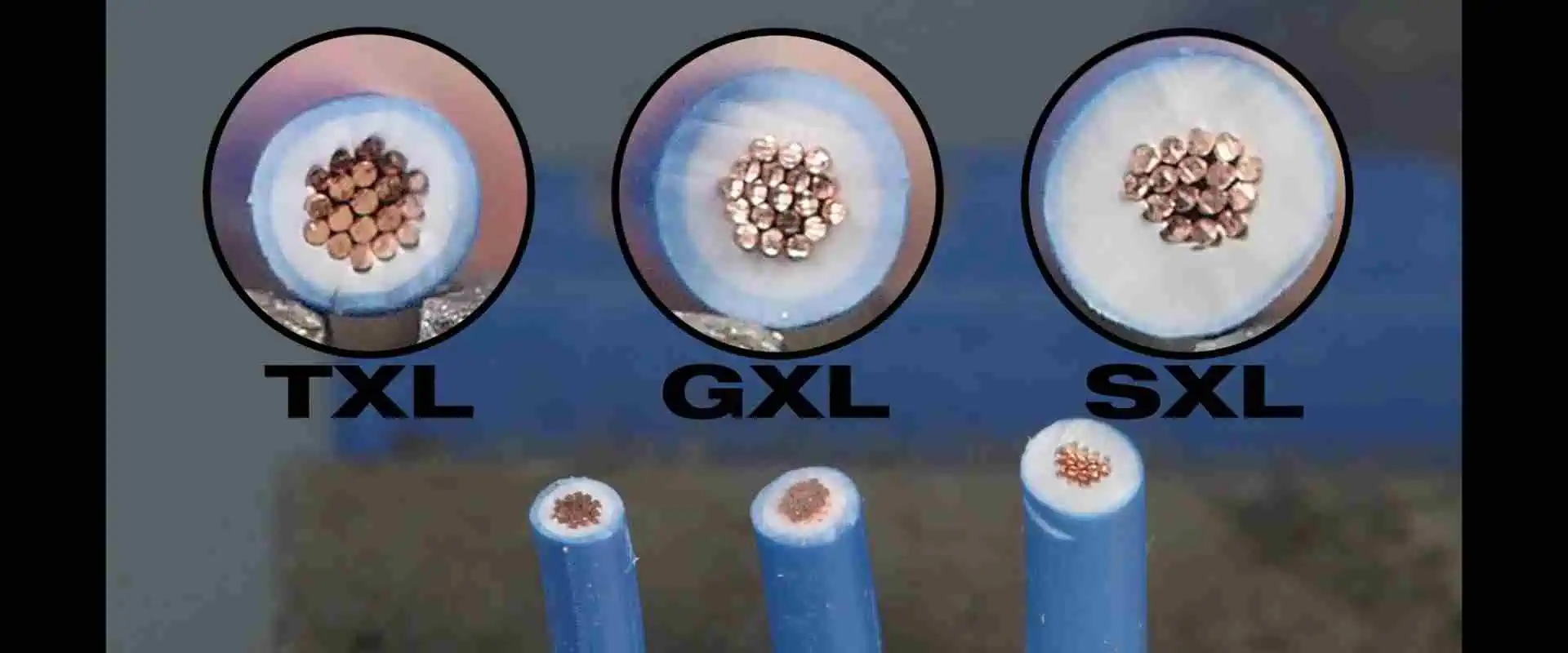
SXL vs. GXL vs. TXL Wire

SXL vs. GXL vs. TXL Wire

Automotive wires are the specific wires designed for use in automobiles. SXL, GXL and TXL are the three (3) different kinds of wires to use for such purposes. Find out in this article, how each of the wires work and how they compare to one another.

What is SXL vs. GXL vs. TXL Wire?

The trio refer to the wires used in automobiles. By automobiles, we donโ€™t just mean cars. It also extends to motorcycles, boats and RVs.

The functions of automobile wires include but are not limited to:

  • Enabling the interconnection of components and;
  • Providing sufficient insulation for these components.

For this reason, it is imperative to choose an automotive wire that provides the right kind of insulation your automobile needs. With three (3) options out there, making that decision can be a bit difficult.

The Classifications of Automotive Wires

There are two (2) major classes of wires used in automobiles. These are the:

  • Polyvinyl Chloride (PVC) and;
  • Cross-Link Polyethylene (XLPE) automotive wires

While the two are popular, the XLPE automotive wires are commonly used. Note that both XLPE and PVC refer to the different levels of insulations that these wires provide.

Introducing the XLPE Automotive Wires

SXL vs. GXL vs. TXL
SXL vs. GXL vs. TXL

We will start by defining what the Cross-Link Polyethylene (XLPE)-insulated automotive cables or wires are used for.

These are the wires with the most-durable insulation. As insulation is one property required of automotive wires, it is impressive to have the XLPE automotive cables/wires having them.

The properties include:

  • The durable insulation prevents the wires from premature aging.
  • The insulation capabilities of these cables also ensure the endurance of both abrasion and higher temperatures.
  • These wires are also versatile, which is the reason they are usable in both terminals and automotive wire connectors.

The three major types of XLPE or cross-linked automotive wires are:

  • GXL
  • SXL and;
  • TXL

What is the GXL Automotive Wire?

Let us start by defining the GXL automotive wire. It is a type of automotive wire with a thin wall. The options can be thinner, depending on what you want.

The GXL wire also has these attributes:

Conduction Capabilities

Besides the insulation, an automotive wire should also be able to handle heat conduction effectively. This is why the GXL wire is often used, due to the design as a single-conductor automotive wire.

Operational Capability

The GXL automotive wire often has a voltage rating of 50 volts and a broader temperature range of up to 125หšC.

Application

Due to the properties, including the absence of reflow and better abrasion resistance, the GXL wire is often designated for use in engine compartments. The designation is for these reasons:

  • It is recommended for use in the engine elements requiring more efforts at sustaining the heat dissipated from that direction.
  • GXL wire is also used in the high-temperature spaces where reliability and flexibility are paramount.

You can also use the GXL automotive wire in the environments and or applications that require high durability and higher heat resistances. Examples of such applications are:

  • Buses
  • Engine compartments
  • Boats
  • Trucks and;
  • Tractors

Some of the major attributes of the GXL wire include the accordance with SAE J-1128 and the operation in low temperatures.

SXL Automotive Wire

This is the โ€œstandardโ€ automotive wire and is so-called because of the thicker insulation. Hence, the regarding of the SXL wire as the โ€œgold standardโ€ in automobile wiring is because of these reasons:

  • Primary Usage: it is often called the primary automotive wire due to the prioritization, in some cases, over the other automotive wires.
  • Excellent abrasion resistance and;
  • The designation for use in the applications requiring higher resistance.

Here are some of the advantages to choosing the SXL automotive wire:

Used for Special Purposes

Thanks to the innovative properties, the SXL wire is a thick-walled wire, designed for use in special purposes. These special purposes include but are not limited to high-temperature applications, such as engine compartments.

Typical Applications

The SXL wire is best-suited for applications that require higher temperatures, as well as the ones that require less spaces.

In addition to being used in engine compartments, it can also be used for general circuit wiring.

Operational Capacities

The ideal operating temperature rating is between -40หšC-125หšC.

TXL Automotive Wire

This is the third of the automotive wires classified under XLPE. TXL is a cross-linked, extra-thin automotive wire used for applications with thinner spaces.

Here are some of the attributes:

Extra-Thin

The TXL wire is the thinnest or smallest of the automotive wires classified under XLPE. For this reason, it is the lightest and as such, have found use cases in the applications where small overall diameter is necessary.

Higher Durability

Despite the smaller diameter, the TXL wire has a higher durable. This is why it is preferred for the automotive applications that require lightweight wire.

It is also required for the automotive applications that require higher reliability, especially in the extreme cold and high-heat temperatures.

Typical Applications & Uses of the TXL Automotive Wire

As the thinnest and smallest wiring option for automobiles, it is used in the applications that require higher reliability, smaller spaces and higher durability.

Examples are buses, tractors, boats and cars.

You can also use the TXL automotive wire for the following purposes or applications:

  • The use of up to 50 volts makes it ideal for use in the medium to lightweight industrial applications.
  • You can also use the TXL automotive wire for connecting the interiors of automobiles, specifically the interiors and panels.

Operating Temperature

The temperature rating for the TXL wire is between -40หšC and 125หšC.

The Differences between SXL, GXL and TXL Automotive Wires

We have ascertained that the trio are used for connecting the elements or components in automobiles. By now, you also know that these wires are used for specific applications.

Clearly, there are some differences. Here are some of the comparisons:

TXL vs. GXL Wire

The major difference between the TXL and GXL wires is their diameter. While the TXL wire is extra-thin or the smallest, in terms of the diameter, the GXL is thin. Thus, the TXL wire is thinner than the GXL wire.

Another difference between the two is that the TXL wire is primarily used for automotive applications with a special focus on spaces, while the GXL wire is ideal for applications requiring flexibility and reliability.

Difference between SXL and GXL Wire

We can also compare the GXL and SXL wires, whereby the former has less insulation than the latter. This is the reason why the SXLโ€™s insulation is often preferred.

In a related comparison, the GXL wire holds the trump card because of the lightweight and slightly smaller diameter. That is why it is often used in the applications with limited spaces.

TXL Wire vs. SXL Wire

TXL is different from the SXL wire because it has to do with medium to lightweight applications concentrating on limited spaces; while the SXL wire is used for the high-resistance applications.

How to Choose the SXL, GXL, TXL Automotive Wires

You can choose any of these wires, depending on the use cases or typical applications. You also need to understand the overall diameter and a couple of other factors discussed below:

a.    What is the Insulation Capability?

This has to be an important consideration because the wire is meant to resist the electricity that passes through it โ€“ and to convert some of that to heat.

Therefore, the insulation capability is important, as it helps you determine the right usage. For example, the GXL wire falls between the thin and thick-wall insulation category. This makes it less-likely to provide much insulation, when compared to the SXL wire.

b.    Considering the Applications is Important

What are the wires meant for? You will find that each of these wires has specific use cases or applications. Likewise, you need to use them as designated.

First, the SXL wire is commonly used in engine compartments. The TXL wire is ideal for automotive applications with a special consideration for tighter spaces. You can use the GXL wire mostly for engine compartments and high-temperature spaces/applications, where higher heat is meant to be sustained.

c.    Take Note of the Cable/Wireโ€™s Gauge

You must also take note of the gauge that the wire or cable has. It ca be a bit technical, due to a couple of reasons.

Let us start by understanding what the gauge is all about. The gauge of an automotive wire is the measurement of the cable or wireโ€™s diameter. In this case, the following considerations are important:

  • The gauge defines the amount of electrical current that can be transmitted through the wire.
  • The wireโ€™s gauge also tells the electrical and weight resistance of the cable or wire.

Here are some of the points to note about the gauge of an automotive wire:

  • Current-Matching: the current that passes through the wire or cable must be sufficient to match the need. For example, it might be impossible to have the gauge enabling the passage of current if it is smaller.
  • Higher Gauge Equals Smaller Diameter: interestingly, there is an inverse operation of the automotive wireโ€™s gauge. In this case, the higher the number of the gauge, the lower or smaller the diameter. This is why a gauge of 0 can support up to 125 amps and have a diameter of 8.25 mm. Likewise, a higher gauge of like 20 supports only 0.080 diameter (mm) and an amp of 5.

Automotive Cable Gauge Guide

Here are some of the tips on choosing the right American Wire Gauge (AWG) for your automotive cable/wire:

  • Start by ascertaining the right amperage that your application needs. This helps you to pick the automotive cable gauge that provides the right current-passage.
  • Next, you want to go for the AWG with a lower number, as that provides more current-passing capacity. For example, an AWG of 0 supports 125 amps, an AWG of 10 supports 30 amps, while that of 20 supports 5 amps.
  • Last but not least, be sure of the desired length of the cable. This is because the size or diameter of the cable/wire decreases, as the number of the wire gauge (AWG) increases. This is why the AWG of 40 has a diameter of 0.080, that of 4 has 5.189, while an AWG of 20 has a diameter (mm) of 0.812.

What is the Cableโ€™s Voltage Drop?

Voltage must โ€œdropโ€ in an automotive cable or wire. However, you donโ€™t want this to be excessive. Let us start by defining what voltage drop means.

Voltage drop means a drop or reduction in the voltage. It is also the loss of certain amount of voltage in a circuit.

Here are additional points:

  • Voltage drop in automotive wire has to do with the amount of voltage that was lost over the length of the wire.
  • Voltage drop also has a synergy with resistance. As such, the resistance happens when the voltage travels through the wire. To this end, the voltage will drop significantly, as the resistance traveling through the wire becomes greater.

What is the Amperage of the Automotive Wire?

This time, you are considering the amperage (Amp) on a standalone basis. The amp has to do with the amount of current that the application requires and which the wire or cable can produce or offer.

What is the Resistance Capability of the Wire?

The automotive cable or wire can resist the electricity that passes through it. However, how much of that can it resist?

You are to use the resistance per unit length as the basis. It refers to the capacity of the wire to resist electricity or current from passing to a certain length.

The rule of thumb is that an increase in the American Wire Gauge (AWG) often results in a corresponding increase in the resistance per unit length. This is why an AWG of 0 has a resistance per unit length of 0.1, while an AWG of 40 has a resistance per unit length (mฮฉ/ft) of 1000.

Conclusion

The trio of SXL, GXL and TXL wires are useful in wiring automobiles, such as cars and boats. However, you must define the use cases/applications and choose the right wires for that purpose.

If you are unsure of which to go for, consult a professional to guide you.

Exploring the Basics of Vape Circuit Diagram

Vape Circuit Diagram

Vaping is the new form of smoking that has been getting hype for the past few years. However, if you are a good observer, you would want to know how does a vape work.

Well, donโ€™t be surprised to know that a special PCB mechanism is there to help you enjoy vaping all the time. The PCBs especially produced for vapes, are also becoming popular with time. Because without these PCBs, it would be impossible to make the vapes function normally. The role of a PCB in a vape is to control and manage its function as per the vape circuit diagram.

It also makes vaping safe and secure for the users. In this discussion, we are going to see how PCBs in a vape work and will also look into different aspects of the vape circuit diagram in this post! Here we go!

Basics of Vape circuit diagram

ยท       Vape circuit Power Source

A vape consists of a battery which is the main power supply for the vape. It energizes the vape electrically as well. A powerful lithium-ion battery proves to be best for vape circuits and makes vapes reliable at the same time. The vapes with such a powerful battery can last a little longer than their absence. The current keeps flowing through the vapes after we connect the battery with the respective terminals. 

ยท       Activation Button and Firing Mechanism

The next thing that you will find in a vape circuit diagram is an activation button. Basically, it is a firing mechanism present on the external side of the vape. It will complete the circuit when you press the activation button making the current start flowing through the vape, and it will also heat the coil present in the atomizer. Due to this reason, you get able to smoke through a vape, and without an activation button, it is nearly impossible. 

ยท       Vape circuit diagram Atomizer & Coil Assembly

Vaporizing liquid

A vape circuit diagram is incomplete without its atomizer or vaporizing liquid. It contains the vape liquid when you fill your vape each time. The role of an atomizer is to secure the liquid and maintain its passage when a user smokes as well. 

Coil Assembly and Heating Part

The coil is another important component of a vape circuit diagram. The coil consists of a resistance wire and is made up of two special materials called nichrome and kanthal. Just like a candle, it covers a wick that is made from cotton. When you press the activation button, it will heat the coil up and burns the liquid to change it into smoke for the user. 

Safety Features for Vape circuit diagram

Vape Circuit
Vape Circuit

ยท       Overcurrent Protector

There are some useful safety features and protection measures in a vape. One of them is overcurrent protection. Today, different vapes are available that come with this special feature that secures the entire vape circuit and protects the battery from sudden fluctuations as well. This feature is also responsible for the safe and seamless passage of current during the process. 

ยท       Short Circuit Protection

Another interesting safety feature of a vape is the shirt circuit protection feature. Problems can occur, and your vape can undergo damage if the terminals of the battery merge. It can lead the vape to irreversible damage on all counts. Therefore this feature prevents it from happening. 

Variable Voltage & Wattage Control

ยท       Variable Voltage

The voltage and wattage control for a vape is also important, and for this, we have a certain mechanism that makes it possible. The variable voltage control is there to regulate the voltage and provides the vape with sufficient voltage as per a certain threshold only. 

ยท       Variable Wattage 

Now this feature helps the users for adjusting the aerosol since this feature monitors and balances the power given to the vape. Intense wattage can ruin the vape experience for the users, so wattage regulation and control are crucial.ย ย 

Factors To Consider While Choosing The Best Manufacturer For Vape Circuit Diagram

There is no doubt that today there are millions of vape users scattered around the globe. Therefore vape production is progressing at a rapid pace. You will find a huge variety of vape brands in the market. So how can you buy the best vape for yourself? We are going to explain some factors that can help you evaluate vape brands to make a good decision. 

ยท       Reputation & Experience

This comes at the top. You dont want to go with a budding and a rookie vape producer who lacks knowledge about the incorporation of fine PCBs for the vapes. Therefore, make sure you are buying from them so that you can have a good user experience with your purchase on all counts. 

ยท       Quality

Vapes are supposed to meet some industrial standards so that you can ensure your safety plus save your investment from going into loss. Therefore never compromise on the quality of your vape in order to have a fun experience with it in the future. 

ยท       Advanced Technology

The next thing that you need to look for is the compliance of a vape with the latest tech. You dont want to rely on obsolete vape models and want to keep up with the technological advancements. Modern vapes are more likely to provide you with a good vaping experience easily. 

ยท       Prototyping Capabilities

A good vape producer is one that allows testing and prototyping capabilities to improve its vapes and detect defects and faults before these grow into irreversible complications. Therefore always stick to the vape producers that allow vape prototyping before production. 

ยท       Industry Standards

Make sure you are buying from a vape producer that regards the industry standards and quality regulations on all counts so that you can have an idea that you are buying from a professional vape brand that follows the industry standards strictly. 

ยท       Supply Chain Management

You can also dig further by inquiring about the vape producer regarding supply chain management so that you can know how they are able to meet your deadlines and deliver in emergency situations. Plus, you will also be able to have an idea of how this vape brand manages its vendors in unfavorable circumstances. 

ยท       Customer Support

It is better to stick with a vape brand that provides you with active customer support. It will help you consult them quickly if you find problems with your vape after the delivery. Plus, you will also be able to have general guidelines from the associates in times of need. 

ยท       Cost-effectiveness

The last factor that you have to consider is the cost-effectiveness of the vapes. If you can splurge, then buying an expensive vape should not bother your pocket. But if you are tight on budget, always stick with an affordable vape. 

Conclusion

It is clear that every vaper wants to have a fun experience with their purchase. However, there are some factors that help you get your hands on a good and durable vape that would be worth your investment. Also, you can equip your knowledge regarding the vape circuit diagram to tackle small problems in time. If the problem with your vape persists, then it is important to rush to the customer support provided by the vape brand you have hired immediately. 

What is the PCB Shelf Life? Extending the Life of PCBs

PCB shelf life

The PCB industry is one of the most important domains for a countryโ€™s economic growth and sustenance. However, in the old times, nobody cared about the PCB shelf life at all. It had many reasons.

Maybe due to a lack of knowledge and fewer resources, producers were unable to comprehend PCB shelf life and consider its significance for the improvement of PCBs as well.

The PCB parts come together to develop a highly efficient and industrial PCB with an optimum shelf life. We are going to dig deeper into the role of PCB shelf life for the products and the users through this post. Letโ€™s get started!

Is there any PCB Shelf Life?

If you are a PCB buyer, then make sure that you inquire about the PCB shelf life from the producer. So that you can have a vivid idea about this thing, and it can make your user experience worthwhile in the future as well.

At this point, you must know that not every PCB has the same shelf life. The PCB shelf life depends on the surface finish used for the PCBs. Some surface finishes have long shelf life while others don’t. 

PCB Assembly to Extend PCB Shelf Life

When a producer delivers the PCBs to the respective clients, one important thing to do is to include IQC for the PCB assembly. However, in some cases, if there is a problem with PCB assembly or a producer is delaying it due to some reasons, then it is advisable to secure the PCBs into small packages. For this, vacuum packages prove to be handy because they prevent moisture from seeping into the PCBs and deteriorating them gradually. 

Time for Assembly After Packaging

Bare PCB Shelf Life
Bare PCB Shelf Life

So you have packed your PCBs but what now? This is important when we talk about the PCB shelf life. One crucial thing to do after packing your PCBs is to consider their assembly, which must take place in a half year right after the packaging. The PCB surface finish that goes well with PCB shelf life is HASL. However, if you are using OSP and silver surface finish, then it will alter the PCB shelf life, which gives you just one month for PCB assembly after packaging. For tin and gold surface finish, the duration of assembly is only two months. 

Why Does the PCB Shelf Life Matter?

Now, since we are deciphering PCB shelf life, we need to know why it is important to consider. One major risk that the PCB production process faces is the complications in the soldering and developing strong solder joints to attach the PCB parts on the boards.

If oxidation takes place, this soldering gets compromised, which is not good for the health of circuit boards. The solder joints become weak due to this oxidation as well. Therefore, to prevent this from happening, producers consider using PCB components with the same PCB shelf life as boards.

The packaging of PCBs during this process also allows them to last and remain intact for at least two years. But it still depends on the type of PCB surface finish that you are using. Different surface finishes will provide different PCB shelf life. If you are relying on a lead-free surface finish, then your PCBs will have a PCB shelf life of 2 years, while for others like OSP, the shelf life is up to 6 months maximum.

Also, most of the solders and adhesives used in PCB production or PCB assembly also create their influence on the PCB shelf life on the whole. 

Managing Materials & Components for Better PCB Shelf Life

In this section, it is important to learn about the role of your PCB producer in terms of maintaining and adhering to the PCB shelf life. Due to this reason, you will be able to evaluate their performance on the basis of PCB production, material procurement, and assembly of PCB components. A good PCB producer is one who smartly keeps a record of the PCB’s shelf life.

This step comes in handy for customized PCBs where producers can stick to the prototypes board and designs and provide their clients with more insights regarding the PCB’s shelf life. When it comes to this, we at VSE are the experts in handling PCB component arrangement and developing different PCBs as per various shelf lives as per your needs. Below you will find how we are able to procure industrial-grade PCB components that improve the PCB shelf life for our customers.ย 

  • We rely on FIFO inventory control to avoid stocking complications in the time of need.
  • Our workers follow the guidelines of component labeling to avoid confusion and mishandling. 
  • We stock strategically to prevent PCB wastage. 
  • We make sure to completely dispose of the PCB waste with less harmful techniques to prevent compromising environmental damage.
  • Our solder pastes are cooled in separate cold storage through proper and consistent monitoring and sustenance. 

Extend the PCB Shelf Life in Storage

We cannot forget the fact that PCBA storage is an important factor in the well-being of industrial PCBs. Due to this reason, for the extension of PCB shelf life, we need to avoid mishandling PCBs on all counts. Also, protecting them from weather conditions like excess moisture can help in this regard.

Another factor that proves to be handy for this is your choice of PCB producer. There is no point in hiring such a PCB producer who procures good materials for production but lacks in working with the PCB shelf life. Therefore, the quality of a PCB producer matters a lot here. 

What Affects the PCB Shelf Life?

FULL PCB MANUFACTURING Quote

You must know what factors influence the PCB’s shelf life so that you can have a clear idea about what factors are not healthy for your PCBs at all. Below you will find them! Letโ€™s go!

  1. Components. Always adhering to quality components will improve the PCB’s shelf life. At the same time, cheap and low-quality PCB components will just reduce the PCB shelf life through consistent deterioration. Other than this, substandard PCB parts are also a reason behind full PCB failures and poor electronics performance as well. 
  2. Surface finishing. The choice of surface finish for your PCBs also creates an impact on their life length. For instance, HASL has more PCB shelf life as compared to OSP and others. 
  3. Soldering. The type of soldering you are doing for your PCBs also creates its influence on the PCB shelf life, so it will be better that you fully research the soldering types for PCBs and their relationship with the PCB shelf life as well. 
  4. Conformal coatingIt creates a positive impact on PCB shelf life and protects your setups from weather damage, technical complications, and other issues. It is better to rely on a good type of conformal coating to prevent PCB shelf-life challenges. 
  5. Handling. Issues in handling your PCBs can reduce their shelf life because human sweat, dropping off the PCBs, harmful chemicals, low-quality solder pastes, and debris all can damage the PCBs. Experts believe that PCB producers need to devise ways for proper handling of PCBs to keep their shelf life intact as much as possible. 
  6. Shipping conditions. How you’re shipping your PCBs also matters here. Unmonitored and reckless PCB shipment can damage the structure and might also detach the PCB components on their way to your customers and clients. 
  7. Storage environment. The temperature of your PCB storage room can also impact them; therefore, always stock the PCBs in an optimum environment to avoid damage as much as possible. 

Dangers of using expired PCB

1.    Cause oxidation 

Problems in oxidation eventually damage the entire PCB structure. It also does not let you completely solder the PCBs, and gaps are still left during the process. Therefore the components donโ€™t get fully adhered to the boards, and chances are there that they will drop off too. Experts believe that if we use useful and viable PCB surface finish, then this problem can be solved easily. However, one thing important to note here is that these PCB surface finishes come with different PCB shelf life.

Therefore, it will be better to use an appropriate PCB surface finish that will join the parts strongly with the boards, and they will be able to sustain unfavorable conditions as well. 

2.    Absorb moisture

The major problem with expired PCBs is that they interact with moisture, and they can cause electrical failures and short circuits at the same time. It will be just like how popcorn jumps in a pan. Moisture in the PCBs is also a reason for delamination, which is not good for the proper functioning of PCBs. Baking can be a good option to prevent this, but still, we cannot use this method on all types of PCBs.

However, if we use a sufficient amount of OSP, then this can be easily solved. One important tip here is that if you are going to use OSP, then make sure to complete the reflow process as soon as possible, or else if you delay the reflow, it will complicate things for you. 

Conclusion

There is no doubt that PCB shelf life is an important factor in the well-being and improvement of circuit boards. So that they can perform well for our consumer electronics, we hope that we were able to shed light on PCB shelf life for you in this post. We have also discussed some crucial factors that influence the shelf life of PCBs. 

What is an Electric Circuit Diagram and How Does it Work?

Online Circuit Diagram Maker

The electrical circuit can be described as something created whenever electrons flow and then create electricity. Circuits may be defined as any pathway by which electric current flows. Also, whenever electric current passes or flows inside a circuit, different electrical appliances can use them.

What Does Electrical Circuit Diagrams Mean?

Circuit diagram may be described as a graphical description or representation of any electrical circuit. This can also be called wiring diagram, electrical diagram, elementary diagram, and electronics schematics. In circuit diagrams, an electrical circuitโ€™s components can be indicated making use of standard symbols. This represents electrical connections that are found inside the circuit.

You can use these diagrams in the field of construction, designing as well as maintaining electronic and electrical equipment. Different electrical circuits come with a

  • Source of power i.e. battery
  • Resistor or load i.e. light bulbs โ€“ these results due to the completion of the electrical circuits, like stoves, computers, televisions, fans, electric heaters, as well as many other devices and equipment.
  • Conductor for carrying current i.e. copper wire
  • Switch, for example a light switch that is installed on the wall โ€“ the switch may close or open the circuit as well as control electricity flow. Take note: not all the electrical circuits out there come with a switch; although, a large number of them do.

The power source or battery delivers the required energy for ensuring the flow of electrons. This electrons flow, as well as how fast the flow is, is referred to as the current. In batteries, chemical reactions take place, which creates differences in the electrical potential in-between the batteryโ€™s two electrodes. This potential difference, which is referred to as the voltage, helps in providing energy for electrons to move via the circuit. Its unit of measurement is volts.

What is the Significance of the Electric Circuit Diagram?

Electric circuit diagrams can be described as an electrical circuitโ€™s simplified drawing. It makes use of a solid line for showing the wires or conductor that determines the circuitโ€™s path. Symbols are present on this path for representing the different parts of a circuit like the resistors and power source. The diagrams are utilized for designing, constructing, as well as maintaining the electrical circuits. Also, you can use them for calculating the current present in the different parts of a circuit.

What goes on in the light bulb that lights it up? Looking inside a bulbโ€™s filament, you will see a lot of tiny and small charged particles known as electrons that move through the bulbs. While passing through, some of the energy would be transformed in other forms. What ensures the movement of the electrons? What gives energy to them?

The creation of circuit diagrams is to serve as the circuit designโ€™s blueprint. Circuit diagram offers a graphical description of the arrangement of a circuitโ€™s components as well as the wire relationships that form between them. This technician helps in creating the electric circuit diagram to serve as a guideline for the implementation of the circuit designs or for different communication purposes.

What are the Components of the Circuit Diagram?

In this section, we will be listing some of the circuit diagramโ€™s components.

Closed circuit: This permits electron flow in a path from a batteryโ€™s negative terminal to its positive terminal. This circuit is a complete one, and therefore, current will be able to flow through.

Open circuit: This is a circuit whereby the electronsโ€™ path is interrupted or there is an incomplete circuit. As explained above, whenever there is an open switch, the current flow between two terminals is incomplete. This is why current doesnโ€™t flow throughout the circuit and this is why it is an open circuit.

Short circuits: This occurs whenever both terminals i.e. negative and positive terminals are connected to themselves and a high current begins to flow in this case.

Parallel Circuits: For this electric circuit type, it is made up of branched components. This is why current can be further divided and only a part of current will flow through these components.

Series Circuit: For series electric circuits, the flow of current takes place in equal amounts all through every component inside the circuit.

What is a Simple Electric Circuit Diagram Composed of?

Electric circuit diagrams are simple combinations of switches, batteries, or cells, whereby electricity flows into. You can draw a simple electric circuit diagram making use of these components.

  • Battery: This is when cells are combined together. This has the anode, cathode, as well as the electrolyte.
  • Electric cells: Electric cell serve as a current source inside the circuit
  • Electric bulbs: This device glows whenever it receives electric current
  • Ammeter: It is useful in measuring any current that passes a specific point
  • Switch: The switch will permit or stop the current flow inside a circuit
  • Voltmeter: This helps in measuring the voltage present between two points inside a circuit

What are the Applications of an Electric Circuit Diagram?

An electric circuit diagram makes use of symbols in representing the components of a circuit. Also, they will show you ways of connecting a circuit as well as make it function. It is also useful in determining the current present in several parts of a circuit. The circuit diagram will also show resistors which are connected in parallel or inn series. Whenever these resistors are in the series form, current flowing through each resistor would remain the same. Whenever these resistors are in parallel, current passing through every resistor would be different; however, the voltage formed across each of these resistors would be the same.

Circuit diagrams are useful for circuit design, PCB layout construction, as well as for maintaining the electronic and electrical equipment.

Parallel and Series Circuits

A wireless anti-theft alarm circuit diagram

Circuits come in two main types; these include parallel circuits and series circuits. Both the parallel and series circuits may have many resistors as well as other features present.

Series Electrical Circuits

For the series circuit, just one path is available for electricity to follow. These resistors are all in a series pattern, and all inside a chain along the circuitโ€™s path. The quantity of current that passes through every resistor is similar to that inside the series circuit. In addition, with series circuits, electricity goes to either nothing or to everything. It isnโ€™t possible for part of these series to receive electricity while the others are not.

Parallel Electrical Circuits

Parallel circuits feature different branches whereby electricity would be able to flow. This is beneficial because when one of the circuitโ€™s branches breaks, then the other branches will keep working.

Electricity would keep flowing along the remaining branches, despite the problems which might occur in a section. You can set up household appliances using parallel circuits. When one appliance in your kitchen stops functioning, then it will not cause the remaining appliances to stop functioning as well.

Softwares for Electrical Circuit Diagrams

EdrawMax

EdrawMax is a comprehensive tool featuring the circuit design function. This maker of circuit diagrams can create not just a circuitsโ€™ graphical representation, it could also help in drawing other diagrams. These include organizational charts, floor plans, flow charts, etc.

This is therefore important for professionals and scholars from all areas such as computer networking, software engineering, industrial architecture, building architectures, etc.

Visual Paradigm

This is viewed as a very efficient tool available today. Although this program has both online and desktop versions, most users prefer the online version so as to be updated with the recent additions which developers continue introducing from time to time.

Circuit Lab

This is a reliable electric circuit diagram creator, which justifies its name perfectly. Putting this simply, this tool is focused on just circuit diagrams. In contrast to other electric circuit diagram makers, this maker ensures that diagrams created can be simulated, therefore assisting you to check the circuitsโ€™ correctness before going ahead as well as investing your funds and time in their implementation to suit the production environment.

Related Questions

What is an electric circuit diagram?

This is also referred to as electrical diagrams, electronics schematics, or elementary diagrams. It is a simple graphical representation or description of electrical circuits.

What Purpose Does an Electric Circuit Diagram Serve?

Circuit diagrams are very important for the designing, constructing, as well as maintaining the electronic and electrical equipment.

What are the symbols used in electric circuit diagrams?

Different electrical devices like electric bulbs, resistors, and batteries have electrical symbols which are useful in circuit diagrams.

Conclusion

Electric circuit diagrams can be described as an electrical circuitโ€™s simplified drawing. It makes use of a solid line for showing the wires or conductor that determines the circuitโ€™s path. Electric circuit diagrams are simple combinations of switches, batteries, or cells, whereby electricity flows into. An electric circuit diagram makes use of symbols in representing the components of a circuit. Also, they will show you ways of connecting a circuit as well as make it function. It is also useful in determining the current present in several parts of a circuit.

What Does a Signal Tracer Schematic Mean?

signal tracer schematic

Signal tracing deals with a way of diagnosing where there’s a fault in any audio system. It isn’t as great as the oscilloscope; however it is a less-expensive alternative which could be very useful in different scenarios.

The idea here is that a signal is applied to what is not working, and then the signal is traced through a circuit till this audio disappears. Also, it isn’t useful in power amplifier stages that are directly coupled. This is due to the fact that when there’s one fault in a part of a circuit, this could lead the whole amplifier not to function anymore.

What Does a Signal Tracer Mean?

Signal tracers can be described as amplifiers which could detect RF and audio signals and then play it through the in-built speaker. When you trace signals for each stage via the radio then you will discover the problems causing it to play poorly or not play at all. Whenever you know the radio parts that are functioning properly then you may concentrate on the suspect components and stages.

For instance, whenever you hear the local radio stations via the signal tracer that is connected onto the volume control ‘s center tap, and then sound is absent from the speaker of the radio, then you’ll know that the tuning circuits, antenna, detector, and IF section are all functioning properly. Then you can focus all your attention on the earphone jack, speaker, audio circuitry.

As seen in working radios, you would have the ability of tracing forward via the signal tracer strength and then hear the station of the radio at the outputs and inputs of it’s IF amplifiers and then to the input of the audio amplifier.

Also, the signal tracers meant for circuit and service design work are packaged to take lots of forms with time from the multi-purpose large bench equipment to shirt pocket tracers having a Pen’s shape.

Majority of the signal tracers utilized for all service work during the 1930s made use of vacuum tubes and were known to take up so much space.

What are the Functions of the Signal Tracer?

The signal tracers are utilized for the trouble shooting of any misbehaving receivers. Also, signal generators are useful for troubleshooting and adjusting receivers.

The utilization of signal generators for the adjustment of receivers deserves personal presentation. The author has been able to create a document for the adjustment of receivers. This presentation will cover just the troubleshooting.

Whether you are making use of a signal generator or signal tracer for your troubleshooting, you will have the same goal. This is the isolation of faults to one receiver stage. Practically speaking, this has to do with isolating the malfunction to those components linked to a single unit or tube inside a tube. Immediately you can identify any faulty stage, the activity of troubleshooting changes it’s style to locate one defective component that usually needs  different equipment.

Furthermore, whatever equipment you decide to work with, make sure that you work with a reliable safety practice. This indicates making use of the line isolation transformer, a DC blocking capacitor on the test leads of the signal generator, as well as keeping one hand behind when probing the circuits with high voltage.

 Several signal tracers give access to its output speakers and transformers to serve as a temporary substitute. This could be very helpful when there is no speaker because it is sent for repair or it is not just convenient for use like in the console radio.

Several signal tracers have a NOISE mode that applies a limited voltage which is around 50 VDC into the probe. Also, the author found this important for the repair of any shorted tuning condenser. You can remove this tuning condenser out of the chassis and then apply the signal tracerโ€™s voltage into it, inside the darkened room. In addition, as you rotate this tuning condenser, sparks will show up the contact points between the vanes.

What Does Signal Tracer Schematic Mean?

Signal  Schematic
Signal Schematic

Signal tracer schematics, which is also called schematic diagram, represents the signal tracer elements making use of graphic, abstract symbols instead of using realistic pictures. Usually, this schematic omits all the details, which arenโ€™t relevant to whatever information this schematic should convey, and might add some unrealistic elements which helps in comprehension. For electronic circuit diagrams, the symbolsโ€™ layout might not look like the circuitโ€™s layout.

Furthermore, during the creation of the signal tracer schematic, it is very important that you ensure youโ€™re illustrating the circuit with the appropriate abstraction level.  Also, if you are only making efforts to convey a high-level concept, then the napkin schematic may fail to do this truck. This is why of you have to create a specific schematic for simulation, then you have to be clear regarding the signal sources, power sup[p[lies, component values, and more.

Using the Signal Tracer Schematic

Take for example that you are beginning with a fully dead channel 6506 radio. Now, if youโ€™ll be working with mid-century transistor radios, then you have a great chance one of the quick fixes will be able to start playing again. You should try this before any signal tracing or before aligning a radio.

Next, connect this radio to bench power supplies that have been regulated, which youโ€™ve set to the right polarity and voltage, or just load it using fresh batteries.

Bring your ear near the speaker of the radio like you can. Then switch on the radio. Did you get a pop or click sound from your speaker? If you donโ€™t hear a silent click coming from the speaker of the radio whenever the radio is switched on, then make use of the voltmeter just to be sure power is getting inside the board. Broken speaker wires or battery, bad battery contact, broken PCB trace, as well as power switches that are faulty are well-known problems which may halt your progress.

Also, if you would be making use of a bench supply in addition to an ammeter, check if the drawn current falls within the stated range. Next, connect the ground lead of the signal tracer to the ground of the radio. Determining the ground point from the schematics is easy.

Set your signal tracer into the audio input and when the tracer comes with volume control, then set it mid-way. In addition, place your input-probe on the radio volume controlโ€™s center contact. Then pay close attention to the speaker of the tracer for signals. Then adjust the volume control of the tracer where necessary.

More on How to Use the Signal Tracer Schematic

 If you are lucky you will hear an atmospheric static, as well as local radio stations whenever you tune anyone in. When you listen to any local station, it means that the tuning circuitry, antenna, IF detector and antenna, mixer/oscillator, are all functioning properly. At this point, you will not be able to know if any of these stages are working effectively and efficiently. Also, this tells you thereโ€™s a problem with the audio stage.

Now, things you should suspect include damaged traces, electrolytic capacitors, dirty or clogged volume controls, faulty and out-of-spec transistors, speakers, transformers, etc.

Immediately the problem with the audio has been solved, determining if the performance as a whole is acceptable. Also, check if the audio is undistorted and loud? Can stations be received at the broadcast bandโ€™s low and high ends? Is there a reasonably accurate dial pointer? If you can answer yes to all these, then you are set.

If this isnโ€™t the case, re-trace the signal listening for any increase in the levels of a signal from one stage to the other. Whenever a faulty stage is suspected, compare the measurements with all those that have been listed in service docs in order to isolate the issue further.

Signal Injecting and Tracing Tips

FULL PCB MANUFACTURING Quote

Familiarize yourself with signal tracing on a known-good radio so as to calibrate the test gear as well as yourself. This way is a great one to help you understand the right settings to make use of as well as how the sound of a normal set is, whenever it is traced.

Old PCBs feature a protective coating on them which helps in the prevention of test probes from creating the right electrical contact. Make use of probes having pinpoint tips.

Whenever you hear any rushing static sound when the radio is turned on, and have the ability to control this noise using its volume control, then the section for the audio is fine. Next, you check the IF as well as other sections on the left hand side of the signal tracer schematic.

Conclusion

Understanding and using the signal tracer schematic is very important. Signal tracer schematics, which is also called schematic diagram, represents the signal tracer elements making use of graphic, abstract symbols instead of using realistic pictures. Furthermore, during the creation of the signal tracer schematic, it is very important that you ensure youโ€™re illustrating the circuit with the appropriate abstraction level.

Top 10 Battery Manufacturers in the World

Battery Manufacturers

Batteries are necessary for powering a wide range of products, ranging from consumer electronics to automobiles. Today, some companies dominate the market, due to the extensive battery production services they offer and the quality of their batteries.

Currently, the global battery market is undergoing a trend-shift, characterized by the change from the use of traditional batteries to Electric Vehicle (EV) batteries.

In this article, you will find out the top battery companies in the world and the types of products they make.

Top 10 Battery Manufacturers in the World

Battery Circuit Diagram

In this section, we talk about some of the leading companies that make the best batteries. We selected these companies based on the wide range of batteries they make, the markets they serve and a number of other factors.

1.    KOYO Battery Co. Ltd

KOYO Battery is a Taiwan-based battery manufacturer. Unlike some companies that specialize on a niche or specific market, it makes batteries for a wide range of purposes.

a.    Types of Batteries KOYO Makes

KOYOโ€™s range of batteries are based on Nickel-Metal Hydride (Ni-MH). The company also engages in extensive Research and Development (R&D) to develop both the Ni-MH and lead-acid batteries, which are exported to different parts of the world.

b.    Excellent Initiatives

KOYO Battery also ensures that the range of battery-powered solutions and products do not cause problems for the users and the immediate environment. This is why the company has put the following measures in place:

  • Getting the ISO-9001 certification, which qualifies the batteries for international quality recognition and approval for use.
  • KOYO Battery has measures in place to reduce the environmental (carbon) footprint. These measures include the use of renewable energy sources and the introduction of recycling programs.

c.     Markets Served

The batteries produced by the company are ideal for use in a wide range of applications and or target markets.

The diversification, among many other things, is designed to meet the industry needs for energy storage and boost the batteriesโ€™ internationalized quality assurance.

The following are some of the target markets:

2.    EnerSys

EnerSys is an industrial technology leader that serves the global demand for stored energy solutions.

With presence in over 100 countries, the company has gone on to provide a plethora of stored energy solutions for industrial applications.

It is noteworthy that the typical markets it serves are reserve power, specialty and automotive applications.

EnerSys is headquartered in the United States and provides the energy storage solutions to tackle the unique energy-centric challenges facing specific industries.

Here are some of the batteries the company makes:

a.    ODYSSEY

This is a category of three (3) batteries: ODYSSEY Extreme SeriesTM Batteries, ODYSSEY Extreme SeriesTM Atex Batteries and ODYSSEY Performance SeriesTM.

ODYSSEY Extreme SeriesTM Batteries

These batteries are designed to offer dual functions โ€“ deep cycle reserve power and a massive cranking power.

The batteries can be installed on the side, thanks to the use of the sealed, dry cell Absorbed Glass Mat (AGM) technology.

The features of the batteries include:

  • Vibration-resistance, which protects the batteries from both vibration and high-impact-induced shock.
  • They deliver engine-cranking pulses, up to 2,700 AMPS for 5 seconds.
  • The batteries can handle 400 charge-discharge cycles up to 80% depth of discharge.
  • These batteries feature up to 99% extremely-thin, pure lead plates.
ODYSSEY Extreme SeriesTM Atex Batteries

These batteries offer a massive starting power, pegged at engine-cranking pulses up to 2,700 Amps for five (5) seconds.

Durability is also assured, as the batteries can have up to 10 years of service life, in addition to the protection against vibration and high-impact shock.

The features include the development with an advanced Thin Plate Pure Lead (TPPL) technology and the provision of more power than conventional batteries do, thanks to the use of up to 99% pure lead plates.

ODYSSEY Performance SeriesTM

These series of ODYSSEY batteries from EnerSys are designed to provide an overall power and longer service life than most of the conventional batteries.

The unique feature of these batteries is the provision of the reliability of the ODYSSEY Extreme SeriesTM batteries, without including the reserve capacity or high Cold Cranking Amps (CCA). This is because some applications might not require those.

b.    CYCLON Batteries

These are the dedicated batteries for offering lower, long-term cost of ownership, higher reliabilities and better performance.

CYCLON Batteries also require fewer replacements, offer a high stable voltage delivery, and a 50 PSI resealable safety valve that allows the gases to escape. The valve also reseals after the gases escape โ€“ and prevents excess gas accumulation due to frequent or repeated discharges.

c.     IRONCLAD

As the name suggest, these batteries are made of the strongest materials, as evident in the use of the square tube technology that provides up to 84% surface area on the positive plate. The technology also enables the batteriesโ€™ delivery of higher sustained voltages than the conventional batteries would offer.

Other features include:

  • The use of industry-leading amp-hour capacity ratings and;
  • Aiding the extension of life truck run times well into the shift.

d.    FIAMM MOTIVE POWER

The batteries in this category are designed for use in the high-end and industry-specific applications. Examples are:

e.     FIAMM MOTIVE POWER Energy Dry Batteries

These batteries are suited for use with material handling equipment, especially in the low-to-medium duty applications. This is possible due to the valve regulation gas recombination with gelled electrolyte.

f.     FIAMM MOTIVE POWER Atex Batteries

These batteries provide the extra layer of safety for the material handlers. It is also important to mention that the batteries prevent hydrogens from building-up, thanks to the use of a specially, built-in ventilation system.

g.    FIAMM MOTIVE POWER Energy Plus Batteries

These batteries utilize the robust, Tubular Vented Technology (PzS), which combines with the batteriesโ€™ energy plus cells to provide higher efficiencies in discharge.

Other features include the advanced positive plate construction, simplified replacement courtesy of the bolt-on connectors on the batteriesโ€™ cells. The batteries also provide up to 30% shorter charging time, and is designed to meet the reliability and high-power demands of different industrial truck applications.

3.    C&D Technologies

This is one of the US battery manufacturers you can rely on the productions. C&D Technologies, based in Horsham, PA, is a leading manufacturer of safe and reliable power systems. At the core of the product offerings is the commitment to providing reliable, high-quality, cost-effective and safe power storage products.

Worthy of mentioning is that the company makes the battery-powered solutions usable across different industries, such as:

  • Renewable energy
  • Datacenters/UPS
  • Electric Vehicles (EVs)
  • Energy and power infrastructure
  • Government and;
  • Telecommunications

The two (2) major batteries it produces are:

Standard AGM (VRLA) Batteries, which offer lower maintenance and provide up to 10+ years of design life.

The other technology backing the batteries is the Flooded (VLA). It provides up to 20+ years of design life, has proven reliability and patented lead-alloy grid.

Deep Cycle Series DCS AGM Battery

The Deep Cycle Series (DCS) of batteries from C&D Technologies are designed for use in the utmost cases, thanks to the optimum performance, even under the harshest operating conditions.

These battery series are ideal for the Electric Vehicle (EV) market and are compliant with the IATA/ICAO Special Provision A6.

The types of batteries are Nano-Carbon AGM (VRLA), VRLA; and they have up to 5,000 cycles, in terms of the design life.

Other attributes include:

  • The use of UL-recognized component
  • Extended cycle life, thanks to the heavy-duty Deep Cycle Series (DCS) plate technology.
  • The batteries do not leak, due to the use of thermally welded case-to-cover bond.
  • The use of computer-generated design that is optimized for high-power density.
  • Removable carrying handles

4.    Clarios

Clarios, a subsidiary of Brookfield Business Partners, is a manufacturer of different kinds of batteries. It makes batteries for traditional uses, as well as for Electric Vehicles (EVs).

The major kinds of batteries it makes are:

  • Low-Voltage
  • Absorbent Glass Mat (AGM) and;
  • Flooded batteries

a.    AGM Batteries

The Absorbent Glass Mat (AGM) batteries are lead-acid batteries, designed to provide the needed energy storage for the next-generation of autonomous and electrified cars.

The features include:

  • Reinforced case
  • Precision-engineered design
  • Recyclable batteries
  • Measured cell compression and;
  • Patented stamped grid design.

b.    Flooded Batteries

These are batteries designed for the basic starting power and demand. It is also important to mention the batteriesโ€™ capabilities to meet the needs of the start-stop vehicles and those of the conventional, internal combustion engines.

These batteries are broadly divided into the following:

  • Standard Flooded Batteries: these lead-acid batteries support the basic usage, meet the demands of the less-demanding vehicles and support basic starting power.
  • Enhanced Flooded Batteries: these batteries are designed to meet the practical requirements of the start-stop vehicles. They also have a patented stamped grid design, a negative mass recipe, thick, low resistant separator and advanced battery technologies, which provide longer battery life and prevent short-circuiting.

c.     Low-Voltage Batteries

These are lithium-ion batteries with versatile energy storage solutions, and which are applicable to extremely-demanding applications.

The batteries are available in 12 volts and 48 volts. Some of the attributes are:

  • Exceptional charge acceptance and cycallbilty
  • Full-scale modeling and analysis capabilities
  • Support for advanced start-stop powertrains capable of delivering up to 8% fuel economy.
  • Support for mild hybrid powertrains, capable of delivering more than 15% improvements.

d.    Clarios xEV

These are dedicated low-voltage batteries, designed for use in both hybrid cars and Electric Vehicles (EVs).

These batteries provide the following solutions:

  • Safety functionality
  • Optimal vehicle performance and;
  • Constant power

5.    East Penn Manufacturing

Some of the top battery companies in the world focus solely on producing one kind of battery. However, when it comes to adaptation, the batteries manufactured by these companies can be used across different industries.

East Penn Manufacturing is one of the largest battery manufacturers in the world, with an on-site, lead battery manufacturing plant.

The company has different divisions, such as Motive Power, Transportation and Reserve Power. The Motive Power is the companyโ€™s concentrated efforts at providing battery-powered solutions to the customers in the automobile market.

The Motive Power solutions are poised to offer the following benefits:

  • Optimized battery-powered solutions for different applications and;
  • Offering the lowest Total Cost of Ownership (TCO).

The series of Motive Power batteries include:

  • Deka Ready Power Batteries, which are lithium-ion batteries designed to intensify performance and reduce the cost of maintenance.
  • Deka Hydrasaver Batteries, which reduce water consumption via the separator material and exclusive alloy combinations.
  • Deka Chargemate Batteries are batteries combining a charger and flooded battery in one box. Due to this design, they eliminate or reduce the need for multiple units or the need to have a remote charging equipment.
  • Deka Fastcharge Batteries do not just charge faster, but also last longer and are optimized for electrical conductivity.

6.    Exide Industries Limited

This is not one of the many battery car manufacturers you can find out there. As much as it produces automotive batteries, Exide Industries Limited also offers a wide range of batteries for other applications.

For the automotive batteries, the company produces a wide range of products, such as:

  • Exide Matrix, which offers zero maintenance, smooth performance and can be free of any production-related damages for 72 months.
  • Exide Ride is a performance-ready and affordable automotive battery with up to 12 months or warranty.
  • Exide Xplore offers up to 48 months of warranty and provides both high endurance and maximum performance.

Exide Industries Limited also manufactures a plethora of batteries for other industries, such as:

  • Inverter Batteries: these require less topping-up frequency, higher power output, minimal plate failures, better thermal management and higher backups. The inverter batteries also recover faster from deep discharge, withstand long and frequent power outages and have a guaranteed longer life.
  • Submarine Batteries: Exide Industries Limited also manufactures some of the best, high-end batteries for submarines. In addition to supplying the batteries for submarines needed by the Indian Navy, the company also exports these submarine batteries to Russia and Algeria.
  • Industrial Batteries: the company also makes and supplies the batteries needed for many industries to keep operating. For emphasis, these batteries can cover many spectrums of applications, due to the improved capacity up to 20,600Ah.

7.    Automotive Energy Supply Corporation (AESC)

AESC is one of the car battery manufacturers, with a special focus on the EV market. The company was formed in 2007 as a joint venture between Tokin Corporation, NEC Corporation and Nissan Motor Company.

Today, AESC is one of the lithium battery manufacturers, specializing in making lithium-ion batteries for Electric Vehicles (EVs).

The AIOT Battery

The company makes what it calls the AIOT battery โ€“ a battery powered by both cutting-edge Internet of Things (IoT) best energy practices and battery electrochemical technology.

The features include:

  • Using statistical modeling to predict the status and reliability of the individual cells.
  • Substantial data collection to enable a complete traceability in production.

8.    Samsung SDI

Samsung, one of the leading manufacturers of consumer electronics, also has a dedicated subdivision for producing batteries. It is called Samsung SDI.

The 43-year-old company (established in 1970), is the battery-producing arm of Samsung. It is vested with the responsibility of Research and Development (R&D), production and sales of different kinds of batteries, such as lithium-ion batteries and power batteries.

The company is committed to making โ€œthe world greener and sustainable through our innovative technology.โ€

Samsung SDI focuses on four (4) segments:

  • Electronic materials
  • Small-sized Li-on battery
  • Energy Storage System and;
  • Automotive battery

a.ย ย ย  Automotive Battery Solutions

FULL PCB MANUFACTURING Quote

Samsung SDI is committed to โ€œelectrifying the futureโ€ and this is evident in the development and supply of secondary batteries meant for use in electric motorized vehicles.

On this basis, the company has deployed the secondary battery solutions to be used across a wide spectrum of EVs. Examples are:

  • Micro-/Mild Hybrid Electric Vehicle (Micro-/Mild EV)
  • Pure Electric Vehicle (EV)
  • Hybrid Electric Vehicle (HEV) and;
  • Plug-in Hybrid Electric Vehicle (PHEV)

For this purpose, the company developed the Prismatic Lithium-ion Battery Cell, which has a stacked design and facilitates easy cell modularity for several configurations.

The batter cell runs across the different EVs and can offer solutions ranging from quick charging, balanced performance, super capacitor, highest power and capacity, durability an outstanding power performance.

b.    Small-Sized Li-on Battery

Samsung SDI offers a wide range of small-sized Li-on batteries for use across different applications and devices, such as power tools, mobile phones, laptops, tablets and vacuum cleaners.

These batteries are also used for the following:

  • E-scooters
  • E-bikes
  • Wearable devices
  • Garden tools
  • Power banks
  • Ignition-related products

9.    CATL

Contemporary Amperex Technology Co. Ltd. (CATL) is another battery manufacturer you can rely on the quality of the products. It is one of the leading sodium-ion battery manufacturers.

Continue reading to find out more about what CATL offers, in terms of battery production.

CommercialEV

The company makes batteries for Electric Vehicles (EVs), especially those designed for use in commercial applications.

The goal is to provide an opportunity for the car owners to save costs and literally โ€œmake money every mile.โ€

Here are some of the CommercialEV battery solutions:

  • Two-Wheeled Vehicle Solutions: these are battery-powered solutions designed for two-wheelers, such as vehicles used for: express delivery, commuting, and food delivery.
  • Heavy-Duty Transport Solutions: these batteries are designed for vehicles used for heavy-duty purposes. In this case, we are looking at the EV-centric vehicles used for short-haul transportation in urban areas, and construction sites. These vehicles are also used in ports and mining sites/areas.
  • Urban Street Cleaning Solutions: these are the batteries meant for EVs used in a wide range of urban cleaning solutions. Examples are: electric garbage trucks, electric washing vehicles, and the electric washing and sweeping vehicles.

10. Electrovaya

This is one of the battery manufacturers that goes over and beyond the production of traditional batteries. Electrovaya has been in the business of battery production since 1996. At the time, it was focused on the production of Lithium-ion batteries, but this would soon be opened up to other frontiers, as the company ventured into Zero Emission Vehicle production in 2002.

Today, Electrovaya is a leading producing of different battery-powered solutions usable in different applications and industries. It now offers turnkey solutions that range from grid scale energy storage and material handling.

a.    Solid-State Battery

The Solid-State Hybrid Battery Technology is based on the companyโ€™s continual evolution and commitment towards offering proprietary approaches to solid-state batteries.

The technology, among many other things, offers the following solutions:

  • Providing industry-leading energy density via the use of proprietary solid composite electrolyte, Lithium metal anode, and NMC cathode.
  • The provision of massively-produced batteries, thanks to the use of sustainable and commercially-mature technology. These are optimized to balance the battery manufacturing process and make it affordable.

b.    The Infinity Platform

The Infinity Platform is a basis for the companyโ€™s provision of the best Lithium-ion battery solutions. Through this medium, Electrovaya achieves the following:

  • The lowest Total Cost of Ownership (TCO), especially when compared to other Lithium-ion batteries.
  • Utilization of a proprietary fire propagation prevention technology that supports the provision of higher levels of thermal protection.
  • Modular approach

c.     Typical Applications

The broader application of Electrovayaโ€™s battery-powered solutions is geared towards inclusiveness and reducing costs or expenses for the customers.

The typical applications are:

  • Energy storage
  • Material handling
  • Autonomous robotics/AGV
  • Electric bus and trucks and;
  • Electric Vehicles (EVs)

Tips on Choosing Battery Manufacturers

Before deciding on the company to qualify as the best battery manufacturer, you ought to know some things about it. Here are some of the pointers or guide to making the decision:

a.    Variety of Product Offerings

As much as being a master in one aspect is important, it might not hurt for the company to have other interests. So, find out if the battery manufacturer offers a wide range of products.

For example, does the company offer both Lithium-ion and Sodium-ion batteries.

b.    Check the Batteriesโ€™ Lifetime

Two factors to consider here are:

  • Total Life: this refers to the number of charges the battery can support.
  • Charge Life: this tells you an estimated time or duration that the charge in the battery will be sustained. The longer, the better.

c.     The Manufacturerโ€™s Reputation

How long has the battery manufacturer been in the business? Besides, the number of years is not the only factor to consider here. It is also pertinent to consider the reviews or feedbacks from other customers who must have bought and are using the batteries from the company.

Conclusion

Several companies now engage in the production of batteries for different applications. From Electric Vehicles (EVs) to traditional vehicles and consumer electronics; you are sure of finding a battery manufacturer for any of those.

The key to making the right choice is to ascertain the companyโ€™s capability in that regard, the number of satisfied customers, the quality of the batteries and of course, you need to make sure that the batteryโ€™s energy density matches your intended application(s).