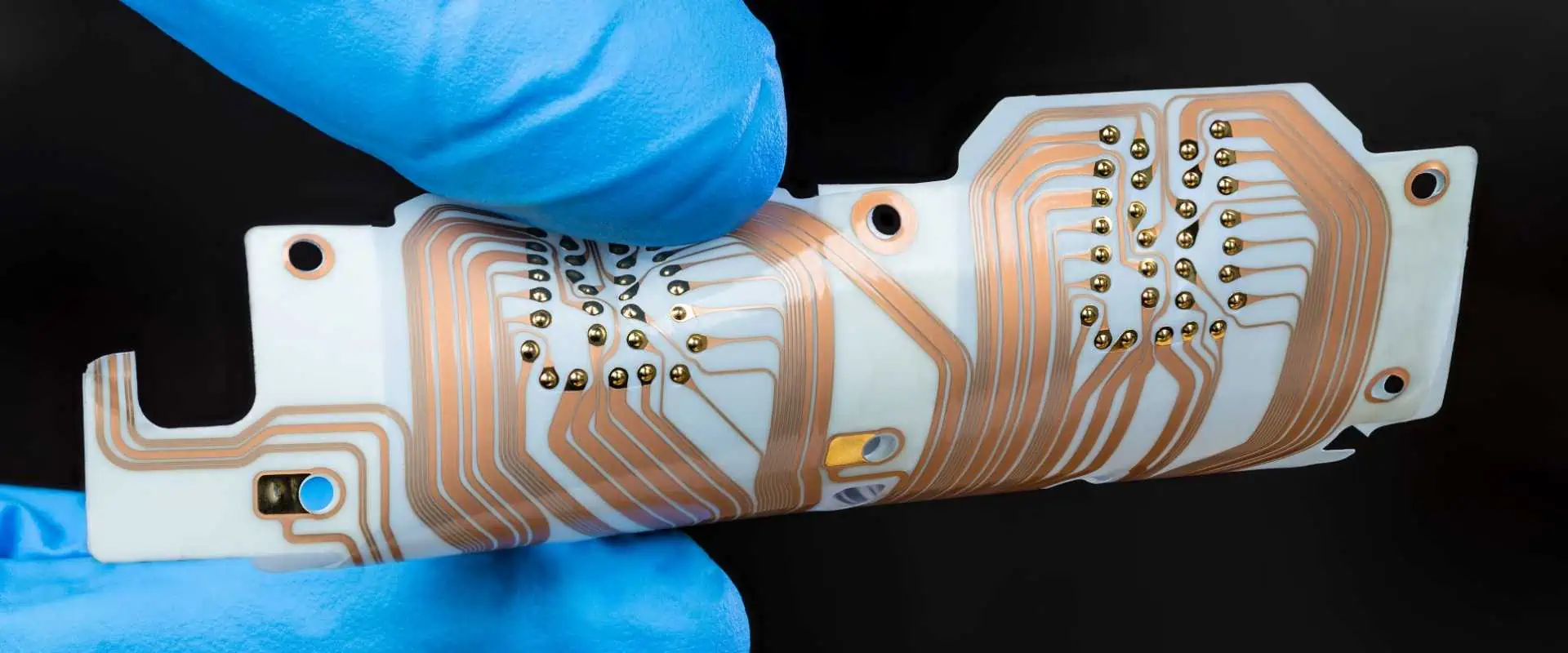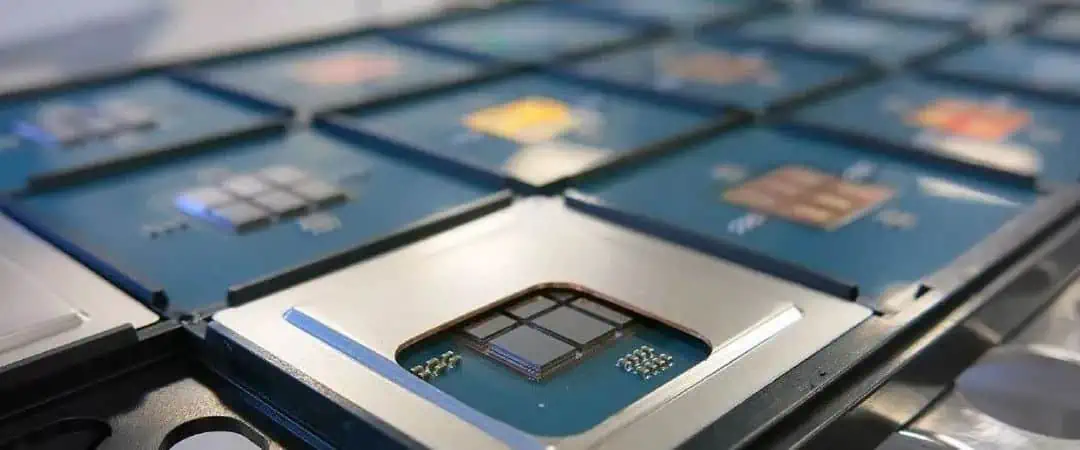
Understanding XC7K70T-1FBG484 FPGA: How it sets itself Apart from Other FPGA

Xilinx FPGA Chip

FPGAs are gaining popularity due to their unmatchable features. That’s why These FPGAs are essential in many industries, from telecommunications to automotive to consumer electronics. They are part of a variety of applications, from high-performance computing to signal processing to industrial control. That’s why their demand is also increasing. One popular FPGA model in the market is the XC7K70T-1FBG484. In this article, we will explore what XC7K70T-1FBG484 FPGA is and how its unique features make it different from other FPGAs.

What Is the XC7K70T-1FBG484 FPGA?

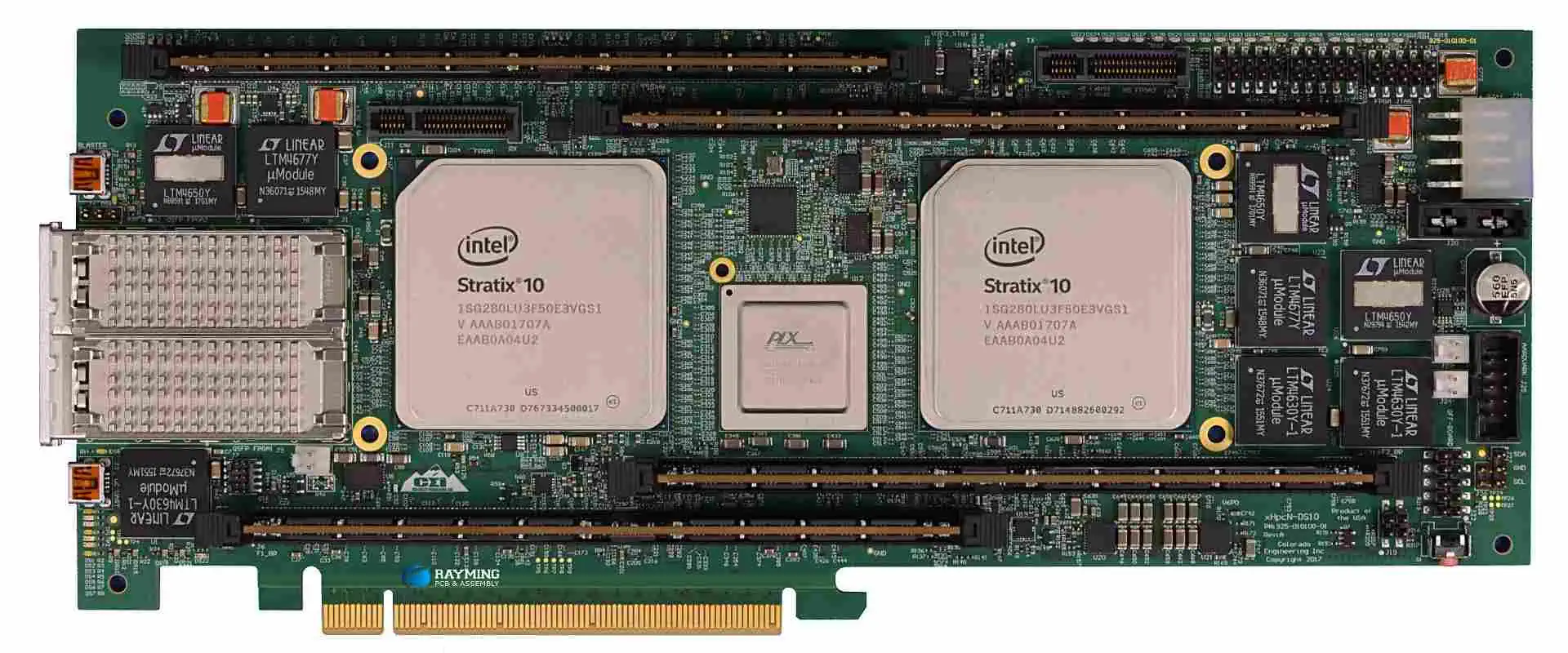
XC7K70T-1FBG484 FPGA is a high-performance FPGA. Xilinx, a leading FPGA manufacturer, is the manufacturer of this FPGA. It is a member of the Kintex-7 family of FPGAs. In addition, it is designed for high-bandwidth and high-performance applications.

The XC7K70T-1FBG484 FPGA unique architecture allows maximum flexibility and reconfigurability. That’s why it contains a large number of logic cells and digital signal processing. It has numerous blocks and memory blocks. That’s why it is easy to program it to perform a variety of functions.

Discover what XC7K70T-1FBG484 FPGA is, and learn about its unique features that make it stand out from other FPGAs in the market. Some of the key features are following

  • It has 68,200 logic cells
  • It has 360 DSP slices
  • 1,800 Kb block RAM for data saving or processing
  • 80 differential input/output  pairs

How Is The XC7K70T-1FBG484 FPGA Different From Other FPGAs?

FULL PCB MANUFACTURING Quote

The XC7K70T-1FBG484 FPGA sets itself apart from other FPGAs in several ways. Here are some of the features that make it unique and highly reliable.

1. High-Performance Architecture Makes It Stand Out

The XC7K70T-1FBG484 FPGA possesses a superior architectural design. That’s why it provides exceptional performance capabilities. This device is equipped to handle high-bandwidth and low-latency demands with great proficiency. That’s why it is an excellent choice for applications that require swift and accurate data processing. Among its many features, the XC7K70T-1FBG484 FPGA boasts a high-speed serial interface. As a result, data transfer rates of up to 12.5 Gbps are easy to achieve. Additionally, this device comes with up-to-date clock management functionalities. As a result, you may have precise timing control and synchronization.

2. A Large Number Of Logic Cells

Logic cells are the foundation of FPGAs. They are used to implement digital circuits. You can’t imagine any FPGA without logic cells. The XC7K70T-1FBG484 FPGA has a large number of logic cells. That’s why it is highly flexible and configurable. The more logic cells an FPGA has, the more complex circuits it can implement. The XC7K70T-1FBG484 FPGA has 68,200 logic cells. That’s why it is capable of executing complex digital circuits. 

3. Digital Signal Processing Blocks

The XC7K70T-1FBG484 FPGA also features 360 DSP slices, which are specialized logic cells designed for signal processing applications. They can optimize different tasks, such as filtering, modulation, and demodulation. In addition, these blocks in the XC7K70T-1FBG484 FPGA are highly programmable. That’s why they can perform a wide range of signal processing tasks by configuring. As a result, you can use these FPGAs in different applications such as wireless communications, audio processing, and image processing.

4. Advanced Connectivity Options

The XC7K70T-1FBG484 FPGA offers advanced connectivity options to its users. It features a wide range of interfaces, including Gigabit Ethernet, USB, PCIe, and SATA. The FPGA also has a high-speed serial interface (HSSI) that can support speeds of up to 12.5 Gbps. These advanced connectivity options make the XC7K70T-1FBG484 FPGA ideal for networking and communication applications.

5. Flexible Configuration Options

Another advantage of the XC7K70T-1FBG484 FPGA is its flexible configuration options. This FPGA can be the Xilinx Vivado Design Suite is extremely useful for configuring processes. In addition, it provides flexibility to design and configure according to need. It also provides a comprehensive development environment for FPGA design. The Vivado Design Suite also includes advanced debugging tools. That’s why users can easily troubleshoot their designs. The flexibility of this FPGA allows users to customize it for their specific applications. As a result, it is easy to handle. 

6. Low Power Consumption with Dynamic Power Management

Every FPGA comes with this unique feature. The XC7K70T-1FBG484 FPGA also consumes low power. This FPGA features a dynamic power management system. That’s why it can adjust power usage based on the workload. Its dedicated power management interface is just the icing on the cake. It allows users to monitor power consumption in real time. The low power consumption of this FPGA makes it ideal for battery-powered applications. That’s why many IoT devices are part of FPGA.

What Is the Maximum Processing Speed Of The XC7K70T-1FBG484 FPGA?

The XC7K70T-1FBG484 FPGA’s maximum processing speed is influenced by various factors. For example, the design of FPGA, the clock frequency, and the design’s efficiency. The XC7K70T-1FBG484 FPGA can generally operate at clock frequencies of up to 300 MHz. The actual maximum processing speed achieved will be dependent on the intricacy and efficacy of the FPGA’s design. When developing an FPGA then, don’t only focus on speed maximization. Other crucial factors, such as power consumption, latency, and throughput, may also require consideration.

Some Frequently Asked Question

ยท What 84 shows in XC7K70T-1FBG484 FPGA

 The “84” in the XC7K70T-1FBG484 FPGA refers to the number of logic cells that are available for use in the device.  As result these logic cells can be programmed to perform a wide variety of functions, depending on the needs of the user.

ยท Where can I get the XC7K70T-1FBG484 FPGA?

You can get it easily from authorized distributors of Xilinx FPGAs. You can also search for resellers or suppliers online. However, when you are ordering from a third party, and then keep in mind the risk of receiving counterfeit products. Always ensure that you are purchasing from a reputable source to avoid any potential issues. Above all, you can contact the manufacturer regarding its purchase.

Wrapping Up

XC7K70T-1FBG484 FPGA is one of the most demanding FPGAs due to its unique features. Unique architecture allows for maximum flexibility and reconfigurability. That’s why it is part of a wide range of applications. That’s why if you are looking for an excellent FPGA with great processing speed, simply go for it.
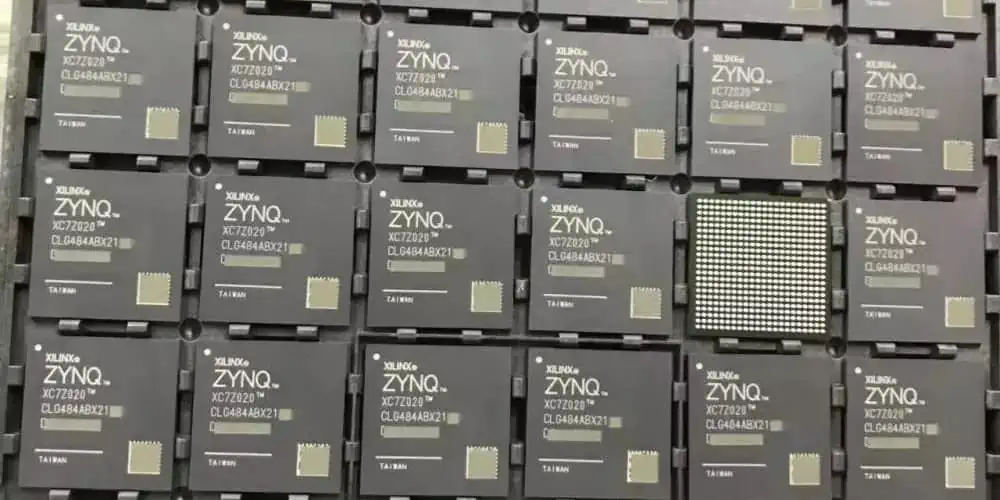
Five Exceptional Attributes of XC6SLX16-2FTG256C FPGA

Xilinx Zynq fpga

If you happen to be a fan of technology, there’s a fair chance you’ve encountered the term FPGA. It stands for Field-Programmable Gate Array. You can find several FPGAs in markets, but XC6SLX16-2FTG256C FPGA is quite different. Similarly, it has exceptional features. Let’s dig deeper to learn about this FPGA.

What Is XC6SLX16-2FTG256C FPGA?

The XC6SLX16-2FTG256C FPGA is among the mightiest devices. It belongs to Spartan-6 family. This FPGA has been engineered to provide excellent performance, energy efficiency, and affordability for an extensive array of applications. In this article, we’ll furnish you with an all-encompassing exposition of the XC6SLX16-2FTG256C FPGA, its attributes, as well as its applications.

 Specification Of XC6SLX16-2FTG256C FPGA

  • Logic cells are one of its great specs. The XC6SLX16-2FTG256C FPGA contains 16,640 logic cells. That’s why it is a highly capable device for complex applications. As a result, its demand is increasing.
  • The FPGA contains 576 KB of block RAM, allowing for efficient data storage and retrieval. Similarly, it offers more storage.   Similarly, it also offers internal configuration memory of one   Mb
  • It offers Maximum operating frequency: 250 MHz Thatโ€™s why itโ€™s ideal for high-performance digital signal processing applications.
  • Its Clock management is great. The XC6SLX16-2FTG256C FPGA features advanced clock management capabilities. For example, its digital frequency synthesis and phase-locked loops are so amazing.
  • The FPGA has 166 user Input and out pins. That’s why it allows for easy interfacing with external devices. As a result, you can enjoy hassle-free work.

How Is XC6SLX16-2FTG256C FPGA Unique as Compared to Other FPGAs

Its exceptional features make it unique.

1. Intelligent Power Management System

Power consumption is a major concern in most FPGA applications. XC6SLX16-2FTG256C FPGA has an ideal size and is designed to perform a specific task. That’s why it can perform the desired function without the need for complex hardware. It is ideal for mobile and battery-powered devices.

That’s why it is ideal for battery-powered devices. Its smart built-in power management feature is just amazing. It allows users to adjust power consumption according to their application requirements. That’s why it consumes power according to its working and need. In addition, it’s also suitable for delicate devices. As a result, its demand is great for delicate devices.ย 

2. Flexible Configuration Options

Another unique feature of the XC7K70T-1FBG484 FPGA is its flexible configuration options. This FPGA can be the Xilinx Vivado Design Suite and is extremely useful for configuring processes. In addition, it provides flexibility to design and configure according to need. In addition, it also provides a comprehensive development environment for FPGA design. Similarly, The Vivado Design Suite also includes advanced debugging tools. That’s why users can easily troubleshoot their designs. Similarly, the flexibility of this FPGA allows users to customize it for their specific applications. As a result, it is easy to handle. 

3. A Large Number of Logic Cells

Logic cells are the foundation of FPGAs. They are used to implement digital circuits. You can’t imagine any FPGA without logic cells. The XC6SLX16-2FTG256C FPGA has a large number of logic cells. That’s why it is highly flexible and configurable. The more logic cells an FPGA has, the more complex circuits it can implement. The XC6SLX16-2FTG256C FPGA has 16,640 logic cells. That’s why it is capable of executing complex digital circuits. 

4. Seamless Connectivity

FPGA XC6SLX16-2FTG256C is easy to integrate into the automation system. Its compatibility is exceptional. None can beat it in its customization and compatibility. That’s why its demand is increasing day by day in different fields. Engineers and designers love to integrate it into their projects. It is easy to program. That’s why it is easy to integrate with other systems and applications. As a result, every designer wants to go for it.

5. Expediency To Use

Convenience always matters when it comes to FPGA XC6SLX16-2FTG256C is an FPGA. Many local FPGAs come with some complicated features. That’s why it’s hard to use such FPGAs. It has a built-in configuration interface and programming tools. It also supports several programming languages. For example, it supports VHDL and Verilog, that’s why it is easy for users to develop their applications. It also has a built-in JTAG interface. That’s why it allows users to perform in-system programming and testing. That’s why it is easy to use, and people like it.

Frequently Asked Question

 What Is the Ideal Temperature for XC6SLX16-2FTG256C FPGA?

The XC6SLX16-2FTG256C FPGA is like most electronic components. It is highly sensitive to temperature. That’s why its performance and reliability may be negatively impacted by variations in temperature. To ensure its proper functionality and long lifespan, it is crucial to operate this FPGA within its specified temperature range. The temperature range for the XC6SLX16-2FTG256C FPGA is typically between 0ยฐC to 85ยฐC. As a result, it is necessary to refer to the datasheet for the specific temperature. Moreover, paying attention to its specifications is of utmost importance. As a result, temperature maintenance is necessary. 

Where Can I Get the XC6SLX16-2FTG256C FPGA?

You can get it easily from authorized distributors of Xilinx FPGAs. You can also search for resellers or suppliers online. However, when you are ordering from a third party, and then keep in mind the risk of receiving counterfeit products. Always ensure that you are purchasing from a reputable source. It is good measure to avoid any potential issues. Above all, you can contact the manufacturer regarding its purchase. As a result, you can save yourself from the trouble of getting a fake product.

Wrapping Up

XC6SLX16-2FTG256C FPGA is a brilliant FPGA. Its unique features make it eminent among all other FPGAs. Its practical use in different applications is proof of its best features. It is suitable for many portable and delicate devices. In addition, its high performance, low power consumption, and easy-to-use FPGA with several embedded hard IP cores are just excellent. Moreover, its security features are just the icing on the cake. It is a superlative choice for applications that require high-performance computing and low power use. So, if you are looking for a delicate FPGA for your device, then go for XC6SLX16-2FTG256C FPGA. It is simply amazing. Overall, the XC6SLX16-2FTG256C FPGA is an influential and versatile FPGA.  The final verdict is that it is well-suited for a wide range of applications in various industries.

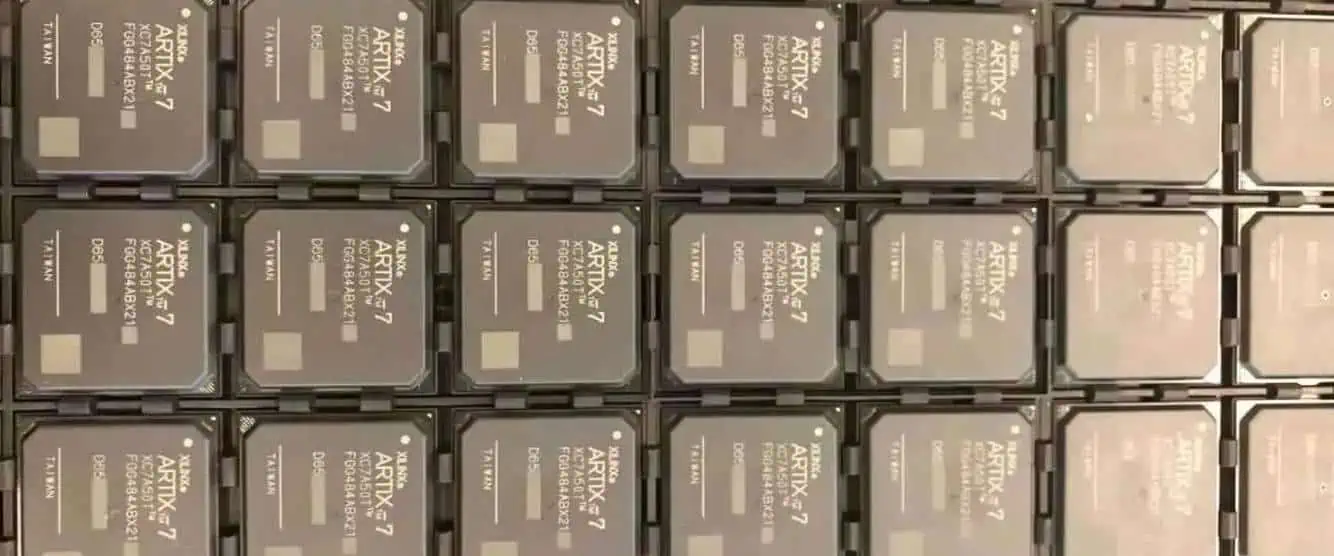
What is XC3S250E-4PQG208I, and How Does It Differ from Other FPGAs?

Xilinx Artix 7

FPGA is a programmable field array that can be reconfigured to perform various functions. FPGAs have revolutionized the digital world. Now electronic devices can perform complex tasks with speed and accuracy. They are part of aerospace, military and automotive equipment. That’s why their demand is increasing day by day. One of the most versatile FPGAs is XC3S250E-4PQG208I, which is produced by Xilinx Inc. Let’s dig deeper to know more about the XC3S250E-4PQG208I, and how it is different from the rest of FPGAs.

What Is XC3S250E-4PQG208I?

  • This XC3S250E-4PQG208I provides a wide range of capabilities that are not found in other FPGAs. The XC3S250E-4PQG208I is a third-generation Spartan-3E FPGA.  That comes with a wide range of features and capabilities.
  • It has High-density programmable logic with up to 3,888 logic cells. In addition, 
  • It has 192 KB of block RAM. Fast and flexible connectivity with up to 216 user I/Os makes it ideal.   Moreover, it has multiple high-speed serial interfaces
  • Let’s explore what XC3S250E-4PQG208I is and how it differs from other FPGAs.

Exceptional Features of XC3S250E-4PQG208I

FULL PCB MANUFACTURING Quote

XC3S250E-4PQG208I is a third-generation FPGA that comes with a lot of unique features. Let’s explore some of its features:

1. High-Density Programmable Logic Cells

You cannot expect any FPGA without logic cells. XC3S250E-4PQG208I comes with 250,000 logic cells, which are used to implement different digital circuits. These cells are programmable to perform various functions.   As a result, they can perform arithmetic, logic, and memory operations.

2. Advanced DSP Capabilities

 DSP stands for Digital Signal Processing capabilities. The XC3S250E-4PQG208I boasts advanced Digital Signal Processing capabilities that endow it with the ability to carry out intricate mathematical calculations, including filtering, Fourier transforms, and correlation. The utility of this attribute is most evident in applications where rapid signal processing is a prerequisite, such as in radar and telecommunications. 

3. Integrated memory blocks

This FPGA also comes with integrated memory blocks. These blocks store data temporarily or permanently. These memory blocks have so many uses. For example, you can implement them on FIFO buffers and shift registers. Several memory-based digital circuits have these blocks.

4. High-Speed Interfaces

XC3S250E-4PQG208I supports high-speed interfaces. It supportsย PCI Express, Ethernet, and DDR3 memory. These interfaces enable the FPGA to communicate with other electronic devices at high speeds. Integrated circuits can’t communicate with other devices. That’s why FPGAs are suitable for applications that require high-speed data transfer. It means now you can expect more speed data transfer.

5. Power efficiency

The XC3S250E-4PQG208I has a low-power consumption feature that makes it energy-efficient. This feature is particularly useful in portable electronic devices. That’s why it improves the longevity of battery life. It has a low static power consumption of 0.9 mW. In addition, its dynamic power consumption is as low as 22mW at a 125MHz clock frequency. This means that it is ideal for battery-powered applications that require low power consumption and longer battery life. Similarly, it improves functionality.

6. Cost-effective option for hobbyists

 The XC3S250E-4PQG208I is a low-cost FPGA. Many designers always look for low-cost options that offer high performance and low power consumption. That’s why it is an affordable option for designers who want to build high-performance systems without breaking the bank. In addition, it is also compatible with various development tools and software. That’s why it is easy to use and cost-effective.

7. Effortlessness of Use

The XC3S250E-4PQG208I is easy to use. In addition, it comes with various development tools and software. Moreover, it is compatible with Xilinx’s ISE Design Suite. This suite includes various tools for designing, simulating, and testing electronic systems. In addition, it has a user-friendly interface. As a result, designers and engineers use it so effortlessly.

8. Scalability and Upgradability

The XC3S250E-4PQG208I exhibits remarkable expandability and upgradability features. That’s why it can cater to the constantly shifting market demands. Its innovative design implementation tools and modular architecture enable the effortless integration of novel functions. Its great traits without compromising the overall performance. Moreover, the extensive collection of intellectual property cores and development ecosystem provides designers with access to unique features. As a result, reusable components can significantly save time and resources.

9. Versatility and Flexibility

XC3S250E-4PQG208I provides a high degree of versatility and flexibility. It allows designers to modify and optimize their designs as per their requirements. In addition, its high-density programmable logic and block RAM enable designers to implement complex functions and algorithms. As a result, they can do everything with ease. Its flexible Input and output systems and high-speed serial interfaces enable seamless integration with other devices and systems. Moreover, its efficient power management can do wonders. The clock management resources are just icing on the cake. As a result, designers can achieve optimal performance with minimal power consumption. However, you can use these features according to your needs.

 What 8 Represents in XC3S250E-4PQG208I?

In the code “XC3S250E-4PQG208I,” the number “8โ€ does not have a specific meaning. However, in some FPGAs, every number represents something special. This code identifies a specific type of Field-Programmable Gate Array (FPGA) manufactured by Xilinx Inc. The XC3S250E indicates the family and model of the FPGA. Now comes to -4 because it indicates the speed grade. Moreover, The PQG208 indicates the package type and pin count. I indicate the RoHS compliance. I hope you all are familiar with RoHS compliance.

Where Can I Get XC3S250E-4PQG208I Easily?

Getting an XC3S250E-4PQG208I FPGA is not that hard. You can easily get it from authorized dealers and stores. But beware of the fake products and dealers. That’s why it is best to check the Xilinx Inc website to know about the right dealers. Moreover, you can get all authentic information from their website.

Wrapping Up

 XC3S250E-4PQG208I FPGA is a reliable solution that provides superior performance, flexibility, and scalability. XC3S250E-4PQG208I is a perfect fit for your design needs. That’s why this FPGA from Xilinx is a versatile device that combines the benefits of both ASICs and microprocessors. That’s why it offers unique features and functionalities. As a result, you can help to tackle the toughest design challenges and achieve your performance targets.

Six Best Practices for Designing FPGA Solutions With 10CL006YU256C8G

10CL006YU256C8G

FPGAs are becoming increasingly popular in all industries due to their unique features. They offer flexibility, high performance, and low power consumption. The 10CL006YU256C8G FPGA is one of the most advanced and versatile FPGAs in the market. However, designing and implementing FPGA solutions is a complex process. It requires specialized skills and knowledge. The following content aims to provide you with the best practices and tips. 

As a result, you can design and implement FPGA solutions with the 10CL006YU256C8G. Whether you are a seasoned FPGA designer or a hobbyist, the following content will provide you with all information. ย  As a result, you can create efficient and reliable FPGA solutions.

Best Practices For Designing FPGA Solutions With 10CL006YU256C8G

Designing FPGA solutions with the 10CL006YU256C8G requires careful planning. It requires all your attention to detail. You have to adhere to best practices. Here are some tips to help you design efficient and reliable FPGA solutions with 10CL006YU256C8G

1. Know what 10CL006YU256C8G FPGA is

Before you start designing your FPGA solution, it’s essential to understand the capabilities and limitations of the 10CL006YU256C8G FPGA. Read the datasheet and user manual for a better understanding. The application notes can help you for a comprehensive understanding of the FPGAs architecture, features, and performance.

  • 10CL refers to the family of FPGAs that this device belongs to.
  • 006 indicate the number of logic elements in the FPGA. In this case, the device has 6,000 Logical elements.
  • C8G indicates the configuration code for the FPGA.
  • Understand the Requirements of the project.

Before go on board on the creation and deployment of FPGA solution, it is imperative to have a comprehensive understanding of the project’s requisites. This encompasses a thorough comprehension of the desired functionality. It also has performance benchmarks, and power consumption thresholds upon achieving an unambiguous understanding of the project’s specifications. Now come towards the 10CL006YU256C8G FPGA and its Integration in the project.

2. Plan Your Design and Choose Software Wisely

It’s time to create a detailed design plan that includes Block diagrams and schematics, and timing analysis. A simulation and verification plan is also necessary. Many people skip this step. Similarly, choosing the right tools for designing and implementing FPGA solutions is crucial. Consider the following factors when selecting tools. First of all, Compatibility with the 10CL006YU256C8G FPGA is important. Sometime software is not compatible. Then look for the features that you can use in a hassle-free manner. In addition, software must Support the desired design flow and Integration with other design tools.

3. Use a Modular Design Approach

Using a modular design approach can simplify the FPGA design process. Similarly, it improves the design’s scalability and reusability. Divide your FPGA design into functional modules.    As a result, you not only save time but also improve functionality.

4. Optimize resource utilization and use of Use High-Level Synthesis

10CL006YU256C8G FGA has a limited number of resources, such as logic cells, DSP blocks, and memory. It is essential to optimize the use of these resources to achieve the desired functionality and performance. You can use optimization tools to reduce resource usage and improve performance.

High-Level Synthesis is a process that allows you to design FPGA solutions. It uses a high-level programming language. It simplifies the design process.ย  In addition, it reduces the time required to implement FPGA solutions. When using the 10CL006YU256C8G FPGA, HLSย is relay help full. You can optimize the device’s performance and reduce power consumption.

 Further, you can use power-saving techniques such as clock gating and power gating. Proper Resource utilization and optimization are essential. As a result, you can create efficient and cost-effective FPGA solutions. By using 10CL006YU256C8G FGA, One more thing you can do is avoid logic duplication and Use vendor-provided intellectual property blocks.

5. Pay attention to the Appropriate Clocking Strategies.

Clocking strategies can improve the performance and reliability of FPGA designs. The 10CL006YU256C8G provides various clocking options. Now it’s up to you how you use   PLL Phase-Locked Loop and a DLL Delay-Locked Loop approach. The appropriate clocking strategy depends on the design’s requirements; it is essential to choose the appropriate clocking strategy for optimal performance and reliability.

6. Perform Thorough Testing and Verification For Better Performance

Never blindly follow the design steps.ย Thorough verification is essential. As a result, you can ensure the reliability and functionality of your 10CL006YU256C8G FPGA integrated solution. Use a combination of simulation, emulation, and physical prototyping to verify your design thoroughly. Verify whether your product complies with standard practice or not. Go for Functional verification and power analysis. Either your 10CL006YU256C8G FPGA integrated solution is consuming low power or more power. Signal integrity during the working of 10CL006YU256C8G FPGA integrated solution is also important.

Frequently Asked Questions

ยท What Are the Benefits of Using HLS When Designing FPGA Solutions?

Whether you’re a seasoned designer or hobbyist, HLS simplifies the design process. You can easily optimize the performance and reduce power consumption with HLS. HSL is absolute icing on cake.

ยท How Do I Program The 10CL006YU256C8G FPGA?

You must have some knowledge of hardware description language. Verilog or VHDL are the most suitable tools. By using this software, you can synthesize a bitstream file. Later you can load this file onto the FPGA using a programming tool such as Quartus Prime.

ยท What Is the Easy Way to Learn More About Designing and Implementing 10CL006YU256C8 G FPGA Solutions?

 Intel is a reliable manufacturer. That’s why it provides all the necessary information, training materials, and a community forum for learning about their FPGAs. You can get every type of guidance. There are also online tutorials and courses available from third-party providers. Additionally, consulting with experienced 10CL006YU256C8 G FPGA designers can provide valuable insights and guidance.

 Wrapping Up

I hope the above tips will really help you when you integrate 10CL006YU256C8G in FPGA-based solutions. Implementing 10CL006YU256C8G FPGA-based solutions is a bit tricky. It requires all your effort and concentration. It requires careful planning, and you need to adhere to best practices.

10CL006YE144C8G FPGA and Its Advantages: A New Technological Advancement

Intel FPGA Board

With each passing day, the realm of technology continues to metamorphose. Every day new inventions and discoveries transform our lifestyle and revolutionize how we communicate and work. Among the recent inventions is 10CL006YE144C8G, a state-of-the-art innovation of an FPGA. FPGA stands for field array programs, and they are different from integrated circuits. What exactly is this futuristic FPGA, and how does it function? This article is an expedition into the benefits of this breakthrough FPGA.

What Is The 10CL006YE144C8G FPGA?

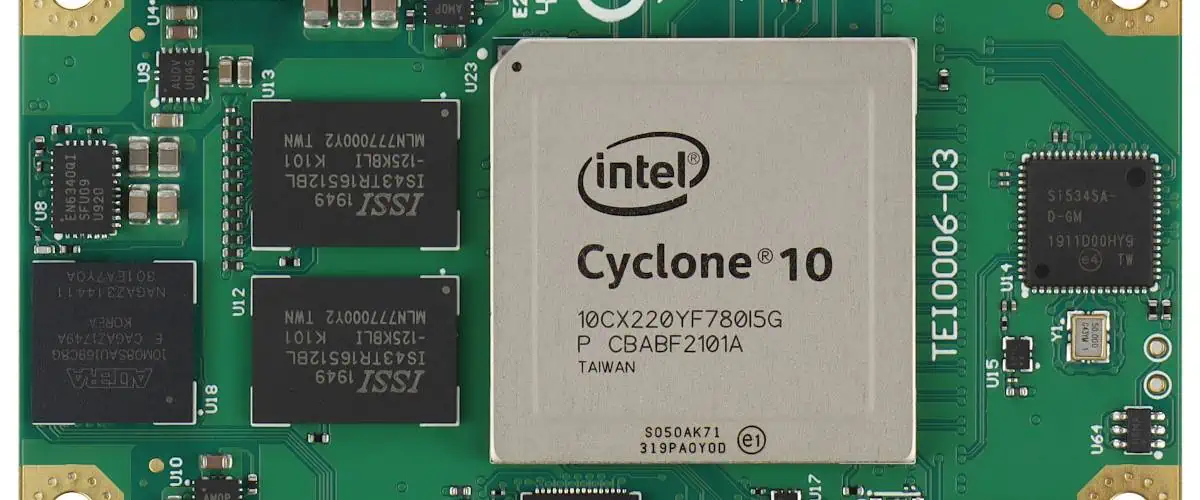
Intel Corporation has designed a unique type of FPGA called 10CL006YE144C8G. It belongs to the Cyclone 10 LP family of FPGAs. This uniqueย FPGA has unique features such as low power consumption and high data processing speed. It is furnished with 6,000 logic elements, 414 kilobits of memory, and 144 Input and output pins. Furthermore, it is equipped with an embedded dual-configuration flash that allows faster configuration times and facilitates remote system upgrades.

This exceptional FPGA is eminently suitable for a range of applications, such as industrial automation, motor control, and sensor fusion. As a result, it can handle complex applications and its high processing power. In addition, its energy-efficient design makes it an optimal option for battery-powered devices.

Perks Of Using 10CL006YE144C8G

FULL PCB MANUFACTURING Quote

1. High-Performance And Reliable Computing Capability

The 10CL006YE144C8G FPGA is a field-programmable gate array that endows its users with a plethora of benefits. One of its notable advantages is its high-performance computing capability. It enables it to undertake intricate and computationally intensive tasks with ease. Consequently, it is the optimal choice for applications that require rapid processing and low latency. Nowadays, almost every application needs high performance without compromising quality.

2. It Is Easy To Program And Reprogram

Integrated circuits are hard to program and reprogram.

Moreover, the FPGA can be programmed and reprogrammed according to specific applications, which makes it an adaptable and versatile solution. Its programmable flexibility allows it to satisfy the unique requirements of each application, making it an affordable solution for an extensive range of applications.

3. Longevity With Low Power Consumption

The FPGA’s power consumption is minimal while providing high-performance computing capabilities. As a result, you have prolonged battery life which makes it ideal for low-power applications. The 10CL006YE144C8G FPGA can connect seamlessly with various devices and systems due to its high-speed connectivity capabilities. Consequently, it is a suitable option for applications that necessitate high-speed data transfer.

4. Advanced Security Features

 The security of data is one of the biggest issues. The FPGA has advanced security features. That’s why 10CL006YE144C8G FPGA protects against security threats such as hacking, tampering, and unauthorized access. Its security features make it a trustworthy and dependable solution for critical applications.

5. Ease Of Design and Redesign

The 10CL006YE144C8G FPGA is easy to design and implement. It comes with a development kit that includes software tools, libraries, and IP (Intellectual Property) cores. That’s why it is easy for designers to create custom logic designs. Furthermore, Compared to traditional ASIC chips, the 10CL006YE144C8G FPGA is cost-effective. You can easily reprogram it according to need. As a result, you don’t need any expensive hardware redesigns or software.

6. High Reliability and Suitable For Harsh Environments

The 10CL006YE144C8G FPGA is a highly reliable device. It can withstand radiation, temperature, and electromagnetic interference. That’s why it is suitable for use in harsh environments. Sometimes integrated circuits don’t work well in harsh environments, so 10CL006YE144C8G FPGA is ideal for this purpose.

Applications Of 10CL006YE144C8G FPGA

The 10CL006YE144C8G FPGA has a wide range of applications in various industries. Here are some of the applications of 10CL006YE144C8G FPGA:

ยท Aerospace applications

The aerospace industry is one of the primary users of 10CL006YE144C8G. There are several reasons to use this FPGA in the aerospace industry. For example, its enhanced durability and ability to withstand high temperatures. In addition, it can withstand high pressure. That’s why it is ideal for use in aircraft components, such as wings, fuselage, and engines. It is also part of space exploration vehicles and satellites. The list is long, and you can easily discover more applications in the aerospace industry.

ยท Mechanization and industrial control

The FPGA 10CL006YE144C8G has a special place in industrial automation systems like programmable logic controllers, motor control systems, and robotics. It is helpful to execute tailor-made logic and control algorithms for specific industrial processes. FPGA 10CL006YE144C8G possesses high-speed processing capabilities. That’s why it is easy now to do real-time monitoring. Moreover, it improves the control of the system, leading to a hike in efficiency and precision. In motor control systems, it can carry out advanced control algorithms for accurate motor control. Additionally, FPGAs can connect with various sensors and feedback devices to keep an eye on the motor’s performance. Simply it is easy to modify the control algorithm correspondingly.

In the realm of robotics, FPGAs can be implemented to regulate the movements and actions of robots. FPGAs can be used to execute custom motion control algorithms and interface with different sensors and actuators to monitor and handle the robot’s movements.

 Some Frequently Asked Questions

ยท What type of package does the 10CL006YE144C8G FPGA come with?

Package type depends upon the manufacturer. The 10CL006YE144C8G FPGA typically comes in a tray or tape-and-reel package. Tray packages are usually suitable for larger quantities. However, tape-and-reel packages are suitable for smaller quantities. 

ยท What is 8G in10CL006YE144C8G?

The “8G” in part number 10CL006YE144C8G refers to the package type. It is also known as a package option code. In this case, the “8G” indicates that the device is offered in a 144-pin Fine Line BGA package with a 0.8mm ball pitch. The manufacturer gives this code to differentiate between different packaging options for the same FPGA device.

Wrapping Up The Things

Overall, 10CL006YE144C8G FPGAs can provide flexible and high-performance solutions for industrial automation applications. It leads to swifter and more precise control and monitoring of industrial processes. Above all, the 10CL006YE144C8G FPGA is an adaptable and reliable solution that provides high performance. In short, you can call it the future of many industrial applications.  

A Comprehensive Guide to Troubleshooting PCB and Repairing Your PCB

Troubleshooting PCB

PCBs are an essential part of nearly all electric systems, and a single issue can lead to significant malfunctions. Although rare, most PCB problems arise from human error during the fabrication procedure.

Regrettably, the precision necessary for the proper functioning of circuit boards leaves more margin for human error, making it nearly impossible to eliminate them. Nonetheless, there are troubleshooting techniques available for circuit boards that can assist in resolving these issues.

YouTube video

Overview of Troubleshooting PCB 

The accuracy of a PCB device relies on how precisely it performs its functions. However, human involvement in its manufacturing processes can introduce Trojan horses.

Most defects in PCB are typically caused by human error, such as incorrect soldering of components or the utilization of Improper voltages. Nonetheless, some flaws are not directly caused by human error, including component degradation.

A commonality between both types of Faults is that many of these Flaws are challenging to identify. Troubleshooting techniques can be beneficial in deciphering these issues and uncovering insights.

Troubleshooting PCB Deals With

Repairing PCB

The operation of the PCB electronics is centered around the electron flow, which is electricity moving from 1 level to another. Voltage & current regulation within a board is the basis for the functions of PCB electronics.

PCB electronics possess regulatory attributes thanks to components such as resistors, inductors, capacitors, or soldered wiring. Nevertheless, the electron flow pattern in the board can be disrupted by voltage spikes or powerful currents/ torrents, which can cause damage.

Intermittent failures are the term used to refer to the majority of defects caused by disruptions.

Factors To know Which Troubleshooting Technique Is to Repair PCB

The viability of a printed circuit board (PCB) troubleshooting technique depends on factors such as the no. of layers, size, assortment of elements, and more. Troubleshooting highly sophisticated PCBs may necessitate the use of specialized equipment.

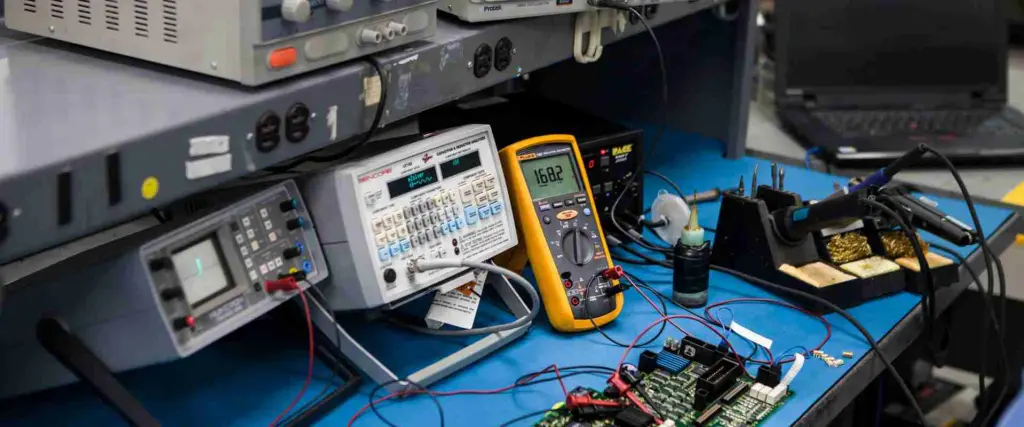
In most cases, utilizing essential electrical appliances will suffice to troubleshoot PCBs effectively. It is because PCBs are generally straightforward to troubleshoot. As a result, you can often troubleshoot the average Printed circuit board without requiring sophisticated equipment.

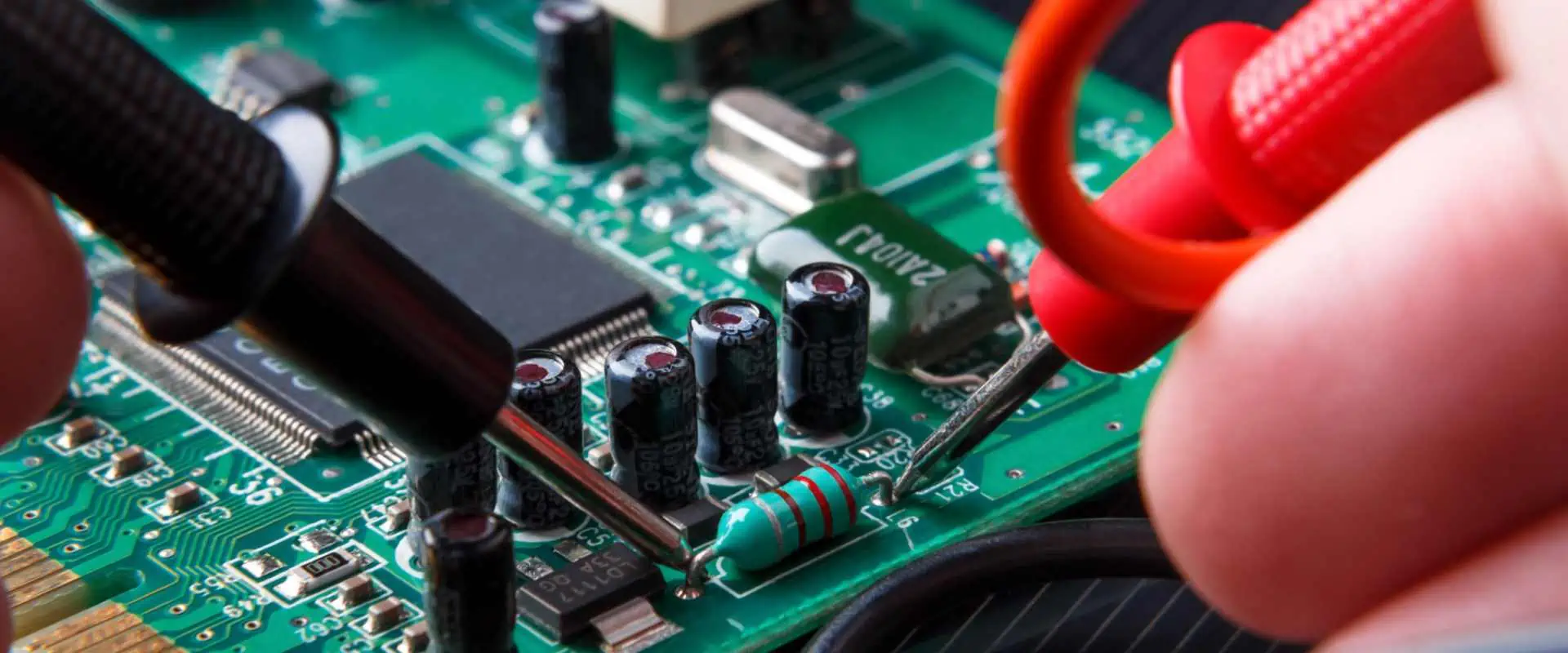
The multimeter is a highly versatile tool for diagnosing PCB issues. Nevertheless, in situations involving significant complexity, you may require advanced equipment like the analyzer and oscilloscope/LCR meter.

These tools enable the revelation of insights regarding the operational behaviors or mapping of a PCB.

Would you like to know more about troubleshooting and how its equipment uncovers Printed circuit board mapping & operations? The following chapter provides an in-depth analysis.

The Importance of Maping in Troubleshooting PCB 

A standard PCB comprises a copper insulator network and traces that link groups of elements in a printed circuit board. The existence of the PCB’s schematic is one factor that can influence the ease of troubleshooting, as some PCBs are more straightforward to diagnose than others.

Having a comprehensive grasp of a PCB’s current flow, signals, and traces can facilitate the troubleshooting process. To diagnose issues accurately, it’s crucial to identify which capacitor corresponds to which resistor.

It’s crucial to comprehend the location of a voltage divider, choke, and filter on a PCB. However, if you’re unfamiliar with the Printed circuit board configuration, it’s advisable to commence troubleshooting by examining the connectors.

Connectors serve as the entry point for incorrect inputs from an outside environment, which can cause issues such as voltage spikes and over-current surges within the PCB. However, troubleshooting a Printed circuit board without an approach to its schematics necessitates a thorough understanding of its mapping. Otherwise, it may take a considerable amount of time to track the PCB’s configuration.

How To do Troubleshooting PCB?

FULL PCB MANUFACTURING Quote

Below are some essential initial steps to take when identifying PCB faults

ยท Visual Inspection

Performing a visual examination of the circuit board to spot burnt components, dry joints, and cracks is a simple and effective method of troubleshooting that doesn’t require power.

A high-quality optical magnifier is essential for visible inspections since there could be minor physical damages that might go unnoticed without one.

ยท Physical Inspection

If you don’t find anything important during the visible inspection, it’s time to verify the power supply. Make sure the IC gets the right amount of power.

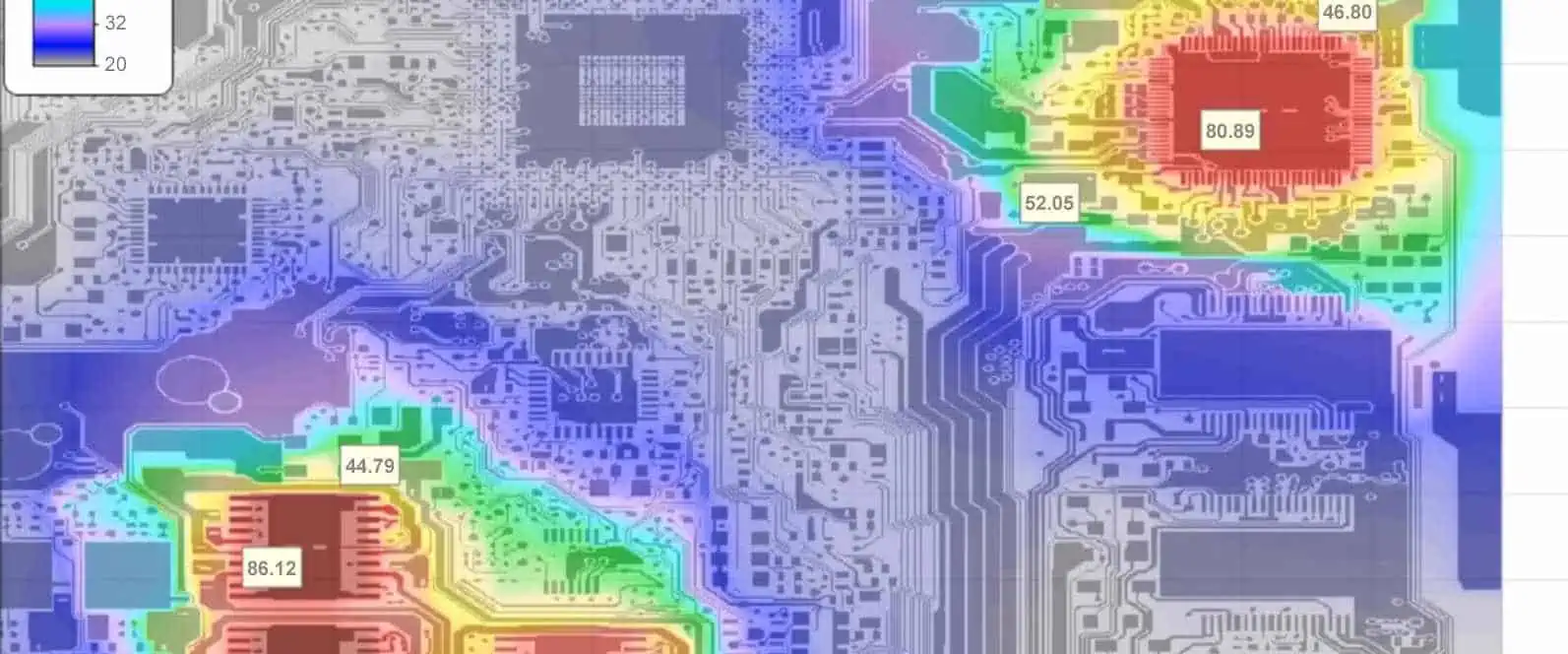
Giving the IC the wrong amount of power can make the board overheat or overload. You can find where high current caused harm by touching the surface or components of the PBC.

When you touch different circuit components, you change the circuit’s impedance, which can also change how the system works. It can support you in finding the parts that require more capacitance.

To check if a component works correctly, you can use compressed canned air to cool a hotspot. But it’s essential to take some precautions while doing this.

When doing a physical inspection, it’s essential to touch the Printed circuit board with 1 hand at a time. It prevents electrical shocks from reaching your heart and causing fatal injury. It is always recommended to keep 1 hand in the pocket when working with the live circuit board.

Another essential precaution is blocking any feasible route for the current to reach the ground to prevent shocks. It includes avoiding standing barefoot and using a non-resistance grounding strap.

ยท Explicit Component Testing

At this point in troubleshooting, it’s time to apply measurement devices. Your first step is to measure the voltage of the power supply throughout the board.

Next, measure the currents at different board units to find areas with the wrong voltage. It is where having the circuit board diagram is helpful.

Common Troubleshooting PCB and Manufacturing Defects 

Although there are various reasons why a PCB might be faulty, several of the most prevalent problems come from defects during manufacturing. Here are some issues that we frequently encounter during electronic servicing at AES:

ยท Exposed copper edges

Copper is an excellent conductor, but it is soft and can rust easily. To prevent this, copper used for Printed circuit boards must be covered with a protective coating. If copper edges are not coated properly, they can cause faults or shorts.

ยท Slivers of solder or copper

When making a PCB, small pieces of solder & copper masks can accidentally be left on a circuit board. So these slivers expose plating or cause Two separate copper parts to connect incorrectly. Both situations can cause a Printed circuit board fault.

ยท Plating gaps

If air bubbles or contaminants are present during a plating deposition procedure, it can result in cracks in the plating.

Moreover, a defective drill hit has the potential to destroy the PCBs.

ยท Incomplete solder masks

The purpose of solder masks is to protect copper connections or shield them from corrosive exposure. However, improper application of a solder mask among the 2 facing pads can result in issues with the Printed circuit board.

ยท Acid traps

In the PCB production’s etching phase, acid can get trapped in the acid trap process. This acid’s existence can make a circuit fundamentally faulty and lead to consequent problems

ยท Insufficient thermals

Thermals are utilized around printed circuit board pads to aid in heat dispersion. However, inconsistent application of thermals can result in connectivity issues with the PCB. Inadequate thermals may cause the PCB to overheat. 

Ways for Troubleshooting PCB 

ยท Inspect Visual Elements

In troubleshooting printed circuit boards, it is recommended to begin by carefully examining the printed circuit board. Conducting a visual inspection of the PCB can aid in identifying apparent issues like overheated components/ faulty connections.

The most straightforward way to identify an element error is by searching for minor brown marks on a printed circuit board. It can be completed without extensive electrical knowledge. Any dots indicate the overheated element that must be replaced. Additionally, bulging components and dull-looking links can serve as minor indicators of an error.

ยท Inspect Physical Components

After assessing the physical elements of the printed circuit boards, the next step is to perform the inspection with electricity running through the circuit. When the printed circuit board is linked to power, you can detect hot spots by feeling different areas on the printed circuit boards.

Typically, faulty connections and physical element issues cause specific spots on a printed circuit to become significantly hotter than the remaining ones. One can sense the temperature difference by touching the surface with a hand.

As a safety measure, it is essential to refrain from touching both hands on a live PCB simultaneously. Doing so can pose a severe risk of an electric shock passing through your heart, potentially leading to a fatal outcome. Therefore, to avoid injury, it is advisable to keep 1 hand off a printed circuit board during the procedure until it’s disconnected from a power source.

ยท Test Individual Components

The most efficient way to detect printed circuit board component failure is by using the multimeter to test each component individually. This method involves testing each capacitor, resistor, and other members separately to determine their functionality.

Each element should exhibit a reading at the stated value, indicating no issue with that component. However, if the reading exceeds the specified value, it means a problem.

ยท Test Integrated Circuits

Testing integrated PCBs is among the most challenging aspects of PCB troubleshooting, even for experts. It is primarily because integrated PCBs differ significantly, and there is a broad range of specialty integrated PCBs, making it nearly impossible for most people to test them accurately.

The most straightforward approach to diagnosing circuit boards is comparing them to a fully functional circuit board of the identical type. It is much easier to evaluate the functionality & behavior between two similar circuits than to diagnose an individual circuit.

ยท Inspect The Power Supply

To diagnose power supply issues, it is necessary to measure the power rails’ voltage using a multimeter. The output and input values should match the expected component values. If they do not, underlying issues may require further investigation.

If the voltage reading is 0V, it indicates the presence of a short board somewhere along a power rail, either in the regulator/capacitor. So, the element with the short circuit tends to heat rapidly, and one can feel the heat emanating from that specific unit.

ยท Compare a Defective Circuits 

One of the simplest methods to diagnose PCB problems is using 2 same printed circuit boards. However, this method is only feasible if two identical PCBs are available. The following are the steps involved in this process:

Compare the 2 printed circuit boards visually to identify any noticeable problems like misplaced components or burn marks. The two boards should be nearly the same in every aspect, and any differences should be examined closely to identify specific problems.

ยท Use a multimeter to compare the behavior & functionality of the two PCBs, like the registered element(component) values, which should be nearly the same. Any differences observed are likely to indicate the physical component problem.

ยท Signal Probing

It is a complex troubleshooting process that requires expertise, but with a multimeter and waveform capture device, non-professionals can perform it. It involves measuring voltage and capturing waveforms at various points to identify where the problem is occurring. For more learning on advanced PCB testing techniques that involve signal probing, you can refer to our website.

ยท Dispose of Your Broken Printed Circuit Board

Disposing of printed circuit boards is not straightforward because certain parts of a printed circuit board can also be recycled while others cannot. Understanding the intricacies of circuit board recycling is a complex matter with multiple perspectives and approaches to consider.

Conclusion

It’s inevitable to encounter defective PCBs occasionally, which highlights the importance of being familiar with PCB troubleshooting methodologies. Although it may appear daunting at first glance, troubleshooting a printed circuit board is a relatively uncomplicated procedure, as demonstrated above.

While human mistakes cause most PCB errors during the manufacturing process, it is possible to acquire the skills to identify and rectify these errors. So in this way, you can also save both time & money.

What are the Metals with Low Thermal Conductivity?

Thermal Clad PCB

Metals are known to be a good conductor of heat and as such they are widely integrated in electronic devices as well as printed circuit boards. While some metals donโ€™t really perform well, some metals have low thermal conductivity. Materials with low thermal conductivity are known to be a good insulator.

In addition, metals that feature a high rate of thermal conductivity transmit heat rapidly. On the other hand, some metals with low thermal conductivity function as thermal insulators and as such, prevent heat transfer.

YouTube video

What is Thermal Conductivity?

Thermal conductivity is one of the properties of metal. It is a property that evaluates the capability of a metal to conduct heat. Thermal conductivity of a metal varies based on the type of metal. Therefore, it is important to consider the thermal conductivity of the metal type in applications where there are high operating temperatures.

Thermal conductivity always remain the same in pure metals most times. It doesnโ€™t really changes with increase in temperature.  However, there are some metal types like alloys that experiences increase in thermal conductivity in response to temperature.

Also, the thermal conductivity of metal is a basic property. Regulating the transfer of heat is a crucial design consideration in printed circuit boards and electronic devices.

What is the Thermal Conductivity of Metals?

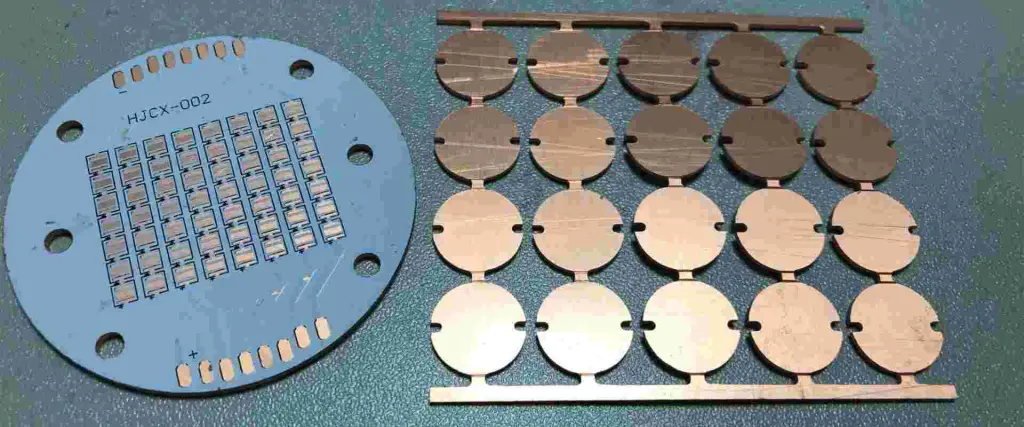
Bare Copper PCB

The thermal conductivity of a metal defines its capability to transfer or conduct heat. Metal have a good thermal conductivity. However, temperature can have an impact on the thermal conductivities of metals. The presence of free electrons in metal contributes to its heat conductivity. A pure metalโ€™s electrical conductivity reduces when temperature increases.

Metals are materials with high thermal conductivity. Therefore, they conduct heat faster. In metals, there are free electrons and this results in the conduction which results in electronic conduction. Free electrons can move throughout metals and as such can quickly transfer thermal energy compared to insulators.  Also, metals with the simplest electrical conductors have the best thermal conductivity.

In metals, thermal conduction is in three different categories for various forms. These are conduction electrons for metals, molecular collisions for gas or liquid forms, and lattice vibrations for solids. There are various process of metal sโ€™ thermal conduction. These include lattice vibrations and conducting electrons for metals and molecular collisions combined with the conduction electrons for metals. What really makes metal a good conductor is the presence of conduction electrons.

The free flow of conduction electrons contributes to metalโ€™s ability to conduct heat.  Metal atoms offer valence electrons while  still reacting with non-metal atoms chemically. Therefore, metal ions perform well when used in some applications. The special metallic bonding of metals and metal alloys makes them good conductors. Metals are known to be very ductile and malleable and as such they deform when exposed to stress.

Materials with low thermal conductivity prevent the transfer of heat. This helps in achieving enhanced energy efficiency and better stability of the material. For instance, the lower thermal conductivity of steel makes it an ideal option for developing and designing facades, glass applications, etc.

The Thermal Conductivity of Different Types of Metals

FULL PCB MANUFACTURING Quote

There are different types of metals and each of these metals feature different thermal conductivity. Metals serve a lot of functions in different applications. They are widely used in the manufacturing of printed circuit boards.

Thermal conductivity of aluminum

Aluminum in its pure form features a thermal conductivity of almost 235 watts for each Kelvin per meter. However, aluminum alloys feature lower thermal conductivity. Aluminum is a good metal option for electronic heat sinks. This is because of its good thermal conductivity.

Thermal conductivity of stainless steel

Stainless steel is a metal with low thermal conductivity. Therefore, this material prevents the transfer of heat. The thermal conductivity of stainless steel is said to be 15 watts per Kelvin for each meter. Stainless steel is a type of metal commonly used for structures in corrosive environments.

Thermal conductivity of carbon steel

Carbon steel is another type of metal. This metal has a lower thermal conductivity compared to aluminum. The thermal conductivity of carbon steel is measured at 45 W/mK. Carbon steel is a cost-effective option for developing structural components. This steel type has small traces of other elements asides from iron and carbon. This steel type is the more commonly used than other types of steel.

Thermal conductivity of Bronze

Bronze is an alloy that comprises nickel, aluminum, and copper. It is known for its exceptional thermal conductivity. Bronzeโ€™s thermal conductivity ranges from 50 -120 W/mK. However, this depends on the content of copper present in bronze.

Metals with Low Thermal Conductivity

Metals serve a lot of functions in different applications. They are widely used in the manufacturing of printed circuit boards. Also, these materials are a great building material option. Metals are known for their crucial roles in electronics manufacturing. The thermal conductivity of metals varies based on their type. Here, we will be discussing metals with low thermal conductivity.

Steel

Steel features the lowest thermal conductivity and as such it is a great option for applications in high-temperature environments. As the lowest thermal conductivity metal, steel has  about 45 W/mK. This is much lower than other metals like aluminum and copper which has about 235 W/mK and 398 W/mK respectively.

There are different types of steel. Steelโ€™s versatility and its thermal properties make it a popular metal that has dominated several industries. Steel as one of the lowest thermal conductivity metals is commonly integrated for the production of medical devices, kitchen equipment, and more. There are four different types of steel. These are stainless steel, copper steel, alloying steel, and tool steel

Out of all these types of steel, stainless steel the lowest thermal conductivity metal with a thermal conductivity of 15 W/mK. Therefore, this metal can absorb more energy which stabilizes the temperature of the environment. Stainless steel has the lowest thermal conductivity amongst other types of steel. The thermal conductivity of this material doesnโ€™t change in response to variation in temperature.

Bronze

Bronze is one of the lowest thermal conductivity metal. Bronzeโ€™s thermal conductivity ranges from 50 -120 W/mK. However, this depends on the content of copper present in bronze.

Benefits of Metals with Low Thermal Conductivity

Copper-Clad-Board-Material

Metals with low thermal conductivity offer a lot of benefits. Due to their ability to retain heat, these metals have found their use in different applications. Lowest thermal conductivity metals are commonly integrated for the production of medical devices, kitchen equipment, and more.

Materials with low thermal conductivity prevent the transfer of heat. This helps in achieving enhanced energy efficiency and better stability of the material. For instance, the lower thermal conductivity of steel makes it an ideal option for developing and designing facades, glass applications and more. Also, low thermal conductivity metals maintain their stability when they come in contact with heat, like during food processing equipment like ovens.

Furthermore, lowest thermal conductivity metals make it crucial for designing any structure. These metals play an integral role in the security and new innovations within several industries. Metals with low thermal conductivity are known for transferring heat slowly. Therefore, these types of materials are usually integrated in applications that are exposed to a high level of temperature.

Metals with low thermal conductivity are known to be a good insulator. PCBs used in high frequency and high performance applications usually require lowest thermal conductivity metal. Also, metals with low thermal conductivity offer improved thermal performance.

Applications that Require High Thermal Conductivity Metals

Not all applications require low thermal conductivity, some applications require an exceptional thermal conductivity. Some examples are below

Heat exchanger

A heat exchanger transfers heat in order to achieve cooling or heating. Copper is the main metal used in heat exchangers. However, aluminum is also an alternative. Both copper and aluminum conduct heat faster. A car radiator is an example of a heat exchanger. The radiator comprises layers of metal sheets stacked with aluminum core.

Furthermore, heat exchangers are widely integrated in aircraft engines. They help to get rid of excess heat in power supplies and military equipment. Hot water tanks, air conditioning, and refrigeration need heat exchangers.

Heat sinks

Heat sinks are designed to transmit heat produced by a mechanical or electronic device in a moving fluid. Metals like aluminum alloys are commonly used in heat sinks. Computers have heat sinks to help them cool the CPU or graphic processors. Also, high power devices like light emitting diodes (LEDs) and power transistors have heat sinks.

Cookware

Cookware makes use of metal with exceptional thermal conductivity. Also, copper is a high thermal conductivity metal used in the bottom of cookware since it conducts heat faster.

Conclusion

Thermal conductivity is an important property of metals. While some metals have a low thermal conductivity, some have high thermal conductivity. In this article, we focused mainly on metals with low thermal conductivity. Also, from this article, we realized that steel and bronze are a good example of metals with low thermal conductivity. These metals are known to be good insulators due to their low thermal conductivity.

Major Differences Between Attiny85 programming Vs. atmega328p programming

Attiny85 programming Vs. atmega328p programming

Atmel, a prominent producer of microcontrollers that use various electronic appliances, features two highly sought-after microcontrollers: the Attiny85 and Atmega328P, both hailing from an AVR family. Despite sharing certain similarities, these microcontrollers exhibit notable differences in terms of their programming, which we will delve into in this piece.

It’s widely accepted that Arduino development circuit boards are a go-to option for novices in electronics, and with good reason. These boards facilitate effortless connectivity with other components and can be easily programmed via a user-friendly IDE and a simple USB cable. Additionally, they are in open-source form and boast a vast, dynamic association that is ever ready to offer assistance.

The boards themselves are also crafted in a manner that emphasizes sound design. Provided one essential basic prudence, it’s unlikely that they will cause permanent damage to the Arduino board. As a starting point for those interested in circuit design or programming, the Arduino circuit platform is an excellent way to gain initial exposure to these areas.

YouTube video

As projects become more complex or when creating products for consumer sale, the limitations of the Arduino platform become more evident.

In this article, we delve into the Attiny84, ATtiny85, and ATtiny2313 AVR microcontrollers, which are commonly used to move beyond Arduino-based prototypes to refined or optimized projects. We also compare these chips to an ATmega328 found in an Arduino Uno.

Disadvantages of Using an Arduino Programming

Attiny85 programming

Compared to a microcontroller IC, Arduino circuit boards are pretty bulky, making it challenging to integrate and embed into projects. Typically, shields incorporate Arduinos into larger projects by plugging into headers on the top of an Arduino. However, this approach often results in bulky assemblies that may not fit seamlessly into other aspects of a project.

The second drawback of Arduino boards is their relatively high cost compared to building custom boards with the microcontroller IC or associated passive elements. Relying on a model, Arduino circuit boards range from $20 – $30, while the microcontrollers applied in those circuit boards cost around or under two dollars. Additionally, the specifications of Arduino boards may be excessive For the activities they are commonly used for. Upon examining a selection of typical Arduino projects, it becomes apparent that many of the Arduino’s I/O pins remain unused, or the Programs executing on board Do not measure up to filling a Microcontroller’s flash storage.

ATtiny85 Microcontroller & Its Working

It is a viable substitute for the ATmega328P in small projects where only a few I/O pins are required. It is because using the ATmega328P’s limited I/O pins for small projects may not be efficient. In contrast, ATtiny85 microcontrollers can be utilized for small projects that require all available I/O pins. This article overviews the ATtiny85 microcontroller, including its pin diagram, advantages, specifications, disadvantages, and applications.

ATtiny85 is a high-performance, compact AVR microcontroller that utilizes the RISC CPU. It comes in two packages commonly used for interfacing and controlling various sensors or devices. The microcontroller also boasts Low-power usage through its MSSP and 10-bit ADC. The instruction code for this microcontroller is stored in RAM – 512 bytes and EEROM – 8kb. Alternatives to the ATtiny85 microcontroller include the ATtiny45, ATtiny25, ATtiny25V, ATtiny45V, and ATtiny85V.

Functions of ATtiny85 Microcontroller

The ATtiny85 microcontroller can perform multiple functions within a single IC. Specific pins on the microcontroller are useful for more than one function. Some of the primary functions of the microcontroller comprise timers, BOD, I2C communication, SPI communication, Interrupt, and ADC. The ATtiny85 microcontroller also features various memory types, such as FLASH, EEPROM, and SRAM.

Runing ATtiny85 Microcontroller Carefully

FULL PCB MANUFACTURING Quote

Microcontrollers are delicate components that require careful handling to achieve optimal performance and longevity in any software.

It is crucial to ensure that the electrical supply for the controller does not exceed 5.5V. Before connecting the controller to the digital multimeter, it is essential to confirm the accuracy of a voltage source output using the accurate digital multimeter. It is crucial to note that the DC output for each input/output pin must not exceed 40mA, while the DC output for GND pins and positive supply should not exceed 200mA.

To ensure a proper power supply, it’s essential to confirm the polarity of the microcontroller pins beforehand. To locate the microcontroller, an integrated circuit socket can be utilized on a circuit or breadboard. By doing so, the microcontroller is protected from the heat generated during soldering.

The Storage temperature limits for this controller span from -65ยฐC-+150ยฐC, while the operating temperature range is between -55ยฐC to-+125ยฐC.

Advantages of ATtiny85 Microcontroller

Here are some benefits of using an ATtiny85 microcontroller:

  • The power consumption is lower.
  • Easily Available
  • Less cost
  • Its small and compact size allows for easy arrangement within the tiny boards.
  • This microcontroller provides readily accessible reference data for convenient usage
  • Capable of integration via Arduino IDE.
  • Various power-saving modes enable this controller to function in battery-powered applications.
  • Despite having fewer pins, this provides numerous features.
  • This microcontroller possesses much program memory to meet the requirements of various applications.

Applications of ATtiny85 Microcontroller

The following are among the functions of the ATtiny85 Microcontroller.

  • Various engineering projects can be designed utilizing this microcontroller, depending on specific requirements.
  • The following are examples of commercial and educational applications that can be utilized.
  • Applications related to security and automobiles.
  • Industrial machinery control systems.
  • Systems involving weather sensors.

Programming an AVR ATmega328P with an Arduino

The Arduino Uno microcontroller board is powered by the ATmega328P microcontroller, which enables easy pin interfacing. The Arduino microcontroller board includes a USB serial interface and a 16 MHz clock, features not found on a standalone microcontroller. Arduino boards are ideal for prototyping, as they facilitate rapid iterations of designs. However, for finalized projects, they can be excessive depending on the features employed. Official Arduino Uno boards cost $20, while standalone ATmega328P microcontrollers cost about $2. Therefore, after completing the prototype phase with an Arduino, the project can be migrated to using the independent ATmega328P.

One potential challenge is the inability to link the ATmega328P to a computer for program uploads directly. To address this issue, a separate programmer is required. Fortunately, if an Arduino is available, it can be utilized as the programmer for an ATmega328P. So this guide outlines how to code the standalone ATmega328P by leveraging an Arduino or the Arduino development environment, using pure C code except for the built-in functionalities provided by the Arduino development environment.

Preparing and Connecting the Arduino

atmega328p programming

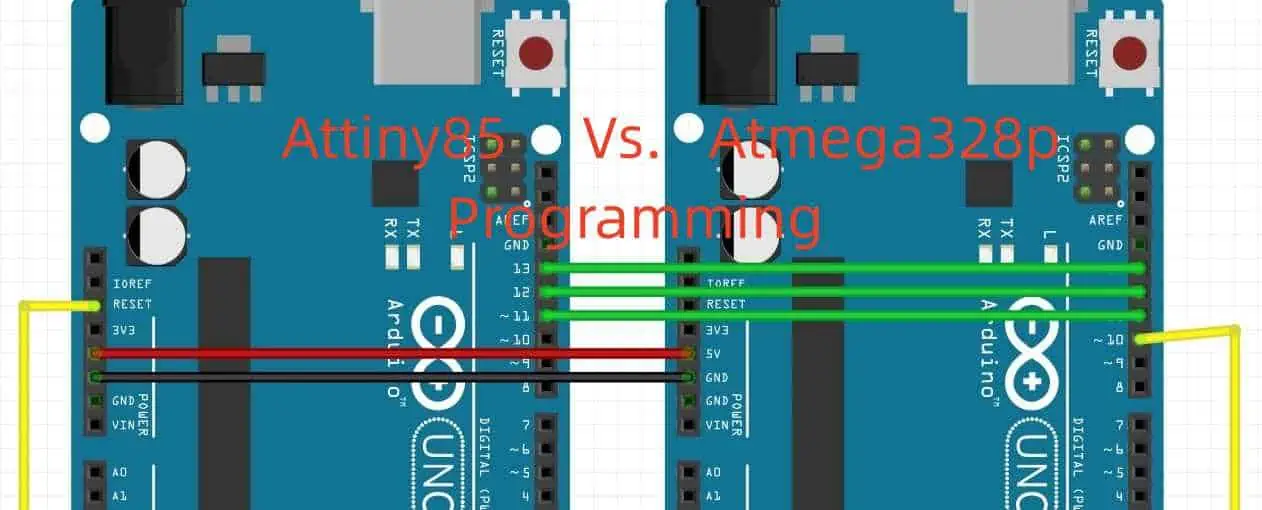
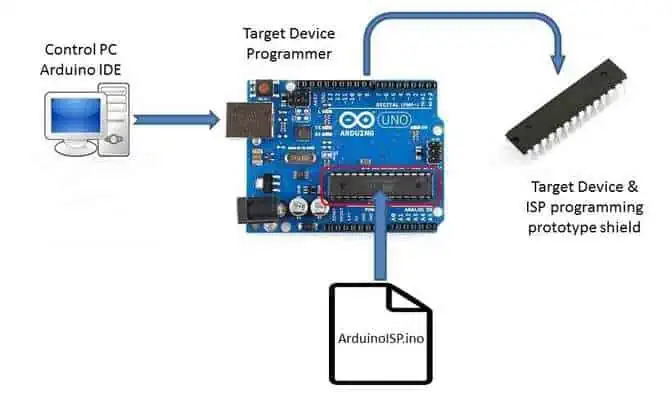
Before an Arduino Uno can function as an ISP, a specific sketch must be uploaded. Once uploaded, the Arduino Uno will be capable of programming the ATmega328P. To set up the Arduino Uno as an ISP, the following process must be taken:

To access the ArduinoISP software navigate to File -> Examples -> ArduinoISP -> “ArduinoISP.”

Upload an ArduinoISP sketch to the Arduino in the typical manner used for any additional sketch.

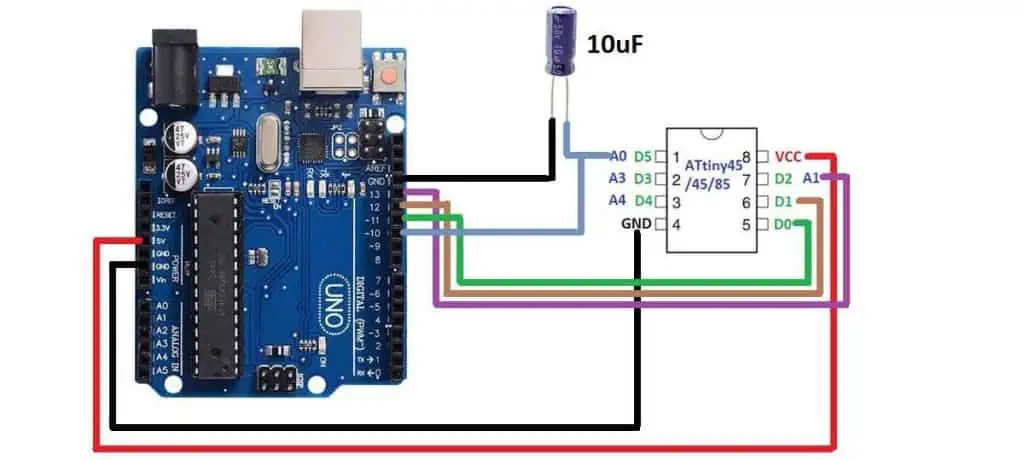
Having configured the Arduino as the ISP, it can now be utilized to code the ATmega328P. The SPI bus will link the Arduino to an ATmega328P by accurately linking the SPI connectors. However, this can be a complex task as the pin no. on an Arduino does not correspond directly with the pin no. on the ATmega328Peven, though the Arduino employs an ATmega328P chip itself. To ensure that the appropriate pins are connected, a comparison must be made between the PINs of the Arduino and those of ATmega328P. The image below displays the necessary pin connections for SPI, illustrating how these Arduino connectors correspond with those of the ATmega328P.

Differences Attiny85 programming Vs. atmega328p programming

1. Flash Memory:

The primary disparity between Atmega328P and Attiny85 is the quantity of flash storage accessible. Attiny85 possesses a mere 8 KB of flash memory, whereas Atmega328P contains 32 KB. Consequently, Attiny85 can accommodate a smaller number of commands than Atmega328P. Programmers must, therefore, produce more optimized code and maximize the limited memory capacity in Attiny85.

To surpass this constraint, programmers working with Attiny85 often employ optimization techniques like function performance optimization, data structure performance optimization, and loop unrolling. These methods assist in reducing the memory needed by the code, making it possible for Attiny85 to manage more complex applications.

Pins:

A significant distinction between Atmega328P and Attiny38 refers to their pin count. While Attiny85 has only 8 pins, Atmega328P has twenty-eight pins. It implies that Attiny85 has a limited number of input/output pins, which can restrict the number of elements linked to it.

Due to its limited number of pins, Attiny85 programmers must find innovative ways to connect components to the microcontroller. They may use multiplexers to enhance the I/O pins, shift to expand output pins, or analog signal multiplexers to share pins among multiple components.

2. Clock Speed:

The high speed of Attiny85 is 20 MHz, while Atmega328P is 16 MHz. Therefore, Attiny85 can execute instructions at a higher speed than Atmega328P. Although, the advantage of the higher clock speed is negated by the fact that Attiny85 has less flash memory available than Atmega328P.

Attiny85 programmers should be cautious in choosing the clock rate since it can affect the energy usage of microcontrollers. A faster clock rate may result in greater electrical consumption, which could be problematic for battery-operated applications.

3. Peripheral Support:

It has peripherals compared to Attiny85, including USART, API, and I2C interfaces, providing more comprehensive support for communication protocols and devices without requiring additional components. It is not the case for Attiny85, which has limited built-in peripherals, making it less versatile in device support.

Attiny85 microcontroller has smaller integrated peripherals than Atmega328P, including USART, SPI, and I2C interfaces. This makes it challenging for Attiny85 to support various devices and communication protocols without additional components. Therefore, Attiny85 operation may have to use external Serial Peripheral Interface (SPI) interfaces or software-based Inter-Integrated Circuit (I2C) protocols to interact with other equipment.

4. Programming Language:

Atmega328p with arduino bootloader

C is the programming language supported by both Attiny85 /Atmega328P, but there are differences in how a code is optimized and compiled for every microcontroller. Programmers using Attiny85 require a specialized compiler, like the AVR-GCC compiler. It is useful for AVR architecture.

It must know how to make its programs use less memory and run faster to work appropriately on the microcontroller. They also need to know what parts of a microcontroller they can use and how they can use them to make the program work well.

5. Programming Environment:

Attiny85 and Atmega328P use different programming environments. The Arduino integrated development environment is commonly useful by Attiny85 programmers as it provides an easy-to-use interface for compiling, writing, or updating code to a microcontroller. The Arduino integrated development environment (IDE)also has pre-built examples and libraries.

Conclusion

To summarize, Attiny85 or Atmega328P have commonly used microcontrollers with different functions. Attiny85 has less memory, less number of pins, or a faster clock speed. Therefore, Attiny85 programmers must optimize their code, use creative methods for connecting components, and consider power consumption when Choosing the clock speed.

Atmega328P has more built-in functions than Attiny85, which makes it better suited for appliances that need to work with more types of devices or communication methods. Both microcontrollers are programable using the same language, but the Attiny85 programmers require a specific compiler and know how to use optimization techniques effectively.

In summary, the decision to use Attiny85 or Atmega328P depends on the specific needs of the tool. If additional memory capacity and support for more peripherals are essential, Atmega328P can be better. However, if a smaller size is essential, Attiny85 can be a good option. Both microcontrollers provide developers with excellent capabilities or flexibility for various applications.

How to laser QR Code on PCB Board

Laser QR Code PCB

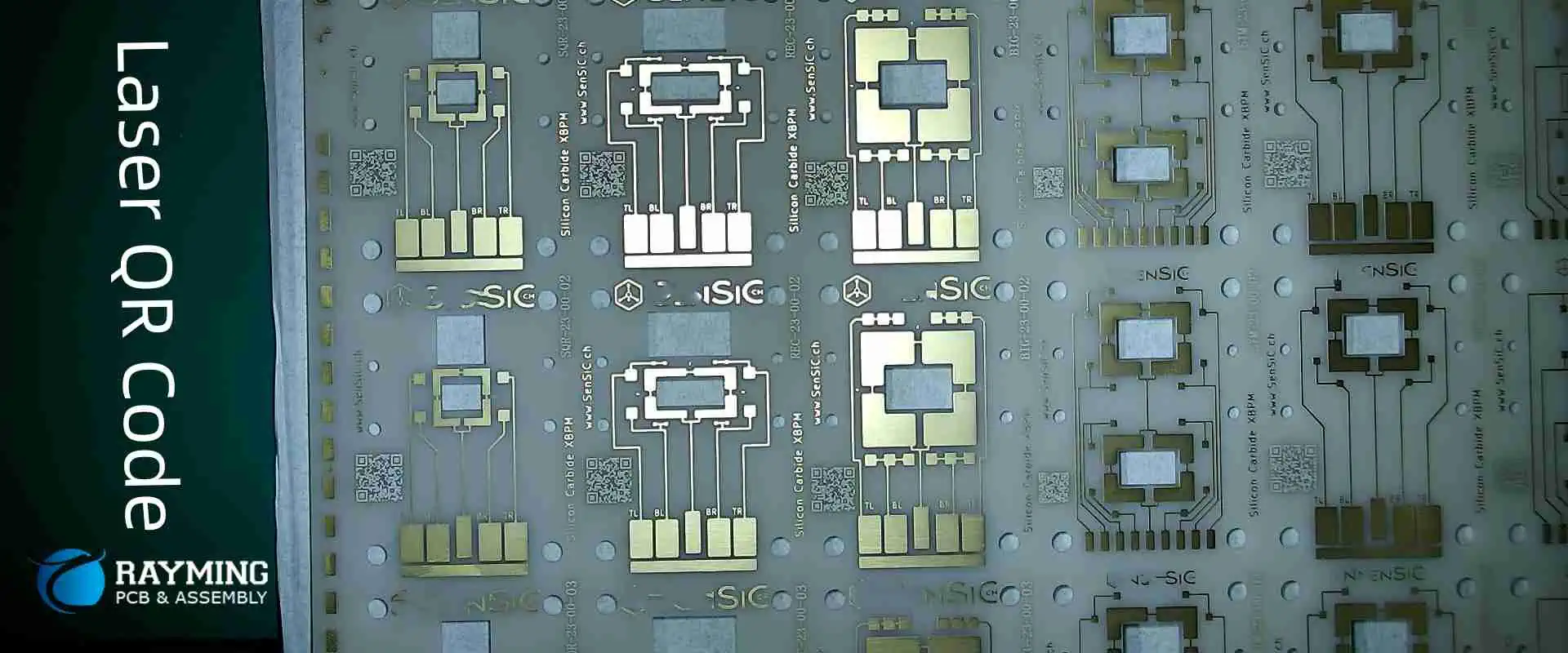
Advanced and latest marking technology includes laser coding devices. The text and patterns are etched on the product’s surface using focused laser etching technology. Laser marking, which is frequently employed in the Circuit sector, offers a number of advantages over the conventional inkjet printing approach. This includes good quality, great wear resistance, high consistency, efficiency, safety, cost savings, and dependability.

Smartphones, wearable gadgets, and such items are getting lighter and more compact. This is all because of the rapid expansion of the IT industry and increasing customer demand for more electronic goods. Refining production is also necessary. The inscription of symbols, one or two-dimensional bar code, and various data on the surface of the PCB are tracked back to achieve the highest quality assurance of the manufacturing process of the PCB. This has now become the industry’s development trend.

Due to weak wear resistance, lack of accuracy, environmental impact, and poor aesthetics, the conventional printing method is becoming more unable to meet the demands of the market for new technologies. Therefore, the PCB sector has started to use laser marking machines more frequently.

Engraving on the PCB’s surface can take the shape of a pattern drawing, corporate LOGO printing, QR code, contacts information, etc. Silk-screen printing was frequently used in the past for traditional printing. Conventional inkjet printing methods could have satisfied the market’s initial demands, yet since electronic products’ quality keeps rising, consumer expectations are also rising. This has led to an increase in the market’s demand for PCB boards with increasingly high labeling quality.ย 

Old-fashioned printing techniques cannot adjust to changing market demands, and their flaws are more evident, including:

  1. There has weak wear resistance. The level of wear resistance indicated here does not refer to the metal’s wear resistance. This indicates that the type of ink that covers the PCB’s surface is frequently worn away, resulting in discoloration and blurring.
  2. Requirements for aesthetics; because surface printing of metal has a comparatively low-end look. It is unsuitable for some items with stringent aesthetic standards, like medals, metallic business cards, elegant corporate nameplates, descriptions of handicrafts, etc. Meet their standards for looks.
  3. It is crucial to utilize chemical solvents, like heavy metal components and organic solvents. These solvents contain a specific level of toxicity and can harm the silk screen process of printing employees. Additionally, some volatile chemical components progressively volatilize as the ink of screen printing dries, polluting the atmosphere and harming the environment. A number of issues with conventional printing technology have been effectively resolved by the development of fiber-laser engraving technology. High accuracy, quick speed, and consistent performance define it. 

Additionally, it just requires computer control, is easy to use, and can produce a variety of intricate characters, patterns, two-dimensional bar codes, and such. This fully satisfies the demands of high-quality markings of the current PCB industry.

Attaching PCB QR Code With the Assembly

QR CODE PCB
QR CODE PCB

The complexity of a QR code increases with the number of characters in the URL it redirects to. In actuality, the size of the QR code is determinable by the length and the level of error correction. However, we advise users to build a short URL that points to the authentic and original address to solve this problem. The ideal and perfect URL must not contain over twenty characters.

Generating The PCB QR Code 

Numerous websites and software allow for the creation of QR codes. The producer of the QR code must utilize the same origin going forward to renew the code to guarantee the same picture for all items. However, not each tool employs a similar encoding process. Although some online software and tools include more possibilities, the following are the most important factors to take into account when creating.

  • Error correction makes it possible to identify mistakes and recreate the original and mistake-free data. M is recommended since it permits the recovery of 15% of code words.
  • Color: The majority of QR reader software is set up to scan dark or black QR codes over a white backdrop. Prior to being used on silkscreen, the QR bar code must be reversed if the backdrop is dark (for example, the color of the solder mask contains red, black, green, or blue). The QR needs not to be reversed if the color of the soldering mask is white.
  • Size: After import, the finished QR code must measure >0.5 in. Certain tools for converting images to DXF support resampling. If it does not, the right size of the pixel can be selected while the image is being generated.
  • Margin around QR code: Although Freescale has effectively utilized a 10% margin around QR codes, 20% is the appropriate margin.
  • UTF-8 recommends encoding.

Convert The PCB QR Code To DXF

It is necessary to convert the created QR code (.PNG, JPG, TIFF, etc.) to.DXF. To handle this procedure, a number of products are available in the market.

  1. The coding has to be the right color according to the color of the solder mask before the picture is converted.DXF.
  2. This technique helps in transferring images into shapes or vectors form.
  3. The picture must adjust to fit the imported QR bar code’s final dimensions.
  4. The recommended minimum size for a 5 Megapixel camera to read a QR code is about 450 mils plus a margin. The lengthier the QR bar code, the easier to scan.

Advantages & Disadvantages Of PCB QR Code 

FULL PCB MANUFACTURING Quote

The abbreviation QR means “quick response.” The term “QR code” itself is a 2-dimensional code that includes data in the two dimensions. It can hold 4296 characters of alphanumeric and 7089 characters of numeric code, respectively. However, with the exception of the no-zone sector, each black module in a QR code indicates one bit, and each white module has zero bits. Therefore, after scanning in the horizontal direction, the information in the QR code is determinable according to the white modules. In this post, let’s examine the benefits and drawbacks of a QR code.

Benefits Of PCB QR Code 

  1. Versatility is the key benefit of a QR code.
  2. QR codes help in accomplishing anything at any time.
  3. Mobile phones help to scan it at any time, any place.
  4. It uses less paper for advertisements. Additionally, it scans quickly from outside.
  5. The elimination of the requirement to fill down a lengthy URL might benefit visually challenged pupils.
  6. A simple scan can easily capture vital information, which eliminates the need for putting it down.
  7. Nearly free and affordable. Additionally, it is simple to use and can incorporate any kind of media.
  8. You don’t need to know how to write code to use it.
  9. It keeps a lot of data and employs these codes several times.
  10. A speedy reaction via QR codes is a significant additional benefit. Furthermore, there is no need for a license to develop or utilize.
  11. Developing free software is simple. Using free software, a smartphone’s camera may, nevertheless, be convertible into a barcode scanner.
  12. QR code proves as a quick and efficient technique to transmit information. 
  13. The biggest benefit of employing a QR code is that you no longer have to print the assignment sheet.
  14. Make rapid access to more information available.
  15. Makes it possible for marketers to more accurately gauge reaction and ROI.
  16. There are additional advantages for both consumers and companies.
  17. High-speed decoding of the bar code is possible in all directions.
  18. With the touch of one click, it may link readers of magazines or new papers to advertiser websites.
  19. Error detection aids in reading some QR codes quickly. Additionally, even after scanning, the scanner cannot read some parts correctly.
  20. The QR code possesses strong fault tolerance, just as certain 2D barcodes do. Additionally, information may still be extracted from the QR code even if a portion of it is destroyed.
  21. Unlike barcode scams, QR code does not involve the generation or reception of any light.
  22. QR codes store information like text, web address or a URL, phone numbers, geographical location with a geo-map, etc. As a result, it serves several purposes.

Drawbacks Of PCB QR Codeย 

QR CODE Circuit board
  1. People’s unfamiliarity with the QR code.
  2. It is expensive for the average user to purchase and demands a smartphone to have a camera.
  3. Uses a smartphone’s reliability codes. However, to scan the QR code image, users must have a camera phone and appropriate reader software. However, at the moment, just a smartphone can be theoretically able to accomplish this.
  4. Compared to more basic phones, smartphones intended to scan the QR bar codes are frequently pricy and pricey.
  5. A large number of people who own mobile phones but not smartphones and who own cameras are unable to obtain QR reading software on their smartphones.
  6. The user lacks extensive technological knowledge.
  7. To lessen skepticism, marketers must inform customers about new technologies.
  8. Aksi advertising must determine the most effective way to employ the technical approach with their customers.
  9. This approach uses a relatively fresh sort of barcode that requires some explanation for the user to completely grasp the idea.
  10. Unlike 1-dimensional barcodes, QR codes are not very aesthetically beautiful. They comprise random arrangements of square boxes, therefore, may not look well on objects.
  11. New technologies like near-field communication bring the potential for obsolescence.
  12. The largest barrier to acceptance has been poor implementation and customer experience.
  13. It is not always possible to follow a user’s path once they are on a site using the QR code.

Exploring Dupont Pyralux AP: A Comprehensive Guide

Dupont Pyralux AP Flex PCB

It is the flexible circuit board material created by DuPont, which is composed of a polyimide film that has been coated on both sides using a layer of copper. Additionally, one side of the material has an adhesive coating that facilitates its lamination to the other materials.

Pyralux AP is a material that can handle high heat and solid physical forces. It makes it a good choice for airplanes, cars, and electronic devices that people use daily. It’s beneficial for making flexible circuit boards that can bend and move around without breaking. It helps make sure the circuits fit into small or unusual spaces.

Pyralux AP(all polyimide) is tough against chemicals & has a solid ability to resist electric currents. Because of this, it is a common material for things that need to last a long time and work well in harsh conditions.

DuPontโ„ข Pyraluxยฎ All polyimide is a unique material with a layer of copper on both sides and is made from a type of plastic called polyimide. It’s the standard choice for industries that need materials with extraordinary abilities to handle high heat, chemicals, and physical forces. It’s perfect for making advanced flexible circuits that need to perform well, even under challenging conditions. The circuits made from Pyralux AP are very reliable and work well for things like high-speed electronics that need to be very precise.

Features of Dupont Pyralux AP

Dupont Pyralux PCB
Dupont Pyralux PCB
  • Over 30+ years, this product has consistently demonstrated exceptional reliability or performance in even the most challenging of applications.
  • This Multilayer flex-rigid boasts a low coefficient of thermal expansion (CTE).
  • This product delivers outstanding signal integrity and electrical performance, as evidenced by its impressive dielectric constant (Dk) of 3.4 and low dissipation factor (Df) of 0.002.
  • Besides, this product exhibits solid thermal resistance and can withstand high temperatures without degradation.
  • Moreover, this product has exceptional tear or peel strengths, making it highly durable and damage-resistant.
  • This product demonstrates excellent tolerance for dielectric thickness, ensuring consistent and reliable performance.
  • With low outgassing properties, this product has been tested and verified by NASA, with data readily available for reference.
  • Halogen-free

Dupont Pyralux AP Launches Flexible Circuit Materials

For more than 30 years, DuPont has been the market leader in flexible PCB materials thanks to its expertise in polymer chemistry, which has led to the development of its Pyralux line of laminates. Pyralux offers a diverse portfolio tailored to cater to customers’ demands in industries ranging from telecommunications and defense to automotive, medical, and aerospace. DuPont is now expanding this portfolio with the introduction of Pyralux AG. This fresh copper-coated substrate makes it easier for fabricators to move seamlessly from Prototyping to large-scale production.

Pyralux AG (anti-ghosting) is a type of material that DuPont makes for building things like sensors, speakers, cameras for smartphones, and batteries. It’s unique because it can be used for making prototypes and making many of the same things in a factory. It saves time & money because the same material can be used in different places. Pyralux AG is used in many different things and is especially good for some medical and car parts.

Pyralux AG (anti-ghosting) is a material with copper on both sides and has polyamide. It has been certified to meet specific standards, including safety and quality. Pyralux AG has specific values for certain properties, like how much energy it loses and its ability to conduct electricity. It is also very stable and won’t change shape much over time. This material can be used in the same way as other flexible circuit materials, which makes it easy to use with existing production processes. Pyralux AG is available with both rolled and electrodeposited copper, and it comes in various balanced constructions, with copper thickness ranging from 7ฮผm-35ฮผm. The Insulator thickness can range from 0.5 mils to 2 mils. The standard sheet size is 18 inches by 24 inches (TD x MD), and the standard roll size is 19.7 inches (500 mm) by 328 feet (100 m).

Contact a DuPont sales representative for more information on the product formats or technical details.

DuPont has many types of laminates, and Pyralux AG (anti-ghosting) is one of the newest.

  • Pyralux AP has been the go-to choice for 30 years due to its excellent electrical or mechanical performance, even under the most challenging conditions. It is now crucial in the development of 5G technology in telecommunications, as well as military or aerospace applications.
  • Pyralux LF (low flow) is a reliable product made of acrylic and offered in various forms such as Copper-clad material, bond ply, overlay, or sheet adhesive.
  • Pyralux FR is a Copper-clad material, overlay, sheet adhesive, and bond ply made with an acrylic-based material. It is also flame-retardant. It is beneficial for applications that require the UL rating.
  • Pyralux TK(thermal clad Kapton) is a laminate material that combines fluoropolymer and polyimide. It has copper on both sides and is known for having the minimum signal loss characteristics currently available.
  • Pyralux HT(high-temperature) is a type of bonding film that can withstand high temperatures and has the lowest loss characteristics when used together with Pyralux all polyimide in high-speed applications.

Apart from Pyralux AG (anti-ghosting), DuPont offers various essential products in consumer electronics.

A major OEM has recently qualified Pyralux TAH or TAHS as suitable for high-frequency antenna applications. These all-polyimide laminates have both double-sided and single-layer copper coating.

  • Pyralux HXC (high-temperature extreme copper) is a type of overlay that one can use in applications that require a consistent and non-reflective black appearance.
  • Pyralux AC is a type of laminate by DuPont with a thin and lightweight design. Besides, this makes it perfect for applications requiring high-packing density circuitry and COF attachment. It has a One-sided, AP copper-clad construction.

Benefits of Dupont Pyralux AP

FULL PCB MANUFACTURING Quote

Pyralux AP from DuPont is a specific material, and people are widely using it in the electronics industry due to its exceptional properties. It is recognized for its proficiency in withstanding high temperatures, strong mechanical properties, and excellent electrical functionality. In this document, we will explore the different characteristics of Pyralux AP and its uses.

ยท Thermal Stability

Pyralux AP has excellent thermal stability, which means it can withstand high temperatures of 260 degrees centigrade without breaking down. This makes it an excellent material for use in environments with high temperatures. It is instrumental in aerospace and automotive industries where materials need to withstand extreme heat, such as under-the-bonnet applications.

ยท Mechanical Properties

Pyralux AP has superior mechanical properties. Its solid tensile properties make it resilient to puncturing and tearing, which is crucial for appliances where the material will undergo bending or flexing. Additionally, Pyralux AP (all polyamide) has a resistance to bending, which means it is more rigid than other materials used in flexible circuits. This stiffness is necessary for Devices where a circuit must Keep its shape and firmness

ยท Electrical Performance

Pyralux AP exhibits Outstanding electrical performance due to its copper layers that offer excellent conductivity. It is crucial for the circuits that Transfer electrical signals. The PI film in Pyralux AP also has a Strong dielectric capacity, which gives it exceptional insulation properties. Managing its Electrical reliability is crucial for devices involving the circuit.

ยท Chemical Resistance

Another notable feature of Pyralux AP(all polyamide) is its chemical resistance. It can endure exposure to various chemicals, consisting of acids or solvents. 

Applications of Dupont Pyralux AP

The electronics manufacturing industry extensively uses DuPont Pyralux All polyamide in applications that require high performance, durability, and flexibility.

Pyralux AP finds application in various fields, some of which are:

ยท Flexible circuits:

Flexible circuits find widespread use in several applications, such as consumer electronics, automotive components, and medical devices, and Pyralux AP(all polyamide) is commonly useful in their production.

ยท Aerospace components:

You can use Pyralux AP(all polyamide) to manufacture aerospace elements that must endure severe environments and extreme temperatures. You can use it in electronicย sensors and devices for spacecraft and aircraft.

ยท Automotive components:

dupont pcb

Pyralux AP finds application in the automotive industry, particularly under the bonnet components. It is useful for manufacture electronic components or sensors and other equipment that require high thermal stability and resistance to harsh environments.

ยท Medical devices:

Pyralux AP finds extensive use in Healthcare equipment that require durability and flexibility. It is commonly useful to manufacture wearable devices, diagnostic tools, and sensors.

ยท Industrial applications:

Pyralux AP finds application in various industrial settings, such as sensors, control systems, and heaters.

ยท Military and defense:

Pyralux AP finds extensive use in military & defense applications due to its ability to withstand harsh and extreme conditions. It is useful in electronic devices & sensors or other critical components that require high performance and durability.

Pyralux AP’s exceptional characteristics make it a Flexible material. So you can use it in a broad spectrum of applications throughout different industries.

Conclusion

Pyralux AP, a composite material from DuPont, is extensively useful in the electronics industry due to its unique properties. These include excellent electrical performance, outstanding mechanical properties, excellent thermal stability, or chemical resistance, which makes it suitable for various applications. Pyralux AP is useful in flexible circuits, automotive components, aerospace, and many other applications due to its versatility. With the ongoing technological advancements, Pyralux AP maintains its significant position in the electronics industry.