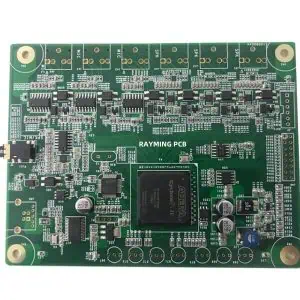
The telecommunications industry represents one of the most demanding sectors for printed circuit board (PCB) manufacturing, requiring exceptional precision, reliability, and performance standards. As the backbone of modern communication infrastructure, telecommunication PCBs must operate flawlessly in diverse environments while handling complex signal processing, high-frequency transmissions, and stringent regulatory requirements. This comprehensive overview explores the specialized manufacturing processes, materials, and considerations essential for producing PCBs that meet the exacting demands of telecommunication applications.
Unique Requirements and Challenges

Telecommunication PCBs face distinctive challenges that set them apart from consumer electronics or standard industrial applications. These boards must maintain signal integrity across a wide frequency spectrum, often ranging from low-frequency control signals to high-frequency radio transmissions exceeding several gigahertz. The industry demands exceptional reliability, as network downtime can result in significant economic losses and service disruptions affecting millions of users.
Environmental resilience stands as another critical requirement. Telecommunication equipment operates in cellular towers exposed to extreme weather conditions, underground installations with high humidity, and data centers with varying temperature conditions. PCBs must withstand temperature fluctuations from -40°C to +85°C while maintaining consistent electrical performance. Additionally, these boards often require extended operational lifespans, sometimes exceeding 20 years, demanding superior material selection and manufacturing processes.
Signal integrity becomes particularly crucial in high-speed digital communications and RF applications. Telecommunication PCBs must minimize electromagnetic interference (EMI), crosstalk, and signal distortion while maximizing transmission efficiency. This requires precise impedance control, careful layer stack-up design, and specialized manufacturing techniques to achieve the necessary electrical characteristics.
Specialized Materials and Substrates
The selection of appropriate materials forms the foundation of successful telecommunication PCB manufacturing. Traditional FR-4 materials, while suitable for many applications, often prove inadequate for high-frequency telecommunication circuits. Instead, manufacturers typically employ advanced dielectric materials with lower dielectric constants and dissipation factors to minimize signal loss and maintain performance at high frequencies.
Rogers materials, including RO4000 and RO3000 series, have become industry standards for high-frequency applications. These materials offer excellent electrical properties, including stable dielectric constants across frequency ranges and low loss tangents that preserve signal integrity. For extremely demanding applications, manufacturers may utilize PTFE-based materials or specialized ceramic-filled composites that provide superior performance but require modified processing techniques.
Metal core PCBs find applications in power amplifier circuits and base station equipment where thermal management is critical. These boards utilize aluminum or copper cores to efficiently dissipate heat generated by high-power components, ensuring reliable operation and extended component lifecycles. The thermal interface materials and manufacturing processes for metal core boards require specialized expertise and equipment.
Flexible and rigid-flexible PCBs address space constraints and mechanical requirements in modern telecommunication equipment. These boards enable compact designs while accommodating movement and vibration in mobile applications. The manufacturing of flexible circuits requires specialized polyimide substrates and modified processing techniques to maintain flexibility while ensuring reliable electrical connections.
Manufacturing Process Considerations
Telecommunication PCB manufacturing demands enhanced process control and precision compared to standard PCB production. Layer stack-up design requires careful consideration of signal layers, power planes, and ground planes to achieve optimal electrical performance. Manufacturers must precisely control dielectric thickness to maintain impedance requirements, often requiring specialized prepreg materials and controlled pressing cycles.
Via technology plays a crucial role in high-frequency designs. Blind and buried vias minimize signal path lengths and reduce parasitic effects, while microvias enable high-density interconnections. The drilling and plating processes for these features require advanced equipment and tight process control to ensure consistent results. Manufacturers often employ laser drilling for microvias and mechanical drilling for larger features, each requiring specific parameter optimization.
Plating processes for telecommunication PCBs often involve specialized finishes to enhance performance and reliability. While traditional HASL (Hot Air Solder Leveling) may suffice for some applications, high-frequency circuits often require more sophisticated finishes such as ENIG (Electroless Nickel Immersion Gold) or OSP (Organic Solderability Preservative) to minimize signal loss and ensure consistent electrical properties.
Surface mount technology (SMT) considerations become critical when manufacturing PCBs for telecommunication applications. Fine-pitch components, ball grid arrays (BGAs), and high-power devices require precise pad geometries and solder mask design. The manufacturing process must accommodate these requirements while maintaining electrical performance and thermal management capabilities.
Quality Control and Testing
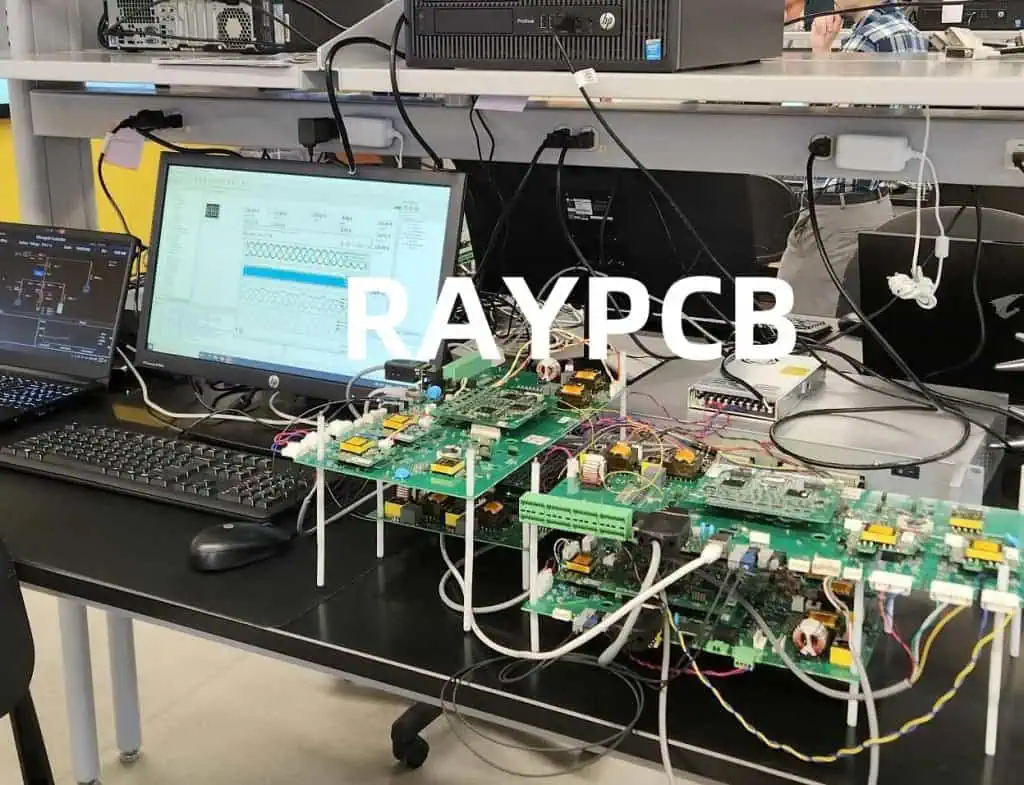
Quality control in telecommunication PCB manufacturing extends far beyond standard electrical testing. High-frequency performance verification requires specialized test equipment capable of measuring parameters such as insertion loss, return loss, and crosstalk across the operational frequency range. Time-domain reflectometry (TDR) testing helps identify impedance discontinuities that could degrade signal quality.
Environmental testing becomes particularly important for telecommunication applications. Thermal cycling tests verify board reliability across temperature extremes, while humidity testing ensures performance in challenging environmental conditions. Vibration and shock testing confirm mechanical integrity for mobile and outdoor applications.
Automated optical inspection (AOI) and automated X-ray inspection (AXI) systems help identify manufacturing defects that could compromise performance or reliability. These systems must be programmed with appropriate algorithms and acceptance criteria specific to telecommunication applications, considering the critical nature of these circuits.
Statistical process control (SPC) implementation helps manufacturers maintain consistent quality while identifying trends that could indicate process drift. Regular capability studies and process validation ensure that manufacturing processes remain within specification limits and continue to meet customer requirements.
Regulatory Compliance and Standards
Telecommunication PCBs must comply with numerous industry standards and regulatory requirements. IPC standards, including IPC-2221 for generic PCB design and IPC-6012 for qualification and performance specifications, provide fundamental guidelines for manufacturing quality. However, telecommunication applications often require compliance with additional standards specific to the industry.
EMC (Electromagnetic Compatibility) requirements demand careful attention to PCB design and manufacturing processes. Proper grounding techniques, shielding considerations, and layout optimization help ensure compliance with regulatory limits for electromagnetic emissions and susceptibility. Manufacturing processes must maintain these design intentions while avoiding practices that could compromise EMC performance.
Safety standards, including UL recognition and international safety certifications, may apply depending on the specific application and market requirements. These standards often dictate material selection, construction methods, and testing requirements that influence manufacturing processes.
RoHS compliance and other environmental regulations restrict the use of certain materials and processes in PCB manufacturing. Telecommunication equipment manufacturers increasingly demand lead-free processes and environmentally friendly materials, requiring manufacturers to adapt their processes accordingly.
Future Trends and Innovations
The telecommunication industry continues to evolve rapidly, driving new requirements for PCB manufacturing. The rollout of 5G networks demands PCBs capable of operating at millimeter-wave frequencies with minimal loss and exceptional thermal performance. This requires continued advancement in materials science and manufacturing techniques.
Embedded component technology, where passive components are integrated directly into the PCB substrate, offers opportunities for miniaturization and improved electrical performance. However, these technologies require specialized manufacturing processes and equipment that many manufacturers are still developing.
Advanced packaging technologies, including system-in-package (SiP) and 3D integration, present new challenges and opportunities for telecommunication PCB manufacturers. These approaches require close collaboration between PCB manufacturers, component suppliers, and equipment manufacturers to develop integrated solutions.
The increasing emphasis on sustainability and environmental responsibility drives innovation in materials and processes. Biodegradable substrates, recycling programs, and energy-efficient manufacturing processes represent areas of active development that will influence future telecommunication PCB manufacturing.
Conclusion
Manufacturing PCBs for the telecommunication industry requires specialized expertise, advanced materials, and precise process control to meet the demanding requirements of modern communication systems. Success in this market depends on understanding the unique challenges of high-frequency design, environmental resilience, and long-term reliability while maintaining compliance with industry standards and regulatory requirements. As the telecommunication industry continues to evolve with 5G deployment and future technologies, PCB manufacturers must continue to innovate and adapt their processes to meet these emerging challenges while maintaining the highest standards of quality and performance.