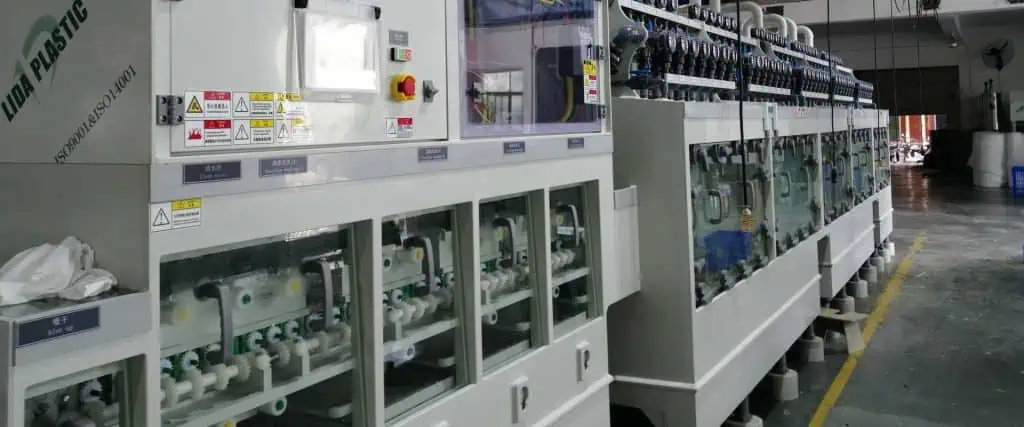
Difference between Chemical and Plasma Etch Processes

“Weโ€™ve trusted Rayming with multiple PCB orders, and theyโ€™ve never disappointed. Their manufacturing process is top-tier, and their team is always helpful. A+ service!”

I have had excellent service from RayMing PCB over 10 years. Your engineers have helped me and saved me many times.

Rayming provides top-notch PCB assembly services at competitive prices. Their customer support is excellent, and they always go the extra mile to ensure satisfaction. A trusted partner!

Etching processes play a crucial role in semiconductor manufacturing and PCB production. Understanding the differences between chemical and plasma etching is essential for choosing the right process for specific applications. This comprehensive guide explores both methods, their characteristics, applications, and comparative advantages.

Basic Principles

Chemical Etching Fundamentals

ParameterDescriptionImpact
Process TypeWet chemical reactionMaterial selective removal
Main MechanismChemical dissolutionIsotropic etching pattern
Temperature Range20-50ยฐC typicallyAffects etch rate
EnvironmentLiquid phaseRequires chemical handling
Reaction TypeSpontaneousLess energy intensive

Plasma Etching Fundamentals

ParameterDescriptionImpact
Process TypeIon bombardment + chemicalDirectional material removal
Main MechanismPhysical-chemical reactionAnisotropic etching pattern
Temperature Range50-300ยฐC typicallyAffects selectivity
EnvironmentGas phaseVacuum required
Reaction TypeEnergy-activatedMore energy intensive

Process Characteristics

Chemical Etching Parameters

Control Factors

FactorControl RangeEffect on Process
Temperature20-50ยฐCEtch rate ยฑ20%
Concentration5-30%Etch rate ยฑ50%
Agitation0-500 rpmUniformity ยฑ15%
TimeMinutes to hoursLinear progression

Material Compatibility

MaterialEtchant TypeTypical Etch Rate
CopperFeCl31-3 ฮผm/min
AluminumNaOH0.5-2 ฮผmm/min
SiliconKOH0.5-1 ฮผm/min
GlassHF0.1-0.5 ฮผm/min

Plasma Etching Parameters

Process Variables

VariableControl RangeEffect on Process
Power100-2000WEtch rate ๅค30%
Pressure1-1000 mTorrDirectionality ๅค40%
Gas Flow10-200 sccmChemistry control
Bias Voltage0-1000VIon energy control

Gas Chemistry Options

Gas TypeTarget MaterialSelectivity
CF4SiliconHigh
O2OrganicsVery High
Cl2MetalsModerate
SF6SiliconModerate

Comparative Analysis

Performance Metrics

MetricChemical EtchingPlasma Etching
Resolution50-100 ๆธญm0.1-1 ๆธญm
Aspect Ratio1:1 to 3:1Up to 20:1
Uniformityยฑ10-15%ยฑ5-10%
ThroughputHighModerate
CostLowerHigher

Environmental Impact

FactorChemical EtchingPlasma Etching
Waste GenerationHigh liquid wasteLow gas waste
Chemical UsageHigh volumeLow volume
Energy ConsumptionLowerHigher
Environmental RiskHigherLower

Applications and Use Cases

Chemical Etching Applications

ApplicationAdvantagesLimitations
PCB ManufacturingCost-effectiveLimited resolution
Metal DecorationLarge area capableChemical handling
MEMS FabricationHigh throughputIsotropic only
Photo Chemical MachiningComplex patternsMaterial constraints

Plasma Etching Applications

ApplicationAdvantagesLimitations
SemiconductorHigh precisionHigher cost
Advanced MEMSHigh aspect ratioLower throughput
Optical DevicesClean processComplex control
NanofabricationPrecise controlSize limitations

Process Selection Guidelines

Decision Matrix

RequirementRecommended ProcessReason
High Volume, Lower PrecisionChemicalCost-effective
High Precision, Small FeaturesPlasmaBetter control
Large Area ProcessingChemicalBetter throughput
Complex 3D StructuresPlasmaDirectional control

Cost Considerations

Cost FactorChemical EtchingPlasma Etching
Equipment$10K-100K$100K-1M
Operating Cost$50-200/hour$200-1000/hour
MaintenanceMonthlyQuarterly
TrainingBasicAdvanced

Process Optimization

Chemical Etch Optimization

Control Strategies

ParameterOptimization MethodExpected Impact
TemperaturePID controlยฑ2ยฐC stability
ConcentrationRegular monitoringยฑ5% variation
AgitationSpeed controlUniform exposure
Bath LifeChemical analysisConsistent results

Plasma Etch Optimization

Process Control

ParameterOptimization MethodExpected Impact
PowerRF matchingStable plasma
PressureAutomated controlConsistent process
Gas FlowMass flow controlRepeatable results
Chamber CleanRegular maintenanceProcess stability

Safety Considerations

Chemical Etching Safety

AspectRequirementImplementation
Ventilation6-12 air changes/hourFume hoods
PPEChemical resistantGloves, goggles, apron
Waste HandlingNeutralizationTreatment system
Emergency ResponseSpill controlSafety showers

Plasma Etching Safety

AspectRequirementImplementation
High VoltageInterlocksSafety systems
VacuumPressure monitoringAutomated control
Gas SafetyGas detectionMonitoring systems
RF RadiationShieldingEnclosed systems

Future Trends

Technology Development

AreaChemical EtchingPlasma Etching
AutomationBath monitoringFull process control
ResolutionImproved chemistryAdvanced power control
EnvironmentalRecycling systemsEnergy efficiency
IntegrationInline processingCluster tools

Frequently Asked Questions

Q1: What are the main factors determining the choice between chemical and plasma etching?

A1: The main factors include feature size requirements, aspect ratio needs, material type, production volume, and cost constraints. Chemical etching is typically chosen for larger features and higher volumes, while plasma etching is preferred for precise, small features and complex structures.

Q2: How do the operational costs compare between chemical and plasma etching?

A2: Chemical etching generally has lower operational costs due to simpler equipment and processes, but higher chemical disposal costs. Plasma etching has higher equipment and energy costs but lower material and waste management costs.

Q3: What are the environmental implications of both processes?

A3: Chemical etching generates more liquid waste requiring treatment and disposal, while plasma etching has higher energy consumption but produces less waste. Plasma etching is generally considered more environmentally friendly despite higher energy usage.

Q4: Can these processes be combined for better results?

A4: Yes, some applications use a combination of both processes, where chemical etching is used for bulk material removal followed by plasma etching for fine feature definition and surface finishing.

Q5: What are the typical maintenance requirements for each process?

A5: Chemical etching requires frequent bath monitoring and replacement, typically monthly maintenance. Plasma etching systems need less frequent but more specialized maintenance, usually quarterly, including chamber cleaning and RF system checks.

Conclusion

The choice between chemical and plasma etching depends on specific application requirements, including precision, throughput, cost, and environmental considerations. While chemical etching offers cost-effective solutions for larger features and higher volumes, plasma etching provides superior control and precision for advanced applications. Understanding these differences enables proper process selection and optimization for specific manufacturing needs.