How to improve the experience of AR devices by PCB Lastest Technology

Augmented Reality

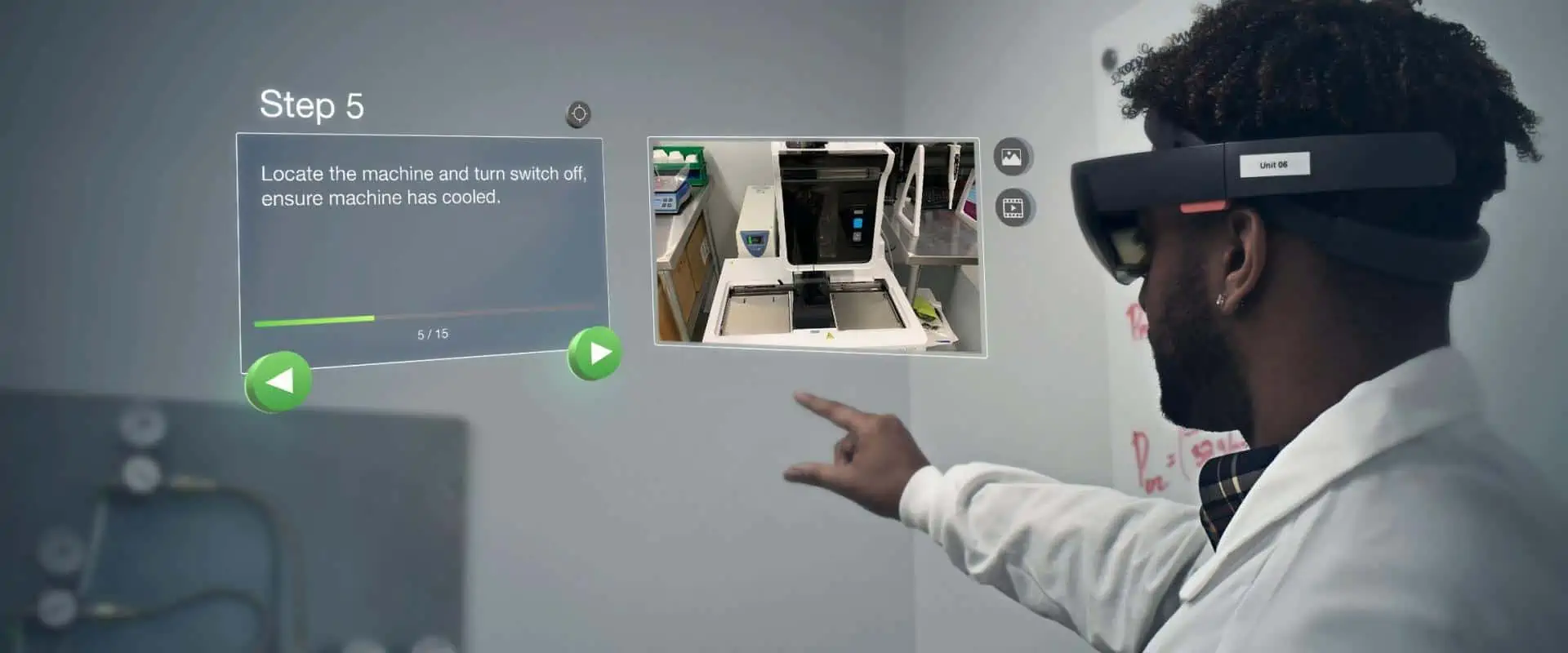
As technology develops, so do our methods for producing printed circuit boards (PCBs). In addition, using Augmented Reality (AR) in PCB production has been increasing in recent years. Notably, with the help of augmented reality (AR), users can interact with digital content in the physical environment. For example, AR may help see 3D models of PCBs, superimpose production instructions onto real-world components, and even give real-time feedback on the manufacturing process regarding PCB fabrication. The following details will create a deeper understanding of Augmented Reality (AR).

What is Augmented Reality?

It sounds like something from a sci-fi movie, but augmented reality is already here and it’s time you start utilizing it. We might still be in the early days for this ground-breaking technology, but that doesn’t mean we can’t get the most out of our lives with augmented reality!

Augmented Reality (AR) is a form of virtual reality that integrates with the physical world. We use Augmented Reality to add visual and digital content to an environment, and can be good to create 3D models, video game levels, or even complete scenes.ย It is based on the technology of computer graphics, which enables computer-generated images to be rendered in real-time. Augmented Reality is a way of putting virtual objects into the real world.

A Brief History of Augmented Reality

AR device

In the 1960s, Harvard and MIT professor Ivan Sutherland and his students created the first augmented reality system. The “Sword of Damocles” method developed by Sutherland allowed users to see computer-generated pictures overlaid over their field of view of the real world. Although the system was cumbersome and unusable, it served as a proof of concept for augmented reality.

The military first used early augmented reality systems for training and battle simulations in the 1990s. For example, armed forces might train in a realistic, secure environment by using these devices to project images of the enemy onto the battlefield.

With the creation of mobile phone applications that used the phone’s camera to superimpose images of the actual world, augmented reality started to make its way into the consumer market in the early 2000s. Although the scope and capability of these early AR applications were under high control, they opened the path for creating more advanced AR systems.

Introduced in 2010, Google Glass was the first commercially successful augmented reality device. Users of Google Glass could see information overlaid on their perspective of the outside world because of the device’s head-mounted display. Although there were conflicting opinions about the product, it demonstrated how augmented reality could one day become widely used.

Since the introduction of Google Glass, augmented reality has advanced and changed. As a result, many augmented reality systems are on the market, from essential phone apps to complex head-mounted displays. While gaming and entertainment are still the primary uses of augmented reality, there is a rising interest in employing the technology for more practical purposes, including navigation, instruction, and even surgery.

Applications of Augmented Reality in PCB Manufacturing

AR is increasingly used in the PCB manufacturing industry to aid design and assembly processes. In addition, AR offers a more immersive and interactive experience that can assist engineers in visualizing and testing out various design choices by superimposing digital information on the real world. For instance, using AR to view a three-dimensional depiction of a PCB design might help engineers make decisions by enabling them to visualize how various components will work together.

During assembly, AR can help to give workers on-the-spot instructions on where to place and connect components. As a result, errors can decrease, and efficiency can increase by doing this. The state of a manufacturing process, including already installed and not yet installed components, can also be viewable via augmented reality (AR). Workers can also monitor their progress and see any possible issues.

Alternatives of Augmented Reality During PCB Manufacture

FULL PCB MANUFACTURING Quote

A few different options can substitute AR in PCB manufacturing. These include:

Virtual reality (VR)

With virtual reality (VR), you can experience being in a different setting or circumstance. As a result, VR can aid in constructing lifelike simulations for instruction, entertainment, or both. Wearing a VR headgear, for instance, could whisk you away to a digital environment where you may explore, engage in games, or communicate with other people.

Similarities Between Virtual Reality and Augmented Reality

Virtual reality and augmented reality share a few fundamental characteristics.

For instance, users of these technologies may receive immersive experiences that take them to various settings. These technologies enable people to interact with digital content naturally by superimposing digital information on the physical world.

The fact that both technologies are still in the early phases of development and are continuously changing is another significant similarity between virtual and augmented reality. As a result, many issues still need solving before these technologies become more usable and accessible.

Differences Between Virtual Reality and Augmented Reality

One of the most significant differences is the degree of immersion in VR and AR. VR entirely replaces the natural environment with a computer-generated one, making it significantly more immersive than AR. Consequently, it may be advantageous for some applications, like gaming, where consumers want to feel absorbed in the experience. However, some people may find it to be disorienting and even nauseating. While AR, on the other hand, does not offer VR’s level of immersion, it lets users engage with the real and virtual worlds at once, which can be helpful in some uses, like training or teaching.

The degree of interactiveness between VR and AR is another crucial distinction. Since users may interact with the virtual environment more naturally, like with their hands, VR is typically more engaging than AR. Contrarily, AR typically relies on people interacting with the real world. An example is by interacting with computer-generated visuals using a controller or their hands.

For some applications, the amount of interaction is crucial. VR, for instance, is ideal for gaming because it allows for natural user interaction with the surroundings. On the other hand, AR works best in settings like training or education, where users must interact with the natural environment.

Finally, expenses vary between VR and AR. For example, AR typically requires less expensive hardware, like a smartphone or tablet, while VR requires more expensive hardware, like a headset.

Mixed reality (MR)

The term “mixed reality” (MR) refers to technology that combines the actual and virtual worlds. It makes it possible to overlay digital information and content on the physical world and incorporate material things into digital encounters.

Although MR technology is still in its infancy, it has the potential to revolutionize how we interact with our surroundings. For instance, MR might help to develop more realistic and engaging gaming experiences or to assist users in powerful and novel data visualization.

Similarities Between Mixed Reality and Augmented Reality

Mixed reality and augmented reality share a few Similarities. First, both technologies aim to improve the user’s perception by superimposing computer-generated content onto the real world.

To accurately put the digital material, both technologies require sensors and tracking systems to comprehend the user’s environment and position.

Finally, to allow the user to view the actual environment and the digital material simultaneously, both require a transparent display device, such as a headset.

Differences Between Mixed Reality and Augmented Reality

Mixed reality aims to give the user a fully immersive experience. Augmented reality primarily offers data and digital content that enhances the user’s real-world experience. In addition, augmented reality systems typically employ more basic display devices like smartphones or head-mounted displays. On the other hand, mixed reality systems frequently use more sophisticated devices like holographic displays.

Mixed reality systems frequently use more sophisticated tracking and sensor systems to precisely put digital material in the user’s environment compared to augmented reality systems.

Computer-aided design (CAD)

Computer-aided design (CAD) software allows engineers and architects to create 2D and 3D models of products and buildings. Furthermore, CAD software helps to create designs that can be easy to manufacture or build. It can also aid in creating simulations of how a product will work. For example, architects use CAD software to create floor plans, elevations, and 3D models of buildings. In addition, engineers use it to create 2D and 3D models of products.

Similarities Between Computer-aided design (CAD) and Augmented Reality

Augmented Reality PCBA Board

Computer-aided design (CAD) and augmented reality (AR) share several commonalities. Both technologies help in building and displaying digital representations of objects. Three-dimensional (3D) models are accessible using both technologies for viewing and interaction.

The creation and viewing of digital twins of real-world things are possible with both technologies.

Additionally, you may make and examine digital representations of objects using CAD and AR technology. 2D and 3D drawings of things are easy to produce using CAD software. These sketches aid in making computer-generated models of the objects for viewing. AR technology makes constructing 3D models of items (HMD) easier by utilizing head-mounted displays or a computer screen. It is possible to view and interact with three-dimensional (3D) models using CAD and AR technology. The creation of 3D models of items is possible with CAD software. On a computer screen, you can see these models. On a computer screen or through an HMD, AR technology can examine 3D models of items. In addition, you may interact with 3D models using augmented reality technology. For instance, you could walk around a 3D model of a car using augmented reality technology to see it from various perspectives.

We can fabricate digital twins of actual items using CAD and AR technologies. A digital twin is an electronic replica of a real-world thing. Digital twins of items can be easy to produce using CAD software. With the help of these digital twins, it is possible to observe how things would appear from various perspectives and if they consist of multiple materials. In addition, you can make digital twins of objects using augmented reality technologies. A computer screen and an HMD can help in viewing these digital twins.

Differences Between Computer-aided design (CAD) and Augmented Reality

  • AR is a more recent technology in the design process; CAD is a more conventional design method. Architects, engineers, and other design experts utilize CAD, a 2D or 3D software program, to generate precise models and drawings of goods, structures, or other objects. Pictures in 2D and 3D are easy to produce with CAD software. Contrarily, augmented reality (AR) is a technology that enables users to see digital content in the virtual environment. Mobile devices like smartphones and tablets are the most common platforms for AR applications.
  • CAD is a more passive experience, while AR is interactive. Designers often use CAD to generate their drawings on a computer screen, view them on a monitor, and then print them off. Unfortunately, this could be an incredibly dull and uninteresting experience. On the other hand, AR enables designers to see their creations in the natural environment. Designers may now interact with their products and view how they appear in actual settings. Notably, it may be an inspiring and engaging experience.
  • AR is applicable in creating dynamic designs; CAD efficiently creates static methods. In addition, CAD software helps in generating designs that won’t change all that frequently. An architect might design a new building using CAD, for instance. Since these blueprints won’t change frequently, CAD can quickly build them. On the other hand, AR can help produce designs that will evolve. A product designer, for instance, might utilize AR to see a 3D model of a brand-new product. They can then modify the design and see how it appears in practice. This procedure may be highly fluid and iterative.

3D printing

Although 3D printing technology has been there for a while, it has only lately become broadly accessible and reasonably priced for consumers. With this technology, users can turn digital models into three-dimensional objects. To construct the desired shape, 3D printers stack layers of material, usually plastic.

3D printing offers a wide range of uses, from producing prototypes to final product parts. Small-scale manufacturing and creating intricate, unique shapes that would be challenging to make using conventional manufacturing techniques are two areas where it excels.

The range of materials generated via 3D printing is relatively limited because of its infancy. However, as 3D printers progress, we may use them more frequently to produce a wide range of objects, including commonplace products like dishes and clothing.

Similarities Between 3D Printing and Augmented Reality

The two technologies relate to each other in many ways. For example, 3D printing and augmented reality (AR) rely on computer-generated images. When used in 3D printing, these photos help produce three-dimensional things. In augmented reality, these images help to overlay digital data and visuals over actual items.

The ability to make individualized products using 3D printing and augmented reality is another similarity between the two technologies. Businesses and individuals can produce unique products with 3D printing by designing and making their three-dimensional things. In addition, by integrating digital material into physical items, companies and individuals may create unique experiences.

Finally, 3D printing and augmented reality has the potential to completely alter how people and businesses interact with the outside world. The production and distribution of goods may change due to 3D printing. The way individuals interact with information and one another may alter due to augmented reality.

Differences Between 3D Printing and Augmented Reality
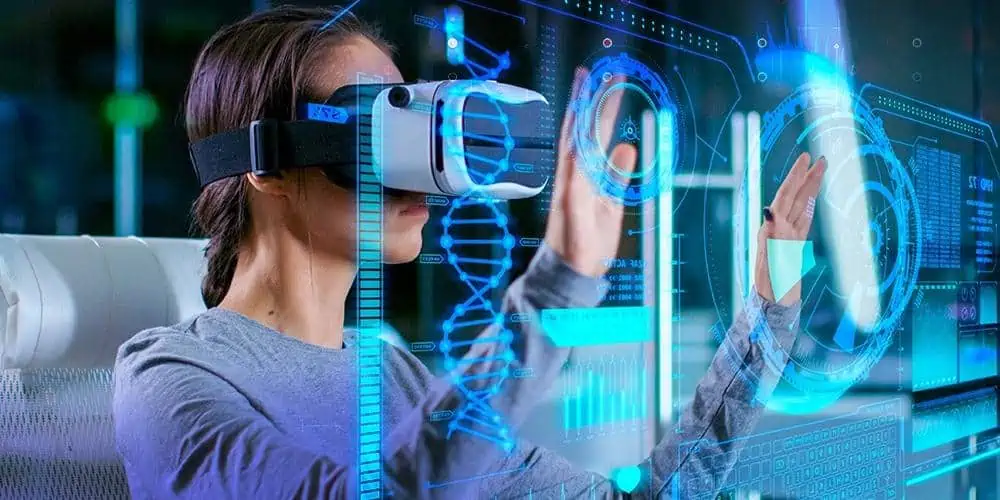
AR hardware

Three-dimensional things are easy to produce using 3D printing and augmented reality technologies. The two technologies do, however, differ significantly in specific important ways.

A three-dimensional object is easy to produce using the 3D printing method by adding successive layers of material. On the other side, augmented reality is a technology that overlays digital visuals in the natural environment.

The materials used for 3D printing are more restricted because the product needs a layer-by-layer creation. On the other hand, augmented reality is not constrained by physical limitations because we can superimpose computer-generated pictures on any surface.

As we cannot modify an object after its production, 3D printing is a more static technology. Contrarily, augmented reality is a dynamic technology that allows for real-time updates and changes to computer-generated visuals.

Due to the high-cost 3D printers and materials required, 3D printing is more expensive than augmented reality. However, since all we need for augmented reality is a computer and some software, it is less costly.

Compared to augmented reality, 3D printing takes longer because each layer needs a separate production. However, we can produce computer-generated visuals in real-time, making augmented reality a quicker process.

Augmented Reality at RayMing Technology

Established in Shenzhen, China, in 2002, Rayming is a reputable printed circuit board (PCB) maker. It provides a one-stop shop for the design and production of high-quality PCBs. PCB layout, prototyping, mass production, and assembly are among the services the business offers.

A group of seasoned engineers with expertise in Augmented Reality (AR) technologies works with Rayming. Users of augmented reality (AR) technology can place digital content over the physical world. Consequently, we can accomplish this by utilizing an AR app on a smartphone or tablet or donning a headset like the Microsoft HoloLens.

To examine and interact with PCB designs in real-time, Rayming’s engineers employ augmented reality (AR). By doing so, they can swiftly find and correct problems and confirm that the design complies with the requirements. In addition, the engineers can view the PCB design in AR from various perspectives, which aids in their understanding of the design.

How has Rayming technology boosted Augmented Reality in PCB manufacture?

In the creation of Augmented Reality (AR) goods and services, Rayming Technology has been a pioneer. Several industries employ its products, including the automotive, aerospace, and medical sectors. As a result, users’ experiences have improved due to the company’s AR products and services in these sectors.

Rayming’s goods and services have helped the automotive sector to improve and develop new passenger and driving experiences. In addition, the company’s goods and services have contributed to developing and improving user experiences in the aerospace sector. Rayming’s goods and services have also enabled the medical industry to improve patient and physician experience.

The business has created a variety of goods and technology that have helped create AR goods and services. These goods and innovations consist of:

  • Rayming Optics – producing optics for creating augmented reality (AR) goods and services.
  • The Rayming Glasses: The company creates AR products and services using its glasses.
  • Lenses: The business produces lenses that help to create augmented reality (AR) goods and services.
  • Rayming Cameras.
  • Rayming Software: The business produces software that helps in the enhancement of AR’s status.

Advantages of Augmented Reality in PCB Manufacture

Utilizing augmented reality (AR) to create printed circuit boards has several potential benefits (PCBs). The following are a few of the most significant advantages:

  1. Higher accuracy and precision: we can use AR to offer operators real-time feedback during the production of PCBs. Doing so can increase the end product’s accuracy and precision.
  2. Efficiency improvement: AR usage can shorten the manufacturing process’s overall cycle time. Efficiency and production may go up as a result.
  3. Cost savings: Costs related to the manufacture of PCBs can decrease with the aid of AR. Reduced material waste, increased precision, and increased productivity can help with this.
  4. Improved security: The manufacturing process becomes safer with the usage of AR. Real-time data and visual signals can help operators to accomplish this.
  5. Quality improvement: The final product’s quality can improve by using AR. Real-time feedback and the capability to alter the process in real time can help achieve this.

Disadvantages of Augmented Reality in PCB Manufacture

Using augmented reality in PCB production has several drawbacks. The following are some of these examples:

  1. Many small and medium-sized enterprises may find developing and maintaining the requisite technology and software expensive.
  2. Effective augmented reality use for PCB design and manufacturing can come with a steep learning curve.
  3. The nature of the AR system in use may impact the precision with which we can place components on a PCB utilizing augmented reality.
  4. In certain manufacturing situations, AR systems’ effectiveness may reduce due to interference from ambient light sources.

Conclusion

AR application in PCB manufacturing has a wide range of possible advantages. Manufacturing operations can become more accurate, require less rework, and be more productive overall with the help of AR. However, it also has a few drawbacks. The requirement for precise 3D representations of PCBs is one of the main obstacles. AR can cause manufacturing process mistakes if there aren’t precise 3D models. In addition, adopting AR may result in higher costs and complexity.

How well augmented reality can fit into our daily lives will determine how it develops in the future. A growing number of individuals will probably start utilizing augmented reality (AR) in their daily lives as the technology continues to get smaller and more affordable.
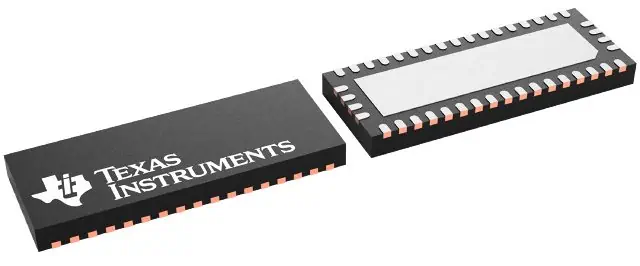
HD3SS3412RUAR: A Special-Purpose Differential Switch

HD3SS3412RUAR

Texas Instruments manufactured HD3SS3412RUAR as an analog differential switch for special-purpose devices, especially PCIe devices.

In this article, you will learn about this differential switchโ€™s capabilities.

How Does a Differential Switch Work?

A differential switch is also called the differential pressure switch. It works by noticing the pressure or voltage differences between the two points in a system; in this case, a circuit board.

Once the pressure or voltage differences are noticed, the switch helps to balance the differences by switching to the channel that follows the predefined value.

Now, HD3SS3412RUAR works in a similar way, especially with the use of a high-speed switch capable of switching up to four (4) differential channels. That way, it can help these multiple channels to establish multi-connections.

The Analog Switching Capability

HD3SS3412RUAR is an analog switch for special-purposes. What this means is that it doesnโ€™t always tow the path of conventional (general-purpose analog switches), which serve all purposes.

Due to the special designation, HD3SS3412RUARโ€™s analog switch with special-purpose uses is ideal for routing signals via a dedicated Solid State Device (SSD). The routing also includes provisions for special features and functionalities that are hitherto, missing on the general-purpose analog differential switches.

Multiple Switching Capabilities

FULL PCB MANUFACTURING Quote

HD3SS3412RUAR supports the switching of purposes across multiple paths. For example, using the high-speed passive switch capable, the switch can support the following:

  • Four (4) differential channels
  • Support for two full PCI Express (PCIe) x1 lanes from one source to up to 2 target locations inside a server application or PC.
  • It also supports applications that enable connections between multiple source devices. An example of this types of devices is a shared peripheral between two platforms.

Multi-Interface Support

Interfaces play a role in the connections established with a differential switch. HD3SS3412RUARโ€™s supports multiple interface standards.

Common Package Footprint

HD3SS3412RUAR is one of the ideal differential switches for circuit boards and consumer electronics with limited space.

It is because of the common package footprint, optimized into the small 3.5-mm x 9.0-mm, 42-pin WQFN package.

This package is also available in a common footprint, shareable among many vendors.

Excellent Signal Conduction

Conducting the signals from one channel to the other might not always be simple. Therefore, using a mechanism to regulate that is very essential. That is the reason for integrating a Single Control Line (SEL pin) inside HD3SS3412RUAR. This pin aids the control and conduction of signals from one path or channel to the other. It can also be used to conduct the signals backwards.

Full Temperature Operation

HD3SS3412RUAR also supports the temperature use from a single supply voltage of 3.3 volts up to a full operating temperature of 85หšC.

Technical Attributes

The table below represents the technical attributes of this differential switch:

AttributesDescription
Mounting StyleSurface Mount Technology (SMT)
Typical ApplicationPCI Express (PCIe)
Core FeatureBi-Directional
Number of Channels4
Package/Case42-WFQFN Exposed Pad
Operating Temperature (minimum to maximum)Between 0หšC and 70หšC
Multiplexer/Demultiplexer Circuit2:1
-3db Bandwidth8GHz
On-State Resistance (Maximum)80hm
Voltage โ€“ Supply, Single (V+)Between 3 volts and 3.6 volts

HD3SS3412RUAR Application Considerations

HD3SS3412RUAR is ideal for the PCI Express (PCIe) Gen III applications; examples being the following:

  • Shared I/O Ports
  • Desktops and notebooks PCs
  • PCI Express (PCIe) backplanes
  • Storage area networks and servers

However, there are more applications or use cases for this differential switch. It can also be used with other high-speed data protocols, especially if those protocols have up to <1800 mVpp of differential amplitude and a common-mode voltage of <2.0 volts.

It also supports the DisplayPort 1.2 and the USB 3.0 applications.

AC Coupling Caps Consideration

Considerations are also to be made for the AC Coupling Caps. HD3SS3412RUARโ€™s optimization for this is to offer the 0603 capacitors and the 0402 capacitors.

You must avoid using the C-packs or the 0805 size capacitors, but stick to the above.

With that being said, optimizing the capacitors involves setting and matching the value of the 0.1 ยตF capacitor with the ยฑ signal pair.

To ensure a symmetric placement of the AC Coupling Capacitors (Caps), it is better to do that along the TX pairs. Do that by placing the caps on the top-routed TX pairs on the system board.

Although the above is one of the best ways to place the capacitors, there are a number of other options worth exploring. See them below:

1. Coupling the Capacitors on the Both Sides of the Switch

The AC Coupling Capacitors can be placed on both sides of the HD3SS3412RUAR differential switch.

Doing this is required only when the common-mode voltage on the system board is above 2 volts.

As a way of balancing the performance, the less than 2-volts biasing voltage is to be used alongside the common-mode voltage.

2. Capacitorsโ€™ Placement between the Switch TX and the Endpoint TX

HD3SS3412RUARโ€™s AC Coupling Capacitors can also be placed between the switch and the endpoint TXs.

The placement has to be balanced with the biasing of the switch by either the host controller or the system.

3. Placement on the Host and Endpoint Transmit Pairs

This is the third configuration option for HD3SS3412RUARโ€™s differential switchโ€™s capacitors. In this case, the AC Coupling Capacitors are placed on both the host transmit pair and, on the endpoint, transmit pair.

The performance is further balanced with the biasing of the lower switch with the host controller and that of the upper switch by the endpoint.

Concluding Thoughts on HD3SS3412RUAR

HD3SS3412RUAR is a high-performance differential switch, capable of switching the performances and signal transmission across 4 channels. With the bi-directional (MUX/De-MUX) type of differential switch, it facilitates the routing or transmission of high-speed signals between two locations on a circuit board.

However, note that the HD3SS3412RUAR is optimized for special-purpose differential switching applications, most especially the PCI Express Gen III applications. Also, you can use it to route or switch signals in a couple of selected high-speed data protocols and applications. Other than that, it is not to be used with any other (unsupported) application.

Lastly, take note to use the accurate AC Coupling Capacitorsโ€™ placement so you donโ€™t distort the signal routing process.

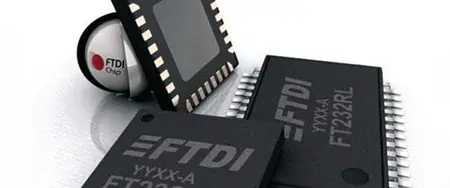
FT232RQ: A USB to UART Serial Interface

FT232RQ

Not all interfaces work solo or independently in an Integrated Circuit (IC). Some would need additional connections in the form of a bridge to work. That aptly describes, FT232RQ a bridge connecting the Universal Serial Bus (USB) to a UART.

In this article, you will discover some of the important facts about this Integrated Circuit, cum controller.

FT232RQ as a Controller

FT232RQ is an interface classified under Integrated Circuits (ICs). Like most interfaces, it relies on the interface components to establish a connection to the various signals in a circuit board. Through these components, the interface can also transmit or transfer data or bitstream effectively.

When it comes to picking an IC-interface, the options are narrowed down to the closest functional parts. The varieties of interfaces include controllers (an example being FT232RQ), serializers, decoders and encoders. Others are splitters, capacitive touch, Universal Asynchronous Receivers and Transmitters (UARTs), Direct Digital Synthesis (DDS), signal buffers and filters.

To that end, FT232RQ fits into the category by the design as a controller. But how does a controller-based interface work?

It works by providing the โ€œinformatic connectivityโ€ between the endpoints that comprise differing signaling methods and communication protocols.

In addition to establishing the individualized communication endpoints for these devices, the FT232RQ also supports multi-way connections.

The Bridging Perspective

FULL PCB MANUFACTURING Quote

When interfaces are referred to as โ€œbridges,โ€ it simply means that they are used as a pathway for connecting one or more interfaces.

In FT232RQโ€™s instance, it doubles as a bridge and a USB to UART interface. This function allows this controller to connect the Universal Serial Bus (USB) to a serial UART interface.

At the core of this connection are the following benefits:

1. Integrated Clock Generation

In addition to supporting USB to UART interface connection, FT232RQ also supports the minimization of friction during the connection.

As a way of preventing glue-less interfacing to the external Field Programmable Gate Array (FPGA) and Microcontroller (MCU), it supports the full integration of the clock generation. That way, there wouldnโ€™t be any need for an external crystal nor an optional clock output selector.

2. Chip-Based USB Protocol

Just like the clocking peripherals are not externally added, so does the USB protocol for FT232RQ.

Since the entire USB protocol is embedded into a chip, there is no need for an external USB-specific firmware programmer to be used alongside it.

3. Buffer Distribution

Besides being an interface cum bridge for USB to UART interfacing, FT232RQ also enables higher throughputs for the data transmitted through the interface.

The high data throughput is enabled via the FIFOโ€™s reception and transmission of buffers to attain the highest data distribution speed.

Also, it supports the use of a single-chip Universal Serial Bus (USB) to enable the asynchronous serial data transfer.

The potential to get the most of data transmission rates is also evident in the use of the 12 byte receiver buffer and the 256 byte transmit buffer. This combined byte buffers also use the buffer smoothing technologyย to facilitate the transfer of data at a higher speed.

At an estimate, FT232RQโ€™s data transfer speed or rate can move from 300 Maud up to 3 Mbaud when operating at the TTL levels.

Technical Specifications

Below are the tabulated attributes of FT232RQโ€™s USB to UART serial interface:

Product AttributesDescription
Operating Temperature (minimum to maximum)Between 40หšC and 85หšC
Protocol UsedUniversal Serial Bus (USB)
Current (supply)15mA
Core FunctionsUSB to UART interface and a Bridge
Package/Case32-VFQFN Exposed Pad
Type of InterfaceUART
Voltage (supply) minimum to maximum3.3 volts to 5.25 volts
USB StandardsUSB 2.0

FT232RQโ€™s Low Operations

FT232RQ supports the lowest levels of operations, as enshrined in the low USB bandwidth consumption, the low-power operation and the USB suspend current.

USB to UART Interfacing: Whatโ€™s the Relevance?

Before USB became the in-thing, UART has been in use for a long time. The Universal Asynchronous Receiver and Transmitter (UART) interface is a communication interface, supporting the RS-232 serial data communication.

The primary use case is for the receipt and transmission (sending) of (serial) data between embedded systems.

The introduction of Universal Serial Bus (USB) became a gamechanger, as it sought to revamp the existing communication interface model and introduce a better model. The need to ensure that the UART and the USB interfaces communicate seamlessly created the need for a bridge, otherwise known as a USB to UART interface.

The interface, also called a controller or converter, aided the use of an Integrated Circuit (IC) to send and receive serial data from a USB port. The data would be further converter into a serial data, movable through the UART interface.

To maximize this conversion, the interface typically uses a combination of Rx and Tx outputs. These outputs or signals allow the interface to port to the computer, from where serial data would be sent to the port for an onward module-based conversion into the UART signals.

Now that the concept has been defined, let us now look at some of the benefits of using FT232RQ or any other USB to UART interface for serial communication data transmission:

4. USB Serial Bridges are Affordable

If you are looking for an affordable way to convert serial data from a USB to a UART port, it has to be through the USB serial bridges or ICs.

These bridges, among many other things, are cost-effective and due to the smaller real estate, can be easily replaced, rather than worked on.

5. Chip-Centric Management

FT232RQโ€™s core operation is based on the single chip and that also includes the entire USB protocol. With this level of management, it is clear why there is little or no need for an external, USB-centric programming firmware.

6. Small Real Estate

FT232RQโ€™s design allows for the best customizations, thanks to the smaller real estate. Due to the less demands for Microcontroller (MCU) resources, FT232RQ can fit into any circuit board, while packing most of the functions on a single chip.

Final Words

FT232RQ features one of the highest data transfer rates estimated at 12 Megabytes per second (Mbps). At that rate and with the bulk USB transfer modes, it sure packs a punch to deliver the most flexible USB to UART interfacing.

The NEO-M8N-0-10 by u-blox: How Does It Work?

NEO-M8N-0-10

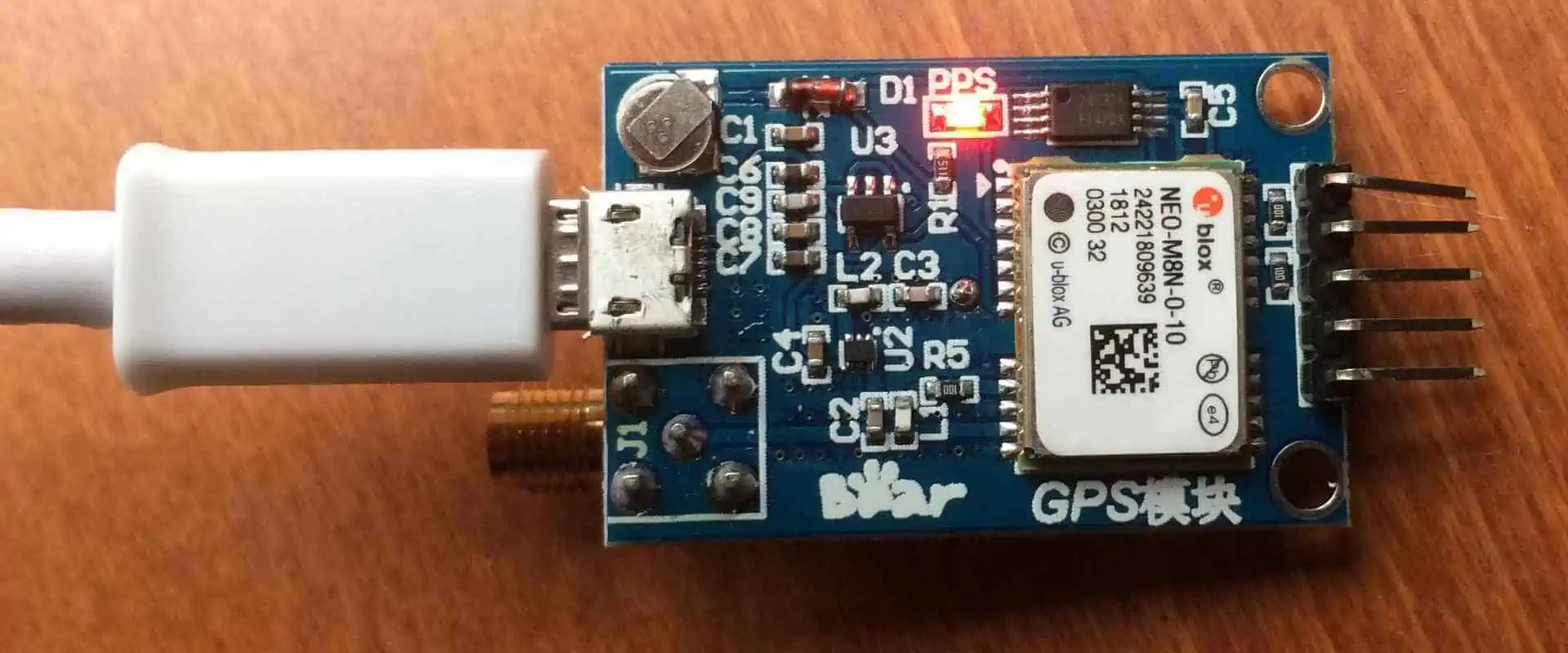
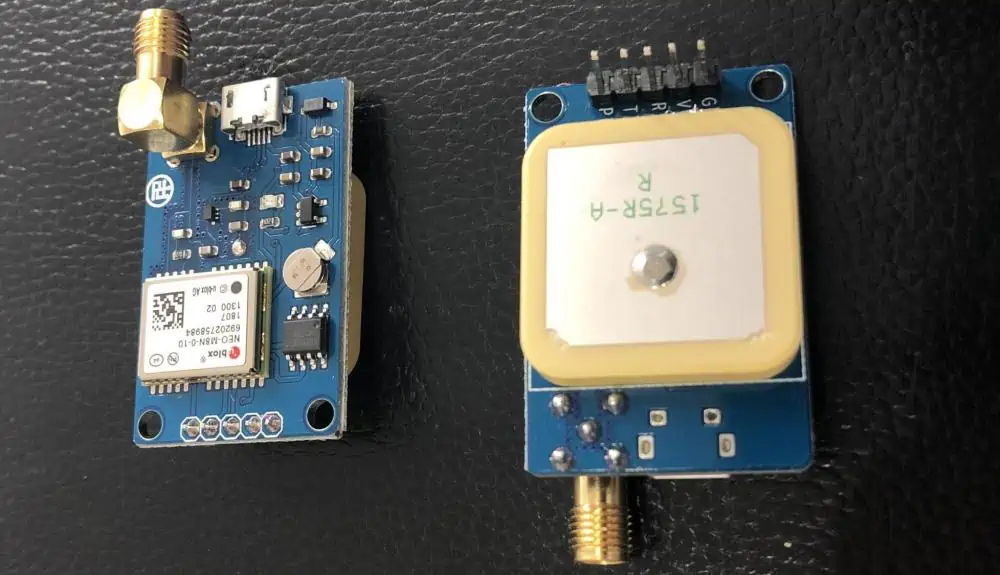
u-blox is a top manufacturer of RF-related devices. NEO-M8N-0-10 is one of such devices and like most RF Receivers, it is designed to take in a modulated Radio Frequency (RF), demodulate the same and pass it along for the data to be processed in the system.

However, the NEO-M8N-0-10 is a special type of RF Receiver, in the sense that it integrates a Concurrent GNSS Module. According to u-blox, the manufacturer, the essence of making the GNSS Module to function concurrently is to help speed up the process of receiving, demodulating and retrieving important data from the modulated Radio Frequency (RF).

By this concurrency, the NEO-M8N-0-10 Concurrent GNSS Module would now be able to work with and interface with other positioning systems, such as BeiDou and GLONASS.

What is a GNSS Module?

That brings us to the big question of what a GNSS Module is. To put it simply, it is a standard for the satellite systems used for offering a global coverage of the autonomous geo-spatial positioning.

The full meaning is Global Navigation Satellite System.

The Concurrency is Built-In

NEO-M8N-0-10 GPS moudle

Although the manufacturer specifically made NEO-M8N-0-10 to be a concurrent type of GNSS Module; it can still function independently to a certain extent. It is because of the integration of several satellite systems into the GNSS Module. With the multiple satellite provisions, the capturing, transmission and decoupling of RF signals would be hastened up.

The idea is that when one of the GNSS satellite systems fails to function effectively, it wouldnโ€™t necessarily hamper the performance of the (RF) receivers. Instead, the GNSS or RF receivers would port or switch to the next satellite system to continue picking signals.

Understanding how the NEO-8 Series of GNSS Modules Work

The NEO-8 series is where the NEO-M8N-0-10 belongs. It is a series of concurrent Global Navigation Satellite System (GNSS) Modules, which have been put together to function even when one doesnโ€™t live up to expectations.

Below are some of the benefits of this concurrency:

1. Customer-Specific Configurations

The wide range of supported satellite systems in NEO-M8N-0-10โ€™s GNSS Module are optimized to meet the target customersโ€™ needs. That is the reason why this series among many other things, supports spoofing detection with configurable interface settings; message integrity protection and geofencing.

These features are in place to help the NEO-M8N-0-10 make an easy-fitting to the different customer applications.

2. Excellent Positioning Accuracy

At the core of a satellite systemsโ€™ operation is the positioning accuracy. If the positioning is not accurate, it wouldnโ€™t be possible to make global coverage.

Therefore, the positioning accuracy of the NEO-8 GNSS Module series is possible because of the support for multiple satellite systems. That way, uptime (availability), accuracy and redundancy are assured.

As a way of supporting the faster positioning of the satellite systems, NEO-M8N-0-10 supports the augmentation of the IMES, QZSS, and GAGAN. The augmentation is made to work together with the MSAS, WAAS and EGNOS.

3. NEO-M8N-0-10 has an Improved Acquisition Process

The process of acquiring the GNSS broadcast parameters, such as the almanac plus time, the ephemeris and the rough positioning might take a lot of time.

However, the time-spent might not be as much as expected because NEO-M8N-0-10 has simplified the process with the improved acquisition process.

It offers the faster acquisition process because of the support for the u-blox AssistNow. It is an assistance system that makes the NEO-8 Series of GNSS Modules to make an online connection that allows for the speedy reception and improved acquisition sensitivity.

NEO-M8N-0-10โ€™s Augmentation Systems: What Do They Do?

FULL PCB MANUFACTURING Quote

NEO-M8N-0-10 doesnโ€™t work alone. Instead, it works with a variety of augmentation systems that are based on the satellite. Called the augmentation systems, they work by providing more options for the GNSS Modules to receive relevant signals in good time.

Examples of the augmentation systems are given below:

4. IMES

The full name is Indoor Messaging System. Manufactured in Japan, the IMES augmentation system is used implemented via low-power transmitters to make an indoor positioning reporting.

5. The Satellite-Based Augmentation Systems (SBAS)

The SBAS is another augmentation system that works by supporting the reception of the SBAS-specific broadcast signals.

Integrated in the SBAS are some other features that overall improves NEO-M8N-0-10โ€™s functions. They are the:

  • Range Correction and Integrity:ย The satellite systems broadcast the range correction and integrity information through the satellite, as a way of helping NEO-M8N-0-10 and any other supported GNSS Receiver to enhance the availability.
  • GNSS Data Supplementation: NEO-M8N-0-10โ€™s SBAS also supports the supplementation or interchanging of the GNSS data with either the wide-area GPS augmentation data or the regional augmentation data.

6. Differential GPS

Also called the D-GPS, the Differential GPS is another important augmentation system, aiding NEO-M8N-0-10โ€™s GPS position accuracy.

7. The QZSS Augmentation System

The full name is Quasi-Zenith Satellite System. It receives and transmits the additional GPS L1 C/A signals, which are for the Pacific region covering both Australia and Japan.

The QZSS is also capable of empowering NEO-M8N-0-10โ€™s GNSS (positioning) modules to make a concurrent reception and tracking of the signals. The positioning modules are connected with the GPS signals to make this concurrent operation.

Signal Integrity

It is one thing for a GPS or GNSS Module to transmit data and another thing for the same module to prevent third-party access.

It is for this reason that NEO-M8N-0-10 has been equipped with a messaging integrity protection feature that prevents the chances of a โ€œman-in-the-middle attackโ€ from happening.

The provided function here helps to find out if there has been any third-party access or tampering of the UBX message steam between the time it was sent from the receiver to the host.

NEO-M8N-0-10 has a Future-Proof Design

u-blox designed the NEO-M8N-0-10 with an โ€œeye for the future.โ€ In this regard, the manufactured spared no resources to ensure that this GNSS Module fits into more use cases in the future.

An example of a mechanism driving this is the internal flash, which allows for future or updated firmware to be added to the module.

Conclusion

NEO-M8N-0-10 simplifies the process of receiving, demodulating and transmitting RF-related data to the system. Rest assured that the varieties of built-in components and augmentation systems will go a long way to simplify how GNSS signals are received and transmitted to the GNSS receivers.

MLP113M050EB0A Aluminum Electrolytic Capacitor is Ideal for General-Purpose Applications

MLP113M050EB0A

Ever heard of an aluminum electrolytic capacitor? Sure, you have heard about capacitors being one of the power-driving components in electronics but when it comes to what an aluminum electrolytic capacitor does โ€“ it can be confusing right?

Well, in this article, we are going to reveal just what this type of capacitor is and the role it plays in enhancing the performance of consumer electronics.

What is an Aluminum Electrolytic Capacitor?

Wikipedia, the free Encyclopedia, defines it as a โ€œpolarized electrolytic capacitor whose anode electrode (+) is made of a pure aluminum foil with an etched surface.โ€

But just what does it do? The primary use is to smoothen or buffer the rectified DC voltages in many consumer electronics.

Digi-Key breaks it down further by highlighting that the electrolyte in the capacitor serves a major purpose of acting as a cathode. On the other hand, the thin insulating layer of aluminum oxide acts as the dielectric for the capacitor.

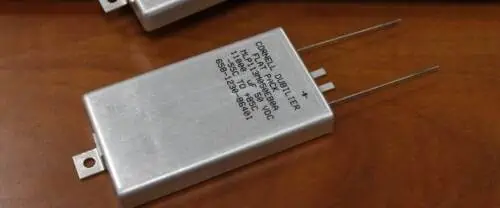
Having known this, what exactly is the function of MLP113M050EB0A? As per the information in the datasheet, it is an aluminum electrolytic capacitor that has a higher impedance ratio, a high temperature range and ultra long life.

Life Test

MLP113M050EB0A is subject to two (2) major life tests โ€“ the endurance life test and the shelf-life test.

Both tests proved that MLP113M050EB0A is worthy of lasting for many years. For example, the shelf-life test returned a DCL and an ESR of 100% of limit each. It also returned a 100% of limit for the capacitance.

On the other hand, the endurance life test returned an ESR of 200% of limit; a DCL of 100% limit and a capacitance of ยฑ10%.

High-Energy Storage

FULL PCB MANUFACTURING Quote

The capacity to store energy is one important factor to consider when choosing an aluminum electrolytic capacitor. Thankfully, MLP113M050EB0A has enough provisions for that.

It drives a high-energy storage via the Type MLPโ€™s design that also provides for a box-shape model. With these two in place, it is now possible to use MLP113M050EB0A to implement both filtering and voltage holdup in computer cards, military SEM-E modules and telecommunication circuit packs.

Ripple Current Doubling

MLP113M050EB0A also enables a ripple-current doubling and with this in place, it would be possible to double this capacity to the maximum.

But first, let us understand what the ripple current is all about. It is a mechanism in place to help ensure or assure that the case or package for the MLP113M050EB0A doesnโ€™t exceed or go above the recommended 0.5-inch height.

For the capacity to be doubled, the core setting of using the maximum permissible internal core temperature of 88หšC would be needed.

Product Attributes

Below is the set of attributes or characteristics of the MLP113M050EB0A:

AttributesDescriptions
Height โ€“ Seated (maximum)0.500หš (12.70mm)
Capacitance11000 ยตF
Lead Spacing1.000หš (25.40mm)
Toleranceยฑ20%
Typical ApplicationsGeneral-purpose
Rated Voltage50-volts
Operating TemperatureBetween -55หšC and
Equivalent Series Endurance (ESR)36mmOhm
Lifetime @ Temperature2000 Hours @ 85หšC
Size/Dimension3.000หšL x 1.750หšW (76.20mm x 44.45mm)

MLP113M050EB0A Aluminum Electrolytic Capacitor General Information

Aluminum electrolytic capacitors are known to follow a set of rules and that is what we want to talk about in this section.

1. The Anodization Principle

These capacitors are said to be โ€œpolarizedโ€ because of what is known as the anodization principle. It is a working principle that helps detail how the capacitors are to function.

These are some of the important facts about the principle:

2. DC Voltage Operation

One fact about the anodization principle is that it makes the MLP113M050EB0A to work with a DC voltage operation. In this instance, the DC voltage is to be applied with the correct polarity.

Otherwise, making an inappropriate addition of the polarity could cause the component to have a short circuit. If left unattended, it is possible to lead to component damage or malfunction.

3. Understand the Typical Applications

Aluminum electrolytic capacitors like MLP113M050EB0A are mainly used with DC-to-DC converters and power supply-centric applications. There are more of these applications.

The capacitors can also work well with industrial power supplies, the converters used in wind power plants and with switched-mode power supplies.

These capacitors can also be used with specific applications, such as the frequency converters. In this case, they are to be used with the likes of:

  • Inverters for photovoltaic
  • DC link capacitors for drives

MLP113M050EB0A Aluminum Electrolytic Capacitor Materials

For these capacitors to work efficiency, there have to be certain materials that boost the function. Examples of these materials are:

4. The Separator

The separator in an aluminum electrolytic capacitor is the material that demarcates or separates one component from the other.

The separatorโ€™s characteristics include an absorbent paper with high-purity. The paper helps to protect the two metal foils from having a direct contact.

Without the separator, it is possible for these foils to not just have a direct contact, but also cause the device to have short-circuit problems.

5. Anode

This is the capacitorโ€™s basic material. It is made to aid an increase in the capacitorโ€™s electrode surface. The increase is needed to smoothen the capacitorโ€™s surface.

Worthy of mentioning is that the anode paves the way for the formation of aluminum oxide. Upon formation, the aluminum oxide helps to protect the metallic aluminum against the harsh or aggressive chemicals that come from the electrolyte.

6. Cathode

At a point, it becomes imperative for the aluminum electrolytic capacitorโ€™s components to make a contact. It is the duty of the cathode to make this happen.

The cathode is a dedicated aluminum foil used to establish an electrical contact between the electrolyte and the capacitor.

In addition to being etched to enlarge the capacitorโ€™s surface, the cathode is particular about how the connection is made. That is why it mostly uses alloyed metals like titanium, copper and silicon. These metals are used to increase the impossibility of oxide to form during the discharge process.

The cathode also regulates the capacitorโ€™s susceptibility to be resistance to the electrical contact made to the electrolyte by alloying the foil with the aforementioned metals โ€“ copper, titanium and silicon.

Final Words

MLP113M050EB0A creates a polarized aluminum foil that forms an insulating layer, delivers up to 20 joules of energy storage and acts as the dielectric of the aluminum electrolytic capacitor

What is Energy Harvesting About?

Energy Harvesting

We are in a world where a lot of exciting innovations are being made. The Internet of Things (IoT) has brought about a connected world of information exchange. IoT has contributed to a lot of development in the world as a whole. However, the IoT experienced some drawbacks. One of the major drawbacks was the massive economic nightmare posed by batteries.

The installment, replacement, and maintenance of batteries is not a lasting solution. Batteries wonโ€™t be able to power several sensors that will be used in the future. Therefore, scientists and engineers have come up with an everlasting solution. This solution is energy harvesting. Also, energy harvesting offers a long-lasting solution to this energy problem.  Read more to have a detailed knowledge about what energy harvesting is all about and how it works.

Humanity has been able to achieve a great feat as regards technology and civilization. All of these achievements can be fundamentally attributed to the ability to produce energy and deploy energy. We utilize nearly 607 quintillion joules of energy every year across the globe. The rapid population growth is contributing to energy consumption and needs.

According to estimates, energy expenditure across the globe will be about 777 quintillion joules. These figures are huge. This is one of the reasons energy shortage issues is usually featured in global policymaking.  Also, there is a global panic about the environmental impact of depleting fossil fuel reserves. In spite of concerns about decreasing fossil fuel reserves, it is evident that meeting our energy demands will be a mammoth challenge.

However, innovation has continued to bring hope for humanity. This hope is simply based on the fact that innovation can provide a solution to energy shortage.

What is Energy Harvesting?

human energy harvesting

Energy harvesting, which is also called ambient power or energy scavenging has to do with the process involved in capturing energy and converting it from its surroundings into electricity. This energy could be used at once or kept for use in the future.

Energy harvesting functions through the harnessing of small quantities of ambient energy that is wasted or dissipated in form of light, vibration, heat, etc. As a technology, energy harvesting is in its nascent stage. This in no way is an answer to all the woes related to our energy today. However, it holds a great promise regarding the powering of low power electronics.  Furthermore, with the quick expansion of the IoT market, this means a huge potential for the technology.

Therefore, in RayMingโ€™s application that run from any battery type means that you add a boost or step-down circuit with that regulatorโ€™ added cost. Also, one might have chosen one of the few microcontrollers, which can run from a single cell or lithium cell alkaline battery. Whichever way, a huge premium is included to your bill of materials as a result of the extra components or from the sourcing of the premium priced microcontroller.

What does Ambient Energy mean?

At any specific time, you can find energy all over us, which will go to waste. For example, as a result of the predominance of mobile devices and electronics, we are bathed constantly in oceans of WiFi signals and radio waves. Usually, our surroundings are clouded with usable energy, which could help in powering our electronics when stored and harnessed.

At times, a new app, which is launched by Richard Vijgen (Dutch designer), referred to as Architecture of Radio, helps in visualizing the invisible and massive energy field around us, all the time.

Also, these signals only represent an ambient energy form. Also, ambient energy could be energy coming in form of vibration or sound, heat, or light. For example, majority of power stations globally employs turbines that convert heat into mechanical energy. This is now converted into electricity.

Furthermore, this process is an inefficient one, with more than two-thirds of its energy input lost to our surrounding as heat. Also, just one third of the converted input serves as usable electricity. Potentially, you can harvest energy from all these sources. Although for now, not all are feasible technologically.

The Technology Behind Energy Harvesting

FULL PCB MANUFACTURING Quote

The technologies of energy harvesting come in different types. This is based on the energy source. Moreover, all systems for energy harvesting, in the simplest form, is made up of three major components, coupled with the energy source.

Harvester/Transducer: The harvester or transducer is a part of the energy harvesting system, which helps in the conversion of ambient energy from its source to electrical energy.

Load: This forms a part of the energy harvesting system that could include either electronic devices, which consume any harvested energy like sensors, actuators, circuits, chips, etc, or the energy storage components like super capacitors, capacitors, etc.

Interface Circuit: As for the interface circuit, it helps in extracting the highest possible energy from its transducer and then ensures that the energy is useful through conditioning it in a great form for desired applications. This is through voltage regulation, voltage rectification, etc.

Types of Energy Harvesting

There are various sources of ambient energy which include:

  • Kinetic energy
  • RF energy
  • Light energy
  • Thermal energy

Solar energy harvest

Photovoltaic cells are commonly used to harvest solar energy. These cells transform light energy into electricity with the help of โ€œphotovoltaic effect.โ€ Also, the photovoltaic effect is a principle that involves a process in which photons transform electrons into a greater energy state and as such causing the generation of electric current. PV cells are in four different categories which are:

  • Emerging PV technologies
  • Thin-film cells
  • Single and multi-junction cells
  • Emerging PV technologies

Since PV cells are quite expensive, one can use photodiodes to harness energy and supply energy for low-power devices like IoT edge-devices. Also, LEDs are less expensive compared to photodiodes. However, photodiodes are better as they provide more energy. Therefore, photodiodes is an ideal optio for harnessing and providing energy.

Kinetic energy harvest

Piezoelectric transducers are commonly used in harvesting kinetic energy. Also, Piezoelectric transducers generate electricity from kinetic energy using movements or sounds. The transducer transforms the kinetic energy to an AC current. The AC current is the stored in a super-capacitor or a thin-film battery.

Below are examples of Piezoelectric harvesting:

Batteryless remote control units

In this remote control unit, piezoelectric transducers transform the force of the buttons pressed in the energy that provides power to the IR signal of the remote.

Pressure sensors on car tires

The inside of car tires features piezoelectric energy-harvesting sensors. Also, these sensors regulate the air pressure in the tires and transmit the information to the dashboard.

Piezoelectric floor tiles

Some pavements feature piezoelectric floor tiles. These floor tiles transform the kinetic energy from pedestriansโ€™ steps into electrical energy. Also, this electrical energy is further used to power applications such as ticketing systems and displays.

Thermal energy harvest

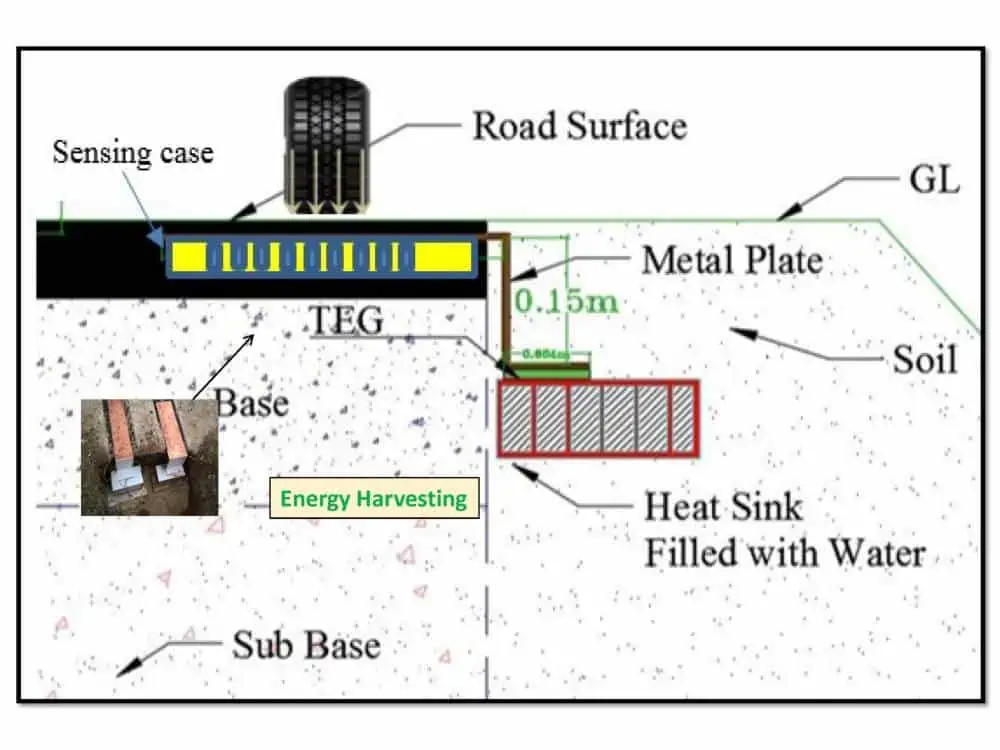
The majority of electrical systems produce heat. Therefore, this accounts for the proportion of dissipated energy. The harvesting of thermoelectric energy is simply based on the Seebeck Effect principle. This principle describes a situation where a difference in temperature between two conductors junction results in increasing voltage.

Also, a thermoelectric harvesting system comprises a thermoelectric generator. This generator comprises various thermocouples linked in series to a heat source. Also, this heat source could be solar panel or engine. The amount of generated energy is proportional to the variation in temperature and also the TEG size.

Furthermore, thermoelectric harvesting helps to power wireless sensor nodes in high-temperature environments and industrial settings. It is ideal for use where there is a huge loss of heat.

RF energy harvest

RF is almost everywhere around us. Also, RF waves are usually broadcasted in the environment through mobile phones and other telecommunication devices. Some electronic devices also transmit RF waves in our environment.

The technology behind RF harvesting holds a large amount of promise. The reason behind this huge appeal is simple. RF waves is just like a โ€œfree energyโ€ that is yet to be tapped into. According to a research, the number of mobile phones subscription was estimated to have exceeded 5 billion.

We can estimate how much energy around us when we add the number of subscription of other devices like microwave ovens, Wifi routers, and laptops among others.  This energy is in the form of RF waves. The most reliable RF harvesting technology we have today is Wireless Energy Harvesting (WEH). Also, this harvesting technology is reliable due to its ease of use and simplicity. Radiofrequency waves pick up via an antenna which causes a possible difference across its length.

Therefore, this possible difference makes charge carriers to move along the antennaโ€™s length. With the RF-DC integrated circuits, energy can now be converted from the movement into a DC current that is stable. This is then stored in a capacitor. It could be also used to power sensors.

RF harvesting has a wide range of applications. Also, you can use RF energy in low-power devices like wearable battery-free medical sensors. Furthermore, RF energy can help to wirelessly charge simple consumer electronics. At a wider range, there are other application areas of RF harvesting which include industrial control, automation building, and structural monitoring.

What are the Challenges of Energy Harvesting?

As energy harvesting becomes more popular, there is also an increase in the challenges they have to overcome. Usually, the power got from this energy harvesting is unstable and weak. Furthermore, the deviceโ€™s power can also stop completely. This is why there is a need to consider measures against unexpected shutdowns.

Furthermore, if manufacturing and installing the devices used comes expensive, then the capacity of the energy harvesting has to be large so as to cover up for the cost. To achieve widespread application of this energy harvesting, then there is a need for low cost, high output, and high-efficiency harvesting equipment. Power consumption reduction of these devices will be important as well.

Furthermore, energy harvesting serves as a very important technology for the creation of networks for M2M and IoT devices. In order to realize future smart factories, smart homes, and smart cities that requires different data, then the development of advanced technologies for energy harvesting will continue.

Reasons why Energy Harvesting is Important

The Internet of Things (IoT) market can explode in a huge way. In a few years, the IoT sensors will have to number in high billions. Furthermore, the main aim of the Industrial Internet of Things is to automate the processes that ensure their efficiency.

Moreover, if the powering of billions of edge-devices and sensors which have to be deployed is done with batteries, then this could cause some other problems. You can deploy these sensors in areas that are difficult to reach.

This is one reason it could be a very difficult and stressful task when replacing its batteries. Furthermore, the replacement of the batteries indicates a cost in the long-term, which will be perceived as a massive pain and absolutely limiting by the adopters.

Furthermore, energy harvesting seeks to find answers to this bottleneck, most especially in very remote place, and areas lacking a power source close by. Also, it helps in negating the need to have man power based management. In addition, it promises more environmental sustainability and helps in reducing the carbon footprint.

What RayMing Offers You

Rayming offers a great solution for all IoT devices through the elimination of needing batteries. When there are no batteries, then there will be smaller designs, reduced BOM cost, and no maintenance. This is what Rayming PCB & Assembly has been able to achieve.

Furthermore, Rayming also offers PCB manufacturing, which is useful and applicable in different industries.

Conclusion

IoT (Internet of Things) is altering our daily livesโ€™ landscape dramatically. In addition, these IoT devices are beginning to change our lives in so many ways. It may be the way we workout, shop, or drive, these IoT devices have successfully impacted our lives in different ways.

The Energy harvesting technologies have shown a great promise for the powering of this IoT explosion. Furthermore, with the deployment of more IoT devices in extremely hard-to-reach and remote locations, these batteries do not represent a solution that is very efficient for the powering of edge devices. However, making use of batteries isnโ€™t too ecologically sustainable. Some technologies such as RF harvesting create new doors or opportunities for our quest to achieve the powering or our sensors and MCUs.

The Complete Guide to Defence Electronics and How they are changing lives

Military Electronics

With the growing popularity of electronics, companies must find ways to keep up with the demand. They need to sell their products quickly and efficiently. This means they should produce and distribute them in a cost-effective manner.

As such, they will have to look for ways to reduce costs and increase delivery speed. One way of doing this is using stores that provide military electronics at affordable prices.

The biggest challenge facing these companies is that they are unaware which stores offer the best deals on military electronic products. As such, they waste time and money trying out different sites hoping for discounts on their purchases.  Unfortunately, this can lead them down a rabbit hole where they spend more money than necessary to buy cheap electronic components from an unknown company without guaranteeing that their purchase will be delivered at the promised time or even arrive at all!

If you’re building military-grade electronics, you need a PCB manufacturer with experience producing this kind of board. The design and manufacturing process for these products must meet strict standards. A military-grade PCB manufacturer should have experience in various layouts and materials and be fully accredited and certified. And this is where Rayming Technology comes in as the PCB manufacturer to supply military electronics.

In recent years, there have been a lot of changes in the military market. The military uses many different types of electronic devices. Some for communication, and others for defense.

What are Military Electronics?

military-grade-pcb-manufacturing

Military electronics are electronic systems that serve various purposes for the military. Teams of engineers design these systems and require high-performance electrical components. They must be durable and withstand high temperatures, harsh chemicals, vibration, and transient electrical noise. In addition, you must shield military electronics from sand and moisture. Finally, these electronics require engineering expertise and large-scale integrated circuits.

Only a company with experience and a proven reputation should manufacture military electronics. Additionally, these manufacturers must be code-compliant. This means that they have excellent standards and strict quality measures in production. As military needs continue to grow, these companies constantly advance and reinvest in their technology.

Military electronics use highly specialized materials. These materials include high-grade PCBs, military-grade capacitors, and aluminum. These electronics require a PCB with military-grade materials, and these components are made by companies that service the military industry.

Defense Electronics manufacturers are available in a vertical portal, allowing customers to find a reliable manufacturer to meet their unique needs. These manufacturers provide various services, including testing, inspection, PCB modification, prototyping, and more.

Military-grade PCBs require high-quality military-grade material. There is common use of high-temperature laminates and aluminum. Anodized aluminum is also common due to its oxidation resistance. PCB manufacturing for military systems requires lengthy development cycles and experienced PCB manufacturers.

Defence-grade PCBs must withstand extreme temperatures and harsh environments during the design process. Therefore, high-quality materials are essential to support the PCB under adverse conditions. Anodized aluminum and copper substrates minimize the risk of heat-induced oxidation and ensure durability.

What is military PCB?

We make military PCBs from high-quality materials specifically designed for the military market. They must meet all the electrical and thermal requirements of the military, as well as any applicable rigid-flex standards. Good materials for military PCBs include aluminum, copper, and high-temperature laminates. We anodize copper and aluminum to resist oxidation. High-quality military PCBs also use high-quality acrylic as a finishing material.

The PCB fabrication process includes selecting the right material and assembling the PCB. The process involves both surface-mount and through-hole techniques. A military PCB must meet specific criteria and have a complex design. In addition, you must test the final product to ensure its reliability and performance. This includes testing the assembly for electrical and thermal compliance and the board’s surface.

A Defence PCB manufacturer must have proper tools and expertise to complete the task. They should provide engineering support to their customers. In addition to having the right equipment and training to complete the PCB fabrication process, they should have a testing facility to ensure the final product is functional. Properly package Military PCBs for protection. Military PCBs are extremely sensitive to static, so pack them in antistatic bags to prevent corrosion and accidental damage.

The design of military PCBs must follow certain design rules, which include component placement, DFM, layer allocation, and cross-talk budgets. Military circuit boards also require a high-speed routing process. The right design software will allow manufacturers to place boards quickly and accurately. The rules for military PCB fabrication are unique and complex.

We can also use military PCBs in robotic systems, uncrewed vehicles, defense navigation systems, communications systems, and even security equipment. These devices require Defence PCBs because they must remain functional for an extended period.

Basics of Military Grade Circuit Boards

FULL PCB MANUFACTURING Quote

Military-grade circuit boards are designed to be extremely durable and reliable. This is because they operate in extremely harsh environments and must last for years. Typically, military-grade PCBs are more expensive than commercial ones and require a higher quality and design. Additionally, military-grade PCBs should handle a higher current load and withstand harsh environments.

The manufacturing process starts with prebonding the copper layers on the PCB substrate. The application of photoresist follows this process. This is a type of film that hardens when exposed to ultraviolet light. However, the copper underneath is still soft. Therefore, after the photoresist has hardened, you remove from the military-grade PCB substrate, revealing the copper.

It’s important to find a supplier with a wide range of military PCB capabilities, including handling special orders and tight tolerances. You can also consider finding a Defence PCB manufacturer that offers engineering support and quick delivery capabilities. Making a military-grade PCB to meet your specifications will ensure the best quality and best performance.

The manufacture of high-quality military PCBs intends to meet high standards for thermal, electrical, and mechanical properties. The materials used in manufacturing military PCBs include high-temperature aluminum, copper, and laminates. Copper and aluminum can create high-temperature laminates to withstand high temperatures and humidity. High-quality military PCBs also feature thermal compounds and anodized aluminum.

Design guidelines for military PCBs

If you need to create a PCB for military use, there are a few design guidelines you must adhere to. First, you must adhere to the correct MIL (Military Indium Level) spacing. The spacing should be at least 0.005″ between traces and pads.

Another important guideline is to select the proper materials. Military-grade PCBs require materials that can withstand high operating temperatures. You can achieve this by using thermal compounds and high-temperature laminates. You must also ensure that the PCB meets industry standards and is tested for its intended application.

After selecting the right material, you should design the military PCB. Then, you should follow the guidelines for proper routing. The right material is essential to build a Defence PCB that lasts five years. A good design should also consider heat dissipation and component isolation.

Military-grade PCBs must be manufactured according to the strictest standards. They must withstand extreme conditions and must function faultlessly. The manufacturing process of these PCBs involves tight tolerances and parameters, so it’s important to work with qualified manufacturers. The guidelines in this category include MIL-PRF-31032 and MIL-PRF-55110.

The design guidelines for military PCBs differ greatly from those for civilian PCBs. Military-grade PCBs require additional features and materials. Among them, they must withstand high current levels. In addition to limiting the thickness, military-grade PCBs must also be manufactured with increased clearances between components.

Military PCBs should be reliable and durable, with minimal maintenance. In addition, they should meet IPC-A-610E Class 3 standards, the most stringent for military-grade electronic products. As such, they require special fabrication and assembly processes. Therefore, finding a manufacturer with the right experience and expertise is important to help you develop your Defence-grade PCB.

The electronic requirements of PCB design

military-component

PCB manufacturers must ensure their products meet the specific requirements of military electronics. For example, PCBs used for military applications should be made of materials that can resist extreme temperatures. To meet these requirements, manufacturers should incorporate operating temperature margins in their designs. For example, high-temperature laminates using copper or aluminum are ideal for military applications. In addition, manufacturers should consider thermal compounding to prevent heat transfer between PCB layers.

Unlike PCB design for consumer products, Defence PCBs must meet stringent specifications. For example, military PCB designers must validate the quality of components to meet performance criteria and pass testing regimens. They must also select a contract manufacturer that can meet these strict requirements. In addition, they should choose a company with experience in designing PCBs for military electronics.

Military PCB designs must be free of high-frequency components, such as RF. High-frequency components can interfere with signals and create unnecessary noise. As such, they should be shielded to avoid interference. Additionally, a Defence PCB must conform to strict standards, including MIL-PRF-50884 and MIL-PRF-31032.

Military PCBs should be built to withstand the highest load currents and thermal conditions. They should also be designed to suppress ESD and meet important EMC standards. Power consumption is also important in military PCBs, especially for mobile electronic devices. Using the right PCB design software can help designers meet these requirements.

Military PCBs are critical in equipment that powers military systems. For example, RF PCBs in communication circuits and military radars. In addition to the above, military PCBs are vital in emergency response devices. These PCBs have to withstand high electrical amperage and high power supply fluctuations.

Manufacturers should choose high-quality materials to meet these needs when designing military PCBs. For example, the materials used for military PCB manufacturing should withstand extreme temperatures and humidity.

How PCB Manufacturers Impact Defence Electronics

Considering the harsh operating conditions, chemicals, and contaminants that military electronics are subject to, PCBs must withstand these conditions. This requires careful consideration during PCB design, fabrication, and assembly processes. In addition, using materials that can withstand extreme temperatures and low oxidation is also essential.

How Computer-aided manufacturing is changing the military

The computer-aided manufacturing (CAM) market is expected to grow at a CAGR of 7.8% during the forecast period. Its growing demand is attributed to its benefits, such as reducing waste and energy. Additionally, it helps manufacturers in achieving high-speed production and better tooling accuracy. Further, the proliferation of advanced technologies in the manufacturing industry is driving this market.

The future battlefield will be highly complex, with an array of integrated systems and mechanisms. With high-bandwidth, multi-sensor integration and a unified information and command environment, a soldier can be a force multiplier. As a result, we require modernized supply chains and prepared optoelectronics manufacturers to meet these new demands.

However, the pace of technological progress on the commercial side is much faster than on the Defence. As a result, the DOD does not have access to the latest technologies. This means that its electronics have a longer lifespan than their commercial counterparts. As a result, it is constantly searching for specialized vendors to produce legacy microelectronics. Such devices are often unavailable on the commercial market and are made only through special agreements with the defense establishment.

Military electronics have different requirements than commercial electronics and often need to be more rugged. In addition, their design and production processes must adhere to international standards, and it can take much longer to make typical military electronics.

The Intended Standards Targeting Defence Devices

Printed circuit boards, or PCBs, are a vital part of many industries, from consumer electronics to the military. As a result, they must operate faultlessly under extreme conditions and meet strict standards. These standards are designed to ensure the integrity of these circuit boards, and require a high degree of precision and strict adherence to quality management.

Military electronics are often exposed to harsh environmental conditions, including high temperatures. As a result, it is vital to use high-quality materials that can withstand harsh conditions. Among these materials are high-temperature aluminum substrates, copper, and thermally-compounds. These materials can withstand extreme temperatures and can be designed to minimize heat transfer.

The requirements for military PCBs are often based on IPC-A-610E Class 3 standards. These standards describe the performance of high-performance electronics in harsh environments. Military and aerospace PCBs require special design, fabrication, and assembly practices. Moreover, these circuit boards are usually part of embedded systems that incorporate custom firmware, volatile memory, and communications capabilities. As such, they must be supplied by vendors who meet these requirements.

Printed circuit boards for the military must meet stricter standards and have a longer product life cycle than consumer products. In addition, they must withstand higher temperatures, greater use cases, and higher amounts of chemical and other contaminants. Military-grade circuit boards must also have a high-reliability level, which is necessary to support sensitive Defence electronics.

The Necessary Certifications for perfect execution

military and aerospace electronics

When a PCB manufacturer is involved in developing a military electronic product, they need certain certifications. The military uses IPC standards as a guideline for manufacturers. These standards are internationally recognized and are used to ensure high-quality products and services. They also provide certification for a wide variety of PCB manufacturers.

Generally, military PCBs must have strict tolerances. They also must pass rigorous test procedures. These specifications may differ depending on the industry and the PCB manufacturer. Therefore, it is best to check the website of prospective PCB manufacturers to determine whether they meet these requirements. For example, Rayming Technology, a leading industrial PCB manufacturer in China, is ISO certified and produces rigid and flexible PCBs.

The military relies on electronic components to operate. Because of this, the military has long been concerned about the quality of these components. This problem became more acute as the market for consumer electronics grew. Although various safeguards were introduced to prevent fake components in Defence systems, it is still difficult to secure the supply chain.

PCBs used in military electronics must be made of materials with good properties. For example, they need to withstand harsh chemicals, high temperatures, and humidity. They also need to be robust and reliable. These properties are crucial for the production of military electronics.

Pre-layout simulations for optimization

Military printed circuit boards undergo rigorous testing. These tests include signal noise sensitivity, power levels, and signal generation. In addition, the circuit board prototypes must pass a Design Rule Check (DRC) during the design phase. After the prototypes pass these tests, we send them to the fabrication stage.

These simulations help manufacturers to optimize the design by assessing design trade-offs. For example, these simulations can identify potential signal quality, timing, and manufacturing tolerances. They can also determine potential design changes. In addition, we can use pre-layout simulations to evaluate if certain changes are necessary.

When designing a PCB for a military electronics application, it is important to understand how it performs in different environments. In addition to meeting the specifications of military electronics, designers must be aware of the materials in use. High-quality heat-resistant materials, such as Pyralux AP, are crucial. When considering a material, it is also important to consider the temperature of the surrounding components.

In addition to a design for the testing phase, PCB manufacturers can simulate their designs before production begins. This helps them detect any defects or design violations before production. They also help prevent expensive rework during the production stage. Furthermore, this step helps them ensure quality PCBs for military applications.

Surface coatings for more stability

A PCB’s surface coating significantly impacts its shelf life, reliability, and solderability. Several different surface coatings are available, and the best one depends on your needs. For example, you need a coating that is resistant to moisture and solvents and easy to rework.

The best surface coating for your PCB is a conformal coating, which is a thin film of polymer you apply to the entire surface of a PCB. It protects electronics from corrosion and moisture and ensures reliable operations in harsh environments. This type of coating is especially useful for aerospace and marine electronics, where the spacecraft must perform with a high level of reliability.

There are two main types of PCB surface coatings. We refer to the first one as a wet film thickness gauge, which comprises a series of notches and teeth inserted into the wet film. Then, we multiply this measurement by the percent-solids content of the coating, which gives you the dry coating thickness. You can also calculate the standard deviation between measurements to determine the uniformity of the coating.

Surface coatings on PCBs are important for Defence electronics because they protect the electronic components and the board surface from harsh environments. In addition, the coating prevents corrosion of components and solder joints, which reduces the likelihood of short circuits. It also increases the durability of the printed circuit board.

Functional testing to determine the precision

PCB manufacturers perform functional testing to ensure that the finished product will perform as intended. These tests involve testing the PCB and its components in simulated environments. We connect the boards to the same systems as the finished product, allowing engineers to test component values and monitor the failure modes. These tests also help the PCB manufacturer prevent costly replacements.

A PCB must pass several tests, including solderability, resistance to solvents, and moisture. It must also pass a micro-sectioning analysis to ensure no defects. The PCB must also pass an ionic contamination test, which checks for corrosion or ionic residue. Another test, the TDR impedance test, verifies the proper function of a signal. The test also looks for the presence of defects and other issues.

PCB manufacturers must follow a specific strategy to test their circuit boards. The test approach should fit the product’s manufacturing volume and end-user market. The strategy should include several factors, including the cost of PCB manufacturing. The goal is to maximize fault coverage without compromising reliability. To accomplish this, the PCB manufacturer should first understand the types of faults that may occur in the electronic components. Then, it will select the appropriate test combination.

While most PCB manufacturers do not have complicated equipment to perform functional testing, they can still perform other types of PCB functional tests. Some of these methods involve building a fixture, which may prolong the manufacturing process. Another type of PCB functional testing is bed-of-nails, which involves aligning multiple pins with probes. Usually, we perform this type of testing during production.

Factors Impacting Military PCB Design & Assembly

Military rada antenna pcb

Defence PCB design requires a higher level of quality and reliability. Military PCB suppliers should be familiar with the military’s standards and meet AS9100 quality management standards. The company should also be willing to provide an engineering support team to help you with your project. The company should also provide a reasonable lead time.

The first step in the fabrication process is choosing the material for the military PCB. You can use several materials, including copper, FR4, iron, and metal core PCB. After selecting the material, a design engineer checks the design for errors and prints it out on film or laminate. After this step, fabrication begins.

Military PCBs are specialized boards for connecting electrical components. Their design ensures they withstand harsh environments, such as high humidity and harsh chemicals. Therefore, the final product must withstand these conditions and be as durable as possible. A good military PCB is also highly resistant to heat, so it may require thermal compounds, additional traces, or high-temperature laminates. However, no matter how tough and rugged the military PCB is, it must pass rigorous testing to prove that it performs as intended.

Military PCBs must adhere to specific IPC standards. Therefore, the manufacturing process must be as precise as possible. They take a lot of time, energy, and money to create. Unlike civilian PCBs, military-grade PCBs should be durable and last five to fifteen years.

Due to their high-temperature requirements, testing of the PCBs happens in a controlled environment to ensure they are compatible with the temperature. In addition, high-frequency components may cause issues, and it is best to separate them in a separate layers. You can use spacers to protect the board surface and components.

A Solid Design Needs a Great PCB Manufacturer

If you’re putting together a new product, it’s important to have a solid PCB design. The layout should indicate which components are likely to fail and should identify the circuit blocks by name. You should also include your logo to add style and branding. You’ll also want to have a third-party engineer review the layout to check for errors. For example, check that all blocks are similar and that no components are placed at weird angles.

After completing your design, you should have it checked by Rayming PCB. Ensure you check the PCB for continuity, electrical, and design rules. This will help eliminate any design errors and improve the board’s functionality. If the PCB is free of errors, you’ll move components and see if they fit properly.

If your device requires a lot of pins, you’ll want to make sure that it’s breakoutable. You accomplish this by routing traces that run along the perimeter of the device. If you need to make multiple traces, use multiple vias. This will reduce the impedance of the signal tracks.

PCB designers face numerous challenges in their work. For example, with the size of electronic items shrinking, they have to determine the best placement for components while still meeting item specifications. Using time-proven constraint templates can help designers meet these challenges. In addition, they can help shape a new PCB design or upgrade a current one.

After completing your PCB design, you’ll need to test it to ensure it’s compatible and meets all requirements. There are many variables to consider, including bare board constraints and the location of the components. Once you’ve completed these steps, the manufacturer can start the process of Defence PCB manufacturing.

Staying Ahead of the Curve with the Latest in Aviation Electronics

Aviation Electronics

The history of aircraft electronics is fascinating and full of remarkable developments since electronics is a dynamic field. It may be challenging to stay up to date with the newest advancements in technology and applications. In addition, over the last few decades, aviation electronics have become more advanced. They’re crucial today in aircraft design, development, in-flight control, and navigation. Pilots can fly safely and effectively in any weather with aviation electronics. Notably, aviation electronics have progressed from radio and radar to modern systems. Engineers have incorporated electronic communication and navigation systems in early flight. For instance, the jet engine’s increased speed and altitude have presented new obstacles for aviators. Now they must require electronic equipment to fly faster and higher while communicating and navigating. The following information talks more about aviation electronics.

A Brief History of Aviation Electronics

aviation electronics engineering

Aviation electronics have a long and fascinating history. It is jam-packed with several firsts and incredible advancements.

The radio was the first electronic gadget used in flying. It transformed how aircraft could communicate with one another and the ground in the early 1900s. That of the radar swiftly followed the development of the radio. It, therefore, revolutionized aviation by making it possible to locate and track aircraft even during inclement weather.

Other electronic breakthroughs, like the creation of the autopilot and the first electronic flight instrumentation, came after the invention of the radar. These tools, which are still in use today, significantly improved flying safety and ease.

The invention of the GPS was the next big breakthrough in aviation electronics. The technique made navigation simpler and allowed for highly accurate aircraft tracking. The creation of the electronic flight control system came after the GPS. This method, which is still in use today, increased the safety of flying.

What Are Aviation Electronics?

The term “aviation electronics” encompasses many aviation-related electronic devices and systems. Furthermore, these systems range from modest electronic devices used for navigation and communications to more complicated systems utilized for aircraft control and flight management. We can classify these electronics into the following two major categories:

  1. Flight control systems
  2. Avionics

Flight Control Systems

Flight control systems are electronic systems that regulate an airplane’s flying path. They include the autopilot, flight management, and flight control unit.

Aircraft employ autopilots to enable pilotless flight. Various automated systems, such as those that steer, throttle, and land a vehicle, are available. Aircraft with installed autopilot systems can fly autonomously with the system without the pilot’s input. By integrating auto-throttle technology into an airplane, pilots can automatically control their engine’s throttle (s). In addition, with the use of Autoland technologies, we can quickly achieve automatic Aircraft landings.

To help pilots with flight planning and navigation, airplanes employ flight management systems. Technologies such as GPS, GIS, and flight planning systems are among these systems. Planning your flight with precision is now easy using a flight planning system. In addition, aircraft rely on navigation systems to get from point one point to another. Furthermore, analyzing an aircraft’s performance requires using aircraft performance analysis systems.

Aircraft rely on flight control systems to steer them safely through the air. A few examples are air traffic control systems, ground control systems, and the systems used to direct the movements of aircraft in flight. In addition, airplanes rely on flight control systems to guide their flights. The regulation of air traffic also requires employing air traffic control systems. However, we can quickly achieve aircraft ground control by using ground control systems.

Avionics

Navigating and communicating with other planes is impossible without avionics. Examples of these systems are in-flight radios, nav systems, and communication devices. Satellite radios, data radios, and regular voice radios are examples of these avionics. For example, aircraft and ground control communicate using voice radios. In addition, pilots and ground control personnel can exchange data using data radios. Moreover, airplanes and satellites can talk to one another via satellite radios.

Aircraft rely on navigation systems to get from point to point. Among these are satellite navigation systems, those that operate in the air, and those that run on the ground. Aircraft on the ground rely on ground-based navigation systems, whereas air-based navigation systems assist in in-flight navigation.

Developed communication technologyย facilitates information exchange between theย aircraft and ground stations. Examples are the telephone network, the internet, and satellite television. Voice communication devices allow pilots and ground crew to talk to one another while in the air. In addition, aircraft and ground stations can exchange data using data communication devices.

Types Of Aviation Electronics

FULL PCB MANUFACTURING Quote

Both military and commercial aircraft utilize a range of aviation electronics. We can broadly categorize them into four groups:

1. Navigation and communication: These systems assist pilots in maintaining radio contact with air traffic control and navigating their aircraft. Radios, transponders, and GPS receivers are common examples.

2. Flight control and guiding systems help pilots fly and steer the aircraft. Autopilots, flight directors, and electronic flight instruments are a few examples.

3. Identification and surveillance systems: These systems enable pilots to distinguish between friendly and hostile aircraft and prevent collisions with other aircraft. Radar, TCAS, and ADS-B are among these instances.

4. On-board management systems: These systems support the monitoring and managing of the aircraft’s many systems. They could be controllers for cabin pressurization, fuel management systems, and engine monitoring systems.

Characteristics Of Aviation Electronics

The following are the features of aviation electronics:

  • Aviation electronics must function dependably in an airplane’s challenging and frequently hostile environment, which is one of its primary requirements. As a result, they must comprise materials that can survive pressure, vibration, severe temperature fluctuations, and altitude.
  • Aviation electronics must also be able to communicate with other systems on the aircraft, which is another essential feature. The aircraft’s light control or navigation system may fall under this category. The user interfaces must be intuitive and straightforward, even in a demanding flight environment.
  • There are presently many “fail-safe” aircraft electrical systems on the market. Consequently, the other system components can continue to work even if one part fails. This crucial safety element lessens the possibility of an aircraft’s destruction by a single malfunction.

Benefits Of Aviation Electronics

Present-day electronics are essential to the commercial aviation industry. Whether it’s the flight management system that directs the plane’s navigation or the in-flight entertainment system that keeps passengers occupied, designers have equipped today’s commercial airplanes with cutting-edge technological technology.

Electronics in aircraft play many roles, such as ensuring that planes can fly without issues. Some of these systems are the flight management system, which keeps the aircraft on track, and the engine management system, which keeps an eye on the engines to ensure they’re working correctly.

Furthermore, aviation electronics not only make flying more secure but also make the process of flying more efficient. For instance, electronic systems can assist cut down on gas usage and pollution. Certain airlines have developed “green” projects using cutting-edge electronic aviation technology to reduce their adverse environmental effects further.

Last but not least, aviation electronics give a lot of data that enhances the efficiency of an airline. Information from the aircraft’s black box, for instance, aids in improving safety measures, while details about in-flight entertainment choices help tailor the experience for individual passengers.

What Are PCB Types Utilized In Aviation Electronics?

PCBs in aircraft electronics range from simple single-sided boards to intricate multi-layer boards. The type of PCB utilized relies on the circuit’s intricacy and the application’s needs.

Simple circuits may need a single-sided, the most fundamental PCB. A single-sided PCB contains all components and wires on a single side. Single-sided PCBs are the cheapest and easiest to build but have a limited number of elements to utilize, and the circuit needs to be more intricate.

Complex circuits may necessitate a double-sided PCB with conductors on both sides. The production of double-sided PCBs is more expensive, but they allow for more components and a more intricate circuit.

The most complex circuits may necessitate a PCB with numerous layers of conductors and components. Multilayer PCBs are the most expensive to produce yet enable the most sophisticated circuitry.

Similarities Between Aviation Electronics and Other Electronic Types

  1. Aviation electronics and other sorts of electronics have a lot of commonalities. For instance, comparable materials, like semiconductors, are in both aircraft and other electronics to make their products. Furthermore, both electronics use photolithography and other similar manufacturing techniques to produce their goods. Additionally, comparable test and measuring tools apply in aviation and other electronics to guarantee the quality of their output.
  2. The applications of aircraft and other electronics are another significant commonality. For instance, electronics in aviation and other fields find applications in data processing, communications, and navigation. Aerospace, automotive, and telecommunications are just a few of the sectors that employ both aviation and other kinds of electronics.
  3. Their control style is another commonality between aircraft and other electronics. For example, regulations from the Federal Aviation Administration (FAA) and the European Union apply to aviation and different devices (EU). Additionally, international standards like those from the International Electrotechnical Commission (IEC) apply to aircraft and other electronic forms.

Differences Between Aviation Electronics and Other Electronic Types

The following are ways through which aviation electronics differ from other electronic kinds:

  1. The Federal Aviation Administration (FAA) has established high performance and safety requirements for aviation electronics. Unlike other electronics, they must be vibration- and shock-resistant and able to function in various temperatures and altitudes.
  2. Due to the strict criteria they must adhere to, aviation electronics are often more costly than other electronics. However, they provide years of dependable service in the worst conditions.
  3. The cost of consumer electronics is often lower than that of aircraft electronics since they are mainly for indoor use. However, they are less robust and do not have to fulfill the same safety and performance requirements as aviation electronics.
  4. Manufacturing and other industrial uses require industrial electronics. They must be durable but do not require to fulfill the same performance and safety requirements as aviation electronics.
  5. The aviation industry cannot function without aviation electronics. The electronics resist the severe circumstances prevalent in airplanes and intend to fulfill high safety and performance criteria. Aviation electronics are more costly than other electronics but last for many years with little maintenance.

Top 6 Aviation Electronics Manufacturers

Rayming Technology

Rayming Technology is a prominent producer of aviation electronics, serving the aviation sector with an extensive selection of high-quality equipment.

The company places a significant emphasis on research & development and constantly innovates to bring new and better goods to market. Furthermore, the firm employs highly trained engineers who love aviation and electronics, continually pushing the limits of what is possible.

The products of Rayming find application in various aircraft, ranging from tiny private planes to huge commercial jets. The company’s products are famous for their dependability and performance, and they have worked excellently in some of the most challenging conditions.

Notably, Rayming has a long history of supplying the aviation sector with high-quality goods and services and has earned a solid reputation. The firm is devoted to providing its clients with the highest quality goods and services and exceeding their requirements and expectations.

Rayming’s products bear support from a team of knowledgeable customer care and technical support personnel who are always available to assist. Additionally, the organization has an extensive website that offers clients various information and tools.

Rayming is a widely esteemed brand in the aviation business and a reliable provider of high-quality goods and services. The organization is devoted to providing its clients with the finest solutions and exceeding their requirements and expectations.

Garmin

Garmin is a global leader in designing and producing navigation, aviation, and communication equipment.

Garmin’s headquarters are in Olathe, Kansas. The company is dedicated to quality, innovation, and customer satisfaction and has more than 12,000 workers.

Over 100 countries use Garmin’s aviation devices for civilian aviation, air transport, and military purposes. Furthermore, the company offers an extensive selection of integrated avionics, transponders, GPS navigation, and communication systems.

Integrated avionics solutions from Garmin give pilots exceptional situational awareness and cockpit safety. More than 17,000 systems are functional on more than 24,000 aircraft, making the G1000 and G3000 glass cockpits the most popular in the general aviation market.

Moreover, Garmin’s aviation transponders are the industry standard for aircraft identification and tracking. Mode S transponders are necessary equipment for all aircraft operating in controlled airspace in Europe and many other regions.

Garmin’s aviation GPS navigation systems work excellently in over 80,000 aircraft, making them the most popular worldwide. Furthermore, the company’s GNS 430W and GNS 530W GPS navigators are the industry standard for precise navigation and are suitable for all phases of flight.

Pilots worldwide utilize Garmin’s aviation communication systems for voice and data communication. Moreover, over 8,000 aircraft have the company’s GTS 800 and GTS 850 systems, making them the most popular in the general aviation market.

Garmin’s aviation products have support from an international network of authorized dealers and service locations. Additionally, the company’s website contains abundant materials for pilots, including product manuals, software updates, and customer assistance.

Rockwell Collins

Aviation Electronics PCBA Board

Rockwell Collins is the industry leader in aviation electronics worldwide. They design, fabricate, and provide support for communications and aircraft electronics for commercial and military clients worldwide. Moreover, their goods are helpful throughout the entire flight process, from the cockpit to the cabin to the ground.

Rockwell Collins equips the cockpit with avionics and information management systems that promote safety, efficiency, and adaptability. Their inventory includes integrated flight decks, head-up displays, electronic flight bags, and collision avoidance systems. Moreover, in-cabin entertainment and connectivity options keep passengers engaged and connected during the flight. And on the ground, they provide airports and airlines with air traffic control systems and solutions that enhance operational efficiency.

Rockwell Collins has a long history of developing innovative technologies and solutions that have made air travel safer and more efficient. Created in 1933, they have consistently innovated to satisfy the aviation industry’s ever-changing demands for the past 89 years. In addition, Rockwell Collins designed the first airborne collision avoidance system, the first electronic flight bag, the first integrated flight deck, and some other unique products.

Rockwell Collins is a global leader in providing avionics and information management solutions to commercial and military clients. They prioritize safety, quality, and client pleasure. And they continue to invest in R&D to bring breakthrough products and services to market.

Toulouse

Since the early 20th century, Toulouse in southwest France has played a significant role as a hub of the European aircraft industry. In addition, for over 50 years, the business has been a top provider of avionics and other electronic equipment for commercial and military aircraft. As a result, its products are useful on a broad range of aircraft from tiny, private planes to giant airliners.

Toulouse has a long history of invention in the aerospace sector. It created the first digital flight control system for jet aircraft in the 1960s. The safety and effectiveness of air travel considerably improved due to this technology, which is now a standard feature on most commercial jetliners.

It was the first firm to provide in-flight entertainment systems on commercial aircraft, and the company has also been a pioneer in developing these systems. Today, almost all long-haul flights employ their in-flight entertainment systems.

Toulouse has recently added a wide variety of avionics to its product line. Moreover, small private planes and the most powerful corporate jets also utilize its equipment.

Toulouse is a multinational aviation electronics producer with clients in more than 100 nations. Moreover, it maintains a significant presence in Fort Worth, Texas, USA, where its manufacturing plant is.

With more than 4,000 workers, the enterprise is a significant employer in the Toulouse area. Moreover, with an annual economic effect of more than โ‚ฌ1 billion, it also substantially contributes to the regional economy.

Raytheon

Raytheon, a significant American aerospace and defense contractor, provides goods and services to the country’s armed forces, government, and private clients. The business specializes in avionics, missile defense, radar, sonar, and other sensor systems, as well as communication and information systems.

Laurence K. Marshall and Vannevar Bush established Raytheon in 1922. When it was first known as the American Appliance Company, it sold Radios and other consumer electronics. The business later changed its name to Raytheon Manufacturing Company in 1925 to honor the newly invented vacuum tube known as the klystron, which was helpful in radar systems.

Raytheon then concentrated on creating radar equipment for the military during World War II. The company created the first shipboard radar system and mounted it aboard the USS Leary in 1942. In addition, Raytheon began the first airborne radar system in 1943 and climbed aboard Allied aircraft.

Raytheon continued to create new radar systems for military and non-military uses after the war, including air traffic control and weather monitoring. Additionally, the business expanded into new markets, including avionics, communication, information systems, and missile defense.

Raytheon is a top provider of avionics, communication and information systems, missile defense, radar, sonar, and other sensor systems. The military, governments, and commercial clients utilize the company’s goods all around the globe.

Boeing

Boeing is a top aviation electronics producer, providing commercial and military aircraft with various electronic systems and equipment. Since the early days of radio communication and navigation, Boeing has been a leader in aviation electronics innovation.

Boeing, a pioneer in developing airplane radio communication systems, was the first company to provide a full range of aviation radios. Several notable flights, including Charles Lindbergh’s first solo transatlantic flight in 1927, used Boeing radios.

Additionally, Boeing created the first aircraft radar system and mounted it aboard a US Navy plane in 1935. During World War II, this technology helped to monitor enemy aircraft.

Boeing is still a market leader in aviation electronics today, providing components for various aircraft, from tiny general aviation aircraft to huge commercial jets. In addition, Boeing produces radar systems, flight management systems, GPS navigation systems, and other items.

Boeing is a significant provider of electronic equipment for military aircraft. A broad range of military aviation employs Boeing goods, including fighters, bombers, transport aircraft, and helicopters. Some of the military goods that Boeing produces are avionics, electronic warfare systems, and communications systems. 

Boeing is a prominent provider of various electronic equipment and systems for commercial and military aircraft and has a long history of innovation in the field.

Conclusion

Everywhere technology develops as time goes on. Engineers create new electronic systems and equipment in aviation to improve safety and efficiency. Modern commercial airplanes depend heavily on aviation electronics for their safe and efficient operation. They improve safety and efficiency and provide vital data that can help enhance an airline’s overall operation. Furthermore, with the creation and development of new technologies, aviation electronics are continually changing. Therefore, aircraft electronics specialists must stay updated with industry advancements. Aviation electronics, including in-cockpit displays and automated landing systems, continue to advance pilot safety and efficiency in the air. Current aviation electronics are already reasonably excellent, but there is always room for development.

What is the Significance of Artificial Intelligence and How Does it Work?

Significance of Artificial Intelligence

Artificial intelligence can be simply described as the simulation of the processes of human intelligence by machines, most importantly, computer systems. Important applications of AI are speech recognition, expert systems, machine vision, and natural language processing. This term is also applicable to machines exhibiting traits that are associated with the mind of humans like problem-solving and learning.

The main feature of artificial intelligence is its ability of rationalizing as well as taking actions which have a very good possibility of achieving a goal. Machine learning, denoted as ML, forms a part of artificial intelligence. This explains that computer programs have the ability of learning from and adapting to new data form automatically without human assistance. The automatic learning is enabled by deep learning techniques via the absorption of large unstructured data amounts like video, images, or text.

How Does Artificial Intelligence (AI) Work?

Since the acceleration of the hype surrounding AI, vendors have been seeking ways of promoting the way their services and products make use of AI. Most times, what they call AI is actually just one of the components of AI like machine learning.

In addition, AI needs specialized software and hardware for the training and writing of the algorithms of machine learning. No programming language is similar to AI. However, a few like Java, R, and Python are well-known.

Generally, AI functions through the ingestion of large training data, and then analyzes the data for patterns and correlations. Finally, it makes use of these patterns in making predictions regarding future states. This way, chatbots can produce some lifelike discussions with people. Also, a tool for image recognition could learn how to identify, as well as describe objects present in images through the review of many examples.

Furthermore, AI programming usually focuses on three main cognitive skills. These include self-correction, reasoning, and learning.

Self correction processes: the design of this AI programming aspect is to fine-tune the algorithms continually and also make sure that they offer very accurate results.

Reasoning Processes: This AI programming aspect is focused on selecting the appropriate algorithm to achieve a specific outcome.

Learning Processes: Also, this AI programming aspect is focused on data acquisition and rules creation for ways of transforming data into actionable information. These rules, referred to as algorithms, help in providing these computing devices with instructions on how a task should be completed.

The Significance of Artificial Intelligence (AI)

AI Robots

 AI is significant because it has the ability to give insights to enterprises into how they should operate, which they had no idea about. Also, at times, Artificial intelligence can handle tasks much better than human beings.  

Importantly, when we talk of detail-oriented and repetitive tasks such as analyzing many legal documents to make sure relevant fields are properly filled in, AI tools usually finish jobs faster and with few errors.

With this, there has been a huge rise in efficiency, which has created ways to new opportunities for business for some huge enterprises. Before this present AI wave, it could have been difficult to think that making use of computer softwares in connecting riders to taxis is possible. However, as of today, Uber is now one of the biggest companies globally doing just this.

Furthermore, it makes use of complex algorithms of machine learning in predicting the time at which people will need to order a ride in some areas. This helps in getting drivers proactively on the road even before their services are needed.

In addition, another example is Google, which is now a great player for different online services by making use of machine learning in understanding the way people make use of their services and also improving them. Sundar Pichai, the CEO of the company, announced in 2017 that the company will be operating as โ€œAI firstโ€ company. ย The most successful and largest enterprises of today have utilized AI in improving their operations. They have also been able to get better than their competitors.

What are the Benefits and Pitfalls of Artificial Intelligence?

Deep learning AI technologies and artificial neural networks are evolving very quickly. This is due to the fact that Artificial Intelligence can process large data very quickly, and also make some predictions much more appropriately then it is possible when humans handle the task.

While the creation of large data volume every day could bury human researchers, the AI applications using machine learning could take this data and transform it quickly to actionable information. Presently, the main disadvantage of making use of Artificial Intelligence is that processing large data amounts which is required by AI programming is expensive.

Benefits

  • Handles detail-oriented jobs perfectly
  • Delivers results that are consistently
  • Reduces time for any data-heavy task
  • Virtual agents that are AI powered are usually available

Disadvantages

  • It is expensive
  • Great technical expertise required
  • The qualified workers required to build different AI tools are in short supply
  • It can only known what it is shown
  • Lacks the ability to generalize between different tasks

Categories of Artificial Intelligence: Strong AI vs Weak AI

You can categorize artificial intelligence as either strong or weak

Weak artificial intelligence, which is also called narrow AI, can be described as an AI system, which is trained and designed to finish a task. Virtual assistants and industrial robots like Siri of Apple make use of weak AI.

Strong AI, which is called AGI (Artificial general intelligence), describes programming, which has the ability to replicate the human brainโ€™s cognitive abilities. When a strange task is presented, the strong artificial intelligence system has the ability to use fuzzy logic in applying knowledge between different domains and then get a solution. Theoretically speaking, strong AI programs must pass both a Chinese room test and Turing test.

Types of Artificial Intelligence

In 2016, Arend Hintze, who is an assistant professor at the Michigan University, explained that artificial intelligence can be grouped into four main types. Below are the categories.

Type 1: The Reactive Machines

These are task specific AI systems, with no memory. Deep Blue is an example, which is an IBM chess program. This Deep Blue has the ability to identify some pieces present on the chessboard, and then make some predictions. However, because there is no memory present, it canโ€™t make use of past experiences in a bit to inform the future ones.

Type 2: The Limited Memory

These Artificial Intelligence systems have a memory. Therefore they make use of past experiences in informing future decisions. Consider some of the self-driving carsโ€™ decision making functions to be designed like this

Type 3: The theory of mind

Theory of mind is a well-known psychology term. Whenever you apply it to artificial intelligence, it means the system will have the required social intelligence to comprehend emotions. Furthermore, this AI type can predict human behavior and infer the intentions of humans. This skill is necessary for the AI systems to be transformed into integral human team members.

Type 4: Self-awareness

For this category, the artificial intelligence system has this unique sense of self. This is what gives them their consciousness. In addition, self-awareness machines comprehend their present state. However, this AI type is yet to exist.

Examples of Artificial Intelligence (AI) Technology and How to Use them Today

Artificial intelligence can be integrated in different technologies. Below are six major examples where they can be useful.

Automation

Anytime it is combined with AI technologies, the automation tools have the ability to expand the types and volumes of tasks that have been performed. One example is the RPA โ€“ Robotic process automation. This is a software, which automates rules-based and repetitive data processing jobs, which were initially handled by human beings.

Furthermore, when you combine it with emerging AI tools and machine learning, RPA has the ability to automate larger enterprise job portions. This enables the tactical bots of the RPA to pass intelligence from the AI and then respond to the process changes.

Machine learning

Machine learning is the science involved in getting your computer to function without any programming. In addition, deep learning forms a part of machine learning which can be considered as predictive analysis automation. Three algorithms of machine learning exist here.

  • Unsupervised learning: Here, the data sets are not labeled. They are grouped with respect to their differences and similarities.
  • Reinforcement learning: Here data sets are not labeled. However, after performing several actions or just one action, the AI system gets feedback.
  • Supervised learning: For supervised learning, the data sets will be labeled. This ensures the detection of patterns and then used in labeling the newly created data sets

Machine Vision

Machine vision gives the machine the seeing ability. Also, machine vision has the ability to capture and analyze any visual information by making use of a camera, digital signal processing, and analog to digital conversion. Usually, this is compared to the eyesight of humans, however, machine vision is not biology bound. This is why you can program it to see the inside of walls, for instance.

It is useful in different applications. These include analysis of medical images to signature identification. Furthermore, computer vision, which is usually focused on image processing (machine-based), is usually combined with machine vision.

Natural Language Processing

This involves human language processing with the help of a computer program. Spam detection is one of the best-known and older examples of the NLP. This considers an emailโ€™s text and the subject line in deciding if it is junk. Present approaches to natural language processing have to do with machine learning. Also, some NLP tasks are speech recognition, sentiment analysis, and text translation.

Self-driving cars

Also, autonomous vehicles make use of a blend of deep learning, image recognition, and computer vision in building automated skill in piloting the vehicle when it stays in a specific lane and also avoid some unexpected obstructions like pedestrians.

Robotics

This engineering field deals with the manufacturing and designing of robots. Usually, robots are useful for performing tasks which are very difficult for human beings to handle or handle consistently. Robots are useful for car production assembly lines or NASA in moving large objects present in space. In addition, researchers are making use of machine learning in building robots which can have interactions in different social settings.

Applications of Artificial Intelligence (AI)

AI has been able to get into different markets. Here are some applications of artificial intelligence.

Healthcare

One of the biggest bets is to reduce costs as well as improve patient outcomes. Today, companies are now making use of machine learning in making faster and better diagnosis compared to humans. IBM Watson is one of the well known healthcare technologies. It comprehends natural language and can give answers to any questions it is asked.

Furthermore, this system is useful in the mining of patient data as well as other available sources of data to form hypotheses. This eventually presents a scoring schema. In addition, other applications of Artificial intelligence are making use of virtual health chatbots and assistants in assisting healthcare customers and patients in finding some medical information, understanding billing processes, scheduling appointments and then finalizing administrative processes. A combination of AI technologies is also useful in predicting, fighting, and understanding pandemics like COVID-19.

Business

Algorithms for machine learning are being incorporated into customer relationship management and analytics platforms. This helps in uncovering information on ways of serving customers better. In addition, these Chatbots have become integrated in websites to offer services immediately to customers.

Automating job positions have now become an important point of discussion among IT analysts and academics.

Education

Artificial Intelligence PCBA Control

Artificial intelligence has the ability to automate grading, which will give the educators some more time. Furthermore, it has the ability to assess students as well as adapt to studentsโ€™ needs. This is just to ensure they are on track. In addition, this could change how and where students learn; could even replace some teachers

Finance

Artificial intelligence in personal finance applications like TurboTax or Intuit Mint is disrupting different financial institutions. Also, applications like these help in collecting personal data coupled with offering financial advice. Programs like IBM Watson are now applied to home buying processes. As of today, software for artificial intelligence helps in performing most trading conducted on Wall Street.

Law

The process of discovery, sifting into documents in law could be overwhelming. Making use of artificial intelligence in automating the labor-intensive processes of the legal industry is improving the client service and saving time. Furthermore, law firms are now making use of machine learning in describing data as well as predicting outcomes. They also make use of computer vision in classifying and extracting information from different documents.

Manufacturing

When it comes to integrating robots in the workflow, manufacturing takes the forefront. For instance, industrial robots, which were initially programmed to help handle single tasks as well as separated from the human workers, function increasingly as cobots. Cobots are multitasking and smaller robots which partner with humans and handle the responsibility for most parts of the task in workspaces, factory floors, and warehouses.

Banking

As of today, banks now successfully employ chatbots in letting their customers know about their offerings and services in handling transactions, which doesnโ€™t need human intervention. Artificial Intelligence virtual assistants are also useful in improving and cutting the cost of complying with the banking regulations.

Furthermore, banking organizations also make use of AI in improving their decision making to give out loans. They also identify possible investment opportunities and set credit limits using AI.

Transportation

Aside from the fundamental role of artificial intelligence in the operation of autonomous vehicles, they are also useful in transportation in order to manage the traffic, ensure ocean shipping is more efficient and safer, and predict possible flight delays.

Security

Machine learning and AI are among the top buzzword lists which security vendors make use of today in differentiating their offerings. Furthermore, these terms also stand for viable technologies. Also, organizations make use of machine learning for event management and security information software as well as other related areas in detecting anomalies, as well as identifying any suspicious activities which could indicate threats.

Through data analysis, as well as making use of logic in identifying similarities that are called malicious code, artificial intelligence could give alerts to emerging and new attacks earlier than earlier technology iterations and human employees. This maturing technology helps in playing a major role in assisting organizations to fight against any cyber attacks.

Comparing Augmented Intelligence and Artificial Intelligence: Whatโ€™s the Difference?

There are some experts in the industry that believe that there is a close link between artificial intelligence and popular culture. This has now led the public to have some expectations regarding ways in which artificial intelligence will alter life generally and the workplace.

Augmented Intelligence

There are marketers and researchers who hope that the augmented intelligence that features extra neutral connotation, will assist people in comprehending the best AI implementation and will simply improve services and products.

Artificial Intelligence

It is a fact that artificial general intelligence or True AI is closely linked with the technological singularity concept. This is a future that has been ruled by artificial superintelligence, which surpasses the ability of the human brain to comprehend it or the way it shapes our reality. This stays within the science fiction realm, although there are developers working on this issue

Ethical Uses of AI (Artificial Intelligence)

Artificial Intelligence

Although AI tools can present different functionalities for businesses, using artificial intelligence raises ethical questions. This is because, either worse or better, the AI system usually reinforces what it has learned already.

This could become a problem because the algorithms of machine learning that underpins the majority of AI tools that are most advanced, are just as smart like data given to them during training. Due to the fact that humans choose the data used in training an AI program, which is a potential for the bias of machine learning must be closely monitored and is inherent.

Anyone seeking to make use of machine learning in the real world, there is a need for an in-production system to be able to factor the ethics in the processes of AI training and to prevent bias. Also, this holds true when making use of inherently unexplainable AI algorithms in generative adversarial network and deep learning applications.

Another possible stumbling block to the use of artificial intelligence in industries operating under strict compliance requirements is explainability. For instance, the financial institutions present in the U.S. function under regulations requiring that they explain their decisions for credit issuance.

Also, when AI programming makes a decision to refuse the credit, it could become difficult to clarify how they got to this decision. This is because AI tools that help in making these decisions function by teasing the subtle correlations out between so many variables. When it becomes difficult to explain the decision making process, this program can be called black box AI.

Will Crafting Laws for the Regulation of Artificial Intelligence Work?

Crafting laws for the regulation of artificial intelligence won’t be easy. This is partly because AI is made up of different technologies, which companies make use of for many different ends. Another part is due to the fact that regulations can affect the development and progress of artificial intelligence.

Another issue regarding the formation of a meaningful regulation of artificial intelligence is the quick evolution of the AI technologies. Also, technology as well as novel applications could make already existing laws obsolete.

For instance, the existing laws that regulate the privacy of recorded conversations and conversations donโ€™t cover challenges posed by some voice assistants such as Siri of Apple and Alexa of Amazon which gather conversation, but doesnโ€™t distribute it.

They only distribute it to the technology teams of the companies that utilize it in improving the algorithms of machine learning. Sure, crafted laws by the government in regulating AI donโ€™t stop criminals from utilizing a technology with malicious intent.

Conclusion

Artificial Intelligence is very useful in our world today. In summary, it involves the simulation of the processes of human intelligence by machines, most importantly, computer systems. It is also useful in different applications.

How Medical Electronics Is Contributing to Development in the Medical Industry

Medical Electronics

Electronic devices play crucial roles in medical procedures. The advancement in technology has led to the increase in the demand for advanced medical devices. Medical electronics are crucial for carrying out treatments, diagnosing health problems, and performing surgeries. Medicine is one of the best growing fields in todayโ€™s world where people prefer the best health service.

Medical electronics contribute to the successful operations of the medical industry. Also, they are the pieces of equipment without which surgeons or doctors are helpless. Medical electronics are specially designed to detect health-related problems and solve them. Furthermore, artificial devices are examples of medical electronics. ย Medical electronics are suitable for use in different medical procedures and imaging systems like MRI (magnetic resonance insulin).

What is Medical Electronics?

Medical Electronics pcba

Medical electronics are a core part of health systems. They are electronics specifically designed to serve medical purposes. These electronic devices help health practitioners to diagnose medical issues and treat patients. Also, medical electronics help in improving quality of life. They help to prevent, diagnose, and treat health issues.

According to the US Food and Drug Administration (FDA), medical electronics are reviewed based on the risk to patients. High risk products demand for more clinical proof than lower risk medical products. Also, the FDA only permits products that have met its requirements to be available on the US market.

Medical electronic devices also include in vitro diagnostic devices. Also, these devices help to carry out test samples like blood, tissue, and bodily fluids taken from the body. Examples of medical electronic devices are defibrillators, hearing aids, and diagnostic equipment for monitoring, recording, and measuring body functions like brain waves and heartbeat.

Medical electronics require high reliability and high performance printed circuit boards to function. Also, it is crucial to integrate high quality board in the manufacturing of medical electronics since these devices are mainly used for life saving purpose. Therefore, there is much emphasis on the quality and functionality of the circuit boards used for these electronics.

Types of Medical Electronic Devices

There are different types of medical electronic devices. These devices help to treat health conditions within the human body.

Monitoring devices

Medical monitoring devices are widely used in various diagnostic and treatment procedures. Furthermore, they help to ensure these procedures are carefully and successfully carried out. Examples of medical monitoring devices include heart monitors, blood pressure monitors, EMG activity systems, flew rate and dispensing systems, X-ray computed tomography, and body temperature monitors.

Medical diagnostic devices

These medical electronics are widely used in displaying, detecting, and acquiring medical images. Also, they provide vital information as regards the human body.  Examples of medical diagnostic devices include magnetic resonance imaging (MRI), CT scanner, and ultrasound equipment. A CT scanner utilizes X-rays, special lenses, and computer algorithms to create images of the internal body parts of a patient.

Ultrasound equipment generates sound waves that bounce off the human body. Also, this machine displays the picture of a structure and transforms it into an image.

Implantable medical devices

Implantable devices help to replace defective organs in the human body. Also, they are directly implanted in the body of a patient. They serve as a substitute to any defective organ. Heart pacemakers, cochlear, and artificial kidneys are the most common implantable devices. Medical PCBs are a core part of these devices.

Classification of Medical Devices Based On Risks

Medical electronics are majorly classified into three classes based on risks. Most industry-leading medical device manufacturers now integrate electronic quality management systems instead of paper-based systems. Also, it is important to understand the three risk based classifications for medical electronics.

Class I

Class 1 medical devices are not designed for sustaining or supporting life. According to the Food and Drug Administration, these devices may not have unreasonable injury risk. More than 47% of medical devices available on the market are Class I. Also, Class I devices are subject to few restrictions and regulatory requirements. However, these devices need to adhere to some general regulations like branding, adulteration, and device registration.

Class II

This category of medical devices has a higher risk than Class I. According to the FDA, general controls for class II devices arenโ€™t enough to offer reasonable guarantee for the effectiveness and safety of the device. Also, controls differ based on the device when it comes to class II devices. However, post-market surveillance, special labeling requirements, and device performance are examples of common controls.

Most times, the 510(k) process or premarket notification approves class II devices. Also, the 510(k) verifies that a device is effective and safe for use.

Class III

Class III devices are medical devices that support or sustain life. Also, they are usually implanted and have possible unreasonable risk of injury or illness. Break implants and heart pacemakers are examples of Class II devices. About 10% of medical electronic devices belong to class III.

Therefore, these devices are highly regulated. Class III devices are usually reserved for cutting edge medical purposes. Also, Class III devices have the highest risk.

PCBs as a Core Part of Medical Electronics

Medical Devices PCBA

Printed circuit board (PCB) is an integral part of medical electronics. This board is responsible for the performance of medical devices. Also, PCB is very critical in the healthcare and medicine field. With recent advancement in technology, diagnostic, research, and treatment strategies are also becoming automated. Therefore, PCBs have a great role in the production of medical electronics.

Implantable devices, diagnostic devices , and monitoring devices comprise printed circuit boards. Medical PCBs are the ideal circuit board for manufacturing printed circuit boards. Also, these PCBs are primarily designed to offer accuracy, precision, and quality. This is because these devices save lives and as such, they are very critical

A medical PCB integrates electronic components. Also, this PCB offers electrical connection and mechanical support to electronic components in medical devices. This PCB encompasses the electronic components and as such, these medical devices are safe for humans.

Medical equipment should offer a good level of durability. However, they may require replacement due to wear and tear or obsolescence. The increasing demand for new medical equipment has resulted in more dependency on more recent technologies like rigid-flex PCBs.

Furthermore, medical PCBs play crucial roles in the medical industry. These boards are majorly designed to function in varying temperatures from -40oC to 140oC. Also, the medical use of PCBs keeps growing as electronics advance to be better and more efficient.

Consideration for Medical Electronics Manufacturing

Medical electronic manufacturing requires carefulness, precision, accuracy, and quality. Also, medical device manufacturers must put quality and precision in mind when producing these devices. These devices are specially developed to save lives. Therefore, there are considerations for medical device manufacturing.

Safety

This is very important. It is the number one factor a medical device manufacturer must put into consideration. Medical devices need to be safe for use. Also, they should be safe for both humans and their environment. Furthermore, manufacturers must design these devices to prevent any form of shock. For instance, medical implantable devices need a high level of accuracy.

Compliance

Medical device manufacturing should comply with certain standards. Also, medical device should meet strict standards. There are specific standards specially set for medical devices. These standards evaluate the quality and precision of medical devices.

Precision

Precision is very important when it comes to medical electronic manufacturing. Medical device manufacturers need to determine the level of accuracy of their devices. Also, precision is of high importance since medical devices are primarily designed to save lives. Furthermore, these devices should be able to withstand dangerous environments.

Lifespan

When manufacturing medical devices, it is crucial to consider their lifespan. One of the factors that determine the lifespan of medical devices is medical PCB. The lifetime of medial electronic devices is crucial in ensuring durability and quality.

Marginal cases

Medical device manufacturers need to consider the marginal cases of a medical deviceโ€™s application environment. You should know the temperature at which the device will optimally perform.

Challenges in Medical Electronic Device Manufacturing

The manufacturing of medical electronics can be a complex process. The medical electronics industry is a complicated one. Also, these technologies are always in high demand. Therefore, this gives a positive outlook for the future. However, medical device manufacturers face some challenges in the industry. Manufacturers need to overcome these challenges to achieve success and improve public health.

Below are major challenges the medical manufacturing industry face today.

High healthcare costs

High healthcare costs are a challenge in the medical industry. A good number of people across the world canโ€™t afford quality care. Medical device manufacturers are being pressurized to reduce the cost of their products. As a result of this, manufacturers are opting for disposable products instead of long-lasting products.

Counterfeit

As the demand for medical electronic devices increases, counterfeits products will become more in the market. Fake medical products can cause revenue diversion for legal device manufacturers. Also, they could cause harm to patients who utilize them.  The best way to eliminate counterfeits is to integrate a system to confirm the authenticity of their products.

Slow, expensive research and development

Through research and development is critical in medical device manufacturing. However, carrying out necessary clinical trials is expensive. Also, this process could be very slow and as such, delaying time to market. This could hinder profitability in the long run. One solution to this challenge is integrating technology such as clod and robotic process automation.

Fragile supply chain

There were more challenges in the medical device manufacturing industry during the COVID-19 pandemic. During the pandemic, different countries adopted various lockdown restrictions. This caused disruption in supply chains. Also, this further caused delay in deliveries and increasing cost of materials. Integrating IoT technologies in medical supply chain can solve this.

Application of Electronics in the Medical Field

Medical Surgery
Medical Surgery

Electronic devices make it easy for healthcare providers to connect and communicate with their patients. Medical electronics have become a core part of the health industry as health providers look for ways to improve patientโ€™s health. There are several applications of electronics in medical field which include:

Brain wave machine

Brain wave machine is a crucial medical electronics used in recording the scalpโ€™s electrical activity. It works by discharging neurons within the brain. Also, this machine processes the data acquired from the electrodes which are then positioned on the scalp. The brain wave machine has a screen in which it displays results. Also, this machine helps in treating brain disorders like brain death, mental unhealthiness, and sleeping disorder. Furthermore, it is useful in emergency units.

Defibrillator

Defibrillator is very crucial in emergency situations. It is mostly used in emergency conditions such as heart attack. Also, this medical electronic device affects the heat rhythm like pulseless ventricular tachycardia, ventricular fibrillation, and cardiac arrhythmia. The defibrillator works by delivering electric shock to the heart. This then causes the heart muscles to depolarize and reproduces normal conduction of the heatโ€™s electrical pulse.

Magnetic resonance imaging (MRI)

The MRI machine reviews the inner elements of the human body. This machine is widely used in radiology. Also, MRI machine work by using a strong magnetic field to create images of the body. MRI machines are diagnostic devices which have effect on identifying and treating several specialties. Also, MRI doesnโ€™t integrate radiation. Therefore, it is highly preferred to CT scanner.

Blood gas analyzer

The blood gas analyzer is the best application of electronics in the medical industry. It calculates the pressure of chemical substances like oxygen and carbon monoxide in blood. Health care providers can detect any disorder in blood by analyzing results. This machine has a chemical device strip in which it collects blood. The chemical device strip features particle selective electrodes.

Electronic cardiac monitor

This medical electronic device helps to display the cardiac systemโ€™s pressure waveforms. Health care providers insert specific electrodes on the body to obtain ECG of the cardiac system. Also, this monitor checks for any irregular activity in the cardiac system. It is widely used in medical treatment, especially during surgery.

Sphygmomanometer

Sphygmomanometer measures blood pressure. It is an inflatable cuff that regulates the flow of blood. Also, this medical device has mercury used to measure the pressure of blood.

Stages of Medical Device Manufacturing Process

Ideation and conceptualization

This stage involves identifying a user need in the market. To develop a successful product, one must reduce the gap between the needs of the user and the perception of the designer. What is the function of the device? When is it ideal for use?  How will the device be used?  

At the ideation and conceptualization stage, medical device manufacturers should lay the groundwork for the design, development, and manufacturing process. This includes calculating possible revenue, assessing risk, and coming up with timelines for the project.

Regulation and compliance

This stage of medical device manufacturing is critical in ensuring the safest products are available in the market. All medical devices must adhere to international and regional compliance standards. This helps to ensure the usability of these devices. For instance, the IEC standard 60601-1 establishes general requirements for medical devices and guidelines to maintain safety.

A  medical device might be compliant with the ISO and IEC standards, but that doesnโ€™t mean the FDA will approve it. Food and Drug Administration (FDA) has its requirements for compliance gotten from international and regional standards. Also, medical device manufacturers need to consider the FDA regulations for design control. Design controls refer to the parameters used by an engineer to prove the safety and effectiveness of their products.

Product development and design

Design is crucial in medical device manufacturing.  A poorly designed device wonโ€™t deliver the required functionality. Also, design inputs refer to physical characteristics that serve as the fundamental of a deviceโ€™s design. On the other hand, design outputs are manufacturing instructions and specifications of the device.

Engineers need to keep the copies of design outputs and inputs. Also, they should have a copy of a design plan. This describes all development activities of the project and who is in charge of these activities.  The technical performance of the device would show up in laboratory settings. Once engineers get the result, they can start developing the deviceโ€™s form.

Testing

This stage involves verifying and validating the product. Verification evaluates if the device meets certain requirements and verifies if design outputs meet inputs. On the other hand, validation evaluates if the device offers its required benefits. It is an internal-external process.

Benefits of Medical Electronics

medical-PCB Assembly

Remote monitoring

Medical electronic devices enable remote monitoring of chronic health conditions like high blood pressure and diabetes. Also, these devices can transfer data from the home of a patient to care givers. Also, medical electronics make it easy for healthcare providers to communicate and connect with patients.

Improve health quality

This is one of the ways medical electronics is changing lives and the world at large.  Also, medical devices monitor, diagnose, and treat illnesses in humans. Therefore, these devices are usually considered as a core aspect of health systems. They improve health quality by preventing, diagnosing, and treating diseases and illness in a safe way.

Cost savings

Medical devices reduce healthcare costs in various ways. For instance, the integration of electronic health records has helped to keep a check on healthcare cost. Also, medical devices can reduce healthcare costs when healthcare providers have access to quickly and accurately diagnose illnesses.

Time savings

Medical devices can help to save the time spent on diagnosing and treating illnesses. Most time, these devices provide results quickly. Also, medical devices enable healthcare providers to focus more on important things. Furthermore, these devices streamline workflow in hospitals.  Medical devices enhance timely intervention and as well improve outcomes.

Contribute to sustainable healthcare

Medical electronics improve health and save lives. Also, these electronics contribute to sustainable healthcare. The medical industry can deliver value to patients and the healthcare systems at large. Accurate diagnostic information helps health practitioners to make good clinical decisions.

Regulation and Standards for Medical Electronics

There are certain standards that regulate the manufacturing, design, and development of medical electronics. Quality management standards are usually established to prevent product failures and enhance efficiencies. Many countries rely on the International Organization for Standardization (ISO) and Food and Drug Administration in regulating medical devices.

Does the ISO have standards for medical devices? What is the role of FDA in medical device compliance and regulation? We have answers to these questions.

What is FDA?

FDA simply stands for Food and Drug Administration. It is a U.S government organization in charge of protecting public health. This organization ensures the safety, security, and efficiency of medical devices and as well as food supply for humans and animals. Also, this organization is the regulatory body for the production of medical devices.

The FDA requires that medical device manufacturers follow quality management systems to ensure medical products meet certain specifications and requirements.

What is ISO?

ISO stands for International Organization for Standardization. About 162 national standard bodies are members of this non-governmental international organization. Also, this organization sets guidelines and specifications for services and products to ensure safety. Examples of ISO standards in the medical industry include:

  • ISO 9001

The ISO 9001is widely integrated by companies that produce, manufacture, label, and deliver medical devices. Also, medical device manufacturers should comply with this ISO standard. A good number of medical device manufacturers have the ISO 9001 certification.

  • ISO 13485

This ISO standard is specially designed for organizations that design, produce, install, and service medical devices. Also, the ISO 13485 doesnโ€™t meet the requirements of ISO 9001. The ISO reviews its standards every five years. Therefore, the ISO 13845:2016 is the most recent version. Revision helps to keep the ISO standards current and relevant.

Conclusion

Medical electronics play a crucial role in the medical industry. Also, these electronics have contributed to the development of the medical industry. Designing and producing medical devices isnโ€™t a straightforward process. One major concern is reducing time-to-market. Also, medical electronics are specifically designed for life-saving purposes. Therefore manufacturers should pay attention to important details during medical device design and production.