
Introduction
In the world of high-frequency circuit design, every component plays a crucial role in determining the overall performance of the system. Among these components, copper foils stand out as a critical element in the fabrication of printed circuit boards (PCBs) for high-frequency applications. Rogers Corporation, a global leader in engineered materials solutions, offers a range of specialized copper foils designed to meet the exacting demands of high-frequency circuit materials. This article delves into the significance of copper foils in high-frequency applications and explores Rogers’ innovative offerings in this domain.
The Importance of Copper Foils in High-Frequency Circuits
Role in Signal Transmission
Copper foils serve as the primary medium for signal transmission in PCBs. In high-frequency applications, the quality and characteristics of the copper foil directly impact:
- Signal integrity
- Insertion loss
- Return loss
- Electromagnetic interference (EMI)
As frequencies increase, the behavior of signals traveling through copper traces becomes more complex, making the selection of appropriate copper foils crucial for optimal performance.
Impact on PCB Performance
The choice of copper foil can significantly affect several key performance metrics of high-frequency PCBs:
- Skin Effect: At high frequencies, current tends to flow near the surface of the conductor. The surface roughness of the copper foil influences this effect.
- Signal Loss: Smoother copper surfaces generally result in lower signal losses, especially at higher frequencies.
- Impedance Control: The thickness and consistency of the copper foil play a role in maintaining consistent impedance across the board.
- Thermal Management: Copper foils contribute to heat dissipation in high-power applications.
Rogers’ Copper Foil Offerings
Rogers Corporation provides a variety of copper foils tailored for high-frequency circuit materials. These offerings are designed to address the specific needs of different applications and frequency ranges.
Standard Copper Foils
Rogers offers traditional electrodeposited (ED) copper foils in various weights, typically ranging from 1/4 oz to 2 oz per square foot. These foils are suitable for a wide range of applications and provide a good balance of performance and cost.
Low-Profile Copper Foils
For applications requiring improved signal integrity and reduced losses, Rogers provides low-profile copper foils. These foils feature a smoother surface finish, which helps to mitigate skin effect losses at high frequencies.
Key benefits of low-profile copper foils include:
- Reduced insertion loss
- Improved signal integrity
- Better consistency in impedance control
Reverse-Treated Copper Foils
Rogers offers reverse-treated copper foils, which are designed to enhance the bond between the copper and the dielectric material. This treatment helps to:
- Improve peel strength
- Enhance reliability in harsh environments
- Reduce the risk of delamination during thermal cycling
Ultra-Thin Copper Foils
For applications requiring extremely thin copper layers, Rogers provides ultra-thin copper foils. These foils are particularly useful in:
- High-density interconnect (HDI) designs
- Flex and rigid-flex circuits
- Applications requiring precise impedance control
Read more about:
Tailoring Copper Foils for Specific High-Frequency Materials
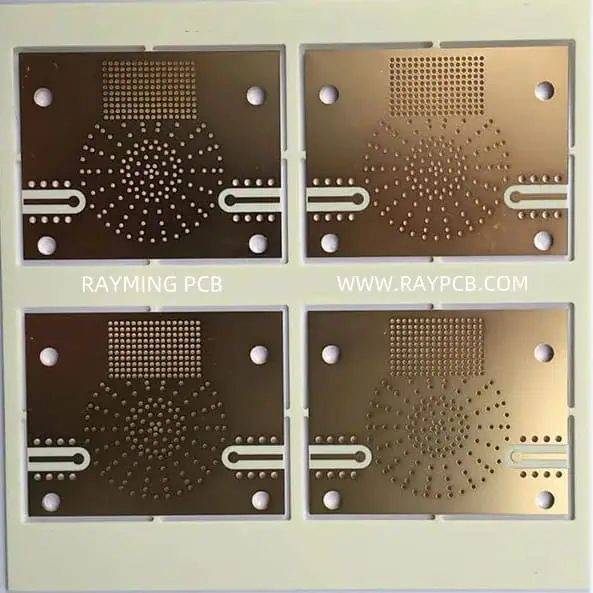
Rogers Corporation takes a holistic approach to high-frequency circuit materials, ensuring that their copper foils are optimized for use with specific substrate materials. This tailored approach results in several product lines designed for optimal performance in different applications.
RO3000® Series Compatible Foils
For use with Rogers’ RO3000® series laminates, which are popular in high-frequency, low-loss applications, Rogers offers copper foils specifically designed to:
- Maintain the low-loss characteristics of the substrate
- Provide excellent adhesion to the RO3000® materials
- Support the thermal stability requirements of these high-performance laminates
RO4000® Series Optimized Foils
The RO4000® series laminates, known for their excellent high-frequency performance and processability, are paired with copper foils that:
- Complement the electrical properties of the substrate
- Enhance the overall PCB fabrication process
- Support the cost-effective nature of the RO4000® series
RT/duroid® Compatible Foils
For the high-performance RT/duroid® laminates, Rogers provides copper foils that:
- Maintain the exceptional electrical properties of the substrate
- Offer superior adhesion to PTFE-based materials
- Support the extreme low-loss requirements of millimeter-wave applications
Advanced Technologies in Rogers’ Copper Foils
Rogers Corporation continually invests in research and development to enhance the performance of their copper foils for high-frequency applications. Some of the advanced technologies incorporated into their copper foil offerings include:
Micro-Roughening Techniques
Rogers employs sophisticated micro-roughening techniques to optimize the surface profile of their copper foils. This process aims to:
- Improve adhesion to the substrate
- Minimize signal losses at high frequencies
- Enhance the overall reliability of the PCB
Barrier Layers
For certain high-performance applications, Rogers incorporates barrier layers into their copper foils. These layers serve to:
- Prevent copper migration into the dielectric
- Improve long-term reliability
- Enhance performance in harsh environmental conditions
Customized Surface Treatments
Rogers offers a range of surface treatments for their copper foils, allowing customers to select the optimal finish for their specific application. These treatments can:
- Improve solderability
- Enhance resistance to oxidation
- Optimize adhesion to different types of dielectric materials
Selecting the Right Copper Foil for High-Frequency Applications
Choosing the appropriate copper foil for a high-frequency application involves considering several factors:
- Frequency Range: Higher frequencies generally benefit from smoother, low-profile copper foils.
- Loss Requirements: Applications with stringent loss budgets may require specialized low-loss copper foils.
- Power Handling: High-power applications may need thicker copper foils for improved thermal management.
- Fabrication Process: Consider the compatibility of the copper foil with your PCB fabrication process, including etching and plating requirements.
- Environmental Conditions: For harsh environments, consider copper foils with enhanced adhesion and resistance to thermal cycling.
- Cost Considerations: Balance the performance requirements with budget constraints when selecting copper foils.
Conclusion
Copper foils play a critical role in the performance of high-frequency circuit materials, influencing everything from signal integrity to thermal management. Rogers Corporation’s range of specialized copper foils for high-frequency applications demonstrates their commitment to advancing PCB technology and meeting the evolving needs of the electronics industry.
By offering tailored solutions for different substrate materials and application requirements, Rogers enables engineers to optimize their high-frequency designs for peak performance. As the demand for higher frequencies and more challenging applications continues to grow, the importance of selecting the right copper foil becomes increasingly critical.
Whether you’re designing next-generation 5G infrastructure, advanced radar systems, or high-speed digital circuits, Rogers’ copper foil offerings provide the foundation for pushing the boundaries of high-frequency PCB performance. By leveraging these advanced materials, engineers can create more efficient, reliable, and high-performing electronic systems that drive innovation across a wide range of industries.
As technology continues to evolve, Rogers Corporation remains at the forefront of materials science, continuously refining and expanding their copper foil offerings to meet the challenges of tomorrow’s high-frequency applications. By choosing Rogers copper foils for high-frequency circuit materials, designers and engineers can ensure they have the best possible foundation for their cutting-edge electronic designs.

