
RAYPCB · ENGINEERING GUIDE
Arlon 85NT PCB: Polyimide Aramid Thermal Design
Arlon 85NT combines polyimide resin with nonwoven aramid reinforcement. It is relevant when a design needs both a high-temperature material route and low in-plane expansion at a package or dimensional interface. Those two requirements should be analyzed separately rather than compressed into a general high-reliability claim.
Use the Arlon material overview for the family comparison. This page focuses on the exact 85NT architecture and a transparent expansion-mismatch worksheet.
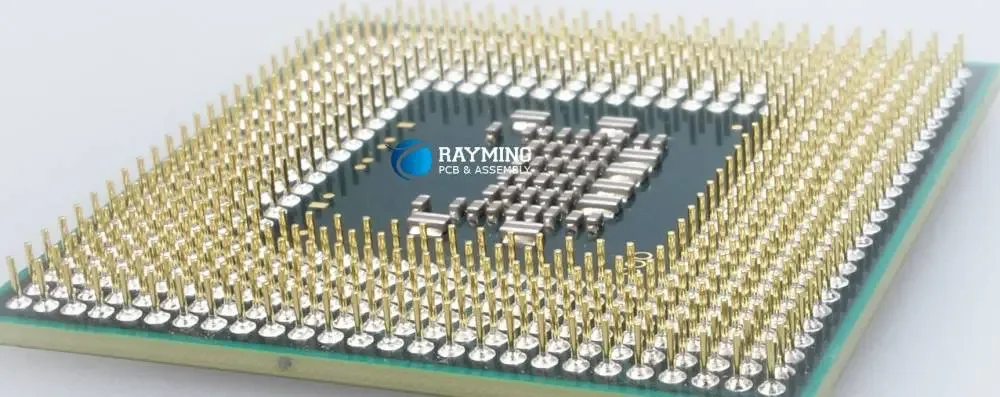
Use the product sheet instead of mixing older family summaries
The official 85NT sheet describes a pure polyimide system with Tg 250°C and nonwoven aramid reinforcement. It lists in-plane CTE of 7–9 ppm/°C and Td of 426°C. Some older overview tables use a different Tg headline, so retain the controlled product revision used for the actual decision.
These typical values do not define every finished stackup. Copper, direction and temperature range affect the composite response. A low in-plane value also does not substitute for the through-thickness data needed to review plated interconnects.
Evidence and construction decision
| Item | Source or model boundary | Action for the design review |
|---|---|---|
| Architecture | Nonwoven aramid / pure polyimide | Not 55NT epoxy or 45NK woven aramid. |
| Current Tg | 250°C in current sheet | Do not copy older 240°C guide context. |
| Typical CTE | 7–9 ppm/°C in-plane | Keep separate from Z expansion and joint strain. |
Define the package interface and the thermal sequence
Record the package material, footprint, attachment geometry, supports and operating excursion. Identify whether the concern is edge displacement, solder-joint loading, registration or another measurable requirement. Use a length that corresponds to that physical question.
Separately list lamination, finishing, assembly and rework exposures. An assembly can have modest operating temperature variation but severe manufacturing excursions. Those histories may require different evidence from the material and board suppliers.
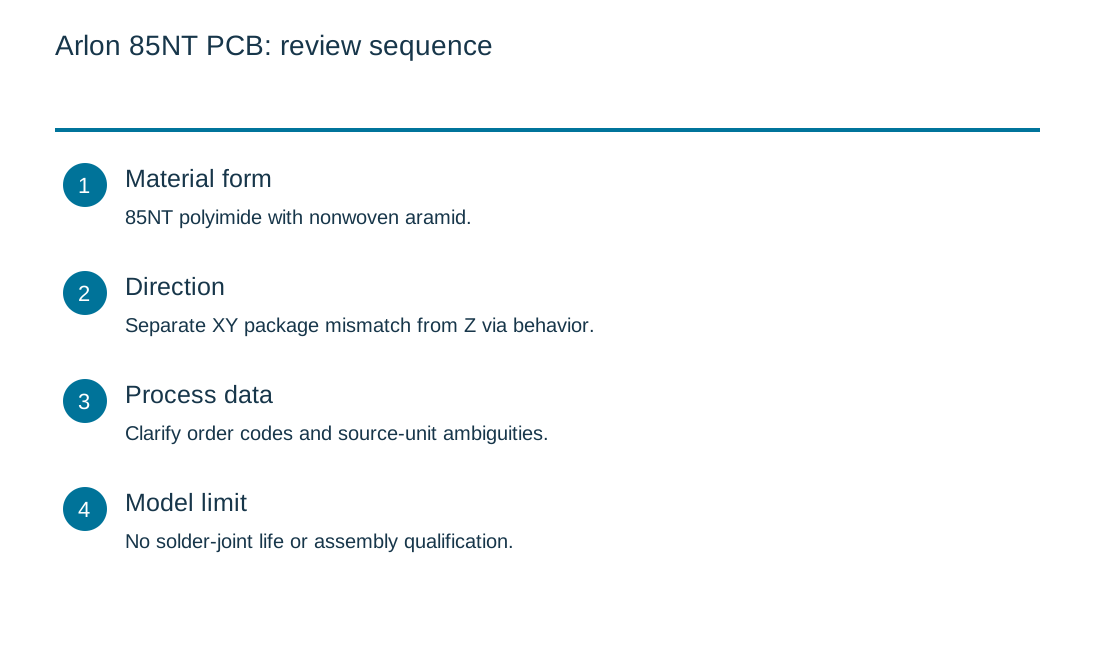
| Review item | What to establish |
|---|---|
| Material form | 85NT polyimide with nonwoven aramid. |
| Direction | Separate XY package mismatch from Z via behavior. |
| Process data | Clarify order codes and source-unit ambiguities. |
| Model limit | No solder-joint life or assembly qualification. |
Interpret the free-mismatch tool correctly
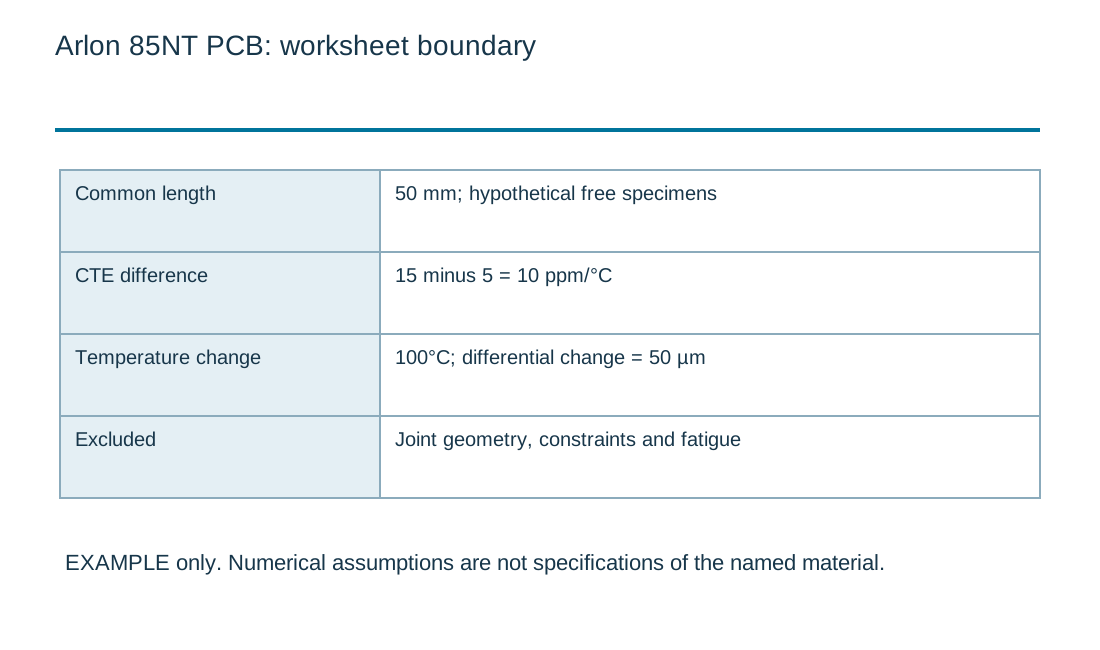
The worksheet calculates the difference in unconstrained expansion of two materials over a common length. With hypothetical coefficients of 15 and 5 ppm/°C, a 50 mm length and a 100°C rise, it gives 50 µm differential movement. No 85NT property is preselected as a design default.
The model does not solve the constrained assembly. It excludes bending, joint compliance, creep and fatigue. A smaller free mismatch can motivate further investigation, but cannot establish a quantified service-life improvement without an appropriate assembly model and test basis.
Free differential thermal expansion
Free differential thermal expansion
Use the current inputs and keep the assumptions
Start with the example only to inspect the units and the calculation boundary. Replace every assumption with a value tied to your own document or measurement. An empty numeric field is not zero. The review-reference field is a local label; avoid entering customer names, confidential part numbers or other private information into a public worksheet.
After calculating, read the notes alongside the numerical result. Changing any input invalidates the displayed result and disables its download until you calculate again. For a comparison, keep the units, geometry, material condition and measurement boundary consistent. A long decimal result does not imply equally precise input data. The downloadable record stays on your device and can be attached manually to an inquiry. It is not automatically transferred into the Contact form.
If an input is unknown, identify the person or document needed to resolve it. Do not fill a gap with a favorable generic value simply to obtain a result. You can request a material or fabrication review without using the tool. The arithmetic illustrates a relationship; it does not accept a construction, certify a material, establish current pricing or replace a supplier process specification.
| Input | What to establish before using it |
|---|---|
| Review reference | Nonconfidential revision label. |
| Compared in-plane length · mm | Common free length along a declared direction. |
| First material CTE · ppm/°C | Example coefficient; use the actual temperature range. |
| Second material CTE · ppm/°C | Second material coefficient; not an assumed glass grade. |
| Temperature change · °C | Signed common temperature change. |
Optional cost comparison from your own allowances
Use a quotation or a clearly labeled internal assumption for each input. Keep the quantity, construction and inspection scope the same when comparing alternatives. This uncalibrated planning model adds entered values; it contains no current market rates and does not issue a RAYPCB quotation. You can contact the team without completing it.
Optional project allowance comparison
Compare epoxy and polyimide aramid routes deliberately
55NT uses epoxy with nonwoven aramid, while 45NK uses woven aramid. Preserve both resin and reinforcement architecture in the comparison. A similar CTE range does not make the products interchangeable under the same press or assembly process.
For a glass-reinforced polyimide route, 35N owns a different construction review. Choose the comparison according to the actual failure mechanism and controlled requirements, not a universal ranking of material names.
Include drilling, moisture and registration in the proposal
Low in-plane expansion does not eliminate process risks. The manufacturing team needs the layer structure, copper pattern, critical holes and dimensional tolerances. Material-specific handling and qualified processing remain necessary.
The public 85NT sheet contains an availability table whose 85N-prefixed entries and a drill-unit presentation need clarification before procurement or machine setup. Use controlled documents for the supplied material, and do not transform a website summary into a production recipe.
Ask for a construction and evidence plan
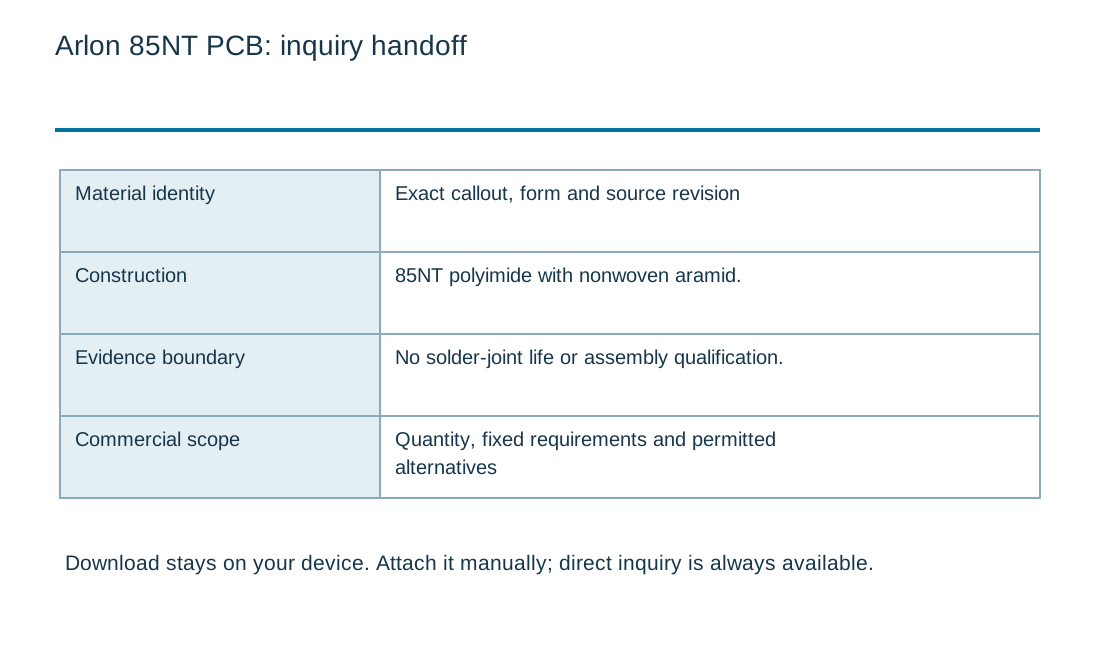
Provide exact 85NT callout, source revision, stackup, package interface, thermal range, assembly history and acceptance requirements. Include quantity and permitted alternatives. Identify which dimensional or reliability evidence is needed for the customer decision.
The optional budget worksheet adds only entered allowances and cannot establish current material pricing. Keep the approved construction, assumptions and verification boundary with the drawing. The useful outcome is a reviewable proposal; the online mismatch result is supporting arithmetic, not qualification of the finished board or assembly.
Review the package, board and attachment together
The finished board combines a dielectric, copper patterns, holes, surface coatings and a manufacturing history. Its behavior cannot be inferred from a family name alone. State the supplied grade, reinforcement, thickness, copper and processing conditions that matter to the intended application.
Keep handling and assembly requirements with the fabrication drawing. A thin panel, punched outline or unusual support condition can change the production route even when the electrical circuit is simple. Ask the fabricator to review the actual features and panel format rather than assuming a dimensional example represents a production capability.
For cost comparison, hold the drawing, quantity, test scope and acceptance requirements constant. Record one-time tooling separately from recurring work, and distinguish raw material utilization from accepted-board yield. Any calculator on this page uses supplied assumptions; an actual quotation requires the files and an agreed scope.
A source-qualified table should be read alongside the exclusions and footnotes, not separated from them. If the supplier limits an application, identify whether that limitation affects the current design before requesting a price. A familiar family classification does not override an explicit restriction, and a positive calculator result cannot remove it.
For a repeat build, compare the newly proposed supply with the previously approved material record. Exact grade, manufacturing site where relevant, foil treatment, reinforcement and dimensional basis can matter. Define which changes require notification and which need technical approval. This avoids turning a purchasing substitution into an unnoticed design change.
Receiving records should support the agreed identity and traceability requirement. A certificate for a raw material, a finished-board inspection report and an assembly test result cover different boundaries. Request the records that actually answer the project questions rather than collecting unrelated certificates.
When a source contains conflicting values, keep the discrepancy visible until a controlled revision or written supplier response resolves it. Do not create a new table by combining the most favorable entries from several sources. The released drawing, material list and quotation should all describe the same accepted construction.
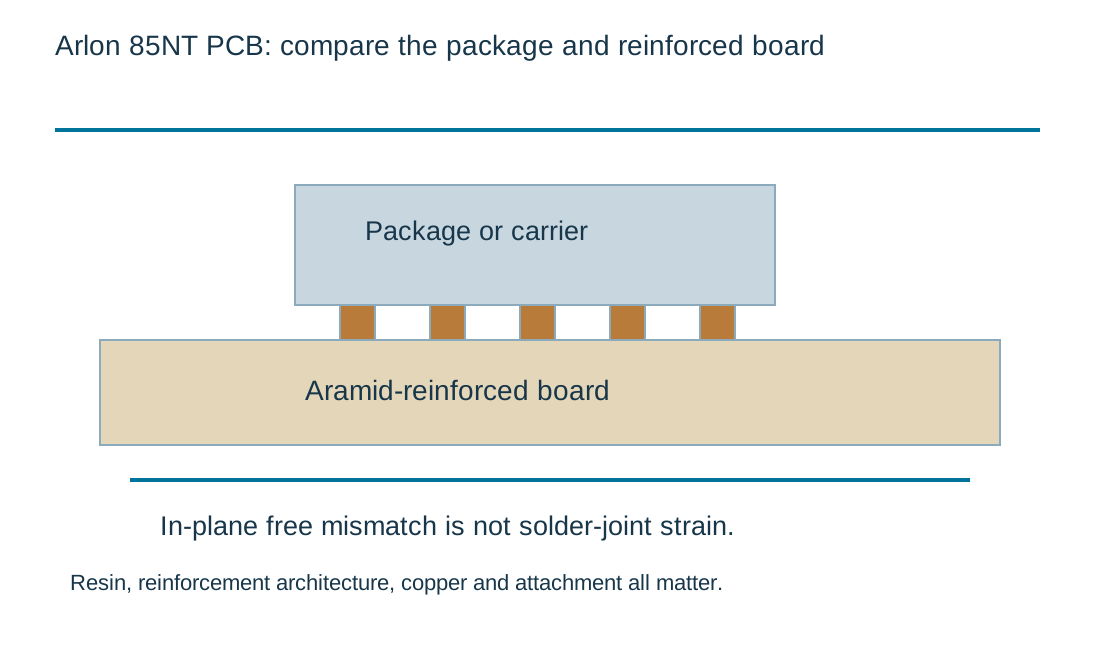
Compare in-plane expansion along the same direction and temperature interval. A package body, ceramic carrier, copper pattern and reinforced board need not move equally. The free differential-expansion result identifies a dimensional mismatch; it does not calculate solder-joint strain because joint geometry, distance from the neutral point, constraints and temperature cycling are excluded.
Record woven or nonwoven reinforcement explicitly. The fiber architecture can affect drilling, dimensional behavior and moisture response independently of the resin family. Do not choose a replacement solely because its nominal expansion is close to a package value. The finished construction and attachment must be reviewed together, including any permitted assembly repair.
Standards, source context and limits
Use the edition, amendment and material-document revision named in the purchase agreement. A standards title, marketing label or supplier product family does not establish that a particular lot meets a requirement. Public summaries are useful for scope; the controlled specification and applicable test method govern acceptance.
The examples on this page are illustrative engineering scenarios. They are not RAYPCB production records or guaranteed material values. Source links identify the organizations responsible for the referenced information. Confirm applicability to the exact grade, construction and test condition before carrying a number into a drawing or qualification report. Sources were reviewed on 3 October 2026. A public catalog search is not proof that an unlisted product never existed. Where the exact designation or current technical sheet could not be verified, this page provides a clarification workflow rather than an invented material specification. Current supply, construction availability and qualification remain separate questions.
For fabrication scope and the agreed construction requirements, see PCB manufacturing.