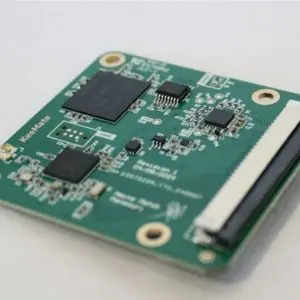
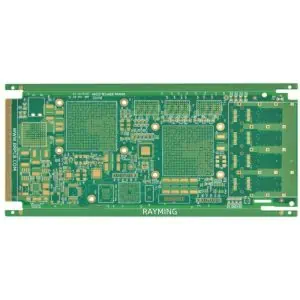
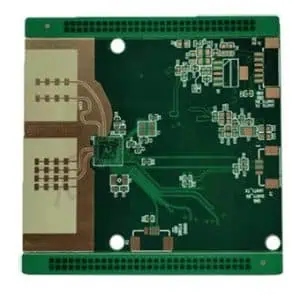
Printed Circuit Boards (PCBs) form the backbone of virtually every electronic device in our modern world, from smartphones and computers to automotive systems and medical equipment. At the heart of every PCB lies a critical component that often goes unnoticed but plays an indispensable role in determining the board’s performance, reliability, and functionality: the laminate substrate. Understanding the importance of laminates for PCBs is essential for anyone involved in electronics design, manufacturing, or quality assurance.
What Are PCB Laminates?
PCB laminates are composite materials that serve as the foundational substrate upon which electronic circuits are built. These materials typically consist of a reinforcing material, such as fiberglass cloth, combined with a resin system that binds the layers together. The most common type is FR4 (Flame Retardant 4), which combines woven fiberglass cloth with epoxy resin to create a rigid, electrically insulating base material.
The laminate provides the structural foundation that supports copper traces, component mounting pads, and through-hole vias. Without a proper laminate substrate, it would be impossible to create the complex, multi-layered circuit patterns that modern electronics require. The laminate essentially acts as both a mechanical support structure and an electrical insulator, separating different circuit layers while maintaining the precise dimensional stability necessary for reliable electrical connections.
Mechanical Properties and Structural Integrity
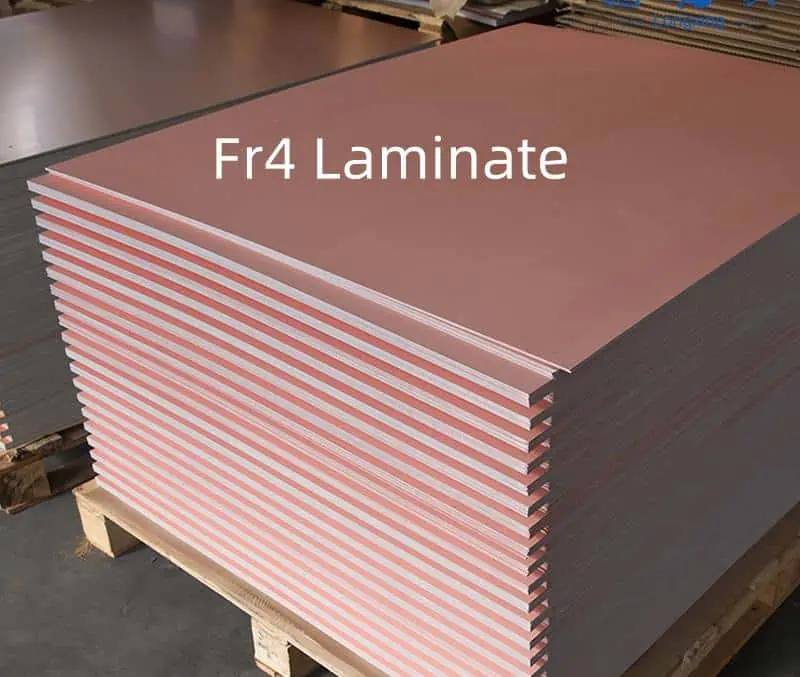
One of the primary functions of PCB laminates is to provide mechanical strength and dimensional stability to the circuit board. Modern electronic devices are subject to various mechanical stresses, including vibration, thermal cycling, shock, and bending forces. The laminate must withstand these stresses while maintaining the precise positioning of electrical components and traces.
The mechanical properties of laminates directly impact the PCB’s ability to survive manufacturing processes such as drilling, routing, and component assembly. During drilling operations for through-holes and vias, the laminate must resist delamination and provide clean, burr-free holes. Poor-quality laminates can lead to drill smear, where resin material smears across the hole walls, potentially causing electrical connectivity issues.
Flexural strength and modulus are critical mechanical properties that determine how well a PCB can withstand bending stresses without cracking or breaking. In applications such as flexible PCB or boards that must fit into curved enclosures, the laminate’s mechanical properties become even more crucial. The coefficient of thermal expansion (CTE) is another vital mechanical characteristic, as mismatched CTE values between the laminate and copper can lead to stress buildup and potential failure during temperature cycling.
Electrical Performance Characteristics
The electrical properties of PCB laminates significantly influence signal integrity, power delivery, and overall circuit performance. Dielectric constant (Dk) and dissipation factor (Df) are two fundamental electrical characteristics that determine how electrical signals propagate through the PCB.
The dielectric constant affects the impedance of transmission lines and the propagation delay of signals. In high-speed digital circuits, maintaining consistent impedance is crucial for preventing signal reflections, crosstalk, and electromagnetic interference. Laminates with stable dielectric constants across frequency and temperature ranges enable designers to create controlled impedance structures that ensure reliable signal transmission.
Dissipation factor, also known as loss tangent, represents the amount of electrical energy lost as heat when an alternating electric field is applied to the material. Low-loss laminates are essential for high-frequency applications, such as RF circuits and high-speed digital systems, where signal attenuation must be minimized to maintain signal quality over long traces or at high frequencies.
Volume resistivity and surface resistivity are additional electrical properties that affect the laminate’s ability to prevent unwanted current paths and maintain electrical isolation between different circuit elements. High resistivity values are generally desirable to prevent leakage currents and ensure proper circuit operation.
Thermal Management and Heat Dissipation
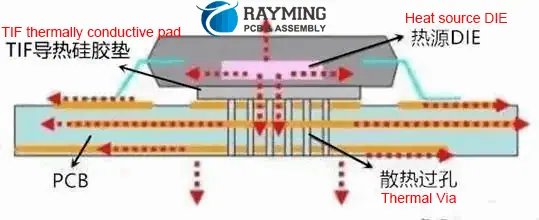
Modern electronic devices generate significant amounts of heat, making thermal management a critical design consideration. PCB laminates play a crucial role in thermal management by providing pathways for heat dissipation and maintaining structural integrity at elevated temperatures.
The thermal conductivity of the laminate affects how efficiently heat can be conducted away from heat-generating components to heat sinks or other cooling mechanisms. Standard FR4 laminates have relatively low thermal conductivity, which can be limiting in high-power applications. Specialized laminates with enhanced thermal conductivity, such as metal-core PCBs or thermally conductive dielectrics, are often employed in LED lighting, power electronics, and other applications where efficient heat removal is essential.
Glass transition temperature (Tg) is a critical thermal property that defines the temperature at which the laminate begins to soften and lose its mechanical properties. Operating above the Tg can lead to dimensional instability, increased CTE, and potential delamination. High-Tg laminates are necessary for applications that must operate at elevated temperatures or undergo high-temperature assembly processes such as lead-free soldering.
Thermal decomposition temperature (Td) represents the temperature at which the laminate material begins to chemically break down. This property is particularly important during manufacturing processes that involve high temperatures, such as multiple reflow soldering cycles in complex assemblies.
Chemical Resistance and Environmental Durability
PCBs often operate in challenging environmental conditions, including exposure to chemicals, humidity, and various atmospheric contaminants. The laminate material must provide adequate chemical resistance to prevent degradation that could compromise electrical performance or mechanical integrity.
Moisture absorption is a critical concern, as absorbed water can affect electrical properties, cause dimensional changes, and lead to reliability issues such as conductive anodic filament (CAF) formation. CAF occurs when metal ions migrate through the laminate material in the presence of moisture and electrical bias, potentially creating conductive paths that can cause electrical failures.
The laminate’s resistance to various chemicals, including cleaning solvents, flux residues, and industrial chemicals, determines the PCB’s suitability for different applications. Medical devices, automotive systems, and industrial equipment often require laminates with enhanced chemical resistance to ensure long-term reliability in harsh environments.
Manufacturing Considerations and Processability

The choice of laminate material significantly impacts PCB manufacturing processes and yields. Laminates must be compatible with various manufacturing steps, including drilling, plating, etching, and lamination processes.
Drill-ability is a crucial manufacturing consideration, as modern PCBs often require thousands of small-diameter holes for vias and component mounting. The laminate must provide clean drilling without excessive tool wear, delamination, or drill wander. Glass content, resin type, and filler materials all affect drill-ability and hole quality.
Plating adhesion is another critical factor, as the copper plating in through-holes and vias must form reliable bonds with the laminate material. Poor adhesion can lead to barrel cracking, via failures, and reliability issues. The laminate surface must be properly prepared and compatible with the plating chemistry to ensure strong metallization adhesion.
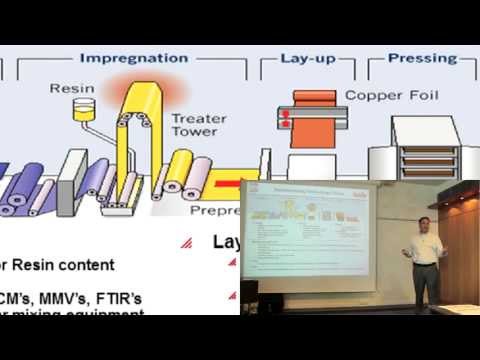
During the lamination process, where multiple layers are bonded together under heat and pressure, the laminate material must flow properly to fill voids and create strong interlayer bonds. Prepreg (pre-impregnated) materials must have the right resin content and flow characteristics to achieve void-free lamination while maintaining precise layer registration.
Advanced Laminate Technologies and Future Trends
As electronic systems become more complex and demanding, advanced laminate technologies continue to evolve to meet new requirements. Low-loss materials for 5G and millimeter-wave applications require extremely low dissipation factors and stable electrical properties at high frequencies. These materials often incorporate specialized resin systems and low-loss reinforcement materials.
Flexible and rigid-flex laminates enable new form factors and improved reliability by eliminating connectors and allowing three-dimensional circuit routing. These materials must combine flexibility with electrical performance and long-term reliability under repeated flexing.
Embedded component technologies integrate passive components directly into the laminate layers, enabling higher component density and improved electrical performance. These approaches require specialized laminate materials and manufacturing processes to maintain component functionality and reliability.
Environmental considerations are driving the development of halogen-free and recyclable laminate materials. These eco-friendly alternatives must maintain the performance characteristics required for reliable PCB operation while reducing environmental impact.
Conclusion
PCB laminates represent far more than simple substrate materials; they are sophisticated engineered composites that enable the functionality of modern electronic systems. Their mechanical, electrical, thermal, and chemical properties directly impact circuit performance, manufacturing yield, and long-term reliability. As electronic systems continue to evolve toward higher speeds, greater complexity, and more demanding operating conditions, the importance of selecting appropriate laminate materials becomes increasingly critical.
Understanding laminate properties and their impact on PCB performance enables engineers to make informed design decisions that optimize system performance while ensuring manufacturability and reliability. The continuous development of advanced laminate technologies promises to support the next generation of electronic innovations, from high-speed computing and 5G communications to electric vehicles and renewable energy systems. In this context, PCB laminates will continue to play a foundational role in enabling technological advancement and improving the quality of life through better electronic systems.