
Metal Core Printed Circuit Boards (MCPCBs) have become increasingly popular in various industries, particularly in high-power LED applications and thermal management solutions. Among the different types of MCPCBs, sinkpad MCPCBs have emerged as a highly efficient and effective option for heat dissipation. This article will delve deep into the world of sinkpad MCPCBs, exploring their structure, benefits, applications, and much more.
What are Sinkpad MCPCBs?
Definition and Basic Concept
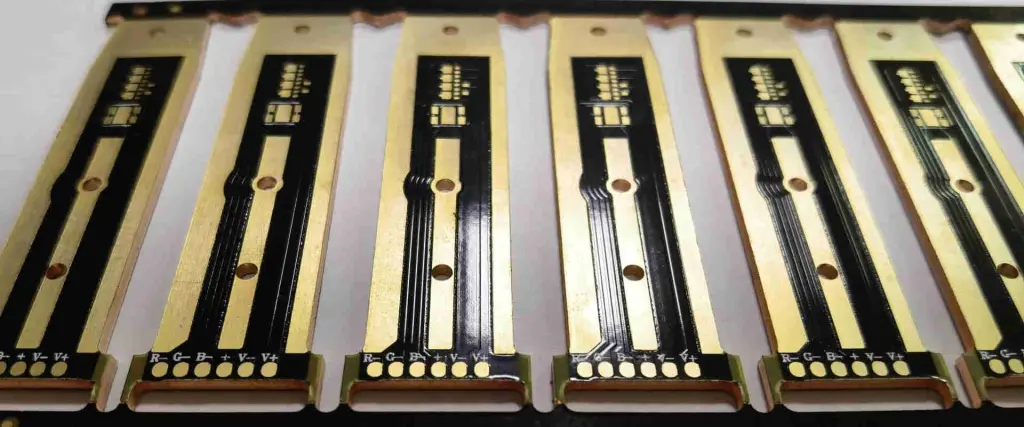
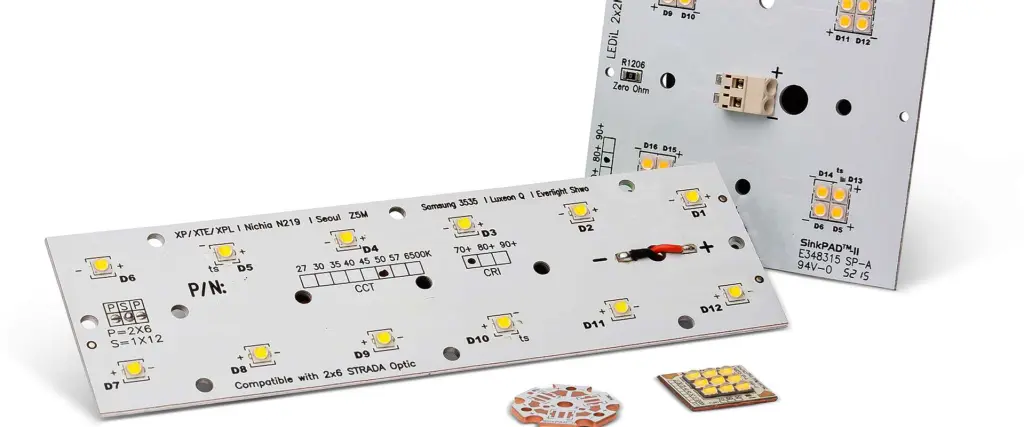
Sinkpad MCPCBs, also known as sinkpad metal core PCBs, are a specialized type of metal core printed circuit board designed to enhance thermal management in electronic devices. The term “sinkpad” refers to the unique structure of these boards, which incorporates dedicated heat-sinking pads directly connected to the metal core.
Structure of Sinkpad MCPCBs
Sinkpad MCPCBs typically consist of the following layers:
- Circuit Layer: The topmost layer where components are mounted and electrical connections are made.
- Dielectric Layer: An electrically insulating but thermally conductive layer.
- Metal Core: Usually made of aluminum or copper, this layer acts as the primary heat spreader.
- Sinkpad: Specialized thermal vias or pads that directly connect the circuit layer to the metal core.
How Sinkpad MCPCBs Differ from Standard MCPCBs
The key difference lies in the direct thermal path provided by the sinkpads. In standard MCPCBs, heat must travel through the dielectric layer to reach the metal core. Sinkpad MCPCBs create a more efficient heat transfer route, significantly improving thermal performance.
The Science Behind Sinkpad MCPCBs
Thermal Management Principles
Sinkpad MCPCBs operate on several key thermal management principles:
- Conduction: Heat is conducted directly from the component to the metal core via sinkpads.
- Spreading: The metal core acts as a heat spreader, distributing heat across a larger surface area.
- Dissipation: Heat is then dissipated from the metal core to the surrounding environment.
Heat Transfer Mechanisms in Sinkpad MCPCBs
The heat transfer in sinkpad MCPCBs occurs through three main mechanisms:
- Conductive Heat Transfer: From the component to the sinkpad and metal core.
- Convective Heat Transfer: From the MCPCB surface to the surrounding air.
- Radiative Heat Transfer: Infrared radiation emitted from the MCPCB surface.
Thermal Resistance in Sinkpad MCPCBs
Thermal resistance is a crucial factor in the performance of sinkpad MCPCBs. The total thermal resistance can be broken down into several components:
Resistance ComponentDescriptionRjcJunction to case resistance of the componentRcsCase to sinkpad resistanceRsmSinkpad to metal core resistanceRmaMetal core to ambient resistance
The total thermal resistance (Rja) is the sum of these components: Rja = Rjc + Rcs + Rsm + Rma
Sinkpad MCPCBs aim to minimize Rcs and Rsm, thereby reducing the overall thermal resistance and improving heat dissipation.
Advantages of Sinkpad MCPCBs
Enhanced Thermal Performance
The primary advantage of sinkpad MCPCBs is their superior thermal performance. By providing a direct path for heat transfer, they can significantly reduce junction temperatures of components, leading to:
- Improved reliability and longevity of electronic components
- Higher power handling capabilities
- More compact designs due to reduced need for additional cooling solutions
Improved Electrical Performance
Sinkpad MCPCBs can also offer electrical performance benefits:
- Reduced electrical noise due to better grounding
- Improved signal integrity in high-frequency applications
- Lower electromagnetic interference (EMI) emissions
Cost-Effectiveness
While sinkpad MCPCBs may have a higher initial cost compared to standard PCBs, they can be more cost-effective in the long run due to:
- Reduced need for additional heat sinks or cooling solutions
- Improved reliability leading to fewer failures and replacements
- Ability to use higher-power components in more compact designs
Design Flexibility
Sinkpad MCPCBs offer designers greater flexibility in several ways:
- Ability to handle higher power densities
- More options for component placement and thermal management
- Potential for reducing overall system size and weight
Applications of Sinkpad MCPCBs
LED Lighting
One of the most common applications for sinkpad MCPCBs is in LED lighting. They are particularly useful in:
- High-power LED modules
- Automotive lighting
- Street and outdoor lighting
- Stage and entertainment lighting
Power Electronics
Sinkpad MCPCBs find extensive use in power electronics applications, including:
- Power supplies and converters
- Motor drives
- Inverters for renewable energy systems
- Electric vehicle (EV) power systems
RF and Microwave Circuits
The thermal and electrical properties of sinkpad MCPCBs make them suitable for RF and microwave applications:
- Power amplifiers
- Transmitters and receivers
- Satellite communication equipment
- Radar systems
Industrial Control Systems
Many industrial control systems benefit from the use of sinkpad MCPCBs:
- Programmable logic controllers (PLCs)
- Variable frequency drives (VFDs)
- Industrial automation equipment
- Process control systems
Consumer Electronics
Even in consumer electronics, sinkpad MCPCBs are finding increased adoption:
- High-performance computing devices
- Gaming consoles
- Audio amplifiers
- Smart home devices
Design Considerations for Sinkpad MCPCBs
Thermal Design Considerations
When designing with sinkpad MCPCBs, several thermal factors must be considered:
- Component power dissipation and thermal requirements
- Sinkpad size and placement
- Metal core thickness and material selection
- Overall board size and shape for heat spreading
Electrical Design Considerations
Electrical design aspects to consider include:
- Circuit layout and component placement
- Signal integrity and EMI considerations
- Grounding and power distribution
- Compatibility with high-frequency designs
Mechanical Design Considerations
Mechanical factors play a crucial role in sinkpad MCPCB design:
- Board thickness and rigidity
- Mounting and assembly methods
- Thermal expansion and stress management
- Integration with enclosures and heat sinks
Material Selection
Choosing the right materials is critical for optimal performance:
| Component | Common Materials | Considerations |
| Metal Core | Aluminum, Copper | Thermal conductivity, cost, weight |
| Dielectric | Ceramic-filled epoxy | Thermal conductivity, electrical insulation |
| Circuit Layer | Copper | Thickness, copper weight |
| Surface Finish | ENIG, HASL, OSP | Solderability, environmental resistance |
Manufacturing Process of Sinkpad MCPCBs
Material Preparation
The manufacturing process begins with the preparation of materials:
- Metal core selection and preparation
- Dielectric material mixing and application
- Copper foil preparation for the circuit layer
Lamination Process
The layers are then bonded together through a lamination process:
- Stacking of layers (metal core, dielectric, copper foil)
- Application of heat and pressure in a lamination press
- Cooling and stabilization of the laminated stack
Circuit Patterning
The circuit pattern is created on the copper layer:
- Application of photoresist
- Exposure to UV light through a photomask
- Development of the photoresist
- Etching of exposed copper
- Stripping of remaining photoresist
Sinkpad Formation
The critical sinkpad features are formed:
- Drilling or etching of thermal vias
- Plating of thermal vias to create conductive paths
- Surface finishing of sinkpads
Surface Finishing
The board undergoes final surface finishing:
- Application of solder mask
- Surface finish application (e.g., ENIG, HASL)
- Silkscreen printing for component markings
Quality Control and Testing
Rigorous quality control measures are implemented:
- Visual inspection
- Electrical testing for shorts and opens
- Thermal performance testing
- Reliability and stress testing
Challenges and Limitations of Sinkpad MCPCBs
Design Complexity
Designing sinkpad MCPCBs can be more complex than standard PCBs:
- Requires careful thermal and electrical simulations
- Balancing thermal performance with electrical requirements
- Limited design software support for advanced thermal features
Manufacturing Challenges
Some manufacturing challenges include:
- Precise control required for dielectric thickness
- Potential for delamination due to thermal stress
- Higher manufacturing costs compared to standard PCBs
Cost Considerations
While often cost-effective in the long run, sinkpad MCPCBs have higher upfront costs:
- More expensive raw materials
- More complex manufacturing process
- Potential for higher scrap rates during production
Performance Limitations
Despite their advantages, sinkpad MCPCBs have some performance limitations:
- Maximum temperature limited by dielectric material properties
- Potential for thermal bottlenecks at sinkpad interfaces
- May not be suitable for extremely high-frequency applications due to dielectric properties
Future Trends in Sinkpad MCPCB Technology
Advanced Materials
Research is ongoing into new materials for sinkpad MCPCBs:
- Higher thermal conductivity dielectrics
- Novel metal core materials (e.g., carbon-based materials)
- Advanced surface finishes for improved reliability
Design and Simulation Tools
Improvements in design and simulation tools are expected:
- Better integration of thermal and electrical simulation
- AI-assisted design optimization
- More accurate modeling of sinkpad thermal performance
Manufacturing Innovations
New manufacturing techniques are being developed:
- Additive manufacturing for custom thermal structures
- Improved lamination processes for better thermal interfaces
- Advanced via formation techniques for enhanced thermal paths
Integration with Other Technologies
Sinkpad MCPCBs are likely to be integrated with other emerging technologies:
- Embedded components for even more compact designs
- Integration with advanced cooling solutions (e.g., microfluidics)
- Compatibility with flexible and stretchable electronics
Frequently Asked Questions (FAQ)
- Q: What is the main advantage of sinkpad MCPCBs over standard MCPCBs? A: The main advantage of sinkpad MCPCBs is their superior thermal performance. They provide a direct thermal path from the component to the metal core through dedicated sinkpads, resulting in more efficient heat dissipation and lower junction temperatures for components.
- Q: Are sinkpad MCPCBs suitable for all types of electronic applications? A: While sinkpad MCPCBs offer significant benefits in many applications, they are particularly well-suited for high-power or thermally demanding applications such as LED lighting, power electronics, and RF circuits. For low-power or cost-sensitive applications, standard PCBs may still be more appropriate.
- Q: How do sinkpad MCPCBs compare in cost to standard PCBs? A: Sinkpad MCPCBs generally have a higher initial cost than standard PCBs due to more expensive materials and a more complex manufacturing process. However, they can be more cost-effective in the long run for high-power applications by reducing the need for additional cooling solutions and improving overall system reliability.
- Q: Can existing PCB designs be easily converted to sinkpad MCPCB designs? A: Converting existing designs to sinkpad MCPCB designs often requires significant redesign work. The thermal and electrical characteristics of sinkpad MCPCBs are different from standard PCBs, necessitating careful consideration of component placement, thermal management, and electrical performance. It’s generally best to design for sinkpad MCPCBs from the ground up.
- Q: What are the key factors to consider when designing with sinkpad MCPCBs? A: Key factors include thermal requirements of components, sinkpad size and placement, metal core thickness and material, overall board size for heat spreading, electrical layout considerations, and mechanical factors such as mounting and assembly methods. It’s crucial to balance thermal performance with electrical and mechanical requirements for optimal design.

