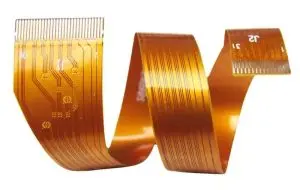
In the ever-evolving world of electronics, the demand for flexible and adaptable circuit board solutions continues to grow. One innovative approach that has gained traction is the development of semi-flexible PCBs using FR4 material. This article delves into the fabrication technology behind a type of FR4 semi-flexible PCB, exploring the processes, challenges, and advantages of this unique approach to circuit board design.

Understanding FR4 Material
FR4 (Flame Retardant 4) is a composite material widely used in the production of rigid printed circuit boards. It consists of a woven fiberglass cloth impregnated with an epoxy resin binder. The material is known for its excellent electrical insulation properties, mechanical strength, and flame resistance.
Key Properties of FR4
| Property | Typical Value |
| Dielectric Constant | 4.2-4.8 |
| Dissipation Factor | 0.017-0.019 |
| Glass Transition Temperature (Tg) | 130-180°C |
| Coefficient of Thermal Expansion (CTE) | 50-70 ppm/°C |
| Flexural Strength | 450-560 MPa |
| Water Absorption | 0.1-0.3% |
While FR4 is traditionally used for rigid PCBs, innovative fabrication techniques have made it possible to create semi-flexible variants, combining the benefits of FR4 with limited flexibility in specific areas of the board.
Semi-Flexible PCB Concept
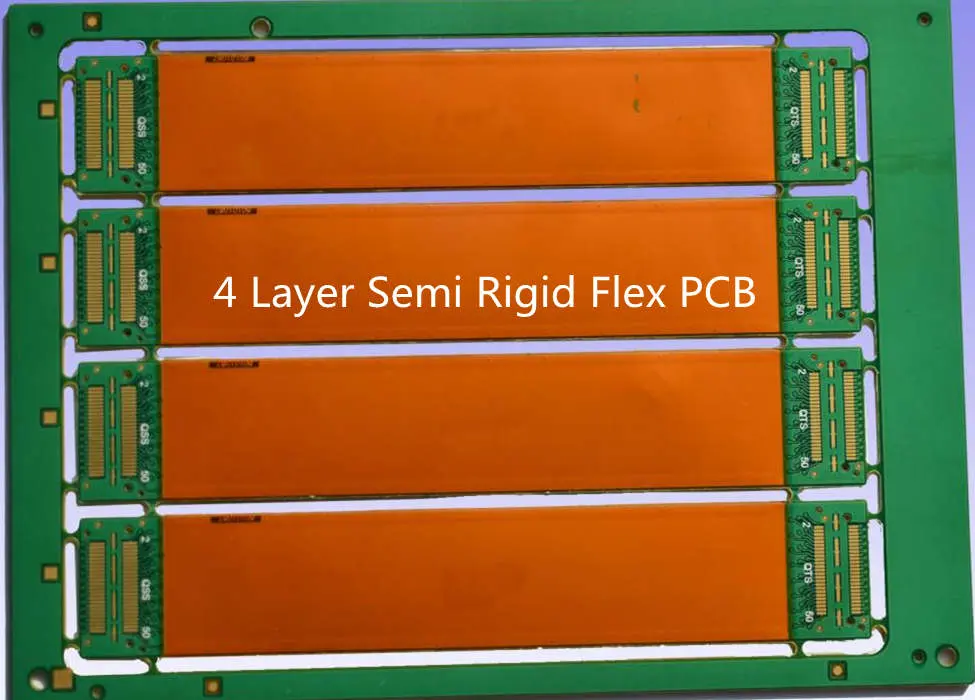
Semi-flexible PCBs, also known as rigid-flex PCBs, combine the characteristics of both rigid and flexible circuit boards. In the case of FR4 semi-flexible PCBs, the majority of the board maintains the rigidity of standard FR4, while specific areas are engineered to allow for controlled flexibility.
Key Features of FR4 Semi-Flexible PCBs
- Rigid FR4 sections for component mounting and structural integrity
- Flexible sections for interconnections or adaptable positioning
- Reduced overall thickness compared to traditional rigid PCBs
- Ability to bend or fold in predefined areas
- Improved resistance to vibration and mechanical stress
Design Considerations for FR4 Semi-Flexible PCBs
Designing FR4 semi-flexible PCBs requires careful consideration of several factors:
- Flex Zone Planning: Determine the areas that require flexibility and design the board layout accordingly.
- Layer Stack-up: Design an appropriate layer stack-up that accommodates both rigid and flexible sections.
- Copper Weight: Choose appropriate copper weights for both rigid and flexible areas.
- Bend Radius: Calculate and specify the minimum bend radius for flexible sections.
- Component Placement: Ensure components are placed away from flex zones to prevent stress on solder joints.
- Trace Routing: Design traces in flexible areas to withstand bending stress, using techniques like curved traces.
Material Selection and Preparation
The choice of materials for FR4 semi-flexible PCBs is crucial to achieving the desired balance between rigidity and flexibility.
Material Components
- FR4 Core: Standard FR4 material for rigid sections
- Flexible Core: Thin FR4 or polyimide material for flexible areas
- Copper Foil: Rolled annealed copper for improved flex life
- Adhesives: Special adhesives to bond flexible and rigid sections
- Coverlay: Protective layer for flexible areas
Material Preparation Steps
- Cut FR4 cores to size
- Prepare flexible core materials
- Clean and treat copper foils
- Prepare adhesive sheets
- Cut coverlay materials to size
Fabrication Process Overview
The fabrication of FR4 semi-flexible PCBs involves a series of specialized processes:
- Material preparation
- Lamination
- Drilling and via formation
- Copper patterning and etching
- Flexible area creation
- Surface finish application
- Solder mask and legend application
- Electrical testing
- Mechanical processing
- Final inspection and quality control
Lamination Techniques
Lamination is a critical step in creating the foundation of the FR4 semi-flexible PCB.
Lamination Process Steps
- Layer Stack-up: Arrange FR4 cores, flexible materials, copper foils, and adhesive sheets according to the design.
- Press Preparation: Clean and prepare the lamination press plates.
- Material Loading: Carefully load the stack-up into the lamination press.
- Vacuum Application: Apply vacuum to remove air and prevent void formation.
- Heat and Pressure Cycle: Apply heat and pressure according to a predetermined profile.
- Cooling: Gradually cool the laminated stack under controlled conditions.
Typical Lamination Parameters
| Parameter | Value Range |
| Temperature | 175-200°C |
| Pressure | 200-400 PSI |
| Time | 60-120 minutes |
| Vacuum | 28-30 inHg |
Drilling and Via Formation
Drilling is performed to create holes for vias and component mounting.
Drilling Techniques
- Mechanical Drilling: Using high-speed CNC drilling machines for larger holes.
- Laser Drilling: Employing laser systems for small, high-precision holes, especially in flexible areas.
Via Formation Process
- Hole Cleaning: Remove debris and smooth hole walls.
- Desmear Process: Chemical treatment to remove resin smear.
- Electroless Copper Deposition: Deposit a thin layer of copper on hole walls.
- Copper Electroplating: Build up copper thickness in holes.
Copper Patterning and Etching

Creating the circuit pattern involves a series of steps to accurately define the copper traces.
Copper Patterning Steps
- Photoresist Application: Apply dry film or liquid photoresist to the copper surface.
- Exposure: Use photolithography to transfer the circuit pattern to the photoresist.
- Development: Remove unexposed photoresist, revealing the desired copper pattern.
- Etching: Chemically remove exposed copper, leaving the protected circuit pattern.
- Resist Stripping: Remove remaining photoresist.
Etching Techniques
- Ammoniacal Etching: Using ammonia-based etchants for better undercut control.
- Cupric Chloride Etching: Offering faster etching rates but requiring careful process control.
Flexible Area Creation
The key to FR4 semi-flexible PCBs lies in the creation of controlled flexible areas.
Flexible Area Formation Techniques
- Selective Core Removal: Mechanically or chemically remove FR4 core in designated flex areas.
- Thin Core Lamination: Use ultra-thin FR4 or polyimide cores in flexible sections during lamination.
- Laser Ablation: Precisely remove material using laser technology to create flex zones.
Considerations for Flexible Areas
- Thickness Control: Maintain consistent thickness in flexible sections.
- Adhesion: Ensure proper adhesion between flexible and rigid sections.
- Stress Relief: Design proper transitions between rigid and flexible areas to minimize stress.
Surface Finish Application
Applying appropriate surface finishes protects exposed copper and enhances solderability.
Common Surface Finishes for FR4 Semi-Flexible PCBs
| Finish Type | Characteristics | Typical Thickness |
| ENIG (Electroless Nickel Immersion Gold) | Good solderability, flat surface | Ni: 3-6 µm, Au: 0.05-0.1 µm |
| HASL (Hot Air Solder Leveling) | Cost-effective, good solderability | 1-40 µm |
| Immersion Tin | Good solderability, flat surface | 0.6-1.2 µm |
| OSP (Organic Solderability Preservative) | Thin coating, environmentally friendly | 0.2-0.5 µm |
Solder Mask and Legend
Applying solder mask and legend (silkscreen) is crucial for protection and identification.
Solder Mask Application Process
- Surface Preparation: Clean and micro-etch the copper surface.
- Solder Mask Application: Apply liquid photoimageable solder mask.
- Exposure and Development: Define solder mask openings using photolithography.
- Curing: Thermally cure the solder mask for durability.
Legend Application
- Screen Printing: Apply legend ink using a screen printing process.
- Inkjet Printing: Use digital inkjet technology for high-resolution legends.
- Curing: Cure the legend ink according to manufacturer specifications.
Electrical Testing
Thorough electrical testing ensures the functionality and reliability of the FR4 semi-flexible PCB.
Testing Methods
- Continuity Testing: Verify electrical connections between points.
- Isolation Testing: Check for shorts between isolated circuits.
- Impedance Testing: Measure controlled impedance traces.
- Functional Testing: Perform specific functional tests as required by the design.
Mechanical Processing

Final mechanical processing prepares the board for use.
Processing Steps
- Routing: Cut the board to its final shape using CNC routing equipment.
- Scoring: Create V-grooves for board separation in panelized designs.
- Drilling: Perform any final drilling operations.
- Bending: Pre-form boards with required bends, if applicable.
Quality Control and Inspection
Rigorous quality control and inspection processes ensure the reliability of FR4 semi-flexible PCBs.
Inspection Techniques
- Visual Inspection: Check for physical defects and cosmetic issues.
- X-ray Inspection: Examine internal structures and hidden features.
- AOI (Automated Optical Inspection): Use machine vision systems for high-speed, accurate inspection.
- Cross-sectioning: Analyze internal structure and layer alignment.
Key Quality Parameters
| Parameter | Typical Tolerance |
| Line Width/Spacing | ±10% |
| Hole Size | ±0.075 mm |
| Layer-to-Layer Registration | ±0.075 mm |
| Bend Radius | As per design specification |
| Solder Mask Thickness | 10-25 µm |
Advantages and Limitations
FR4 semi-flexible PCBs offer unique advantages but also have certain limitations.
Advantages
- Combines benefits of rigid and flexible PCBs
- Reduced overall thickness compared to traditional rigid-flex designs
- Cost-effective for certain applications
- Familiar FR4 material properties in rigid sections
- Improved reliability in high-vibration environments
Limitations
- Limited flexibility compared to fully flexible PCBs
- Higher minimum bend radius than polyimide-based flexible circuits
- Potential for delamination in flex areas if not properly designed
- Limited to simpler flex designs compared to advanced rigid-flex technologies
Applications of FR4 Semi-Flexible PCBs
FR4 semi-flexible PCBs find applications in various industries:
- Automotive: Dashboard electronics, door panel controls
- Consumer Electronics: Foldable devices, wearable technology
- Industrial Equipment: Control panels with movable sections
- Medical Devices: Compact diagnostic equipment
- Aerospace: Non-critical flexible interconnects in space-constrained areas
Future Trends in Semi-Flexible PCB Technology
The field of semi-flexible PCB technology continues to evolve:
- Advanced Materials: Development of new FR4-like materials with enhanced flexibility
- Miniaturization: Pushing the limits of line width/spacing in flexible areas
- Additive Manufacturing: Exploring 3D printing techniques for semi-flexible PCBs
- Integrated Components: Embedding flexible components directly into semi-flexible structures
- Enhanced Automation: Improving manufacturing processes for higher volume production
Frequently Asked Questions
1. What is the maximum number of layers possible in an FR4 semi-flexible PCB?
The number of layers in an FR4 semi-flexible PCB typically ranges from 2 to 8 layers. However, it’s possible to create designs with more layers, up to 12 or even 14, depending on the specific requirements and manufacturing capabilities. As the number of layers increases, managing the overall thickness and flexibility becomes more challenging, especially in the flexible areas.
2. How does the bend radius of an FR4 semi-flexible PCB compare to a traditional flexible PCB?
FR4 semi-flexible PCBs generally have a larger minimum bend radius compared to traditional flexible PCBs made with polyimide materials. While a polyimide-based flexible PCB might achieve bend radii as small as 3-6 times the overall thickness, FR4 semi-flexible PCBs typically require bend radii of 10-20 times the thickness in the flexible areas. The exact bend radius depends on factors such as the specific materials used, the number of layers, and the copper thickness in the flexible section.
3. Can FR4 semi-flexible PCBs withstand repeated flexing?
FR4 semi-flexible PCBs are designed to withstand a limited number of flex cycles, typically in the range of hundreds to a few thousand cycles, depending on the design and materials used. They are not intended for applications requiring continuous or high-frequency flexing. For designs requiring frequent or continuous flexing, traditional flexible PCB materials like polyimide are more suitable. FR4 semi-flexible PCBs are best suited for applications where occasional flexing or a fixed bend is needed.
4. What are the key challenges in manufacturing FR4 semi-flexible PCBs?
Manufacturing FR4 semi-flexible PCBs presents several challenges:
- Material Transition: Ensuring a smooth transition between rigid and flexible areas without delamination or stress concentration.
- Thickness Control: Maintaining consistent thickness in flexible areas, especially when selectively removing FR4 material.
- Registration: Achieving accurate layer-to-layer registration between rigid and flexible sections.
- Copper Integrity: Preventing copper cracking in flexible areas during the manufacturing process and in use.
- Solder Mask Application: Applying solder mask that can withstand bending in flexible areas without cracking or peeling.
Addressing these challenges requires precise process control and potentially specialized equipment or techniques.