
A 2.4k resistor is an electronic component with a resistance value of 2.4 kilo-ohms. It is a type of fixed resistor. It means that its resistance value is not adjustable. Engineers make it of a carbon film or metal film deposited onto a ceramic or plastic substrate.
2.4k resistors, like other resistors, are useful in electronic circuits to limit current, divide voltages, and provide biasing voltages. They are applicable in audio and amplifier circuits, as well as in digital circuits for pull-up and pull-down resistors. The resistance value of 2.4k is also useful in voltage divider circuits to provide a specific voltage output.
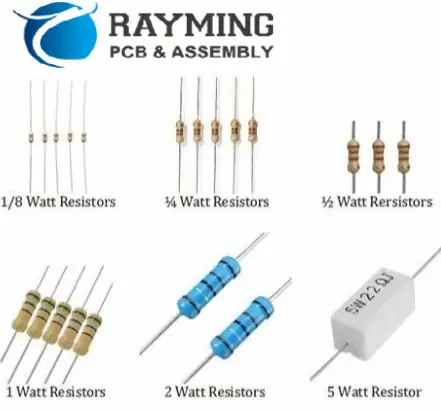
The physical size of a 2.4k resistor depends on its power rating, with higher wattage resistors being physically larger. They typically have color-coded bands or markings that indicate their resistance value and tolerance.
How does a 2.4K Resistor Work?
When you apply a voltage across a 2.4K resistor, it creates an electric field within the resistor that opposes the flow of current through the resistor. This opposition is known as resistance, and it is what makes the resistor useful in electronic circuits. The amount of resistance provided by the resistor depends on its value, which is determined by the material and geometry of the resistor.
In a simple circuit, you can use a 2.4K resistor to limit the amount of current that flows through a particular part of the circuit. For example, if you connect a light-emitting diode (LED) to a voltage source, it can draw too much current and burn out quickly. By adding a 2.4K resistor in series with the LED, the amount of current flowing through the LED restricts to a safe level.
In more complex circuits, 2.4K resistors work in a variety of ways to control the behavior of the circuit. For example, they can be helpful in voltage dividers, current limiters, and biasing circuits.
What Are the Different Types of 2.4K Resistors and How Do They Differ From Each Other?
There are several types of resistors that can have a resistance value of 2.4K ohms. Here are some of the most common types and how they differ from each other:
· Carbon Film Resistor
This is a type of resistor that has a thin layer of carbon film deposited on a ceramic or fiberglass substrate. Carbon film resistors are inexpensive and have a high tolerance. However, they are not as precise as some other types of resistors.
· Metal Film Resistor
This is a type of resistor that has a thin layer of metal film deposited on a ceramic or fiberglass substrate. Metal film resistors are more precise and stable than carbon film resistors; however, they are also more expensive.
· Wirewound Resistor

This is a type of resistor that is made by winding a wire around a ceramic or fiberglass core. Wirewound resistors have a very low tolerance and can handle high power levels, but they are also more expensive than other types of resistors.
· Thick Film Resistor
This is a type of resistor that has a thick layer of resistive material deposited on a ceramic substrate. Thick film resistors are relatively inexpensive and available in a wide range of resistance values. However, they may not be as precise as some other types of resistors.
· Thin Film Resistor
This is a type of resistor that has a thin layer of resistive material deposited on a ceramic or silicon substrate. Thin film resistors are very precise and stable, but they are also more expensive than other types of resistors.
· SMD Resistor:
This is a type of resistor that is mounted directly onto a printed circuit board (PCB). SMD resistors can be made in various types, such as carbon film, metal film, and thick film, but they are generally smaller in size than through-hole resistors and can be more difficult to handle and replace.
The choice of resistor type depends on the specific requirements of the circuit and the application. Factors such as precision, stability, power handling, and cost can all influence the selection of a particular resistor type.
The Method of Making a 2.4K Resistor
A 2.4k resistor is typically made from a ceramic or metal film resistor element. The resistor element contains a thin film of conductive material, such as carbon or metal, which provides the desired resistance value. Engineers put the resistor element in a cylindrical or rectangular body made from an insulating material, such as ceramic.
To create a 2.4k resistor, you must calculate the thickness and length of the resistive film are to achieve the desired resistance value. The resistive film deposits onto the ceramic or metal substrate through a process called thin-film deposition. It involves depositing a thin layer of material onto the substrate using techniques such as sputtering or evaporation.
After the resistive film is deposited, the resistor is trimmed to the exact resistance value using a laser trimming process. This involves using a laser to cut or remove a small portion of the resistive film to achieve the desired resistance value. The resistor is then coated with a protective layer to prevent damage from moisture or other environmental factors.
Finally, the resistor is tested to ensure it meets the desired specifications for resistance value, tolerance, and power rating. This testing typically involves measuring the resistance value of the resistor using a high-precision multimeter or automated testing equipment.
Conclusion
In conclusion, 2.4K resistors are useful in a wide range of electronic circuits due to their specific resistance value of 2.4 kilohms. Moreover, they work as voltage dividers, current limiters, and pull-up or pull-down resistors. Additionally, their small size, low cost, and reliability make them ideal for use in a variety of applications.
One of the key advantages of 2.4K resistors is their versatility. Specifically, they can serve a lot in a wide range of electronic circuits from simple LED circuits to more complex circuits. Furthermore, the process of manufacturing 2.4K resistors involves the deposition of a resistive film onto a substrate, followed by laser trimming and protective coating. As a result, this precise and controlled manufacturing process ensures that the final product meets the desired specifications for resistance value, tolerance, and power rating.
Overall, 2.4K resistors are an essential component in many electronic circuits, offering versatility, availability, and reliability. Whether used as voltage dividers, current limiters, or pull-up resistors, their specific resistance value makes them an important tool for electronic design and experimentation.

