
Etching is a critical process in multilayer PCB manufacturing that directly impacts the quality and reliability of the final product. While the process has been refined over decades, three major issues continue to challenge manufacturers: underetching, overetching, and uneven etching. Understanding these problems, their causes, and solutions is crucial for maintaining high-quality PCB production standards.
Overview of PCB Etching Process
Basic Principles
Etching in PCB manufacturing involves selectively removing copper from the board surface to create circuit patterns. The process uses chemical solutions to dissolve unwanted copper while protecting the desired circuit traces.
Standard Parameters
| Parameter | Optimal Range | Critical Value | Impact on Quality |
| Temperature | 30-40°C | 35°C | High |
| pH Level | 7.8-8.2 | 8 | Critical |
| Etchant Concentration | 120-150 g/L | 135 g/L | High |
| Conveyor Speed | 0.8-1.2 m/min | 1.0 m/min | Medium |
Issue 1: Underetching
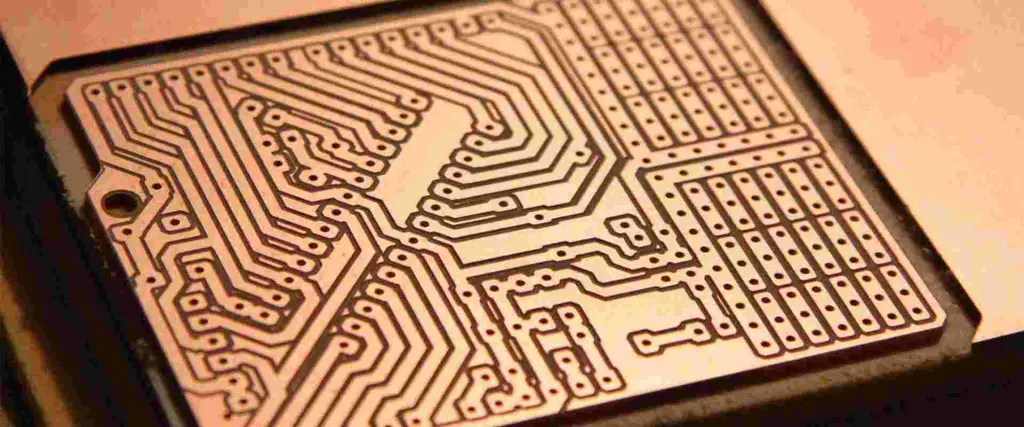
Definition and Characteristics
Underetching occurs when insufficient copper is removed during the etching process, leading to potential short circuits and other defects.
Common Symptoms
| Symptom | Description | Detection Method |
| Copper Residue | Visible copper between traces | Visual inspection |
| Short Circuits | Electrical connection between isolated traces | Electrical testing |
| Thick Traces | Traces wider than designed | Dimensional inspection |
| Poor Definition | Unclear trace boundaries | Microscopic examination |
Causes of Underetching
Primary Factors
| Factor | Impact Level | Prevention Method |
| Low Etchant Concentration | High | Regular chemical analysis |
| Insufficient Time | High | Process monitoring |
| Low Temperature | Medium | Temperature control |
| Contaminated Solution | High | Regular maintenance |
Solutions and Prevention
- Chemical Monitoring
- Temperature Control
- Process Time Adjustment
- Equipment Maintenance
Issue 2: Overetching
Definition and Characteristics
Overetching results in excessive copper removal, leading to broken circuits or weakened connections.
Impact Assessment
| Feature | Normal Range | Overetched Condition | Quality Impact |
| Trace Width | ±10% of nominal | >15% reduction | Critical |
| Copper Thickness | 35μm ±5% | >10% reduction | High |
| Edge Definition | 90° ±5° | >15° deviation | Medium |
| Surface Roughness | Ra ≤ 0.5μm | Ra > 1.0μm | High |
Causes of Overetching
Environmental Factors
| Factor | Risk Level | Control Method |
| High Temperature | Critical | Cooling system |
| Extended Exposure | High | Timer control |
| Strong Etchant | High | Concentration monitoring |
| Agitation Speed | Medium | Speed regulation |
Prevention Strategies
- Process Control
- Equipment Calibration
- Chemical Management
- Operator Training
Issue 3: Uneven Etching

Definition and Characteristics
Uneven etching results in inconsistent copper removal across the board surface.
Pattern Analysis
| Pattern Type | Sensitivity | Common Issues |
| Fine Lines | High | Width variation |
| Large Areas | Medium | Center etching |
| Mixed Density | High | Local variations |
| Edge Areas | Medium | Over/under etching |
Technical Factors
Equipment Considerations
| Component | Impact | Maintenance Frequency |
| Spray Nozzles | Critical | Weekly |
| Conveyor System | High | Monthly |
| Tank Circulation | High | Daily |
| Filtration System | Medium | Bi-weekly |
Quality Control Measures
Testing Methods
| Method | Detection Capability | Implementation Cost |
| Visual Inspection | Medium | Low |
| Electrical Testing | High | Medium |
| X-ray Inspection | Very High | High |
| Cross-section Analysis | Highest | Very High |
Process Control Parameters
Critical Measurements
| Parameter | Measurement Frequency | Acceptable Range |
| Etch Rate | Hourly | 35-45 μm/min |
| Line Width | Per Board | ±10% nominal |
| Surface Finish | Per Batch | Ra ≤ 0.5μm |
| Layer Registration | Per Board | ±75μm |
Cost Impact Analysis
Financial Implications
| Issue Type | Scrap Rate | Rework Cost | Production Loss |
| Underetching | 5-8% | $150/board | 2-3 hours |
| Overetching | 8-12% | $200/board | 3-4 hours |
| Uneven Etching | 6-10% | $175/board | 2.5-3.5 hours |
Prevention Costs
| Measure | Implementation Cost | Annual Savings | ROI Period |
| Advanced Control System | $50,000 | $120,000 | 5 months |
| Chemical Analysis Equipment | $30,000 | $80,000 | 4.5 months |
| Staff Training | $15,000 | $45,000 | 4 months |
Best Practices for Issue Prevention
Process Optimization
Control Measures
| Area | Action | Frequency | Responsibility |
| Chemical Analysis | Testing | Daily | Lab Technician |
| Temperature Control | Monitoring | Hourly | Operator |
| Equipment Maintenance | Inspection | Weekly | Maintenance Team |
| Quality Checks | Testing | Per Batch | QC Team |
Staff Training Requirements
| Level | Training Type | Duration | Update Frequency |
| Operator | Basic Process | 40 hours | 6 months |
| Supervisor | Advanced Control | 80 hours | 12 months |
| Engineer | Technical Expert | 120 hours | 18 months |
Future Developments
Emerging Technologies
| Technology | Expected Impact | Implementation Timeline |
| AI Control Systems | High | 2024-2025 |
| Real-time Monitoring | Very High | 2023-2024 |
| Advanced Chemistry | Medium | 2024-2025 |
| Automated Correction | High | 2025-2026 |
Frequently Asked Questions (FAQ)
Q1: What are the most common indicators of etching problems?
A: The most common indicators include:
- Trace width variations
- Copper residue between traces
- Broken or interrupted circuits
- Surface roughness changes
- Color variations in etched areas
Q2: How often should etching parameters be checked during production?
A: Critical parameters should be monitored at the following intervals:
- Temperature: Every hour
- Chemical concentration: Every 4 hours
- pH level: Every 2 hours
- Etch rate: Every new batch
- Solution level: Every shift
Q3: What is the typical recovery process for overetched boards?
A: Recovery options depend on the severity of overetching:
- Minor: Copper plating adjustment
- Moderate: Circuit repair techniques
- Severe: Board replacement Note: Not all overetched boards can be salvaged.
Q4: How do different copper weights affect etching parameters?
A: Different copper weights require specific parameter adjustments:
- 0.5 oz: 25-30% shorter etch time
- 1 oz: Standard parameters
- 2 oz: 40-50% longer etch time
- 3 oz: Double etch time, may require multiple passes
Q5: What preventive maintenance steps are most critical?
A: Critical preventive maintenance includes:
- Daily nozzle inspection and cleaning
- Weekly solution analysis and adjustment
- Monthly equipment calibration
- Quarterly major system maintenance
- Annual comprehensive overhaul
Conclusion
Understanding and addressing the three major etching issues in multilayer PCB manufacturing is crucial for maintaining product quality and production efficiency. Through proper monitoring, maintenance, and process control, manufacturers can minimize these issues and their impact on production. Continuous training and adoption of new technologies will further improve the etching process and reduce defect rates in the future.

