
RAYPCB / Delivery requirements
PCB packaging: protect, identify and hand over
Separate mechanical protection, ESD, moisture and traceability requirements. Build a packaging discussion brief for your actual bare boards or assemblies.
PCB packaging protects a defined product through a defined journey
PCB packaging should address mechanical damage, electrostatic exposure where relevant, moisture and contamination risks, identification and the receiving process. The appropriate combination depends on whether the shipment contains bare boards or assembled electronics, the materials and components involved, the transit environment and the agreed storage conditions. No single bag, tray or carton answers every requirement.
This page concerns protective packaging and shipping of circuit boards. It does not describe semiconductor package styles such as QFN or BGA. Start by identifying the board state and the hazards that need control. Then agree packaging materials, loading, labels, records and receiving actions with the responsible engineering and logistics teams.
A bag may provide moisture-barrier properties, ESD protection, both or neither, depending on its verified construction and specifications. Color, transparency or a photograph alone cannot establish those properties. Select packaging against the actual requirement.
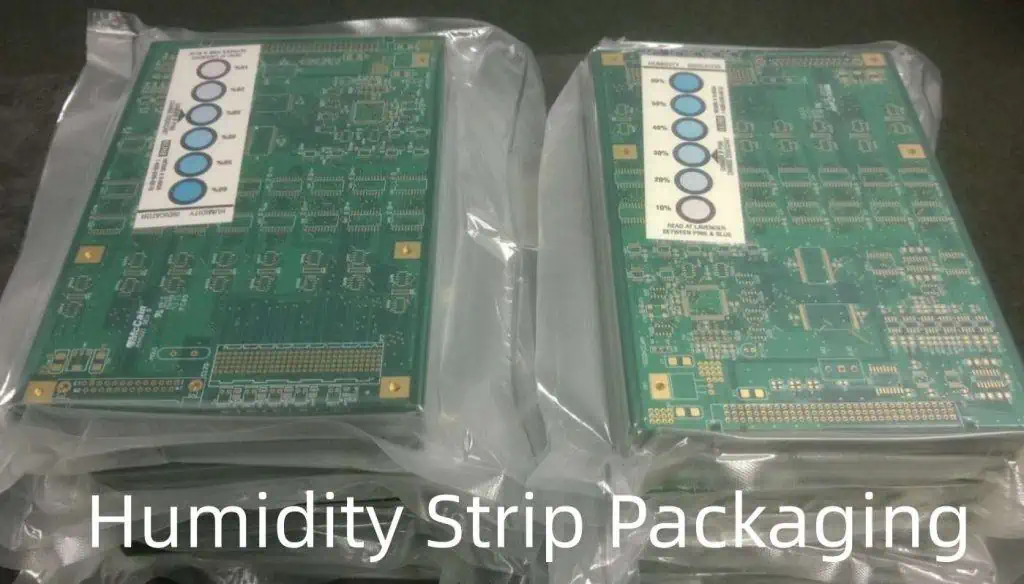
Distinguish bare boards from assembled electronics
| Shipment | Start by checking | Do not assume |
|---|---|---|
| Bare boards | Laminate, finish, cleanliness, mechanical features and later soldering exposure | One universal shelf life or a component MSL rating |
| Assembled PCB | ESD-sensitive devices, protrusions, connectors, coatings and future processing | An assembly can safely follow an arbitrary bare-board bake cycle |
| Mixed kits | Separate board, component and accessory identities and handling needs | All items in the carton have the same protection requirements |
For bare boards, IPC-1602 addresses handling and storage through the manufacturing and receiving chain. Use the applicable controlled document with the supplier and define the finish- and material-specific conditions. A public standards summary does not provide every limit needed for a purchase specification.
For assembled electronics, identify parts or structures that change the handling plan. Tall components can need mechanical support; exposed connectors may need protection; batteries can introduce separate transport requirements. Raise those details with the responsible specialists instead of assuming the packaging used for an empty panel is sufficient.
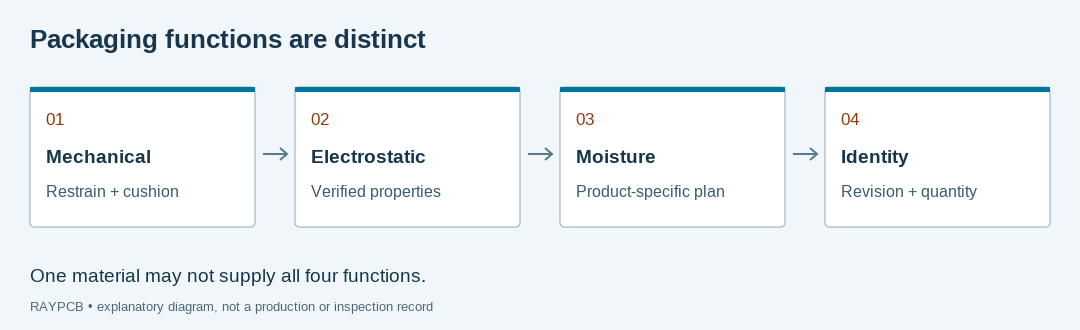
Prevent movement without loading fragile features
The board should not freely move, rub against neighboring boards or strike the carton during handling. Support appropriate areas and keep pressure away from vulnerable components, connectors and flex regions. Separators, trays or cushioning need to suit the geometry and surface condition. A tightly packed box can still damage a protruding connector if the load path is wrong.
Consider how the package will be opened as well as how it is shipped. A receiver should be able to remove a board without bending it, pulling on a connector or dragging it across abrasive material. For a panel with breakaway features, explain whether it should remain intact until assembly or be supplied as individual boards.
Outer packaging needs to protect the inner arrangement under the agreed route and handling conditions. Weight distribution, stack loading and repeated handling can matter. Do not describe an untested carton as transit-qualified simply because the materials look substantial. If transport testing or a particular shipping qualification is required, agree its method and evidence as a separate deliverable.
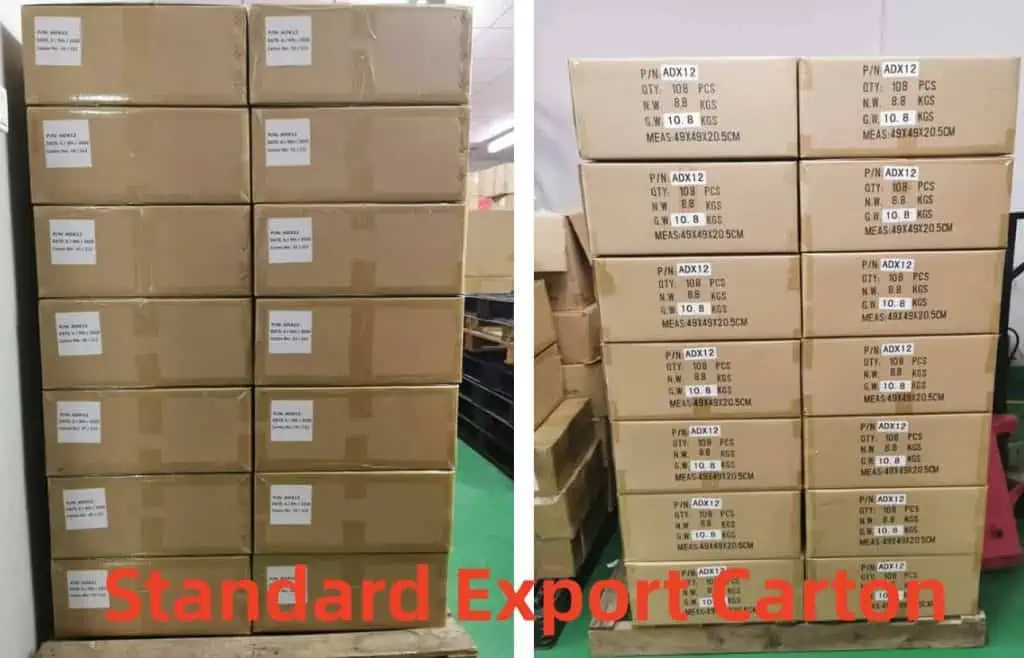
Specify ESD properties instead of bag color
For electrostatic-discharge-sensitive assemblies, packaging is part of the handling plan. The EOS/ESD Association distinguishes properties needed to limit charging and those needed to protect an item from discharge outside an ESD protected area. A material called antistatic should not automatically be treated as discharge shielding.
Describe the use condition: movement within a controlled area, transport outside it, storage and unpacking. Ask for the appropriate packaging properties and their verification against the agreed specification. The same board may encounter different environments between the assembler, a freight facility and the final receiving bench.
Coordinate unpacking with the receiving team. Protective packaging loses its intended role if sensitive electronics are removed onto an unsuitable work surface. Labels should communicate the relevant handling instruction without implying that a label by itself controls the risk. Refer to your organization's ESD control procedure for people, workstations and material handling.
Keep the moisture plan product-specific
Moisture control depends on the board or component, its exposure history, subsequent processing and the approved packaging/storage system. A moisture barrier, desiccant and humidity indicator can form part of that system when specified appropriately. Their presence in a bag is not proof that the entire storage history remained acceptable.
Keep component MSL handling separate from a generic board-storage claim. Semiconductor manufacturers provide part-specific information and handling guidance. TI's packaging references, for example, connect moisture sensitivity to the device and its package. An assembled board containing several device types may require a review of the complete assembly and the planned next operation.
Do not prescribe a universal baking temperature or time. Laminate, finish, component and assembly restrictions can differ, and heating can introduce other risks. When exposure or an indicator is outside the agreed condition, identify the material, isolate it as required by the receiving procedure and ask the responsible technical owner to determine disposition.
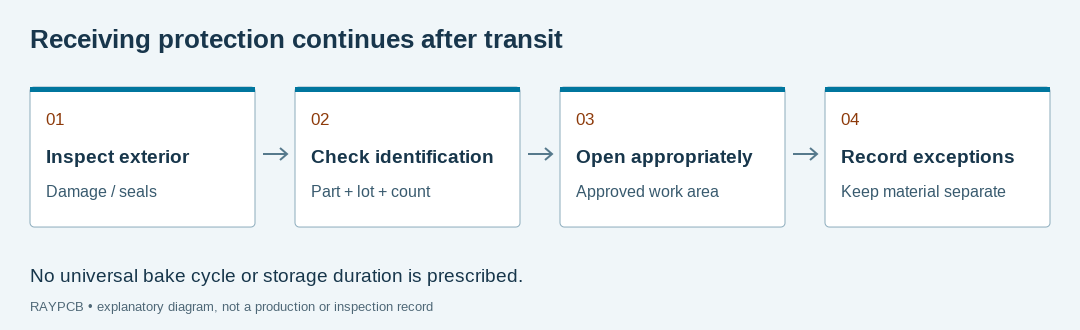
Make the identity useful at receiving
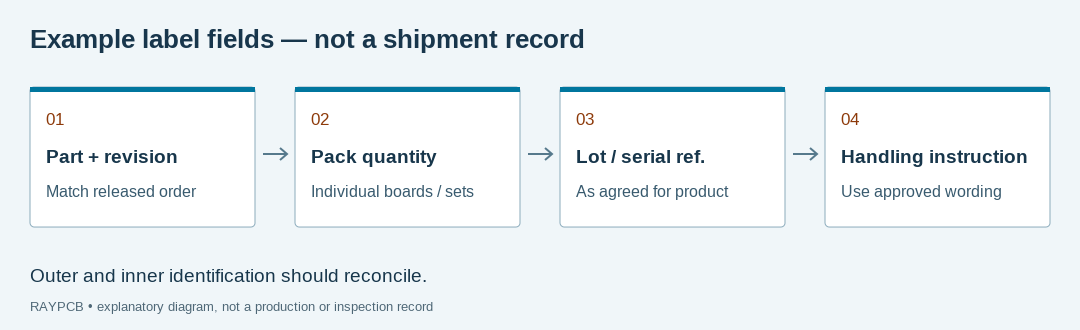
Agree the part number, revision, quantity, lot or serial references and any specific handling labels before packing. If an outer carton contains several inner packs, establish how the outer quantity relates to the inner identification. Mixed revisions or variants need deliberate separation so the receiver does not merge them into one stock location.
Shipping documentation, packing lists and quality records should refer to the same product and shipment. Where traceability matters, define the required depth and the records that will accompany or remain available for the lot. IPC-1782 provides a manufacturing and supply-chain traceability framework; it does not mean every order automatically includes every possible record.
Illustrative receiving example: the outer carton says 60 boards, while two inner packs each show 25 and a third has no quantity label. Do not assume the unmarked pack contains ten. Hold the discrepancy in the receiving record, reconcile the actual contents and ask for corrected identification before moving the material into normal stock.
Prepare a packaging requirements brief
Select the board state and record six handling topics. Unknown requirements remain open. A reference may be an approved packing instruction, drawing note or action assigned to an owner. “Evidence recorded” does not mean that the tool inspected a package or verified a material certificate.
RAYPCB ENGINEERING
Procurement and HandoffPCB packaging requirements brief
Loading PCB packaging requirements brief…
The optional worksheet needs JavaScript. Use the readable checklist above or contact RAYPCB directly.
The worksheet deliberately does not select a bag from order quantity alone, assign a shelf life or recommend a bake cycle. Its output is a discussion brief. Review the details with the supplier and receiving team, then place the approved requirements in the order or controlled packing instruction.
Connect packaging to the quality and assembly handoff
Include packaging in the quality-evidence discussion when it affects acceptance, storage or traceability. For populated electronics, confirm the condition expected after assembly and testing. Packaging should preserve the agreed deliverable, not obscure an unresolved inspection or identification issue.
On arrival, record visible transit damage and the condition of protective packaging before discarding it. Compare identity and quantity with the order. Follow the approved procedure for opening and staging boards, and keep suspect or damaged material distinguishable from accepted stock. Photographing a discrepancy can help communication, but it is not a substitute for counting, inspection or an authorized disposition.
For repeat shipments, check whether the product or route changed. A new tall component, a different finish, an altered storage plan or a longer shipping route can make an old instruction unsuitable. Update the packing revision and tell both shipping and receiving teams what changed.
Packaging questions buyers often ask
Are vacuum packaging and ESD shielding the same?
No. Vacuum describes a packing condition; ESD shielding is a material/system property. Verify the required moisture, ESD and mechanical functions separately and confirm that the selected arrangement supplies them.
How long can the boards remain in storage?
Use the approved conditions for the actual material, finish, components and packaging system. This page gives no universal duration. Record the relevant source and review any change in exposure or future processing.
Can I reuse protective packaging?
Only when its condition and suitability remain acceptable under the approved procedure. Damage, contamination, lost labels or compromised sealing can invalidate the intended protection. Do not infer reuse suitability from appearance alone.
Can I specify a custom label or pack quantity?
Include that requirement in the enquiry with the board identity, delivery form and receiving constraints. Confirm feasibility and cost in the written offer before treating it as part of the order.
Bring the open questions to RAYPCB
Send the project reference, available files, quantity options and the decisions you need help with. If you used the worksheet, review its assumptions and attach the downloaded brief yourself. Opening Contact does not send the worksheet or place an order.
Technical references and scope
These official references explain data, standards or handling concepts. Use the applicable controlled documents and project agreement for acceptance. Links do not certify RAYPCB, qualify a product or replace engineering approval.