
In-Circuit Testing (ICT) is a crucial step in the quality assurance process for printed circuit board (PCB) manufacturing. The reliability and accuracy of ICT largely depend on the condition of the test probes used in the fixture. Over time, these probes accumulate debris, oxidation, and contaminants, which can lead to false test results and decreased productivity. This article explores the methods and apparatus used for cleaning ICT fixture probes, a critical maintenance task that ensures the continued accuracy and efficiency of PCB testing processes.
Understanding ICT Fixture Probes
What are ICT fixture probes?
ICT fixture probes are small, spring-loaded pins used to make electrical contact with specific points on a PCB during testing. These probes are essential components of the ICT process, allowing for rapid and accurate testing of individual components and connections on the board.
Types of ICT fixture probes
There are several types of ICT fixture probes, each designed for specific testing requirements:
| Probe Type | Description | Common Applications |
| Single-ended probes | Standard probes with a single contact point | General-purpose testing |
| Dual-ended probes | Probes with contact points on both ends | High-density boards |
| Kelvin probes | Dual probes for accurate resistance measurements | Power components, high-current paths |
| Signal probes | Designed for high-frequency signal testing | RF circuits, high-speed digital |
| Power probes | Capable of handling high currents | Power supplies, motor driver |
Importance of clean probes
Clean probes are essential for several reasons:
- Accurate measurements: Contaminants can affect electrical conductivity, leading to inaccurate test results.
- Consistent contact: Debris can prevent probes from making proper contact with test points.
- Extended probe life: Regular cleaning helps prevent permanent damage to probe tips.
- Reduced false failures: Clean probes minimize the risk of false test failures, improving productivity.
Common Contaminants and Their Effects
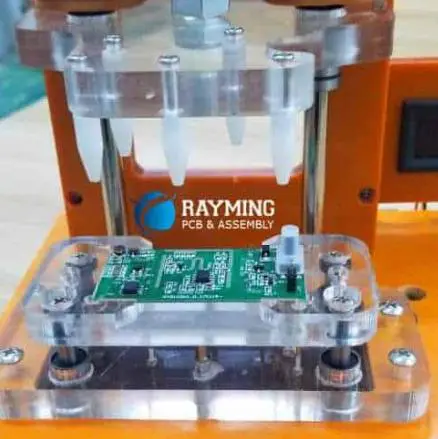
Types of contaminants
ICT fixture probes are exposed to various contaminants during normal operation:
- Flux residue
- Solder particles
- Dust and debris
- Oxidation
- Skin oils and fingerprints
Effects of contamination
Contamination can have several negative effects on ICT performance:
| Contaminant | Effect on Probes | Impact on Testing |
| Flux residue | Insulating layer formation | False open circuit readings |
| Solder particles | Irregular probe tip surface | Inconsistent contact, potential short circuits |
| Dust and debris | Mechanical interference | Unreliable probe movement |
| Oxidation | Increased contact resistance | Inaccurate resistance measurements |
| Skin oils | Insulating film formation | Intermittent contact issues |
Probe Cleaning Methods
Manual cleaning methods
Probe tip cleaning papers
Probe tip cleaning papers are abrasive sheets designed to remove contaminants from probe tips.
Procedure:
- Insert the cleaning paper into the fixture.
- Actuate the probes against the paper multiple times.
- Rotate or move the paper to expose a clean area.
- Repeat as necessary.
Advantages:
- Simple and quick to use
- Effective for light contamination
- Low cost
Disadvantages:
- May not remove stubborn contaminants
- Can be time-consuming for large fixtures
- Risk of debris falling into the fixture
Brush cleaning
Brush cleaning involves using small, often specialized brushes to manually clean probe tips.
Procedure:
- Select an appropriate brush (e.g., fiberglass, nylon).
- Gently brush the probe tips to remove contaminants.
- Use compressed air to remove loose debris.
Advantages:
- Can target specific probes
- Effective for removing visible contamination
- Low initial cost
Disadvantages:
- Time-consuming for large fixtures
- Inconsistent results depending on technique
- Risk of damaging probes if excessive force is used
Solvent cleaning
Solvent cleaning uses chemical solvents to dissolve and remove contaminants.
Procedure:
- Select an appropriate solvent (e.g., isopropyl alcohol, specialized cleaners).
- Apply the solvent to a lint-free cloth or swab.
- Gently clean the probe tips.
- Allow probes to dry completely before use.
Advantages:
- Effective for removing flux and oil-based contaminants
- Can clean hard-to-reach areas
- Dissolves stubborn residues
Disadvantages:
- Risk of leaving residue if not properly dried
- Potential health and safety concerns with some solvents
- May not be effective for all types of contamination
Automated cleaning methods
Ultrasonic cleaning systems
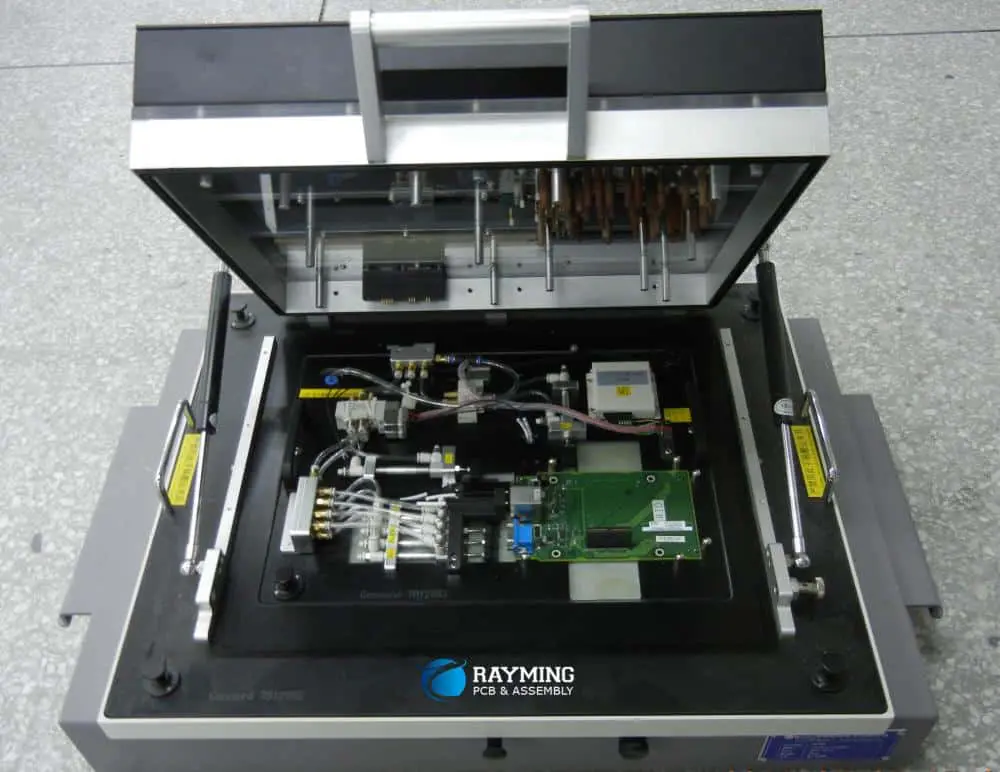
Ultrasonic cleaning uses high-frequency sound waves to create cavitation bubbles in a cleaning solution, effectively removing contaminants from probe tips.
Procedure:
- Place probes or probe plate in the ultrasonic cleaner.
- Fill with appropriate cleaning solution.
- Set timer and activate ultrasonic cleaning.
- Rinse and dry probes thoroughly.
Advantages:
- Highly effective for removing stubborn contaminants
- Consistent cleaning results
- Can clean multiple probes simultaneously
Disadvantages:
- Expensive initial investment
- Requires careful selection of cleaning solution
- May not be suitable for all probe types
Automated probe cleaning machines
These specialized machines are designed to clean large numbers of probes quickly and consistently.
Features often include:
- Multiple cleaning stages (e.g., dry brushing, wet cleaning, drying)
- Adjustable cleaning parameters
- Compatible with various fixture types
Advantages:
- High throughput for large-scale operations
- Consistent and repeatable cleaning results
- Reduced labor costs for cleaning
Disadvantages:
- High initial investment
- May require custom fixtures or adapters
- Regular maintenance and consumable replacement
Comparison of cleaning methods
| Method | Effectiveness | Speed | Cost | Consistency |
| Cleaning papers | Moderate | Moderate | Low | Moderate |
| Brush cleaning | Moderate | Slow | Low | Low |
| Solvent cleaning | High | Moderate | Low-Moderate | Moderate |
| Ultrasonic cleaning | Very High | Fast | High | High |
| Automated machines | Very High | Very Fast | Very High | Very High |
Apparatus for ICT Fixture Probe Cleaning
Cleaning papers and pads
Types of cleaning papers
- Abrasive papers: Contains fine abrasive particles to scrub probe tips
- Non-abrasive papers: Designed to wipe away loose contaminants
- Solvent-impregnated papers: Combine physical wiping with chemical cleaning
Cleaning paper holders and fixtures
Special fixtures can be designed to hold cleaning papers in place during the cleaning process, ensuring consistent pressure and coverage across all probes.
Cleaning brushes
Brush types
- Fiberglass brushes: Effective for removing stubborn contaminants
- Nylon brushes: Gentler option for regular cleaning
- Metal brushes: Used for heavy contamination (with caution)
Motorized brush systems
Some systems incorporate motorized rotating brushes for more efficient cleaning:
- Adjustable speed and pressure
- Multiple brush heads for different probe types
- Integrated vacuum systems for debris removal
Solvent dispensing systems
Manual dispensers
- Pump bottles for controlled solvent application
- Solvent pens for precise cleaning of individual probes
Automated dispensing systems
- Programmable solvent dispensing integrated with cleaning machines
- Closed-loop systems for solvent recycling and minimizing waste
Ultrasonic cleaning systems
Components of an ultrasonic cleaning system
- Ultrasonic generator: Produces high-frequency electrical signals
- Transducer: Converts electrical signals into mechanical vibrations
- Cleaning tank: Holds the cleaning solution and items to be cleaned
- Heating element: Maintains optimal cleaning solution temperature
- Timer and control panel: Allows adjustment of cleaning parameters
Specialized fixtures for probe cleaning
Custom fixtures can be designed to hold probe plates or individual probes during ultrasonic cleaning, ensuring optimal cleaning while protecting delicate components.
Automated probe cleaning machines
Key features of automated cleaning machines
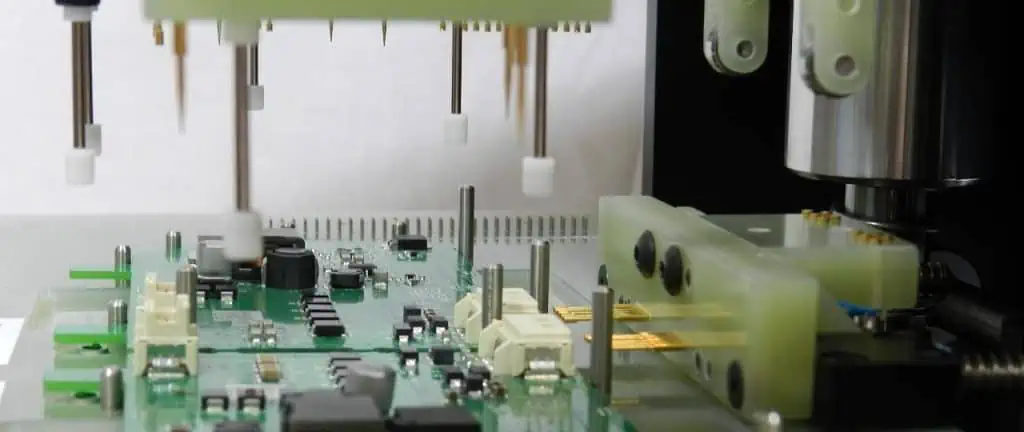
- Multi-stage cleaning process
- Adjustable cleaning parameters (e.g., pressure, speed, cleaning time)
- Compatible with various fixture types and probe designs
- Integrated drying systems
- Data logging and reporting capabilities
Examples of commercial systems
While specific product names won’t be mentioned, typical commercial systems may include:
- Benchtop units for small to medium-sized operations
- Large-scale systems for high-volume manufacturing
- Customizable systems for unique probe configurations
Best Practices for ICT Fixture Probe Cleaning
Establishing a cleaning schedule
Regular cleaning is essential for maintaining probe performance. Factors to consider when establishing a cleaning schedule include:
- Production volume
- Types of PCBs being tested
- Environmental conditions
- Observed failure rates
A typical cleaning schedule might look like this:
| Production Volume | Recommended Cleaning Frequency |
| Low (< 100 boards/day) | Weekly or bi-weekly |
| Medium (100-500 boards/day) | Daily or every shift |
| High (> 500 boards/day) | Multiple times per shift |
Selecting appropriate cleaning methods
Choose cleaning methods based on:
- Types of contaminants encountered
- Probe design and materials
- Production volume and available time for cleaning
- Budget constraints
Training personnel
Proper training is crucial for effective probe cleaning. Training should cover:
- Identification of contamination types
- Proper use of cleaning equipment and materials
- Safety procedures, especially when using solvents
- Quality control and inspection techniques
Monitoring and maintaining cleaning equipment
Regular maintenance of cleaning equipment ensures consistent performance:
- Check and replace consumables (e.g., cleaning solutions, brushes) regularly
- Calibrate automated systems according to manufacturer specifications
- Clean and inspect cleaning equipment itself to prevent cross-contamination
Documenting cleaning procedures and results
Maintaining detailed records helps optimize the cleaning process:
- Document cleaning procedures for each fixture type
- Record cleaning dates and methods used
- Track test failure rates before and after cleaning
- Analyze trends to refine cleaning schedules and methods
Advanced Techniques and Future Developments
Plasma cleaning
Plasma cleaning uses ionized gas to remove organic contaminants at a molecular level.
Advantages:
- Highly effective for removing organic residues
- No chemical residues left behind
- Environmentally friendly
Challenges:
- Expensive equipment
- Requires specialized knowledge to operate
- May not be effective for all types of contamination
Laser cleaning
Laser cleaning uses focused laser beams to ablate contaminants from probe surfaces.
Advantages:
- Precise and controlled cleaning
- No chemical consumables required
- Can be automated for high-volume cleaning
Challenges:
- High initial equipment cost
- Potential for thermal damage if not properly controlled
- May require custom fixturing for different probe types
Self-cleaning probe technologies
Research is ongoing into probe designs that resist contamination or facilitate easier cleaning:
- Non-stick coatings to prevent contaminant adhesion
- Self-wiping probe designs
- Integrated micro-cleaning mechanisms
AI and machine learning in cleaning process optimization
Artificial intelligence and machine learning algorithms can be applied to optimize cleaning processes:
- Predictive maintenance scheduling based on historical data
- Real-time adjustment of cleaning parameters
- Automated inspection and quality control of cleaned probes
Conclusion
Effective cleaning of ICT fixture probes is crucial for maintaining the accuracy and reliability of PCB testing processes. By understanding the types of contaminants, available cleaning methods, and best practices, manufacturers can develop robust cleaning strategies that minimize downtime and ensure consistent test results. As technology continues to advance, new cleaning techniques and probe designs promise to further improve the efficiency and effectiveness of the cleaning process, contributing to higher quality and productivity in PCB manufacturing.
FAQ
- Q: How often should ICT fixture probes be cleaned? A: The frequency of cleaning depends on factors such as production volume, types of PCBs being tested, and environmental conditions. For low-volume production (less than 100 boards per day), weekly or bi-weekly cleaning may be sufficient. Medium-volume production (100-500 boards per day) may require daily cleaning, while high-volume production (over 500 boards per day) might need cleaning multiple times per shift. It’s important to monitor test failure rates and adjust the cleaning schedule accordingly.
- Q: What are the signs that ICT fixture probes need cleaning? A: Signs that probes need cleaning include:
- Increased false test failures
- Inconsistent or intermittent test results
- Visible contamination on probe tips
- Decreased probe spring action
- Higher contact resistance measurements
- Q: Can cleaning damage ICT fixture probes? A: While proper cleaning is beneficial, improper techniques can potentially damage probes. Risks include:
- Using excessive force during manual cleaning
- Applying incompatible solvents that may degrade probe materials
- Over-cleaning, which can wear down probe tips prematurely To minimize risk, always follow manufacturer recommendations and use appropriate cleaning methods for your specific probe types.
- Q: What are the advantages of automated cleaning systems over manual methods? A: Automated cleaning systems offer several advantages:
- Consistency: They provide uniform cleaning results across all probes
- Efficiency: They can clean large numbers of probes quickly
- Reduced labor costs: Less manual intervention is required
- Customization: Many systems allow for adjustable cleaning parameters
- Documentation: Automated systems often include data logging for quality control However, automated systems typically require a higher initial investment compared to manual cleaning methods.
- Q: Are there any environmental considerations for ICT fixture probe cleaning? A: Yes, there are several environmental factors to consider:
- Solvent selection: Choose low-VOC (Volatile Organic Compound) and environmentally friendly solvents when possible
- Waste management: Properly dispose of used cleaning materials and contaminated solvents
- Energy efficiency: Consider the power consumption of automated cleaning equipment
- Water usage: If water-based cleaning methods are used, implement water conservation measures
- Longevity: Proper cleaning extends the life of probes, reducing waste from premature replacement

