
RAYPCB · ENGINEERING REFERENCE
Medical electronics manufacturing: control the production transfer
Plan the manufacturing transfer around released records, responsibilities, pilot evidence and lifecycle change control. Identify what the receiving team still needs.
Original engineering guidance · References checked September 28, 2026
Medical electronics manufacturing is a production-transfer task
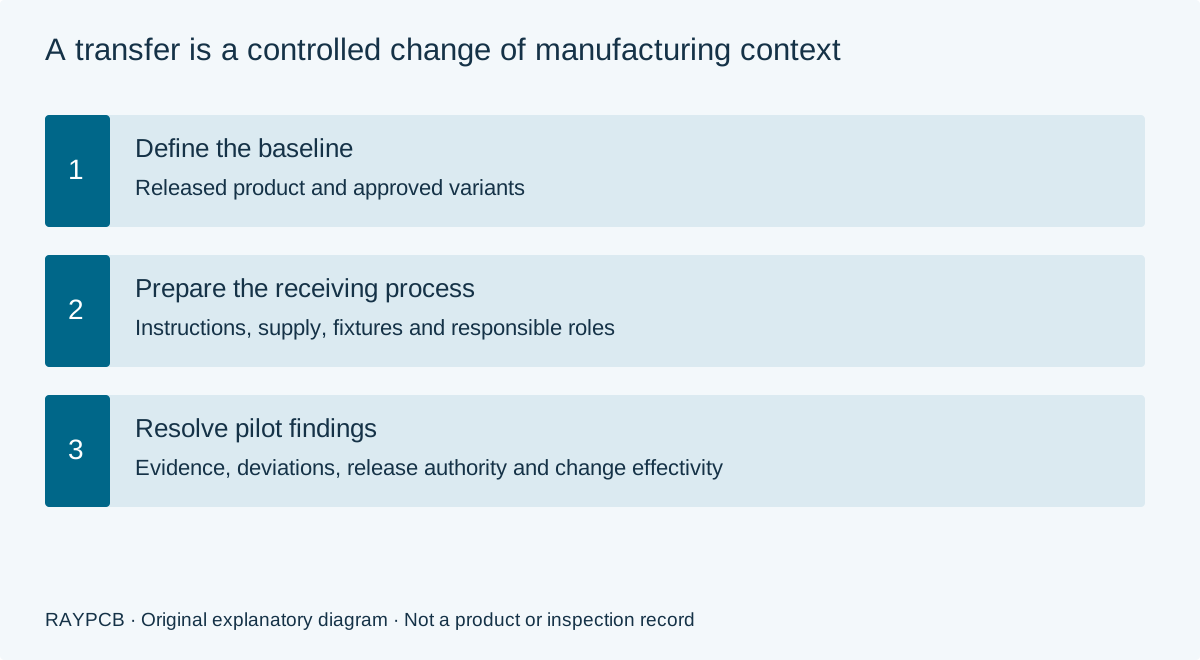
Medical electronics manufacturing connects an approved product definition with a controlled, repeatable production process. The scope can include component sourcing, PCB fabrication, assembly, programming, inspection, functional test and agreed records. A useful manufacturing plan identifies who owns each activity and what evidence is needed before the next stage begins.
This page focuses on OEM introduction, transfer and lifecycle control. For a quotation centered on soldering and populated-board test, use medical PCB assembly. For board material, construction and fabrication evidence, use medical PCB manufacturing. The broader electronic contract manufacturing service is the commercial route for an ongoing program rather than a single assembly build.
An outsourced build does not transfer every product responsibility automatically. Agree the scope of design authority, supply approval, manufacturing decisions, verification, release and change control. The practical deliverable is a baseline that both teams can identify and reproduce, with a documented path for questions and deviations.
Separate the product baseline from the receiving process
The product baseline defines what is to be built: approved design files, BOM variants, drawings, firmware, acceptance requirements and packaging. The receiving process defines how the supplier will build and verify it: instructions, equipment, fixtures, programs, material controls, inspection stages and records. A complete file transfer can still leave the receiving process unprepared.
| Transfer area | OEM input or decision | Receiving-team output to review |
|---|---|---|
| Product configuration | Approved revision and allowed variants | Matching build identity and controlled file set |
| Supply chain | Approved parts, alternates and restrictions | Procurement questions and substitution controls |
| Assembly | Drawings, special requirements and exclusions | Proposed process and work instructions |
| Programming and test | Software identity, method and acceptance source | Fixture, program and result-record definition |
| Lifecycle | Forecast, change authority and retention expectations | Support arrangements and controlled update path |
Use an ownership matrix to expose gaps. For example, supplying a firmware binary does not define who approves its checksum, who controls the programming fixture or how programming failures are handled. Name the owner and the required record before assuming the task is ready for production.
Plan introduction around explicit decision gates
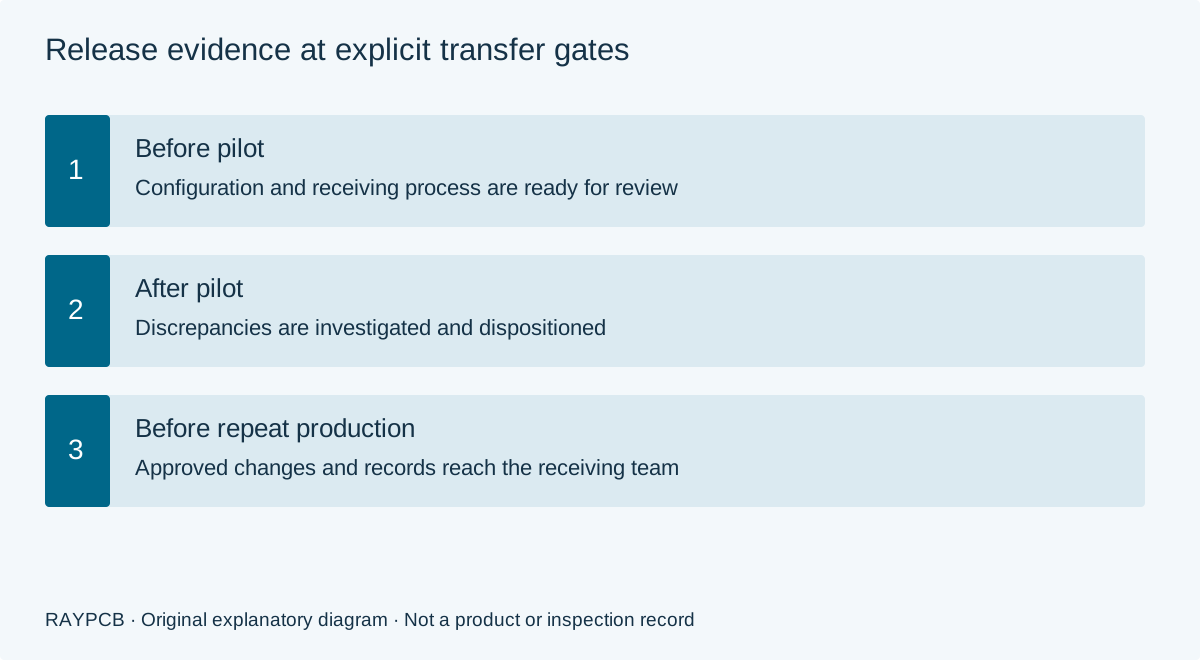
Before the pilot build, review configuration completeness, component availability, process questions and test readiness. After the pilot, reconcile discrepancies against the released requirements. Before repeat production, ensure approved corrections reach the files, instructions and test programs used by the receiving team. Gate names matter less than the evidence and authority attached to each decision.
A pilot is not simply a smaller production order. It can expose ambiguities in drawings, difficult assembly access, fixture limitations or unstable test behavior. Decide beforehand what the pilot should demonstrate and which observations must be recorded. Without that definition, a successful-looking sample may conceal issues that recur during a larger build.
When a requirement remains open, record the risk decision and scope of any limited build authorization. Do not turn an incomplete checklist into a numerical readiness score that implies approval. The worksheet below records states entered by the user and keeps unresolved items visible for discussion.
Create a manufacturing-transfer review record
The tool organizes seven transfer topics from the released configuration through lifecycle support. Select a state for each topic and identify the supporting revision or open question. It does not inspect documents, audit a quality system or approve a production transfer. The count of open topics is a conversation aid, not a measure of product safety or supplier competence.
RAYPCB ENGINEERING
Industry EngineeringMedical Electronics Manufacturing worksheet
Loading Medical Electronics Manufacturing worksheet…
Load the illustrative example to see the format, then start your own record. Inputs remain in the current page and are not submitted automatically. Download the text if useful and attach it manually to an enquiry. Avoid patient information, secret credentials or sensitive project details; a short requirement reference is normally sufficient for an initial discussion.
Control parts, alternates and lifecycle exposure
A medical electronics BOM should distinguish the manufacturer part number, approved package or option, quantity, reference designators and population variant. When alternatives are permitted, identify the approval basis and who can release them. A matching nominal value is not enough to establish interchangeability for every electrical, mechanical or processing requirement.
Review the sourcing model explicitly: turnkey supply, consigned material or a mixed arrangement. Define how incoming discrepancies, shortages and unused material are handled. For constrained components, discuss the effect of availability on prototype and recurring schedules. Forecasting helps planning, but a forecast is not evidence that every component will remain available for the full product lifetime.
If a part becomes unavailable, treat its replacement as a controlled change. Review footprint, assembly response, electrical behavior, software implications and any required evidence. The required PCBA files guide helps organize the initial package, while the ongoing change process governs what happens after the first release.
Translate engineering knowledge into repeatable instructions
The receiving team needs more than the experience of the original prototype builder. Capture special handling, assembly sequence constraints, orientation details, torque or mechanical requirements where applicable, programming access and inspection points. Identify which instructions are product-specific and which are controlled within the supplier's process system.
Review features that make repeat production difficult: inaccessible connectors, unsupported components, ambiguous polarity, limited fixture access or an assembly sequence dependent on trial and error. Use design for assembly to resolve these issues before they become repeated deviations. Manufacturing feedback should be evaluated by the design authority when it changes the defined product.
Specify the acceptance basis by scope. Assembly workmanship, bare-board performance and product functional behavior are different topics. Agree the relevant authorized IPC documents, revisions and contractual requirements rather than relying on a broad phrase such as built to IPC. The IPC standard for PCB assembly guide provides a route into that discussion without treating a workmanship standard as medical-device approval.
Transfer the test method, not just a pass label
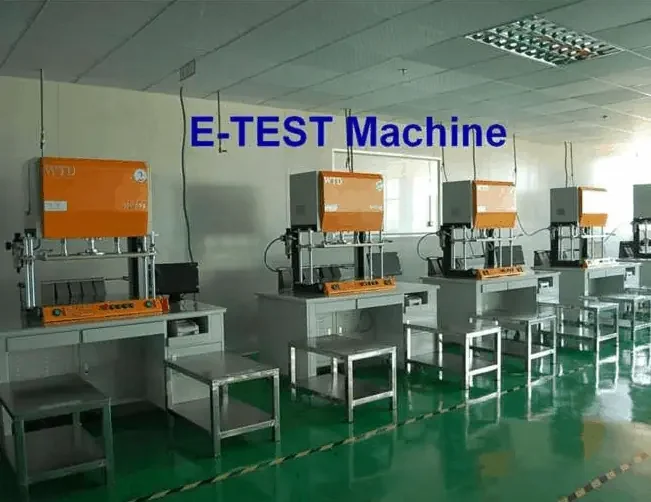
A test package should define the stimulus, connections, operating modes, limits, timing and required records. Identify the fixture, instruments, program version and relevant calibration controls. State how retries, intermittent failures and aborted tests are handled. Otherwise two sites may report pass while applying different conditions or interpretations.
Distinguish development characterization from the production test chosen to control a recurring build. A long engineering investigation may not be the same as a production screen, and a brief production test may not cover all product verification requirements. Agree the purpose and coverage of each method so a result is interpreted within its intended scope.
When using PCBA functional testing, connect the result to the hardware variant and software identity. Preserve known limitations and the accepted response to failures. A test fixture that cannot reach an important interface should trigger a coverage discussion, not an assumption that the interface has been verified elsewhere.
Evaluate quality-system and product evidence separately
The FDA's QMSR became effective on February 2, 2026 and incorporates ISO 13485:2016 by reference. The FDA QMSR overview is an official starting point for that context. Determine applicability with the responsible regulatory and quality teams rather than treating every manufacturing activity as having an identical obligation.
For supplier evaluation, request the actual organization, site, certificate scope and validity where a certification is required. Review the manufacturing activities and evidence relevant to the proposed work separately. A certificate does not prove that a particular assembly meets its electrical or device-level requirements, and a sample build does not establish the scope of a quality-system certificate.
This page does not assert an unverified RAYPCB medical certification or regulatory approval. Establish the evidence needed for your procurement decision and ask for the applicable current documentation. The engineering objective is a clear allocation of requirements and records, not a collection of logos that leaves the actual manufacturing scope ambiguous.
Define who may change what, and when it takes effect
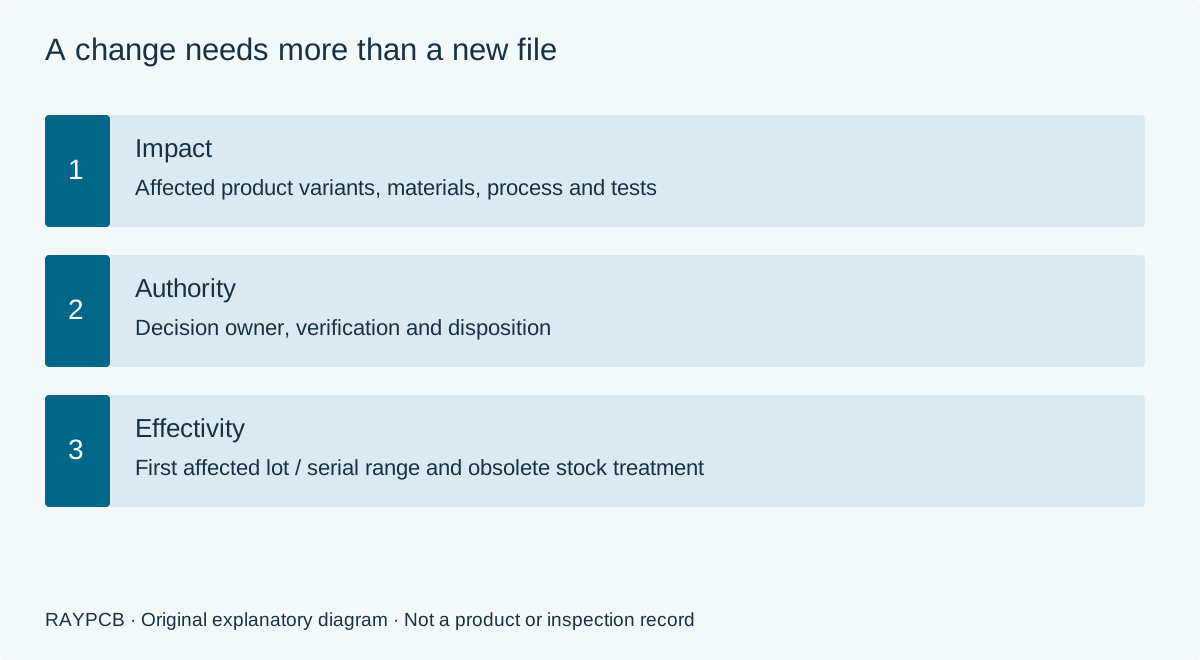
A change request should identify affected product variants, materials, process steps, software and tests. Record the reason, impact review, decision owner and required verification. Then define effectivity: the first affected lot or serial range, treatment of stock and work in progress, and which records must change together.
The same discipline applies when a supplier proposes a manufacturing adjustment. Some adjustments preserve the approved finished requirement; others alter it. Agree how that distinction is assessed. An informal substitution during a shortage should not silently become the permanent build configuration.
For a long-running program, plan how obsolescence, fixture maintenance, test-program updates and data retrieval are handled. Retention duration and access expectations belong in the agreed program requirements. The relevant commercial question is how the product can be supported consistently over time, not only how quickly the first batch can be assembled.
Example: a test-program update changes the transfer baseline
Consider an illustrative program in which the PCB and BOM stay unchanged but a functional-test limit is revised. The receiving team needs the approved limit source, updated program identity and the decision on affected stock. If only a spreadsheet changes while the fixture still runs the previous program, the documented requirement and the actual production decision diverge.
Review whether earlier results need reassessment, whether a pilot rerun is appropriate and who authorizes the disposition. Record those decisions rather than automatically retesting everything or assuming the software-only change is harmless. This is a planning example, not a customer case study or evidence of a completed medical transfer.
Prepare a program enquiry with visible assumptions
Provide the product family, build scope, current revision, expected volumes, pilot objectives, supply model, test requirements and target schedule. Identify work already completed and open decisions that need engineering support. Ask the supplier to separate recurring assembly cost from fixture, programming, process-development and verification preparation where applicable.
Compare proposals against the same responsibility matrix. A low recurring price can omit the test preparation or records your program requires. A larger setup charge may cover work that another proposal leaves to the OEM. Request those assumptions explicitly so the commercial review reflects the actual delivered scope.
You can approach PCB Assembly for a defined board build or the contract-manufacturing team for an ongoing program. The transfer record is optional. A direct enquiry with a clear product scope and a few unresolved questions is more useful than a completed form containing invented answers.
Medical manufacturing-transfer questions
Does outsourcing assembly transfer device approval responsibility?
Not automatically. Define responsibilities in the applicable agreements and regulatory framework. Manufacturing, design authority, product verification and release can involve different organizations and require explicit ownership.
Can an existing prototype be the complete manufacturing reference?
A sample can help explain intent, but it does not replace controlled files, acceptance requirements and test instructions. Resolve differences between the sample and the intended release before the receiving team reproduces them.
What should be ready before a pilot order?
At minimum, identify the intended configuration, the pilot objectives, the receiving process and the evidence needed for the next decision. Mark unresolved items and agree their disposition rather than assuming a small quantity makes requirements unnecessary.
Bring a focused question with the design revision
Send the board revision, construction, quantity and the layout, file or manufacturing question you need reviewed. Identify unresolved requirements so the response can address them.
Send requirements for reviewOptional: attach the downloaded worksheet manually. Use the worksheet as a discussion record; manufacturing requirements and verification must be agreed for the actual project.