
Introduction
In today’s rapidly evolving industrial automation landscape, the demand for reliable, efficient, and intelligent motor control systems has never been greater. At the heart of these systems lies a critical component: the Motor Control & Protection PCBA (Printed Circuit Board Assembly). This sophisticated electronic module serves as the brain and brawn of industrial motor drives, seamlessly integrating microcontroller logic, relay switching capabilities, robust power management, and comprehensive diagnostic interfaces.
The design and implementation of such a PCBA represents a convergence of multiple engineering disciplines, requiring careful consideration of power electronics, embedded systems design, signal integrity, and industrial safety standards. This article explores the comprehensive design approach for a motor control and protection PCBA that addresses the demanding requirements of modern industrial environments while maintaining the reliability and serviceability essential for mission-critical applications.

System Requirements and Design Objectives
The foundation of any successful motor control PCBA begins with a clear understanding of the operational requirements and environmental constraints it must satisfy. Industrial motor control applications present unique challenges that distinguish them from consumer electronics or even commercial automation systems.
Environmental Robustness: Industrial environments expose electronic systems to extreme temperatures, electromagnetic interference (EMI), mechanical vibrations, and potential exposure to dust, moisture, and corrosive substances. The PCBA must operate reliably across a wide temperature range, typically from -40°C to +85°C, while maintaining performance in the presence of significant electrical noise from variable frequency drives, contactors, and other industrial equipment.
Safety and Compliance: Motor control systems often handle high voltages and currents, making safety paramount. The design must comply with relevant industrial standards such as IEC 61508 for functional safety, UL 508A for industrial control panels, and CE marking requirements for European markets. Galvanic isolation between control logic and power switching circuits is not merely recommended but mandatory for ensuring operator safety and system reliability.
Reliability and Availability: Industrial processes cannot afford unexpected downtime. The PCBA must demonstrate exceptional reliability, with Mean Time Between Failures (MTBF) measured in decades rather than years. This requirement drives design decisions toward proven technologies, redundant protection mechanisms, and comprehensive fault detection capabilities.
Core System Architecture and Components
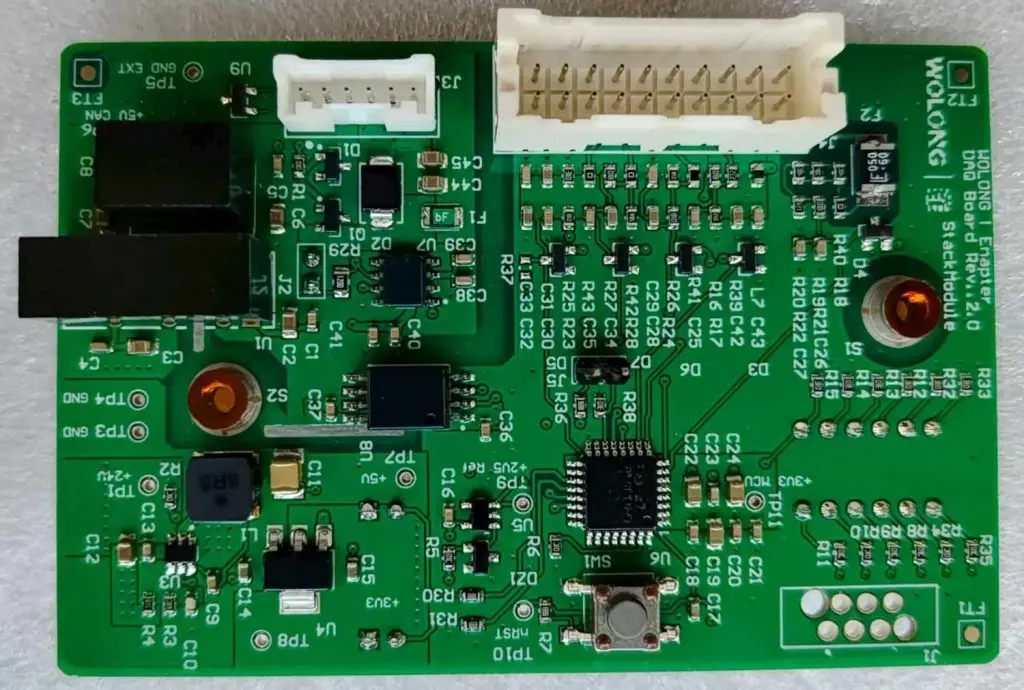
The motor control and protection PCBA employs a modular architecture that separates critical functions while enabling seamless integration and communication between subsystems.
Microcontroller Unit (MCU): The central processing unit serves as the intelligent core of the system, implementing control algorithms, safety interlocks, communication protocols, and diagnostic routines. Modern industrial MCUs typically feature ARM Cortex-M cores optimized for real-time control applications, offering sufficient computational power for complex control loops while maintaining deterministic response times. The MCU interfaces with external sensors, human-machine interfaces (HMI), and communication networks, enabling both local autonomous operation and integration into larger automation systems.
Relay Control Module: The relay subsystem provides galvanically isolated switching of high-power loads, typically handling currents from several amperes to hundreds of amperes depending on the application. The relay selection process considers factors such as contact rating, switching speed, mechanical life expectancy, and coil power consumption. Driver circuitry ensures proper relay actuation while protecting the MCU from back-EMF and inductive transients generated during switching operations.
Power Management Subsystem: Clean, stable power supplies form the foundation of reliable operation. The power management section typically includes multiple DC/DC converters generating various voltage rails required by different subsystems. For example, +24V for relay coils, +5V and +3.3V for digital logic, and potentially ±12V for analog signal conditioning. Each power rail incorporates appropriate filtering, regulation, and protection to ensure stable operation under varying load conditions.
Interface and Connectivity: Modern industrial systems require extensive connectivity options. The PCBA incorporates multiple interface types including isolated digital inputs/outputs, analog signal conditioning circuits, communication ports (RS485, CAN, Ethernet), and diagnostic connectors. Terminal blocks, pin headers, and industrial connectors provide robust mechanical and electrical connections suitable for industrial wiring practices.
Circuit Design Principles and Implementation
The circuit design philosophy emphasizes reliability, maintainability, and electromagnetic compatibility while optimizing for cost-effectiveness and manufacturing efficiency.
Power Distribution and Filtering: The power input stage implements comprehensive filtering using a combination of common-mode and differential-mode inductors, X and Y capacitors, and metal oxide varistors (MOVs) for surge protection. This multi-stage approach attenuates both conducted and radiated electromagnetic interference while protecting sensitive components from transient overvoltages common in industrial environments.
Ground Plane Strategy: Proper grounding represents one of the most critical aspects of industrial PCB design. The layout employs separate analog and digital ground planes connected at a single star point, minimizing ground loops and reducing noise coupling between high-current switching circuits and sensitive analog signals. Guard rings around critical analog components provide additional isolation from digital switching noise.
Component Selection and Derating: Industrial applications demand conservative component selection with appropriate derating factors. Electrolytic capacitors are typically derated to 50% of their voltage rating, while power semiconductors operate well below their maximum current and thermal limits. This approach significantly enhances long-term reliability at the cost of slightly increased component size and cost.
Thermal Management: Heat dissipation considerations influence both component placement and PCB stackup design. High-power components such as relay drivers, power supply regulators, and protection devices are positioned to facilitate heat spreading through copper pours and thermal vias. The PCB stackup incorporates dedicated thermal layers where necessary to conduct heat away from critical components.
Safety Features and Protection Mechanisms
Industrial motor control systems must incorporate multiple layers of protection to ensure safe operation under both normal and fault conditions.
Overcurrent Protection: Multiple levels of overcurrent protection safeguard both the PCBA and connected loads. Primary protection typically employs fast-acting fuses or circuit breakers sized appropriately for the maximum expected load current. Secondary protection may include electronic current limiting within power supply circuits and software-based overcurrent detection with programmable trip points.
Overvoltage and Surge Protection: Transient voltage suppression (TVS) diodes protect sensitive semiconductor devices from voltage spikes, while MOVs provide coarse protection against larger surge events. The protection scheme considers both common-mode and differential-mode transients, with coordination between protection devices ensuring that lower-energy transients are handled by TVS diodes while MOVs address more severe events.
Thermal Protection: Temperature monitoring occurs at multiple points within the system. Thermal sensors monitor ambient temperature, power dissipation areas, and critical components. The MCU implements temperature-based derating algorithms that reduce performance before reaching damage thresholds, while ultimate protection relies on thermal switches or fuses that disconnect power under extreme conditions.
Galvanic Isolation: Isolation barriers separate control logic from high-voltage switching circuits using optocouplers, magnetic coupling, or capacitive isolation techniques. This isolation not only enhances safety but also improves noise immunity and reduces ground loop susceptibility.
User Interface and Diagnostic Capabilities
Effective field service and troubleshooting require comprehensive diagnostic capabilities and intuitive user interfaces.
Visual Indicators: LED status indicators provide immediate visual feedback on system operating conditions. A typical arrangement includes power-on indicators for each voltage rail, relay status indicators, communication activity lights, and fault condition warnings. Color coding follows industrial conventions: green for normal operation, amber for warnings, and red for fault conditions requiring immediate attention.
Configuration Interface: DIP switches or rotary switches enable field configuration of operating parameters such as communication addresses, input/output assignments, and protection settings. This hardware-based approach ensures that critical settings remain intact even during firmware updates or power cycling.
Test Points and Monitoring: Strategic placement of test points enables field technicians to verify voltages, signal levels, and timing relationships using standard test equipment. These access points are clearly labeled and positioned for safe measurement without requiring removal of covers or disconnection of field wiring.
Diagnostic Communication: The MCU implements comprehensive diagnostic reporting through standard industrial communication protocols. Diagnostic information includes real-time operating parameters, historical fault logs, component health monitoring, and predictive maintenance indicators based on operating hours and environmental conditions.
Applications and Market Integration
The motor control and protection PCBA addresses diverse industrial applications, each with specific requirements and operating characteristics.
Industrial Motor Drives: Integration with variable frequency drives (VFDs) requires coordination between the PCBA’s protection functions and the drive’s internal protection systems. The PCBA typically handles emergency stop functions, external interlock monitoring, and coordination with upstream protective devices while the VFD manages motor-specific protections such as phase loss detection and thermal modeling.
Building Automation Systems: HVAC applications demand integration with building management systems (BMS) through standard protocols such as BACnet or Modbus. The PCBA must interface with various sensors including temperature, pressure, and flow measurement devices while providing coordinated control of pumps, fans, and damper actuators.
Process Automation: Chemical and manufacturing processes require precise coordination between multiple motor-driven devices such as conveyors, mixers, and pumps. The PCBA must support complex sequencing operations, coordinate with safety systems, and maintain operation during communication network disruptions.
Smart Factory Integration: Industry 4.0 initiatives require enhanced connectivity and data analytics capabilities. The PCBA incorporates modern communication interfaces supporting Industrial Ethernet protocols, wireless connectivity options, and edge computing capabilities for local data processing and decision making.
Design Optimization and Manufacturing Considerations
Successful commercial deployment requires careful attention to manufacturing processes, cost optimization, and long-term serviceability.
Design for Manufacturing (DFM): PCB layout optimization considers manufacturing constraints such as minimum trace widths, via sizes, and component spacing requirements. The design accommodates standard assembly processes including surface-mount technology (SMT) placement, wave soldering for through-hole components, and automated optical inspection (AOI) verification.
Supply Chain Management: Component selection considers long-term availability, second-source options, and supply chain stability. Industrial products typically require availability guarantees of 10-15 years, driving selection toward components with demonstrated longevity and broad manufacturer support.
Cost Optimization: Value engineering analyzes the cost-performance relationship for each design element. While industrial applications justify premium components where reliability is paramount, cost optimization focuses on eliminating unnecessary features and selecting components that meet requirements without excessive over-specification.
Serviceability: Modular design facilitates field replacement of major subsystems without requiring specialized tools or extensive disassembly. Components most likely to require replacement, such as relays and fuses, are positioned for easy access and clearly identified for field personnel.
Conclusion
The design of industrial motor control and protection PCBAs represents a sophisticated integration of multiple engineering disciplines, balancing competing requirements for reliability, cost-effectiveness, and functionality. Success depends on thorough understanding of application requirements, careful selection and integration of components, and meticulous attention to safety and regulatory compliance.
As industrial automation continues to evolve toward greater connectivity, intelligence, and efficiency, motor control PCBAs will increasingly serve as critical enablers of smart manufacturing and Industry 4.0 initiatives. The design principles and implementation strategies outlined in this article provide a foundation for developing robust, reliable motor control solutions that meet the demanding requirements of modern industrial applications while positioning for future technological advancement.
The integration of advanced MCU capabilities, robust protection mechanisms, and comprehensive diagnostic features creates a platform capable of supporting both current operational requirements and future enhancement through firmware updates and modular expansion. This forward-looking approach ensures that investment in motor control infrastructure continues to provide value throughout the extended lifecycle typical of industrial automation systems.

