
Introduction
The Xilinx XC6SLX16-3CSG324i device is a low-power, medium-capacity FPGA (Field Programmable Gate Array) belonging to the Spartan-6 family. With its combination of logic cells, memory, DSP blocks and high-speed I/O, the XC6SLX16 FPGA provides a versatile solution for networking, industrial, consumer and embedded applications.
This article provides an overview of the XC6SLX16-3CSG324i FPGA architecture, available resources, design considerations, key capabilities and target applications which helps designers evaluate its suitability for different project needs.
XC6SLX16 FPGA Architecture
The Xilinx XC6SLX16 FPGA is fabricated on a low-power 45nm process and is based on the Spartan-6 architecture which consists of the following main blocks:
Configurable Logic Blocks (CLBs)
- The main logic resource consisting of look-up tables (LUTs) and flip-flops
- XC6SLX16 has 10,320 CLB slices, with each slice containing 4 LUTs and 8 flip-flops
Block RAM (BRAM)
- 148 Kb of fast dual-port block memory suitable for data storage
- Configurable as 36 Kb memory blocks
Digital Signal Processing (DSP) blocks
- 16 DSP48A1 slices with 25 x 18 multipliers and 48-bit adders
- Enables high-performance arithmetic and signal processing
Input/Output Blocks (IOBs)
- 240 High-speed I/O pins with support for common I/O standards
- Features like differential signaling and PLLs for source synchronous interfacing
Clock Management Tiles (CMTs)
- 4 Mixed Mode Clock Managers (MMCM) for clock synthesis, skewing, jitter filtering
PCI Express Interface
- PCI Express Endpoint block enabling PCIe 1.1 connectivity
This combination of flexible fabric along with hardened IP blocks enables implementing a wide range of system-level functionality leveraging the Spartan-6 architecture.
XC6SLX16-3CSG324i Features and Specs
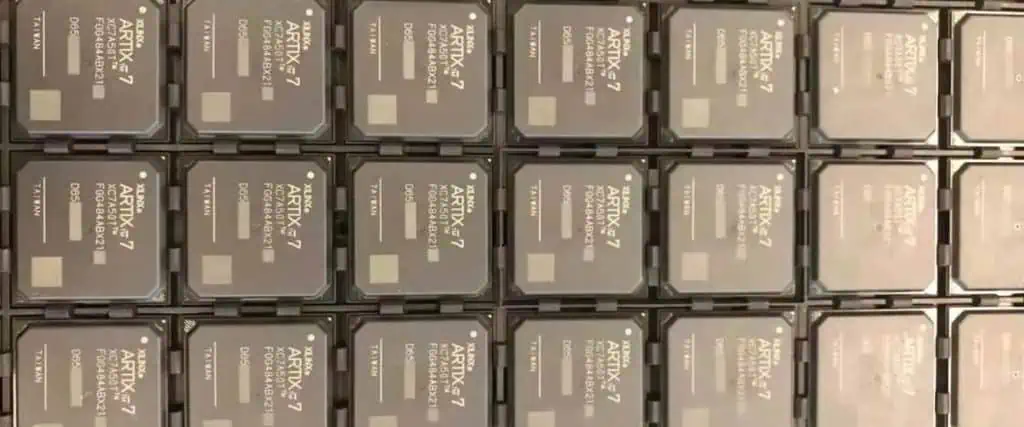
The key features and specifications of the XC6SLX16-3CSG324i FPGA are highlighted below:
Logic Cells
- 10,320 CLB slices
- 41,280 LUTs, 82,560 Flip-flops
DSP Slices
- 16 DSP48A1 slices
Block RAM
- 148 Kb
- 36 18Kb blocks
Transceivers
- No transceivers
Maximum User I/O
- 240 pins
Clock Management
- 4 MMCM, 10 DCM blocks
PCI Express
- Single x1 lane endpoint
Memory Interfaces
- DDR, DDR2, LPDDR controllers
Configuration
- SelectMAP 8-bit, JTAG interfaces
- SPI serial flash loading
The XC6SLX16 delivers an optimal balance of programmable logic, built-in blocks and high-speed I/O to address a wide range of applications.
Design Considerations with the XC6SLX16
Some key considerations for designers working with the XC6SLX16-3CSG324i FPGA include:
Tool Flow – Xilinx ISE tools for synthesis, place and route. ModelSim for simulation
Power Analysis – Analyze power consumption early in the design process
Pin Planning – Planning I/O configuration and assignments
Board Design – Following reference design layout guidelines
IP Selection – Adding relevant IP cores from Xilinx IP library
Team Skills – Prior experience with Xilinx Spartan-6 architecture is beneficial
Applications of XC6SLX16 FPGA
Some of the major application areas where the XC6SLX16 FPGA fits well are:
- Embedded systems – Industrial automation, robotics, medical equipment
- High speed interfacing – Video, imaging, high-performance computing
- Wired communications – Data processing, algorithm acceleration, encryption
- Wireless infrastructure – DAS, small cell radio processing
- Analog and mixed signal – Protocol bridging, sensor interfaces
- Automotive – Body electronics, instrument clusters, diagnostics
- Security systems – Surveillance, access control, authentication
- IoT – Gateway processing, sensor aggregation, edge computing
The Spartan-6 architecture provides a higher performance, low cost, power efficient solution for cost-sensitive applications compared to CPLDs or microcontrollers.
XC6SLX16 vs Other Xilinx FPGAs

Some comparisons with other Xilinx FPGAs are:
XC6SLX16 vs XC7S15
- XC7S15 belongs to a newer higher performance Artix-7 family
- Similar logic capacity but XC7S15 adds DSP blocks and transceivers
XC6SLX16 vs XC7A50T
- XC7A50T has twice the logic capacity with similar DSP blocks
- Adds integrated transceivers, DDR3 interfacing
XC6SLX16 vs CoolRunner-II CPLD
- CoolRunner-II has very low power consumption
- But far lower logic density than XC6SLX16 FPGAs
XC6SLX16 vs Zynq-7000
- Zynq combines Cortex-A9 ARM cores with programmable logic
- Ideal for processor acceleration applications vs pure FPGA needs
The XC6SLX16 strikes a balance between capability and cost for mid-range applications compared to CPLDs or high-end FPGAs.
Conclusion
The Xilinx XC6SLX16-3CSG324i combines a powerful blend of 41k logic cells, 36Kb RAM blocks, 240 I/O pins, and high speed connectivity in a low power, small form factor FPGA. The Spartan-6 family enables the right mix of performance and cost efficiency for a wide gamut of embedded systems, wired communications, image processing, automotive and other applications. By following recommended design practices, engineers can fully harness the potential of this versatile mid-range FPGA.
What is Xilinx XC6SLX16-3CSG324i FPGA? – FQA
Q1. What is the Xilinx XC6SLX16-3CSG324i FPGA?
The XC6SLX16-3CSG324i is a low-power, medium-density FPGA from the Xilinx Spartan-6 family featuring over 10K logic slices and 240 I/O pins.
Q2. What are the key components in the XC6SLX16 architecture?
The key components are the configurable logic blocks for implementation of logic, 36Kb RAM blocks for data storage, DSP slices for signal processing and high-speed mixed-signal I/O.
Q3. What applications can the XC6SLX16 FPGA be used for?
This FPGA suits applications like industrial automation, video systems, wired communications, automotive body electronics and IoT edge computing needing mid-capacity programmable logic.
Q4. How does the XC6SLX16 compare with the higher-end XC7A50T FPGA?
The XC7A50T has double the programmable logic capacity along with high-speed transceivers and DDR3 interfacing making it suitable for more complex applications.
Q5. What are some key design considerations for the XC6SLX16 FPGA?
Important considerations are proper tool selection, power analysis, I/O pin planning, following reference designs, leveraging IP cores and having experience with Spartan-6 architecture.

