
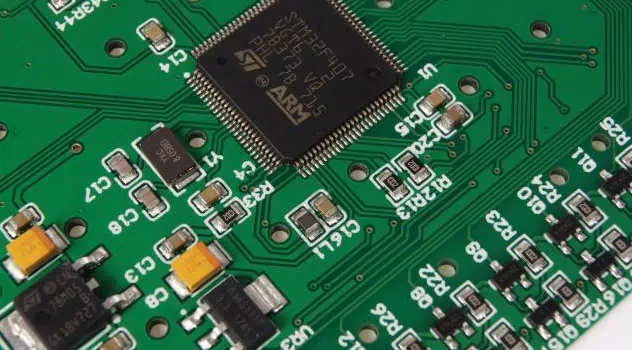
Speeduino PCB is designed to function based on the Arduino Mega platform. This board is specifically designed to offer a low-cost and easy engine management solution for various automotive applications. Speeduino users can make use of the Arduino Mega 2560 boards.
The Speeduino PCB has different versions. Also, this board has hardware requirements which include its output components and input components. Speeduino PCB offers support for about 16bit external analog inputs.
The Inputs of Speeduino PCB
Crack sensor or Camshaft sensor
The crank sensor is crucial for the proper functioning of the Speeduino PCB. Also, the signal that passes through the Arduino has to be within the range of a 0 volt and 5 volt square wave series of pulses. Several opto and Hall sensors must meet the specification of this digital square wave.
The variable reluctance sensors which is also known as VR can be integrated in the Speeduino board. However, since the Speeduino PCB has no signal conditioner required for converting the sine wave to the square wave, there is a need for an additional module.
The v0.3x and v0.4x has the 8-pin DIP socket. Also, the MAX9926 chip has gone through stringent testing to ensure it is compatible with most input signals. It is important to take precautions for electromagnetic interference (EMI) when routing and selecting the wire for the camshaft and crank sensors. Furthermore, it can be helpful when wires are kept away from components that are electrically noisy.
You can as well integrate a shielded cable by fixing the shield to ECU side. Alternatively, you can use software filtering. However, there is nothing as good as having a clean signal from the source. Speeduino PCB users need to ensure that the GND and +12V connections are free of noise if there is a loss in the crank/cam signal.
TPS sensor
This sensor has to be one of the 3 wire potentiometer. Your TPS sensor will function well if it is a 3 wire sensor, but you need to be sure it is a potentiometer type sensor. TPS gives account of the present location of the throttle by transmitting an analog voltage signal to Speeduino. Also, TPS is provided with V+ of 5V.
It is advisable to run a test on the TPS when using it with unknown connections. You can use an ohmmeter to test the TPS as this helps in determining the link of each pin. It does this by randomly applying sensor power. You can achieve the following when you disconnect the TPS and the engine is off:
- Locate the pair of pins where there is no significant change in the resistance from idle to WOT.
- Assign a letter to every pin.
- Fix the ohm meter to two pins and run the throttle from idle to wide-open.
The most common TPS sensors feature 3 different pins. If you have a TPS sensor with a different pin numbers, you may have to refer to the engine wiring diagram to reveal the function. This will help you know the types of pins to integrate for Speeduino. You can use a simple code modification for TP sensors working backwards.
Temperature sensors
You can make use of a standard 2-wire thermistor sensor to enable temperature functions. Also, one side of the temperature sensors is linked to a ground.
Manifold pressure
The manifold pressure sensor is integrated in most Speeduino PCB. One of the benefits of this sensor is its support for reading of about 250kPa and it is a good midrange sensor.
Outputs of Speeduino PCB

Injectors
Speeduino feature injector drivers which integrate on/off control. These drivers can function well with High-Z injectors. The High Z injectors are also referred to as ‘high-impedance or “saturated since they integrate a full battery voltage to regulate the open cycle of the injector. Generally, the impedance of these injectors is above 8 ohms. The Low Z injectors offer lower impedance. Series resistors need to be installed on these injectors in order to prevent the Speeduino PCB from damage caused by excessive current.
Also, you can use the Ohm’s Law to calculate the watt rating and resistor ohms. Speeduino PCBs are capable of driving about 2 High Z injectors for every output channel. Also, the 0.4v PCB boards feature 2 pins for every injector channel, thereby enabling each injector to connect to the board directly. If there are less than 4 injectors in the application, you can make use of any pin linked to the right channel.
Coils
The most recent versions of Speeduino PCB make use of low-power output signals. These versions are designed to function with external coil drivers. Speeduino can offer great flexibility to regulate the majority of ignition systems. You can directly mount the speeduino outputs to the regular current passive ignition coil.
How does Speeduino PCB regulate ignition circuit power?
The coil driver of Speeduino PCB was mechanical contact points in the past. However, the electronic version replaced these points. The coil driver can be in the Speeduino PCB.
GPIO for Speeduino PCB

GPIO are multipurpose general programmable input and output modules integrated with the Speeduino standalone. You can program the modules by using the serial port. Also, these modules can work with various processor board types like stm32 and arduino teensy.
Version of GPIO
GPIO mini V0.001
This version offers support to sixteen analog channels, sixteen output channels and sixteen input channels. You can activate the output channels by using logical operations.
GPIO mini V0.002
The GPIO mini V0.002 shares similar features with V0.001. However, the V0.002 can access the values of output channel data from a Speeduino ECU directly connected.
GPIO mini V0.003
This firmware version enables Speeduino to have access to the inputs of the GPIO devices. Also, tis version allows GPIO device to be directly connected to Speeduino through Serial3.
Conclusion
Speeduino PCB has different versions. The most recent versions of Speeduino PCB make use of low-power output signals. These versions are designed to function with external coil drivers. Speeduino can offer great flexibility to regulate the majority of ignition systems.

