Advanced Ceramic-Filled Thermoset Polymer Composites for High-Performance RF and Microwave Applications
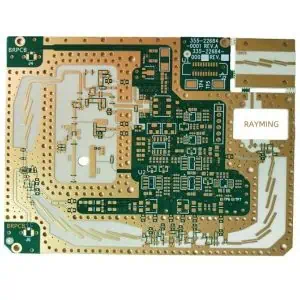
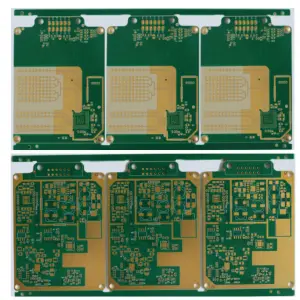
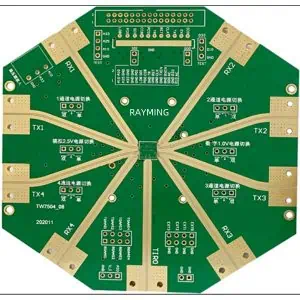
Rogers TMM (Thermoset Microwave Materials) represent a breakthrough family of high-performance laminates that combine the best characteristics of ceramic substrates with the processing ease of traditional polymer materials. These ceramic, hydrocarbon, and thermosetting polymer composite materials are specifically designed for high reliability stripline and microstrip line applications with electroplated through-holes .
Key Performance Features
Exceptional Thermal Stability
- Very low dielectric constant thermal coefficient, typically less than 30 ppm/°C
- Thermal conductivity between 0.70 and 0.76 W/mK – approximately twice that of traditional PTFE/ceramic laminates
- Coefficient of thermal expansion matched to copper allowing for high reliability of plated through-holes
Superior Electrical Properties
- Dielectric constants ranging from 3 to 13 across the product series
- Low dissipation factors between 0.0019 and 0.0023 at 10 GHz
- Dielectric constant uniformity and low thermal coefficient of dielectric constant
Mechanical Excellence
- Isotropic coefficient of thermal expansion closely matching copper
- Thermosetting resin base prevents softening when heated, enabling reliable wire bonding without pad lifting or substrate deformation
- Resistant to process chemicals, no damage to material during fabrication and assembly processes
Product Portfolio
The TMM series includes multiple variants optimized for different applications:
- TMM3: Dielectric constant ranging from approximately 3.0 to 3.4, suitable for high-frequency communication systems, satellite communications, and phased array antennas
- TMM4: Dielectric constant typically around 4.5 to 5.0, commonly used in microwave circuit substrates and RF applications
- TMM6: Stable dielectric constant of 6.15 across a wide frequency range
- TMM10 & TMM10i: TMM10i with Dk = 10, Dissipation Factor = 0.002
- TMM13i: Hydrocarbon Ceramic Isotropic Thermosetting Microwave Material specially designed for stripline and microstrip line applications requiring high through-hole reliability
Manufacturing Advantages
TMM laminates offer obvious processing advantages compared with alumina filler substrates, providing larger specifications of copper clad and enabling use of standard PCB substrate processing procedures. Unlike traditional materials, TMM laminates do not require sodium naphthenate treatment before electroless plating
Available Specifications:
- Thicknesses from 0.015 to 0.500 inches with tolerance of ±0.0015 inches
- Compatible with 1/2 oz/ft² to 2 oz/ft² electrodeposited copper foil
- All dielectric variants can be produced as molded, 3-dimensional shapes
Target Applications
Primary Markets:
- RF and microwave circuits, GPS antennas, power amplifiers and combiners
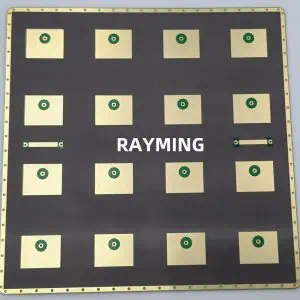
- Microstrip antennas, filters and couplers, dielectric polarizers and lenses
- Satellite communication systems
- 5G infrastructure, radar systems, satellite communications, test and measurement equipment
- Space-borne equipment applications where extreme temperature variations (-55°C to +150°C) are encountered
Competitive Advantages
Rogers TMM materials deliver many of the advantages of ceramic laminates and traditional PTFE microwave circuit laminates without the need for specialized production technology. The series provides engineers with cost-effective solutions for high reliability applications while maintaining the dimensional stability and electrical performance required for demanding RF and microwave circuits.
This innovative material platform enables designers to achieve superior electromagnetic performance while simplifying manufacturing processes, making TMM thermoset microwave materials the ideal choice for next-generation high-frequency electronic systems.